A Year in the Life of an E-Rate Applicant - Preparing for Funding Year

This content provides valuable insights and tips on preparing for the funding year as an E-Rate applicant. It covers essential information such as commonly used terms, FCC forms, and the application process. Readers can gain a better understanding of the E-Rate program and the steps involved in applying for universal service support. The images included offer visual aids to enhance comprehension.

Download Presentation

Please find below an Image/Link to download the presentation.
The content on the website is provided AS IS for your information and personal use only. It may not be sold, licensed, or shared on other websites without obtaining consent from the author.If you encounter any issues during the download, it is possible that the publisher has removed the file from their server.
You are allowed to download the files provided on this website for personal or commercial use, subject to the condition that they are used lawfully. All files are the property of their respective owners.
The content on the website is provided AS IS for your information and personal use only. It may not be sold, licensed, or shared on other websites without obtaining consent from the author.
E N D
Presentation Transcript
A YEAR IN THE LIFE OF AN E-RATE APPLICANT Preparing for the Funding Year Erin Rock, Secretary
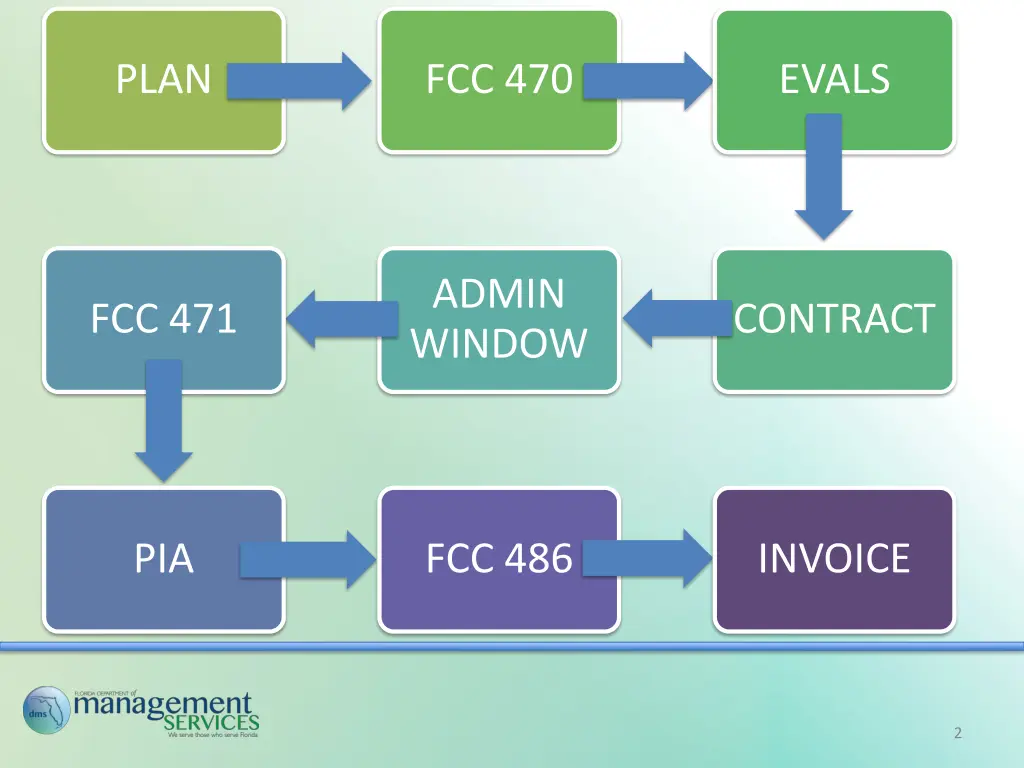
PLAN FCC 470 EVALS ADMIN WINDOW FCC 471 CONTRACT PIA FCC 486 INVOICE 2
Where To Begin? 1. 2. 3. 4. 5. Preparing for the Funding year E-rate Binder Deadlines Helpful Tips EPC Preview KNOW THE PROCESS 3
COMMONLY USED TERMS SLD- Schools and Libraries Division is the part of USAC with responsibility for E-rate. Billed Entity- The entity that receives the bill and pays for the supported service. Applicant- The entity applying for universal service support (i.e., a school, library, consortium, or other eligible entity that files program forms. ) 4
COMMONLY USED TERMS FCC Form 470- competitive bidding form for services desired that are eligible for discounts under the E rate Program. FCC Form 471- the application process used for requesting services listed on Form 470. FCC Form 486- The Receipt of Service Confirmation Form. Filed letting you know when service will begin and will comply with CIPA requirements. Funding Commitment Decision Letter (FCDL)- Notification letter sent to applicant after PIA review is complete and the application has been approved . 5
COMMONLY USED TERMS BEAR Form- Applicant filed form submitted to USAC for reimbursement (Applicant pays full cost of service and files BEAR for discounted share.) SPI Billing- Service Provider Invoicing method. Applicant pays only their non- discounted share and receives discount for the remainder of the cost of service. Entity Profile- Sectionin the 471 application to determine discount; a complete list of schools in district. BEN- Billed Entity Number - the unique number assigned by USAC to each billed entity that pays for services and/or recipient of service. 6
COMMONLY USED TERMS Funding Request Number (FRN)- Unique number that USAC assigns to each funding request in a completed FCC Form 471. (Three types: Internet Access, Telecommunications, Voice) FRN Key Information: FRN Section of 471 application where the applicant provides details of services requested including service provider, contract information, and category of service. FRN Line-item- Provides detail of services requested, including type, purpose, amount/quantity, and, recipient of service monthly cost of service. Annex: If a school has more than one location separated by a public right-of-way, but all of those locations together are considered one school by the state, those additional locations are annexes of that school 7
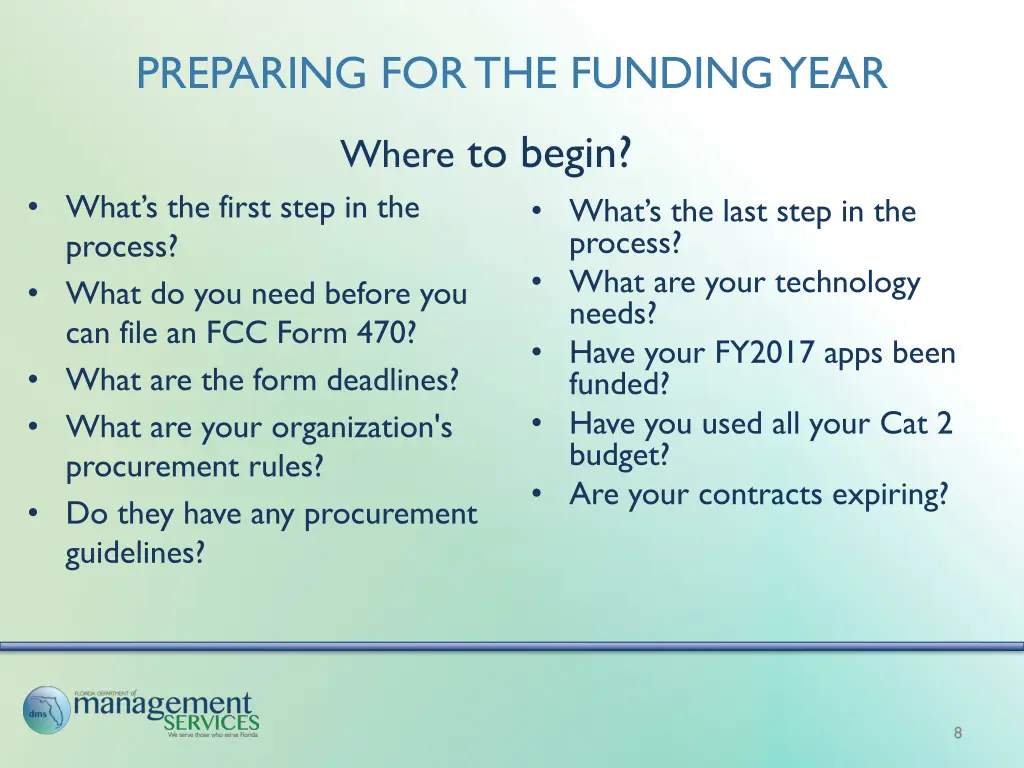
PREPARING FOR THE FUNDING YEAR Where to begin? What s the first step in the process? What do you need before you can file an FCC Form 470? What are the form deadlines? What are your organization's procurement rules? Do they have any procurement guidelines? What s the last step in the process? What are your technology needs? Have your FY2017 apps been funded? Have you used all your Cat 2 budget? Are your contracts expiring? 8
PREPARING FOR THE FUNDING YEAR THE MOST IMPORTANT QUESTION? 9
PREPARING FOR THE FUNDING YEAR DO YOU HAVE A CLEARLY DEFINED PROCESS? 10
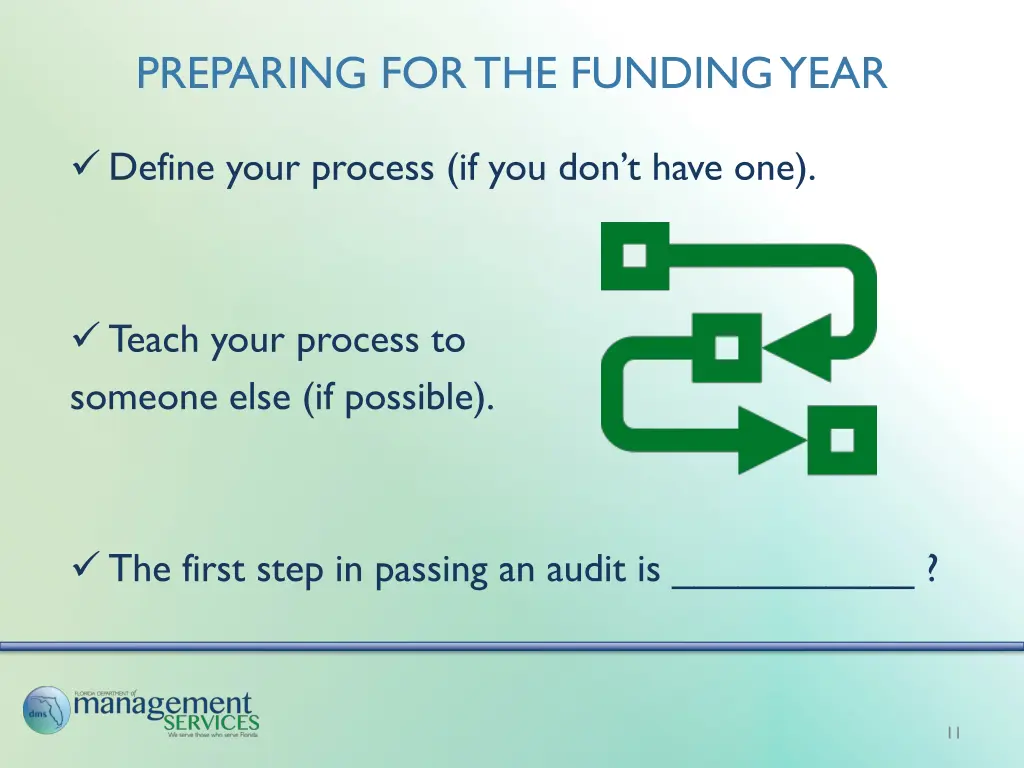
PREPARING FOR THE FUNDING YEAR Define your process (if you don t have one). Teach your process to someone else (if possible). The first step in passing an audit is ___________ ? 11
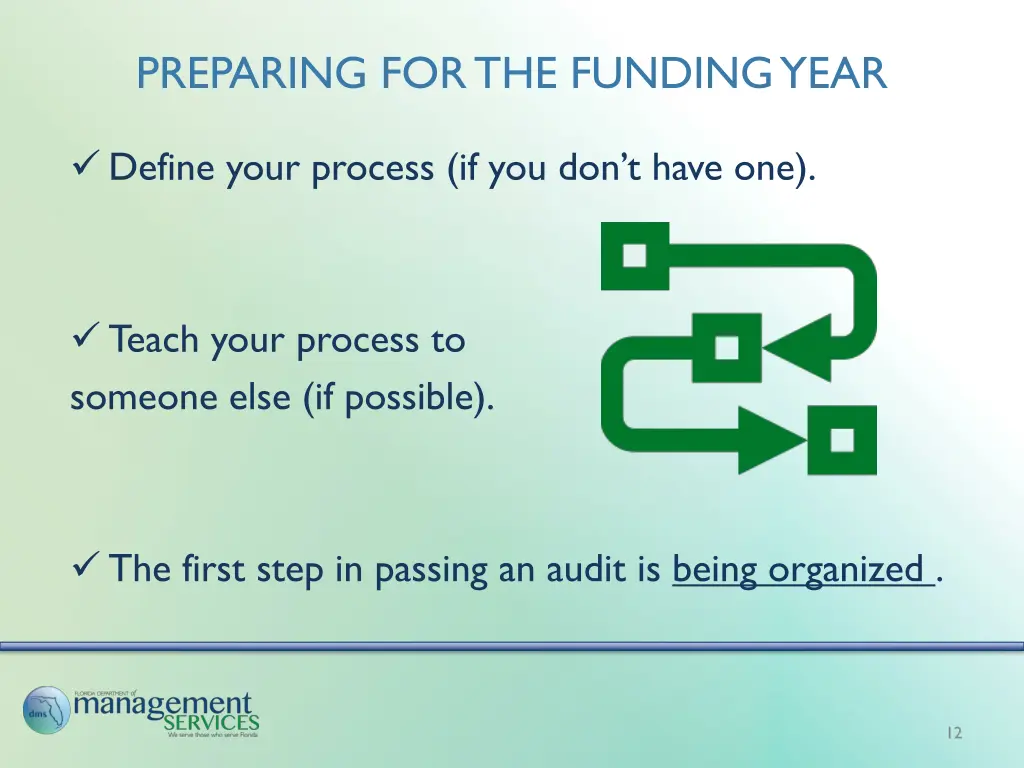
PREPARING FOR THE FUNDING YEAR Define your process (if you don t have one). Teach your process to someone else (if possible). The first step in passing an audit is being organized . 12
THE E-RATE BINDER Chad Poppell, Secretary 13
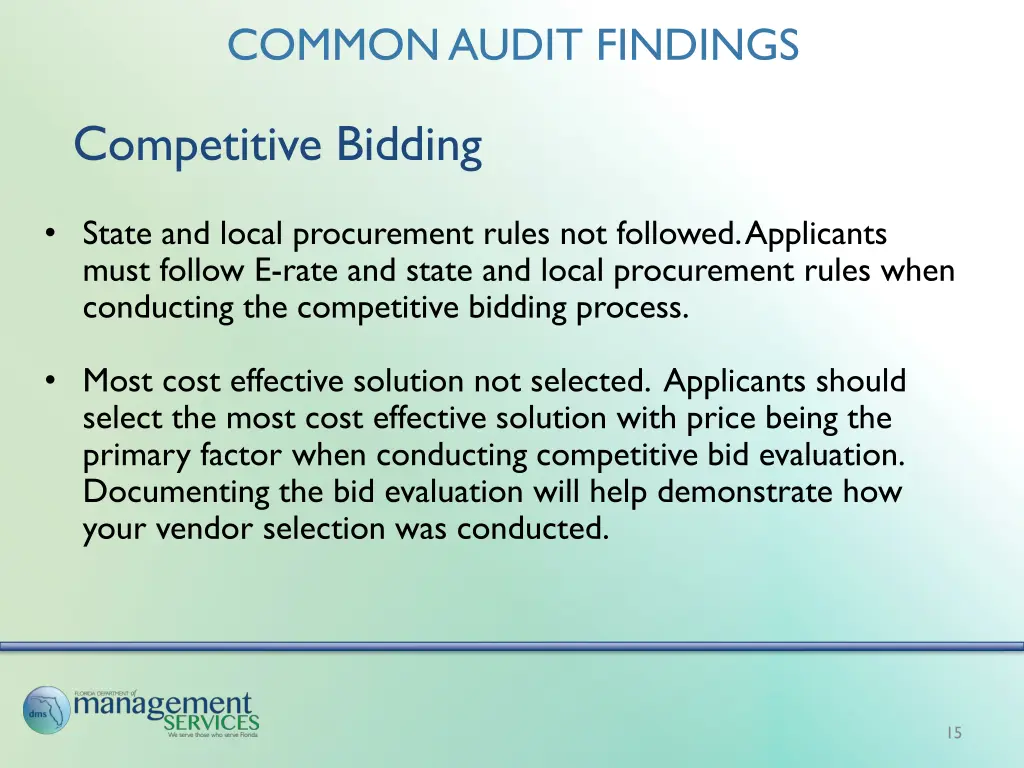
COMMON AUDIT FINDINGS Competitive Bidding State and local procurement rules not followed. Applicants must follow E-rate and state and local procurement rules when conducting the competitive bidding process. Most cost effective solution not selected. Applicants should select the most cost effective solution with price being the primary factor when conducting competitive bid evaluation. Documenting the bid evaluation will help demonstrate how your vendor selection was conducted. 15
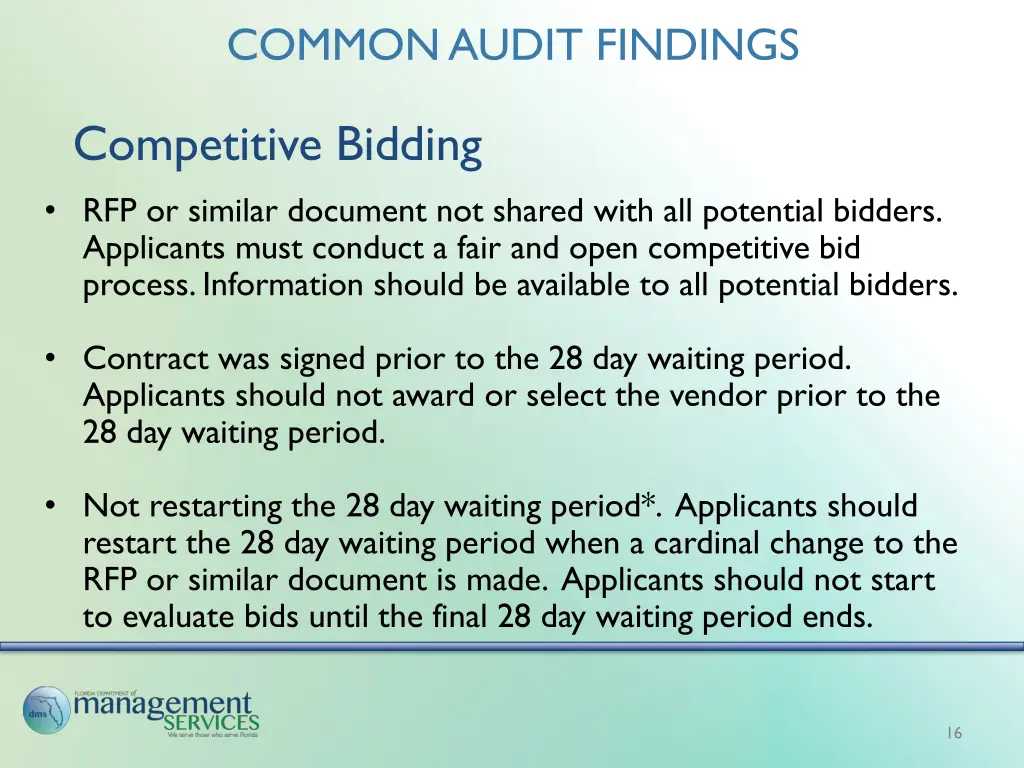
COMMON AUDIT FINDINGS Competitive Bidding RFP or similar document not shared with all potential bidders. Applicants must conduct a fair and open competitive bid process. Information should be available to all potential bidders. Contract was signed prior to the 28 day waiting period. Applicants should not award or select the vendor prior to the 28 day waiting period. Not restarting the 28 day waiting period*. Applicants should restart the 28 day waiting period when a cardinal change to the RFP or similar document is made. Applicants should not start to evaluate bids until the final 28 day waiting period ends. 16
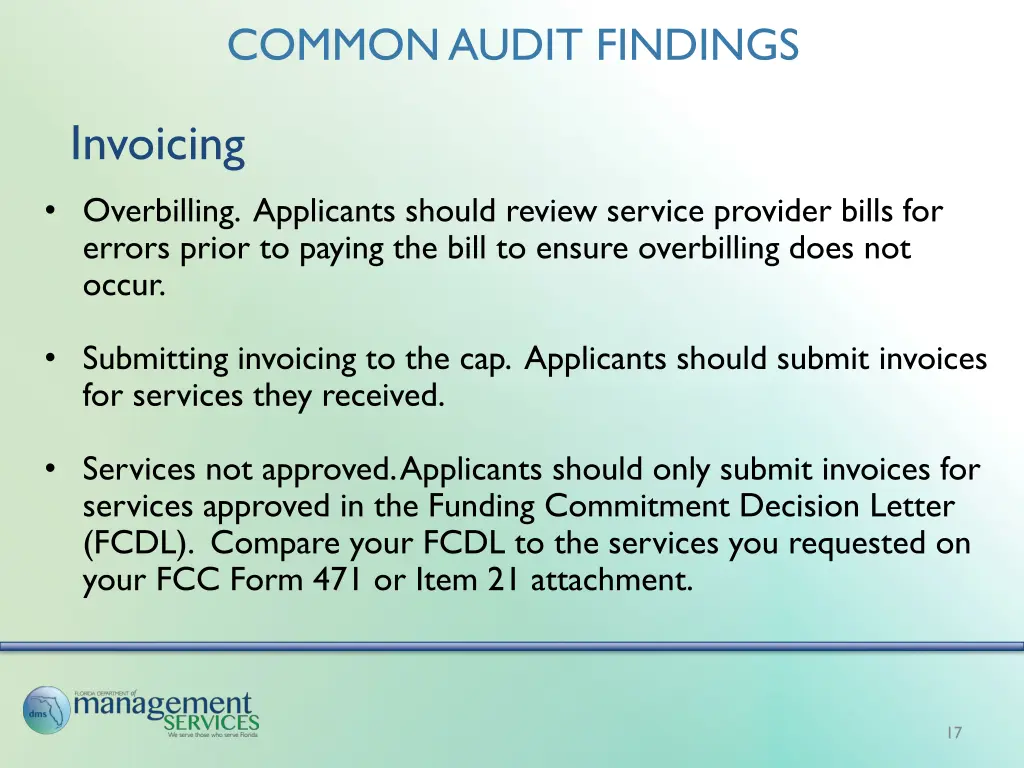
COMMON AUDIT FINDINGS Invoicing Overbilling. Applicants should review service provider bills for errors prior to paying the bill to ensure overbilling does not occur. Submitting invoicing to the cap. Applicants should submit invoices for services they received. Services not approved. Applicants should only submit invoices for services approved in the Funding Commitment Decision Letter (FCDL). Compare your FCDL to the services you requested on your FCC Form 471 or Item 21 attachment. 17
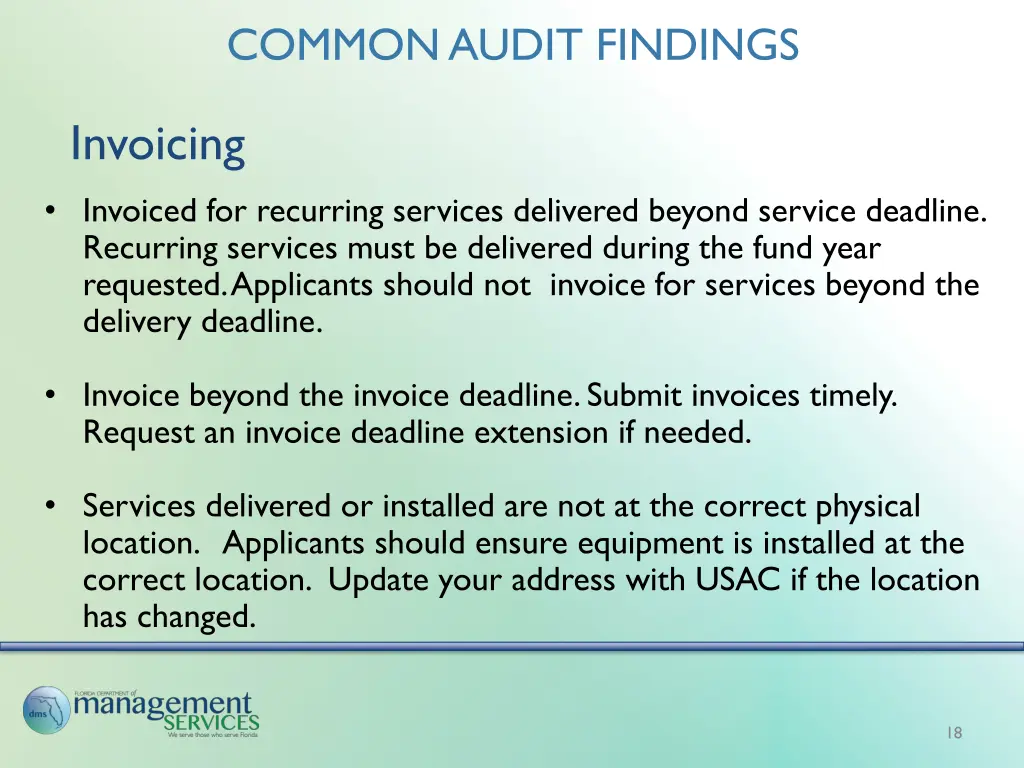
COMMON AUDIT FINDINGS Invoicing Invoiced for recurring services delivered beyond service deadline. Recurring services must be delivered during the fund year requested. Applicants should not invoice for services beyond the delivery deadline. Invoice beyond the invoice deadline. Submit invoices timely. Request an invoice deadline extension if needed. Services delivered or installed are not at the correct physical location. Applicants should ensure equipment is installed at the correct location. Update your address with USAC if the location has changed. 18
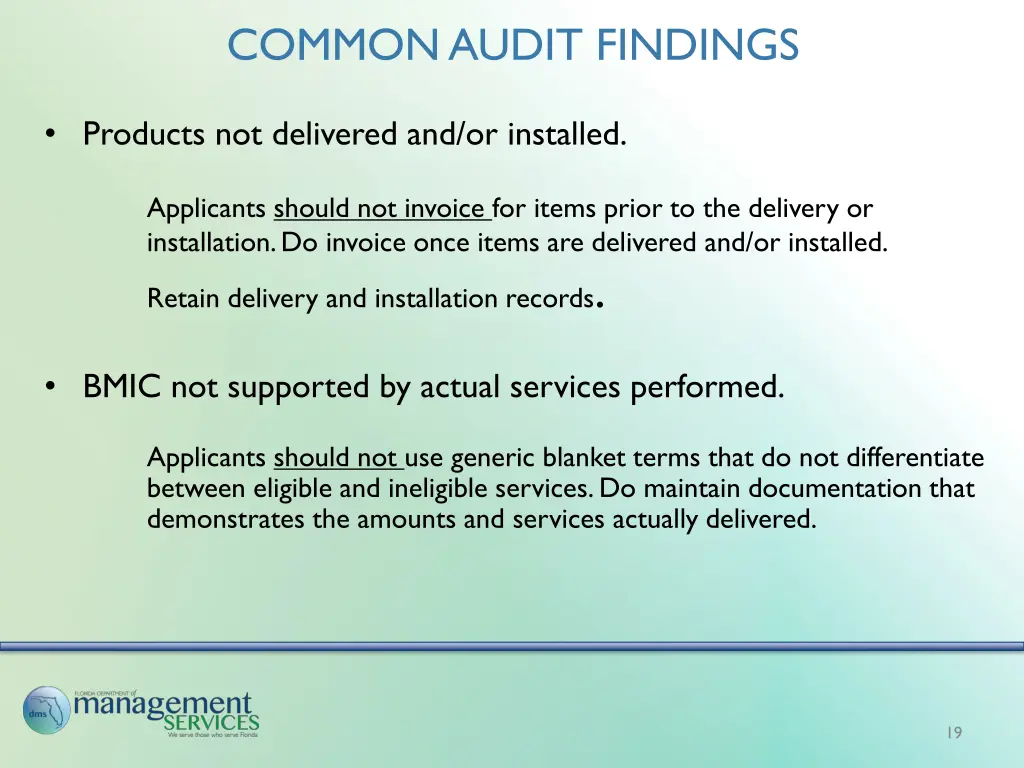
COMMON AUDIT FINDINGS Products not delivered and/or installed. Applicants should not invoice for items prior to the delivery or installation. Do invoice once items are delivered and/or installed. Retain delivery and installation records. BMIC not supported by actual services performed. Applicants should not use generic blanket terms that do not differentiate between eligible and ineligible services. Do maintain documentation that demonstrates the amounts and services actually delivered. 19
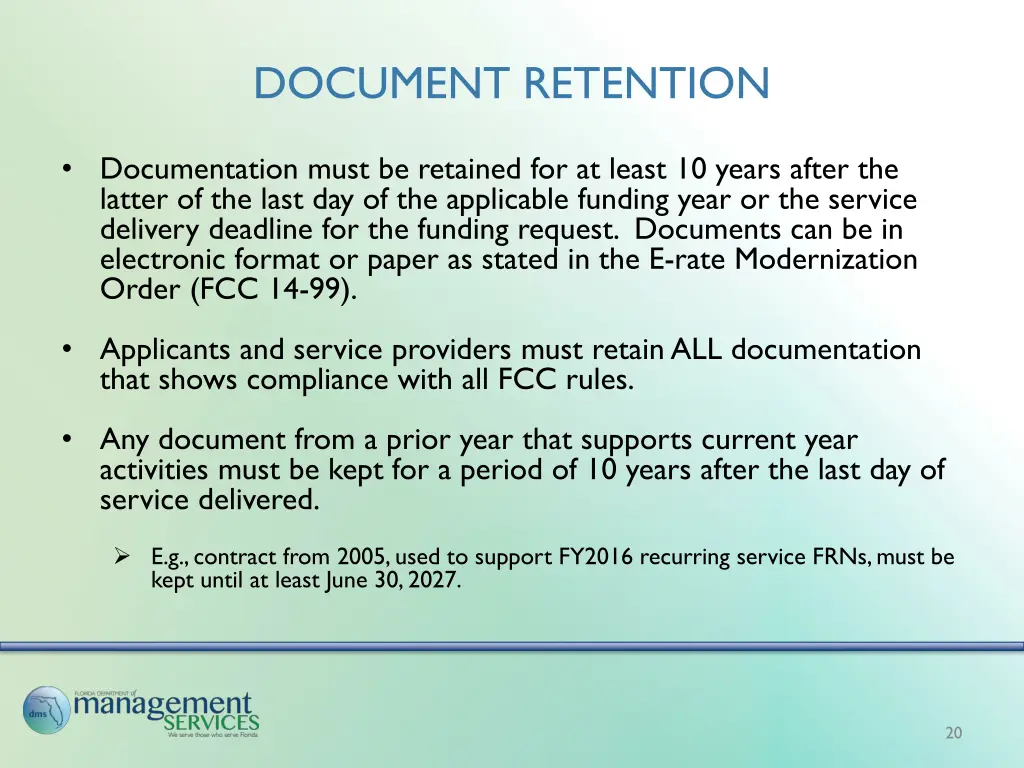
DOCUMENT RETENTION Documentation must be retained for at least 10 years after the latter of the last day of the applicable funding year or the service delivery deadline for the funding request. Documents can be in electronic format or paper as stated in the E-rate Modernization Order (FCC 14-99). Applicants and service providers must retain ALL documentation that shows compliance with all FCC rules. Any document from a prior year that supports current year activities must be kept for a period of 10 years after the last day of service delivered. E.g., contract from 2005, used to support FY2016 recurring service FRNs, must be kept until at least June 30, 2027. 20
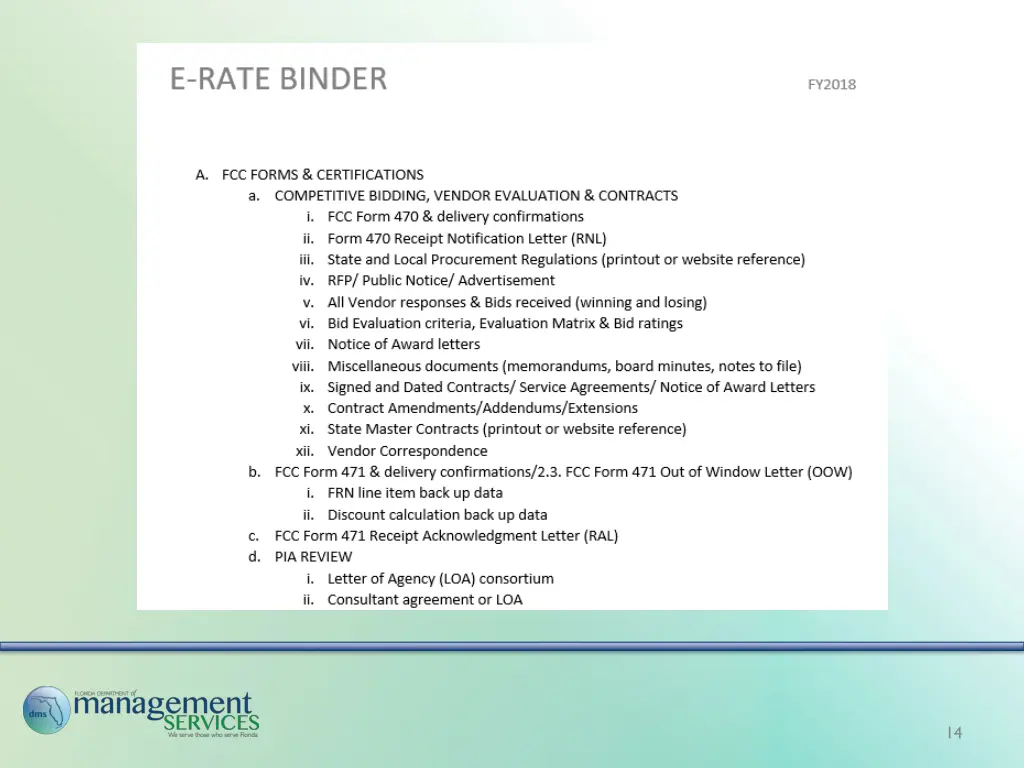
DOCUMENTS TO RETAIN This list is for illustrative purposes. Service providers and applicants must retain pursuant to recordkeeping requirement, as applicable. RFPs or similar documents Delivery and installation records All bid responses and correspondence Maintenance logs Contracts, service agreements, addendums, etc. Payments (canceled checks, credit card receipts, ACH transactions) Purchase requisitions, POs, packing slips, customer bills 21
DOCUMENTS TO RETAIN This list is for illustrative purposes. Service providers and applicants must retain pursuant to recordkeeping requirement, as applicable. USAC-approved SPIN changes and/or service substitutions (request, supporting documentation, and approval) Documents used to prepare forms FCC forms and letters received from USAC (e.g., FCC Forms 498, 474) USAC-approved invoice deadline extension, service delivery and service substitution (request, supporting documentation, and approval) Service provider price listings 22
PLANNING AHEAD Chad Poppell, Secretary 23
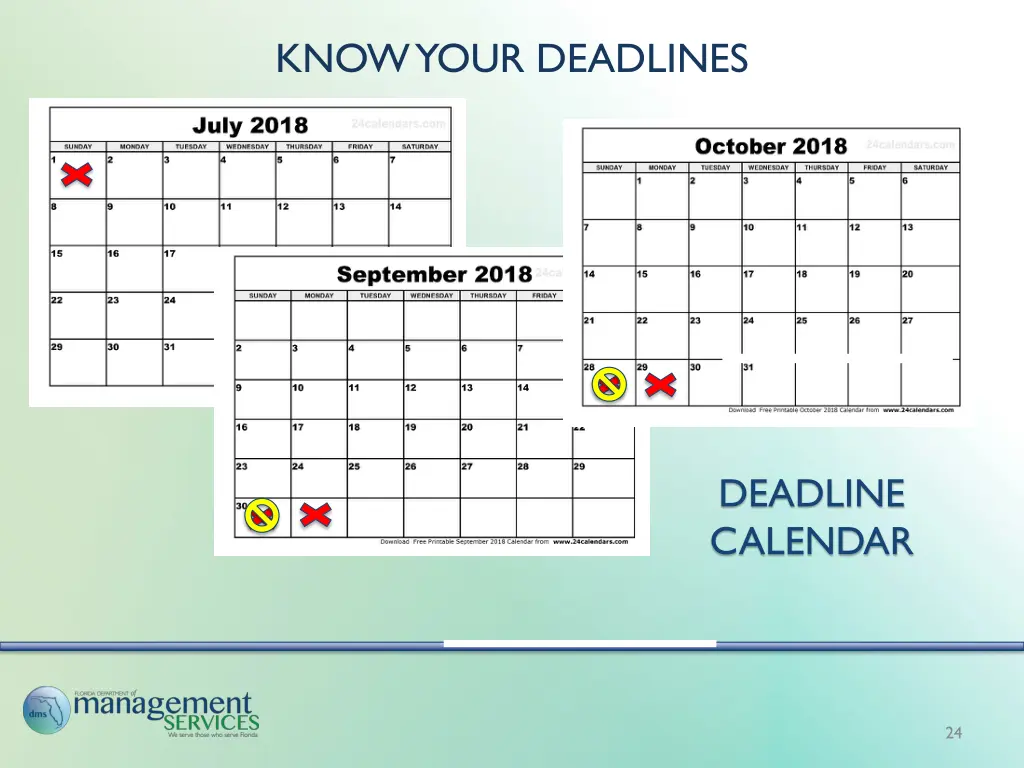
KNOW YOUR DEADLINES DEADLINE CALENDAR 24
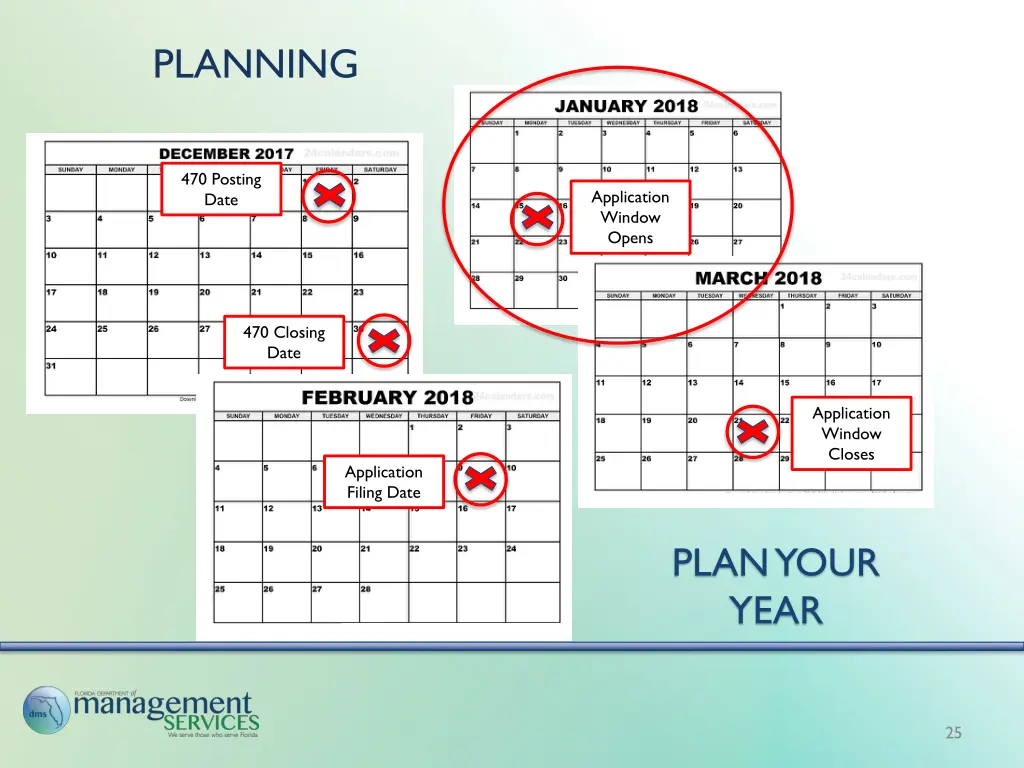
PLANNING 470 Posting Date Application Window Opens 470 Closing Date Application Window Closes Application Filing Date PLAN YOUR YEAR 25
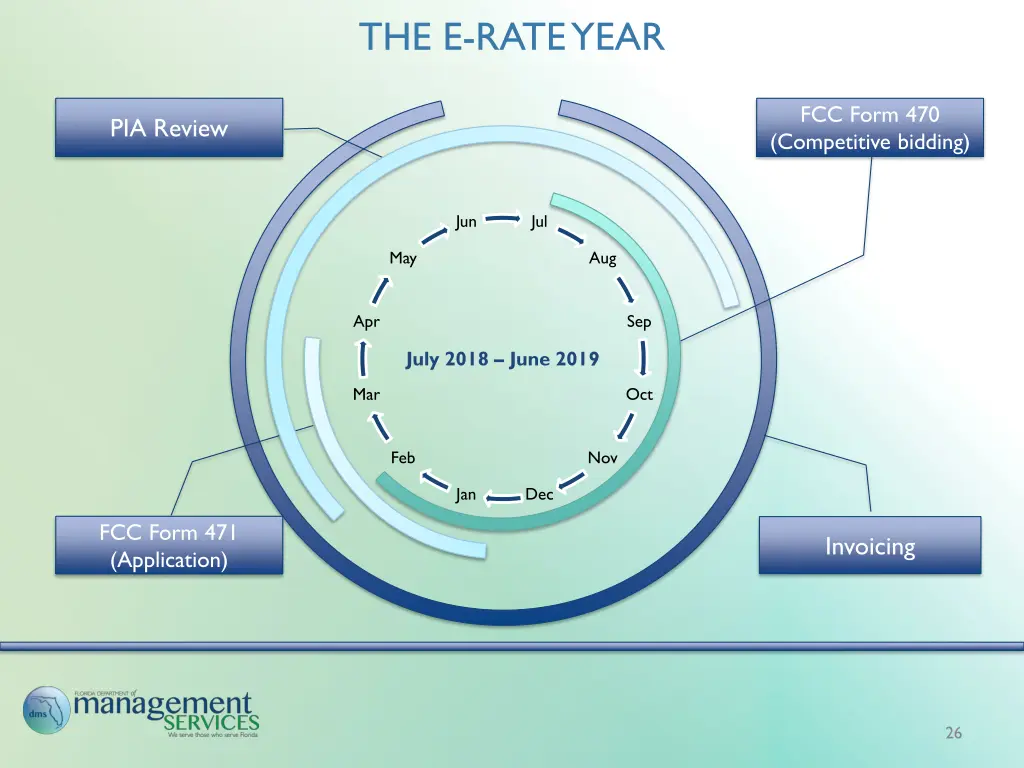
THE E-RATE YEAR FCC Form 470 (Competitive bidding) PIA Review Jun Jul May Aug Apr Sep July 2018 June 2019 Mar Oct Feb Nov Jan Dec FCC Form 471 (Application) Invoicing 26
HELPFUL TIPS Chad Poppell, Secretary 27
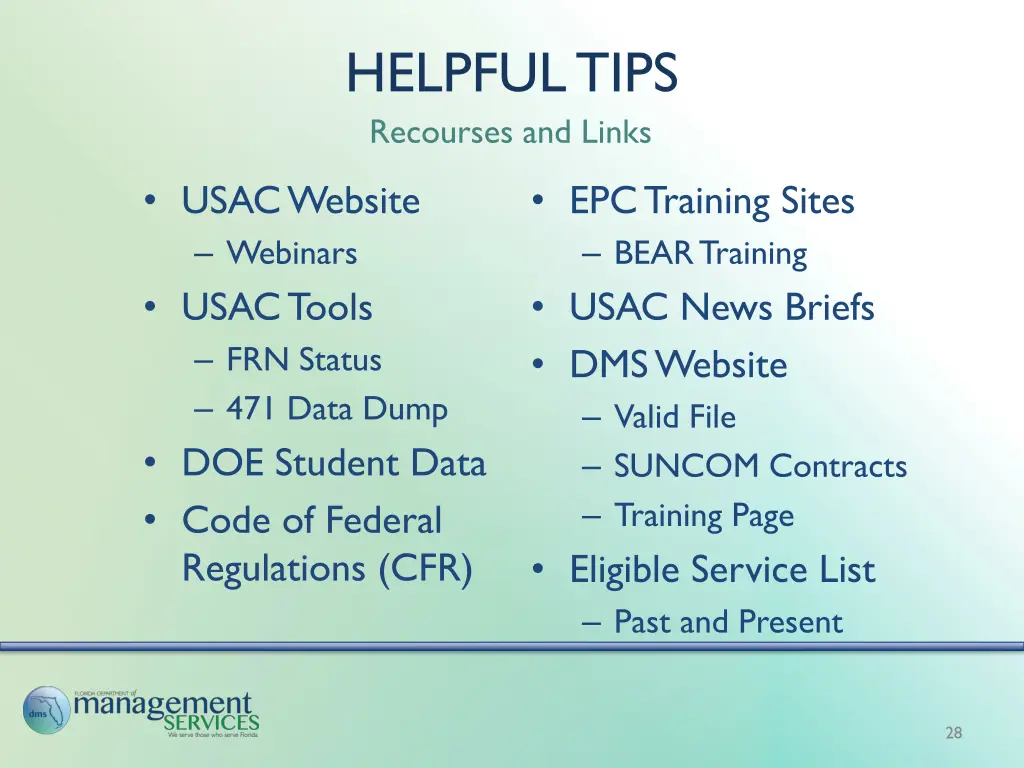
HELPFUL TIPS Recourses and Links USAC Website Webinars USAC Tools FRN Status 471 Data Dump DOE Student Data Code of Federal Regulations (CFR) EPC Training Sites BEAR Training USAC News Briefs DMS Website Valid File SUNCOM Contracts Training Page Eligible Service List Past and Present 28
DATA Chad Poppell, Secretary 29
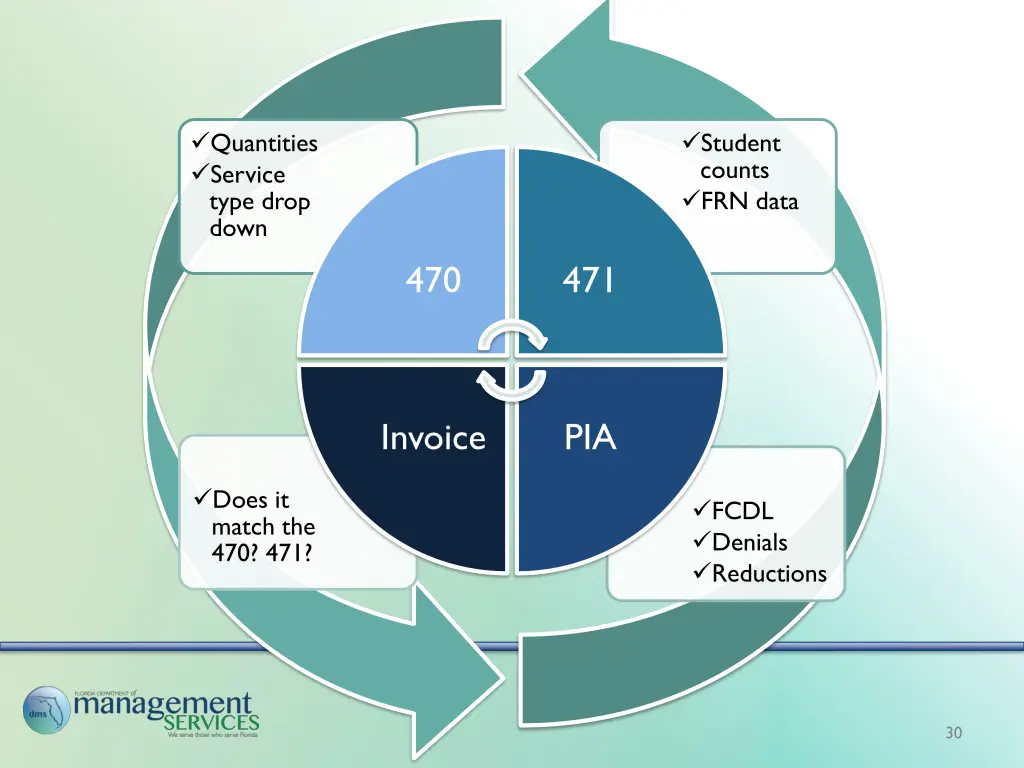
Quantities Service type drop down Student counts FRN data 470 471 Invoice PIA Does it match the 470? 471? FCDL Denials Reductions 30
EPC PREVIEW Chad Poppell, Secretary 31