Abstractions for Relaxed Memory Models

This content delves into abstractions for relaxed memory models, discussing verification under such models, changing programs for P.M.S, examples like efficient synchronization with barriers, and the placement of synchronization barriers in a Boids simulation. It also explores Dekker's Algorithm as a textbook example for mutual exclusion in critical sections.

Download Presentation

Please find below an Image/Link to download the presentation.
The content on the website is provided AS IS for your information and personal use only. It may not be sold, licensed, or shared on other websites without obtaining consent from the author.If you encounter any issues during the download, it is possible that the publisher has removed the file from their server.
You are allowed to download the files provided on this website for personal or commercial use, subject to the condition that they are used lawfully. All files are the property of their respective owners.
The content on the website is provided AS IS for your information and personal use only. It may not be sold, licensed, or shared on other websites without obtaining consent from the author.
E N D
Presentation Transcript
Abstractions for Relaxed Memory Models Andrei Dan, Yuri Meshman, Martin Vechev, Eran Yahav 1
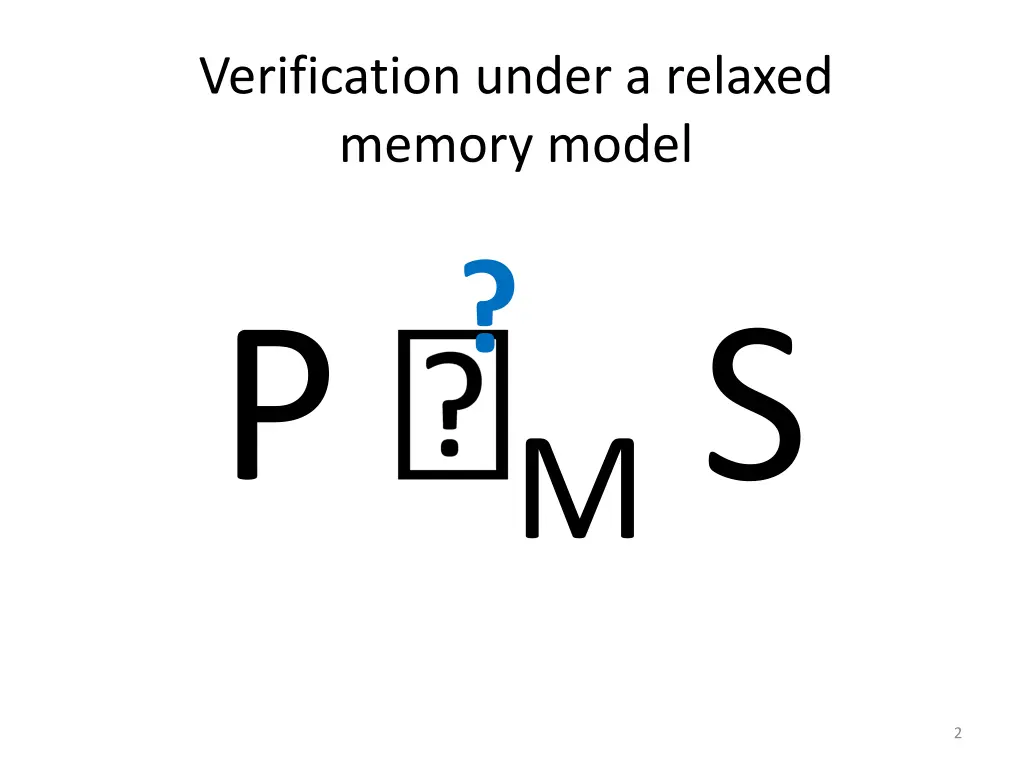
Verification under a relaxed memory model ? P M S 2
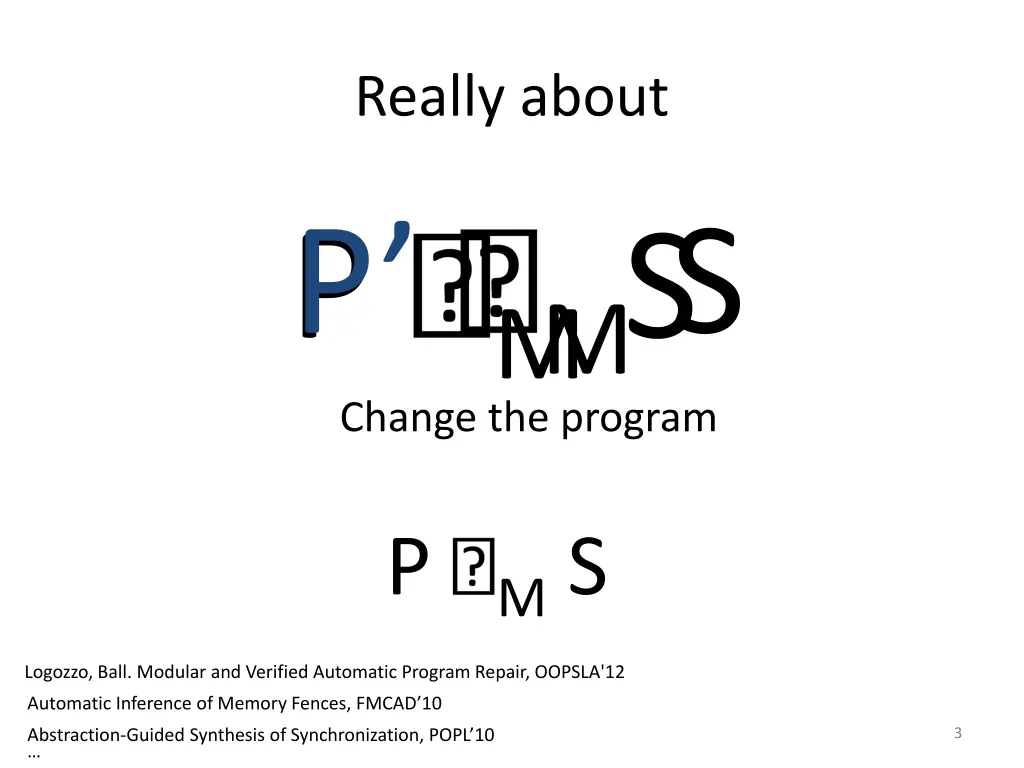
Really about P M S Change the program P M S P M S Logozzo, Ball. Modular and Verified Automatic Program Repair, OOPSLA'12 Automatic Inference of Memory Fences, FMCAD 10 3 Abstraction-Guided Synthesis of Synchronization, POPL 10
Example: Correct and Efficient Synchronization with Barriers Boids simulation Craig Reynolds ,"Flocks, herds and schools: A distributed behavioral model.", SIGGRAPH '87 Sequential implementation by Paul Richmond (U. of Sheffield) Global state contains shared array of Boid locations N Boids 4
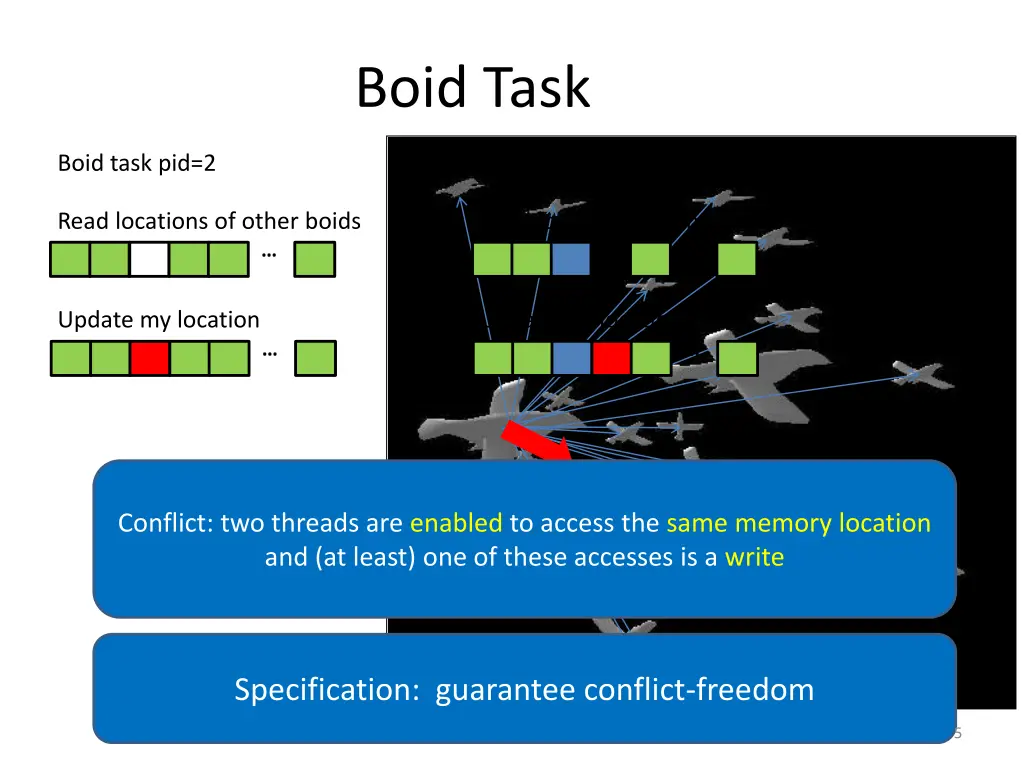
Boid Task Boid task pid=2 Boid task pid=3 Read locations of other boids Read locations of other boids Update my location Update my location pid=2 Conflict: two threads are enabled to access the same memory location and (at least) one of these accesses is a write Specification: guarantee conflict-freedom 5
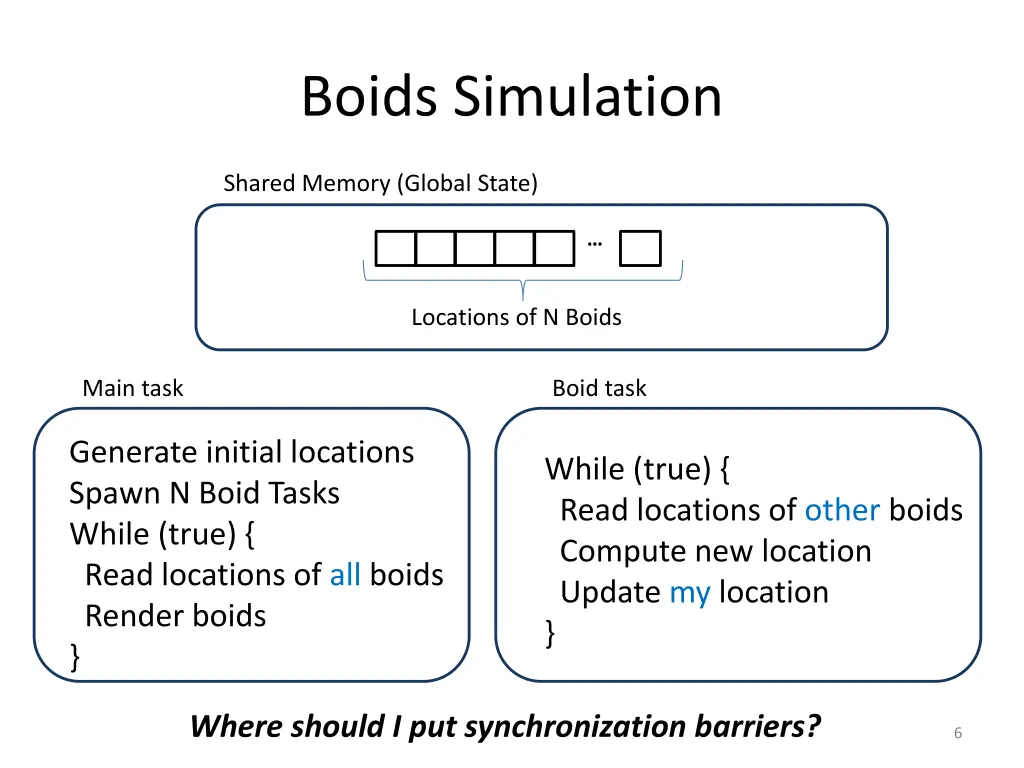
Boids Simulation Shared Memory (Global State) Locations of N Boids Main task Boid task Generate initial locations Spawn N Boid Tasks While (true) { Read locations of all boids Render boids } While (true) { Read locations of other boids Compute new location Update my location } Where should I put synchronization barriers? 6
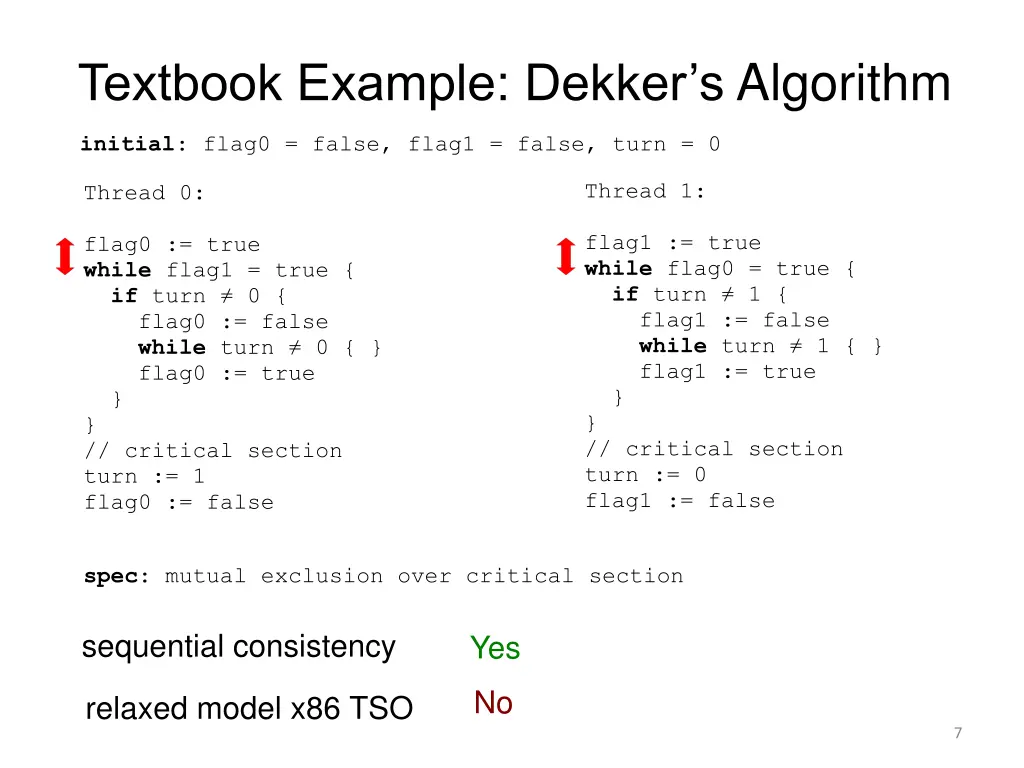
Textbook Example: Dekkers Algorithm initial: flag0 = false, flag1 = false, turn = 0 Thread 1: Thread 0: flag0 := true while flag1 = true { ifturn 0 { flag0 := false whileturn 0 { } flag0 := true } } // critical section turn := 1 flag0 := false flag1 := true while flag0 = true { ifturn 1 { flag1 := false whileturn 1 { } flag1 := true } } // critical section turn := 0 flag1 := false spec: mutual exclusion over critical section sequential consistency Yes No relaxed model x86 TSO 7
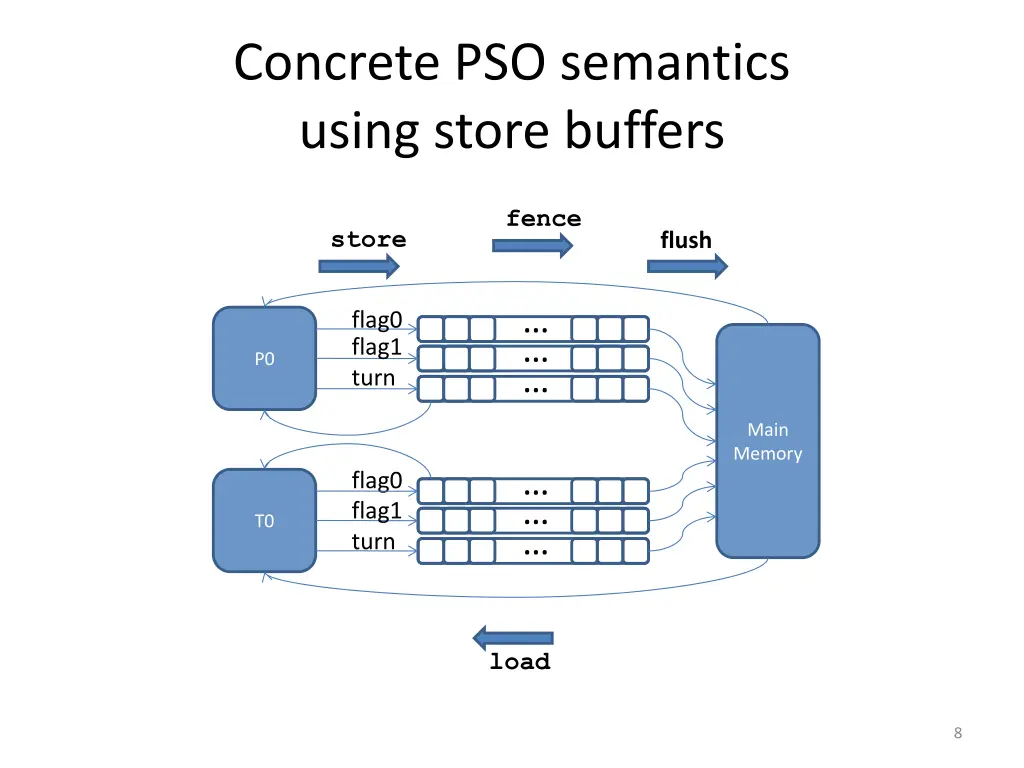
Concrete PSO semantics using store buffers fence store flush flag0 flag1 turn P0 Main Memory flag0 flag1 turn T0 load 8
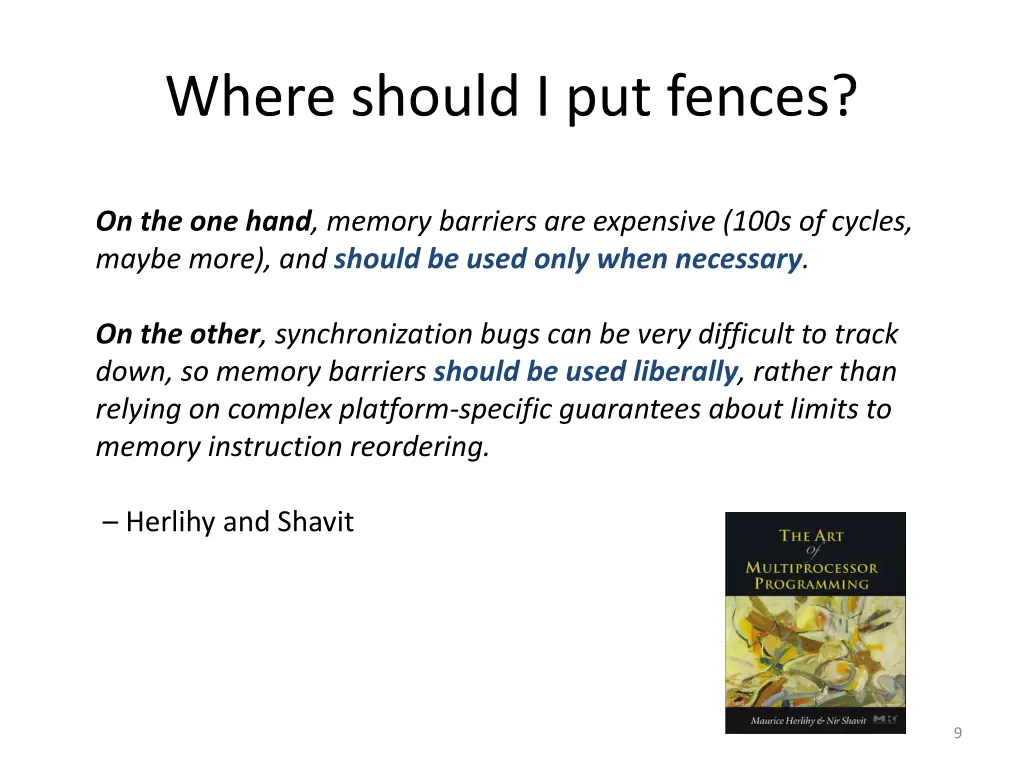
Where should I put fences? On the one hand, memory barriers are expensive (100s of cycles, maybe more), and should be used only when necessary. On the other, synchronization bugs can be very difficult to track down, so memory barriers should be used liberally, rather than relying on complex platform-specific guarantees about limits to memory instruction reordering. Herlihy and Shavit 9
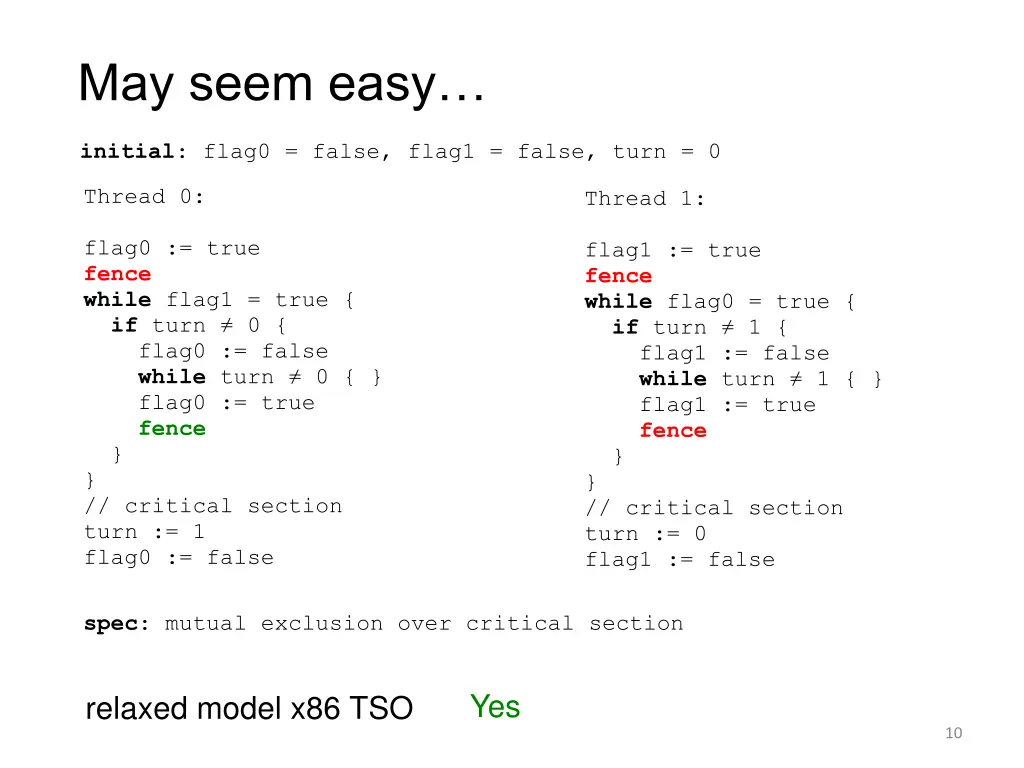
May seem easy initial: flag0 = false, flag1 = false, turn = 0 Thread 0: flag0 := true fence while flag1 = true { ifturn 0 { flag0 := false whileturn 0 { } flag0 := true fence } } // critical section turn := 1 flag0 := false Thread 1: flag1 := true fence while flag0 = true { ifturn 1 { flag1 := false whileturn 1 { } flag1 := true fence } } // critical section turn := 0 flag1 := false spec: mutual exclusion over critical section Yes relaxed model x86 TSO 10
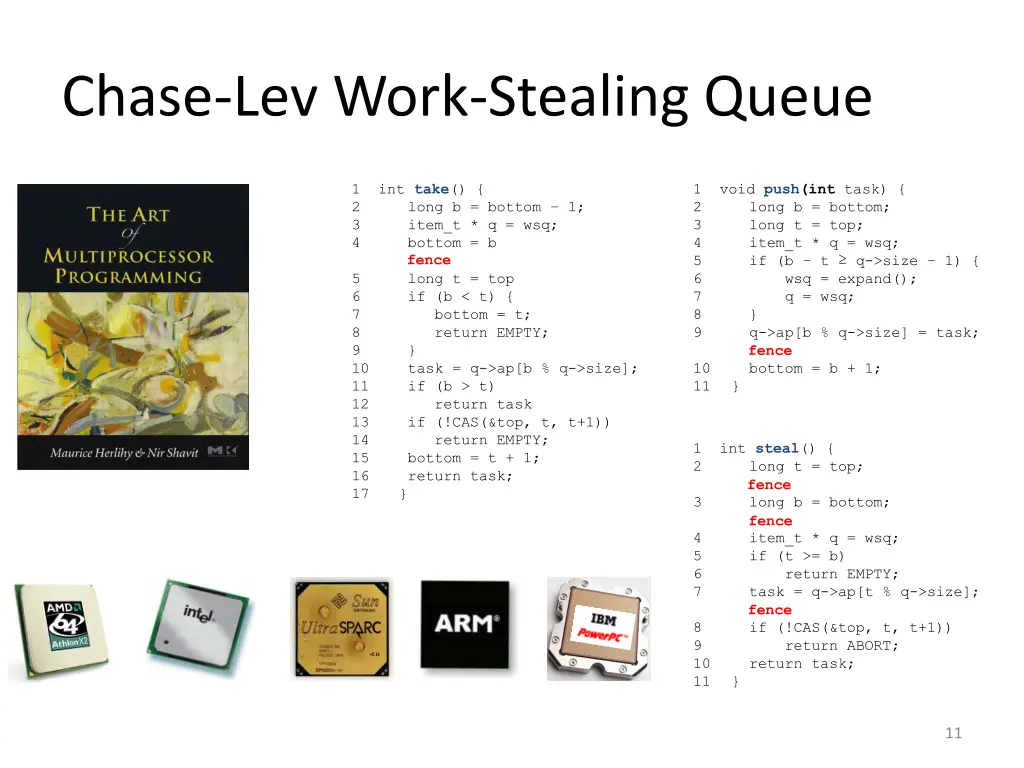
Chase-Lev Work-Stealing Queue 1 int take() { 2 long b = bottom 1; 3 item_t * q = wsq; 4 bottom = b fence 1 void push(int task) { 2 long b = bottom; 3 long t = top; 4 item_t * q = wsq; 5 if (b t q->size 1) { 6 wsq = expand(); 7 q = wsq; 8 } 9 q->ap[b % q->size] = task; fence 5 6 7 8 9 10 11 12 13 14 15 16 17 long t = top if (b < t) { bottom = t; return EMPTY; } task = q->ap[b % q->size]; if (b > t) return task if (!CAS(&top, t, t+1)) return EMPTY; bottom = t + 1; return task; } 10 11 bottom = b + 1; } 1 int steal() { 2 long t = top; fence 3 long b = bottom; fence 4 5 6 7 item_t * q = wsq; if (t >= b) return EMPTY; task = q->ap[t % q->size]; fence 8 9 10 11 if (!CAS(&top, t, t+1)) return ABORT; return task; } 11
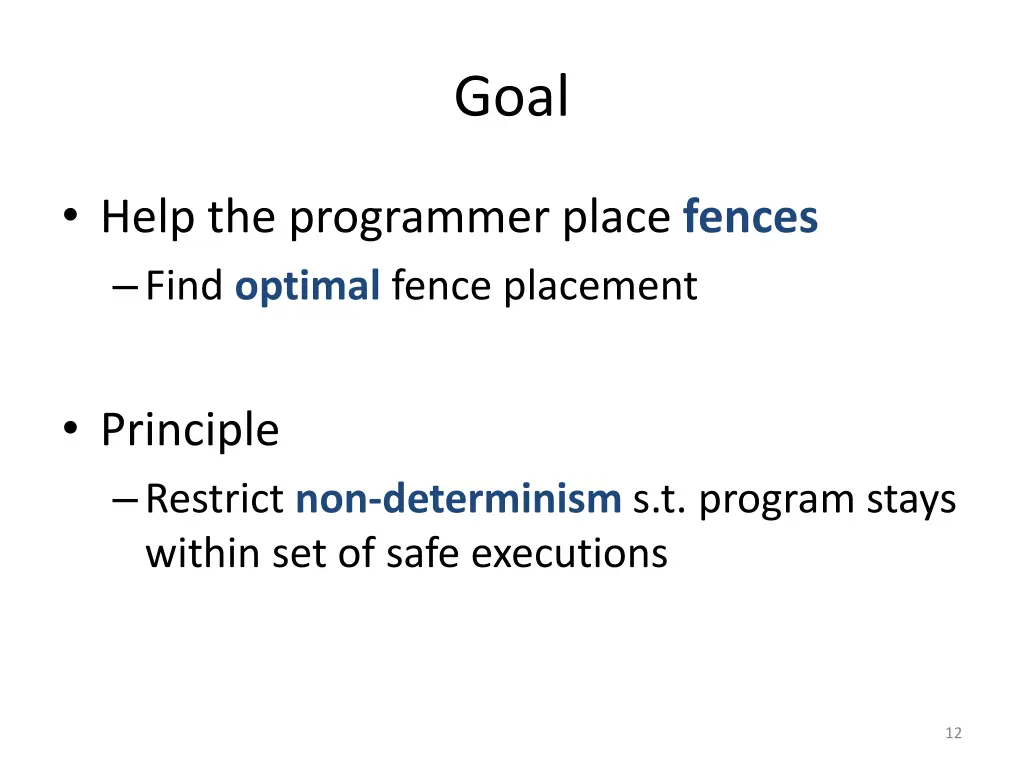
Goal Help the programmer place fences Find optimal fence placement Principle Restrict non-determinism s.t. program stays within set of safe executions 12
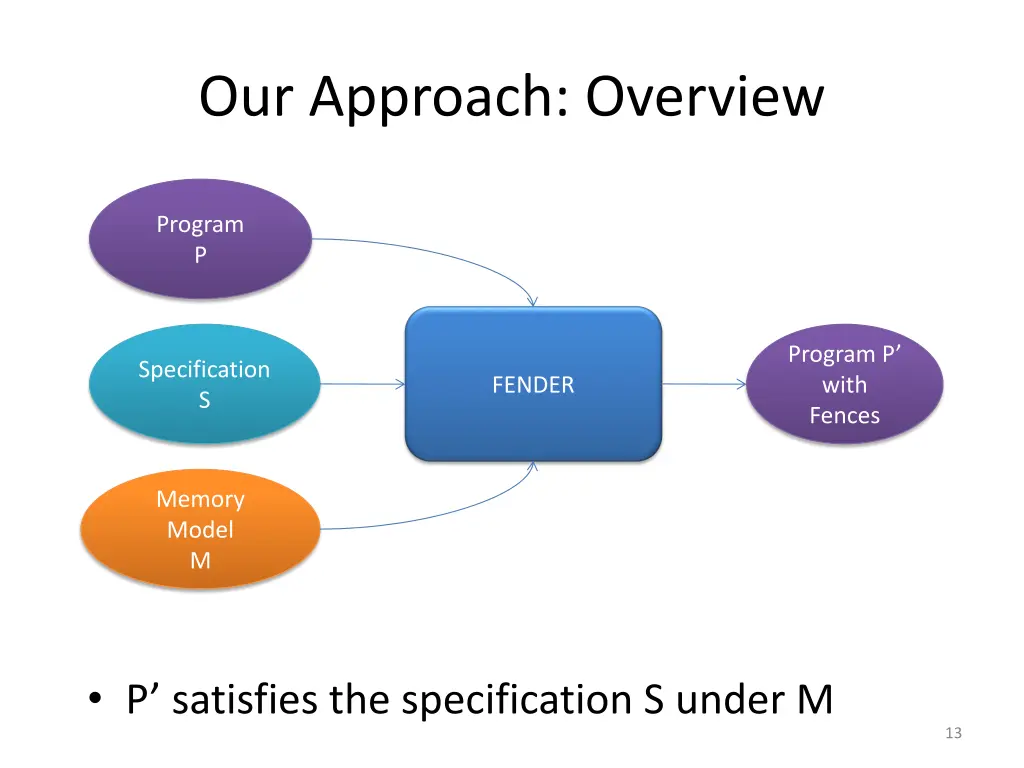
Our Approach: Overview Program P Program P with Fences Specification S FENDER Memory Model M P satisfies the specification S under M 13
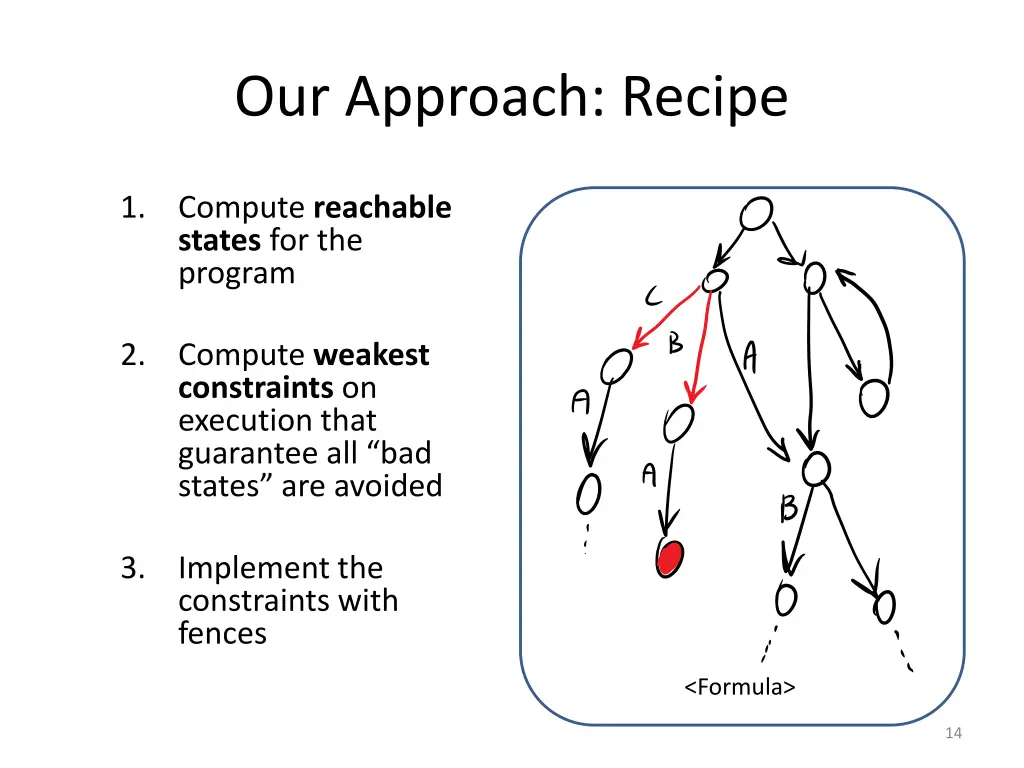
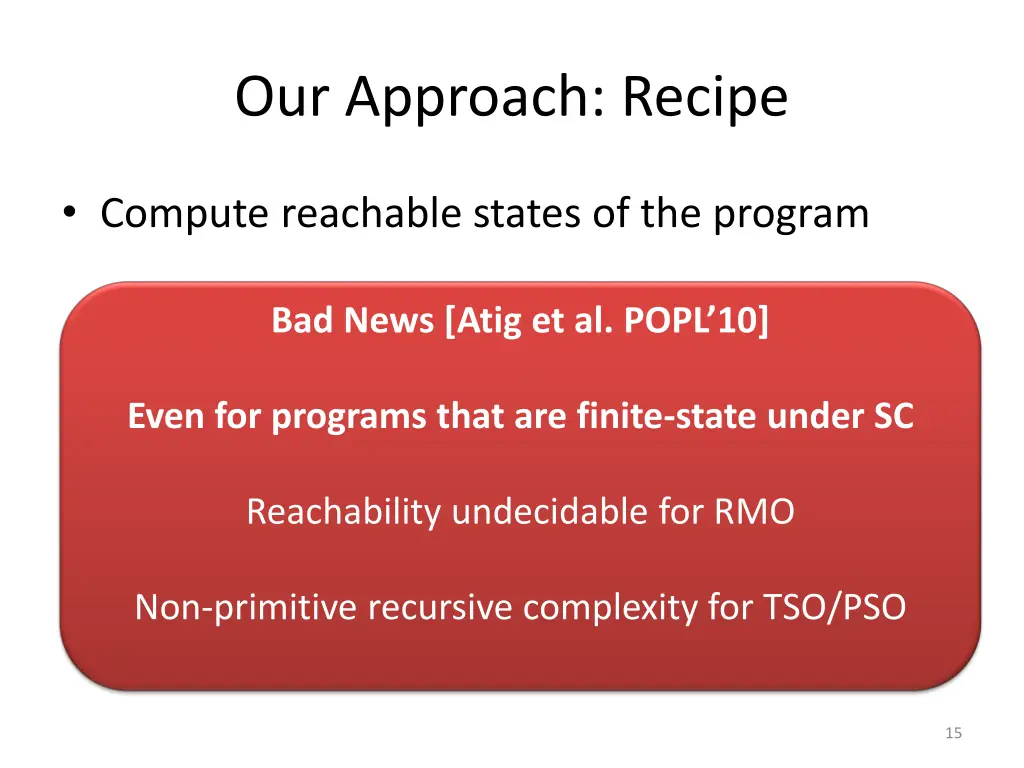
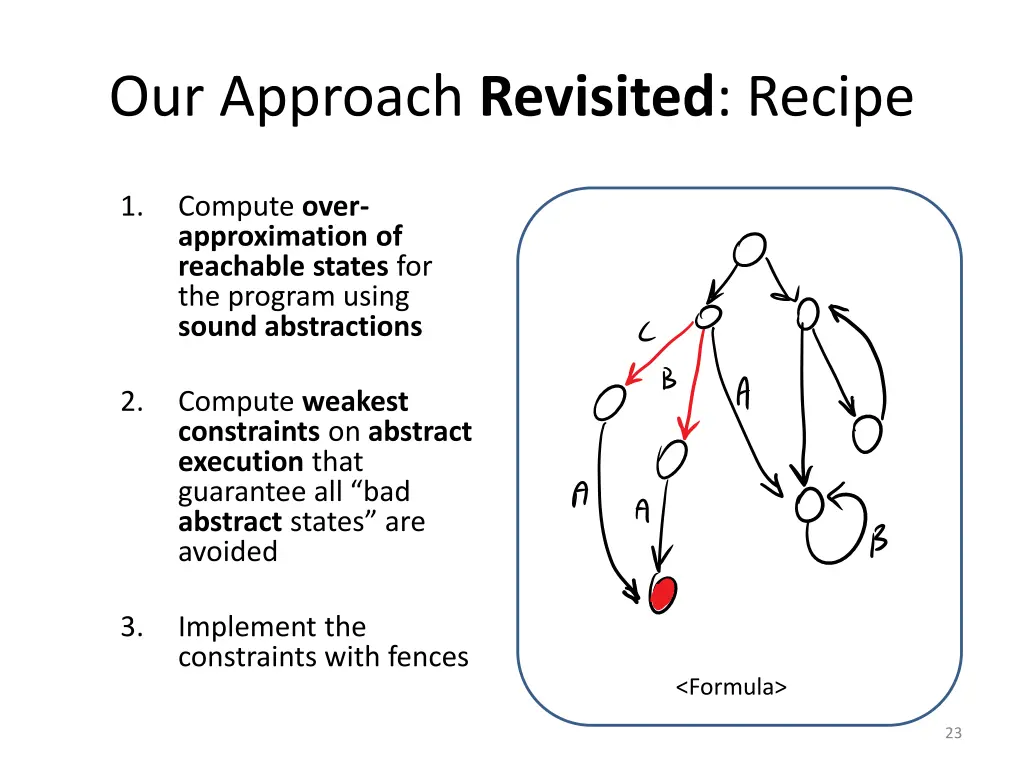
Our Approach: Recipe 1. Compute reachable states for the program 2. Compute weakest constraints on execution that guarantee all bad states are avoided 3. Implement the constraints with fences <Formula> 14
Our Approach: Recipe Compute reachable states of the program Bad News [Atig et al. POPL 10] Compute constraints on execution that guarantee that all bad states are avoided Even for programs that are finite-state under SC Reachability undecidable for RMO Implement the constraints with fences Non-primitive recursive complexity for TSO/PSO 15
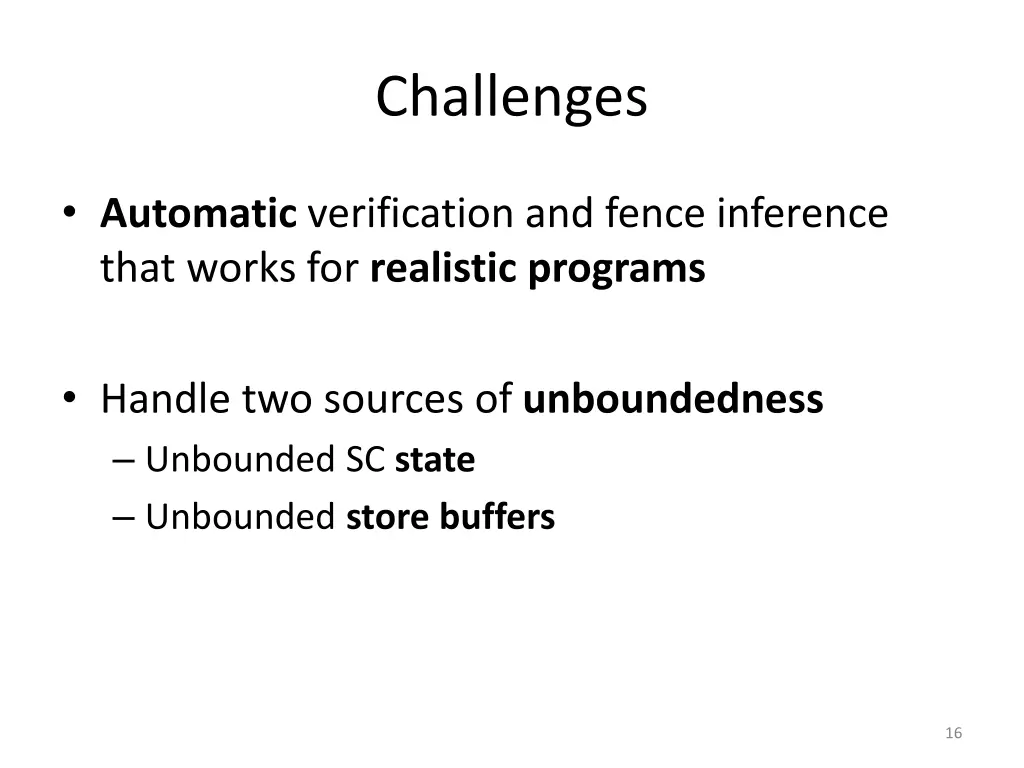
Challenges Automatic verification and fence inference that works for realistic programs Handle two sources of unboundedness Unbounded SC state Unbounded store buffers 16
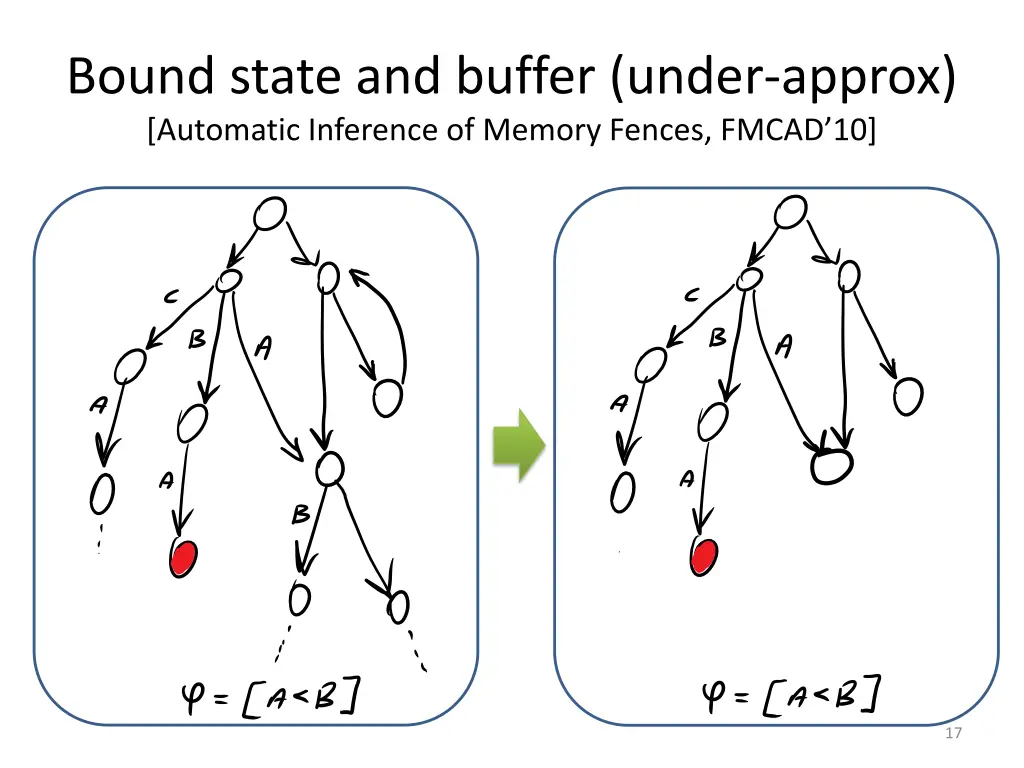
Bound state and buffer (under-approx) [Automatic Inference of Memory Fences, FMCAD 10] 17
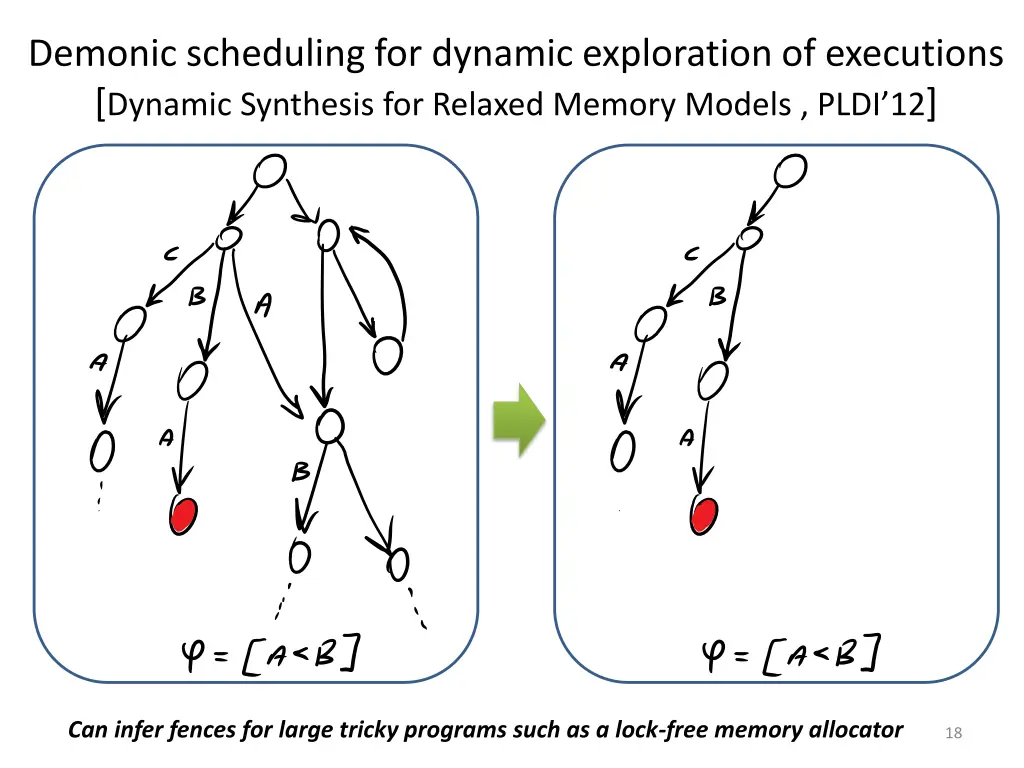
Demonic scheduling for dynamic exploration of executions [Dynamic Synthesis for Relaxed Memory Models , PLDI 12] Can infer fences for large tricky programs such as a lock-free memory allocator 18
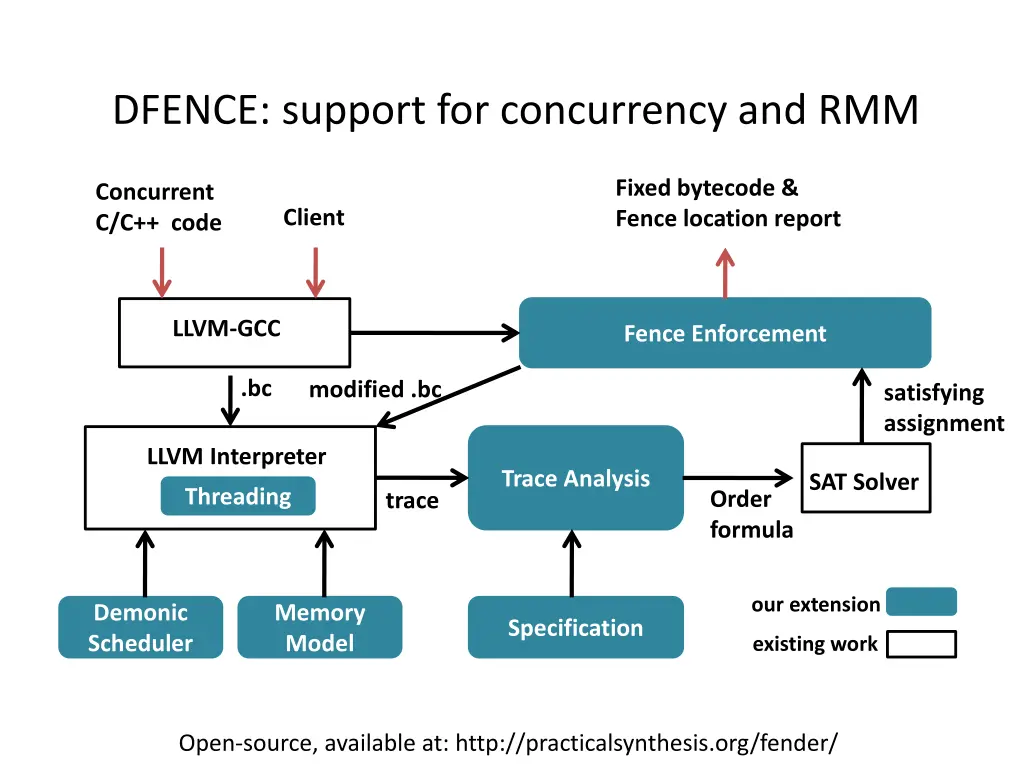
DFENCE: support for concurrency and RMM Fixed bytecode & Fence location report Concurrent C/C++ code Client LLVM-GCC Fence Enforcement .bc modified .bc satisfying assignment LLVM Interpreter Trace Analysis SAT Solver Threading Order formula trace our extension Demonic Scheduler Memory Model Specification existing work Open-source, available at: http://practicalsynthesis.org/fender/
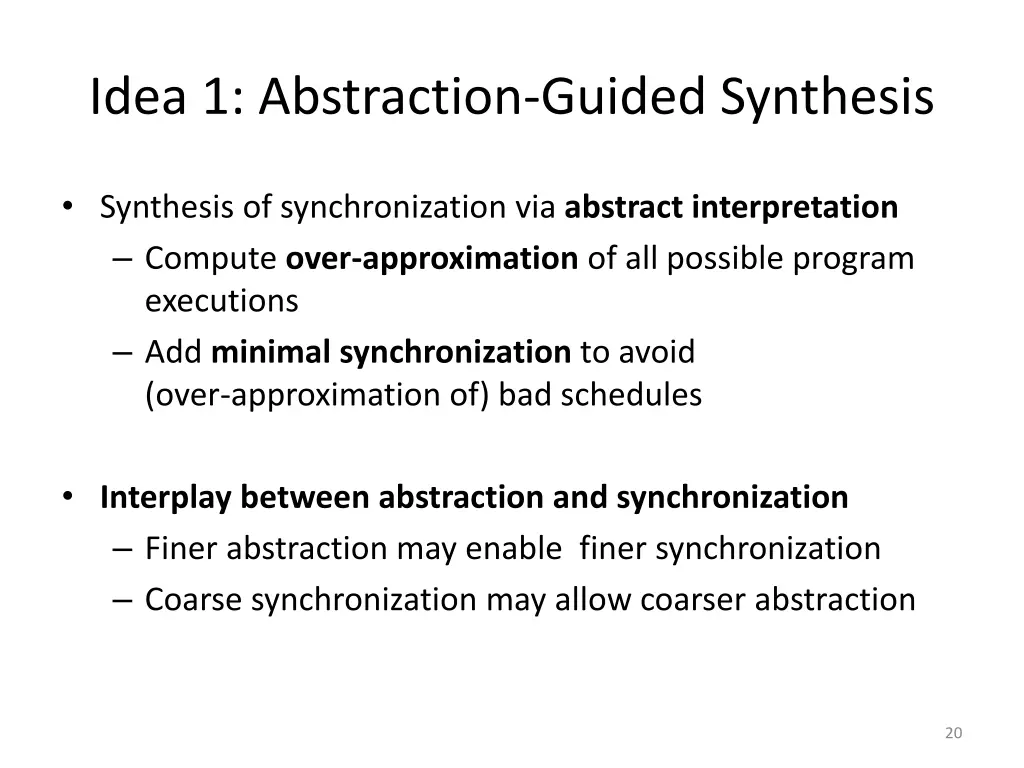
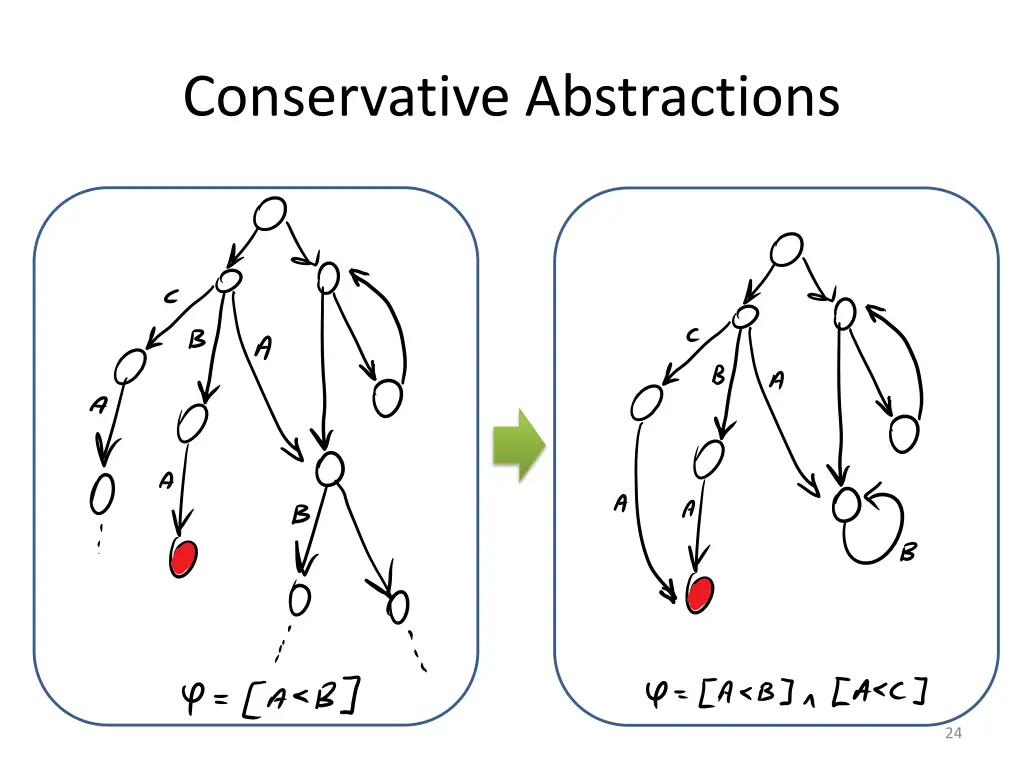
Idea 1: Abstraction-Guided Synthesis Synthesis of synchronization via abstract interpretation Compute over-approximation of all possible program executions Add minimal synchronization to avoid (over-approximation of) bad schedules Interplay between abstraction and synchronization Finer abstraction may enable finer synchronization Coarse synchronization may allow coarser abstraction 20
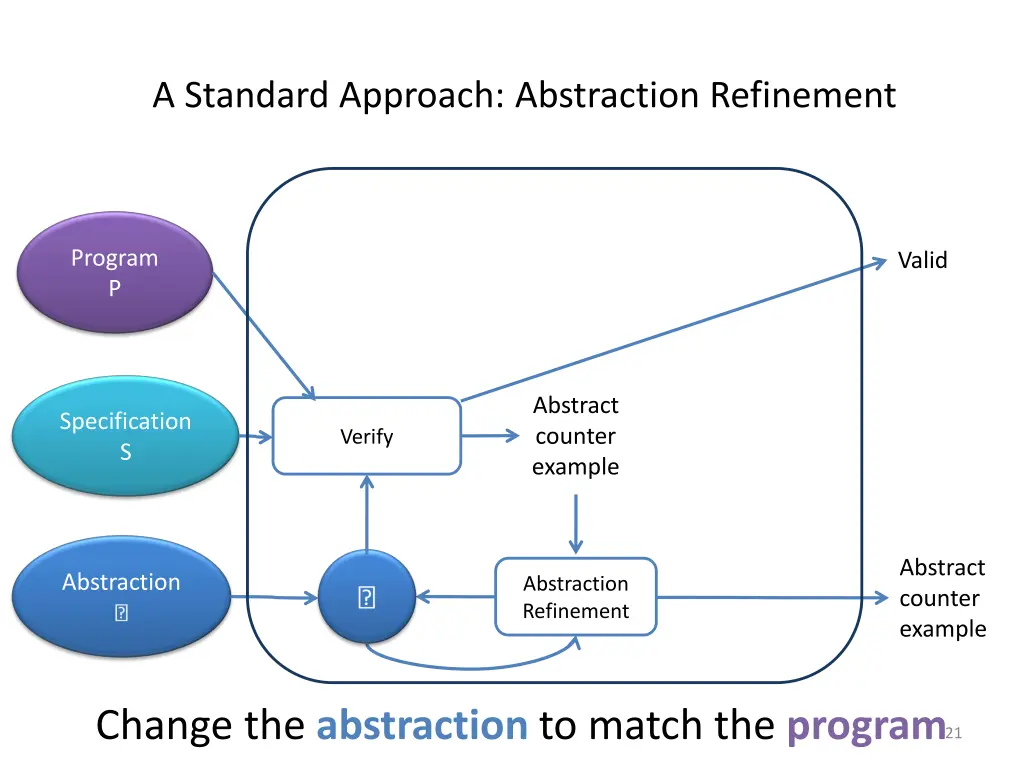
A Standard Approach: Abstraction Refinement Program P Valid Abstract counter example Specification S Verify Abstract counter example Abstraction Abstraction Refinement Change the abstraction to match the program 21
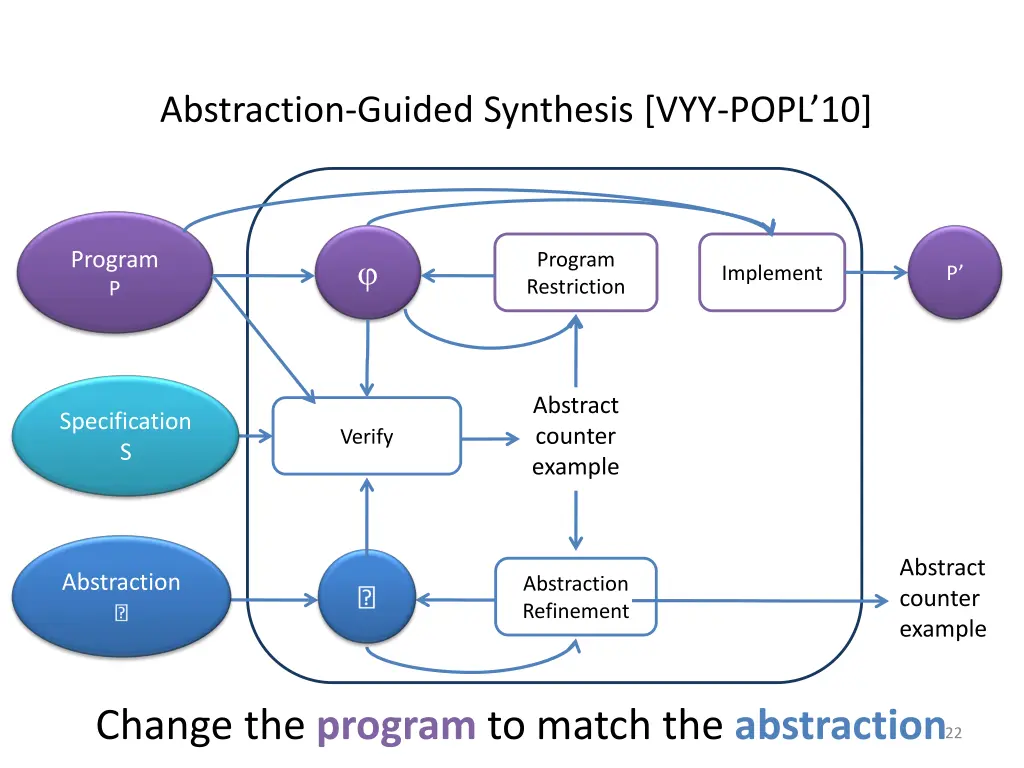
Abstraction-Guided Synthesis [VYY-POPL10] Program P Program Restriction Implement P Abstract counter example Specification S Verify Abstract counter example Abstraction Abstraction Refinement Change the program to match the abstraction 22
Our Approach Revisited: Recipe 1. Compute over- approximation of reachable states for the program using sound abstractions 2. Compute weakest constraints on abstract execution that guarantee all bad abstractstates are avoided 3. Implement the constraints with fences <Formula> 23
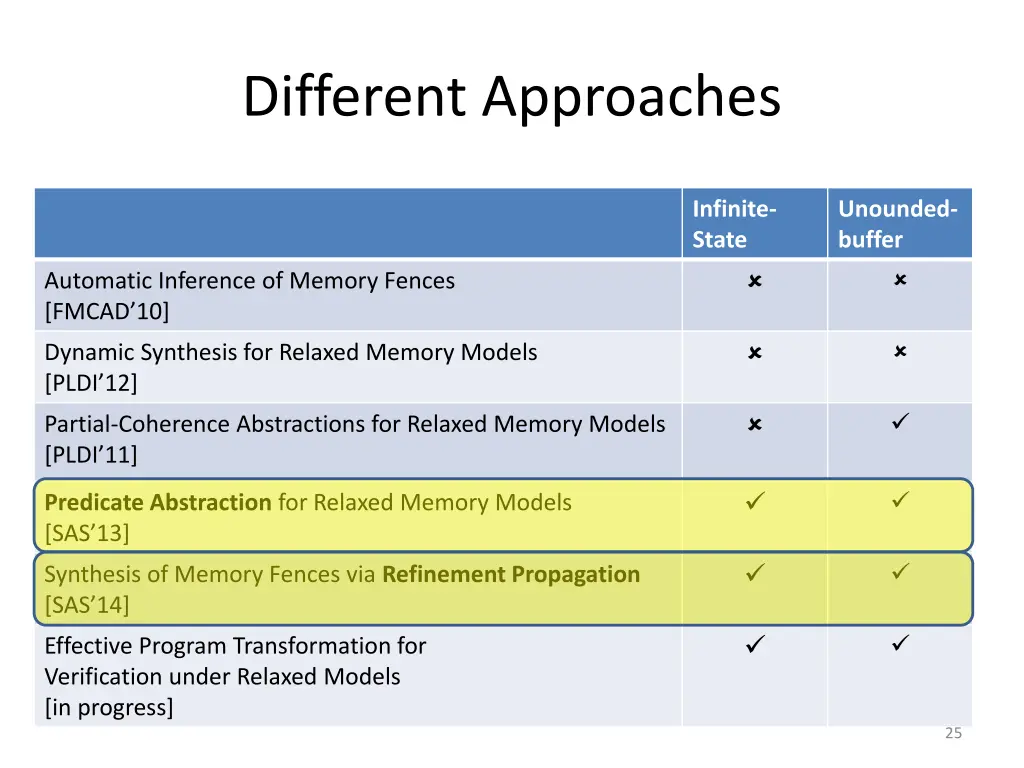
Different Approaches Infinite- State Unounded- buffer Automatic Inference of Memory Fences [FMCAD 10] Dynamic Synthesis for Relaxed Memory Models [PLDI 12] Partial-Coherence Abstractions for Relaxed Memory Models [PLDI 11] Predicate Abstraction for Relaxed Memory Models [SAS 13] Synthesis of Memory Fences via Refinement Propagation [SAS 14] Effective Program Transformation for Verification under Relaxed Models [in progress] 25
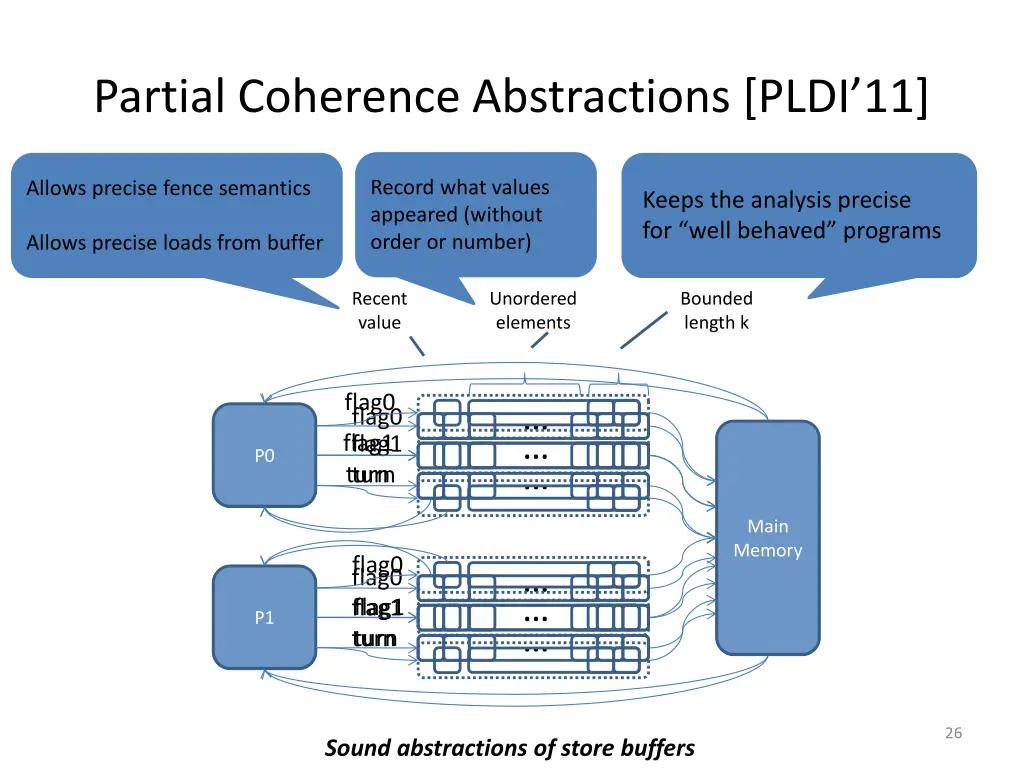
Partial Coherence Abstractions [PLDI11] Record what values appeared (without order or number) Allows precise fence semantics Keeps the analysis precise for well behaved programs Allows precise loads from buffer Recent value Unordered elements Bounded length k flag0 flag0 flag1 turn turn flag1 P0 P0 Main Main Memory Memory flag0 flag0 flag1 turn turn flag1 P1 P1 26 Sound abstractions of store buffers
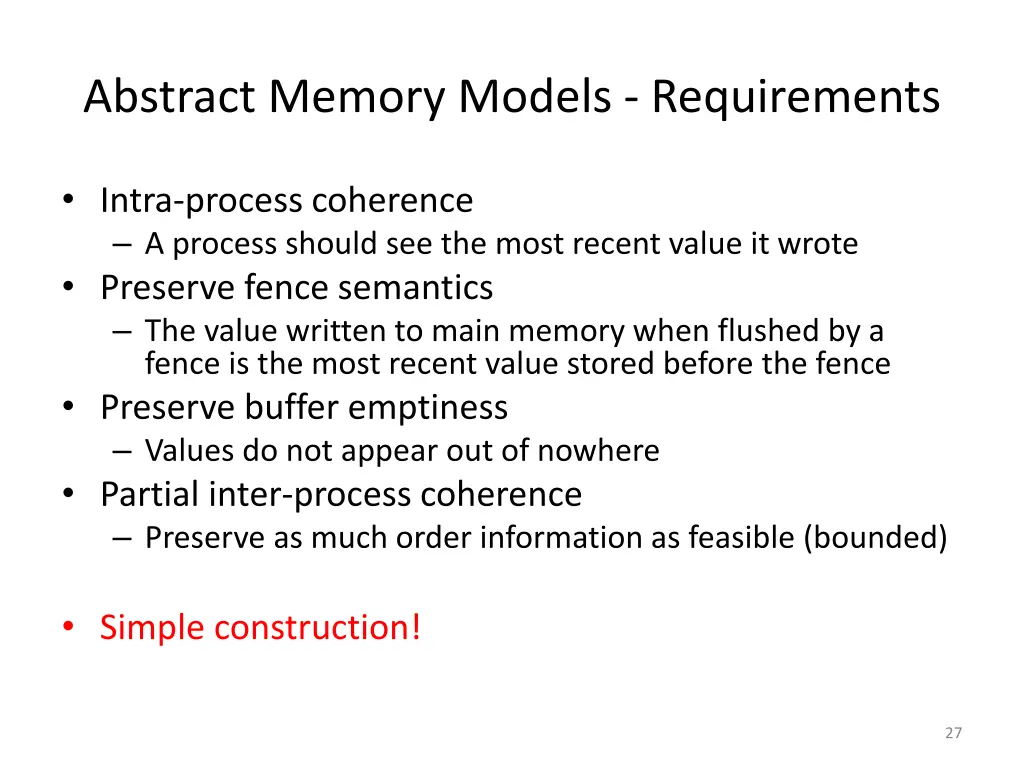
Abstract Memory Models - Requirements Intra-process coherence A process should see the most recent value it wrote Preserve fence semantics The value written to main memory when flushed by a fence is the most recent value stored before the fence Preserve buffer emptiness Values do not appear out of nowhere Partial inter-process coherence Preserve as much order information as feasible (bounded) Simple construction! 27
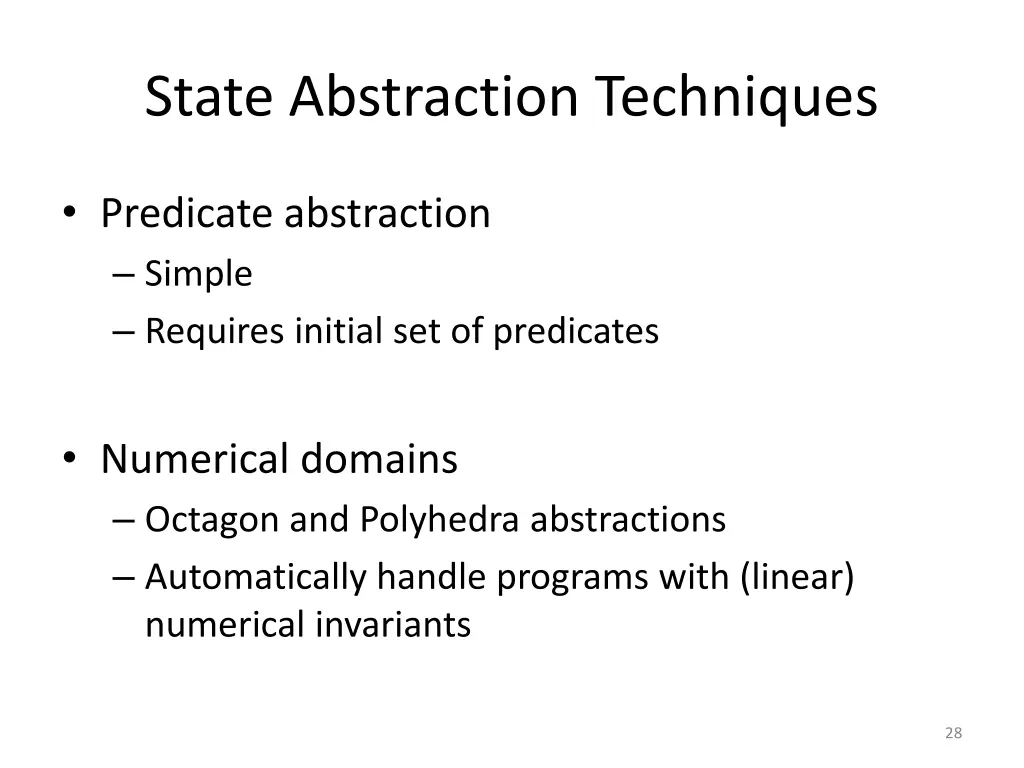
State Abstraction Techniques Predicate abstraction Simple Requires initial set of predicates Numerical domains Octagon and Polyhedra abstractions Automatically handle programs with (linear) numerical invariants 28
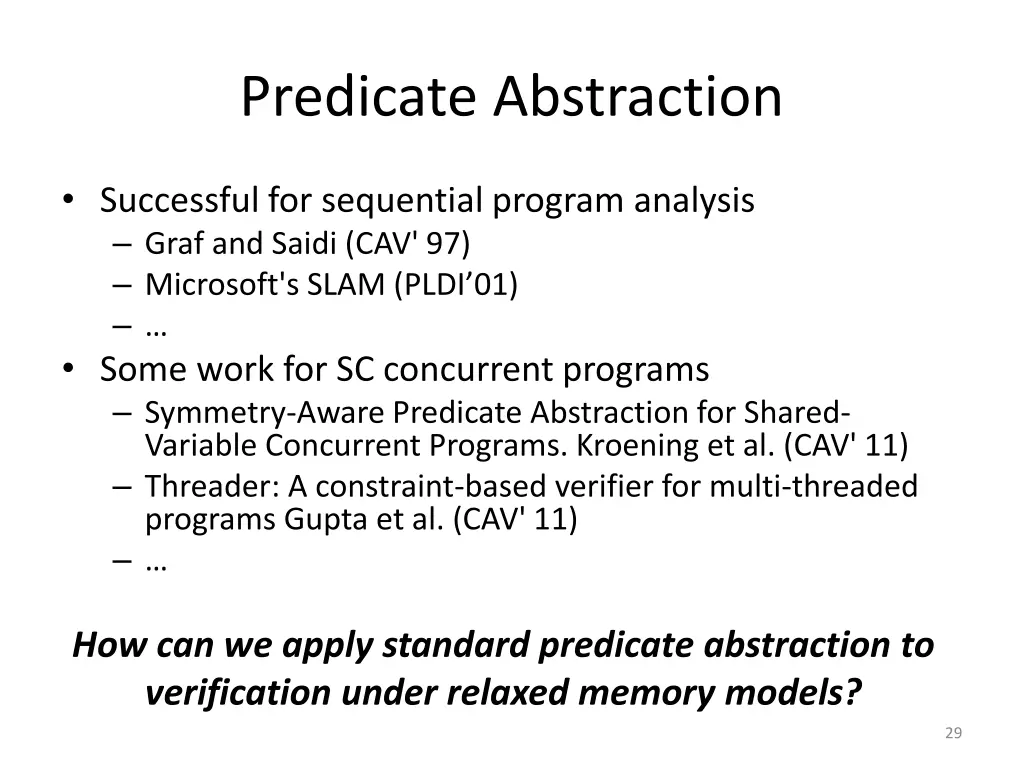
Predicate Abstraction Successful for sequential program analysis Graf and Saidi (CAV' 97) Microsoft's SLAM (PLDI 01) Some work for SC concurrent programs Symmetry-Aware Predicate Abstraction for Shared- Variable Concurrent Programs. Kroening et al. (CAV' 11) Threader: A constraint-based verifier for multi-threaded programs Gupta et al. (CAV' 11) How can we apply standard predicate abstraction to verification under relaxed memory models? 29
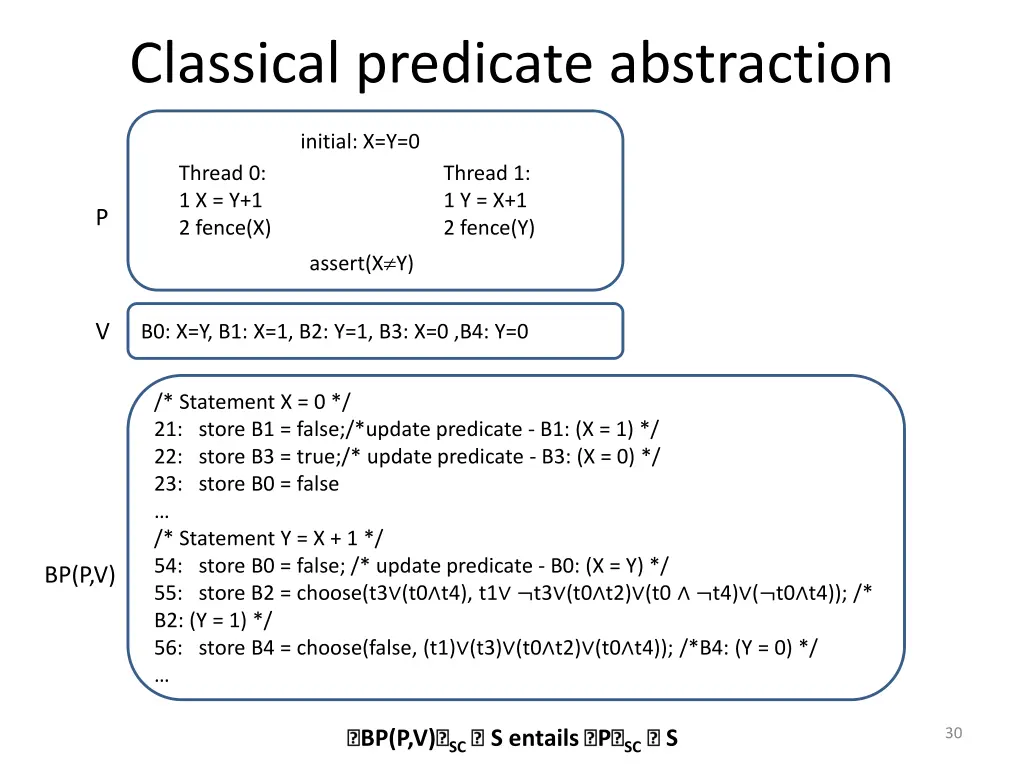
Classical predicate abstraction initial: X=Y=0 Thread 0: 1 X = Y+1 2 fence(X) Thread 1: 1 Y = X+1 2 fence(Y) P assert(X Y) V B0: X=Y, B1: X=1, B2: Y=1, B3: X=0 ,B4: Y=0 /* Statement X = 0 */ 21: store B1 = false;/*update predicate - B1: (X = 1) */ 22: store B3 = true;/* update predicate - B3: (X = 0) */ 23: store B0 = false /* Statement Y = X + 1 */ 54: store B0 = false; /* update predicate - B0: (X = Y) */ 55: store B2 = choose(t3 (t0 t4), t1 t3 (t0 t2) (t0 t4) ( t0 t4)); /* B2: (Y = 1) */ 56: store B4 = choose(false, (t1) (t3) (t0 t2) (t0 t4)); /*B4: (Y = 0) */ BP(P,V) 30 BP(P,V)SC S entails PSC S
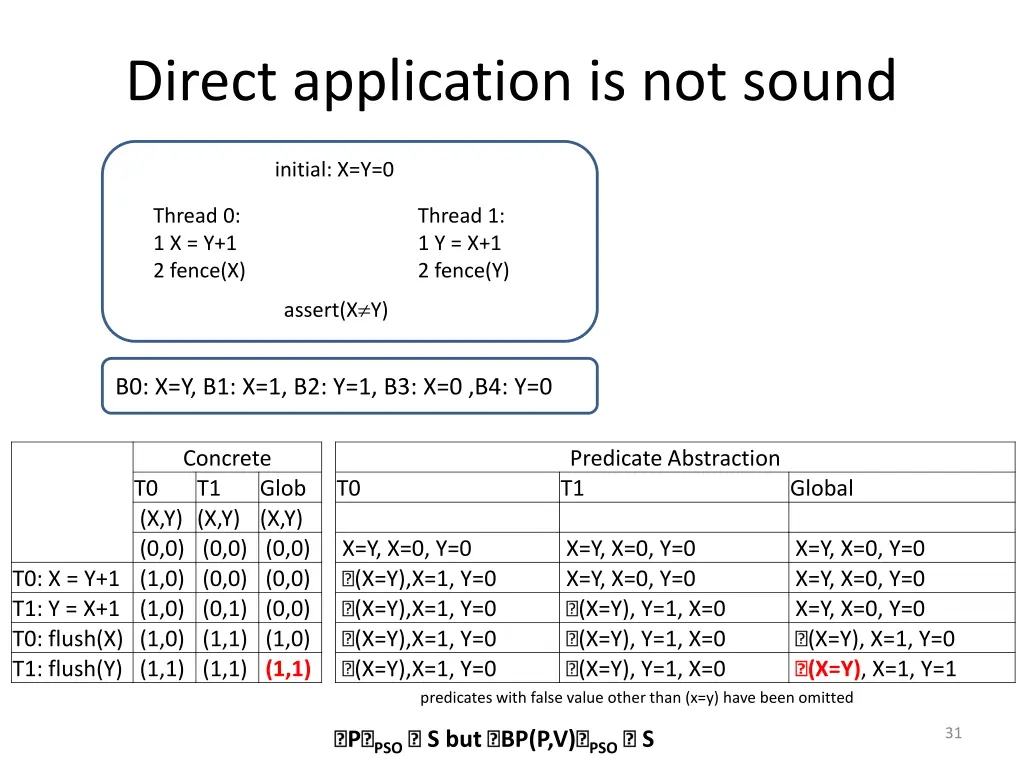
Direct application is not sound initial: X=Y=0 Thread 0: 1 X = Y+1 2 fence(X) Thread 1: 1 Y = X+1 2 fence(Y) assert(X Y) B0: X=Y, B1: X=1, B2: Y=1, B3: X=0 ,B4: Y=0 Concrete T1 (X,Y) (X,Y) (X,Y) (0,0) (0,0) (0,0) Predicate Abstraction T1 T0 Glob T0 Global X=Y, X=0, Y=0 (X=Y),X=1, Y=0 (X=Y),X=1, Y=0 (X=Y),X=1, Y=0 (X=Y),X=1, Y=0 X=Y, X=0, Y=0 X=Y, X=0, Y=0 (X=Y), Y=1, X=0 (X=Y), Y=1, X=0 (X=Y), Y=1, X=0 X=Y, X=0, Y=0 X=Y, X=0, Y=0 X=Y, X=0, Y=0 (X=Y), X=1, Y=0 (X=Y), X=1, Y=1 T0: X = Y+1 (1,0) (0,0) (0,0) T1: Y = X+1 (1,0) (0,1) (0,0) T0: flush(X) (1,0) (1,1) (1,0) T1: flush(Y) (1,1) (1,1) (1,1) predicates with false value other than (x=y) have been omitted 31 PPSO S but BP(P,V)PSO S
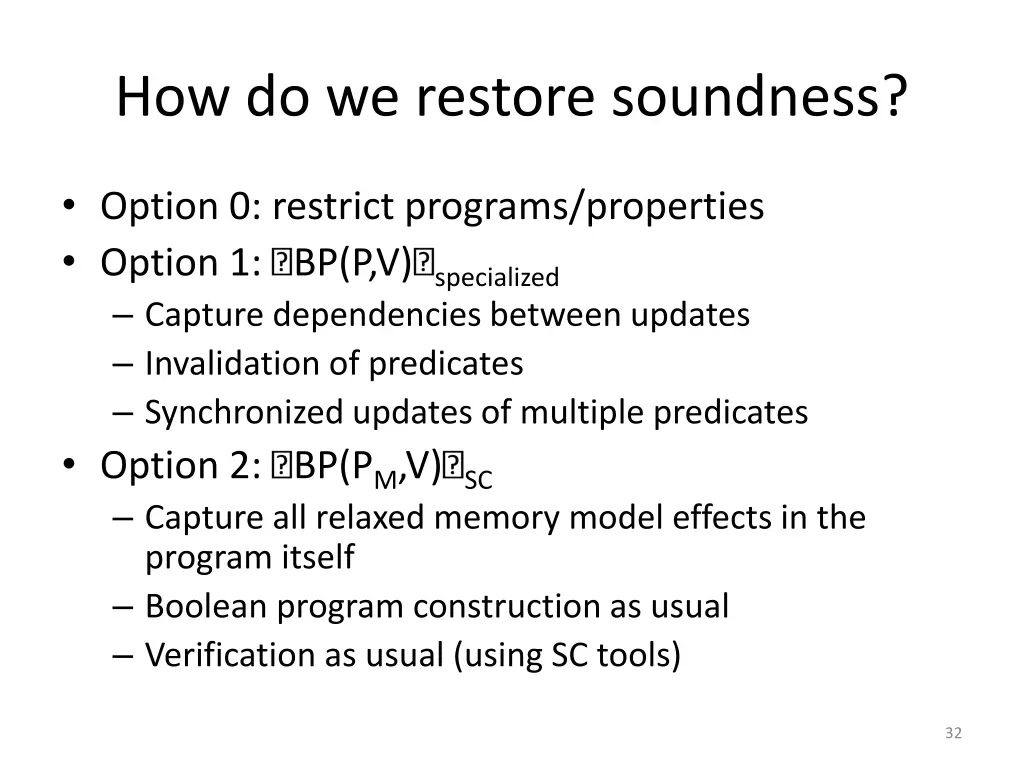
How do we restore soundness? Option 0: restrict programs/properties Option 1: BP(P,V)specialized Capture dependencies between updates Invalidation of predicates Synchronized updates of multiple predicates Option 2: BP(PM,V)SC Capture all relaxed memory model effects in the program itself Boolean program construction as usual Verification as usual (using SC tools) 32
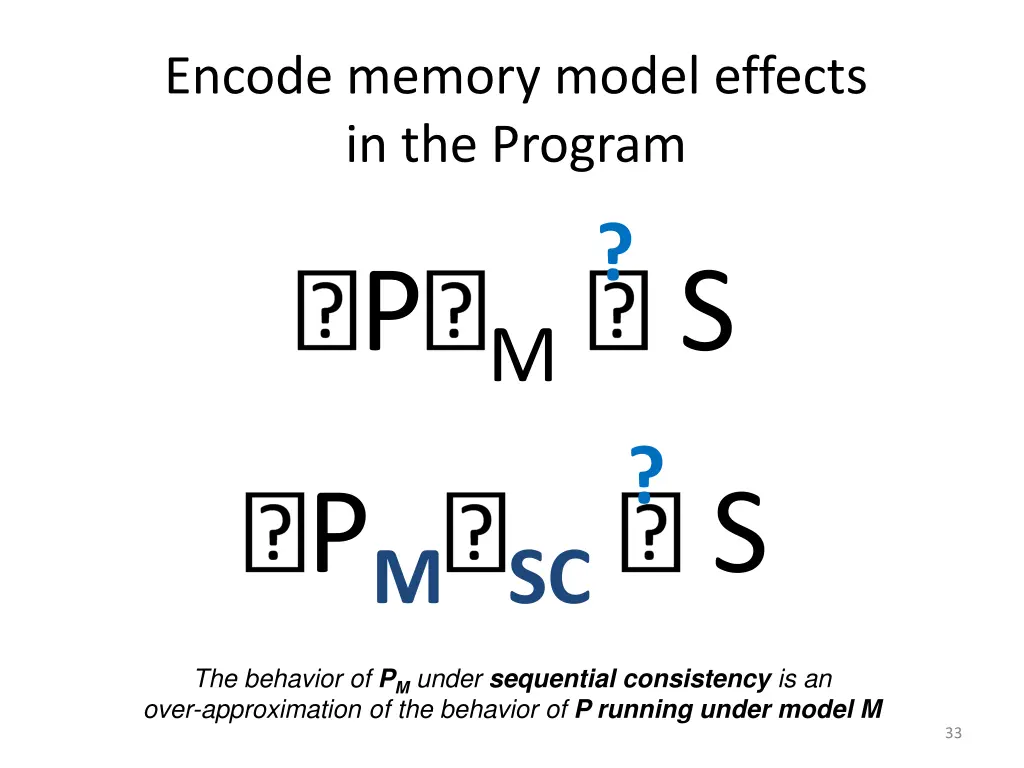
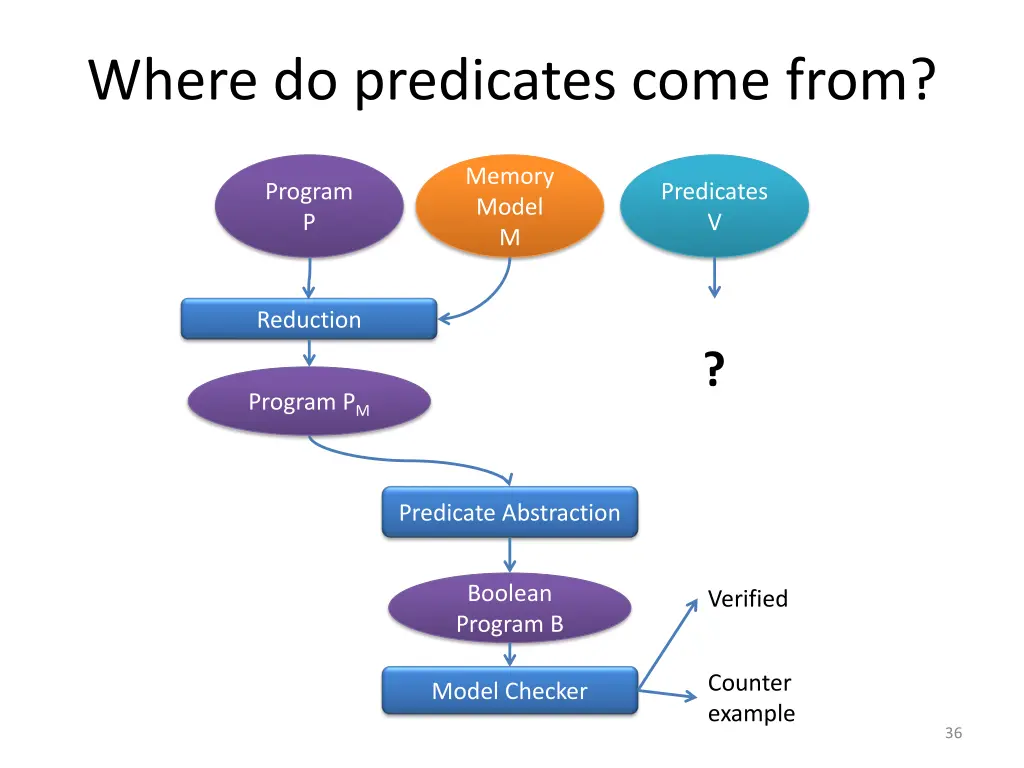
Encode memory model effects in the Program ? PM S ? PM SC S The behavior of PMunder sequential consistency is an over-approximation of the behavior of P running under model M 33
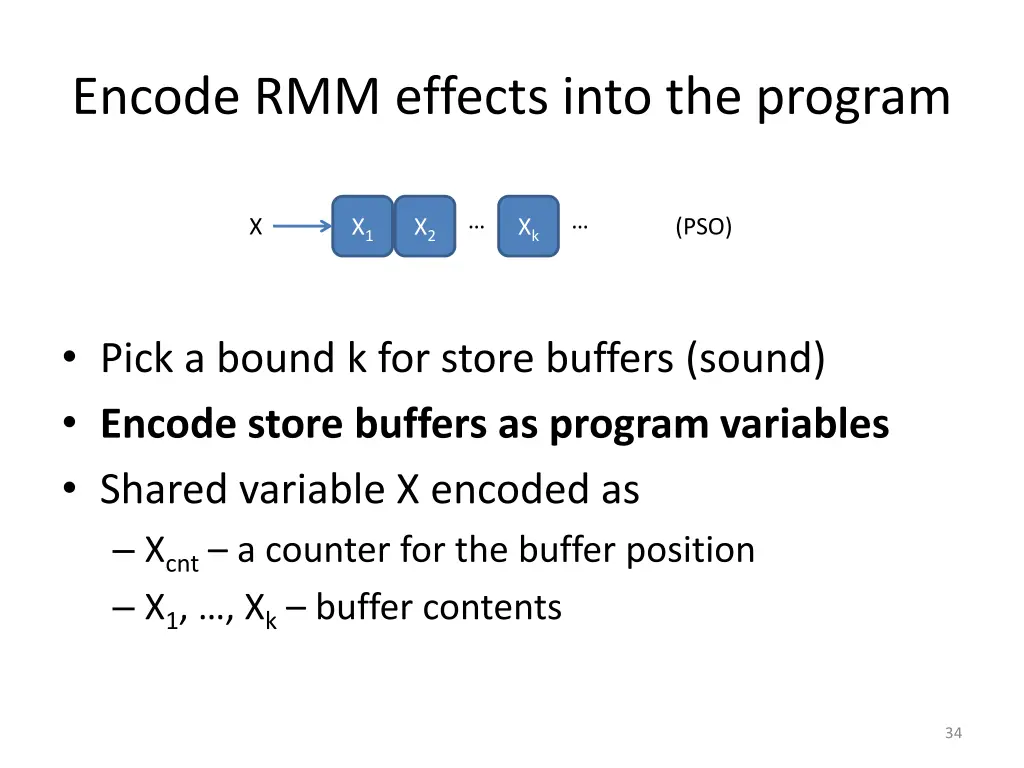
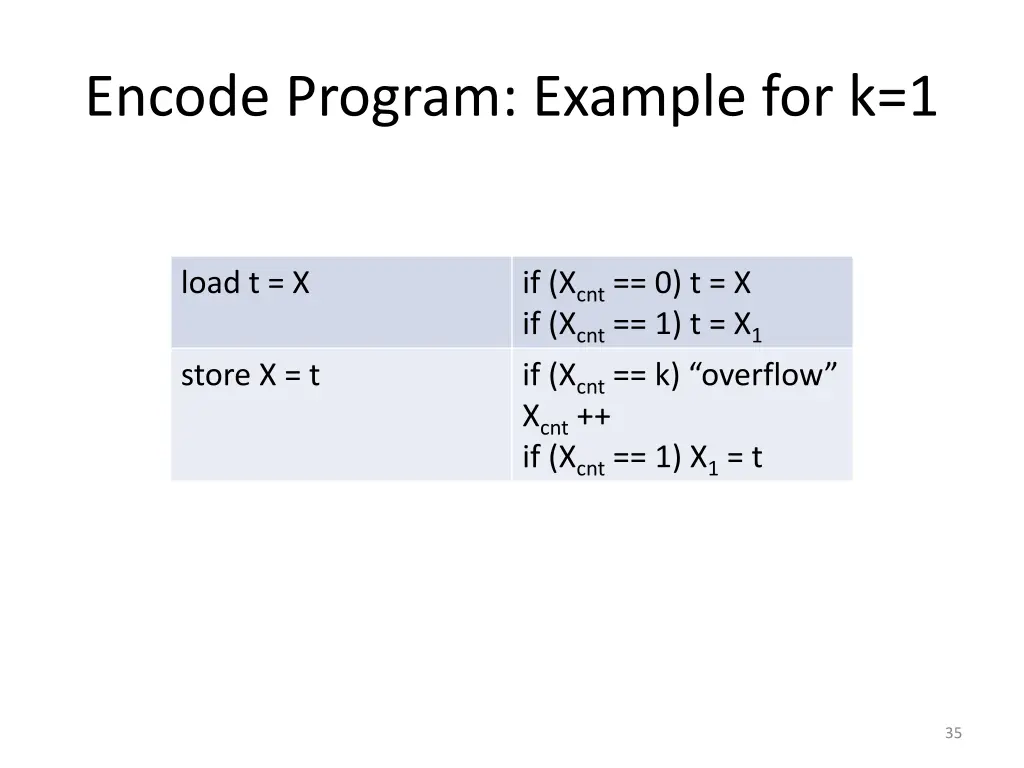
Encode RMM effects into the program X (PSO) X1 X2 Xk Pick a bound k for store buffers (sound) Encode store buffers as program variables Shared variable X encoded as Xcnt a counter for the buffer position X1, , Xk buffer contents 34
Encode Program: Example for k=1 load t = X if (Xcnt == 0) t = X if (Xcnt == 1) t = X1 if (Xcnt == k) overflow Xcnt ++ if (Xcnt == 1) X1 = t store X = t 35
Where do predicates come from? Memory Model M Program P Predicates V Reduction ? Program PM Predicate Abstraction Boolean Program B Verified Counter example Model Checker 36
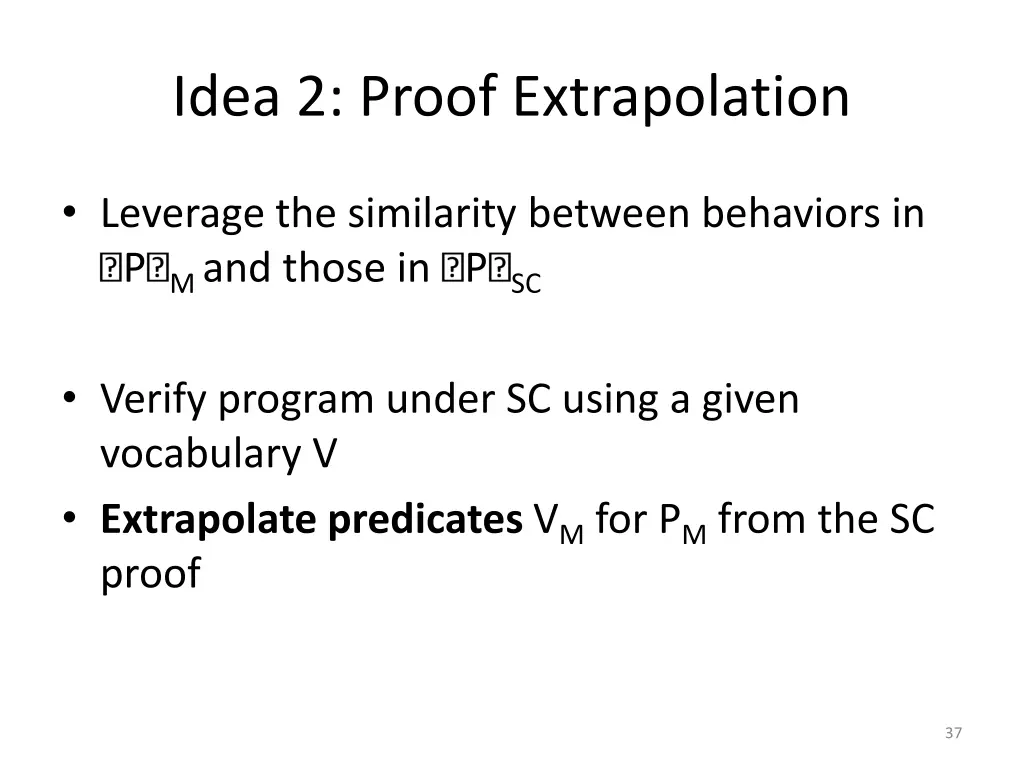
Idea 2: Proof Extrapolation Leverage the similarity between behaviors in PM and those in PSC Verify program under SC using a given vocabulary V Extrapolate predicates VM for PM from the SC proof 37
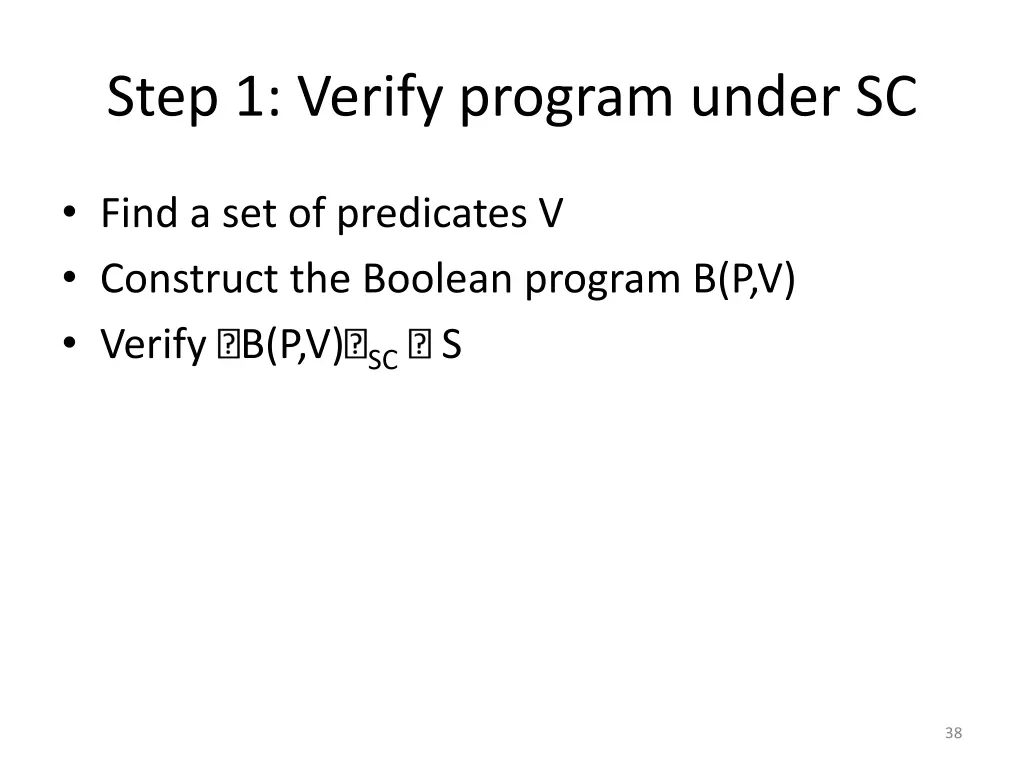
Step 1: Verify program under SC Find a set of predicates V Construct the Boolean program B(P,V) Verify B(P,V)SC S 38
Step 2: Predicate Extrapolation Discover new predicates for RMM based on the predicates used in the SC proof Generic predicates Buffer size, overflow SC-Based extrapolated predicates from SC relationships as captured in V 39
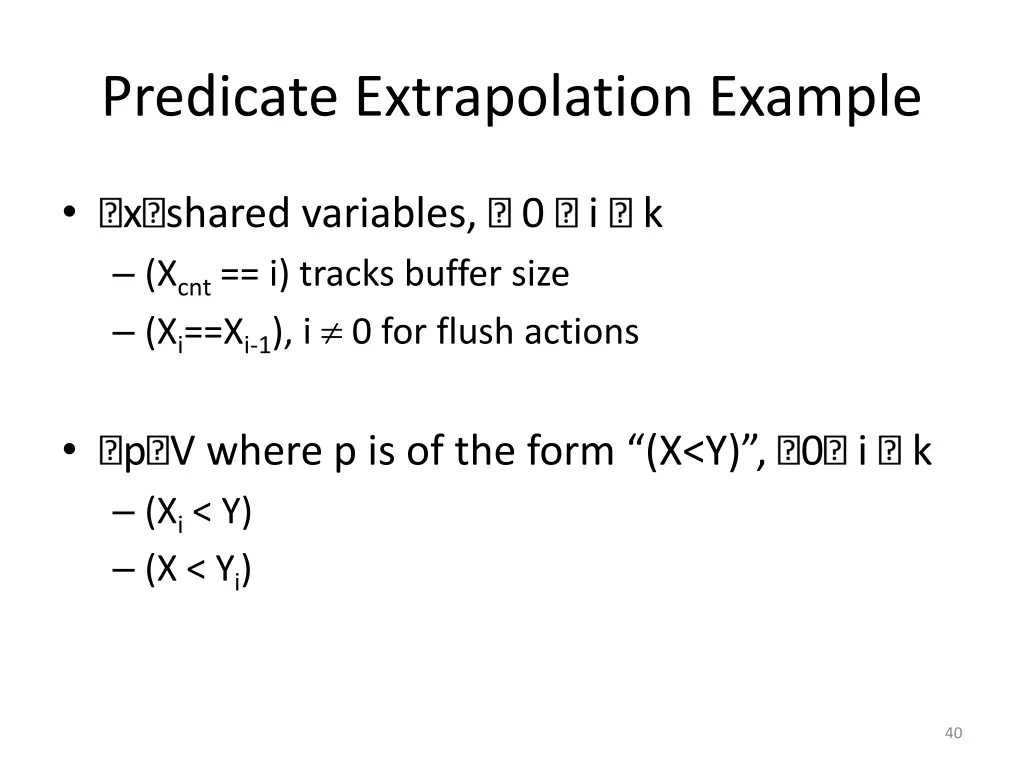
Predicate Extrapolation Example x shared variables, 0 i k (Xcnt == i) tracks buffer size (Xi==Xi-1), i 0 for flush actions p V where p is of the form (X<Y) , 0 i k (Xi < Y) (X < Yi) 40
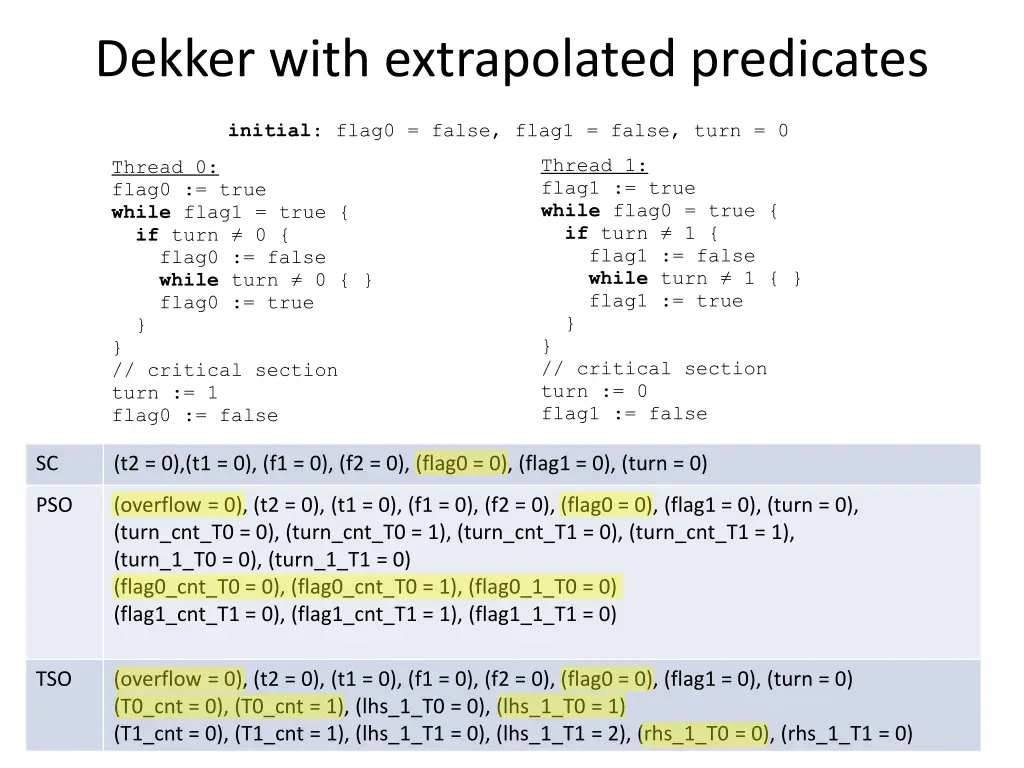
Dekker with extrapolated predicates initial: flag0 = false, flag1 = false, turn = 0 Thread 1: flag1 := true while flag0 = true { ifturn 1 { flag1 := false whileturn 1 { } flag1 := true } } // critical section turn := 0 flag1 := false Thread 0: flag0 := true while flag1 = true { ifturn 0 { flag0 := false whileturn 0 { } flag0 := true } } // critical section turn := 1 flag0 := false SC (t2 = 0),(t1 = 0), (f1 = 0), (f2 = 0), (flag0 = 0), (flag1 = 0), (turn = 0) PSO (overflow = 0), (t2 = 0), (t1 = 0), (f1 = 0), (f2 = 0), (flag0 = 0), (flag1 = 0), (turn = 0), (turn_cnt_T0 = 0), (turn_cnt_T0 = 1), (turn_cnt_T1 = 0), (turn_cnt_T1 = 1), (turn_1_T0 = 0), (turn_1_T1 = 0) (flag0_cnt_T0 = 0), (flag0_cnt_T0 = 1), (flag0_1_T0 = 0) (flag1_cnt_T1 = 0), (flag1_cnt_T1 = 1), (flag1_1_T1 = 0) TSO (overflow = 0), (t2 = 0), (t1 = 0), (f1 = 0), (f2 = 0), (flag0 = 0), (flag1 = 0), (turn = 0) (T0_cnt = 0), (T0_cnt = 1), (lhs_1_T0 = 0), (lhs_1_T0 = 1) (T1_cnt = 0), (T1_cnt = 1), (lhs_1_T1 = 0), (lhs_1_T1 = 2), (rhs_1_T0 = 0), (rhs_1_T1 = 0) 41
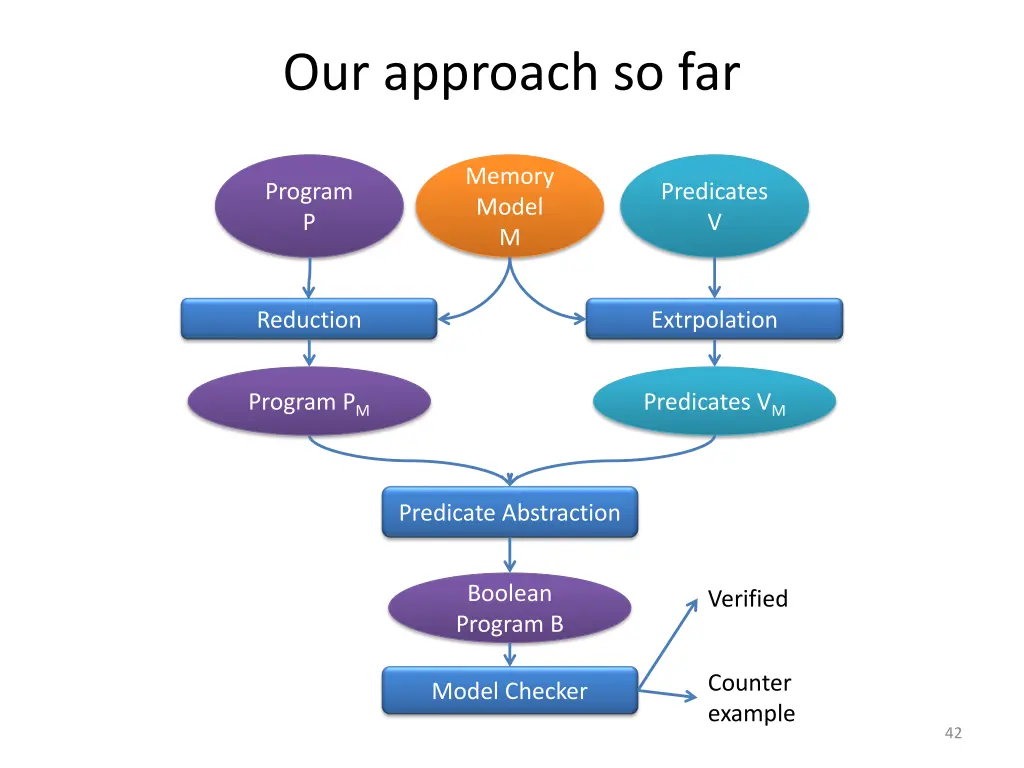
Our approach so far Memory Model M Program P Predicates V Reduction Extrpolation Program PM Predicates VM Predicate Abstraction Boolean Program B Verified Counter example Model Checker 42
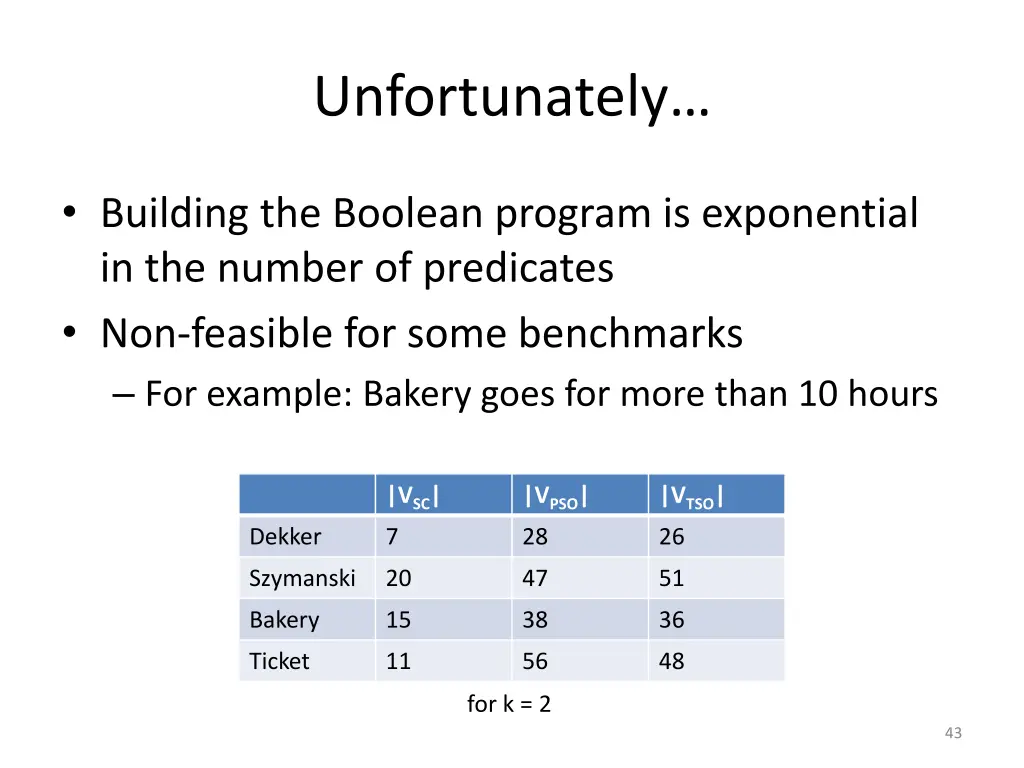
Unfortunately Building the Boolean program is exponential in the number of predicates Non-feasible for some benchmarks For example: Bakery goes for more than 10 hours |VSC| 7 |VPSO| 28 |VTSO| 26 Dekker Szymanski 20 47 51 Bakery 15 38 36 Ticket 11 56 48 for k = 2 43
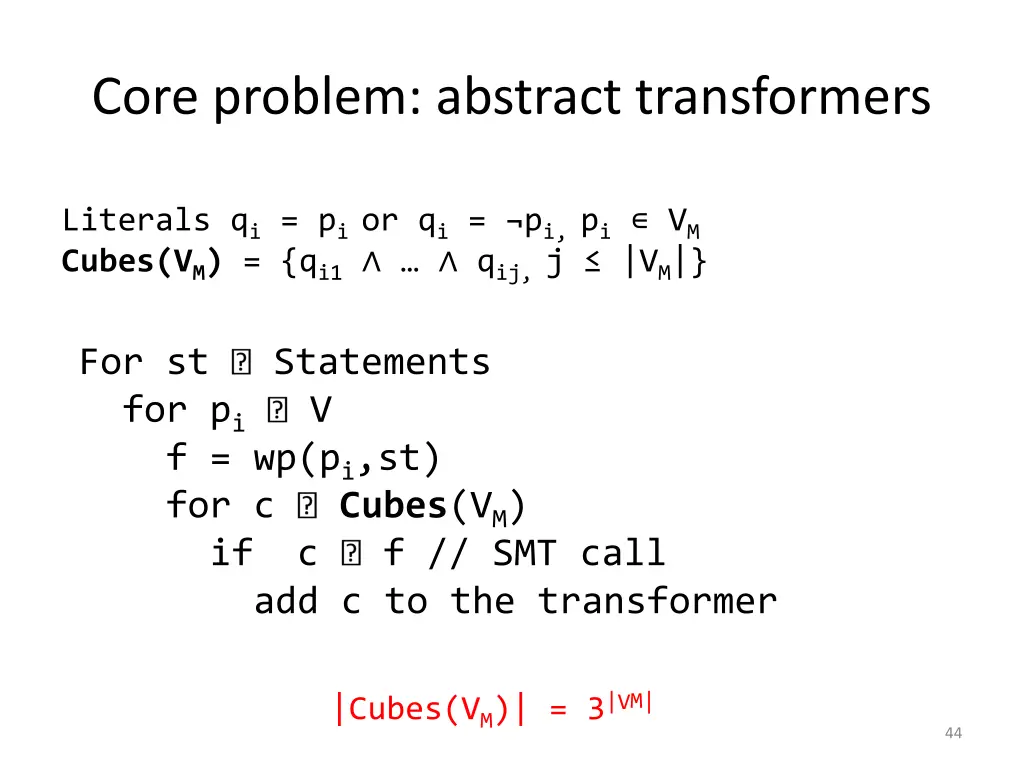
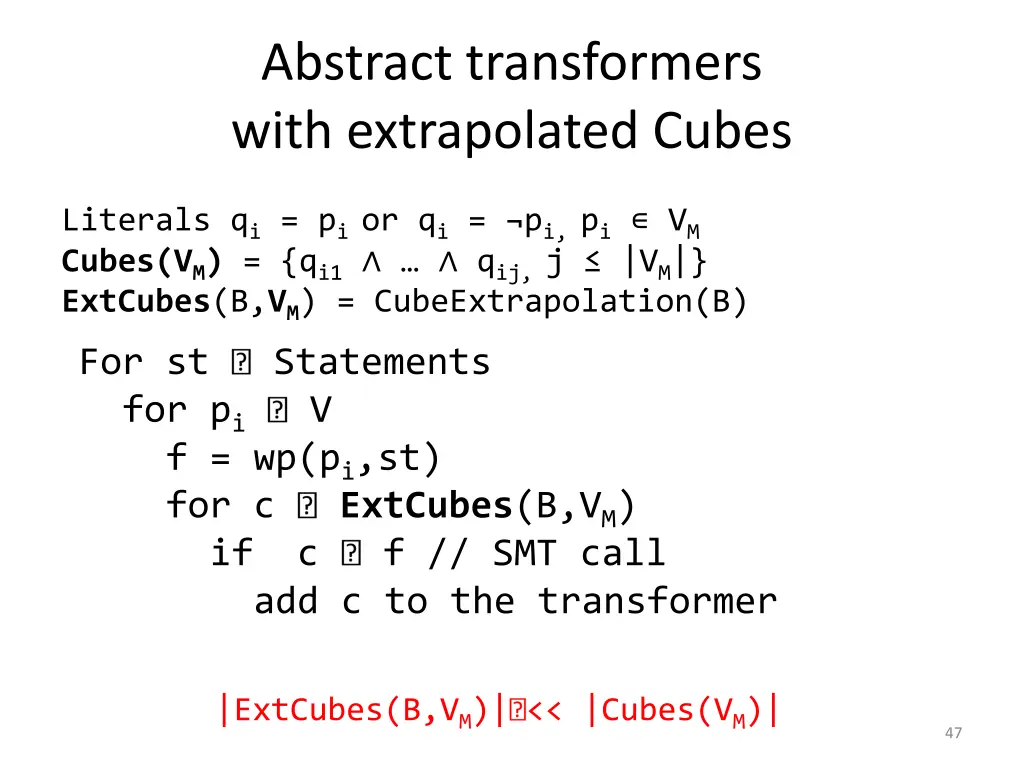
Core problem: abstract transformers Literals qi = pi or qi = pi, pi VM Cubes(VM) = {qi1 qij, j |VM|} For st Statements for pi V f = wp(pi,st) for c Cubes(VM) if c f // SMT call add c to the transformer |Cubes(VM)| = 3|VM| 44
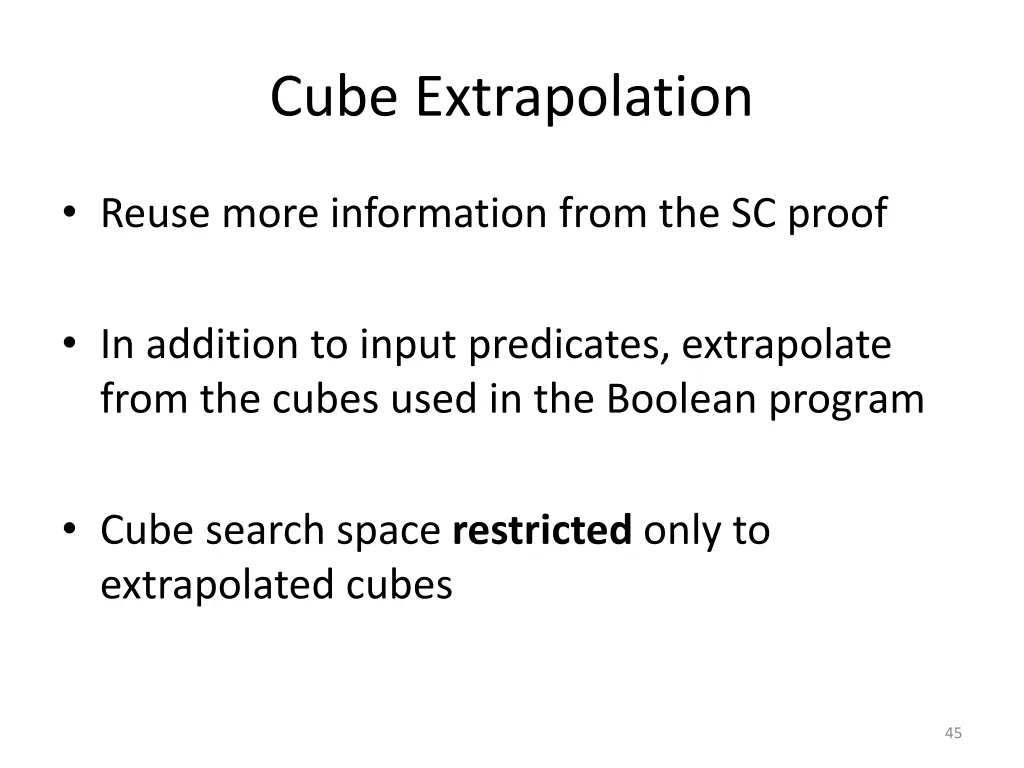
Cube Extrapolation Reuse more information from the SC proof In addition to input predicates, extrapolate from the cubes used in the Boolean program Cube search space restricted only to extrapolated cubes 45
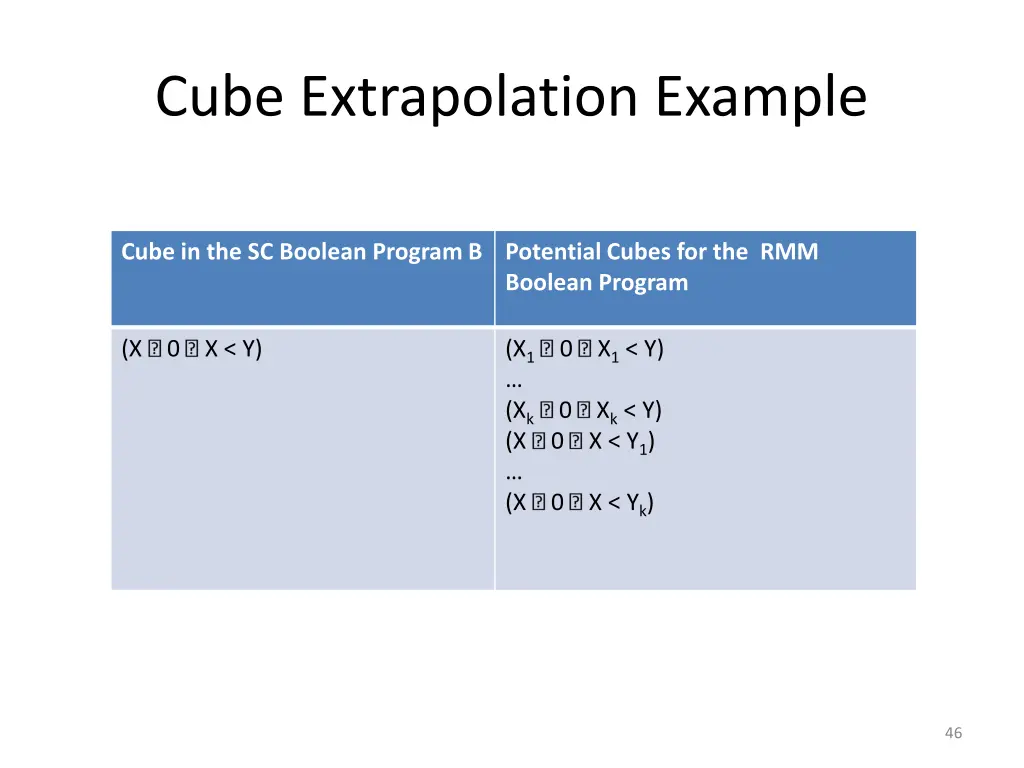
Cube Extrapolation Example Cube in the SC Boolean Program B Potential Cubes for the RMM Boolean Program (X 0 X < Y) (X1 0 X1 < Y) (Xk 0 Xk < Y) (X 0 X < Y1) (X 0 X < Yk) 46
Abstract transformers with extrapolated Cubes Literals qi = pi or qi = pi, pi VM Cubes(VM) = {qi1 qij, j |VM|} ExtCubes(B,VM) = CubeExtrapolation(B) For st Statements for pi V f = wp(pi,st) for c ExtCubes(B,VM) if c f // SMT call add c to the transformer |ExtCubes(B,VM)| << |Cubes(VM)| 47
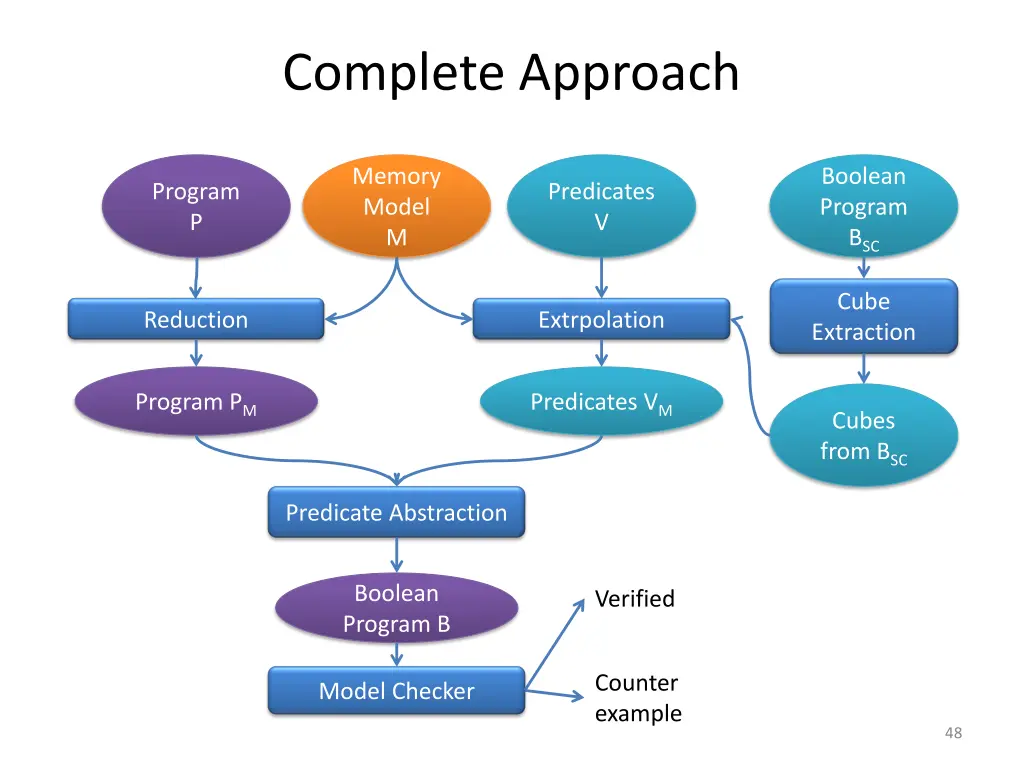
Complete Approach Memory Model M Boolean Program BSC Program P Predicates V Cube Extraction Reduction Extrpolation Program PM Predicates VM Cubes from BSC Predicate Abstraction Boolean Program B Verified Counter example Model Checker 48
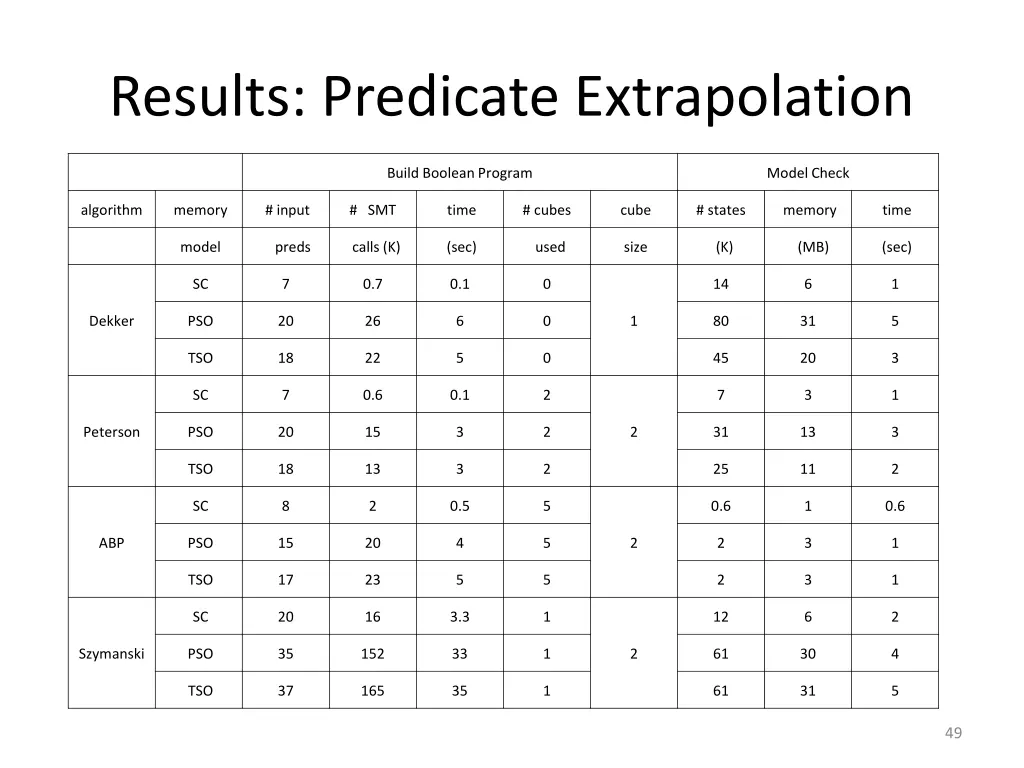
Results: Predicate Extrapolation Build Boolean Program Model Check algorithm memory # input # SMT time # cubes cube # states memory time model preds calls (K) (sec) used size (K) (MB) (sec) SC 7 0.7 0.1 0 14 6 1 Dekker PSO 20 26 6 0 1 80 31 5 TSO 18 22 5 0 45 20 3 SC 7 0.6 0.1 2 7 3 1 Peterson PSO 20 15 3 2 2 31 13 3 TSO 18 13 3 2 25 11 2 SC 8 2 0.5 5 0.6 1 0.6 ABP PSO 15 20 4 5 2 2 3 1 TSO 17 23 5 5 2 3 1 SC 20 16 3.3 1 12 6 2 Szymanski PSO 35 152 33 1 2 61 30 4 TSO 37 165 35 1 61 31 5 49
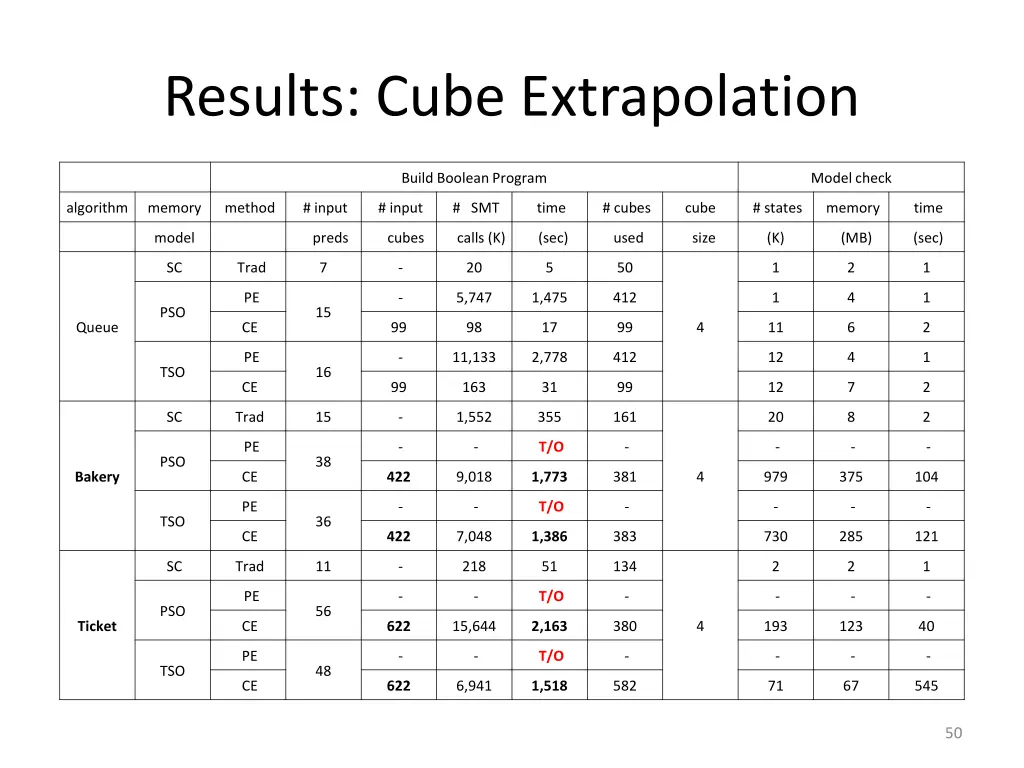
Results: Cube Extrapolation Build Boolean Program Model check algorithm memory method # input # input # SMT time # cubes cube # states memory time model preds cubes calls (K) (sec) used size (K) (MB) (sec) SC Trad 7 - 20 5 50 1 2 1 PE - 5,747 1,475 412 1 4 1 PSO 15 Queue CE 99 98 17 99 4 11 6 2 PE - 11,133 2,778 412 12 4 1 TSO 16 CE 99 163 31 99 12 7 2 SC Trad 15 - 1,552 355 161 20 8 2 PE - - T/O - - - - PSO 38 Bakery CE 422 9,018 1,773 381 4 979 375 104 PE - - T/O - - - - TSO 36 CE 422 7,048 1,386 383 730 285 121 SC Trad 11 - 218 51 134 2 2 1 PE - - T/O - - - - PSO 56 Ticket CE 622 15,644 2,163 380 4 193 123 40 PE - - T/O - - - - TSO 48 CE 622 6,941 1,518 582 71 67 545 50