AC Circuits Series-Parallel Circuit Example Problems and Solutions
This content provides examples and solutions for series-parallel AC circuits, focusing on calculating impedance, current, voltage, power delivered, and network parameters. Detailed circuit diagrams and step-by-step solutions are presented for better understanding and application in electrical studies and practice.

Download Presentation

Please find below an Image/Link to download the presentation.
The content on the website is provided AS IS for your information and personal use only. It may not be sold, licensed, or shared on other websites without obtaining consent from the author.If you encounter any issues during the download, it is possible that the publisher has removed the file from their server.
You are allowed to download the files provided on this website for personal or commercial use, subject to the condition that they are used lawfully. All files are the property of their respective owners.
The content on the website is provided AS IS for your information and personal use only. It may not be sold, licensed, or shared on other websites without obtaining consent from the author.
E N D
Presentation Transcript
AC Circuits Series-Parallel AC Circuit Example problems By Dr. Ahmed S. Abdullah .
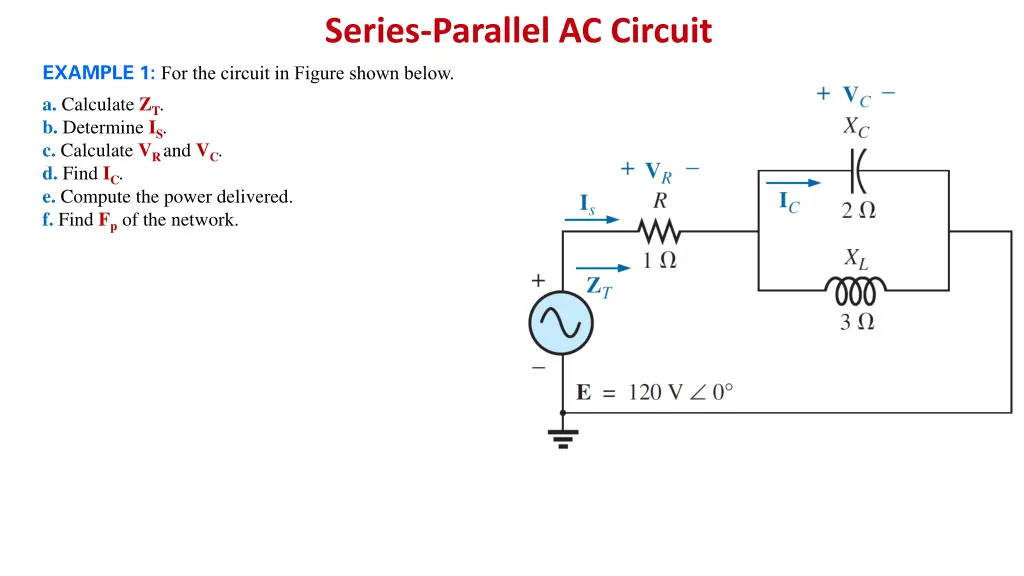
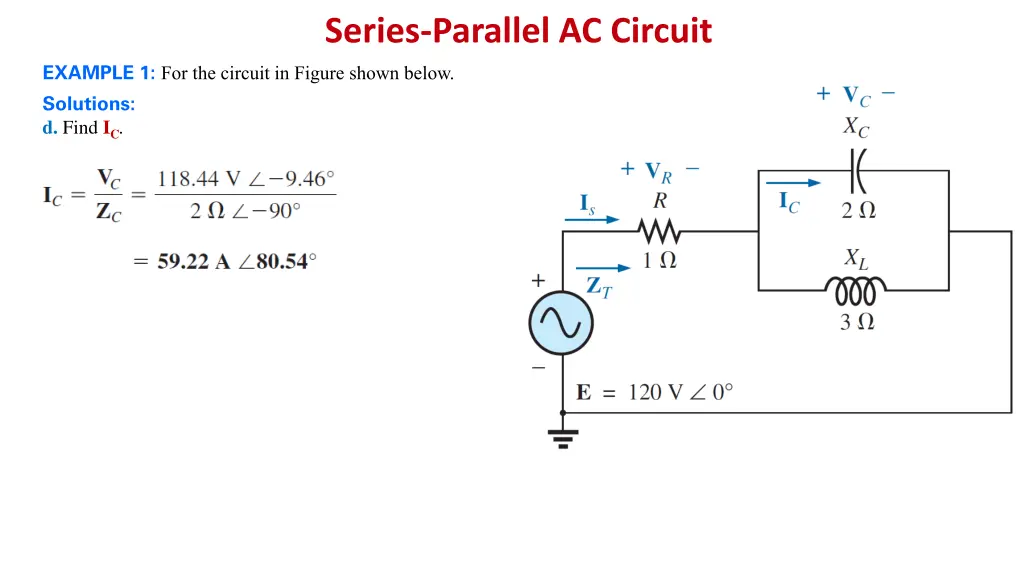
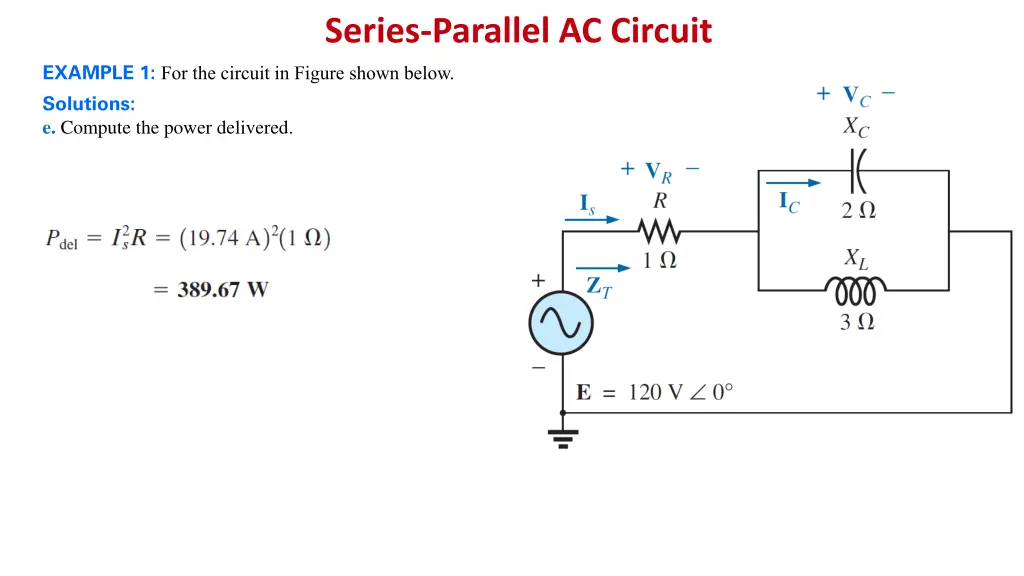
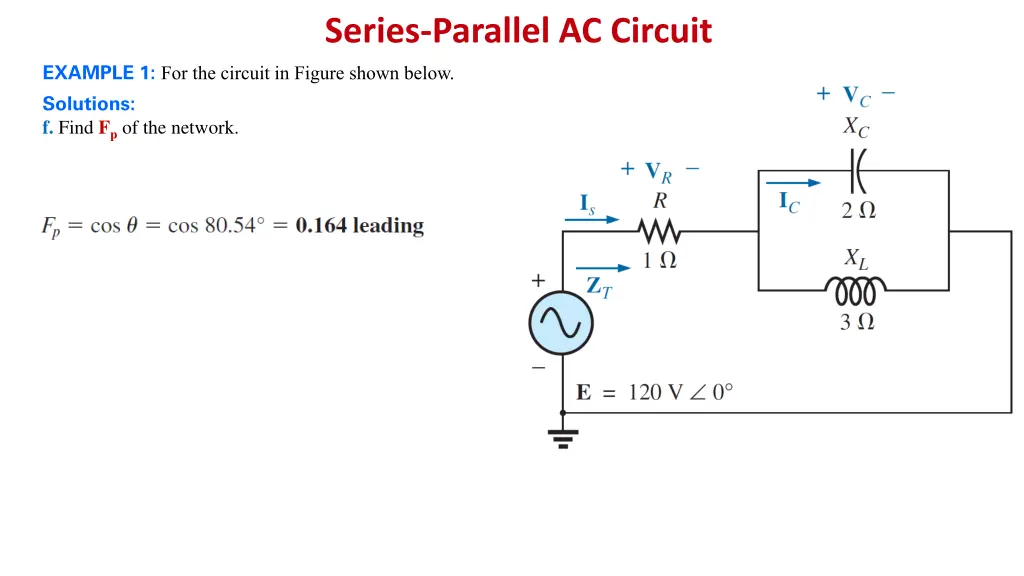
Series-Parallel AC Circuit EXAMPLE 1: For the circuit in Figure shown below. a. Calculate ZT. b. Determine IS. c. Calculate VRand VC. d. Find IC. e. Compute the power delivered. f. Find Fpof the network.
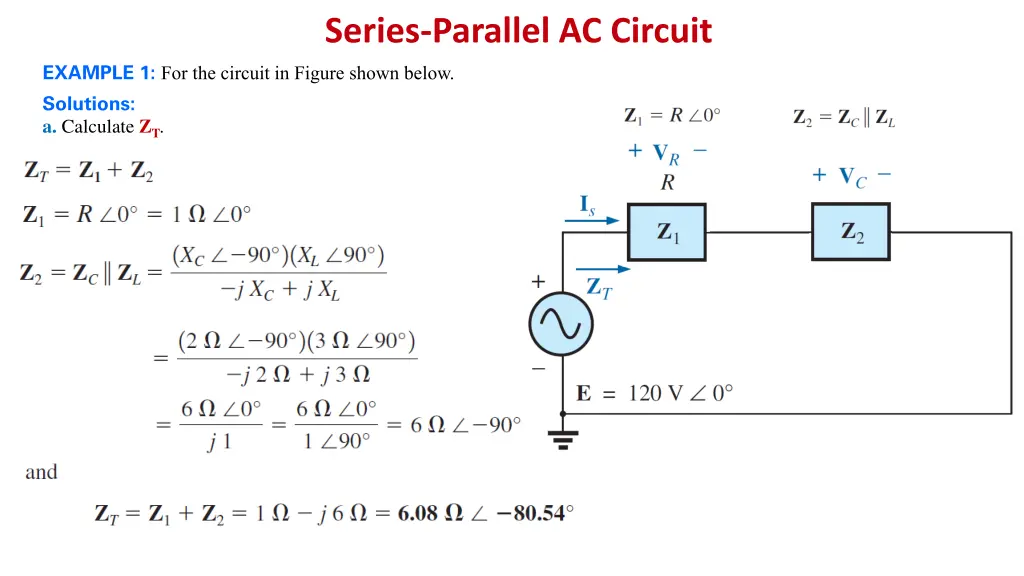
Series-Parallel AC Circuit EXAMPLE 1: For the circuit in Figure shown below. Solutions: a. Calculate ZT.
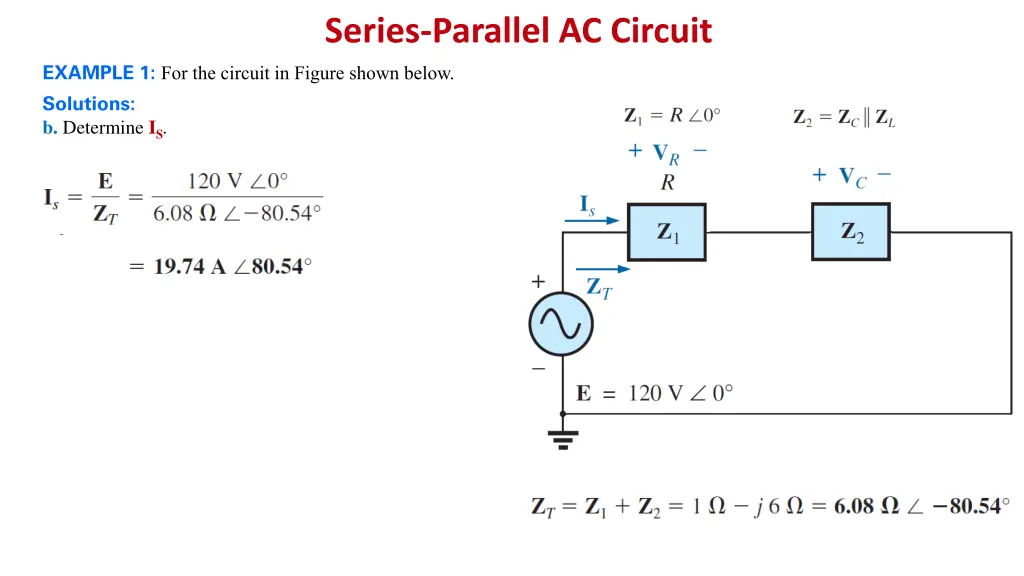
Series-Parallel AC Circuit EXAMPLE 1: For the circuit in Figure shown below. Solutions: b. Determine IS.
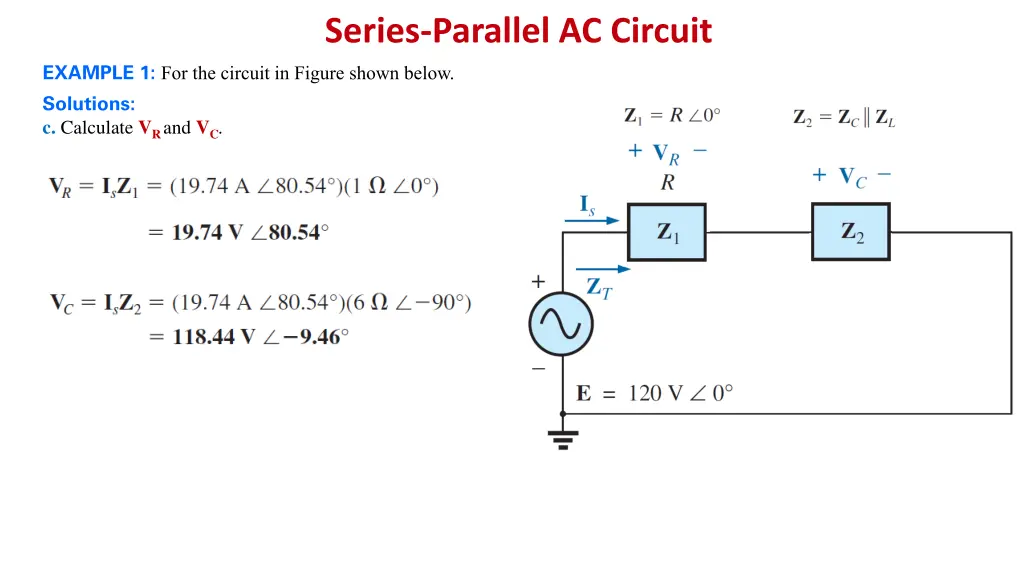
Series-Parallel AC Circuit EXAMPLE 1: For the circuit in Figure shown below. Solutions: c. Calculate VRand VC.
Series-Parallel AC Circuit EXAMPLE 1: For the circuit in Figure shown below. Solutions: d. Find IC.
Series-Parallel AC Circuit EXAMPLE 1: For the circuit in Figure shown below. Solutions: e. Compute the power delivered.
Series-Parallel AC Circuit EXAMPLE 1: For the circuit in Figure shown below. Solutions: f. Find Fpof the network.
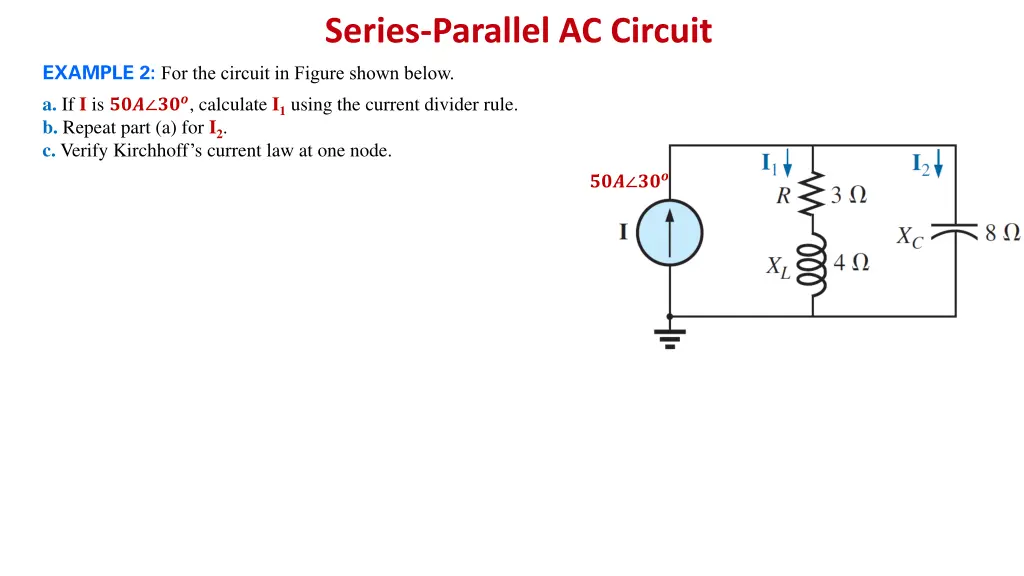
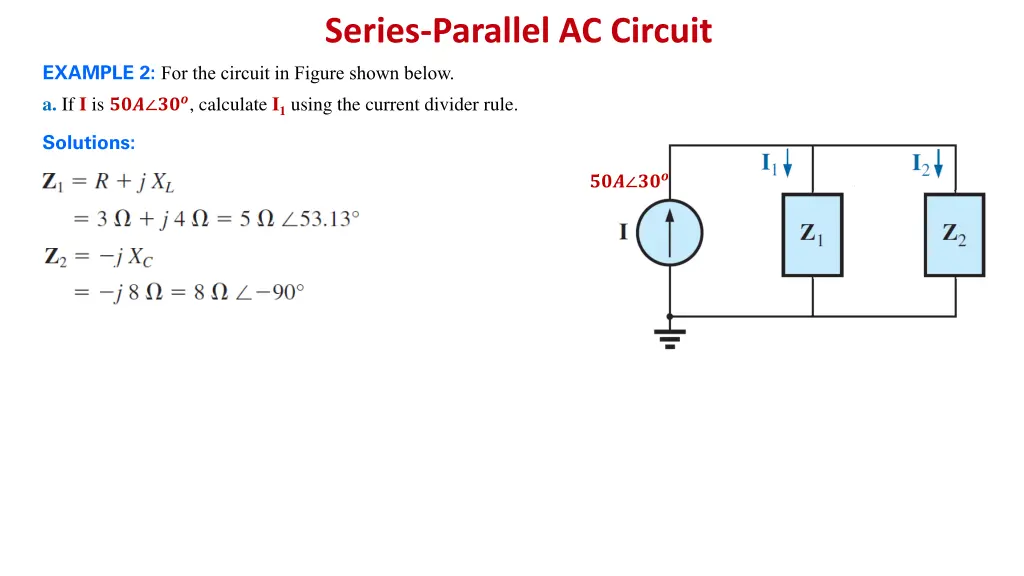
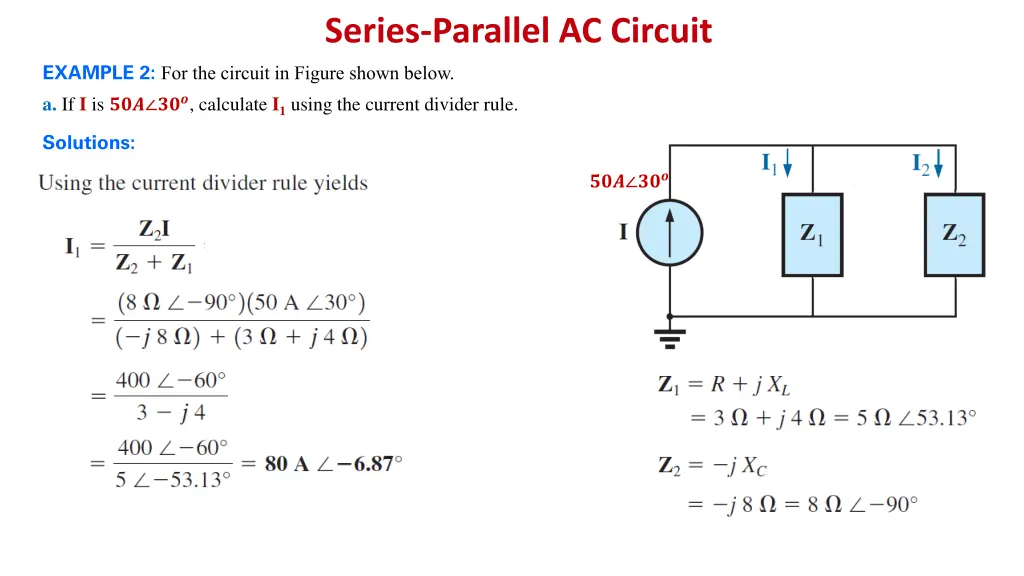
Series-Parallel AC Circuit EXAMPLE 2: For the circuit in Figure shown below. a. If I is ??? ???, calculate I1using the current divider rule. b. Repeat part (a) for I2. c. Verify Kirchhoff s current law at one node. ??? ???
Series-Parallel AC Circuit EXAMPLE 2: For the circuit in Figure shown below. a. If I is ??? ???, calculate I1using the current divider rule. Solutions: ??? ???
Series-Parallel AC Circuit EXAMPLE 2: For the circuit in Figure shown below. a. If I is ??? ???, calculate I1using the current divider rule. Solutions: ??? ???
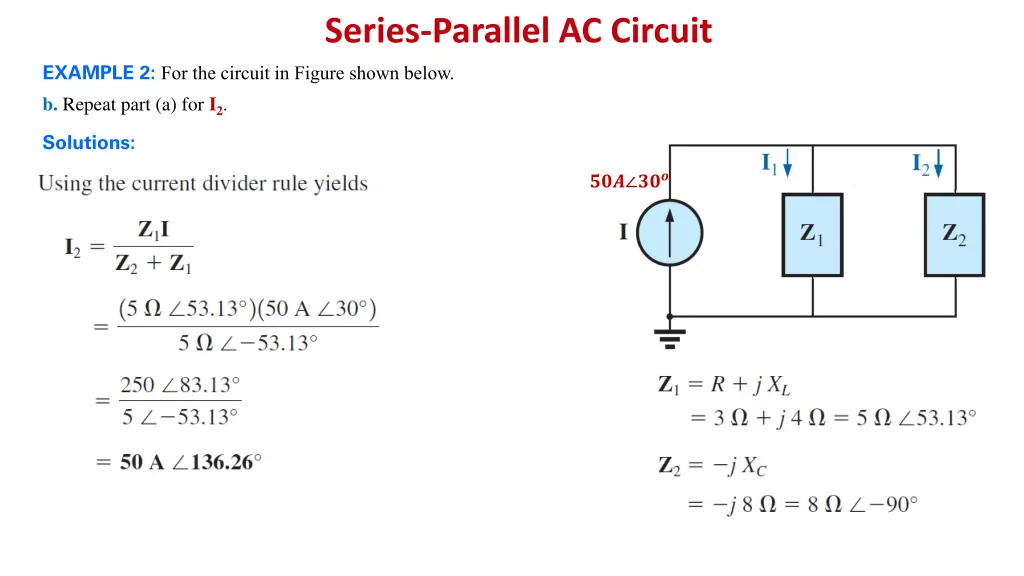
Series-Parallel AC Circuit EXAMPLE 2: For the circuit in Figure shown below. b. Repeat part (a) for I2. Solutions: ??? ???
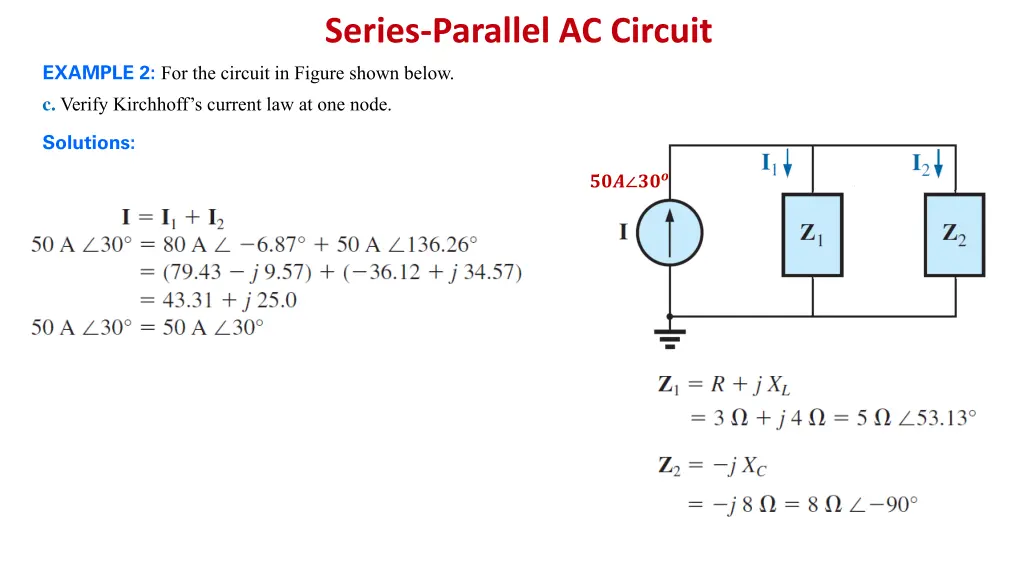
Series-Parallel AC Circuit EXAMPLE 2: For the circuit in Figure shown below. c.Verify Kirchhoff s current law at one node. Solutions: ??? ???
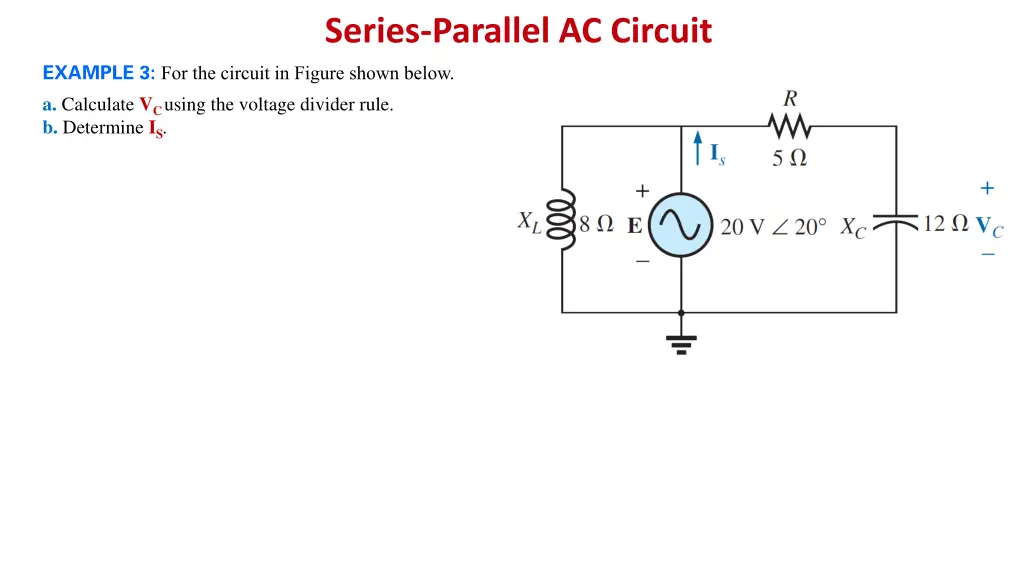
Series-Parallel AC Circuit EXAMPLE 3: For the circuit in Figure shown below. a. Calculate VCusing the voltage divider rule. b. Determine IS.
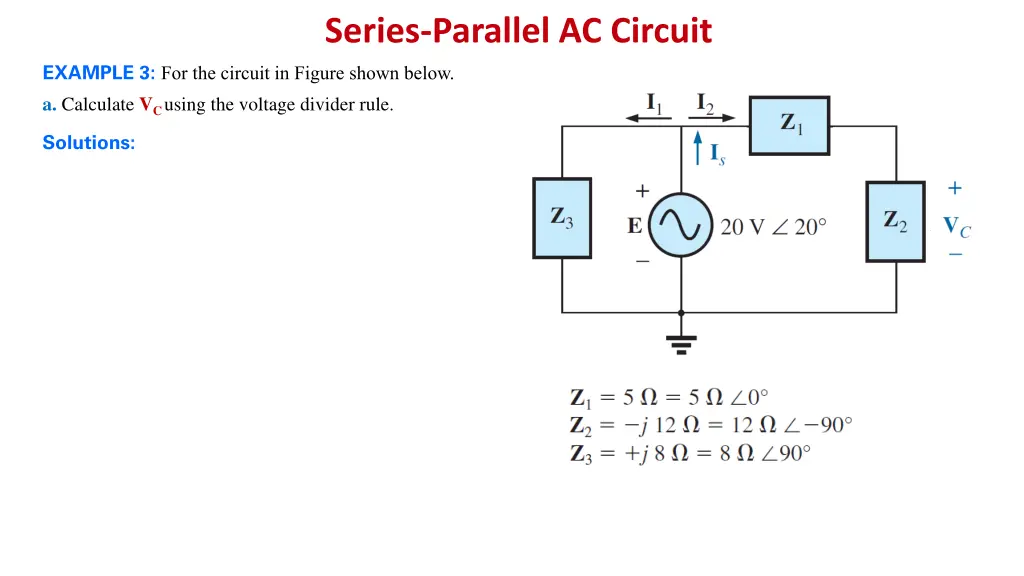
Series-Parallel AC Circuit EXAMPLE 3: For the circuit in Figure shown below. a. Calculate VCusing the voltage divider rule. Solutions:
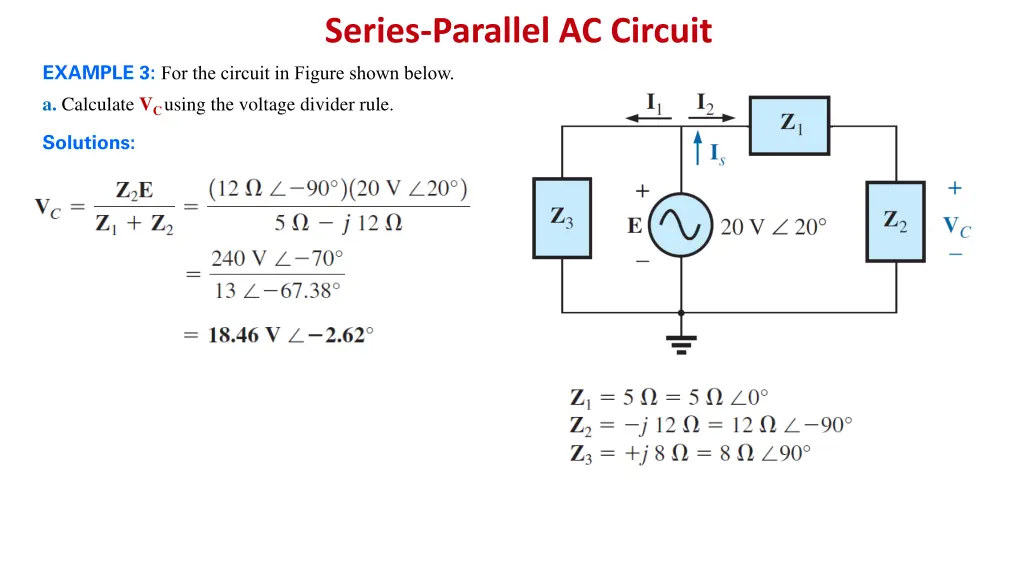
Series-Parallel AC Circuit EXAMPLE 3: For the circuit in Figure shown below. a. Calculate VCusing the voltage divider rule. Solutions:
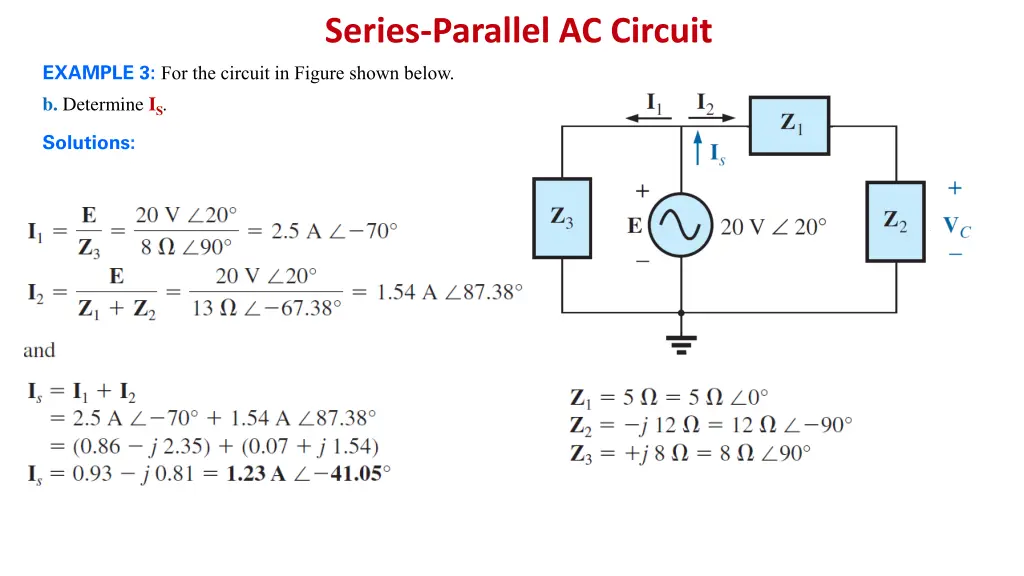
Series-Parallel AC Circuit EXAMPLE 3: For the circuit in Figure shown below. b. Determine IS. Solutions:
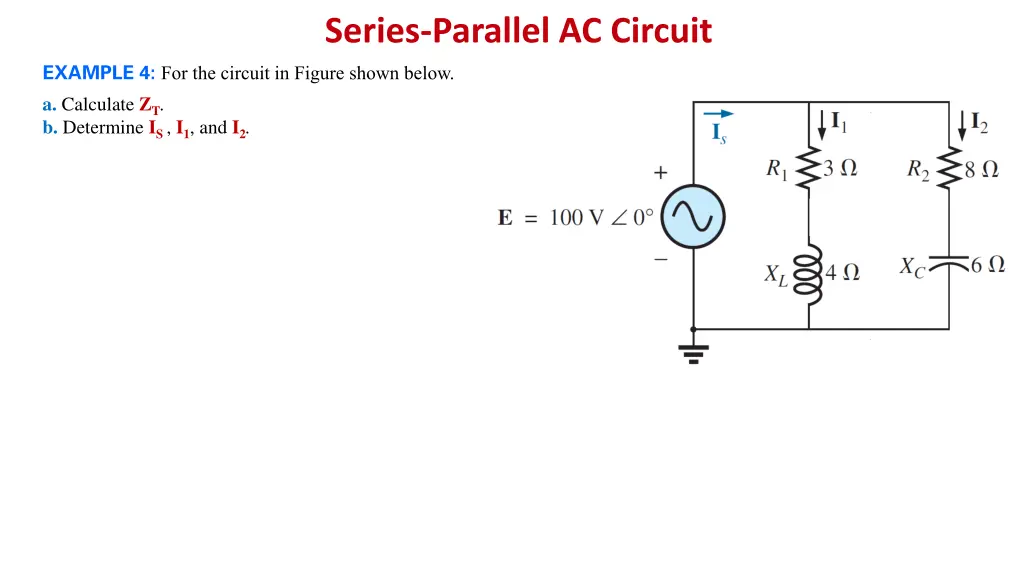
Series-Parallel AC Circuit EXAMPLE 4: For the circuit in Figure shown below. a. Calculate ZT. b. Determine IS , I1, and I2.
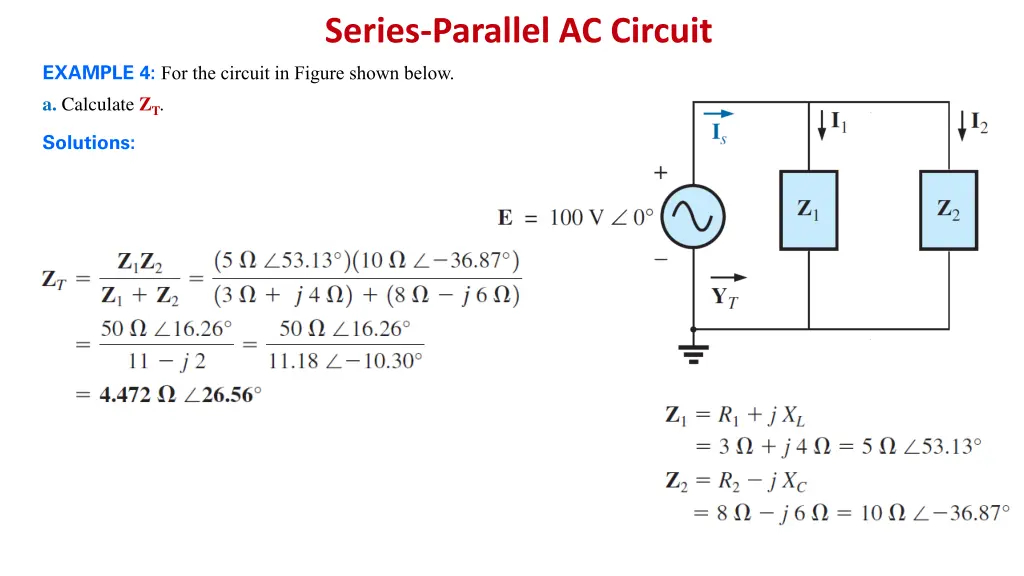
Series-Parallel AC Circuit EXAMPLE 4: For the circuit in Figure shown below. a. Calculate ZT. Solutions:
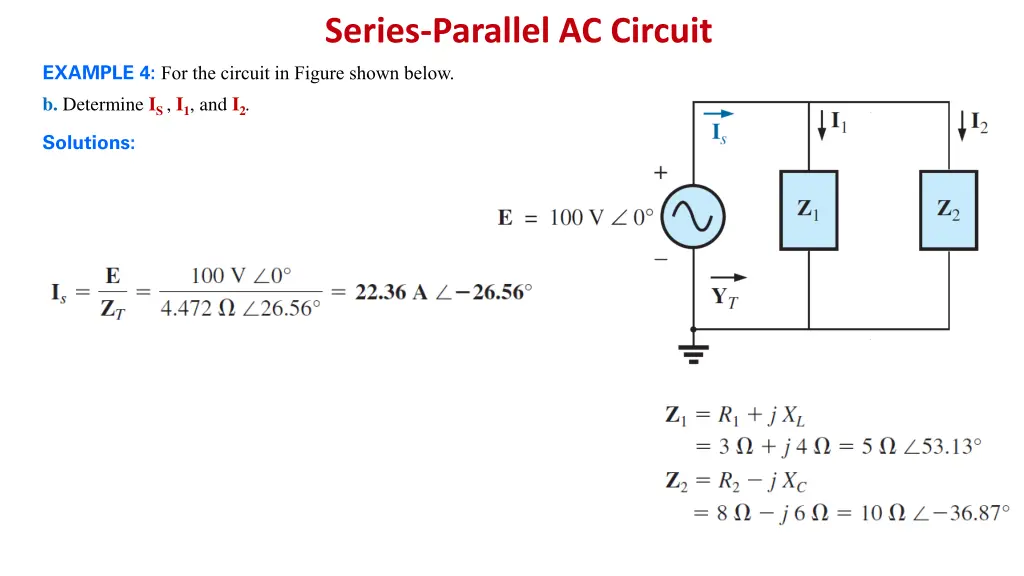
Series-Parallel AC Circuit EXAMPLE 4: For the circuit in Figure shown below. b. Determine IS , I1, and I2. Solutions:
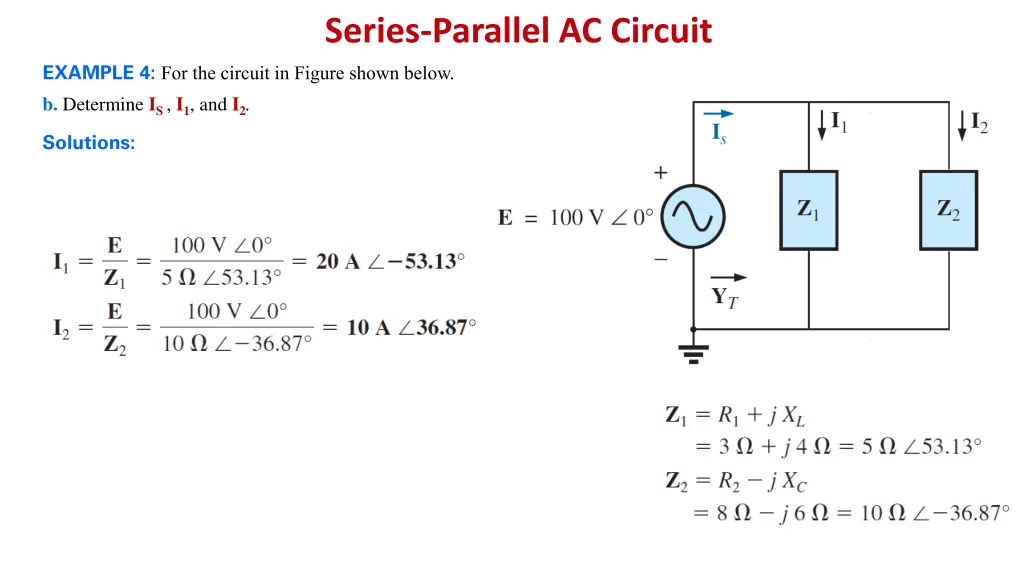
Series-Parallel AC Circuit EXAMPLE 4: For the circuit in Figure shown below. b. Determine IS , I1, and I2. Solutions:
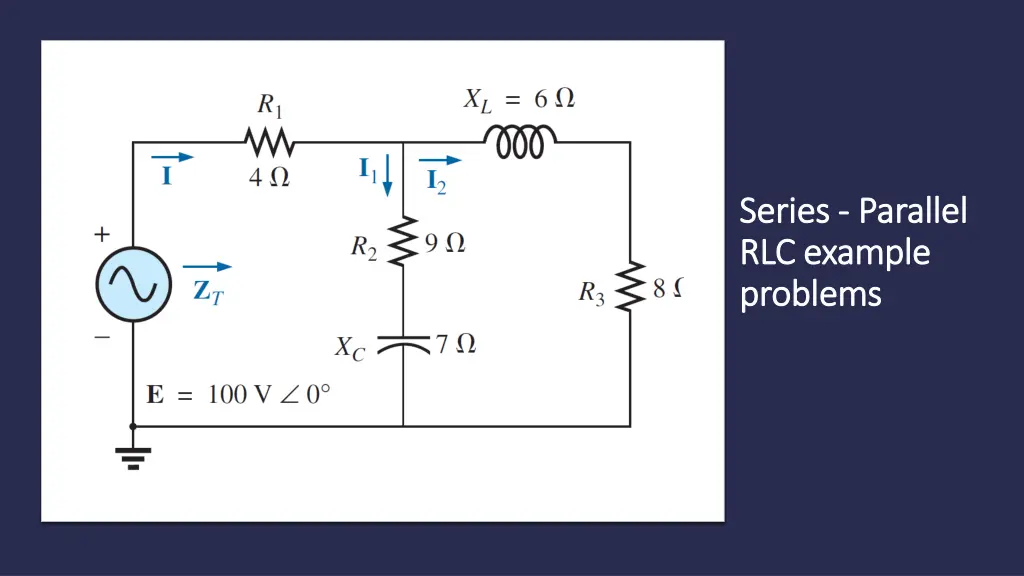
Series Series - - Parallel RLC example RLC example problems problems Parallel
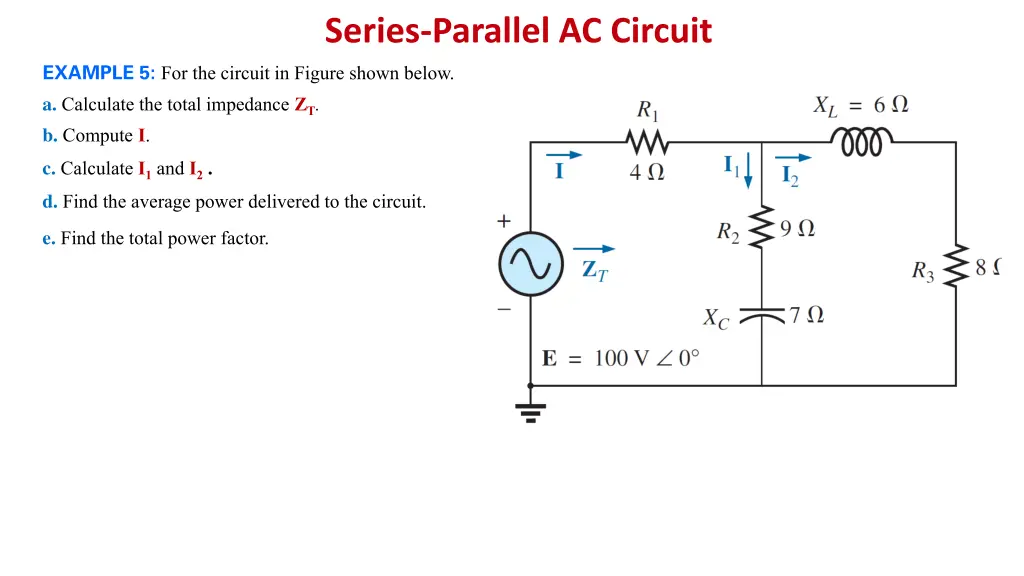
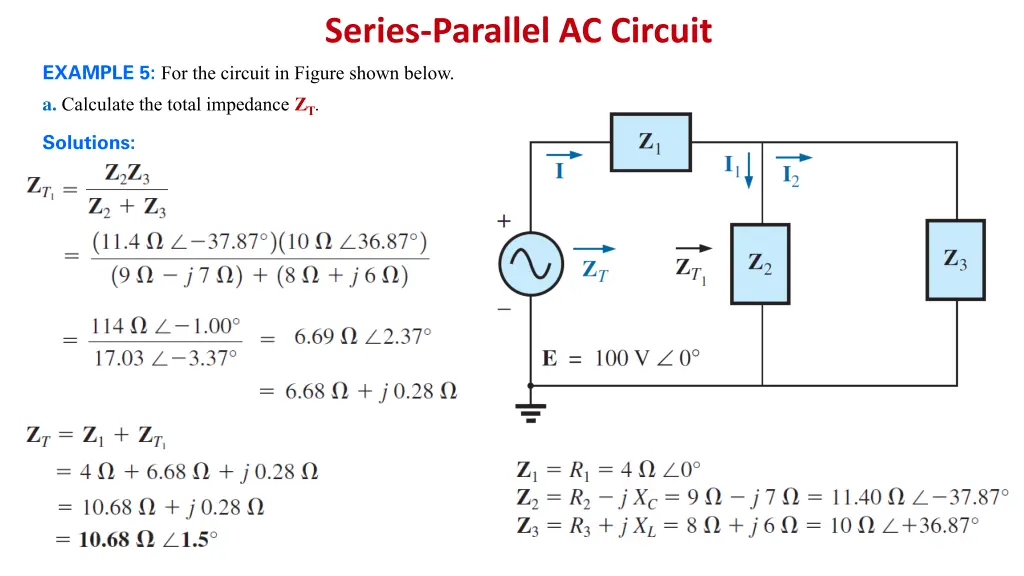
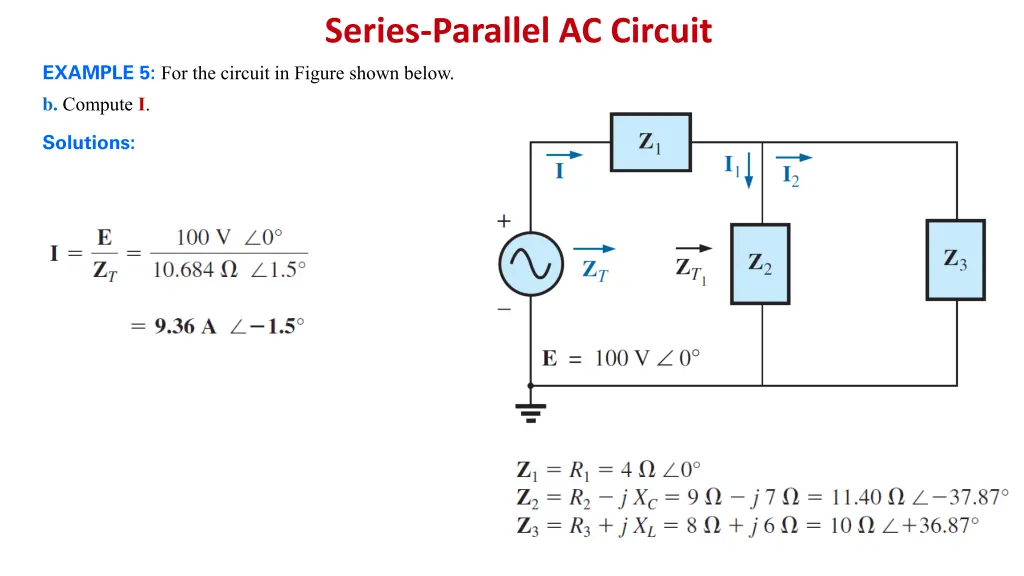
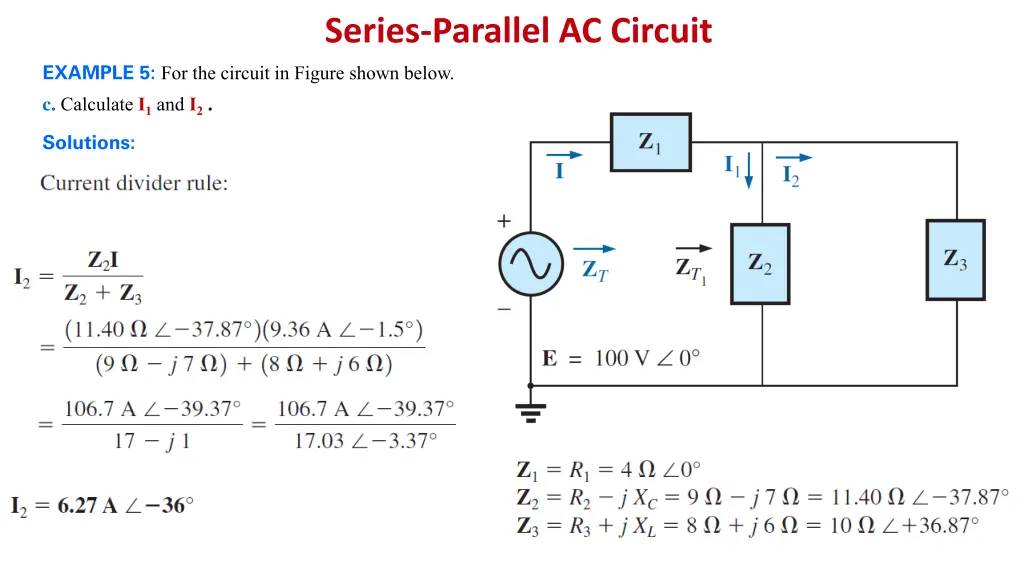
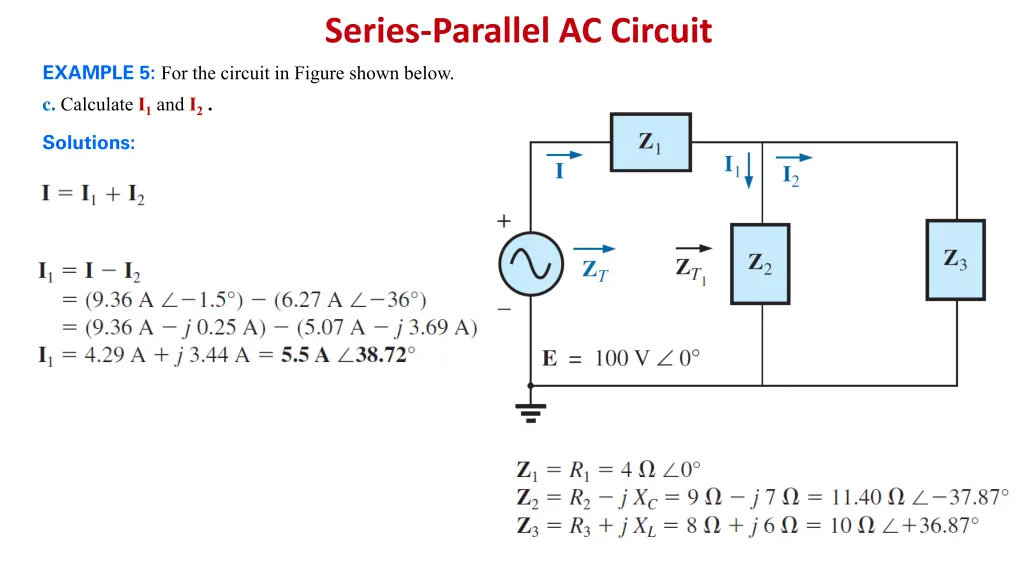
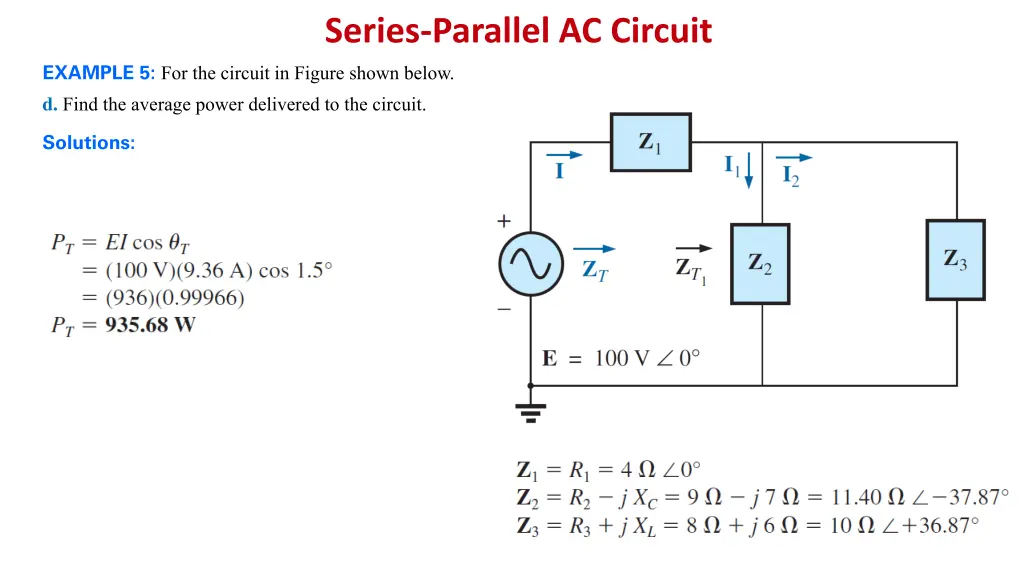
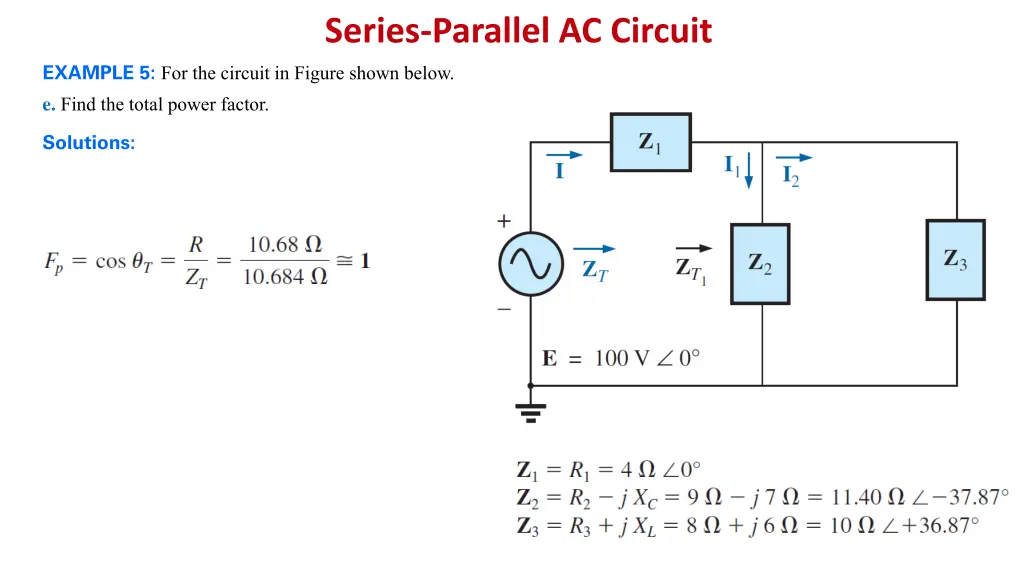
Series-Parallel AC Circuit EXAMPLE 5: For the circuit in Figure shown below. a.Calculate the total impedance ZT. b.Compute I. c.Calculate I1and I2 . d.Find the average power delivered to the circuit. e.Find the total power factor.
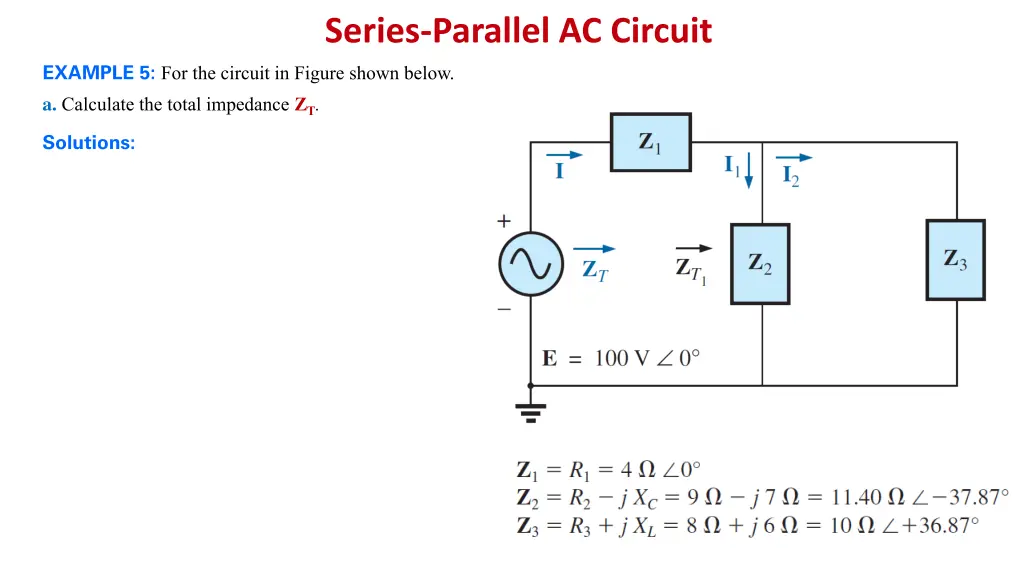
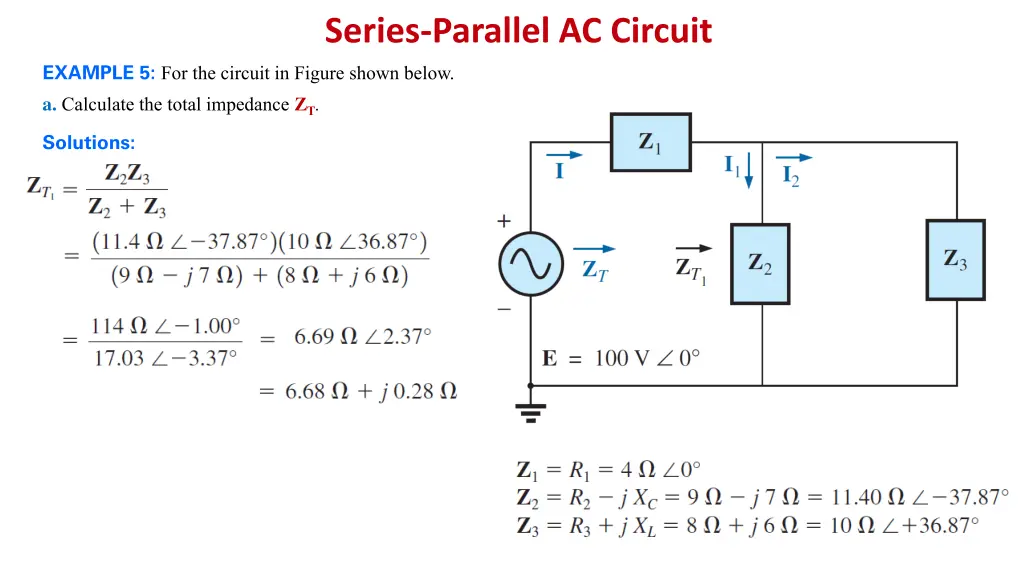
Series-Parallel AC Circuit EXAMPLE 5: For the circuit in Figure shown below. a.Calculate the total impedance ZT. Solutions:
Series-Parallel AC Circuit EXAMPLE 5: For the circuit in Figure shown below. a.Calculate the total impedance ZT. Solutions:
Series-Parallel AC Circuit EXAMPLE 5: For the circuit in Figure shown below. a.Calculate the total impedance ZT. Solutions:
Series-Parallel AC Circuit EXAMPLE 5: For the circuit in Figure shown below. b.Compute I. Solutions:
Series-Parallel AC Circuit EXAMPLE 5: For the circuit in Figure shown below. c.Calculate I1and I2 . Solutions:
Series-Parallel AC Circuit EXAMPLE 5: For the circuit in Figure shown below. c.Calculate I1and I2 . Solutions:
Series-Parallel AC Circuit EXAMPLE 5: For the circuit in Figure shown below. d.Find the average power delivered to the circuit. Solutions:
Series-Parallel AC Circuit EXAMPLE 5: For the circuit in Figure shown below. e.Find the total power factor. Solutions:
References Boylestad, Robert L. Introductory circuit analysis. Pearson Education, 2010. Robbins, Allan H., and Wilhelm C. Miller. Circuit analysis: Theory and practice. Cengage Learning, 2012. Sadiku, Matthew NO, and Chales K. Alexander. Fundamentals of electric circuits. McGraw-Hill Higher Education, 2007.