Acute Pancreatitis: Causes, Epidemiology, and Pathophysiology
Explore the epidemiology, pathophysiology, and diagnostic approach of acute pancreatitis. Learn about the common causes, theories, and clinical presentations associated with this condition.

Download Presentation

Please find below an Image/Link to download the presentation.
The content on the website is provided AS IS for your information and personal use only. It may not be sold, licensed, or shared on other websites without obtaining consent from the author. If you encounter any issues during the download, it is possible that the publisher has removed the file from their server.
You are allowed to download the files provided on this website for personal or commercial use, subject to the condition that they are used lawfully. All files are the property of their respective owners.
The content on the website is provided AS IS for your information and personal use only. It may not be sold, licensed, or shared on other websites without obtaining consent from the author.
E N D
Presentation Transcript
Acute pancreatitis MD, MSc (HPB), Pharm.D, PhDc
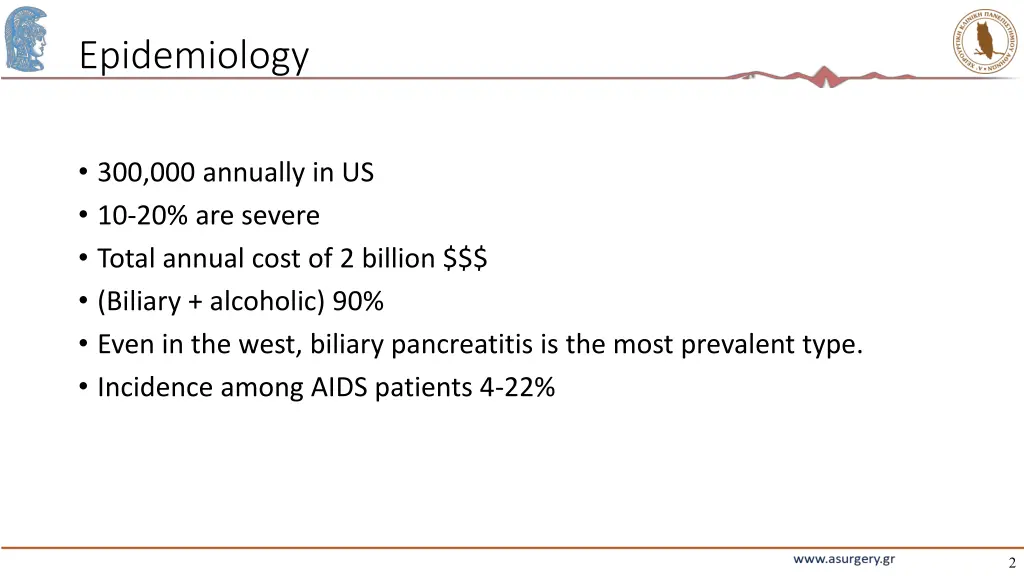
Epidemiology 300,000 annually in US 10-20% are severe Total annual cost of 2 billion $$$ (Biliary + alcoholic) 90% Even in the west, biliary pancreatitis is the most prevalent type. Incidence among AIDS patients 4-22% 2
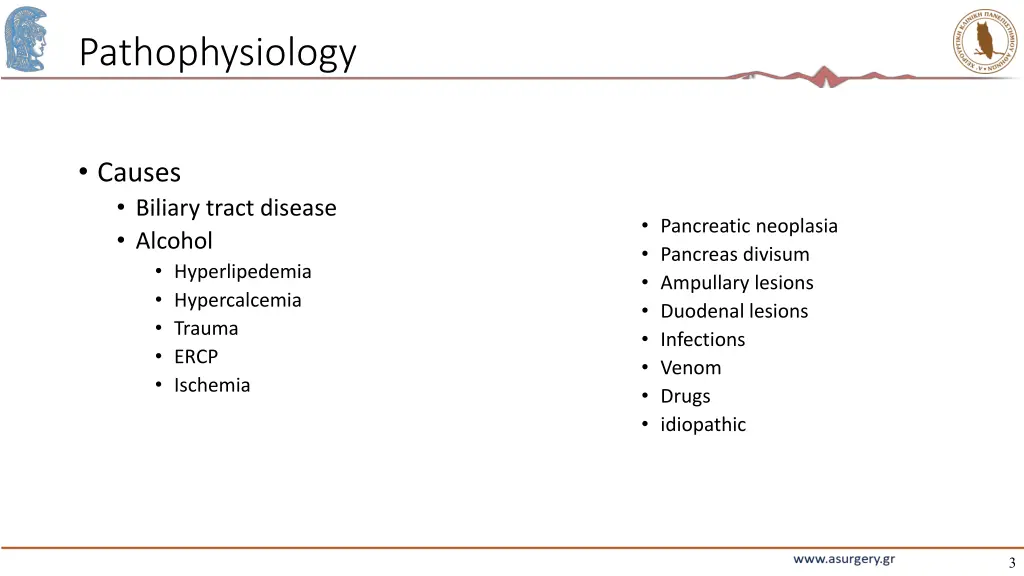
Pathophysiology Causes Biliary tract disease Alcohol Hyperlipedemia Hypercalcemia Trauma ERCP Ischemia Pancreatic neoplasia Pancreas divisum Ampullary lesions Duodenal lesions Infections Venom Drugs idiopathic 3
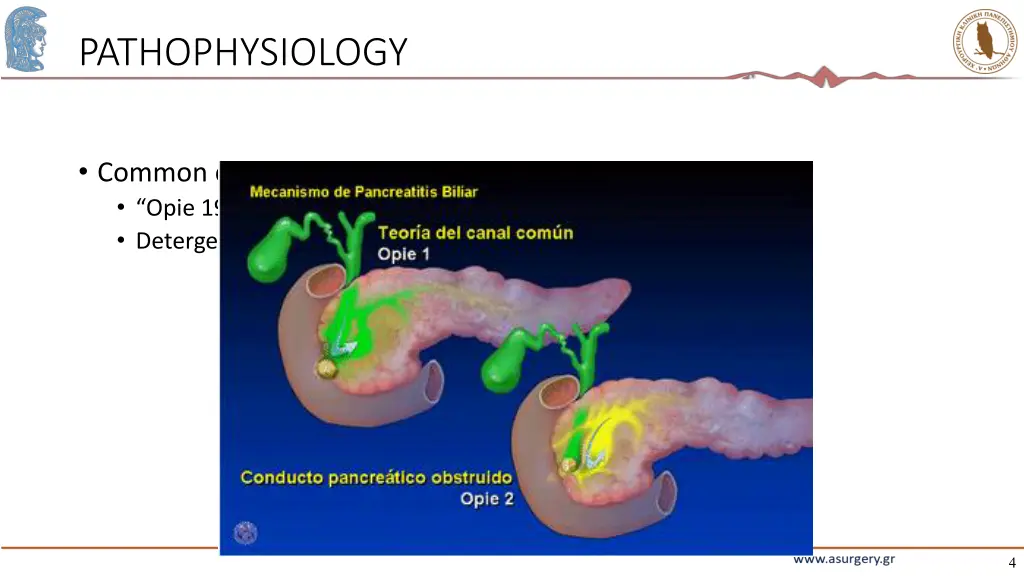
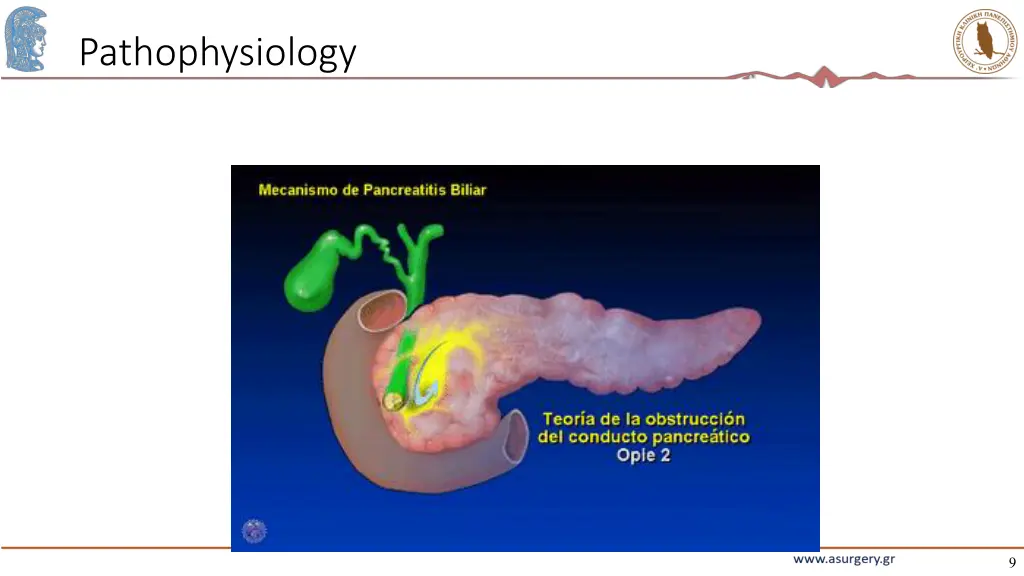
PATHOPHYSIOLOGY Common channel theory Opie 1901 Detergent effect of bile 4
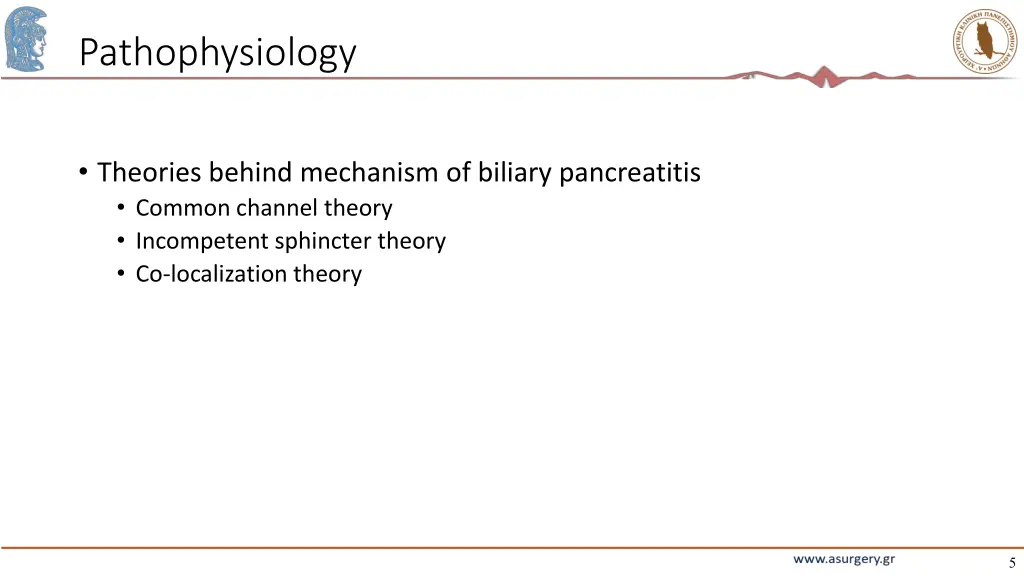
Pathophysiology Theories behind mechanism of biliary pancreatitis Common channel theory Incompetent sphincter theory Co-localization theory 5
Pathophysiology Critique of common channel theory Higher hydrostatic pressure in PD Introduction of bile into PD in animal models failed to cause AP 6
Pathophysiology Incompetent sphincter theory Incompetent sphincter of Oddi due to stone passage reflux AP Critique How come papillotomy doesn t routinely cause AP?? 7
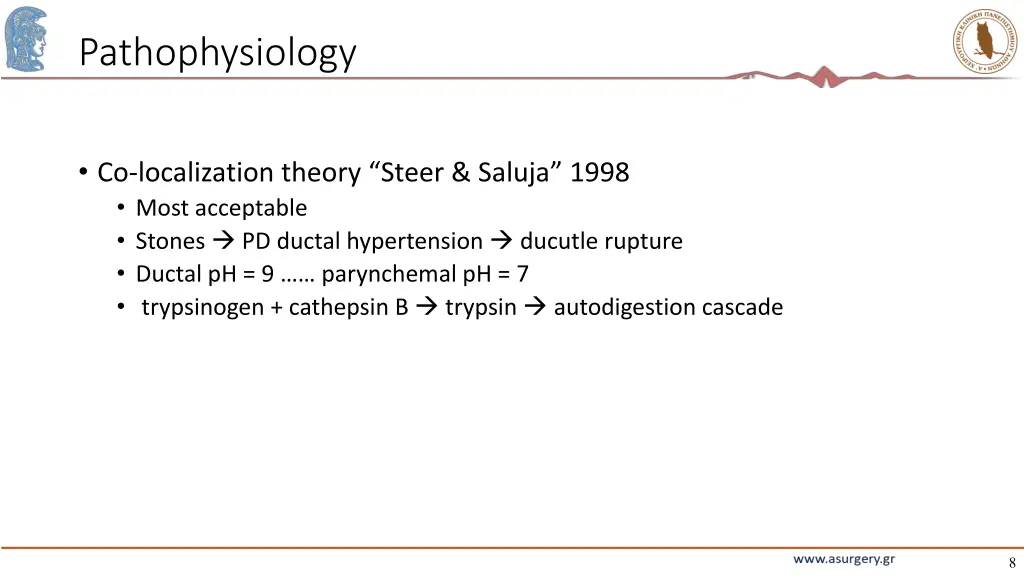
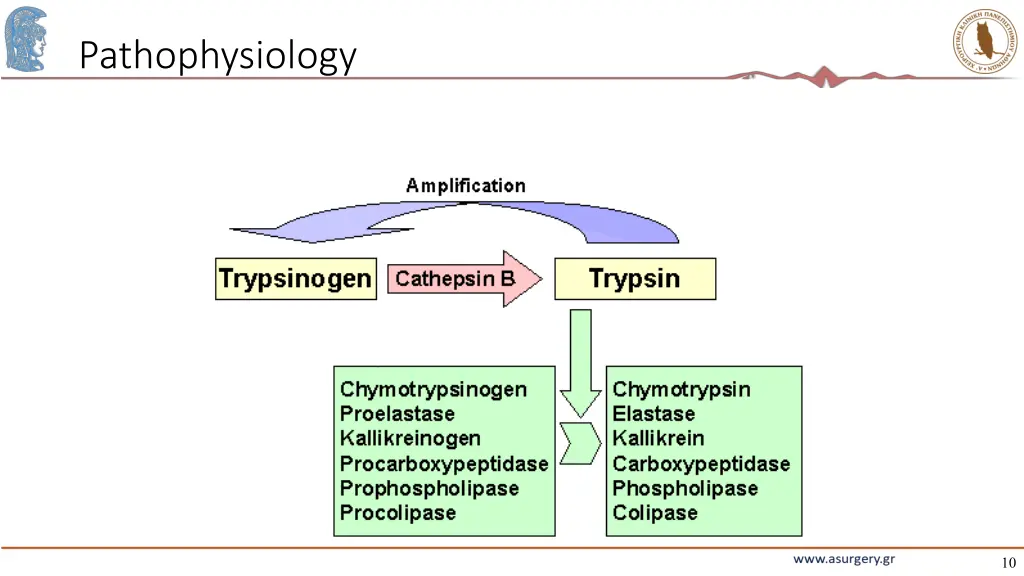
Pathophysiology Co-localization theory Steer & Saluja 1998 Most acceptable Stones PD ductal hypertension ducutle rupture Ductal pH = 9 parynchemal pH = 7 trypsinogen + cathepsin B trypsin autodigestion cascade 8
Diagnosis Clinical picture Investigations Acute pancreatitis is a diagnosis of exclusion Schwartz s 11
Diagnosis Hx: Epigastric pain Radiating to back Nausea, vomitting Precipitating factor? 12
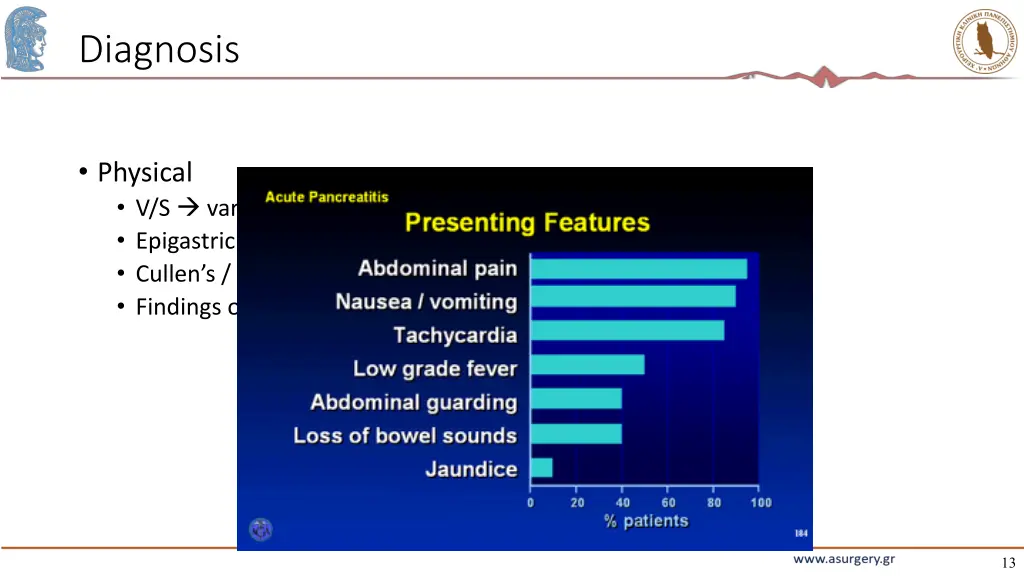
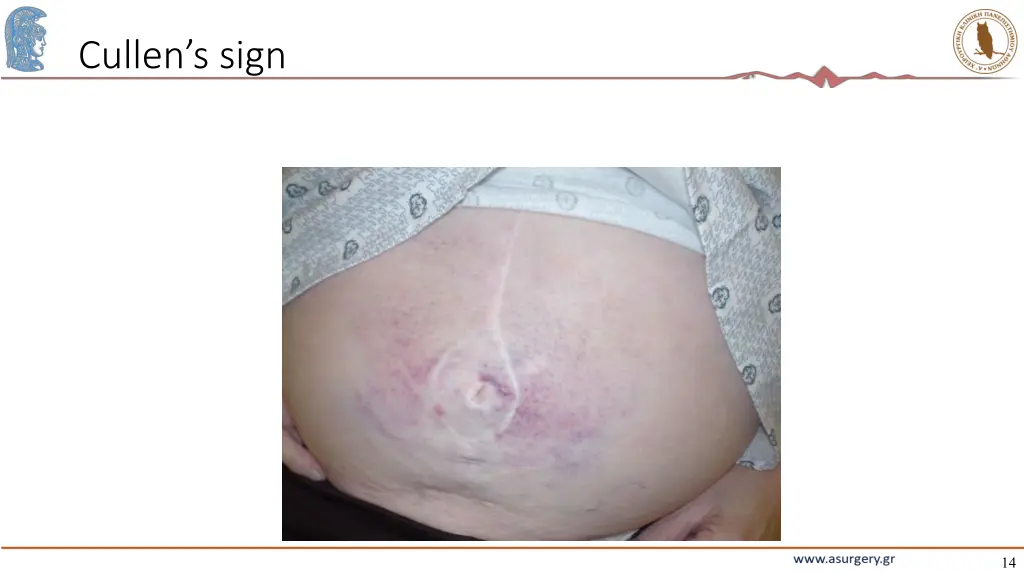
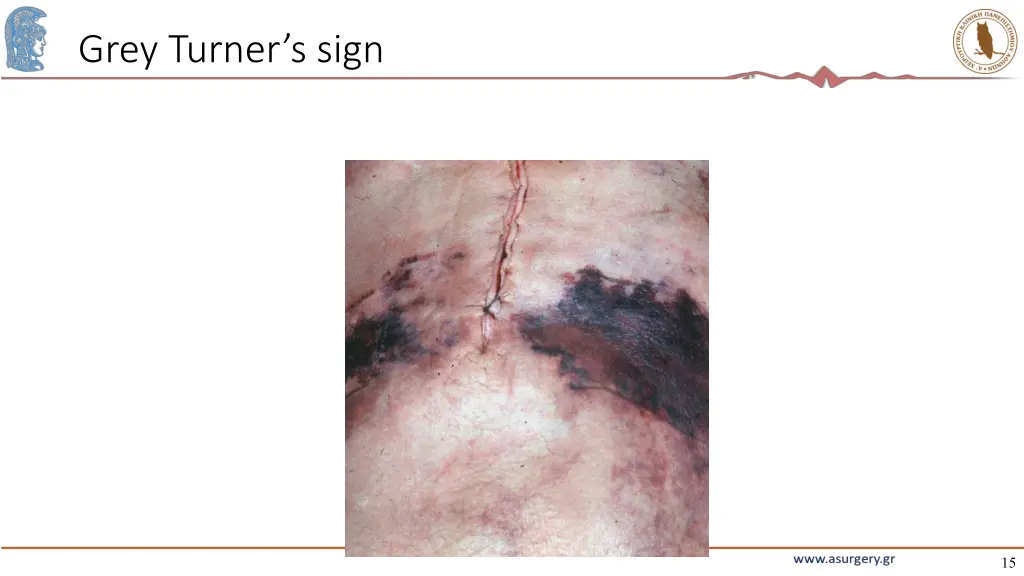
Diagnosis Physical V/S variable Epigastric tenderness Cullen s / Grey Turner s (1%) Findings of complication(s) 13
Cullens sign 14
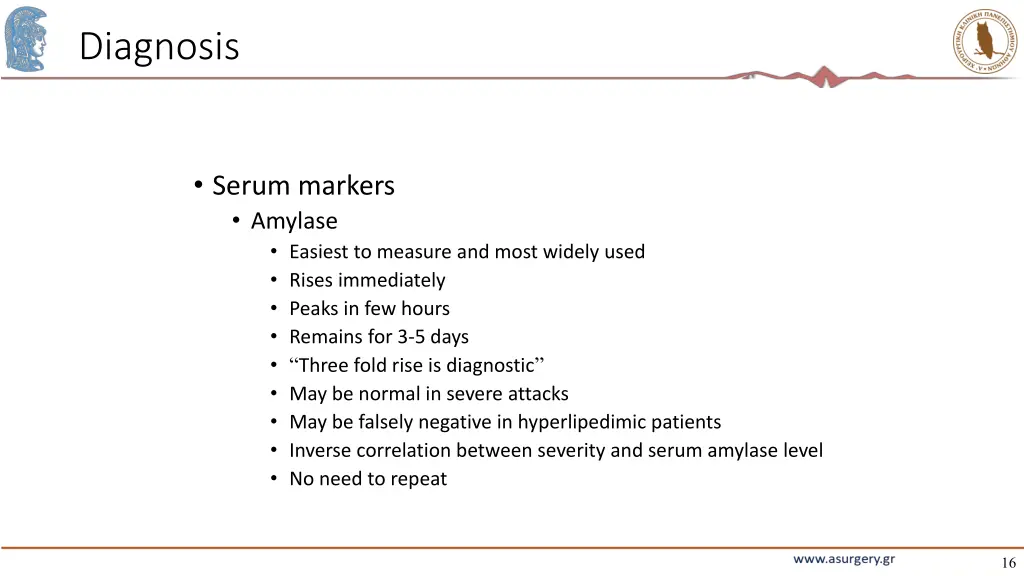
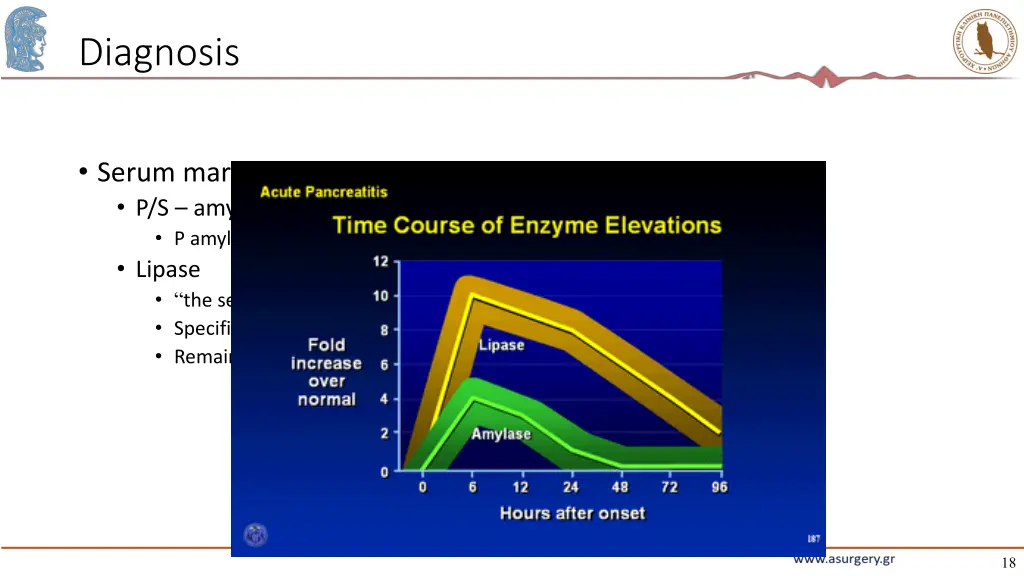
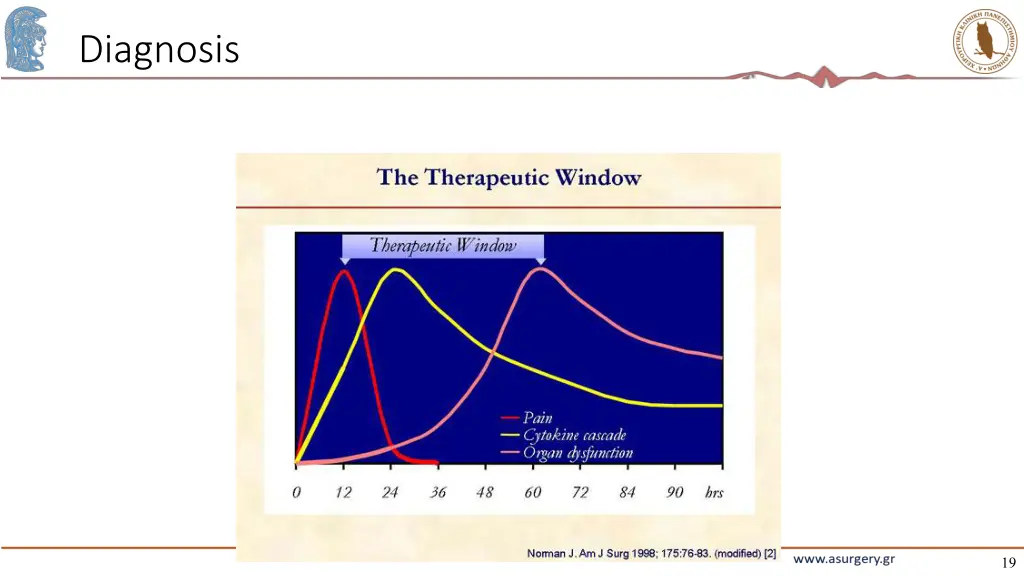
Diagnosis Serum markers Amylase Easiest to measure and most widely used Rises immediately Peaks in few hours Remains for 3-5 days Three fold rise is diagnostic May be normal in severe attacks May be falsely negative in hyperlipedimic patients Inverse correlation between severity and serum amylase level No need to repeat 16
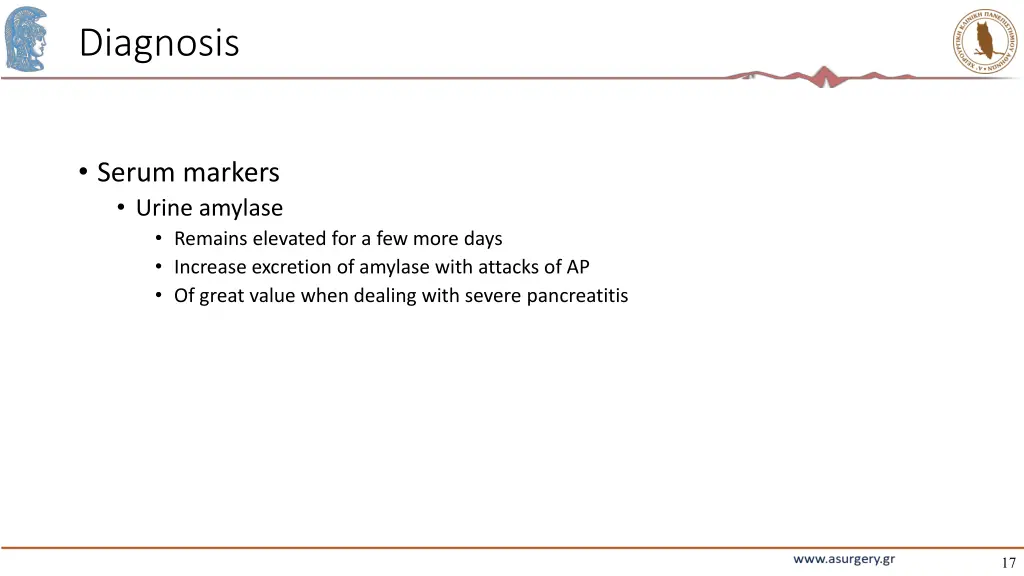
Diagnosis Serum markers Urine amylase Remains elevated for a few more days Increase excretion of amylase with attacks of AP Of great value when dealing with severe pancreatitis 17
Diagnosis Serum markers P/S amylase P amylase increases specificity to 93% Lipase the serum marker of highest probability of disease Specificity of 96% Remains elevated for longer time than total amylase 18
Diagnosis 19
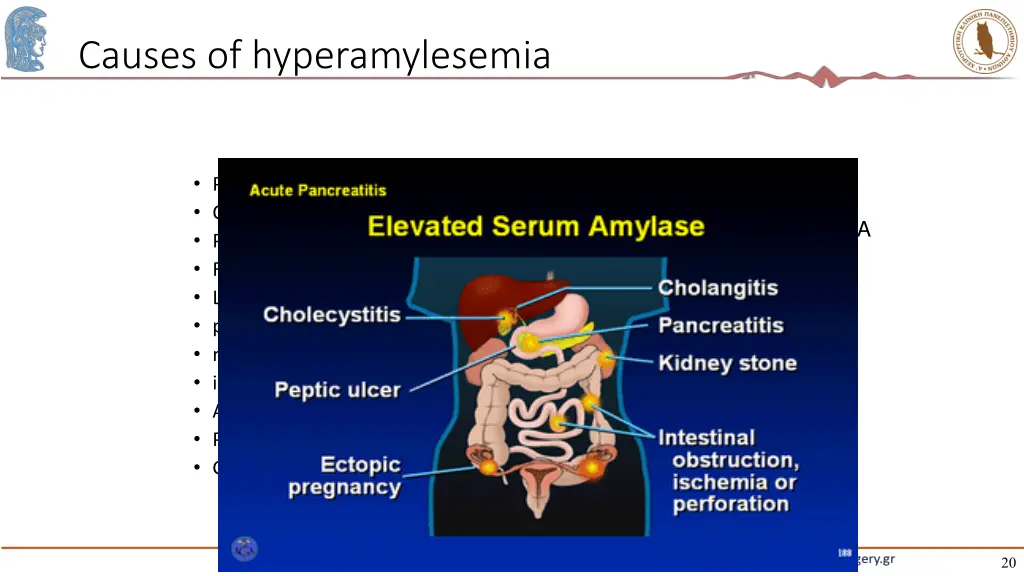
Causes of hyperamylesemia Malignancies Lung CA Ovarian CA pancreatic CA Colonic CA pheochromocytoma; Thymoma multiple myeloma breast cancer Pancreatitis Choledocolethiasis p Parotitis Renal failure Liver cirrhosis perforated bowel mesenteric infarction intestinal obstruction Appendicitis Peritonitis. Gyne disease p s s/p s/p p p p p P s 20
Radiology Diagnostic role X-ray U/S CE-CT 21
Radiology X-ray Air in the duodenal C loop Sentinel loop sign Colon cutoff sign All these signs are non specific 22
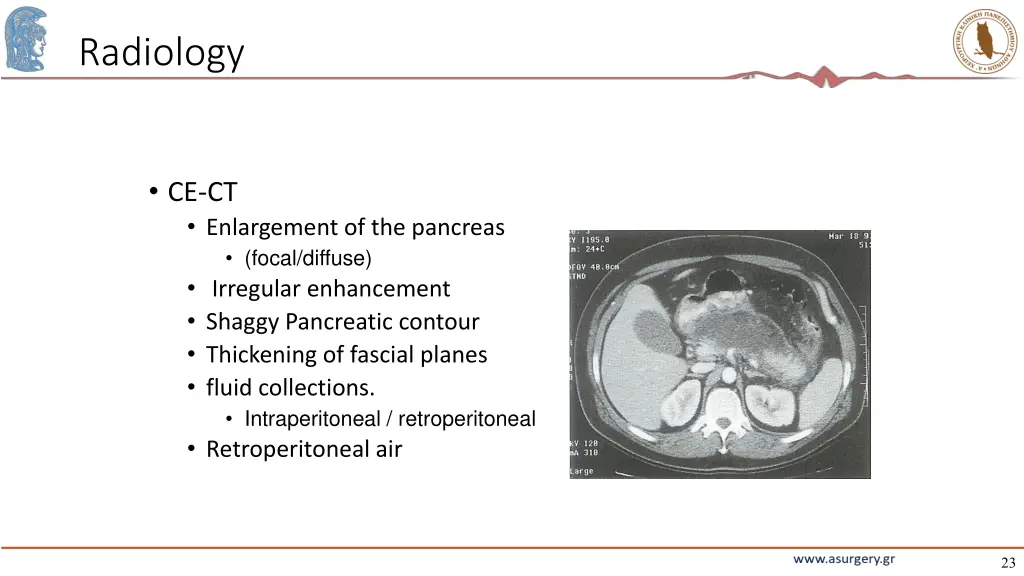
Radiology CE-CT Enlargement of the pancreas (focal/diffuse) Irregular enhancement Shaggy Pancreatic contour Thickening of fascial planes fluid collections. Intraperitoneal / retroperitoneal Retroperitoneal air 23
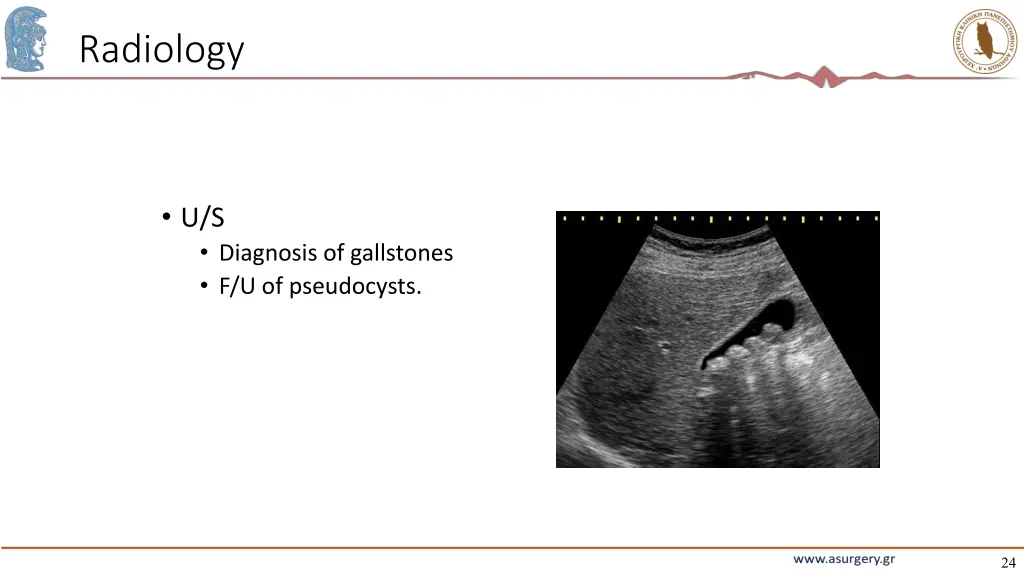
Radiology U/S Diagnosis of gallstones F/U of pseudocysts. 24
Prognosis Course either mild or severe Mild = edematous pancreatitis Severe = necrotic pancreatitis 25
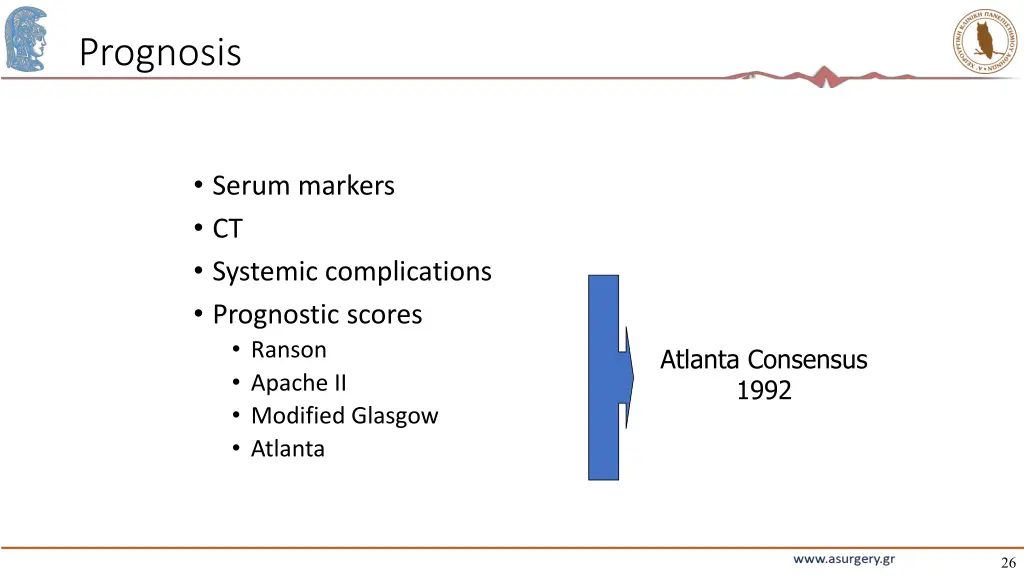
Prognosis Serum markers CT Systemic complications Prognostic scores Ranson Apache II Modified Glasgow Atlanta Atlanta Consensus 1992 26
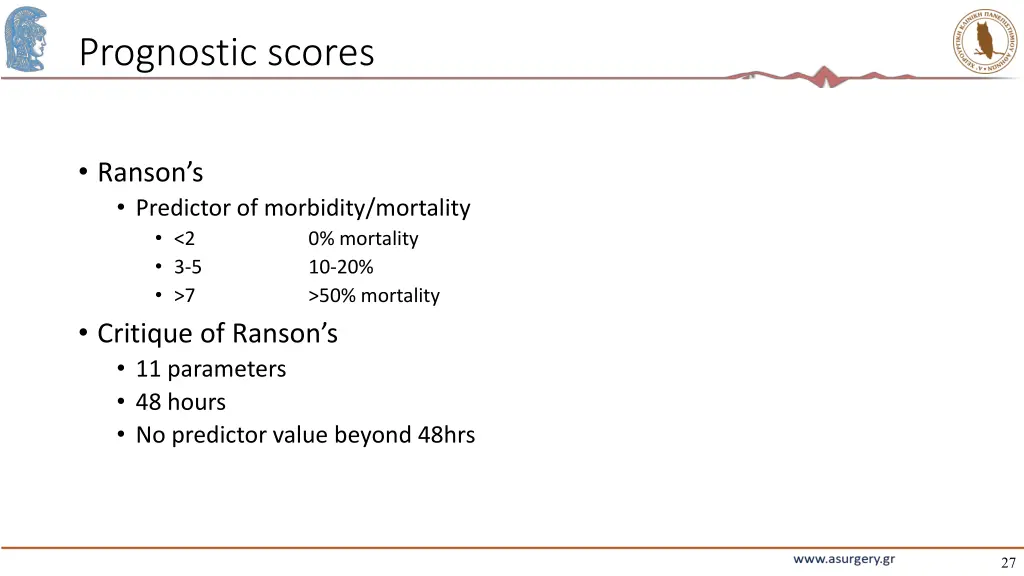
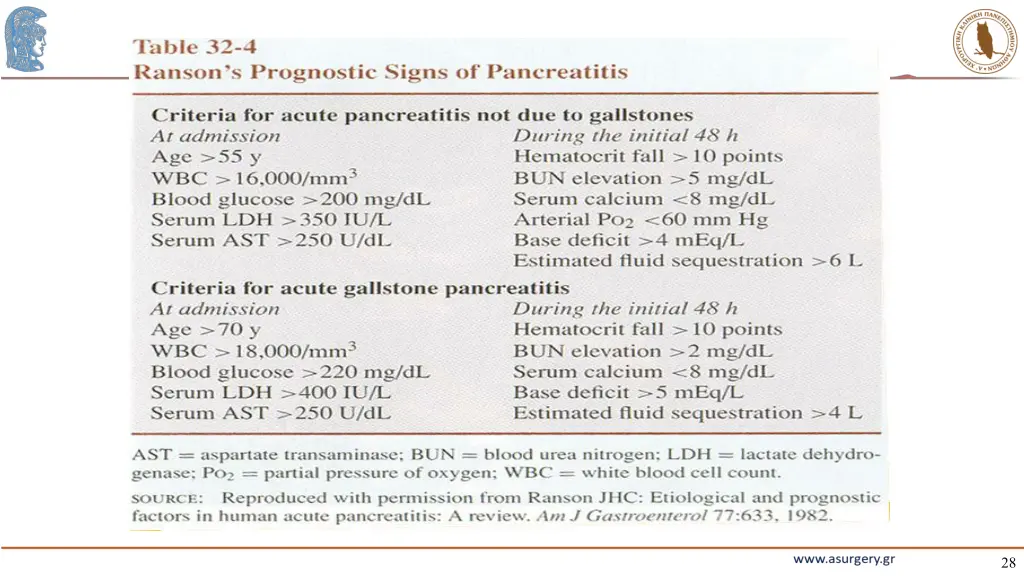
Prognostic scores Ranson s Predictor of morbidity/mortality <2 3-5 >7 Critique of Ranson s 11 parameters 48 hours No predictor value beyond 48hrs 0% mortality 10-20% >50% mortality 27
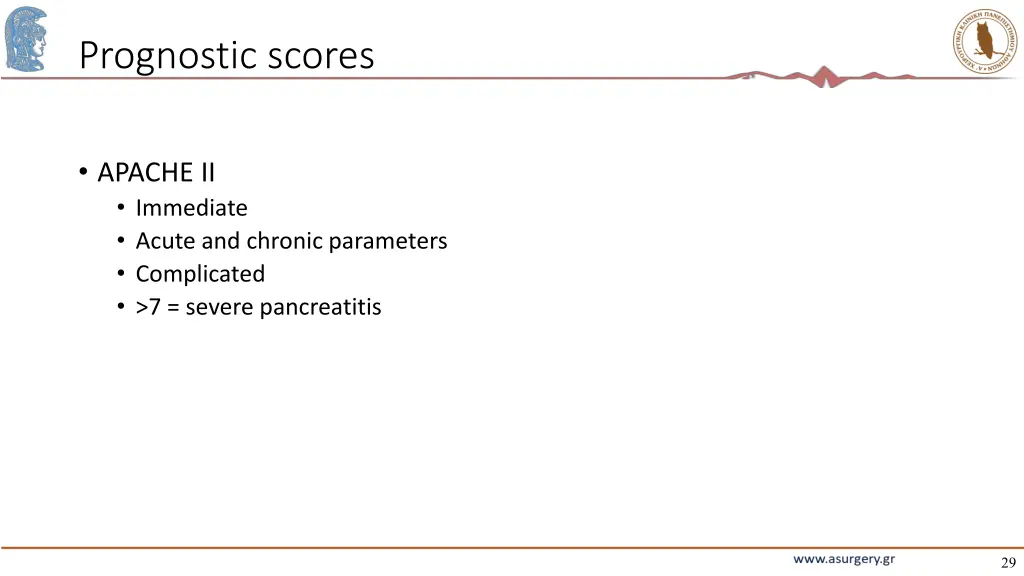
Prognostic scores APACHE II Immediate Acute and chronic parameters Complicated >7 = severe pancreatitis 29
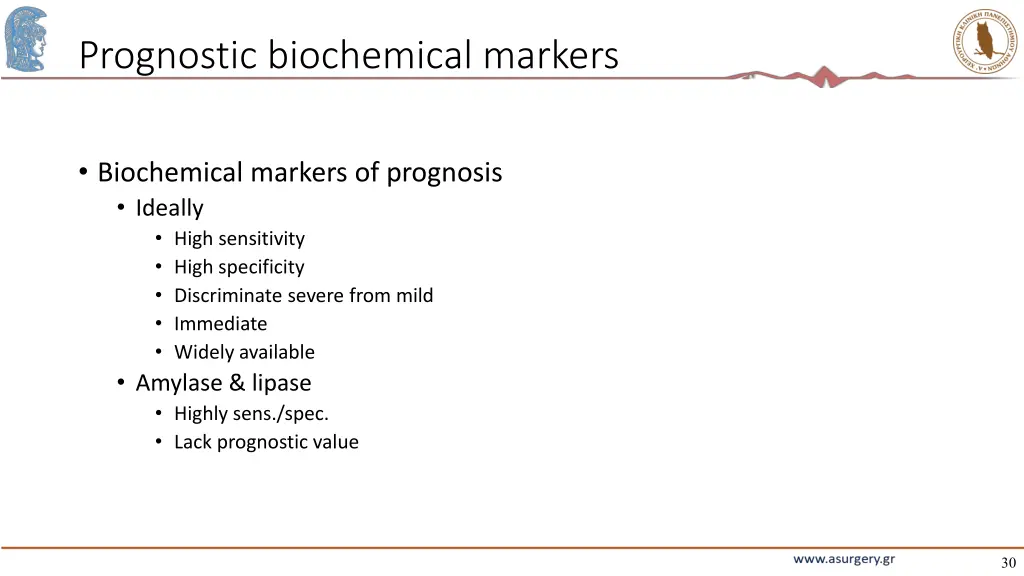
Prognostic biochemical markers Biochemical markers of prognosis Ideally High sensitivity High specificity Discriminate severe from mild Immediate Widely available Amylase & lipase Highly sens./spec. Lack prognostic value 30
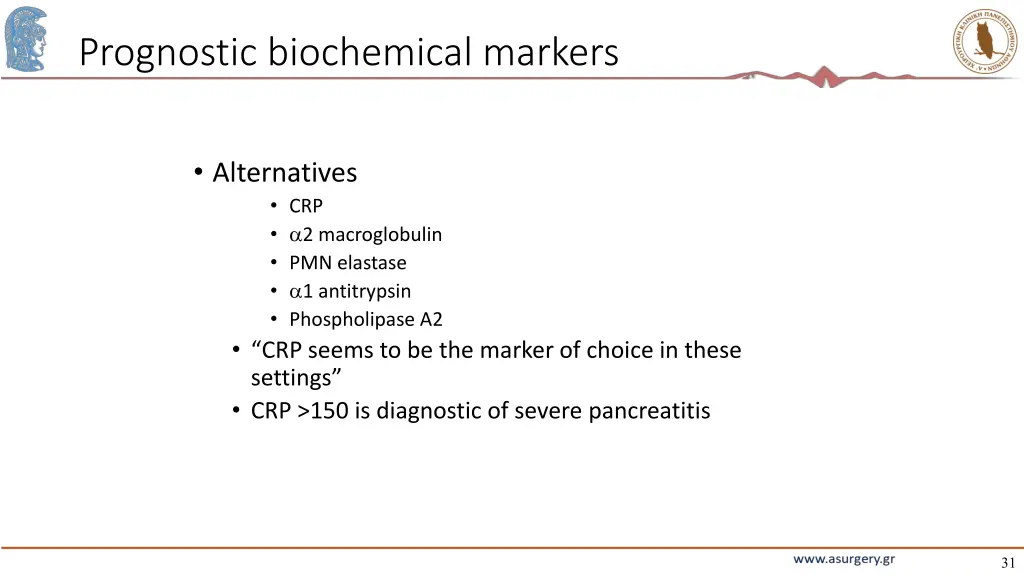
Prognostic biochemical markers Alternatives CRP 2 macroglobulin PMN elastase 1 antitrypsin Phospholipase A2 CRP seems to be the marker of choice in these settings CRP >150 is diagnostic of severe pancreatitis 31
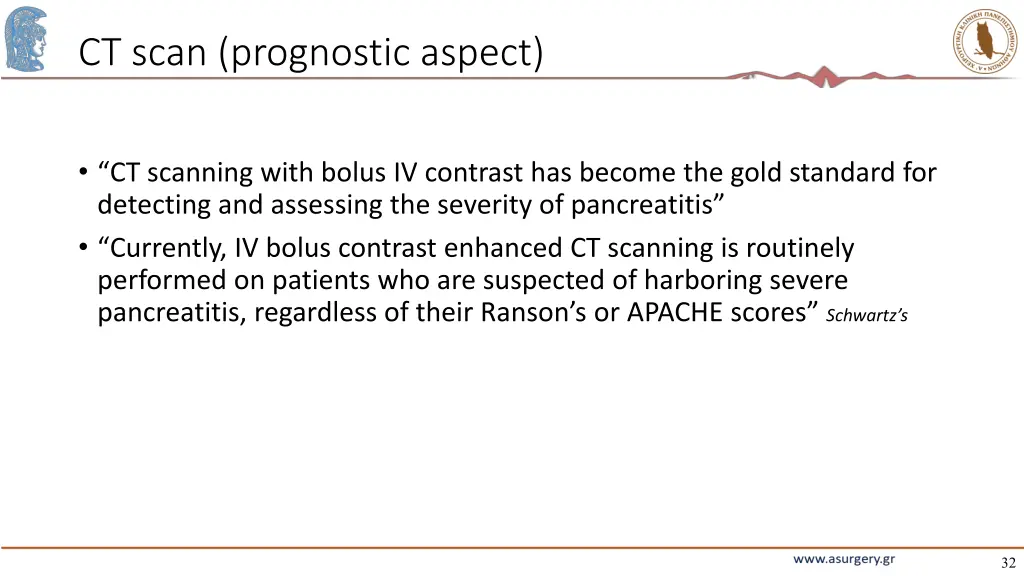
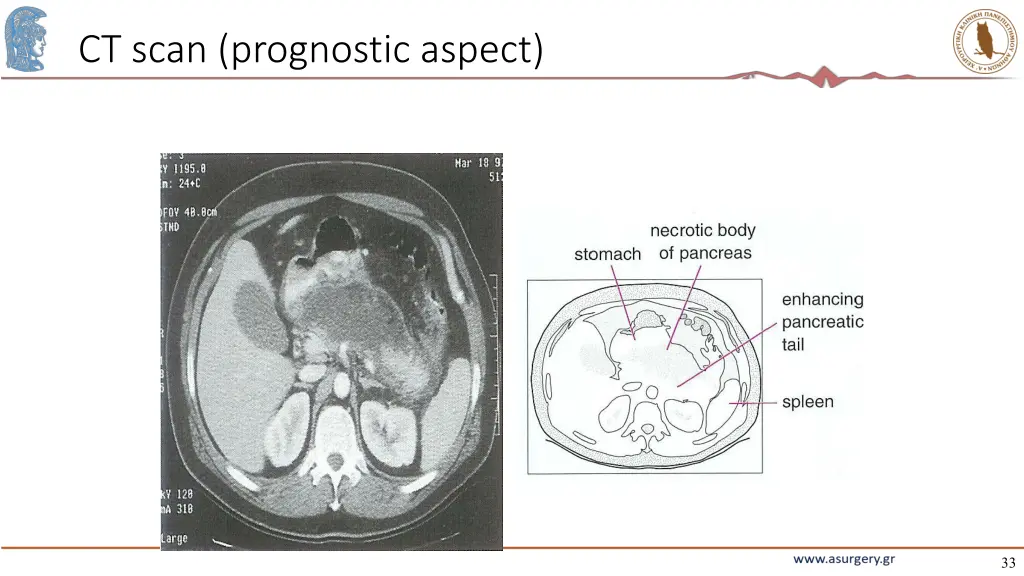
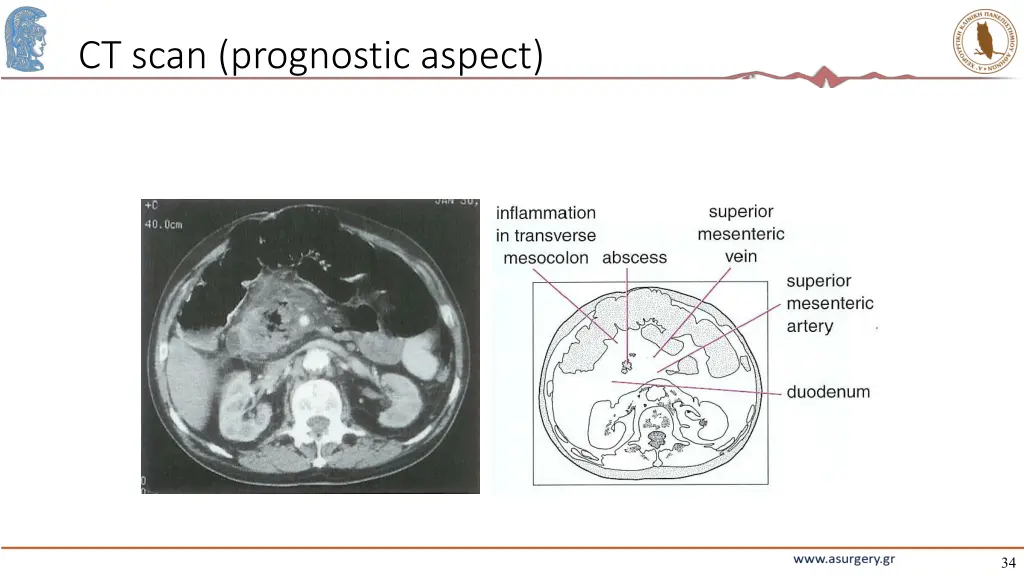
CT scan (prognostic aspect) CT scanning with bolus IV contrast has become the gold standard for detecting and assessing the severity of pancreatitis Currently, IV bolus contrast enhanced CT scanning is routinely performed on patients who are suspected of harboring severe pancreatitis, regardless of their Ranson s or APACHE scores Schwartz s 32
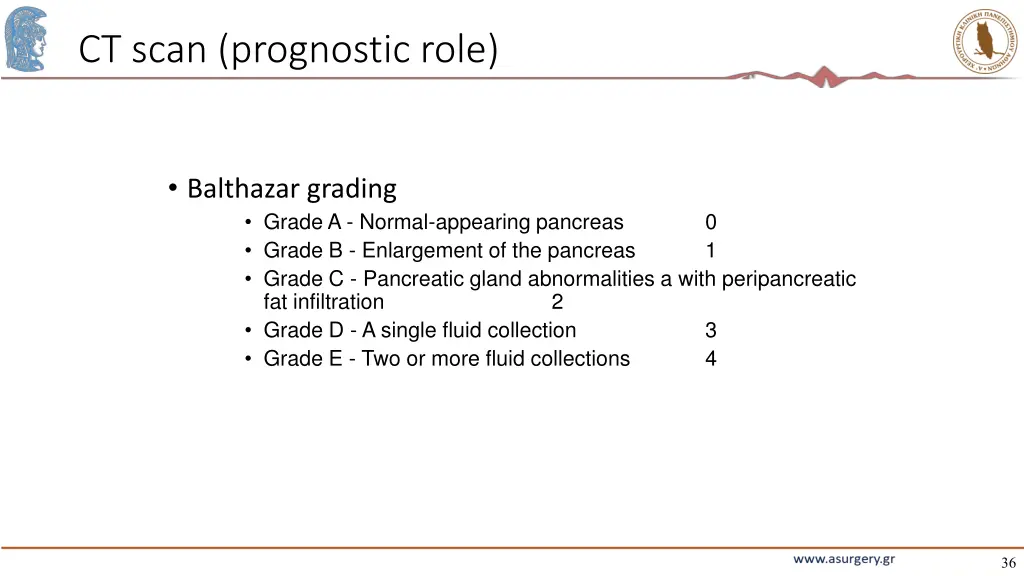
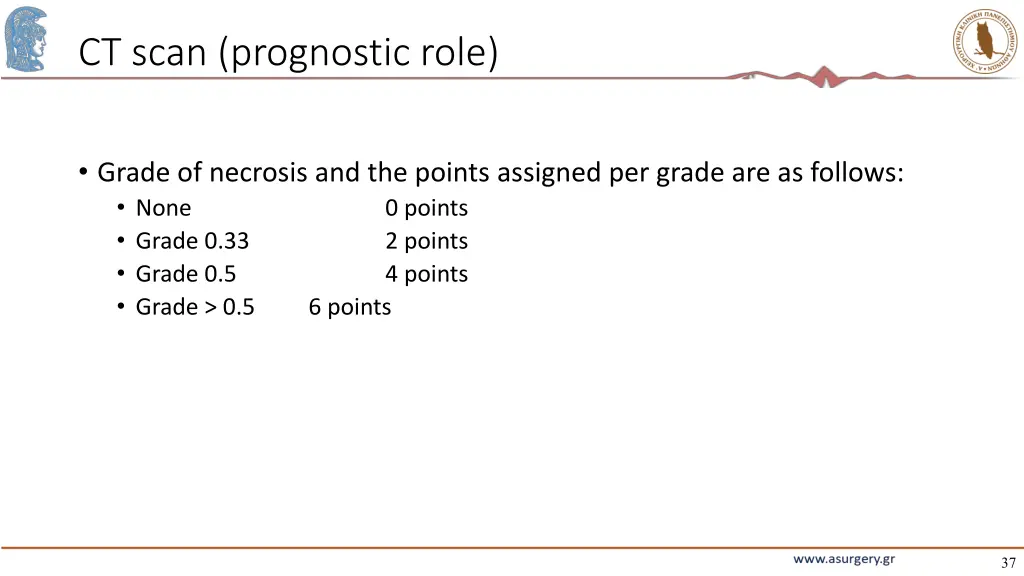
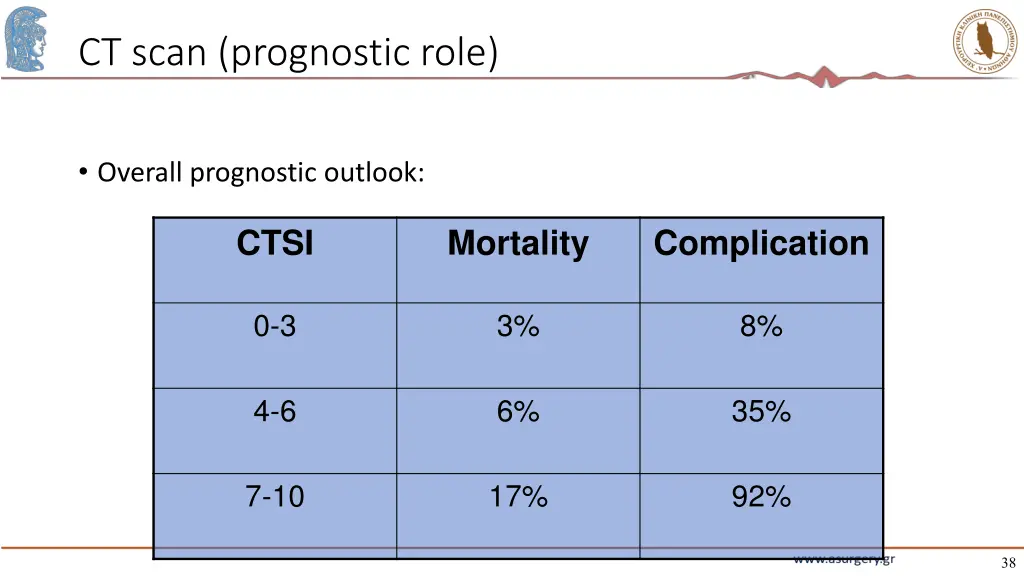
CT scan (prognostic role) Balthazar CT-severity index (CTSI) CTSI considers degree of necrosis Also considers the CT grade A final score is given and correlates with mortality and complication development 35
CT scan (prognostic role) Balthazar grading Grade A - Normal-appearing pancreas Grade B - Enlargement of the pancreas Grade C - Pancreatic gland abnormalities a with peripancreatic fat infiltration Grade D - A single fluid collection Grade E - Two or more fluid collections 0 1 2 3 4 36
CT scan (prognostic role) Grade of necrosis and the points assigned per grade are as follows: None 0 points Grade 0.33 2 points Grade 0.5 4 points Grade > 0.5 6 points 37
CT scan (prognostic role) Overall prognostic outlook: CTSI Mortality Complication 0-3 3% 8% 4-6 6% 35% 7-10 17% 92% 38
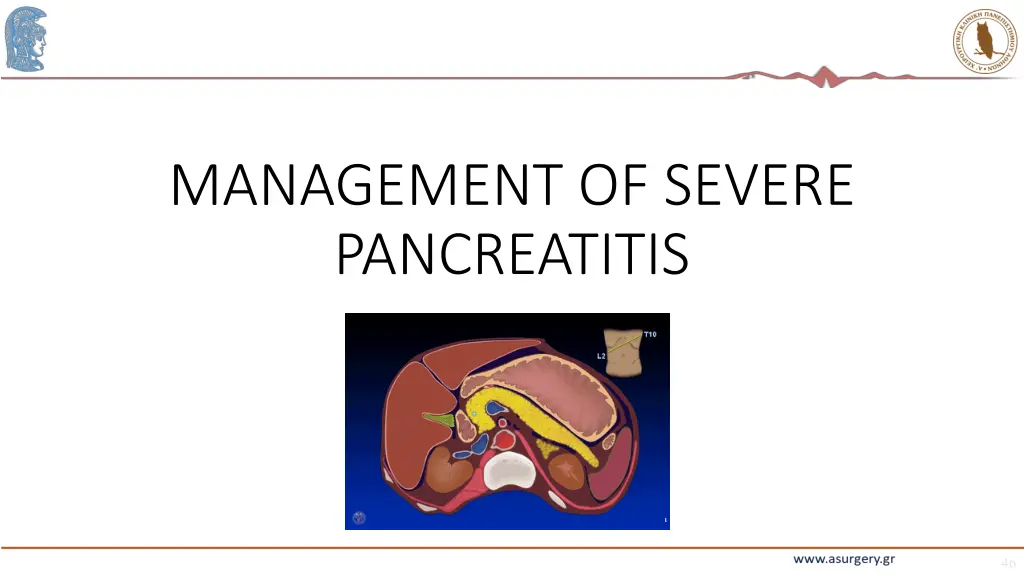
MANAGEMENT Management depends on severity We will consider management of edematous pancreatitis separately from necrotizing pancreatitis for purpose of simplification 39
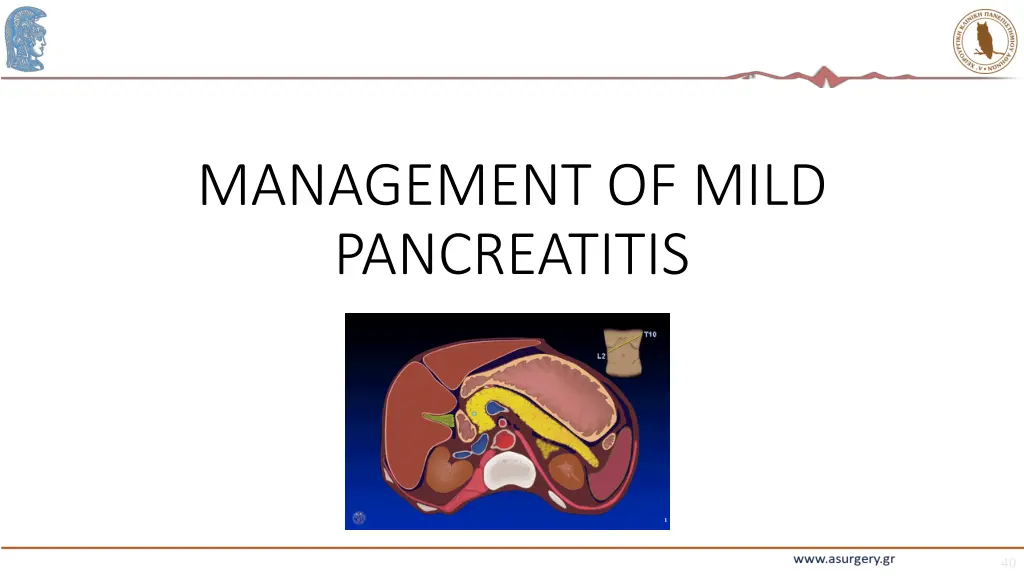
MANAGEMENT OF MILD PANCREATITIS 40
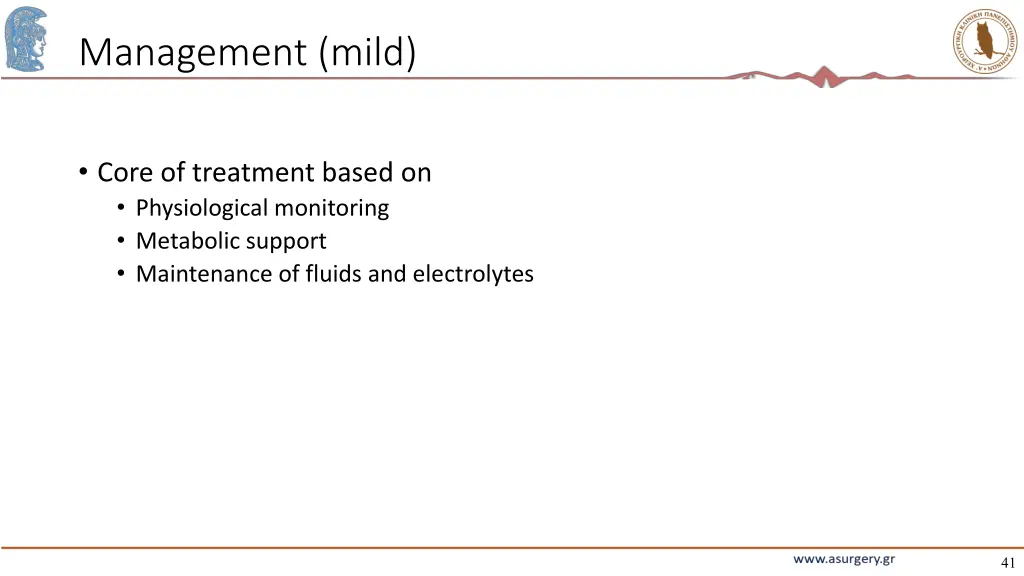
Management (mild) Core of treatment based on Physiological monitoring Metabolic support Maintenance of fluids and electrolytes 41
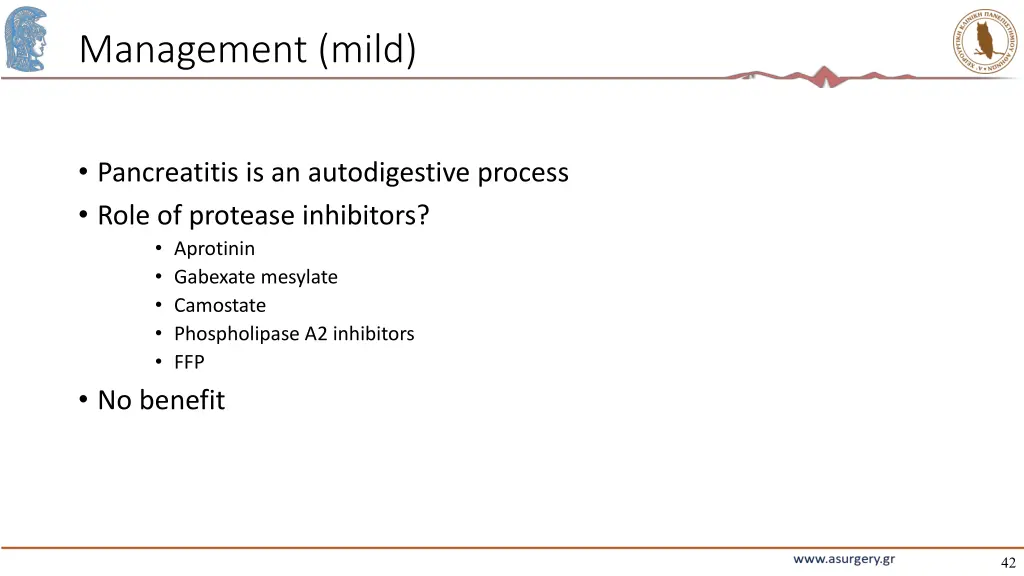
Management (mild) Pancreatitis is an autodigestive process Role of protease inhibitors? Aprotinin Gabexate mesylate Camostate Phospholipase A2 inhibitors FFP No benefit 42
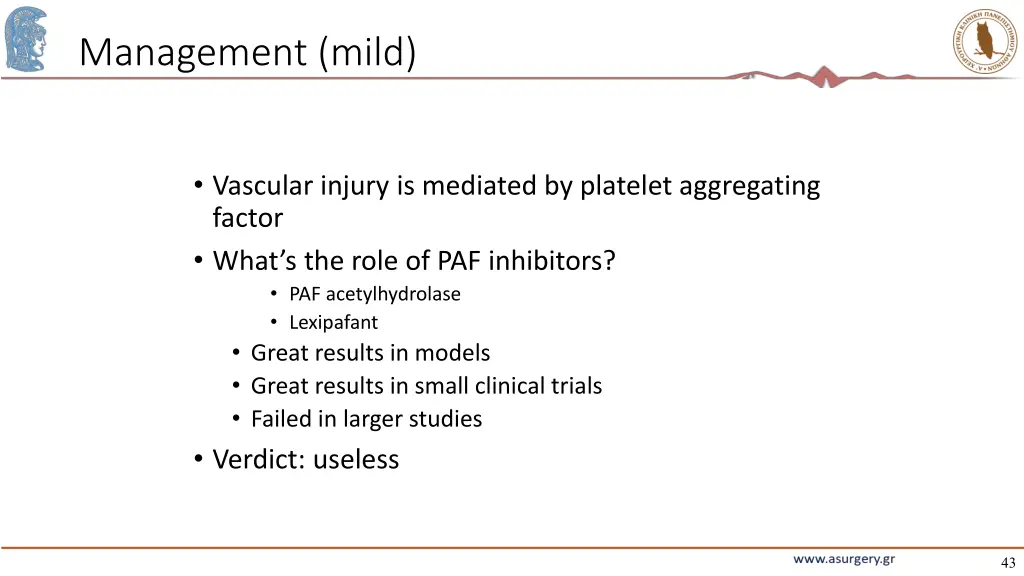
Management (mild) Vascular injury is mediated by platelet aggregating factor What s the role of PAF inhibitors? PAF acetylhydrolase Lexipafant Great results in models Great results in small clinical trials Failed in larger studies Verdict: useless 43
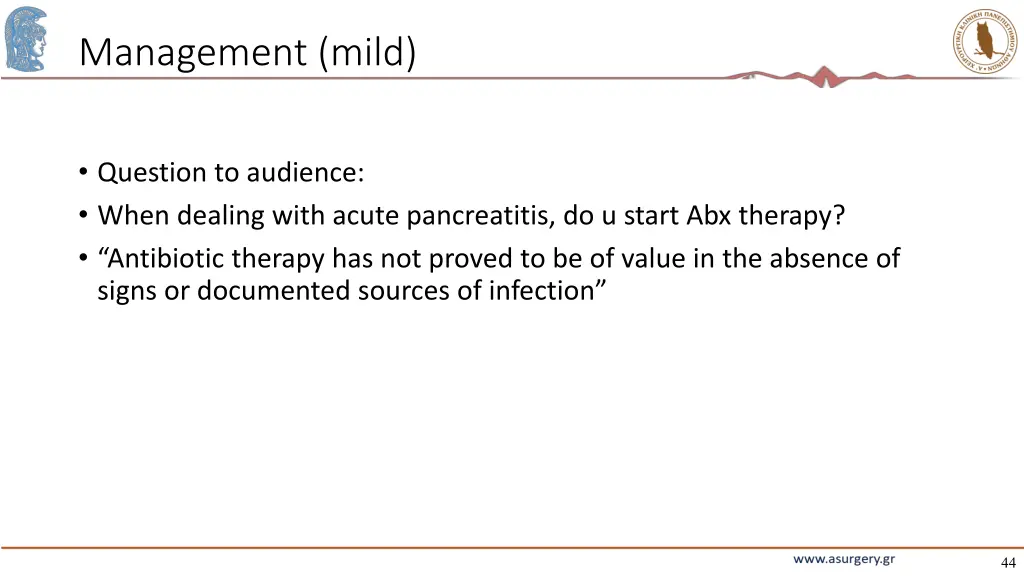
Management (mild) Question to audience: When dealing with acute pancreatitis, do u start Abx therapy? Antibiotic therapy has not proved to be of value in the absence of signs or documented sources of infection 44
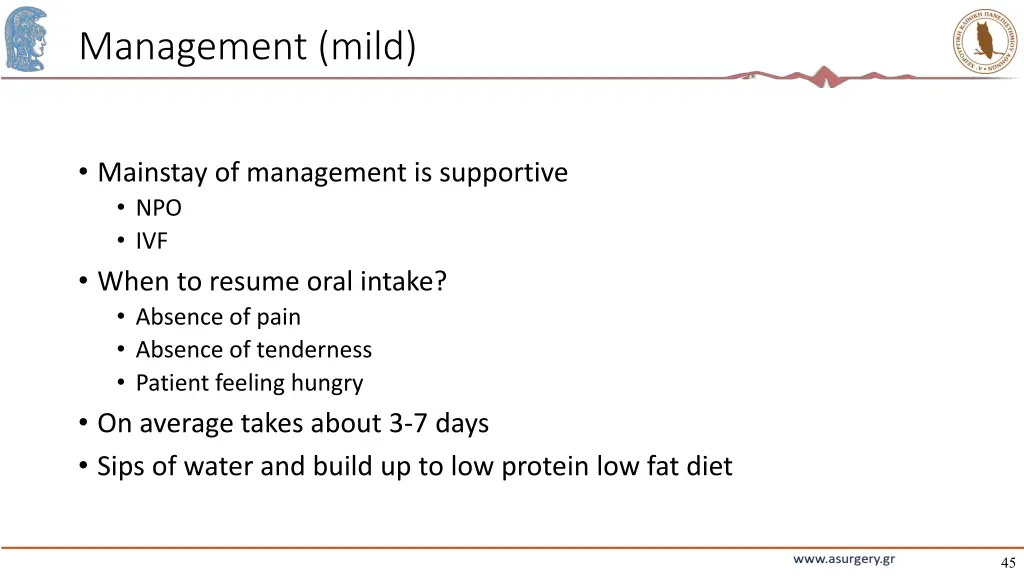
Management (mild) Mainstay of management is supportive NPO IVF When to resume oral intake? Absence of pain Absence of tenderness Patient feeling hungry On average takes about 3-7 days Sips of water and build up to low protein low fat diet 45
MANAGEMENT OF SEVERE PANCREATITIS 46
Management (severe) Severe pancreatitis: > Ranson / APACHE CRP >150 Systemic complications Necrosis on CE-CT Hemodynamic compromise 47
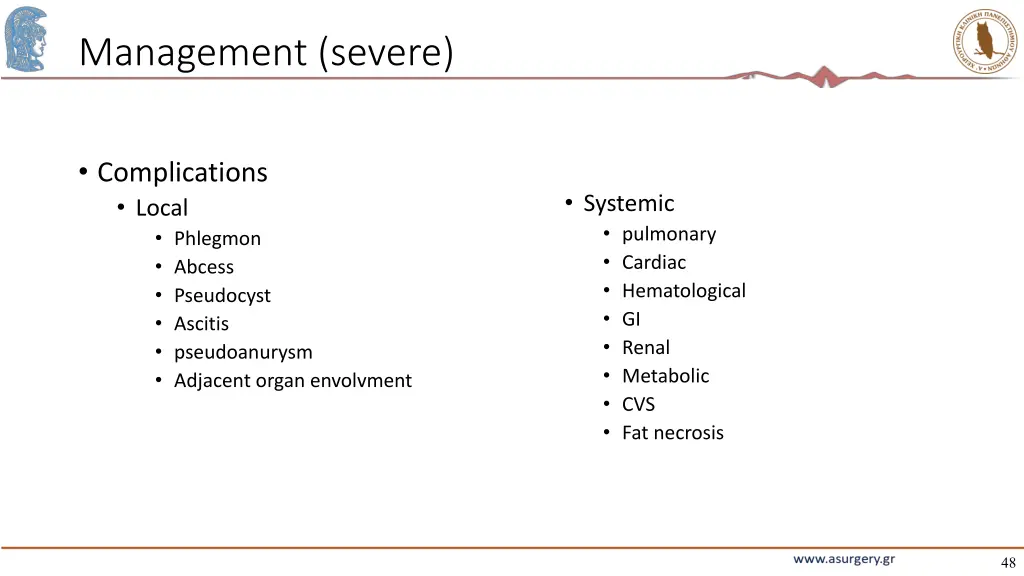
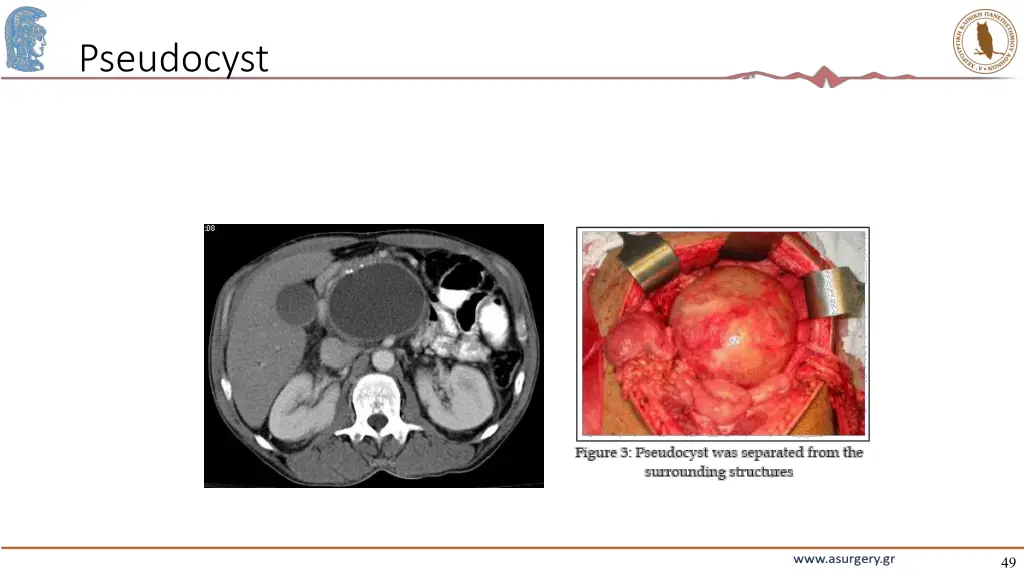
Management (severe) Complications Local Phlegmon Abcess Pseudocyst Ascitis pseudoanurysm Adjacent organ envolvment Systemic pulmonary Cardiac Hematological GI Renal Metabolic CVS Fat necrosis 48
Pseudocyst 49
Management (severe) Sterile necrosis Absence of retroperitoneal air on CT Prognosis 0% mortality without complications 38% with single sys. complication 50