Advanced Analysis Techniques for Survey Data Assessment
Explore cutting-edge strategies like deviation analysis, correlation analysis, and duplicate examination applied to survey data to identify patterns, anomalies, and duplicates. Analyze responses by interviewers and supervisors for quality assessment and data integrity checks.

Download Presentation

Please find below an Image/Link to download the presentation.
The content on the website is provided AS IS for your information and personal use only. It may not be sold, licensed, or shared on other websites without obtaining consent from the author. If you encounter any issues during the download, it is possible that the publisher has removed the file from their server.
You are allowed to download the files provided on this website for personal or commercial use, subject to the condition that they are used lawfully. All files are the property of their respective owners.
The content on the website is provided AS IS for your information and personal use only. It may not be sold, licensed, or shared on other websites without obtaining consent from the author.
E N D
Presentation Transcript
Detection Techniques Applied Ali Mushtaq WSS Dec 2
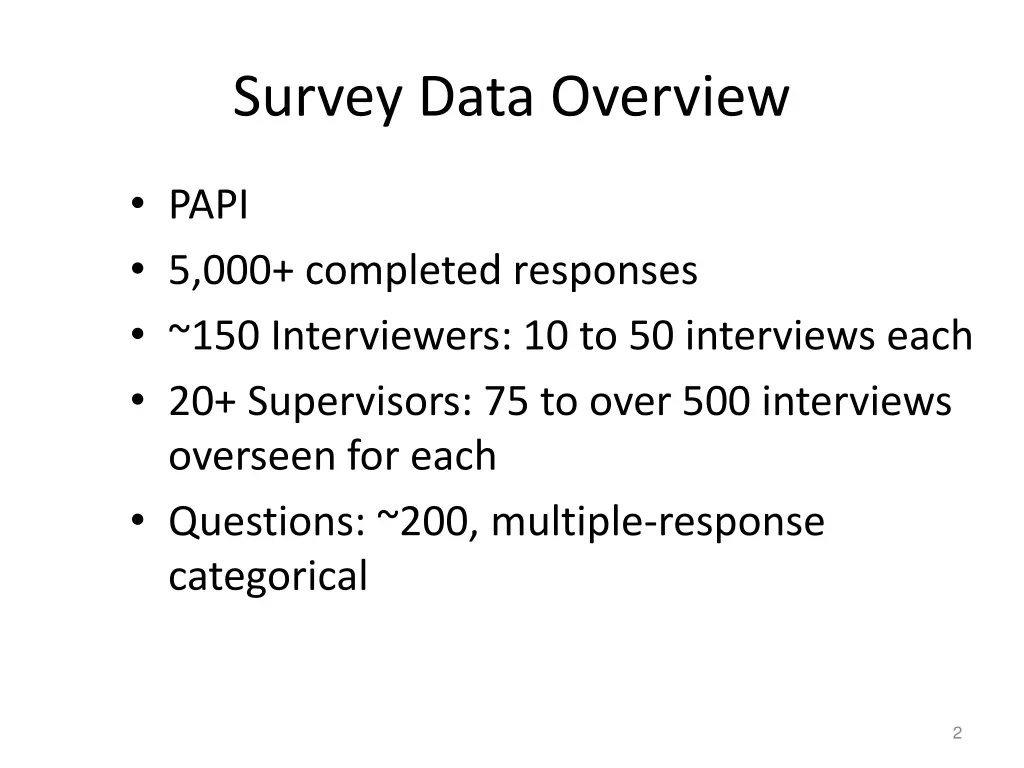
Survey Data Overview PAPI 5,000+ completed responses ~150 Interviewers: 10 to 50 interviews each 20+ Supervisors: 75 to over 500 interviews overseen for each Questions: ~200, multiple-response categorical 2
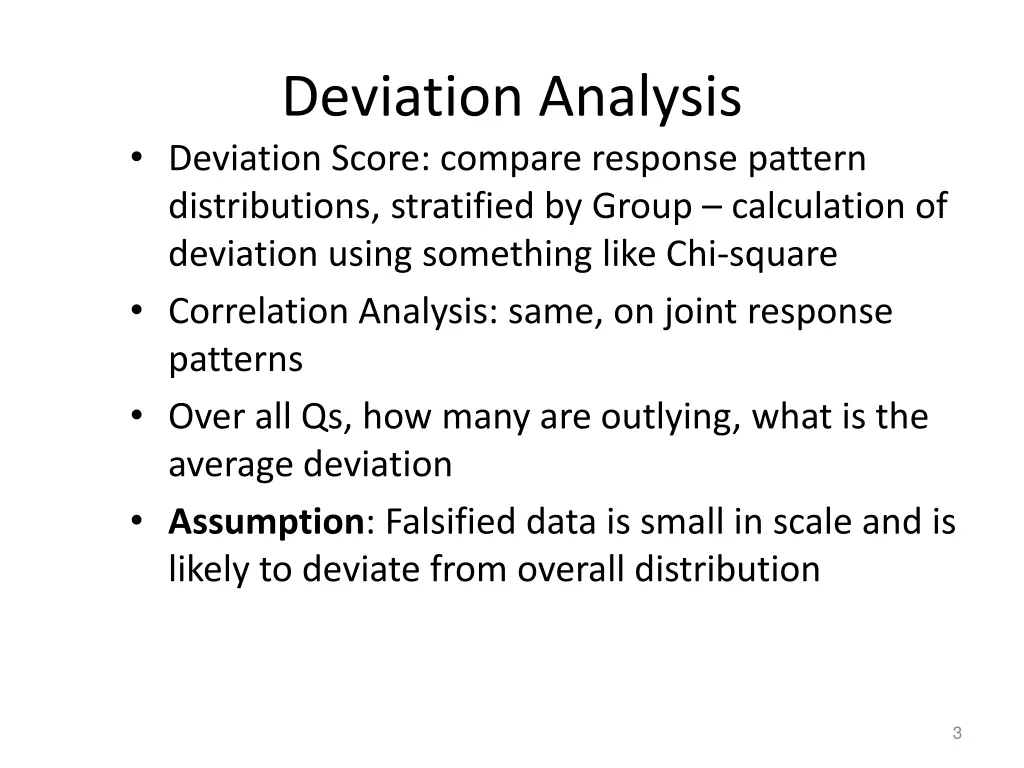
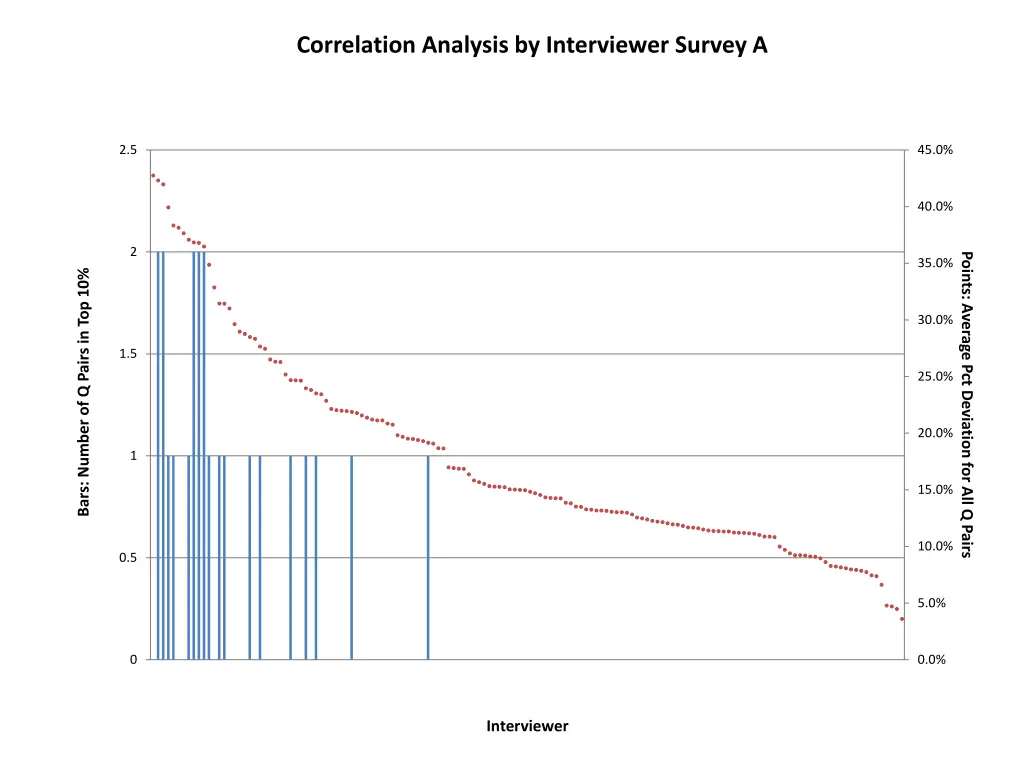
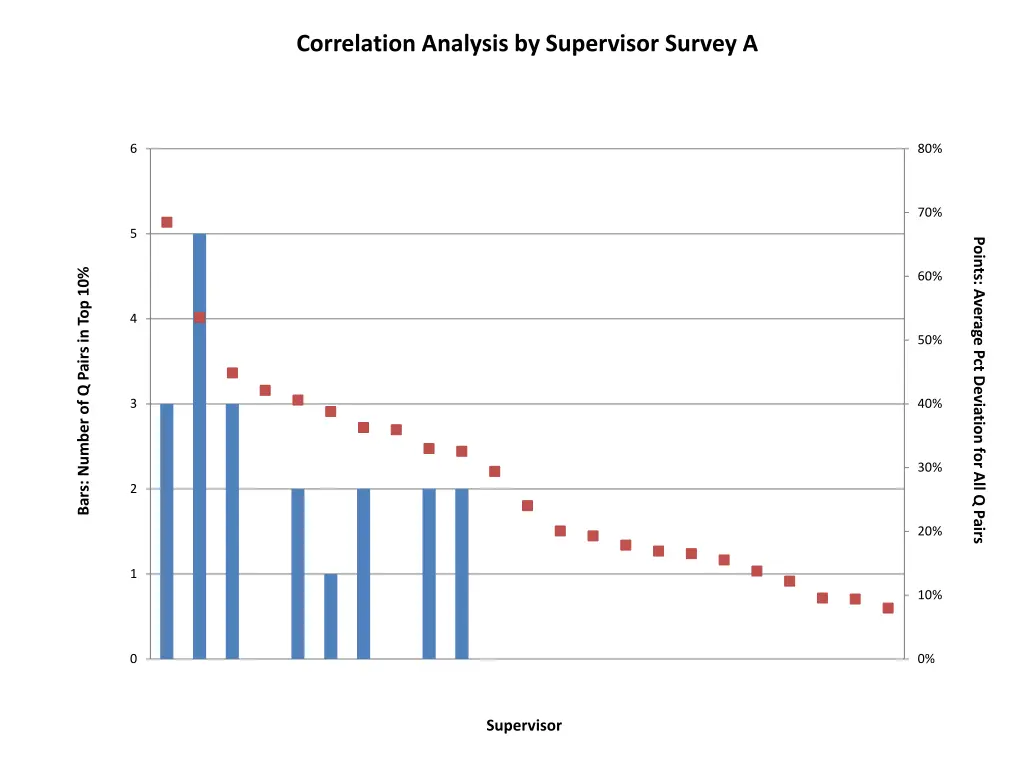
Deviation Analysis Deviation Score: compare response pattern distributions, stratified by Group calculation of deviation using something like Chi-square Correlation Analysis: same, on joint response patterns Over all Qs, how many are outlying, what is the average deviation Assumption: Falsified data is small in scale and is likely to deviate from overall distribution 3
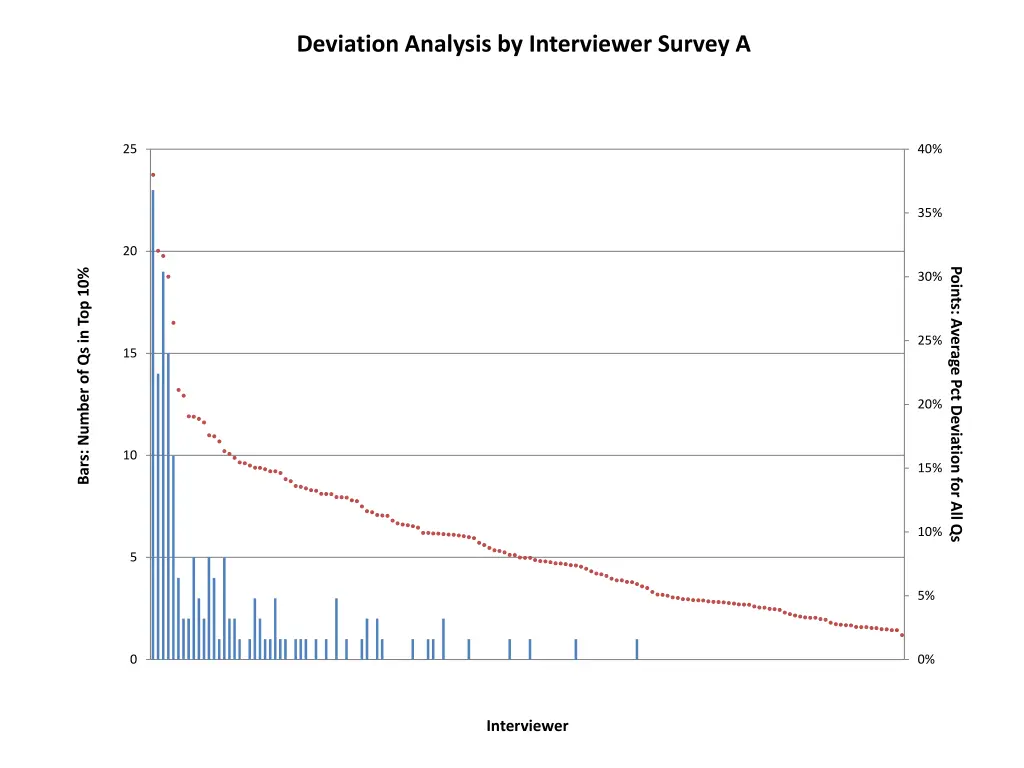
Deviation Analysis by Interviewer Survey A 25 40% 35% 20 Points: Average Pct Deviation for All Qs Bars: Number of Qs in Top 10% 30% 25% 15 20% 10 15% 10% 5 5% 0 0% Interviewer
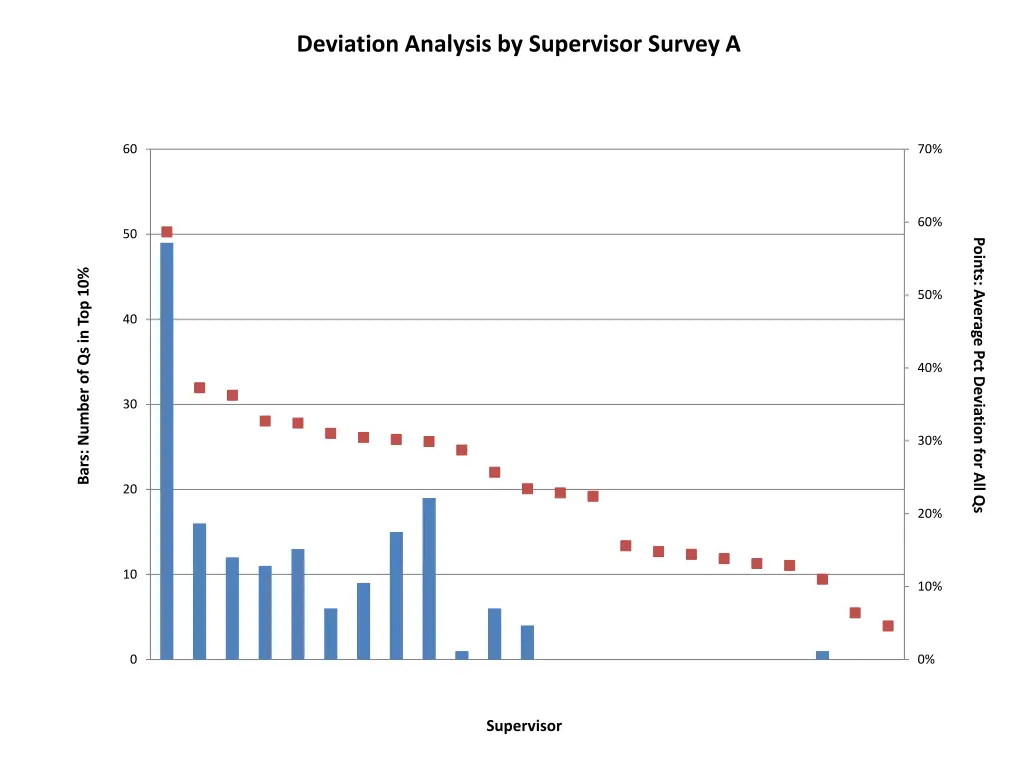
Deviation Analysis by Supervisor Survey A 60 70% 60% 50 Points: Average Pct Deviation for All Qs Bars: Number of Qs in Top 10% 50% 40 40% 30 30% 20 20% 10 10% 0 0% Supervisor
Correlation Analysis by Interviewer Survey A 2.5 45.0% 40.0% 2 Points: Average Pct Deviation for All Q Pairs 35.0% Bars: Number of Q Pairs in Top 10% 30.0% 1.5 25.0% 20.0% 1 15.0% 10.0% 0.5 5.0% 0 0.0% Interviewer
Correlation Analysis by Supervisor Survey A 6 80% 70% 5 Points: Average Pct Deviation for All Q Pairs Bars: Number of Q Pairs in Top 10% 60% 4 50% 3 40% 30% 2 20% 1 10% 0 0% Supervisor
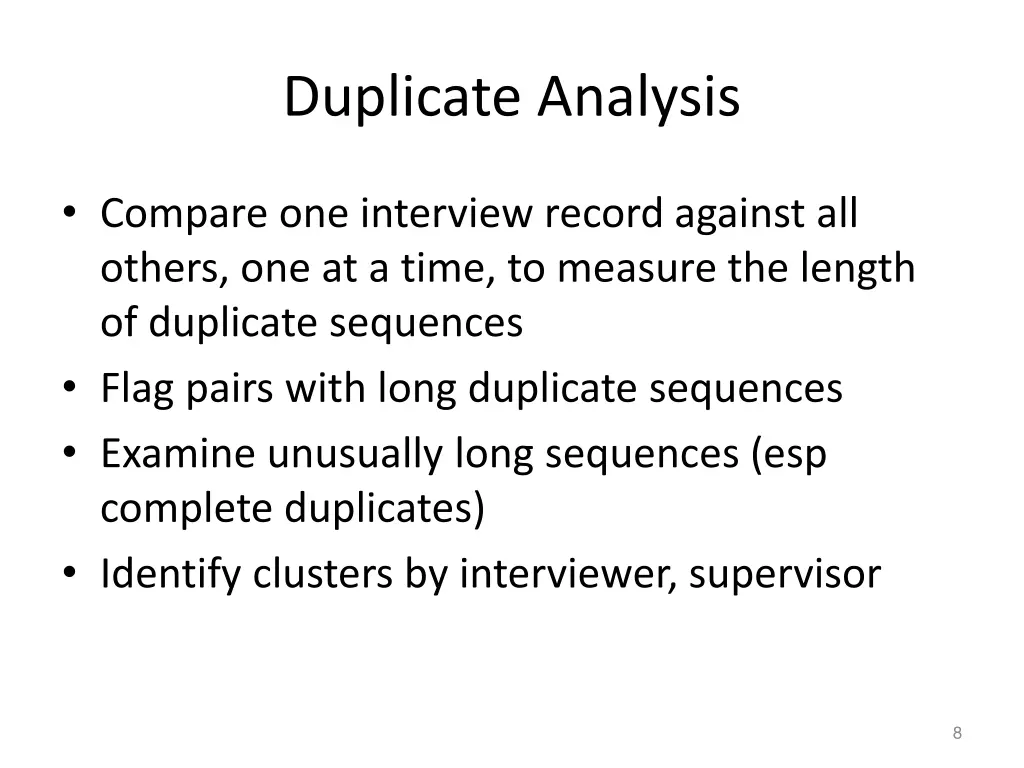
Duplicate Analysis Compare one interview record against all others, one at a time, to measure the length of duplicate sequences Flag pairs with long duplicate sequences Examine unusually long sequences (esp complete duplicates) Identify clusters by interviewer, supervisor 8
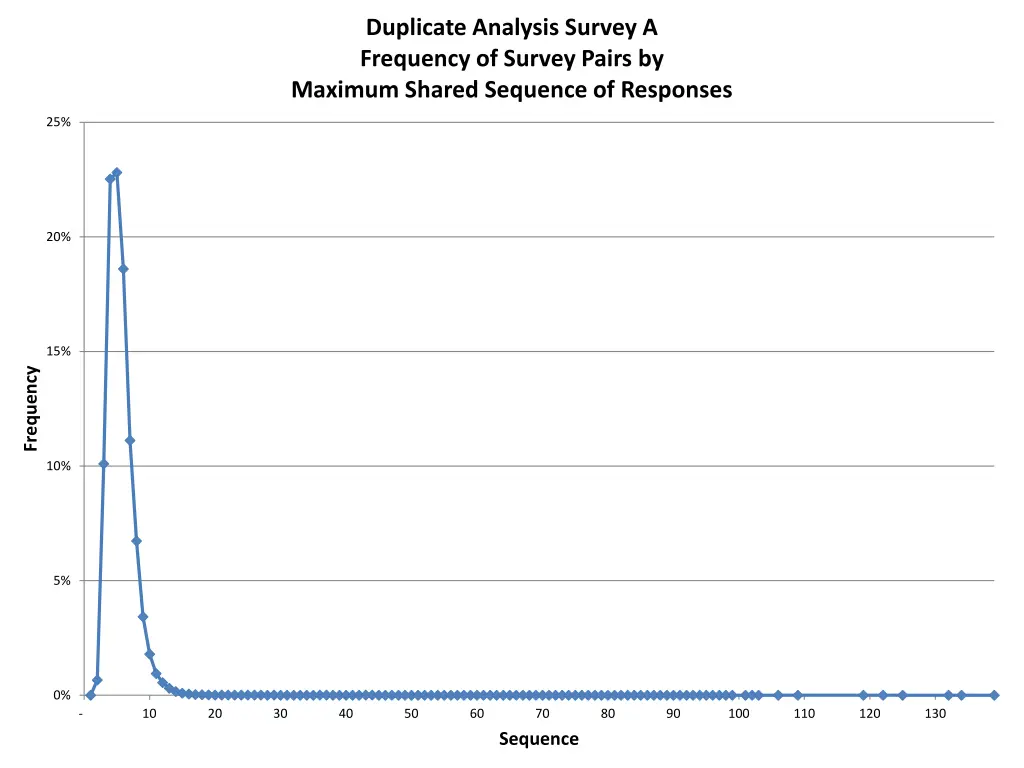
Duplicate Analysis Survey A Frequency of Survey Pairs by Maximum Shared Sequence of Responses 25% 20% 15% Frequency 10% 5% 0% - 10 20 30 40 50 60 70 80 90 100 110 120 130 Sequence
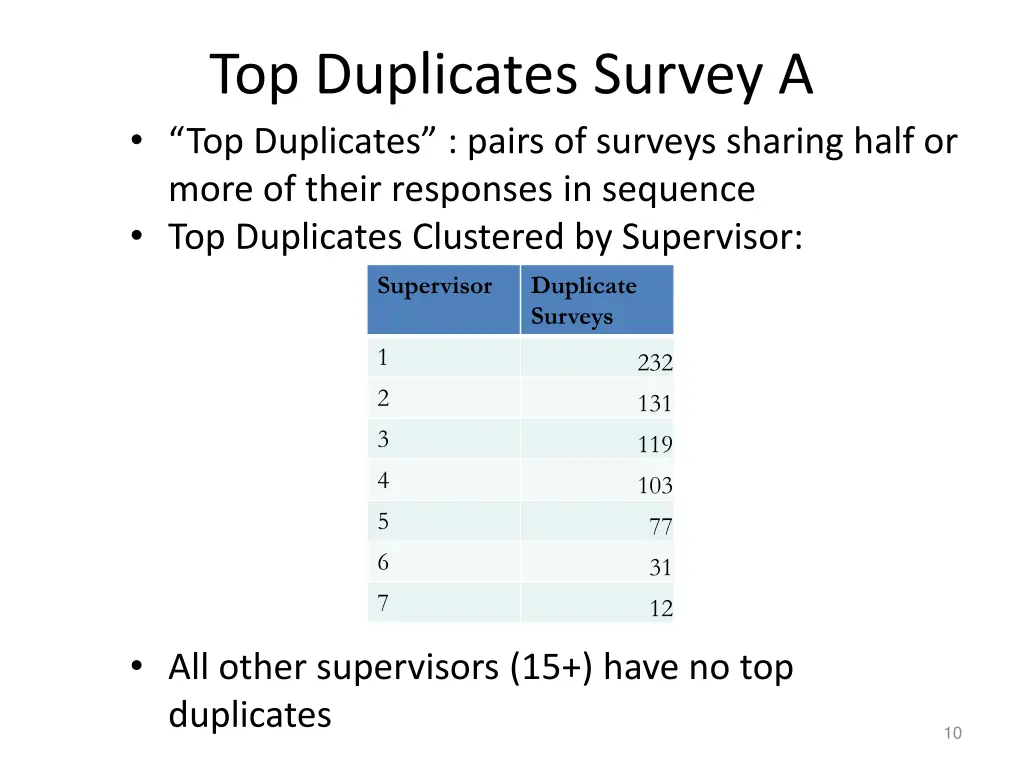
Top Duplicates Survey A Top Duplicates : pairs of surveys sharing half or more of their responses in sequence Top Duplicates Clustered by Supervisor: Supervisor Duplicate Surveys 1 2 3 4 5 6 7 232 131 119 103 77 31 12 All other supervisors (15+) have no top duplicates 10
Thank You! Questions? 11
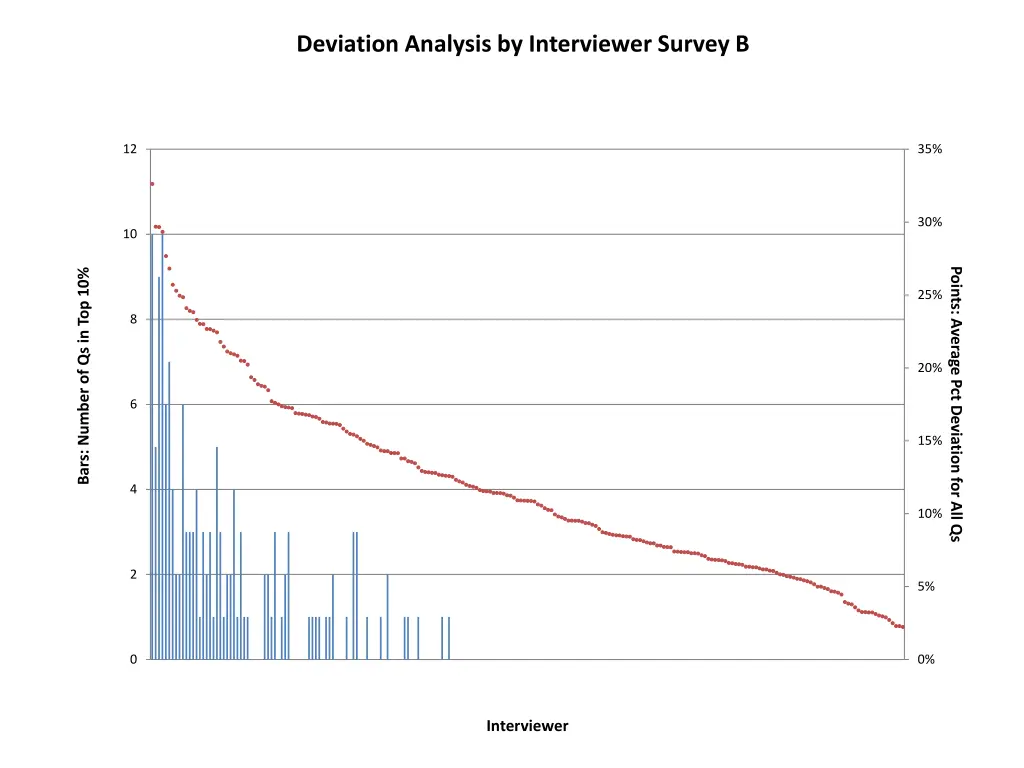
Deviation Analysis by Interviewer Survey B 12 35% 30% 10 Points: Average Pct Deviation for All Qs Bars: Number of Qs in Top 10% 25% 8 20% 6 15% 4 10% 2 5% 0 0% Interviewer
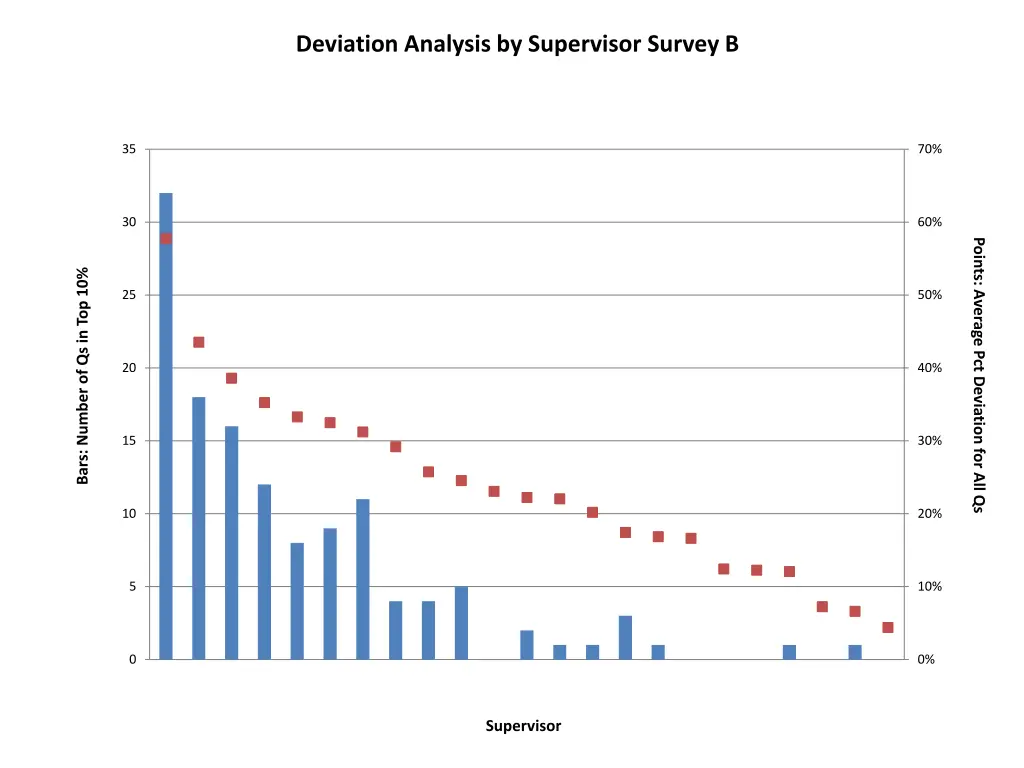
Deviation Analysis by Supervisor Survey B 35 70% 30 60% Points: Average Pct Deviation for All Qs Bars: Number of Qs in Top 10% 25 50% 20 40% 15 30% 10 20% 5 10% 0 0% Supervisor
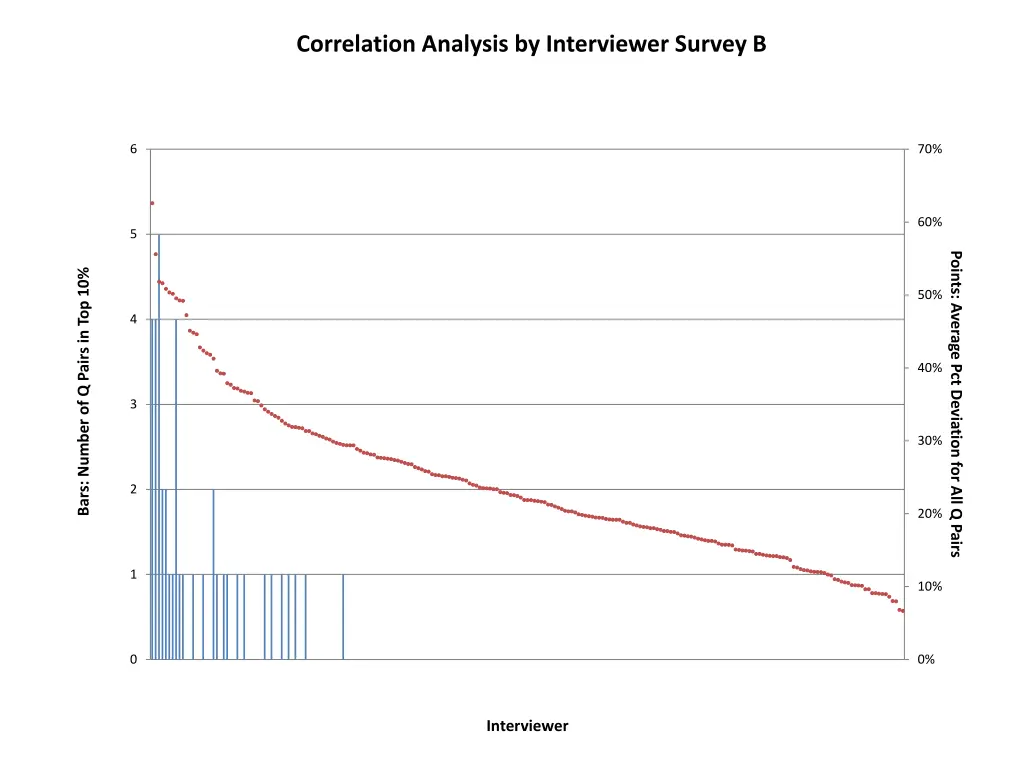
Correlation Analysis by Interviewer Survey B 6 70% 60% 5 Points: Average Pct Deviation for All Q Pairs Bars: Number of Q Pairs in Top 10% 50% 4 40% 3 30% 2 20% 1 10% 0 0% Interviewer
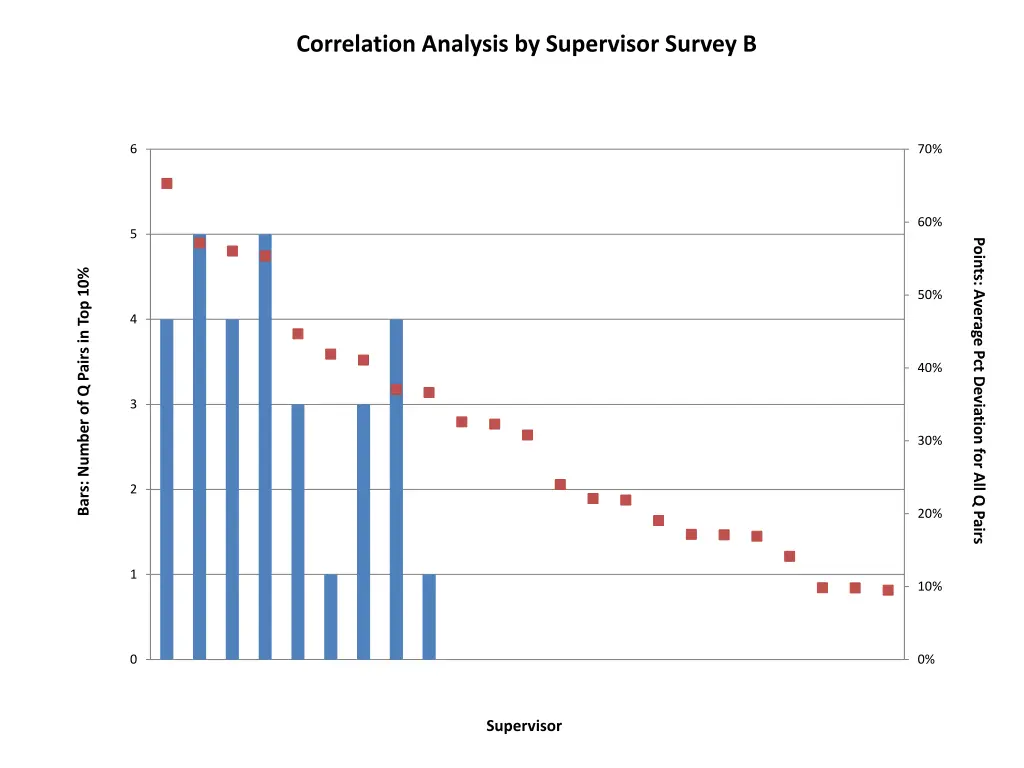
Correlation Analysis by Supervisor Survey B 6 70% 60% 5 Points: Average Pct Deviation for All Q Pairs Bars: Number of Q Pairs in Top 10% 50% 4 40% 3 30% 2 20% 1 10% 0 0% Supervisor
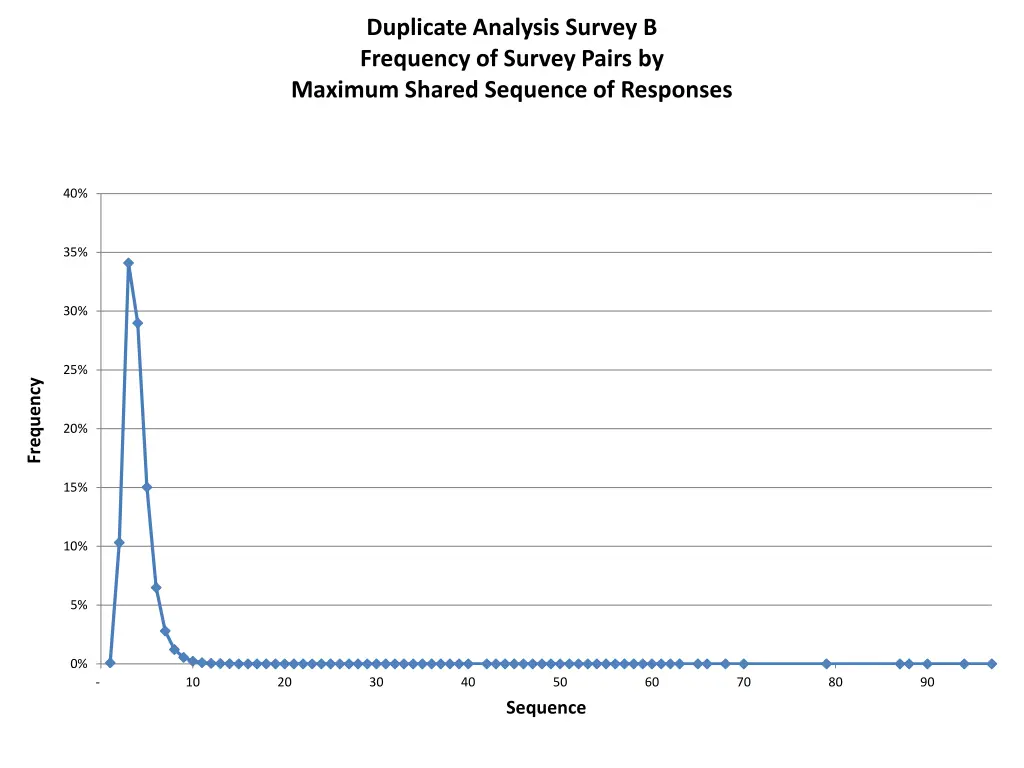
Duplicate Analysis Survey B Frequency of Survey Pairs by Maximum Shared Sequence of Responses 40% 35% 30% 25% Frequency 20% 15% 10% 5% 0% - 10 20 30 40 50 60 70 80 90 Sequence
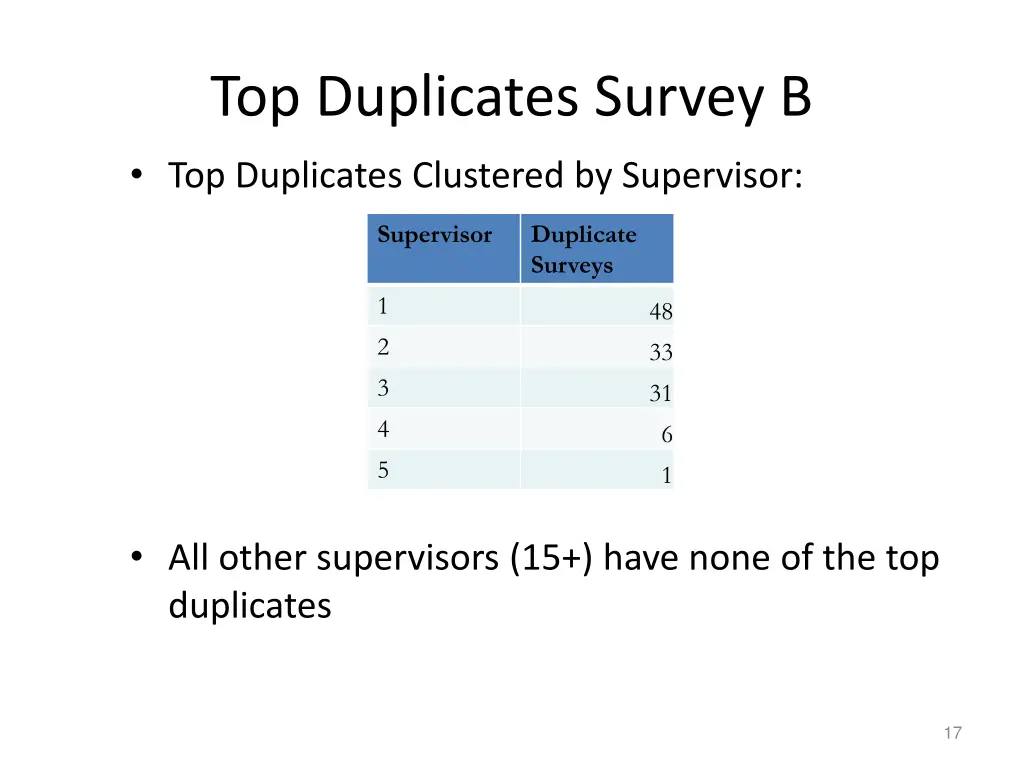
Top Duplicates Survey B Top Duplicates Clustered by Supervisor: Supervisor Duplicate Surveys 1 2 3 4 5 48 33 31 6 1 All other supervisors (15+) have none of the top duplicates 17