Discover the nuances of controlled drug delivery systems, including conventional vs. novel approaches, sustained release mechanisms, and the benefits of controlled drug release for improved therapeutic outcomes. Explore the field of drug delivery for targeted administration of pharmaceutical compounds, enhancing treatment effectiveness while minimizing side effects.
Please find below an Image/Link to download the presentation.
The content on the website is provided AS IS for your information and personal use only. It may not be sold, licensed, or shared on other websites without obtaining consent from the author. If you encounter any issues during the download, it is possible that the publisher has removed the file from their server.
You are allowed to download the files provided on this website for personal or commercial use, subject to the condition that they are used lawfully. All files are the property of their respective owners.
The content on the website is provided AS IS for your information and personal use only. It may not be sold, licensed, or shared on other websites without obtaining consent from the author.
E N D
Presentation Transcript
CONTROLLED DRUG DELIVERY SYSTEMS- GENERAL INTRODUCTION NDDS-VII SEMESTER Dr. GarimaJoshi Assistant Professor, Pharmacy, MLSU
Drug Delivery Drug delivery is the method of administering pharmaceutical compound to achieve a therapeutic effect in humans or animals. drug delivery can be done through various routes- the oral (through the mouth), topical (skin), trans- mucosal (nasal, buccal, sublingual, vaginal, ocular,rectal), parenteral(injection into systemic circulation) and inhalation routes.
The drug delivery system can further be divided into two main types: 1. Conventional drug delivery system. 2. Novel drug delivery system The conventional dosage forms provide drug release immediately and it causes fluctuation of drug level in blood depending upon dosage form. Therefore to maintain the drug concentration within therapeutically effective range need novel drug delivery system(NDDS). NDDS is a combination of advanced techniques and newer dosage form with controlled/sustained drug release to target the at specific site.
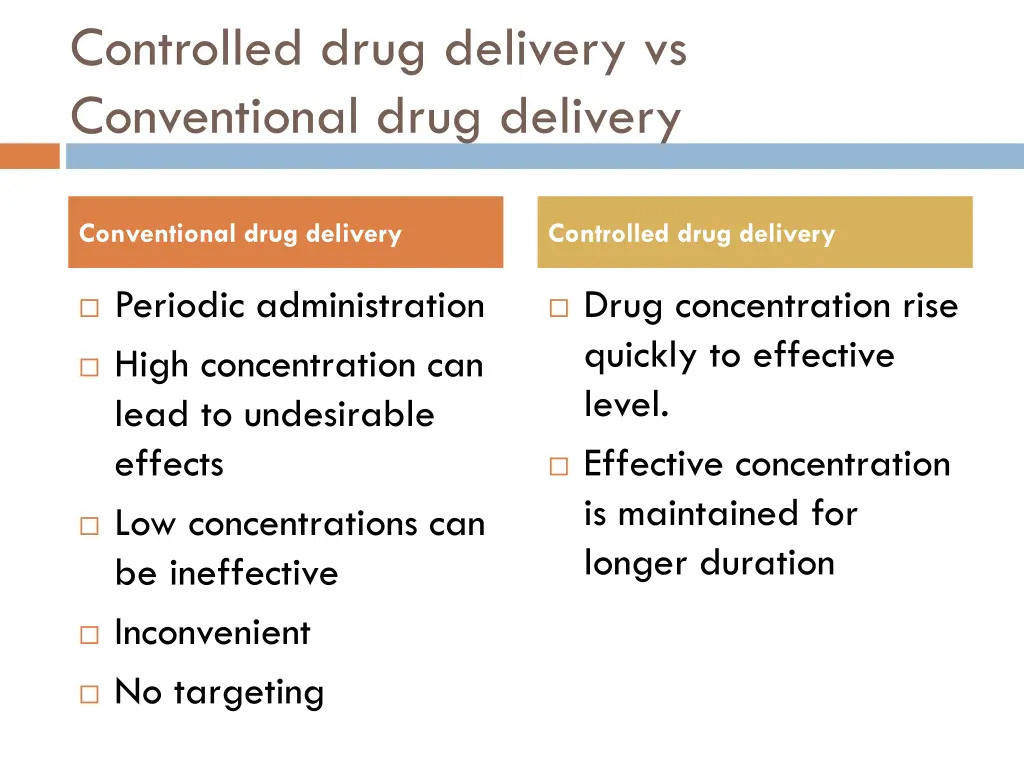
Controlled drug delivery vs Conventional drug delivery Conventional drug delivery Controlled drug delivery Periodic administration Drug concentration rise quickly to effective level. High concentration can lead to undesirable effects Effective concentration is maintained for longer duration Low concentrations can be ineffective Inconvenient No targeting
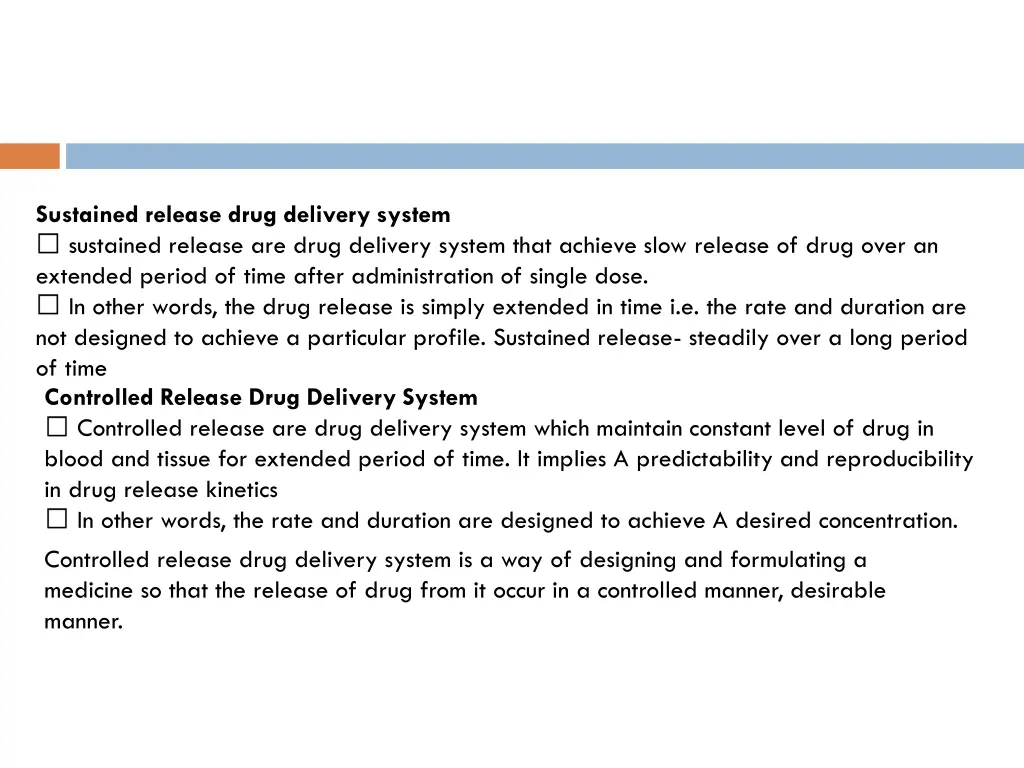
Sustained release drug delivery system sustained release are drug delivery system that achieve slow release of drug over an extended period of time after administration of single dose. In other words, the drug release is simply extended in time i.e. the rate and duration are not designed to achieve a particular profile. Sustained release- steadily over a long period of time Controlled Release Drug Delivery System Controlled release are drug delivery system which maintain constant level of drug in blood and tissue for extended period of time. It implies A predictability and reproducibility in drug release kinetics In other words, the rate and duration are designed to achieve A desired concentration. Controlled release drug delivery system is a way of designing and formulating a medicine so that the release of drug from it occur in a controlled manner, desirable manner.
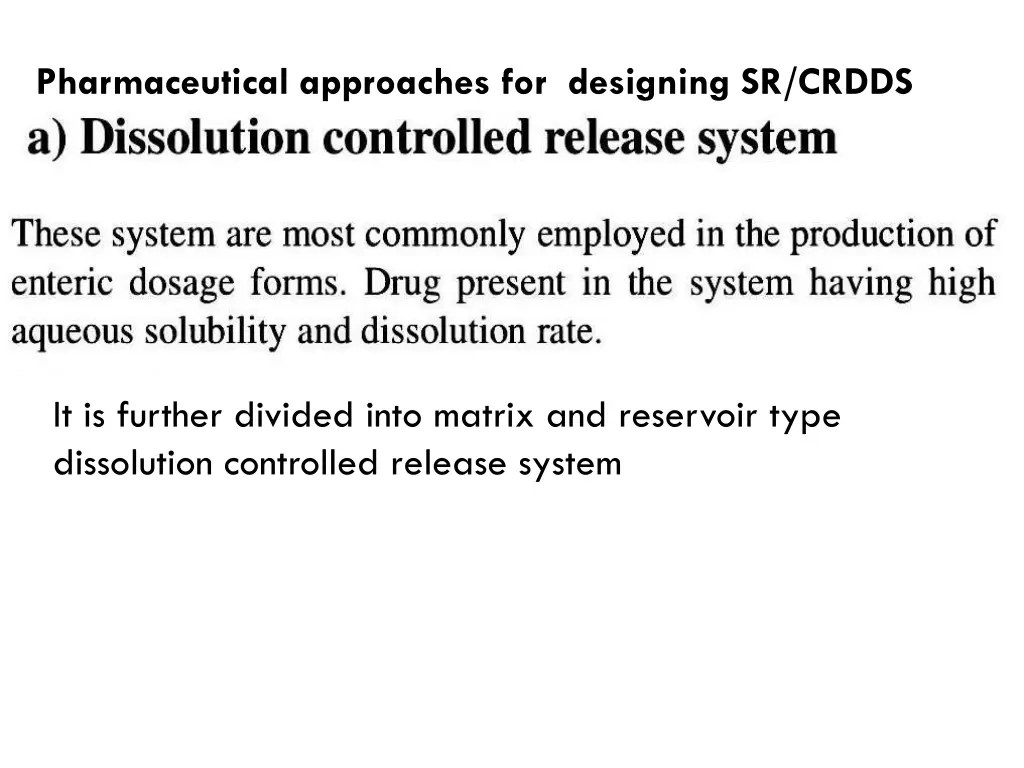
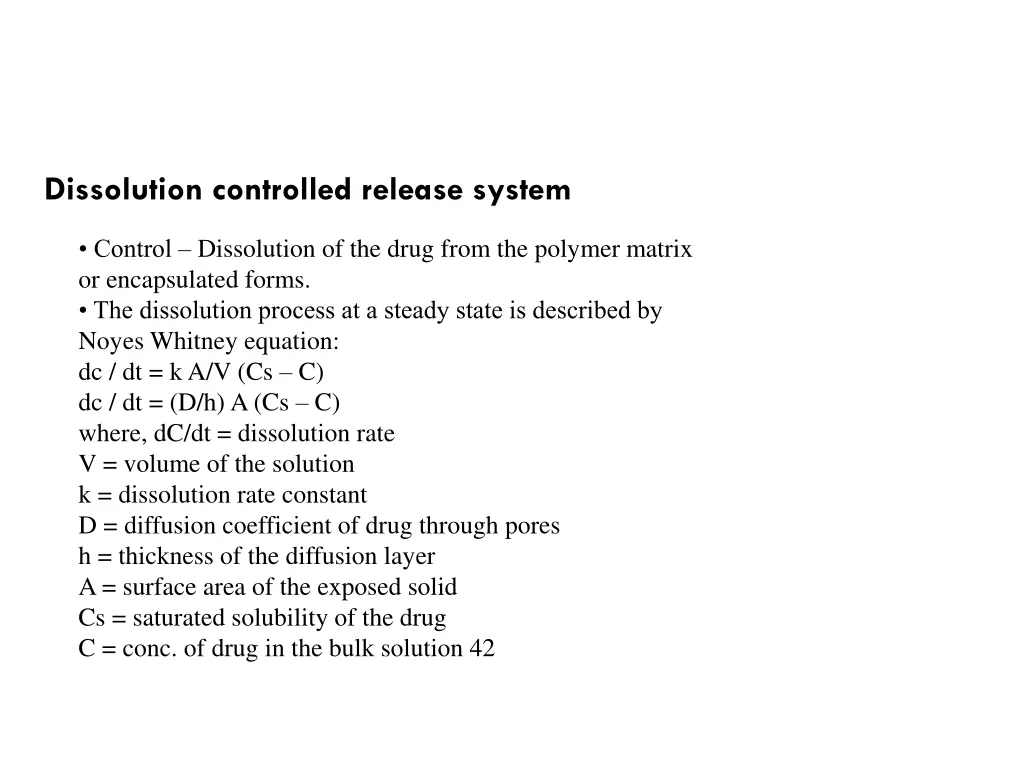
Dissolution controlled release system Control Dissolution of the drug from the polymer matrix or encapsulated forms. The dissolution process at a steady state is described by Noyes Whitney equation: dc / dt = k A/V (Cs C) dc / dt = (D/h) A (Cs C) where, dC/dt = dissolution rate V = volume of the solution k = dissolution rate constant D = diffusion coefficient of drug through pores h = thickness of the diffusion layer A = surface area of the exposed solid Cs = saturated solubility of the drug C = conc. of drug in the bulk solution 42
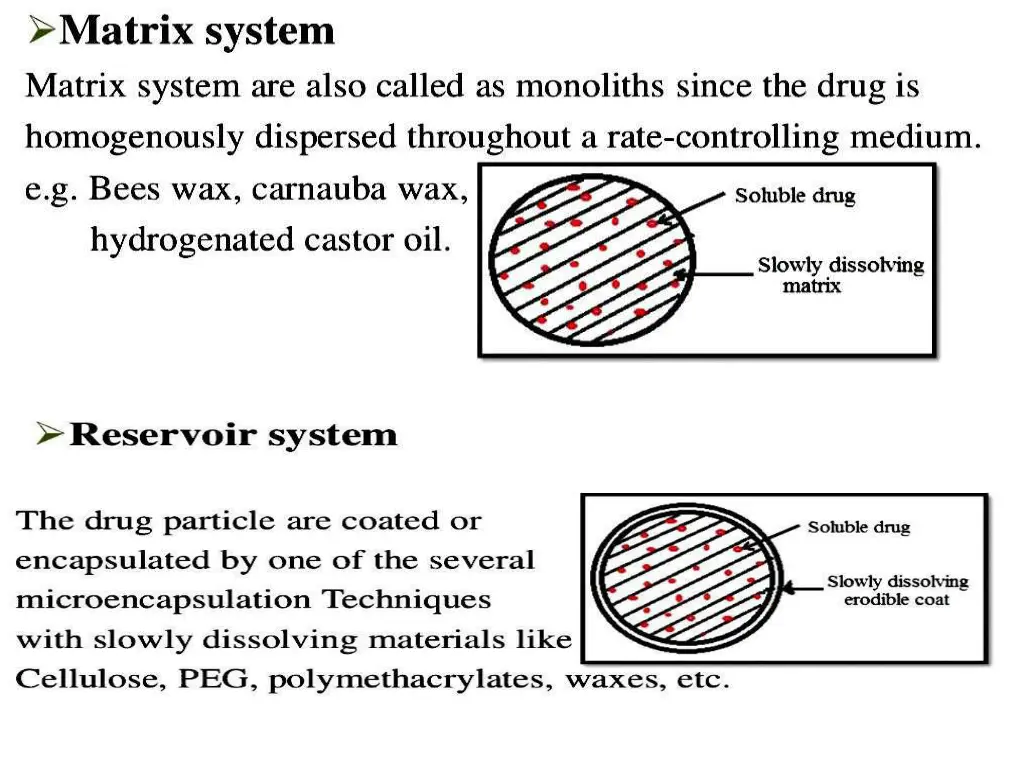
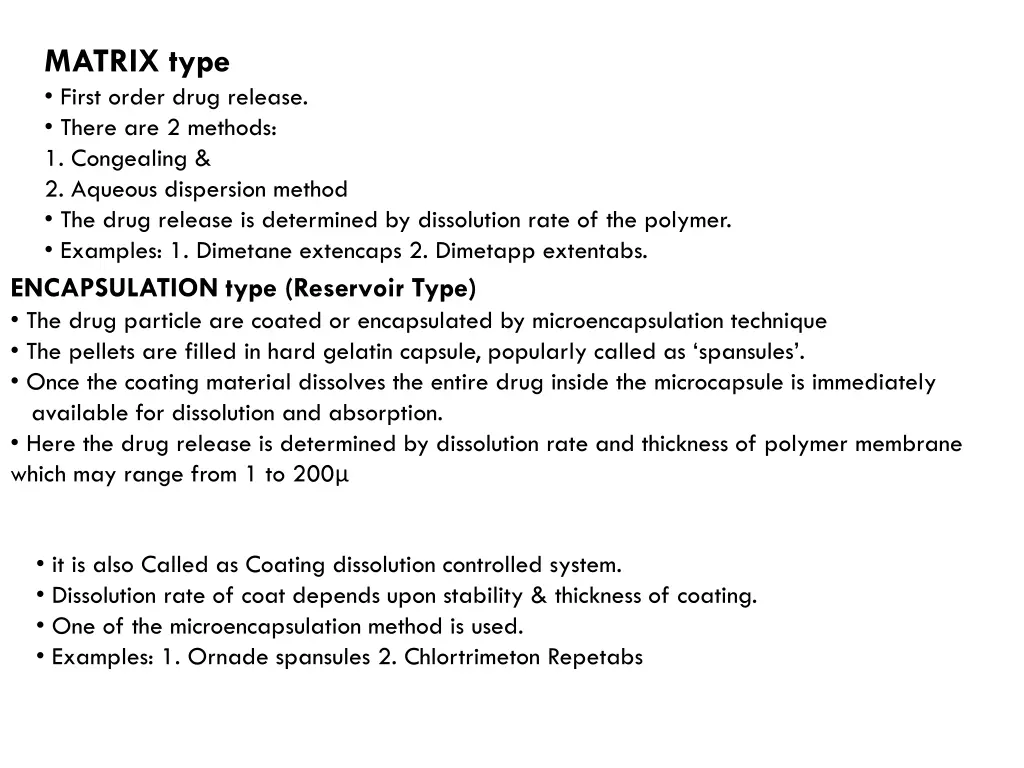
MATRIX type First order drug release. There are 2 methods: 1. Congealing & 2. Aqueous dispersion method The drug release is determined by dissolution rate of the polymer. Examples: 1. Dimetane extencaps 2. Dimetapp extentabs. ENCAPSULATION type (Reservoir Type) The drug particle are coated or encapsulated by microencapsulation technique The pellets are filled in hard gelatin capsule, popularly called as spansules . Once the coating material dissolves the entire drug inside the microcapsule is immediately available for dissolution and absorption. Here the drug release is determined by dissolution rate and thickness of polymer membrane which may range from 1 to 200 it is also Called as Coating dissolution controlled system. Dissolution rate of coat depends upon stability & thickness of coating. One of the microencapsulation method is used. Examples: 1. Ornade spansules 2. Chlortrimeton Repetabs
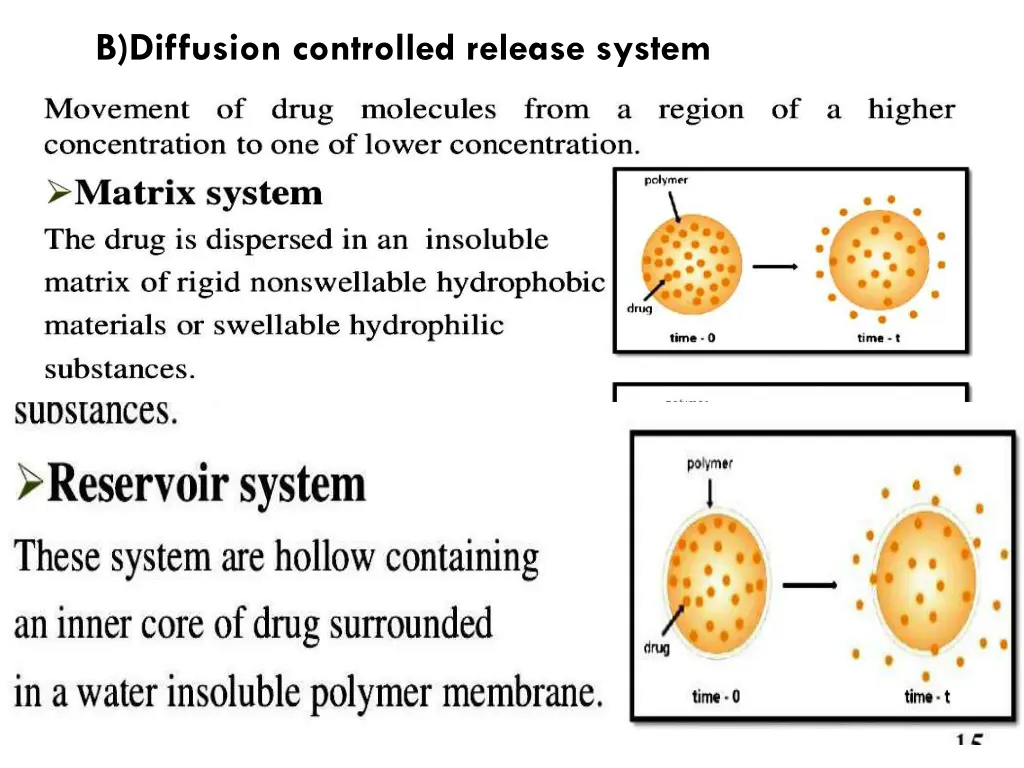
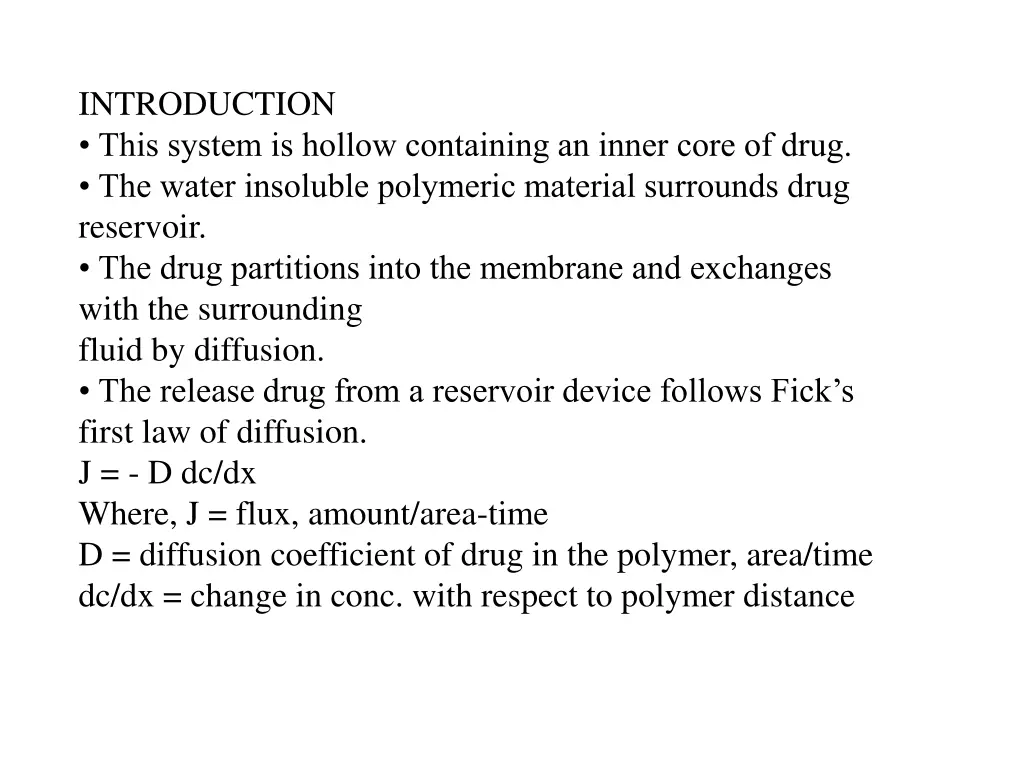
INTRODUCTION This system is hollow containing an inner core of drug. The water insoluble polymeric material surrounds drug reservoir. The drug partitions into the membrane and exchanges with the surrounding fluid by diffusion. The release drug from a reservoir device follows Fick s first law of diffusion. J = - D dc/dx Where, J = flux, amount/area-time D = diffusion coefficient of drug in the polymer, area/time dc/dx = change in conc. with respect to polymer distance
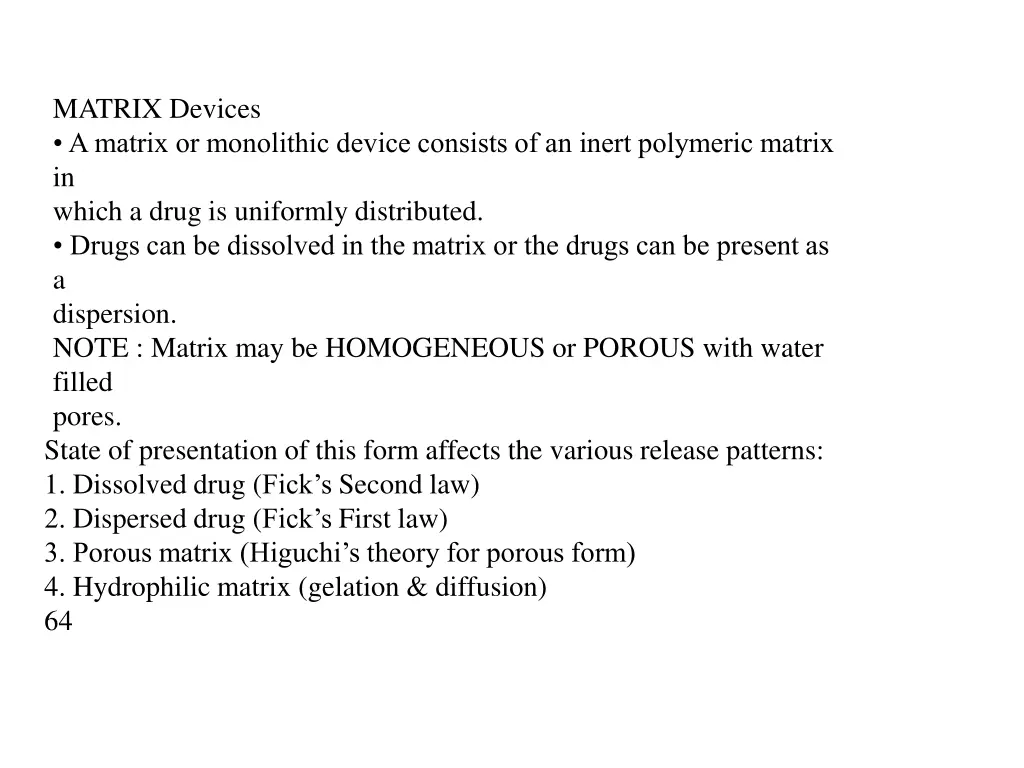
MATRIX Devices A matrix or monolithic device consists of an inert polymeric matrix in which a drug is uniformly distributed. Drugs can be dissolved in the matrix or the drugs can be present as a dispersion. NOTE : Matrix may be HOMOGENEOUS or POROUS with water filled pores. State of presentation of this form affects the various release patterns: 1. Dissolved drug (Fick s Second law) 2. Dispersed drug (Fick s First law) 3. Porous matrix (Higuchi s theory for porous form) 4. Hydrophilic matrix (gelation & diffusion) 64
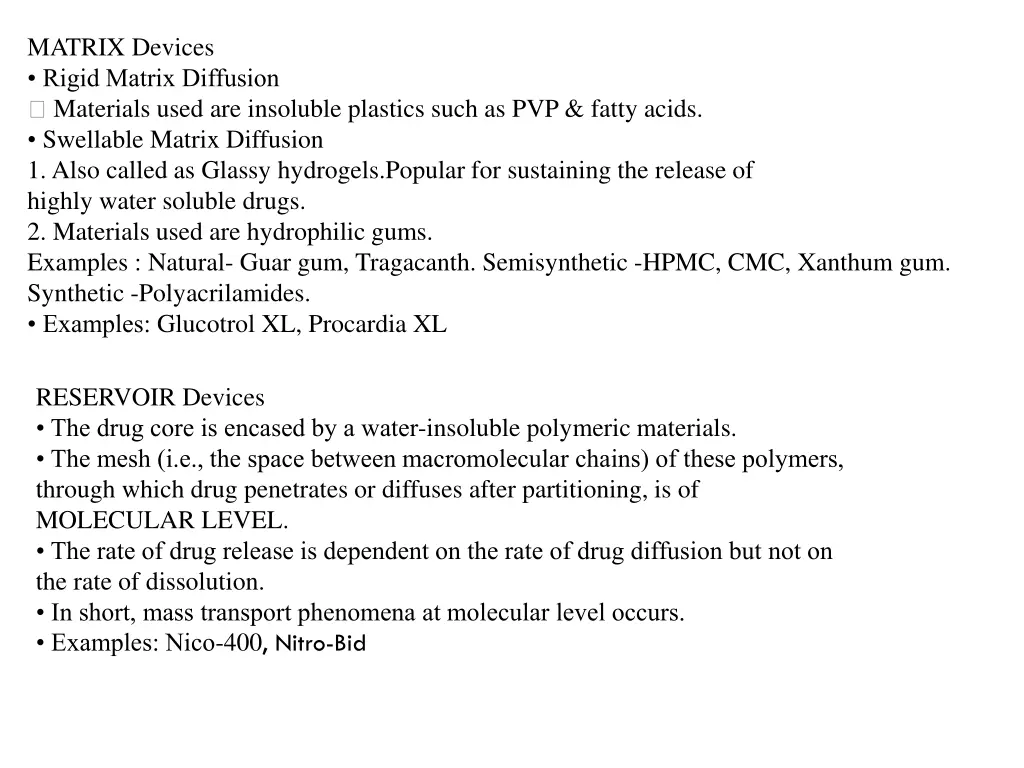
MATRIX Devices Rigid Matrix Diffusion Materials used are insoluble plastics such as PVP & fatty acids. Swellable Matrix Diffusion 1. Also called as Glassy hydrogels.Popular for sustaining the release of highly water soluble drugs. 2. Materials used are hydrophilic gums. Examples : Natural- Guar gum, Tragacanth. Semisynthetic -HPMC, CMC, Xanthum gum. Synthetic -Polyacrilamides. Examples: Glucotrol XL, Procardia XL RESERVOIR Devices The drug core is encased by a water-insoluble polymeric materials. The mesh (i.e., the space between macromolecular chains) of these polymers, through which drug penetrates or diffuses after partitioning, is of MOLECULAR LEVEL. The rate of drug release is dependent on the rate of drug diffusion but not on the rate of dissolution. In short, mass transport phenomena at molecular level occurs. Examples: Nico-400, Nitro-Bid
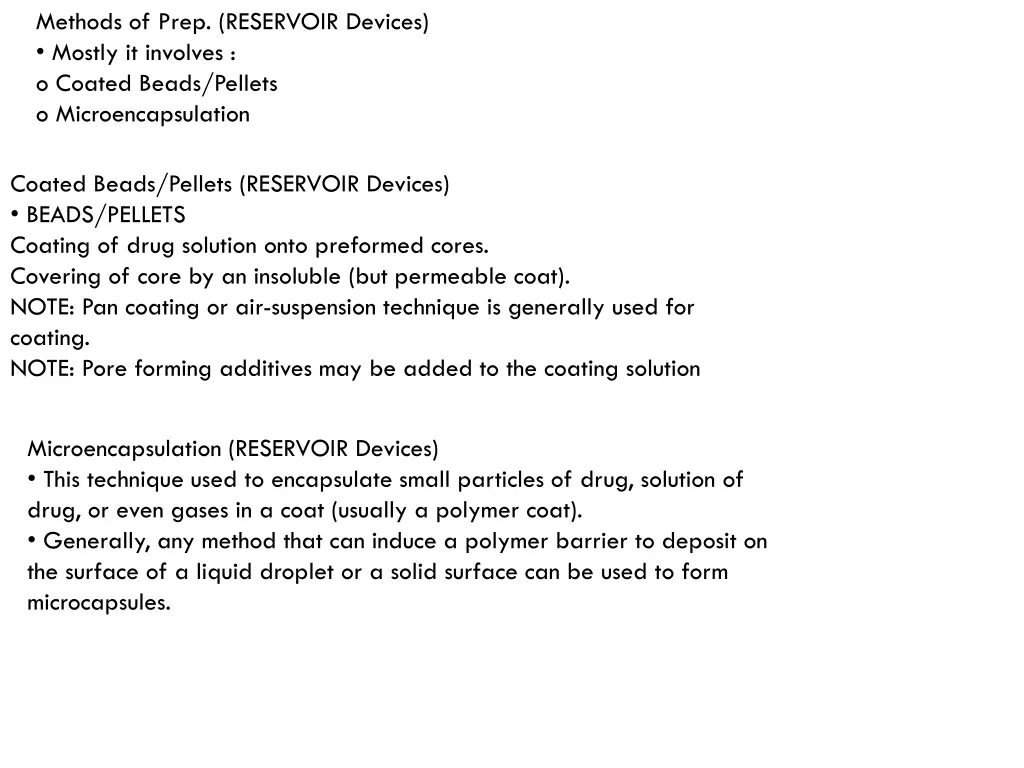
Methods of Prep. (RESERVOIR Devices) Mostly it involves : o Coated Beads/Pellets o Microencapsulation Coated Beads/Pellets (RESERVOIR Devices) BEADS/PELLETS Coating of drug solution onto preformed cores. Covering of core by an insoluble (but permeable coat). NOTE: Pan coating or air-suspension technique is generally used for coating. NOTE: Pore forming additives may be added to the coating solution Microencapsulation (RESERVOIR Devices) This technique used to encapsulate small particles of drug, solution of drug, or even gases in a coat (usually a polymer coat). Generally, any method that can induce a polymer barrier to deposit on the surface of a liquid droplet or a solid surface can be used to form microcapsules.
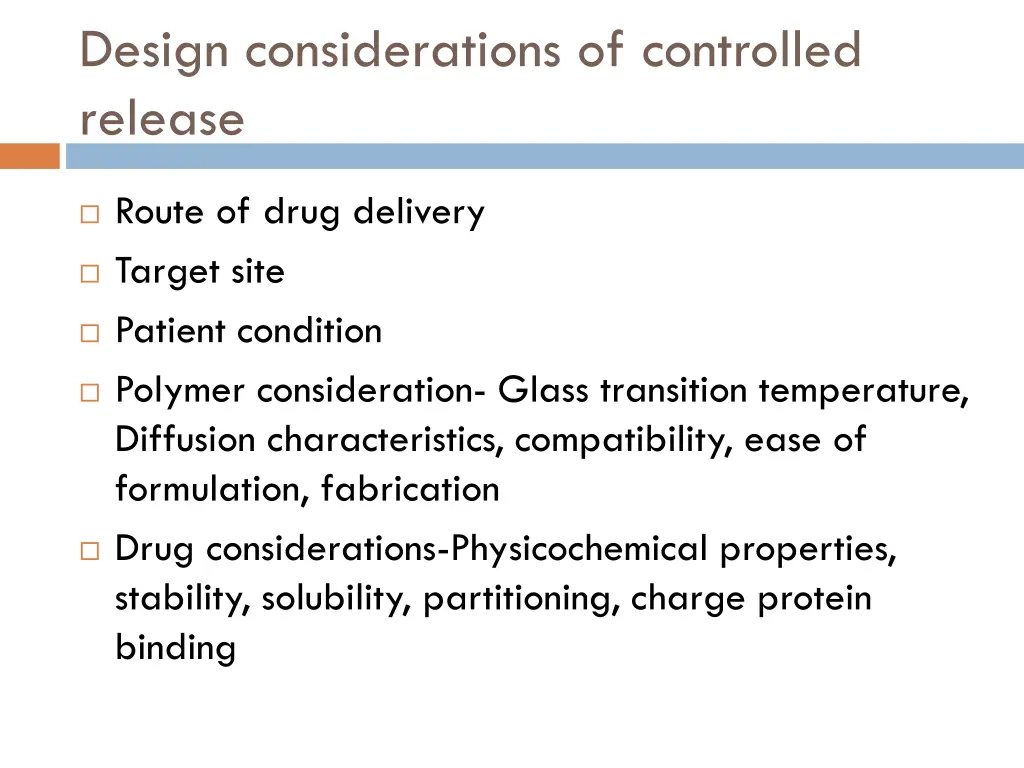
Design considerations of controlled release Route of drug delivery Target site Patient condition Polymer consideration- Glass transition temperature, Diffusion characteristics, compatibility, ease of formulation, fabrication Drug considerations-Physicochemical properties, stability, solubility, partitioning, charge protein binding
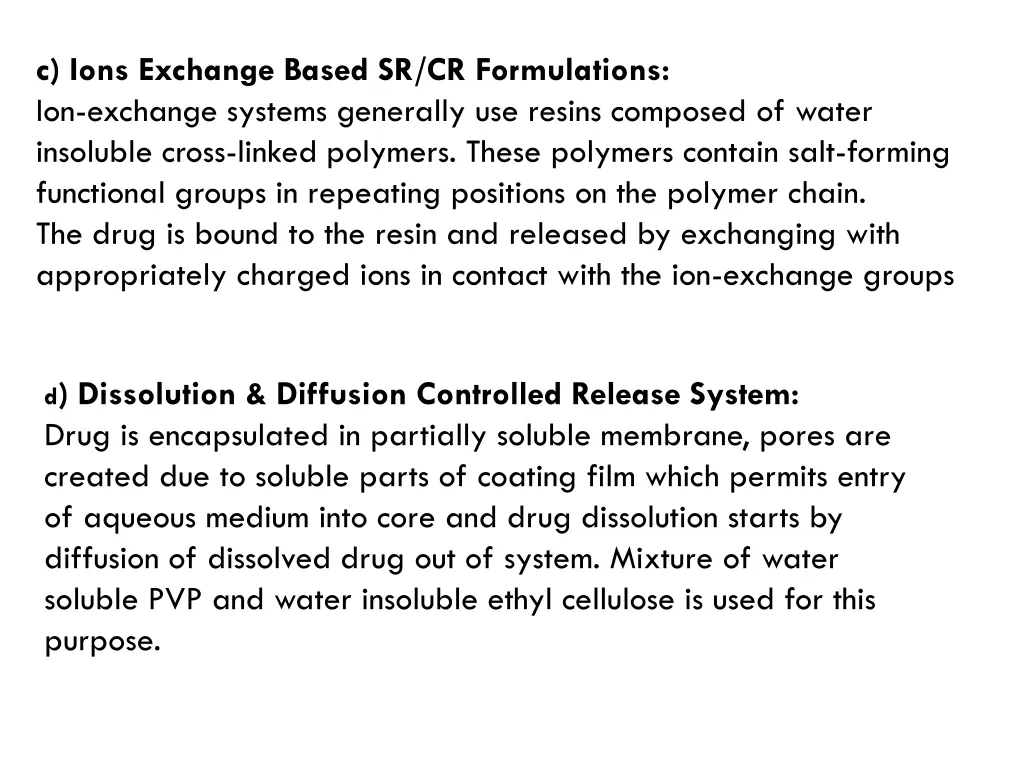
c) Ions Exchange Based SR/CR Formulations: Ion-exchange systems generally use resins composed of water insoluble cross-linked polymers. These polymers contain salt-forming functional groups in repeating positions on the polymer chain. The drug is bound to the resin and released by exchanging with appropriately charged ions in contact with the ion-exchange groups d) Dissolution & Diffusion Controlled Release System: Drug is encapsulated in partially soluble membrane, pores are created due to soluble parts of coating film which permits entry of aqueous medium into core and drug dissolution starts by diffusion of dissolved drug out of system. Mixture of water soluble PVP and water insoluble ethyl cellulose is used for this purpose.
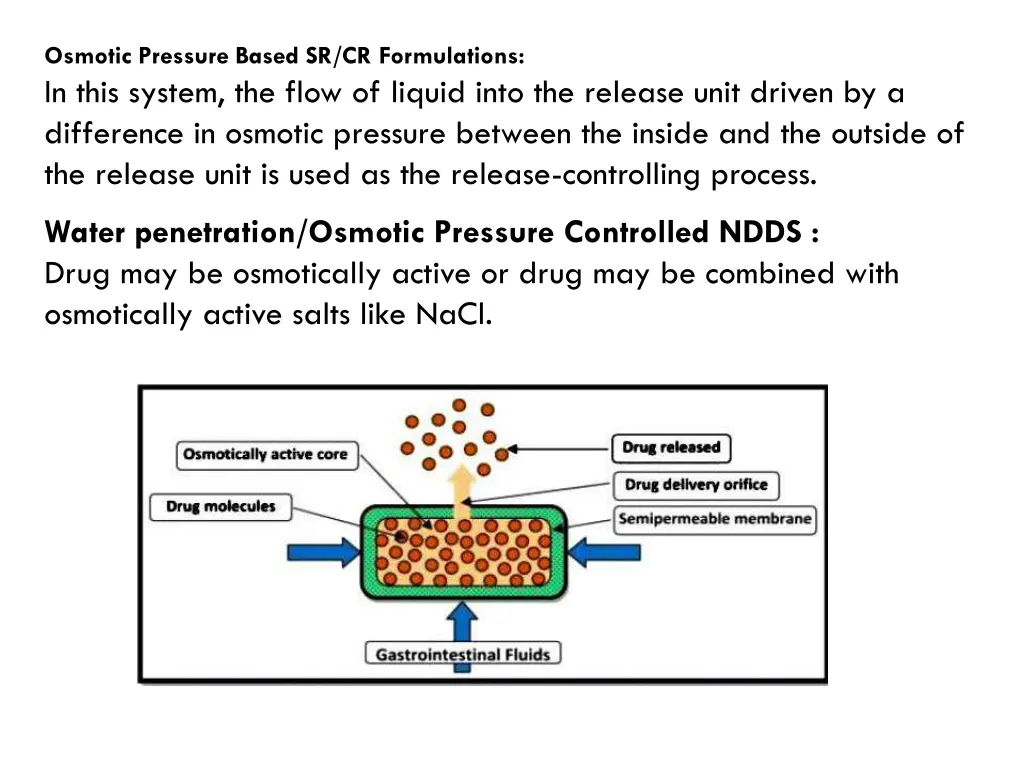
Osmotic Pressure Based SR/CR Formulations: In this system, the flow of liquid into the release unit driven by a difference in osmotic pressure between the inside and the outside of the release unit is used as the release-controlling process. Water penetration/Osmotic Pressure Controlled NDDS : Drug may be osmotically active or drug may be combined with osmotically active salts like NaCl.