Aligning Design and Method for Clinical Questions
This content delves into aligning design, methods, and evaluation with clinical questions in the context of a DNP project. It covers topics such as selecting appropriate designs, proposing methods and outcome measures, analytical approaches for data evaluation, and elements of interprofessional collaboration. Different design choices, including experimental design, quality improvement design, and qualitative inquiry, are explored, providing insights into improving healthcare outcomes and practice. The content also discusses program evaluation, evidence-based practice guidelines, and policy analysis in healthcare settings.

Download Presentation

Please find below an Image/Link to download the presentation.
The content on the website is provided AS IS for your information and personal use only. It may not be sold, licensed, or shared on other websites without obtaining consent from the author. If you encounter any issues during the download, it is possible that the publisher has removed the file from their server.
You are allowed to download the files provided on this website for personal or commercial use, subject to the condition that they are used lawfully. All files are the property of their respective owners.
The content on the website is provided AS IS for your information and personal use only. It may not be sold, licensed, or shared on other websites without obtaining consent from the author.
E N D
Presentation Transcript
Chapter 7: Aligning Design, Method, and Evaluation with the Clinical Question
Objectives 1. Select design for the DNP 2. Propose methods and outcome measures 3. Identify analytical approach for data evaluation 4. Describe the elements of interprofessional collaboration
It Starts with Design DNP project design Congruence between design, methods, and analysis plan Utilize traditional scientific methods Improve science constructs Qualitative approaches to evaluate Explore or improve a practice-based concern
Common Designs Design choice driven by clinical question Evaluate a population health outcome Community risk factor prevalence Client group needs Quantitative approach for health outcome Common designs for clinical questions Exploratory, descriptive and correlational
Experimental Design Initiating change via an intervention or innovation Experimental research or a quality improvement design choice Randomized controlled trial Quasi-experimental study
Quality Improvement Design Data-based methods To improve clinical or health care systems outcomes Systematic collection and analysis of data To measure change Competence is an expectation
Qualitative Inquiry Evidence for a little-known phenomenon Phenomenon of interest Population/setting or with knowledge gap Provides holistic understanding of phenomena Combined with quantitative approach Examples: Ethnography, phenomenology, and grounded theory
Evaluation Program evaluation (PE) Logic Model Centers for Disease Control and Prevention Balanced Scorecard Context-Input-Process-Product model
EBP and Policy Analysis Evidence-Based Practice Guidelines Produce practice guidelines for specific clinical concerns or populations Policy analysis or evaluation Outcomes related to healthcare quality, cost, and access Macro or micro system level
Diversity in DNP Projects DNP projects are diverse Require different methodological approaches Evidence-based practice guidelines Health policy analysis
Data Collection Methods Surveys, interviews, stored data Quantitative studies and QI projects Self-report via survey or structured interview Direct observation Physiologic measures Prospective logs/tracking sheets Storytelling and written narratives
Registries and Surveys Reliable and valid surveys and tools Online public resources Tested survey questions Multicenter observational studies Data mining
It Takes a Team: Data Collection Participant recruitment Instrument development Data collection May require permission Instrument construction consultations Information technology experts
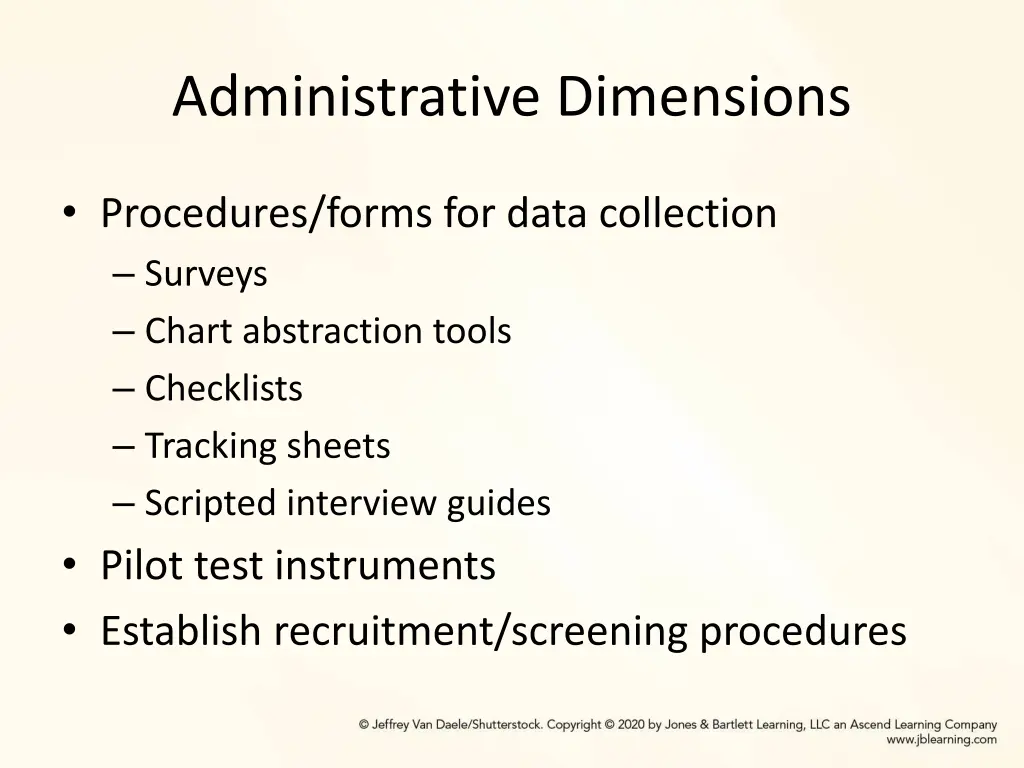
Administrative Dimensions Procedures/forms for data collection Surveys Chart abstraction tools Checklists Tracking sheets Scripted interview guides Pilot test instruments Establish recruitment/screening procedures
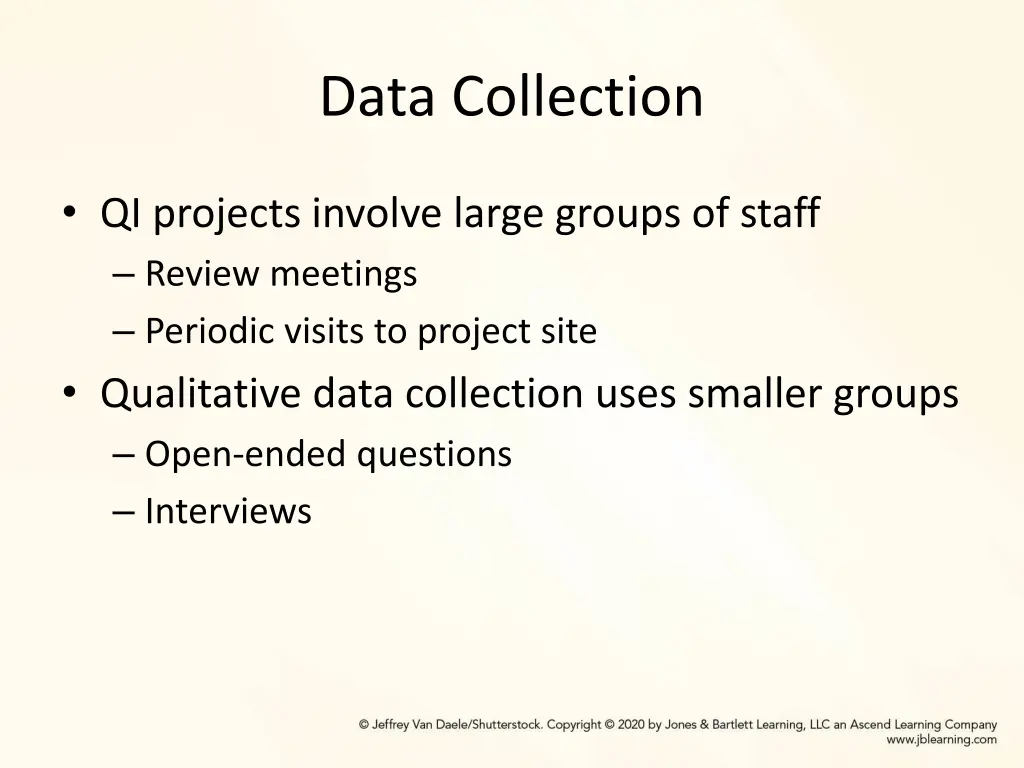
Data Collection QI projects involve large groups of staff Review meetings Periodic visits to project site Qualitative data collection uses smaller groups Open-ended questions Interviews
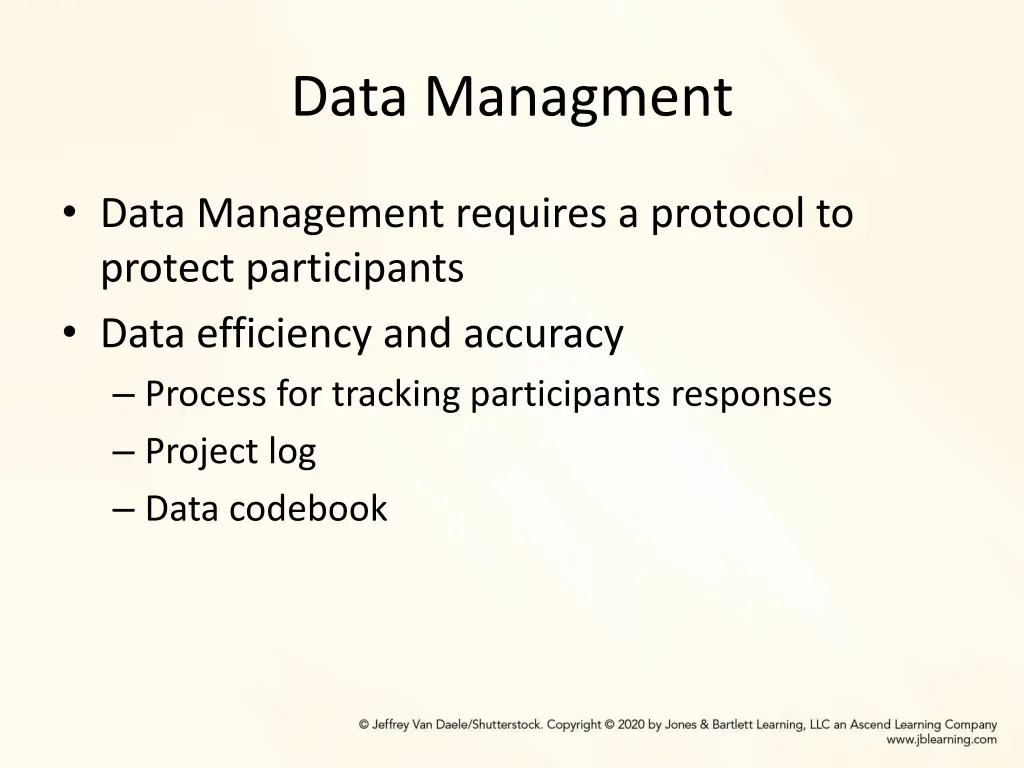
Data Managment Data Management requires a protocol to protect participants Data efficiency and accuracy Process for tracking participants responses Project log Data codebook
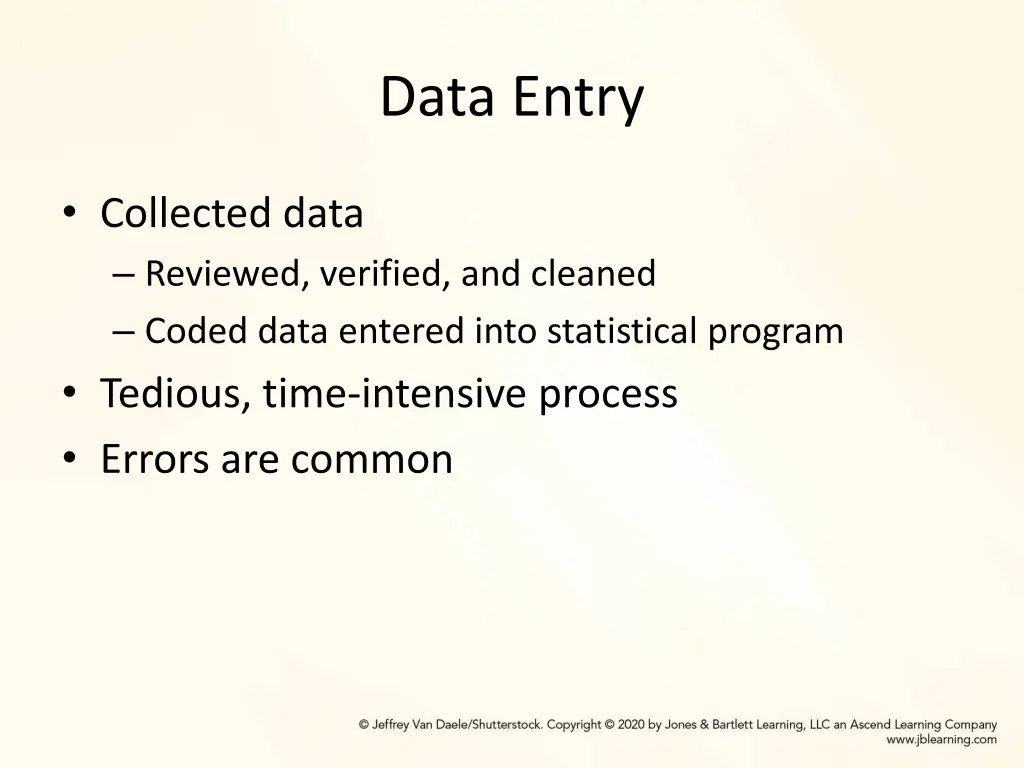
Data Entry Collected data Reviewed, verified, and cleaned Coded data entered into statistical program Tedious, time-intensive process Errors are common
Data Analysis Transforms data into meaningful information Evaluate the distributions Descriptive analysis Measures of central tendency and variation Examine relationships between variables Additional analyses
Quality Improvement Data Analysis Analyze QI data Histograms Scatter plots Pie charts and line graphs Frequencies Descriptive statistics Control and run charts, Pareto charts, value stream maps
Qualitative Data Analysis Identify themes/patterns from transcribed data Seeks understanding, not specific answer Interpret findings Evaluate data limitations
Telling the Story Dissemination of findings Article for publication or presentations Share findings with key stakeholders Use a structured format to prepare papers/presentations
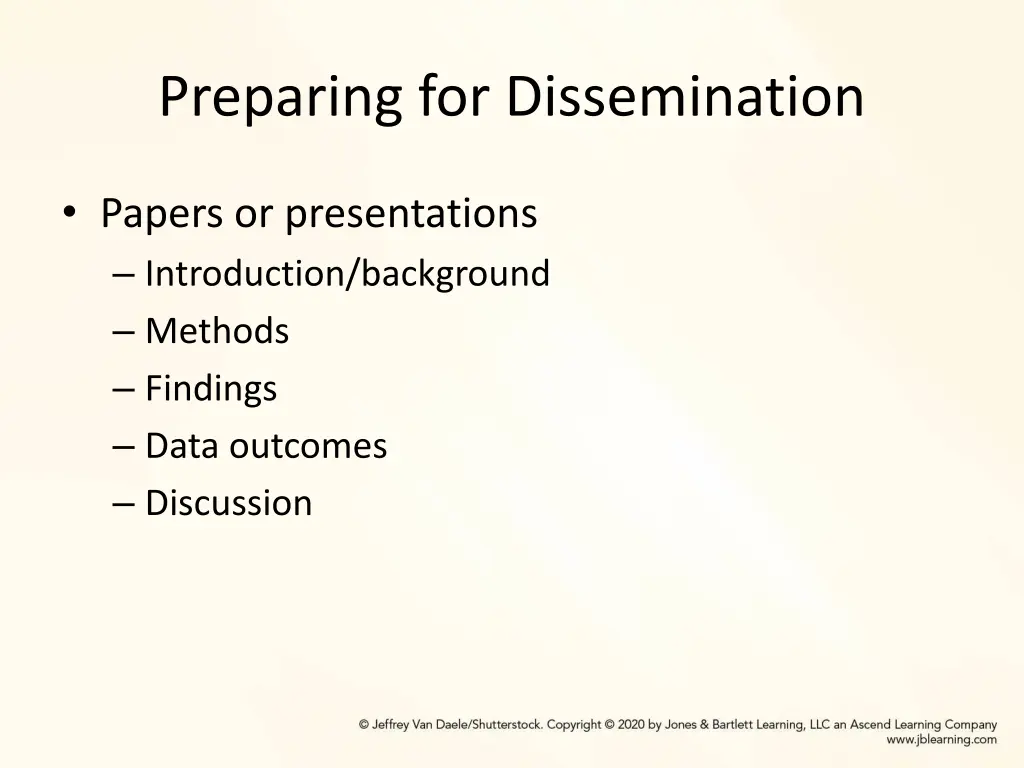
Preparing for Dissemination Papers or presentations Introduction/background Methods Findings Data outcomes Discussion