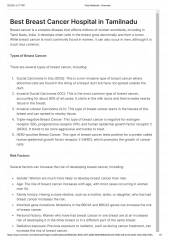
Breast health is crucial as breast cancer is the most common cancer in women in the U.S. Learn about the importance, anatomy, facts, and risk factors associated with breast cancer. Understand how abnormal cell growth can lead to tumors and the various risk factors like age, genetics, race, and personal history that can increase susceptibility. Stay informed and aware to prioritize breast health.
Please find below an Image/Link to download the presentation.
The content on the website is provided AS IS for your information and personal use only. It may not be sold, licensed, or shared on other websites without obtaining consent from the author. If you encounter any issues during the download, it is possible that the publisher has removed the file from their server.
You are allowed to download the files provided on this website for personal or commercial use, subject to the condition that they are used lawfully. All files are the property of their respective owners.
The content on the website is provided AS IS for your information and personal use only. It may not be sold, licensed, or shared on other websites without obtaining consent from the author.
Why is breast health important? One (1) in eight (8) women, who live to be the age of 85, will get breast cancer Breast cancer is the most common cancer in women in the U.S. (other than skin cancer). In the U.S. over two million women are living with breast cancer
Breast Cancer Facts The American Cancer Society's estimates for breast cancer in the United States for 2020 are: About 276,480 new cases of invasive breast cancer will be diagnosed in women. About 48,530 new cases of carcinoma in situ (CIS) will be diagnosed (CIS is non-invasive and is the earliest form of breast cancer). Total = 325,010 About 42,170 women will die from breast cancer.
What is Breast Cancer? Normal cells in the breast are replaced by abnormal cells that grow in an uncontrolled manner Abnormal growth forms a tumor
Risk Factors Age: The older you get, the more likely you are to develop breast cancer Genetics: Inherited genetic mutations increase the risk for breast cancer Lack of exercise Exposure to estrogen: Early menstruation (before age 12), late menopause (after age 55), hormone replacement therapy Prior radiation to the chest Child bearing: Not having children or having first child after age 30 increases risk Tobacco Use
Risk Factors Race: Breast Tissue: Dense breast tissue has more glandular tissue, which increases risk, also making it harder to be seen on mammogram Caucasian women are more likely to develop breast cancer African American women tend to have more aggressive tumors and tend to be diagnosed at later stages.
Risk Factors Personal History: Having had breast cancer puts a woman at a slightly higher risk for developing a second breast cancer. Weight: Being overweight elevates risk for breast cancer while maintaining a normal BMI can lower your risk for breast cancer. Family History: Risk increases if a first degree relative (mother, sister, daughter) has breast or ovarian cancer Alcohol consumption: >2.5 drinks per week.
Genetics Important to remember that the vast majority of breast cancer is sporadic No identifiable cause for developing breast cancer The most common genetic mutations leading to breast cancer are BRCA1 and BRCA2 An estimated 0.25% of the general population carries a mutated BRCA gene, or about one out of every 400 people Other genetic mutations have been identified but are not as prevalent Source: NationalBreastCancerFoundation.org
Importance of Early Detection Many good treatments available for breast cancer. Identifying cancer early can make treatment more effective.
Breast Self Exam (BSE) Perform BSE 2-3 days after last day of menstruation (if not menstruating, pick a date you will remember) Ages 18 and older should do exam each month The importance of BSE s every month It will familiarize yourself with your breasts Be able to notice any changes from month to month Be able to find a change early
Clinical Breast Exam An exam that is done in the physician s office Physician (gynecologist, PCP, breast surgeon/specialist) NP PA When done properly each year, your doctor or nurse can find changes when they are very small The Clinical Breast Exam should be done once a year
What is a Mammogram? A mammogram is an x-ray of the breast. The breast is compressed to flatten and spread the tissue. This may be uncomfortable for a couple of minutes, but it is necessary and very helpful.
Mammogram Mammograms are important since they can detect changes before an abnormality is able to be felt. Yearly mammograms, starting at age 40, is recommended for as long as a women is in good health. Women with a strong family history of breast cancer may need to begin mammograms at an earlier age and may require additional imaging.
Mammography Mammography is the single most effective modality to detect cancer. When high quality mammography is used, 85 to 90% of cancers are detectable. 3-D mammography (tomosynthesis) Especially helpful in women with dense breast tissue Decreases the call-back rate and improves cancer detection
Breast MRI Used for screening purposes in high risk individuals. Often used to obtain additional information after a woman has been diagnosed with breast cancer. Not used routinely for screening purposes in the average risk population.
Signs and symptoms of breast cancer Lump Swelling Skin dimpling New nipple inversion Redness or scaling of skin Nipple discharge Pain is usually not a symptom of cancer. It is important to see your doctor as soon as possible if you see any changes. Remember, most of the time these changes are not cancer.
Surgical Treatment Options Breast cancer treatment is tailored to each patient and treatment courses may differ greatly depending on the type of breast cancer. Breast Lumpectomy (Breast Conservation) Mastectomy Axilla Sentinel Lymph Node Biopsy Axillary Lymph Node Dissection Breast Reconstruction Option for any woman diagnosed with breast cancer
Treatments Local/Regional Treatment Systemic Treatment Surgery Chemotherapy Mastectomy, Lumpectomy, Sentinel lymph node biopsy, axillary lymph node dissection Not all breast cancers respond to chemo Endocrine Therapy Radiation Therapy Target hormone receptors if the tumor is fed by hormones Component of breast conservation Targeted therapy (HER2 +) Sometimes indicated following a mastectomy If that protein is found on the breast cancer cells
QUESTIONS? Dr. Autumn Shobe Breast Surgery Specialists 9313 Medical Plaza Dr. North Charleston, SC 29483 (843) 572 - 5010