Explore the diverse world of amino acids and their role in protein synthesis. Learn about the classification of amino acids based on side chains, their structural characteristics, and essential and non-essential amino acids. Discover the zwitterionic nature of amino acids and their common naming conventions used in biochemistry.
Please find below an Image/Link to download the presentation.
The content on the website is provided AS IS for your information and personal use only. It may not be sold, licensed, or shared on other websites without obtaining consent from the author. If you encounter any issues during the download, it is possible that the publisher has removed the file from their server.
You are allowed to download the files provided on this website for personal or commercial use, subject to the condition that they are used lawfully. All files are the property of their respective owners.
The content on the website is provided AS IS for your information and personal use only. It may not be sold, licensed, or shared on other websites without obtaining consent from the author.
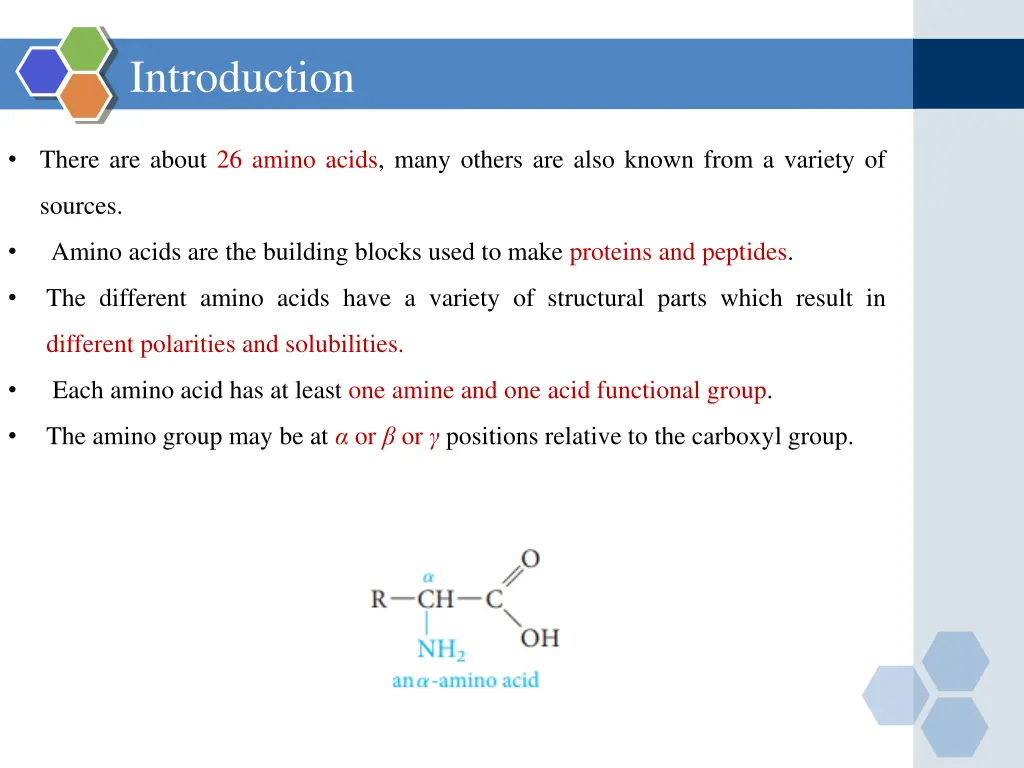
Introduction There are about 26 amino acids, many others are also known from a variety of sources. Amino acids are the building blocks used to make proteins and peptides. The different amino acids have a variety of structural parts which result in different polarities and solubilities. Each amino acid has at least one amine and one acid functional group. The amino group may be at or or positions relative to the carboxyl group.
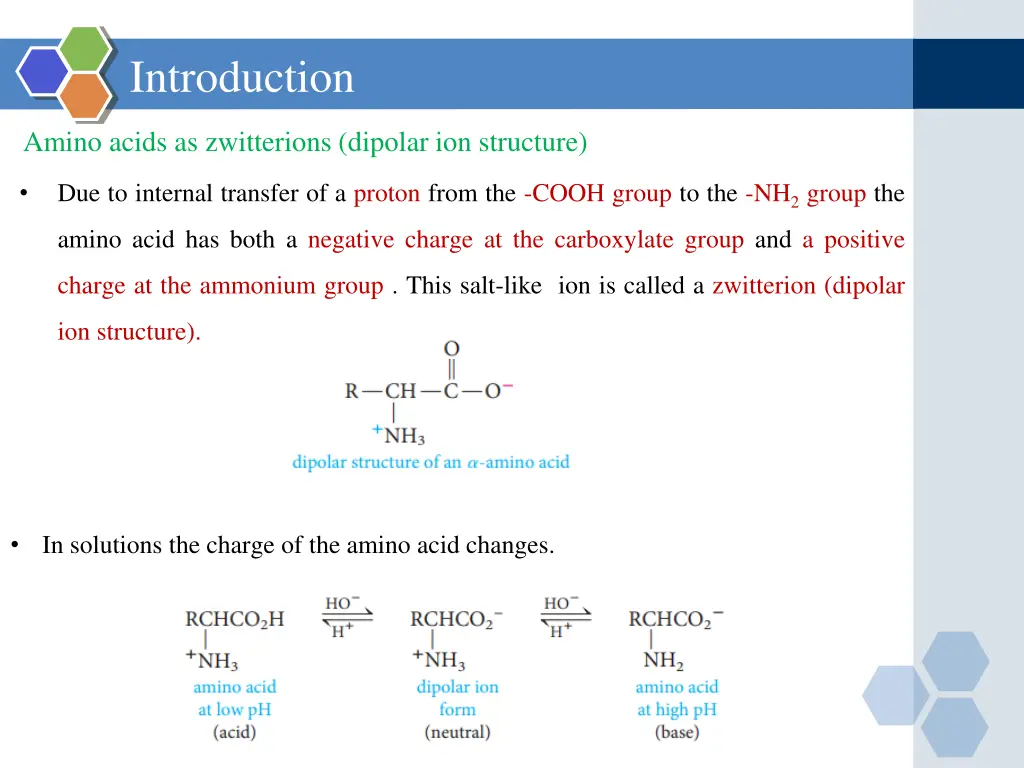
Introduction Amino acids as zwitterions (dipolar ion structure) Due to internal transfer of a proton from the -COOH group to the -NH2 group the amino acid has both a negative charge at the carboxylate group and a positive charge at the ammonium group . This salt-like ion is called a zwitterion (dipolar ion structure). In solutions the charge of the amino acid changes.
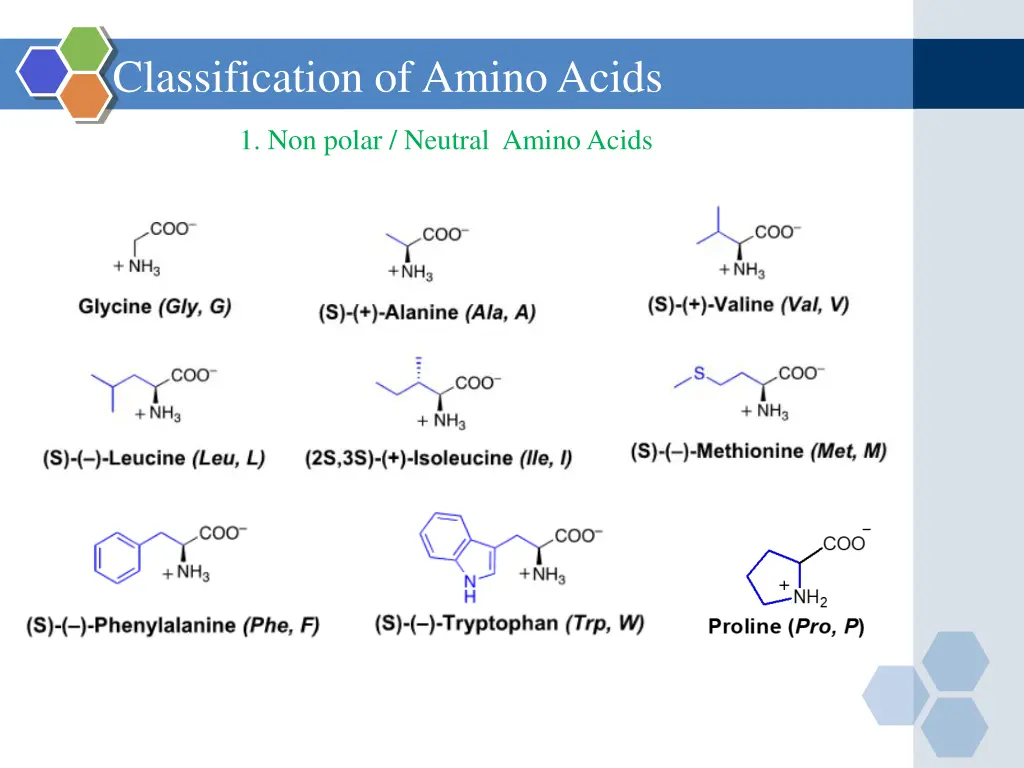
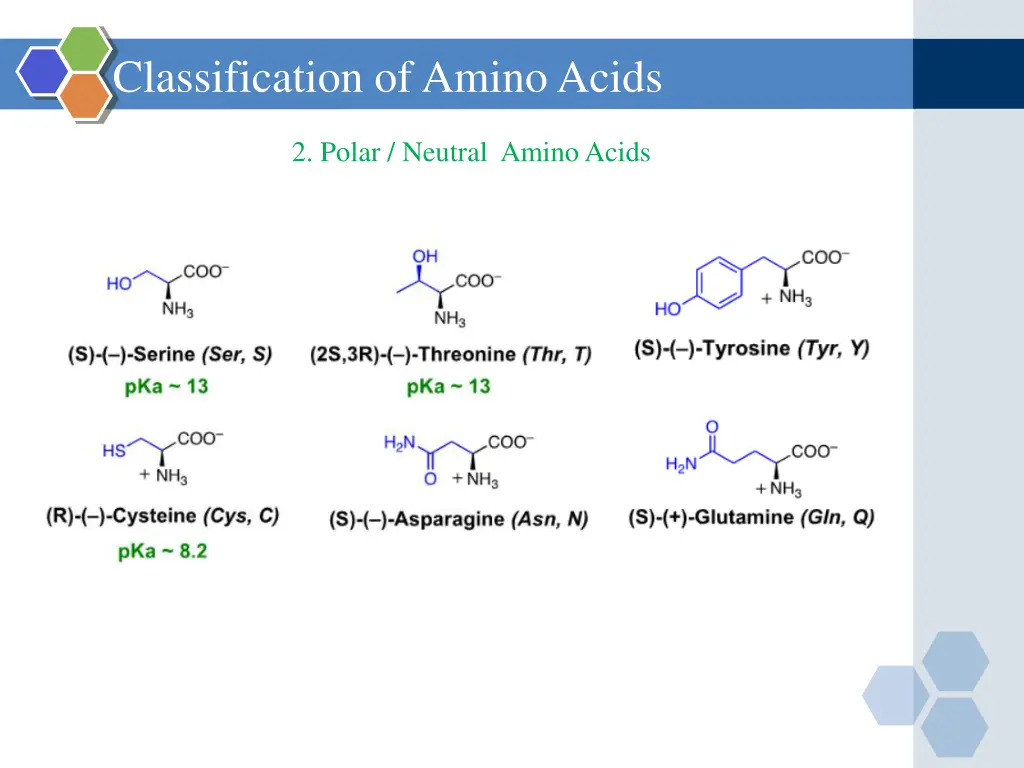
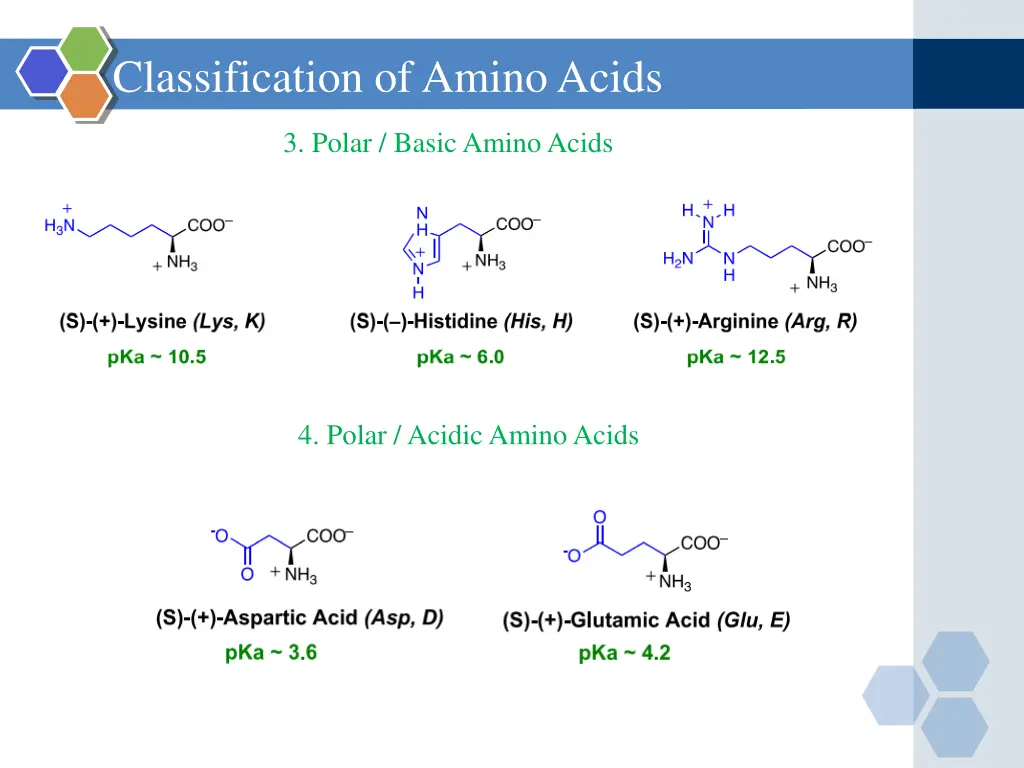
Introduction The amino acids are known by common names. For example: Glycine= Gly ; Alanine = Ala ; Valine = Val, etc.. Each also has a three-letter abbreviation based on this name, which is used when writing the formulas of peptides, and a one-letter abbreviation used to describe the amino acid sequence in a protein. 12 of the amino acids are non-essential, can be synthesized in the body from other foods. Glycine, Alanine, Serine, Cysteine, Proline, Tyrosine, Aspartic acid, Glutamic acid, Asparagine, Glutamine, Arginine, and Histidine. 8 of amino acids are essential, cannot be synthesized by adult humans and therefore must be included in the diet in the form of proteins. Valine, Leucine, Isoleucine, Threonine, Methionine, Phenylalanine, Tryptophan, and Lysine.
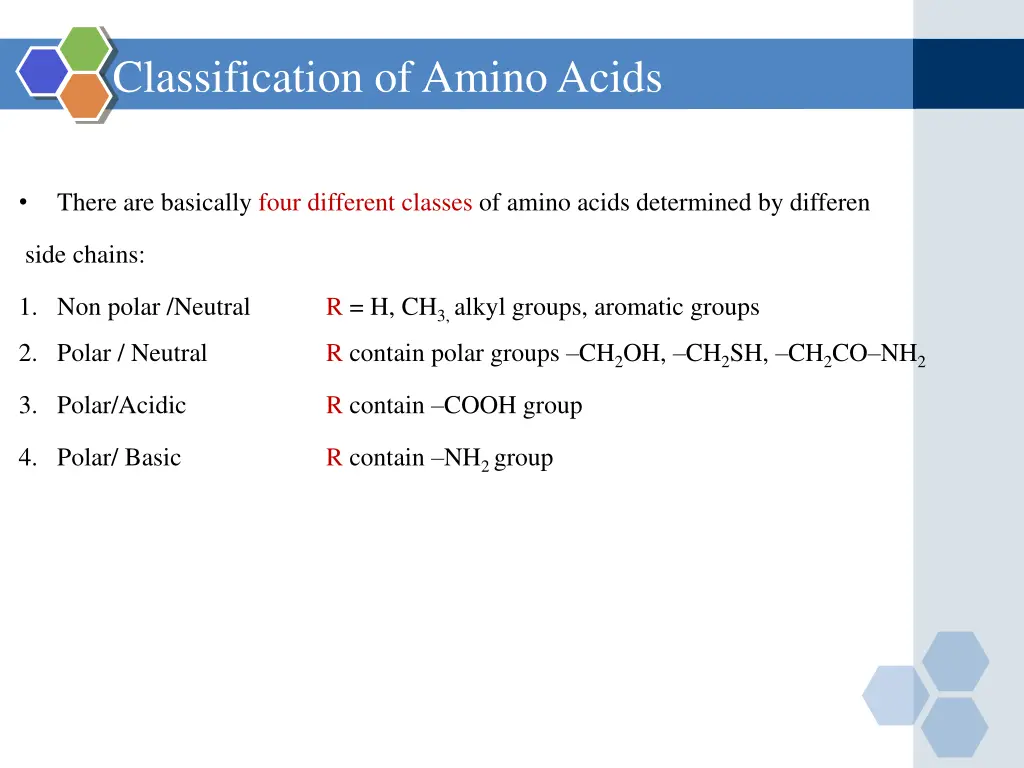
Classification of Amino Acids There are basically four different classes of amino acids determined by differen side chains: 1. Non polar /Neutral R = H, CH3, alkyl groups, aromatic groups R contain polar groups CH2OH, CH2SH, CH2CO NH2 2. Polar / Neutral 3. Polar/Acidic R contain COOH group 4. Polar/ Basic R contain NH2 group
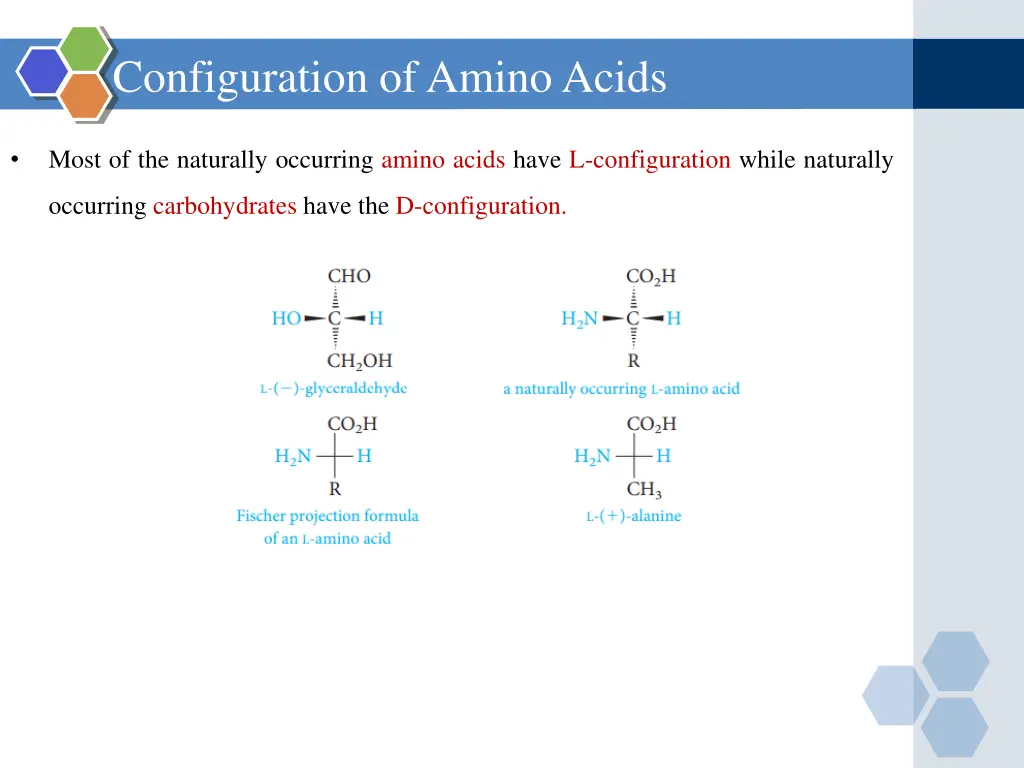
Configuration of Amino Acids Most of the naturally occurring amino acids have L-configuration while naturally occurring carbohydrates have the D-configuration.
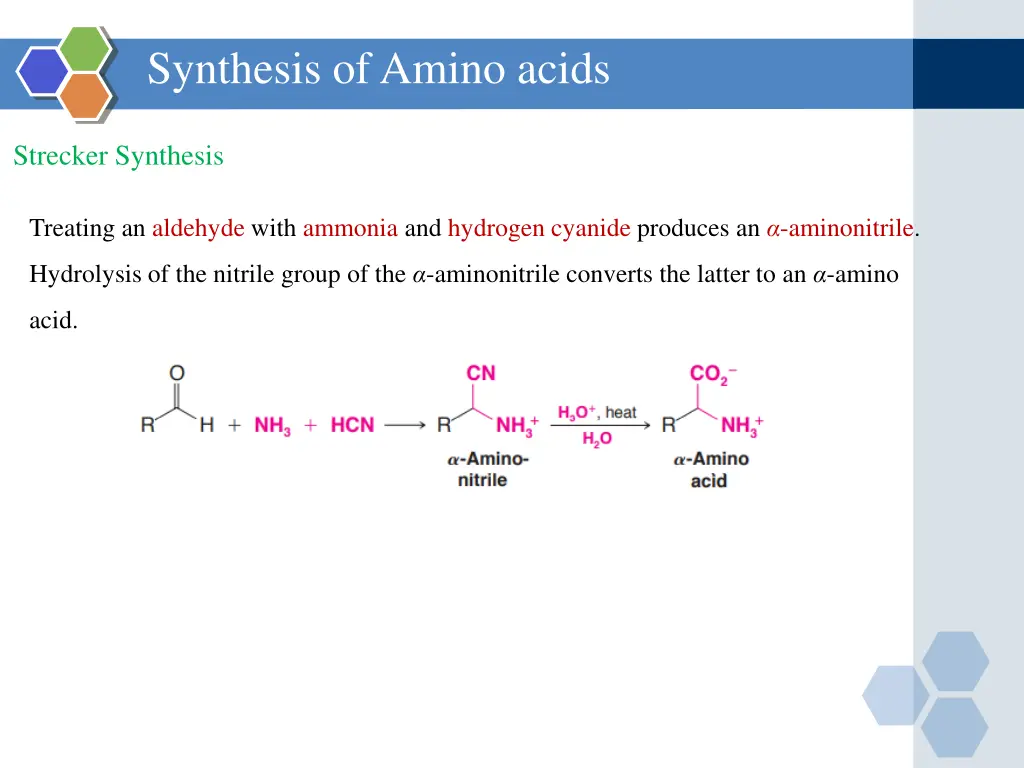
Synthesis of Amino acids Strecker Synthesis Treating an aldehyde with ammonia and hydrogen cyanide produces an -aminonitrile. Hydrolysis of the nitrile group of the -aminonitrile converts the latter to an -amino acid.
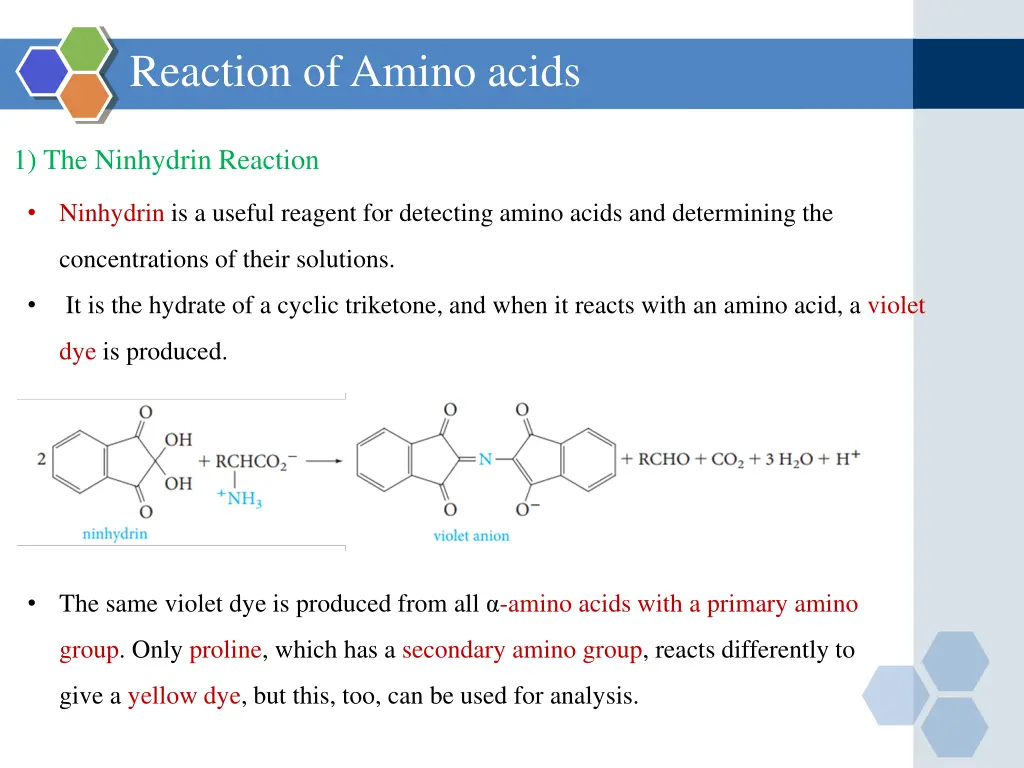
Reaction of Amino acids 1) The Ninhydrin Reaction Ninhydrin is a useful reagent for detecting amino acids and determining the concentrations of their solutions. It is the hydrate of a cyclic triketone, and when it reacts with an amino acid, a violet dye is produced. The same violet dye is produced from all -amino acids with a primary amino group. Only proline, which has a secondary amino group, reacts differently to give a yellow dye, but this, too, can be used for analysis.
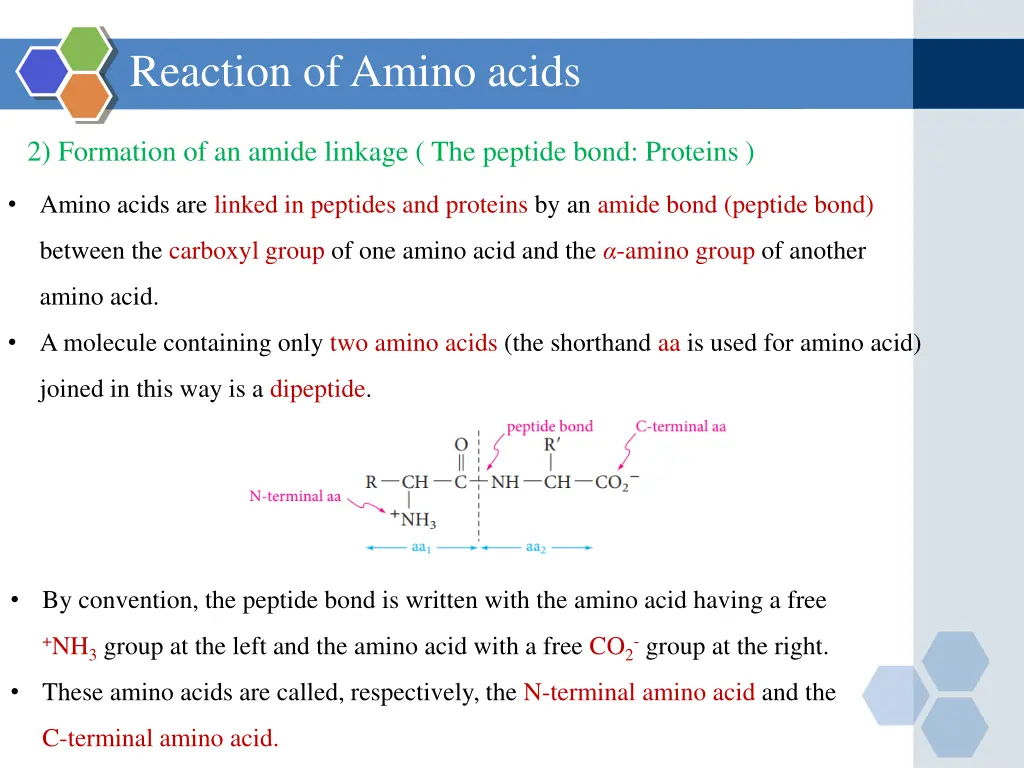
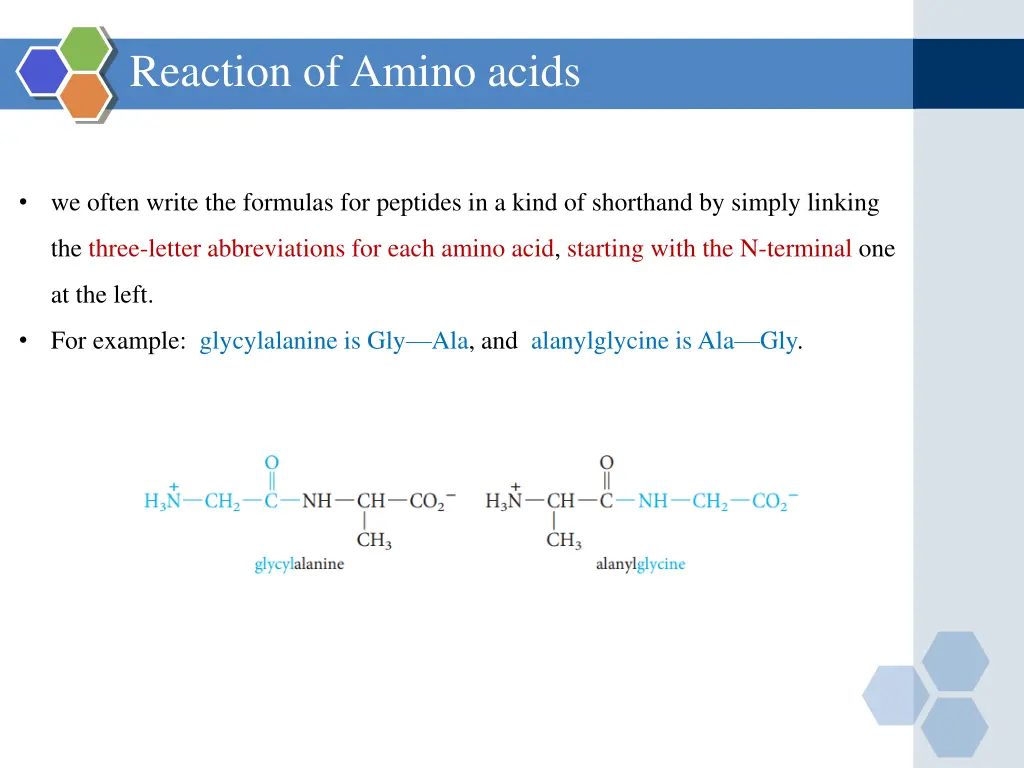
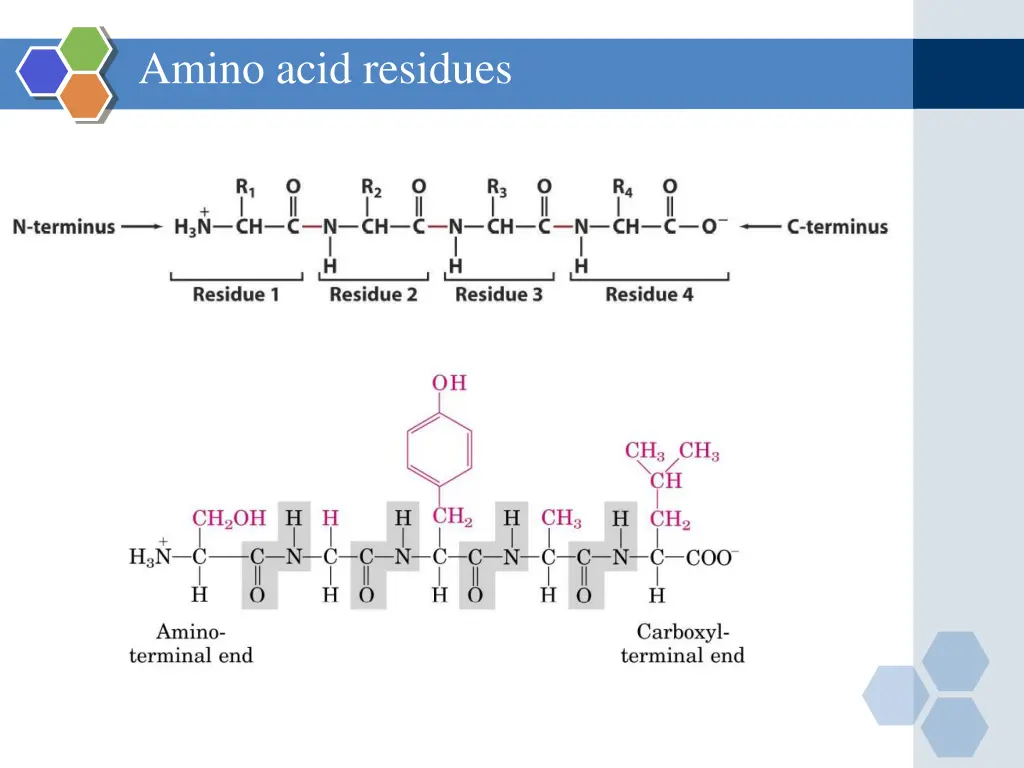
Reaction of Amino acids 2) Formation of an amide linkage ( The peptide bond: Proteins ) Amino acids are linked in peptides and proteins by an amide bond (peptide bond) between the carboxyl group of one amino acid and the -amino group of another amino acid. A molecule containing only two amino acids (the shorthand aa is used for amino acid) joined in this way is a dipeptide. By convention, the peptide bond is written with the amino acid having a free +NH3 group at the left and the amino acid with a free CO2- group at the right. These amino acids are called, respectively, the N-terminal amino acid and the C-terminal amino acid.
Reaction of Amino acids we often write the formulas for peptides in a kind of shorthand by simply linking the three-letter abbreviations for each amino acid, starting with the N-terminal one at the left. For example: glycylalanine is Gly Ala, and alanylglycine is Ala Gly.
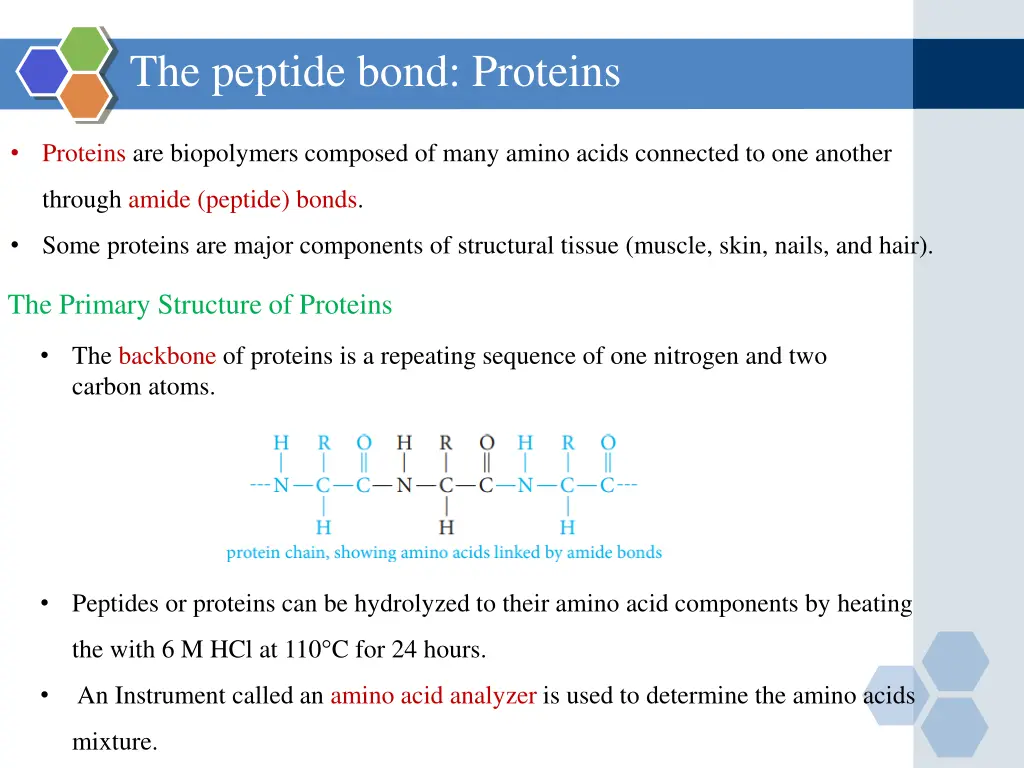
The peptide bond: Proteins Proteins are biopolymers composed of many amino acids connected to one another through amide (peptide) bonds. Some proteins are major components of structural tissue (muscle, skin, nails, and hair). The Primary Structure of Proteins The backbone of proteins is a repeating sequence of one nitrogen and two carbon atoms. Peptides or proteins can be hydrolyzed to their amino acid components by heating the with 6 M HCl at 110 C for 24 hours. An Instrument called an amino acid analyzer is used to determine the amino acids mixture.
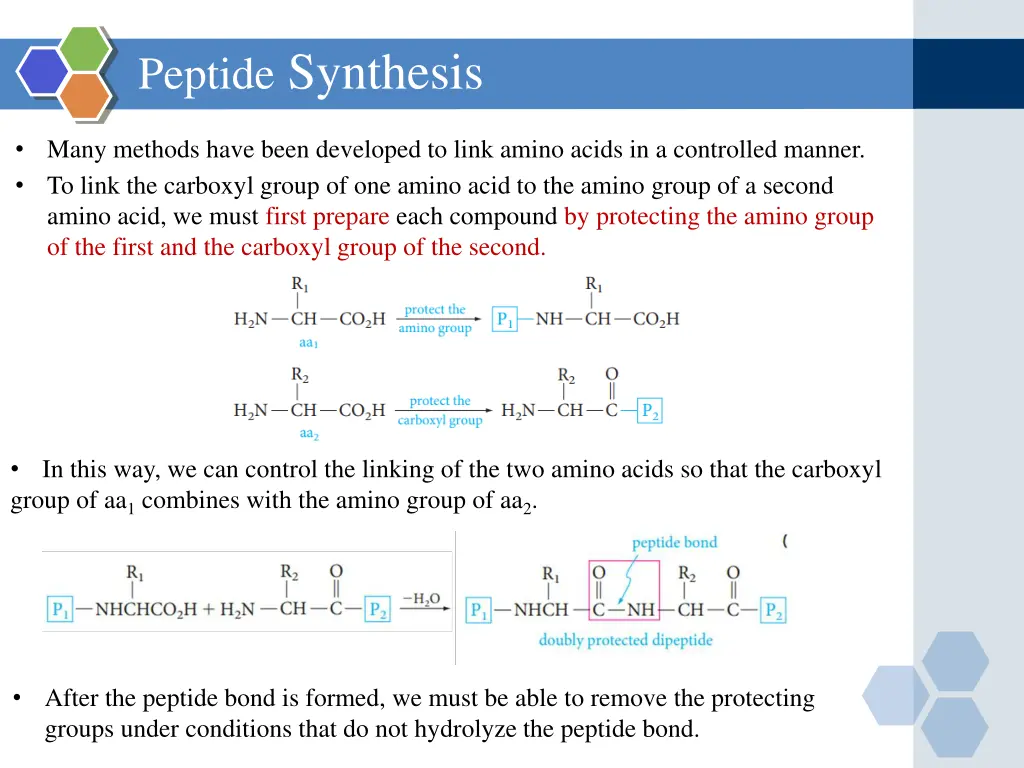
Peptide Synthesis Many methods have been developed to link amino acids in a controlled manner. To link the carboxyl group of one amino acid to the amino group of a second amino acid, we must first prepare each compound by protecting the amino group of the first and the carboxyl group of the second. In this way, we can control the linking of the two amino acids so that the carboxyl group of aa1 combines with the amino group of aa2. After the peptide bond is formed, we must be able to remove the protecting groups under conditions that do not hydrolyze the peptide bond.