Analysis of Coal Formation: From Peat to Coal
In the process of coal formation, peat undergoes aerobic and anaerobic decay, resulting in the transformation into coal. The accumulation of plant debris in waterlogged environments leads to the creation of coal seams, primarily composed of carbon with varying proportions of hydrogen, sulfur, oxygen, and nitrogen. This process is essential for understanding the origin and properties of coal as a valuable fuel source.

Download Presentation

Please find below an Image/Link to download the presentation.
The content on the website is provided AS IS for your information and personal use only. It may not be sold, licensed, or shared on other websites without obtaining consent from the author.If you encounter any issues during the download, it is possible that the publisher has removed the file from their server.
You are allowed to download the files provided on this website for personal or commercial use, subject to the condition that they are used lawfully. All files are the property of their respective owners.
The content on the website is provided AS IS for your information and personal use only. It may not be sold, licensed, or shared on other websites without obtaining consent from the author.
E N D
Presentation Transcript
Unit II: Analysis of Cement & Coal Unit II: Analysis of Cement & Coal Part B: Analysis of Coal
Syllabus Unit II: Analysis of cement & coal : Main constituents of cement, Composition of cement, Analysis of cement, Main constituents of coal, composition of coal, Analysis of coal.
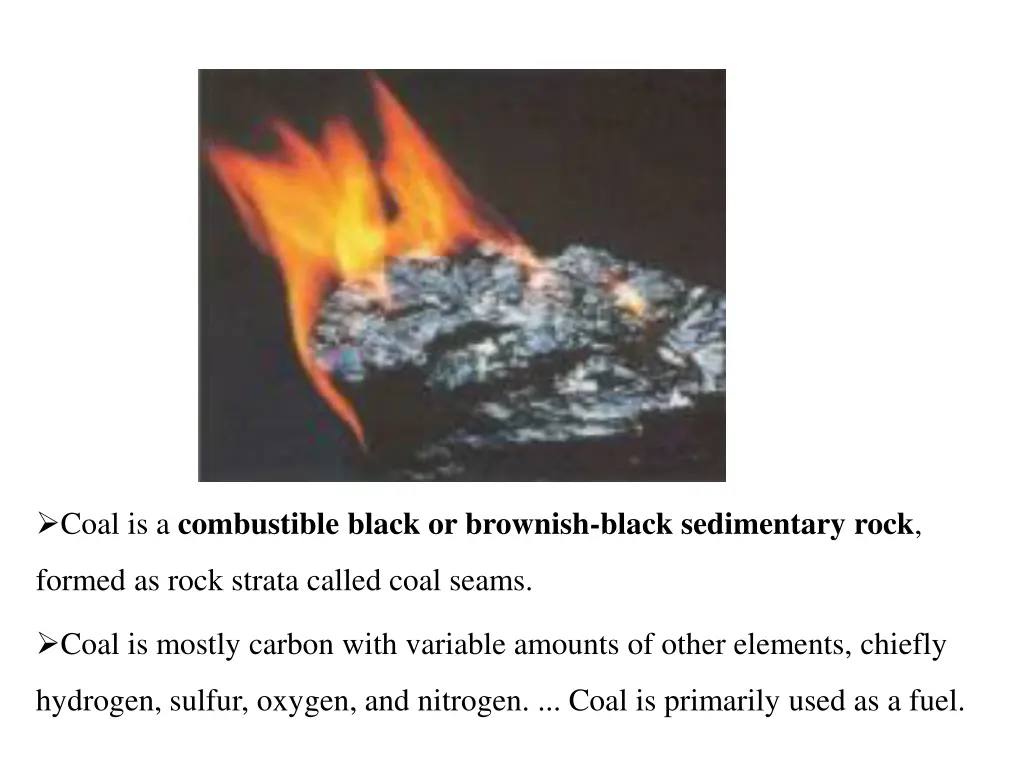
Coal is a combustible black or brownish-black sedimentary rock, formed as rock strata called coal seams. Coal is mostly carbon with variable amounts of other elements, chiefly hydrogen, sulfur, oxygen, and nitrogen. ... Coal is primarily used as a fuel.
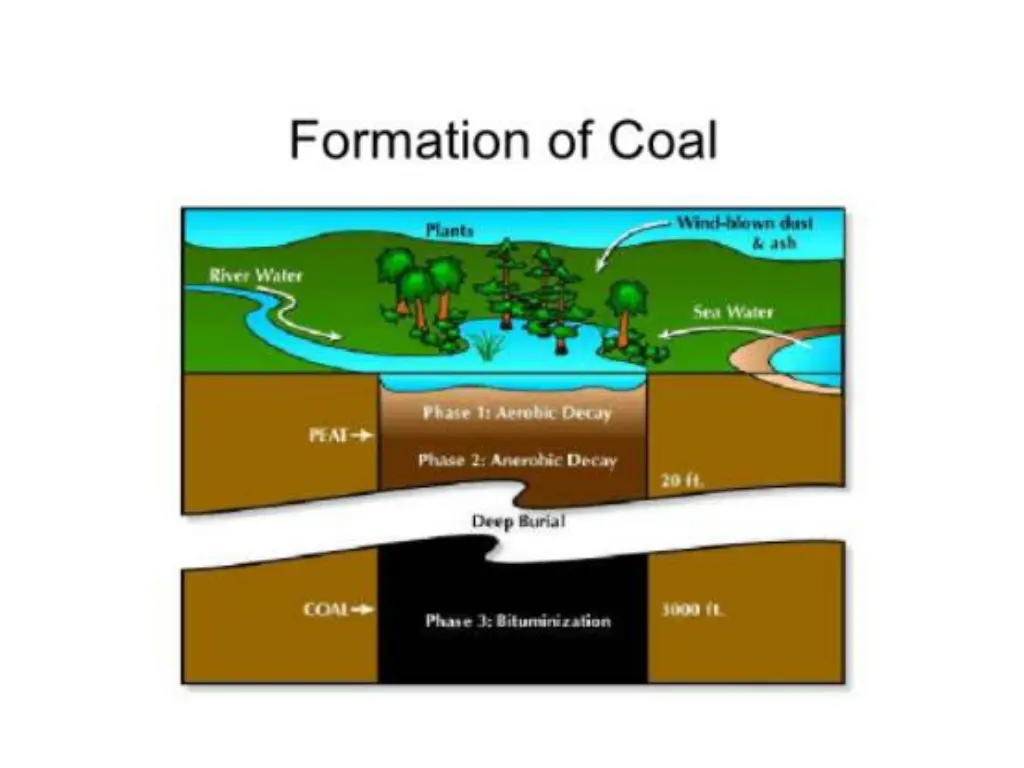
Formation of Coal The formation of coal begins in a water logged environment (swamps & bogs) where plant derbis accumulated. In such an environment, the accumulation of plant derbis exceeds the rate of bacterial decay of the derbis. The bacterial decay rate is reduced because the available oxygen in organic-rich water is completely used up by the decaying process. Anaerobic (without oxygen) decay is much slower than aeriobic decay.
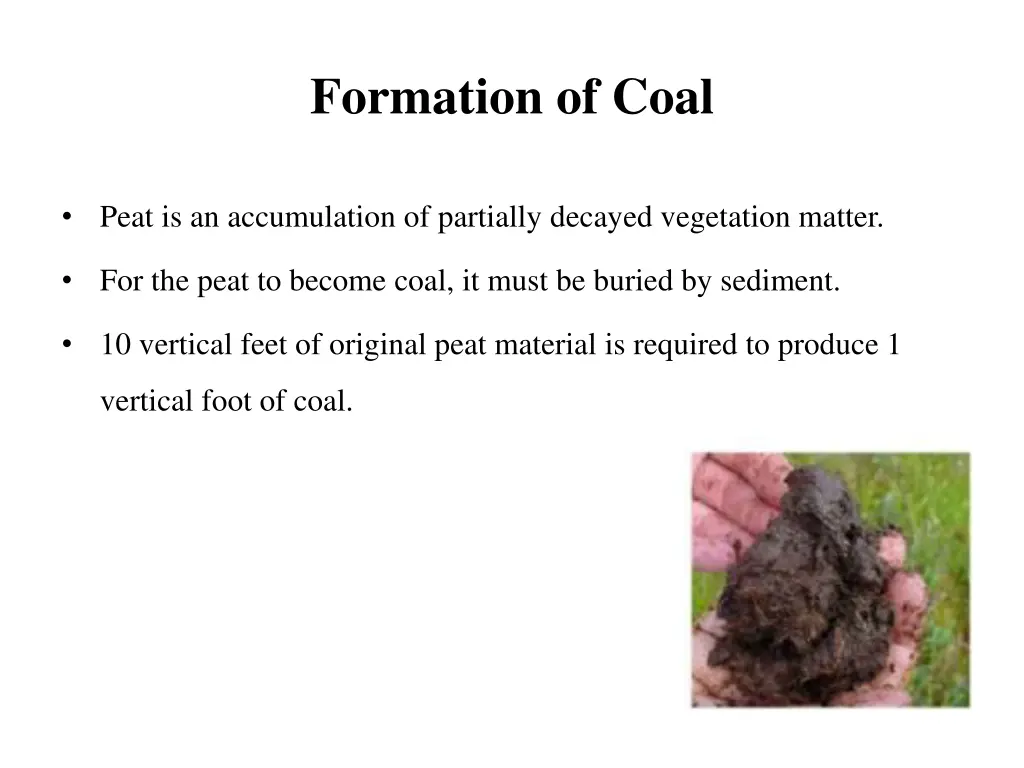
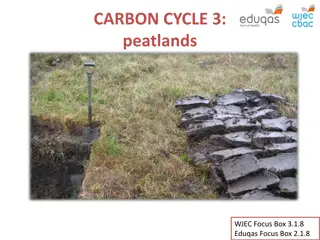
Formation of Coal Peat is an accumulation of partially decayed vegetation matter. For the peat to become coal, it must be buried by sediment. 10 vertical feet of original peat material is required to produce 1 vertical foot of coal.
Formation of Coal Phase 1: Aerobic Decay In the first few inches of peat, aerobic (oxygen needing) bacterial decay reduces the volume by as much as 50% Because the water is stagnant & the peat is almost impermeable, the bacteria soon use up all the available oxygen and die, ending the first stage of decay.
Formation of Coal Phase 2: Anaerobic Decay A second type of bacteria exists in the swamp that requires no oxygen . These anaerobic bacteria continue the decay process reducing the volume still further. Anaerobic decay produces more acids & when the acidity gets too high, it kills off the remaining bacteria ending all decay.
Formation of Coal Phase 3: Bituminization After the bacterial decay stages, the peat must be buried under thousands of feet of sediment that provides an insulating blanket trapping the natural heat rising to surface. Once the temperature reaches 100oC, (212oF) the bituminization process begins. Chemical reactions drive off water, oxygen & hydrogen which raises the percentage of carbon.
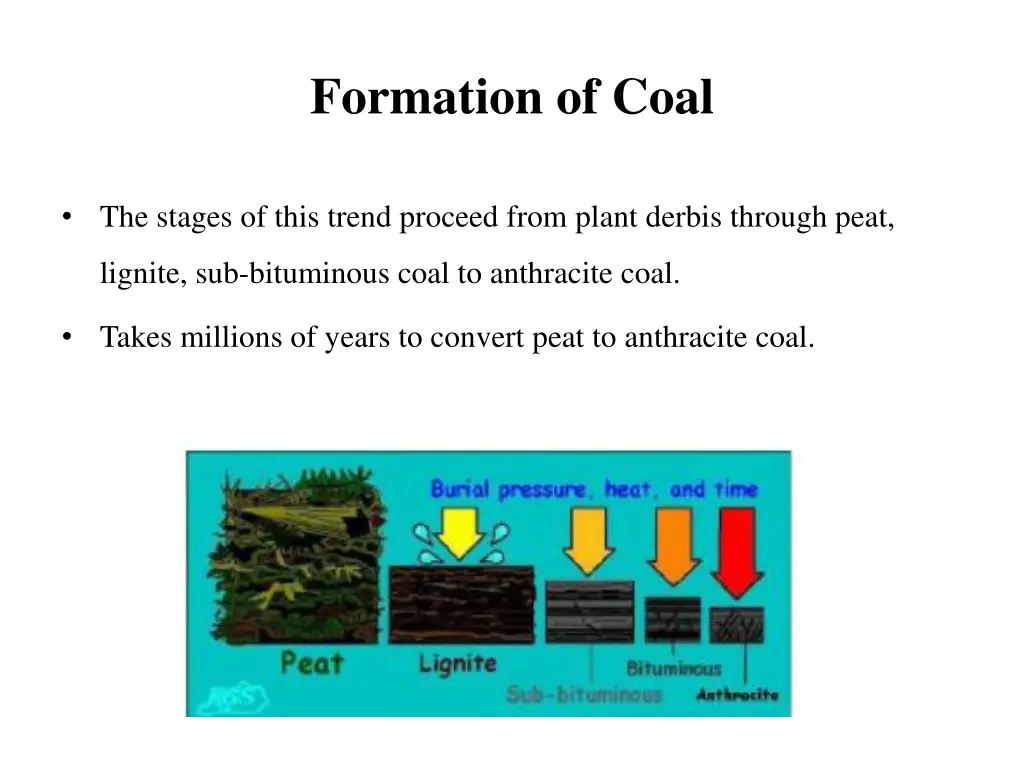
Formation of Coal The stages of this trend proceed from plant derbis through peat, lignite, sub-bituminous coal to anthracite coal. Takes millions of years to convert peat to anthracite coal.