Argumentation and Persuasion
This essay explores the elements of argumentation and persuasion essential for effective writing. It delves into deductive and inductive reasoning, showcasing how general principles can be applied to specific cases. The distinction between logical arguments and emotional persuasion is made clear, highlighting the challenges of writing purely argumentative essays. Techniques for persuasion are discussed, emphasizing the need to balance logic with emotion to engage the reader effectively.

Download Presentation

Please find below an Image/Link to download the presentation.
The content on the website is provided AS IS for your information and personal use only. It may not be sold, licensed, or shared on other websites without obtaining consent from the author.If you encounter any issues during the download, it is possible that the publisher has removed the file from their server.
You are allowed to download the files provided on this website for personal or commercial use, subject to the condition that they are used lawfully. All files are the property of their respective owners.
The content on the website is provided AS IS for your information and personal use only. It may not be sold, licensed, or shared on other websites without obtaining consent from the author.
E N D
Presentation Transcript
Argumentation and Persuasion Essay Writing
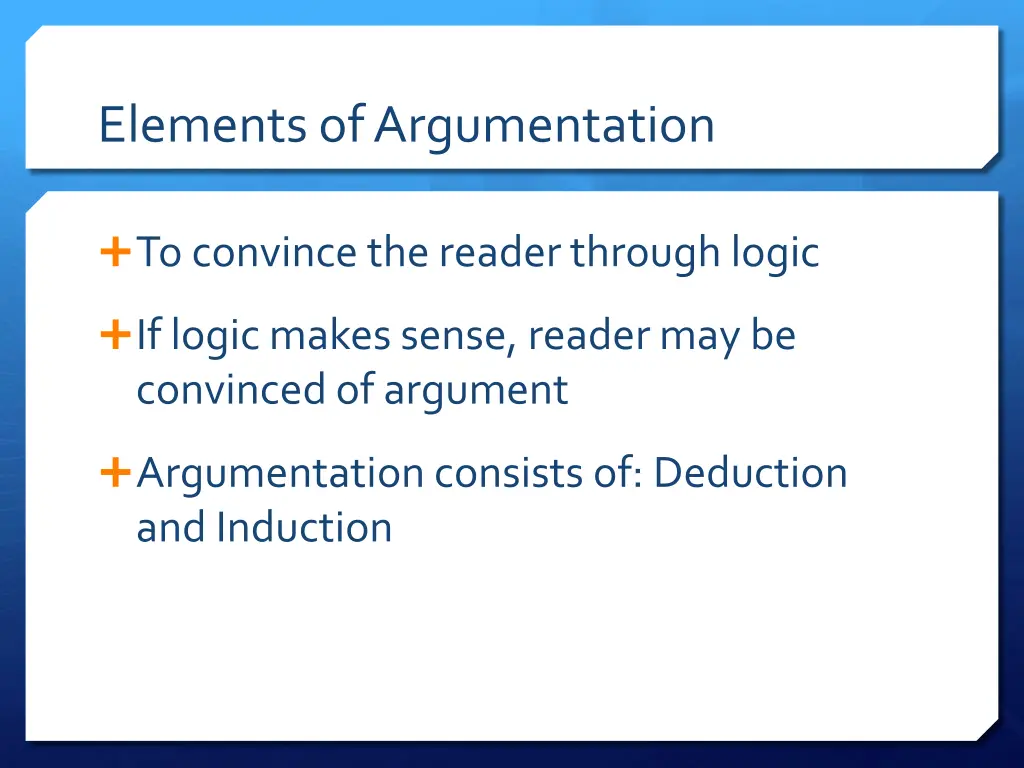
Elements of Argumentation To convince the reader through logic If logic makes sense, reader may be convinced of argument Argumentation consists of: Deduction and Induction
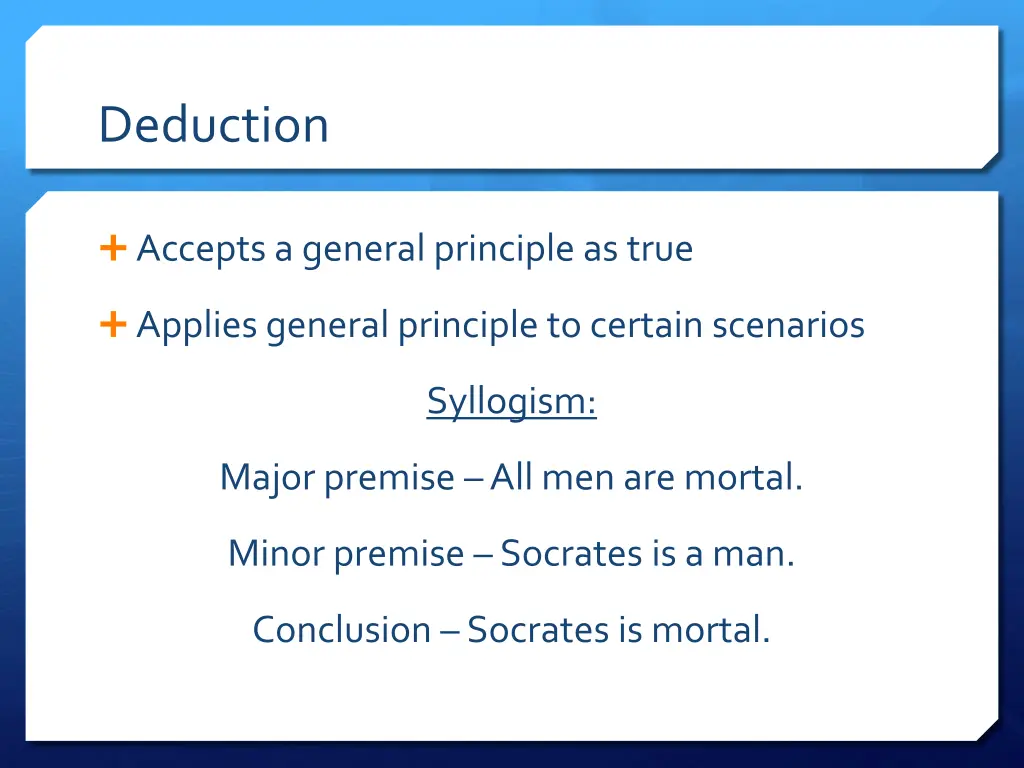
Deduction Accepts a general principle as true Applies general principle to certain scenarios Syllogism: Major premise All men are mortal. Minor premise Socrates is a man. Conclusion Socrates is mortal.
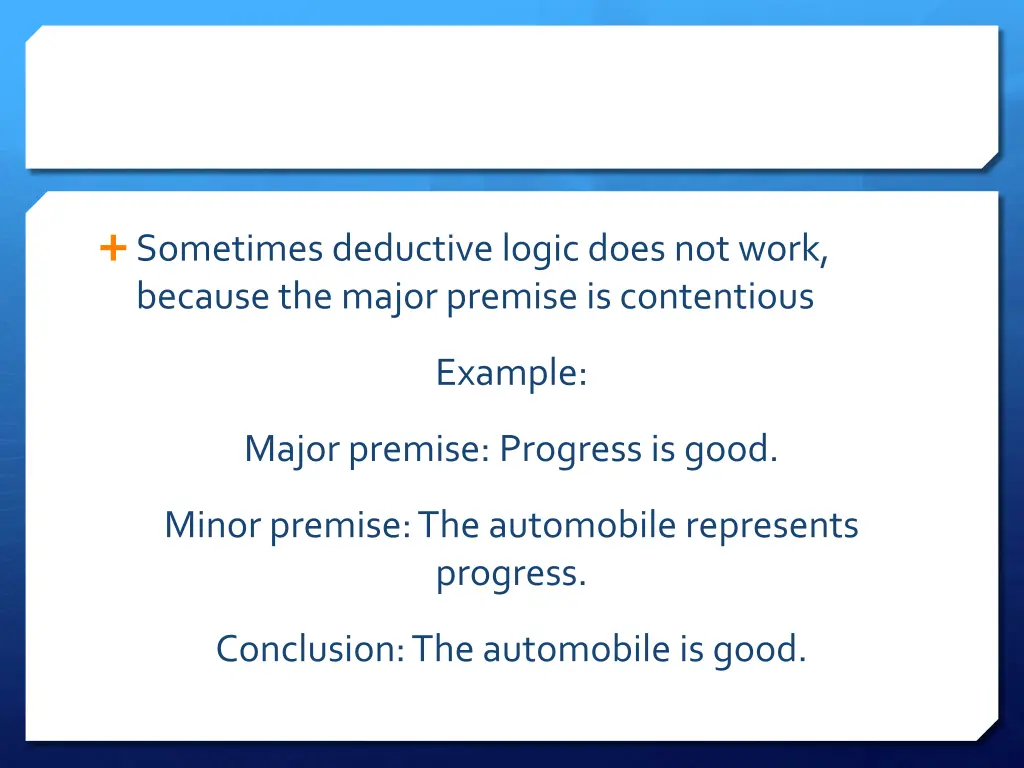
Sometimes deductive logic does not work, because the major premise is contentious Example: Major premise: Progress is good. Minor premise: The automobile represents progress. Conclusion: The automobile is good.
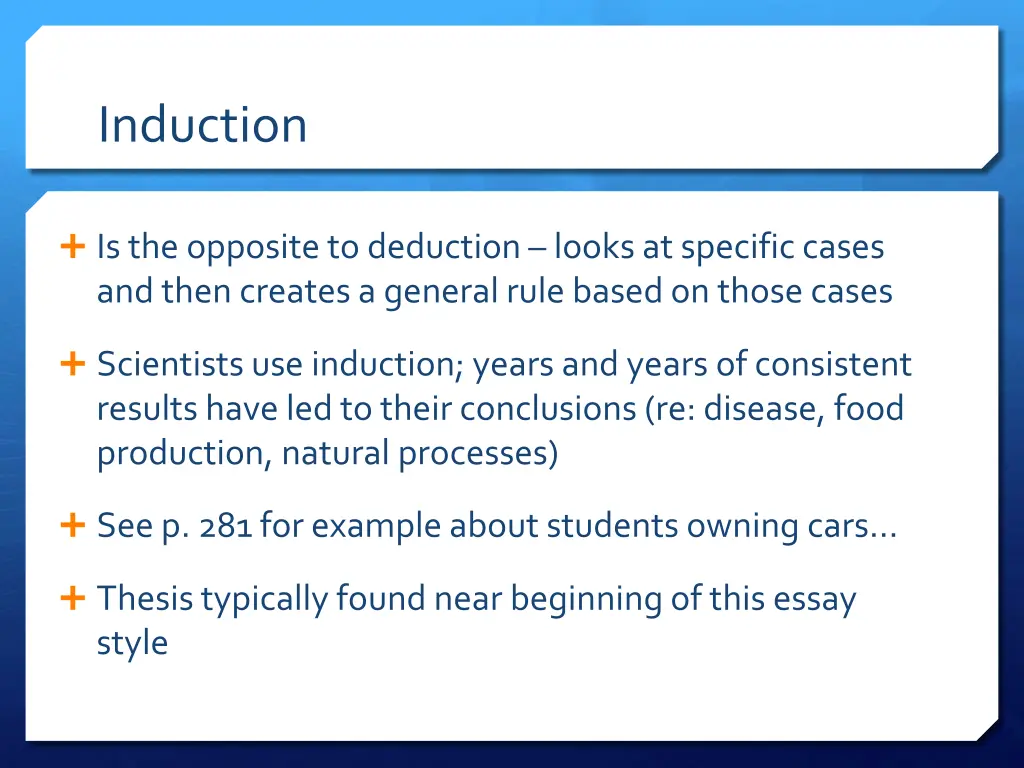
Induction Is the opposite to deduction looks at specific cases and then creates a general rule based on those cases Scientists use induction; years and years of consistent results have led to their conclusions (re: disease, food production, natural processes) See p. 281 for example about students owning cars Thesis typically found near beginning of this essay style
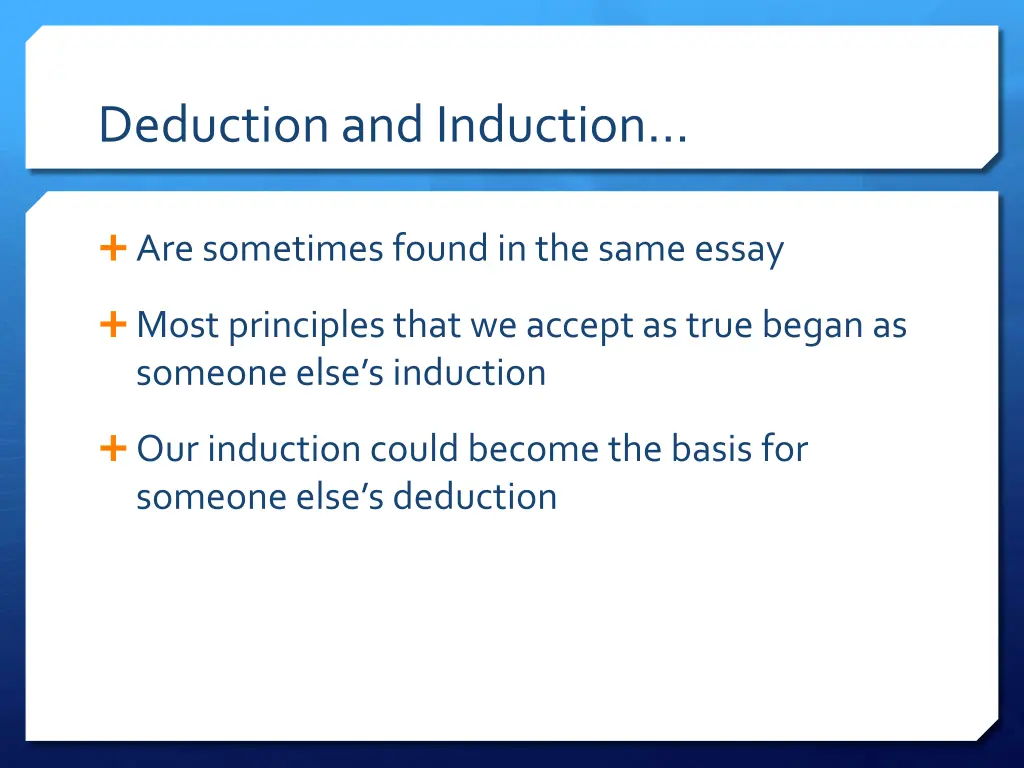
Deduction and Induction Are sometimes found in the same essay Most principles that we accept as true began as someone else s induction Our induction could become the basis for someone else s deduction
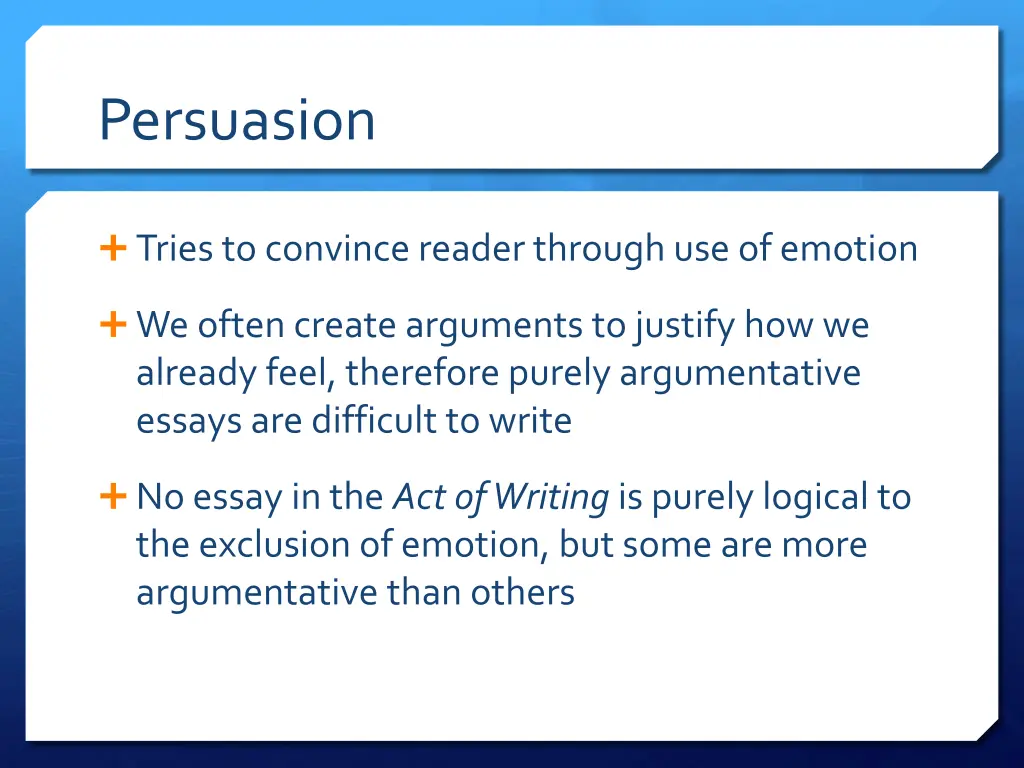
Persuasion Tries to convince reader through use of emotion We often create arguments to justify how we already feel, therefore purely argumentative essays are difficult to write No essay in the Act of Writing is purely logical to the exclusion of emotion, but some are more argumentative than others
Persuasive Techniques See handout provided
Your Turn: To Read Read Capping the Great Cup Debate on p. 286 Answer Structure #1, 2, 3; Argumentation and Persuasion #1, 2; Ideas for Discussion and Writing # 4 Read The Seven-Minute Life of Marc Lepine on p. 322 Answer Structure #1, 2, 4;Argumentation and Persuasion -#2 Compare the two essays. What are the similarities and differences? Which do you find more convincing, and why?
Your Turn: To Write Topics for Writing Argumentation and Persuasion: Choose one from P. 337