Aryan Concept of Politics: Origins, Society, and Administration
Explore the Aryan concept of politics as depicted in early Vedic texts, detailing their origins, societal structure, and administrative practices. Learn about the tribal kingdoms, family units, and leadership roles in ancient Aryan society. Uncover the political conditions, sources of knowledge, and the decline of the Aryan civilization.

Download Presentation

Please find below an Image/Link to download the presentation.
The content on the website is provided AS IS for your information and personal use only. It may not be sold, licensed, or shared on other websites without obtaining consent from the author. If you encounter any issues during the download, it is possible that the publisher has removed the file from their server.
You are allowed to download the files provided on this website for personal or commercial use, subject to the condition that they are used lawfully. All files are the property of their respective owners.
The content on the website is provided AS IS for your information and personal use only. It may not be sold, licensed, or shared on other websites without obtaining consent from the author.
E N D
Presentation Transcript
ARYAN CONCEPT OF POLITICS P. NALLTHAMBI, ASST PROFESSOR, DEPT OF HISTORY, ARUL ANANDAR COLLEGE, KARUMATHUR - 625 514, MADURAI.
CONTENTS INTRODUCTION ORIGIN SOURCES POLITICAL CONDITION SOCIETY ECONOMY RELIGION DECLINE
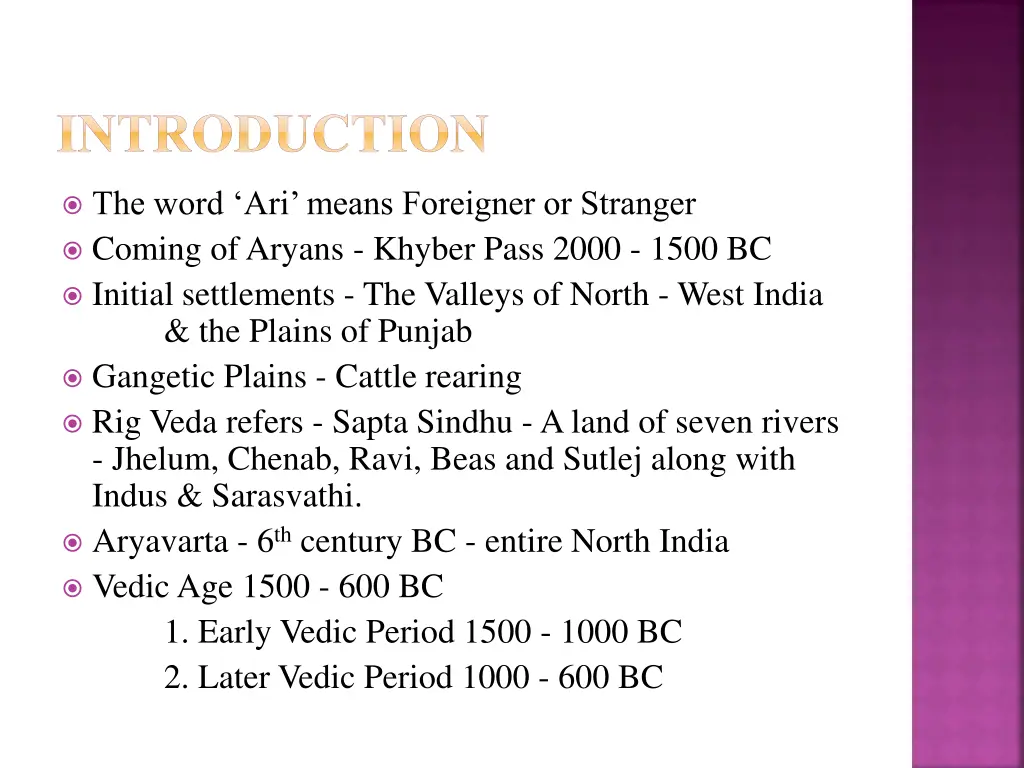
INTRODUCTION The word Ari means Foreigner or Stranger Coming of Aryans - Khyber Pass 2000 - 1500 BC Initial settlements - The Valleys of North - West India & the Plains of Punjab Gangetic Plains - Cattle rearing Rig Veda refers - Sapta Sindhu -A land of seven rivers - Jhelum, Chenab, Ravi, Beas and Sutlej along with Indus & Sarasvathi. Aryavarta - 6thcentury BC - entire North India Vedic Age 1500 - 600 BC 1. Early Vedic Period 1500 - 1000 BC 2. Later Vedic Period 1000 - 600 BC
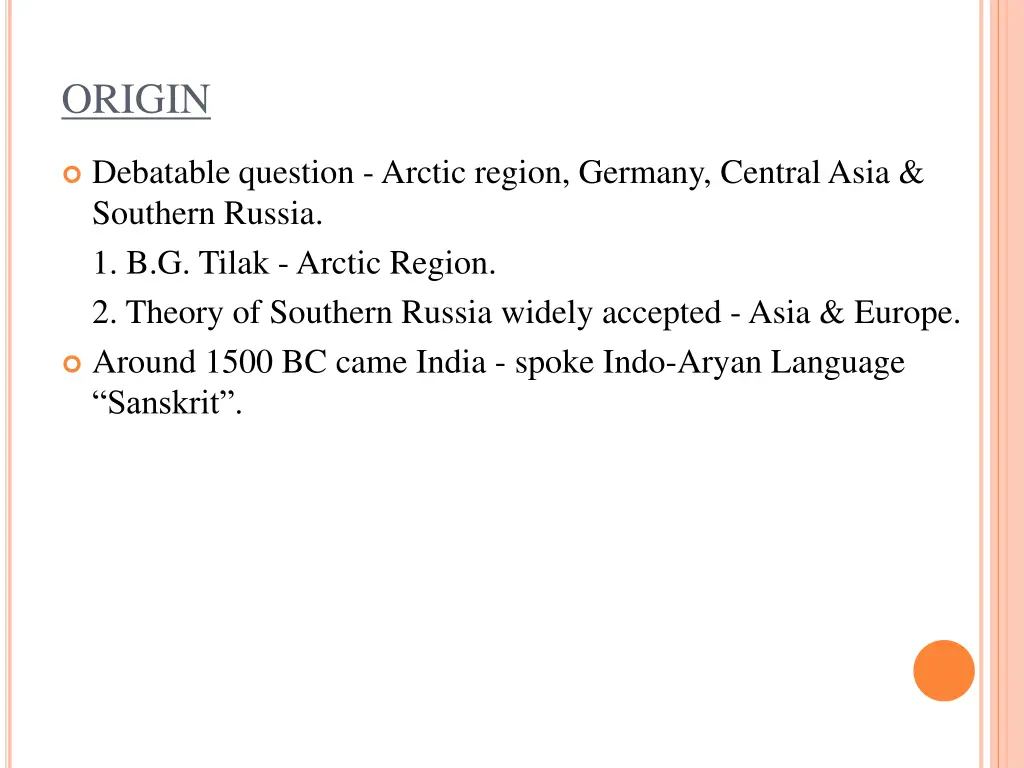
ORIGIN Debatable question -Arctic region, Germany, Central Asia & Southern Russia. 1. B.G. Tilak -Arctic Region. 2. Theory of Southern Russia widely accepted -Asia & Europe. Around 1500 BC came India - spoke Indo-Aryan Language Sanskrit .
SOURCES 1. Vedic Literature 2. Other Sacred works 3. Two Epics 1. VEDIC LITERATURES Veda - Vid - to know - supreme Knowledge Rig - 1028 Hymns - sung in praise of various gods. Yajur - details observed at the time of sacrifice. Sama - book of chants - origin of Indian Music Atharva - details of rituals.
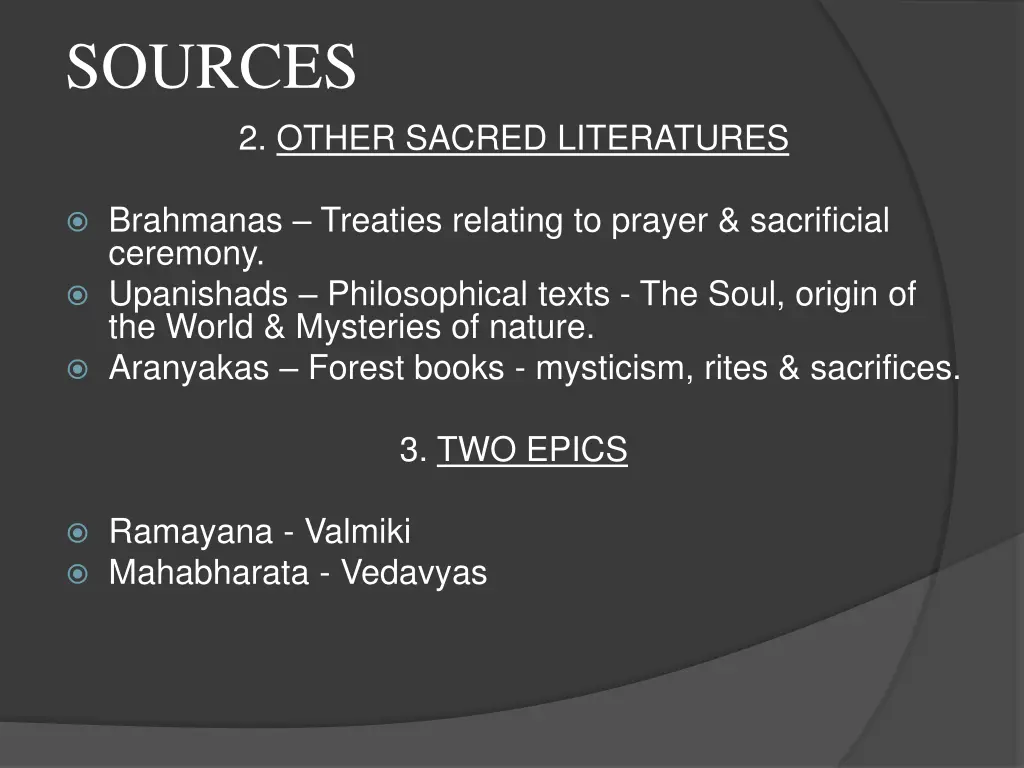
SOURCES 2. OTHER SACRED LITERATURES Brahmanas Treaties relating to prayer & sacrificial ceremony. Upanishads Philosophical texts - The Soul, origin of the World & Mysteries of nature. Aranyakas Forest books - mysticism, rites & sacrifices. 3. TWO EPICS Ramayana - Valmiki Mahabharata - Vedavyas
POLITICAL CONDITION EARLY VEDIC PERIOD: 1500 1000 BC Rig Veda refers - kingdom was tribal in character - each tribe formed separate kingdom. Basic unit - Kula or Family. A number of families formed - Village or Grama - Gramani leader of village. A group of villages constituted large unit - Clan or Vis several clan formed tribe - Tribe or Jana. 1. 2. 3. 4.
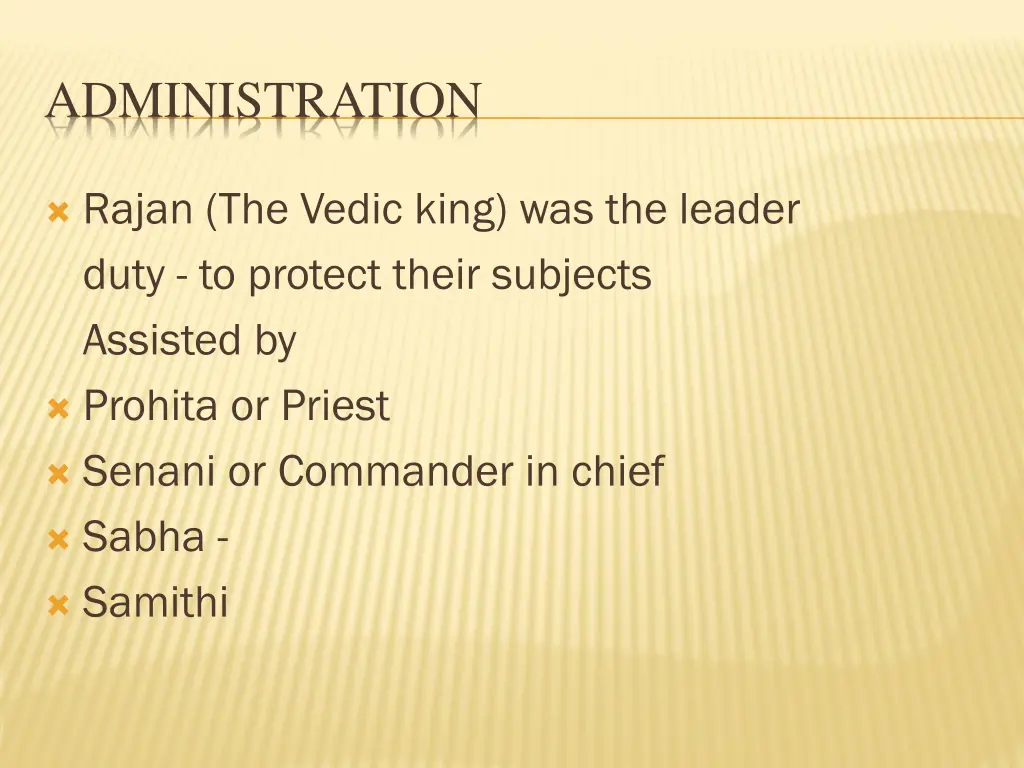
ADMINISTRATION Rajan (The Vedic king) was the leader duty - to protect their subjects Assisted by Prohita or Priest Senani or Commander in chief Sabha - Samithi
Political life: Aryavarta or Gangetic Valley centre of political activity. Kingdoms like Kosala, Videka, Kuru, Magadha, Kasi, Avanti & Panchala came into existence.
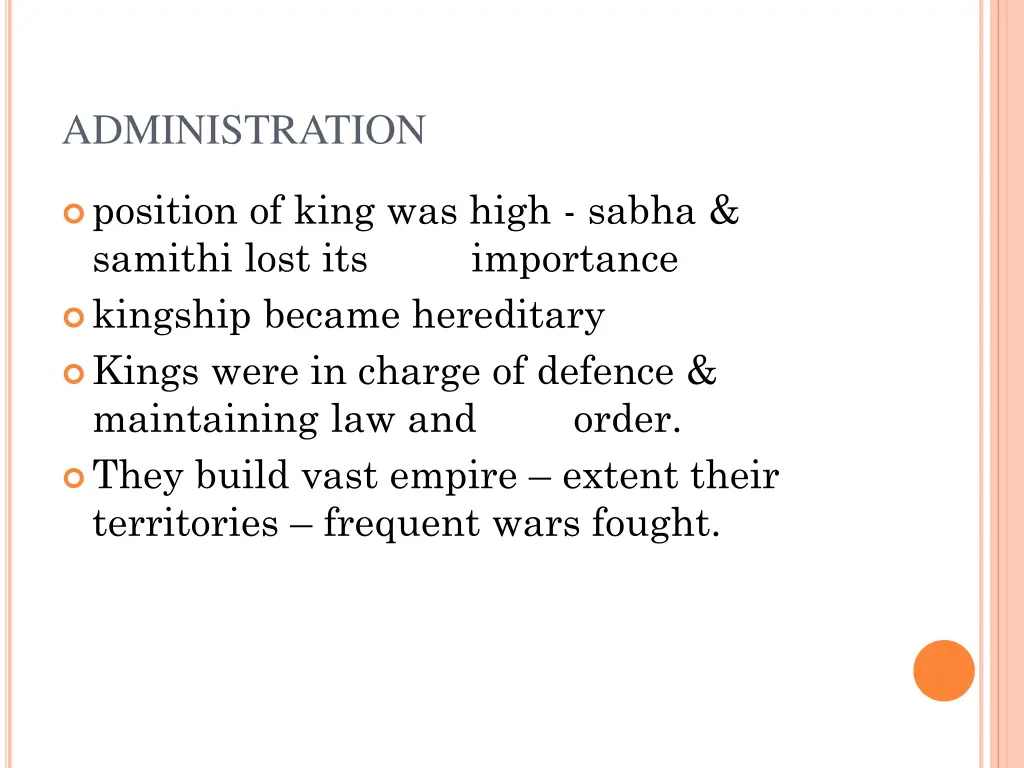
ADMINISTRATION position of king was high - sabha & samithi lost its kingship became hereditary Kings were in charge of defence & maintaining law and They build vast empire extent their territories frequent wars fought. importance order.
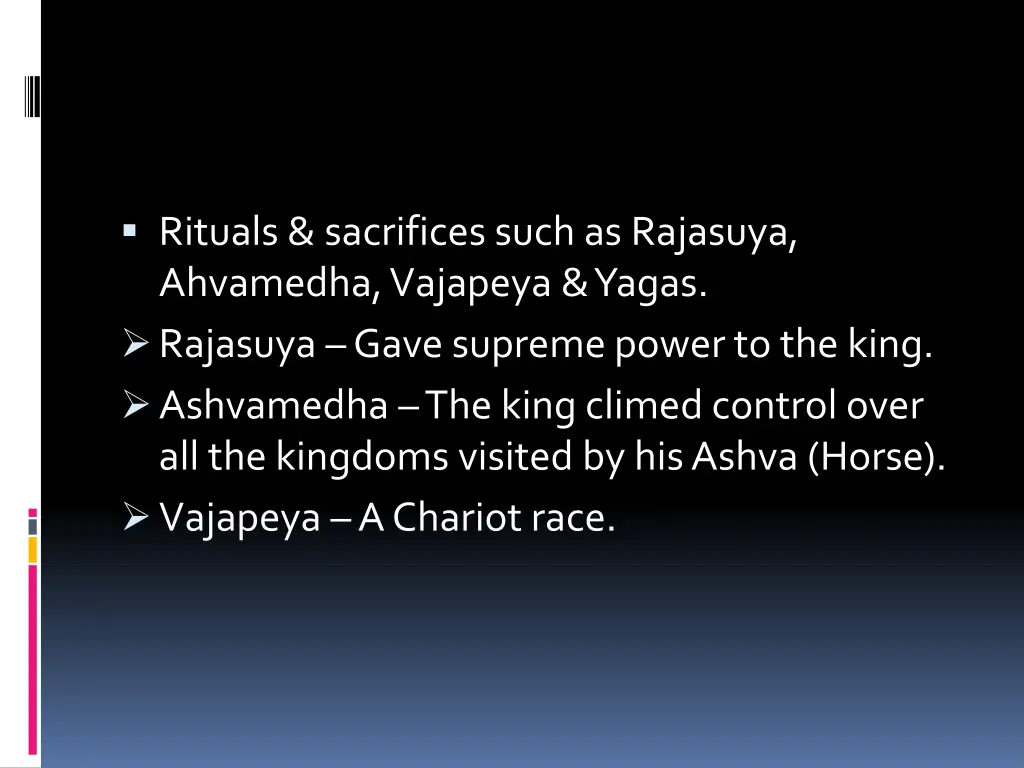
Rituals & sacrifices such as Rajasuya, Ahvamedha, Vajapeya & Yagas. Rajasuya Gave supreme power to the king. Ashvamedha The king climedcontrol over all the kingdoms visited by his Ashva (Horse). Vajapeya A Chariot race.