Explore the pathogenesis of bacteria, including the mechanisms leading to disease development and the role of virulence factors. Learn about pathogenic vs. nonpathogenic bacteria, infection, invasion, and more in this informative guide by Dr. Ali Abdulwahid from the University of Mustanisiriya College of Medicine.
Please find below an Image/Link to download the presentation.
The content on the website is provided AS IS for your information and personal use only. It may not be sold, licensed, or shared on other websites without obtaining consent from the author. If you encounter any issues during the download, it is possible that the publisher has removed the file from their server.
You are allowed to download the files provided on this website for personal or commercial use, subject to the condition that they are used lawfully. All files are the property of their respective owners.
The content on the website is provided AS IS for your information and personal use only. It may not be sold, licensed, or shared on other websites without obtaining consent from the author.
Overview The pathogenesis of bacterial infection includes initiation of the infectious process and the mechanisms that lead to the development of signs and symptoms of disease.
Pathogen: A microorganism capable of causing disease Nonpathogen: A microorganism that does not cause disease; may be part of the normal microbiota. Pathogenic bacteria: the bacteria that have evolved specific virulence factors that allow them to multiply in their host or vector without being killed or expelled by the host's defenses. Opportunistic pathogen: An agent capable of causing disease only when the host s resistance is impaired (ie, when the patient is immunocompromised ).
Infection: Multiplication of an infectious agent within the body. Multiplication of the bacteria that are part of the normal flora is generally not considered an infection. Invasion: The process whereby bacteria, animal parasites, fungi, and viruses enter host cells or tissues and spread in the body. Microbiota: Microbial flora harboured by normal, healthy individuals.
The virulence : is the quantitative measure of pathogenicity , which is measured by the number of organisms required to cause disease. The 50% of lethal dose ( LD50): is the number of organisms needed to kill 50 % of hosts. The 50 % of infectious dose (ID 50): is the number of organisms required to cause infections in 50% of hosts Bacteria with lower lethal or infectious dose are termed as more virulent, as a fewer number of organisms is enough to cause disease or kill the host.
The infectious dose is greatly varied among different pathogenic bacteria Ex : the two pathogens Salmonella and Shigella infect the gastrointestinal tract and cause diarrhea The infectious dose of shigella is lower than 100 organisms (bacterial cells) The infectious dose of salmonella is up to 100,000 organisms Such high or low ability to cause infection depends mainly on the virulence factors of each pathogenic bacteria ( such as possessing adherence factors to mucus membranes, secreting of toxins and enzymes and possessing of anti-phagocytosis factors)
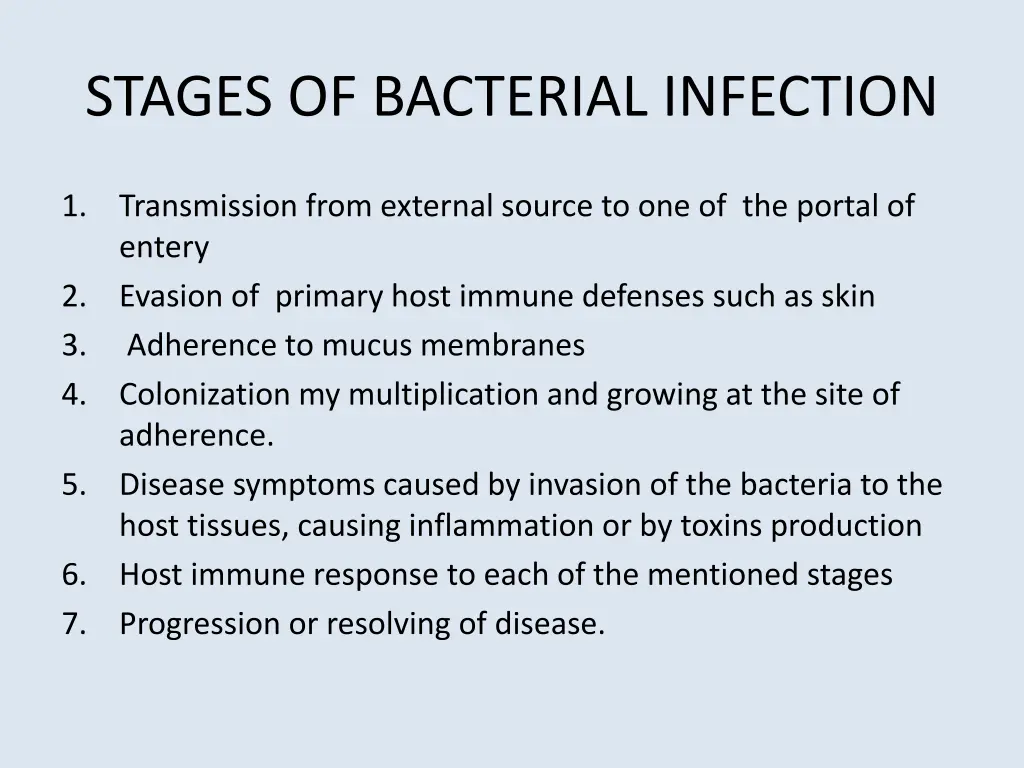
STAGES OF BACTERIAL INFECTION 1. Transmission from external source to one of the portal of entery Evasion of primary host immune defenses such as skin Adherence to mucus membranes Colonization my multiplication and growing at the site of adherence. Disease symptoms caused by invasion of the bacteria to the host tissues, causing inflammation or by toxins production Host immune response to each of the mentioned stages Progression or resolving of disease. 2. 3. 4. 5. 6. 7.
TRANSMISSION OF INFECTION 1. Source of infection Bacteria (and other microorganisms) can adapt to a variety of environments which can act as a source for infection that include: Human source : such as ( gonorrhea , congenital syphilis) None human source : include Soil source (such as tetanus, due to bacterial spores present in the soil) Water source ( Cholera ) Animal source : Via direct contact (Cat-scratch fever) Via Insect vectors (Plague and Lyme disease ) Via animal excreta (Diarrhea) Fomite source (skin infection )
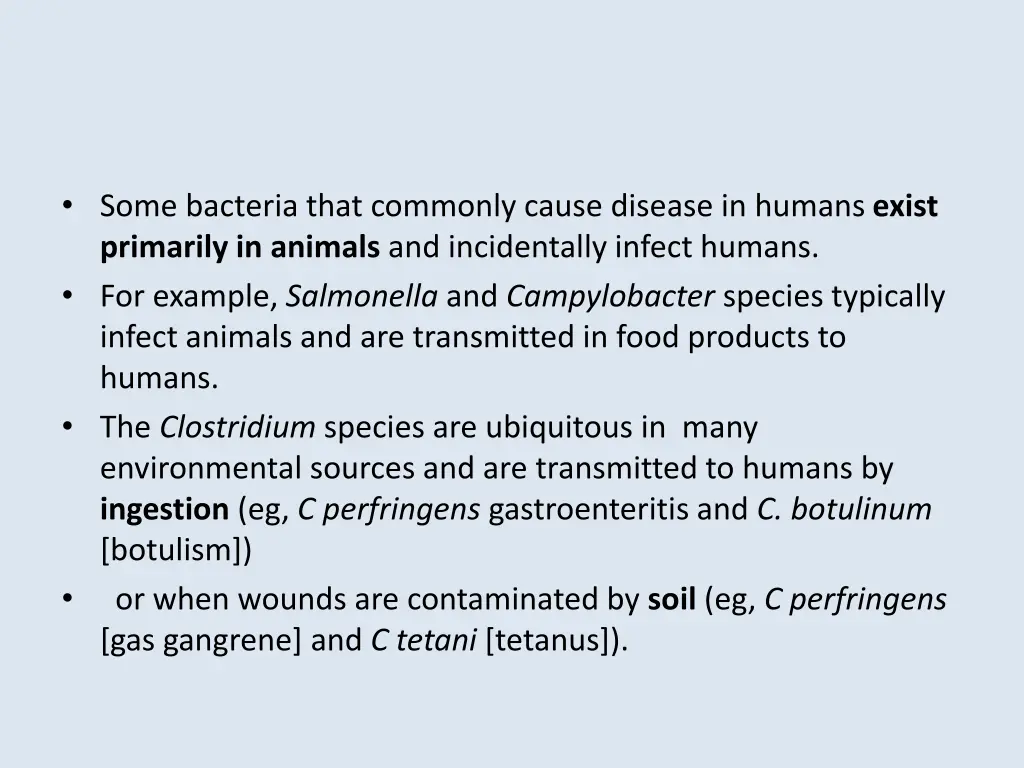
Some bacteria that commonly cause disease in humans exist primarily in animals and incidentally infect humans. For example, Salmonella and Campylobacter species typically infect animals and are transmitted in food products to humans. The Clostridium species are ubiquitous in many environmental sources and are transmitted to humans by ingestion (eg, C perfringens gastroenteritis and C. botulinum [botulism]) or when wounds are contaminated by soil (eg, C perfringens [gas gangrene] and C tetani [tetanus]).
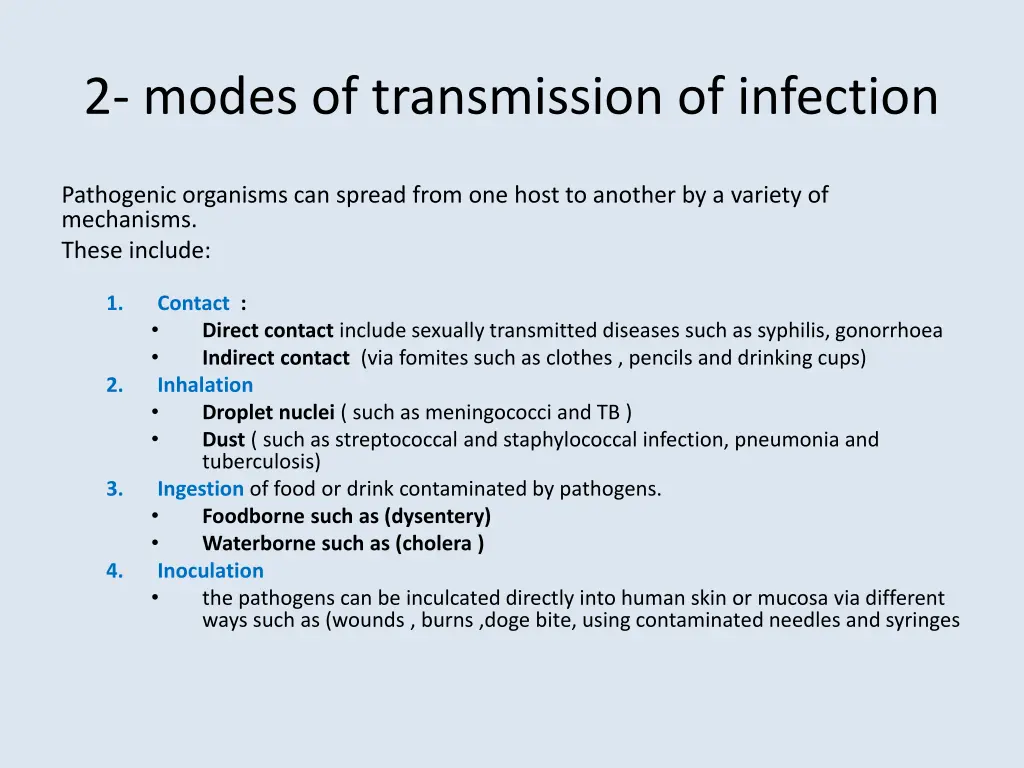
2- modes of transmission of infection Pathogenic organisms can spread from one host to another by a variety of mechanisms. These include: 1. Contact : Inhalation Droplet nuclei ( such as meningococci and TB ) Dust ( such as streptococcal and staphylococcal infection, pneumonia and tuberculosis) Ingestion of food or drink contaminated by pathogens. Foodborne such as (dysentery) Waterborne such as (cholera ) Inoculation the pathogens can be inculcated directly into human skin or mucosa via different ways such as (wounds , burns ,doge bite, using contaminated needles and syringes Direct contact include sexually transmitted diseases such as syphilis, gonorrhoea Indirect contact (via fomites such as clothes , pencils and drinking cups) 2. 3. 4.
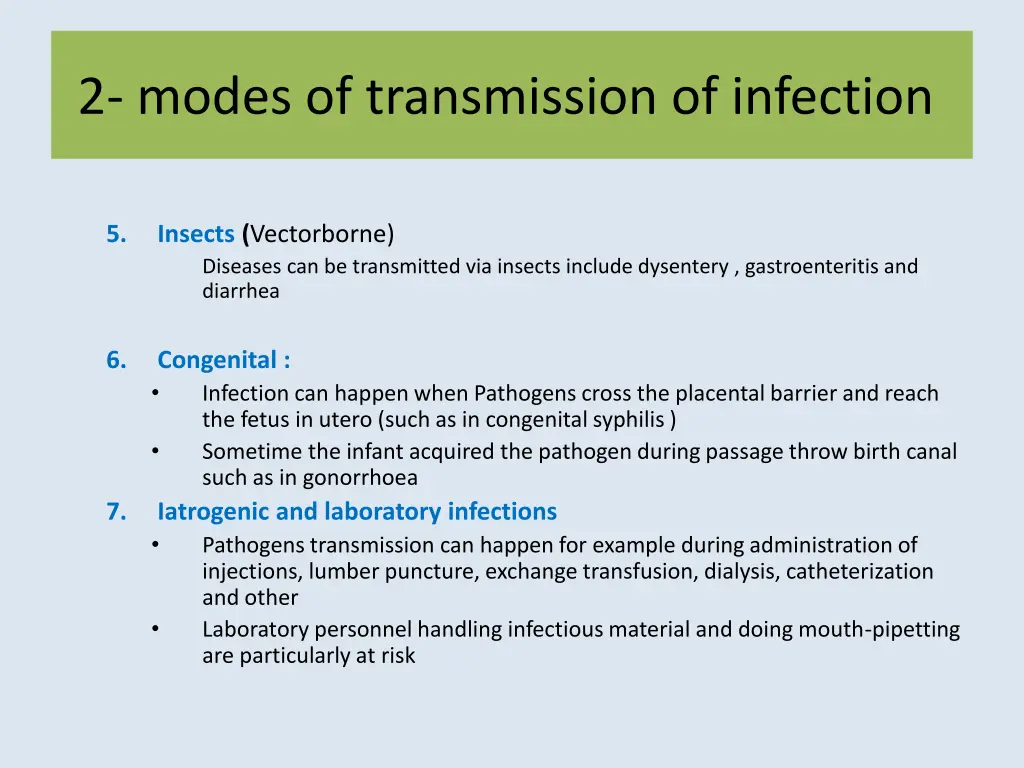
2- modes of transmission of infection 5. Insects (Vectorborne) Diseases can be transmitted via insects include dysentery , gastroenteritis and diarrhea 6. Congenital : Infection can happen when Pathogens cross the placental barrier and reach the fetus in utero (such as in congenital syphilis ) Sometime the infant acquired the pathogen during passage throw birth canal such as in gonorrhoea Iatrogenic and laboratory infections Pathogens transmission can happen for example during administration of injections, lumber puncture, exchange transfusion, dialysis, catheterization and other Laboratory personnel handling infectious material and doing mouth-pipetting are particularly at risk 7.
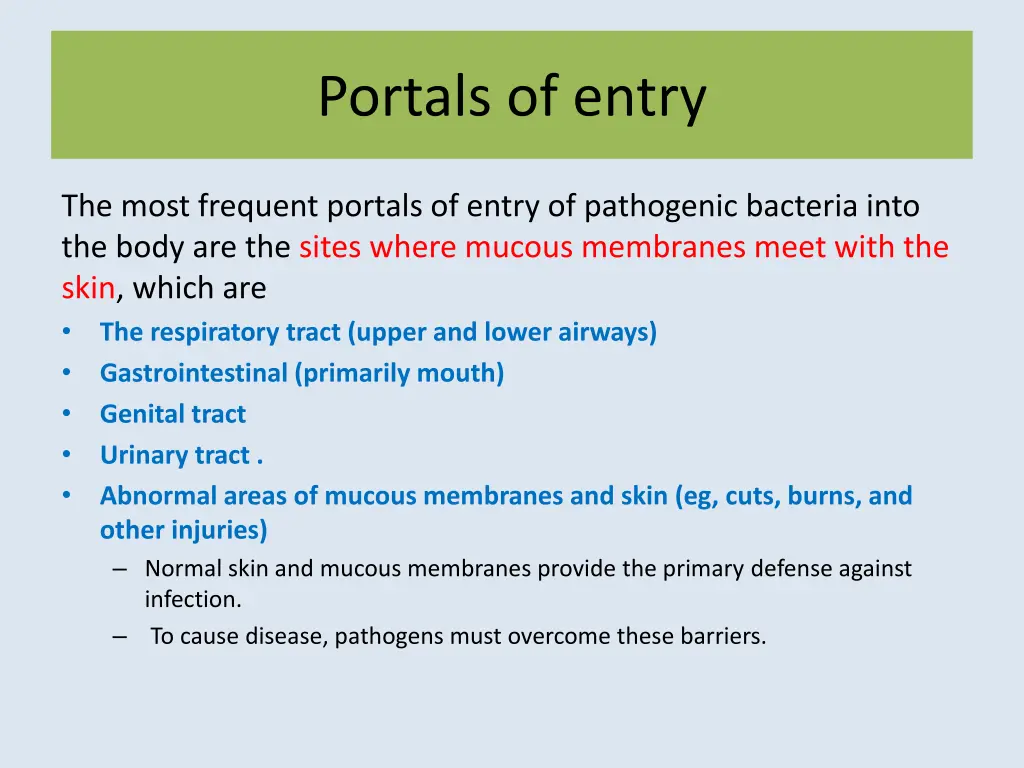
Portals of entry The most frequent portals of entry of pathogenic bacteria into the body are the sites where mucous membranes meet with the skin, which are The respiratory tract (upper and lower airways) Gastrointestinal (primarily mouth) Genital tract Urinary tract . Abnormal areas of mucous membranes and skin (eg, cuts, burns, and other injuries) Normal skin and mucous membranes provide the primary defense against infection. To cause disease, pathogens must overcome these barriers.
THE INFECTION PROCESS 1- Colonisation : The infection begin when the bacteria successfully enter the body, grow and multiply Pathogens usually colonize host tissues that are in contact with external environment The entrance generally occur through mucosa or orifices such as oral cavity, nose, eyes, genetalia, or through the open wounds The entrance is followed by adherence of the bacteria to host cells, usually epithelial cells. Organisms that infect these regions have usually developed tissue adherence mechanisms and some ability to overcome host defense mechanisms at the surface.
2- Invasion After the successful colonization of bacteria, they multiply and then invade the body by spreading through tissues or via the lymphatic system to the bloodstream and cause bacteremia This infection (bacteremia) can be transient or persistent. Bacteremia allows bacteria to spread widely in the body and permits them to reach tissues particularly suitable for their multiplication. Most bacterial pathogens do not invade cells, proliferating instead in the extracellular environment enriched by body fluids. (e.g., V. cholerae ) do not penetrate body tissues or cells, but, rather, adhere to epithelial surfaces and cause disease by secreting potent protein toxins.
BACTERIAL VIRULENCE FACTORS Many factors determine bacterial virulence or the ability to cause infection and disease These factors include:
Adherence Factors To cause infection, many bacteria must first adhere to a mucosal surface Without adherence, they would be swept away by mucus and other fluids that bathe the tissue surface. Adherence, is followed by development of microcolonies and subsequent steps in the pathogenesis of infection. bacterial adherence or attachment to a eukaryotic cell or tissue surface requires the participation of two factors: a receptor and a ligand. The receptors : specific carbohydrate or peptide residues on the eucaryotic cell surface. The bacterial ligand, called an adhesin, is a macromolecular component of the bacterial cell surface which interacts with the host cell receptor. Adhesins and receptors interact in a complementary and specific fashion with specificity comparable to antigen-antibody reactions.
Examples of adhesion factors: Many bacteria have pili, thick rodlike appendages or fimbriae, shorter hairlike structures that extend from the bacterial cell surface and help mediate adherence of the bacteria to host cell surfaces. N gonorrhoeae uses pili as primary adhesins and opacity associated proteins (Opa) as secondary adhesins to host cells. Certain Opa proteins mediate adherence to polymorphonuclear cells. Some gonococci survive after phagocytosis by these cells. Group A streptococci (Streptococcus pyogenes) have fimbriae, Lipoteichoic acid, protein F, and M protein are found on the fimbriae. The lipoteichoic acid and protein F cause adherence of the streptococci to epithelial cells
Invasion virulence factors I. Toxins Toxins produced by bacteria are generally classified into two groups: exotoxins and endotoxins.
i. Exotoxins: Are proteins that are most often excreted from the cell. some exotoxins accumulate inside the cell and are either injected directly into the host or are released by cell lysis. These toxins are produced by Many gram positive and gram-negative bacteria Exotoxins are antigenic and induce antibodies called antitoxins. Exotoxins can be modified to form toxoids, which are antigenic but not toxic. Toxoids, such as tetanus toxoid, are used to immunize against disease Exotoxins can be grouped into several categories (e.g., neurotoxins, cytotoxins, and enterotoxins) based on their biologic effect on host cells.
Many exotoxins have an A B subunit structure in which the A subunit is the active (toxic) one and the B subunit is the one that binds to the cell membrane and mediates the entry of the A subunit into the cell Examples of exotoxines Neurotoxins: are exemplified by the toxins produced by Clostridium spp. for example, the botulinum toxin formed by C. botulinum. Cytotoxins: constitute a larger, more heterogeneous grouping with a wide array of host cell specificities and toxic manifestations. One cytotoxin is diphtheria toxin, which is produced by Corynebacterium diphtheriae. This cytotoxin inhibits protein synthesis in many cell types by catalyzing the ADP-ribosylation of elongation factor II, which blocks elongation of the growing peptide chain. Enterotoxins: stimulate hypersecretion of water and electrolytes from the intestinal epithelium and thus produce watery diarrhea. Some enterotoxins are cytotoxic (e.g., shiga-like enterotoxin from E. coli), while others perturb eukaryotic cell functions (e.g., cholera toxin).
ii. Endotoxin is comprised of toxic lipopolysaccharide components of the outer membrane of Gram-negative bacteria. It is released after lysis of bacteria and it exerts profound biologic effects on the host and may be lethal Endotoxins are poorly antigenic, do not induce antitoxins, and do not form toxoids.
The molecular complex can be divided into three regions (1) the O-specific chains, which consist of a variety of repeating oligosaccharide residues, (2) the core polysaccharide that forms the backbone of the macromolecule, (3) lipid A, composed usually of a glucosamine disaccharide with attached long-chain fatty acids and phosphate. The polysaccharide portions are responsible for antigenic diversity, whereas the lipid A moiety confers toxicity.
Pathophysiologic Effects Of Endotoxin They are similar regardless of their bacterial origin except for those of Bacteroides species, which have a different structure and are less toxic LPS in the bloodstream is initially bound to circulating proteins, which then interact with receptors on macrophages called CD14 This induces the overproduction of cytokines, such as tumor necrosis factor, interleukin-1, and nitric oxide, from macrophages, which causes the symptoms of septic shock, such as fever and hypotension. In addition, LPS activates the complement cascade (alternate pathway), resulting in increased vascular permeability, and the coagulation cascade, resulting in increased vascular permeability and disseminated intravascular coagulation resulting in thrombosis.
Enzymes Many species of bacteria produce enzymes that are not intrinsically toxic but do play important roles in the infectious process. Some of these enzymes are discussed in the next slides.
A. Tissue-Degrading Enzymes Many bacteria produce tissue-degrading enzymes. And their role in the pathogenesis of infections appear obvious Ex: Collagenase, proteolytic enzyme produced by C. perfringens degrades collagen, the major protein of fibrous connective tissue, and promotes spread of infection in tissue. Coagulase , produced by S. aureus which work in conjunction with blood factors to coagulate plasma. Coagulase contributes to the formation of fibrin walls around staphylococcal lesions, which helps them persist in tissues Hyaluronidases , hydrolyze hyaluronic acid, a constituent of the ground substance of connective tissue. They are produced by many bacteria (eg, staphylococci, streptococci, and anaerobes) and aid in their spread through tissues.
B. IgA1 Proteases IgA1 protease is an important virulence factor of the pathogens N gonorrhoeae, N meningitidis, H influenzae, and S pneumoniae. The enzymes are also produced by some strains of streptococci associated with dental disease, and a few strains of other species that occasionally cause disease. Immunoglobulin A is the secretory antibody on mucosal surfaces. It has two primary forms, IgA1 and IgA2 IgA1 proteases, splits IgA1 at specific peptide bonds (proline threonine or proline serine ) and inactivate its antibody activity Production of IgA1 protease allows pathogens to inactivate the primary antibody found on mucosal surfaces and thereby eliminate protection of the host by the antibody
C. Antiphagocytic and other factors 1. Capsule : The polysaccharide capsule prevents the phagocyte from adhering to the bacteria. Encapsulated strains of many bacteria (such as S. pneumoniae and Neisseria meningitidis) are more virulent and more resistant to phagocytosis and intracellular killing than nonencapsulated strains. 2. Cell wall proteins of the gram-positive cocci, such as the M protein of the group A streptococci (S. pyogenes) and protein A of S. aureus. The M protein is antiphagocytic, and protein A binds to immunoglobulin G (IgG) and prevents the activation of complement (Binds to Fc region of IgG, which prevents activation of complement). 3. Secreted factors: A few bacteria (eg, Bordetella species) produce soluble factors or toxins that inhibit chemotaxis by leukocytes and thus evade phagocytosis
D. Intracellular survival Some bacteria survive intracellularly within the body cells such as macrophage and are shielded from humoral antibodies and can be eliminated only by a cellular immune response. These bacteria must possess specialized mechanisms to protect them from the harsh effects of the lysosomal enzymes encountered within the cell : inhibition of the fusion of the phagosome with the lysosome, which allows the organisms to avoid the degradative enzymes in the lysosome inhibition of acidification of the phagosome, which reduces the activity of the lysosomal degradative enzymes; escape from the phagosome into the cytoplasm, where there are no degradative enzymes. 1. 2. 3.
References 1- Jawetz, M. & Adelberg s. 2019. Medical Microbiology , Twenty-Sixth Edition. The McGraw-Hill Companies, Inc. USA 2- Levinson, W. 2016. Review of medical microbiology and immunology,14thedition. The McGraw-Hill Companies, Inc. USA 2- Website: https://www.ncbi.nlm.nih.gov/books/NBK8526/