Learn about the Bandwidth-Delay Product in computer networks and how it affects data transmission efficiency. Explore concepts like congestion control, steady-state operation, and performance guarantees for network applications.
Please find below an Image/Link to download the presentation.
The content on the website is provided AS IS for your information and personal use only. It may not be sold, licensed, or shared on other websites without obtaining consent from the author. If you encounter any issues during the download, it is possible that the publisher has removed the file from their server.
You are allowed to download the files provided on this website for personal or commercial use, subject to the condition that they are used lawfully. All files are the property of their respective owners.
The content on the website is provided AS IS for your information and personal use only. It may not be sold, licensed, or shared on other websites without obtaining consent from the author.
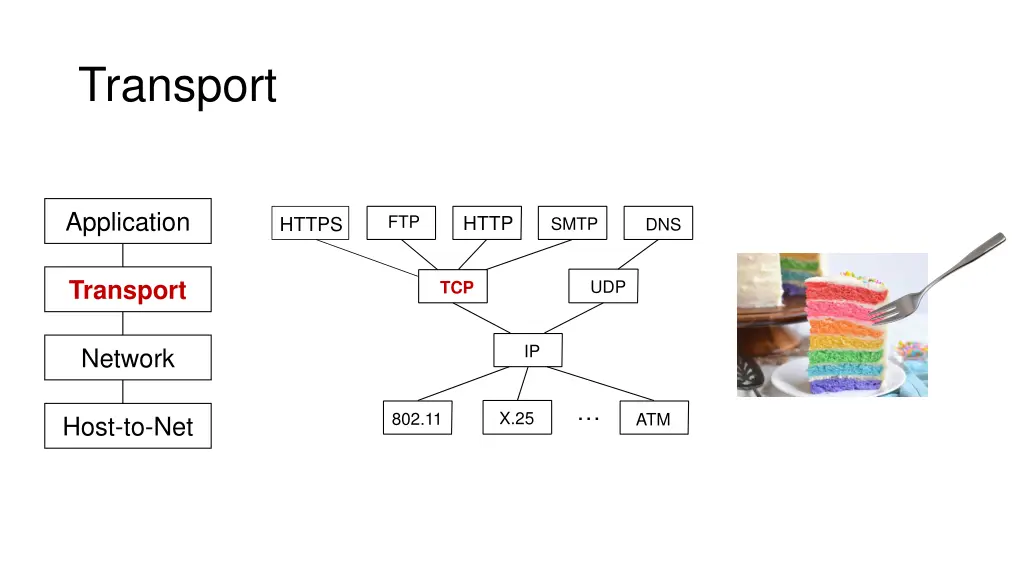
Transport Application FTP HTTP HTTPS SMTP DNS Transport UDP TCP IP Network X.25 802.11 ATM Host-to-Net
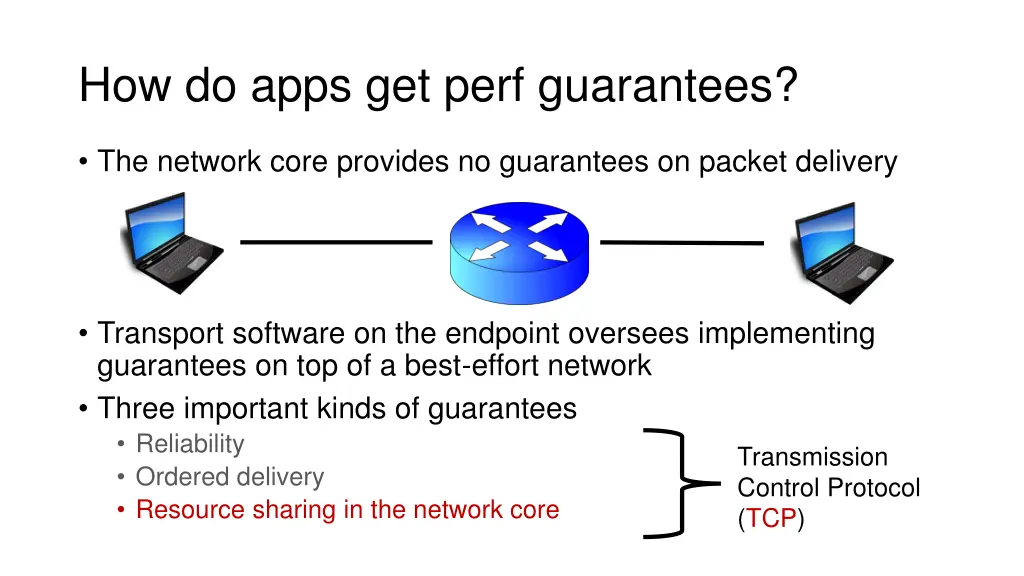
How do apps get perf guarantees? The network core provides no guarantees on packet delivery Transport software on the endpoint oversees implementing guarantees on top of a best-effort network Three important kinds of guarantees Reliability Ordered delivery Resource sharing in the network core Transmission Control Protocol (TCP)
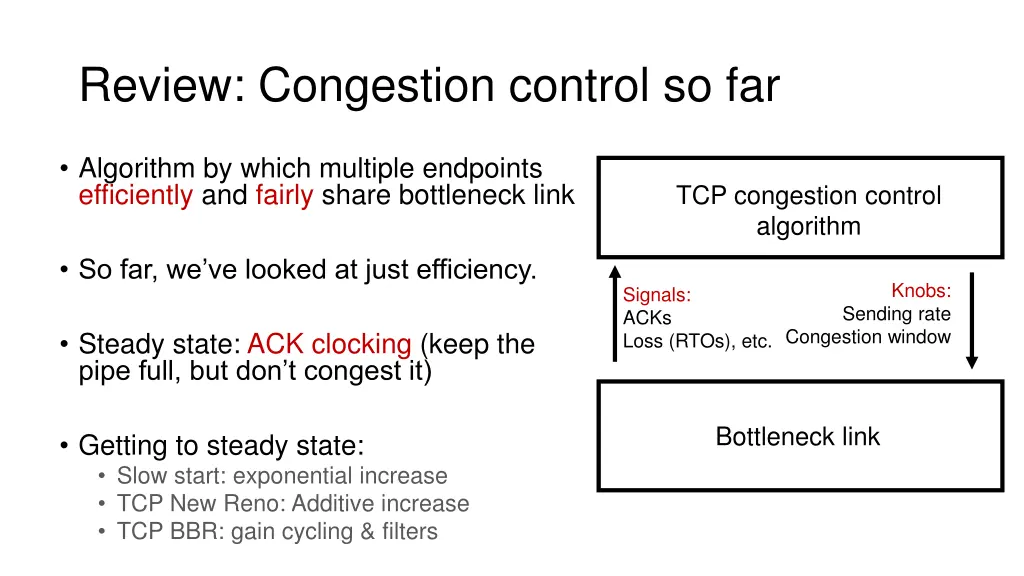
Review: Congestion control so far Algorithm by which multiple endpoints efficiently and fairly share bottleneck link TCP congestion control algorithm So far, we ve looked at just efficiency. Knobs: Signals: ACKs Loss (RTOs), etc. Sending rate Congestion window Steady state: ACK clocking (keep the pipe full, but don t congest it) Bottleneck link Getting to steady state: Slow start: exponential increase TCP New Reno: Additive increase TCP BBR: gain cycling & filters
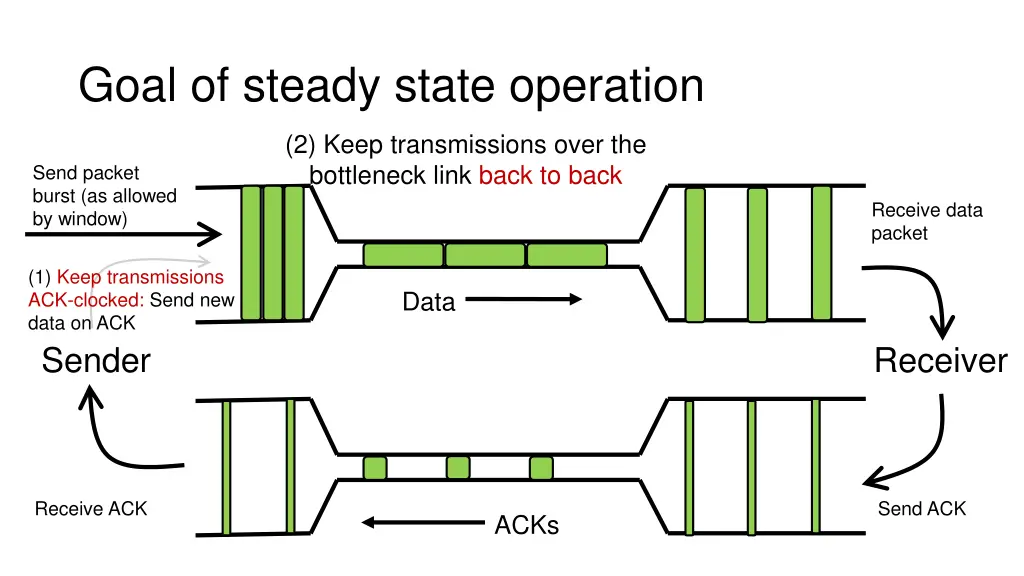
Goal of steady state operation (2) Keep transmissions over the bottleneck link back to back Send packet burst (as allowed by window) Receive data packet (1) Keep transmissions ACK-clocked: Send new data on ACK Data Sender Receiver Receive ACK Send ACK ACKs
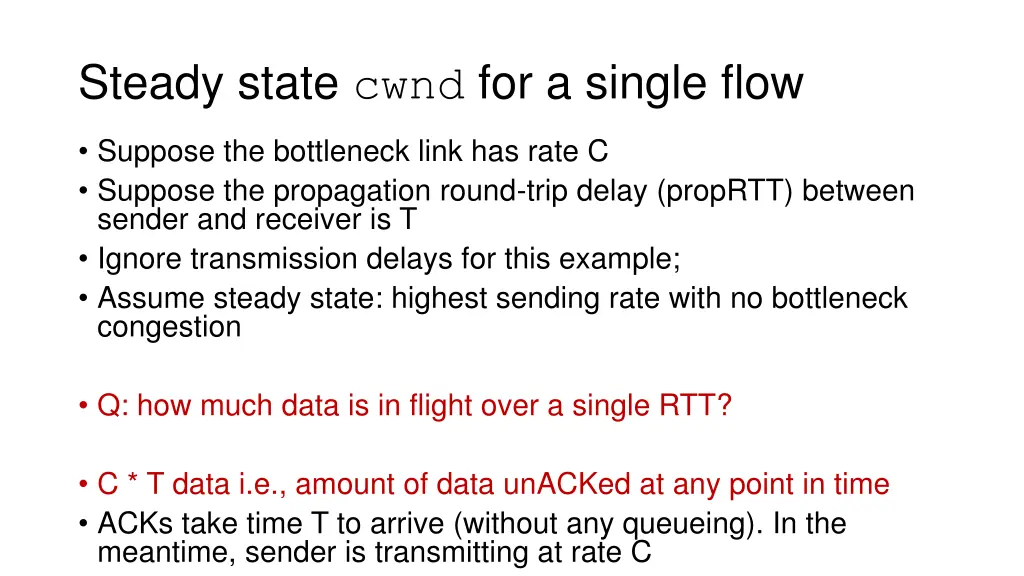
Steady state cwnd for a single flow Suppose the bottleneck link has rate C Suppose the propagation round-trip delay (propRTT) between sender and receiver is T Ignore transmission delays for this example; Assume steady state: highest sending rate with no bottleneck congestion Q: how much data is in flight over a single RTT? C * T data i.e., amount of data unACKed at any point in time ACKs take time T to arrive (without any queueing). In the meantime, sender is transmitting at rate C
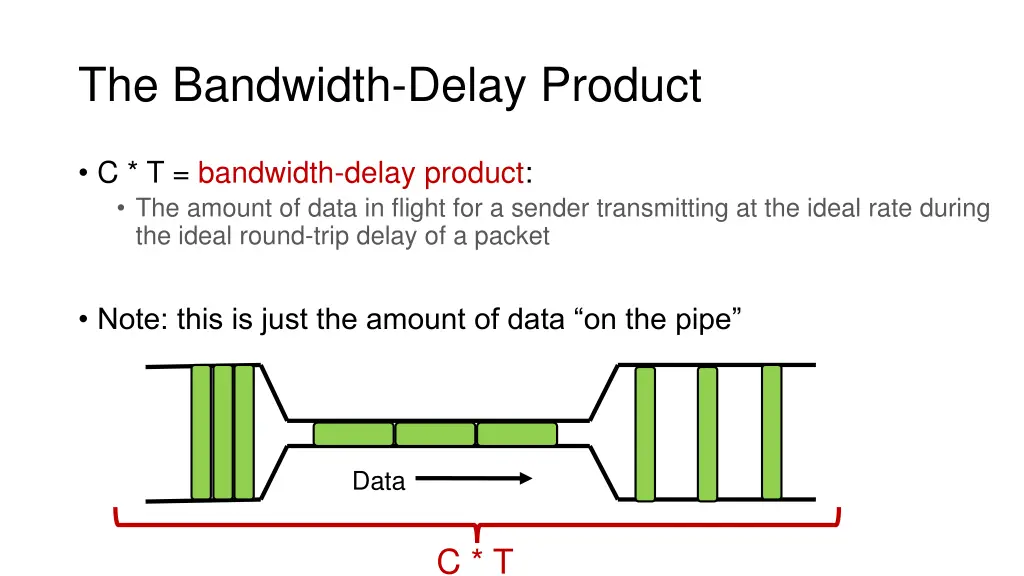
The Bandwidth-Delay Product C * T = bandwidth-delay product: The amount of data in flight for a sender transmitting at the ideal rate during the ideal round-trip delay of a packet Note: this is just the amount of data on the pipe Data C * T
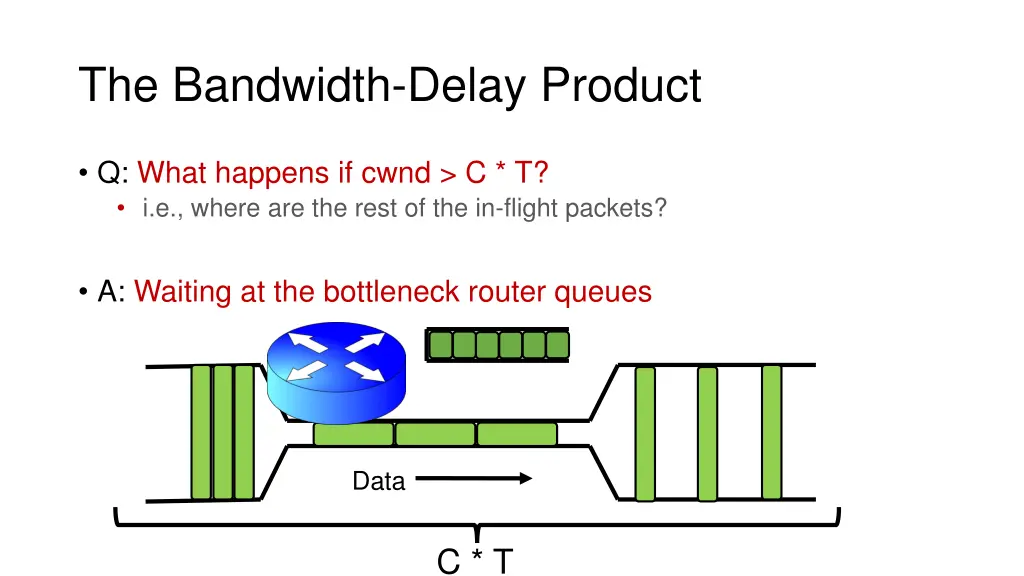
The Bandwidth-Delay Product Q: What happens if cwnd > C * T? i.e., where are the rest of the in-flight packets? A: Waiting at the bottleneck router queues Data C * T
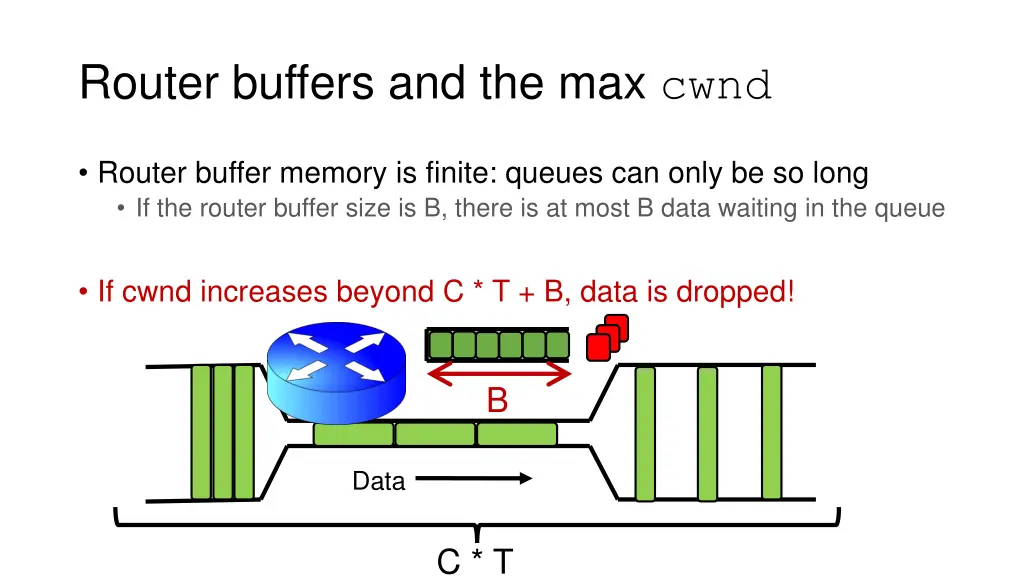
Router buffers and the max cwnd Router buffer memory is finite: queues can only be so long If the router buffer size is B, there is at most B data waiting in the queue If cwnd increases beyond C * T + B, data is dropped! B Data C * T
Summary Bandwidth-Delay Product (BDP) governs the window size of a single flow at steady state The bottleneck router buffer size governs how much the cwnd can exceed the BDP before packet drops occur
Detecting packet loss So far, all the algorithms we ve studied have a coarse loss detection mechanism: RTO timer expiration Let the RTO expire, drop cwnd all the way to 1 MSS Analogy: you re driving a car You re waiting until the next car in front is super close to you (RTO) and then hitting the brakes really hard (set cwnd := 1) Q: Can you see obstacles from afar and slow down proportionately? That is, can the sender see packet loss coming in advance? And reduce cwnd more gently?
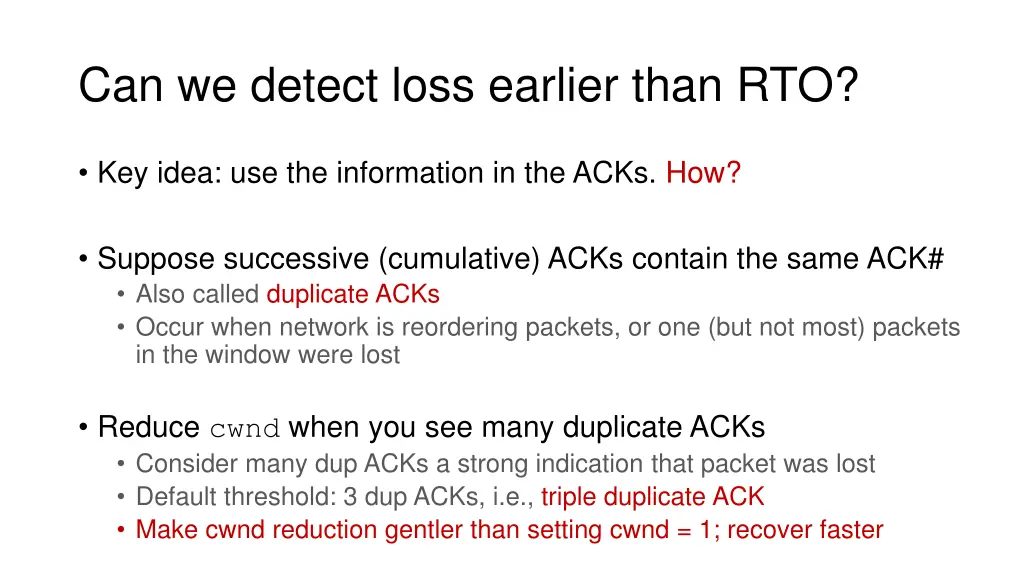
Can we detect loss earlier than RTO? Key idea: use the information in the ACKs. How? Suppose successive (cumulative) ACKs contain the same ACK# Also called duplicate ACKs Occur when network is reordering packets, or one (but not most) packets in the window were lost Reduce cwnd when you see many duplicate ACKs Consider many dup ACKs a strong indication that packet was lost Default threshold: 3 dup ACKs, i.e., triple duplicate ACK Make cwnd reduction gentler than setting cwnd = 1; recover faster
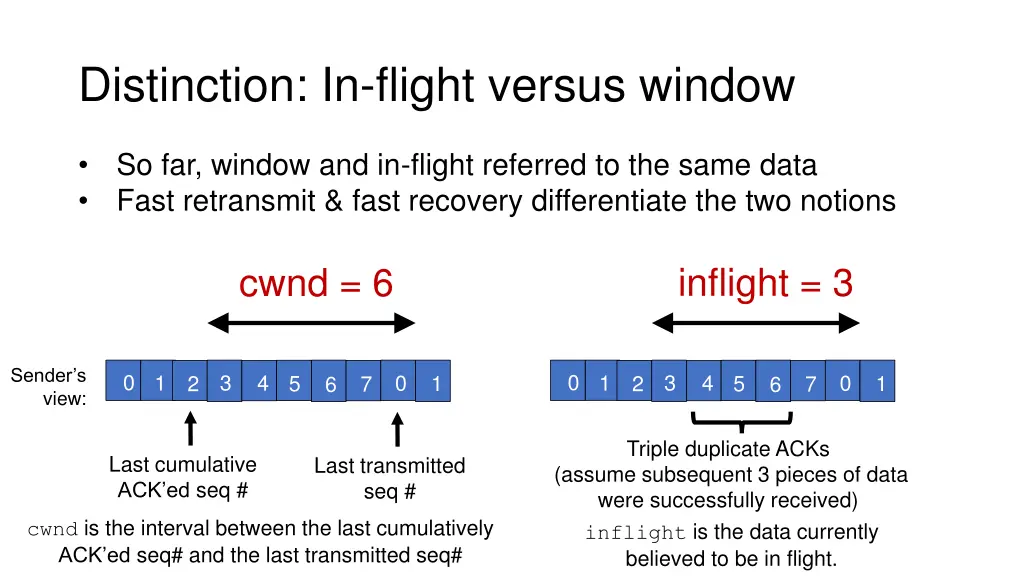
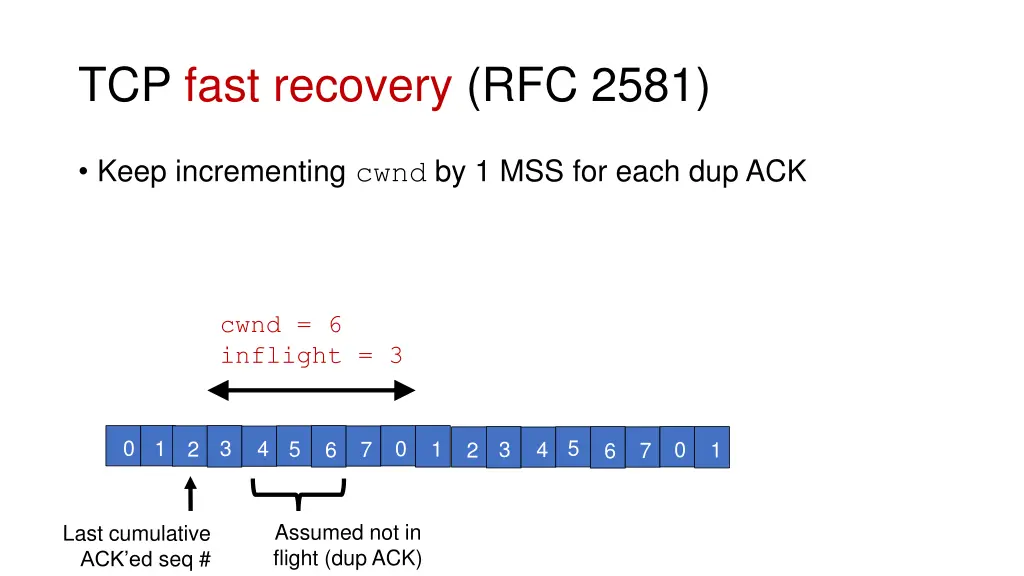
Distinction: In-flight versus window So far, window and in-flight referred to the same data Fast retransmit & fast recovery differentiate the two notions inflight = 3 cwnd = 6 Sender s view: 0 0 3 3 1 1 4 4 0 0 1 1 2 5 2 5 7 7 6 6 Triple duplicate ACKs (assume subsequent 3 pieces of data were successfully received) inflight is the data currently believed to be in flight. Last cumulative ACK ed seq # Last transmitted seq # cwnd is the interval between the last cumulatively ACK ed seq# and the last transmitted seq#
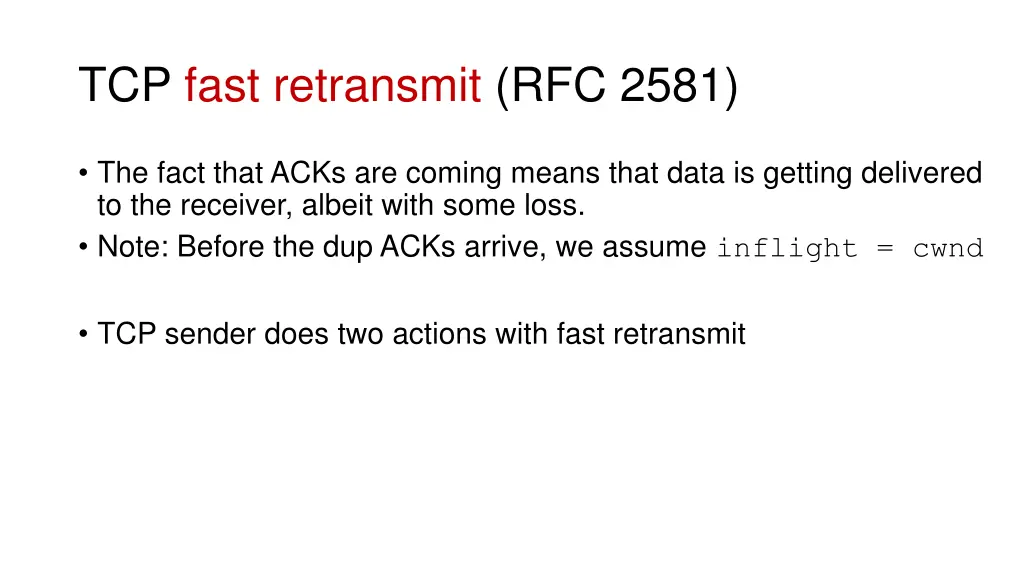
TCP fast retransmit (RFC 2581) The fact that ACKs are coming means that data is getting delivered to the receiver, albeit with some loss. Note: Before the dup ACKs arrive, we assume inflight = cwnd TCP sender does two actions with fast retransmit
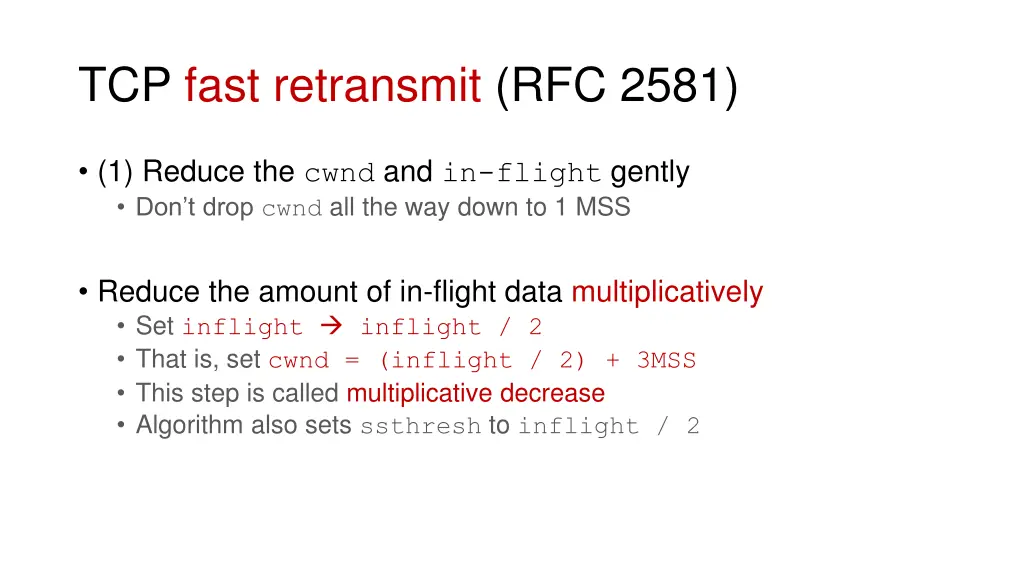
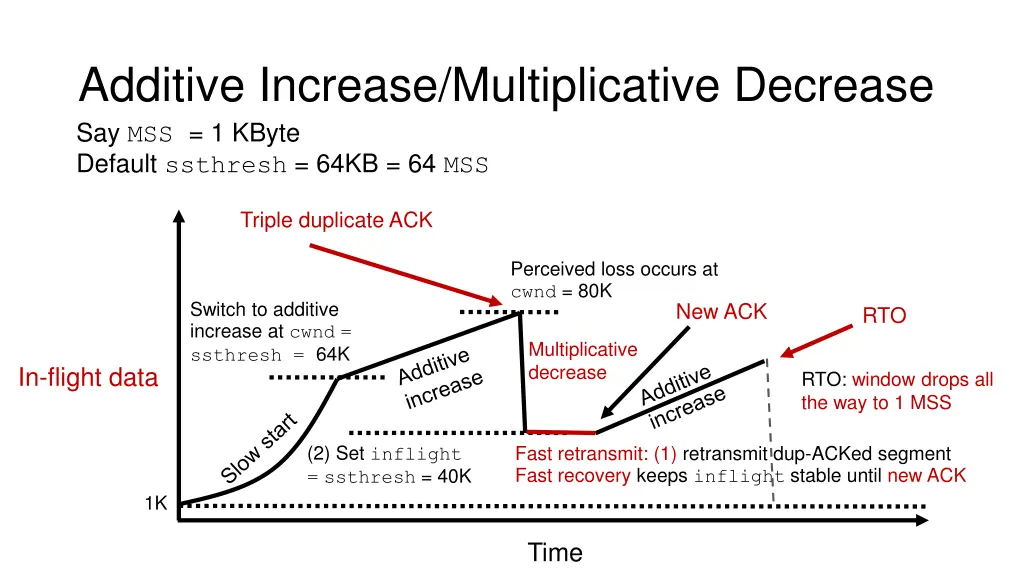
TCP fast retransmit (RFC 2581) (1) Reduce the cwnd and in-flight gently Don t drop cwnd all the way down to 1 MSS Reduce the amount of in-flight data multiplicatively Set inflight inflight / 2 That is, set cwnd = (inflight / 2) + 3MSS This step is called multiplicative decrease Algorithm also sets ssthresh to inflight / 2
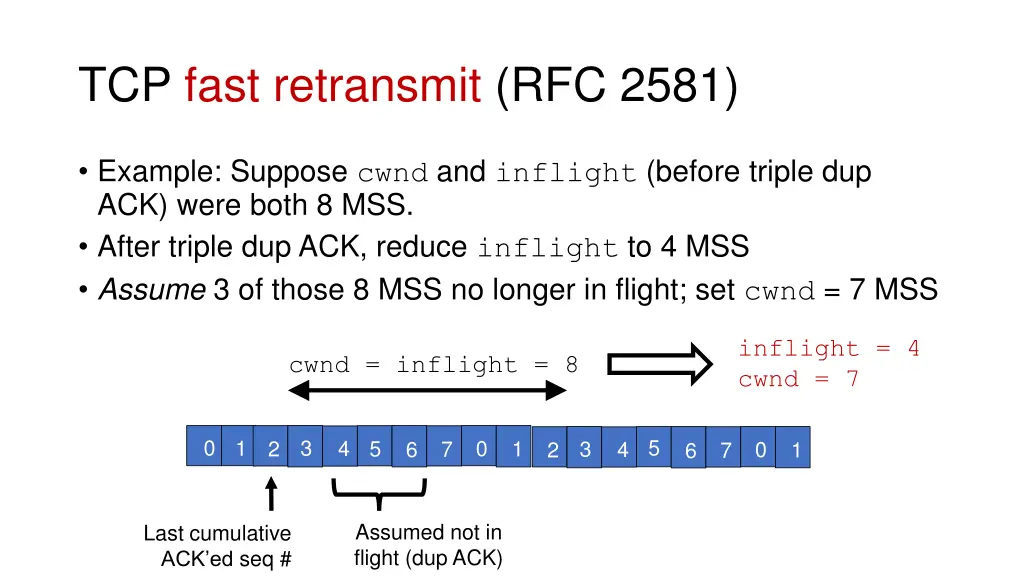
TCP fast retransmit (RFC 2581) Example: Suppose cwnd and inflight (before triple dup ACK) were both 8 MSS. After triple dup ACK, reduce inflight to 4 MSS Assume 3 of those 8 MSS no longer in flight; set cwnd = 7 MSS inflight = 4 cwnd = 7 cwnd = inflight = 8 0 5 3 1 0 4 1 2 5 3 7 0 4 6 1 2 7 6 5 Assumed not in flight (dup ACK) Last cumulative ACK ed seq #
TCP fast retransmit (RFC 2581) (2) The seq# from dup ACKs is immediately retransmitted That is, don t wait for an RTO if there is sufficiently strong evidence that a packet was lost
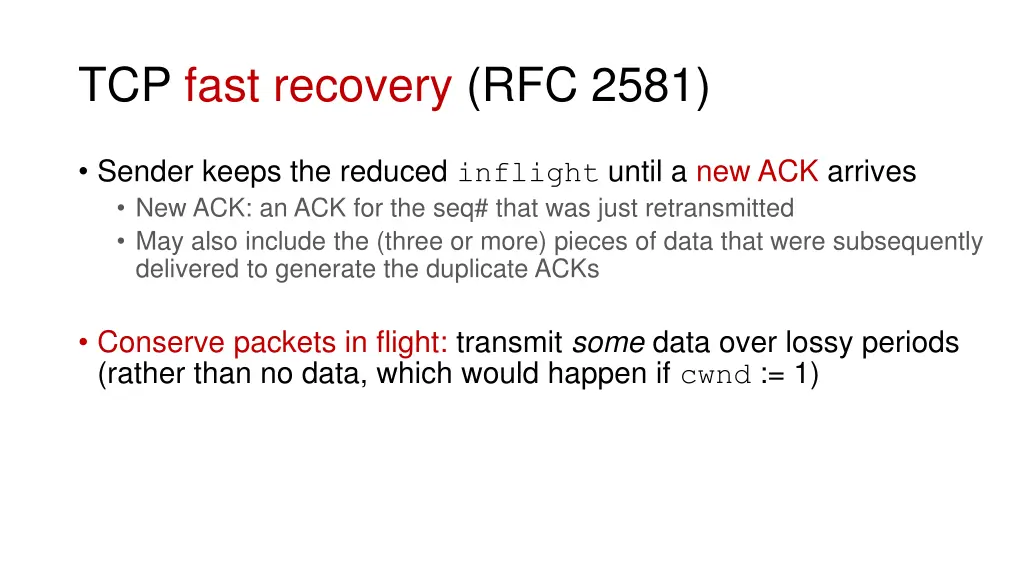
TCP fast recovery (RFC 2581) Sender keeps the reduced inflight until a new ACK arrives New ACK: an ACK for the seq# that was just retransmitted May also include the (three or more) pieces of data that were subsequently delivered to generate the duplicate ACKs Conserve packets in flight: transmit some data over lossy periods (rather than no data, which would happen if cwnd := 1)
TCP fast recovery (RFC 2581) Keep incrementing cwnd by 1 MSS for each dup ACK cwnd = 6 inflight = 3 0 5 3 1 0 4 1 2 5 3 7 0 4 6 1 2 7 6 5 Assumed not in flight (dup ACK) Last cumulative ACK ed seq #
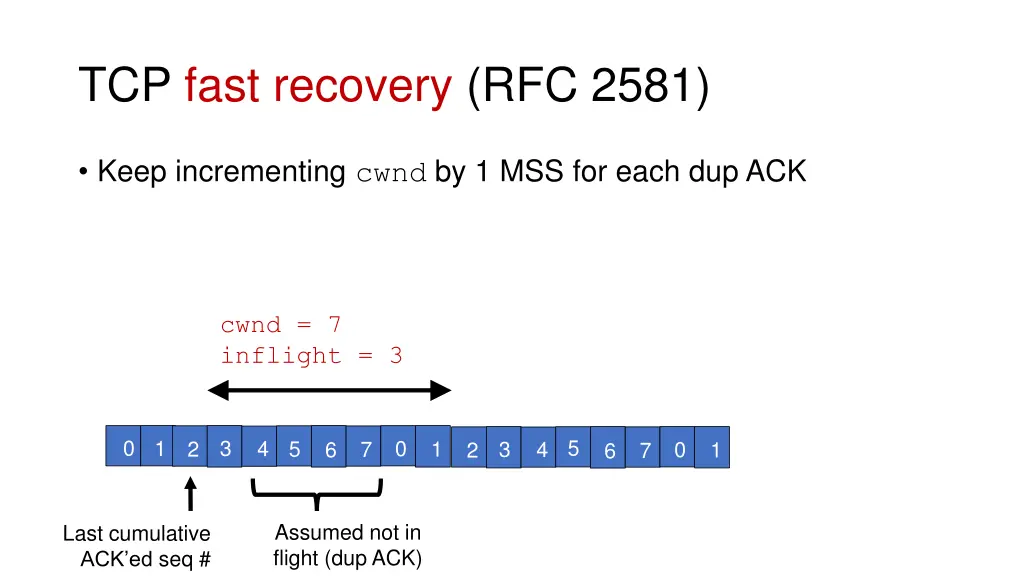
TCP fast recovery (RFC 2581) Keep incrementing cwnd by 1 MSS for each dup ACK cwnd = 7 inflight = 3 0 5 3 1 0 4 1 2 5 3 7 0 4 6 1 2 7 6 Assumed not in flight (dup ACK) Last cumulative ACK ed seq #
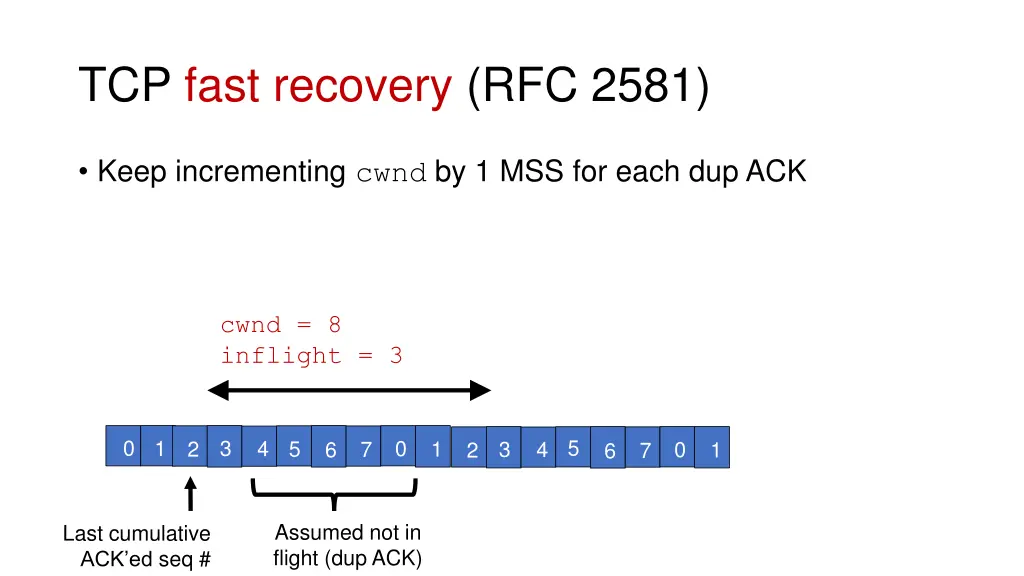
TCP fast recovery (RFC 2581) Keep incrementing cwnd by 1 MSS for each dup ACK cwnd = 8 inflight = 3 0 5 3 1 0 4 1 2 5 3 7 0 4 6 1 2 7 6 Assumed not in flight (dup ACK) Last cumulative ACK ed seq #
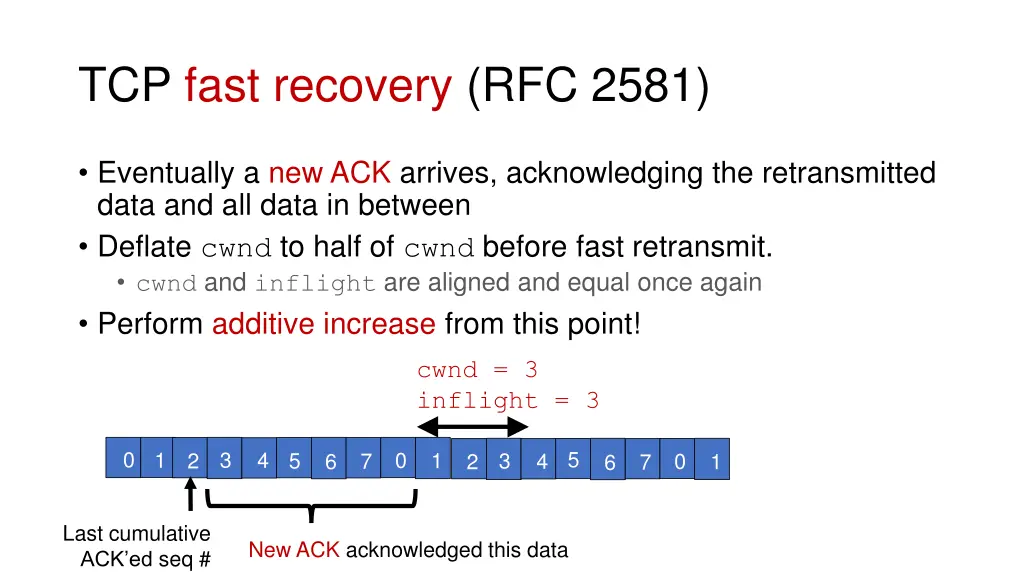
TCP fast recovery (RFC 2581) Eventually a new ACK arrives, acknowledging the retransmitted data and all data in between Deflate cwnd to half of cwnd before fast retransmit. cwnd and inflight are aligned and equal once again Perform additive increase from this point! cwnd = 3 inflight = 3 0 5 3 1 0 4 1 2 5 3 7 0 4 6 1 2 7 6 Last cumulative ACK ed seq # New ACK acknowledged this data
Additive Increase/Multiplicative Decrease Say MSS = 1 KByte Default ssthresh = 64KB = 64 MSS Triple duplicate ACK Perceived loss occurs at cwnd = 80K Switch to additive increase at cwnd= ssthresh = 64K New ACK RTO Multiplicative decrease In-flight data RTO: window drops all the way to 1 MSS (2) Set inflight =ssthresh = 40K Fast retransmit: (1) retransmit dup-ACKed segment Fast recovery keeps inflight stable until new ACK 1K Time
TCP New Reno performs additive increase and multiplicative decrease of its congestion window. In short, we often refer to this as AIMD. Multiplicative decrease is a part of all TCP algorithms, including BBR. [It is necessary for fairness across TCP flows.]
Summary of TCP loss detection Don t wait for an RTO and then set the cwnd to 1 MSS Tantamount to waiting to get super close to the car in front and then jamming the brakes really hard Instead, react proportionately by sensing pkt loss in advance Fast Retransmit Triple dup ACK: sufficiently strong signal that network has dropped data, before RTO Immediately retransmit data Multiplicatively decrease in- flight data to half of its value Fast Recovery Maintain this reduced amount of in-flight data as long as dup ACKs arrive Data is successfully getting delivered When new ACK arrives, do additive increase from there on
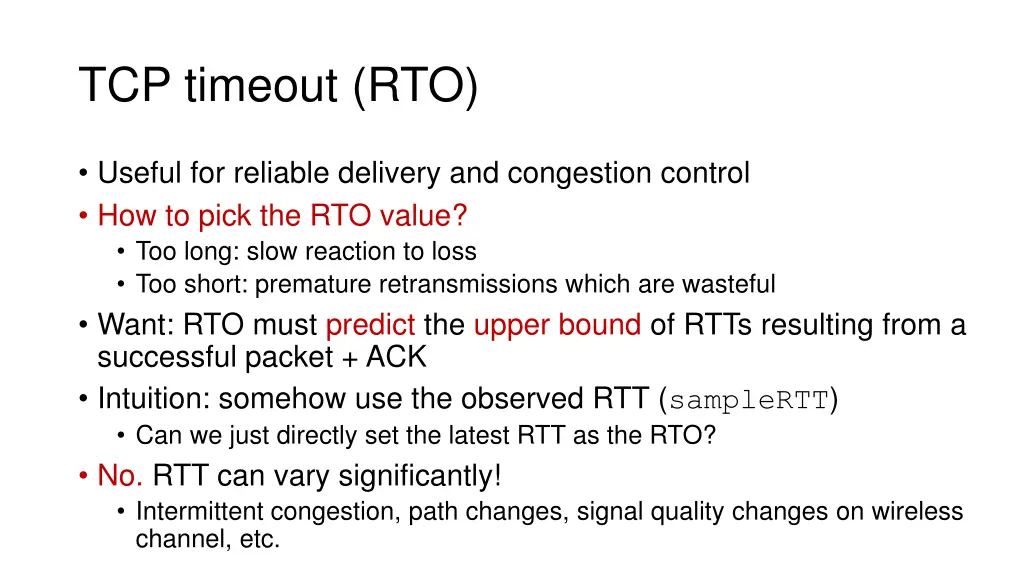
TCP timeout (RTO) Useful for reliable delivery and congestion control How to pick the RTO value? Too long: slow reaction to loss Too short: premature retransmissions which are wasteful Want: RTO must predict the upper bound of RTTs resulting from a successful packet + ACK Intuition: somehow use the observed RTT (sampleRTT) Can we just directly set the latest RTT as the RTO? No. RTT can vary significantly! Intermittent congestion, path changes, signal quality changes on wireless channel, etc.
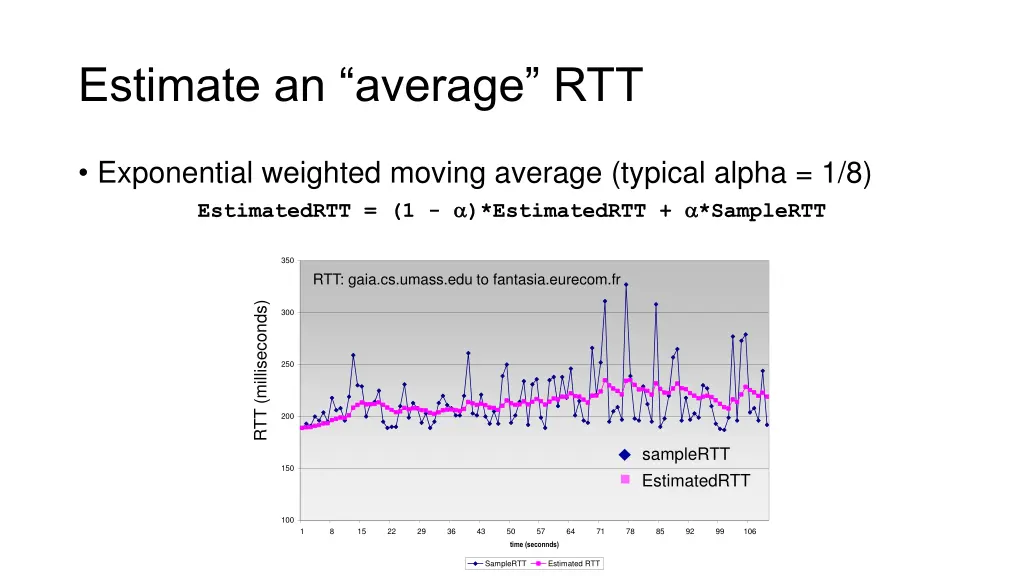
Estimate an average RTT Exponential weighted moving average (typical alpha = 1/8) EstimatedRTT = (1 - )*EstimatedRTT + *SampleRTT RTT: gaia.cs.umass.edu to fantasia.eurecom.fr 350 RTT: gaia.cs.umass.edu to fantasia.eurecom.fr RTT (milliseconds) 300 250 RTT (milliseconds) 200 sampleRTT EstimatedRTT 150 100 1 8 15 22 29 36 43 50 57 64 71 78 85 92 99 106 time (seconnds) SampleRTT Estimated RTT
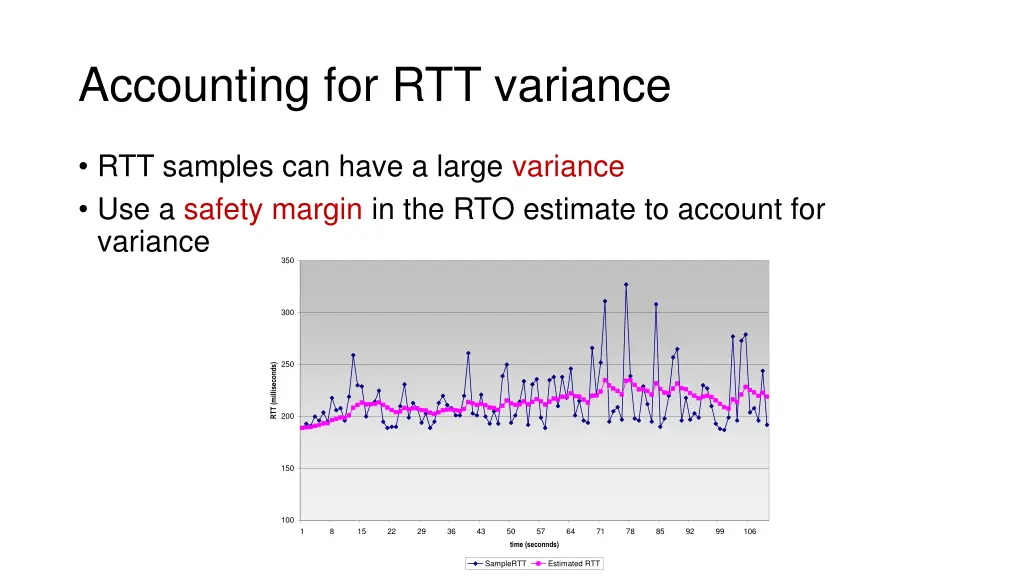
Accounting for RTT variance RTT samples can have a large variance Use a safety margin in the RTO estimate to account for variance 350 RTT: gaia.cs.umass.edu to fantasia.eurecom.fr 300 250 RTT (milliseconds) 200 150 100 1 8 15 22 29 36 43 50 57 64 71 78 85 92 99 106 time (seconnds) SampleRTT Estimated RTT
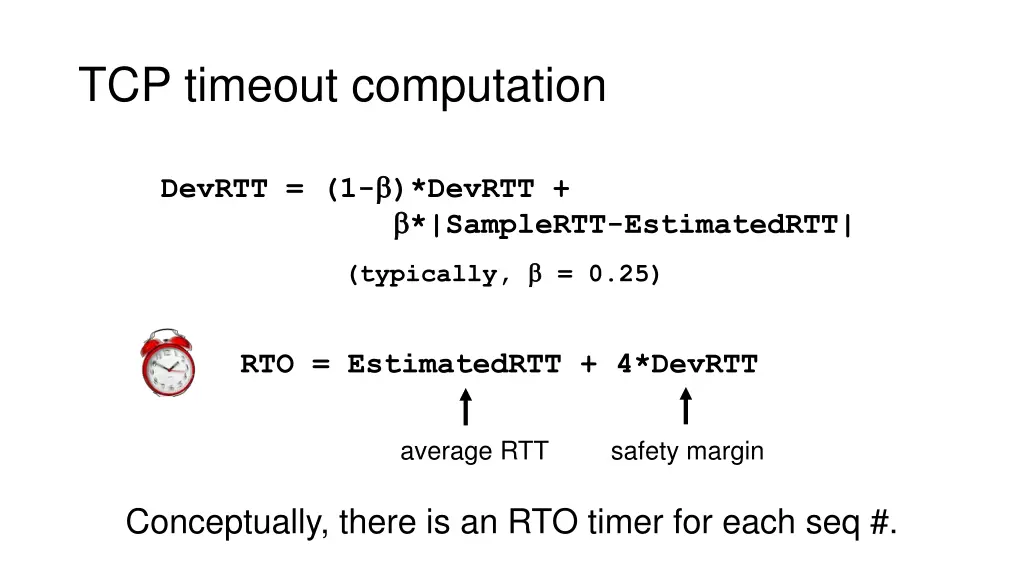
TCP timeout computation DevRTT = (1- )*DevRTT + *|SampleRTT-EstimatedRTT| (typically, = 0.25) RTO = EstimatedRTT + 4*DevRTT average RTT safety margin Conceptually, there is an RTO timer for each seq #.
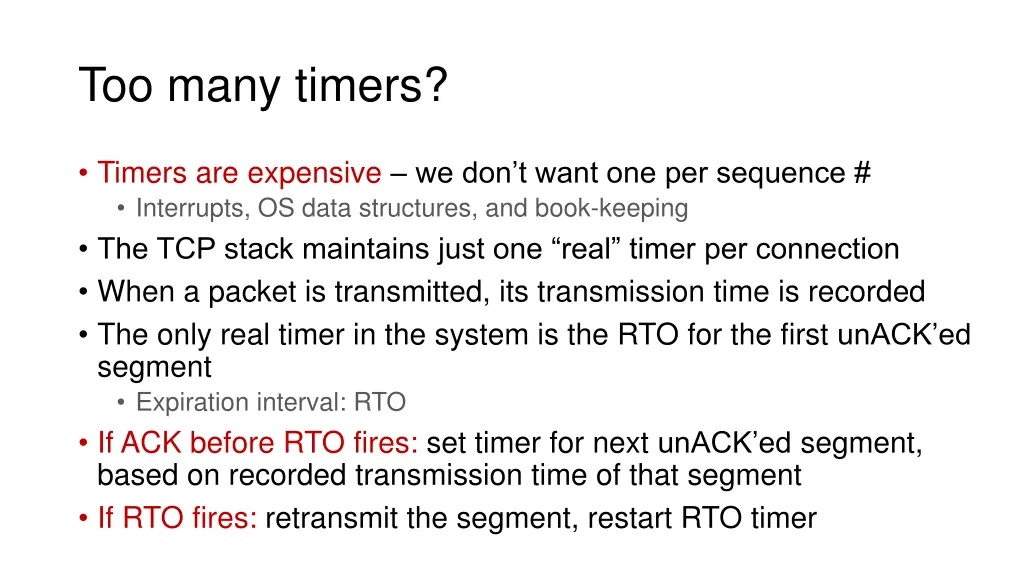
Too many timers? Timers are expensive we don t want one per sequence # Interrupts, OS data structures, and book-keeping The TCP stack maintains just one real timer per connection When a packet is transmitted, its transmission time is recorded The only real timer in the system is the RTO for the first unACK ed segment Expiration interval: RTO If ACK before RTO fires: set timer for next unACK ed segment, based on recorded transmission time of that segment If RTO fires: retransmit the segment, restart RTO timer
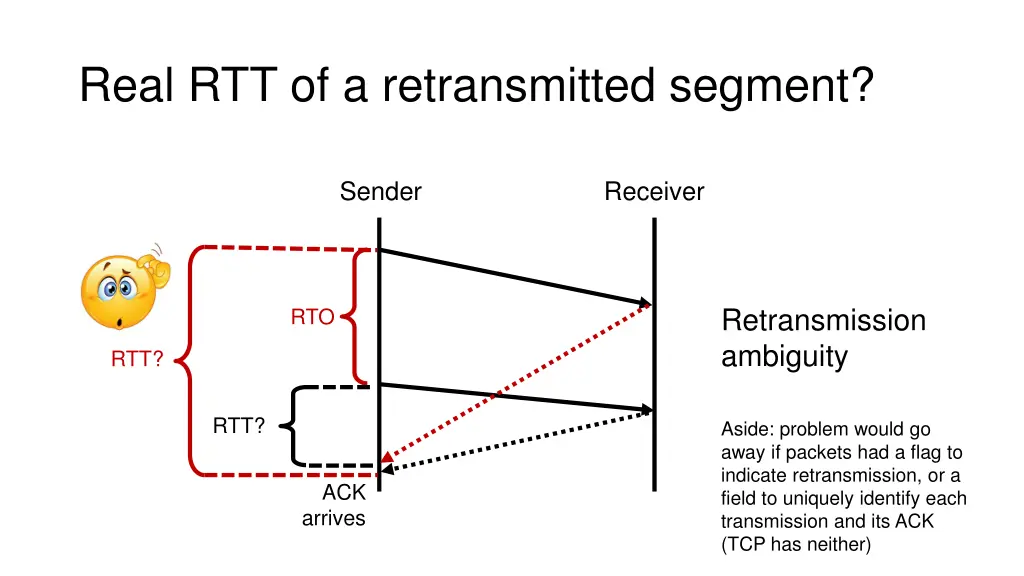
Real RTT of a retransmitted segment? Sender Receiver Retransmission ambiguity RTO RTT? RTT? Aside: problem would go away if packets had a flag to indicate retransmission, or a field to uniquely identify each transmission and its ACK (TCP has neither) ACK arrives
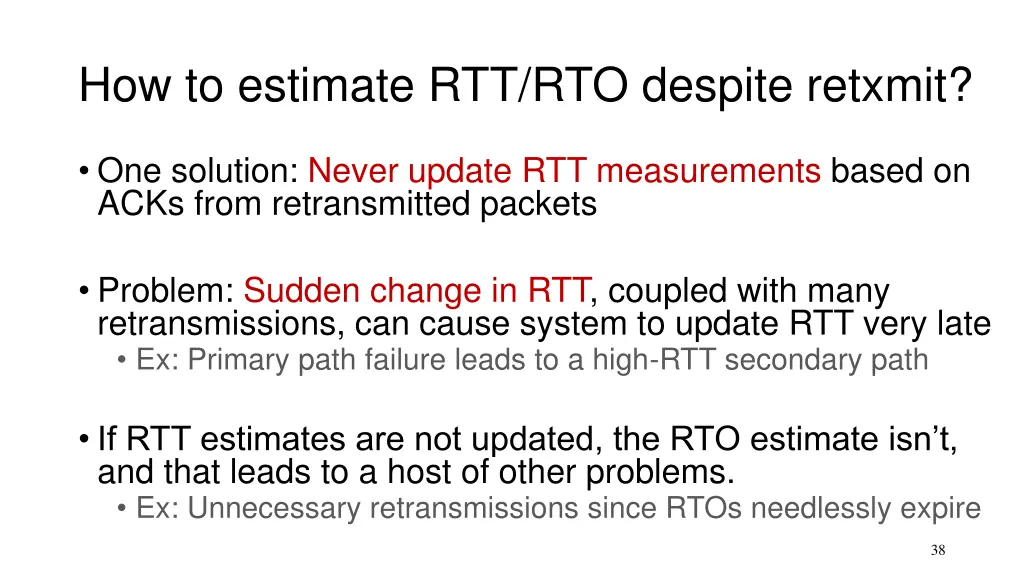
How to estimate RTT/RTO despite retxmit? One solution: Never update RTT measurements based on ACKs from retransmitted packets Problem: Sudden change in RTT, coupled with many retransmissions, can cause system to update RTT very late Ex: Primary path failure leads to a high-RTT secondary path If RTT estimates are not updated, the RTO estimate isn t, and that leads to a host of other problems. Ex: Unnecessary retransmissions since RTOs needlessly expire 38
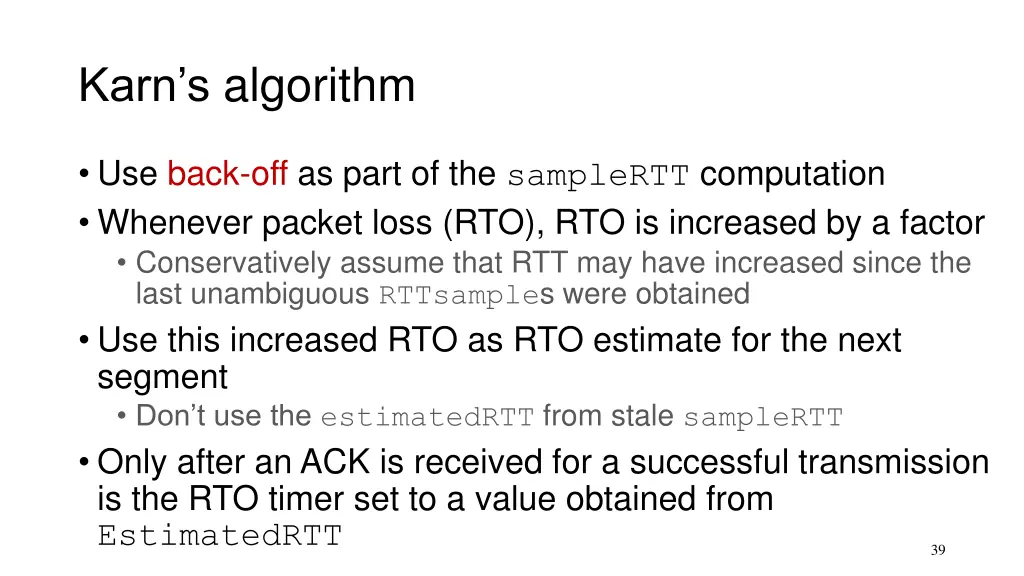
Karns algorithm Use back-off as part of the sampleRTT computation Whenever packet loss (RTO), RTO is increased by a factor Conservatively assume that RTT may have increased since the last unambiguous RTTsamples were obtained Use this increased RTO as RTO estimate for the next segment Don t use the estimatedRTT from stale sampleRTT Only after an ACK is received for a successful transmission is the RTO timer set to a value obtained from EstimatedRTT 39
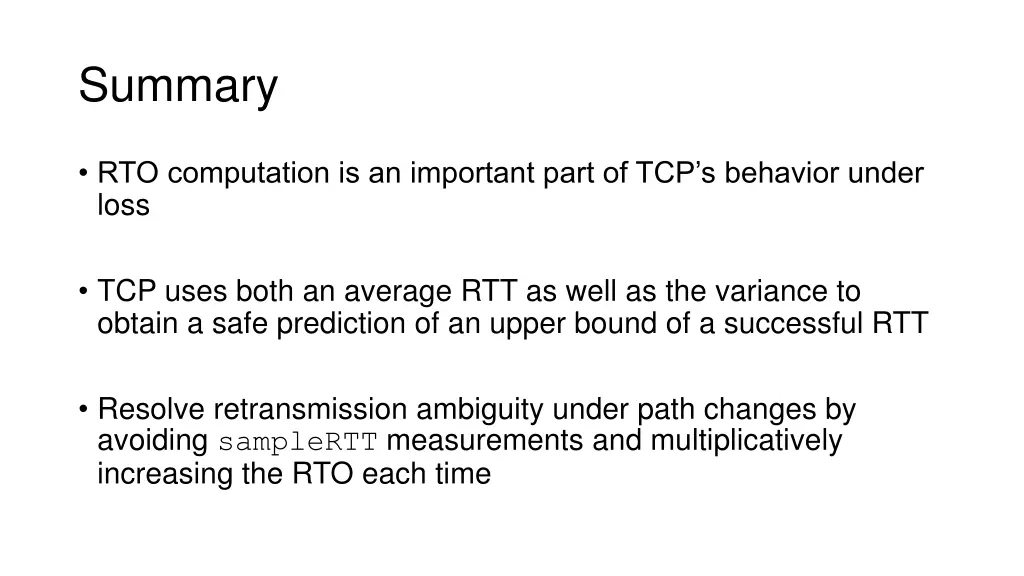
Summary RTO computation is an important part of TCP s behavior under loss TCP uses both an average RTT as well as the variance to obtain a safe prediction of an upper bound of a successful RTT Resolve retransmission ambiguity under path changes by avoiding sampleRTT measurements and multiplicatively increasing the RTO each time
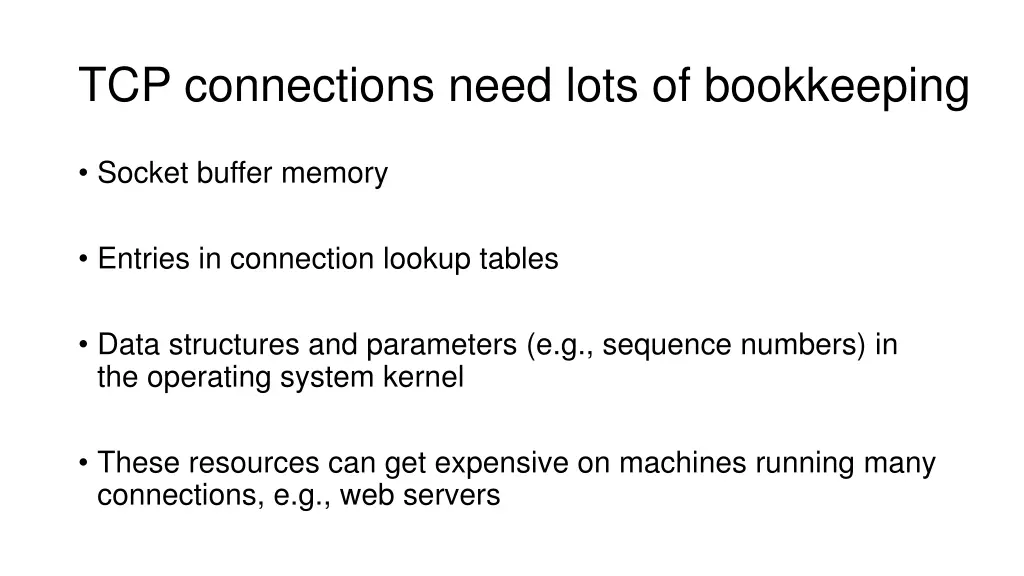
TCP connections need lots of bookkeeping Socket buffer memory Entries in connection lookup tables Data structures and parameters (e.g., sequence numbers) in the operating system kernel These resources can get expensive on machines running many connections, e.g., web servers
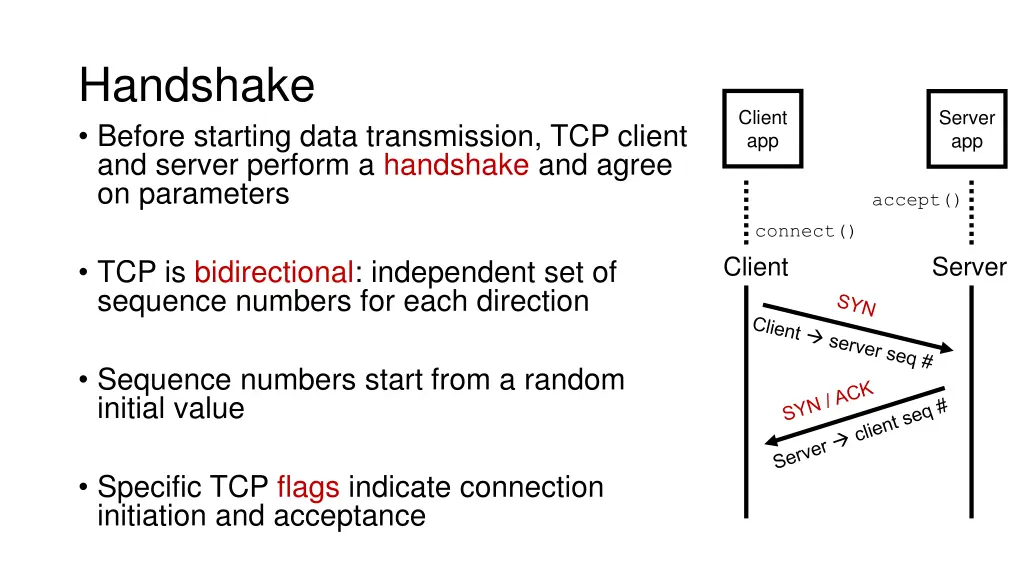
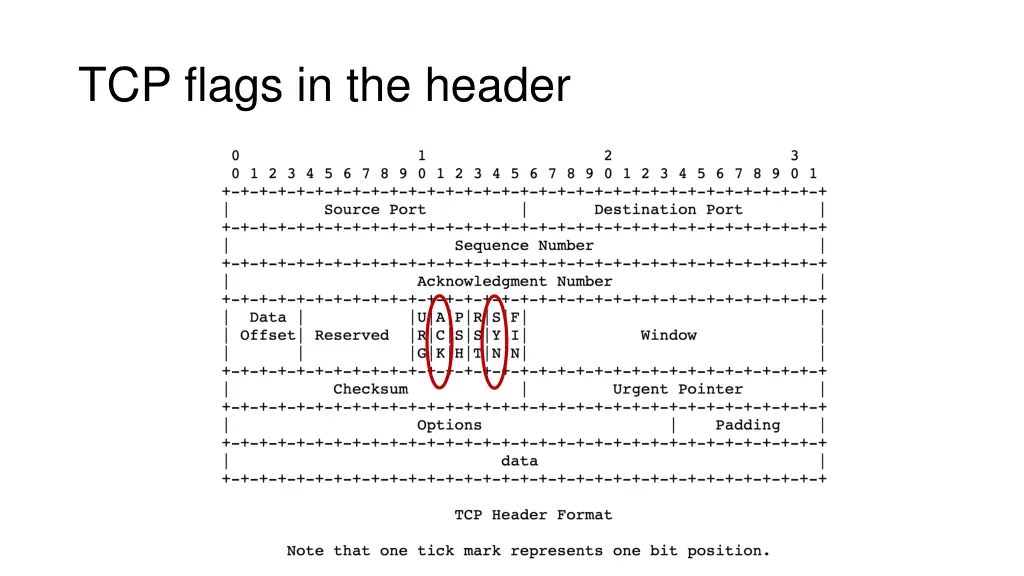
Handshake Before starting data transmission, TCP client and server perform a handshake and agree on parameters Client app Server app accept() connect() Client Server TCP is bidirectional: independent set of sequence numbers for each direction Sequence numbers start from a random initial value Specific TCP flags indicate connection initiation and acceptance
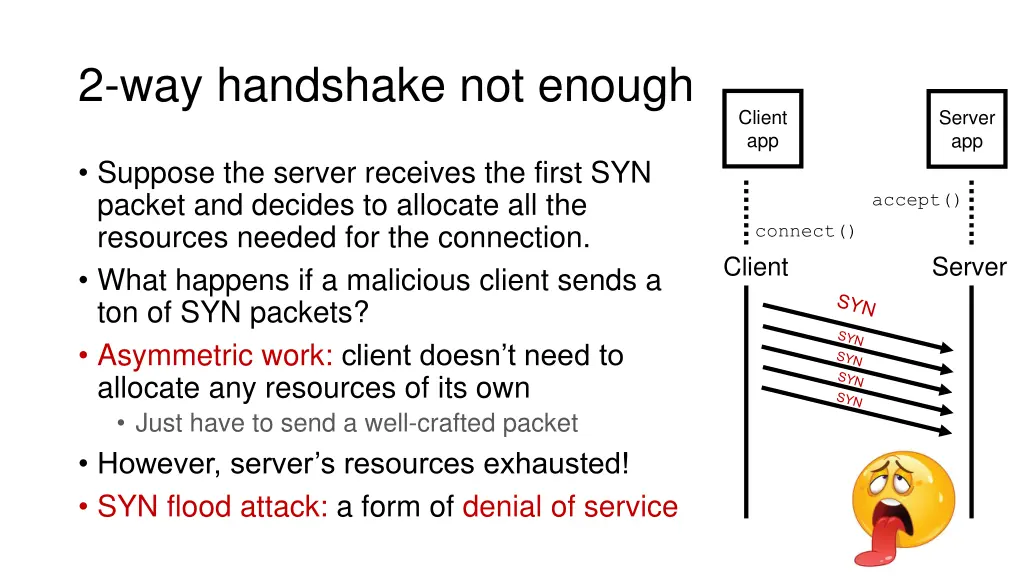
2-way handshake not enough Client app Server app Suppose the server receives the first SYN packet and decides to allocate all the resources needed for the connection. What happens if a malicious client sends a ton of SYN packets? Asymmetric work: client doesn t need to allocate any resources of its own Just have to send a well-crafted packet However, server s resources exhausted! SYN flood attack: a form of denial of service accept() connect() Client Server
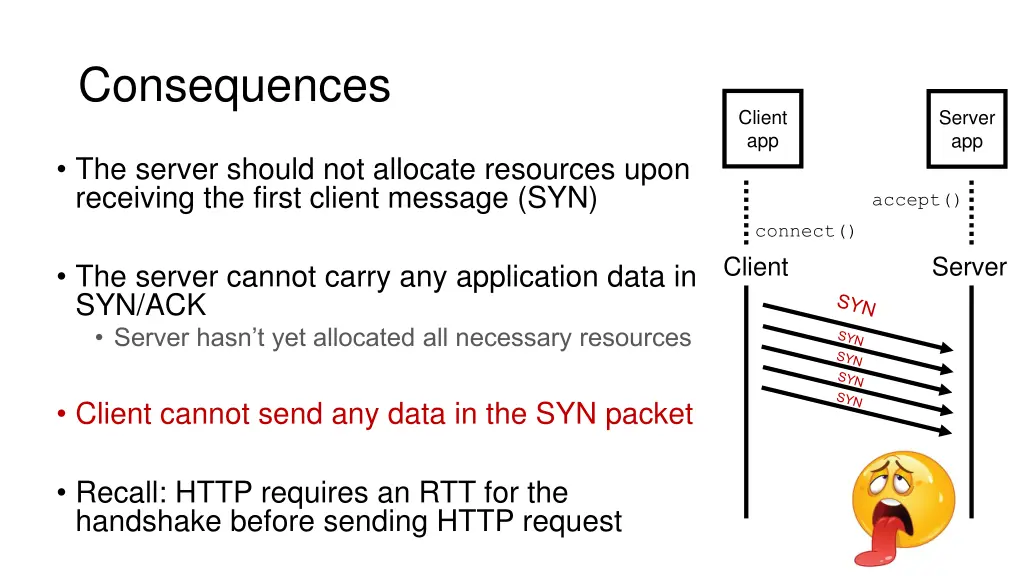
Consequences Client app Server app The server should not allocate resources upon receiving the first client message (SYN) accept() connect() Client Server The server cannot carry any application data in SYN/ACK Server hasn t yet allocated all necessary resources Client cannot send any data in the SYN packet Recall: HTTP requires an RTT for the handshake before sending HTTP request
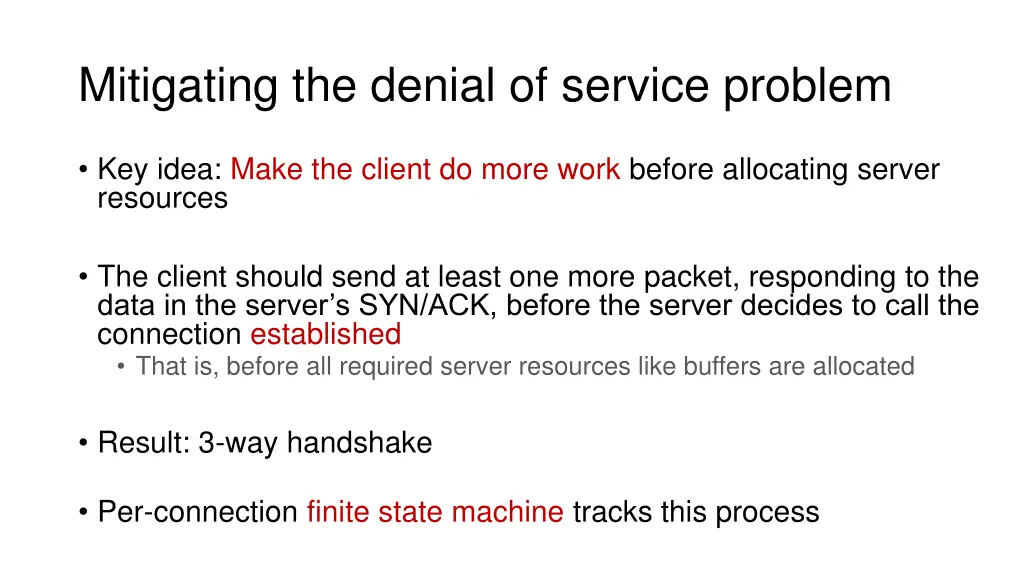
Mitigating the denial of service problem Key idea: Make the client do more work before allocating server resources The client should send at least one more packet, responding to the data in the server s SYN/ACK, before the server decides to call the connection established That is, before all required server resources like buffers are allocated Result: 3-way handshake Per-connection finite state machine tracks this process
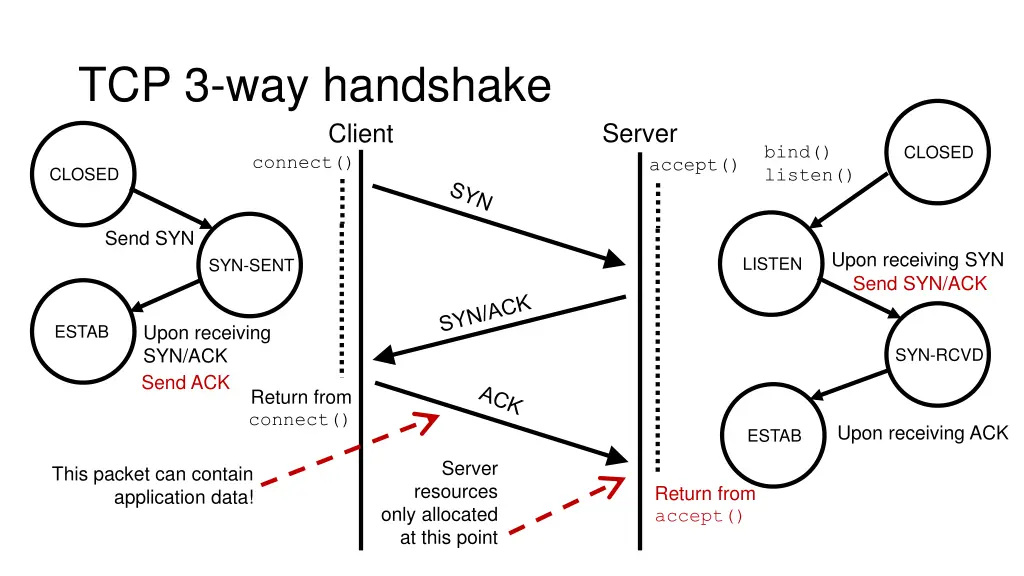
TCP 3-way handshake Server Client bind() listen() CLOSED connect() accept() CLOSED Send SYN Upon receiving SYN Send SYN/ACK LISTEN SYN-SENT Upon receiving SYN/ACK Send ACK ESTAB SYN-RCVD Return from connect() Upon receiving ACK ESTAB Server resources only allocated at this point This packet can contain application data! Return from accept()
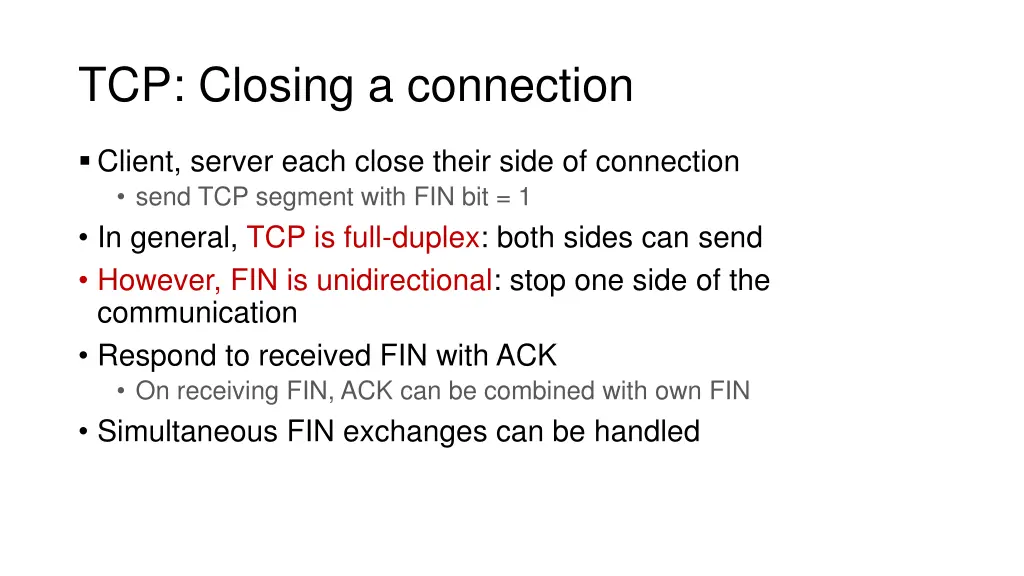
TCP: Closing a connection Client, server each close their side of connection send TCP segment with FIN bit = 1 In general, TCP is full-duplex: both sides can send However, FIN is unidirectional: stop one side of the communication Respond to received FIN with ACK On receiving FIN, ACK can be combined with own FIN Simultaneous FIN exchanges can be handled