Boosting Student Engagement Through Target Language Usage in Education
Discover why using the target language is crucial in language learning, how it impacts student engagement and confidence, and ways to overcome challenges in promoting spontaneous language use. Learn from inspection findings and find solutions to enhance student proficiency and fluency in the target language.

Download Presentation

Please find below an Image/Link to download the presentation.
The content on the website is provided AS IS for your information and personal use only. It may not be sold, licensed, or shared on other websites without obtaining consent from the author. If you encounter any issues during the download, it is possible that the publisher has removed the file from their server.
You are allowed to download the files provided on this website for personal or commercial use, subject to the condition that they are used lawfully. All files are the property of their respective owners.
The content on the website is provided AS IS for your information and personal use only. It may not be sold, licensed, or shared on other websites without obtaining consent from the author.
E N D
Presentation Transcript
T Teacher S Specialist S Subject T Training Day 1: Using the target language Session 1 Espa ol TSST
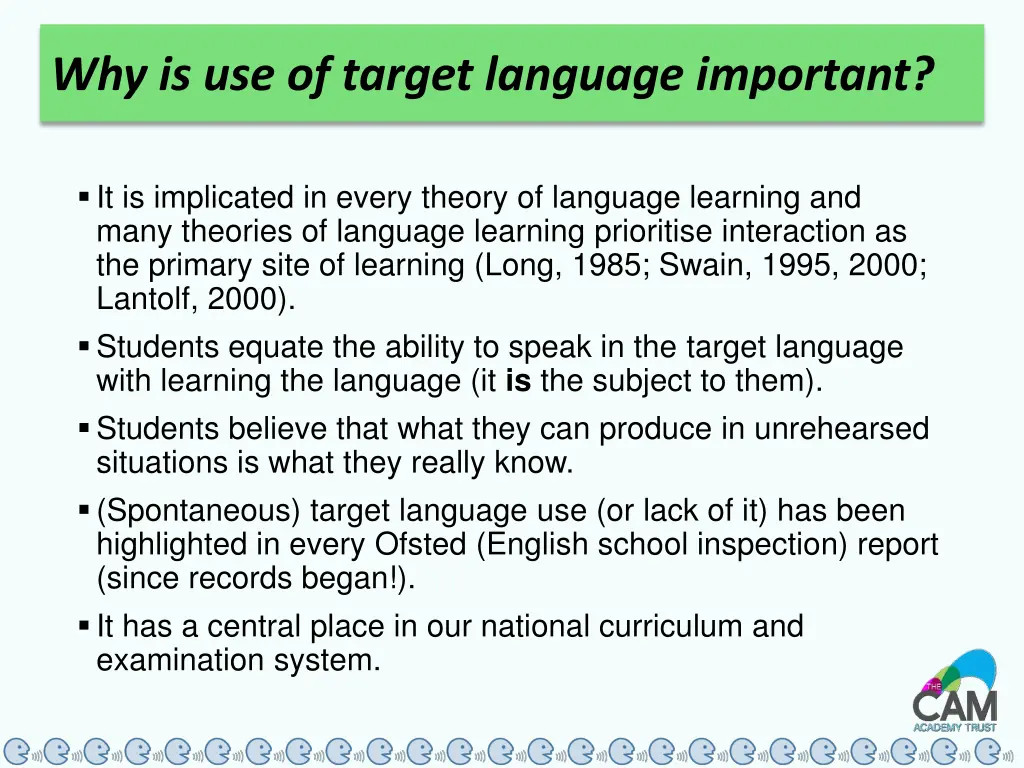
Why is use of target language important? It is implicated in every theory of language learning and many theories of language learning prioritise interaction as the primary site of learning (Long, 1985; Swain, 1995, 2000; Lantolf, 2000). Students equate the ability to speak in the target language with learning the language (it is the subject to them). Students believe that what they can produce in unrehearsed situations is what they really know. (Spontaneous) target language use (or lack of it) has been highlighted in every Ofsted (English school inspection) report (since records began!). It has a central place in our national curriculum and examination system.
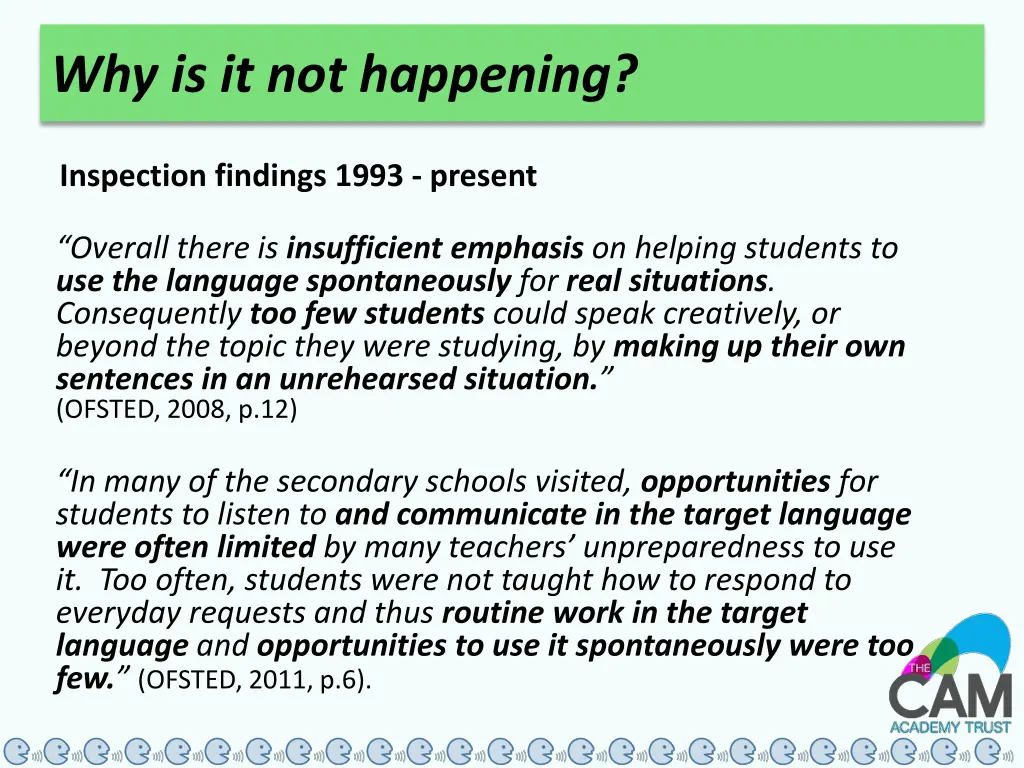
Why is it not happening? Inspection findings 1993 - present Overall there is insufficient emphasis on helping students to use the language spontaneously for real situations. Consequently too few students could speak creatively, or beyond the topic they were studying, by making up their own sentences in an unrehearsed situation. (OFSTED, 2008, p.12) In many of the secondary schools visited, opportunities for students to listen to and communicate in the target language were often limitedby many teachers unpreparedness to use it. Too often, students were not taught how to respond to everyday requests and thus routine work in the target language and opportunities to use it spontaneously were too few. (OFSTED, 2011, p.6).
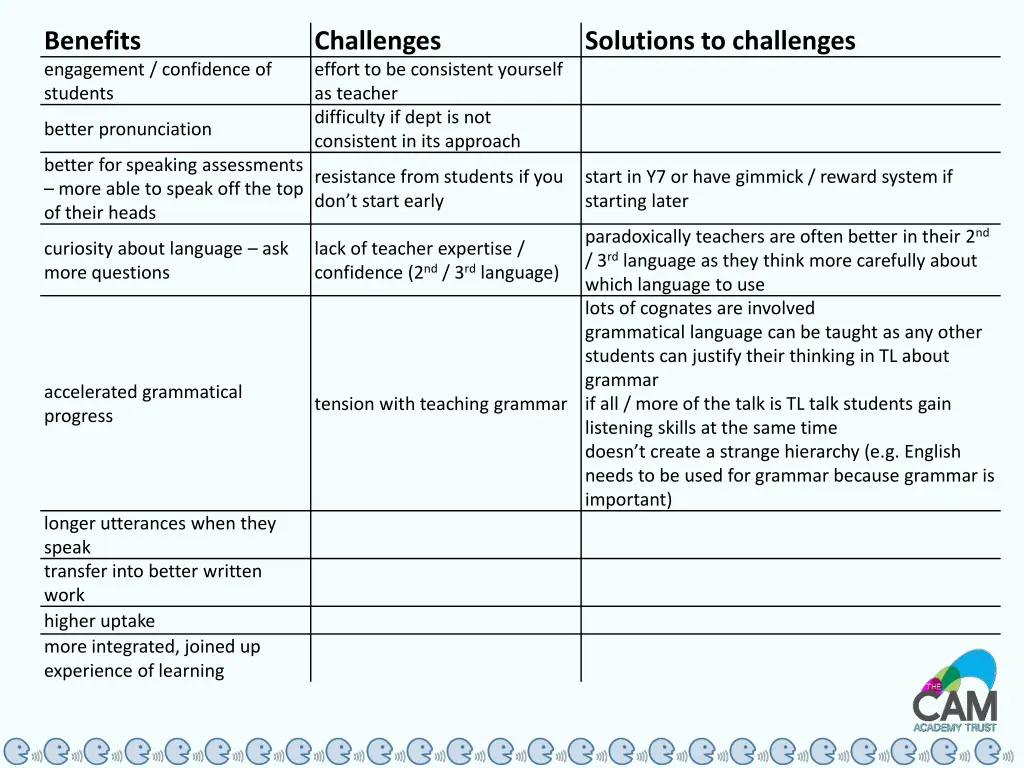
Benefits engagement / confidence of students Challenges effort to be consistent yourself as teacher difficulty if dept is not consistent in its approach Solutions to challenges better pronunciation better for speaking assessments more able to speak off the top of their heads resistance from students if you don t start early start in Y7 or have gimmick / reward system if starting later paradoxically teachers are often better in their 2nd / 3rd language as they think more carefully about which language to use lots of cognates are involved grammatical language can be taught as any other students can justify their thinking in TL about grammar if all / more of the talk is TL talk students gain listening skills at the same time doesn t create a strange hierarchy (e.g. English needs to be used for grammar because grammar is important) curiosity about language ask more questions lack of teacher expertise / confidence (2nd / 3rd language) accelerated grammatical progress tension with teaching grammar longer utterances when they speak transfer into better written work higher uptake more integrated, joined up experience of learning
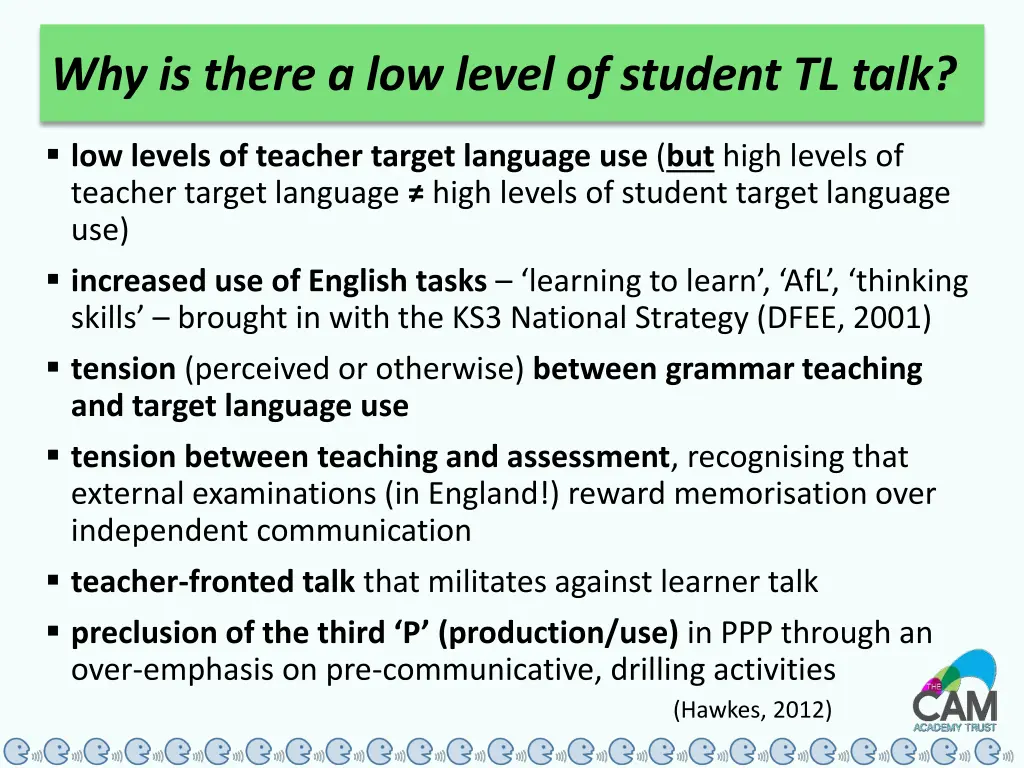
Why is there a low level of student TL talk? low levels of teacher target language use (but high levels of teacher target language high levels of student target language use) increased use of English tasks learning to learn , AfL , thinking skills brought in with the KS3 National Strategy (DFEE, 2001) tension (perceived or otherwise) between grammar teaching and target language use tension between teaching and assessment, recognising that external examinations (in England!) reward memorisation over independent communication teacher-fronted talk that militates against learner talk preclusion of the third P (production/use) in PPP through an over-emphasis on pre-communicative, drilling activities (Hawkes, 2012)
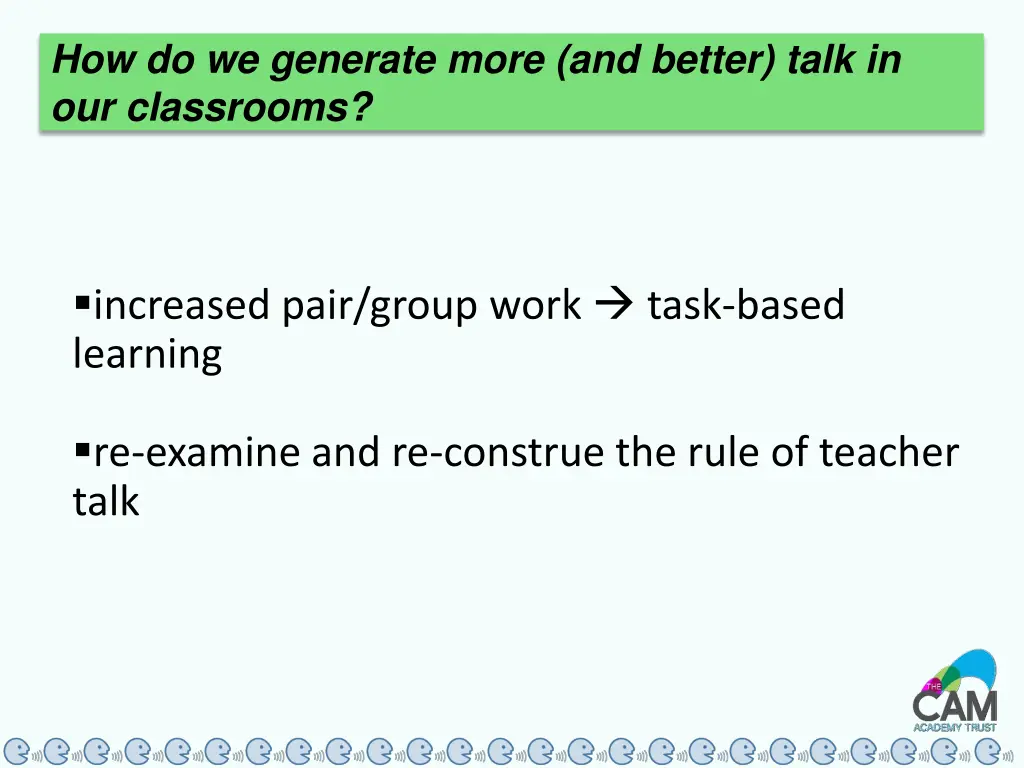
How do we generate more (and better) talk in our classrooms? increased pair/group work task-based learning re-examine and re-construe the rule of teacher talk
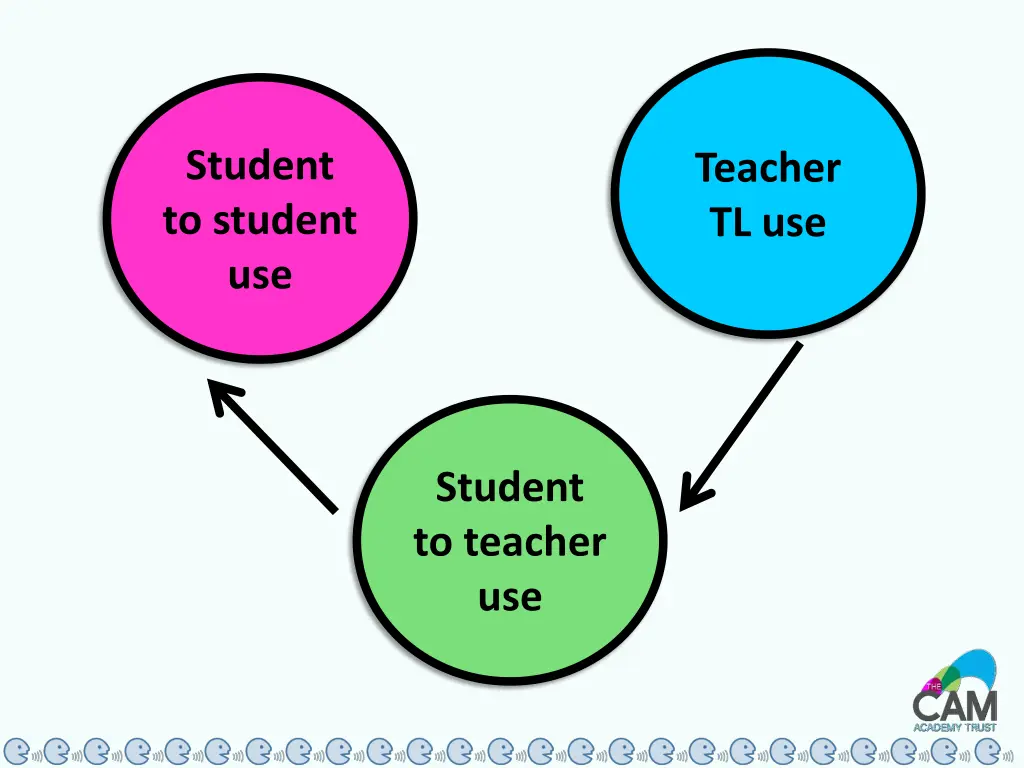
Student to student use Teacher TL use Student to teacher use
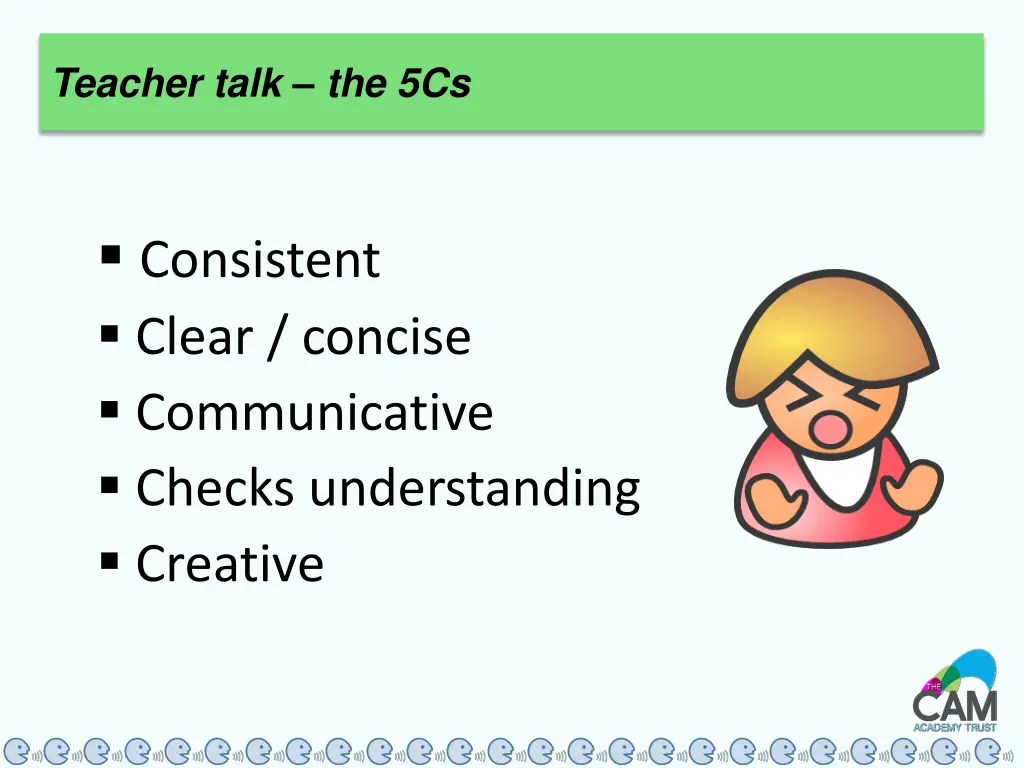
Teacher talk the 5Cs Consistent Clear / concise Communicative Checks understanding Creative
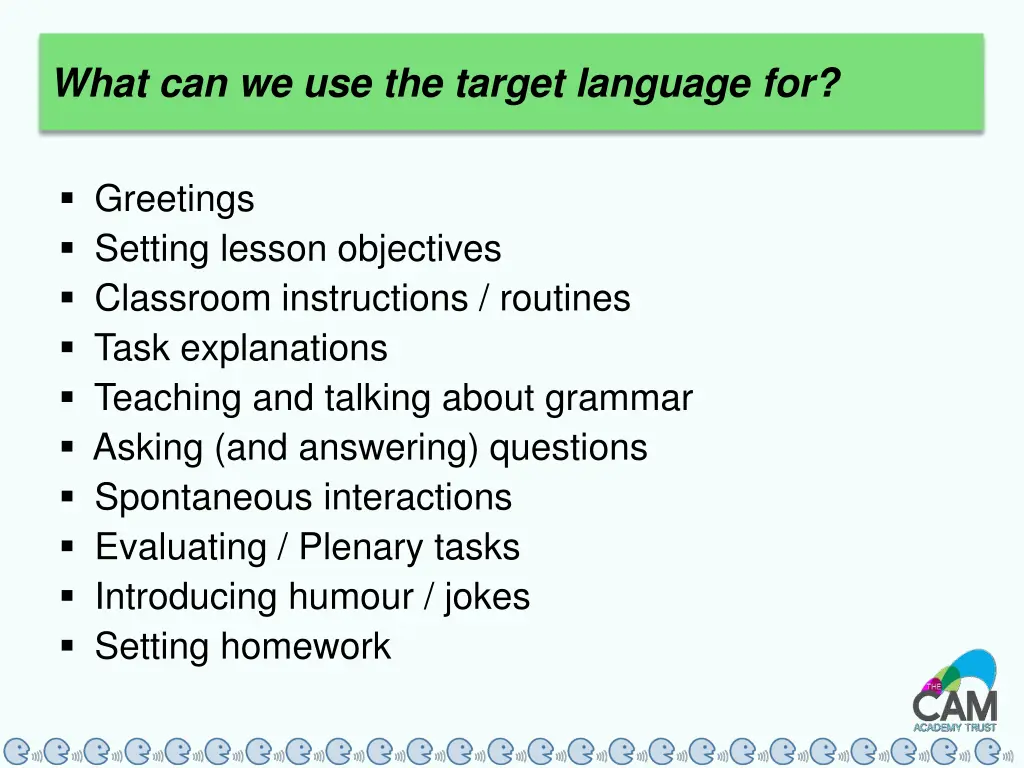
What can we use the target language for? Greetings Setting lesson objectives Classroom instructions / routines Task explanations Teaching and talking about grammar Asking (and answering) questions Spontaneous interactions Evaluating / Plenary tasks Introducing humour / jokes Setting homework
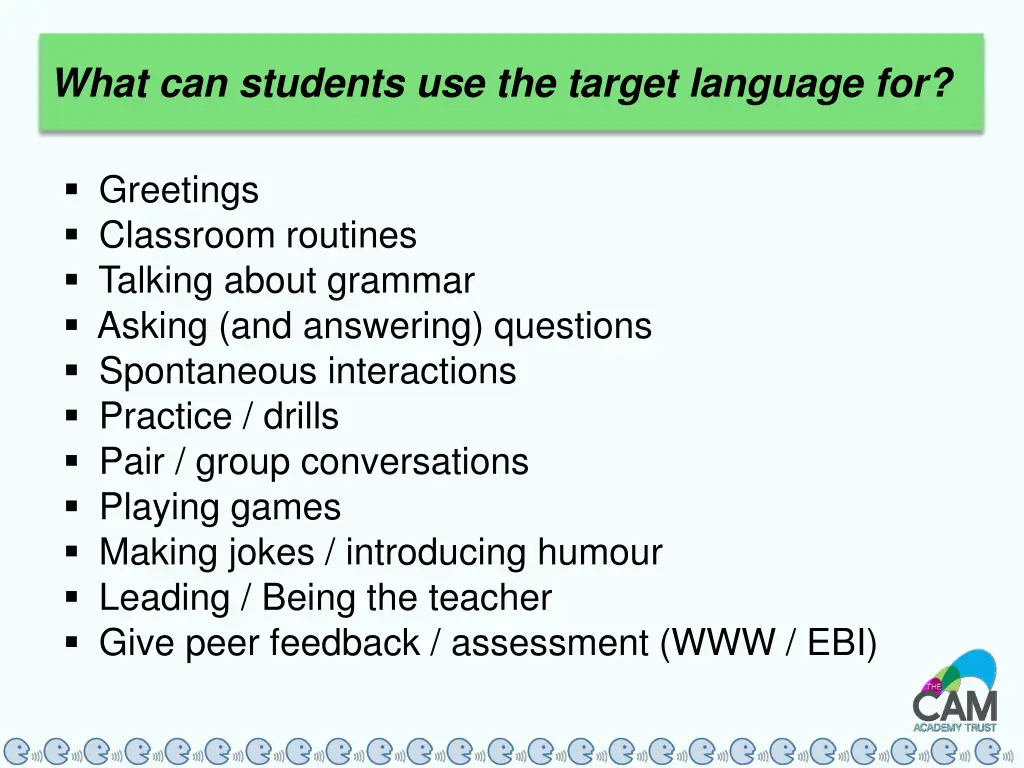
What can students use the target language for? Greetings Classroom routines Talking about grammar Asking (and answering) questions Spontaneous interactions Practice / drills Pair / group conversations Playing games Making jokes / introducing humour Leading / Being the teacher Give peer feedback / assessment (WWW / EBI)