Bridge Inventory Information
Inventory information on inspection forms to assist inspectors in updating and maintaining the Bridge Inventory System. Learn how structures are identified, visual identifiers used, and where bridges are located. Discover watercourse designations and legal land locations. Identify road authorities responsible for bridge maintenance and management.

Download Presentation

Please find below an Image/Link to download the presentation.
The content on the website is provided AS IS for your information and personal use only. It may not be sold, licensed, or shared on other websites without obtaining consent from the author. If you encounter any issues during the download, it is possible that the publisher has removed the file from their server.
You are allowed to download the files provided on this website for personal or commercial use, subject to the condition that they are used lawfully. All files are the property of their respective owners.
The content on the website is provided AS IS for your information and personal use only. It may not be sold, licensed, or shared on other websites without obtaining consent from the author.
E N D
Presentation Transcript
BRIDGE INVENTORY INFORMATION
Inventory Information On inspection forms to assist inspector Information is used to update and keep BIS current Sources Transportation Infrastructure Management System (TIMS) Inspectors add new data, verify existing or revise as required Future pick lists for addition or revision
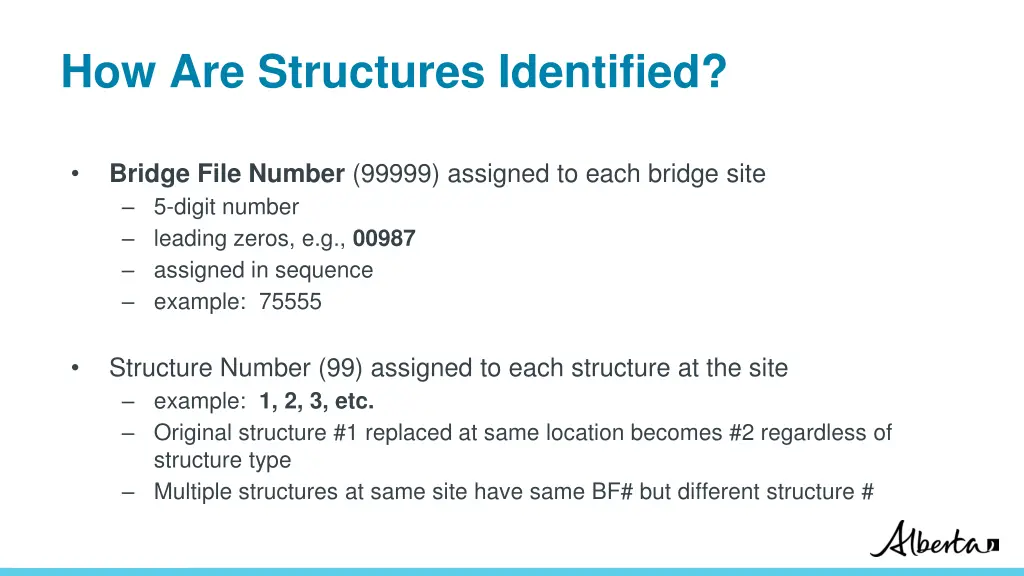
How Are Structures Identified? Bridge File Number (99999) assigned to each bridge site 5-digit number leading zeros, e.g., 00987 assigned in sequence example: 75555 Structure Number (99) assigned to each structure at the site example: 1, 2, 3, etc. Original structure #1 replaced at same location becomes #2 regardless of structure type Multiple structures at same site have same BF# but different structure #
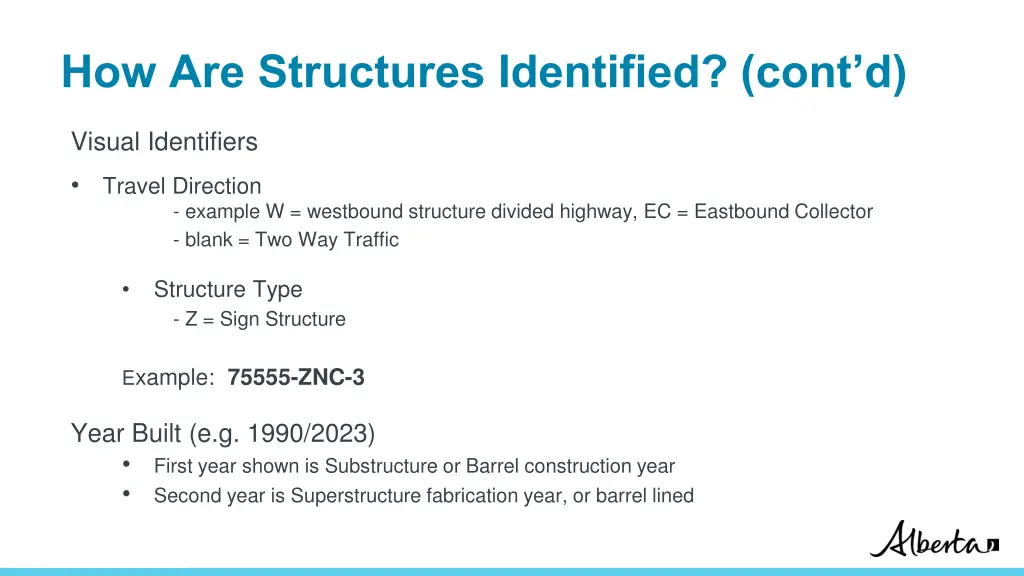
How Are Structures Identified? (contd) Visual Identifiers Travel Direction - example W = westbound structure divided highway, EC = Eastbound Collector - blank = Two Way Traffic Structure Type - Z = Sign Structure Example: 75555-ZNC-3 Year Built (e.g. 1990/2023) First year shown is Substructure or Barrel construction year Second year is Superstructure fabrication year, or barrel lined
Where is the Bridge? Bridge Name or Nearest Town bridge official name nearest town on road map Located Over Watercourse, Road, Railway, etc. Located On Highway or Local Road Includes Control Section (2:03) Contract Maintenance Area Prov. Highways (e.g. CMA 28) Local Roads display as Un-Defined CMA
Watercourse Designations Water Body Class & Year future water class of the watercourse year designated by Environment Navigable Waters Class & Year future navigable class of stream year classified
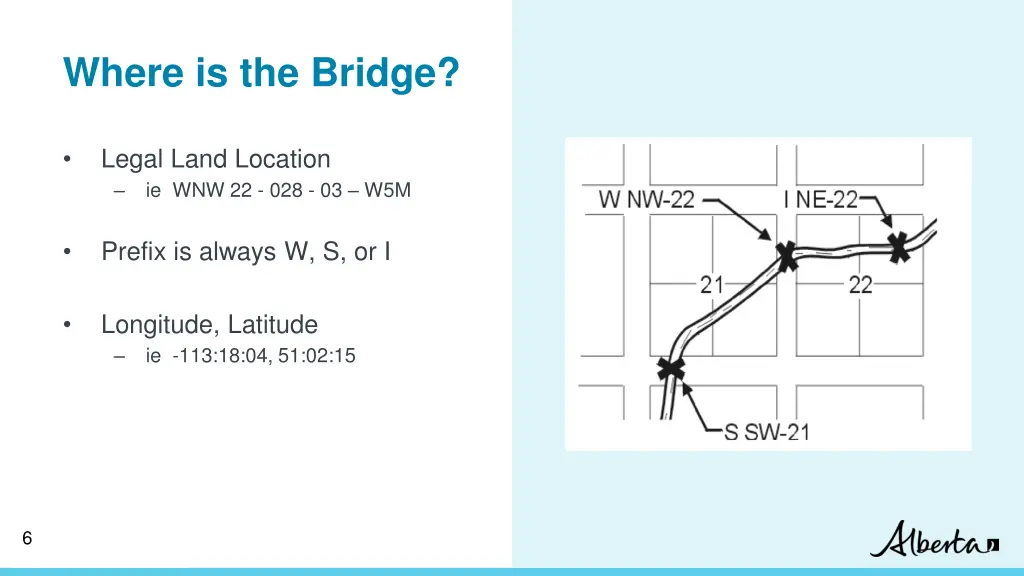
Where is the Bridge? Legal Land Location ie WNW 22 - 028 - 03 W5M Prefix is always W, S, or I Longitude, Latitude ie -113:18:04, 51:02:15 6
Road Authority Alberta Transportation (AT) Alberta Environment Municipal Services Branch (Special Areas) County or Municipal District (C01 or M36) Town or Village (T or V) City (Urban Airdrie) Municipal Affairs (MA) Federal Government Departments (FIA) Private (P)
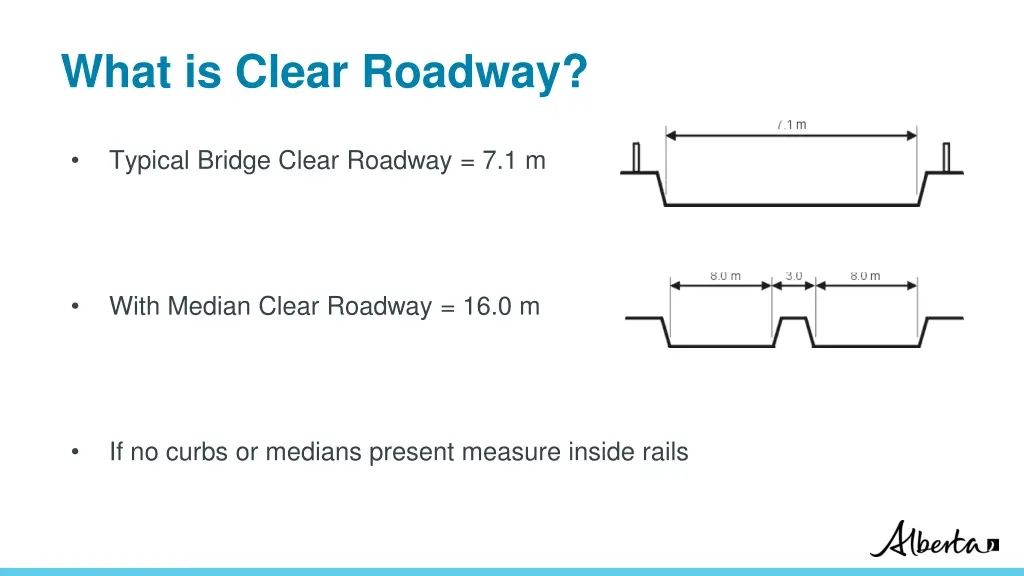
What is Clear Roadway? Typical Bridge Clear Roadway = 7.1 m With Median Clear Roadway = 16.0 m If no curbs or medians present measure inside rails
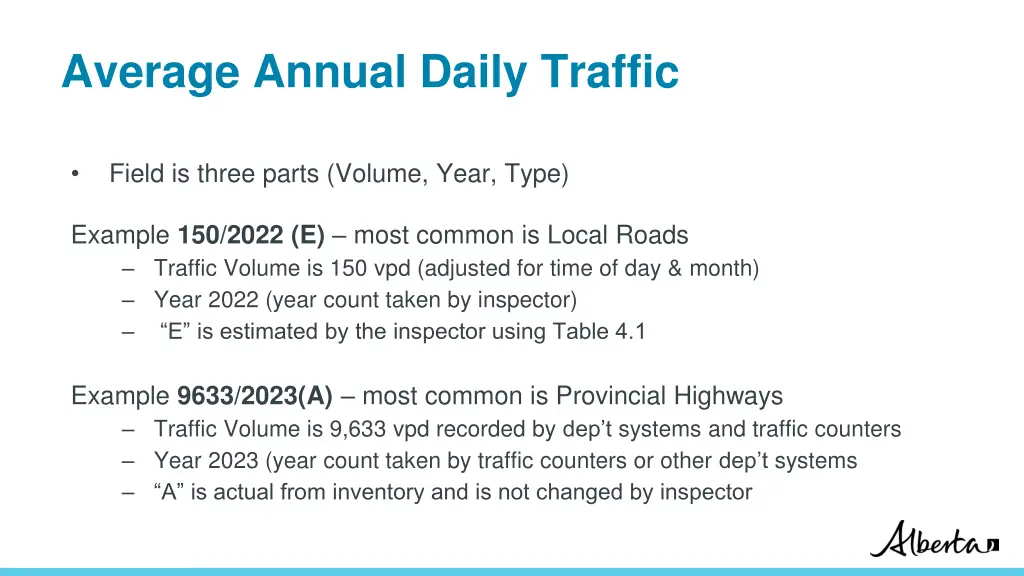
Average Annual Daily Traffic Field is three parts (Volume, Year, Type) Example 150/2022 (E) most common is Local Roads Traffic Volume is 150 vpd (adjusted for time of day & month) Year 2022 (year count taken by inspector) E is estimated by the inspector using Table 4.1 Example 9633/2023(A) most common is Provincial Highways Traffic Volume is 9,633 vpd recorded by dep t systems and traffic counters Year 2023 (year count taken by traffic counters or other dep t systems A is actual from inventory and is not changed by inspector
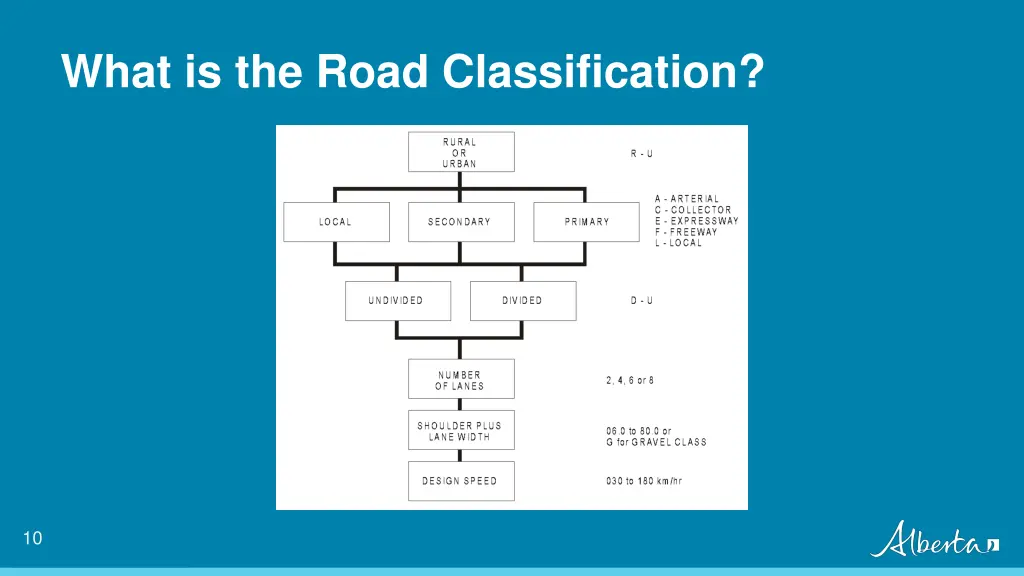
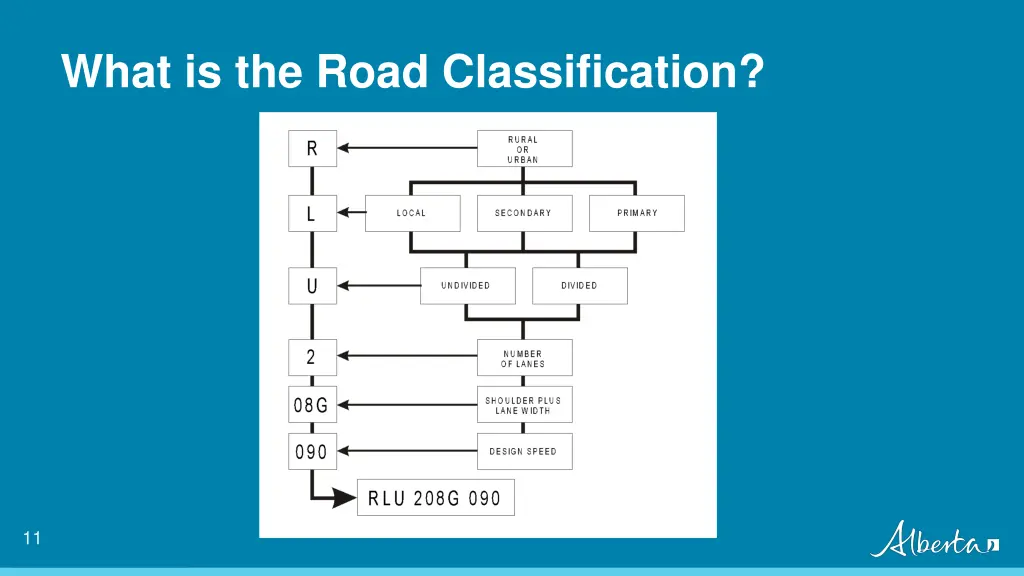
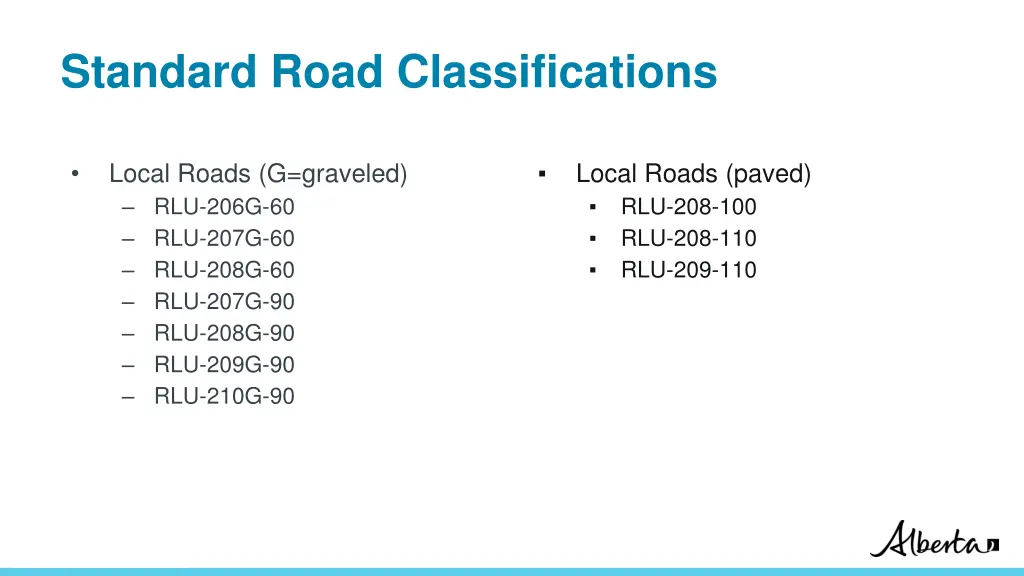
Standard Road Classifications Local Roads (G=graveled) RLU-206G-60 RLU-207G-60 RLU-208G-60 RLU-207G-90 RLU-208G-90 RLU-209G-90 RLU-210G-90 Local Roads (paved) RLU-208-100 RLU-208-110 RLU-209-110
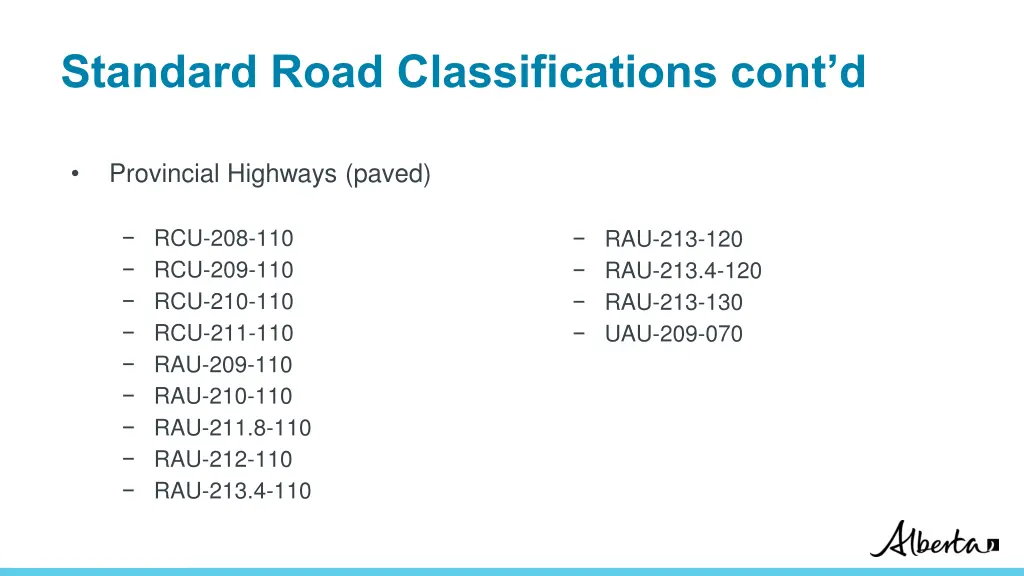
Standard Road Classifications contd Provincial Highways (paved) RCU-208-110 RCU-209-110 RCU-210-110 RCU-211-110 RAU-209-110 RAU-210-110 RAU-211.8-110 RAU-212-110 RAU-213.4-110 RAU-213-120 RAU-213.4-120 RAU-213-130 UAU-209-070
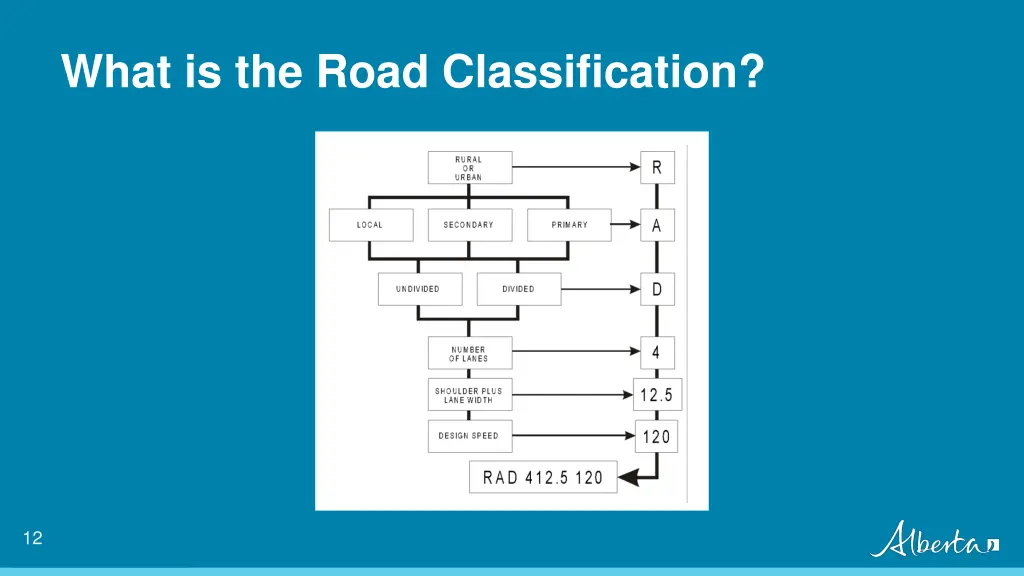
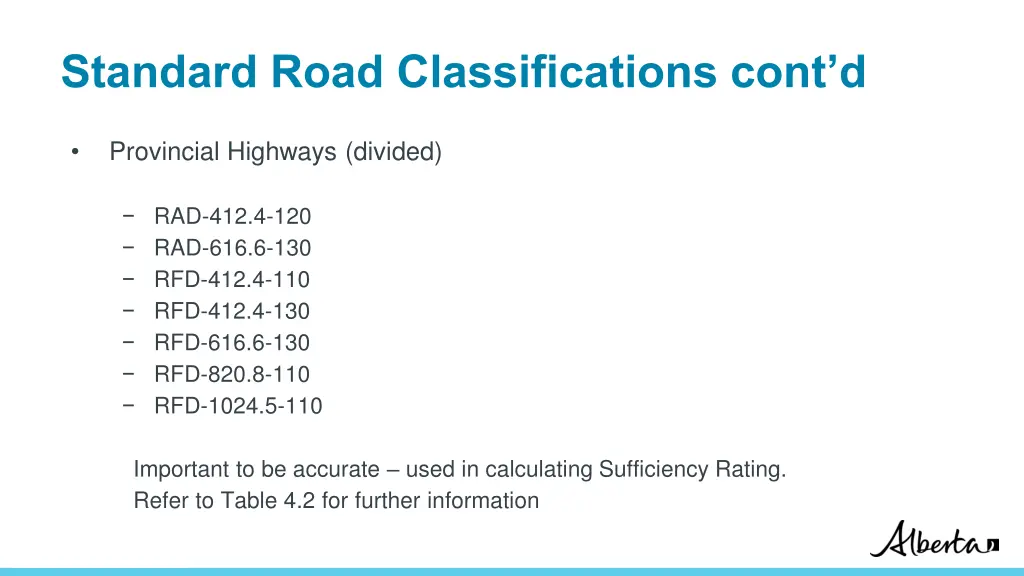
Standard Road Classifications contd Provincial Highways (divided) RAD-412.4-120 RAD-616.6-130 RFD-412.4-110 RFD-412.4-130 RFD-616.6-130 RFD-820.8-110 RFD-1024.5-110 Important to be accurate used in calculating Sufficiency Rating. Refer to Table 4.2 for further information
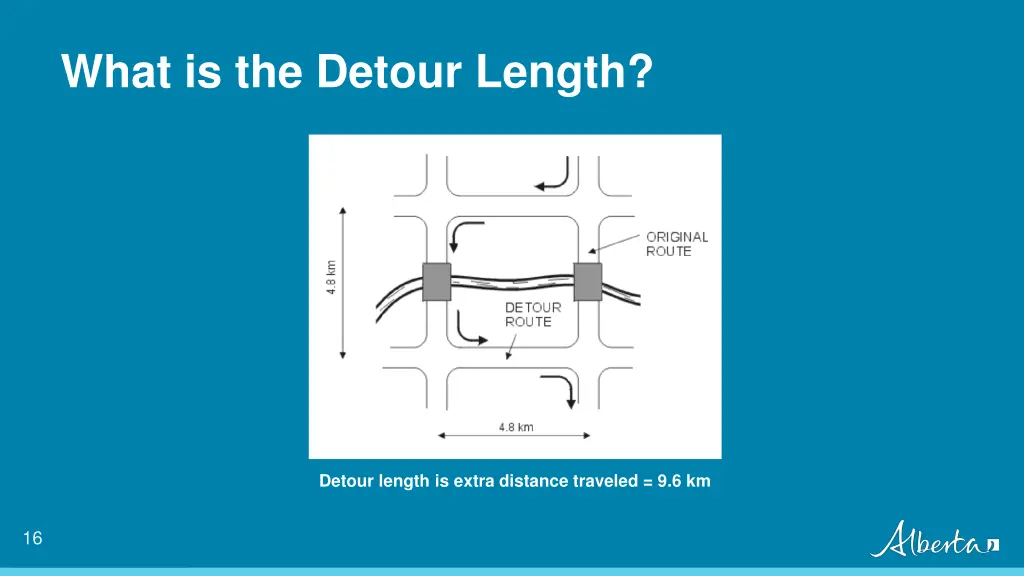
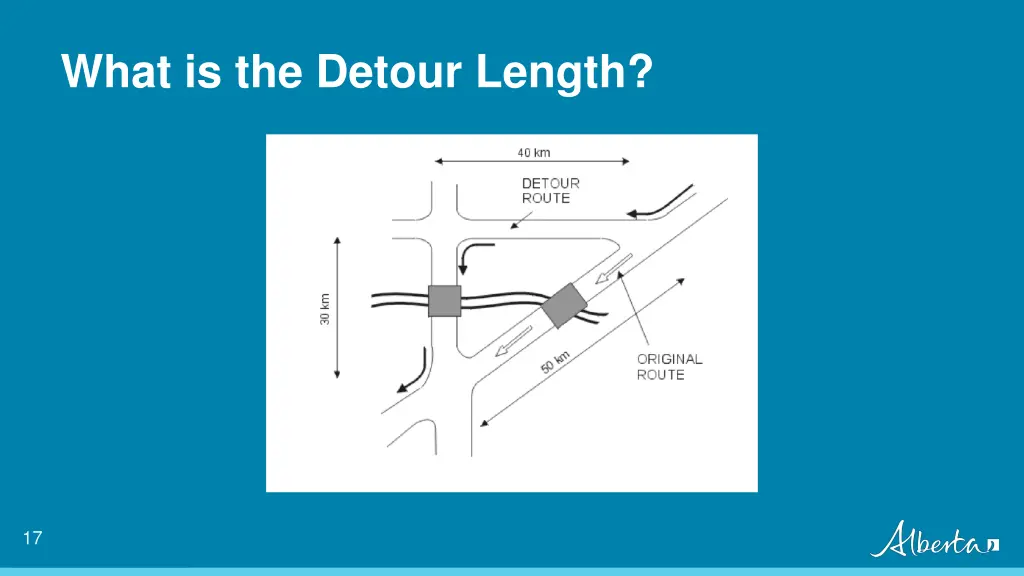
What is the Detour Length? Detour length is extra distance traveled = 9.6 km 16
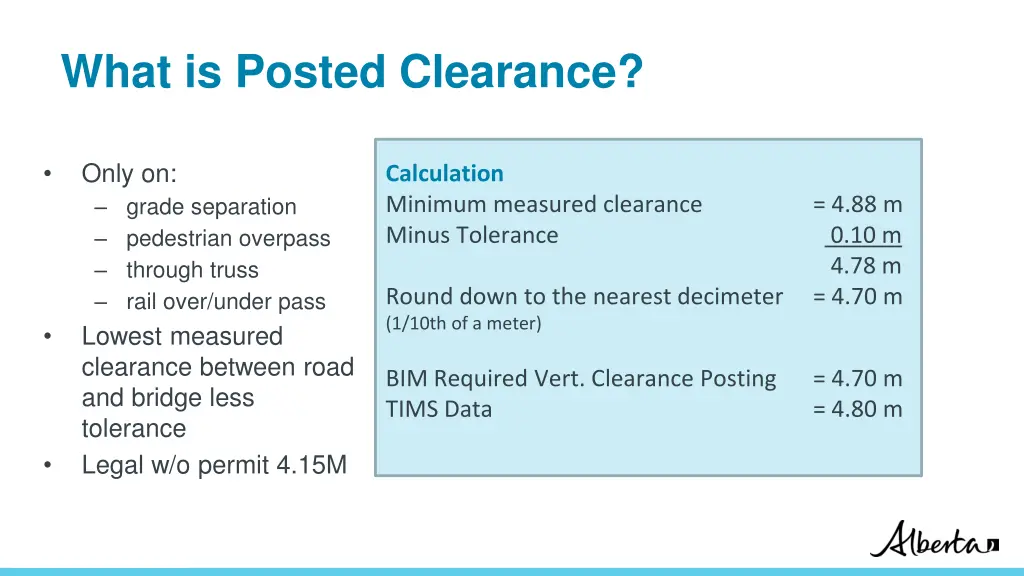
What is Posted Clearance? Only on: grade separation pedestrian overpass through truss rail over/under pass Lowest measured clearance between road and bridge less tolerance Legal w/o permit 4.15M Calculation Minimum measured clearance Minus Tolerance = 4.88 m 0.10 m 4.78 m = 4.70 m Round down to the nearest decimeter (1/10th of a meter) BIM Required Vert. Clearance Posting TIMS Data = 4.70 m = 4.80 m
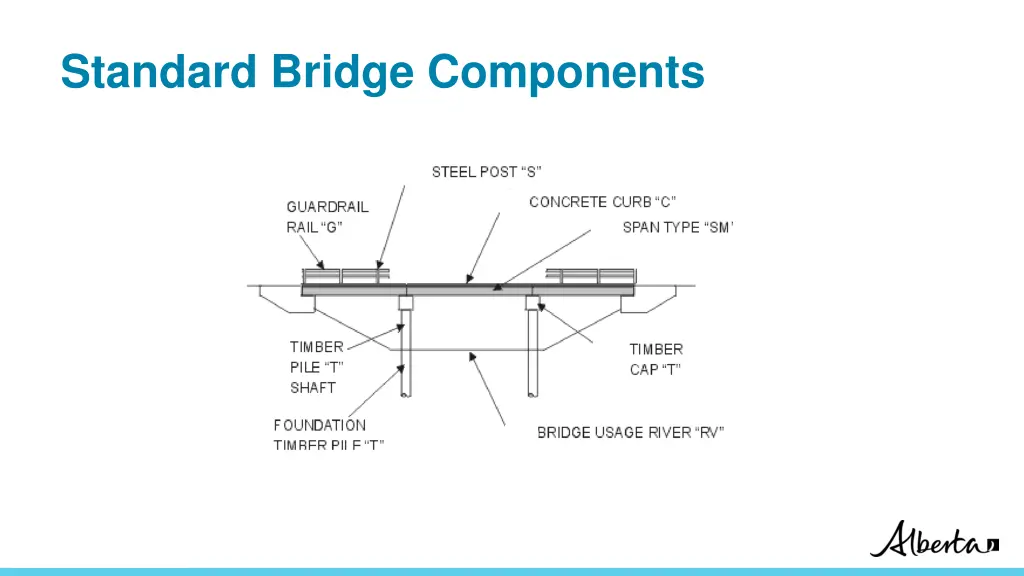
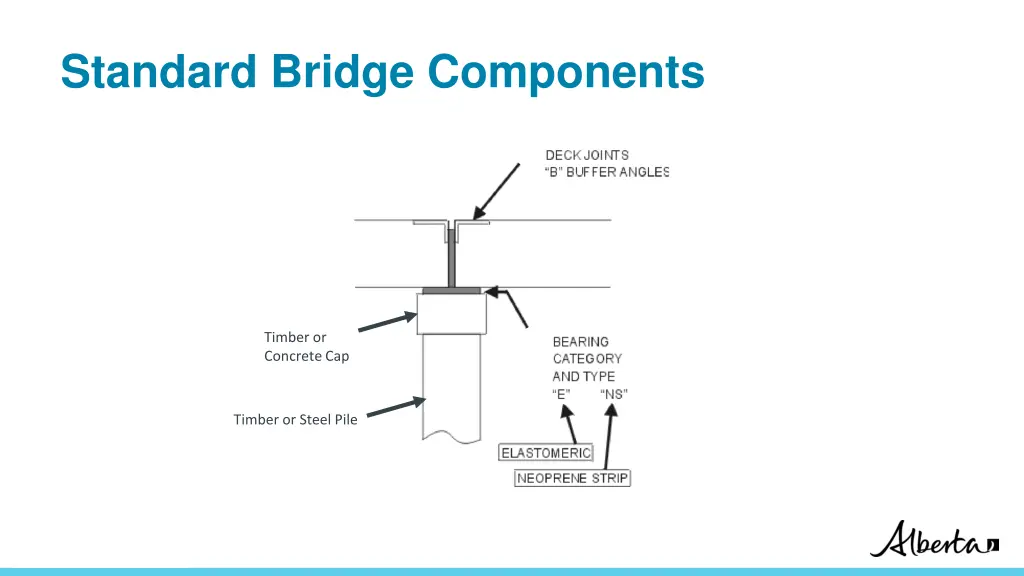
Standard Bridge Components Timber or Concrete Cap Timber or Steel Pile