Certifying Private Probabilistic Mechanisms
Cryptography research paper on certifying private probabilistic mechanisms and differential privacy, addressing issues and the need for certification in practice. Insights on a cryptographic paradigm for regulatory compliance.

Download Presentation

Please find below an Image/Link to download the presentation.
The content on the website is provided AS IS for your information and personal use only. It may not be sold, licensed, or shared on other websites without obtaining consent from the author.If you encounter any issues during the download, it is possible that the publisher has removed the file from their server.
You are allowed to download the files provided on this website for personal or commercial use, subject to the condition that they are used lawfully. All files are the property of their respective owners.
The content on the website is provided AS IS for your information and personal use only. It may not be sold, licensed, or shared on other websites without obtaining consent from the author.
E N D
Presentation Transcript
Certifying Private Probabilistic Mechanisms Presented by Zo Ruha Bell, Crypto 2024 Paper with Shafi Goldwasser, Michael P. Kim, & Jean-Luc Watson Find at https://eprint.iacr.org/2024/938
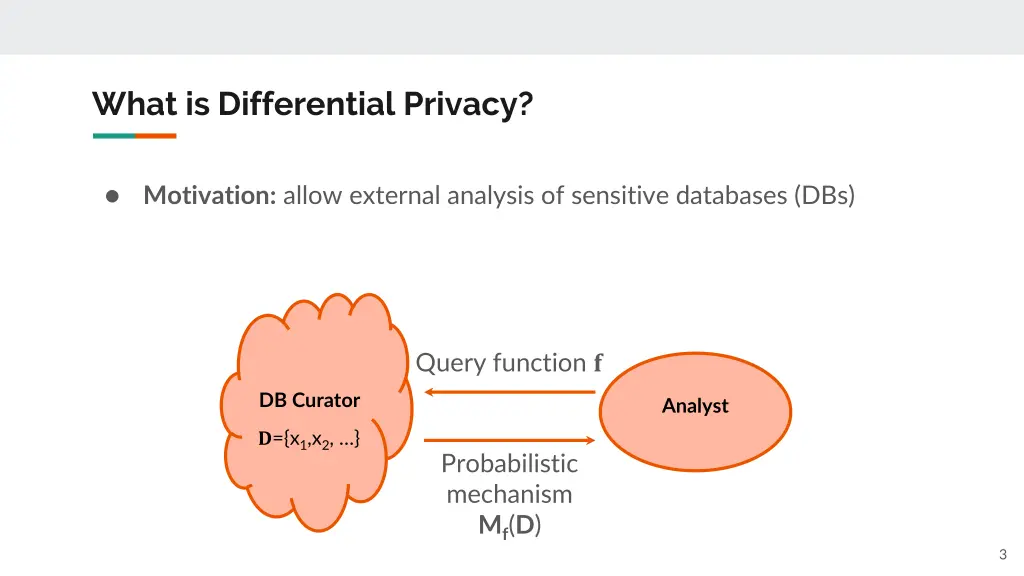
What is Differential Privacy? Motivation: allow external analysis of sensitive databases (DBs) Query function ? DB Curator Analyst ?={x1,x2, } Probabilistic mechanism Mf(D) 3
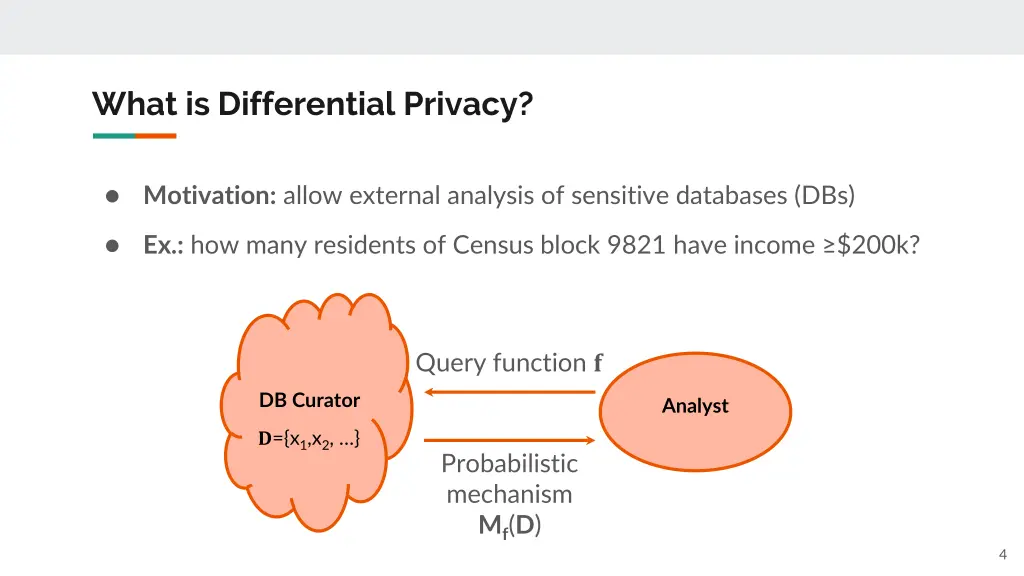
What is Differential Privacy? Motivation: allow external analysis of sensitive databases (DBs) Ex.: how many residents of Census block 9821 have income $200k? Query function ? DB Curator Analyst ?={x1,x2, } Probabilistic mechanism Mf(D) 4
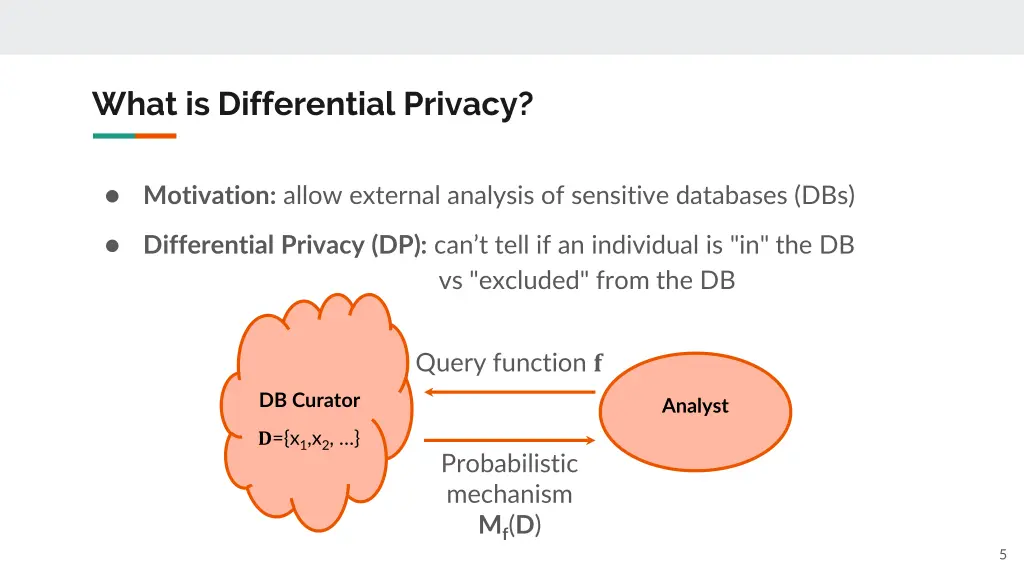
What is Differential Privacy? Motivation: allow external analysis of sensitive databases (DBs) Differential Privacy (DP): can t tell if an individual is "in" the DB vs "excluded" from the DB Query function ? DB Curator Analyst ?={x1,x2, } Probabilistic mechanism Mf(D) 5
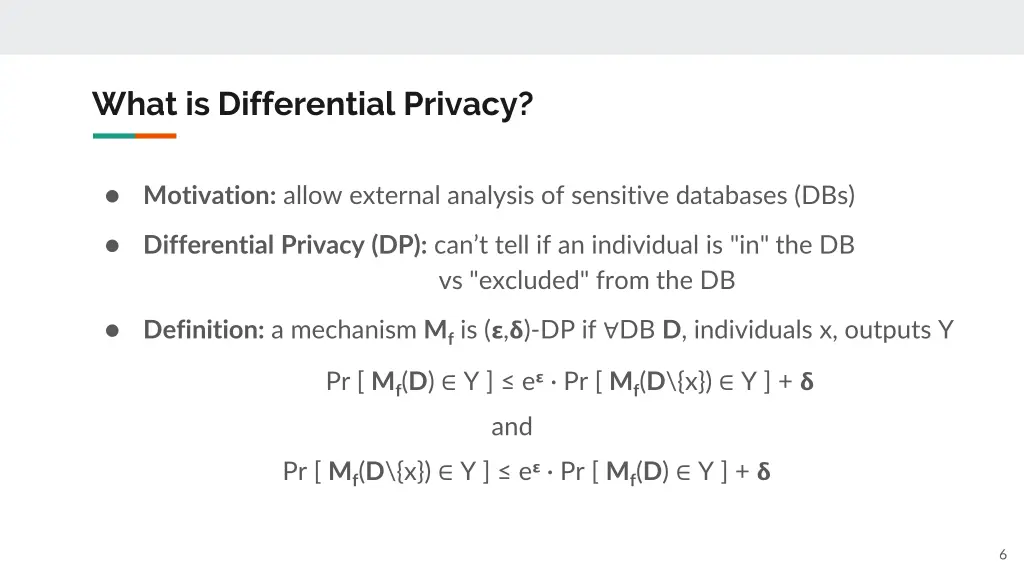
What is Differential Privacy? Motivation: allow external analysis of sensitive databases (DBs) Differential Privacy (DP): can t tell if an individual is "in" the DB vs "excluded" from the DB Definition: a mechanism Mfis (?,?)-DP if DB D, individuals x, outputs Y Pr [ Mf(D) Y ] e? Pr [ Mf(D\{x}) Y ] + ? and Pr [ Mf(D\{x}) Y ] e? Pr [ Mf(D) Y ] + ? 6
Differential Privacy in Practice Issues: Incorrect implementations/bugs [CDEGH+ 2024] Low transparency [TKBWW 2017] Conclusion: we need to certify 7
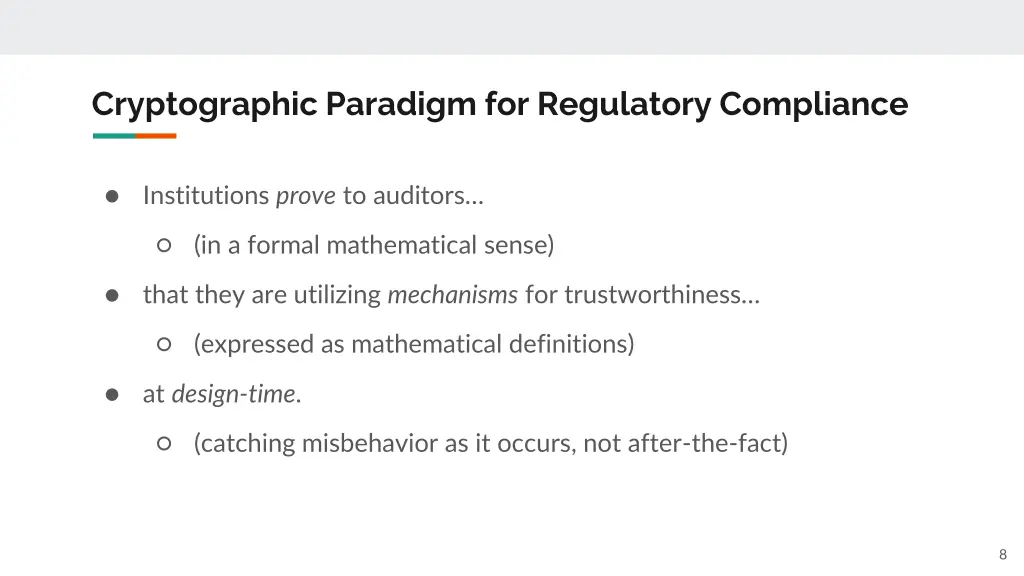
Cryptographic Paradigm for Regulatory Compliance Institutions prove to auditors (in a formal mathematical sense) that they are utilizing mechanisms for trustworthiness (expressed as mathematical definitions) at design-time. (catching misbehavior as it occurs, not after-the-fact) 8
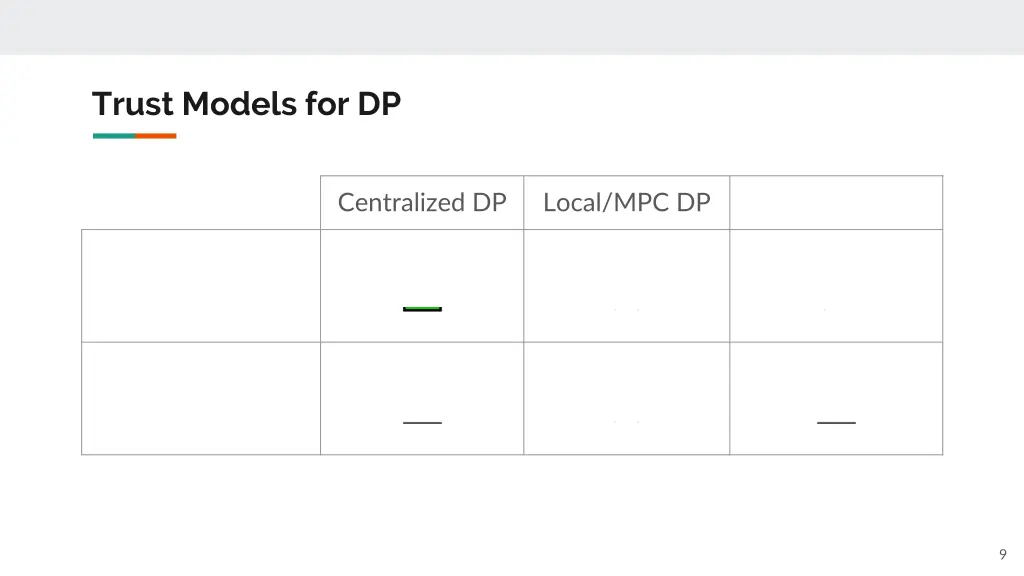
Trust Models for DP Centralized DP Local/MPC DP Certified DP Trusted Curator Curator has DB 9
Outline Security Definitions Construction Implementation 10
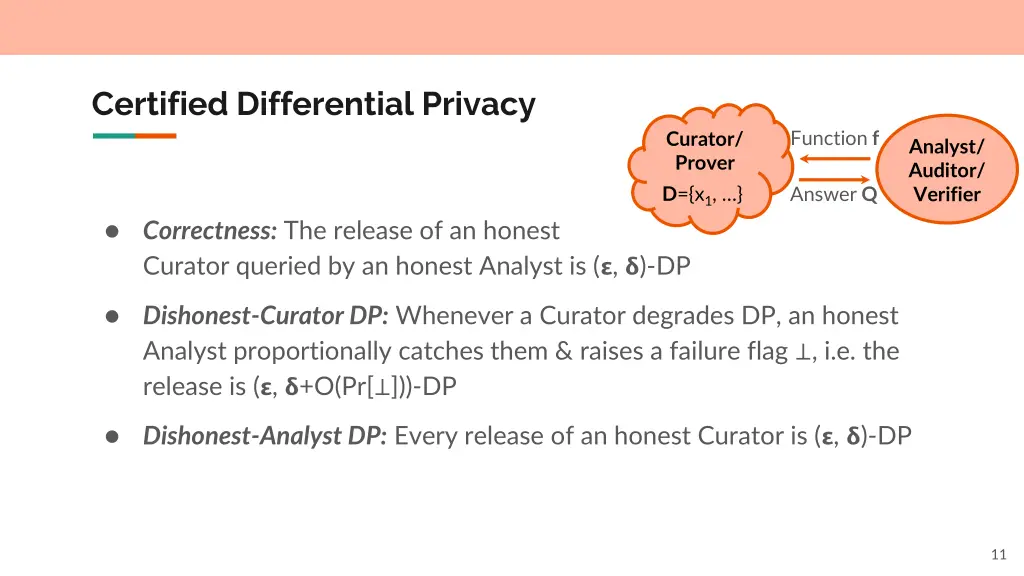
Certified Differential Privacy Function f Curator/ Prover D={x1, } Analyst/ Auditor/ Verifier Answer Q Correctness: The release of an honest Curator queried by an honest Analyst is (?, ?)-DP Dishonest-Curator DP: Whenever a Curator degrades DP, an honest Analyst proportionally catches them & raises a failure flag , i.e. the release is (?, ?+O(Pr[ ]))-DP Dishonest-Analyst DP: Every release of an honest Curator is (?, ?)-DP 11
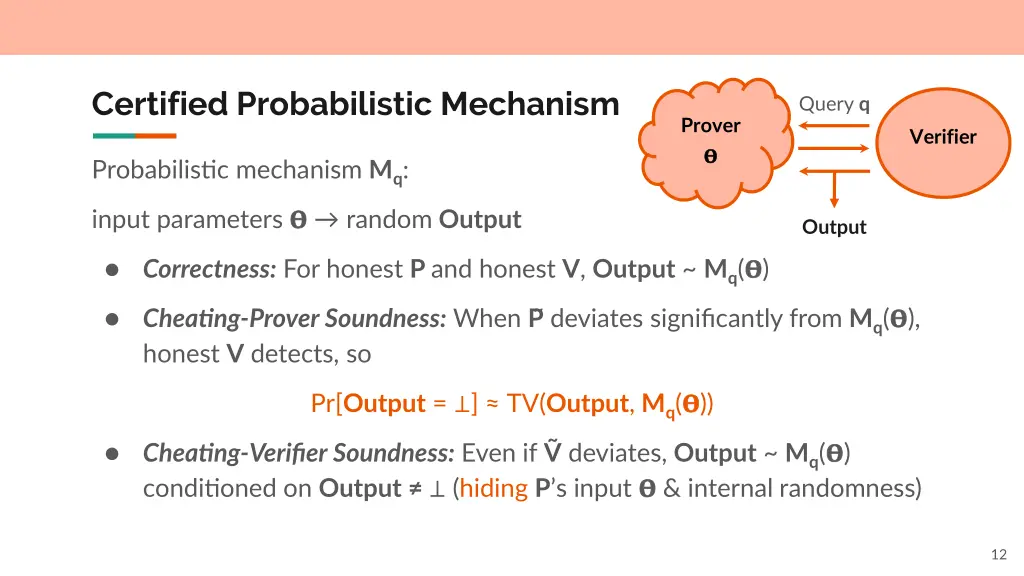
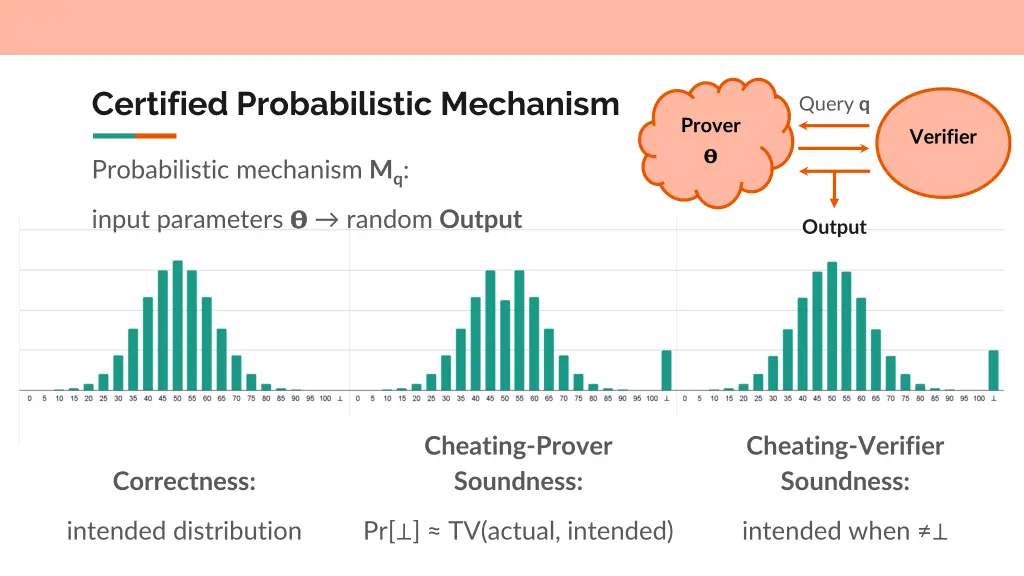
Certified Probabilistic Mechanism Query q Prover Verifier ? ? Probabilistic mechanism Mq: input parameters ? ? random Output Output Correctness: For honest P and honest V, Output ~ Mq(? ?) Cheating-Prover Soundness: When P deviates significantly from Mq(? ?), honest V detects, so Pr[Output = ] TV(Output, Mq(? ?)) Cheating-Verifier Soundness: Even if deviates, Output ~ Mq(? ?) conditioned on Output (hiding P s input ? ? & internal randomness) 12
Certified Probabilistic Mechanism Query q Prover Verifier ? ? Probabilistic mechanism Mq: input parameters ? ? random Output Output Cheating-Prover Soundness: Cheating-Verifier Soundness: Correctness: intended distribution Pr[ ] TV(actual, intended) intended when
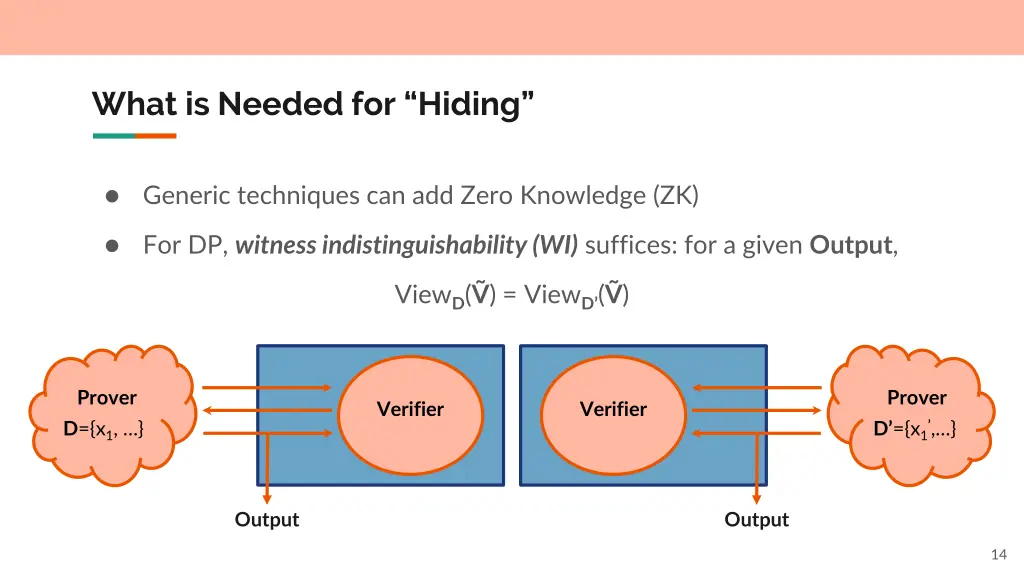
What is Needed for Hiding Generic techniques can add Zero Knowledge (ZK) For DP, witness indistinguishability (WI) suffices: for a given Output, ViewD( ) = ViewD ( ) Prover D={x1, } Prover D ={x1 , } Verifier Verifier Output Output 14
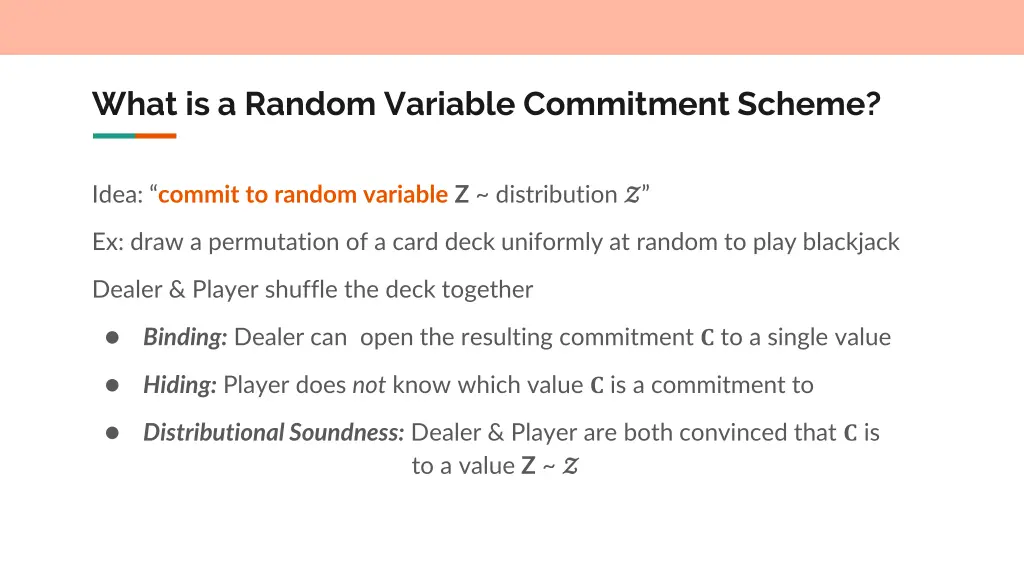
What is a Random Variable Commitment Scheme? Idea: commit to random variable Z ~ distribution ? Ex: draw a permutation of a card deck uniformly at random to play blackjack Dealer & Player shuffle the deck together Binding: Dealer can open the resulting commitment ? to a single value Hiding: Player does not know which value ? is a commitment to Distributional Soundness: Dealer & Player are both convinced that ? is to a value Z ~ ?
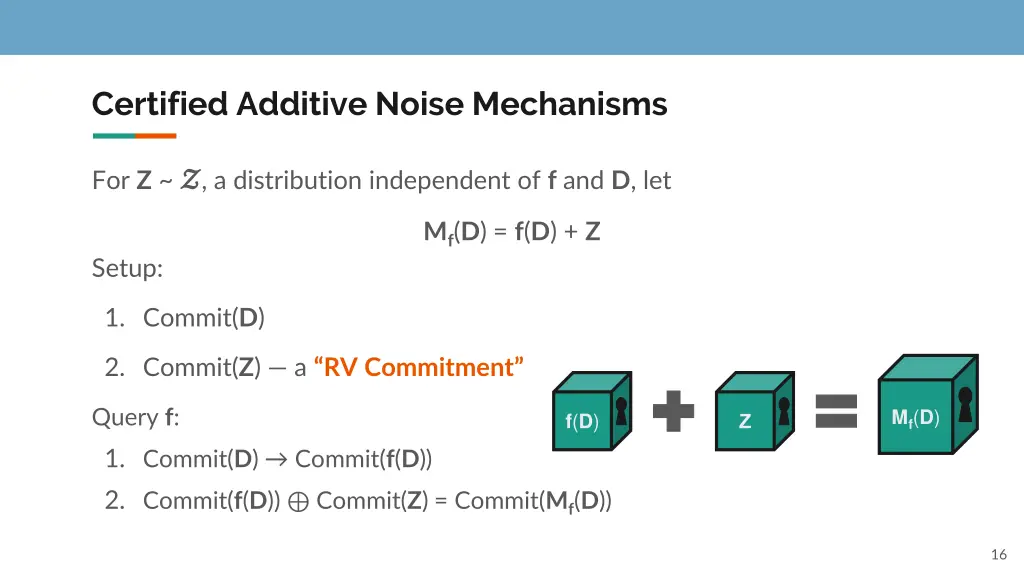
Certified Additive Noise Mechanisms For Z ~ ?, a distribution independent of f and D, let Mf(D) = f(D) + Z Setup: 1. Commit(D) 2. Commit(Z) a RV Commitment Query f: 1. Commit(D) Commit(f(D)) 2. Commit(f(D)) Commit(Z) = Commit(Mf(D)) Mf(D) f(D) Z 16
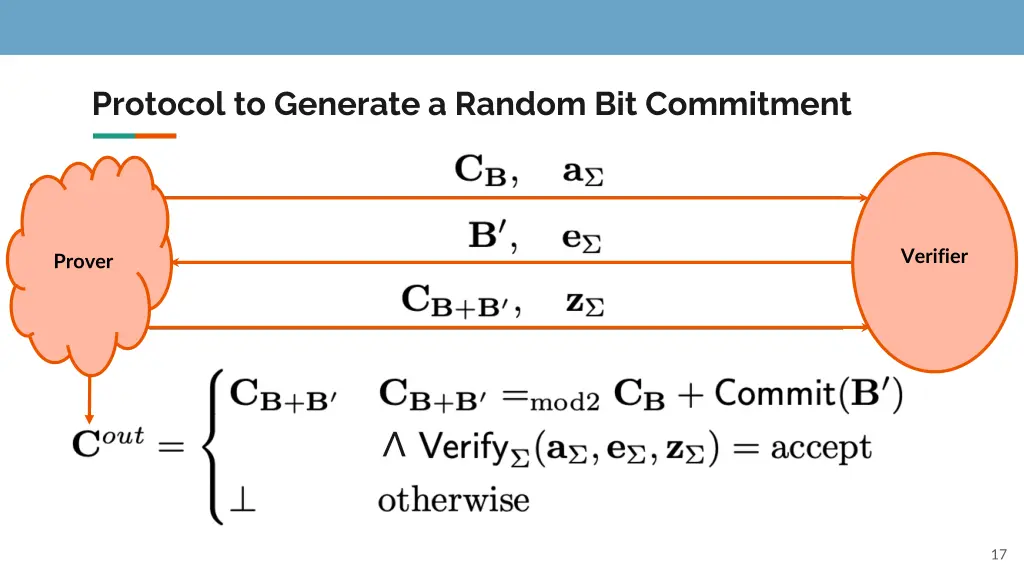
Protocol to Generate a Random Bit Commitment Verifier Prover 17
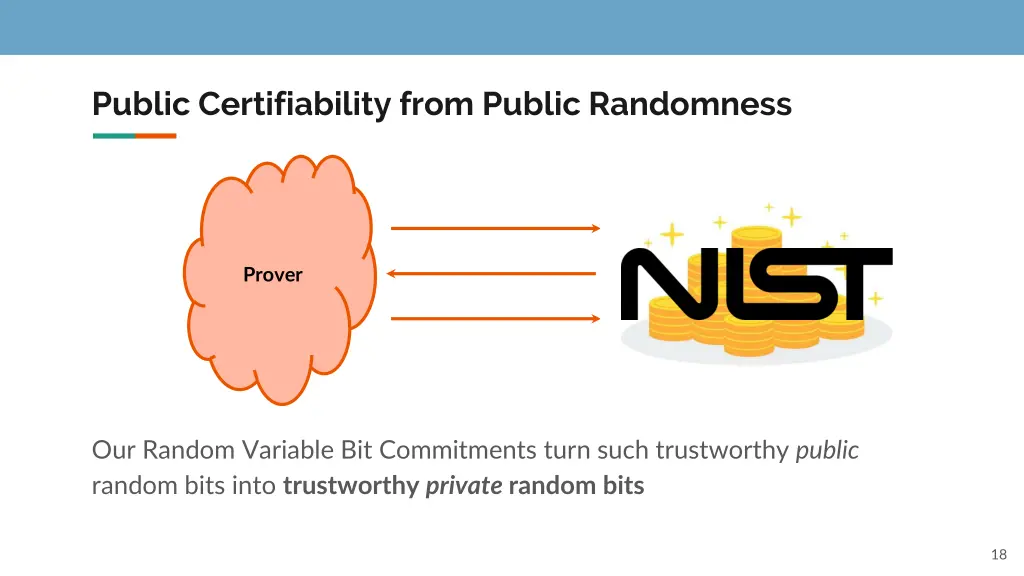
Public Certifiability from Public Randomness Verifier Prover Our Random Variable Bit Commitments turn such trustworthy public random bits into trustworthy private random bits 18
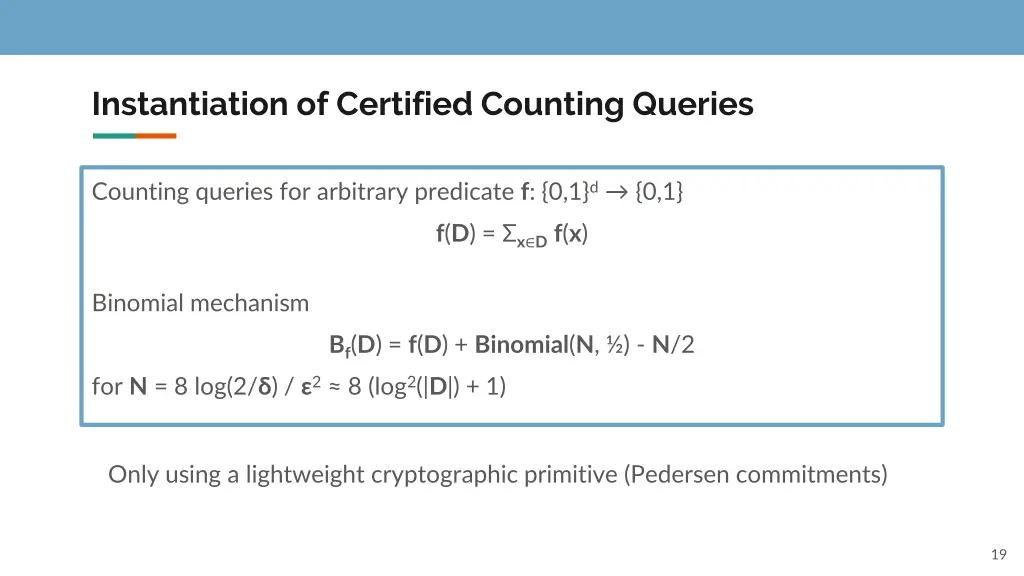
Instantiation of Certified Counting Queries Counting queries for arbitrary predicate f: {0,1}d {0,1} f(D) = x Df(x) Binomial mechanism Bf(D) = f(D) + Binomial(N, ) - N/2 for N = 8 log(2/ ) / 2 8 (log2(|D|) + 1) Only using a lightweight cryptographic primitive (Pedersen commitments) 19
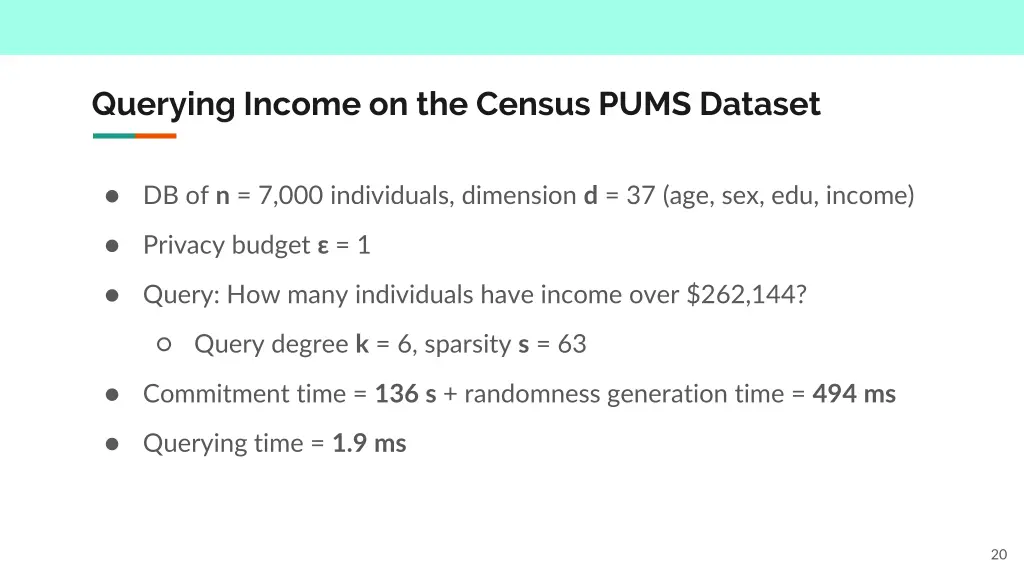
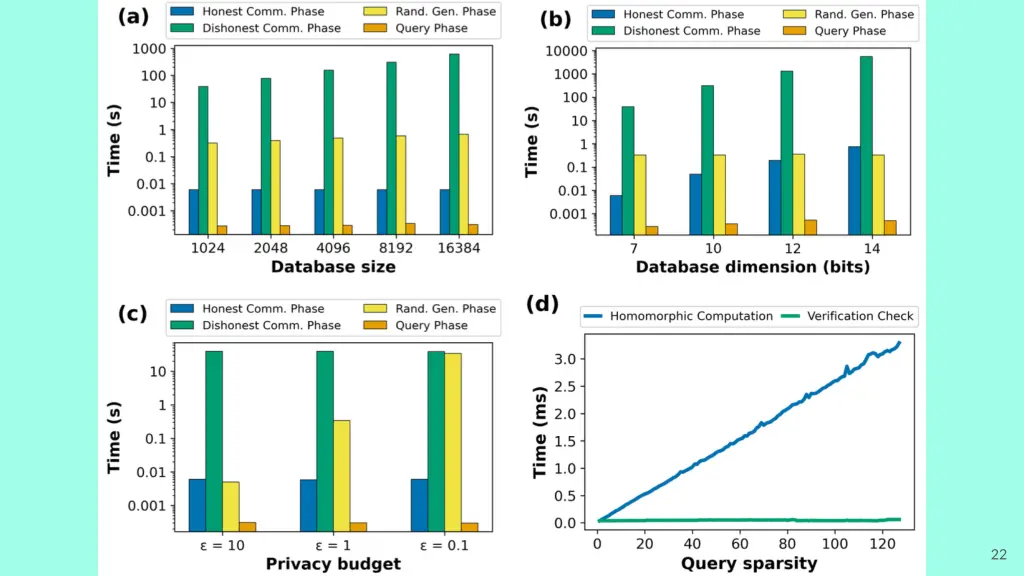
Querying Income on the Census PUMS Dataset DB of n = 7,000 individuals, dimension d = 37 (age, sex, edu, income) Privacy budget = 1 Query: How many individuals have income over $262,144? Query degree k = 6, sparsity s = 63 Commitment time = 136 s + randomness generation time = 494 ms Querying time = 1.9 ms 20
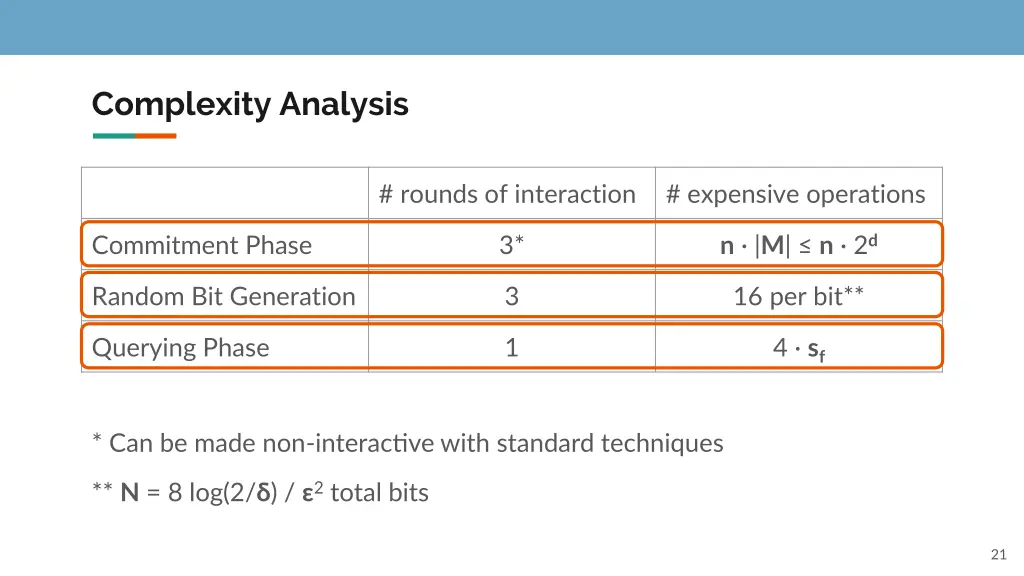
Complexity Analysis # rounds of interaction # expensive operations Commitment Phase 3* n |M| n 2d Random Bit Generation 3 16 per bit** Querying Phase 1 4 sf * Can be made non-interactive with standard techniques ** N = 8 log(2/ ) / 2total bits 21
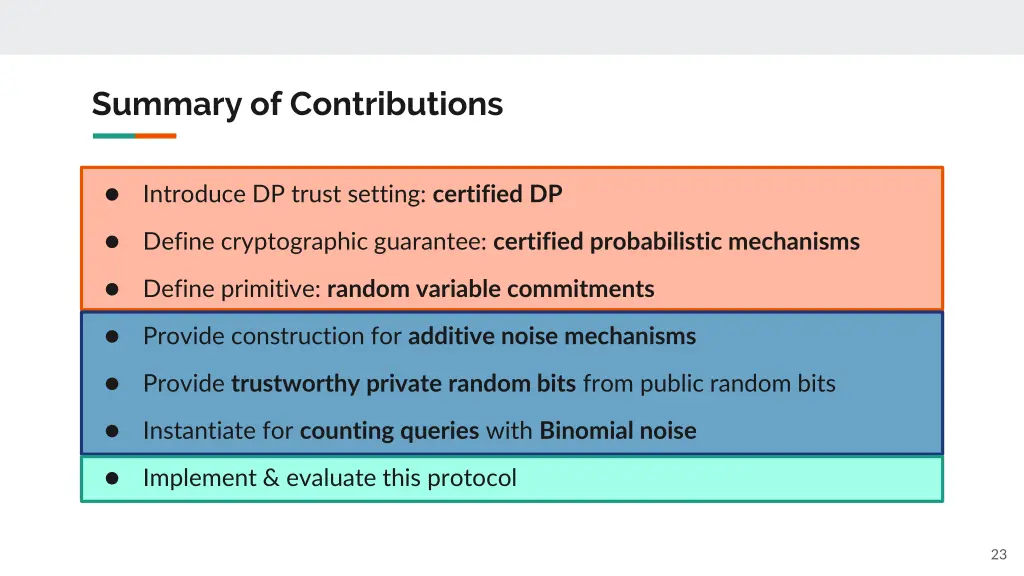
Summary of Contributions Introduce DP trust setting: certified DP Define cryptographic guarantee: certified probabilistic mechanisms Define primitive: random variable commitments Provide construction for additive noise mechanisms Provide trustworthy private random bits from public random bits Instantiate for counting queries with Binomial noise Implement & evaluate this protocol 23
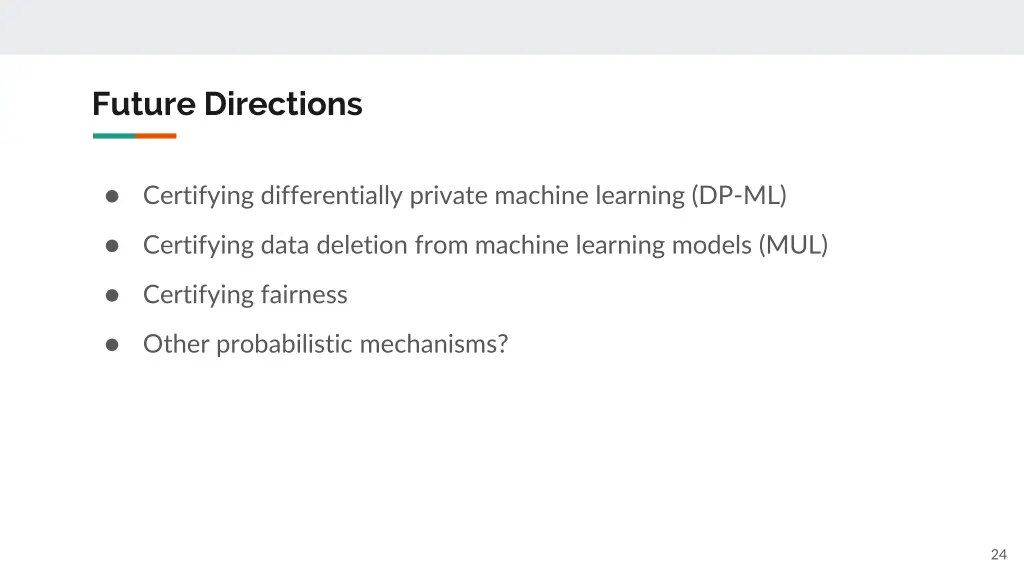
Future Directions Certifying differentially private machine learning (DP-ML) Certifying data deletion from machine learning models (MUL) Certifying fairness Other probabilistic mechanisms? 24
Questions? 25