Emerging technologies such as cyber and Artificial Intelligence (AI) pose significant challenges to nuclear security, with risks to command and control systems, nuclear facilities, data theft, and physical destruction. The absence of Nuclear Security Summits exacerbates these challenges, necessitating multilateral dialogue among nuclear actors. Recommendations for mitigating technological risks to nuclear security are crucial in safeguarding against potential threats posed by these advancements.
Please find below an Image/Link to download the presentation.
The content on the website is provided AS IS for your information and personal use only. It may not be sold, licensed, or shared on other websites without obtaining consent from the author. If you encounter any issues during the download, it is possible that the publisher has removed the file from their server.
You are allowed to download the files provided on this website for personal or commercial use, subject to the condition that they are used lawfully. All files are the property of their respective owners.
The content on the website is provided AS IS for your information and personal use only. It may not be sold, licensed, or shared on other websites without obtaining consent from the author.
E N D
Presentation Transcript
Emerging Technologies Challenges to Nuclear Security: Require Multilateral Dialogue between Nuclear Actors Sonia Naz
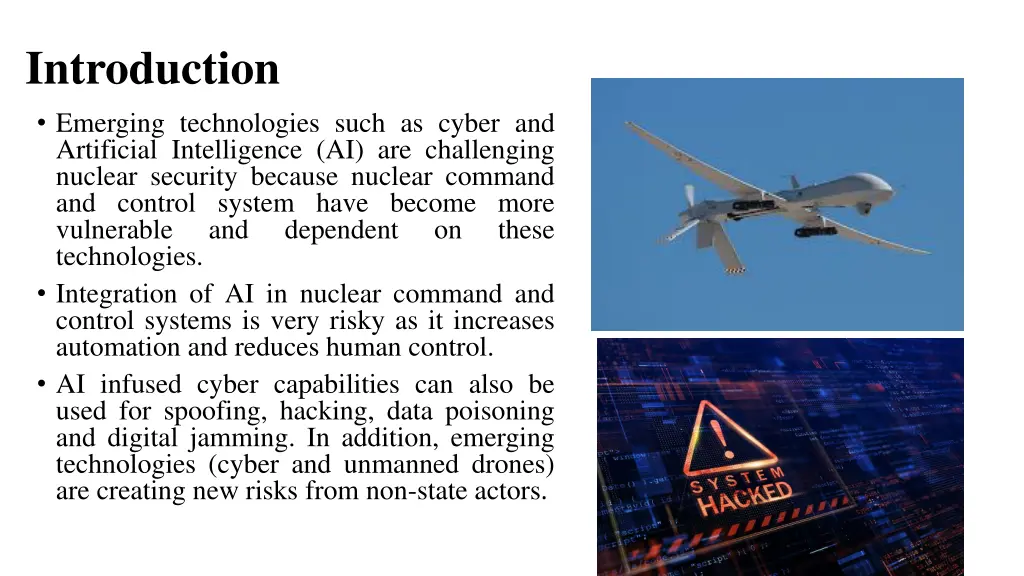
Introduction Emerging technologies such as cyber and Artificial Intelligence (AI) are challenging nuclear security because nuclear command and control system have become more vulnerable and dependent technologies. Integration of AI in nuclear command and control systems is very risky as it increases automation and reduces human control. AI infused cyber capabilities can also be used for spoofing, hacking, data poisoning and digital jamming. In addition, emerging technologies (cyber and unmanned drones) are creating new risks from non-state actors. on these
Risks Target to Nuclear Facilities Emerging technologies can target the command and control system, early caution, detection system and nuclear facilities. Emerging technologies are capable to undermine the strategic stability, communication, command and control systems. Undermine Second Strike Capability Nontraditional form of AI-based cyber-attacks can destruct the nuclear capabilities by undermining the second strike capability. The UAVs and acquirement of cyber offensive capabilities increase the challenges for nuclear security.
Data Theft of Nuclear Facilities The dependence on sophisticated technologies in modern system has increased the risk of cyber-attacks. The cyber threats to nuclear weapons are increasing because data hacks can disclose sensitive information of facilities, designs, layouts and operational information. The secret attacks can be conducted to target information and they may not be detected until the point of launch. Physically Destruction of Critical Equipment AI-based cyber-attacks automation does not involve any human and they can be used to attack, theft of sensitive data and manipulate the critical infrastructure. AI-based cyber capabilities can be used to destruct the physical damage if attackers successfully get access to manipulate the critical infrastructure.
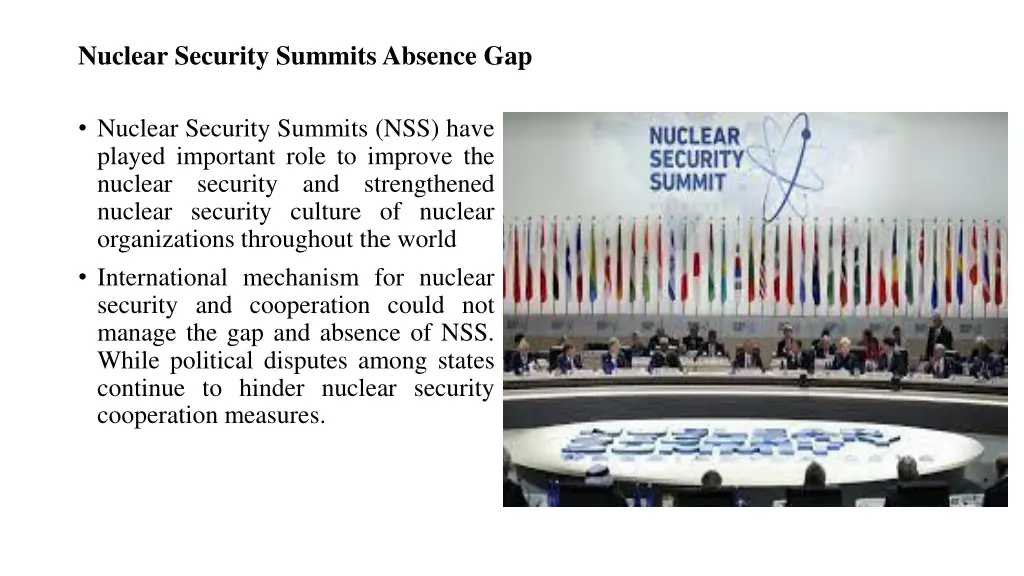
Nuclear Security Summits Absence Gap Nuclear Security Summits (NSS) have played important role to improve the nuclear security and strengthened nuclear security culture of nuclear organizations throughout the world International mechanism for nuclear security and cooperation could not manage the gap and absence of NSS. While political disputes among states continue to hinder nuclear security cooperation measures.
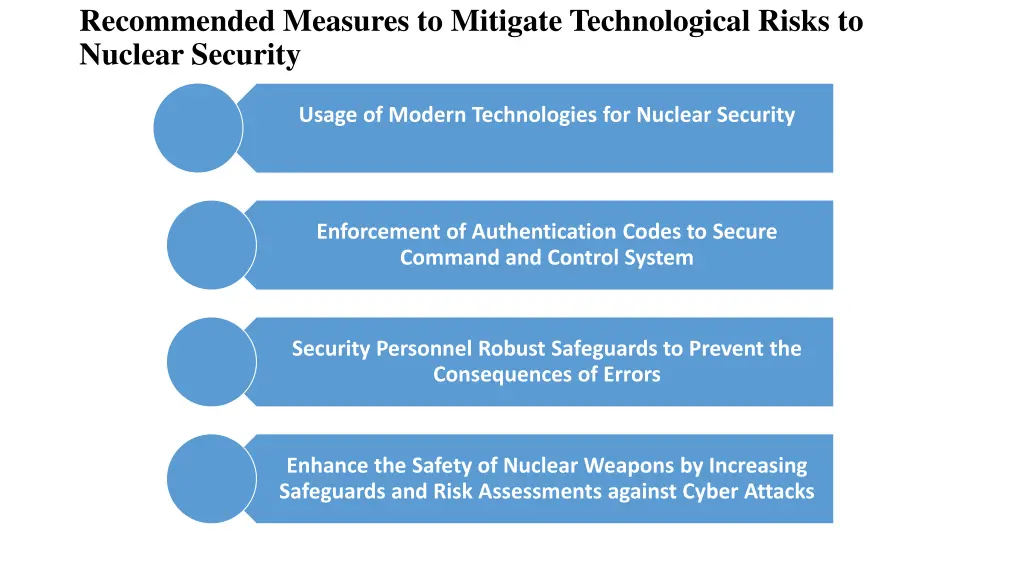
Recommended Measures to Mitigate Technological Risks to Nuclear Security Usage of Modern Technologies for Nuclear Security Enforcement of Authentication Codes to Secure Command and Control System Security Personnel Robust Safeguards to Prevent the Consequences of Errors Enhance the Safety of Nuclear Weapons by Increasing Safeguards and Risk Assessments against Cyber Attacks
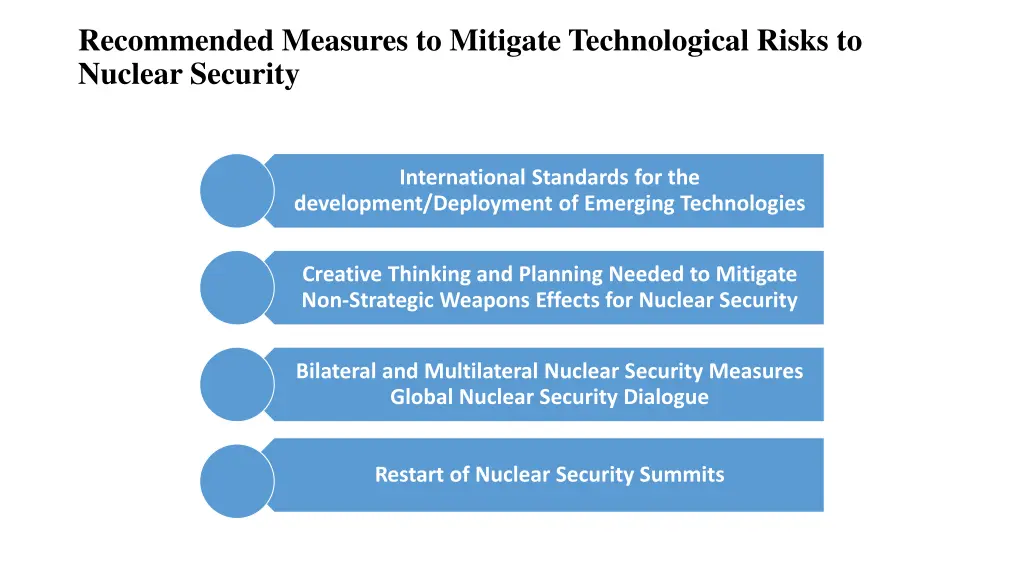
Recommended Measures to Mitigate Technological Risks to Nuclear Security International Standards for the development/Deployment of Emerging Technologies Creative Thinking and Planning Needed to Mitigate Non-Strategic Weapons Effects for Nuclear Security Bilateral and Multilateral Nuclear Security Measures Global Nuclear Security Dialogue Restart of Nuclear Security Summits
Usage of Modern Technologies for Nuclear Security Emerging technologies such as AI and cyber are posing threats to nuclear security but at the same time emerging technologies like AI and cyber can be used to secure and monitor the nuclear material because AI-based advance surveillance system provide real time information about the threats and unauthorized access of nuclear material. While attack on nuclear facilities can be halt through installing advance digital security systems. Since cyber security and digital protection can help to secure the nuclear material from cyber-attacks.
Bilateral and Multilateral Nuclear Security Measures Every country is responsible for its own country nuclear facilities but measures for mitigation of nuclear risk can be good option if states work together. Bilateral and multilateral nuclear security cooperation can be helpful to implement strong nuclear security culture. The technological revolution requires cooperation among the states to reduce nuclear security threats as these technological revolutions and nuclear security threats do not respect any international border. Restart of Nuclear Security Summits Technological revolution requires the development of bilateral and multilateral Confidence-Building Measures in the forms of increased strategic dialogue and potential arms control agreements to control the implications of AI. Initiative of NSS is requirement of technological era to secure the nuclear material, command, control and nuclear facilities.
Enforcement of Authentication Codes to Secure Command and Control System There should be proper enforcement of verification codes to make secure the command and control system to mitigate the unintentional launch of nuclear weapons. Personnel Robust Safeguards to Contain the Consequences of Errors The employees and security personnel should be vigilant to halt the accidents and identify the errors.
Enhance the Safety of Nuclear Weapons by Increasing Safeguards and Risk Assessments against Cyber Attacks The wide range of dynamics that comes under cyber domain transform the nature, capabilities and vulnerabilities of nuclear weapons (security policy and warfare in the wider contexts. Design Basis Threat (DBT) update regarding technological aspects can help to mitigate technological risks and threats to nuclear facilities. States can use up to date of DBT approach to reduce the risk. International Standards for the development/Deployment of Emerging Technologies There should be development of international standards for the integration, testing and deployment of emerging technologies to regulate those technologies and to make sure their compliance with arms control regimes.
Creative Thinking and Planning Needed to Mitigate Non-Strategic Weapons Effects for Nuclear Security Emerging technologies such as AI and cyber force international community to think more creatively to regulate these technologies because AI and cyber would not to be regulated like traditional weapons and traditional arms control measures.