Chapter 3 - Adjusting The Accounts: Learning Objectives and Concepts
This content covers the accrual basis of accounting, adjusting entries, fiscal and calendar years, revenue recognition principles, and more. Learn about the time period assumption, accrual vs. cash-basis accounting, and how to prepare adjusting entries. Understanding these concepts is crucial for accurate financial reporting.

Download Presentation

Please find below an Image/Link to download the presentation.
The content on the website is provided AS IS for your information and personal use only. It may not be sold, licensed, or shared on other websites without obtaining consent from the author.If you encounter any issues during the download, it is possible that the publisher has removed the file from their server.
You are allowed to download the files provided on this website for personal or commercial use, subject to the condition that they are used lawfully. All files are the property of their respective owners.
The content on the website is provided AS IS for your information and personal use only. It may not be sold, licensed, or shared on other websites without obtaining consent from the author.
E N D
Presentation Transcript
Chapter 3 Adjusting The Accounts Lectured by Bnar Kareem 3-1
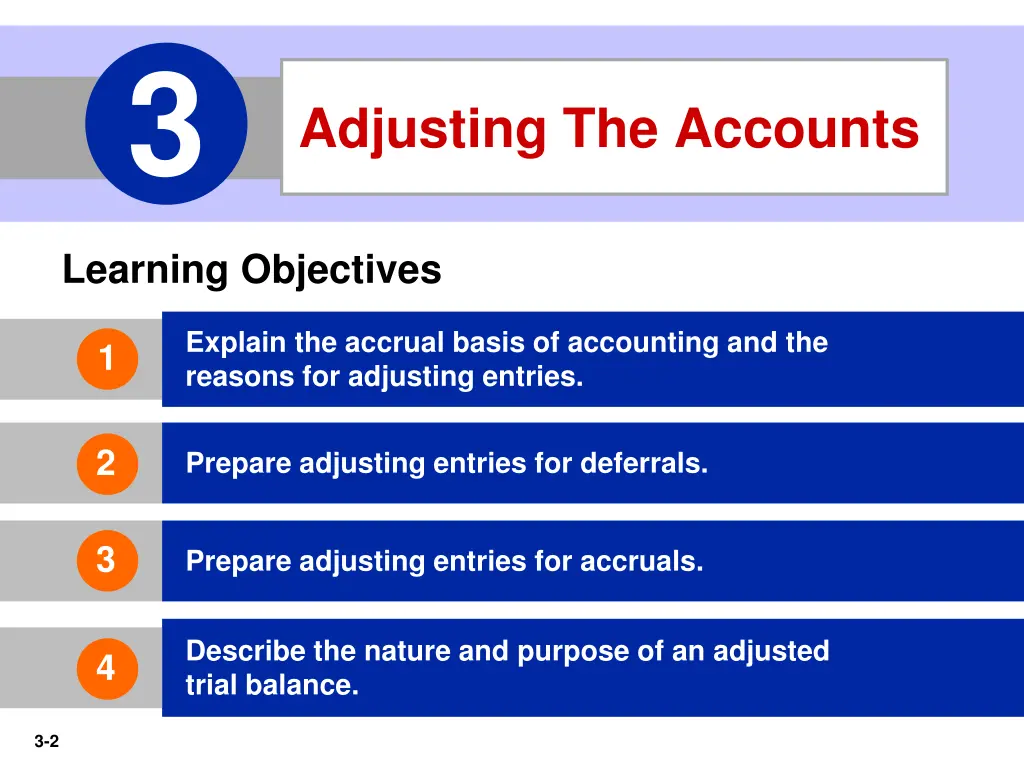
3 Adjusting The Accounts Learning Objectives Explain the accrual basis of accounting and the reasons for adjusting entries. 1 2 Prepare adjusting entries for deferrals. 3 Prepare adjusting entries for accruals. Describe the nature and purpose of an adjusted trial balance. 4 3-2
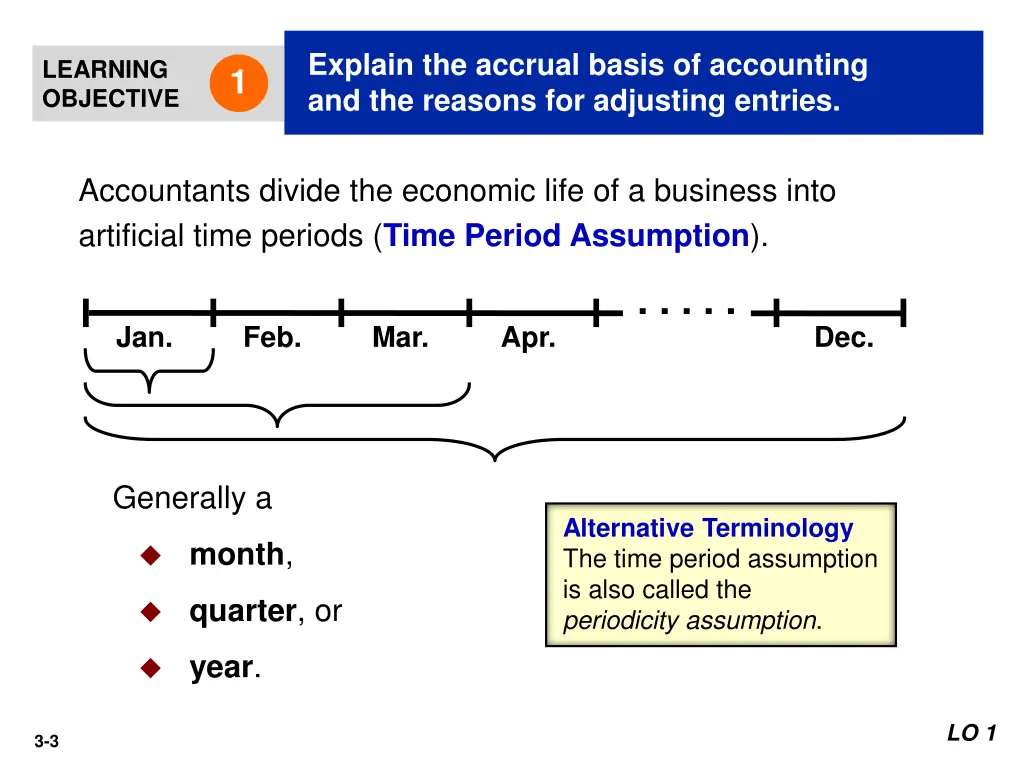
Explain the accrual basis of accounting and the reasons for adjusting entries. LEARNING OBJECTIVE 1 Accountants divide the economic life of a business into artificial time periods (Time Period Assumption). . . . . . Jan. Feb. Mar. Apr. Dec. Generally a Alternative Terminology The time period assumption is also called the periodicity assumption. month, quarter, or year. LO 1 3-3
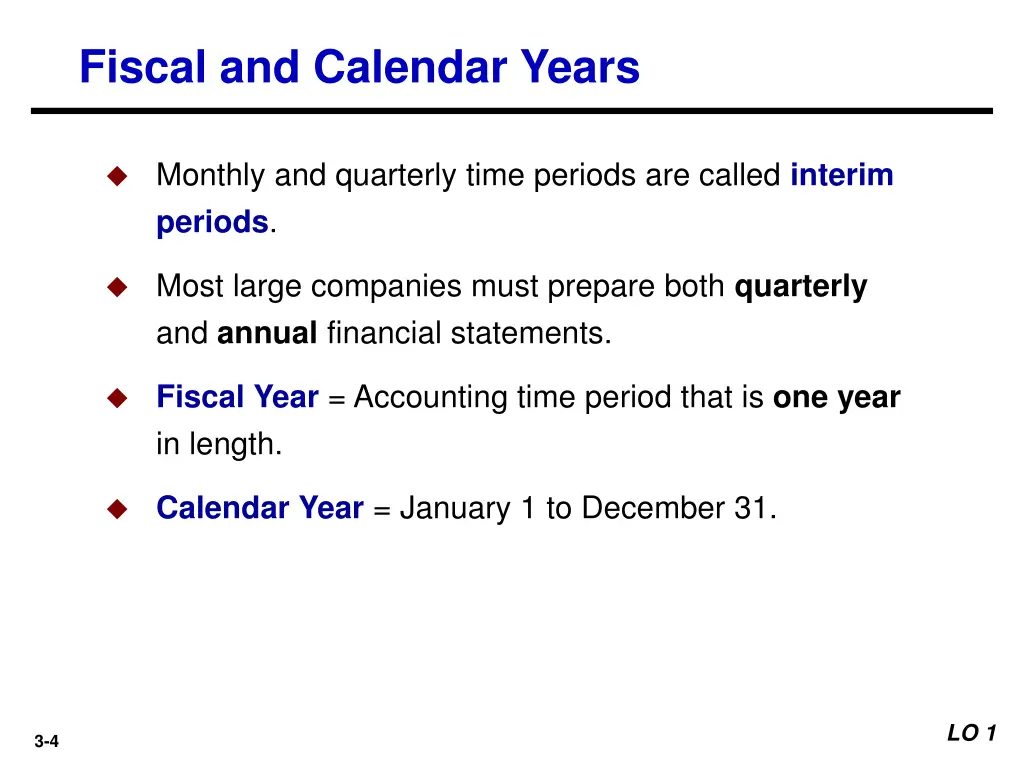
Fiscal and Calendar Years Monthly and quarterly time periods are called interim periods. Most large companies must prepare both quarterly and annual financial statements. Fiscal Year = Accounting time period that is one year in length. Calendar Year = January 1 to December 31. LO 1 3-4
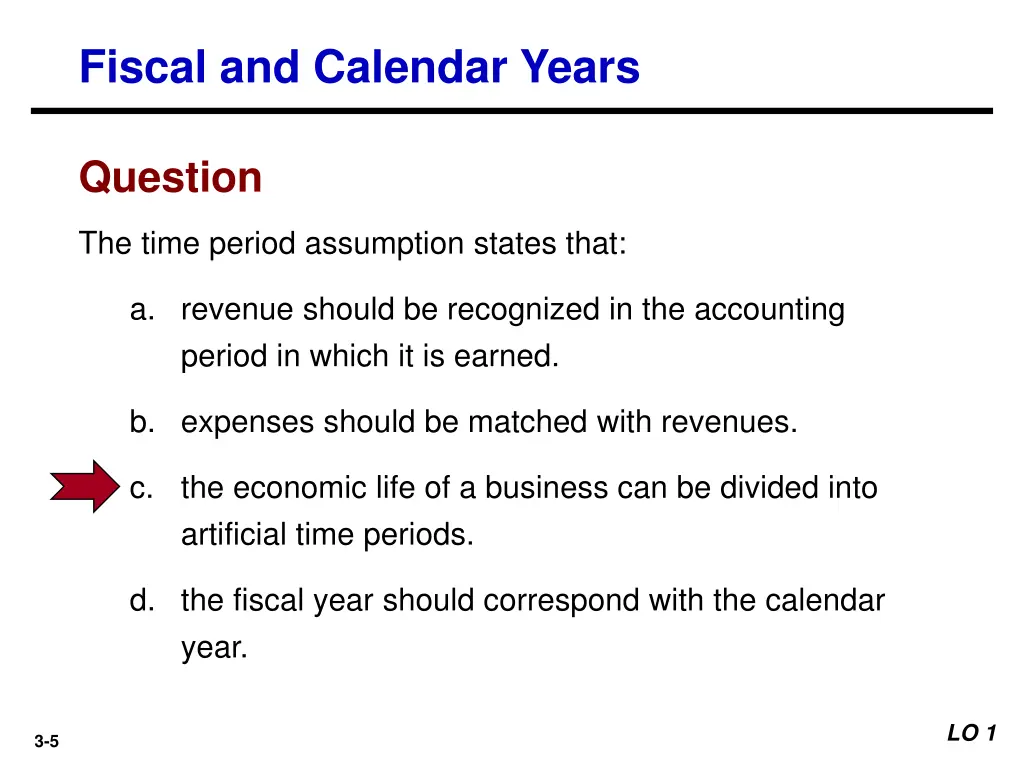
Fiscal and Calendar Years Question The time period assumption states that: a. revenue should be recognized in the accounting period in which it is earned. b. expenses should be matched with revenues. c. the economic life of a business can be divided into artificial time periods. d. the fiscal year should correspond with the calendar year. LO 1 3-5
Accrual- versus Cash-Basis Accounting Accrual-Basis Accounting Transactions recorded in the periods in which the events occur. Companies recognizerevenues when theyperform services (rather than when they receive cash). Expenses are recognized when incurred (rather than when paid). In accordance with generally accepted accounting principles (GAAP). LO 1 3-6
Accrual- versus Cash-Basis Accounting Cash-Basis Accounting Revenues recognized when cash is received. Expenses recognized when cash is paid. Cash-basis accounting is not in accordance with generally accepted accounting principles (GAAP). LO 1 3-7
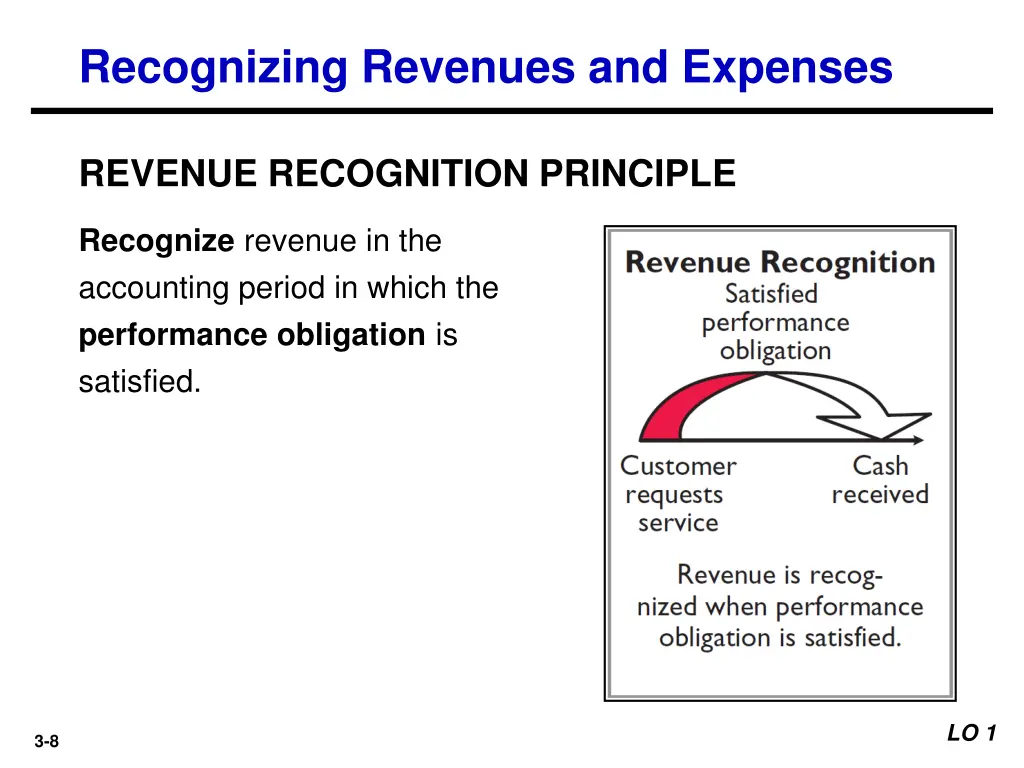
Recognizing Revenues and Expenses REVENUE RECOGNITION PRINCIPLE Recognize revenue in the accounting period in which the performance obligation is satisfied. LO 1 3-8