Characteristics of the Atmosphere
Study the characteristics of the atmosphere including weather, climate, gas composition, gas cycles, atmospheric pressure, measuring techniques, layers of the atmosphere, and atmosphere layer characteristics. Explore how oxygen, nitrogen, and other gases interact and the impact of gravity on atmospheric pressure.

Download Presentation

Please find below an Image/Link to download the presentation.
The content on the website is provided AS IS for your information and personal use only. It may not be sold, licensed, or shared on other websites without obtaining consent from the author.If you encounter any issues during the download, it is possible that the publisher has removed the file from their server.
You are allowed to download the files provided on this website for personal or commercial use, subject to the condition that they are used lawfully. All files are the property of their respective owners.
The content on the website is provided AS IS for your information and personal use only. It may not be sold, licensed, or shared on other websites without obtaining consent from the author.
E N D
Presentation Transcript
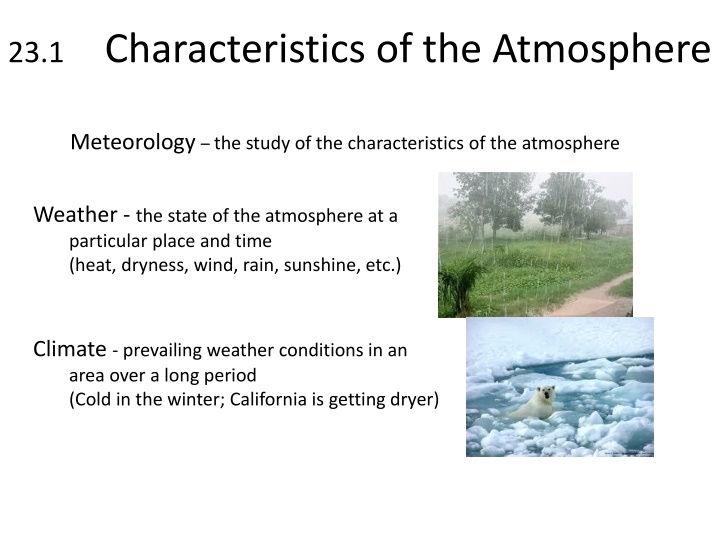
Characteristics of the Atmosphere 23.1 Meteorology the study of the characteristics of the atmosphere Weather - the state of the atmosphere at a particular place and time (heat, dryness, wind, rain, sunshine, etc.) Climate - prevailing weather conditions in an area over a long period (Cold in the winter; California is getting dryer)
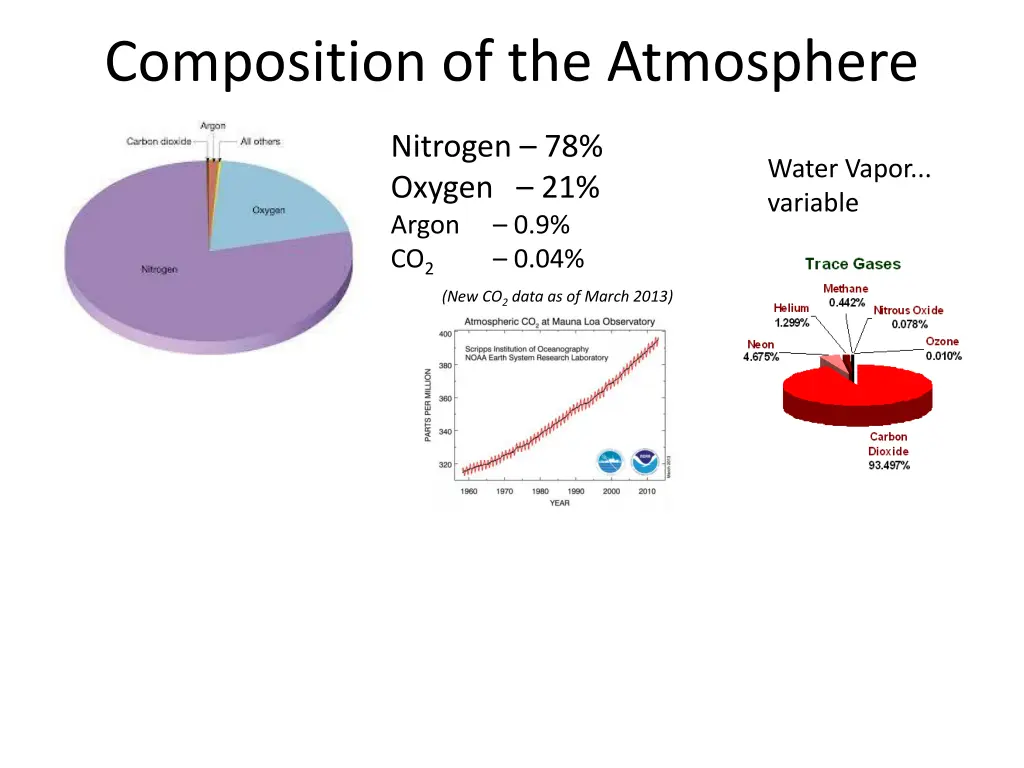
Composition of the Atmosphere Nitrogen 78% Oxygen 21% Argon 0.9% CO2 0.04% Water Vapor... variable (New CO2 data as of March 2013)
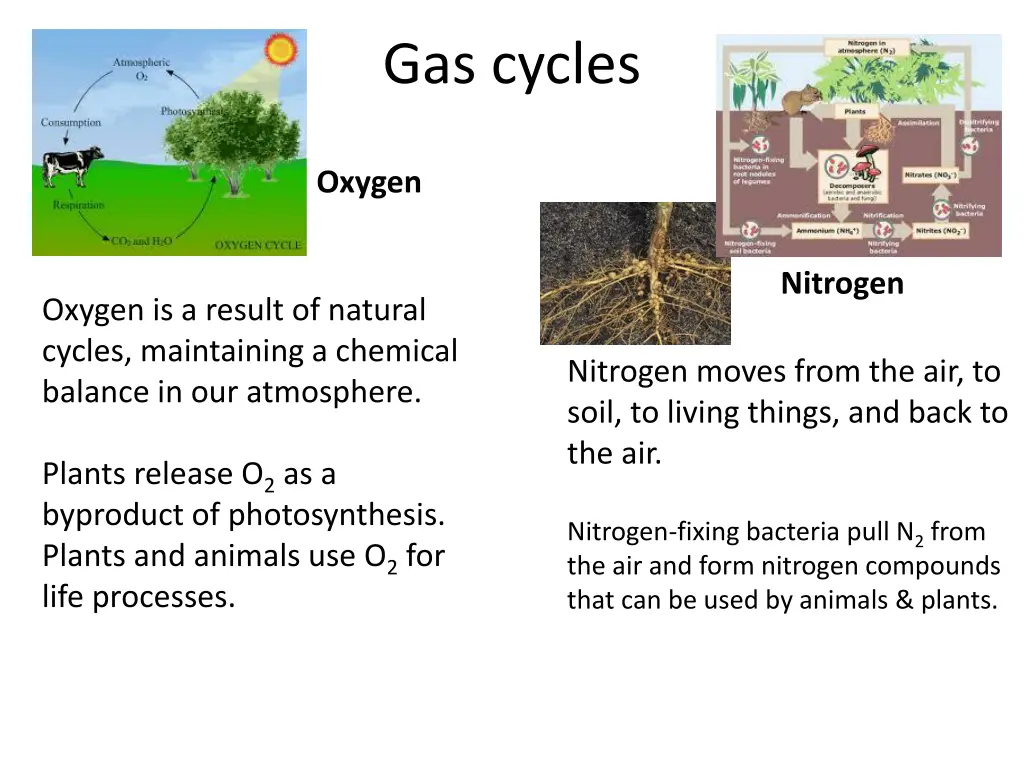
Gas cycles Oxygen Nitrogen Oxygen is a result of natural cycles, maintaining a chemical balance in our atmosphere. Nitrogen moves from the air, to soil, to living things, and back to the air. Plants release O2 as a byproduct of photosynthesis. Plants and animals use O2 for life processes. Nitrogen-fixing bacteria pull N2 from the air and form nitrogen compounds that can be used by animals & plants.
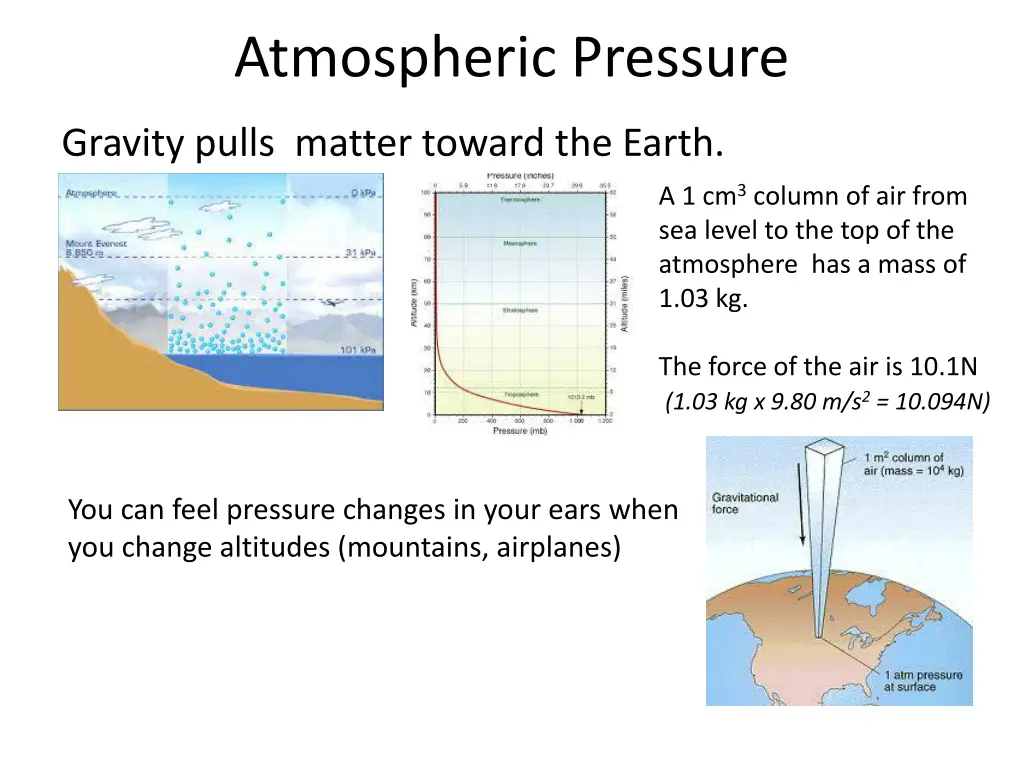
Atmospheric Pressure Gravity pulls matter toward the Earth. A 1 cm3 column of air from sea level to the top of the atmosphere has a mass of 1.03 kg. The force of the air is 10.1N (1.03 kg x 9.80 m/s2 = 10.094N) You can feel pressure changes in your ears when you change altitudes (mountains, airplanes)
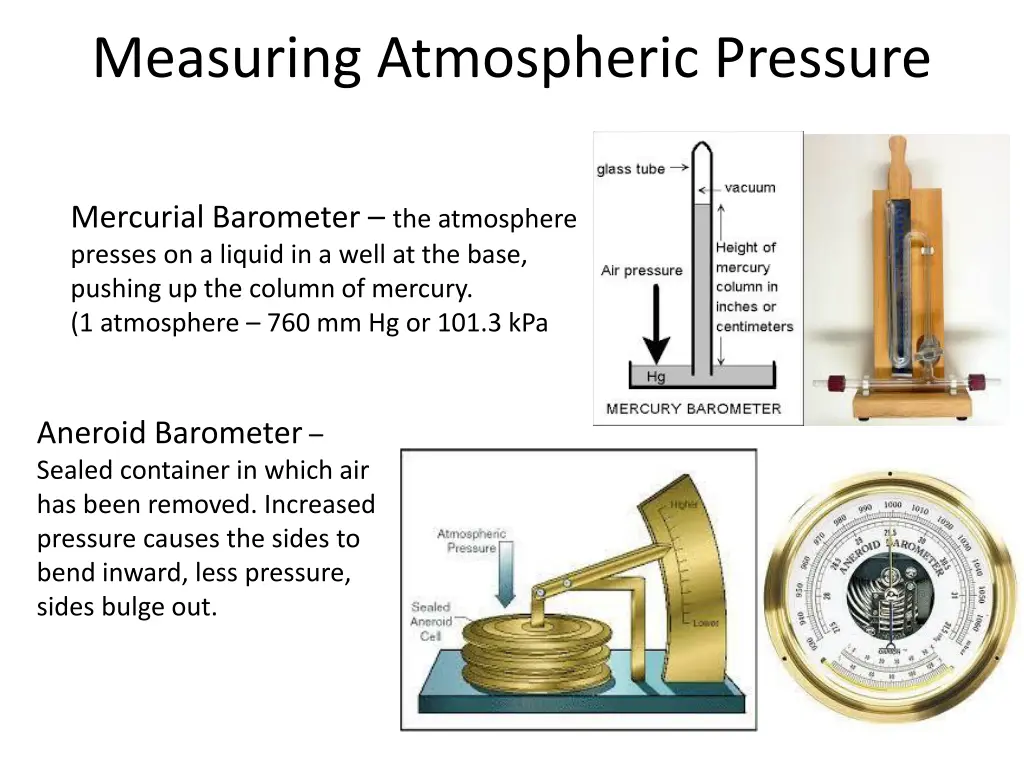
Measuring Atmospheric Pressure Mercurial Barometer the atmosphere presses on a liquid in a well at the base, pushing up the column of mercury. (1 atmosphere 760 mm Hg or 101.3 kPa Aneroid Barometer Sealed container in which air has been removed. Increased pressure causes the sides to bend inward, less pressure, sides bulge out.
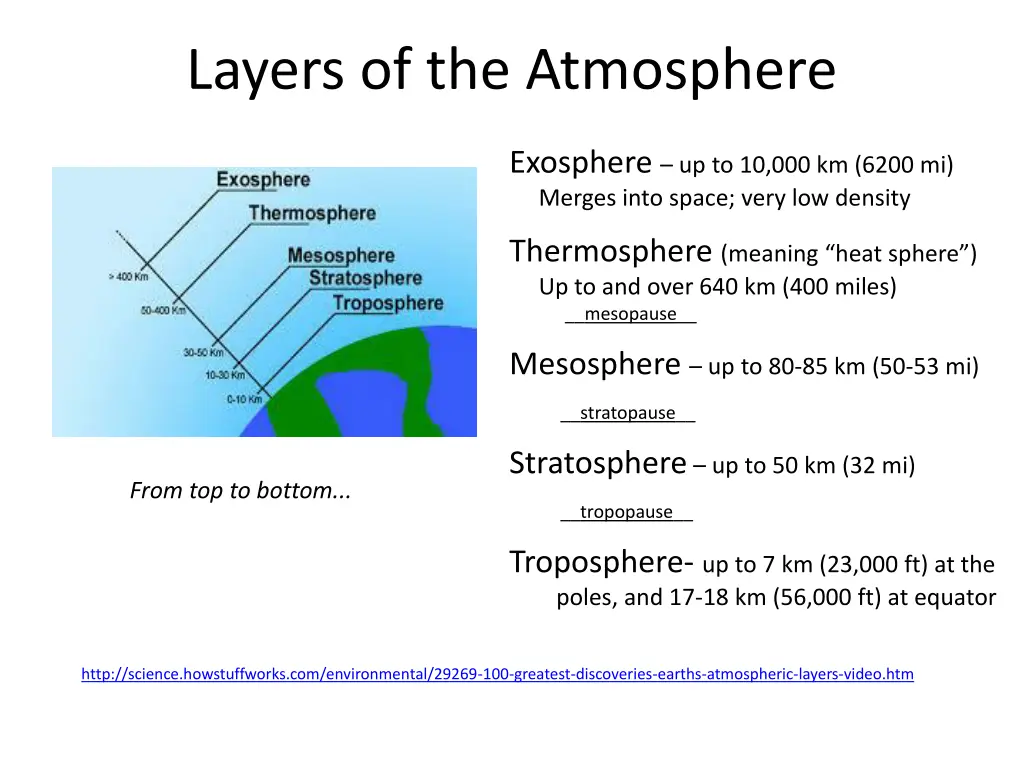
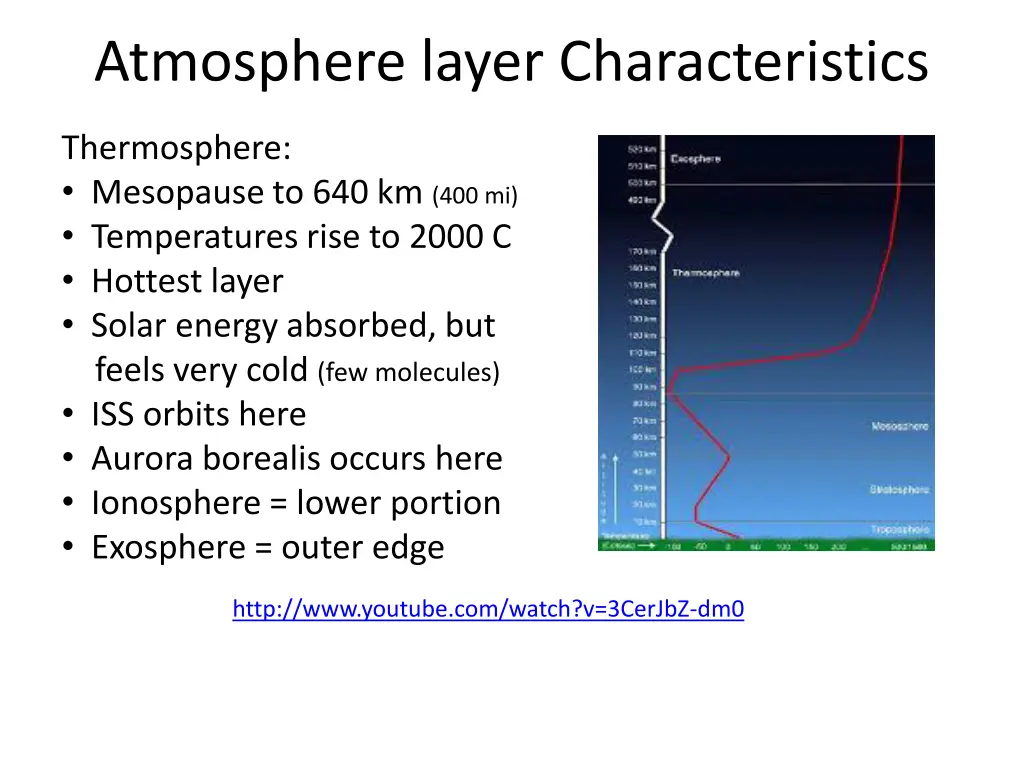
Layers of the Atmosphere Exosphere up to 10,000 km (6200 mi) Merges into space; very low density Thermosphere (meaning heat sphere ) Up to and over 640 km (400 miles) __mesopause__ Mesosphere up to 80-85 km (50-53 mi) __stratopause__ Stratosphere up to 50 km (32 mi) From top to bottom... __tropopause__ Troposphere- up to 7 km (23,000 ft) at the poles, and 17-18 km (56,000 ft) at equator http://science.howstuffworks.com/environmental/29269-100-greatest-discoveries-earths-atmospheric-layers-video.htm
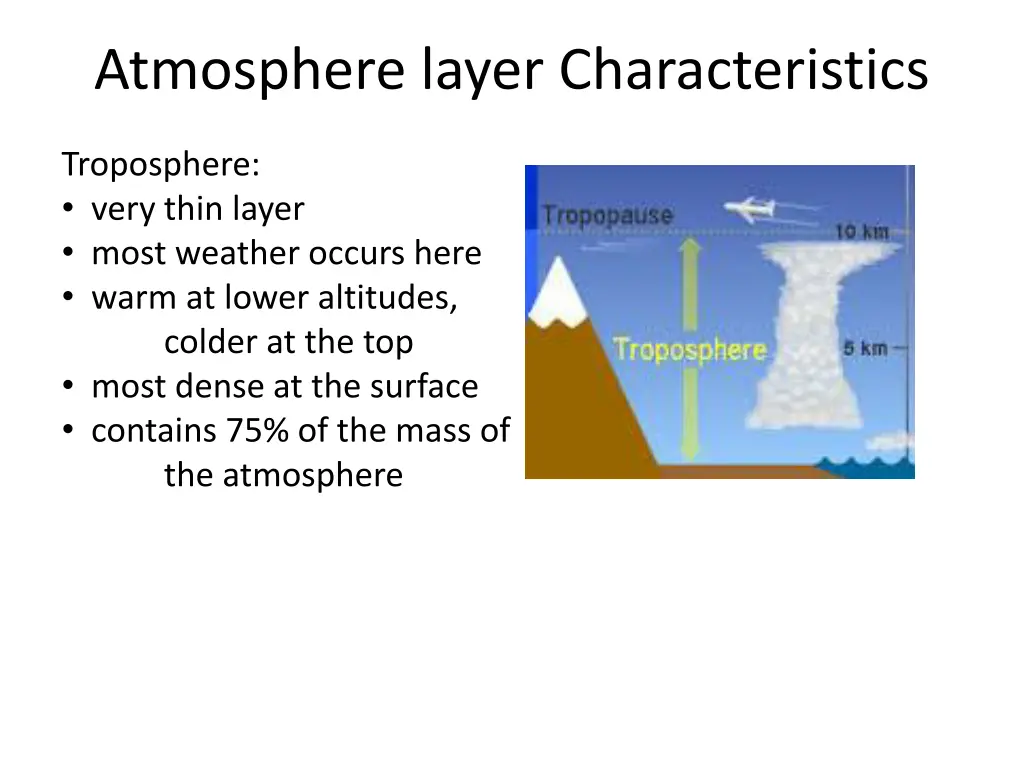
Atmosphere layer Characteristics Troposphere: very thin layer most weather occurs here warm at lower altitudes, colder at the top most dense at the surface contains 75% of the mass of the atmosphere
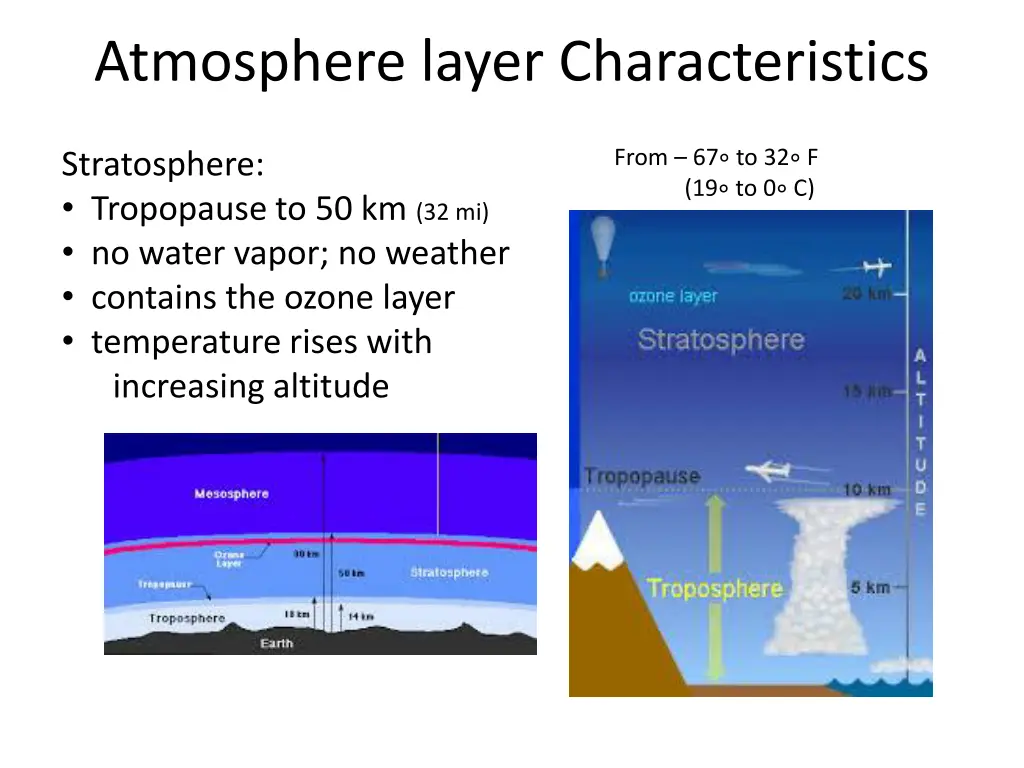
Atmosphere layer Characteristics From 67 to 32 F (19 to 0 C) Stratosphere: Tropopause to 50 km (32 mi) no water vapor; no weather contains the ozone layer temperature rises with increasing altitude
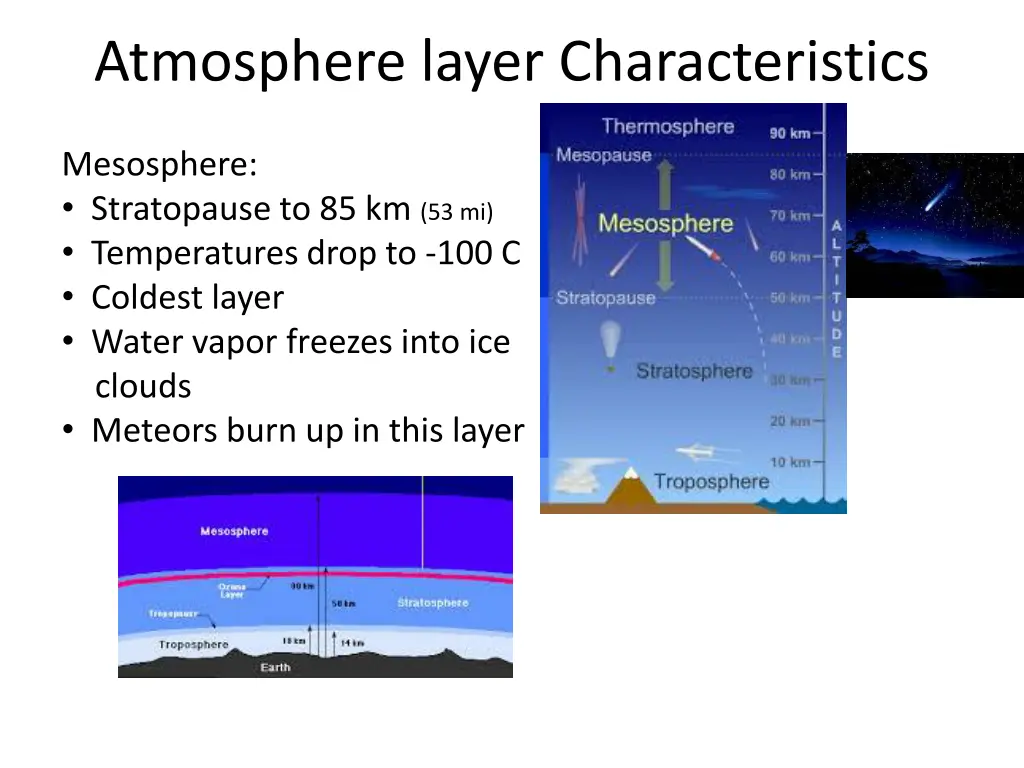
Atmosphere layer Characteristics Mesosphere: Stratopause to 85 km (53 mi) Temperatures drop to -100 C Coldest layer Water vapor freezes into ice clouds Meteors burn up in this layer
Atmosphere layer Characteristics Thermosphere: Mesopause to 640 km (400 mi) Temperatures rise to 2000 C Hottest layer Solar energy absorbed, but feels very cold (few molecules) ISS orbits here Aurora borealis occurs here Ionosphere = lower portion Exosphere = outer edge http://www.youtube.com/watch?v=3CerJbZ-dm0