Chronology of the Great Schism: Decline of the Church, Papal Controversies, and Councils
The Great Schism in the Christian Church marked by papal struggles, multiple claimants to the papacy, and political influence. It began with Pope Boniface VIII's conflicts with Philip IV, leading to the Avignon Papacy. The schism deepened with the election of rival popes like Urban VI and Clement VII, culminating in the Council of Constance resolving the crisis. Explore the intricate chronology and power dynamics behind this significant period in Church history.

Download Presentation

Please find below an Image/Link to download the presentation.
The content on the website is provided AS IS for your information and personal use only. It may not be sold, licensed, or shared on other websites without obtaining consent from the author.If you encounter any issues during the download, it is possible that the publisher has removed the file from their server.
You are allowed to download the files provided on this website for personal or commercial use, subject to the condition that they are used lawfully. All files are the property of their respective owners.
The content on the website is provided AS IS for your information and personal use only. It may not be sold, licensed, or shared on other websites without obtaining consent from the author.
E N D
Presentation Transcript
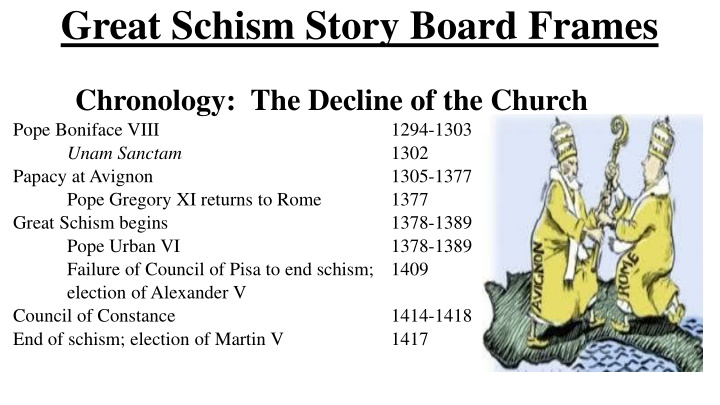
Great Schism Story Board Frames Chronology: The Decline of the Church Pope Boniface VIII Unam Sanctam Papacy at Avignon Pope Gregory XI returns to Rome Great Schism begins Pope Urban VI Failure of Council of Pisa to end schism; election of Alexander V Council of Constance End of schism; election of Martin V 1294-1303 1302 1305-1377 1377 1378-1389 1378-1389 1409 1414-1418 1417
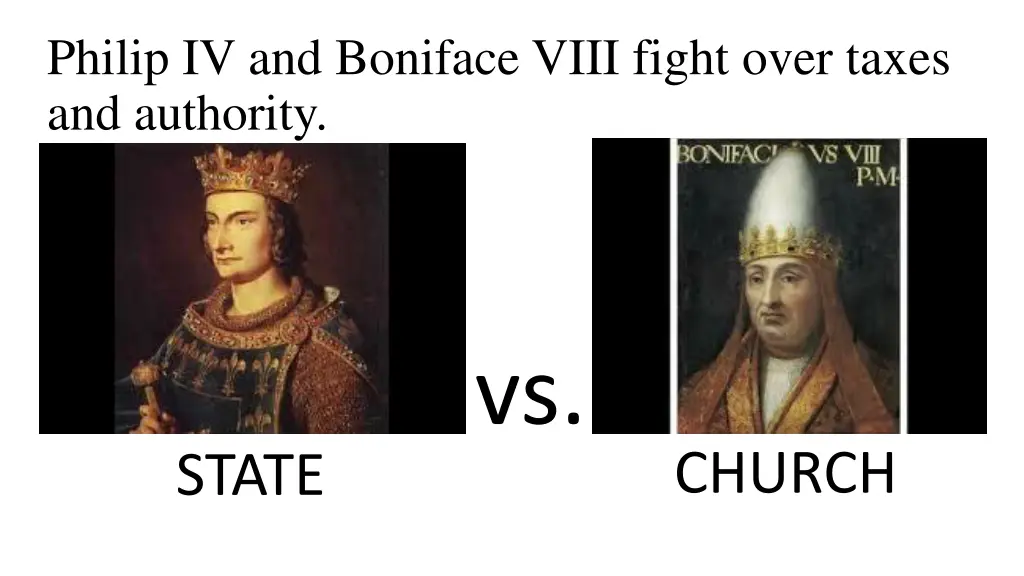
Philip IV and Boniface VIII fight over taxes and authority. vs. CHURCH STATE
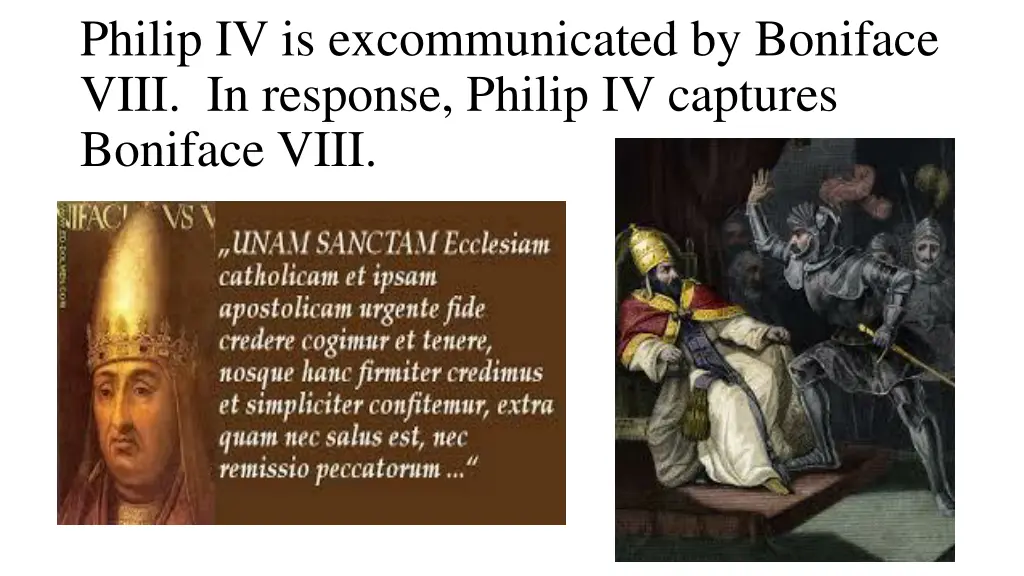
Philip IV is excommunicated by Boniface VIII. In response, Philip IV captures Boniface VIII.
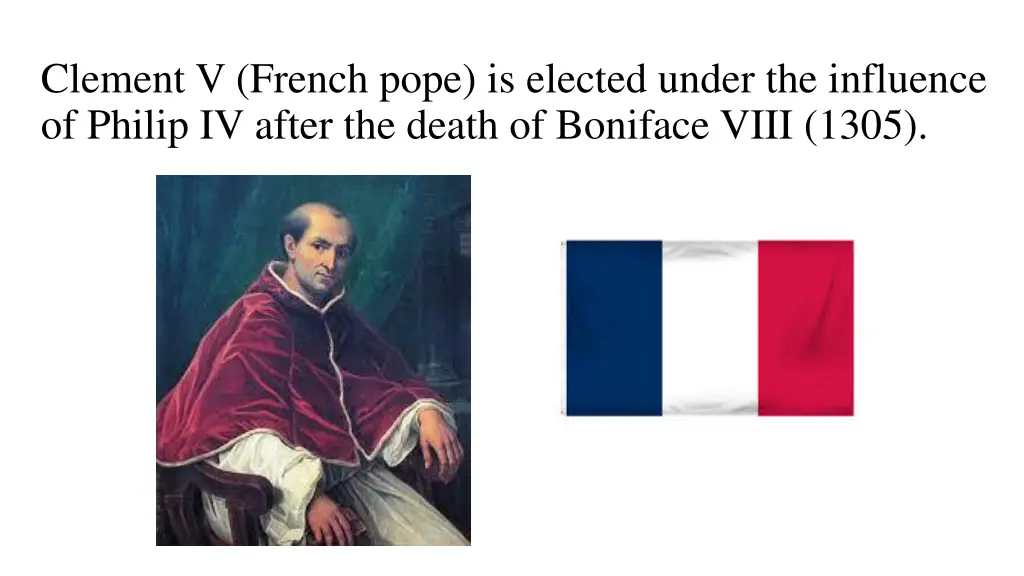
Clement V (French pope) is elected under the influence of Philip IV after the death of Boniface VIII (1305).
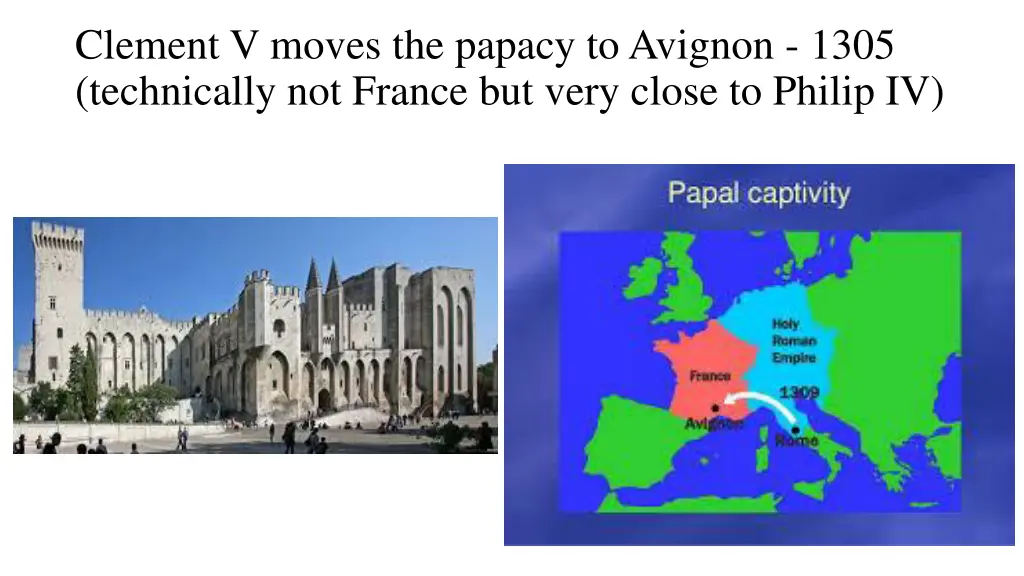
Clement V moves the papacy to Avignon - 1305 (technically not France but very close to Philip IV)
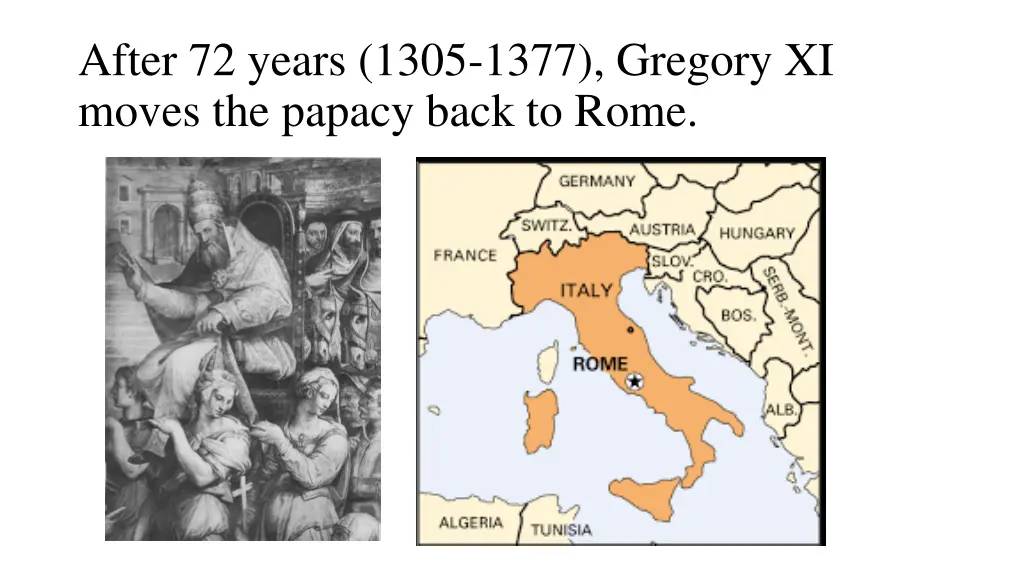
After 72 years (1305-1377), Gregory XI moves the papacy back to Rome.
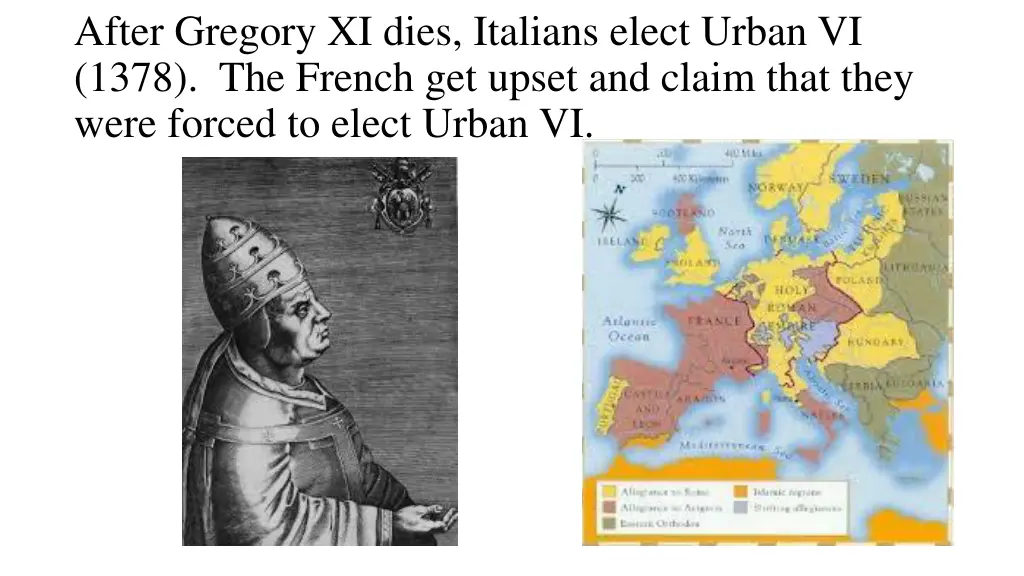
After Gregory XI dies, Italians elect Urban VI (1378). The French get upset and claim that they were forced to elect Urban VI.
French Cardinals leave Rome and claim they were pressured to vote for Urban VI, thus making his selection as pope, null and void.
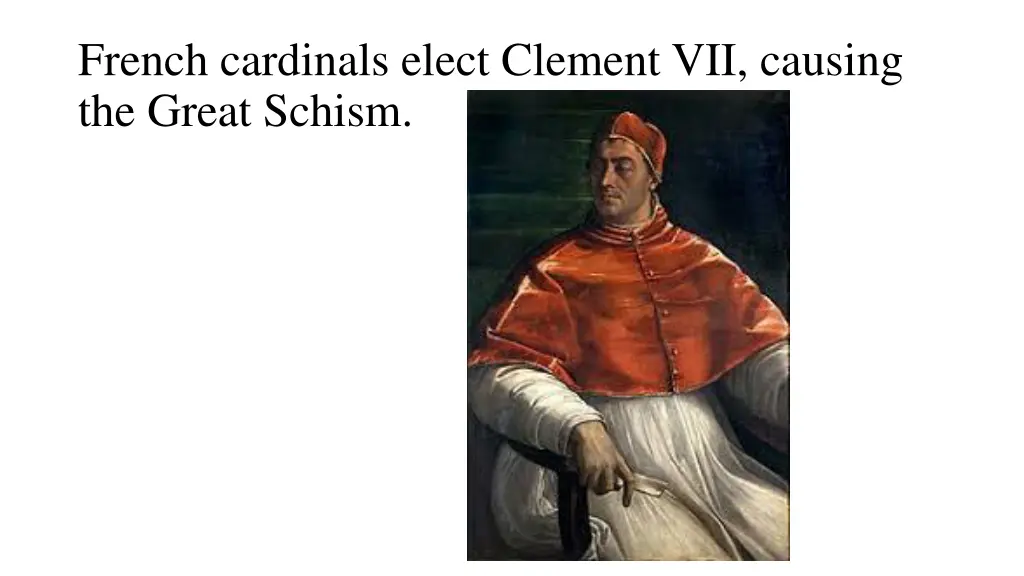
French cardinals elect Clement VII, causing the Great Schism.
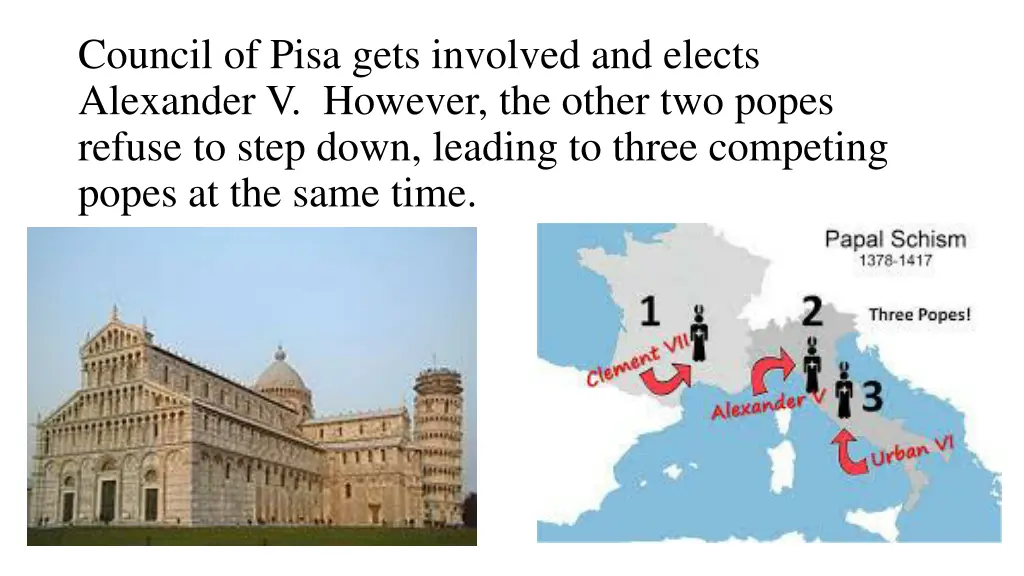
Council of Pisa gets involved and elects Alexander V. However, the other two popes refuse to step down, leading to three competing popes at the same time.
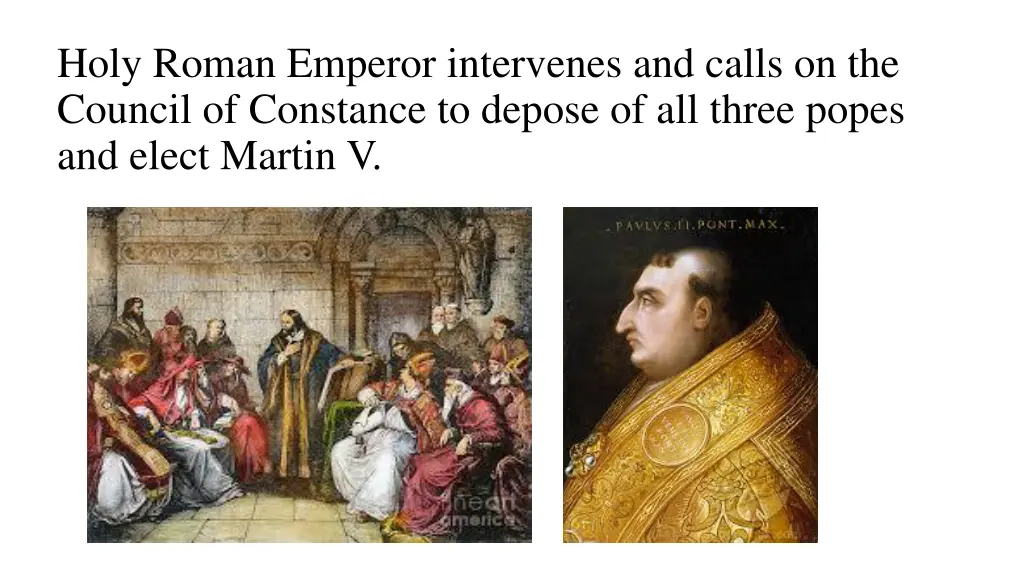
Holy Roman Emperor intervenes and calls on the Council of Constance to depose of all three popes and elect Martin V.
Major Takeaways Decline in prestige and respect for the institutional church. The rise of conciliarism (Church councils held spiritual authority over the pope) Rise in popular religion