Clinical Innovation and Adoption Initiative - Letter of Intent Template
A comprehensive and detailed template for drafting a Letter of Intent in the healthcare sector, covering key aspects such as problem statement, solution, budget breakdown, and more.

Download Presentation

Please find below an Image/Link to download the presentation.
The content on the website is provided AS IS for your information and personal use only. It may not be sold, licensed, or shared on other websites without obtaining consent from the author.If you encounter any issues during the download, it is possible that the publisher has removed the file from their server.
You are allowed to download the files provided on this website for personal or commercial use, subject to the condition that they are used lawfully. All files are the property of their respective owners.
The content on the website is provided AS IS for your information and personal use only. It may not be sold, licensed, or shared on other websites without obtaining consent from the author.
E N D
Presentation Transcript
Clinical Innovation and Adoption Initiative Innovation 2 Adopt Letter of Intent Template <Insert Project Title; Healthcare Cluster(s);PI> Restricted, Sensitive (Normal)
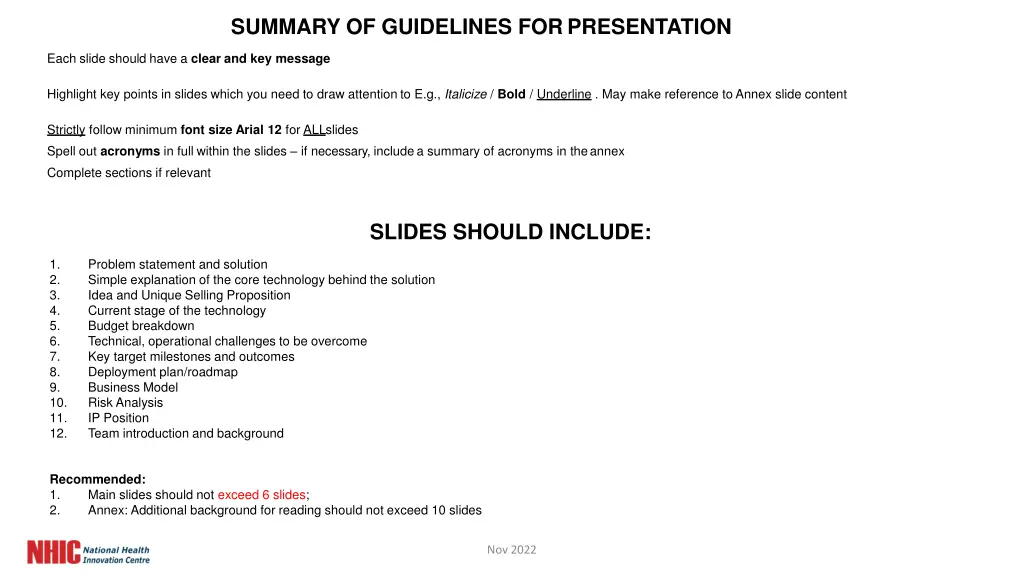
SUMMARY OF GUIDELINES FOR PRESENTATION Each slide should have a clear and key message Highlight key points in slides which you need to draw attention to E.g., Italicize / Bold / Underline . May make reference to Annex slide content Strictly follow minimum font size Arial 12 for ALL slides Spell out acronyms in full within the slides if necessary, include a summary of acronyms in the annex Complete sections if relevant SLIDES SHOULD INCLUDE: 1. 2. 3. 4. 5. 6. 7. 8. 9. 10. 11. 12. Problem statement and solution Simple explanation of the core technology behind the solution Idea and Unique Selling Proposition Current stage of the technology Budget breakdown Technical, operational challenges to be overcome Key target milestones and outcomes Deployment plan/roadmap Business Model Risk Analysis IP Position Team introduction and background Recommended: 1. Main slides should not exceed 6 slides; 2. Annex: Additional background for reading should not exceed 10 slides Nov 2022
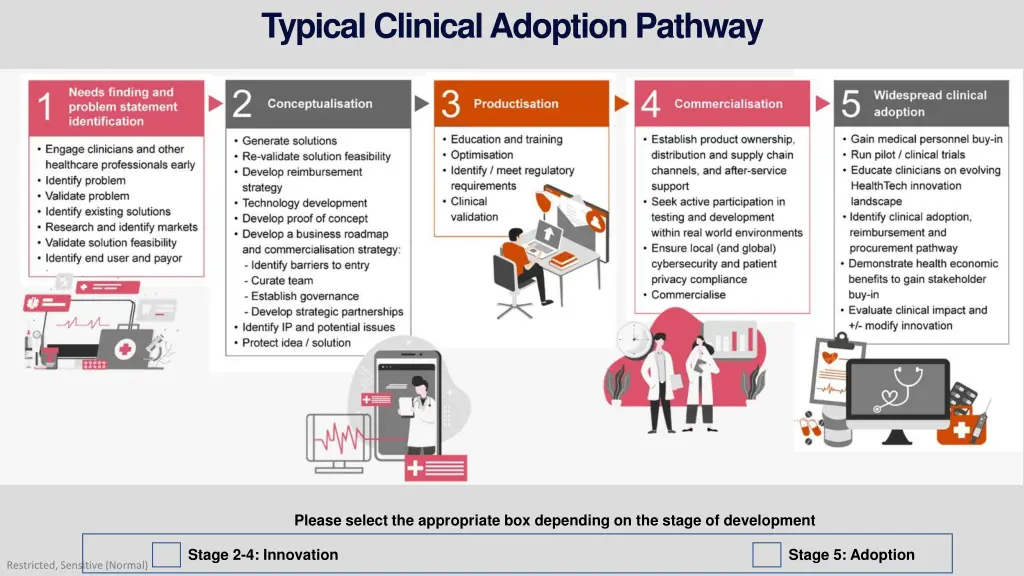
Typical Clinical Adoption Pathway Please select the appropriate box depending on the stage of development Stage 2-4: Innovation Stage 5: Adoption Restricted, Sensitive (Normal)
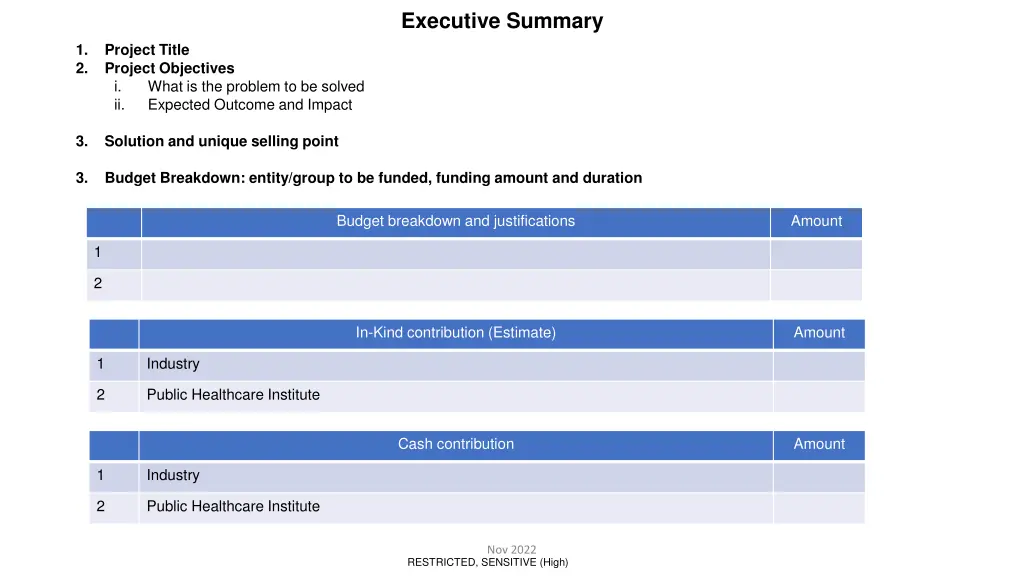
Executive Summary 1. 2. Project Title Project Objectives i. What is the problem to be solved ii. Expected Outcome and Impact 3. Solution and unique selling point 3. Budget Breakdown: entity/group to be funded, funding amount and duration Budget breakdown and justifications Amount 1 2 In-Kind contribution (Estimate) Amount 1 Industry 2 Public Healthcare Institute Cash contribution Amount 1 Industry Insert your desired text here. 2 Public Healthcare Institute Nov 2022 RESTRICTED, SENSITIVE (High)
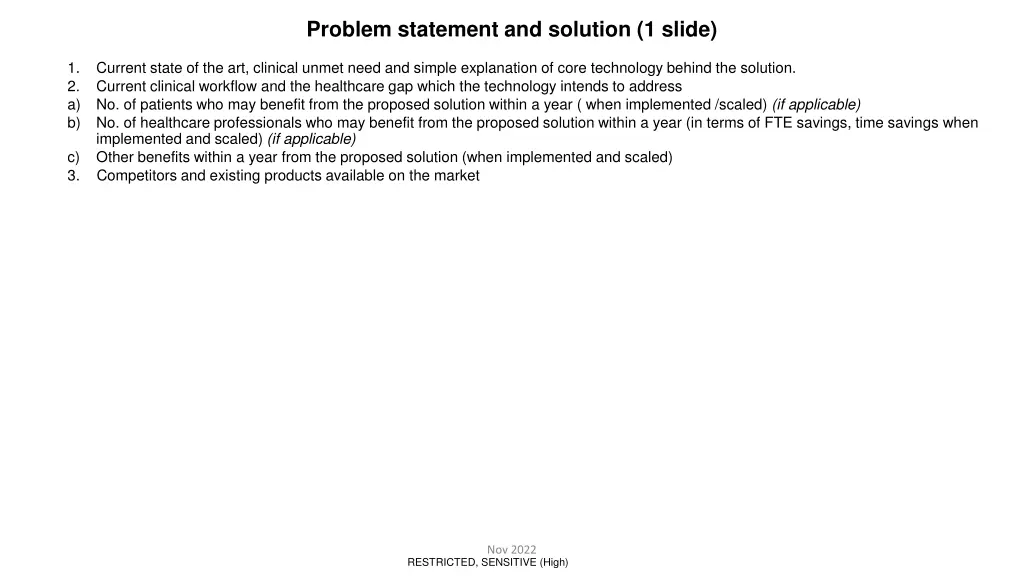
Problem statement and solution (1 slide) 1. 2. a) b) Current state of the art, clinical unmet need and simple explanation of core technology behind the solution. Current clinical workflow and the healthcare gap which the technology intends to address No. of patients who may benefit from the proposed solution within a year ( when implemented /scaled) (if applicable) No. of healthcare professionals who may benefit from the proposed solution within a year (in terms of FTE savings, time savings when implemented and scaled) (if applicable) Other benefits within a year from the proposed solution (when implemented and scaled) 3. Competitors and existing products available on the market c) Nov 2022 RESTRICTED, SENSITIVE (High)
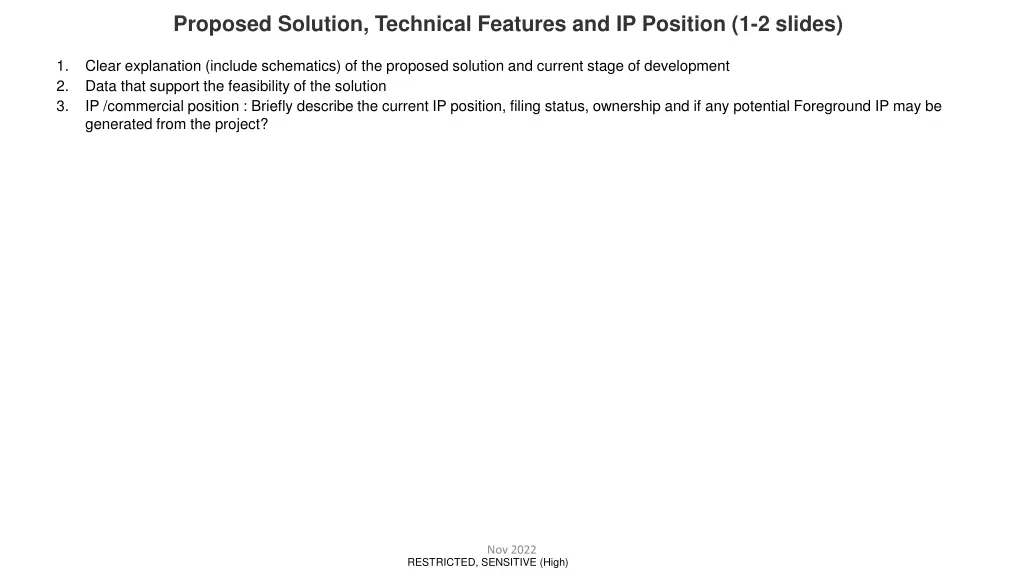
Proposed Solution, Technical Features and IP Position (1-2 slides) 1. 2. 3. Clear explanation (include schematics) of the proposed solution and current stage of development Data that support the feasibility of the solution IP /commercial position : Briefly describe the current IP position, filing status, ownership and if any potential Foreground IP may be generated from the project? Nov 2022 RESTRICTED, SENSITIVE (High)
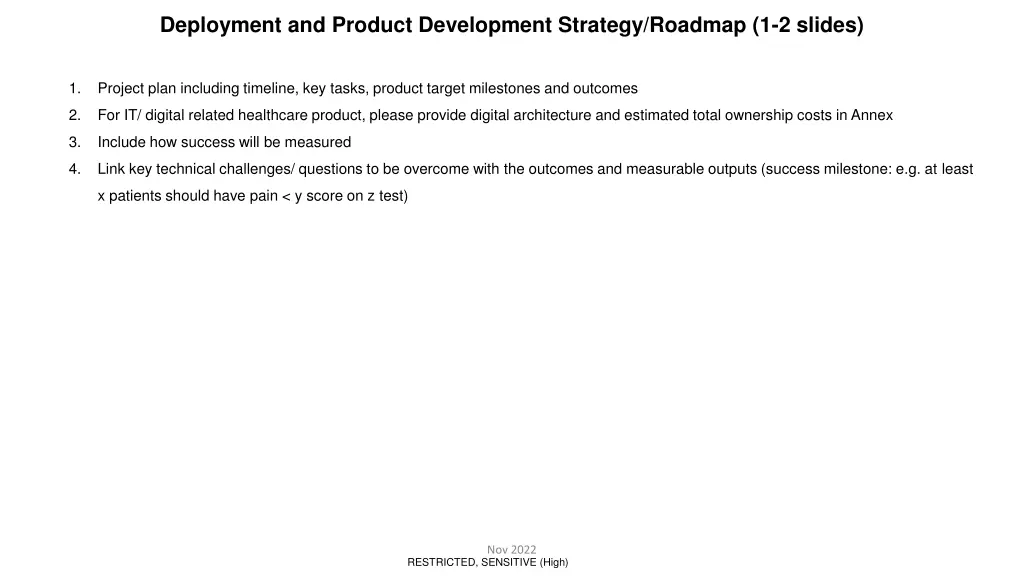
Deployment and Product Development Strategy/Roadmap (1-2 slides) 1. Project plan including timeline, key tasks, product target milestones and outcomes 2. For IT/ digital related healthcare product, please provide digital architecture and estimated total ownership costs in Annex 3. Include how success will be measured 4. Link key technical challenges/ questions to be overcome with the outcomes and measurable outputs (success milestone: e.g. at least x patients should have pain < y score on z test) Nov 2022 RESTRICTED, SENSITIVE (High)
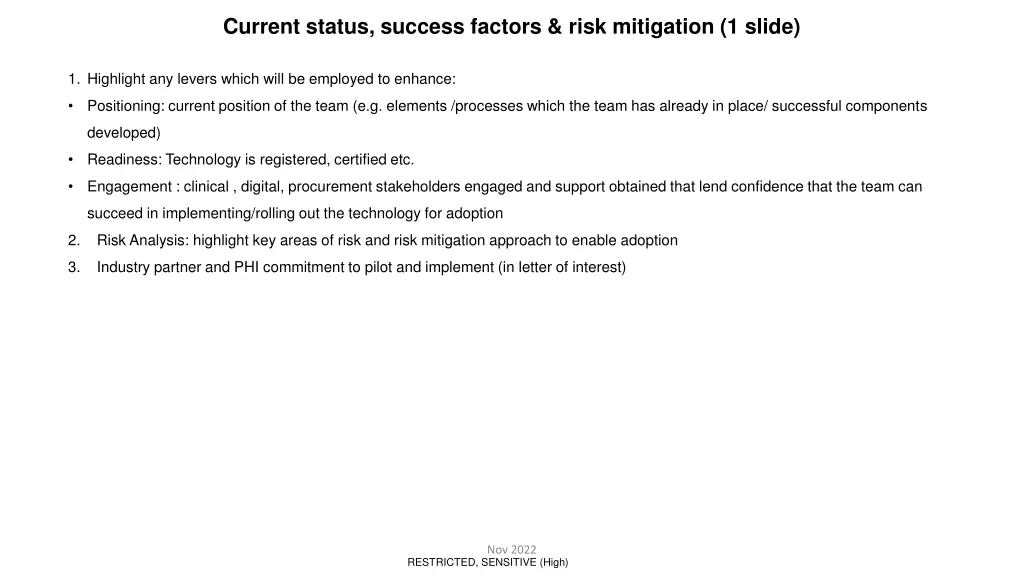
Current status, success factors & risk mitigation (1 slide) 1. Highlight any levers which will be employed to enhance: Positioning: current position of the team (e.g. elements /processes which the team has already in place/ successful components developed) Readiness: Technology is registered, certified etc. Engagement : clinical , digital, procurement stakeholders engaged and support obtained that lend confidence that the team can succeed in implementing/rolling out the technology for adoption 2. Risk Analysis: highlight key areas of risk and risk mitigation approach to enable adoption 3. Industry partner and PHI commitment to pilot and implement (in letter of interest) Nov 2022 RESTRICTED, SENSITIVE (High)
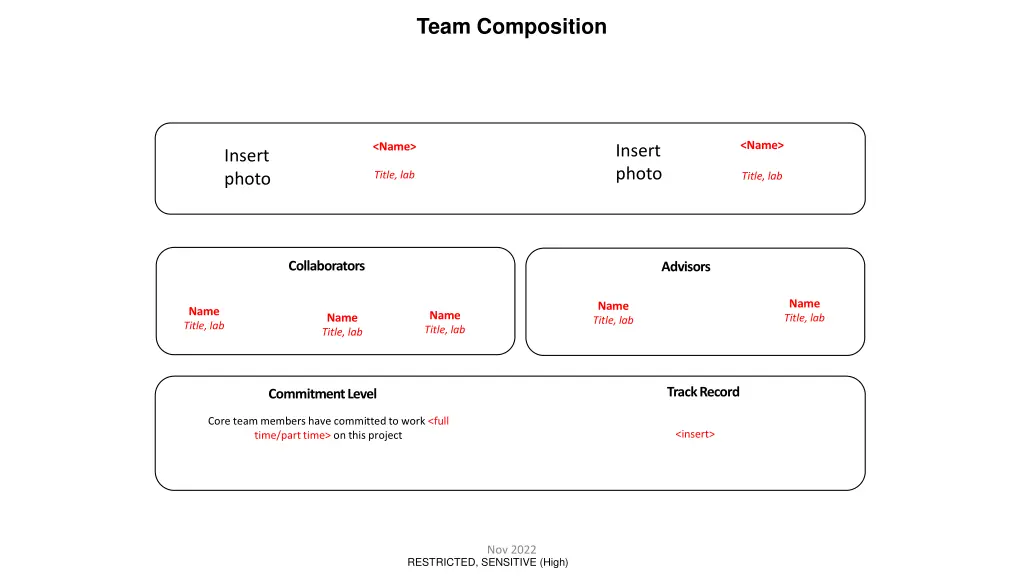
Team Composition <Name> <Name> Insert photo Insert photo Title, lab Title, lab Collaborators Advisors Name Title, lab Name Title, lab Name Title, lab Name Title, lab Name Title, lab Track Record Commitment Level Core team members have committed to work <full time/part time> on this project <insert> Nov 2022 RESTRICTED, SENSITIVE (High)