Common Surgical Procedures in Physiotherapy
This overview highlights common operations encountered by physiotherapists, emphasizing the importance of preoperative and postoperative physiotherapy care to minimize pulmonary and circulatory complications. Specific procedures like cholecystectomy, colostomy, gastrectomy, hernias, mastectomy, nephrectomy, and prostatectomy are discussed, along with potential complications and physiotherapy interventions.

Download Presentation

Please find below an Image/Link to download the presentation.
The content on the website is provided AS IS for your information and personal use only. It may not be sold, licensed, or shared on other websites without obtaining consent from the author.If you encounter any issues during the download, it is possible that the publisher has removed the file from their server.
You are allowed to download the files provided on this website for personal or commercial use, subject to the condition that they are used lawfully. All files are the property of their respective owners.
The content on the website is provided AS IS for your information and personal use only. It may not be sold, licensed, or shared on other websites without obtaining consent from the author.
E N D
Presentation Transcript
Common Operations & Physiotherapy BY:- DR. GAGAN GUPTA (PT)
CONTENT Introduction Cholecystectomy Colostomy Gastrectomy Hernias Mastectomy Nephrectomy Prostatectomy
Introduction It is not proposed to deal at length with any specific operations but to give a brief resume of operations commonly encountered by the physiotherapist, together with particular points that should be noted. The basic principles of preoperative and postoperative physiotherapy care should be applied to patients undergoing surgical procedures ,if the patient is at risk of developing pulmonary or circulatory complications. If the patient is elderly he may require further physiotherapy in order to gain optimum independence following surgery.
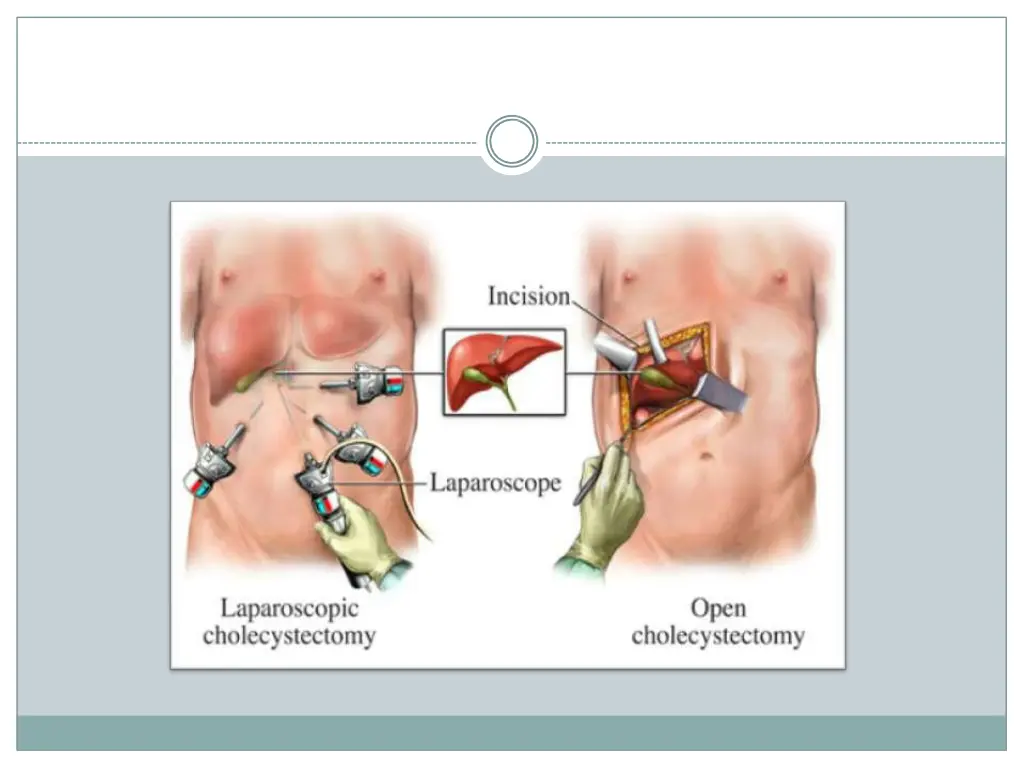
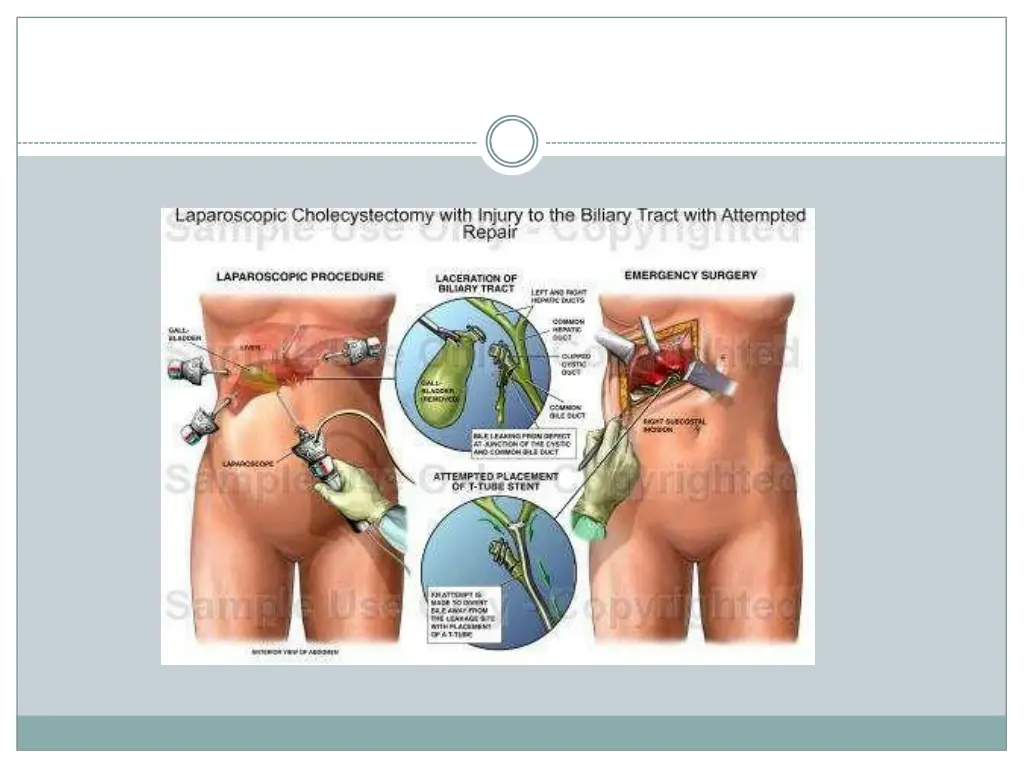
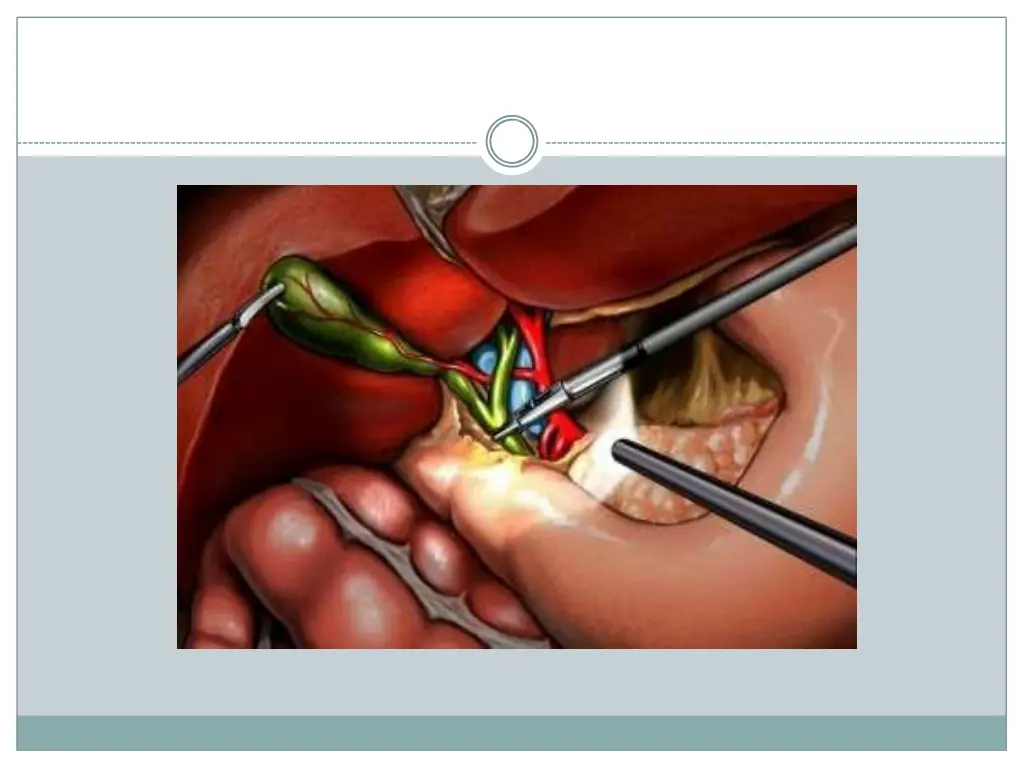
Cholecystectomy This operation may be performed following the development of stones in the gall-bladder and cystic duct (cholelithiasis). The stones cause attacks of colic and jaundice and may obstruct the bile duct. If there is an acute attack of cholecystitis the surgeon may treat the condition conservatively until the inflammation has subsided and then operate
The surgeon may use a Kochers incision, a right paramedian or midline incision. Provided that there are no postoperative complications the patient usually makes a good recovery. Complications that may occur after this operation are: pulmonary, Haemorrhage, or leakage of bile.
Physiotherapy The problem that is most likely to concern the physiotherapist is the risk of pulmonary complications. Provided that the patient is not admitted for emergency surgery it should be possible to assess the patient and decide on the treatment required.
The patient may be taught breathing exercises and how to cough effectively. A careful explanation must be given to the patient about the reasons for treatment and what will be expected of him after surgery. The actual surgical procedure is very close to the diaphragm, and the irritation may cause the production of increased mucus secretions in the lung.
Postoperatively, deep breathing will be painful because of the position of the incision and the presence of a drainage tube. Initially the patient will have a Ryle s tube which will make coughing difficult. Atelectasis is most likely to occur in the lower lobe of the right lung because of the position of the gall- bladder on the right side of the upper part of the abdominal cavity.
Emphasis must be placed on gaining good expansion of the right lung and getting rid of any secretions. first 48 hours postoperatively are important in trying to prevent pulmonarycomplications. The physiotherapist should give the patient leg exercises and advice about the amount of activityto try to prevent any circulatory problems.
There is a tendency for these patients to be overweight and if so they may not have been very active before the operation which further increases the risk of pulmonary and circulatory complications.
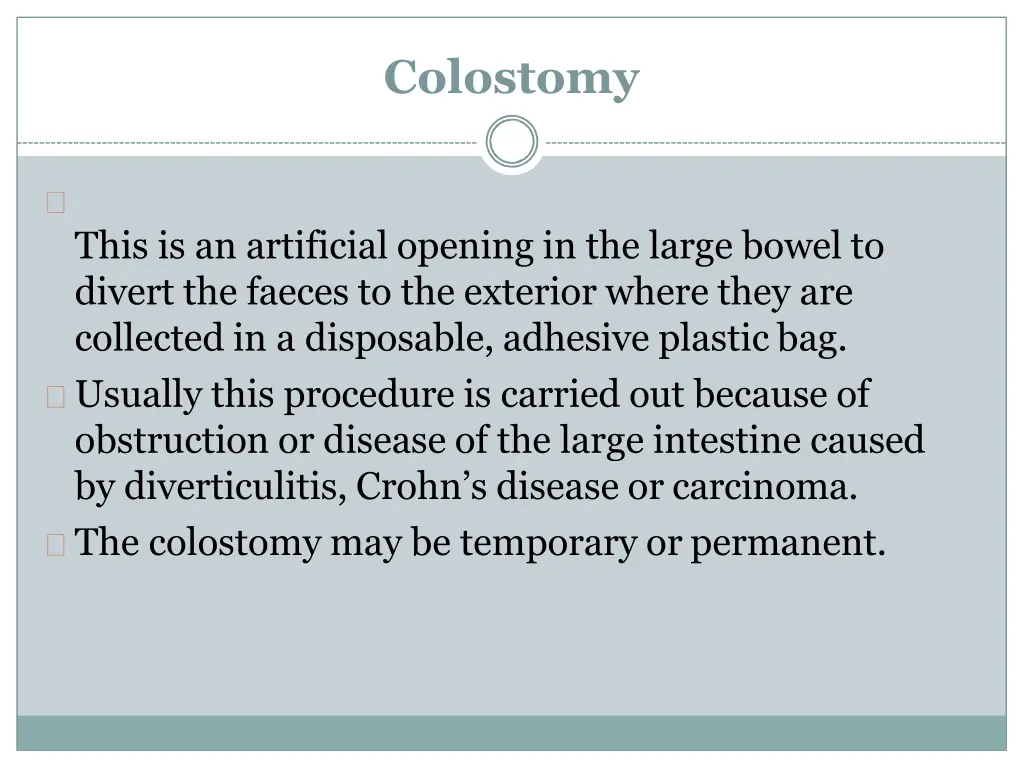
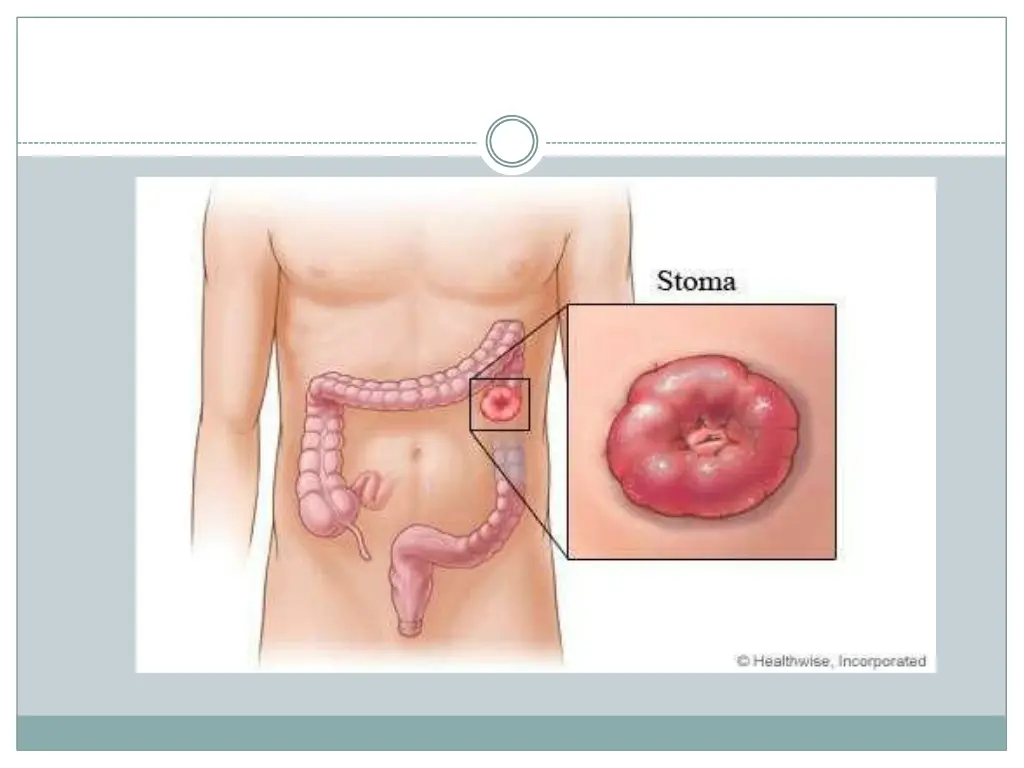
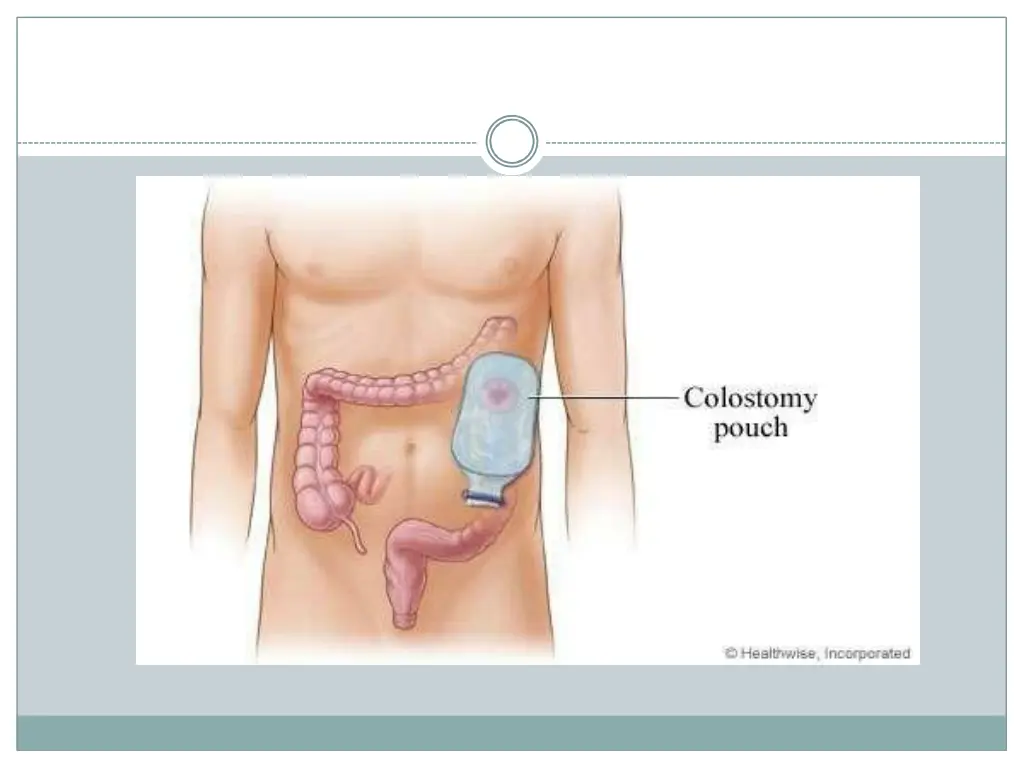
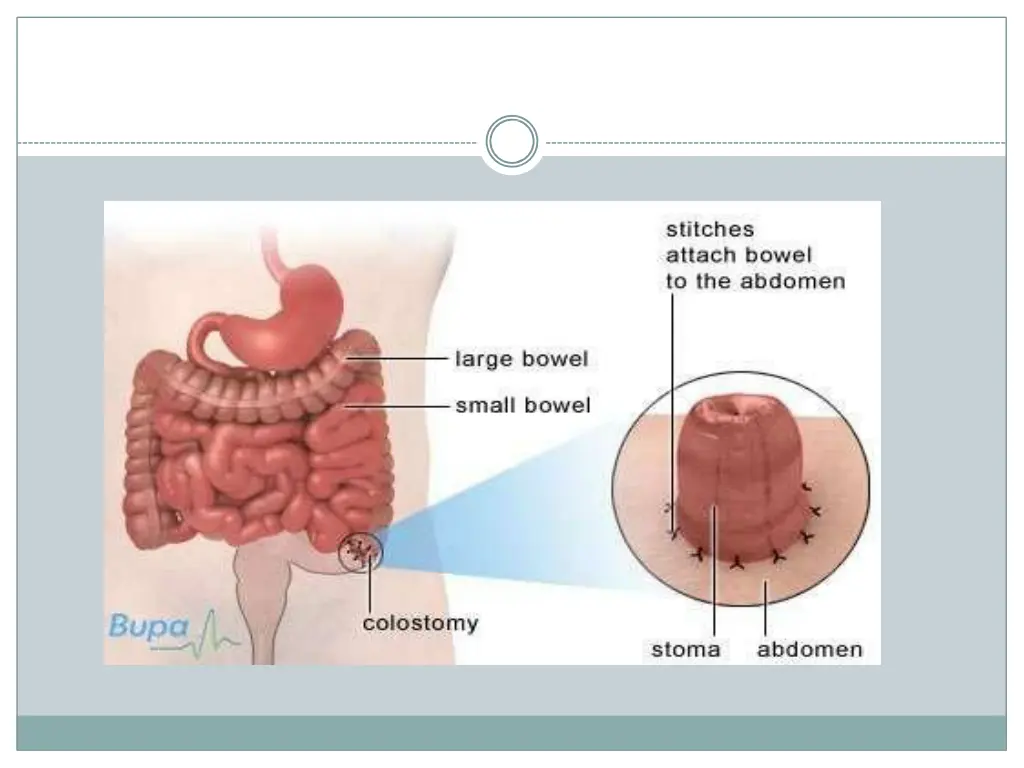
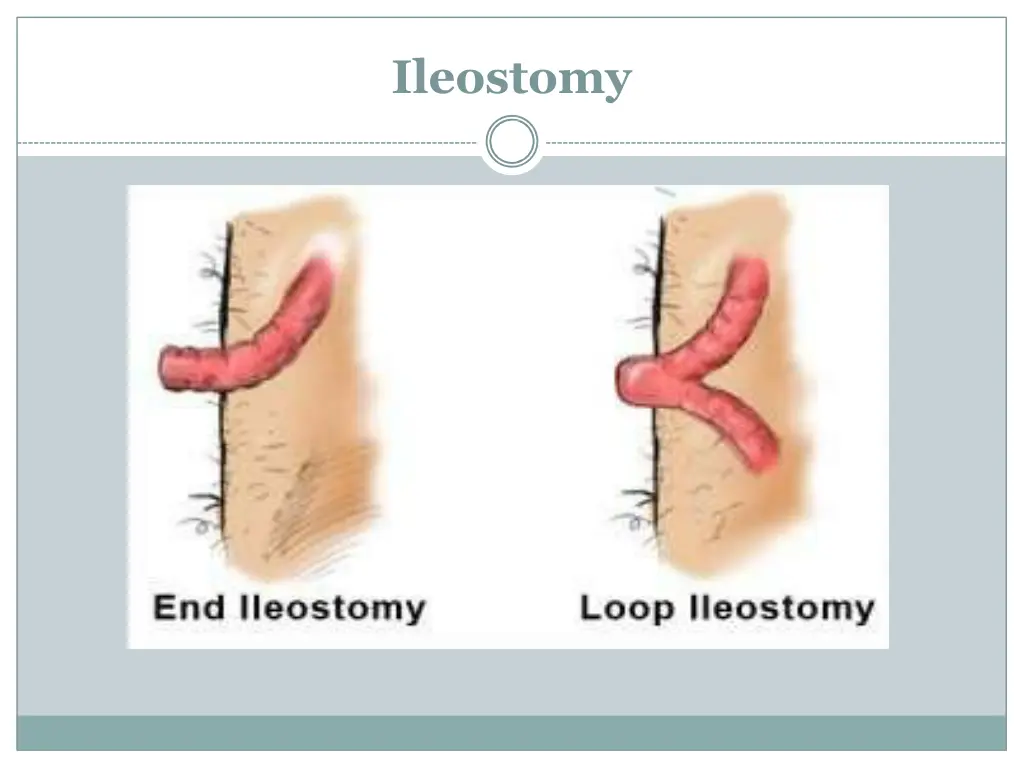
Colostomy This is an artificial opening in the large bowel to divert the faeces to the exterior where they are collected in a disposable, adhesive plastic bag. Usually this procedure is carried out because of obstruction or disease of the large intestine caused by diverticulitis, Crohn s disease or carcinoma. The colostomy may be temporary or permanent.
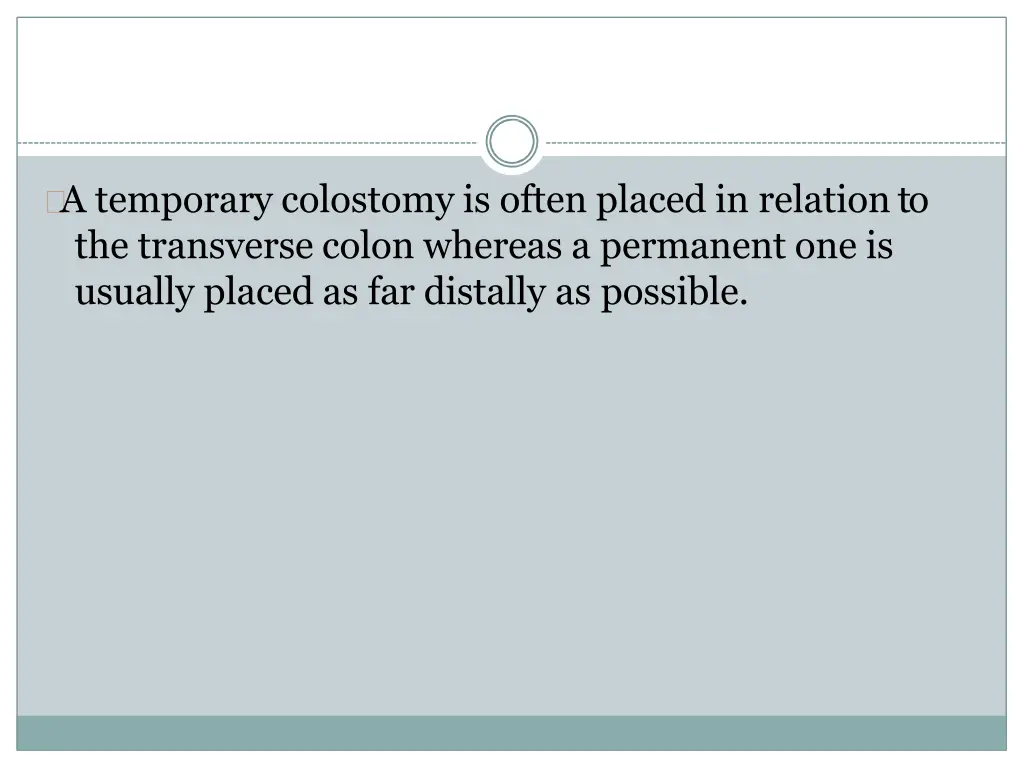
A temporary colostomy is often placed in relationto the transverse colon whereas a permanent one is usually placed as far distally as possible.
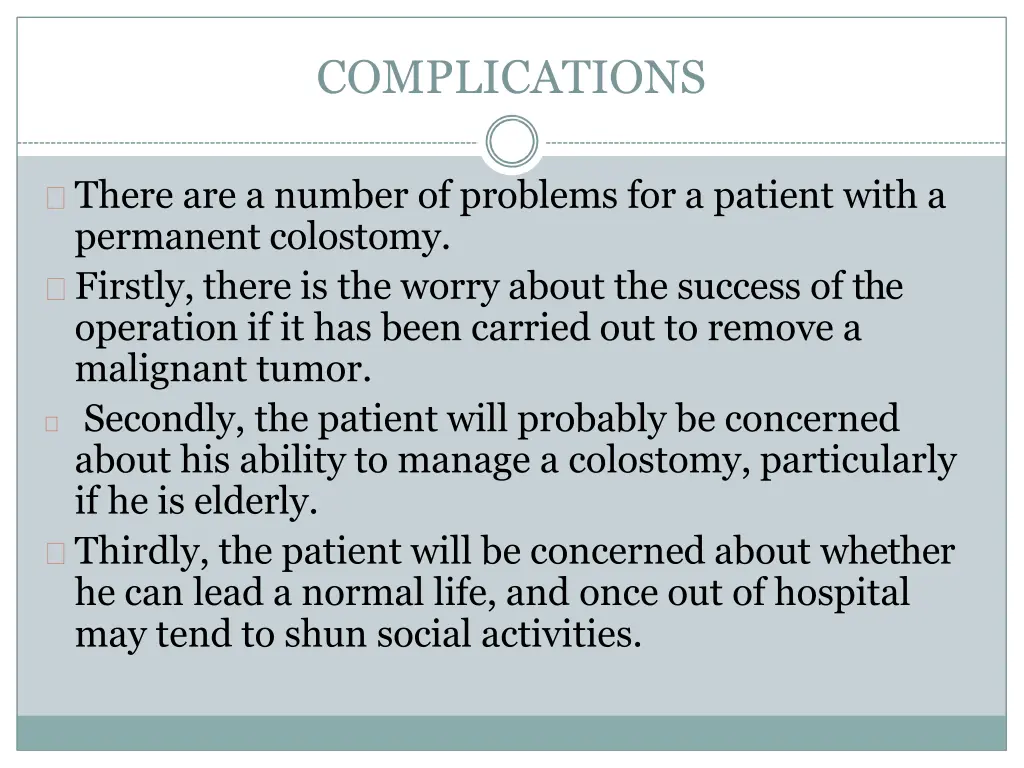
COMPLICATIONS There are a number of problems for a patient with a permanent colostomy. Firstly, there is the worry about the success of the operation if it has been carried out to remove a malignant tumor. Secondly, the patient will probably be concerned about his ability to manage a colostomy, particularly if he is elderly. Thirdly, the patient will be concerned about whether he can lead a normal life, and once out of hospital may tend to shun social activities.
Physiotherapy As this operation Involves the lower part of the abdominal cavity and pelvis there is an increased risk of a deep vein thrombosis developing postoperative. The physiotherapist must teach the patient leg exercises preoperatively and they should be continued for a couple of weeks postoperatively. It may be considered that the patient is active enough when he is up and walking but this activity may be minimal and it is wise to encourage the patient to do a series of leg exercises before getting out of bed and at regular intervals when sitting in a chair.
It may be necessary to give breathing exercises pre- and postoperatively if the physiotherapist has assessed that the patient is at risk because of a chest condition, or because he smokes, or because he is elderly and relatively inactive. Before the patient leaves hospital he should be taught how to lift correctly and avoid excessive strain on the abdominal muscles. The physiotherapist must help the patient to appreciate that he will be able to undertake normal activities, both physically and socially after he has recovered.
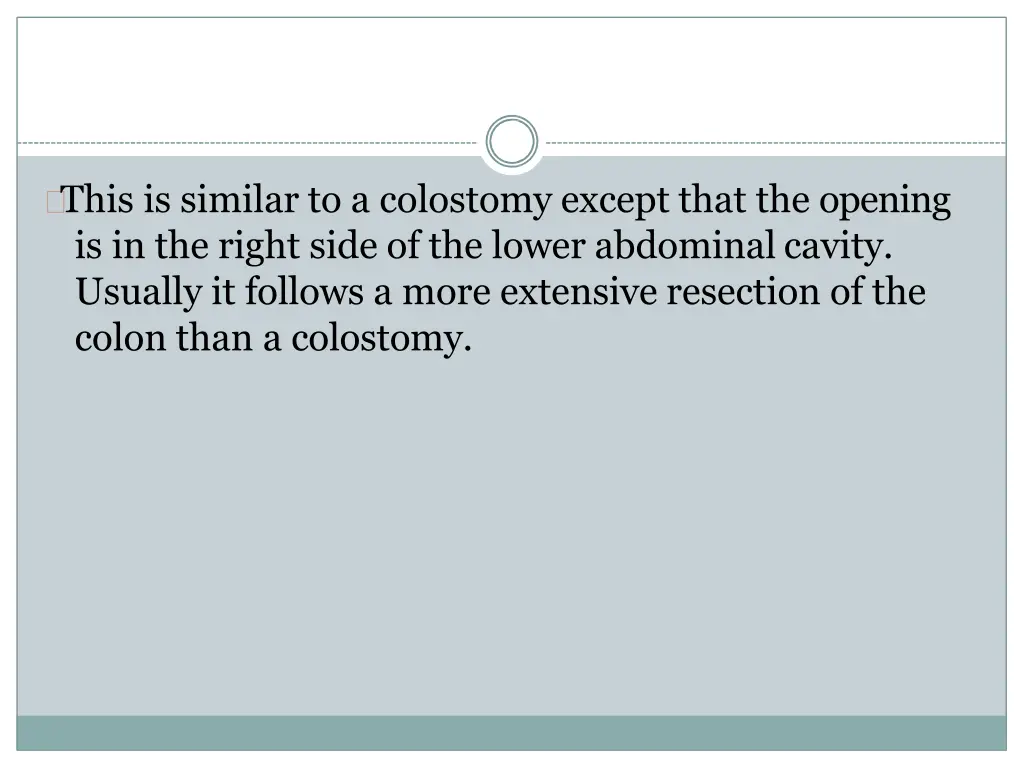
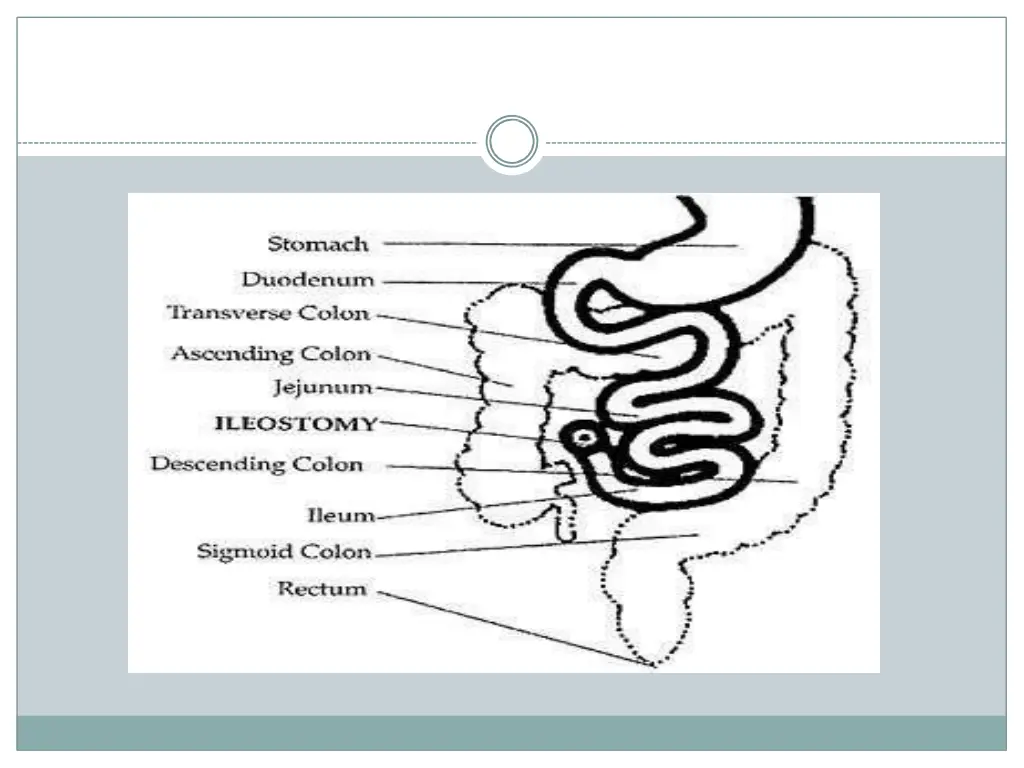
This is similar to a colostomy except that the opening is in the right side of the lower abdominalcavity. Usually it follows a more extensive resection of the colon than a colostomy.
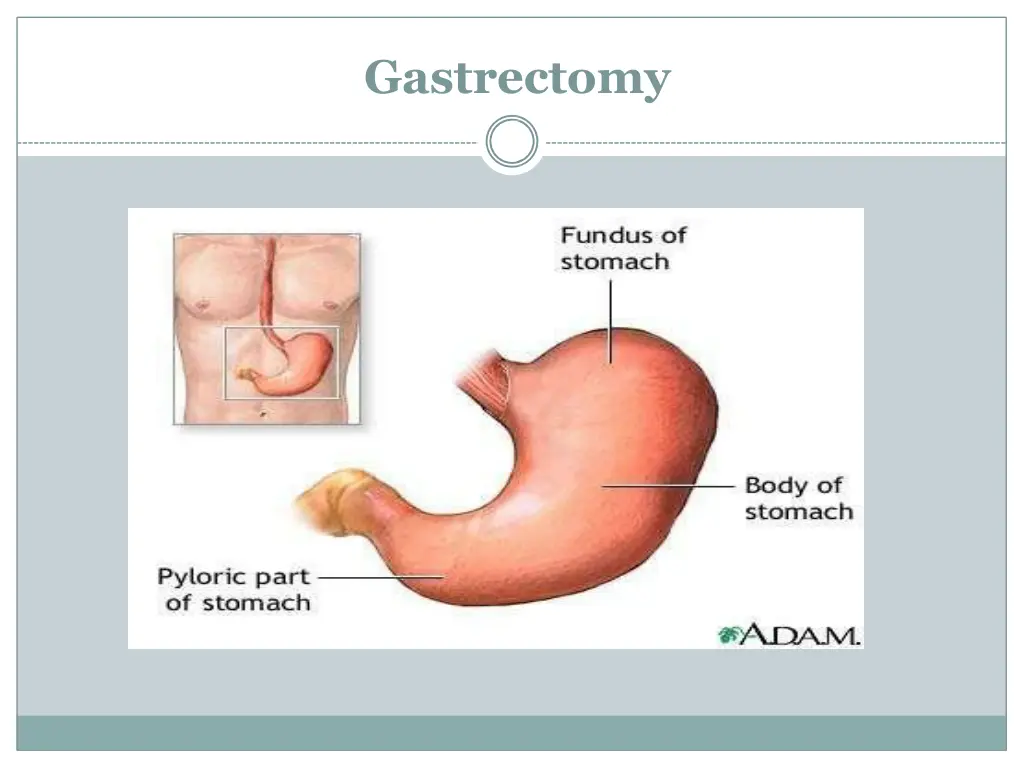
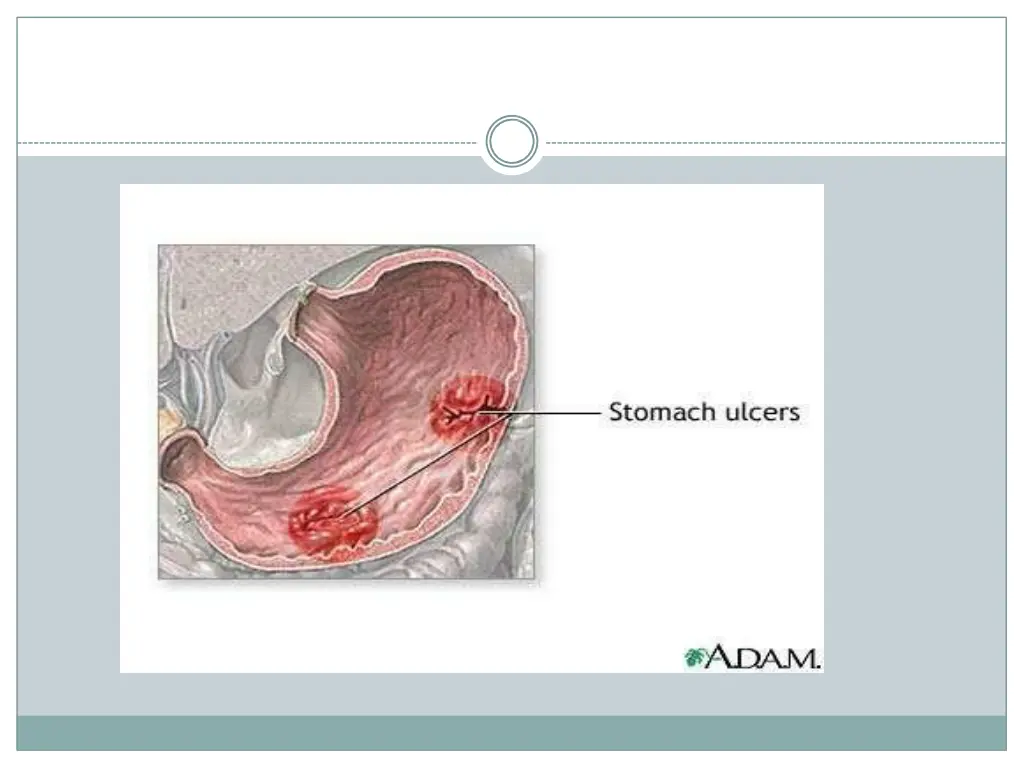
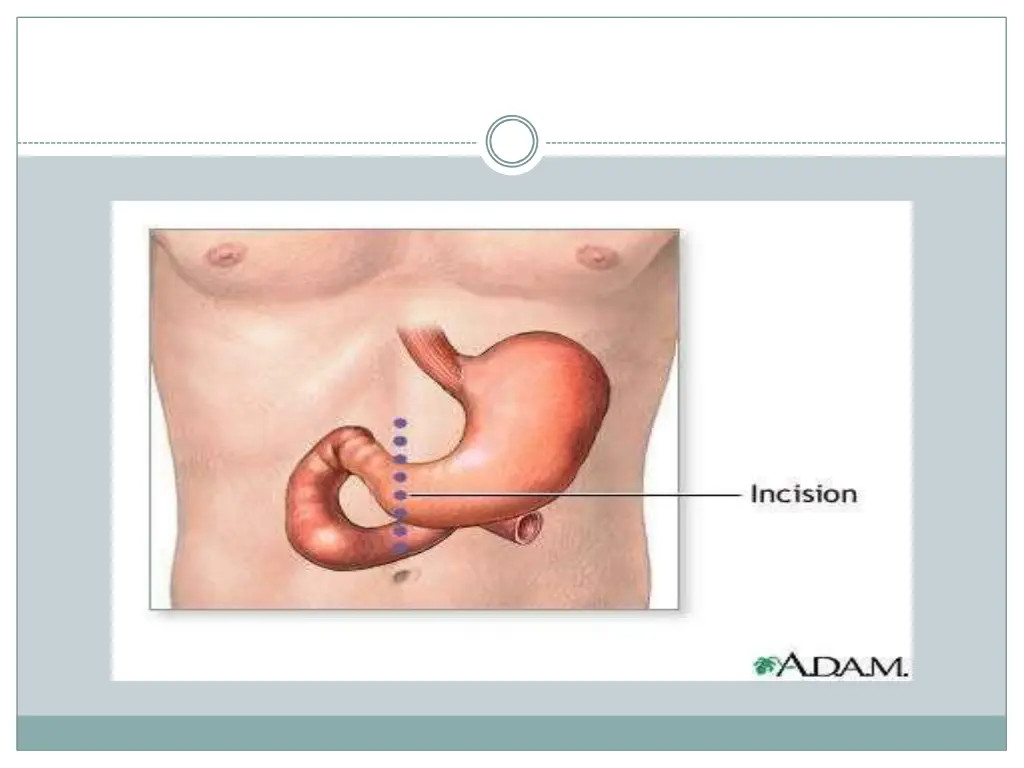
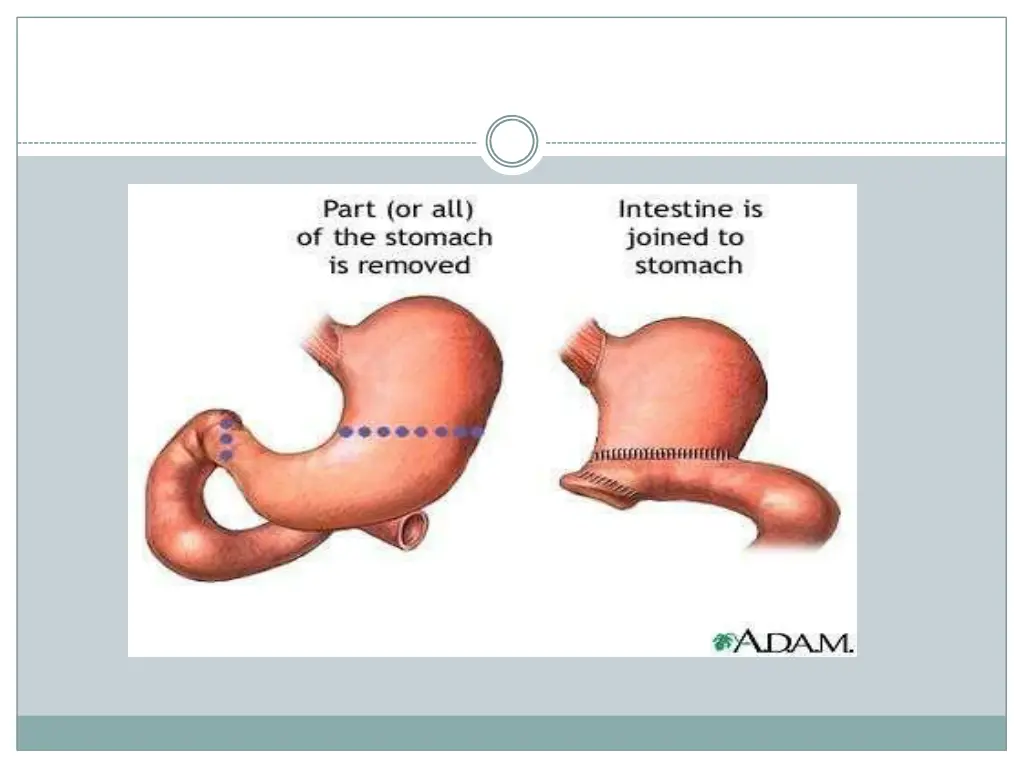
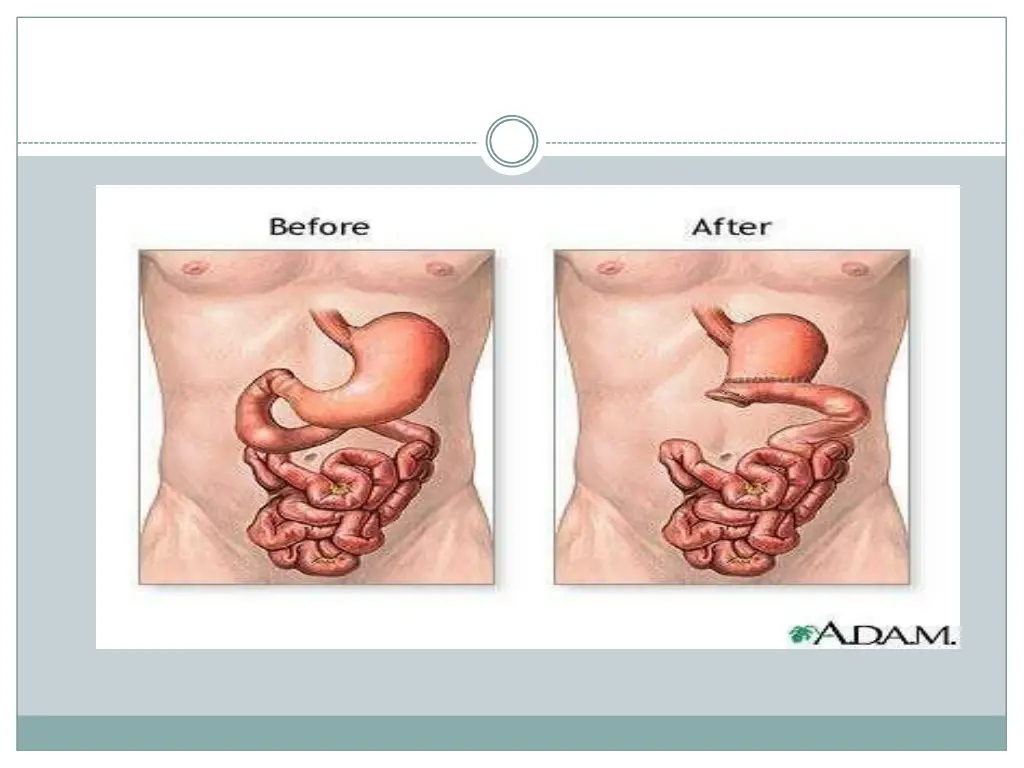
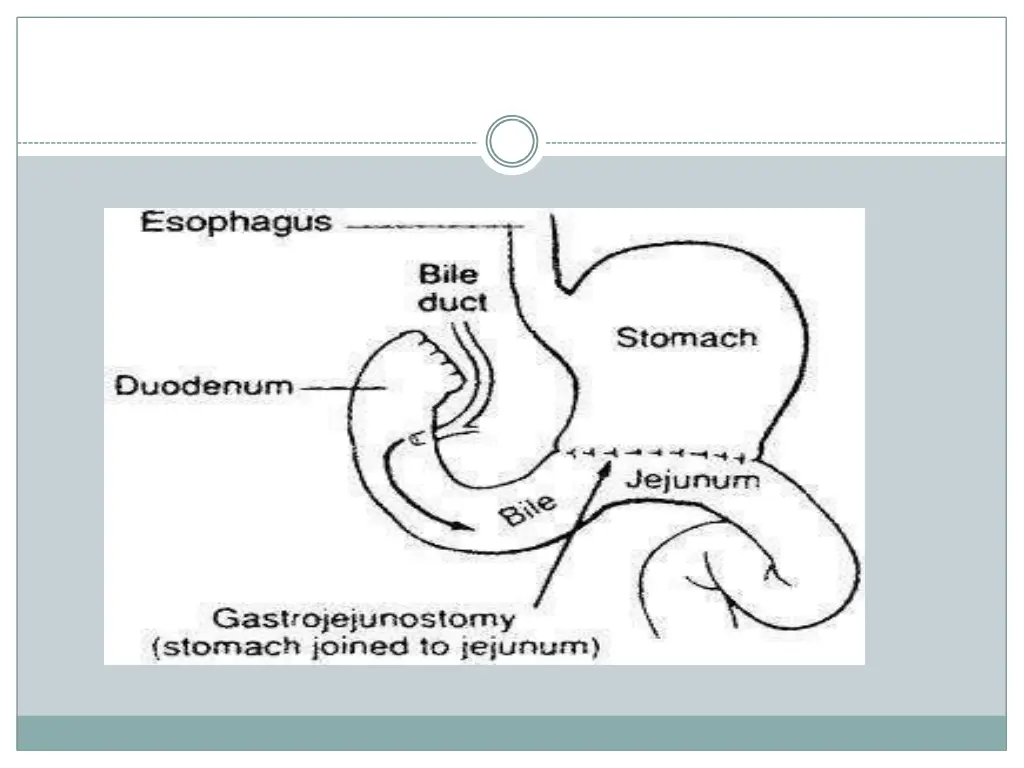
A partial gastrectomy for the treatment of gastric ulceration is a common operation if healing does not occur following medical treatment. The formation of ulcers usually occurs along the lesser curvature of the stomach and if they do not heal they may undergo malignant changes. There are a number of operations that may be used although the most common are the Billroth and the Polya type
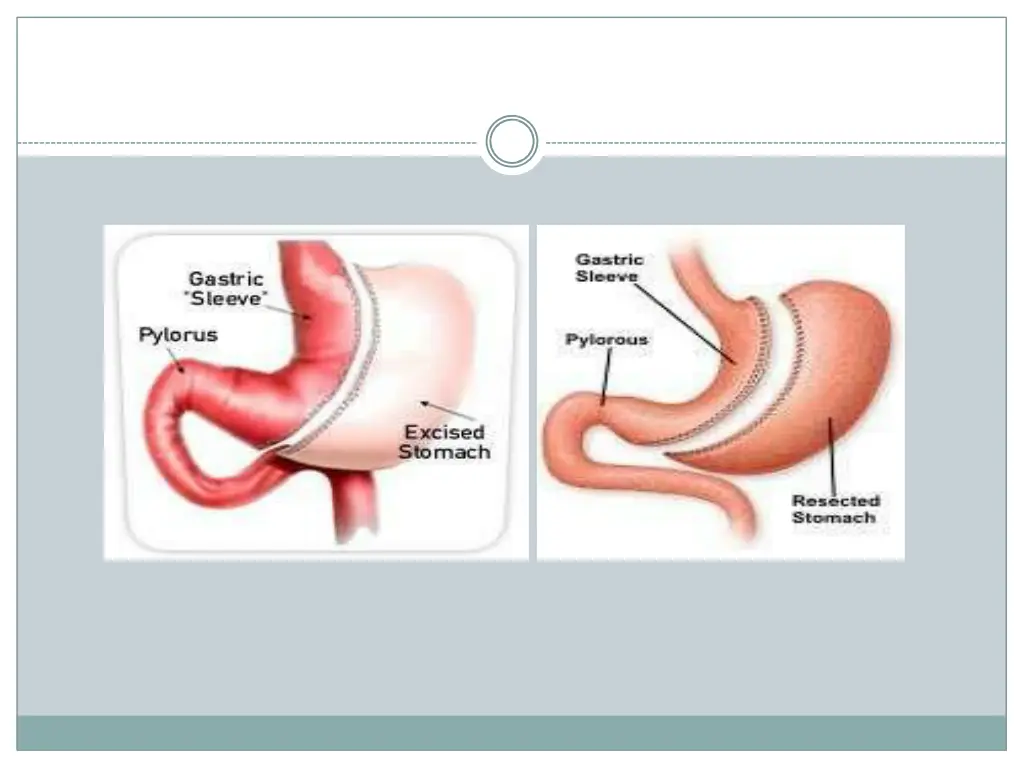
If there is a carcinoma of the stomach this may be treated by a total gastrectomy, and sometimes splenectomy, provided the disease is localized.
Complications Immediate postoperative complications may bea gastric or duodenal fistula, gastric retention, haemorrhage or pulmonaryproblems.
Physiotherapy As the operation is closely related to the diaphragm there is likely to be irritation of adjacent tissues which could cause increased production of mucus, particularly in the lower lobe of the left lung. The patient will be reluctant to breathe deeply because of pain. coughing will be inhibited by pain and the presence of a Ryle s tube. it is very important that the physiotherapist pays special attention to the chest
Generally the patient may be treated preoperatively with emphasis on deep breathing, particularly lower costal, and taught how to cough effectively. Postoperatively the patient must be encouraged to do the deep breathing with emphasis on the left lower costal area. Before attempting to cough the patient should be helped to sit up in bed and lean slightly forward as this makes it easier for him to cough.
The patient places his hands over the incision while the physiotherapist supports him in sitting and places one hand over the patient s hands and the other round his back to give pressure, on the left lower costal area. The patient is likely to tire quickly and so the treatment should be given for a short duration and frequently. The patient should do leg exercises to reduce the risk of developing circulatory problems.
If the patient has been ill for some time beforethe operation the physiotherapist may need to give general mobilizing and strengthening exercises.
Hernias A hernia is a protrusion of a viscus or part of aviscus through an abnormal opening in the wall of the containing cavity.
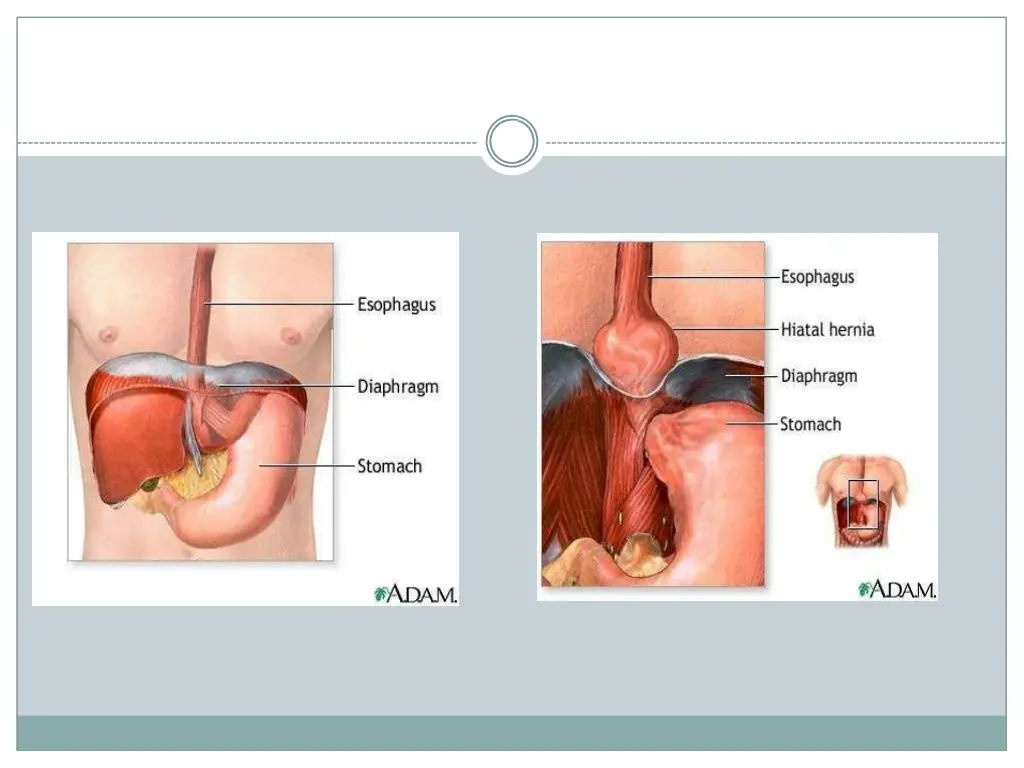
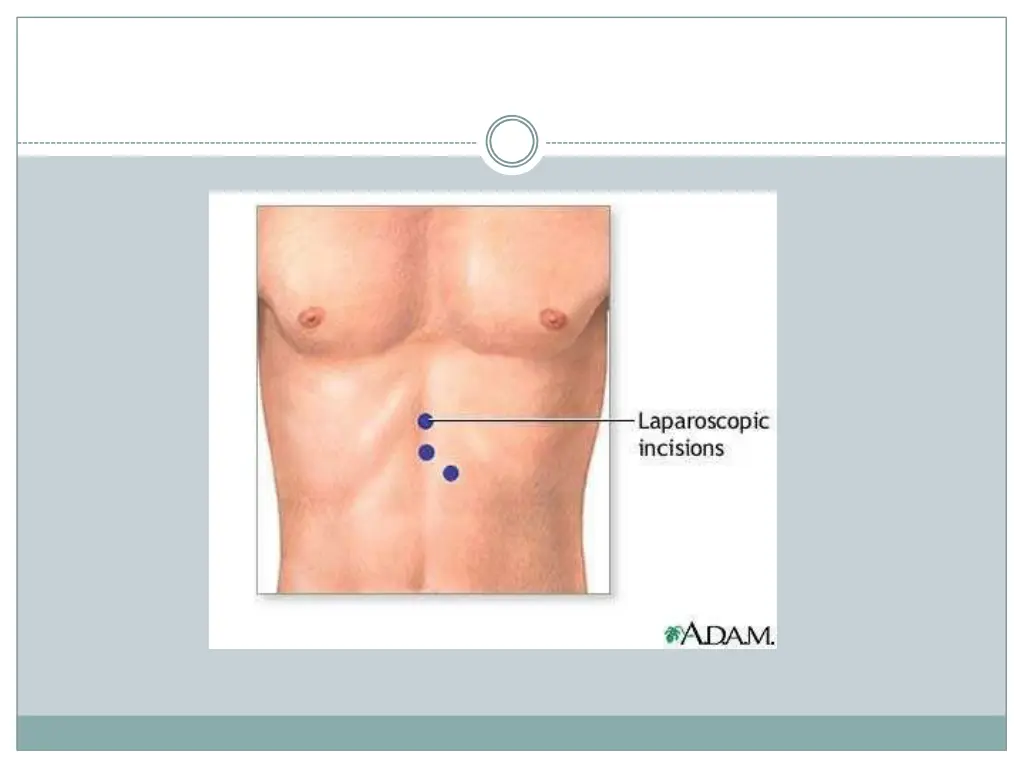
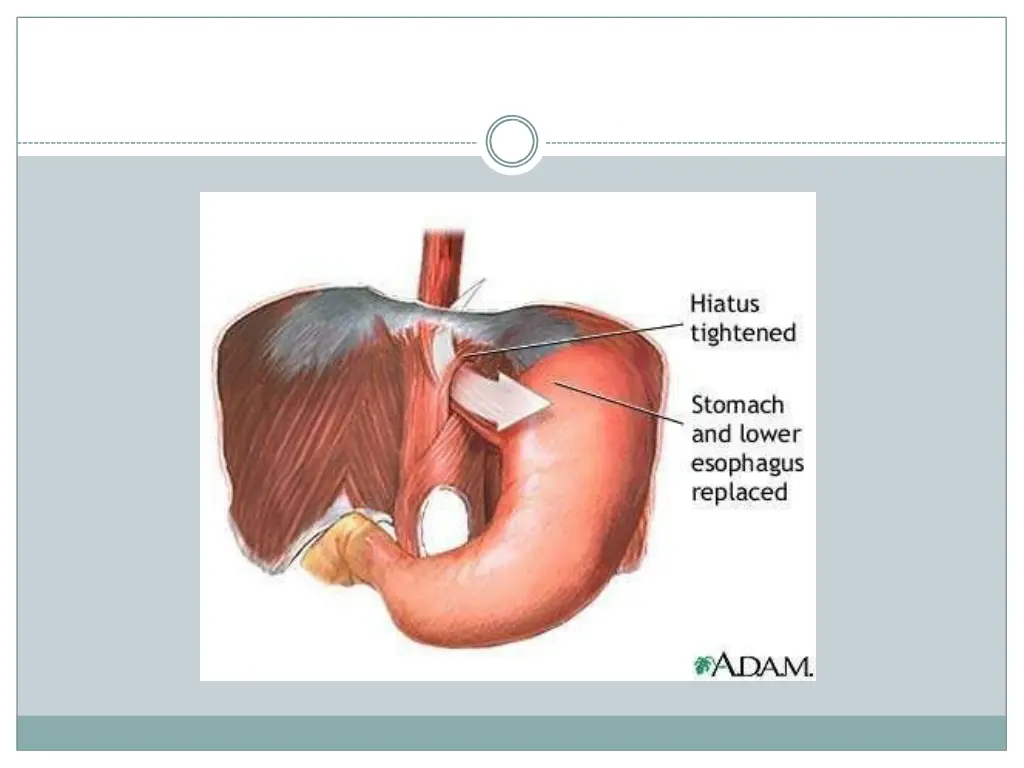
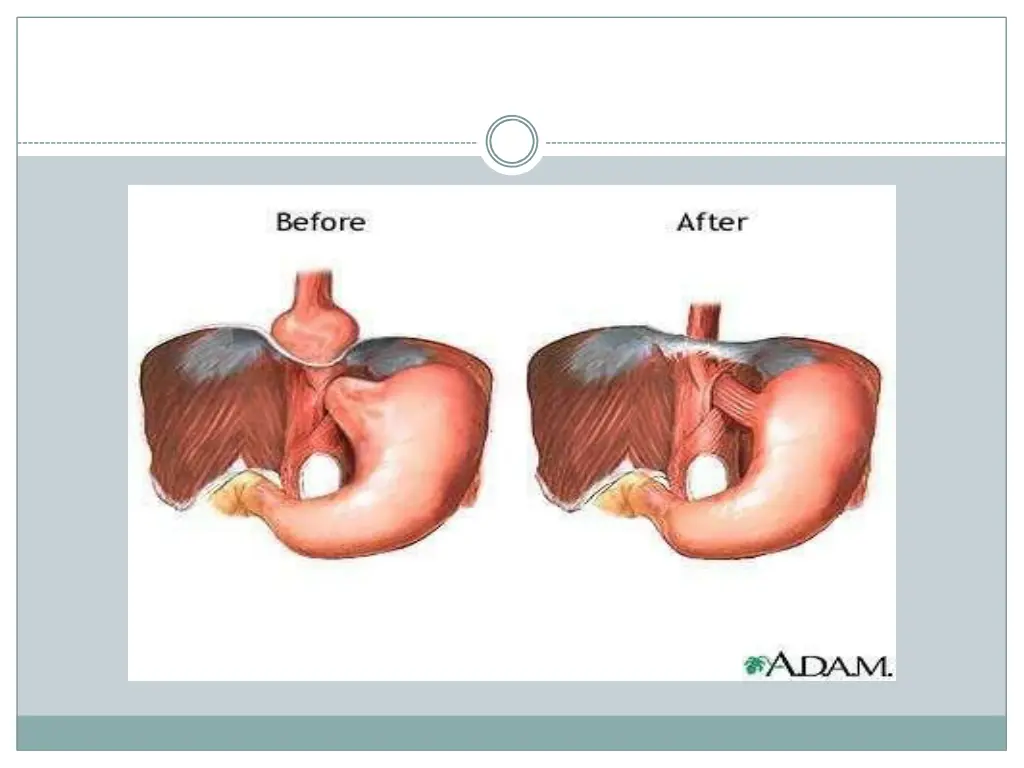
Hiatal hernia In this condition there is a weakness in the oesophageal opening of the diaphragm and part of the stomach may pass upward into the thoracic cavity
Treatment may be conservative but if this fails, surgery may be required. The surgeon may use a thoracic or abdominal route, although the latter is preferable as it may be necessary to investigate for other causes of dyspepsia.
Physiotherapy This is similar to the treatment described fora gastrectomy as there is a risk of pulmonary complications with operations in the- upper abdominal cavity.
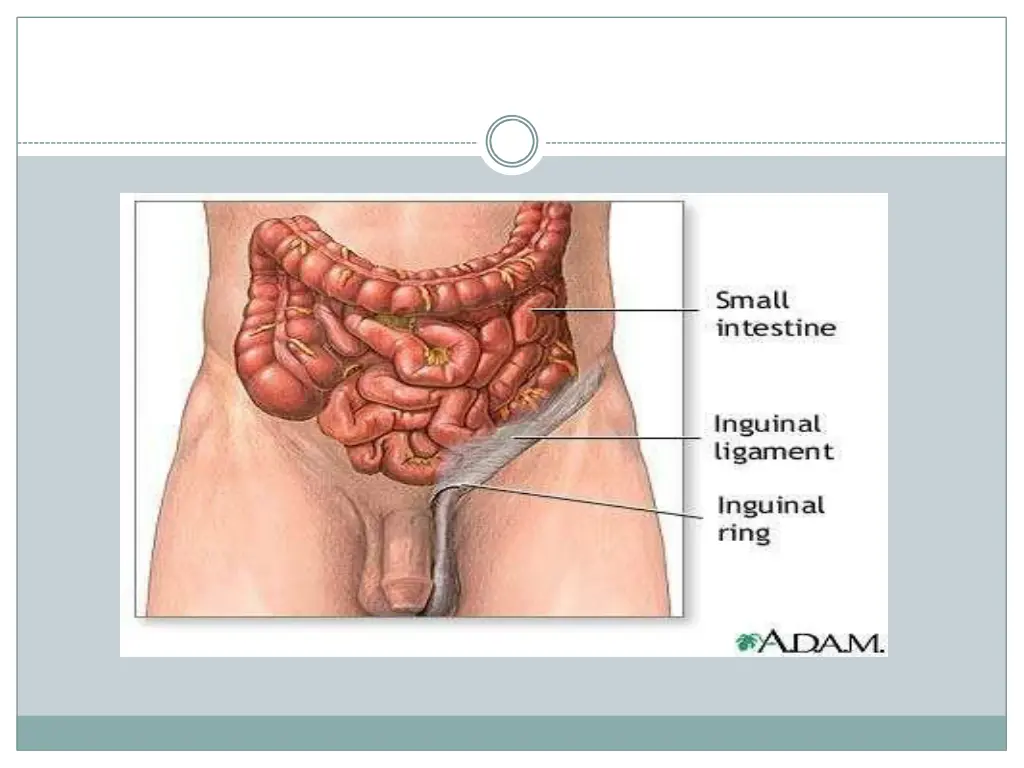
Inguinal hernia This may be indirect or direct and is a protrusion of a sac of peritoneum containing omentum and possibly intestine through the inguinal canal. The indirect hernia is usually congenital and passes through the length of the canal whereas the direct hernia is medial and projects through a weakness in the posterior wall of the canal. The latter usually occurs in middle-aged to elderly men and often is associated with stress on the abdominal wall caused by a chronic cough or strain on lifting.
In infants with a congenital abnormality a herniotomy with removal of the sac may be adequate.
in the adult more extensive surgery is preferable, unless the risk of operation is too great because there are pulmonary or circulatory problems. The operation performed is a herniorraphy which reduces the herniation and repairs the weakness of the posterior wall.