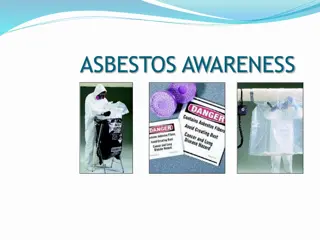
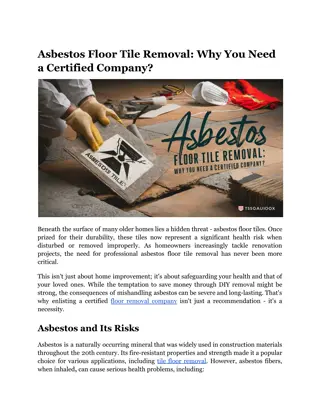
"Learn about asbestos types, health outcomes, management processes, and legal requirements with this comprehensive guide. Understand the history of asbestos use, different risk categories, and the importance of proper disposal. Stay informed and ensure a safe working environment free of airborne asbestos fibers."
Please find below an Image/Link to download the presentation.
The content on the website is provided AS IS for your information and personal use only. It may not be sold, licensed, or shared on other websites without obtaining consent from the author. If you encounter any issues during the download, it is possible that the publisher has removed the file from their server.
You are allowed to download the files provided on this website for personal or commercial use, subject to the condition that they are used lawfully. All files are the property of their respective owners.
The content on the website is provided AS IS for your information and personal use only. It may not be sold, licensed, or shared on other websites without obtaining consent from the author.
Legal Requirements PCBU obligations require a working environment free of airborne asbestos fibres. The Health and Safety (Asbestos) Regulations 2016 restrict asbestos work. https://www.legislation.govt.nz/regulation/public/2016/0015/latest/DLM6729 215.html
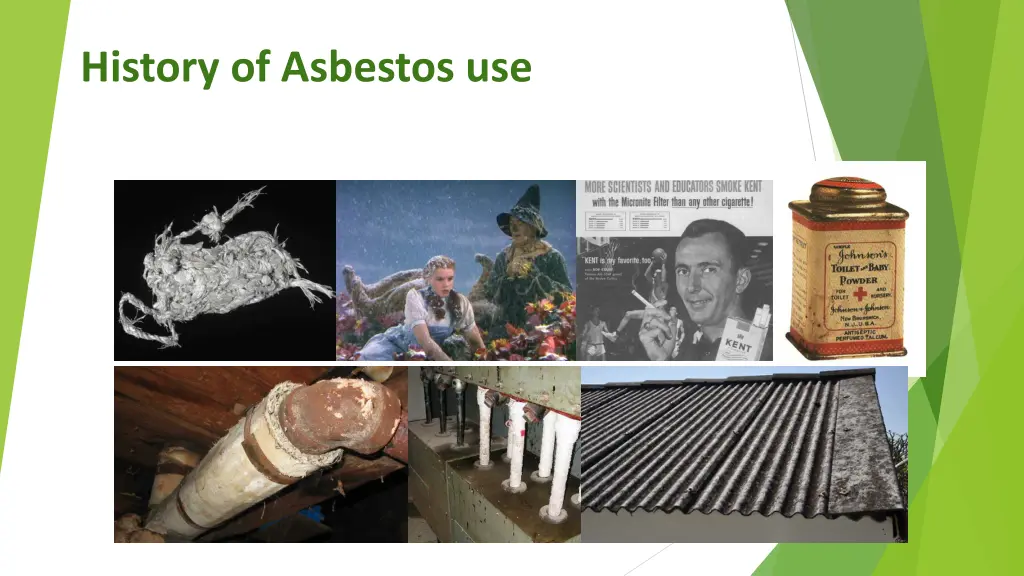
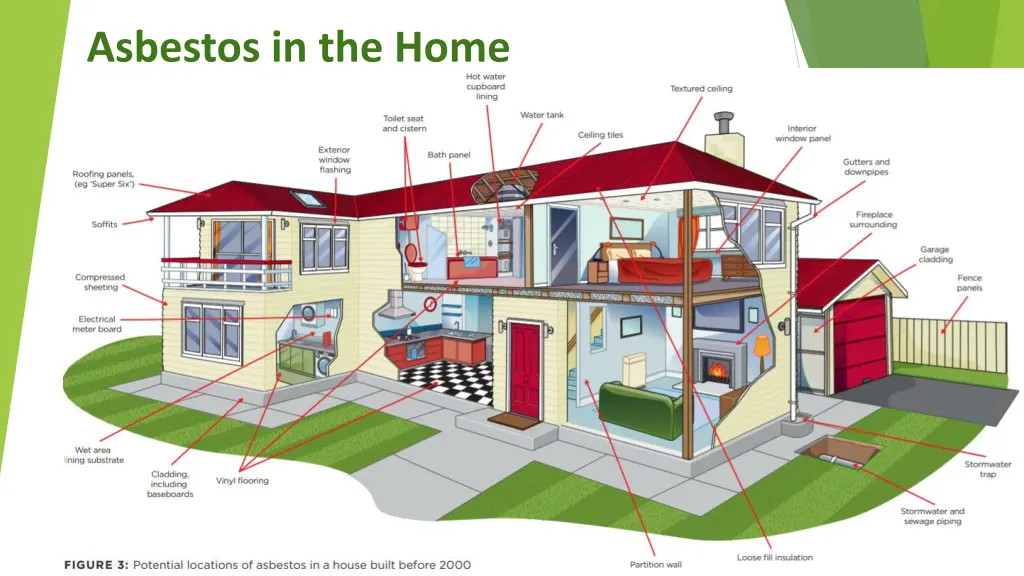
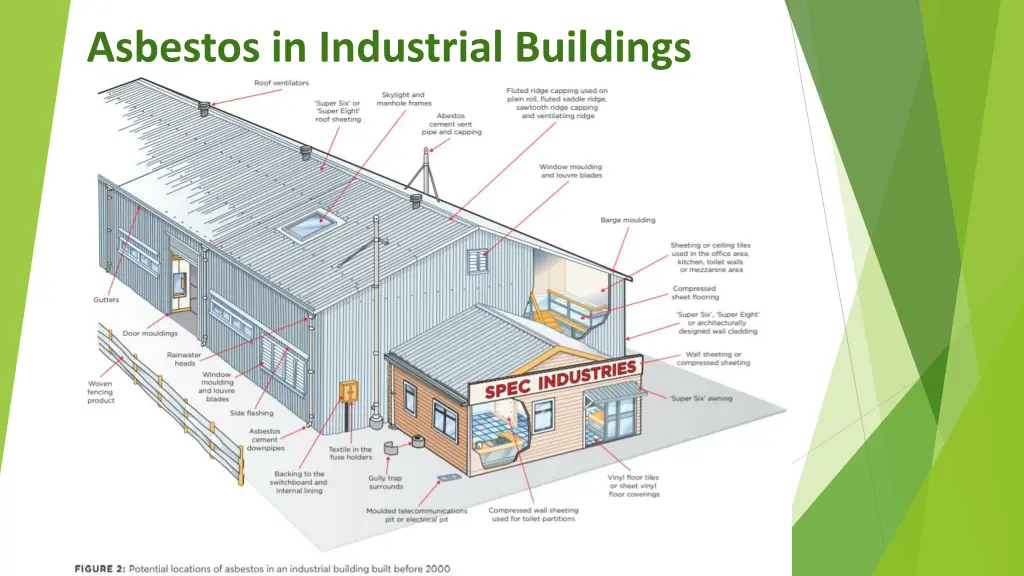
Introduction What is asbestos Health outcomes History of use ACM s v s Friable asbestos Asbestos management process (including Register) Disposal
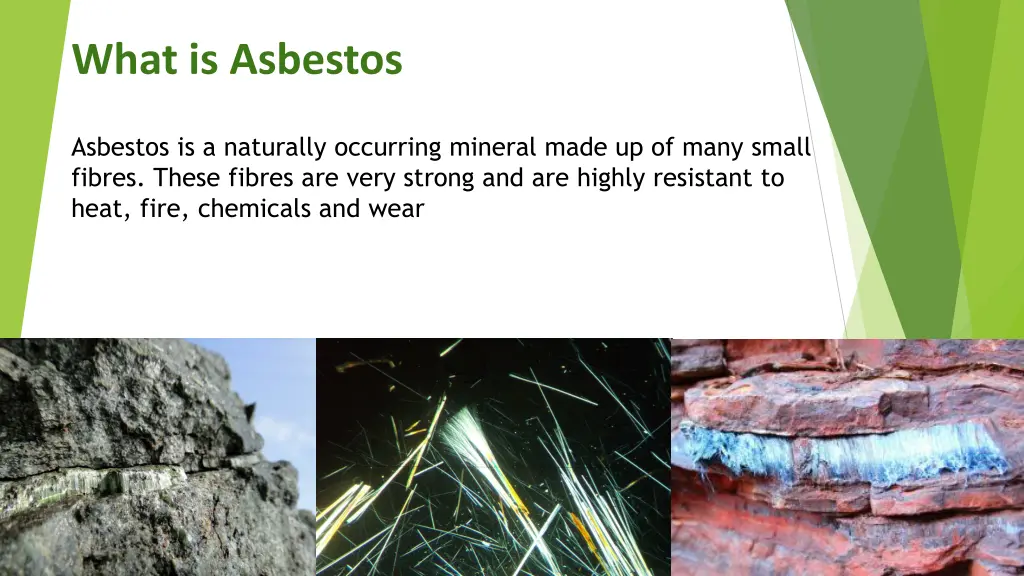
What is Asbestos Asbestos is a naturally occurring mineral made up of many small fibres. These fibres are very strong and are highly resistant to heat, fire, chemicals and wear
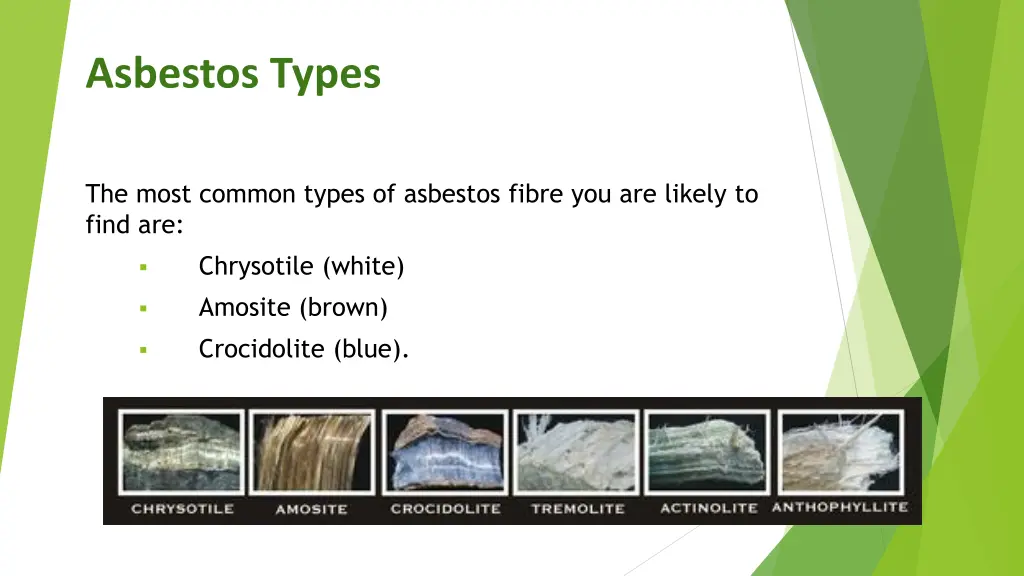
Asbestos Types The most common types of asbestos fibre you are likely to find are: Chrysotile (white) Amosite (brown) Crocidolite (blue). Image result for asbestos types
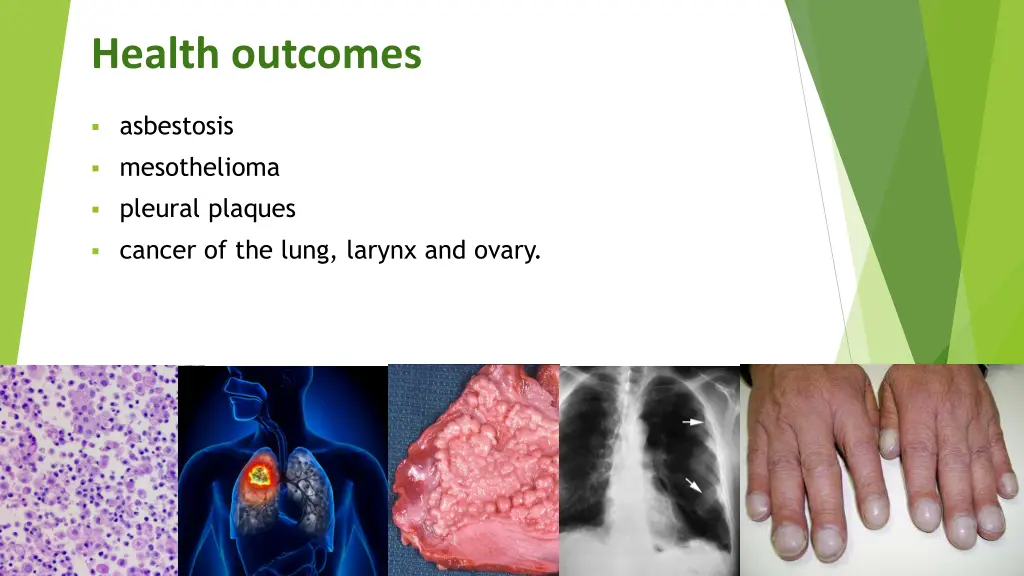
Health outcomes asbestosis mesothelioma pleural plaques cancer of the lung, larynx and ovary.
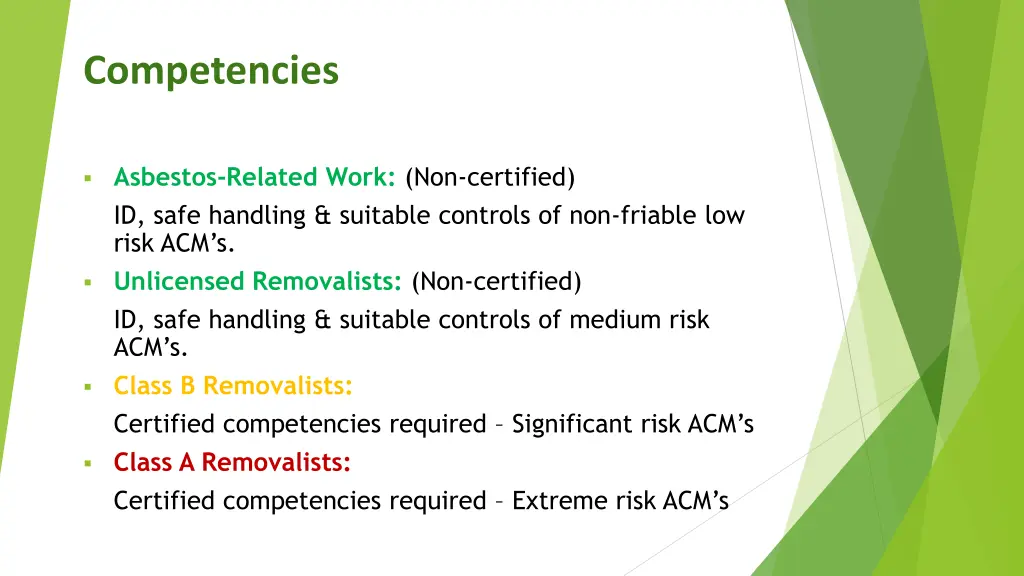
Competencies Asbestos-Related Work: (Non-certified) ID, safe handling & suitable controls of non-friable low risk ACM s. Unlicensed Removalists: (Non-certified) ID, safe handling & suitable controls of medium risk ACM s. Class B Removalists: Certified competencies required Significant risk ACM s Class A Removalists: Certified competencies required Extreme risk ACM s
Preparing for asbestos work PPE/Respiratory protection Hygiene controls Air monitoring Asbestos specific risk assessment documentation
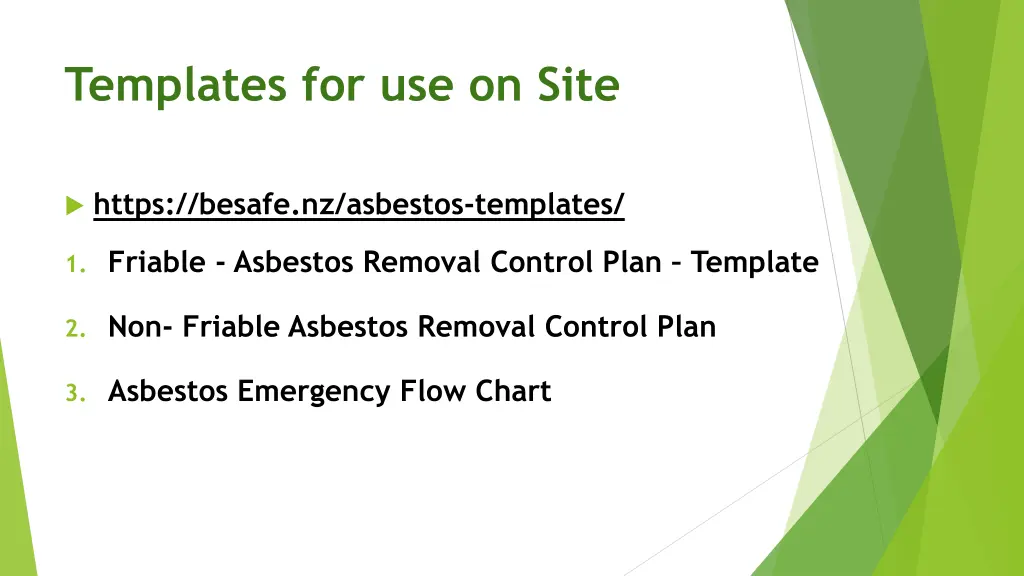
Templates for use on Site https://besafe.nz/asbestos-templates/ 1. Friable - Asbestos Removal Control Plan Template 2. Non- Friable Asbestos Removal Control Plan 3. Asbestos Emergency Flow Chart
Removal Process for Asbestos The removal of all friable or greater than 102 meters of ACM requires the engagement of: Class A/B asbestos removal contractor Class A/B asbestos removal supervisor Class A independent certified asbestos assessor (as required)
Taranaki Disposal of Asbestos The New Plymouth landfill (Colson Road) closed last year and stopped receiving asbestos waste around October. Asbestos is now transported to an approved disposal facility. Bonny Glen landfill (by Marton) or Hampton Downs landfill (North Waikato).
PPE PPE must be worn when asbestos is or may be present. All other practicable steps must be taken beforehand to eliminate or minimise the risks. PPE must include: Respiratory protective equipment consider type of work, concentrations, and the wearer Overalls preferably disposable* Footwear preferably non-laced and easy to clean Consider ease of decontamination when selecting PPE Decontamination PPE must be disposed of as asbestos waste or decontaminated Set up a decontamination area PPE should be put on in clean part of area and removed (except for respirator)/disposed of in dirty part of area Reusable PPE should be vacuumed, wiped, and stored in a sealed and labelled container Do not store clean RPE with contaminated RPE
Occupational Health On going work monitoring The PCBU must monitor worker health when undertaking licensed asbestos removal work (begins within four weeks of starting). health monitoring of a worker includes a physical examination and consideration of: the worker s demographic, medical, and occupational history, and records of the worker s personal exposure to asbestos. If you have been exposed to asbestos, through paid work or elsewhere, you can register with the Asbestos Exposure Register (AER)
Case Study 1. Encapsulation New Plymouth Power Station chimney The rings that held the segments in for each of the 5 flues were lined with an asbestos containing insulation material. Poor past Asbestos removal practices = contamination of internal surfaces. Chimney became a controlled access location. Options: 1. A deep clean from top to bottom 2. PVA glue sprayed to all internal surfaces and equipment. Decision made to combine both options 1 & 2.
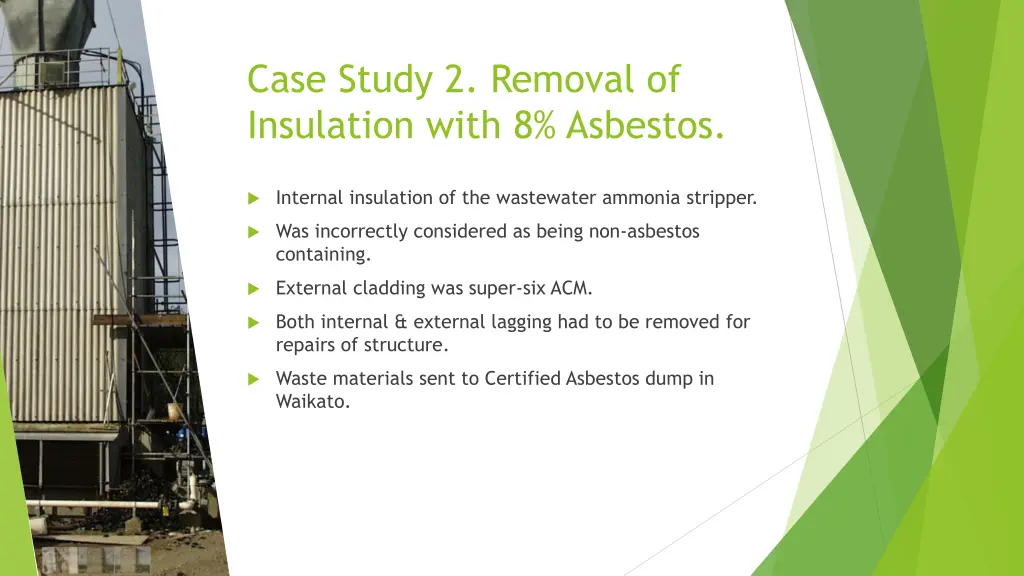
Case Study 2. Removal of Insulation with 8% Asbestos. Internal insulation of the wastewater ammonia stripper. Was incorrectly considered as being non-asbestos containing. External cladding was super-six ACM. Both internal & external lagging had to be removed for repairs of structure. Waste materials sent to Certified Asbestos dump in Waikato.
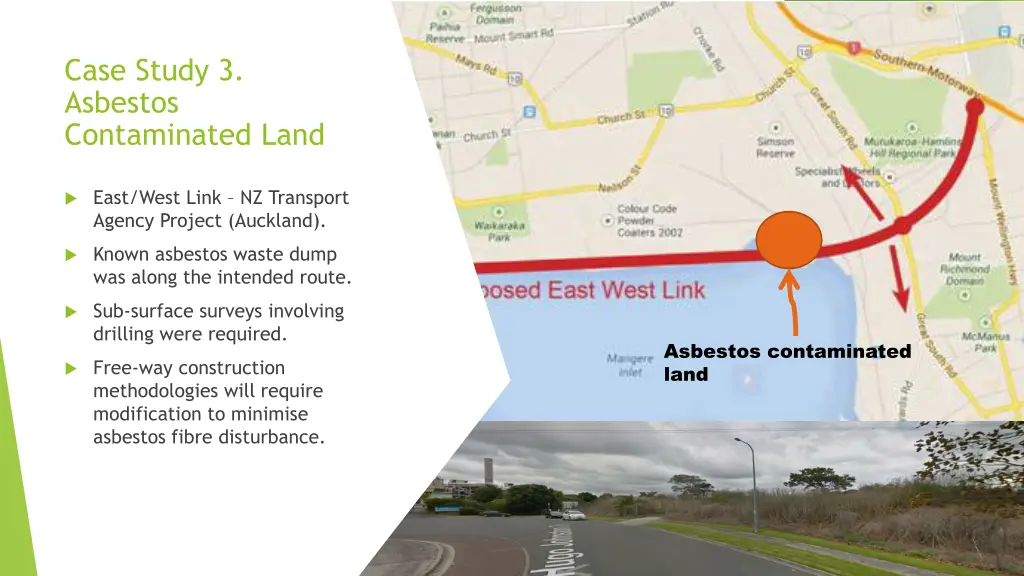
Case Study 3. Asbestos Contaminated Land East/West Link NZ Transport Agency Project (Auckland). Known asbestos waste dump was along the intended route. Sub-surface surveys involving drilling were required. Asbestos contaminated land Free-way construction methodologies will require modification to minimise asbestos fibre disturbance.
Resources Working with or near Asbestos - for builders Working with or near asbestos - for electricians Working with or near asbestos - for painters Working with or near asbestos - for plumbers Asbestos management plan template Approved Code of Practice - Management and Removal of Asbestos PPE to use when working with asbestos - includes RPE selection based on task
Taranaki Companies licenced to remove Asbestos https://www.asbestosservices.co.nz/services Asbestos Removal (centralroofing.co.nz) Pepper Construction 2013 Ltd also registered Class B asbestos removalists and have Class A certified removalist supervisors. https://pepperconstruction.co.nz/asbestos/