Compound Measures in Units
Compound measures involve combining different units to express measurements in various quantities like time, distance, speed, force, and more. Learn how to convert between minutes and hours, explore compound units of measure, and understand the concept of average speed calculations. Discover commonly used compound measures and the concept of direct proportion in measurement changes.

Download Presentation

Please find below an Image/Link to download the presentation.
The content on the website is provided AS IS for your information and personal use only. It may not be sold, licensed, or shared on other websites without obtaining consent from the author.If you encounter any issues during the download, it is possible that the publisher has removed the file from their server.
You are allowed to download the files provided on this website for personal or commercial use, subject to the condition that they are used lawfully. All files are the property of their respective owners.
The content on the website is provided AS IS for your information and personal use only. It may not be sold, licensed, or shared on other websites without obtaining consent from the author.
E N D
Presentation Transcript
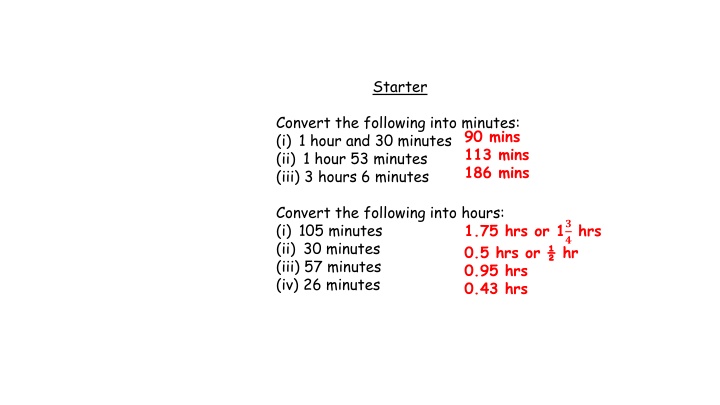
Starter Convert the following into minutes: (i) 1 hour and 30 minutes (ii) 1 hour 53 minutes (iii) 3 hours 6 minutes 90 mins 113 mins 186 mins Convert the following into hours: (i) 105 minutes (ii) 30 minutes (iii) 57 minutes (iv) 26 minutes 1.75 hrs or 1? 0.5 hrs or hr 0.95 hrs 0.43 hrs ? hrs
What is compound measure? Write down as many units of measure as you can. Which do you think are compound ? What is compound measure?
If a car is travelling at 60 mph. How far will it travel in : (i) 1 hour? (ii) 2 hours? (iii) 5 hours? (iv) 10 hours? Do we see a pattern? What about in: (v) An hour and a half? (vi) 57 minutes?
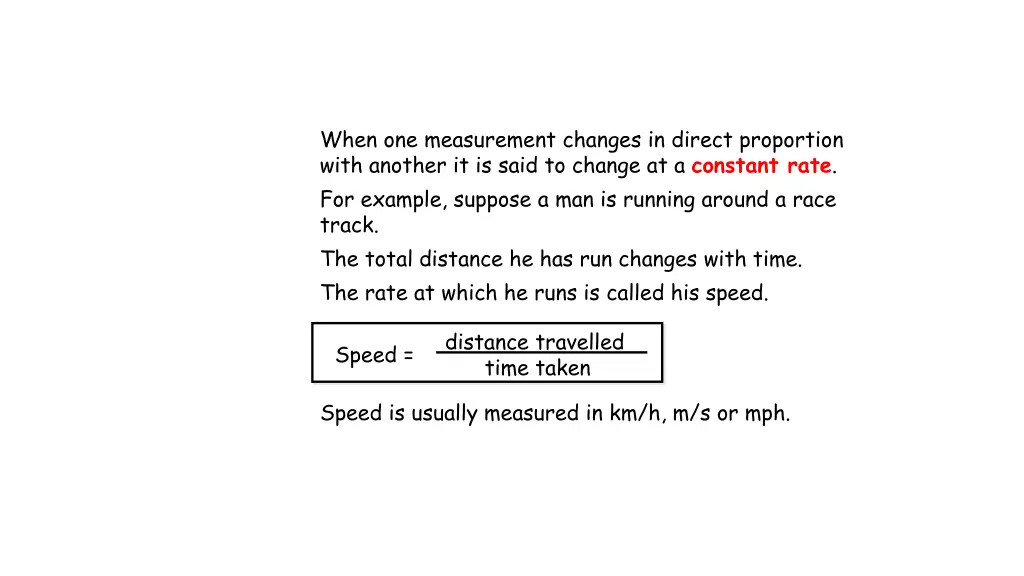
When one measurement changes in direct proportion with another it is said to change at a constant rate. For example, suppose a man is running around a race track. The total distance he has run changes with time. The rate at which he runs is called his speed. distance travelled time taken Speed = Speed is usually measured in km/h, m/s or mph.
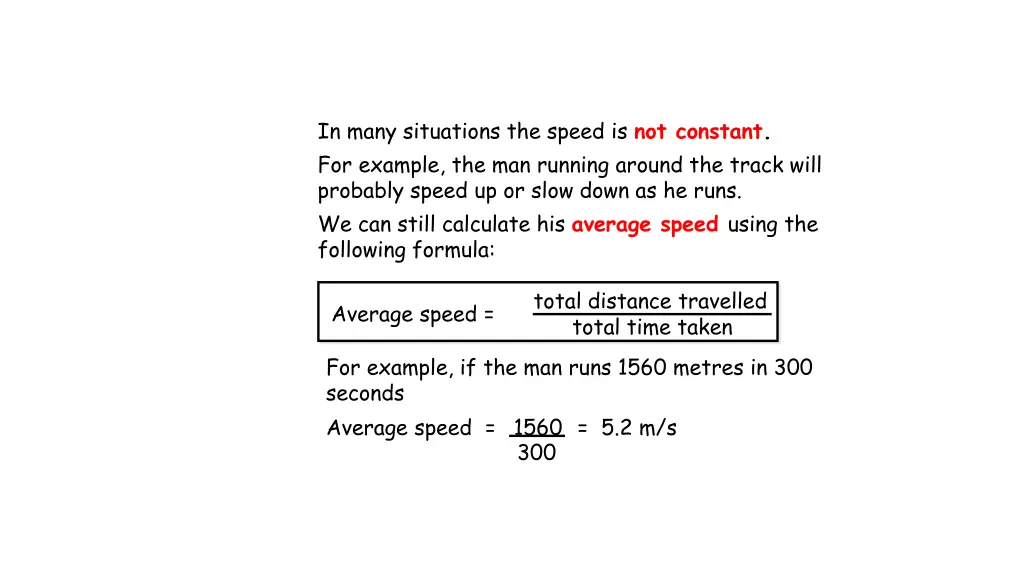
In many situations the speed is not constant. For example, the man running around the track will probably speed up or slow down as he runs. We can still calculate his average speed using the following formula: total distance travelled total time taken Average speed = For example, if the man runs 1560 metres in 300 seconds Average speed = 1560 300 = 5.2 m/s
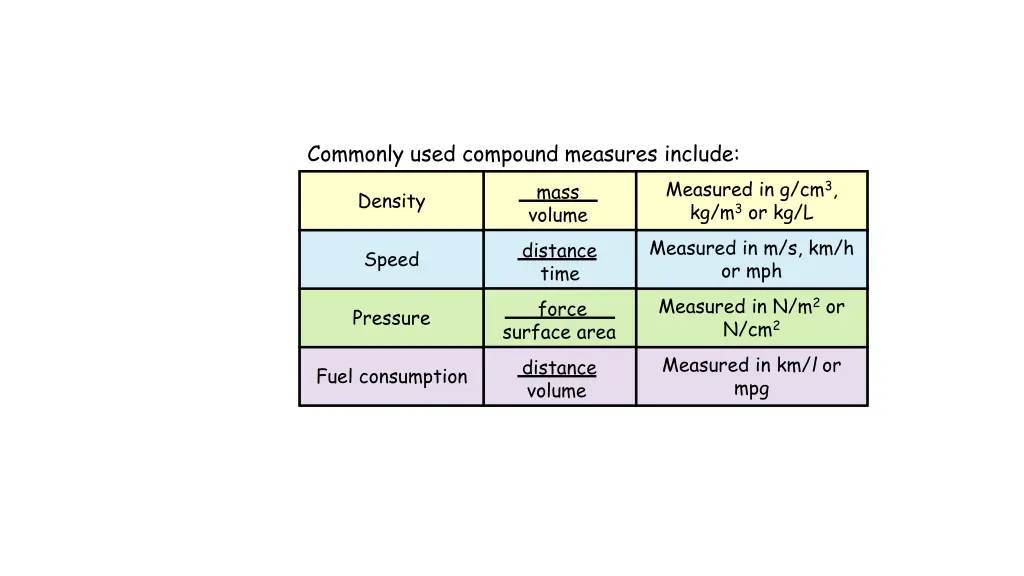
Commonly used compound measures include: Measured in g/cm3, kg/m3 or kg/L mass volume distance time force surface area distance volume Density Measured in m/s, km/h or mph Speed Measured in N/m2 or N/cm2 Pressure Measured in km/l or mpg Fuel consumption
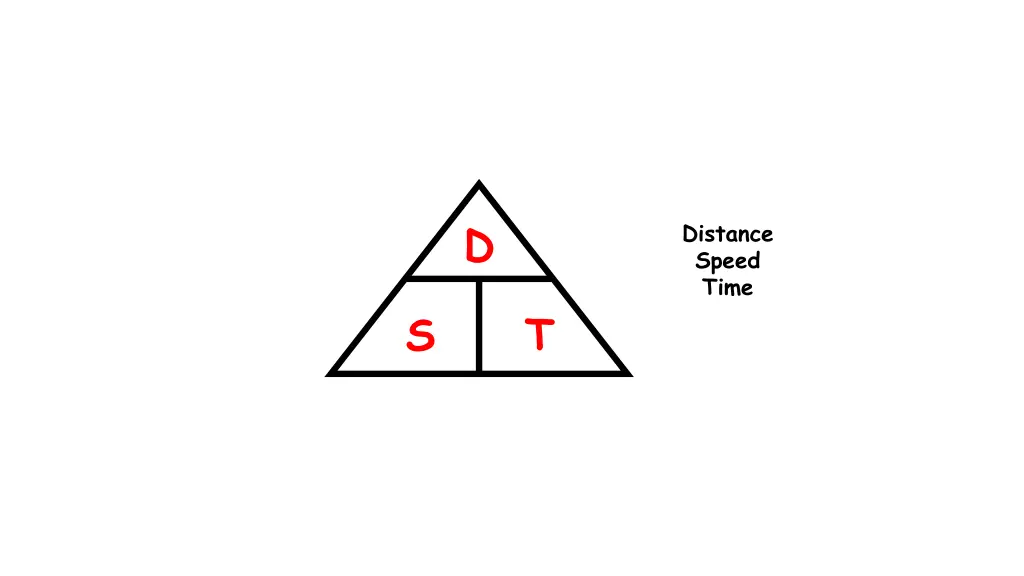
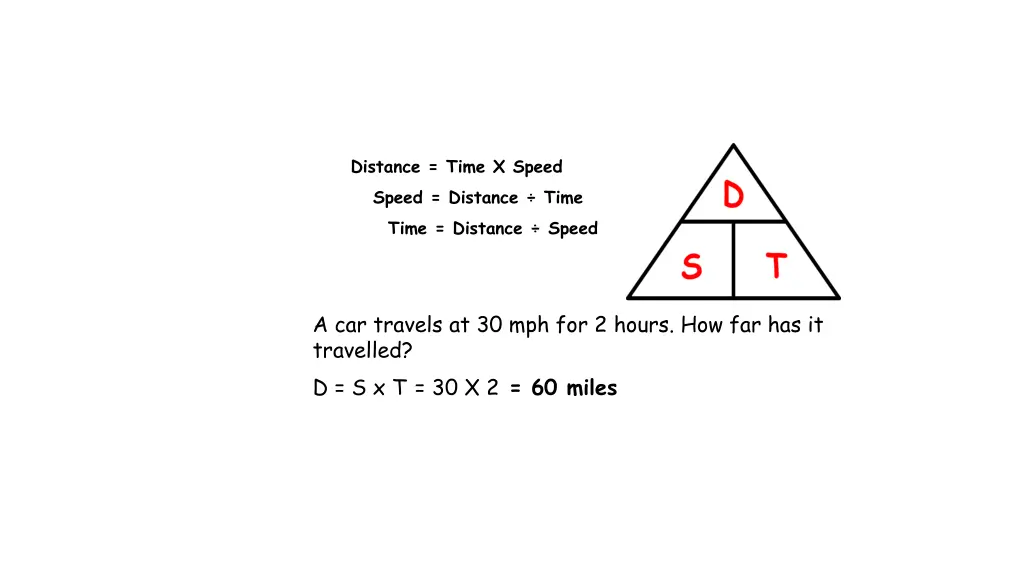
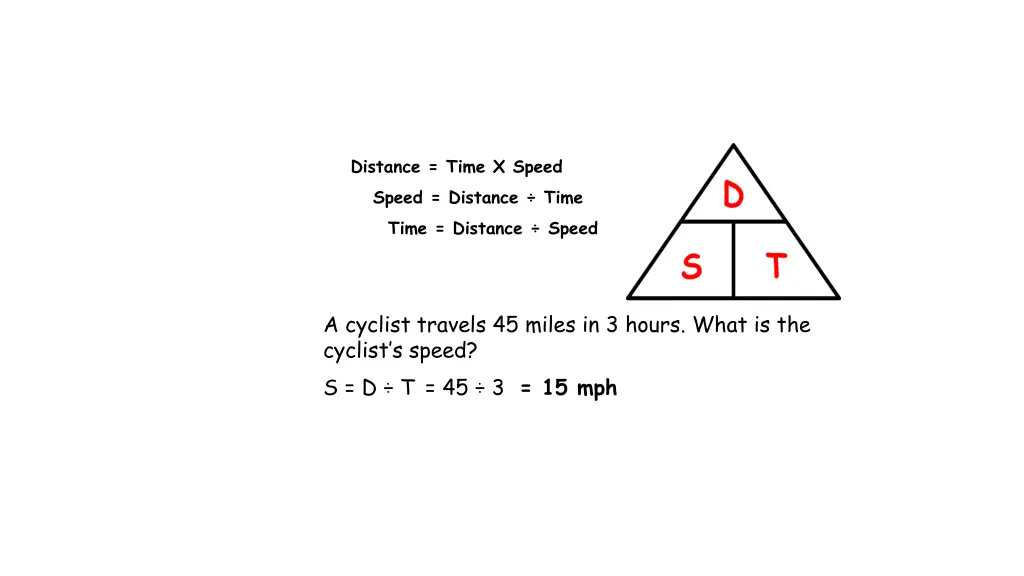
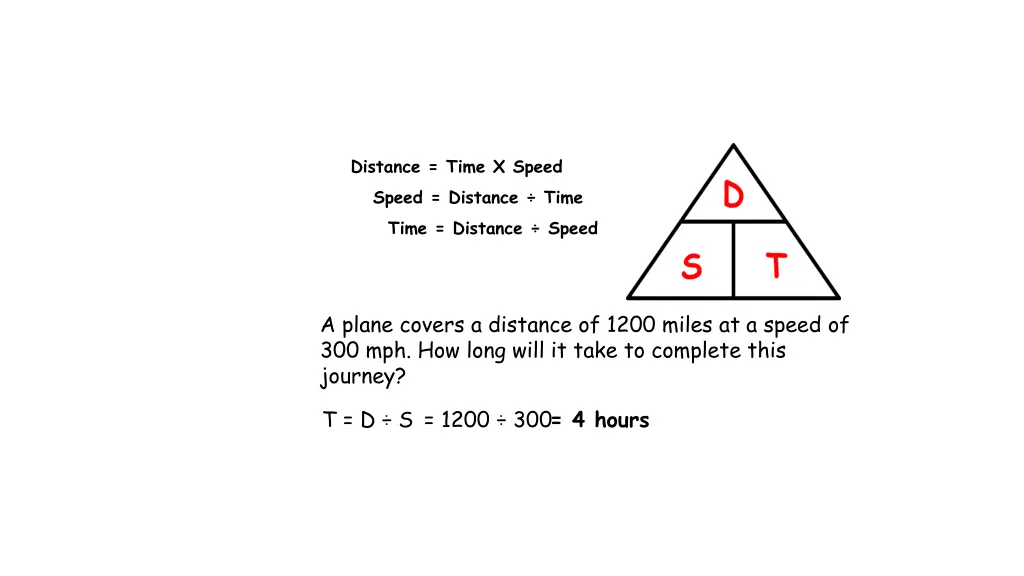
D Distance Speed Time S T
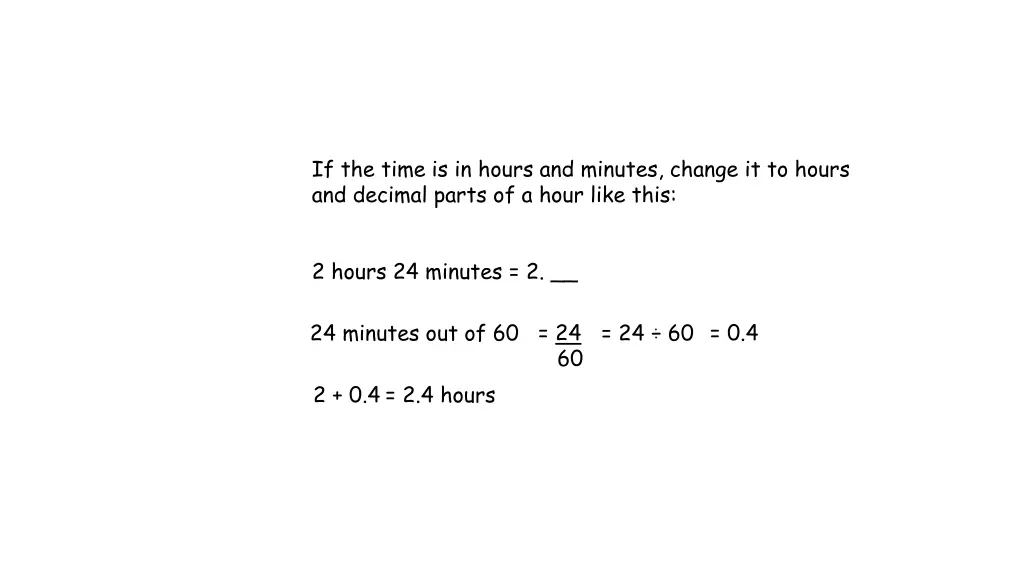
If the time is in hours and minutes, change it to hours and decimal parts of a hour like this: 2 hours 24 minutes = 2. __ 24 minutes out of 60 = 24 = 24 60 = 0.4 60 2 + 0.4 = 2.4 hours
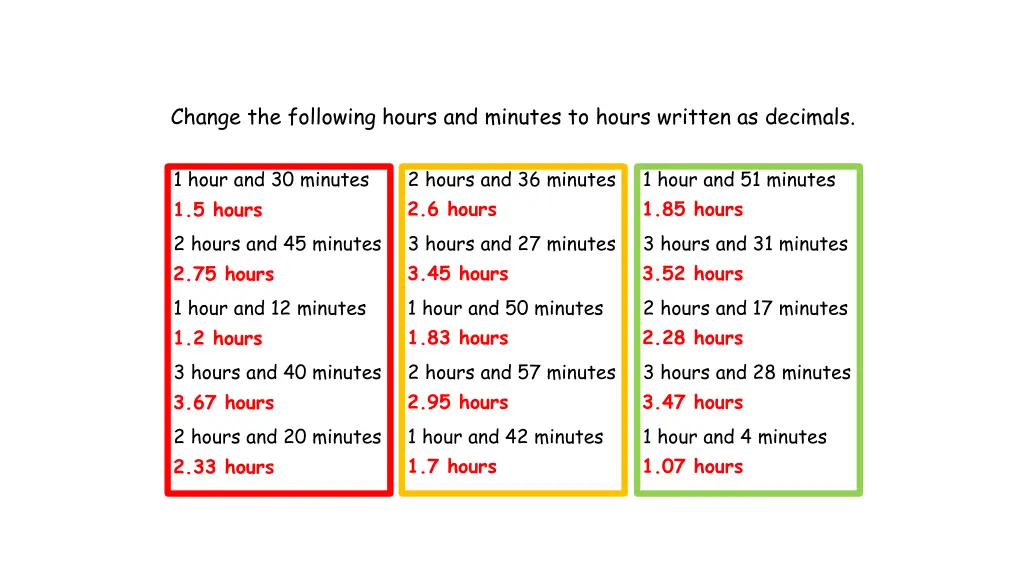
Change the following hours and minutes to hours written as decimals. 1 hour and 30 minutes 1.5 hours 2 hours and 36 minutes 2.6 hours 1 hour and 51 minutes 1.85 hours 2 hours and 45 minutes 2.75 hours 3 hours and 27 minutes 3.45 hours 3 hours and 31 minutes 3.52 hours 1 hour and 12 minutes 1.2 hours 1 hour and 50 minutes 1.83 hours 2 hours and 17 minutes 2.28 hours 3 hours and 40 minutes 3.67 hours 2 hours and 57 minutes 2.95 hours 3 hours and 28 minutes 3.47 hours 2 hours and 20 minutes 2.33 hours 1 hour and 42 minutes 1.7 hours 1 hour and 4 minutes 1.07 hours
Distance = Time X Speed Speed = Distance Time Time = Distance Speed A car travels at 30 mph for 2 hours. How far has it travelled? D = S x T = 30 X 2 = 60 miles
Distance = Time X Speed Speed = Distance Time Time = Distance Speed A cyclist travels 45 miles in 3 hours. What is the cyclist s speed? S = D T = 45 3 = 15 mph
Distance = Time X Speed Speed = Distance Time Time = Distance Speed A plane covers a distance of 1200 miles at a speed of 300 mph. How long will it take to complete this journey? T = D S = 1200 300= 4 hours
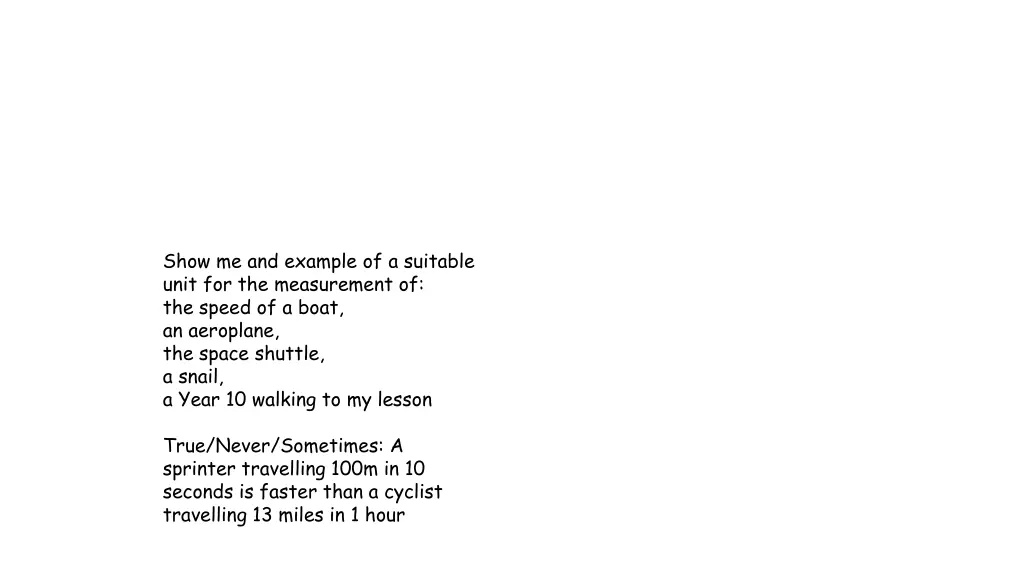
Show me and example of a suitable unit for the measurement of: the speed of a boat, an aeroplane, the space shuttle, a snail, a Year 10 walking to my lesson True/Never/Sometimes: A sprinter travelling 100m in 10 seconds is faster than a cyclist travelling 13 miles in 1 hour
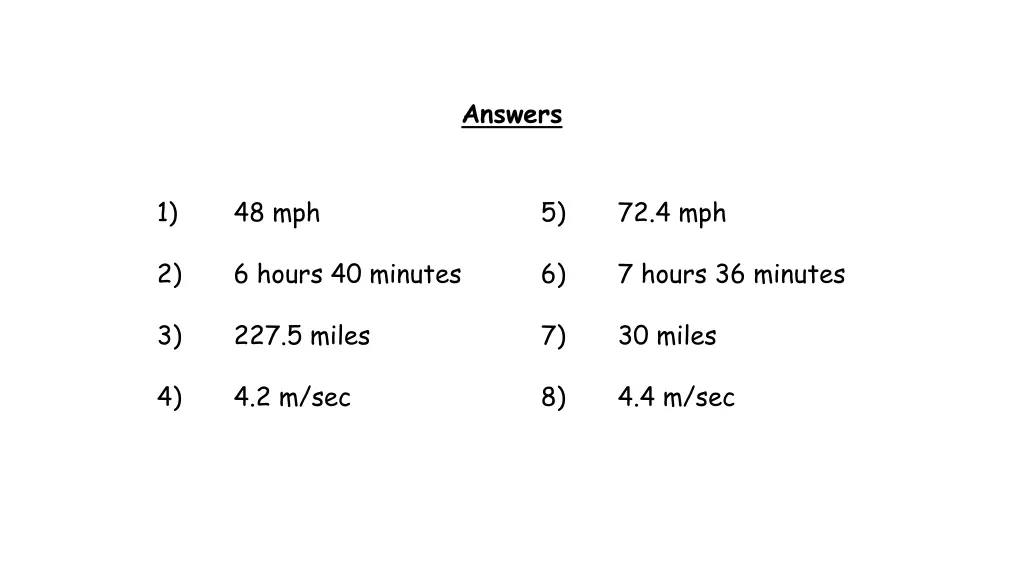
Answers 1) 48 mph 5) 72.4 mph 2) 6 hours 40 minutes 6) 7 hours 36 minutes 3) 227.5 miles 7) 30 miles 4) 4.2 m/sec 8) 4.4 m/sec
Plenary Summarise in a text message (160 characters) what the key learning points are from today s lesson.
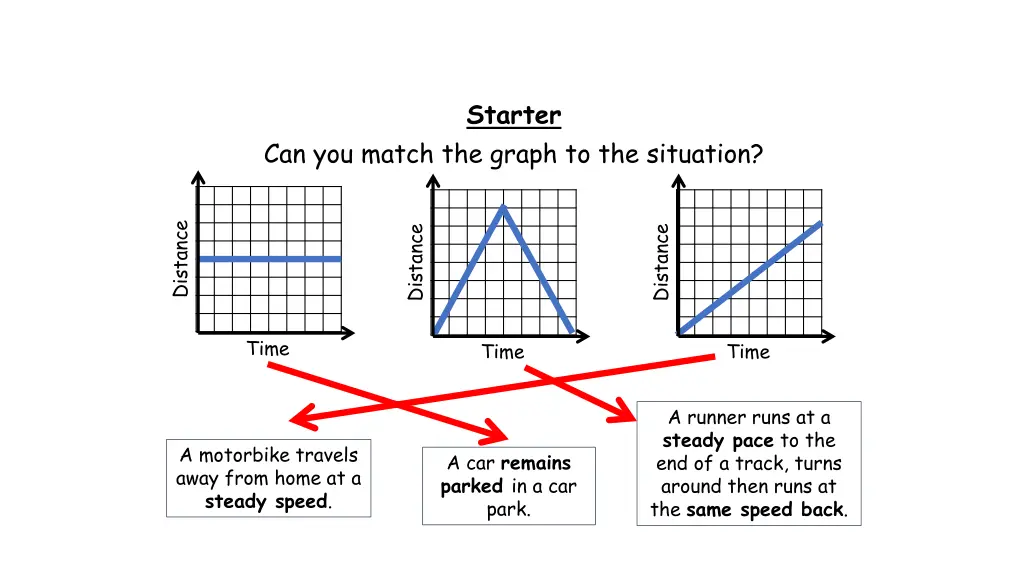
Starter Can you match the graph to the situation? Distance Distance Distance Time Time Time A runner runs at a steady pace to the end of a track, turns around then runs at the same speed back. A motorbike travels away from home at a steady speed. A car remains parked in a car park.
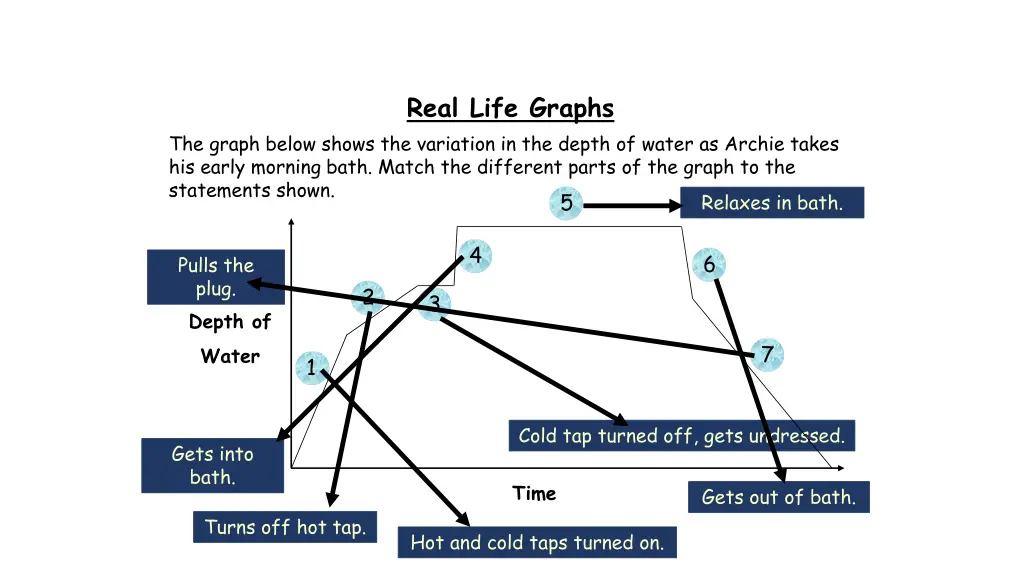
Real Life Graphs The graph below shows the variation in the depth of water as Archie takes his early morning bath. Match the different parts of the graph to the statements shown. 5 Relaxes in bath. 4 6 Pulls the plug. Depth of Water 2 3 7 1 Cold tap turned off, gets undressed. Gets into bath. Time Gets out of bath. Turns off hot tap. Hot and cold taps turned on.
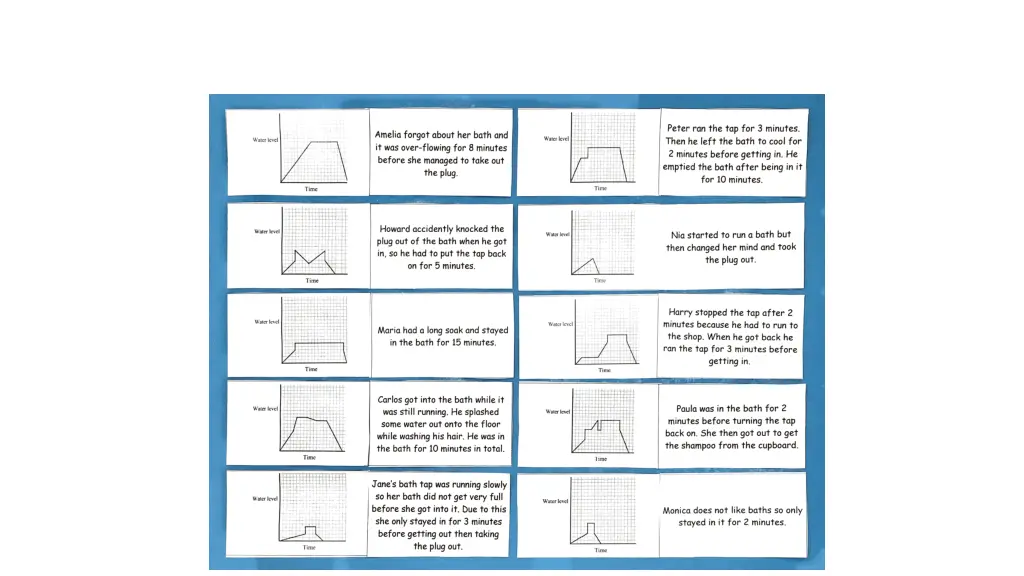
Pair Work Complete the Filling Containers match up activity.
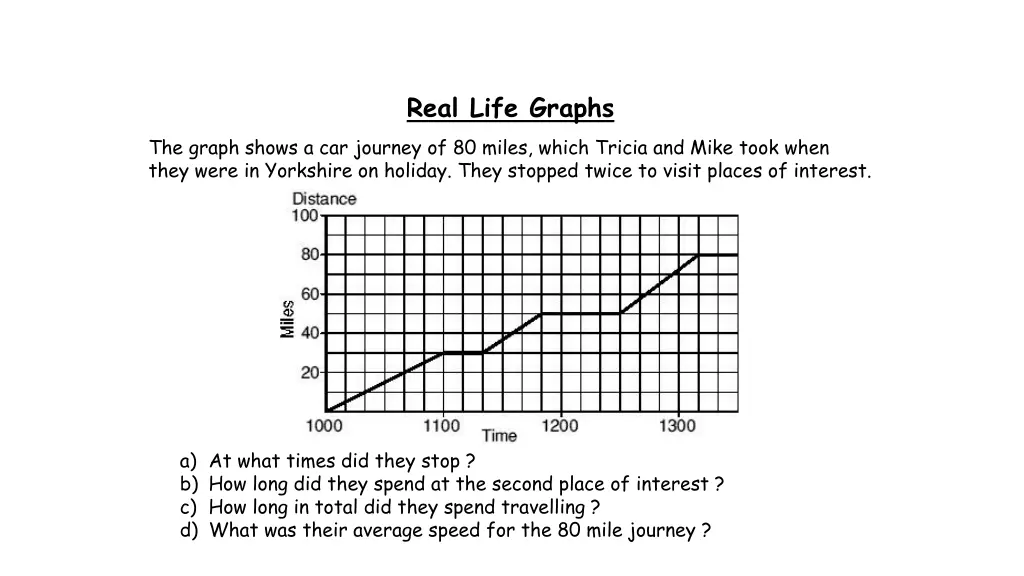
Real Life Graphs The graph shows a car journey of 80 miles, which Tricia and Mike took when they were in Yorkshire on holiday. They stopped twice to visit places of interest. a) At what times did they stop ? b) How long did they spend at the second place of interest ? c) How long in total did they spend travelling ? d) What was their average speed for the 80 mile journey ?
Pair Work Complete the Distance-Time match up activity.
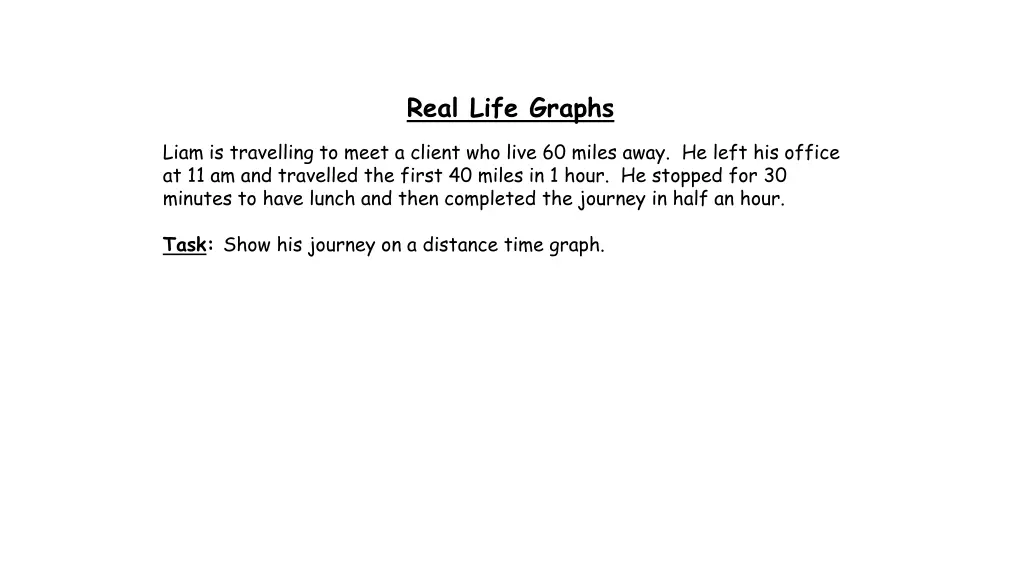
Real Life Graphs Liam is travelling to meet a client who live 60 miles away. He left his office at 11 am and travelled the first 40 miles in 1 hour. He stopped for 30 minutes to have lunch and then completed the journey in half an hour. Task: Show his journey on a distance time graph.
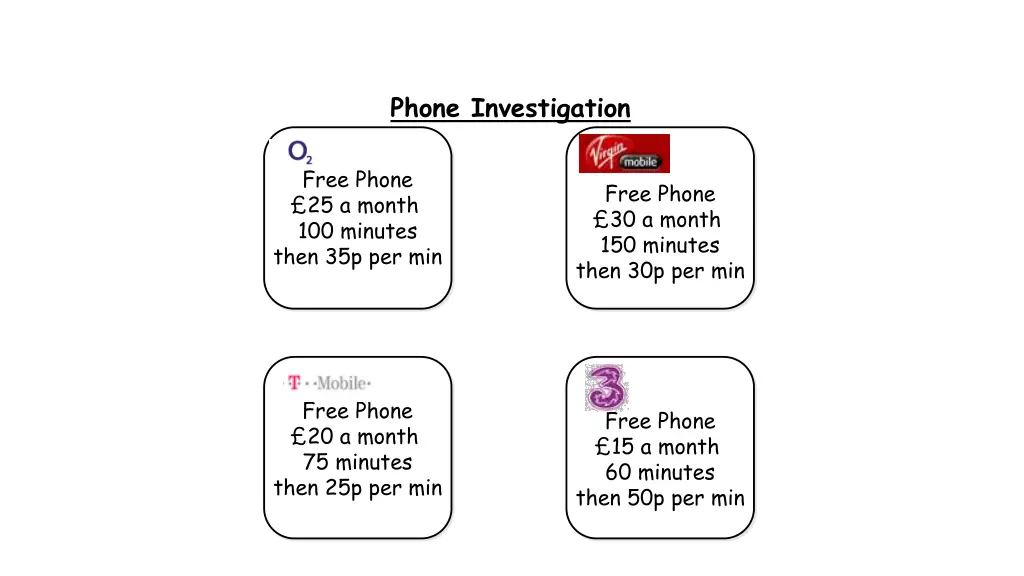
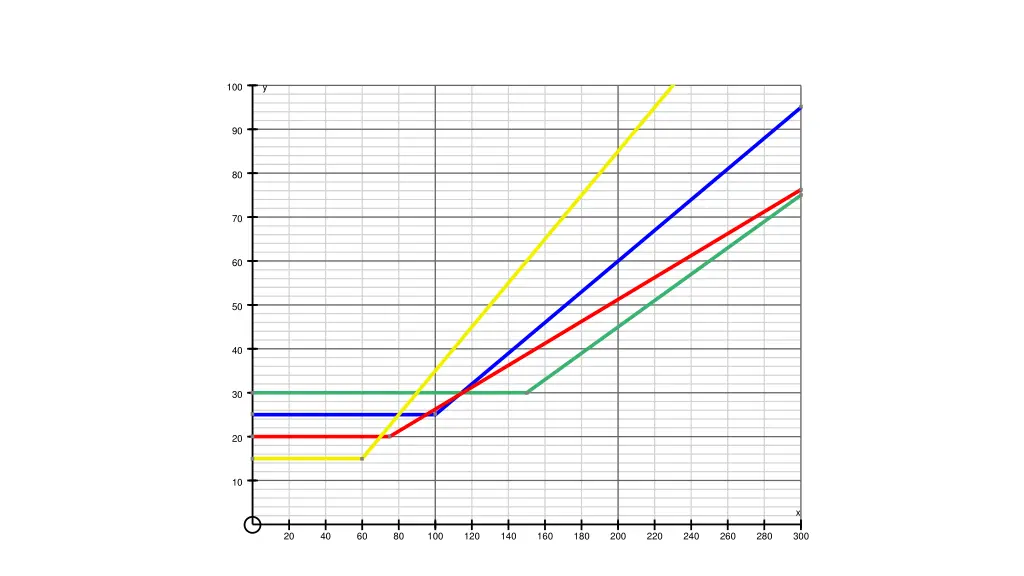
Phone Investigation Free Phone 25 a month 100 minutes then 35p per min Free Phone 30 a month 150 minutes then 30p per min Free Phone 20 a month 75 minutes then 25p per min Free Phone 15 a month 60 minutes then 50p per min
100 y 90 80 70 60 50 40 30 20 10 x 20 40 60 80 100 120 140 160 180 200 220 240 260 280 300
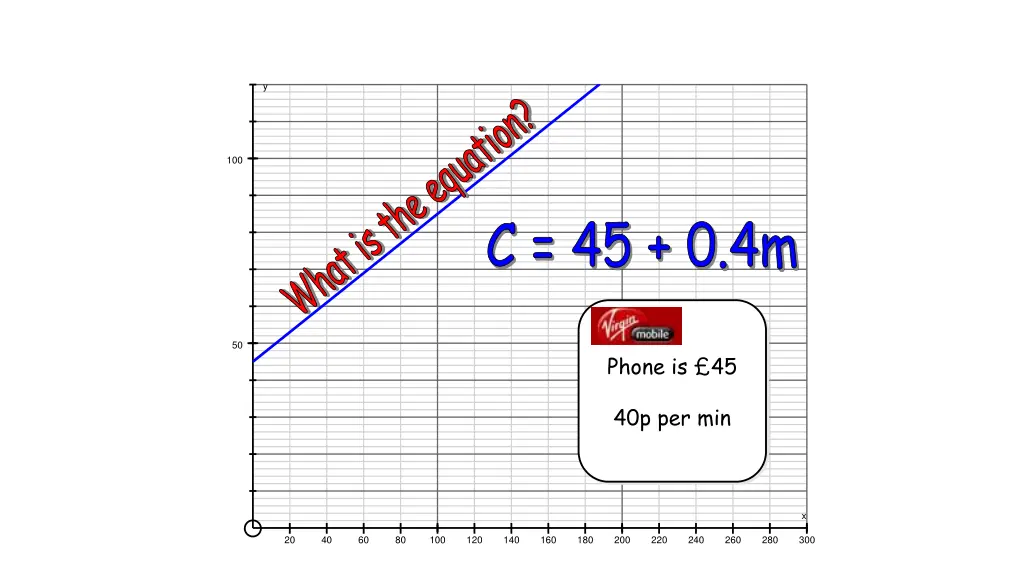
What is the equation? y 100 C = 45 + 0.4m 50 Phone is 45 40p per min x 20 40 60 80 100 120 140 160 180 200 220 240 260 280 300
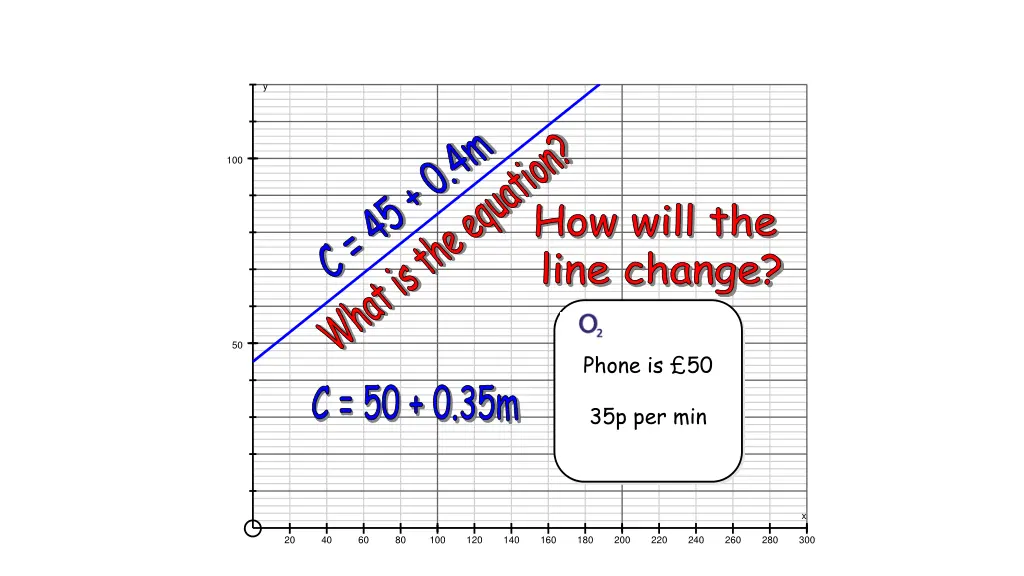
y What is the equation? C = 50 + 0.35m C = 45 + 0.4m 100 How will the line change? 50 Phone is 50 35p per min x 20 40 60 80 100 120 140 160 180 200 220 240 260 280 300
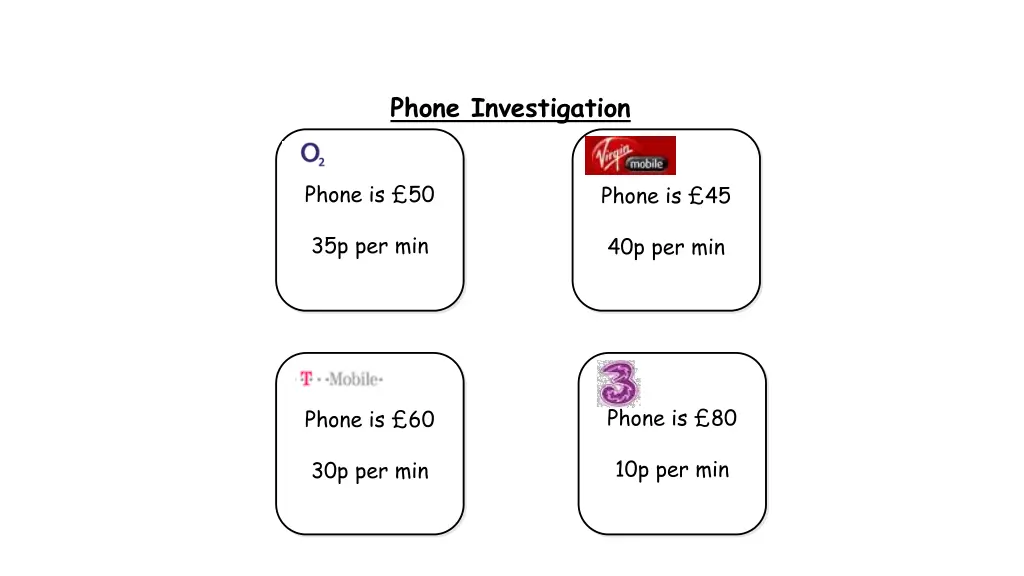
Phone Investigation Phone is 50 Phone is 45 35p per min 40p per min Phone is 80 Phone is 60 10p per min 30p per min
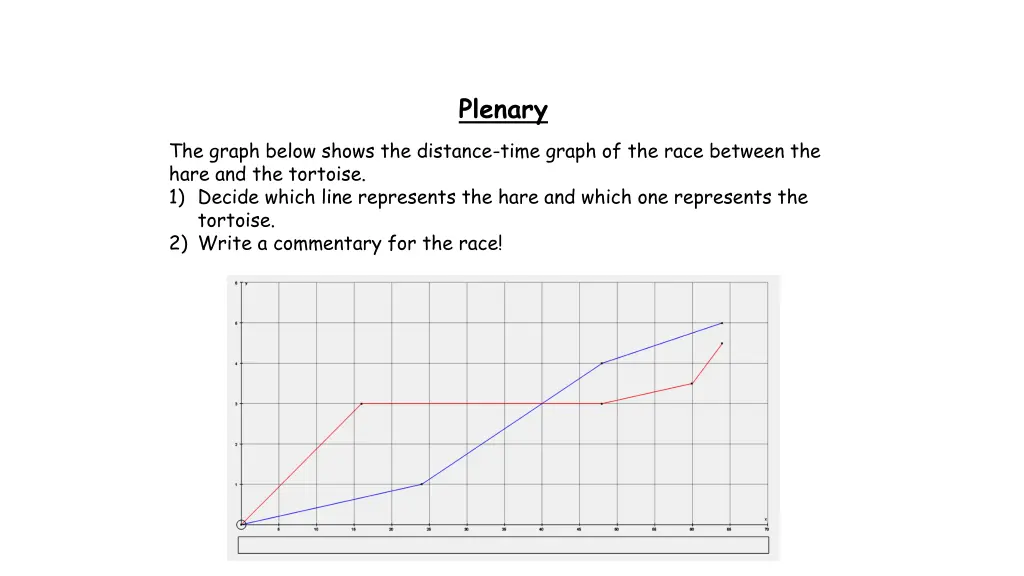
Plenary The graph below shows the distance-time graph of the race between the hare and the tortoise. 1) Decide which line represents the hare and which one represents the tortoise. 2) Write a commentary for the race!