Computer Ethics and Ethical Theories: Understanding the Philosophical Framework
Explore the realm of computer ethics and ethical theories, delving into utilitarianism, rights theory, and justice theory. Discover the evolving landscape of ethical rules in the context of computer technology and the importance of honesty, respect for privacy, and commitment to ethical conduct.

Download Presentation

Please find below an Image/Link to download the presentation.
The content on the website is provided AS IS for your information and personal use only. It may not be sold, licensed, or shared on other websites without obtaining consent from the author. If you encounter any issues during the download, it is possible that the publisher has removed the file from their server.
You are allowed to download the files provided on this website for personal or commercial use, subject to the condition that they are used lawfully. All files are the property of their respective owners.
The content on the website is provided AS IS for your information and personal use only. It may not be sold, licensed, or shared on other websites without obtaining consent from the author.
E N D
Presentation Transcript
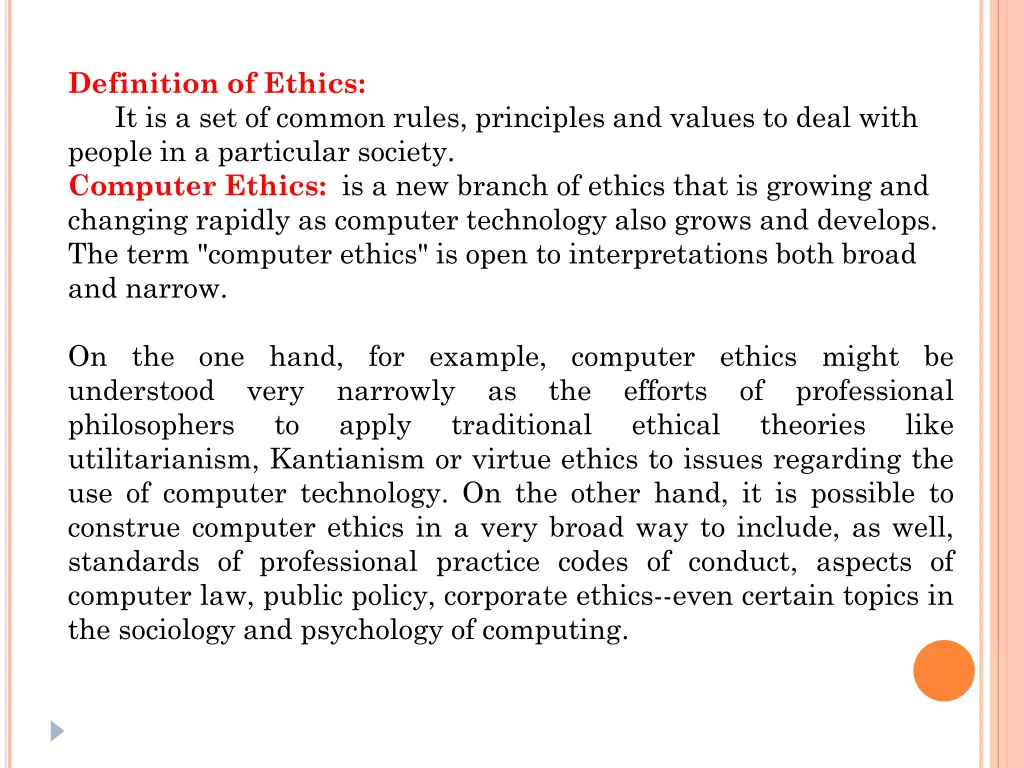
COMPUTER ETHICS : 1. 2. 3. 4. Ethics Philosophical Issues -Ethics Theories:- 1.Utilitarianism Theory 2.Right Theory 3.Justice Theory Definition of Ethics: Computer Ethics Ethical rules
Definition of Ethics: It is a set of common rules, principles and values to deal with people in a particular society. Computer Ethics: is a new branch of ethics that is growing and changing rapidly as computer technology also grows and develops. The term "computer ethics" is open to interpretations both broad and narrow. On the one hand, for example, computer ethics might be understood very narrowly as the efforts of professional philosophers to apply traditional utilitarianism, Kantianism or virtue ethics to issues regarding the use of computer technology. On the other hand, it is possible to construe computer ethics in a very broad way to include, as well, standards of professional practice codes of conduct, aspects of computer law, public policy, corporate ethics--even certain topics in the sociology and psychology of computing. ethical theories like
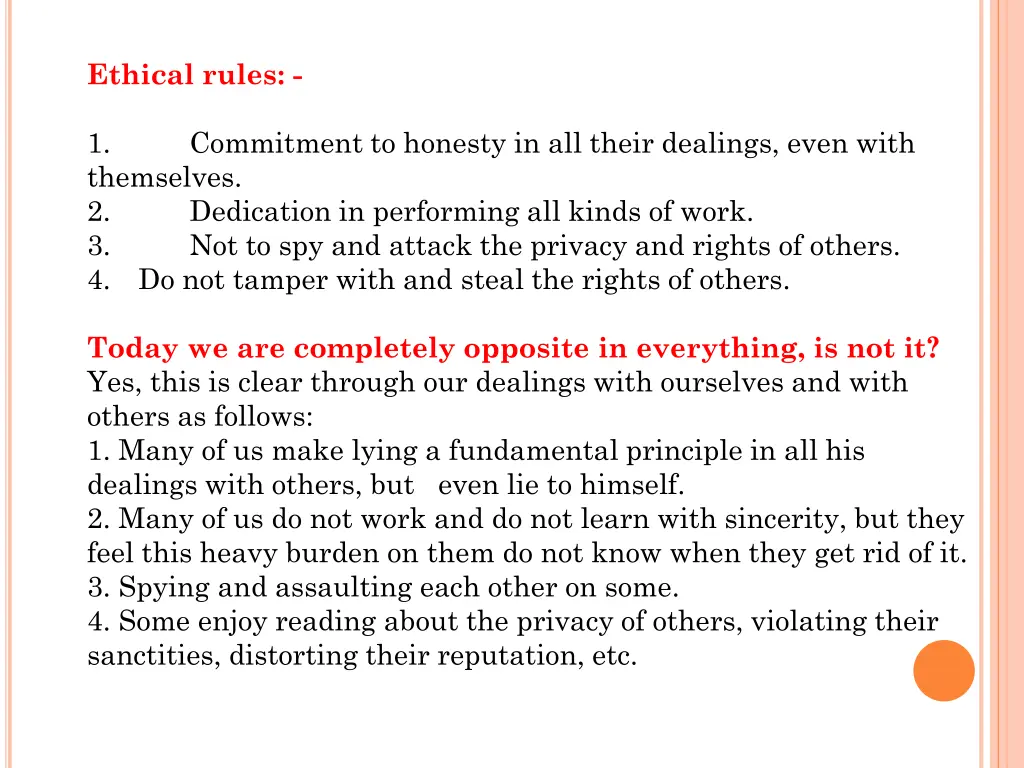
Ethical rules: - 1. themselves. 2. 3. 4. Do not tamper with and steal the rights of others. Commitment to honesty in all their dealings, even with Dedication in performing all kinds of work. Not to spy and attack the privacy and rights of others. Today we are completely opposite in everything, is not it? Yes, this is clear through our dealings with ourselves and with others as follows: 1. Many of us make lying a fundamental principle in all his dealings with others, but even lie to himself. 2. Many of us do not work and do not learn with sincerity, but they feel this heavy burden on them do not know when they get rid of it. 3. Spying and assaulting each other on some. 4. Some enjoy reading about the privacy of others, violating their sanctities, distorting their reputation, etc.
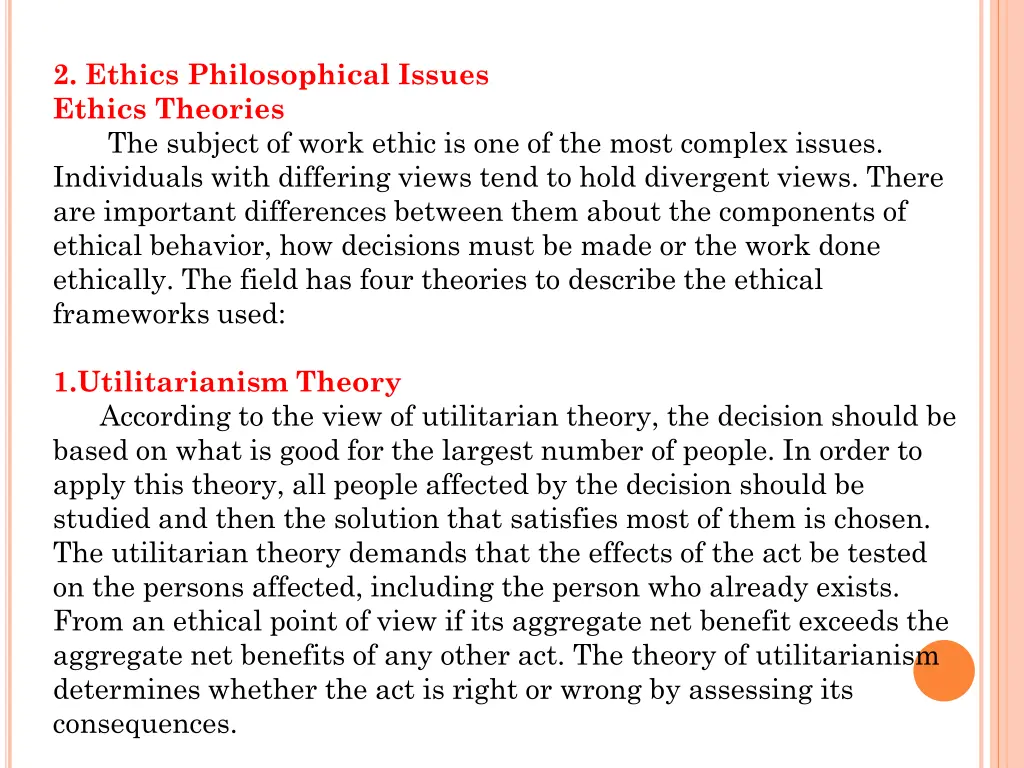
2. Ethics Philosophical Issues Ethics Theories The subject of work ethic is one of the most complex issues. Individuals with differing views tend to hold divergent views. There are important differences between them about the components of ethical behavior, how decisions must be made or the work done ethically. The field has four theories to describe the ethical frameworks used: 1.Utilitarianism Theory According to the view of utilitarian theory, the decision should be based on what is good for the largest number of people. In order to apply this theory, all people affected by the decision should be studied and then the solution that satisfies most of them is chosen. The utilitarian theory demands that the effects of the act be tested on the persons affected, including the person who already exists. From an ethical point of view if its aggregate net benefit exceeds the aggregate net benefits of any other act. The theory of utilitarianism determines whether the act is right or wrong by assessing its consequences.
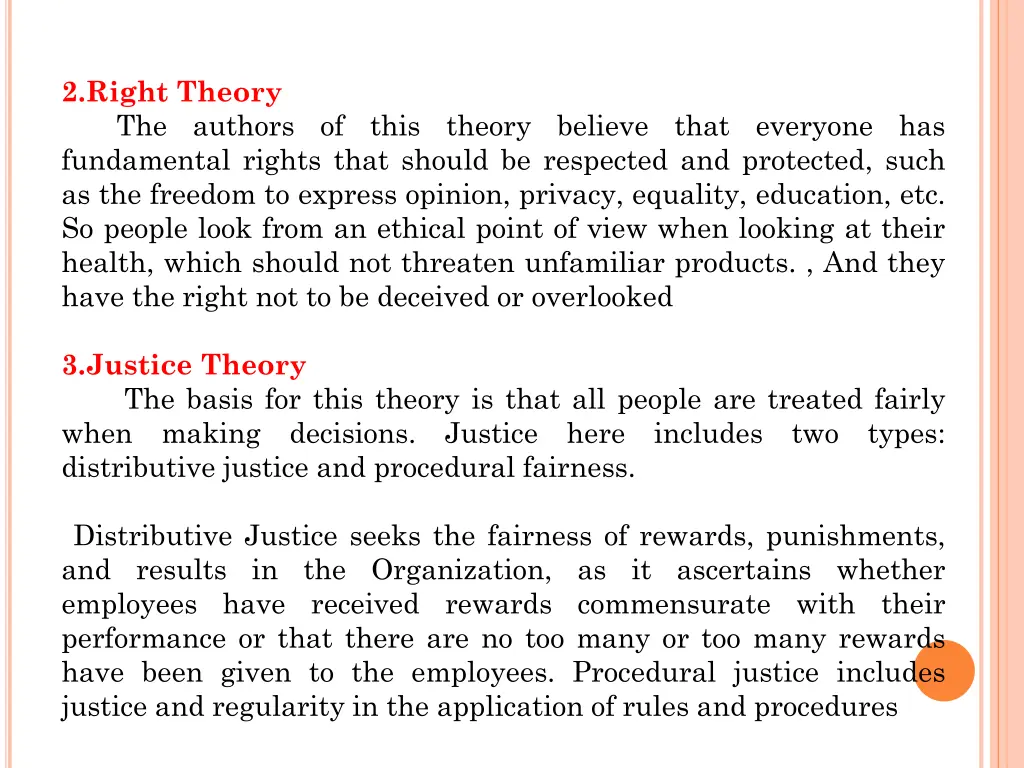
2.Right Theory The authors of this theory believe that everyone has fundamental rights that should be respected and protected, such as the freedom to express opinion, privacy, equality, education, etc. So people look from an ethical point of view when looking at their health, which should not threaten unfamiliar products. , And they have the right not to be deceived or overlooked 3.Justice Theory The basis for this theory is that all people are treated fairly when making decisions. Justice here includes two types: distributive justice and procedural fairness. Distributive Justice seeks the fairness of rewards, punishments, and results in the Organization, as it ascertains whether employees have received rewards commensurate with their performance or that there are no too many or too many rewards have been given to the employees. Procedural justice includes justice and regularity in the application of rules and procedures