Exploring the case study of Dr. Joan Mowat from the University of Strathclyde, Scotland, focusing on the concept of marginalisation and its policy implications. Delve into the political context, local community challenges, and the story of Thomas, a young boy facing difficulties in school.
Please find below an Image/Link to download the presentation.
The content on the website is provided AS IS for your information and personal use only. It may not be sold, licensed, or shared on other websites without obtaining consent from the author. If you encounter any issues during the download, it is possible that the publisher has removed the file from their server.
You are allowed to download the files provided on this website for personal or commercial use, subject to the condition that they are used lawfully. All files are the property of their respective owners.
The content on the website is provided AS IS for your information and personal use only. It may not be sold, licensed, or shared on other websites without obtaining consent from the author.
E N D
Presentation Transcript
+ Towards a new conceptualisation of marginalisation: Case Study Dr Joan Mowat University of Strathclyde, Scotland
+Outline Introducing the case study Examination of the case study Examination of the concept of marginalisation and its implications for policy and practice
+Outline Part 1 The Political context The Local Community Introducing Thomas The Intervention Thomas response to the intervention
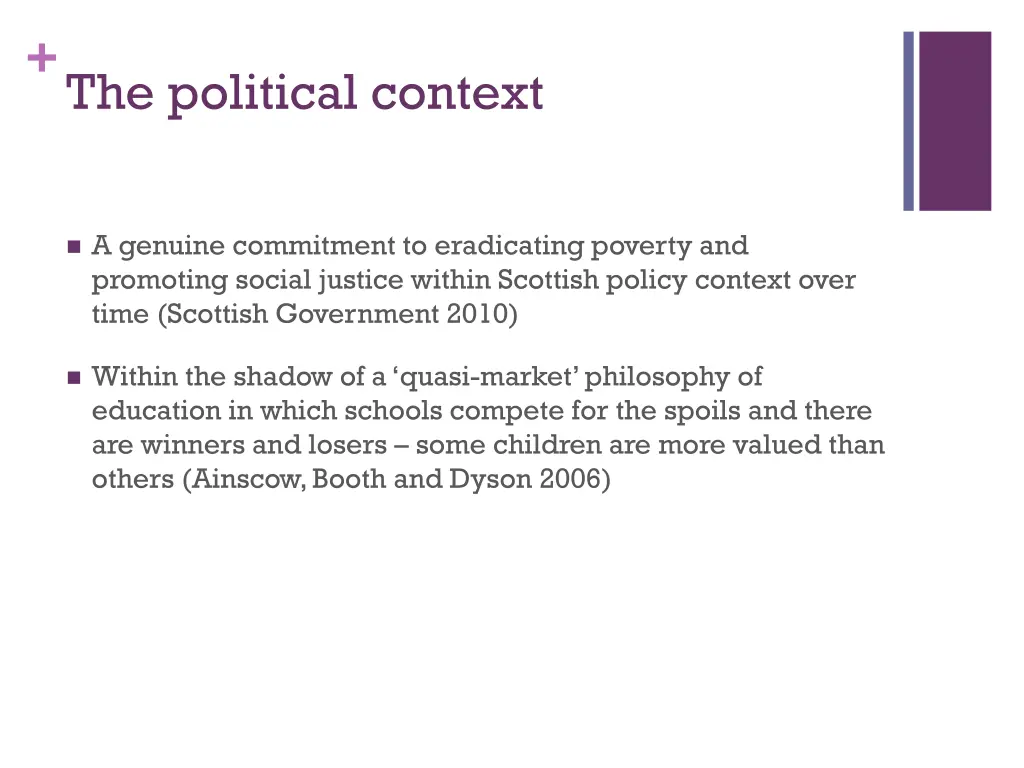
+The political context A genuine commitment to eradicating poverty and promoting social justice within Scottish policy context over time (Scottish Government 2010) Within the shadow of a quasi-market philosophy of education in which schools compete for the spoils and there are winners and losers some children are more valued than others (Ainscow, Booth and Dyson 2006)
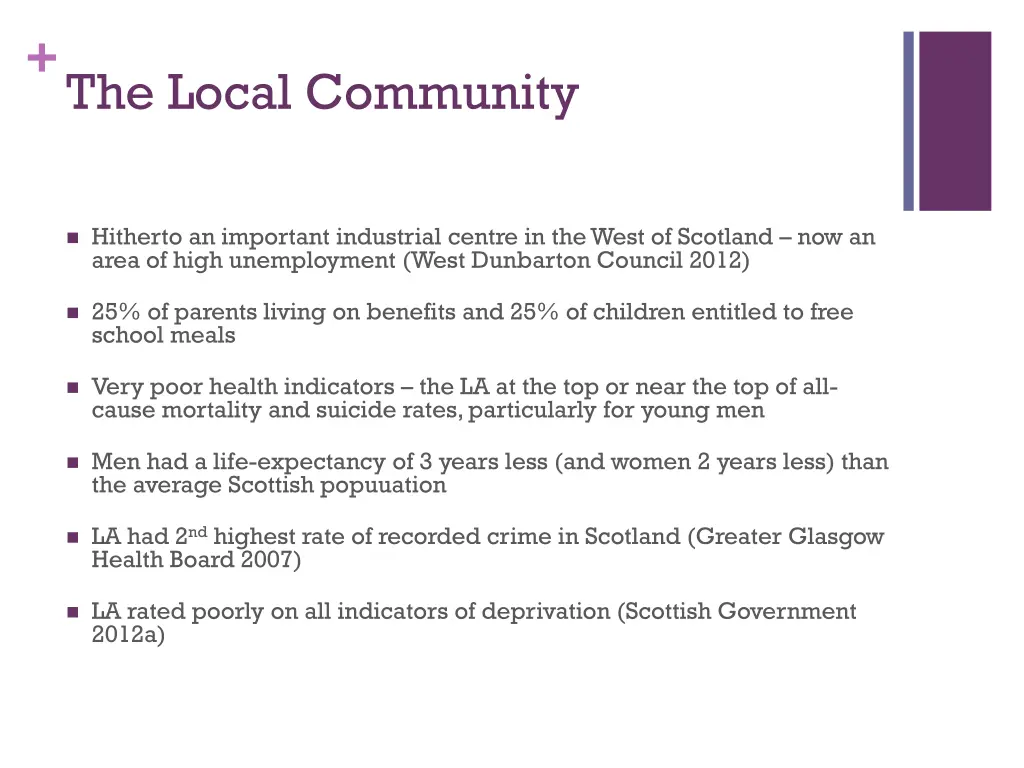
+The Local Community Hitherto an important industrial centre in the West of Scotland now an area of high unemployment (West Dunbarton Council 2012) 25% of parents living on benefits and 25% of children entitled to free school meals Very poor health indicators the LA at the top or near the top of all- cause mortality and suicide rates, particularly for young men Men had a life-expectancy of 3 years less (and women 2 years less) than the average Scottish popuuation LA had 2ndhighest rate of recorded crime in Scotland (Greater Glasgow Health Board 2007) LA rated poorly on all indicators of deprivation (Scottish Government 2012a)
+Thomas The younger of two brothers living with his mother and step- father. His elder brother in trouble with the police. His mother had remarried and had a younger child Referred to Psychological Services in primary school Directed towards groupwork intervention in primary school but did not respond Did not cope well with transition to secondary school Frequently suspended from school for serious misconduct following transition to secondary school
+Thomas Referred to inter-professional team within school JAT and to Behaviour Support Base Behaviour continued to deteriorate missed 2/5ths of potential schooling through suspensions in S2 Not allowed to participate in scheme to support vulnerable families and children because of the risk he posed to others Referred to LA for potential placement outwith mainstream because it was considered that he was beyond control
+Thomas His mother, whilst being concerned for her son, eventually refused to attend appointments at the school His pastoral care teacher gave up on him refused to refer him to support group intervention on the basis that Thomas would not respond - No chance of success. Wouldn t turn up, would have no effect Thomas on the fringes of trouble within the community At age 14, witnessed a murder in the local community His elder brother at a later point committed suicide
+Intervention Social constructivist groupwork approach designed to foster understanding and transfer Based upon the Teaching for Understanding Framework (Wiske 1998) Focussed upon developing intrapersonal and interpersonal intelligences (Gardner 1999) Nominated by myself (Depute Head) to Support Group Placed in group (N = 4) with Behaviour Support Teacher Attended group work for a period of 20 weeks for 1hr per week
+Response to Intervention Contrary to expectation, responded very positively to approach and contributed actively to discussions and activities Positive relationships formed between Support Group Leader and Thomas and between Thomas and other pupils in group Key is that someone took an interest in him. Positive relationships with teachers are very important. The group gave him time out from coursework to think about himself. (I) don t think they ever get the chance to do this. Mr McDonald [Support Group Leader]
+Response to Intervention He had developed a sense of agency Realised that you could change things yerself There were significant improvements in his behaviour a 75% reduction in referrals for indiscipline from his class teachers reflected also in a significant reduction in suspensions from school Relationships with peers were considered to be improving He reported feeling happier, having a sense of being cared about and being listened to - Teachers listen to what you have to say rather than just dishing out the orders.
+Response to Intervention His attitude towards school and towards learning was more positive It used to be, I don t want to go to school but that s stopped and I suppose it s because he s coping better. [Thomas s Mum] Thomas stated, I am doing about 10 times better than what I used to and attributed this to both the support group and the influence of his stepfather who acted as a role model for him. Despite obvious improvements, it proved difficult to shift Thomas poor reputation it seemed intractable some of his teachers noted no change in his behaviour or attitude
+Outline: Part 2 Examining Thomas Case Study through the lens of resilience An examination of the extent to which Thomas may have experienced his life as marginalised Examination of the concept and the implications of the hypothesis
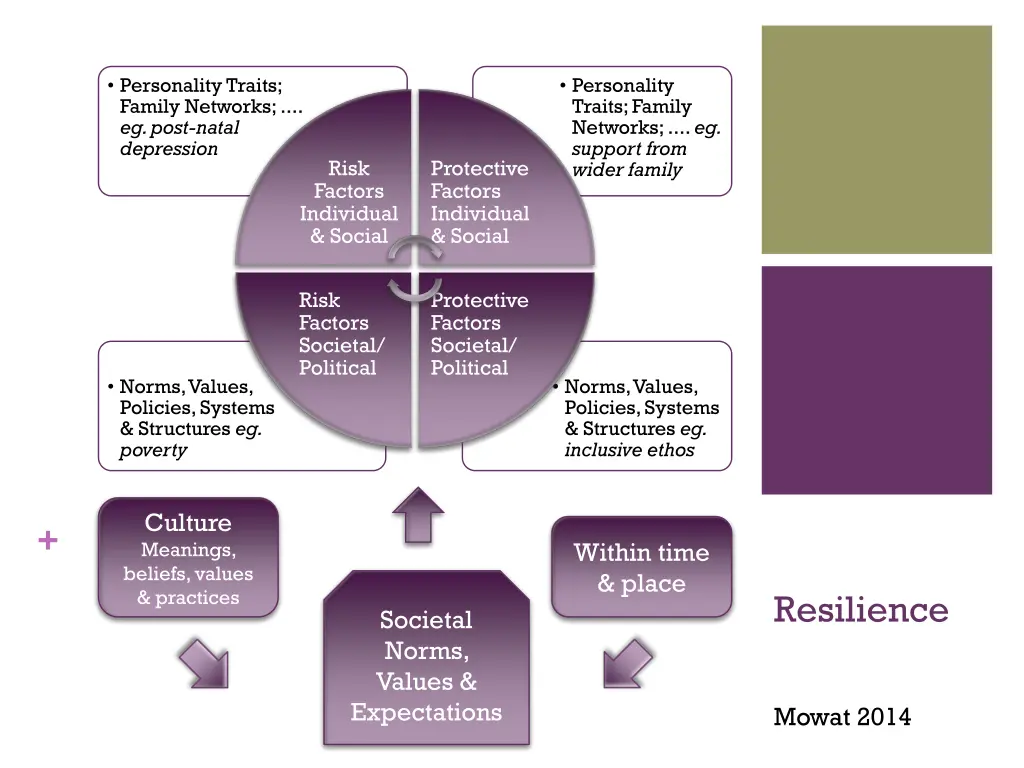
Personality Traits; Family Networks; .... eg. post-natal depression Personality Traits; Family Networks; .... eg. support from wider family Risk Factors Individual & Social Protective Factors Individual & Social Risk Factors Societal/ Political Protective Factors Societal/ Political Norms, Values, Policies, Systems & Structures eg. poverty Norms, Values, Policies, Systems & Structures eg. inclusive ethos Culture Meanings, beliefs, values & practices + Within time & place Resilience Societal Norms, Values & Expectations Mowat 2014
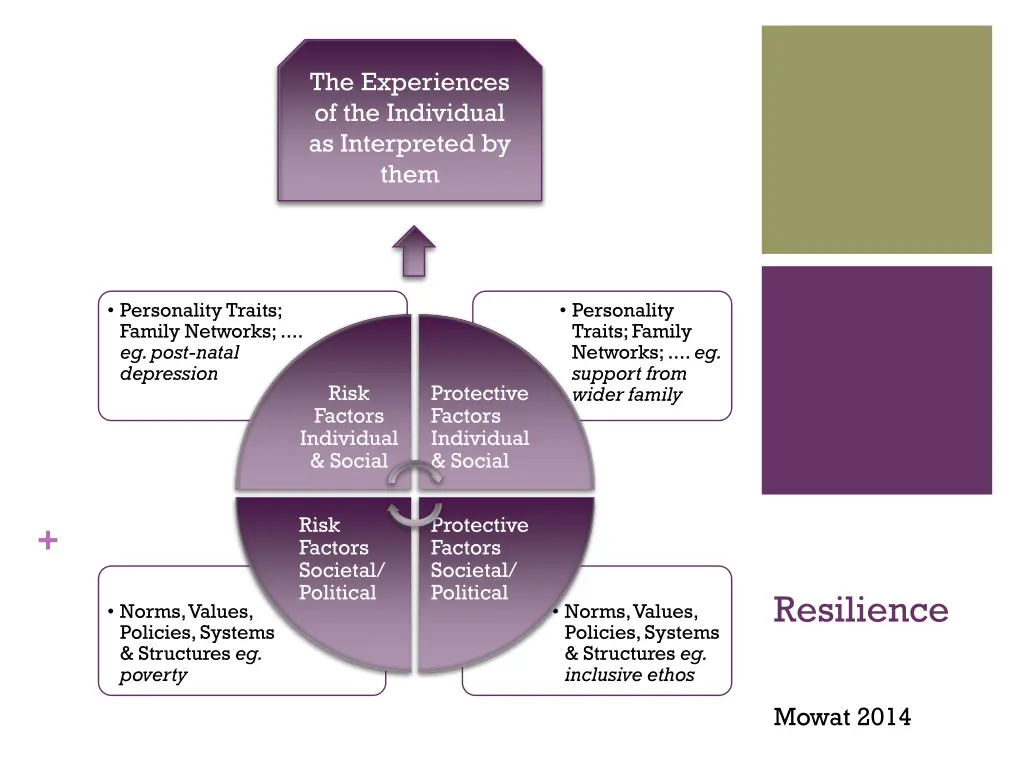
The Experiences of the Individual as Interpreted by them Personality Traits; Family Networks; .... eg. post-natal depression Personality Traits; Family Networks; .... eg. support from wider family Risk Factors Individual & Social Protective Factors Individual & Social Risk Factors Societal/ Political Protective Factors Societal/ Political + Resilience Norms, Values, Policies, Systems & Structures eg. poverty Norms, Values, Policies, Systems & Structures eg. inclusive ethos Mowat 2014
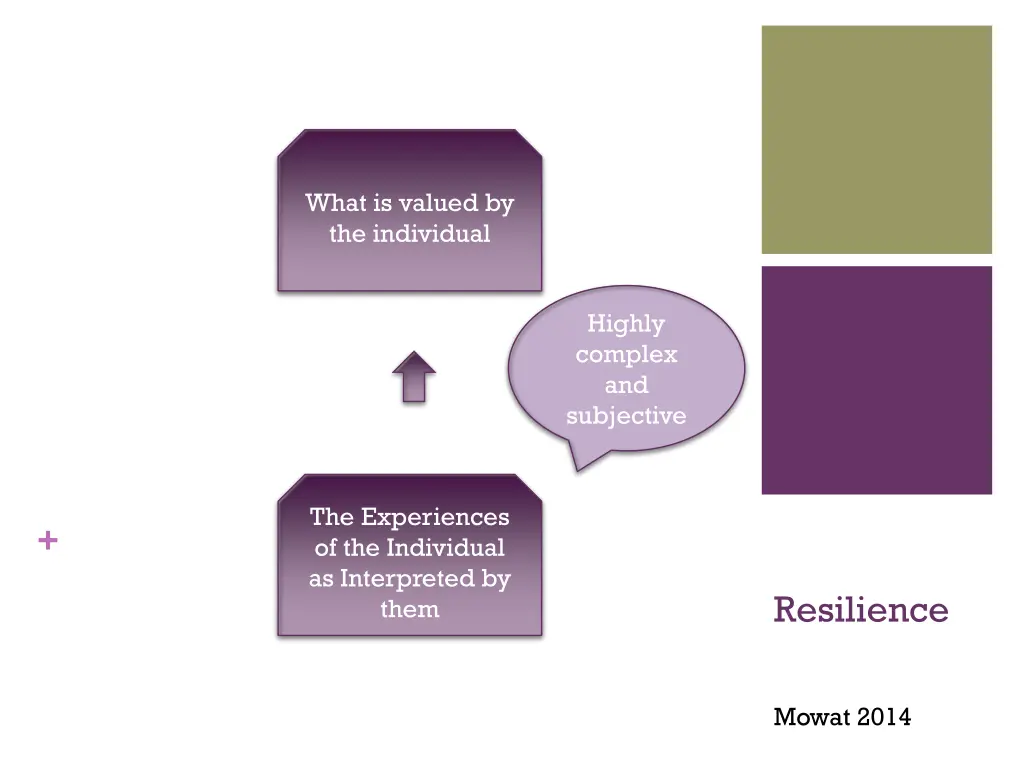
What is valued by the individual Highly complex and subjective The Experiences of the Individual as Interpreted by them + Resilience Mowat 2014
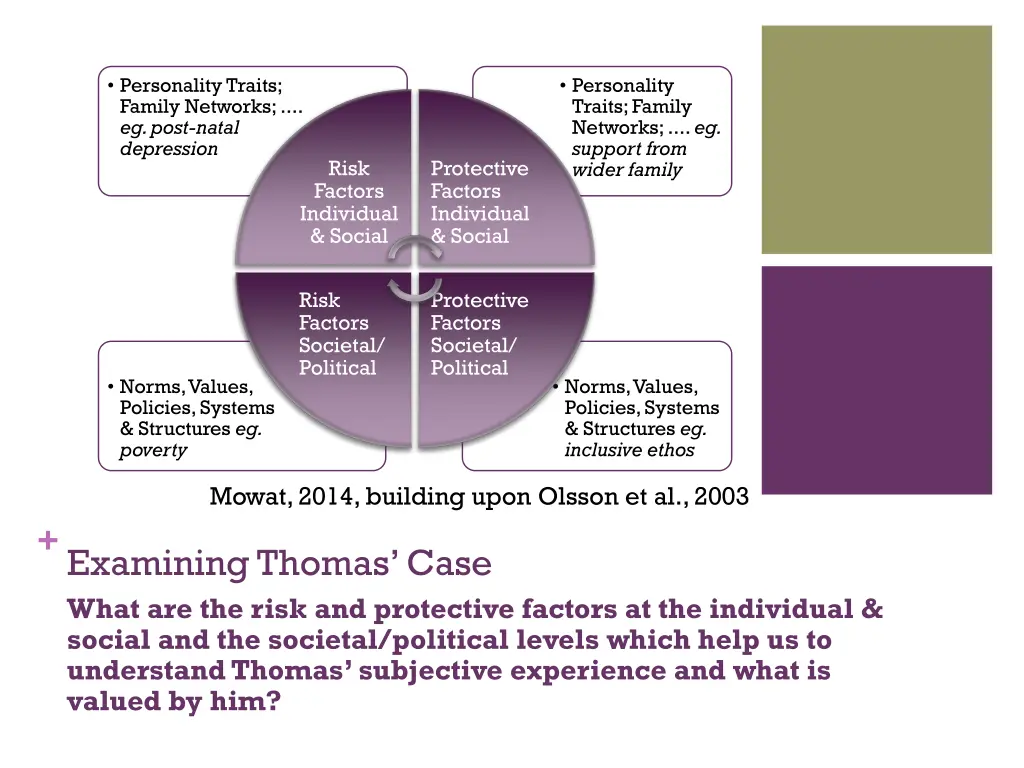
Personality Traits; Family Networks; .... eg. post-natal depression Personality Traits; Family Networks; .... eg. support from wider family Risk Factors Individual & Social Protective Factors Individual & Social Risk Factors Societal/ Political Protective Factors Societal/ Political Norms, Values, Policies, Systems & Structures eg. poverty Norms, Values, Policies, Systems & Structures eg. inclusive ethos Mowat, 2014, building upon Olsson et al., 2003 + Examining Thomas Case What are the risk and protective factors at the individual & social and the societal/political levels which help us to understand Thomas subjective experience and what is valued by him?
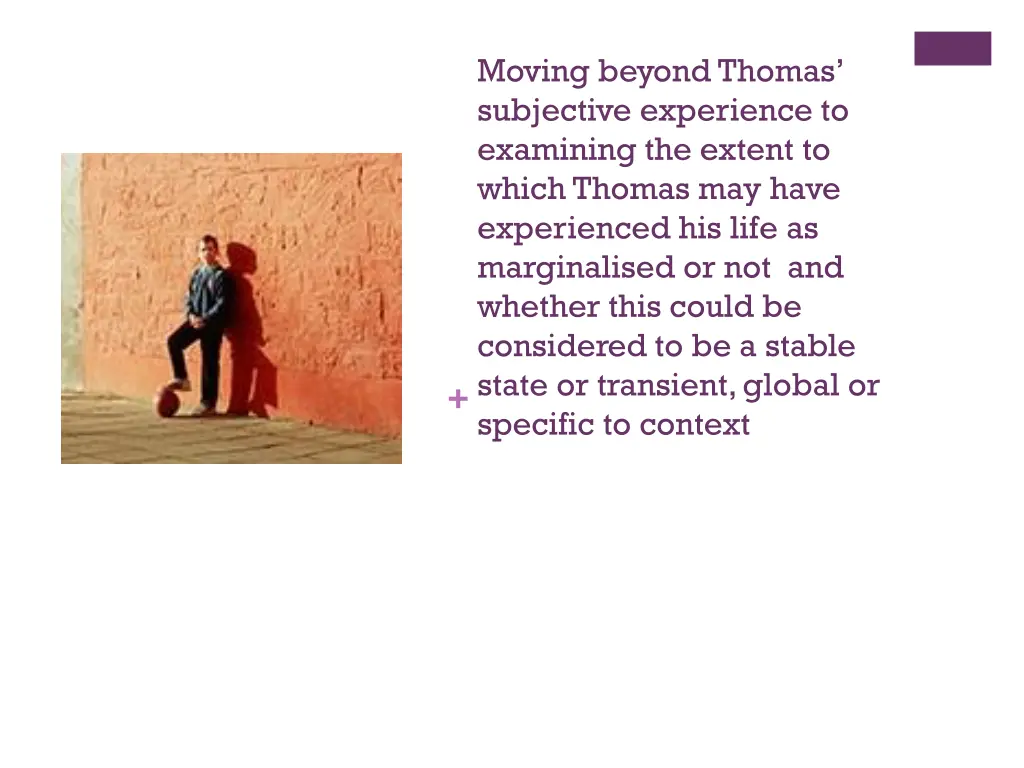
Moving beyond Thomas subjective experience to examining the extent to which Thomas may have experienced his life as marginalised or not and whether this could be considered to be a stable state or transient, global or specific to context +
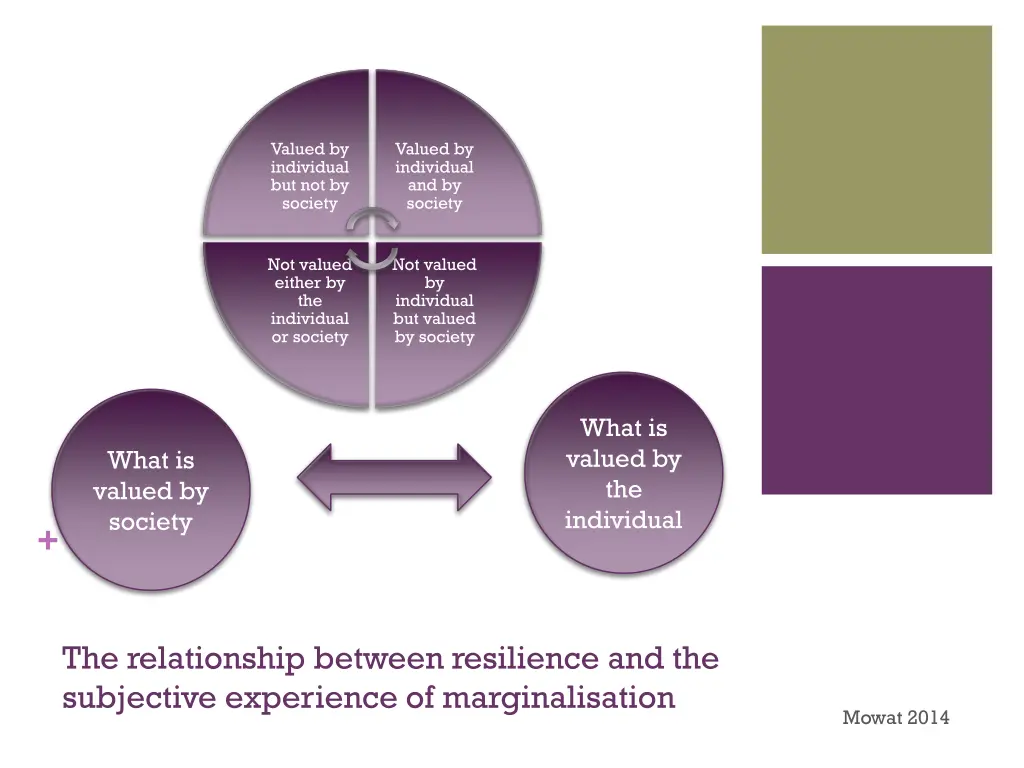
Valued by individual but not by society Valued by individual and by society Not valued either by the individual or society Not valued by individual but valued by society What is valued by the individual What is valued by society + The relationship between resilience and the subjective experience of marginalisation Mowat 2014
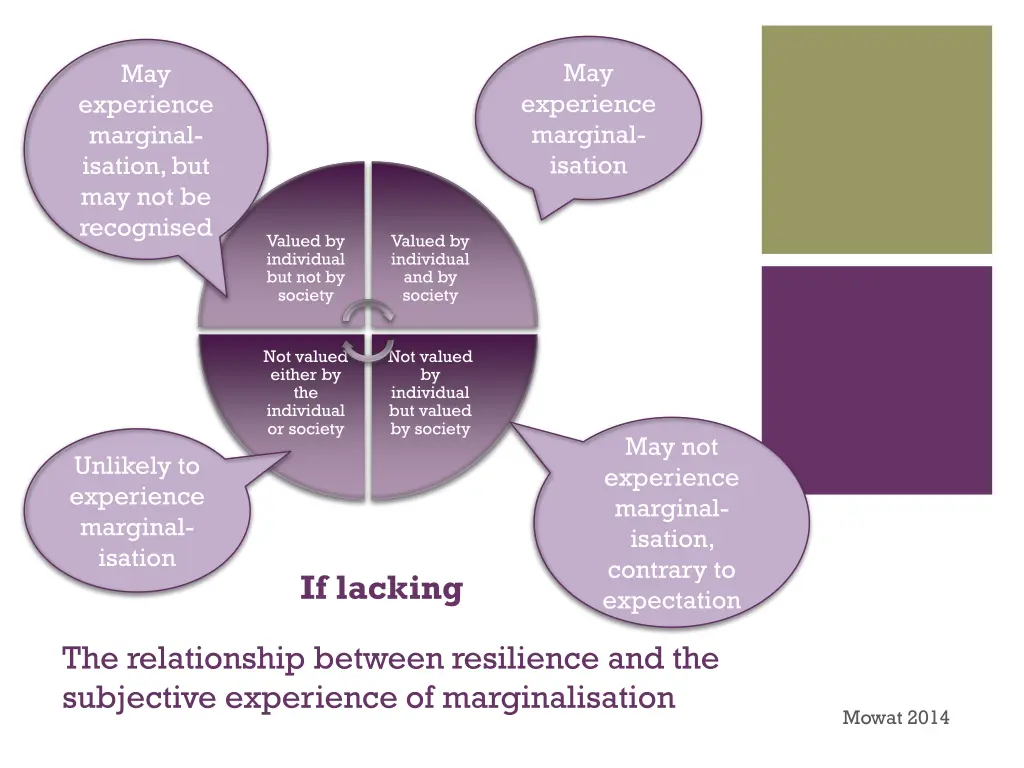
May May experience marginal- isation experience marginal- isation, but may not be recognised Valued by individual but not by society Valued by individual and by society Not valued either by the individual or society Not valued by individual but valued by society May not experience marginal- isation, contrary to expectation Unlikely to experience marginal- isation + If lacking The relationship between resilience and the subjective experience of marginalisation Mowat 2014
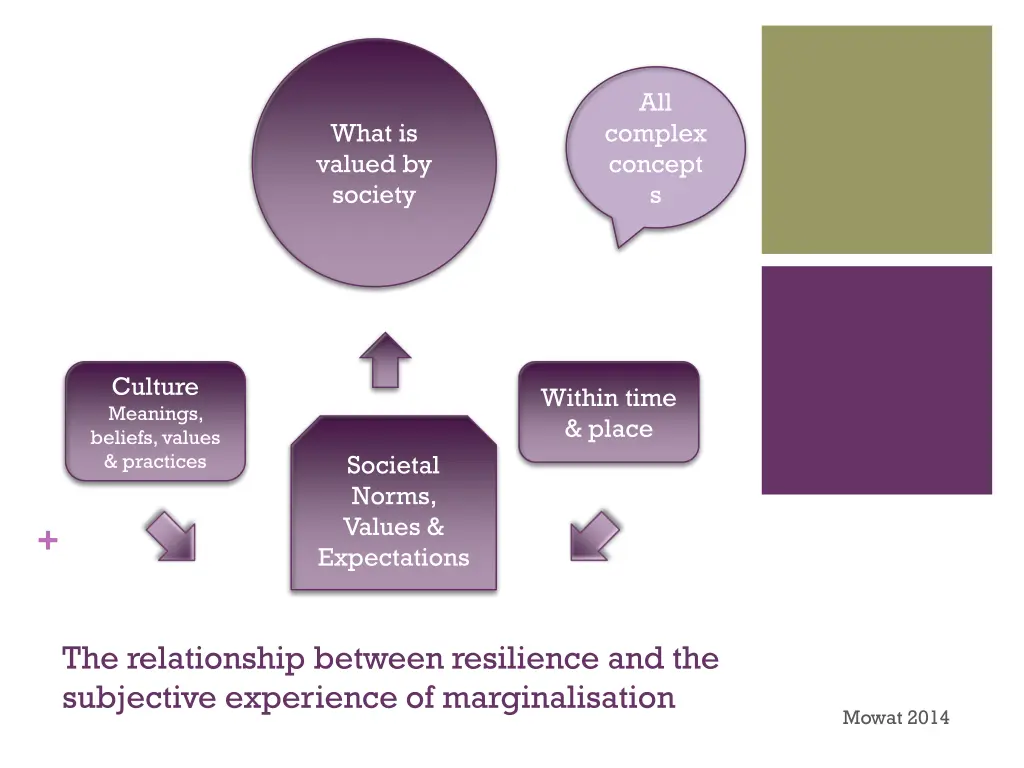
All complex concept s What is valued by society Culture Meanings, beliefs, values & practices Within time & place Societal Norms, Values & Expectations + The relationship between resilience and the subjective experience of marginalisation Mowat 2014
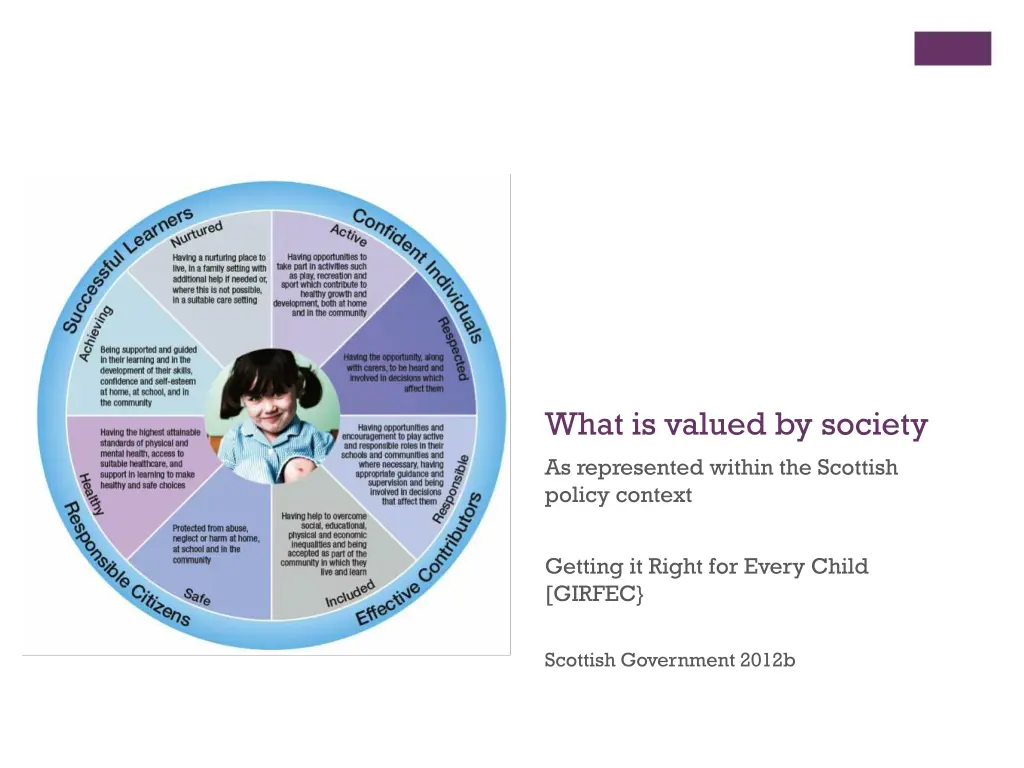
+ What is valued by society As represented within the Scottish policy context Getting it Right for Every Child [GIRFEC} Scottish Government 2012b
The interaction between what is valued by the individual & by society Valued by individual but not by society Valued by individual and by society Given what we have learned about Thomas and the circumstances pertaining to him, what is the congruence between the espoused aims of the Scottish Government as expressed in GIRFEC, and Thomas subjective experience and what is valued by him? + Not valued by individual but valued by society Not valued either by the individual or society
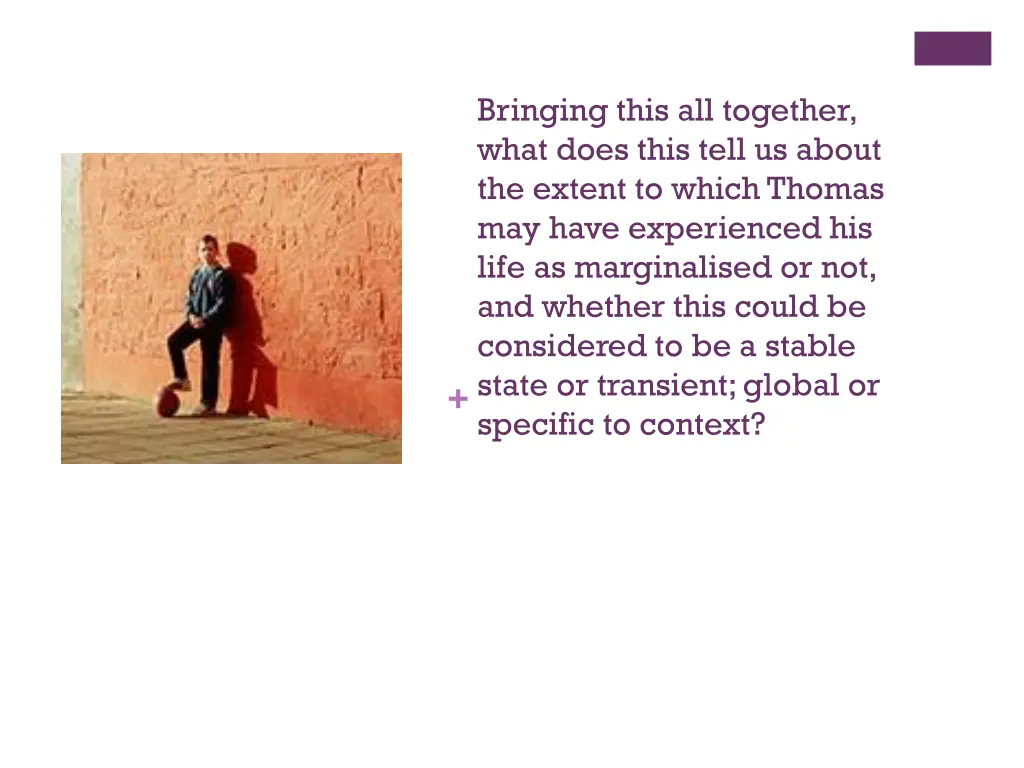
Bringing this all together, what does this tell us about the extent to which Thomas may have experienced his life as marginalised or not, and whether this could be considered to be a stable state or transient; global or specific to context? +
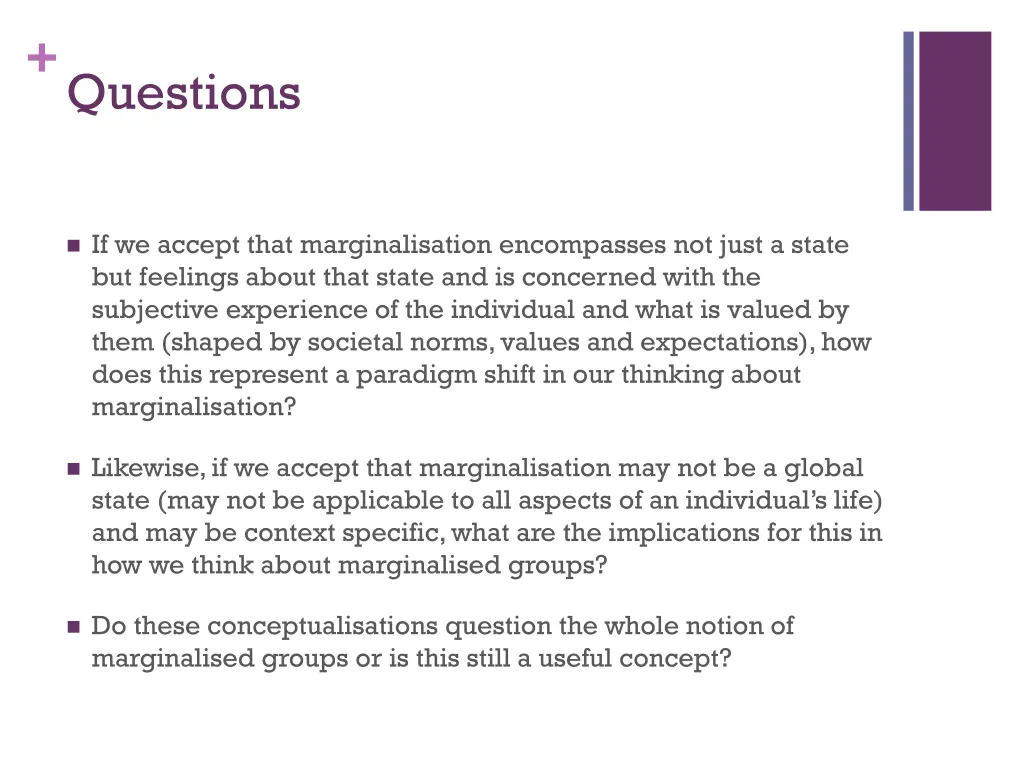
+Questions If we accept that marginalisation encompasses not just a state but feelings about that state and is concerned with the subjective experience of the individual and what is valued by them (shaped by societal norms, values and expectations), how does this represent a paradigm shift in our thinking about marginalisation? Likewise, if we accept that marginalisation may not be a global state (may not be applicable to all aspects of an individual s life) and may be context specific, what are the implications for this in how we think about marginalised groups? Do these conceptualisations question the whole notion of marginalised groups or is this still a useful concept?
+Questions Is resilience a useful lens through which to examine marginalisation? What then are the implications for social justice and inclusion for young people and children and for public policy of the above?
+References Ainscow, M., T. Booth, and A. Dyson. 2006. "Inclusion and the standards agenda: negotiating policy pressures in England." International Journal of Inclusive Education 10 (4-5):295-308. Gardner, H. 1999. Intelligence Reframed: Multiple Intelligences for the 21st Century. New York: Basic Books. Greater Glasgow Health Board. 2007. The Health of the People in West Dunbartonshire Glasgow: Greater Glasgow Health Board. Wiske, M.S. 1998. Teaching for Understanding: Linking Research with Practice. San Francisco, CA: Jossey-Bass. Scottish Government. 2010. The Child Poverty Act. http://www.scotland.gov.uk/Publications/2010/11/15103604/7 Scottish Government. 2012a. "Index of Multiple Deprivation ". http://simd.scotland.gov.uk/publication-2012/. Scottish Government. 2012b. Getting it Right for Every Child: Where are we now? Edinbugh: HMSO. West Dunbartonshire Council. 2012. Social and Economic Profile 2011-2012. http://www.west- dunbarton.gov.uk/media/3901683/social_and_economic_profile_2011-12.pdf





![Comprehensive Case Study on [Insert Case Title Here]](/thumb/159705/comprehensive-case-study-on-insert-case-title-here.jpg)