Contributions of Labeling Theory in Schooling Process
Labeling theory examines the impact of societal labels on individuals within school systems. It delves into how teacher expectations can shape student outcomes, highlighting the role of power dynamics in determining who gets labeled as deviant. The theory emphasizes the unintended consequences of labeling, such as reinforcing stigma and social boundaries. Key determinants influencing labeling include student performance, social status characteristics, and present performance indicators. Reification in education manifests in the unquestioned acceptance of standardized test scores as accurate reflections of student abilities. This nuanced exploration sheds light on the complexities of educational processes and the influence of societal constructs on student experiences.

Download Presentation

Please find below an Image/Link to download the presentation.
The content on the website is provided AS IS for your information and personal use only. It may not be sold, licensed, or shared on other websites without obtaining consent from the author.If you encounter any issues during the download, it is possible that the publisher has removed the file from their server.
You are allowed to download the files provided on this website for personal or commercial use, subject to the condition that they are used lawfully. All files are the property of their respective owners.
The content on the website is provided AS IS for your information and personal use only. It may not be sold, licensed, or shared on other websites without obtaining consent from the author.
E N D
Presentation Transcript
Chapter 5 On Understanding the Processes of Schooling: The Contributions of Labeling Theory
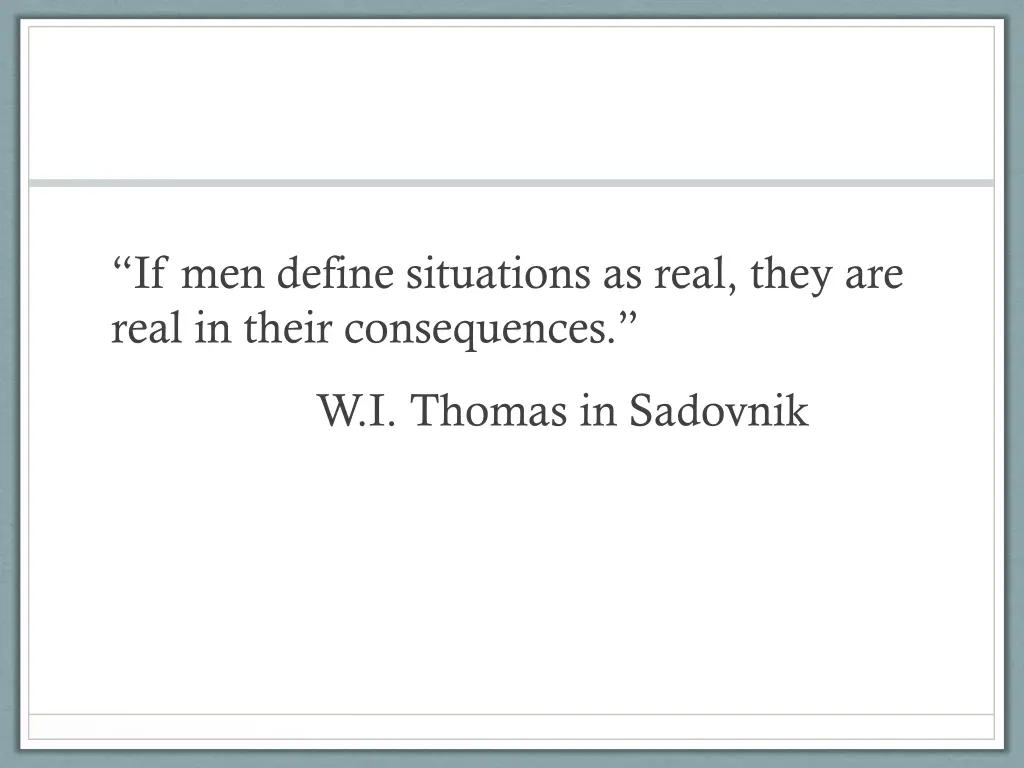
If men define situations as real, they are real in their consequences. W.I. Thomas in Sadovnik
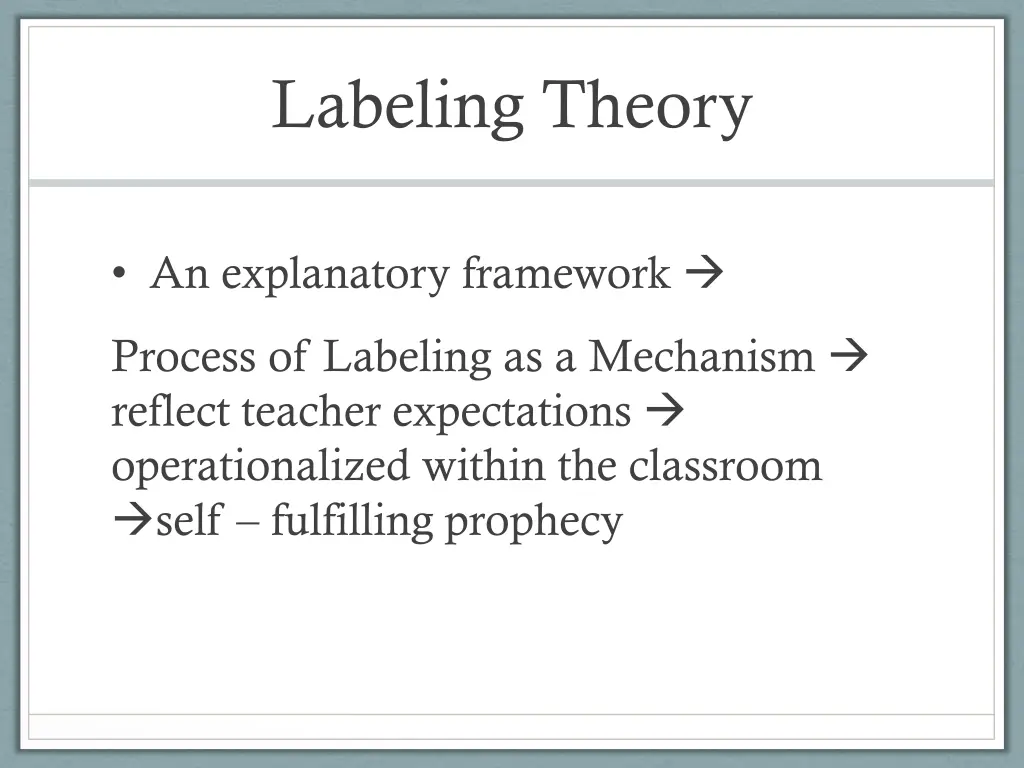
Labeling Theory An explanatory framework Process of Labeling as a Mechanism reflect teacher expectations operationalized within the classroom self fulfilling prophecy
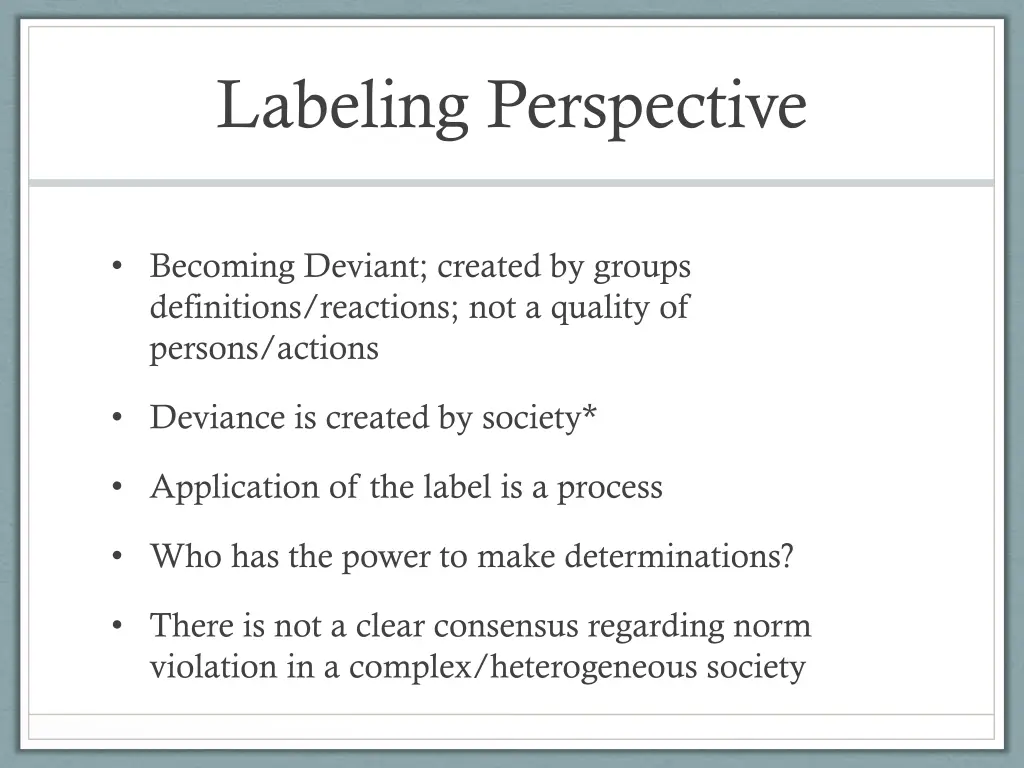
Labeling Perspective Becoming Deviant; created by groups definitions/reactions; not a quality of persons/actions Deviance is created by society* Application of the label is a process Who has the power to make determinations? There is not a clear consensus regarding norm violation in a complex/heterogeneous society
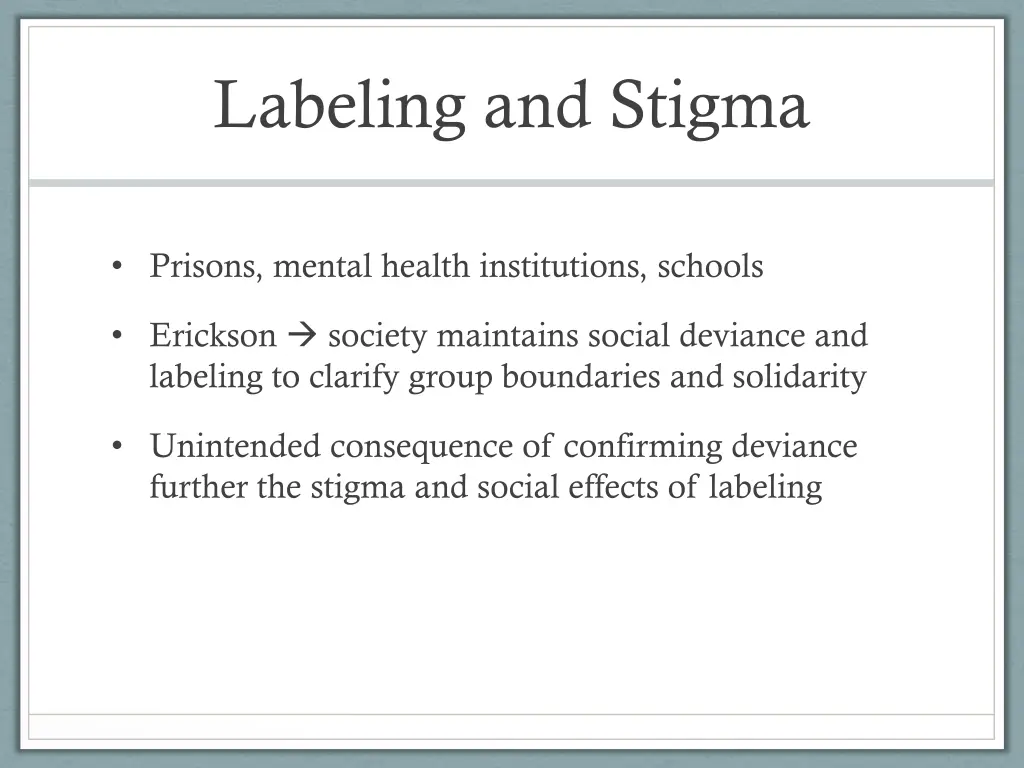
Labeling and Stigma Prisons, mental health institutions, schools Erickson society maintains social deviance and labeling to clarify group boundaries and solidarity Unintended consequence of confirming deviance further the stigma and social effects of labeling
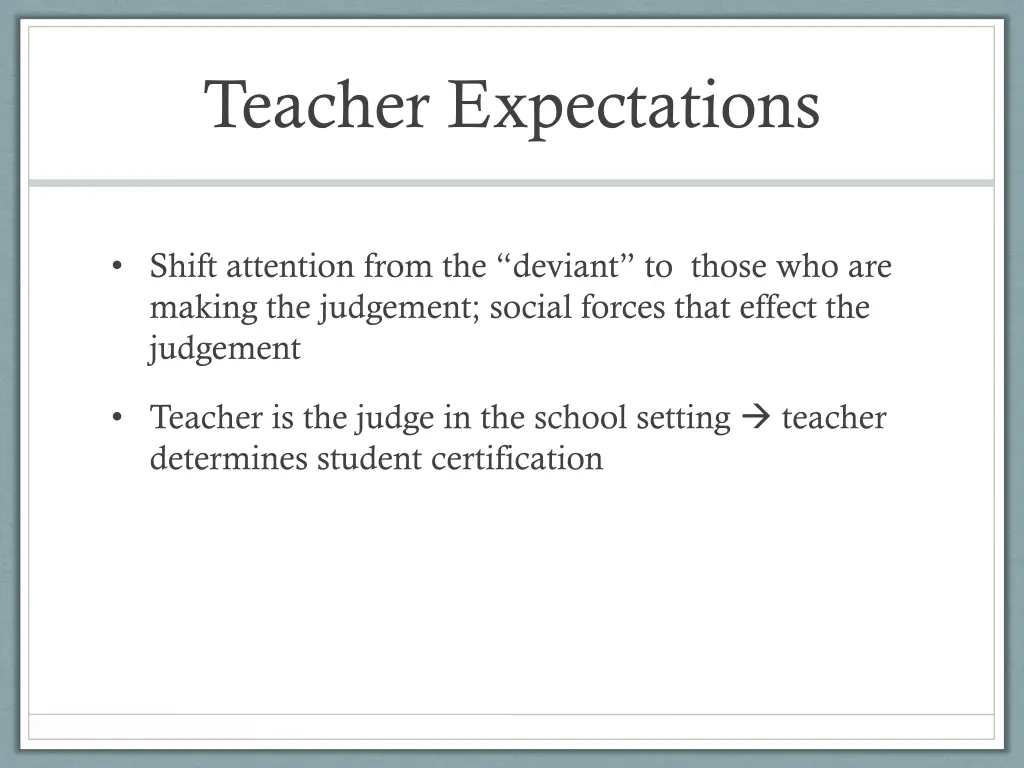
Teacher Expectations Shift attention from the deviant to those who are making the judgement; social forces that effect the judgement Teacher is the judge in the school setting teacher determines student certification
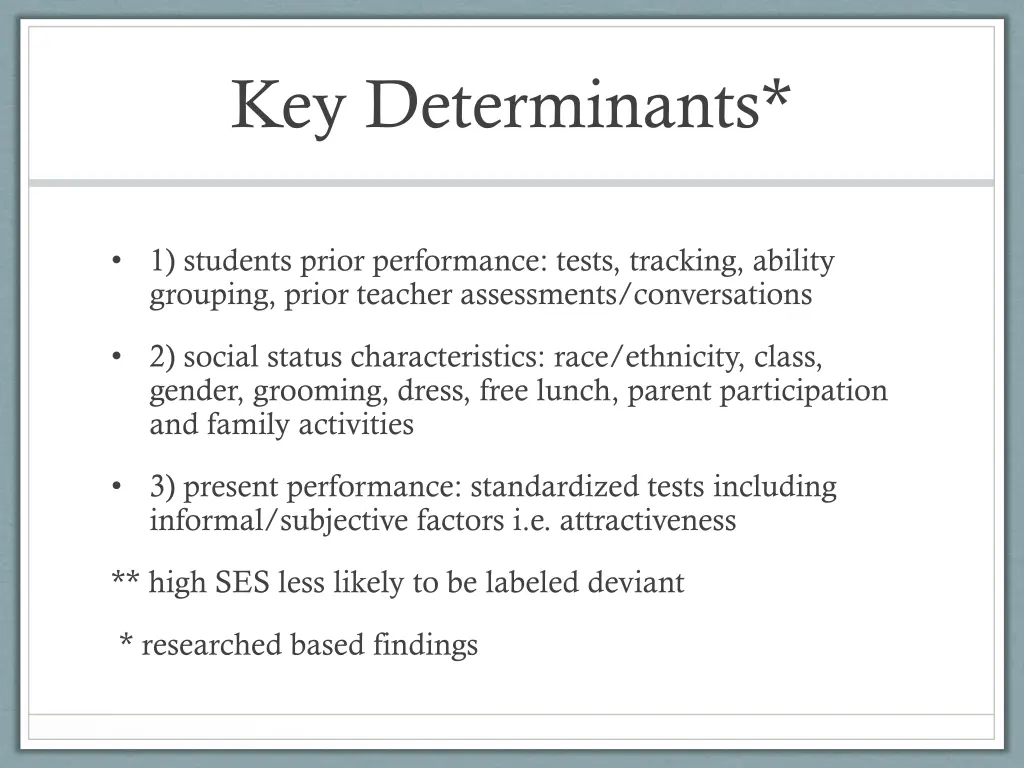
Key Determinants* 1) students prior performance: tests, tracking, ability grouping, prior teacher assessments/conversations 2) social status characteristics: race/ethnicity, class, gender, grooming, dress, free lunch, parent participation and family activities 3) present performance: standardized tests including informal/subjective factors i.e. attractiveness ** high SES less likely to be labeled deviant * researched based findings
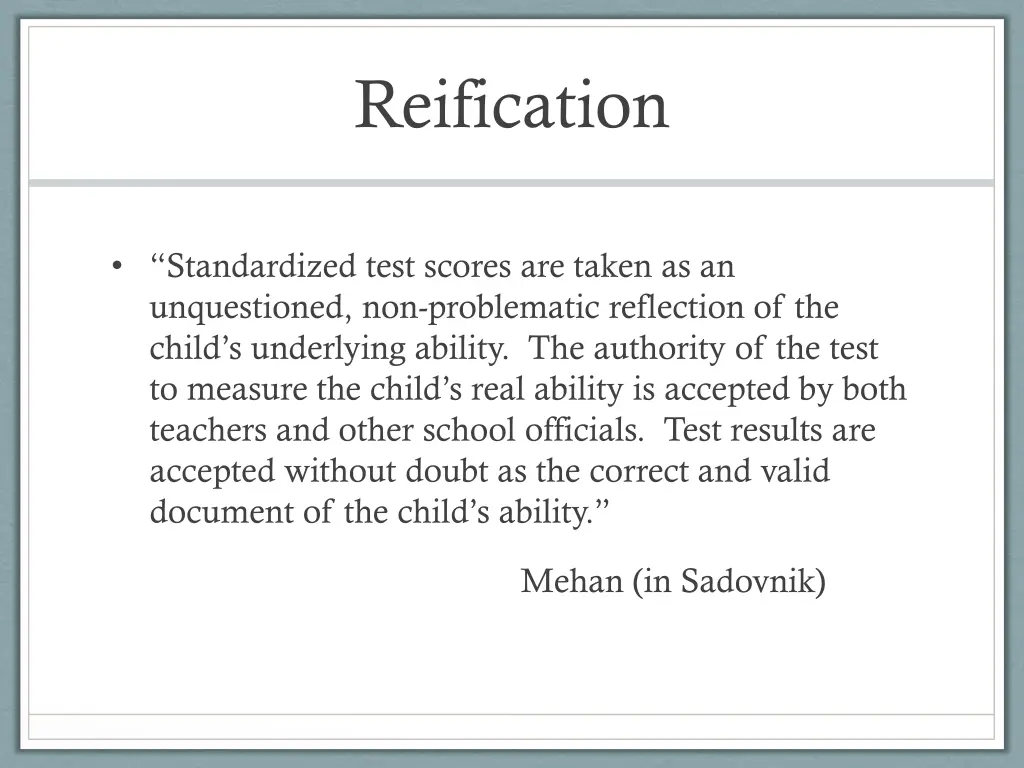
Reification Standardized test scores are taken as an unquestioned, non-problematic reflection of the child s underlying ability. The authority of the test to measure the child s real ability is accepted by both teachers and other school officials. Test results are accepted without doubt as the correct and valid document of the child s ability. Mehan (in Sadovnik)
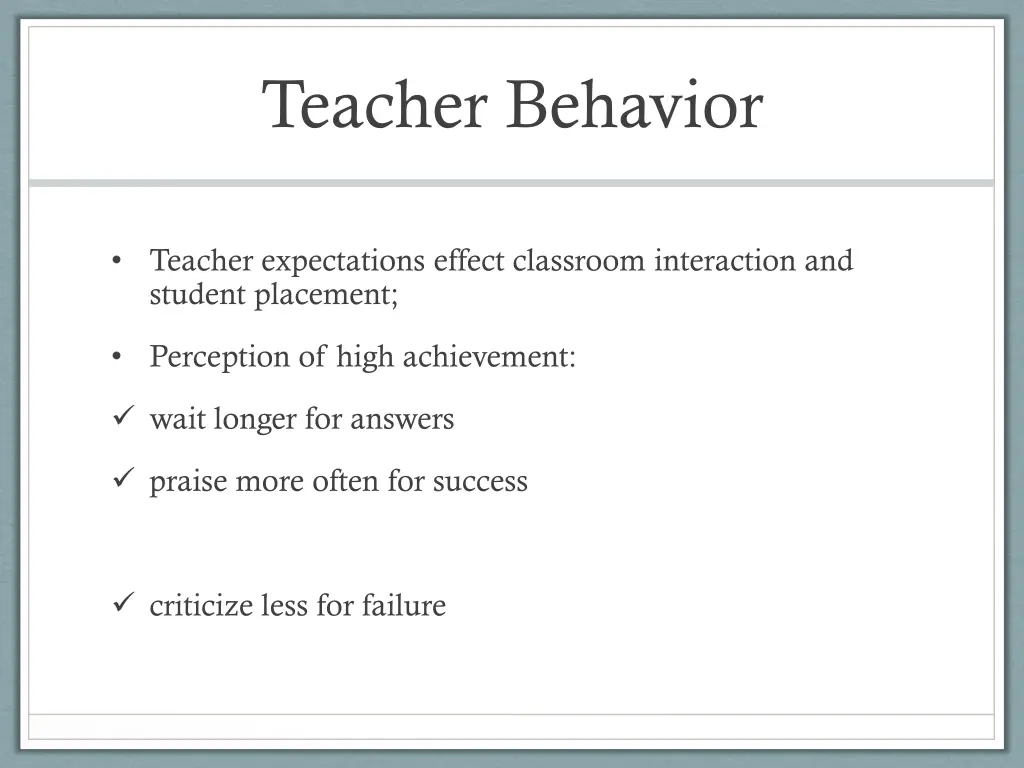
Teacher Behavior Teacher expectations effect classroom interaction and student placement; Perception of high achievement: wait longer for answers praise more often for success criticize less for failure
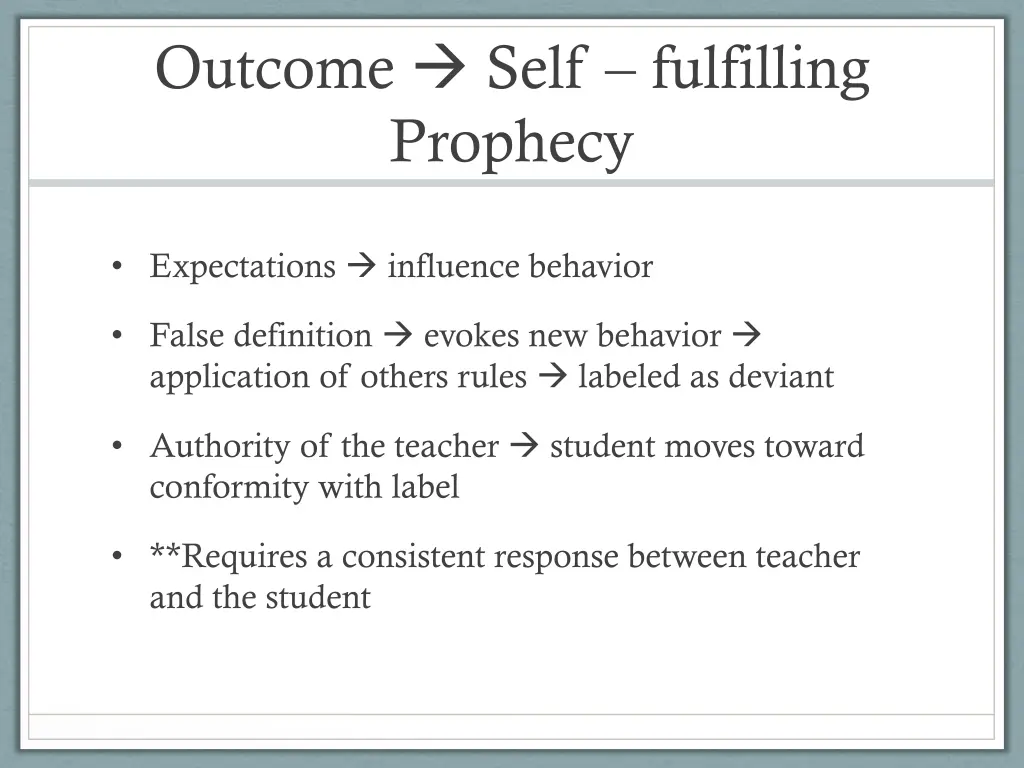
Outcome Self fulfilling Prophecy Expectations influence behavior False definition evokes new behavior application of others rules labeled as deviant Authority of the teacher student moves toward conformity with label **Requires a consistent response between teacher and the student
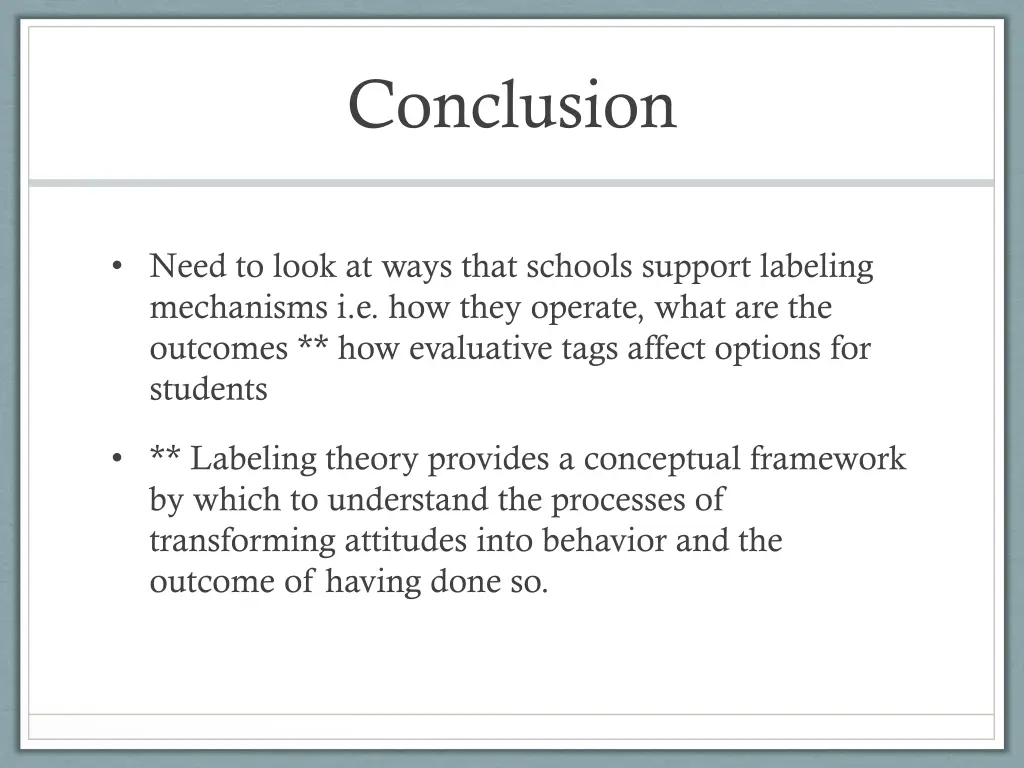
Conclusion Need to look at ways that schools support labeling mechanisms i.e. how they operate, what are the outcomes ** how evaluative tags affect options for students ** Labeling theory provides a conceptual framework by which to understand the processes of transforming attitudes into behavior and the outcome of having done so.