Controlling Performance Impact of Shared Resource Interference
Explore the quantification and control of performance impact from shared resource interference at caches and main memory. Learn how to measure and manage application slowdowns caused by resource contention, aiming for high and predictable performance. Methods include estimating cache access rates, allocating cache capacity and memory bandwidth, and coordinating cache and memory management.

Download Presentation

Please find below an Image/Link to download the presentation.
The content on the website is provided AS IS for your information and personal use only. It may not be sold, licensed, or shared on other websites without obtaining consent from the author. If you encounter any issues during the download, it is possible that the publisher has removed the file from their server.
You are allowed to download the files provided on this website for personal or commercial use, subject to the condition that they are used lawfully. All files are the property of their respective owners.
The content on the website is provided AS IS for your information and personal use only. It may not be sold, licensed, or shared on other websites without obtaining consent from the author.
E N D
Presentation Transcript
Application Slowdown Model Quantifying and Controlling Impact of Interference at Shared Caches and Main Memory Lavanya Subramanian, Vivek Seshadri, Arnab Ghosh, Samira Khan, Onur Mutlu 1
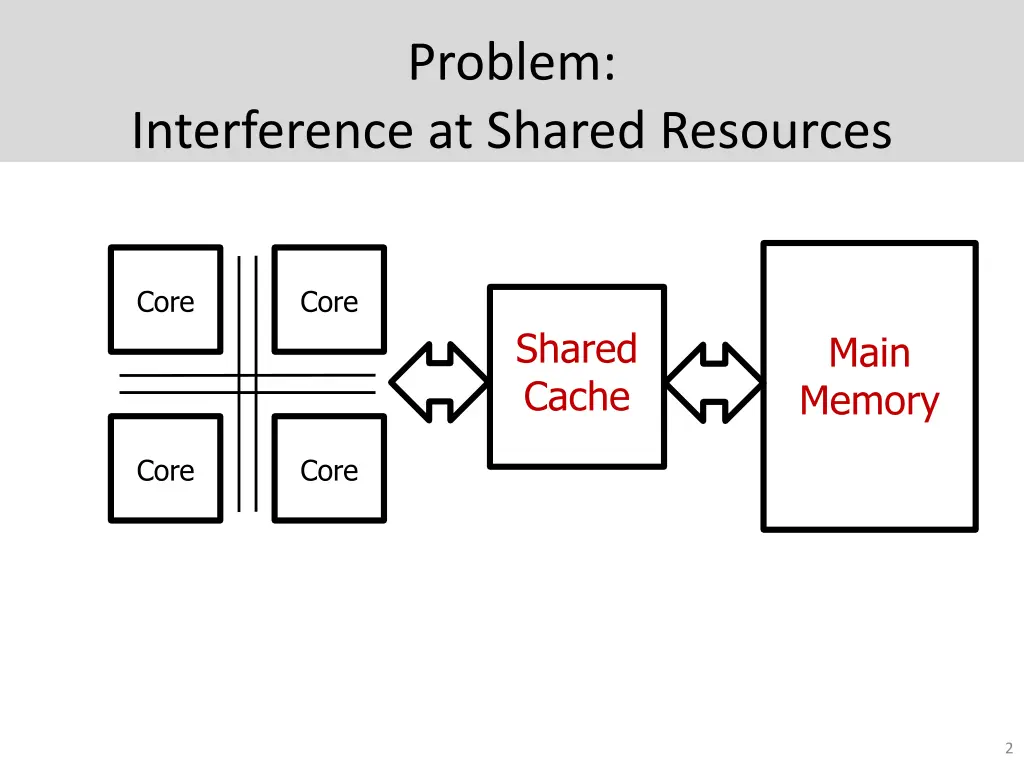
Problem: Interference at Shared Resources Core Core Shared Cache Main Memory Core Core 2
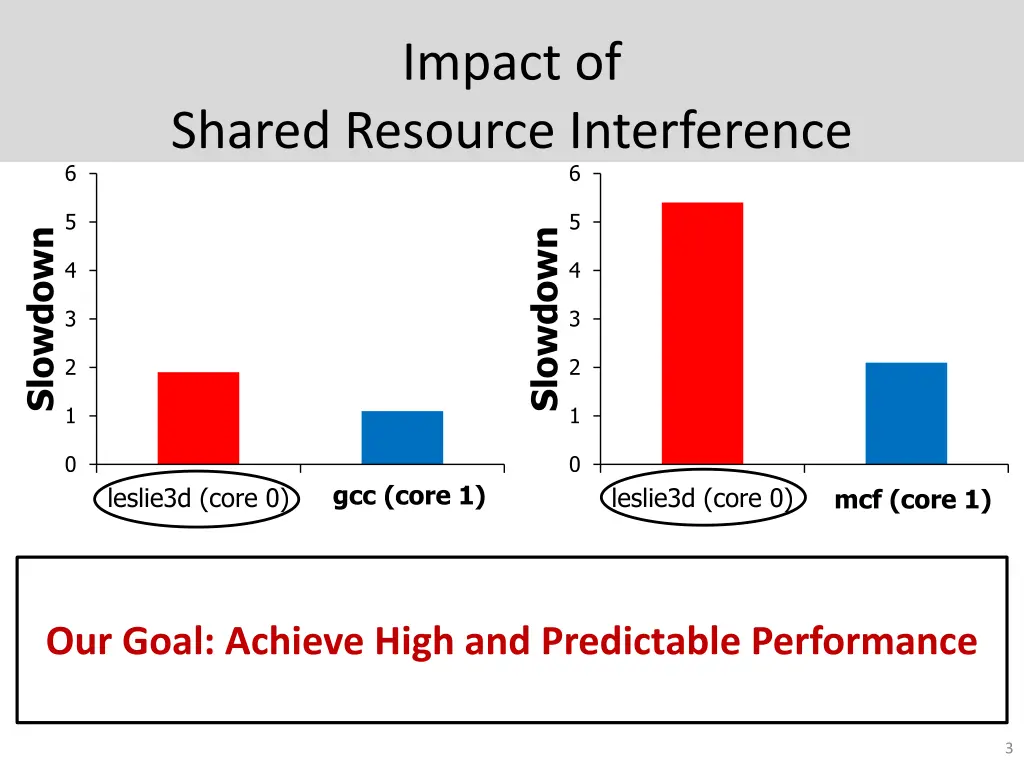
Impact of Shared Resource Interference 6 6 5 5 Slowdown Slowdown 4 4 3 3 2 2 1 1 0 0 gcc (core 1) gcc (core 1) leslie3d (core 0) leslie3d (core 0) mcf (core 1) mcf (core 1) 1. High application slowdowns Our Goal: Achieve High and Predictable Performance 2. Unpredictable application slowdowns 3
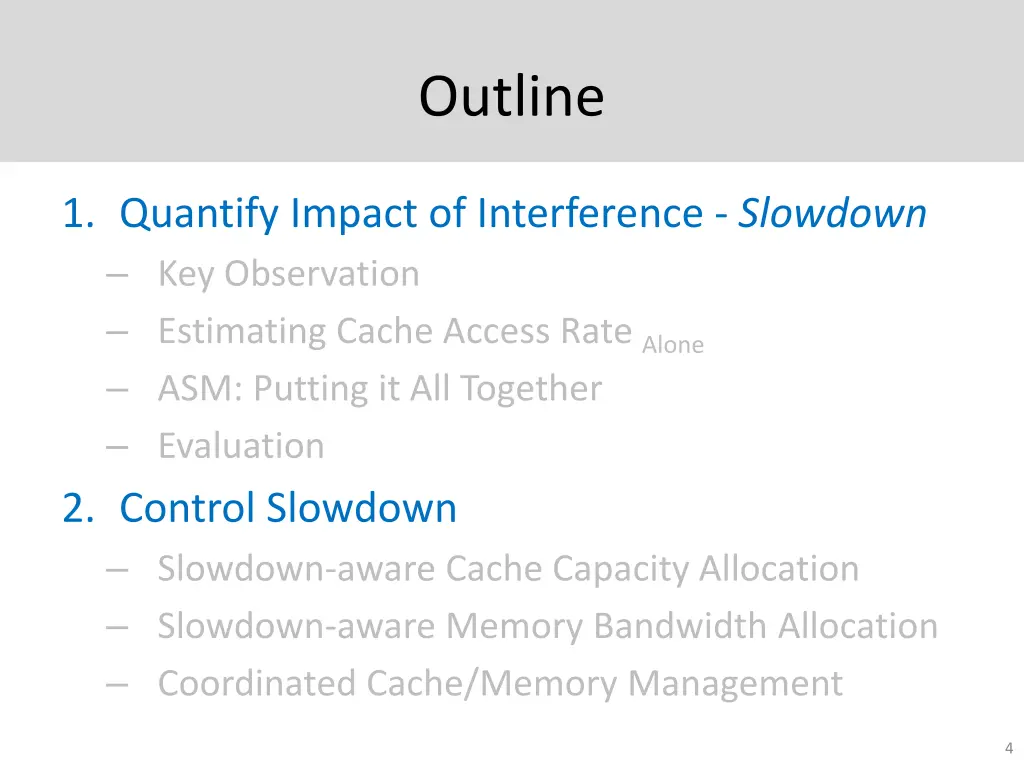
Outline 1. Quantify Impact of Interference - Slowdown Key Observation Estimating Cache Access Rate Alone ASM: Putting it All Together Evaluation 2. Control Slowdown Slowdown-aware Cache Capacity Allocation Slowdown-aware Memory Bandwidth Allocation Coordinated Cache/Memory Management 4
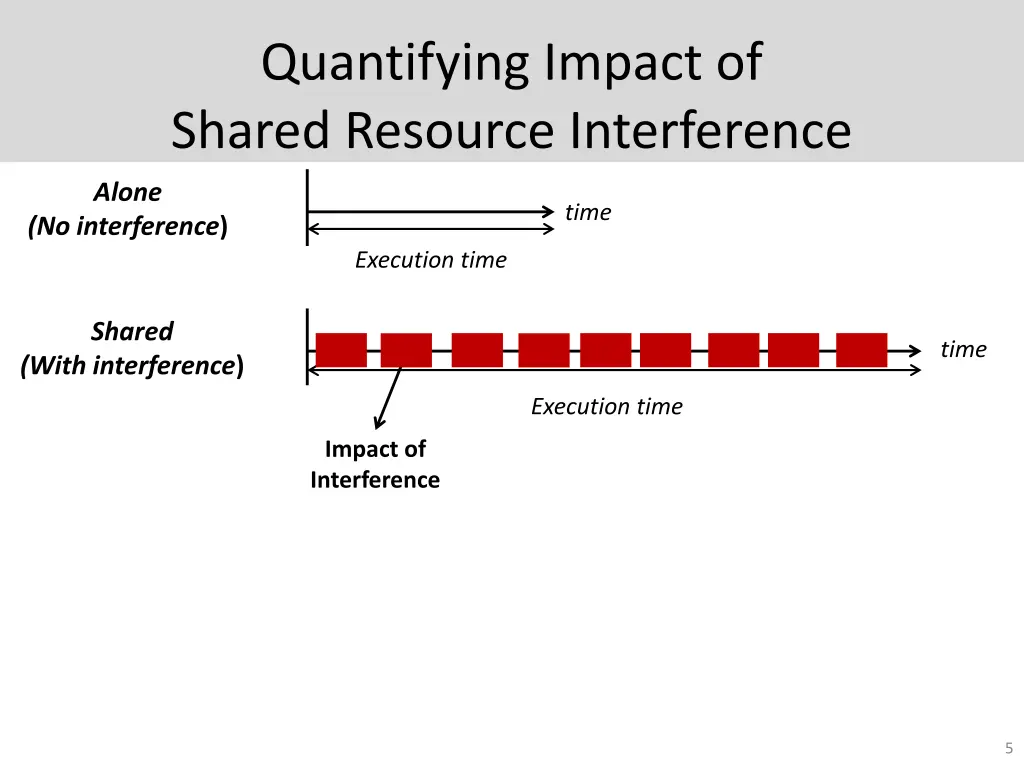
Quantifying Impact of Shared Resource Interference Alone time (No interference) Execution time Shared time (With interference) Execution time Impact of Interference 5
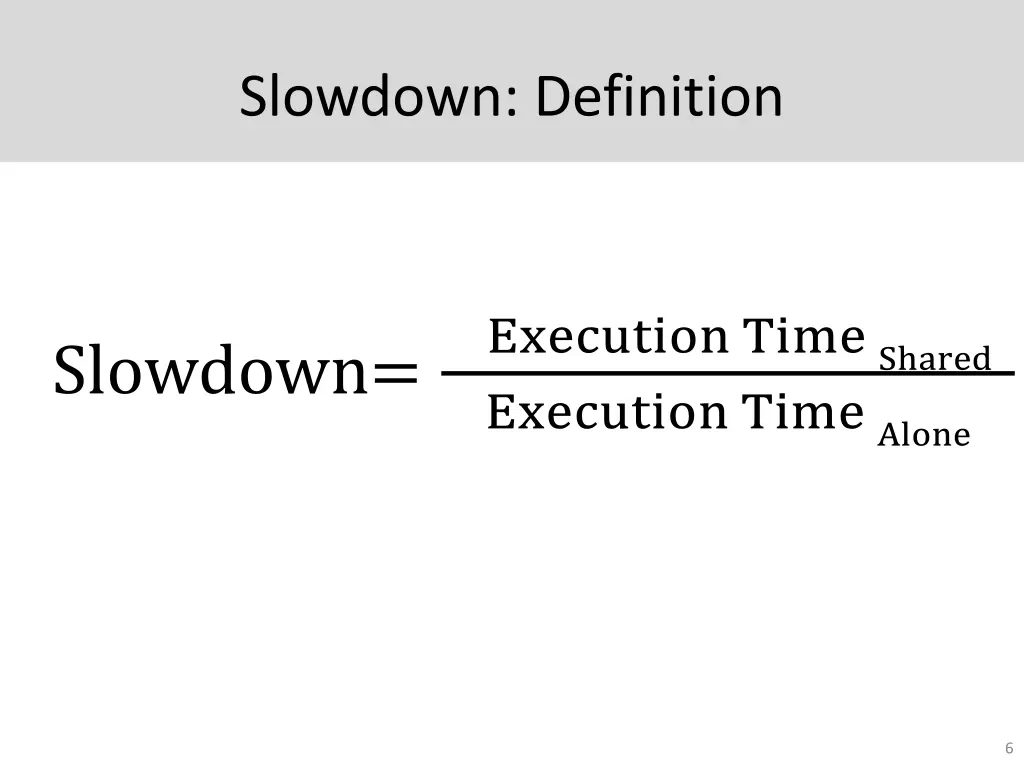
Slowdown: Definition Slowdown= Execution Time Shared Execution Time Alone 6
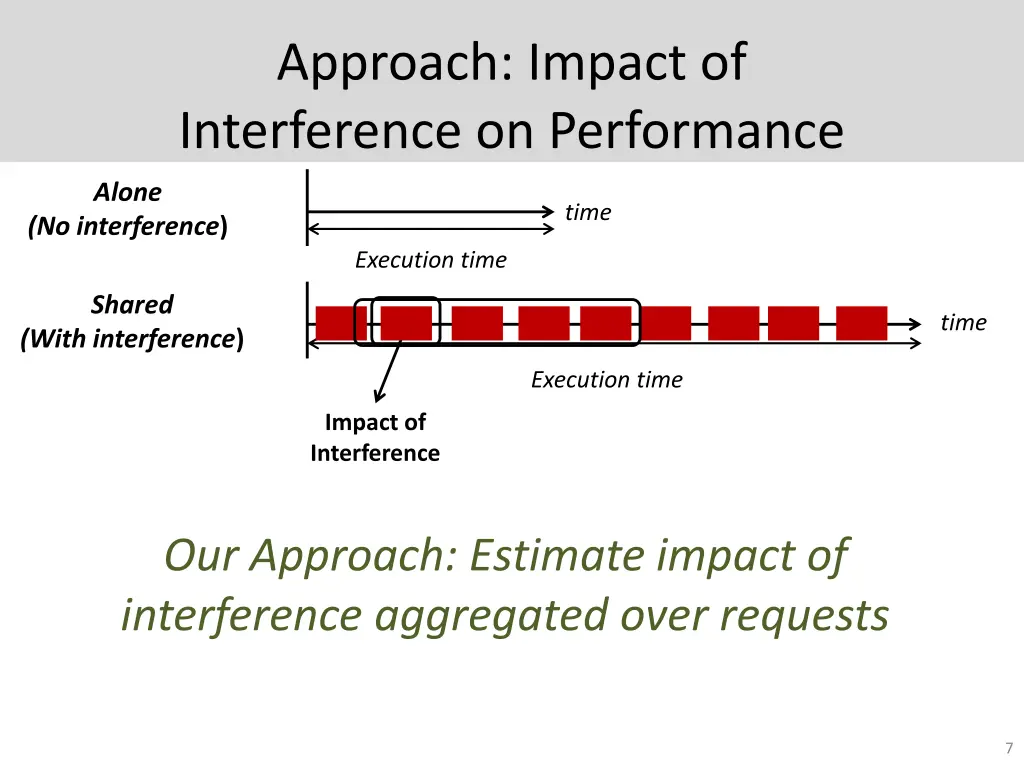
Approach: Impact of Interference on Performance Alone time (No interference) Execution time Shared time (With interference) Execution time Impact of Interference Previous Approach: Estimate impact of interference at a per-request granularity Difficult to estimate due to request overlap interference aggregated over requests Our Approach: Estimate impact of 7
Outline 1. Quantify Slowdown Key Observation Estimating Cache Access Rate Alone ASM: Putting it All Together Evaluation 2. Control Slowdown Slowdown-aware Cache Capacity Allocation Slowdown-aware Memory Bandwidth Allocation Coordinated Cache/Memory Management 8
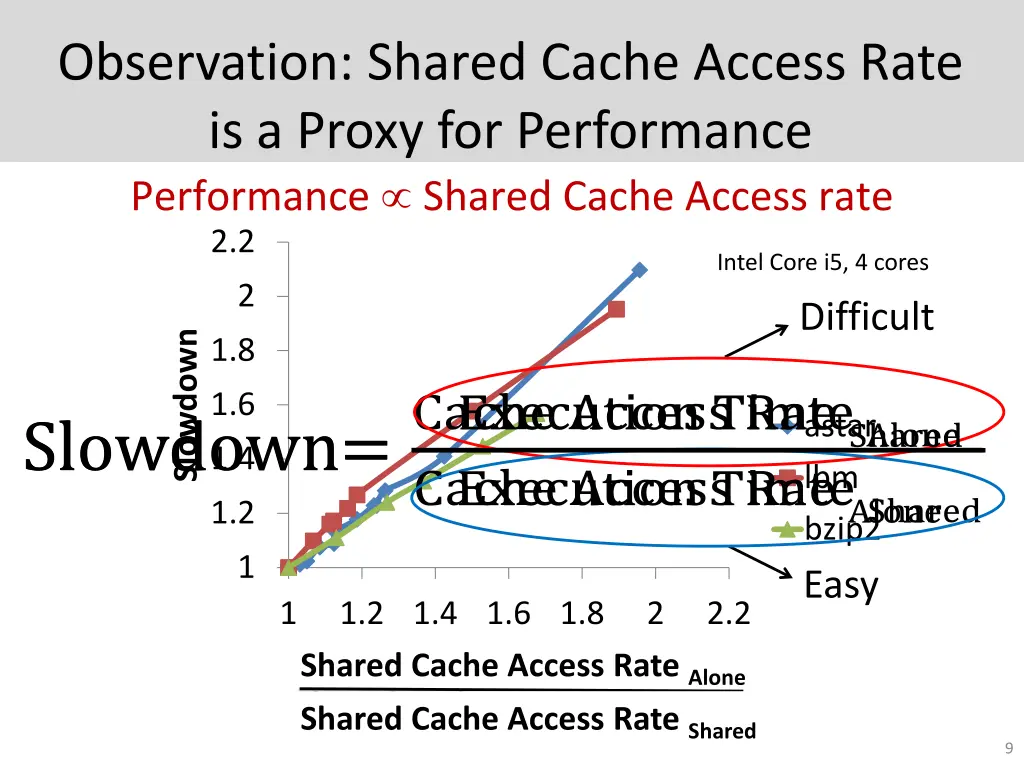
Observation: Shared Cache Access Rate is a Proxy for Performance Performance Shared Cache Access rate 2.2 Intel Core i5, 4 cores 2 Difficult Slowdown 1.8 1.6 Slowdown=Cache Access Rate Alone Cache Access Rate Shared Execution Time Alone Slowdown= Execution Time Shared astar lbm bzip2 Easy 1.4 1.2 1 1 1.2 1.4 1.6 1.8 Shared Cache Access Rate Alone/ Shared Cache Access Rate Shared Shared Cache Access Rate Shared 2 2.2 Shared Cache Access Rate Alone 9
Outline 1. Quantify Slowdown Key Observation Estimating Cache Access Rate Alone ASM: Putting it All Together Evaluation 2. Control Slowdown Slowdown-aware Cache Capacity Allocation Slowdown-aware Memory Bandwidth Allocation Coordinated Cache/Memory Management 10
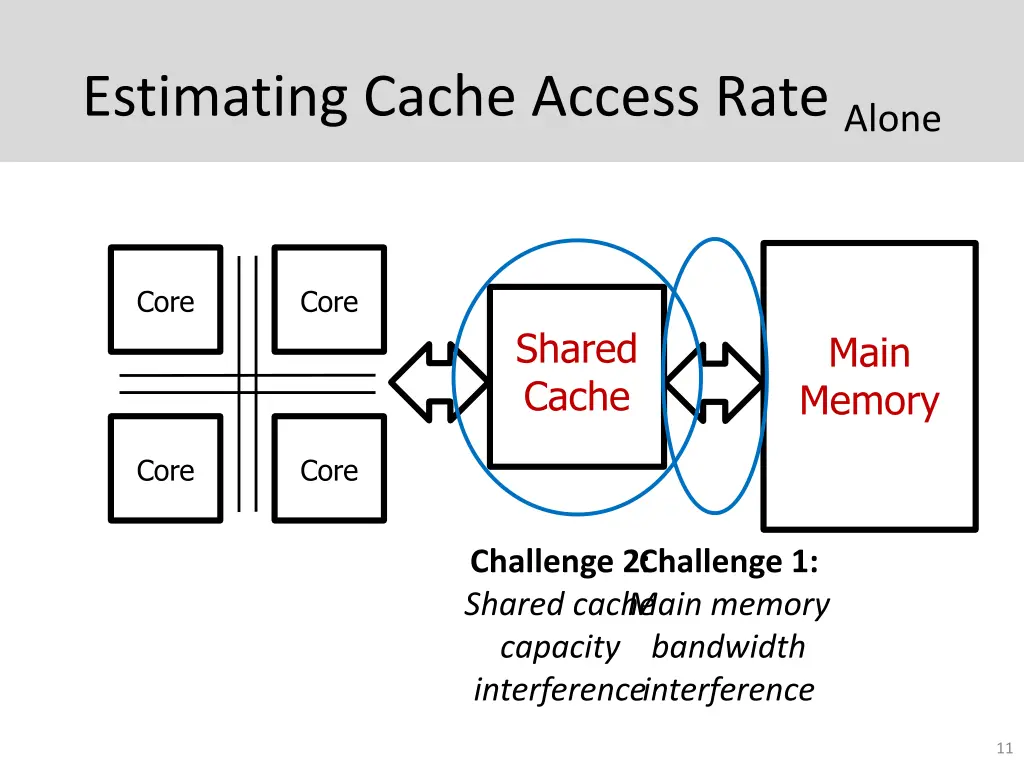
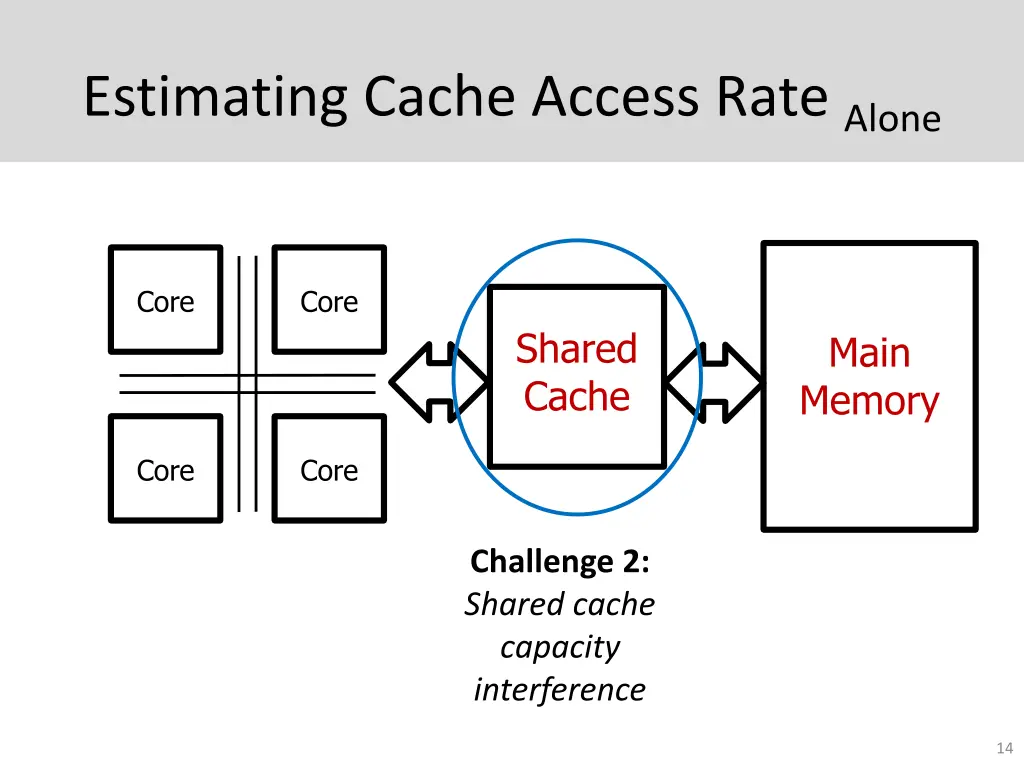
Estimating Cache Access Rate Alone Core Core Shared Cache Main Memory Core Core Challenge 2: Shared cache capacity interference Challenge 1: Main memory bandwidth interference 11
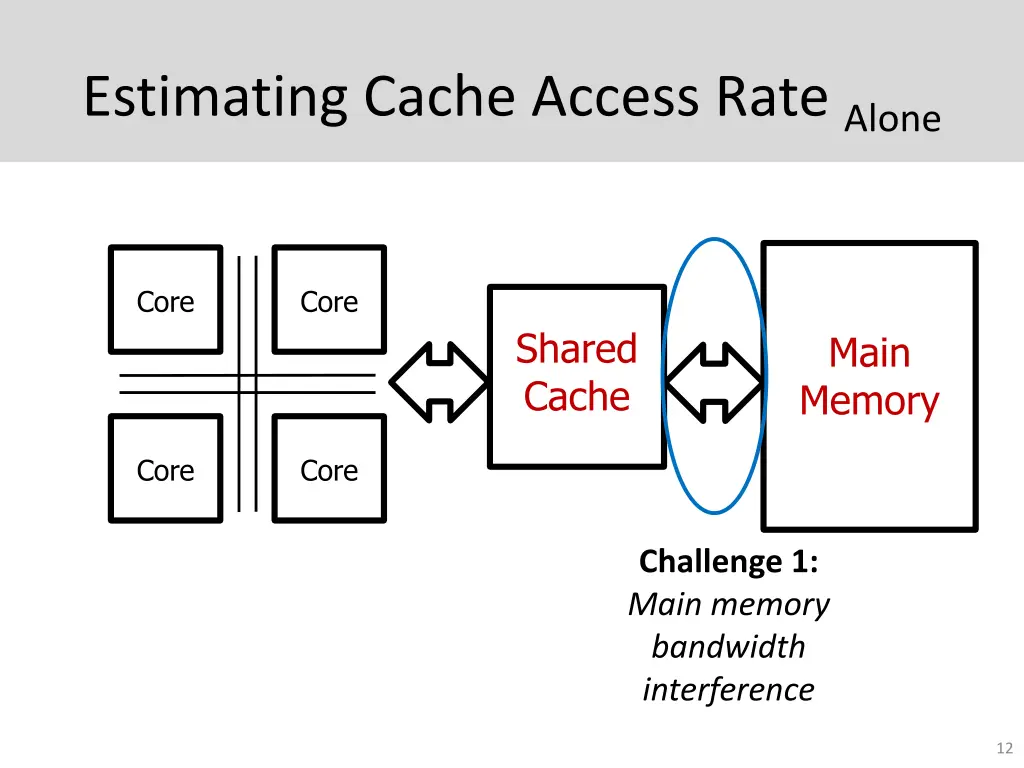
Estimating Cache Access Rate Alone Core Core Shared Cache Main Memory Core Core Challenge 1: Main memory bandwidth interference 12
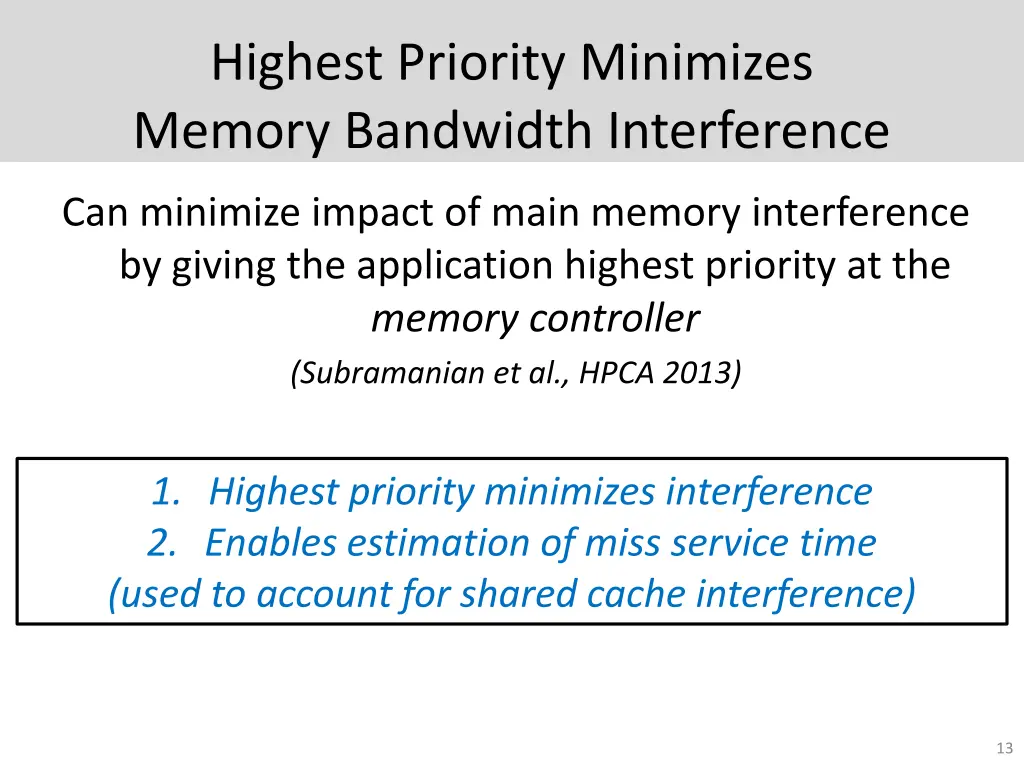
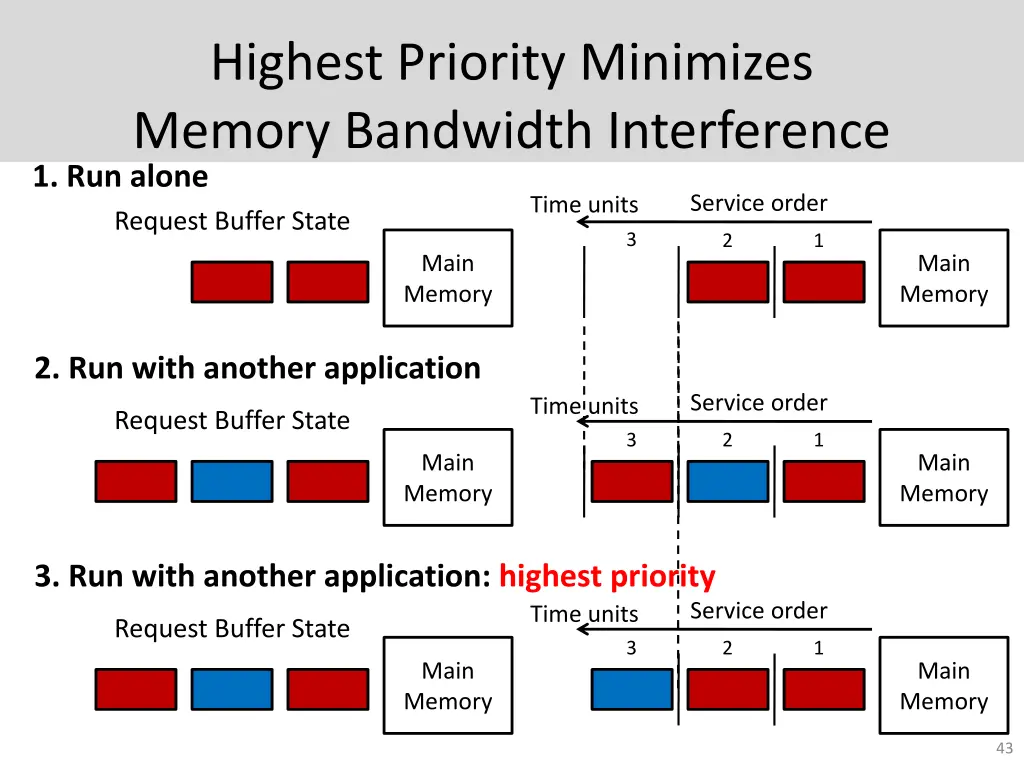
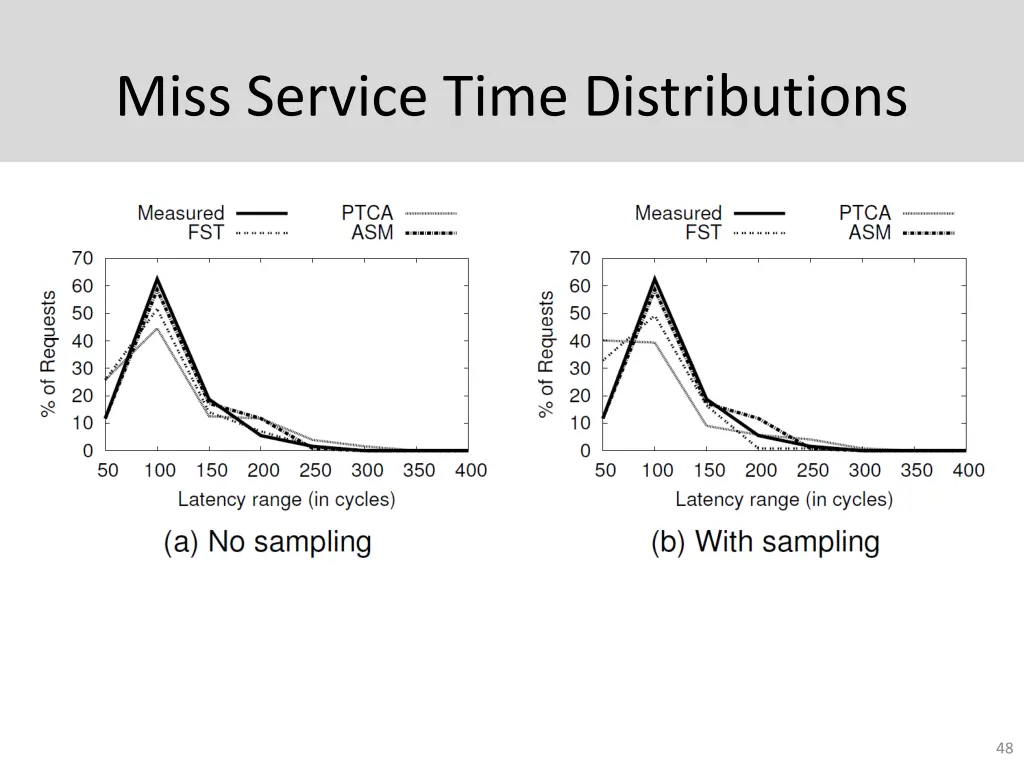
Highest Priority Minimizes Memory Bandwidth Interference Can minimize impact of main memory interference by giving the application highest priority at the memory controller (Subramanian et al., HPCA 2013) Highest priority Little interference (almost as if the application were run alone) 2. Enables estimation of miss service time (used to account for shared cache interference) 1. Highest priority minimizes interference 13
Estimating Cache Access Rate Alone Core Core Shared Cache Main Memory Core Core Challenge 2: Shared cache capacity interference 14
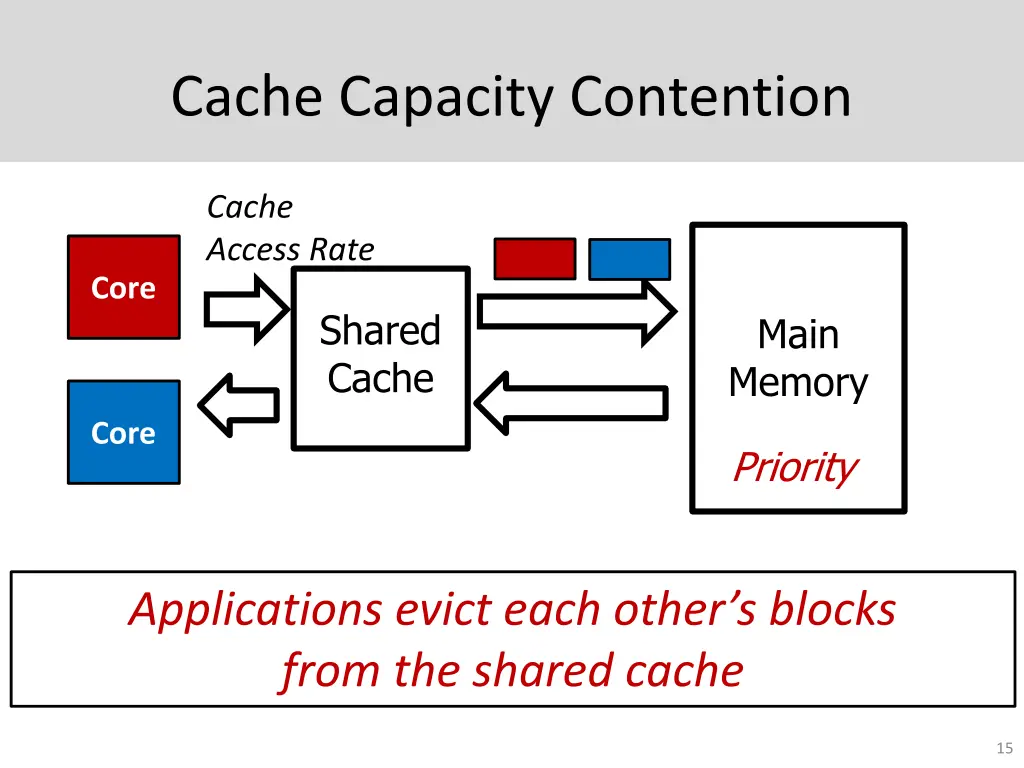
Cache Capacity Contention Cache Access Rate Core Shared Cache Main Memory Core Priority Applications evict each other s blocks from the shared cache 15
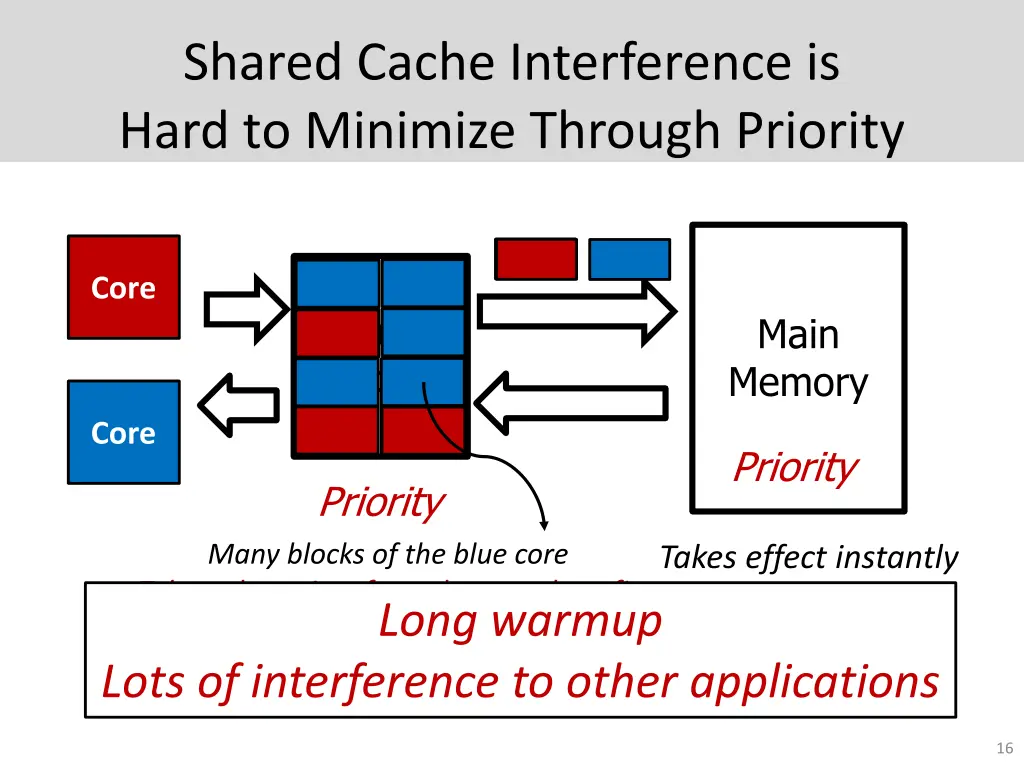
Shared Cache Interference is Hard to Minimize Through Priority Core Shared Cache Main Memory Core Priority Priority Many blocks of the blue core Takes a long time for red core to benefit from cache priority Long warmup Lots of interference to other applications Takes effect instantly 16
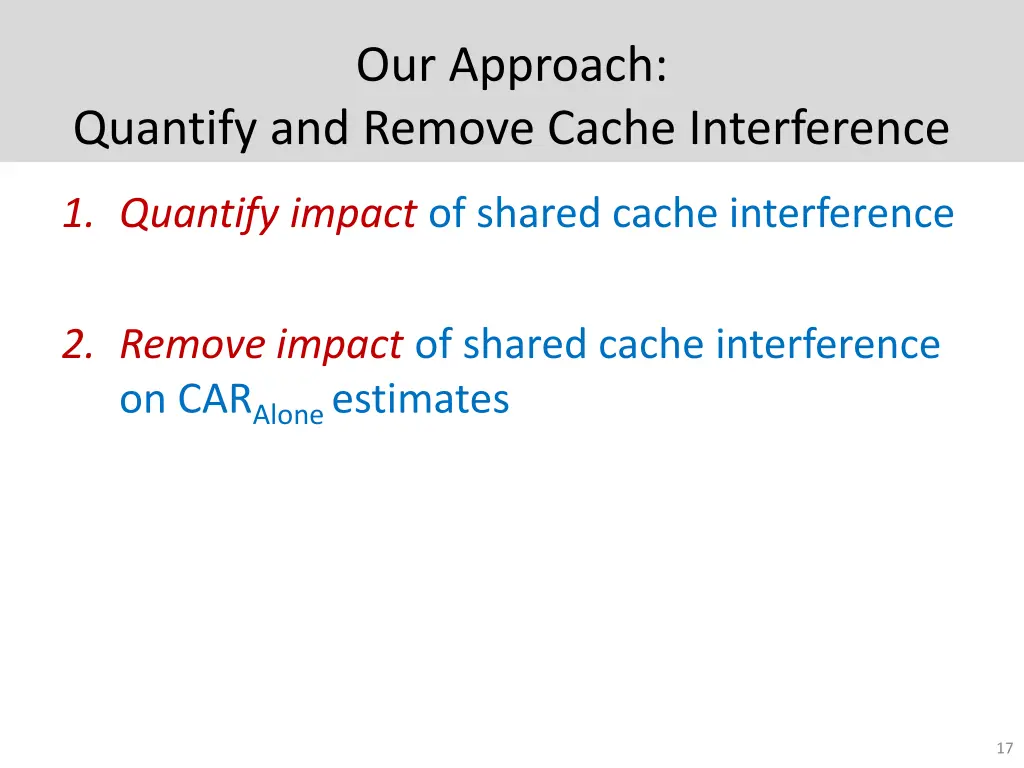
Our Approach: Quantify and Remove Cache Interference 1. Quantify impact of shared cache interference 2. Remove impact of shared cache interference on CARAlone estimates 17
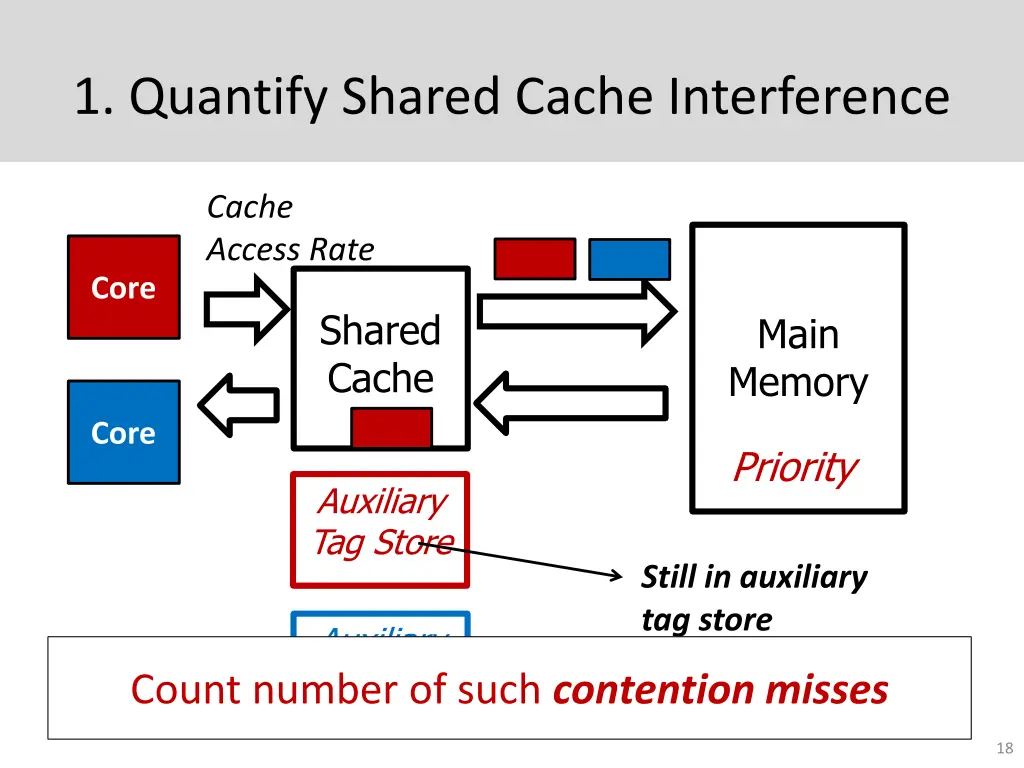
1. Quantify Shared Cache Interference Cache Access Rate Core Shared Cache Main Memory Core Priority Auxiliary Tag Store Still in auxiliary tag store Auxiliary Tag Store Count number of such contention misses 18
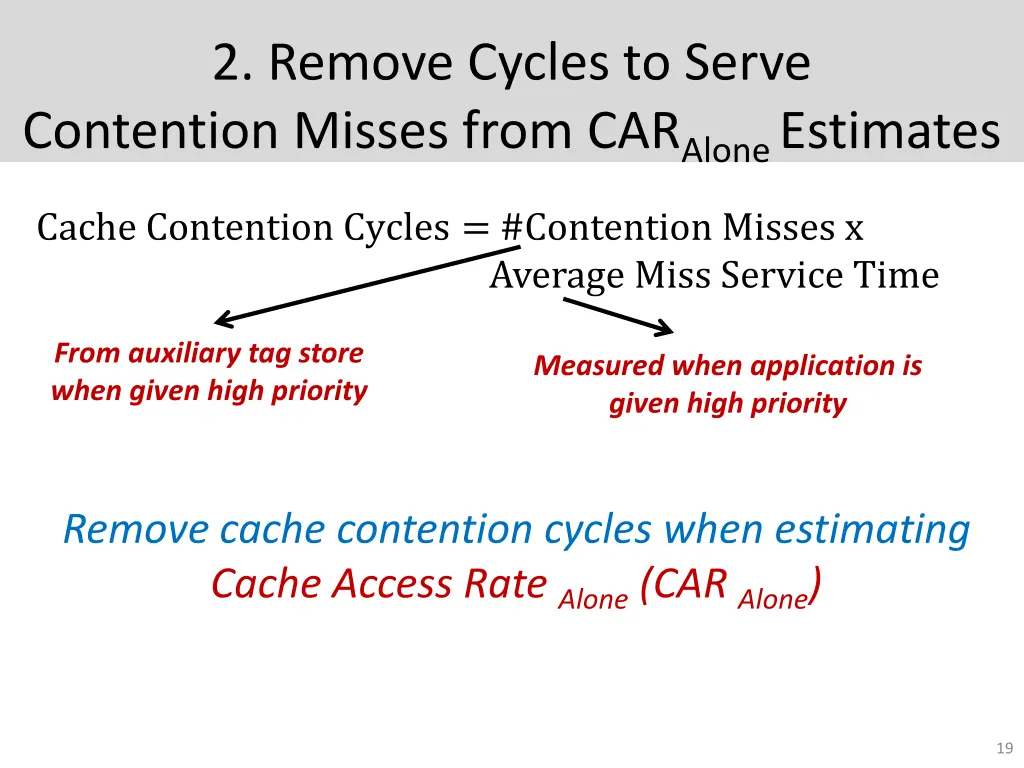
2. Remove Cycles to Serve Contention Misses from CARAlone Estimates Cache Contention Cycles = #Contention Misses x Average Miss Service Time From auxiliary tag store when given high priority Measured when application is given high priority Remove cache contention cycles when estimating Cache Access Rate Alone (CAR Alone) 19
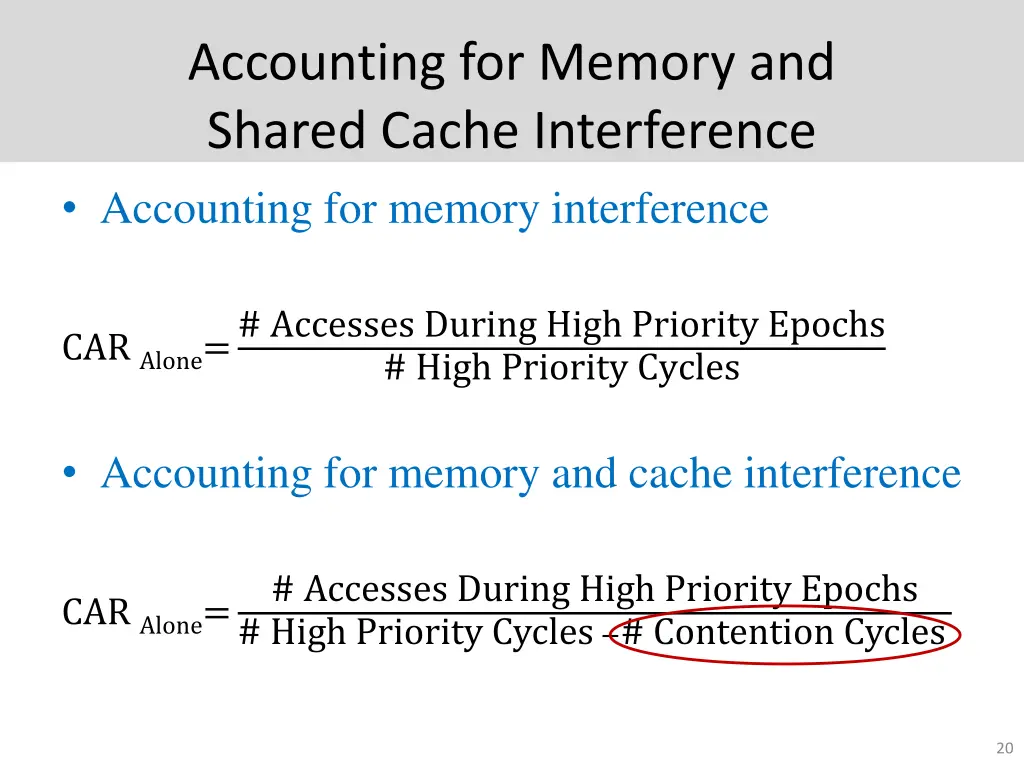
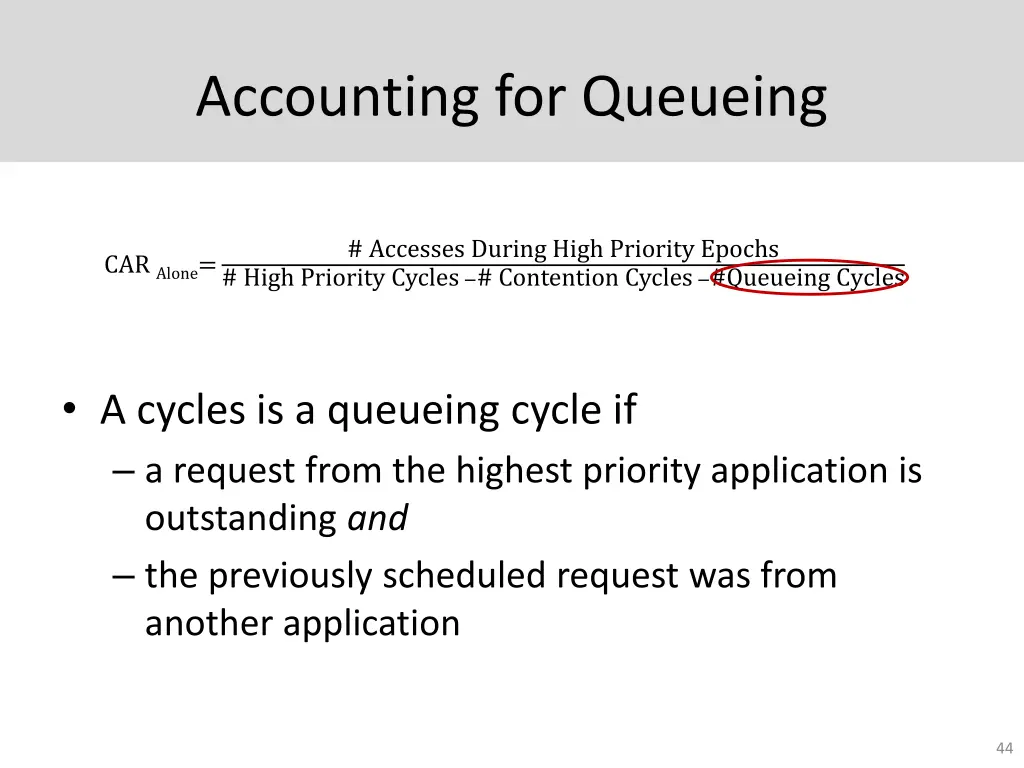
Accounting for Memory and Shared Cache Interference Accounting for memory interference CAR Alone=# Accesses During High Priority Epochs # High Priority Cycles Accounting for memory and cache interference # Accesses During High Priority Epochs # High Priority Cycles # Contention Cycles CAR Alone= 20
Outline 1. Quantify Slowdown Key Observation Estimating Cache Access Rate Alone ASM: Putting it All Together Evaluation 2. Control Slowdown Slowdown-aware Cache Capacity Allocation Slowdown-aware Memory Bandwidth Allocation Coordinated Cache/Memory Management 21
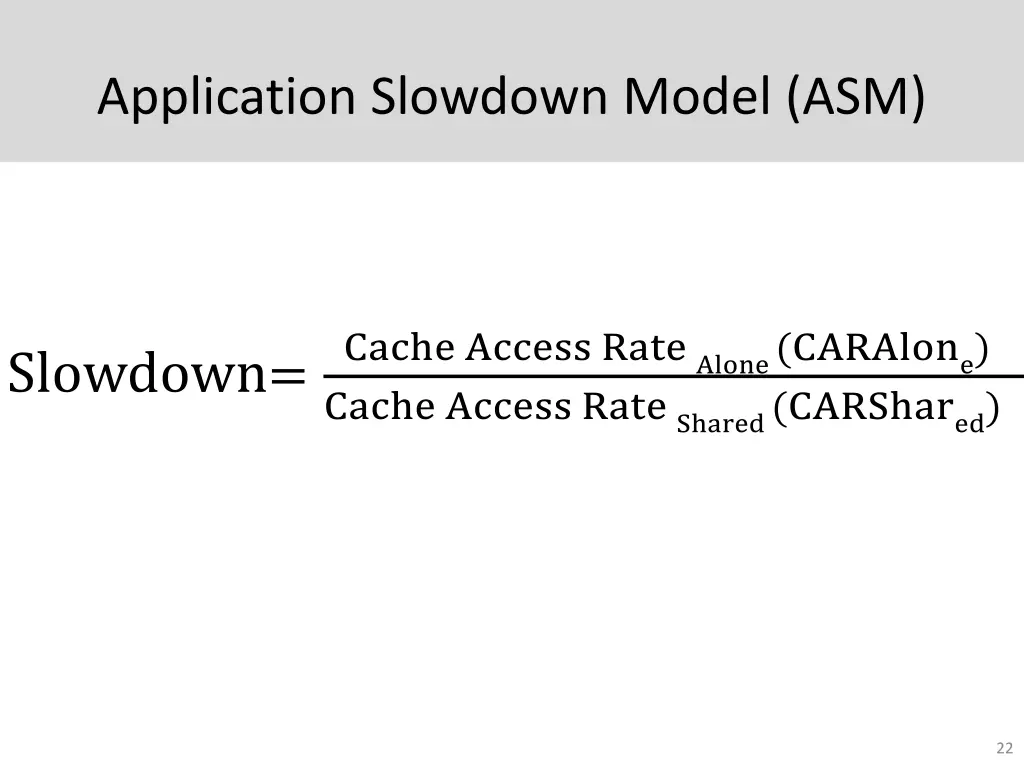
Application Slowdown Model (ASM) Cache Access Rate Alone (CARAlone) Cache Access Rate Shared (CARShared) Slowdown= 22
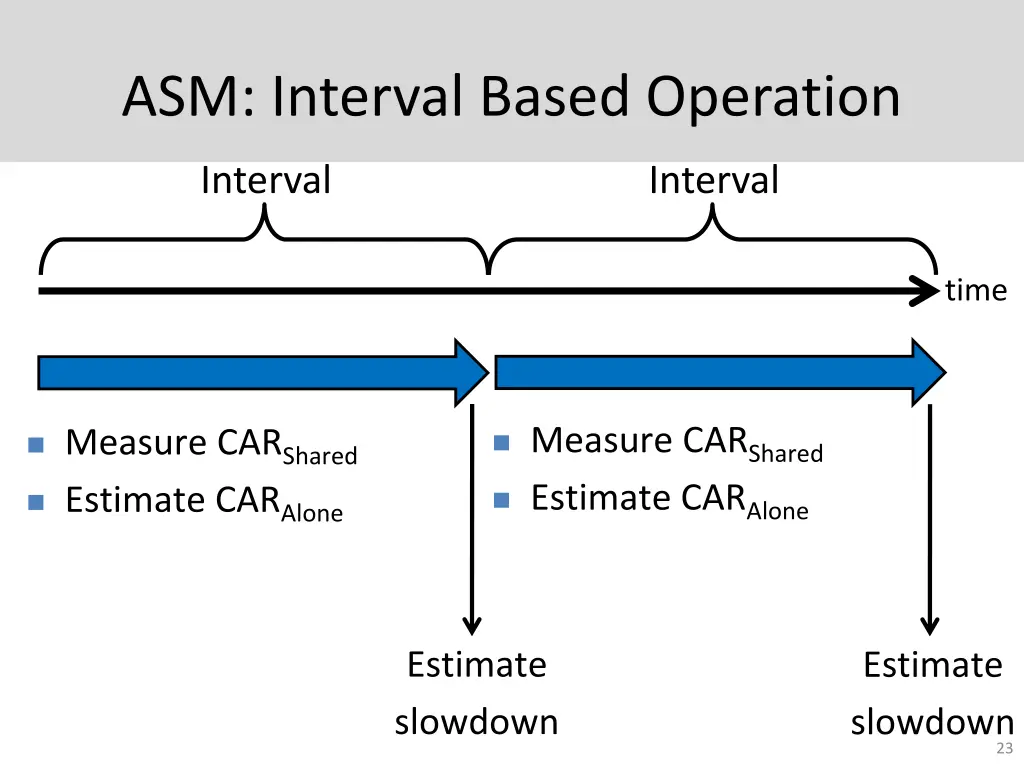
ASM: Interval Based Operation Interval Interval time Measure CARShared Estimate CARAlone Measure CARShared Estimate CARAlone Estimate slowdown Estimate slowdown 23
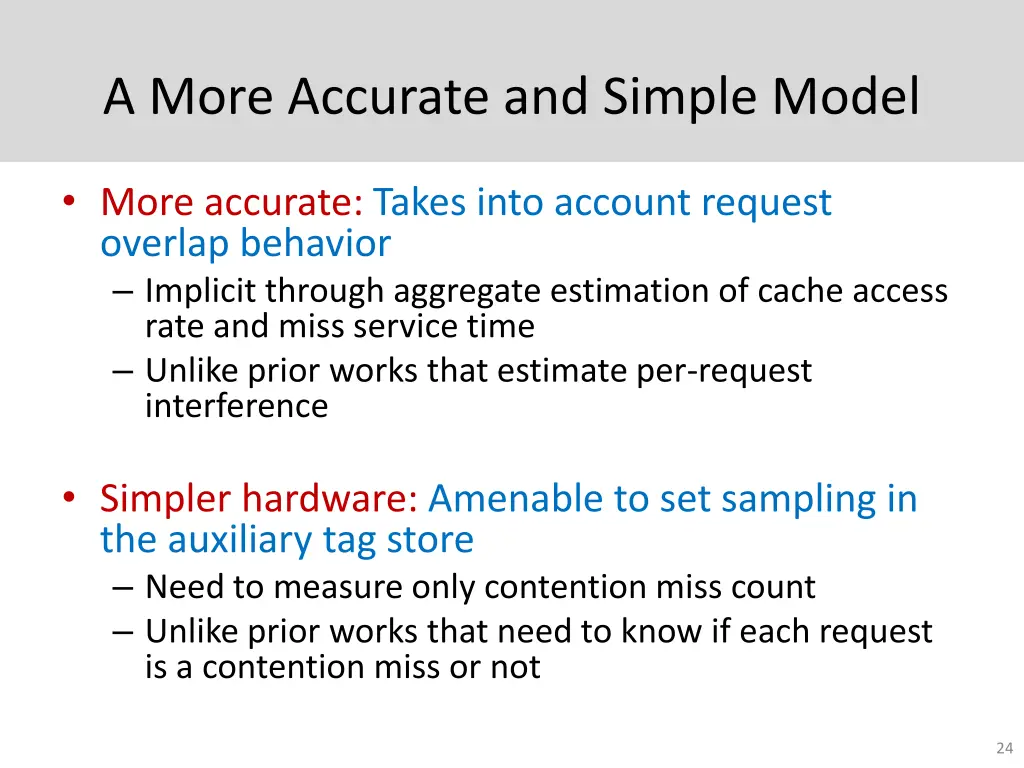
A More Accurate and Simple Model More accurate: Takes into account request overlap behavior Implicit through aggregate estimation of cache access rate and miss service time Unlike prior works that estimate per-request interference Simpler hardware: Amenable to set sampling in the auxiliary tag store Need to measure only contention miss count Unlike prior works that need to know if each request is a contention miss or not 24
Outline 1. Quantify Slowdown Key Observation Estimating Cache Access Rate Alone ASM: Putting it All Together Evaluation 2. Control Slowdown Slowdown-aware Cache Capacity Allocation Slowdown-aware Memory Bandwidth Allocation 25
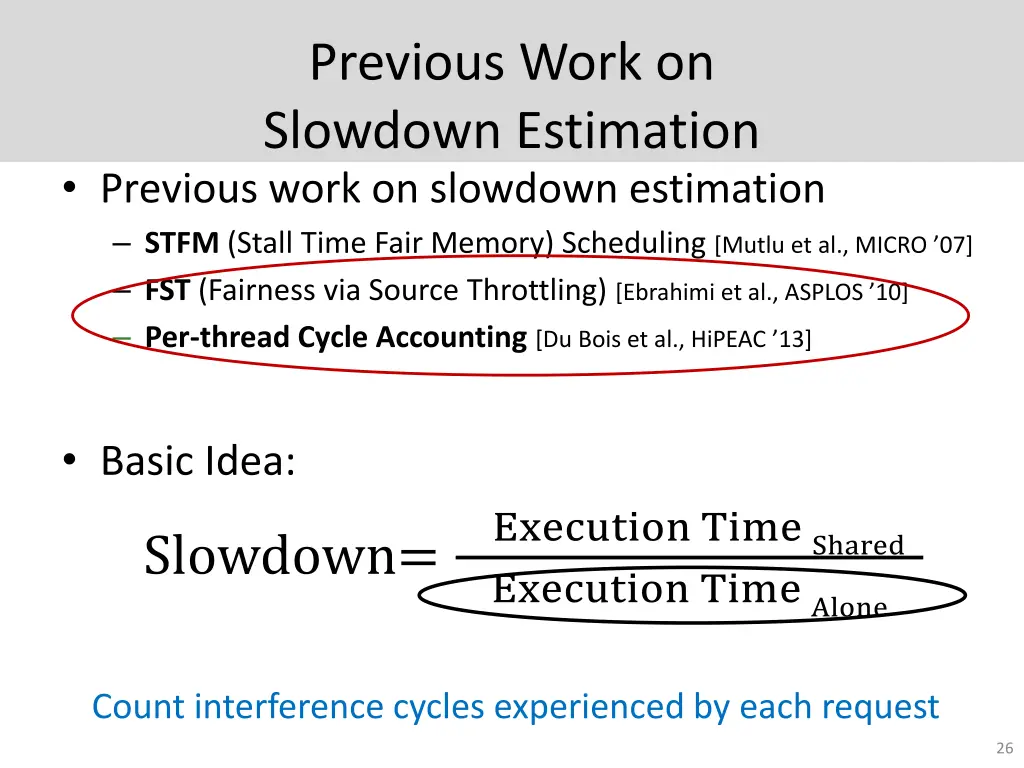
Previous Work on Slowdown Estimation Previous work on slowdown estimation STFM (Stall Time Fair Memory) Scheduling [Mutlu et al., MICRO 07] FST (Fairness via Source Throttling) [Ebrahimi et al., ASPLOS 10] Per-thread Cycle Accounting [Du Bois et al., HiPEAC 13] Basic Idea: Slowdown= Execution Time Shared Execution Time Alone Count interference cycles experienced by each request 26
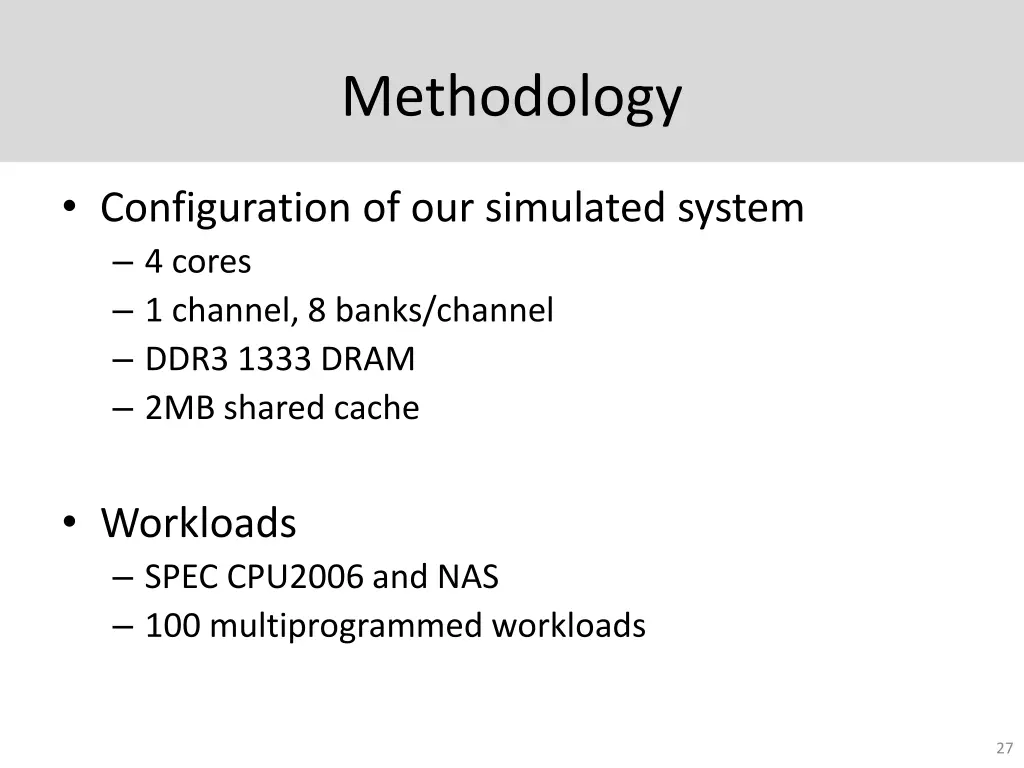
Methodology Configuration of our simulated system 4 cores 1 channel, 8 banks/channel DDR3 1333 DRAM 2MB shared cache Workloads SPEC CPU2006 and NAS 100 multiprogrammed workloads 27
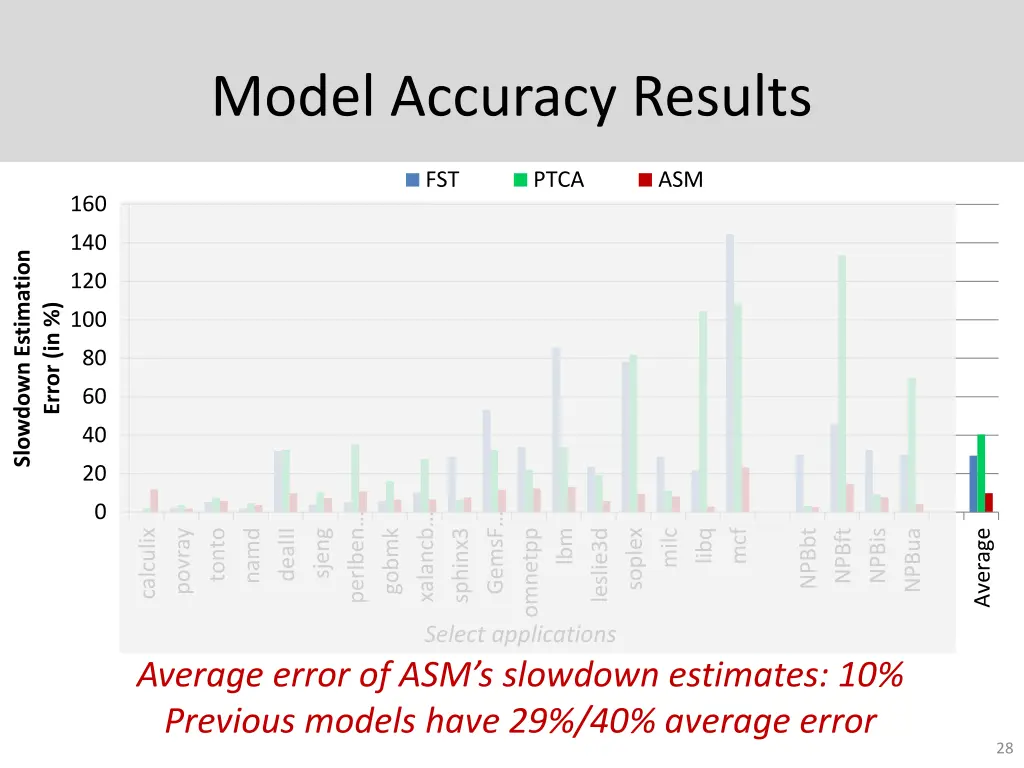
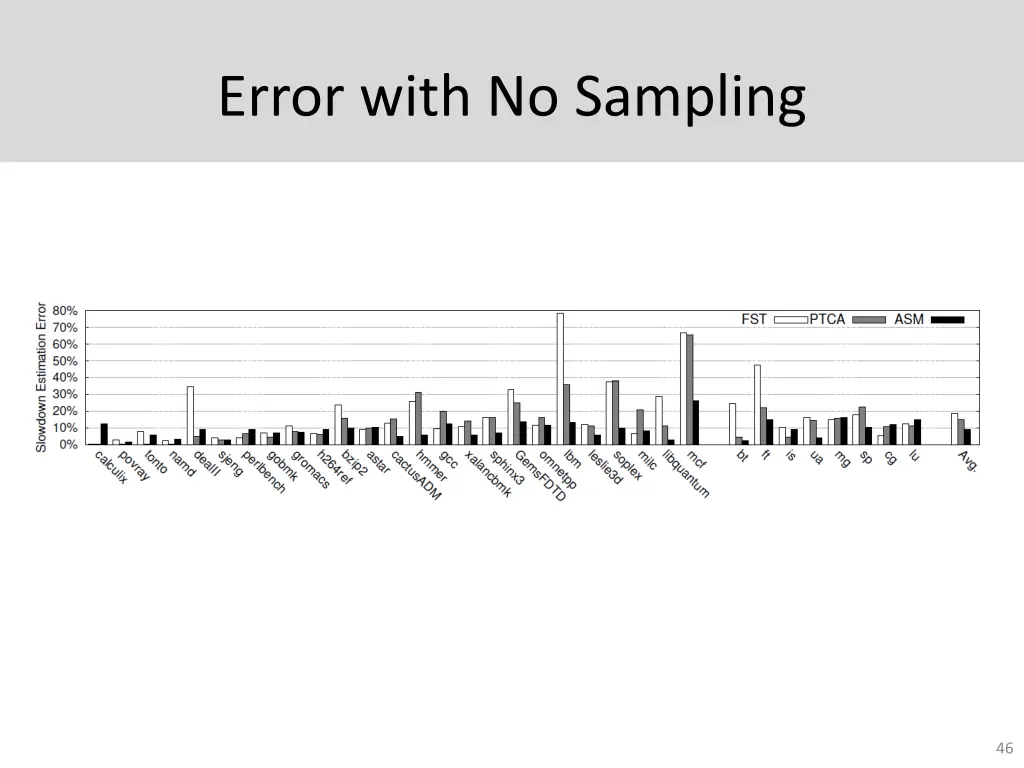
Model Accuracy Results FST PTCA ASM 160 140 Slowdown Estimation 120 Error (in %) 100 80 60 40 20 0 GemsF perlben xalancb calculix lbm leslie3d omnetpp milc dealII sjeng gobmk sphinx3 mcf NPBft tonto soplex libq NPBis NPBua NPBbt povray namd Average Select applications Average error of ASM s slowdown estimates: 10% Previous models have 29%/40% average error 28
Outline 1. Quantify Slowdown Key Observation Estimating Cache Access Rate Alone ASM: Putting it All Together Evaluation 2. Control Slowdown Slowdown-aware Cache Capacity Allocation Slowdown-aware Memory Bandwidth Allocation Coordinated Cache/Memory Management 29
Outline 1. Quantify Slowdown Key Observation Estimating Cache Access Rate Alone ASM: Putting it All Together Evaluation 2. Control Slowdown Slowdown-aware Cache Capacity Allocation Slowdown-aware Memory Bandwidth Allocation Coordinated Cache/Memory Management 30
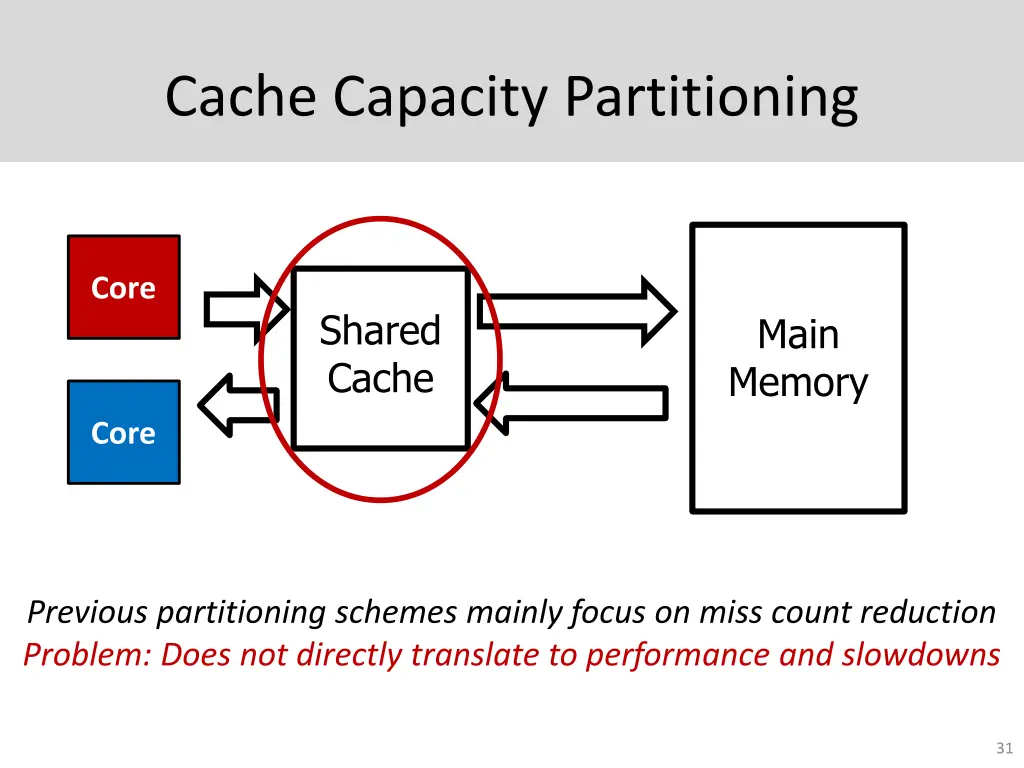
Cache Capacity Partitioning Core Shared Cache Main Memory Core Previous partitioning schemes mainly focus on miss count reduction Problem: Does not directly translate to performance and slowdowns 31
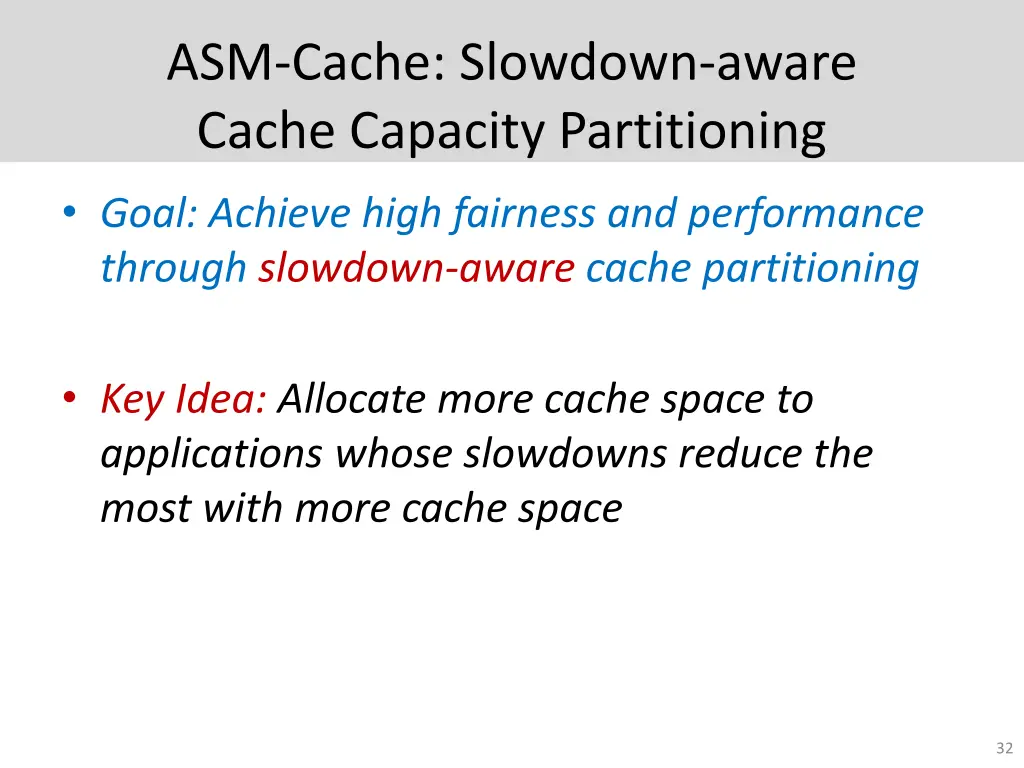
ASM-Cache: Slowdown-aware Cache Capacity Partitioning Goal: Achieve high fairness and performance through slowdown-aware cache partitioning Key Idea: Allocate more cache space to applications whose slowdowns reduce the most with more cache space 32
Outline 1. Quantify Slowdown Key Observation Estimating Cache Access Rate Alone ASM: Putting it All Together Evaluation 2. Control Slowdown Slowdown-aware Cache Capacity Allocation Slowdown-aware Memory Bandwidth Allocation Coordinated Cache/Memory Management 33
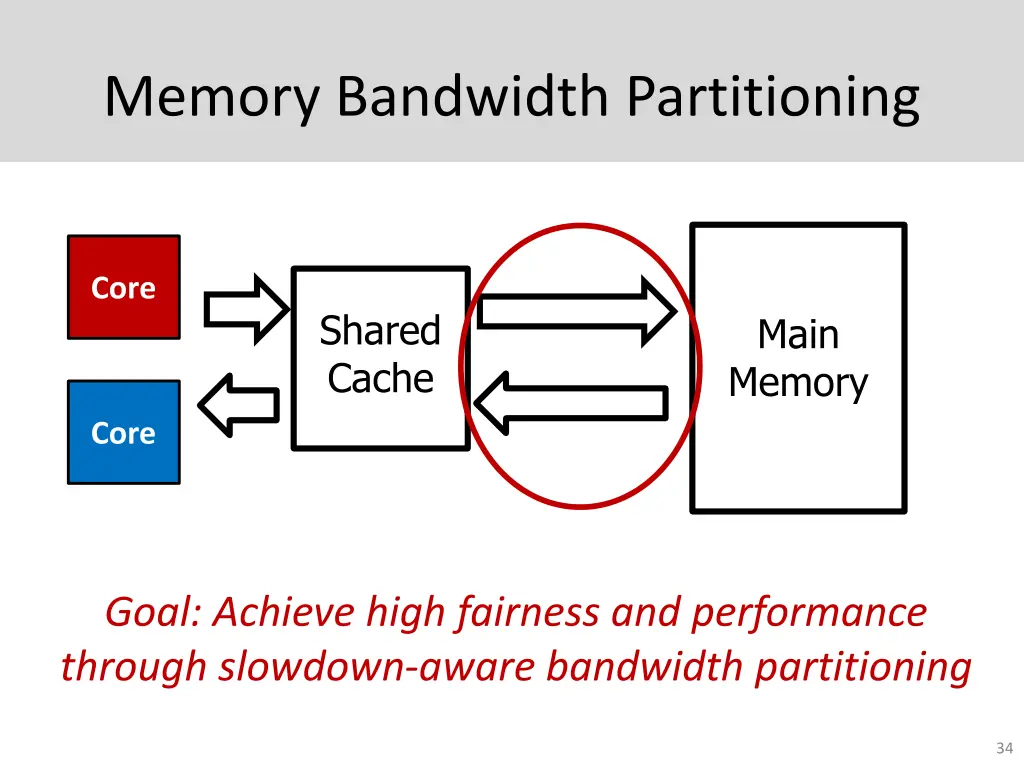
Memory Bandwidth Partitioning Core Shared Cache Main Memory Core Goal: Achieve high fairness and performance through slowdown-aware bandwidth partitioning 34
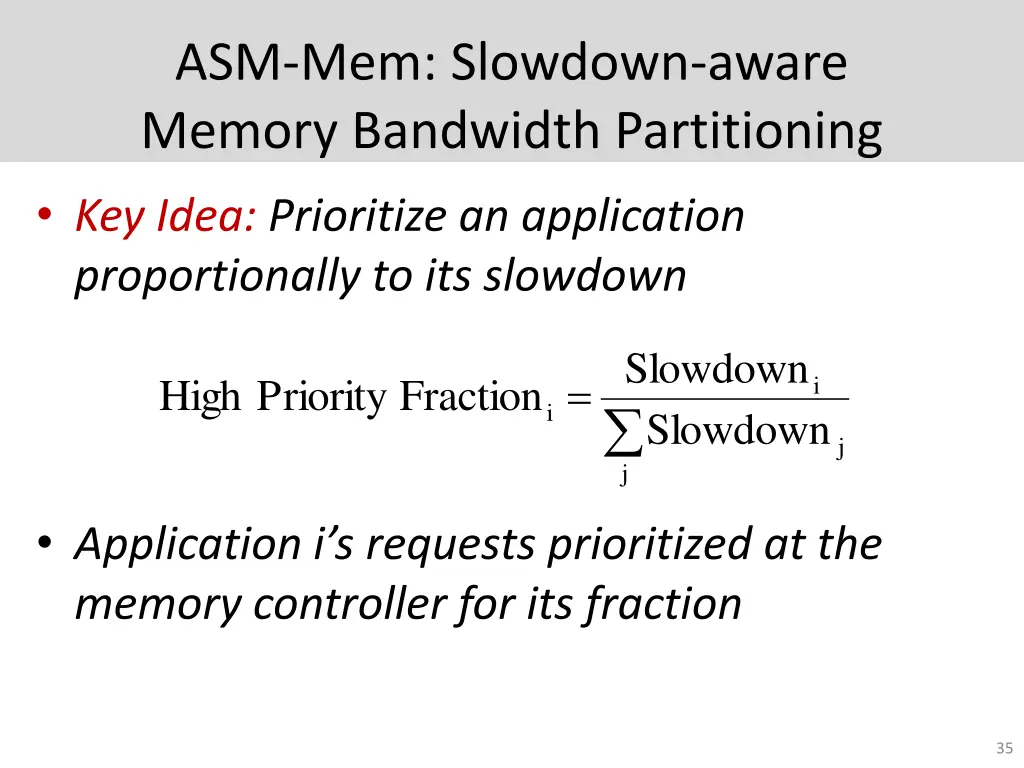
ASM-Mem: Slowdown-aware Memory Bandwidth Partitioning Key Idea: Prioritize an application proportionally to its slowdown Slowdown = High Priority Fraction i j i Slowdown j Application i s requests prioritized at the memory controller for its fraction 35
Outline 1. Quantify Slowdown Key Observation Estimating Cache Access Rate Alone ASM: Putting it All Together Evaluation 2. Control Slowdown Slowdown-aware Cache Capacity Allocation Slowdown-aware Memory Bandwidth Allocation Coordinated Cache/Memory Management 36
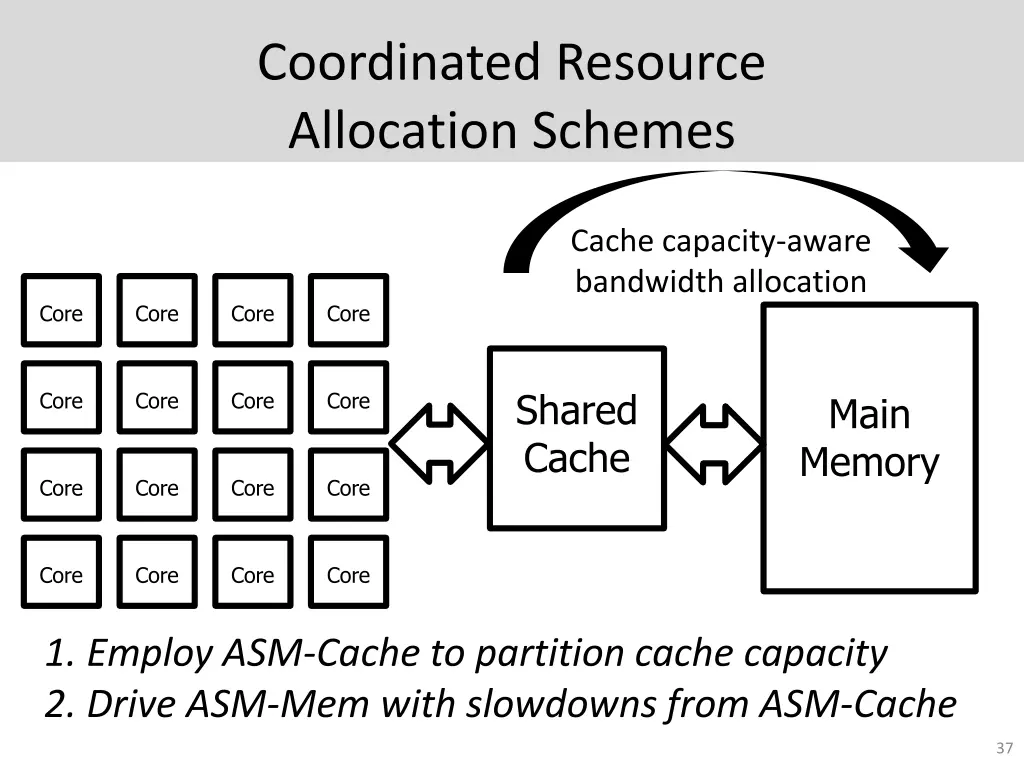
Coordinated Resource Allocation Schemes Cache capacity-aware bandwidth allocation Core Core Core Core Shared Cache Core Core Core Core Main Memory Core Core Core Core Core Core Core Core 1. Employ ASM-Cache to partition cache capacity 2. Drive ASM-Mem with slowdowns from ASM-Cache 37
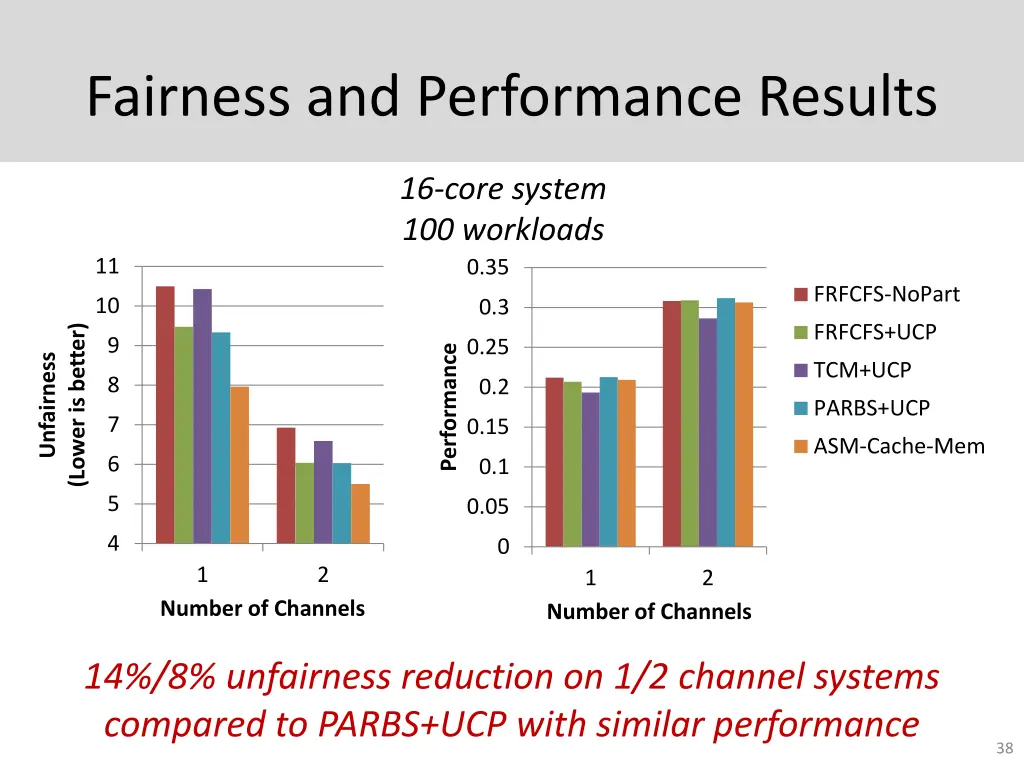
Fairness and Performance Results 16-core system 100 workloads 0.35 11 FRFCFS-NoPart 10 0.3 FRFCFS+UCP (Lower is better) 9 0.25 Performance Unfairness TCM+UCP 8 0.2 PARBS+UCP 7 0.15 ASM-Cache-Mem 6 0.1 5 0.05 4 0 1 2 1 2 Number of Channels Number of Channels 14%/8% unfairness reduction on 1/2 channel systems compared to PARBS+UCP with similar performance 38
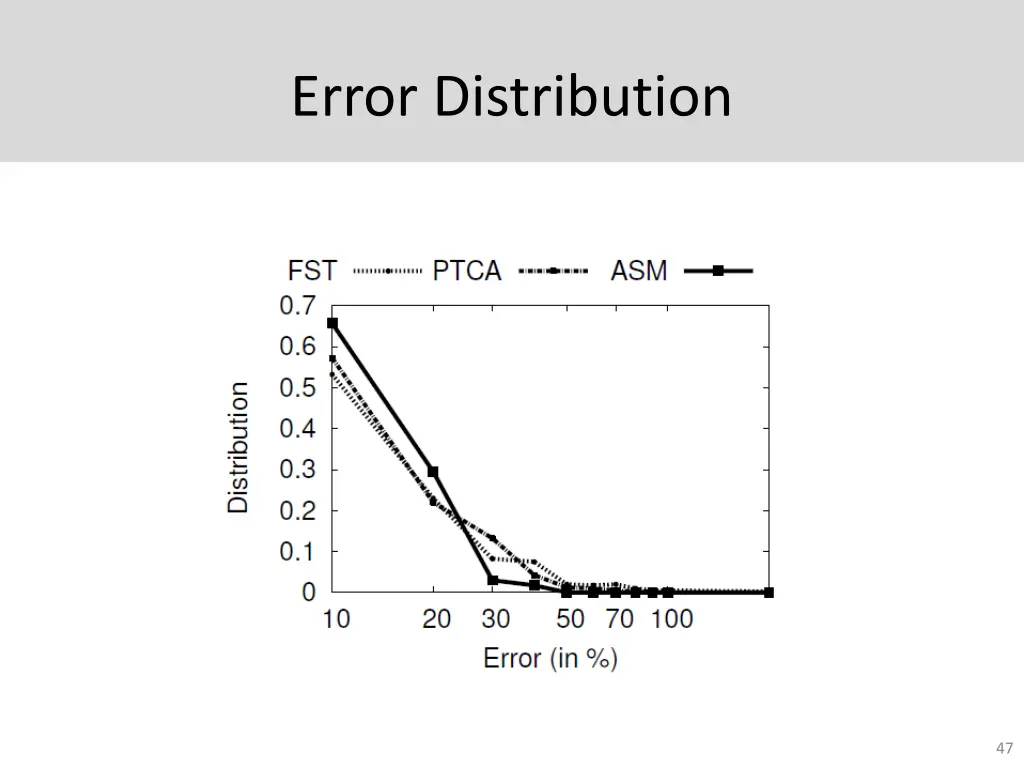
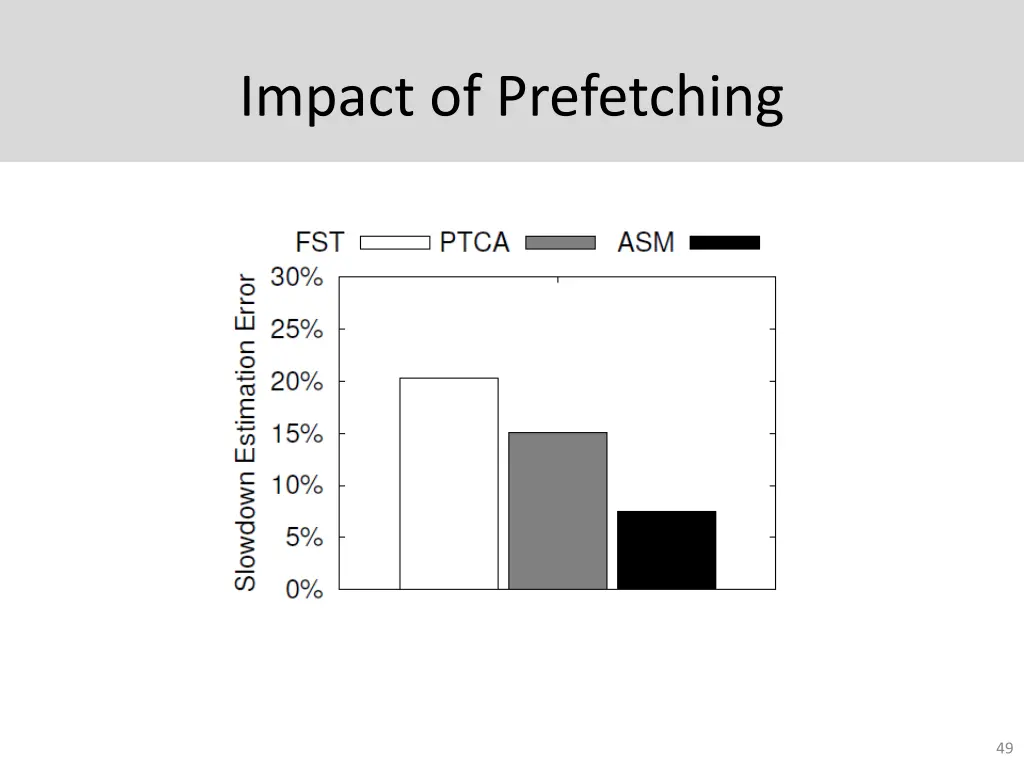
Other Results in the Paper Distribution of slowdown estimation error Sensitivity to system parameters Core count, memory channel count, cache size Sensitivity to model parameters Impact of prefetching Case study showing ASM s potential for providing slowdown guarantees 39
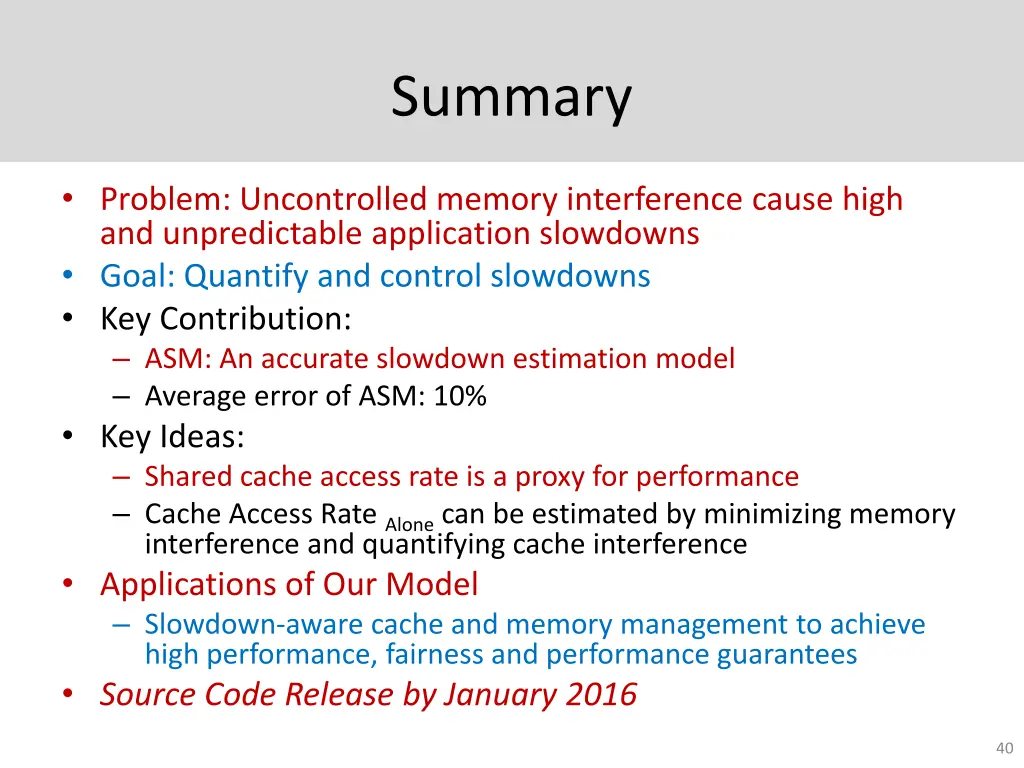
Summary Problem: Uncontrolled memory interference cause high and unpredictable application slowdowns Goal: Quantify and control slowdowns Key Contribution: ASM: An accurate slowdown estimation model Average error of ASM: 10% Key Ideas: Shared cache access rate is a proxy for performance Cache Access Rate Alone can be estimated by minimizing memory interference and quantifying cache interference Applications of Our Model Slowdown-aware cache and memory management to achieve high performance, fairness and performance guarantees Source Code Release by January 2016 40
Application Slowdown Model Quantifying and Controlling Impact of Interference at Shared Caches and Main Memory Lavanya Subramanian, Vivek Seshadri, Arnab Ghosh, Samira Khan, Onur Mutlu 41
Backup 42
Highest Priority Minimizes Memory Bandwidth Interference 1. Run alone Service order Time units Request Buffer State 3 2 1 Main Memory Main Memory 2. Run with another application Service order Time units Request Buffer State 3 2 1 Main Memory Main Memory 3. Run with another application: highest priority Service order Time units Request Buffer State 3 2 1 Main Memory Main Memory 43
Accounting for Queueing # Accesses During High Priority Epochs # High Priority Cycles # Contention Cycles #Queueing Cycles CAR Alone= A cycles is a queueing cycle if a request from the highest priority application is outstanding and the previously scheduled request was from another application 44
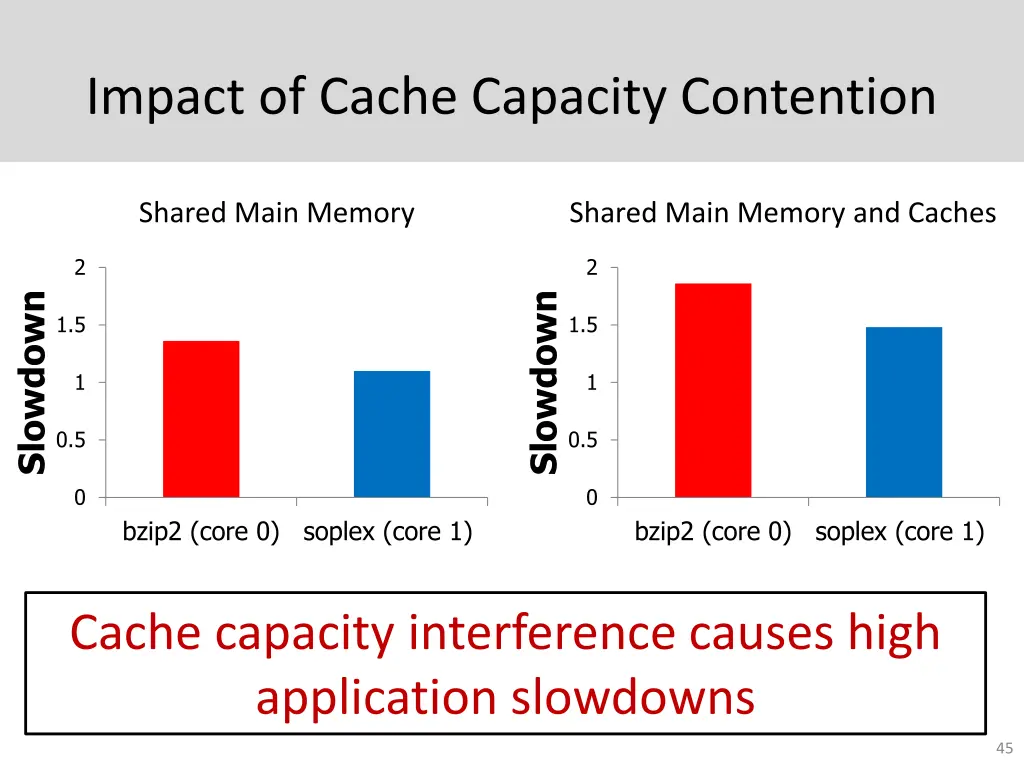
Impact of Cache Capacity Contention Shared Main Memory Shared Main Memory and Caches 2 2 Slowdown Slowdown 1.5 1.5 1 1 0.5 0.5 0 0 bzip2 (core 0) soplex (core 1) bzip2 (core 0) soplex (core 1) Cache capacity interference causes high application slowdowns 45
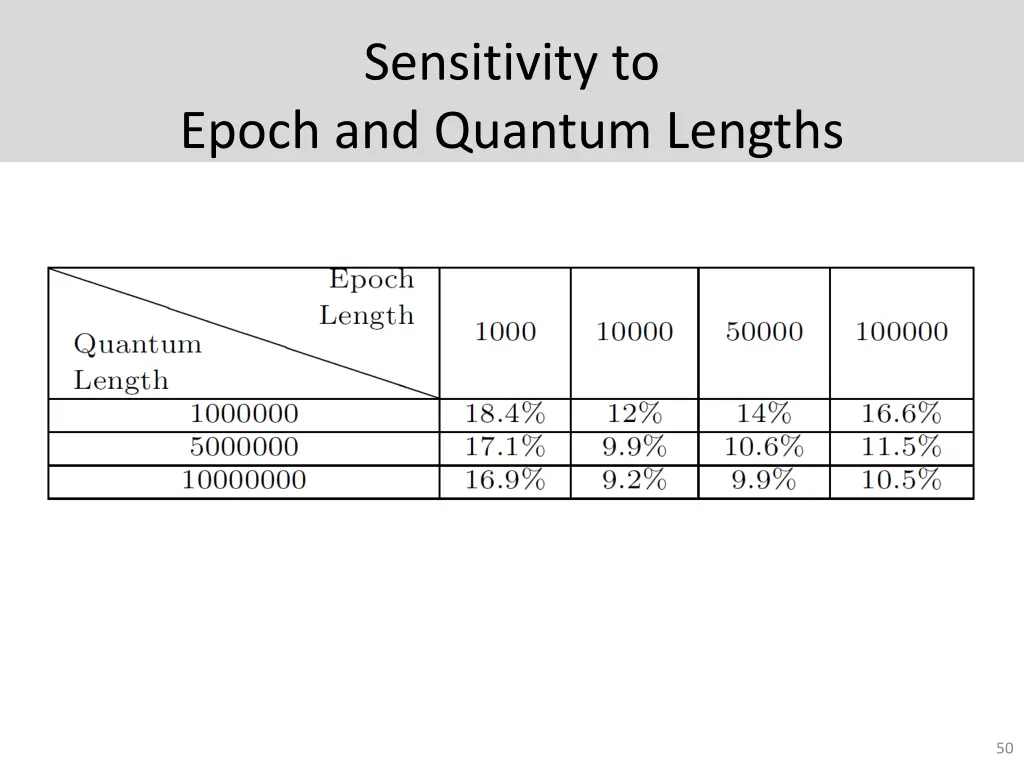
Sensitivity to Epoch and Quantum Lengths 50