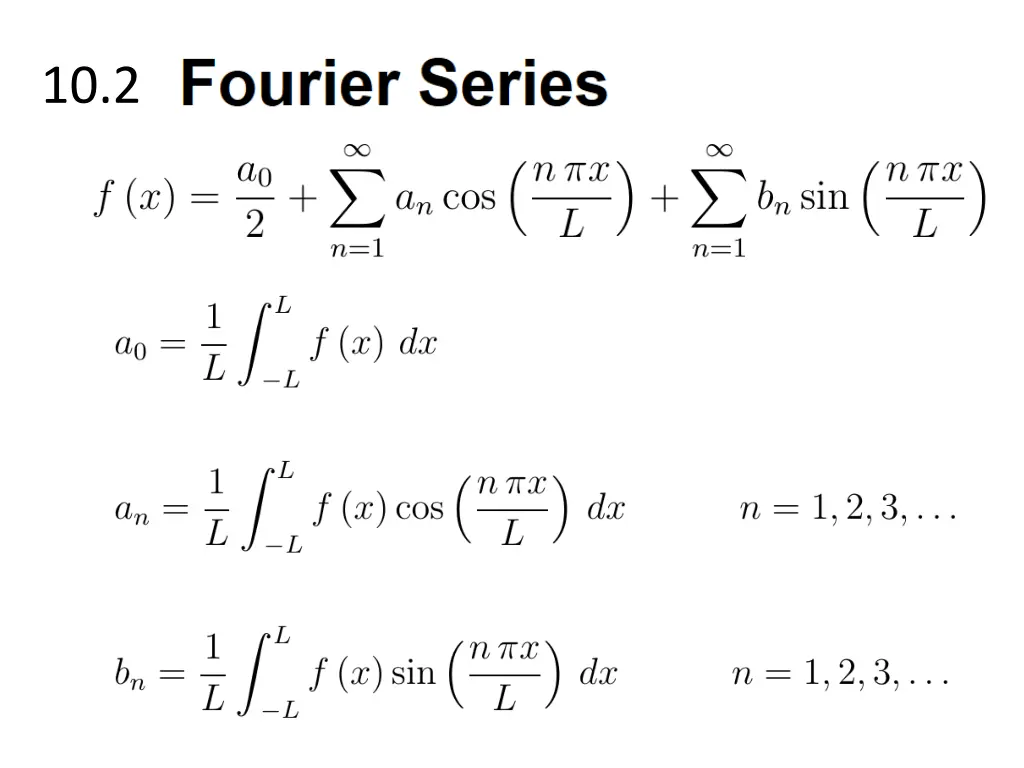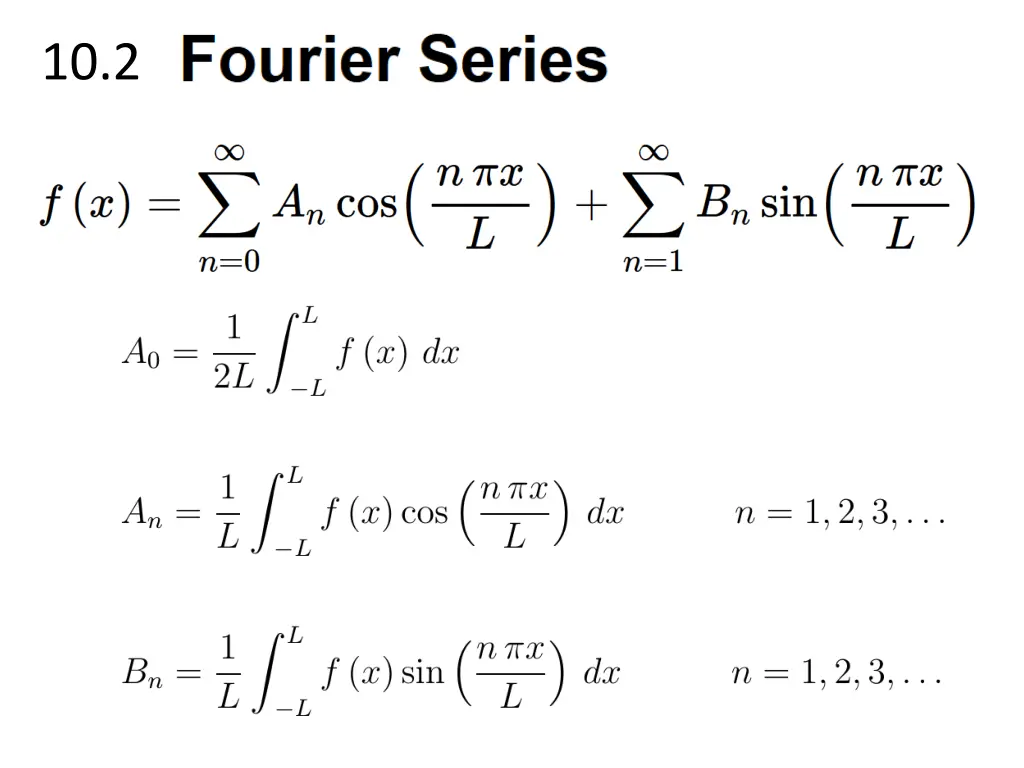
Convergence Patterns in Fourier Series
Download Presenatation

Explore the convergence properties of piecewise continuous functions in the context of Fourier series. Understand the concept of period and its relation to function behavior. Dive into the intricacies of function continuity and its implications for convergence analysis.

Download Presentation
Please find below an Image/Link to download the presentation.
The content on the website is provided AS IS for your information and personal use only. It may not be sold, licensed, or shared on other websites without obtaining consent from the author. If you encounter any issues during the download, it is possible that the publisher has removed the file from their server.
You are allowed to download the files provided on this website for personal or commercial use, subject to the condition that they are used lawfully. All files are the property of their respective owners.
The content on the website is provided AS IS for your information and personal use only. It may not be sold, licensed, or shared on other websites without obtaining consent from the author.
E N D
Presentation Transcript
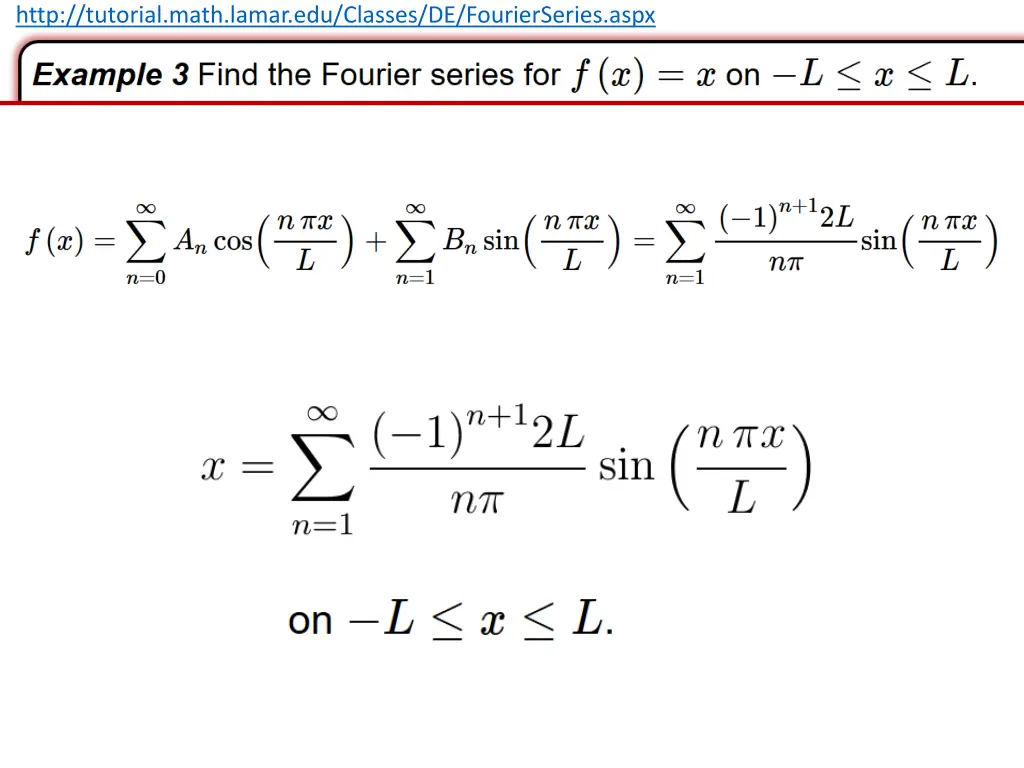
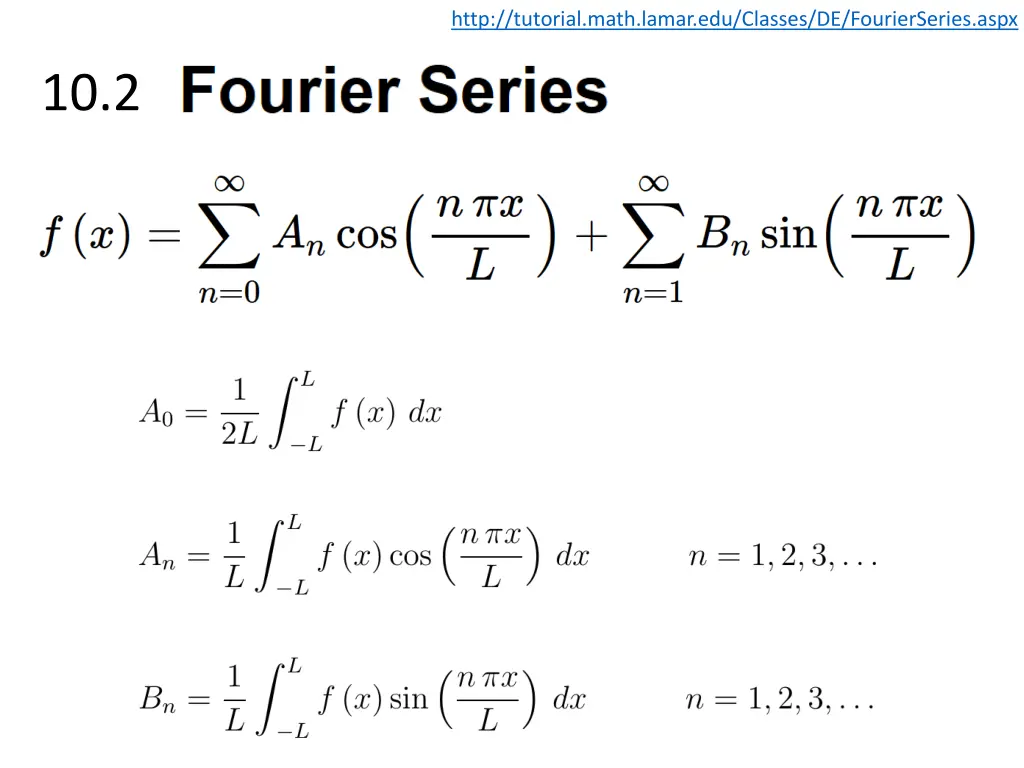
http://tutorial.math.lamar.edu/Classes/DE/FourierSeries.aspx
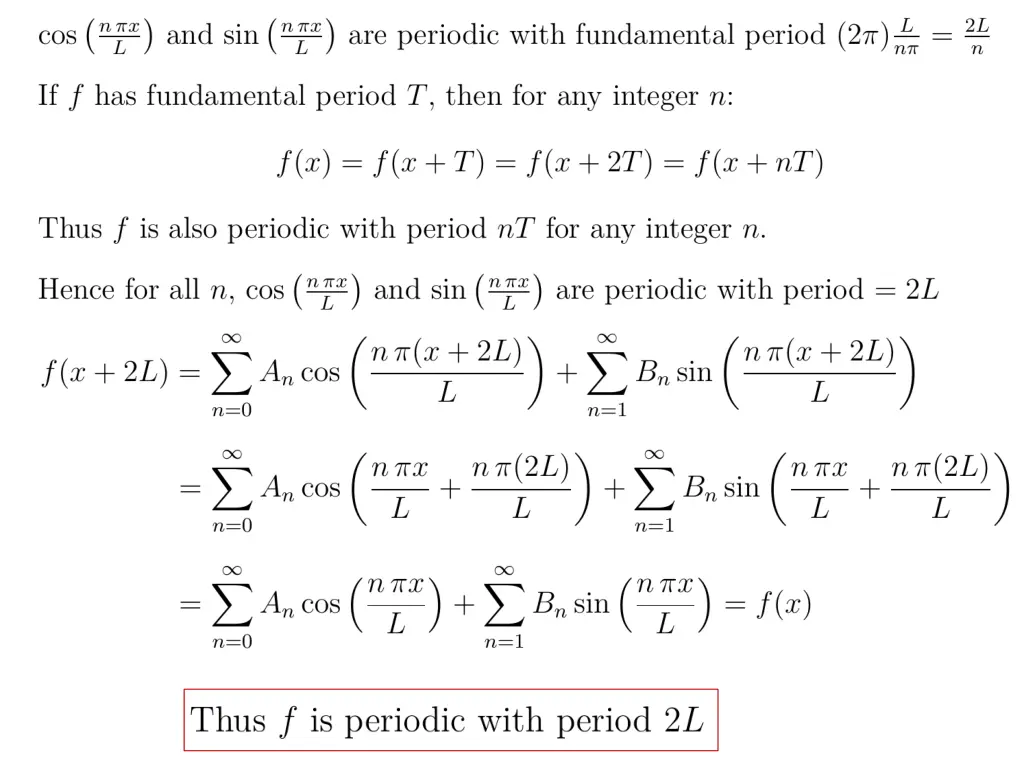
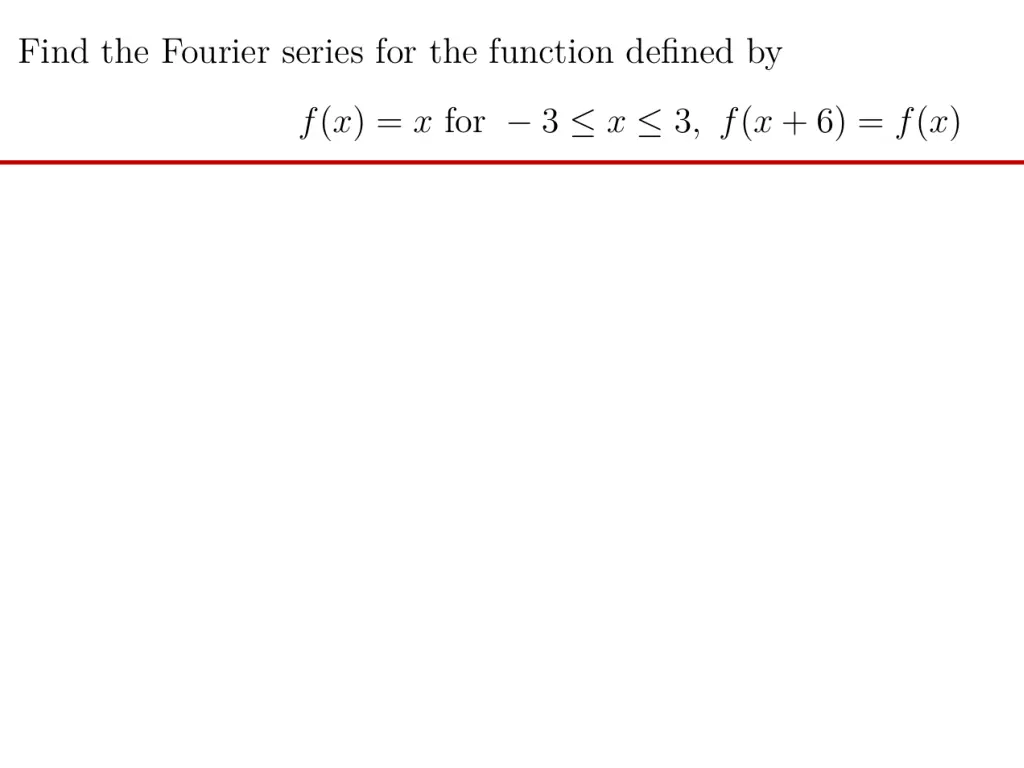
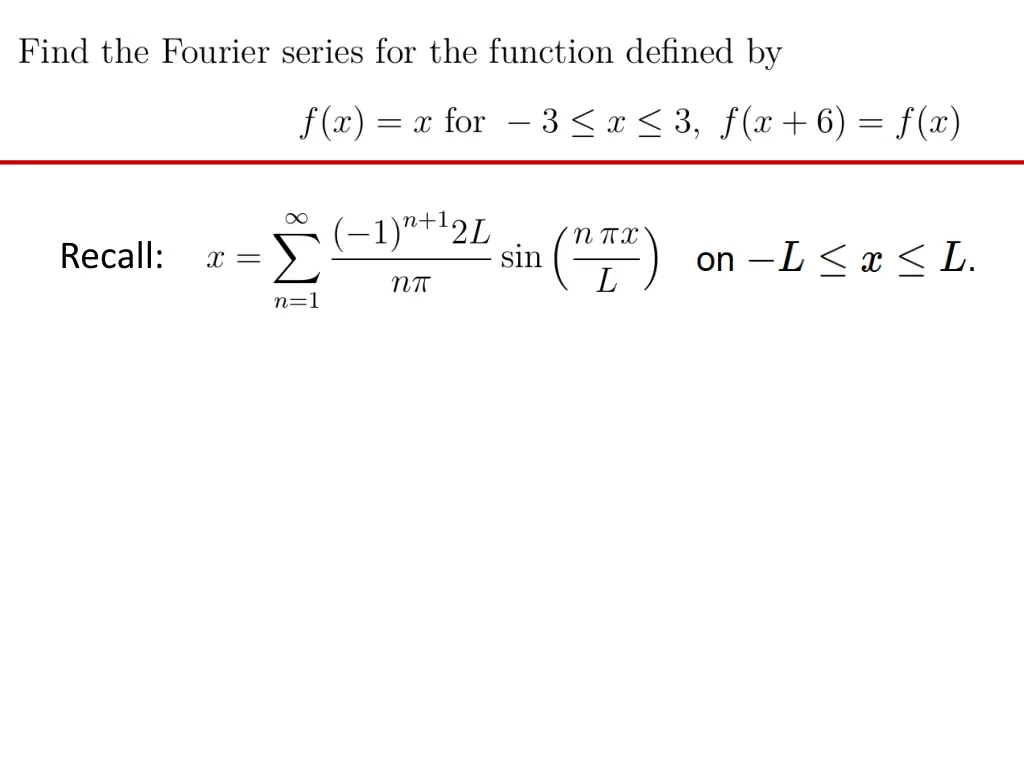
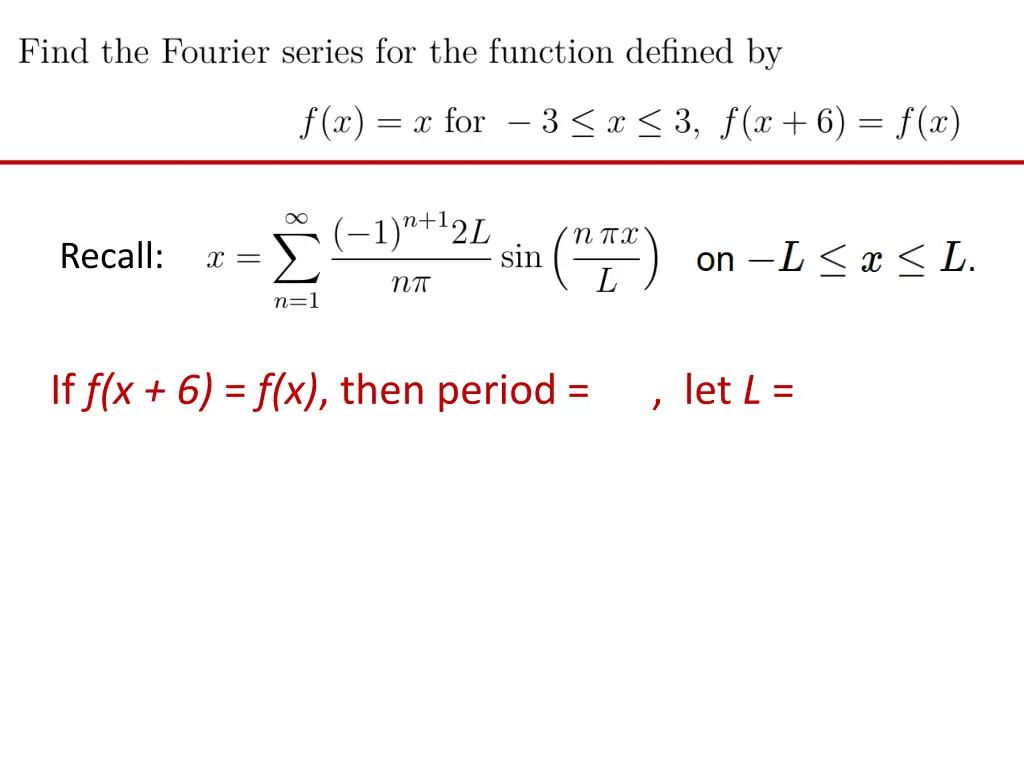
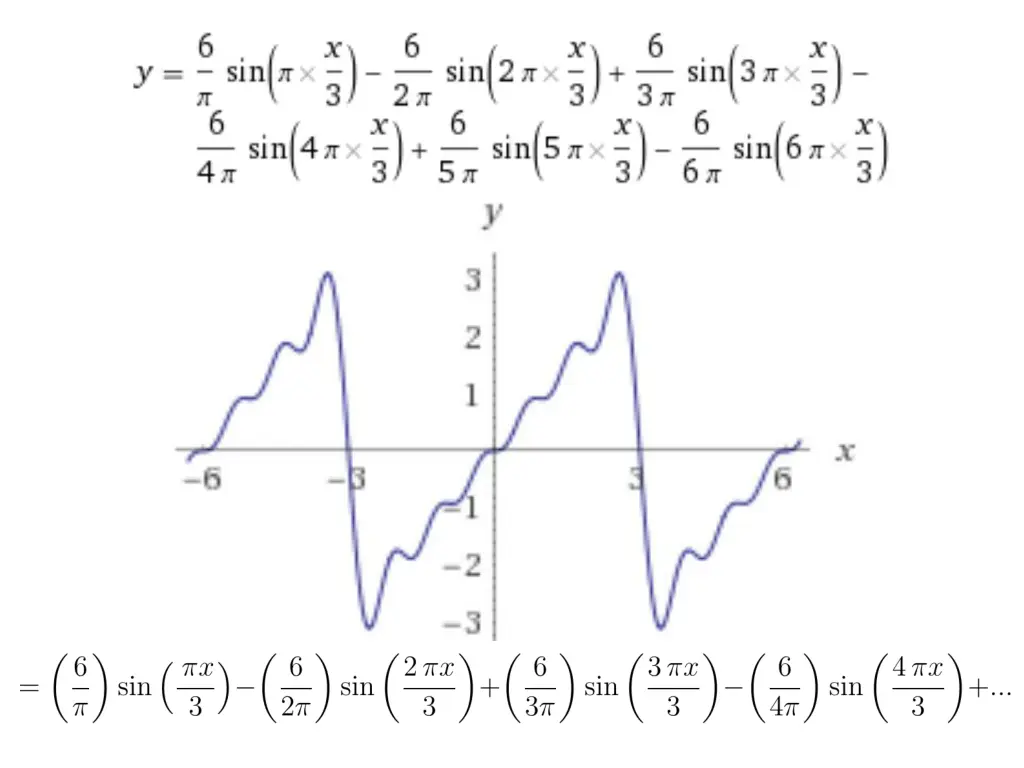
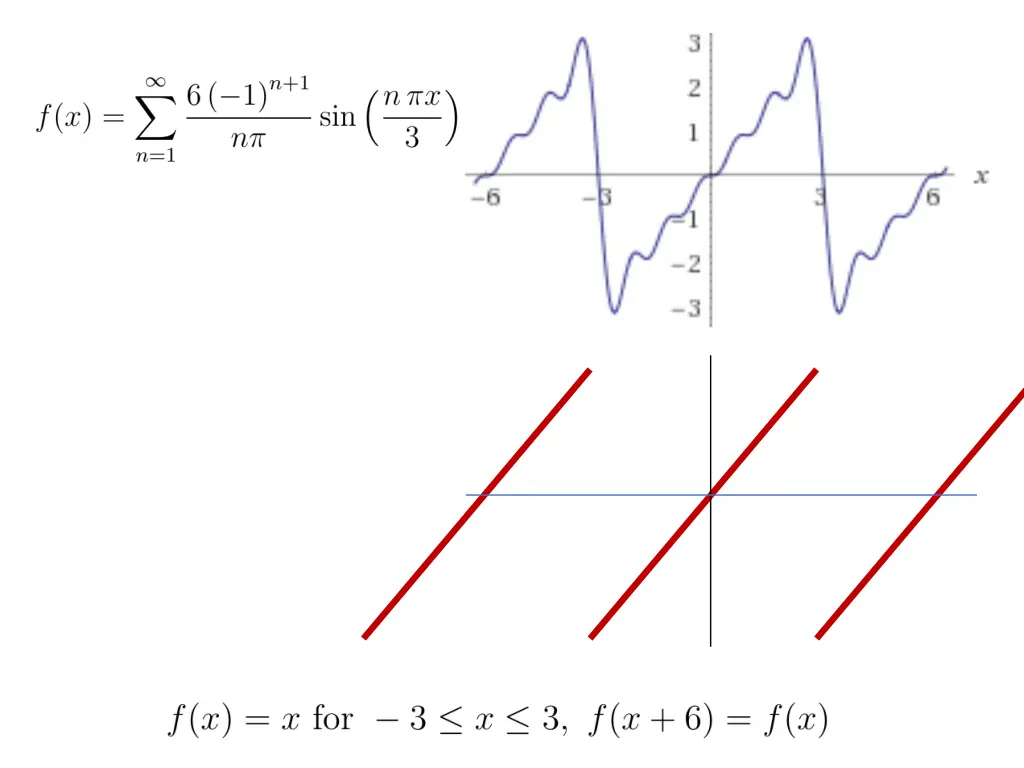
Recall: If f(x + 6) = f(x), then period = , let L =
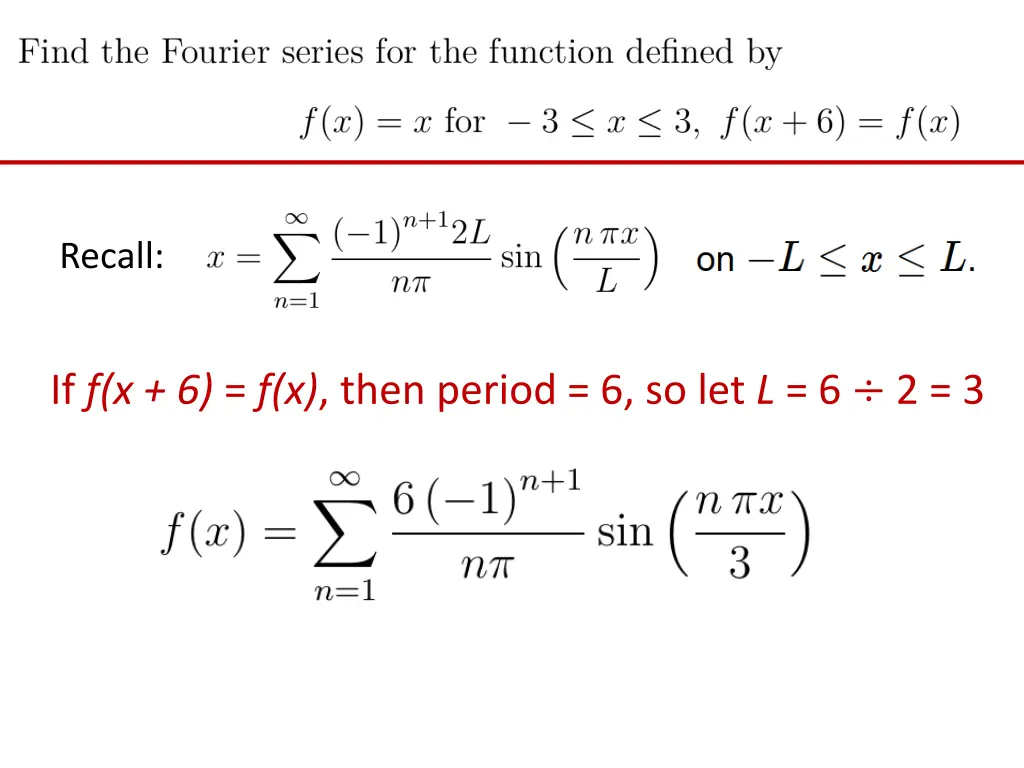
Recall: If f(x + 6) = f(x), then period = 6, so let L = 6 2 = 3
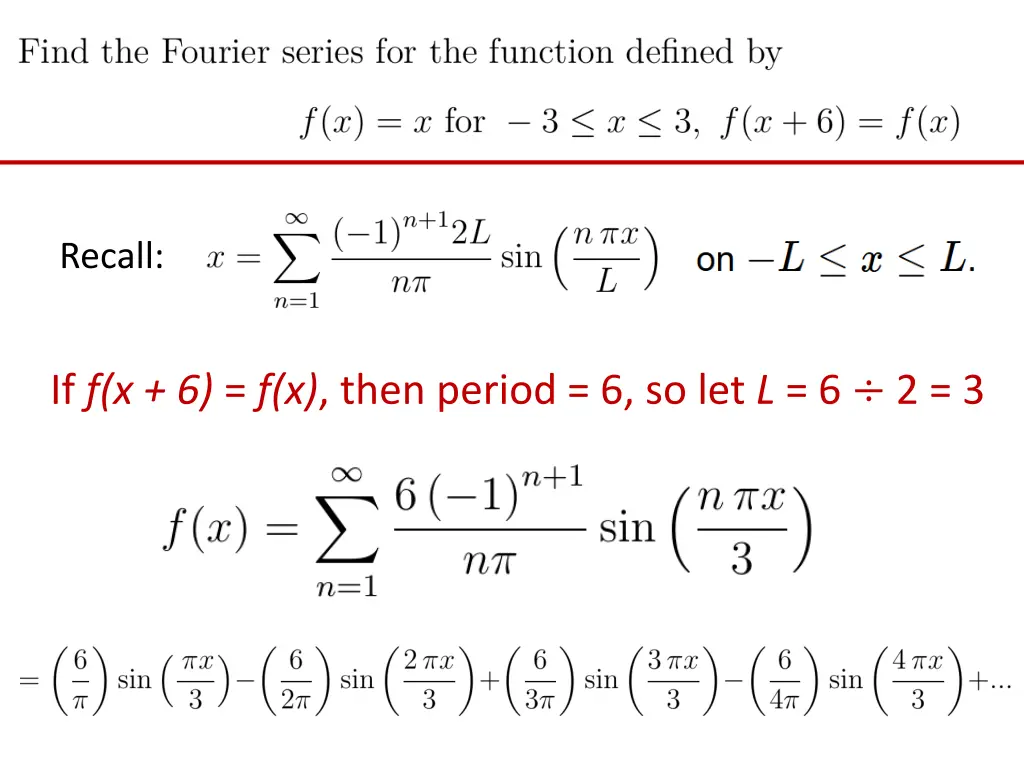
Recall: If f(x + 6) = f(x), then period = 6, so let L = 6 2 = 3
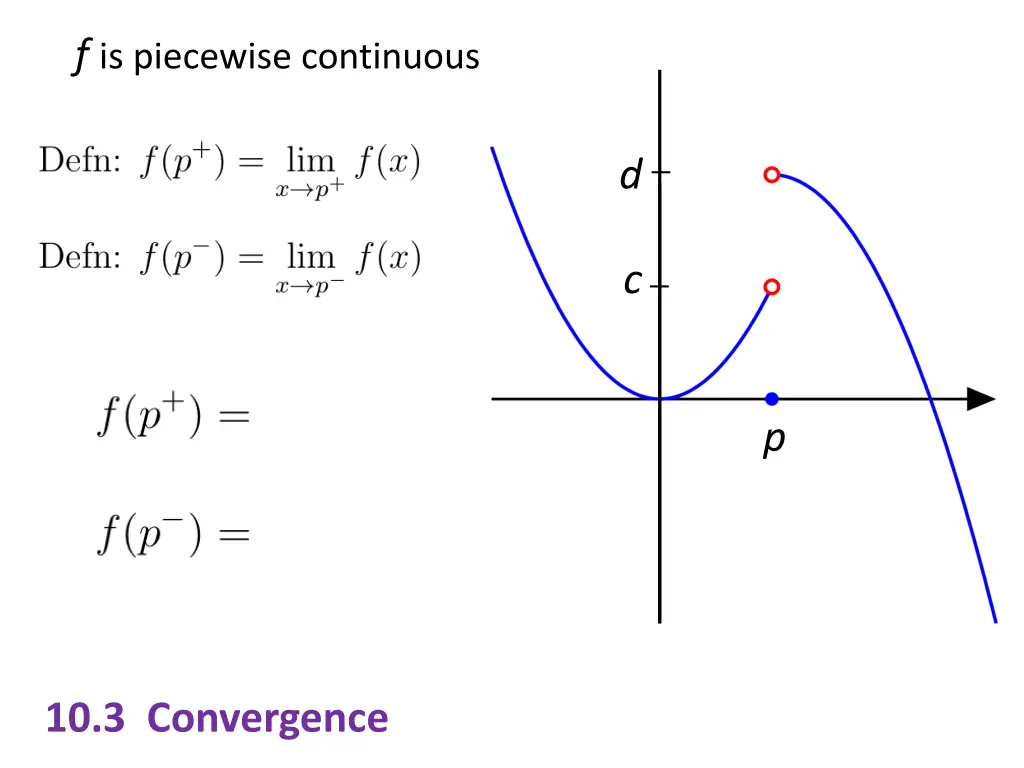
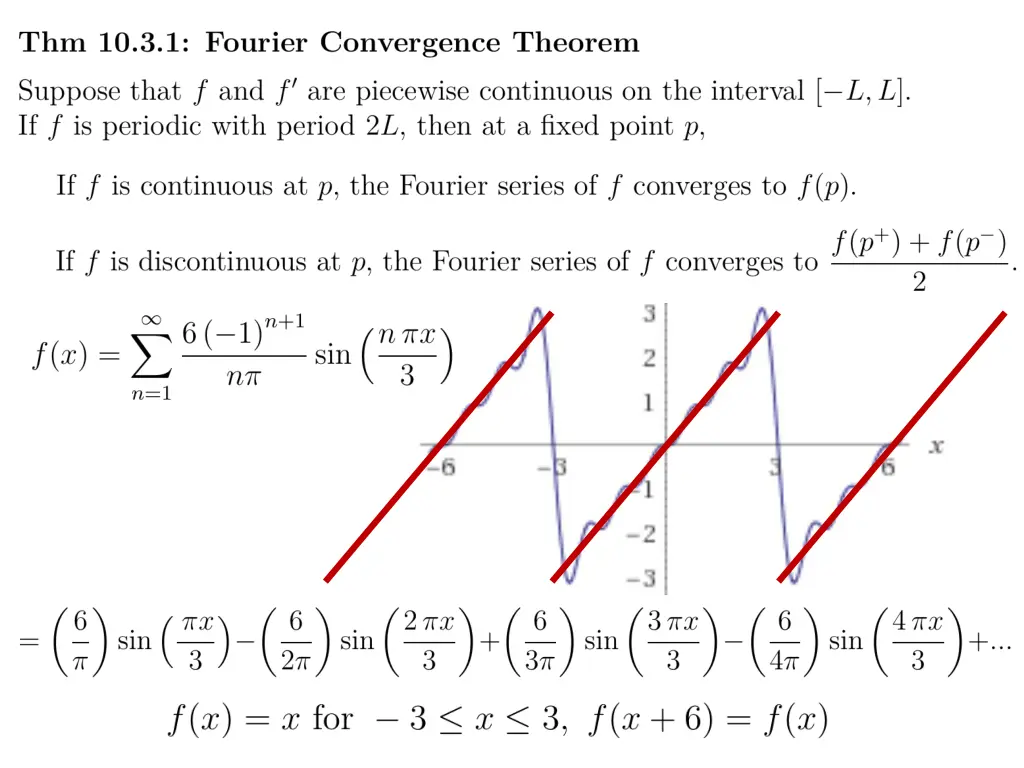
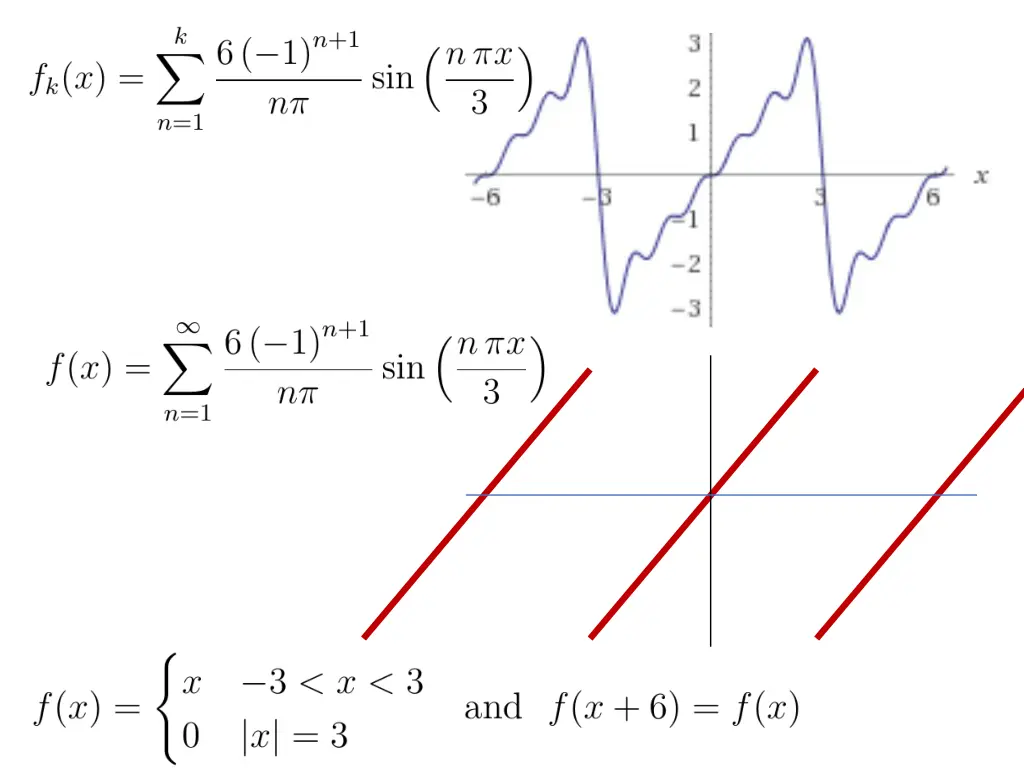
fis piecewise continuous d c p 10.3 Convergence
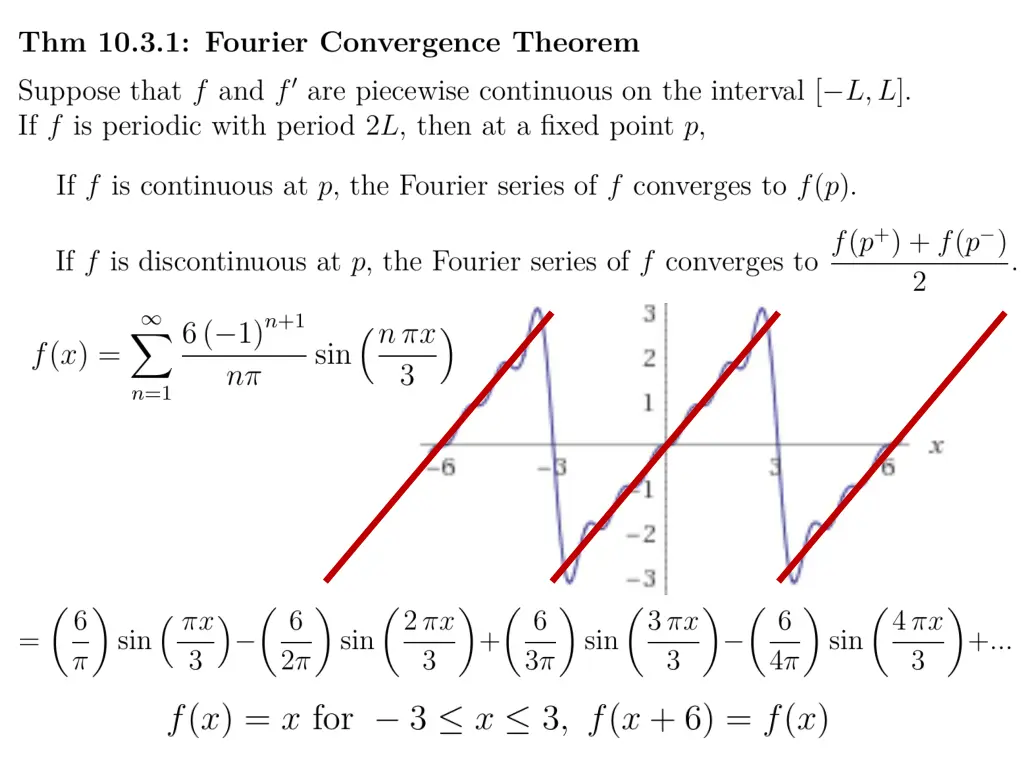
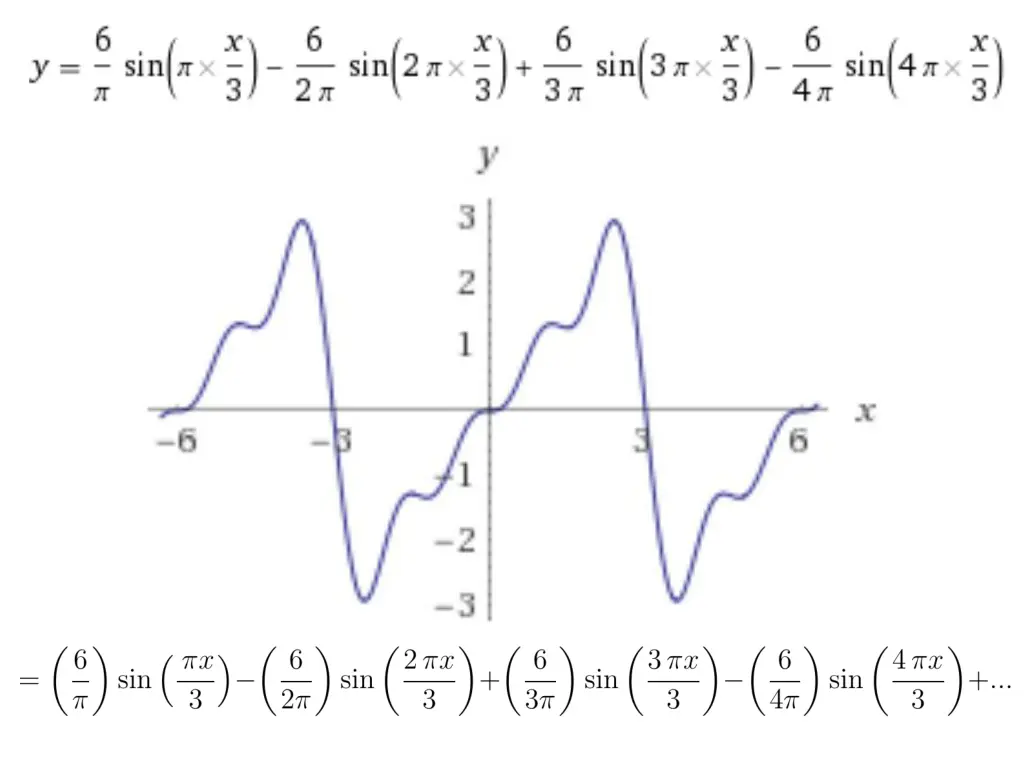
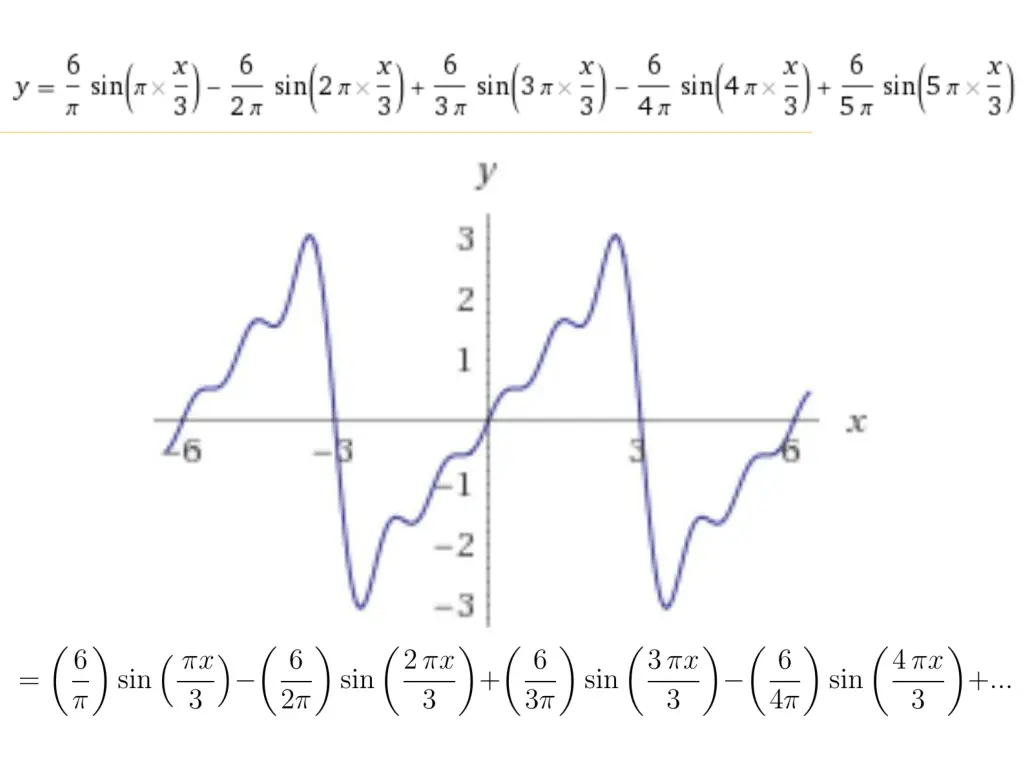
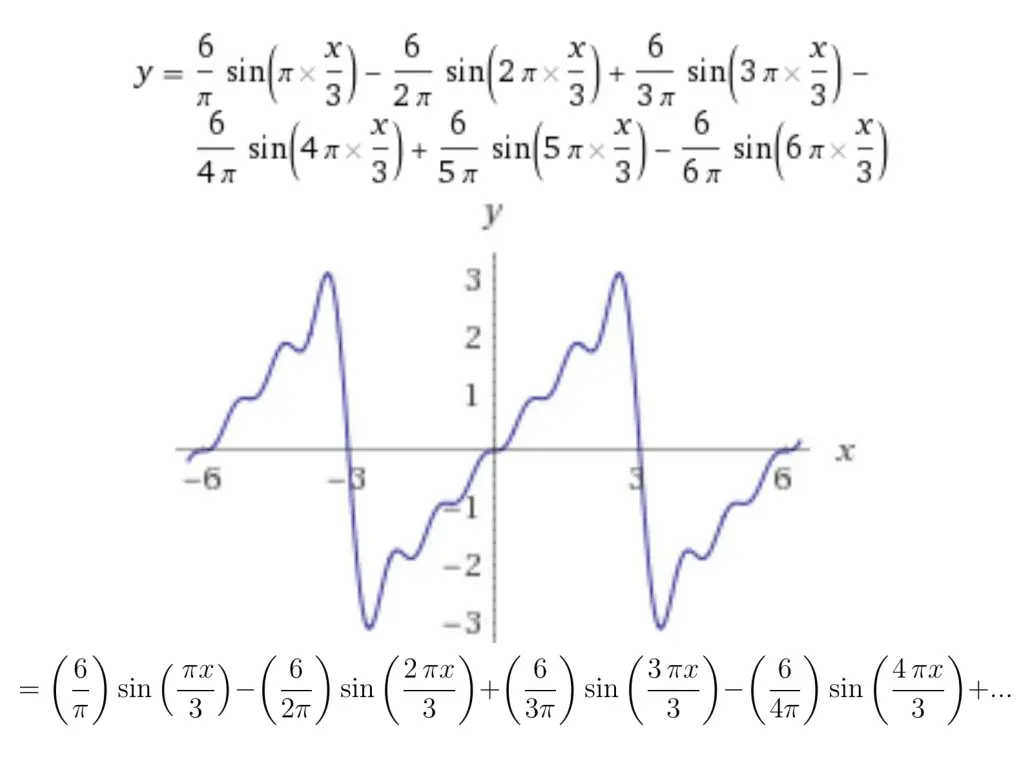
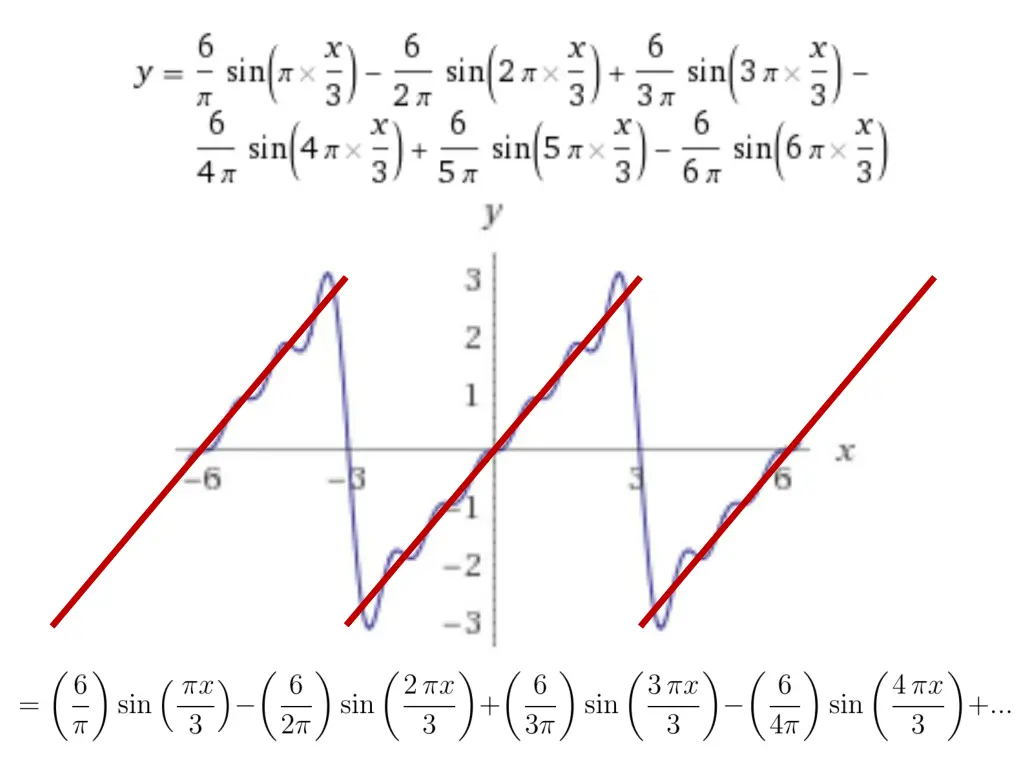
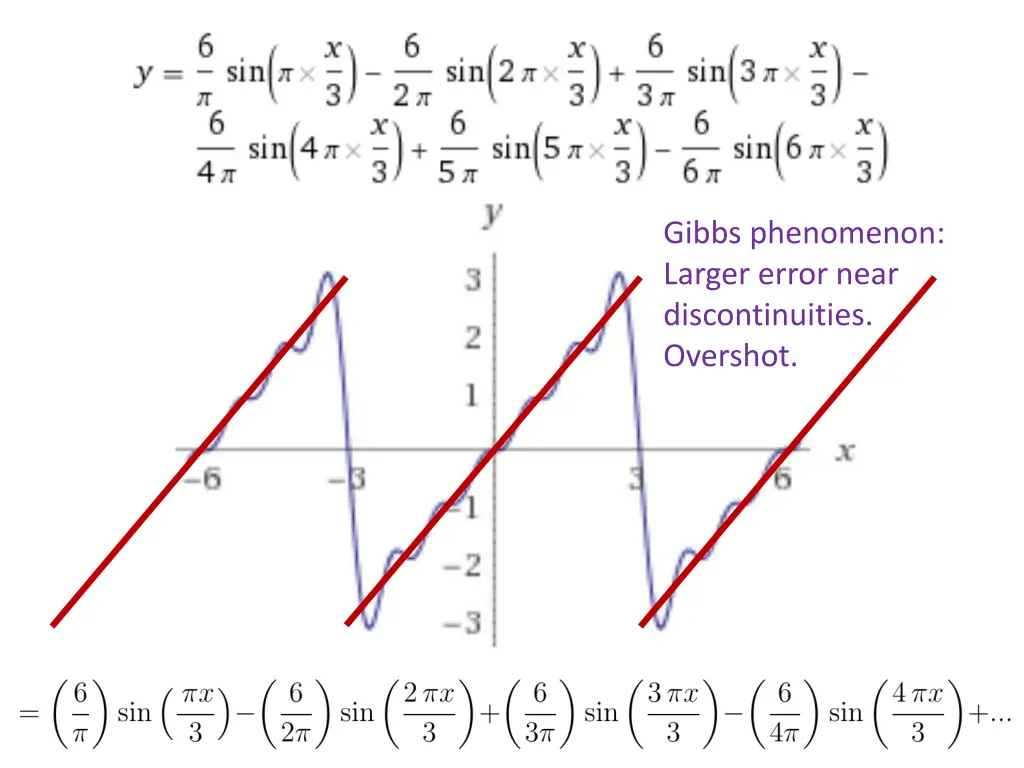
Gibbs phenomenon: Larger error near discontinuities. Overshot.
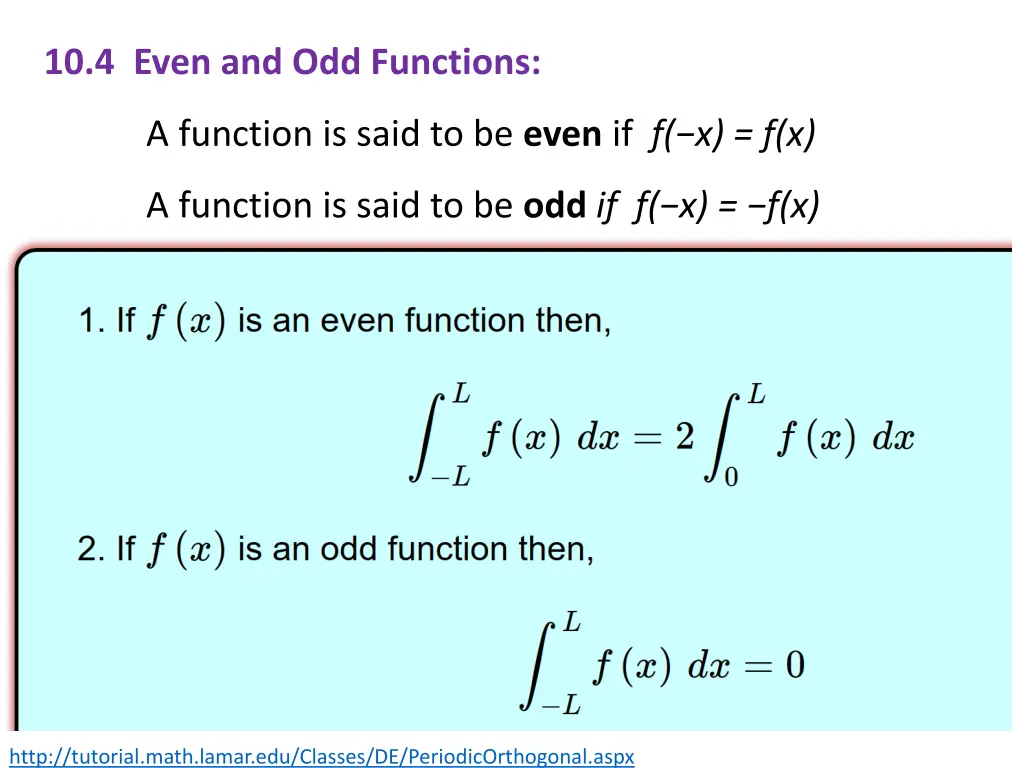
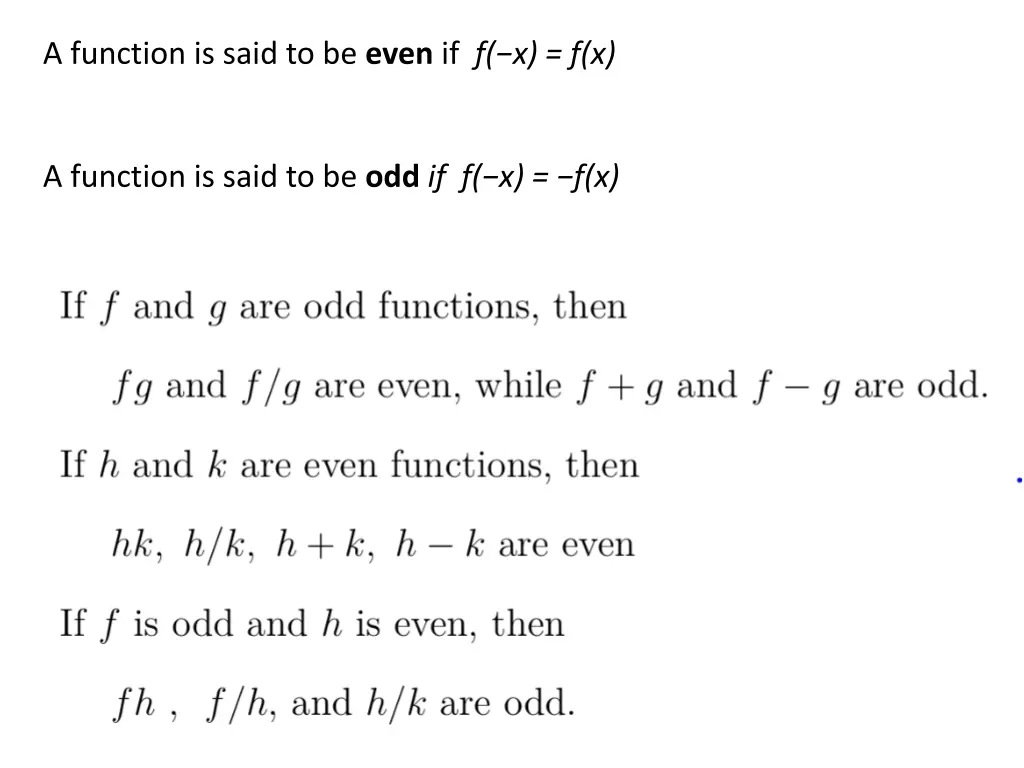
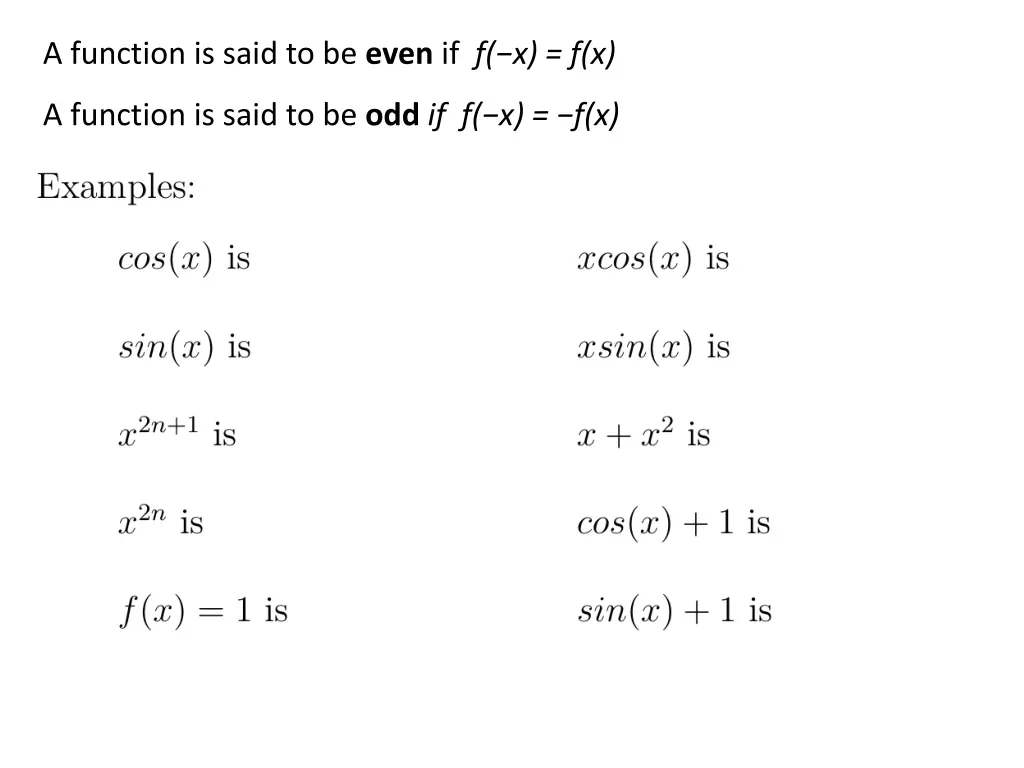
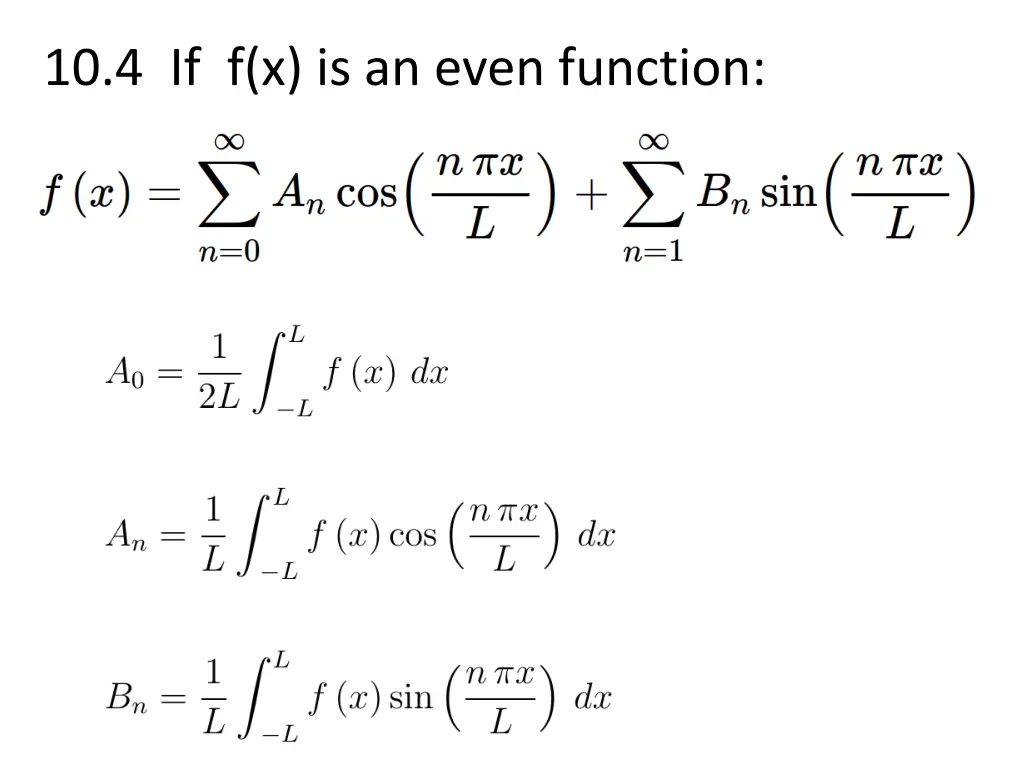
10.4 Even and Odd Functions: A function is said to be even if f( x) = f(x) A function is said to be oddif f( x) = f(x) http://tutorial.math.lamar.edu/Classes/DE/PeriodicOrthogonal.aspx
A function is said to be even if f(x) = f(x) A function is said to be oddif f( x) = f(x)
A function is said to be even if f(x) = f(x) A function is said to be oddif f( x) = f(x)
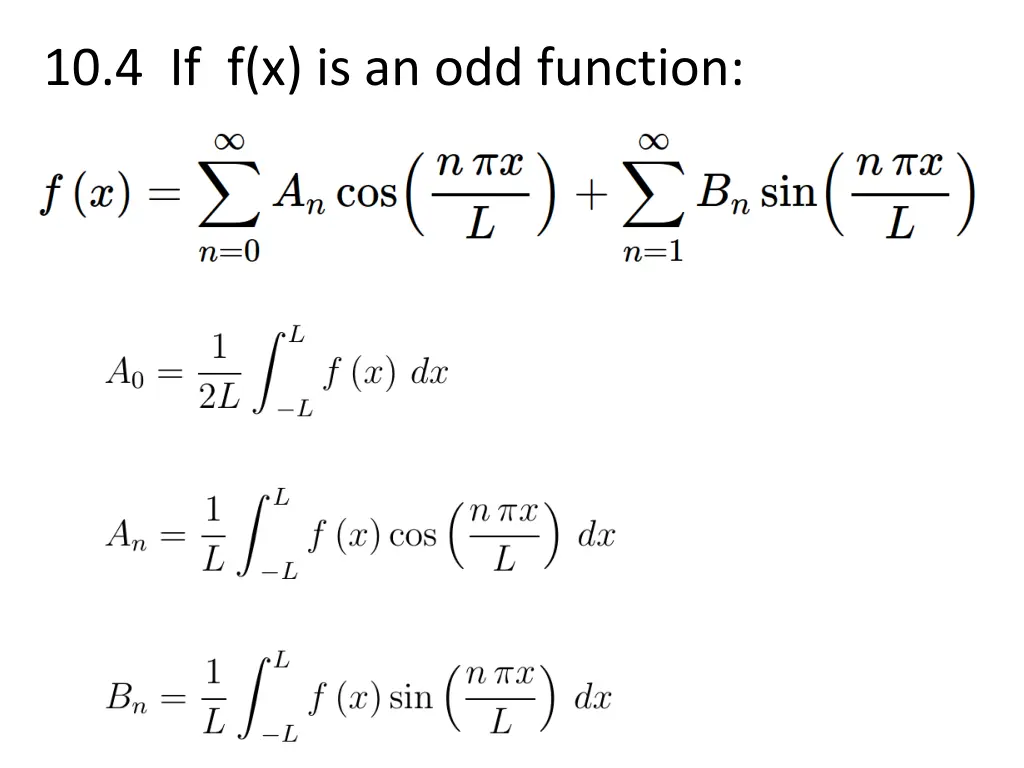
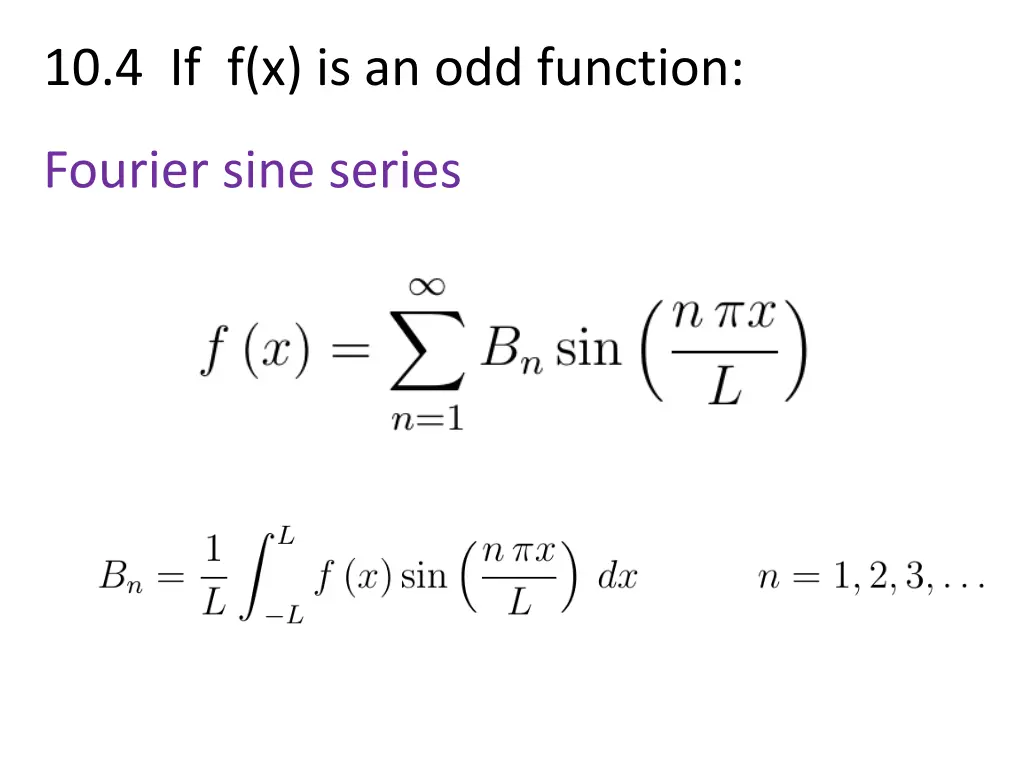
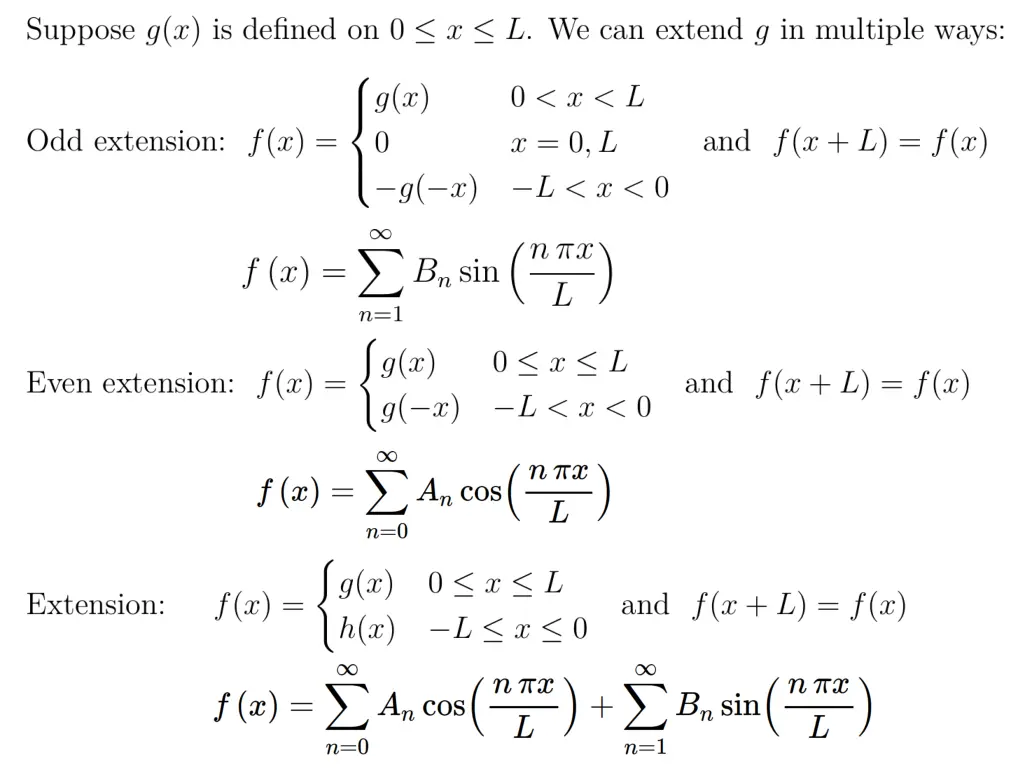
10.4 If f(x) is an odd function: Fourier sine series
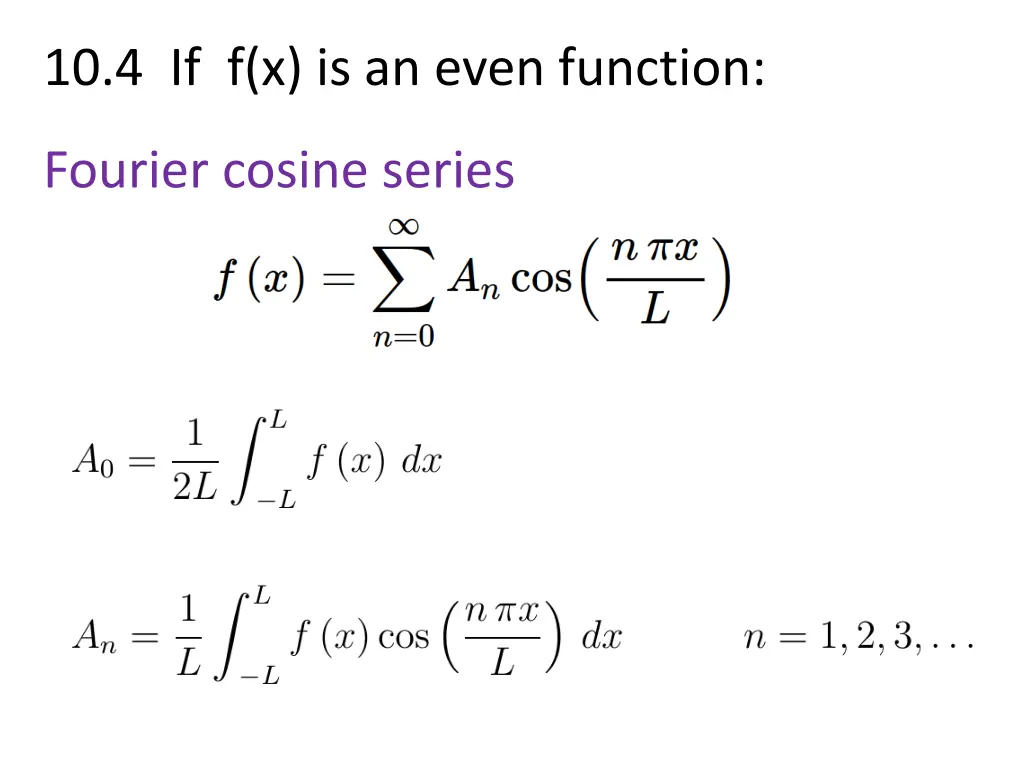
10.4 If f(x) is an even function: Fourier cosine series
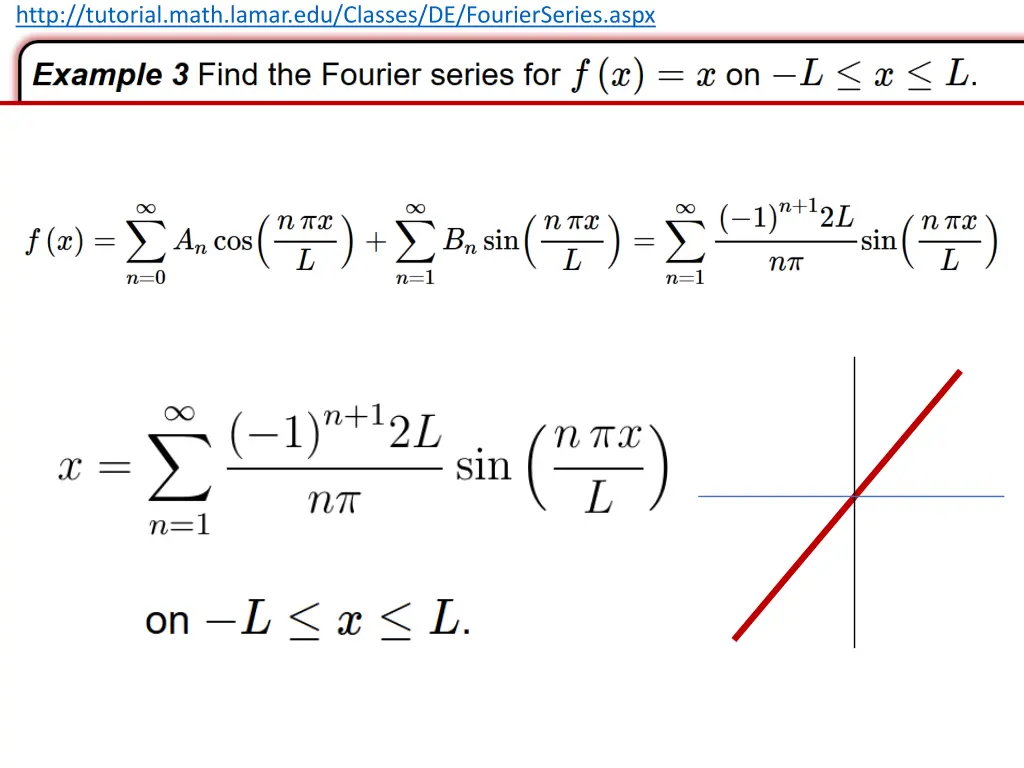
http://tutorial.math.lamar.edu/Classes/DE/FourierSeries.aspx
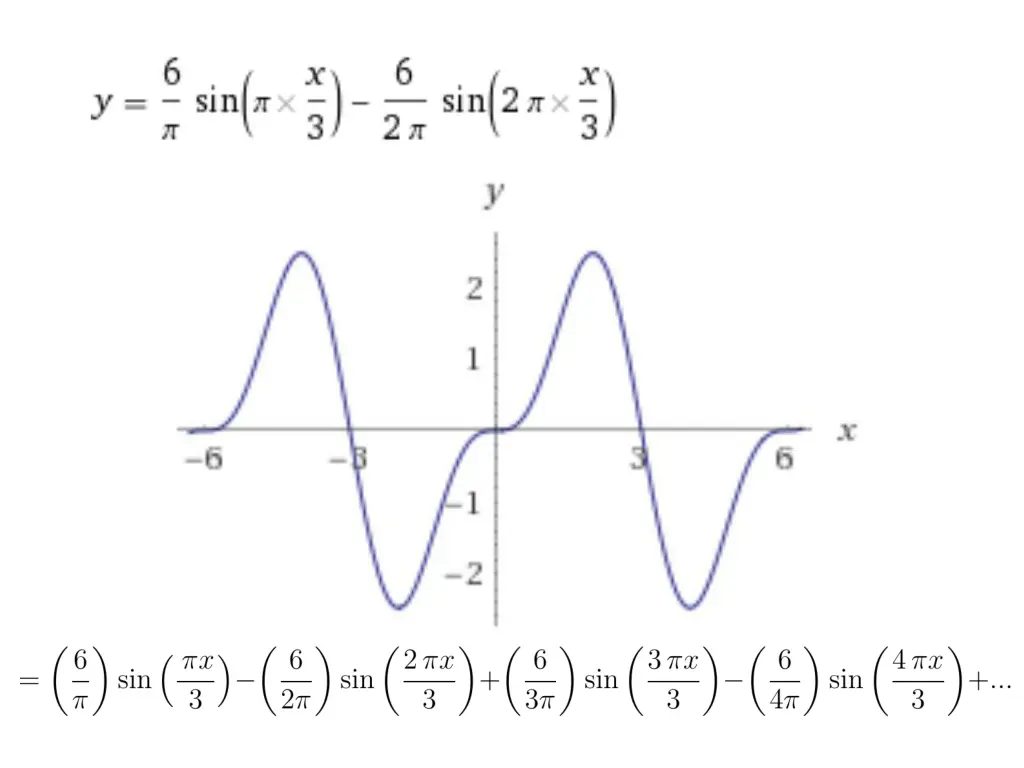
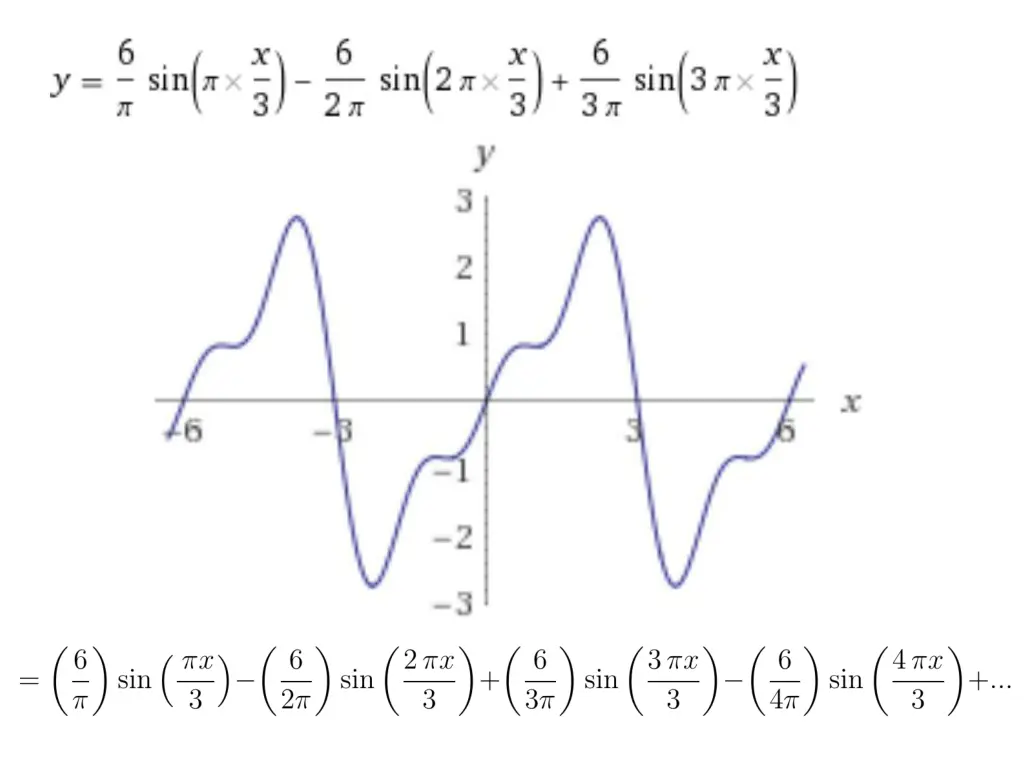
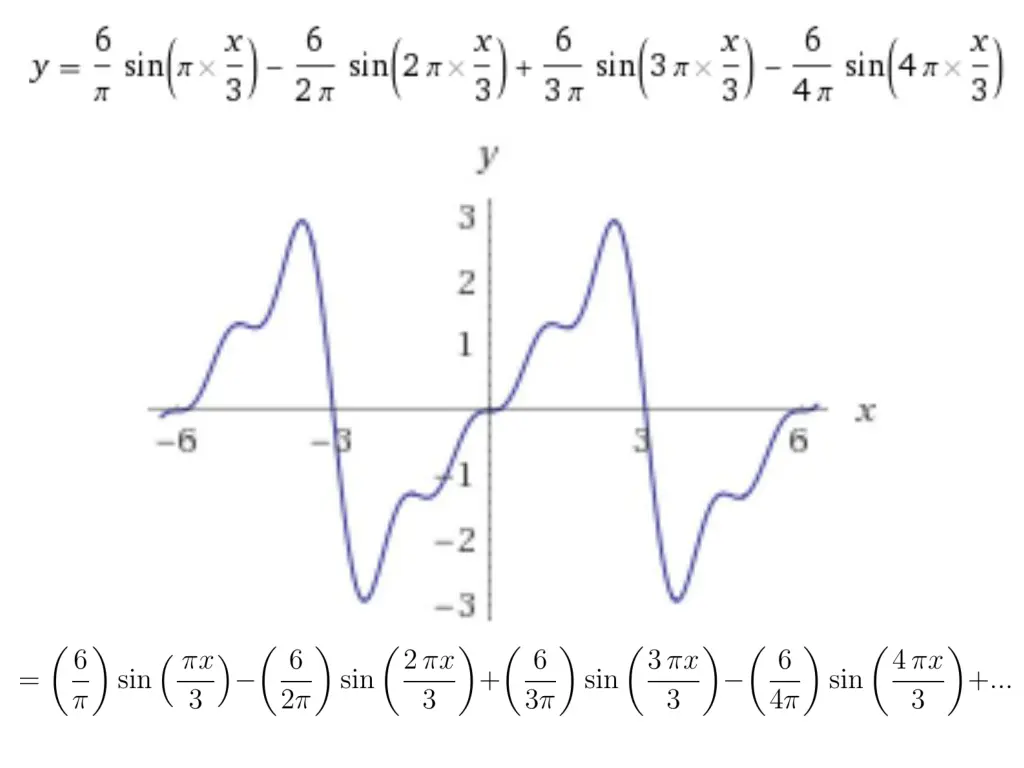
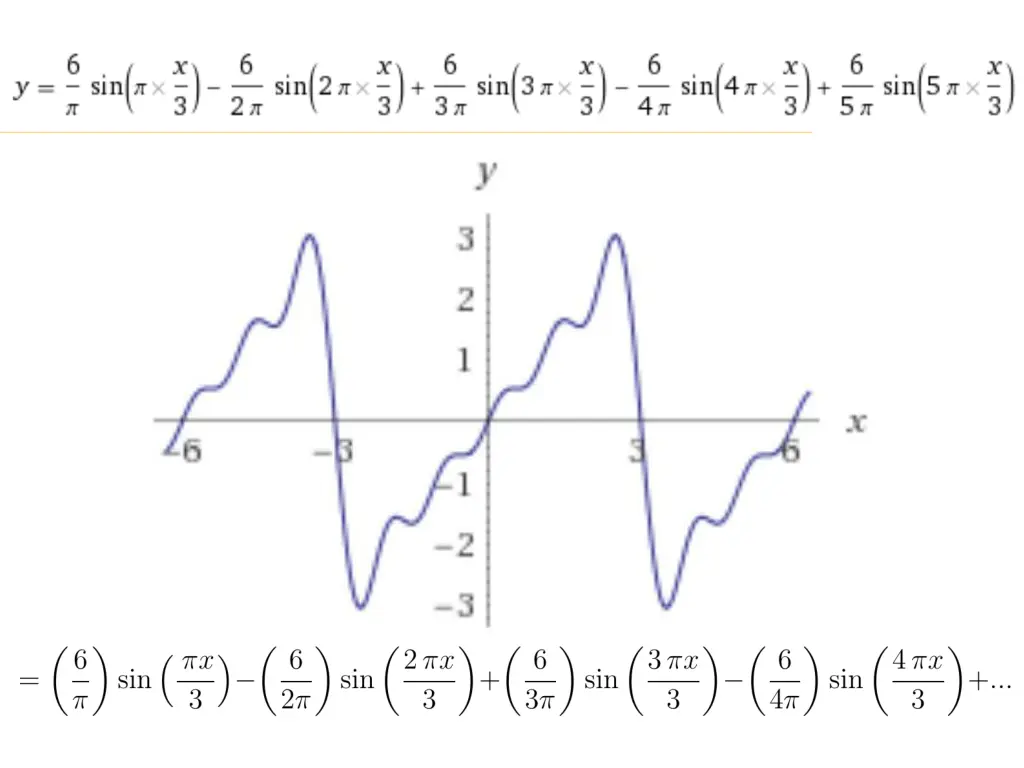
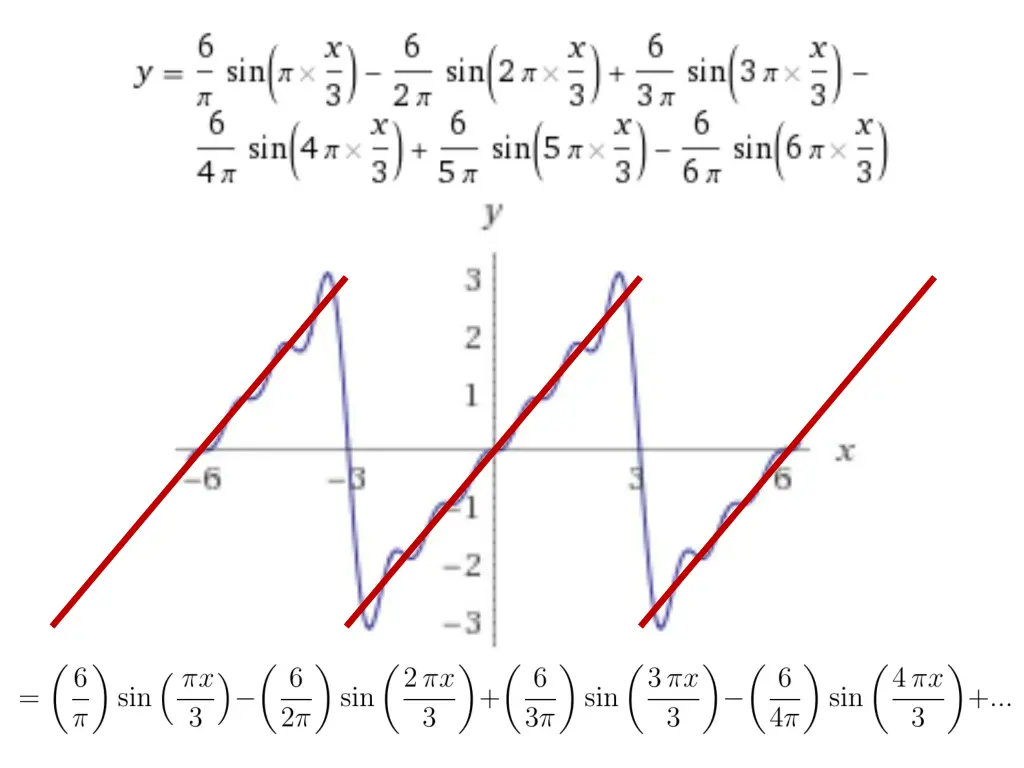
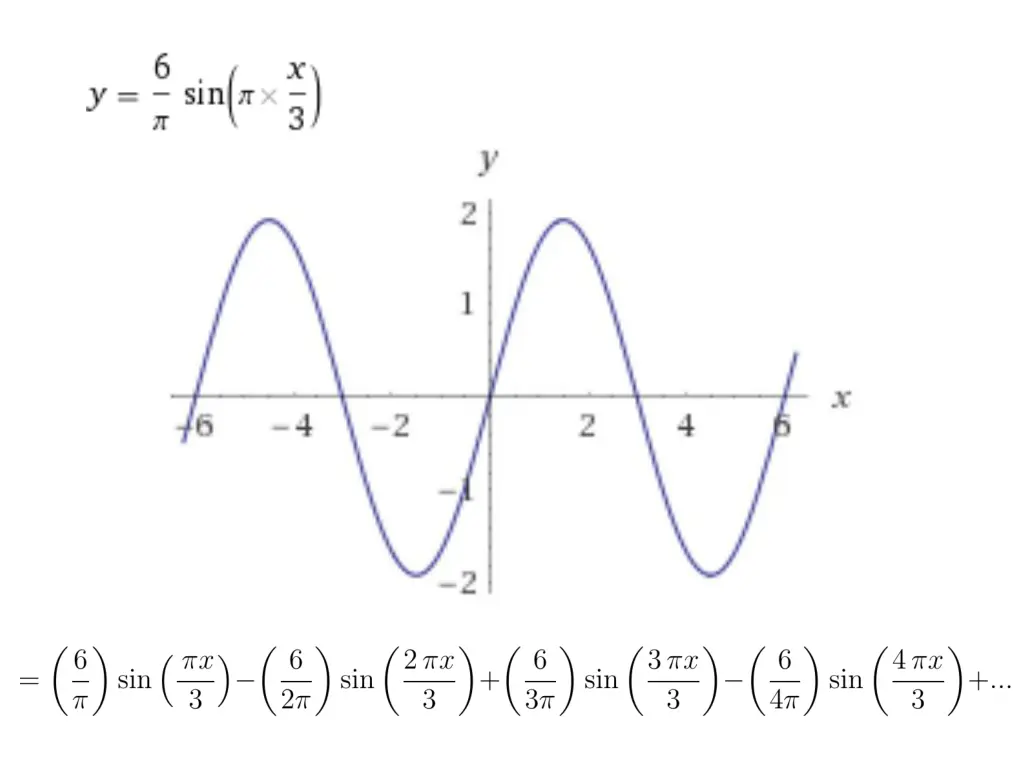
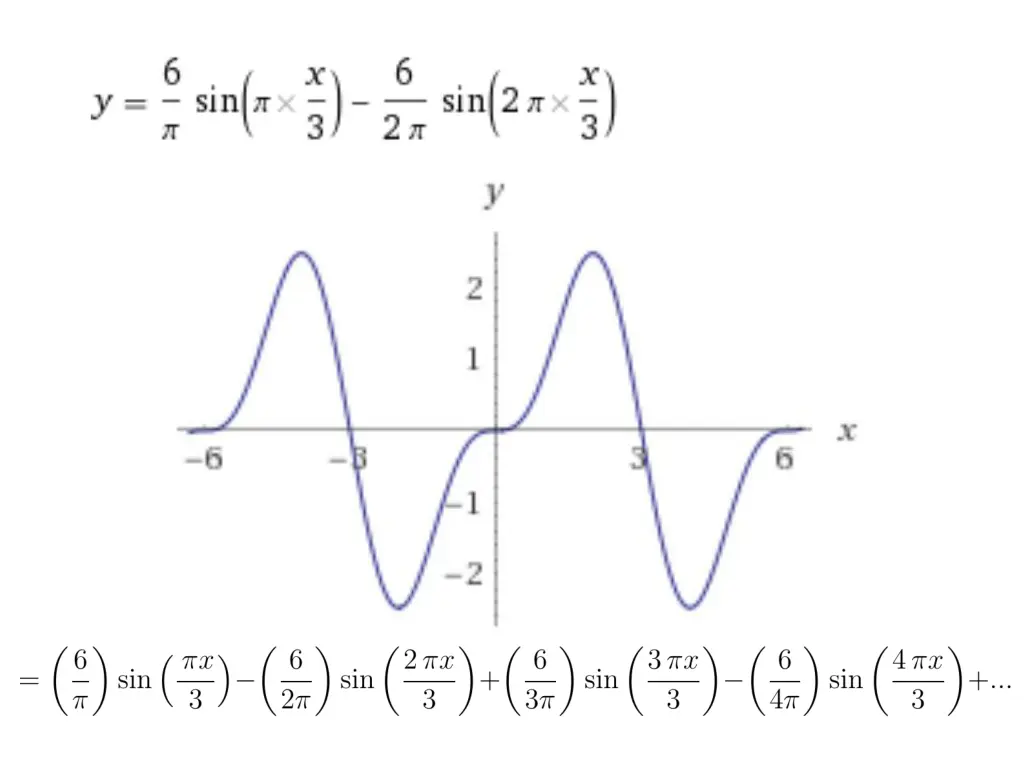
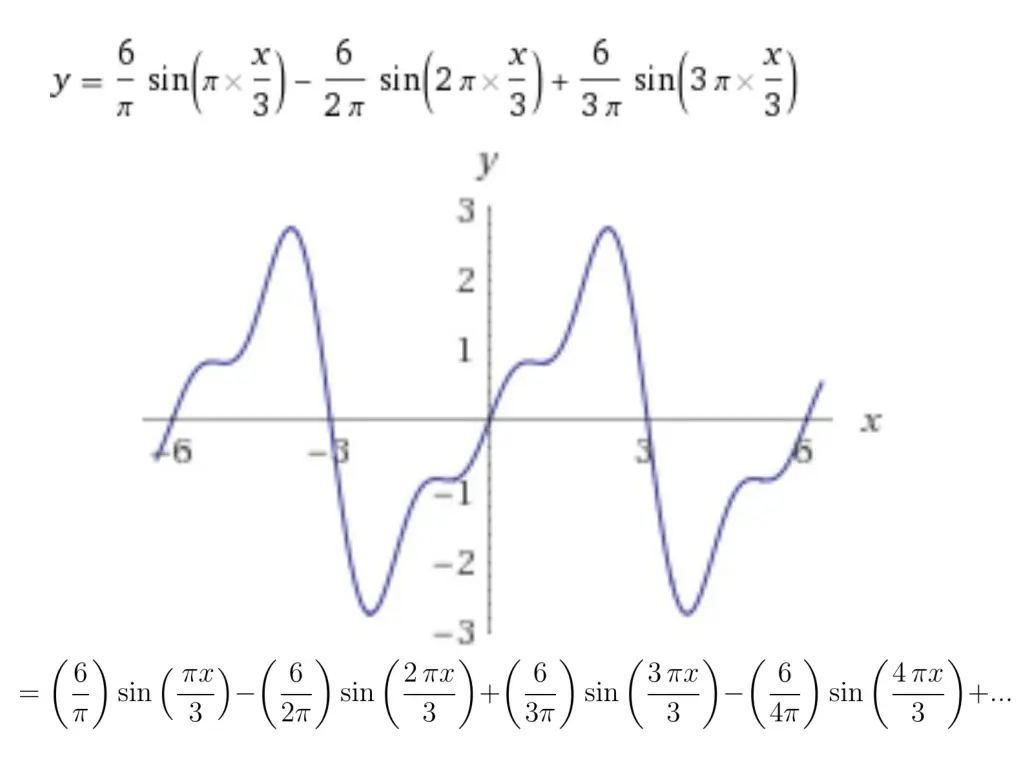
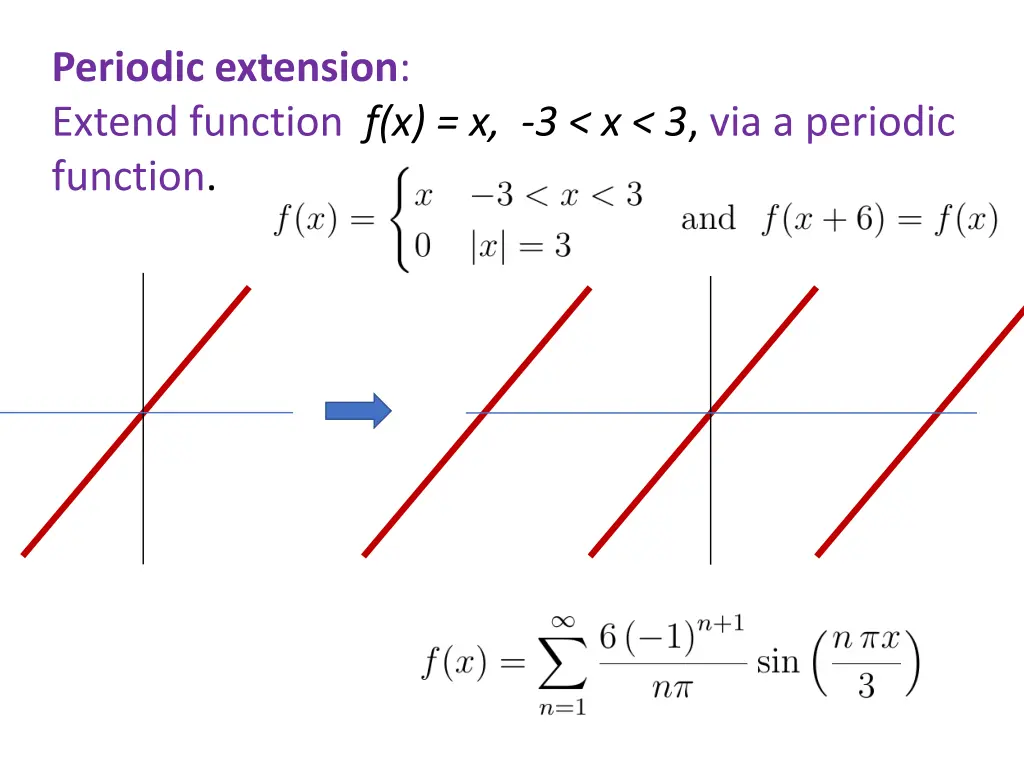
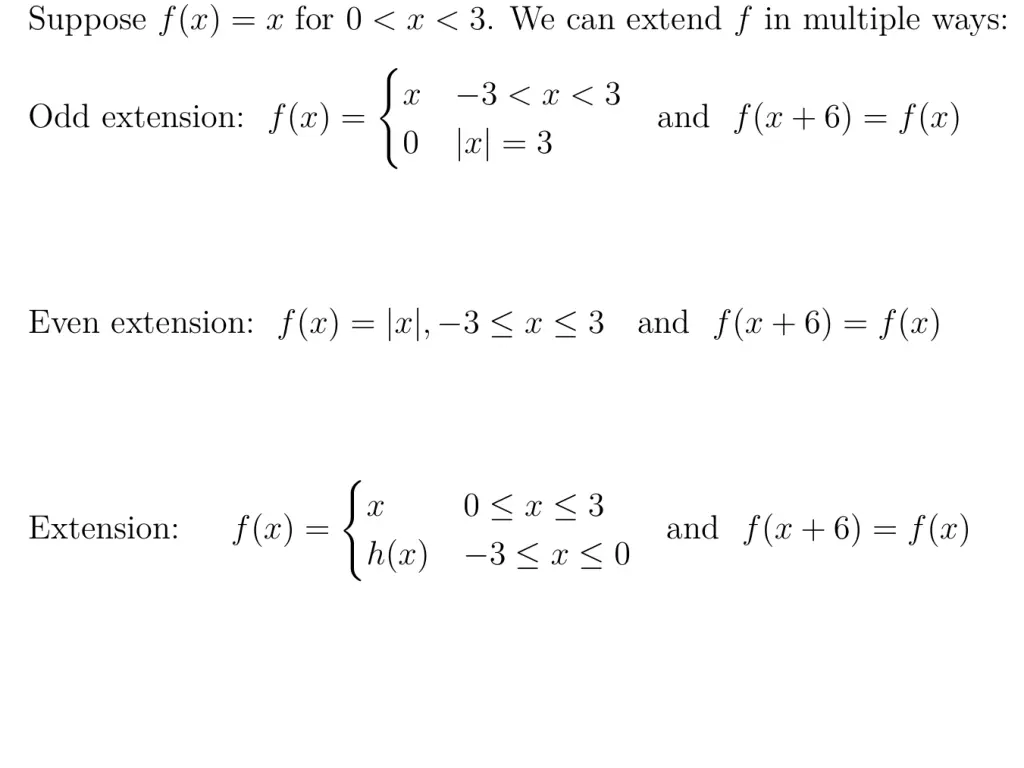
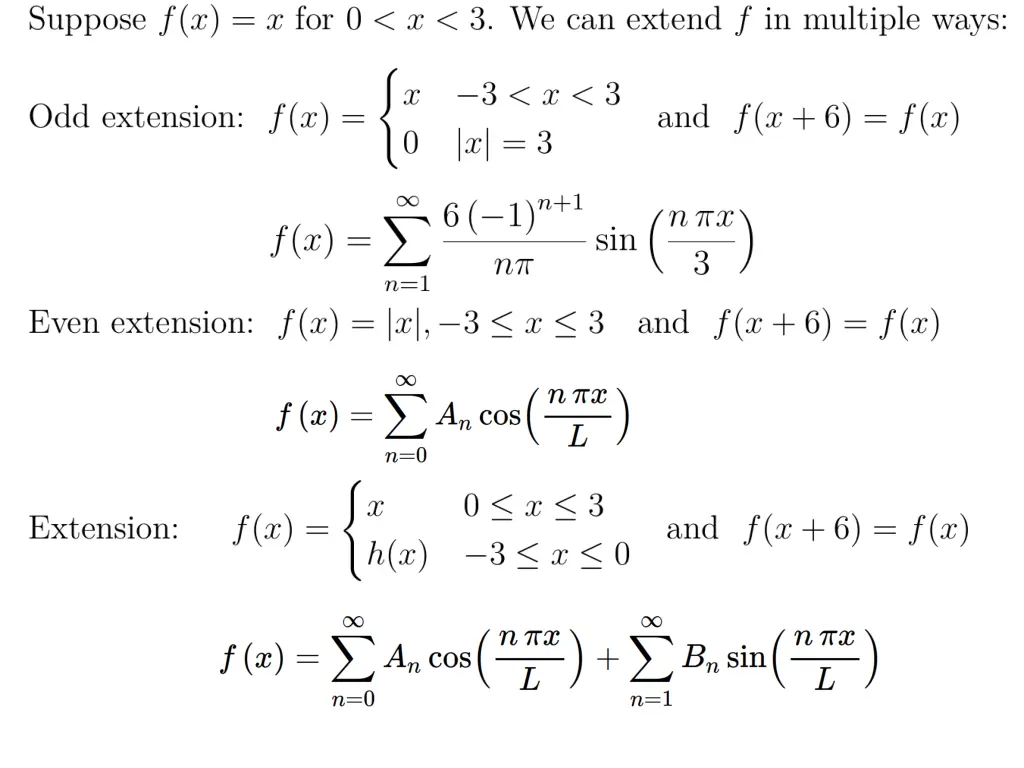
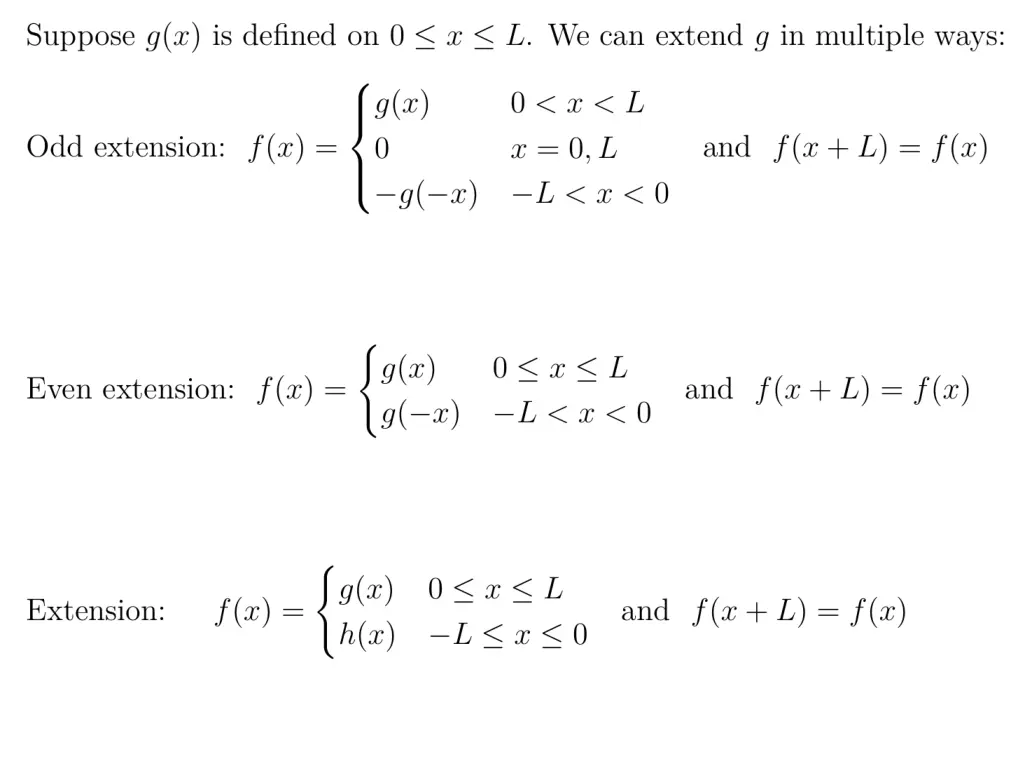
Periodic extension: Extend function f(x) = x, -3 < x < 3, via a periodic function.
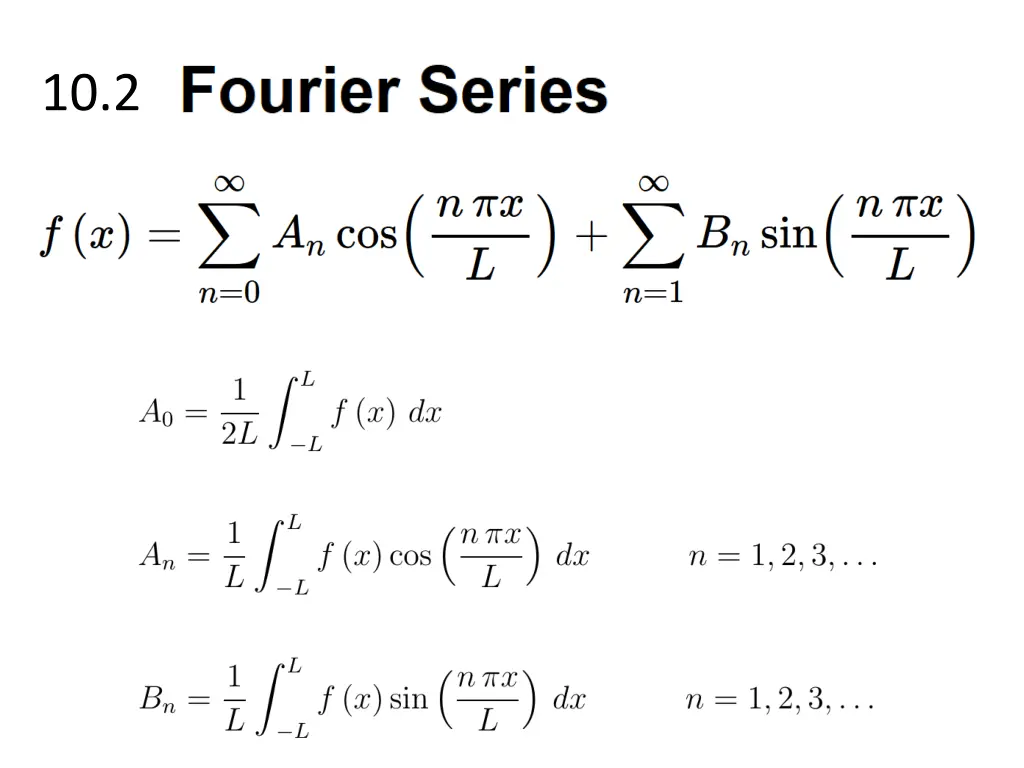
http://tutorial.math.lamar.edu/Classes/DE/FourierSeries.aspx 10.2