CRISPR-Cas and HIV: Excision, Inactivation, Deletions
Discover how CRISPR-Cas technology targets the HIV provirus, potential unintended deletions in cellular DNA, effectiveness of antiretroviral therapy, and the possibility of large deletions caused by Cas9 attacks on HIV DNA.

Download Presentation

Please find below an Image/Link to download the presentation.
The content on the website is provided AS IS for your information and personal use only. It may not be sold, licensed, or shared on other websites without obtaining consent from the author. If you encounter any issues during the download, it is possible that the publisher has removed the file from their server.
You are allowed to download the files provided on this website for personal or commercial use, subject to the condition that they are used lawfully. All files are the property of their respective owners.
The content on the website is provided AS IS for your information and personal use only. It may not be sold, licensed, or shared on other websites without obtaining consent from the author.
E N D
Presentation Transcript
CRISPR-Cas attack on the HIV-1 provirus can cause unintended deletion of surrounding cellular DNA Ye Liu Laboratory of Experimental Virology Disclosure: no conflicts of interest
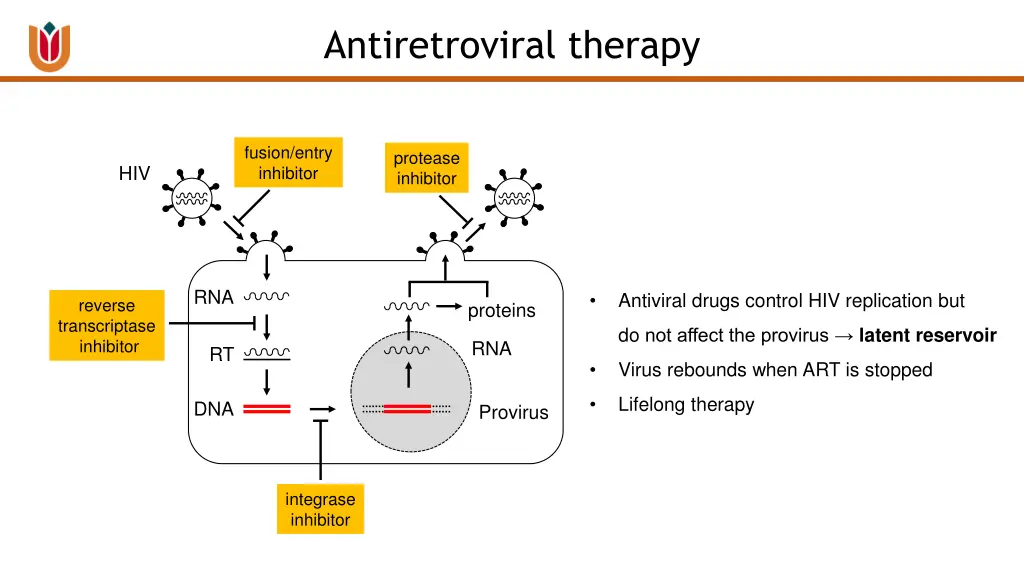
Antiretroviral therapy fusion/entry inhibitor protease inhibitor HIV RNA Antiviral drugs control HIV replication but reverse transcriptase inhibitor proteins do not affect the provirus latent reservoir RNA RT Virus rebounds when ART is stopped Lifelong therapy DNA Provirus integrase inhibitor
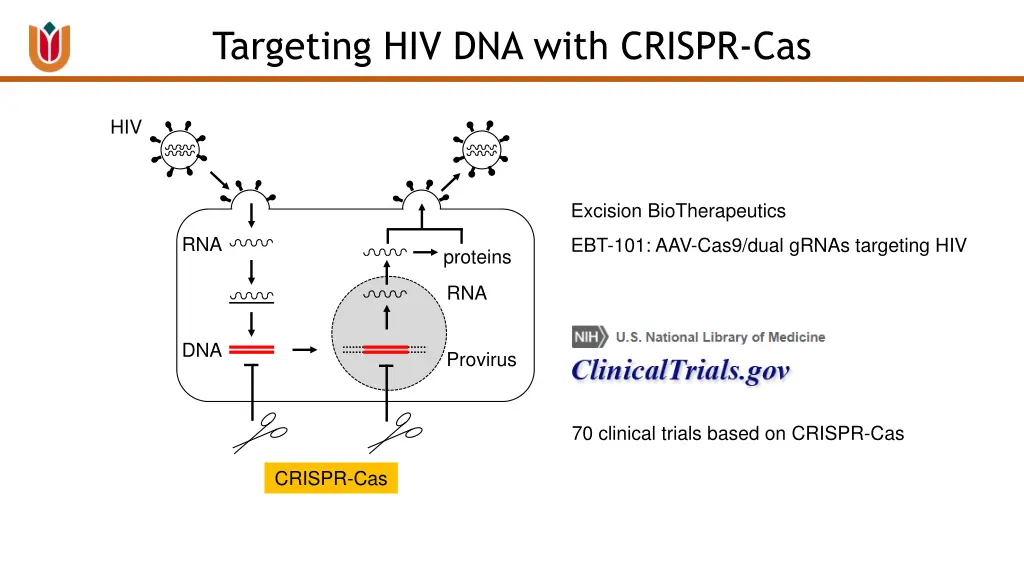
Targeting HIV DNA with CRISPR-Cas HIV Excision BioTherapeutics RNA EBT-101: AAV-Cas9/dual gRNAs targeting HIV proteins RNA DNA Provirus 70 clinical trials based on CRISPR-Cas CRISPR-Cas
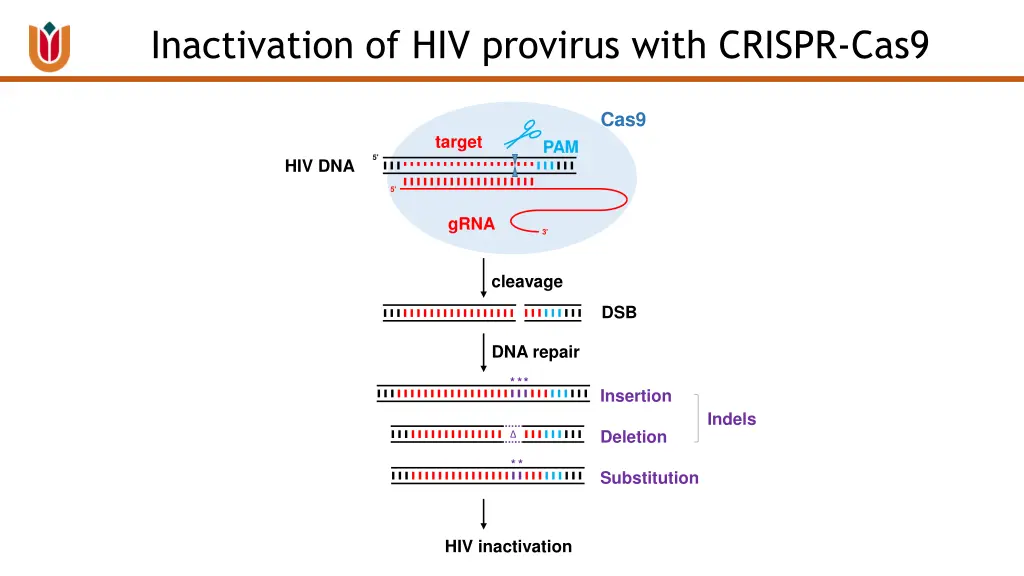
Inactivation of HIV provirus with CRISPR-Cas9 Cas9 target PAM 5' HIV DNA 5' gRNA 3' cleavage DSB DNA repair * * * Insertion Indels Deletion ** Substitution HIV inactivation
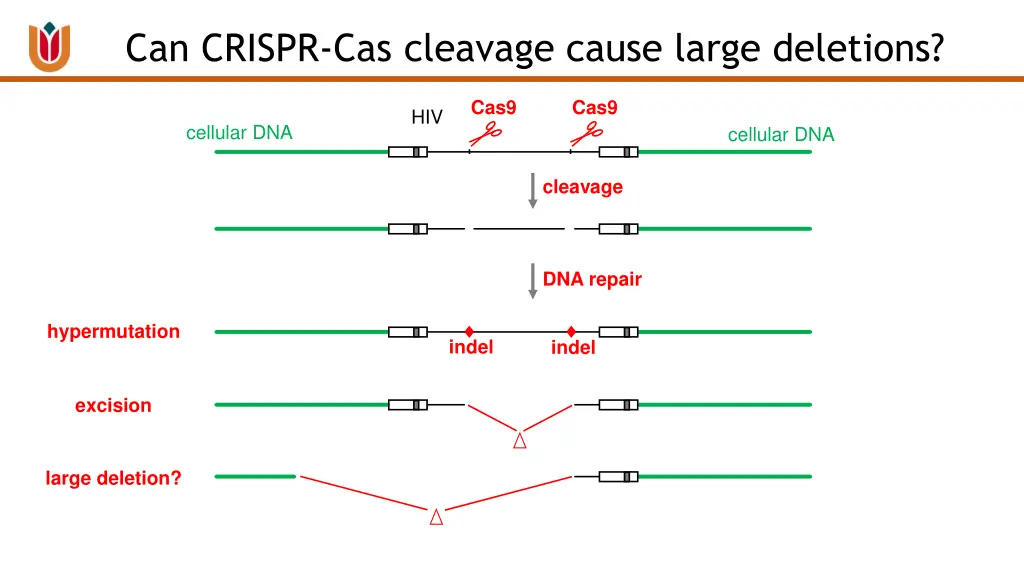
Can CRISPR-Cas cleavage cause large deletions? Cas9 Cas9 HIV cellular DNA cellular DNA cleavage DNA repair hypermutation indel indel excision large deletion?
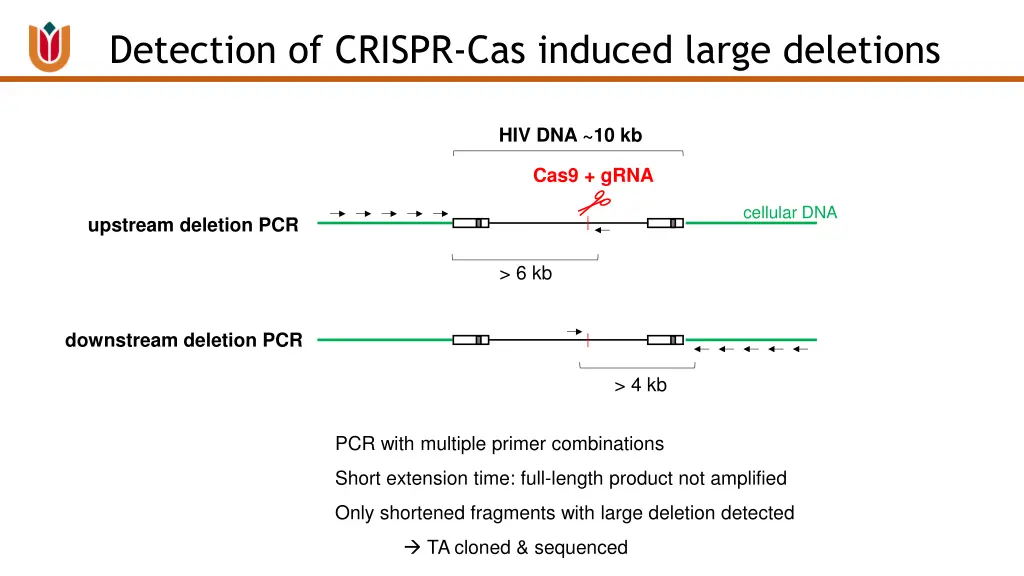
Detection of CRISPR-Cas induced large deletions HIV DNA ~10 kb Cas9 + gRNA cellular DNA upstream deletion PCR > 6 kb downstream deletion PCR > 4 kb PCR with multiple primer combinations Short extension time: full-length product not amplified Only shortened fragments with large deletion detected TA cloned & sequenced
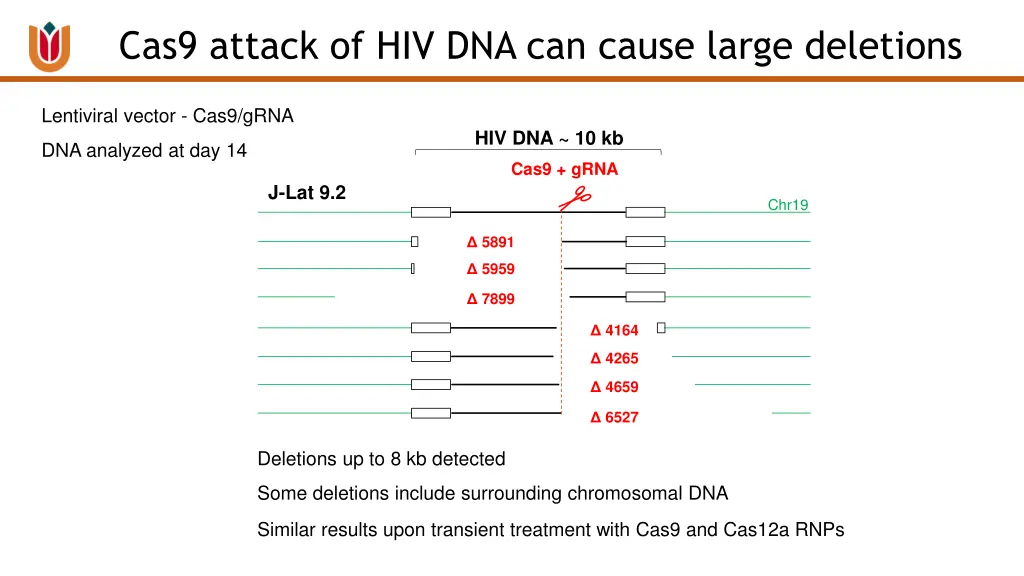
Cas9 attack of HIV DNA can cause large deletions Lentiviral vector - Cas9/gRNA HIV DNA ~ 10 kb DNA analyzed at day 14 Cas9 + gRNA J-Lat 9.2 Chr19 5891 5959 7899 4164 4265 4659 6527 Deletions up to 8 kb detected Some deletions include surrounding chromosomal DNA Similar results upon transient treatment with Cas9 and Cas12a RNPs
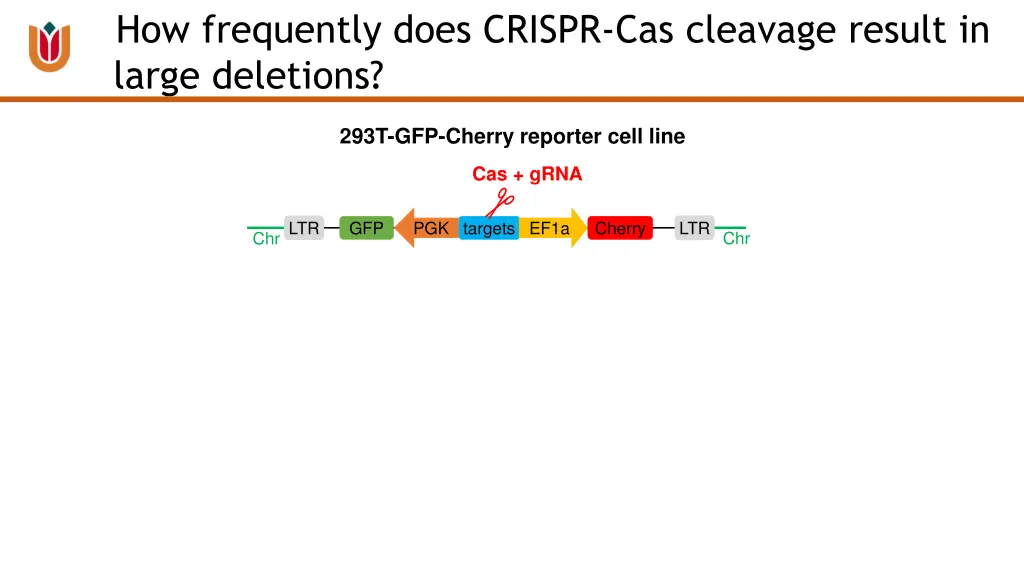
How frequently does CRISPR-Cas cleavage result in large deletions? 293T-GFP-Cherry reporter cell line Cas + gRNA LTR GFP PGK targets EF1a Cherry LTR Chr Chr
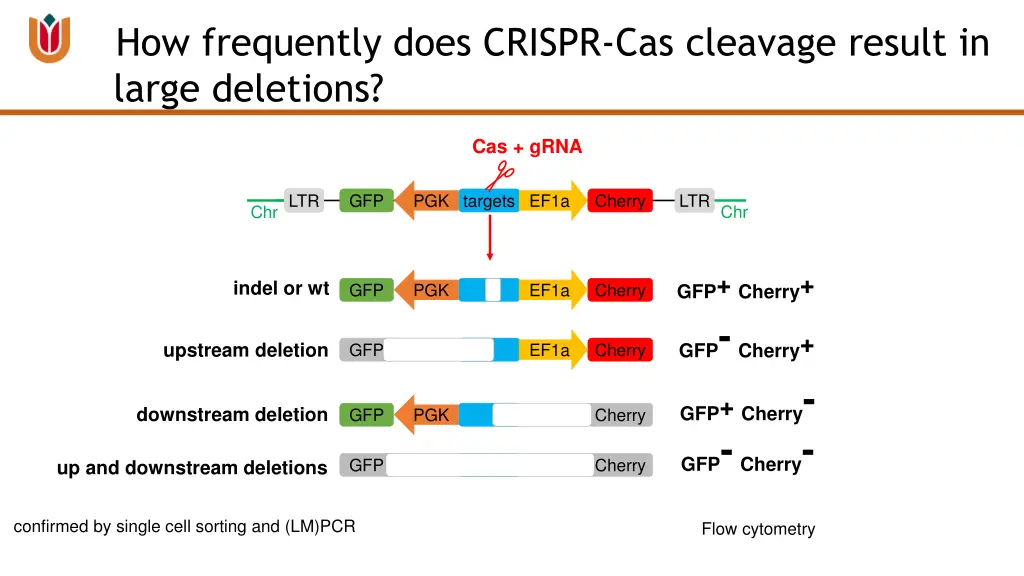
How frequently does CRISPR-Cas cleavage result in large deletions? Cas + gRNA LTR GFP PGK targets EF1a Cherry LTR Chr Chr GFP+ Cherry+ indel or wt GFP PGK EF1a Cherry GFP-Cherry+ upstream deletion GFP EF1a Cherry GFP+ Cherry- downstream deletion GFP PGK Cherry GFP-Cherry- GFP targets Cherry up and downstream deletions confirmed by single cell sorting and (LM)PCR Flow cytometry
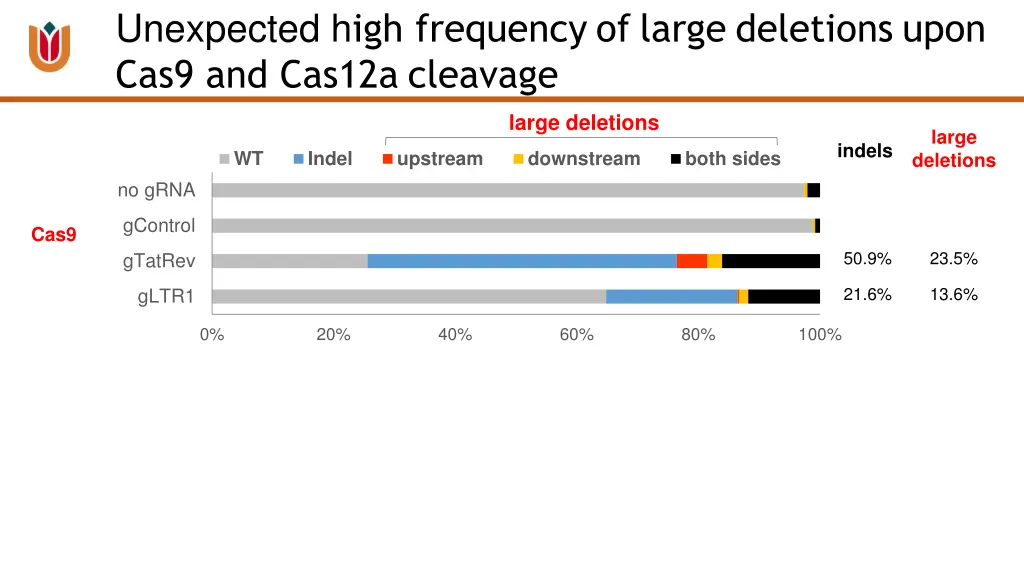
Unexpected high frequencyoflargedeletionsupon Cas9 and Cas12acleavage large deletions large deletions indels WT Indel upstream downstream both sides no gRNA gControl Cas9 50.9% 23.5% gTatRev 21.6% 13.6% gLTR1 0% 20% 40% 60% 80% 100%
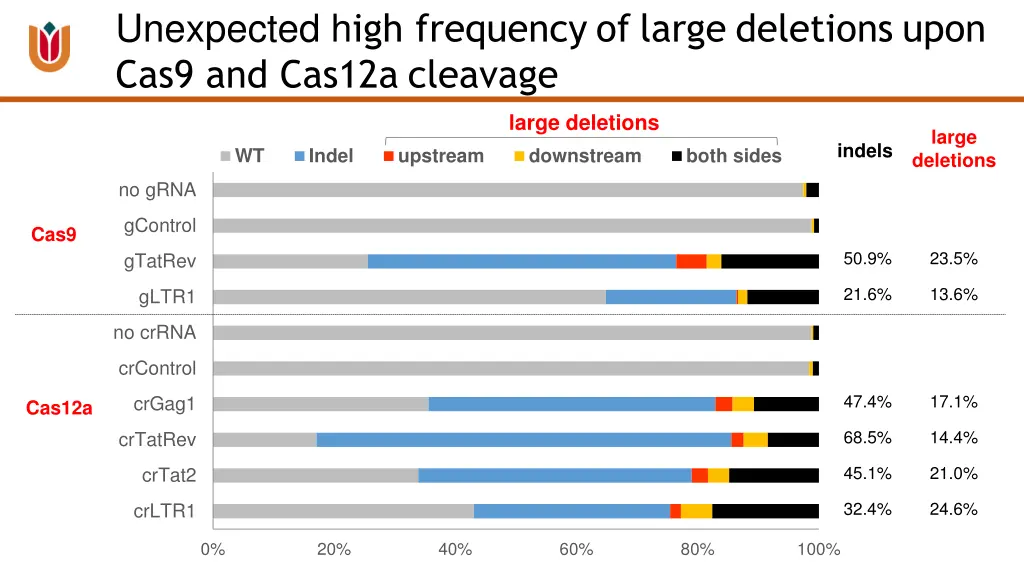
Unexpected high frequencyoflargedeletionsupon Cas9 and Cas12acleavage large deletions large deletions indels WT Indel upstream downstream both sides no gRNA gControl Cas9 50.9% 23.5% gTatRev 21.6% 13.6% gLTR1 no crRNA crControl 47.4% 17.1% crGag1 Cas12a 68.5% 14.4% crTatRev 45.1% 21.0% crTat2 32.4% 24.6% crLTR1 0% 20% 40% 60% 80% 100%
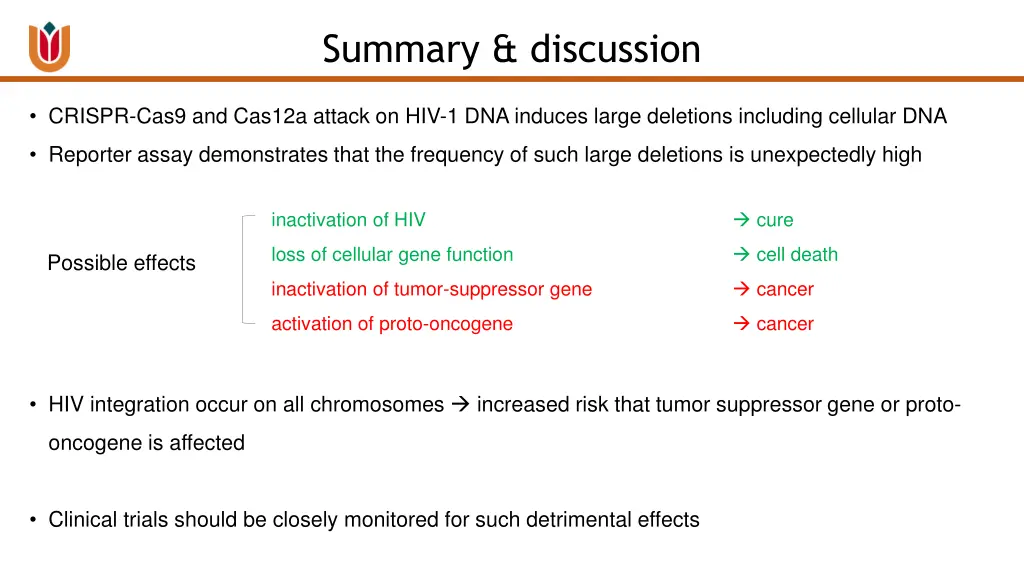
Summary & discussion CRISPR-Cas9 and Cas12a attack on HIV-1 DNA induces large deletions including cellular DNA Reporter assay demonstrates that the frequency of such large deletions is unexpectedly high inactivation of HIV cure loss of cellular gene function cell death Possible effects inactivation of tumor-suppressor gene cancer activation of proto-oncogene cancer HIV integration occur on all chromosomes increased risk that tumor suppressor gene or proto- oncogene is affected Clinical trials should be closely monitored for such detrimental effects
Acknowledgements Thank you! Caroline Binda Yme Van der Velden Ben Berkhout Atze T. Das