CSI 102 Skills Lab 4
Enhance your emergency assessment skills with this lab curated by Daryl P. Lofaso. The lab provides hands-on practice opportunities for CSI students to develop critical skills in recognizing and responding to emergency situations. By following expert guidance, students can learn to assess and manage emergencies effectively, preparing them for real-life scenarios in their field. Dive into this interactive lab to elevate your proficiency in emergency assessment techniques.

Download Presentation

Please find below an Image/Link to download the presentation.
The content on the website is provided AS IS for your information and personal use only. It may not be sold, licensed, or shared on other websites without obtaining consent from the author.If you encounter any issues during the download, it is possible that the publisher has removed the file from their server.
You are allowed to download the files provided on this website for personal or commercial use, subject to the condition that they are used lawfully. All files are the property of their respective owners.
The content on the website is provided AS IS for your information and personal use only. It may not be sold, licensed, or shared on other websites without obtaining consent from the author.
E N D
Presentation Transcript
CSI 102 Skills Lab 4 Emergency Assessment Daryl P. Lofaso, M.Ed, RRT
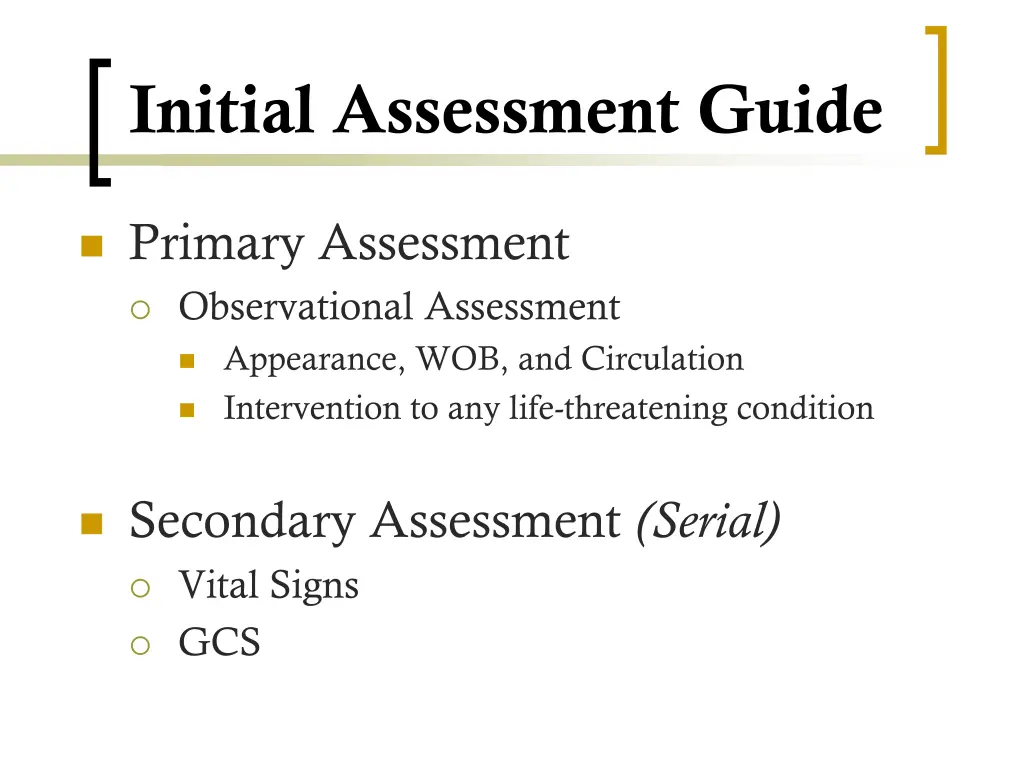
Initial Assessment Guide Primary Assessment Observational Assessment Appearance, WOB, and Circulation Intervention to any life-threatening condition Secondary Assessment (Serial) Vital Signs GCS
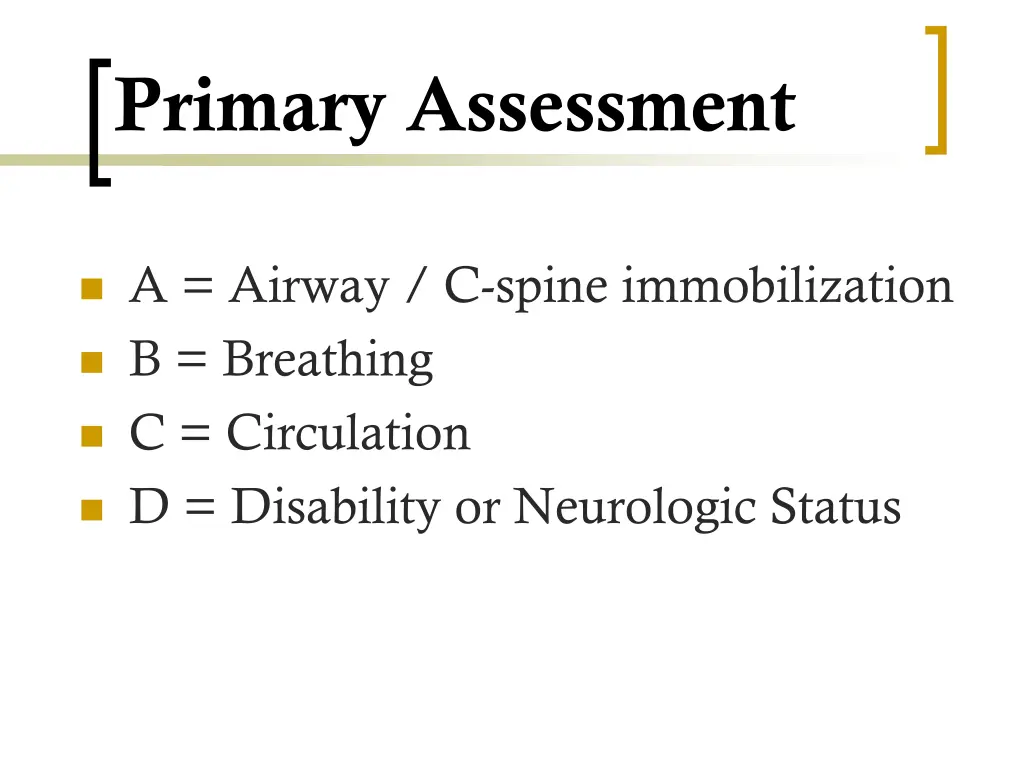
Primary Assessment A = Airway / C-spine immobilization B = Breathing C = Circulation D = Disability or Neurologic Status
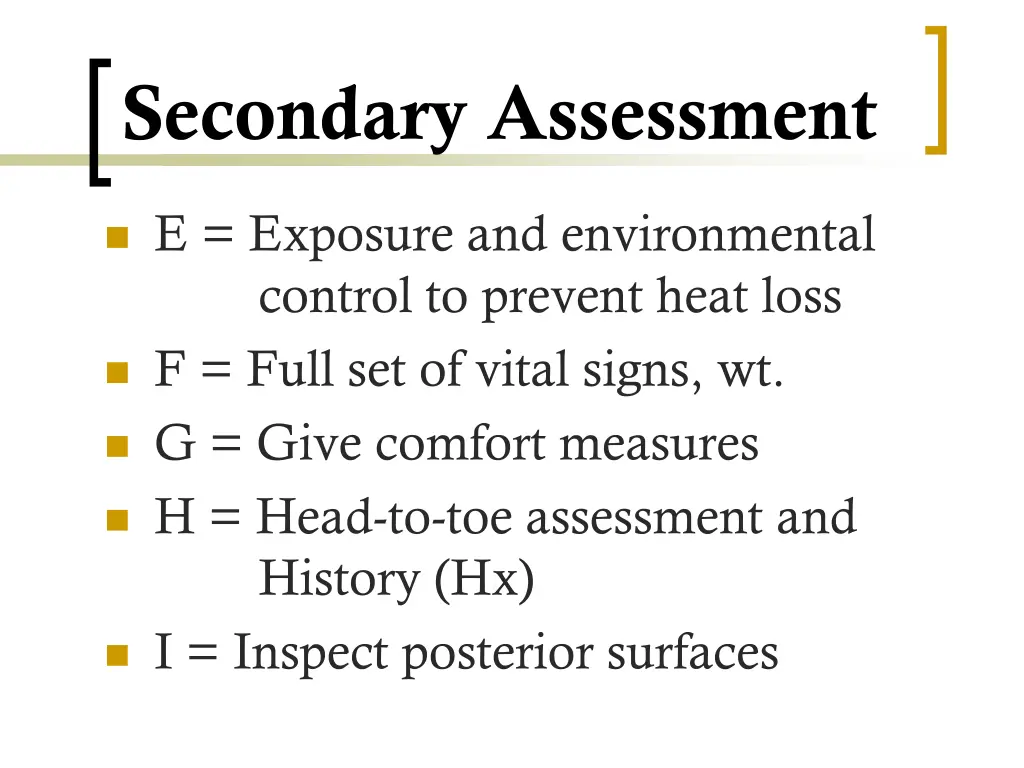
Secondary Assessment E = Exposure and environmental control to prevent heat loss F = Full set of vital signs, wt. G = Give comfort measures H = Head-to-toe assessment and History (Hx) I = Inspect posterior surfaces
Triage Assessment Emergent Urgent Non-urgent
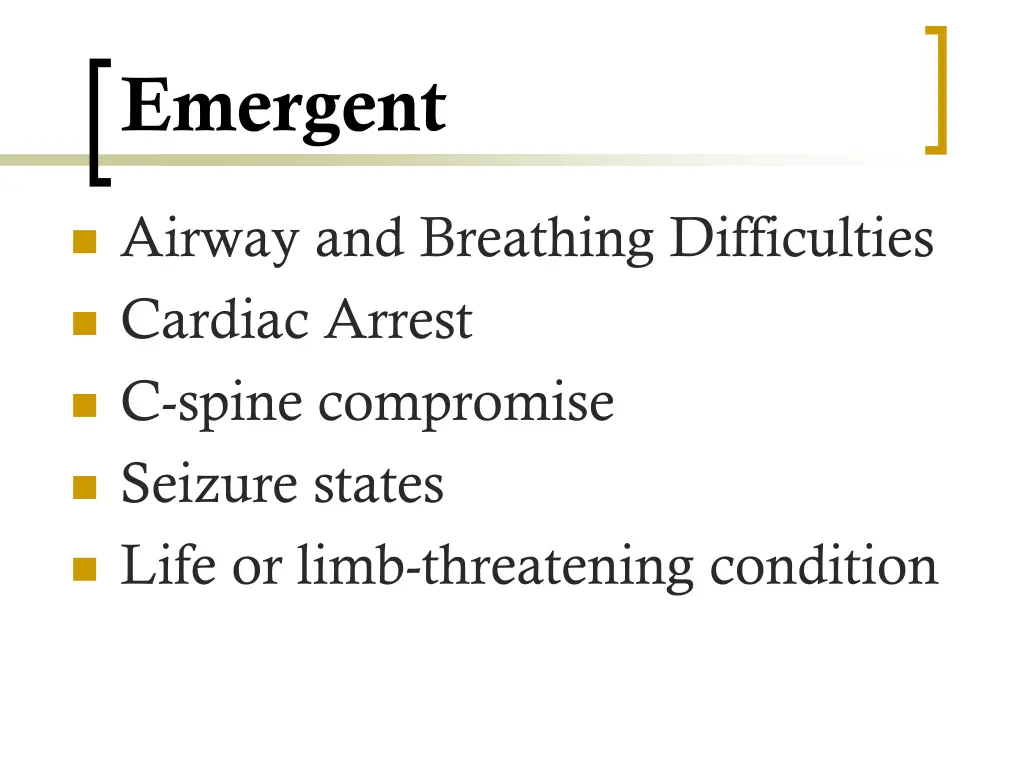
Emergent Airway and Breathing Difficulties Cardiac Arrest C-spine compromise Seizure states Life or limb-threatening condition
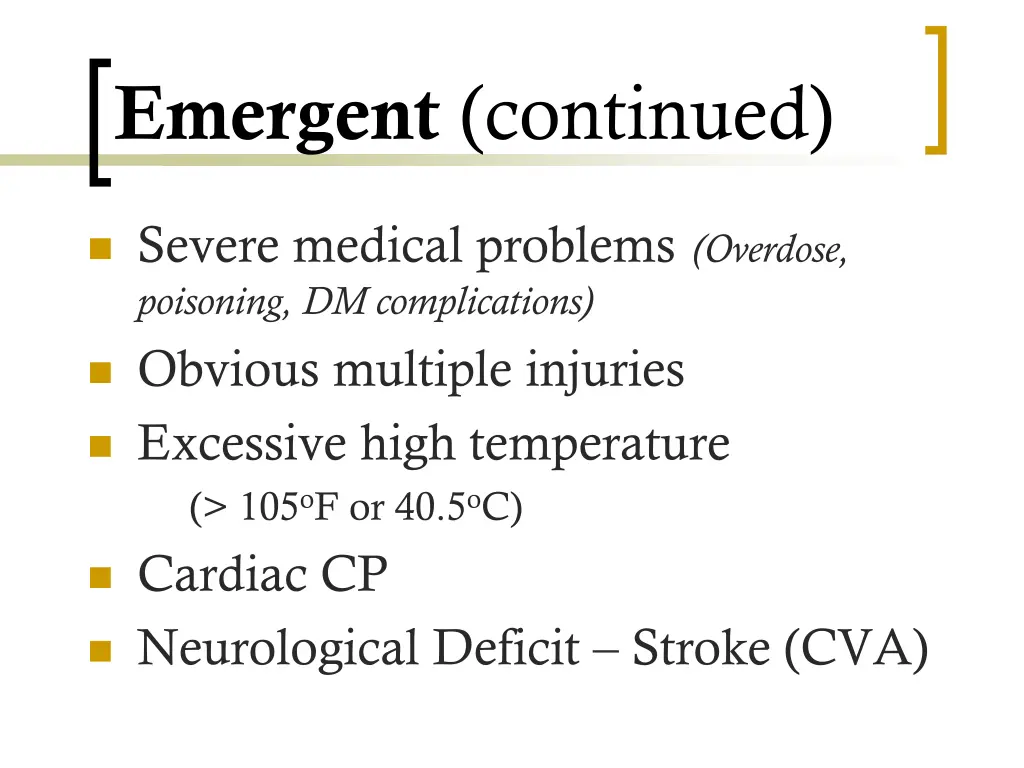
Emergent (continued) Severe medical problems (Overdose, poisoning, DM complications) Obvious multiple injuries Excessive high temperature (> 105oF or 40.5oC) Cardiac CP Neurological Deficit Stroke (CVA)
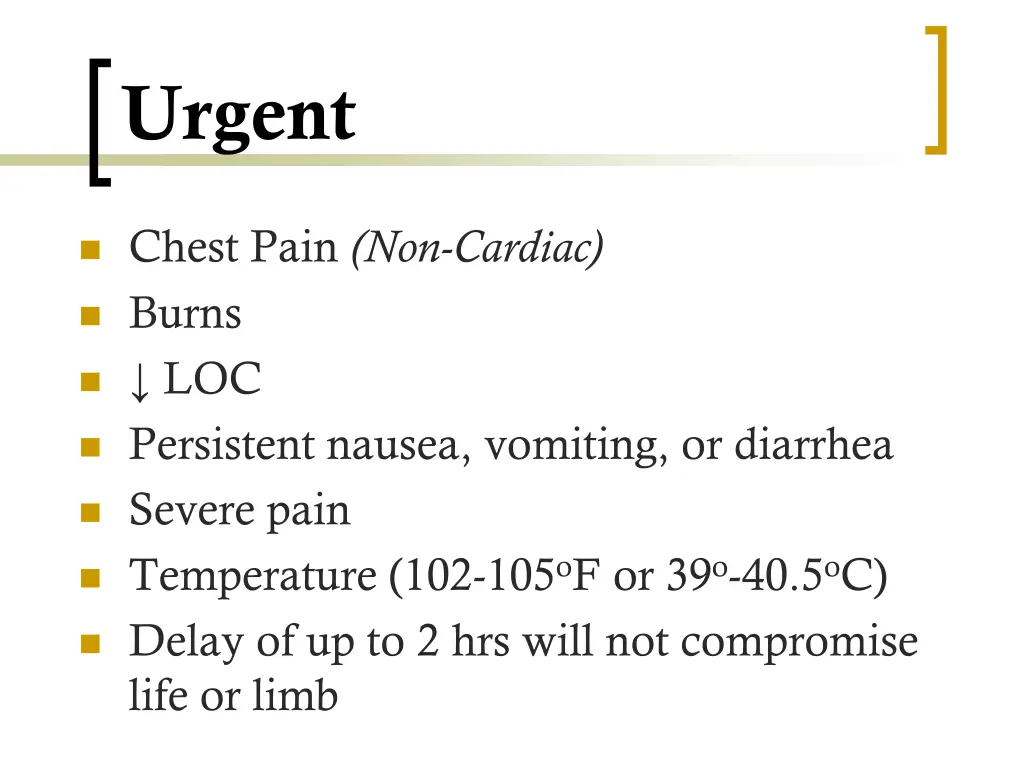
Urgent Chest Pain (Non-Cardiac) Burns LOC Persistent nausea, vomiting, or diarrhea Severe pain Temperature (102-105oF or 39o-40.5oC) Delay of up to 2 hrs will not compromise life or limb
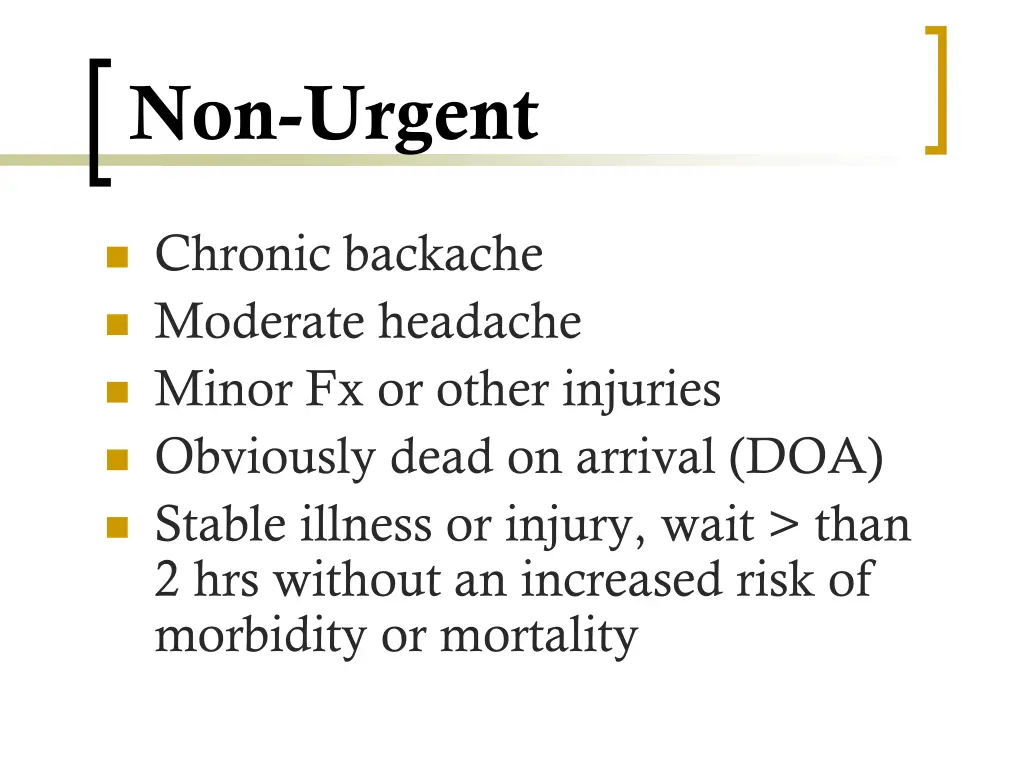
Non-Urgent Chronic backache Moderate headache Minor Fx or other injuries Obviously dead on arrival (DOA) Stable illness or injury, wait > than 2 hrs without an increased risk of morbidity or mortality
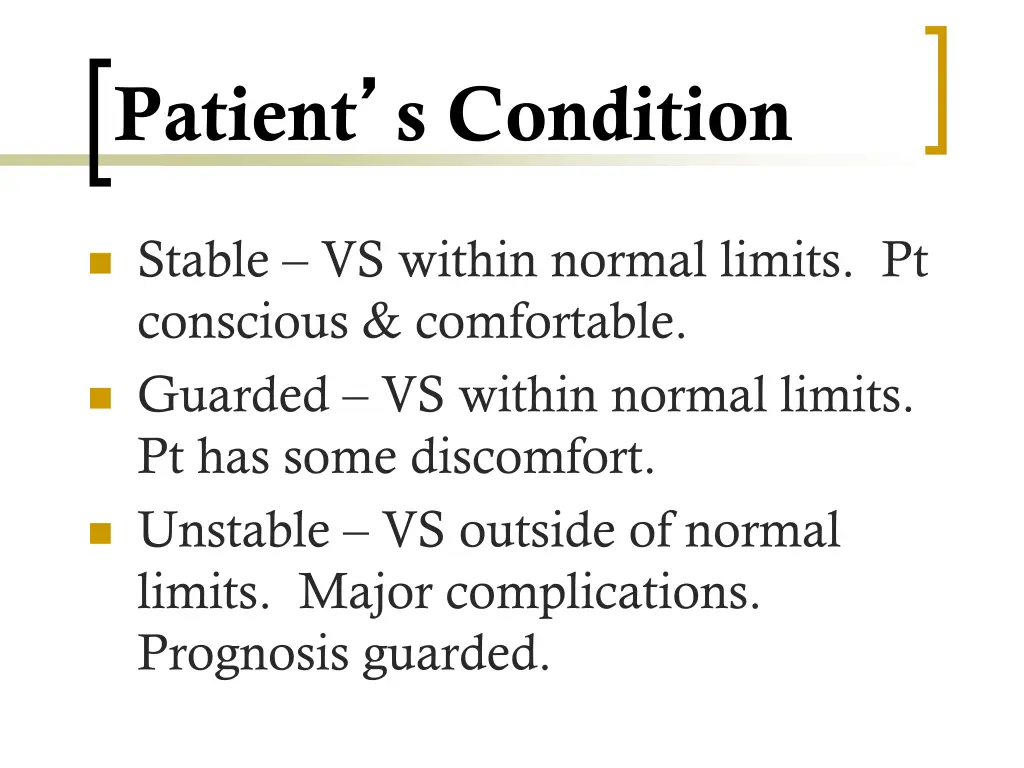
Patient s Condition Stable VS within normal limits. Pt conscious & comfortable. Guarded VS within normal limits. Pt has some discomfort. Unstable VS outside of normal limits. Major complications. Prognosis guarded.
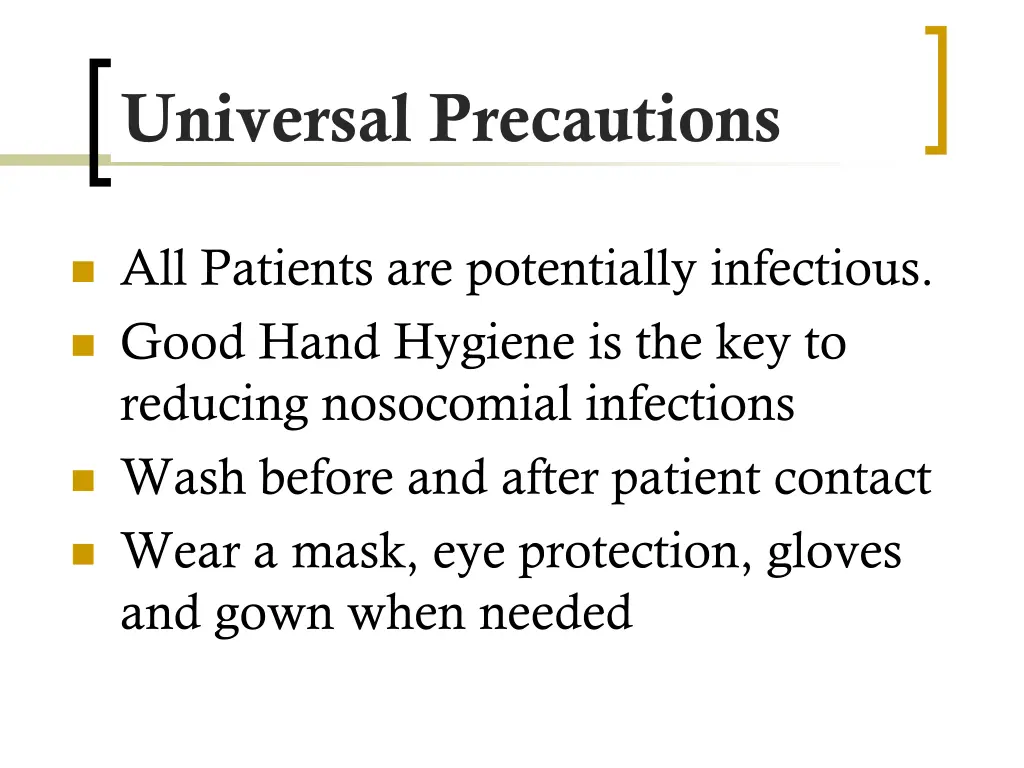
Universal Precautions All Patients are potentially infectious. Good Hand Hygiene is the key to reducing nosocomial infections Wash before and after patient contact Wear a mask, eye protection, gloves and gown when needed
3 Types of Precautions Airborne Droplet Contact
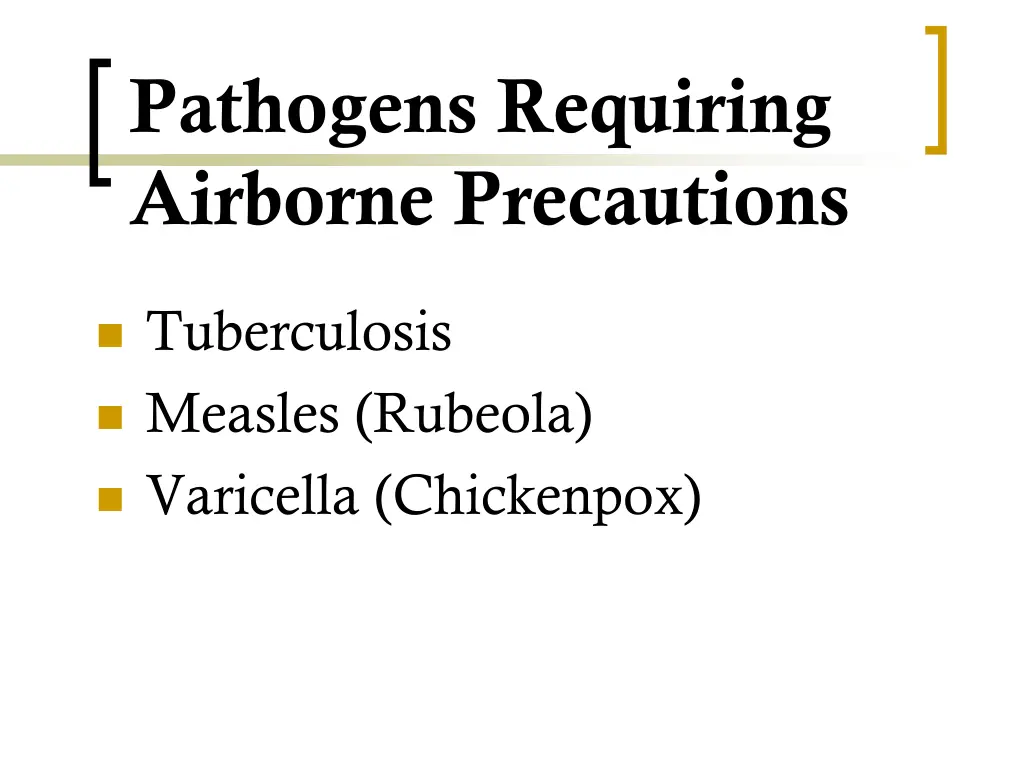
Pathogens Requiring Airborne Precautions Tuberculosis Measles (Rubeola) Varicella (Chickenpox)
Airborne Precautions Management Place patient in an isolation room with negative pressure Keep door closed Wear N-95 mask
Pathogens Requiring Contact Precautions Multi-drug resistance bacteria (e.g., VRE Vancomycin Resistant Enterococci, MRSA - Methicillin Resistant Staphylococcus Aureus) RSV - Respiratory Syncytial Virus Clostridium difficile Scabies