Cultural Dynamics and Linguistic Influence
The complexities of culture and language through the lens of the Sapir-Whorf Hypothesis, delving into linguistic relativity, representation, and the impact of language on thought and behavior. Discover the interplay between language diversity, cultural differences, and the authority to define cultural norms. Challenge preconceptions about language determinism while examining the role of language in shaping perceptions and experiences.

Download Presentation

Please find below an Image/Link to download the presentation.
The content on the website is provided AS IS for your information and personal use only. It may not be sold, licensed, or shared on other websites without obtaining consent from the author.If you encounter any issues during the download, it is possible that the publisher has removed the file from their server.
You are allowed to download the files provided on this website for personal or commercial use, subject to the condition that they are used lawfully. All files are the property of their respective owners.
The content on the website is provided AS IS for your information and personal use only. It may not be sold, licensed, or shared on other websites without obtaining consent from the author.
E N D
Presentation Transcript
Defining Culture Linguistic Relativity Sapir-Whorf Hypothesis
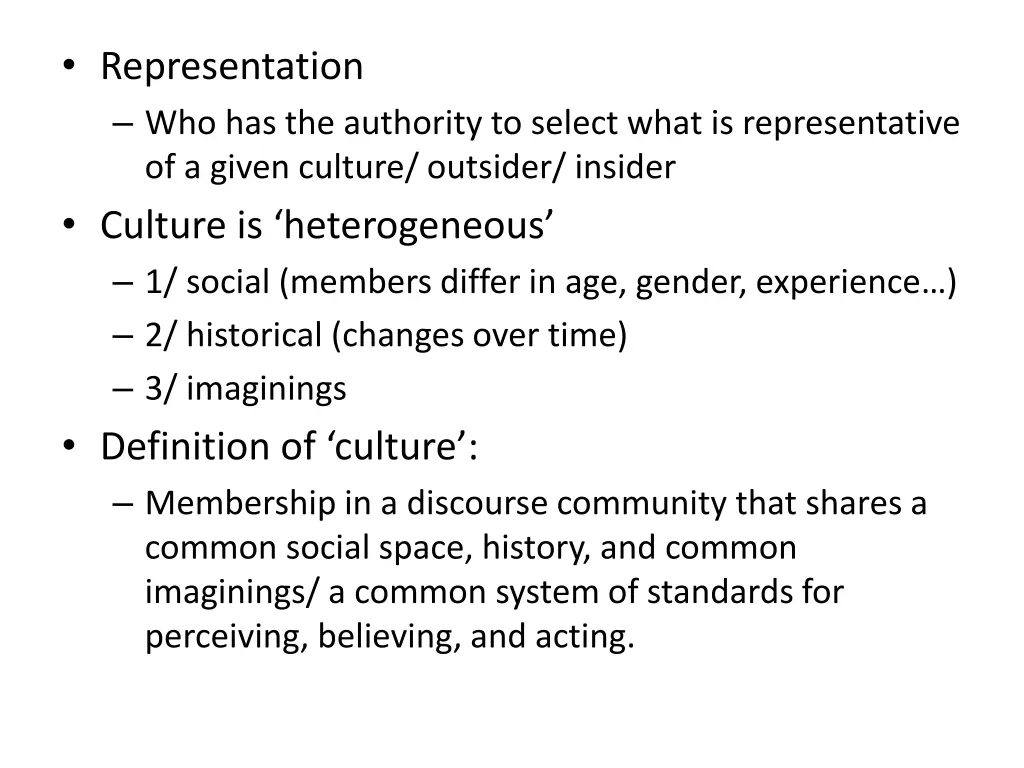
Representation Who has the authority to select what is representative of a given culture/ outsider/ insider Culture is heterogeneous 1/ social (members differ in age, gender, experience ) 2/ historical (changes over time) 3/ imaginings Definition of culture : Membership in a discourse community that shares a common social space, history, and common imaginings/ a common system of standards for perceiving, believing, and acting.
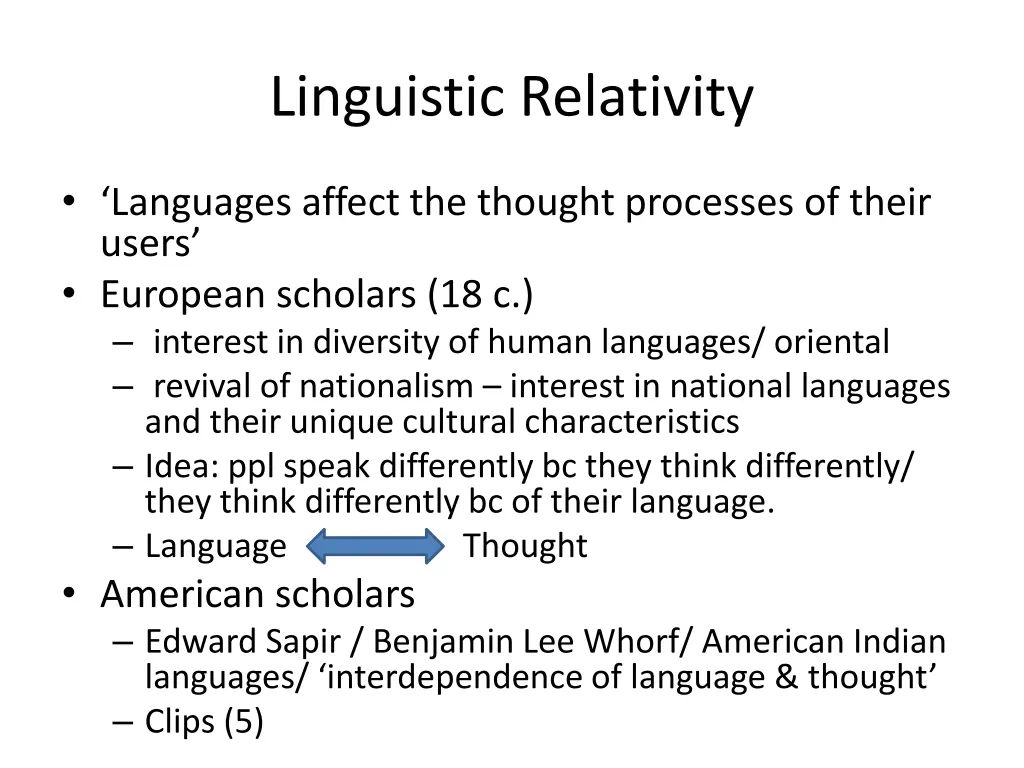
Linguistic Relativity Languages affect the thought processes of their users European scholars (18 c.) interest in diversity of human languages/ oriental revival of nationalism interest in national languages and their unique cultural characteristics Idea: ppl speak differently bc they think differently/ they think differently bc of their language. Language Thought American scholars Edward Sapir / Benjamin Lee Whorf/ American Indian languages/ interdependence of language & thought Clips (5)
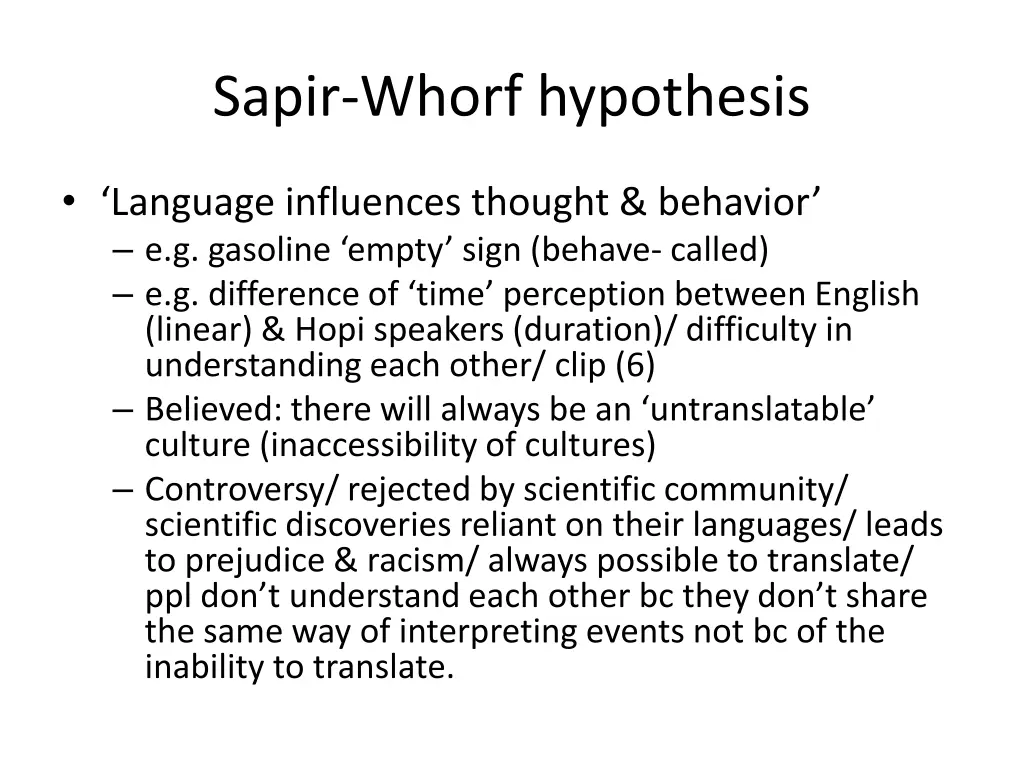
Sapir-Whorf hypothesis Language influences thought & behavior e.g. gasoline empty sign (behave- called) e.g. difference of time perception between English (linear) & Hopi speakers (duration)/ difficulty in understanding each other/ clip (6) Believed: there will always be an untranslatable culture (inaccessibility of cultures) Controversy/ rejected by scientific community/ scientific discoveries reliant on their languages/ leads to prejudice & racism/ always possible to translate/ ppl don t understand each other bc they don t share the same way of interpreting events not bc of the inability to translate.
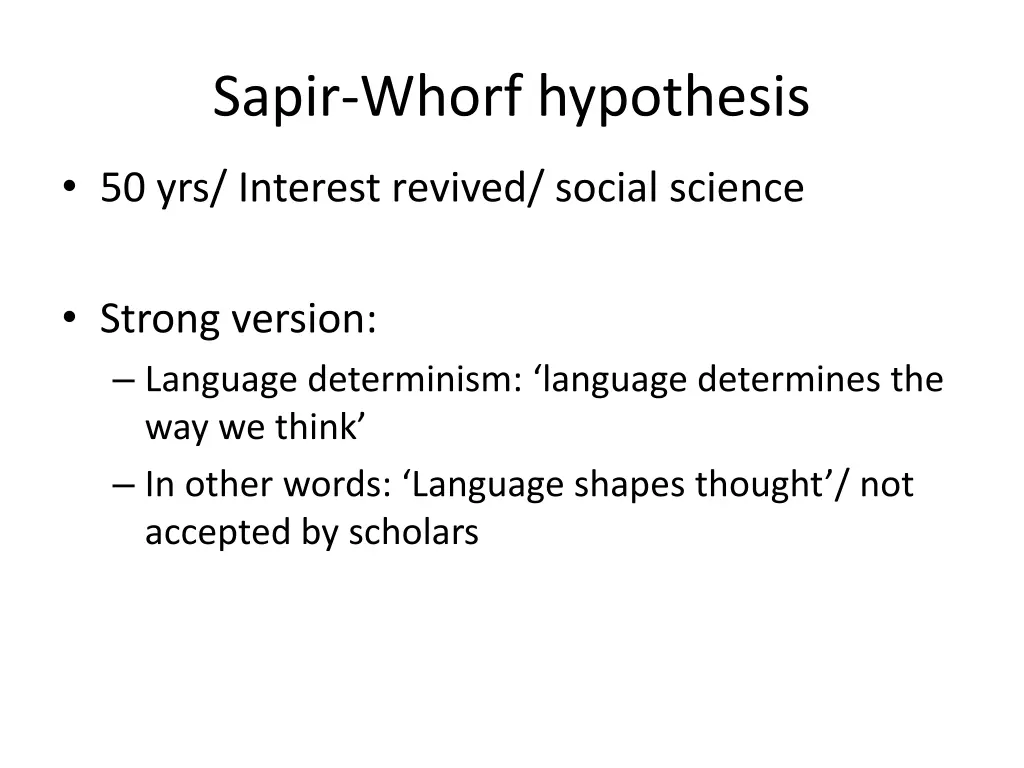
Sapir-Whorf hypothesis 50 yrs/ Interest revived/ social science Strong version: Language determinism: language determines the way we think In other words: Language shapes thought / not accepted by scholars
Weak version: Language users tend to sort out experiences differently according to the semantic categories provided by their languages (codes) In other words: Language is part of thought / accepted nowadays. e.g. supporting weak version/ sorting shapes & colors (blue rope/ yellow rope/ blue stick) (Navajo children American children) e.g. color names in English & Russian (red/ blue)
Therefore: We are not prisoners of the cultural meanings offered to us by our languages, but can enrich them in our pragmatic interactions with other language users. (supporting the weak version)