Cushing Syndrome
Cushing syndrome occurs when the body has an excess of the hormone cortisol, leading to various symptoms like a fatty hump, high blood pressure, and bone loss. Common causes include oral corticosteroid medications and pituitary gland tumors. Learn about the definition, symptoms, causes, and treatment of Cushing syndrome in this comprehensive guide.

Download Presentation

Please find below an Image/Link to download the presentation.
The content on the website is provided AS IS for your information and personal use only. It may not be sold, licensed, or shared on other websites without obtaining consent from the author. If you encounter any issues during the download, it is possible that the publisher has removed the file from their server.
You are allowed to download the files provided on this website for personal or commercial use, subject to the condition that they are used lawfully. All files are the property of their respective owners.
The content on the website is provided AS IS for your information and personal use only. It may not be sold, licensed, or shared on other websites without obtaining consent from the author.
E N D
Presentation Transcript
StudyMafia.Org Cushing Syndrome Submitted To: Submitted By: Studymafia.org Studymafia.org
Table Contents Definition Introduction Symptoms of Cushing Syndrome Causes of Cushing Syndrome Complications of Cushing Syndrome Diagnosis of Cushing Syndrome Treatment of Cushing Syndrome Conclusion 2
Definition Cushing syndrome occurs when your body has too much of the hormone cortisol over time. 3
Introduction This can result from taking oral corticosteroid medication. Or your body might produce too much cortisol. Too much cortisol can cause some of the hallmark signs of Cushing syndrome a fatty hump between your shoulders, a rounded face, and pink or purple stretch marks on your skin. Cushing syndrome can also result in high blood pressure, bone loss and, on occasion, type 2 diabetes. 4
Causes of Cushing Syndrome Too much of the hormone cortisol in your body causes Cushing syndrome. Cortisol, which is produced in the adrenal glands, plays a variety of roles in your body. For example, cortisol helps regulate your blood pressure, reduces inflammation, and keeps your heart and blood vessels functioning normally. Cortisol helps your body respond to stress. 6
Causes of Cushing Syndrome Cushing syndrome can develop from taking oral corticosteroid medications, such as prednisone, in high doses over time. Oral corticosteroids may be necessary to treat inflammatory diseases, such as rheumatoid arthritis, lupus and asthma. They may also be used to prevent your body from rejecting a transplanted organ. 7
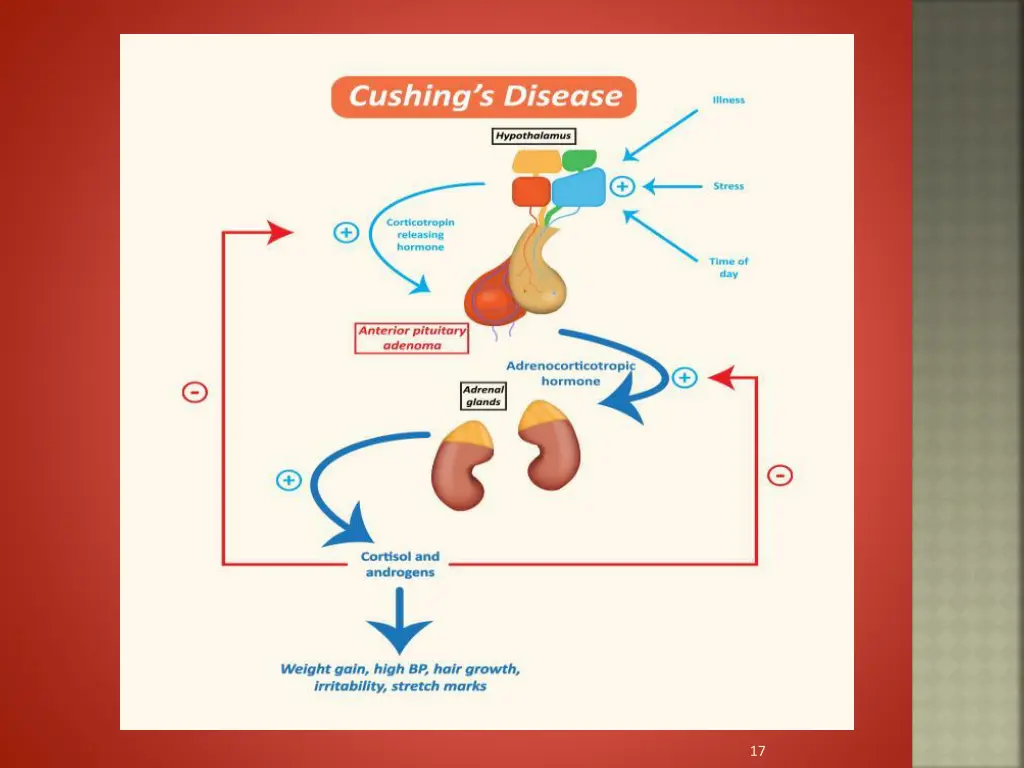
Causes of Cushing Syndrome A pituitary gland tumor (pituitary adenoma). A noncancerous (benign) tumor of the pituitary gland, located at the base of the brain, produces an excess amount of ACTH, which in turn stimulates the adrenal glands to make more cortisol. When this form of the syndrome develops, it's called Cushing disease. 8
Causes of Cushing Syndrome Rarely, a tumor that develops in an organ that normally doesn't produce ACTH will begin to secrete this hormone in excess. These tumors, which can be noncancerous (benign) or cancerous (malignant), are usually found in the lungs, pancreas, thyroid or thymus gland. An ACTH-secreting tumor. 9
Causes of Cushing Syndrome Disorders of the adrenal glands can cause them to produce too much cortisol. The most common is a noncancerous tumor of the adrenal cortex, called an adrenal adenoma, but only a small fraction of adenomas produce too much cortisol. A primary adrenal gland disease. 10
Causes of Cushing Syndrome Rarely, people inherit a tendency to develop tumors on one or more of their endocrine glands, affecting cortisol levels and causing Cushing syndrome. Familial Cushing syndrome. 11
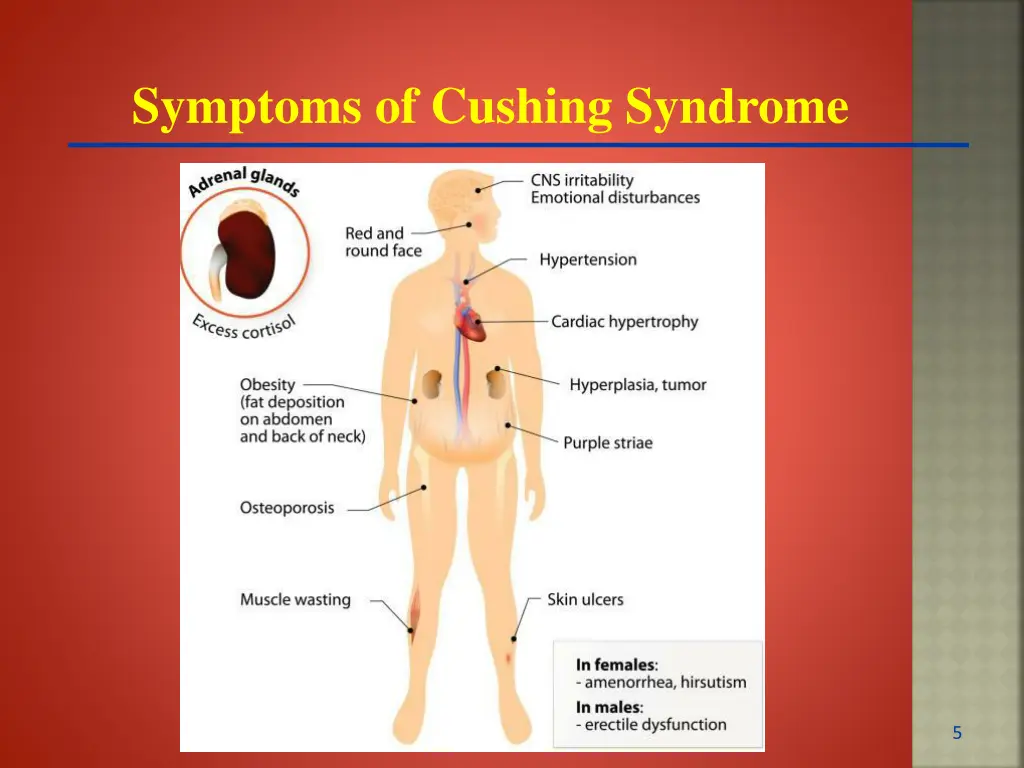
Complicationsof Cushing Syndrome Bone loss (osteoporosis), which can result in unusual bone fractures, such as rib fractures and fractures of the bones in the feet High blood pressure (hypertension) Type 2 diabetes Frequent or unusual infections Loss of muscle mass and strength 12
Diagnosis of Cushing Syndrome Urine and blood tests. These tests measure hormone levels and show whether your body is producing excessive cortisol. Saliva test. Cortisol levels normally rise and fall throughout the day. In people without Cushing syndrome, levels of cortisol drop significantly in the evening 13
Diagnosis of Cushing Syndrome Imaging tests. CT or MRI scans can provide images of your pituitary and adrenal glands to detect abnormalities, such as tumors. Petrosal sinus sampling. This test can help determine whether the cause of Cushing syndrome is rooted in the pituitary or somewhere else. 14
Treatment of Cushing Syndrome If the cause of Cushing syndrome is long-term use of corticosteroid medications, your doctor may be able to keep your Cushing syndrome signs and symptoms under control by reducing the dosage of the drug over a period of time, while still managing the condition for which you take it Reducing corticosteroid use 15
Treatment of Cushing Syndrome Surgery If the cause of Cushing syndrome is a tumor, your doctor may recommend complete surgical removal. Radiation therapy If the surgeon can't totally remove a pituitary tumor, he or she will usually prescribe radiation therapy as well as surgery. 16
Conclusion Cushing's syndrome is a rare disorder resulting from prolonged exposure to excess glucocorticoids. Early diagnosis and treatment of Cushing's syndrome is associated with a decrease in morbidity and mortality. 18
REFERENCES Google.com Wikipedia.org Studymafia.org Slidespanda.com
THANKS TO STUDYMAFIA.ORG





![❤[PDF]⚡ Zee Zee Does It Anyway!: A Story about down Syndrome and Determination](/thumb/20462/pdf-zee-zee-does-it-anyway-a-story-about-down-syndrome-and-determination.jpg)