Cyber security policies offer both first and third-party coverages, filling gaps in coverage for cyber risks and safeguarding policy limits. Learn about the types of coverages offered, underwriting issues, knowing your risk, and privacy by design principles.
Please find below an Image/Link to download the presentation.
The content on the website is provided AS IS for your information and personal use only. It may not be sold, licensed, or shared on other websites without obtaining consent from the author. If you encounter any issues during the download, it is possible that the publisher has removed the file from their server.
You are allowed to download the files provided on this website for personal or commercial use, subject to the condition that they are used lawfully. All files are the property of their respective owners.
The content on the website is provided AS IS for your information and personal use only. It may not be sold, licensed, or shared on other websites without obtaining consent from the author.
E N D
Presentation Transcript
Cyber Security Coverage: the What, the Why, and the How Come Tim Lessman Partner 312.894.3359 tlessman@salawus.com Colin Gainer Partner 312.894.3331 cgainer@salawus.com
The Intent of Cyber Policies Offer both First and Third Party Coverages Non-Standardized (coverage is typically negotiable) Fills in gaps for cyber risks created in other lines of coverage Safeguards limits of other types of policies that arguably could respond
Types of Coverages Offered First Party (Country) Hiring Independent Security/Forensics Firm Public Relations Data Recovery & Damage to network and systems Notification Costs Credit Monitoring/Identity Theft Solutions Legal Services and advice Claims Management Services E-Extortion costs Business Interruption expenses Denial of service costs Intellectual property losses
Types of Coverages Offered Third Party (and Western) Third party claims (consumers, other companies and clients from loss of PII/PHI and/or other damages) Related defense costs Media liability (libel, slander, defamation) Regulatory fines and penalties (PCI?)
Know Your Risk: Ascertain How the Potential Insured Addresses the Following? Does it know the parameters of what needs to be protected from cyber threats? Does it know how to protect it? Does it have a plan to address cyber threats?
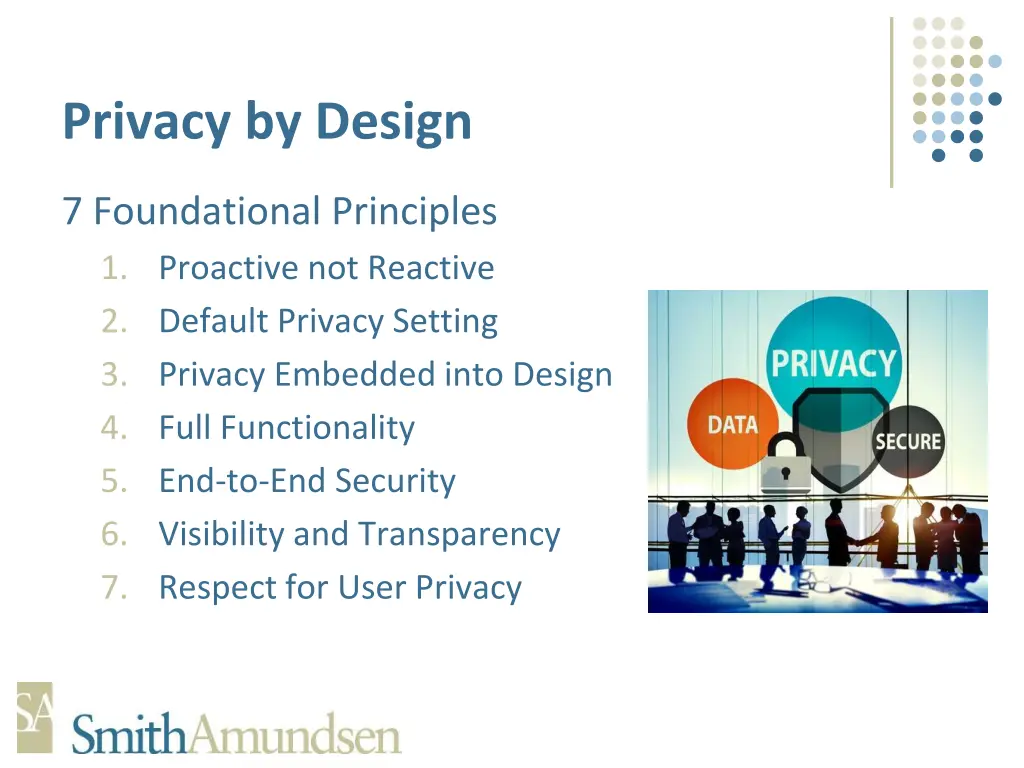
Privacy by Design 7 Foundational Principles 1. Proactive not Reactive 2. Default Privacy Setting 3. Privacy Embedded into Design 4. Full Functionality 5. End-to-End Security 6. Visibility and Transparency 7. Respect for User Privacy
The Roadmap for a Comprehensive Privacy Program Designate personnel responsible for privacy within an organization Conduct oversight of service providers Conduct risk assessments that address training, management, product development, etc. Identify how you will implement controls to address risks identified Evaluate and adjust privacy program as necessary giving testing and monitoring
Privacy cont. Keep any privacy promises made to consumers Privacy notices: keep it simple! Advise consumers of policy changes Audit existing privacy policies (utilize third-party vendor for less routine audits)
Security by Design Conduct risk assessments Minimize data collected Test security measures Train employees on security measures Address security issues at proper management level Consider vendor and service providers abilities Reasonable access control measures
Risk Assessment Includes: Inventory of computer hardware and software that make up the information system The categories and qualifications of staff members who use the system The functions and activities that are supported by the information system The data and information that are collected, processed, and stored by the information system The physical environment that houses information system components On-site and off-site storage of information The organizations to which information is transmitted The data and information that are transmitted to other organizations The internal and external connections between the information system and the information systems of other organizations
Data Minimization The more data, the more risk Increased data more likely to exceed client s reasonable expectations of how their data will be used Examine business needs and limit data collection to purpose needed to collect De-identity if collecting a lot of data Limit collection of sensitive data Dispose of data when no longer need it
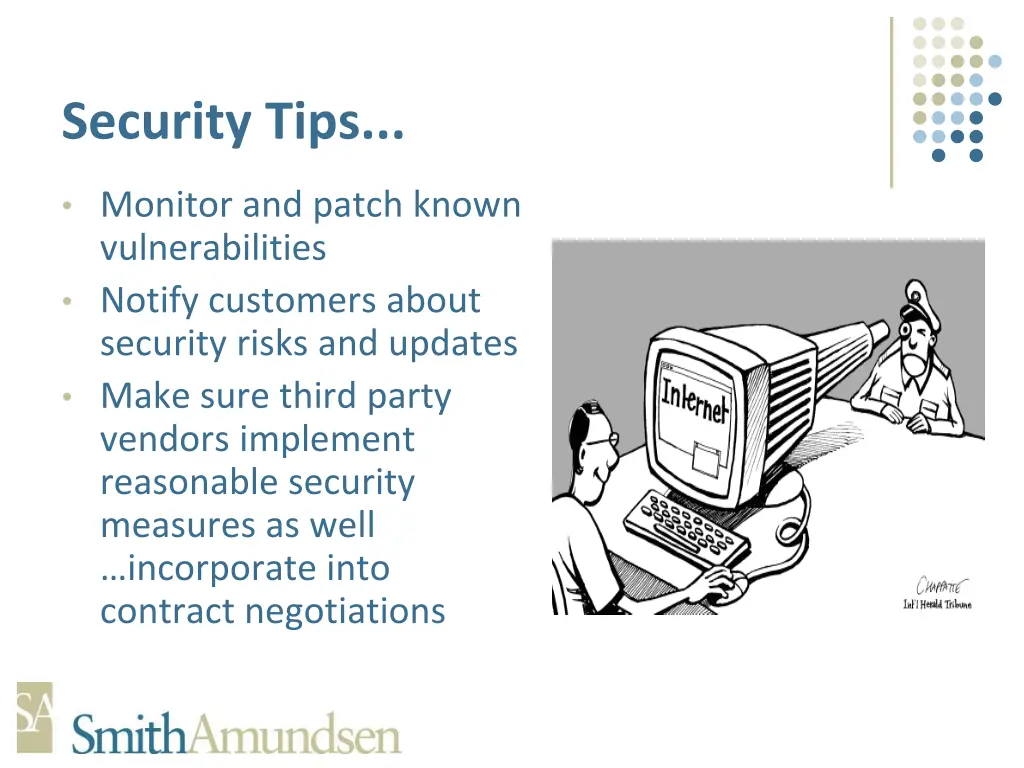
Security Tips... Monitor and patch known vulnerabilities Notify customers about security risks and updates Make sure third party vendors implement reasonable security measures as well incorporate into contract negotiations
Security Tips Encrypt, encrypt, encrypt (on network, work station hard drives, laptops, mobile devices, external storage media, and emailed data) Strong company password requirements Detection intrusion methods Adequate training of employees onboard training won t cut it Multi-factor authentication for remote access If allowed to access network from home, make sure virtual desktop Operating system patches
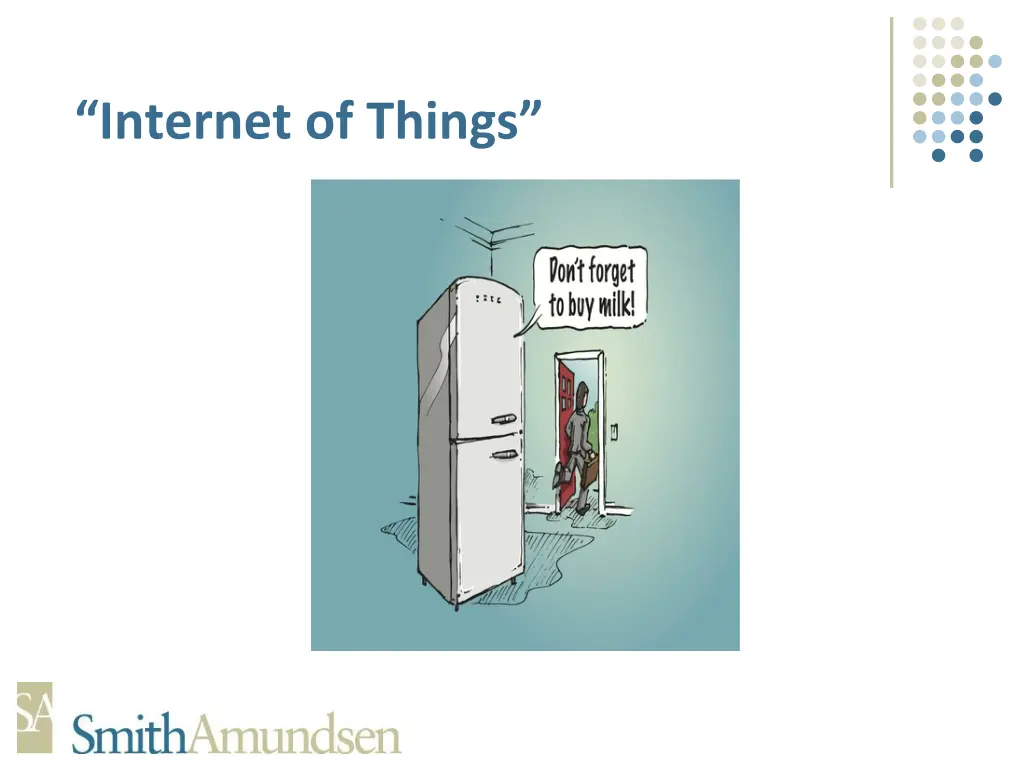
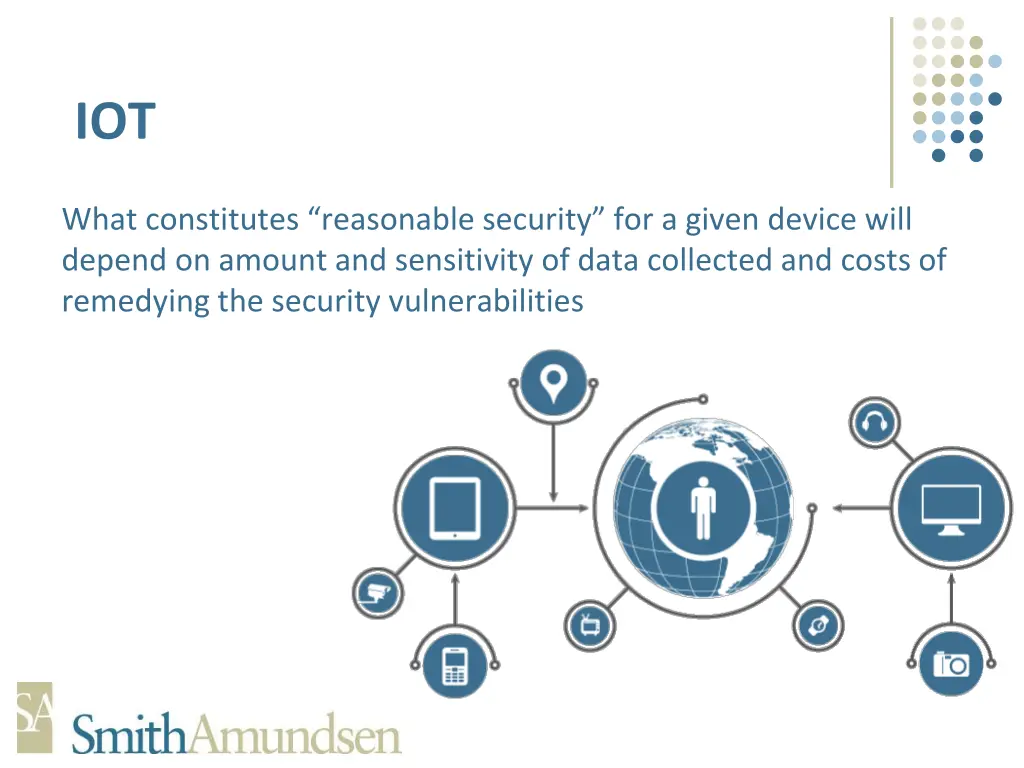
IOT What constitutes reasonable security for a given device will depend on amount and sensitivity of data collected and costs of remedying the security vulnerabilities
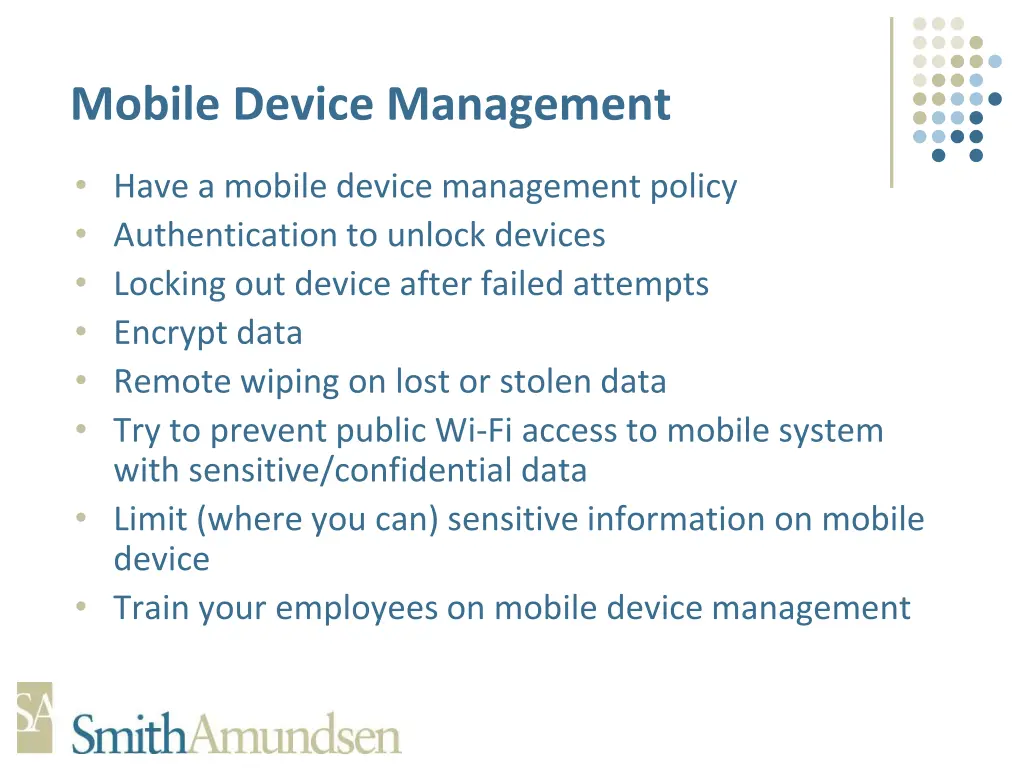
Mobile Device Management Have a mobile device management policy Authentication to unlock devices Locking out device after failed attempts Encrypt data Remote wiping on lost or stolen data Try to prevent public Wi-Fi access to mobile system with sensitive/confidential data Limit (where you can) sensitive information on mobile device Train your employees on mobile device management
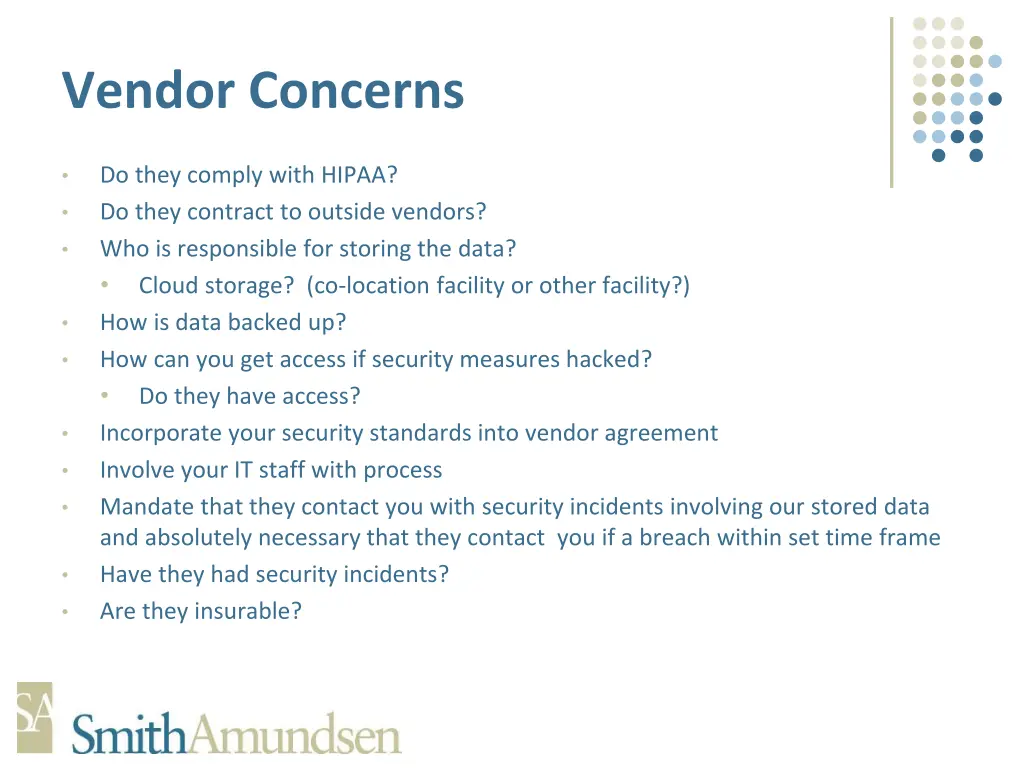
Vendor Concerns Do they comply with HIPAA? Do they contract to outside vendors? Who is responsible for storing the data? Cloud storage? (co-location facility or other facility?) How is data backed up? How can you get access if security measures hacked? Do they have access? Incorporate your security standards into vendor agreement Involve your IT staff with process Mandate that they contact you with security incidents involving our stored data and absolutely necessary that they contact you if a breach within set time frame Have they had security incidents? Are they insurable?
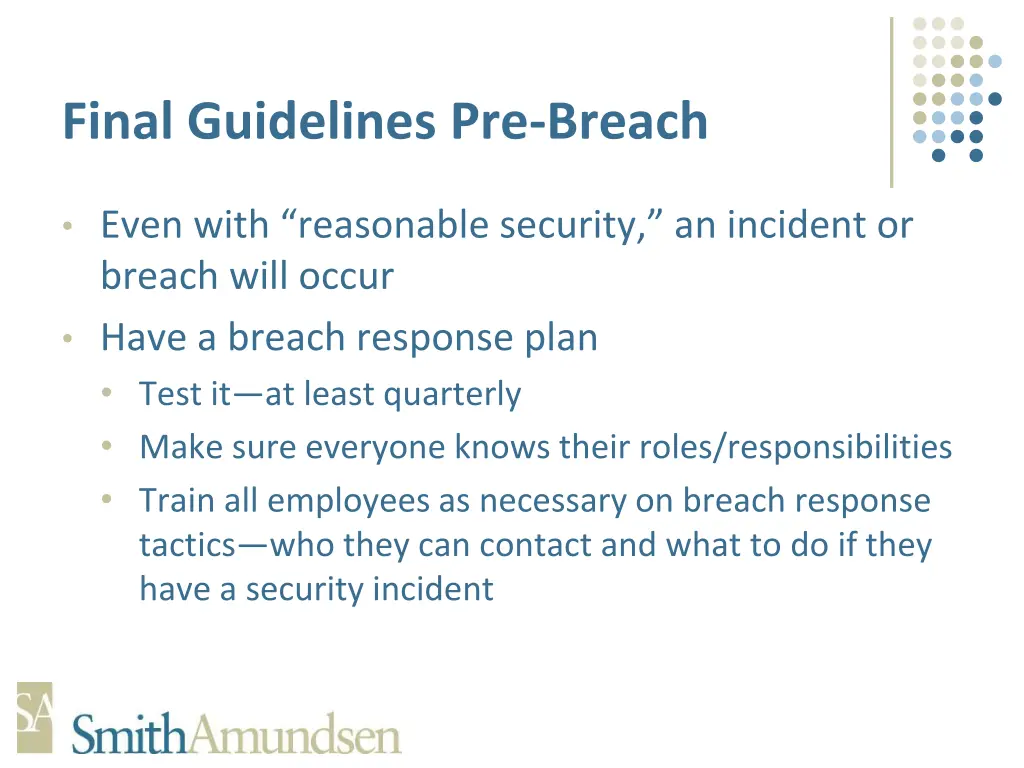
Final Guidelines Pre-Breach Even with reasonable security, an incident or breach will occur Have a breach response plan Test it at least quarterly Make sure everyone knows their roles/responsibilities Train all employees as necessary on breach response tactics who they can contact and what to do if they have a security incident
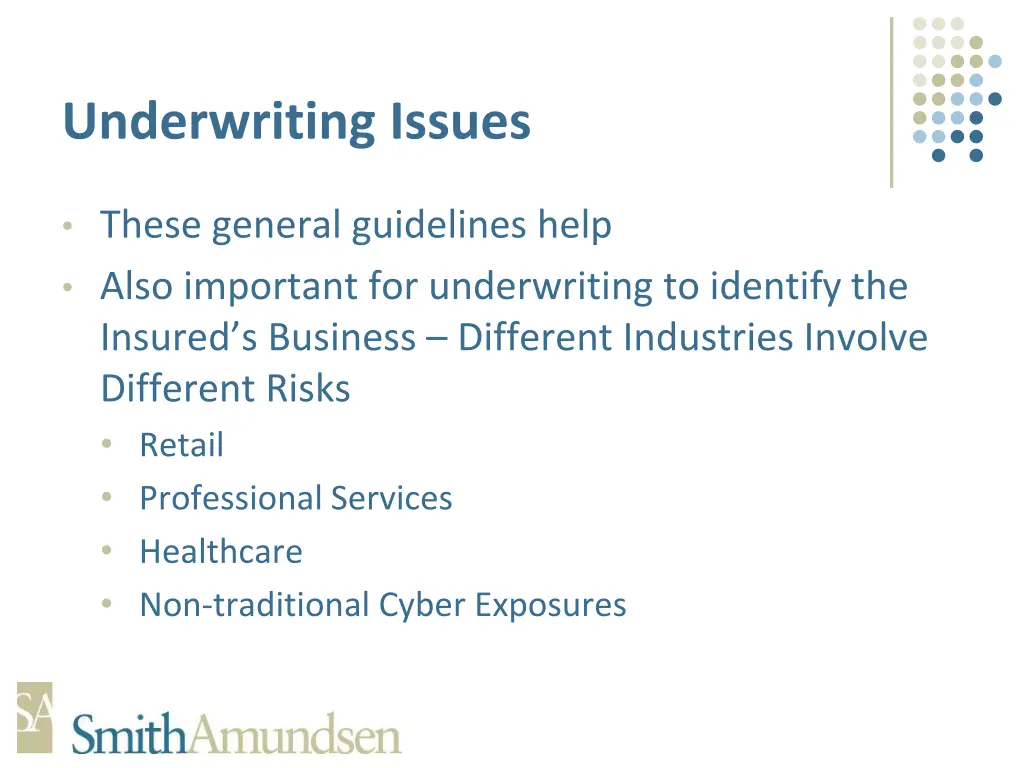
Underwriting Issues These general guidelines help Also important for underwriting to identify the Insured s Business Different Industries Involve Different Risks Retail Professional Services Healthcare Non-traditional Cyber Exposures
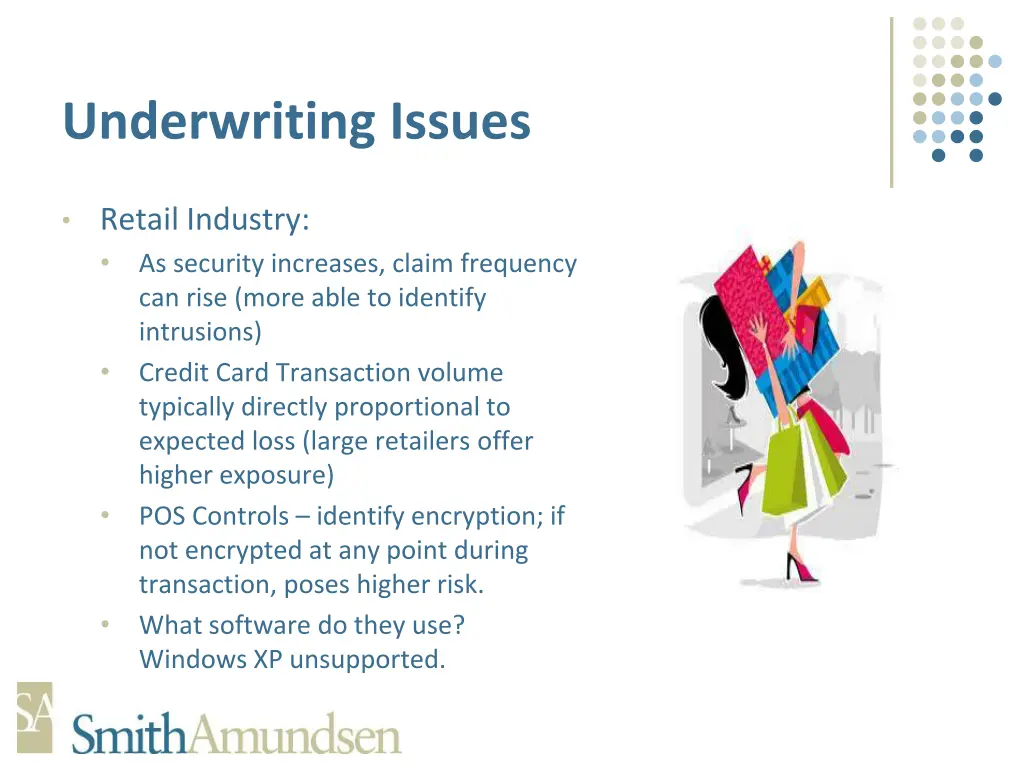
Underwriting Issues Retail Industry: As security increases, claim frequency can rise (more able to identify intrusions) Credit Card Transaction volume typically directly proportional to expected loss (large retailers offer higher exposure) POS Controls identify encryption; if not encrypted at any point during transaction, poses higher risk. What software do they use? Windows XP unsupported.
Underwriting Issues Trends in Retail: Larger Limit Towers for large retailers (Target breach illustrated limits offered may not be enough) Lost revenue as a result of damaged reputation (Target experienced dip in transaction volume) Neiman Marcus decision: rise of class actions? Chip & pin in Credit Cards largely only applicable to in-person transactions.
Underwriting Issues Retail: Common Insured Objections We don t store credit card info * but can be on device itself (POS) We don t outsource payments to POS vendors * but data still stored on devices Need to know how/where data is stored!
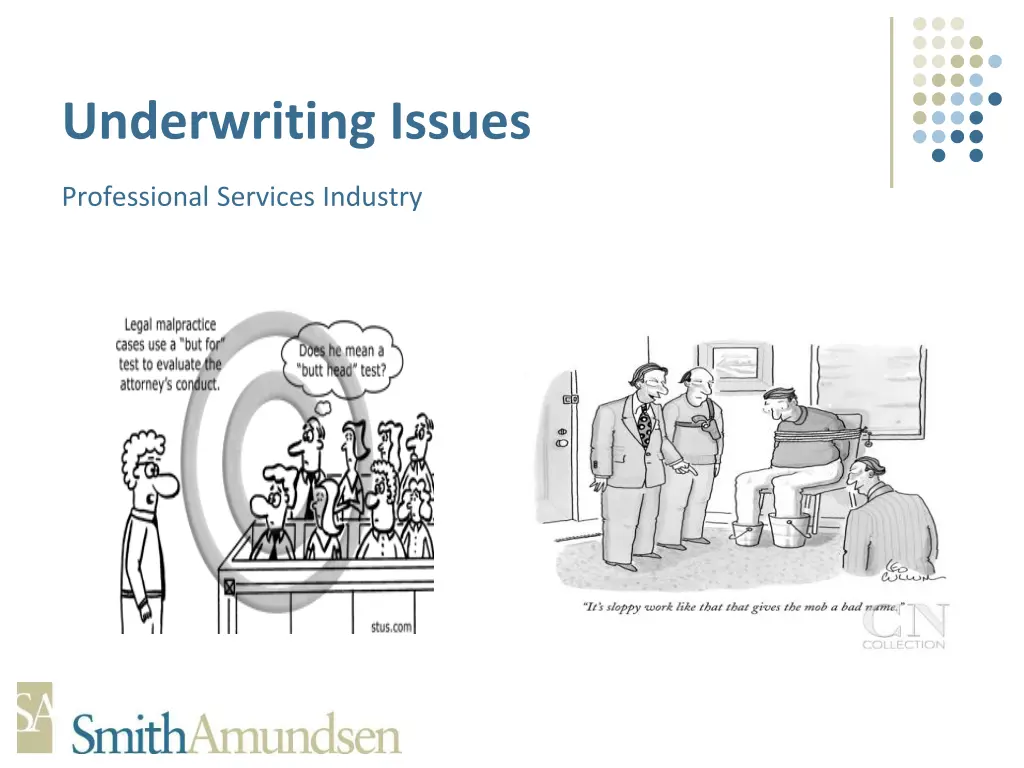
Underwriting Issues Professional Services Industry Identify industry and typical types of exposure (first party vs. third party) Business does not face risk of loss of client/customer data, first party may be more important (business interruption type issues predominate) Business does store consumer data risk of lawsuits is evident, third party may be important consideration. Match markets with products * e.g. will an endorsement suffice, or is a stand-alone policy needed? stand alone policy: higher limits, more coverages endorsement: lower limits, no second set of policy terms, but may erode limits of another type of coverage (e.g., E & O)
Underwriting Issues Professional Services Industry: What Insureds Will Look For Industry-specific breach response package Definition of insured (corporation, partnership, LLC, etc.) Other Insurance issues/coverage overlaps Specific types of exclusions and relevance on type of company Encryption warranties in application
Underwriting Issues Selling Cyber Coverage to Professional Service Insureds Simplify the process as much as possible Focus on incident responses Industry examples of exposures and responses
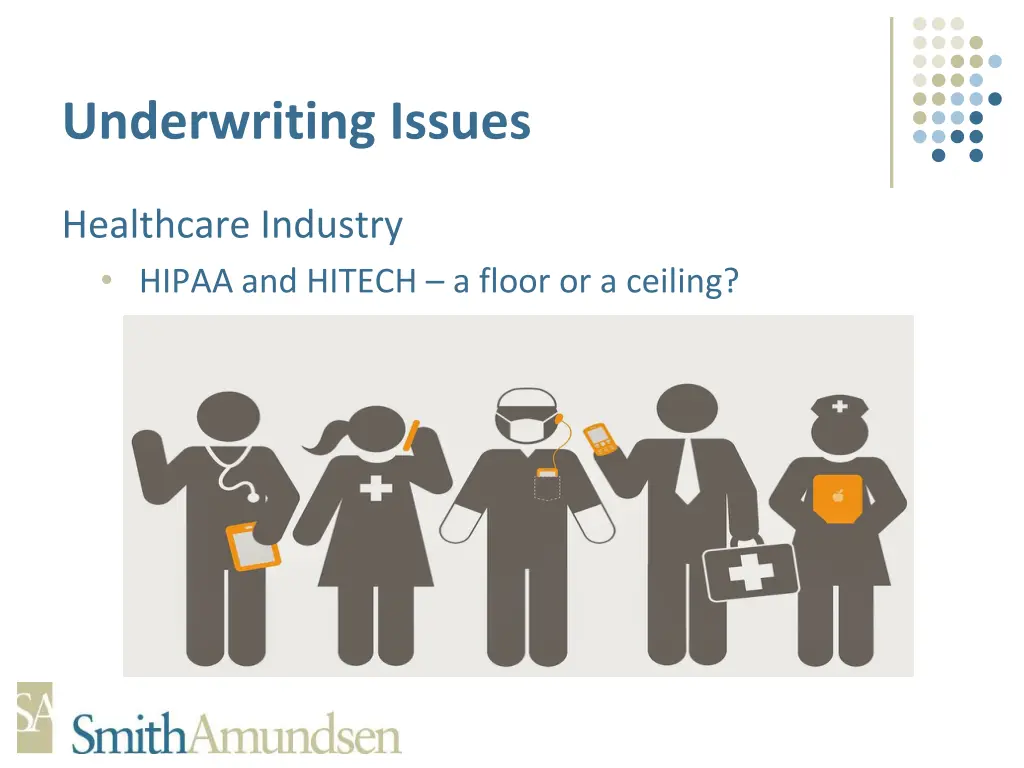
Underwriting Issues Healthcare Industry HIPAA and HITECH a floor or a ceiling?
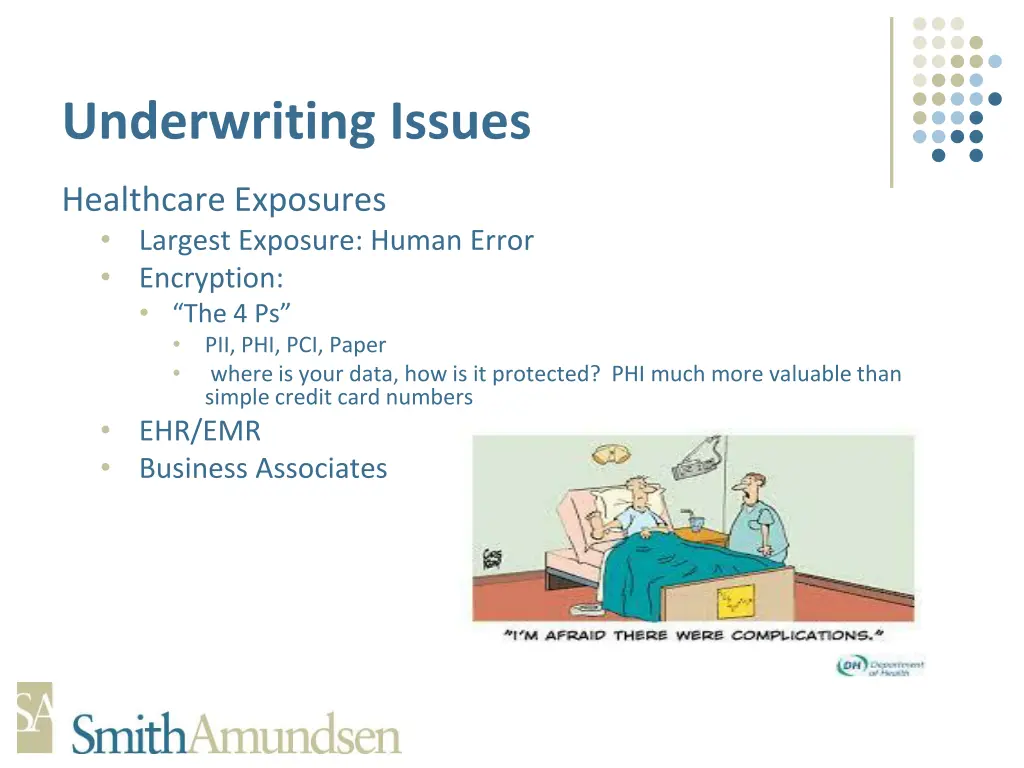
Underwriting Issues Healthcare Exposures Largest Exposure: Human Error Encryption: The 4 Ps PII, PHI, PCI, Paper where is your data, how is it protected? PHI much more valuable than simple credit card numbers EHR/EMR Business Associates
Underwriting Issues Healthcare: Evaluating Risks HIPAA Compliance is a baseline Quantifying Risks: Data Access How much data? Who has access? What type of protection? How is it managed? Business Associates: Can your process identify anomalous behavior? Incident Response plan: holistic involvement of the entire organization PCI Compliance? Is it an issue?
Underwriting Issues Non-Traditional Industries Face Risks Utilities: Coordinated Attacks can threaten infrastructure Manufacturing: German steel mill example Business Interruption Risks due to unavailability of communications/website disruption * Selling to these insureds may require tailoring of coverage to address industry-specific needs
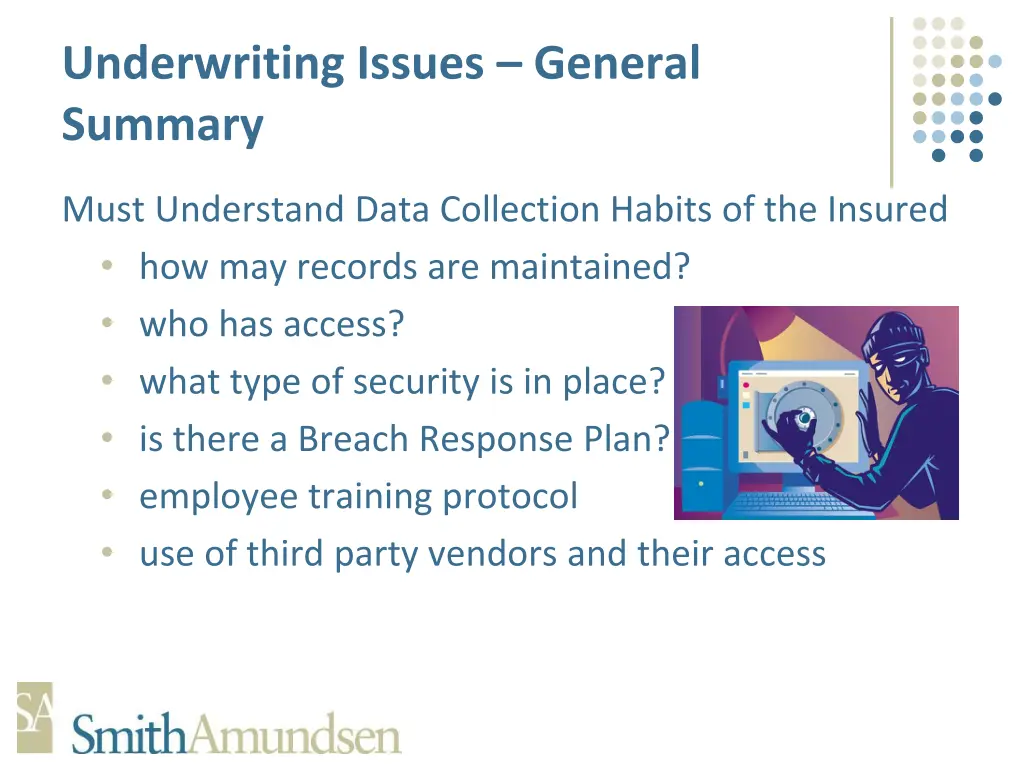
Underwriting Issues General Summary Must Understand Data Collection Habits of the Insured how may records are maintained? who has access? what type of security is in place? is there a Breach Response Plan? employee training protocol use of third party vendors and their access
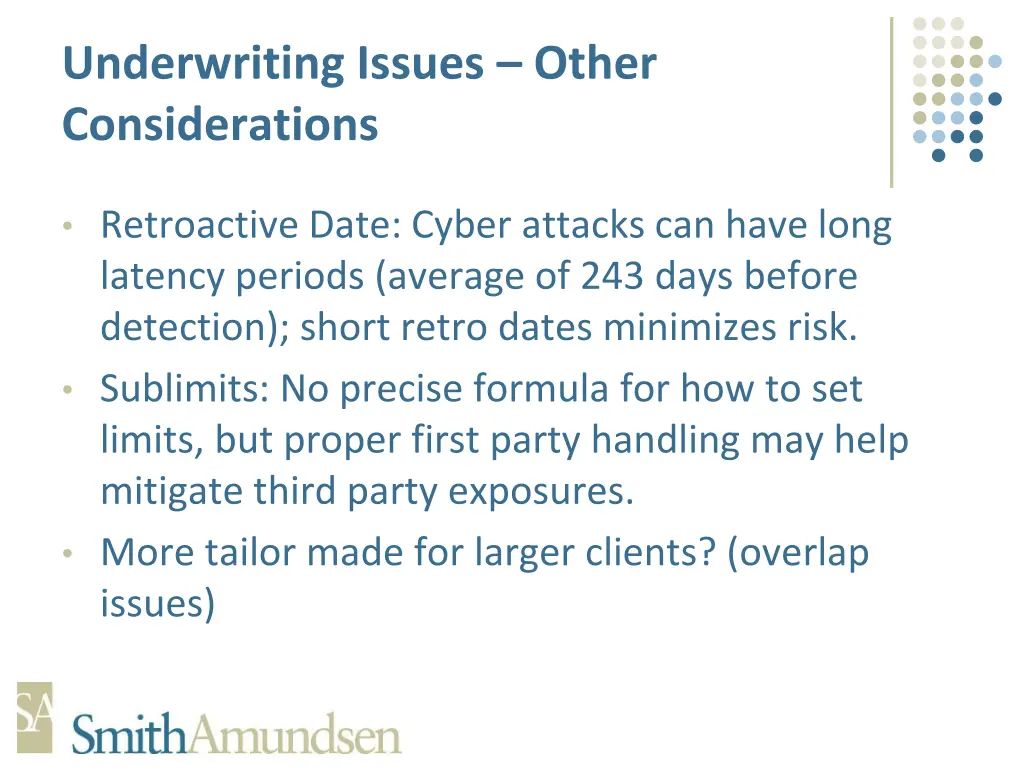
Underwriting Issues Other Considerations Retroactive Date: Cyber attacks can have long latency periods (average of 243 days before detection); short retro dates minimizes risk. Sublimits: No precise formula for how to set limits, but proper first party handling may help mitigate third party exposures. More tailor made for larger clients? (overlap issues)
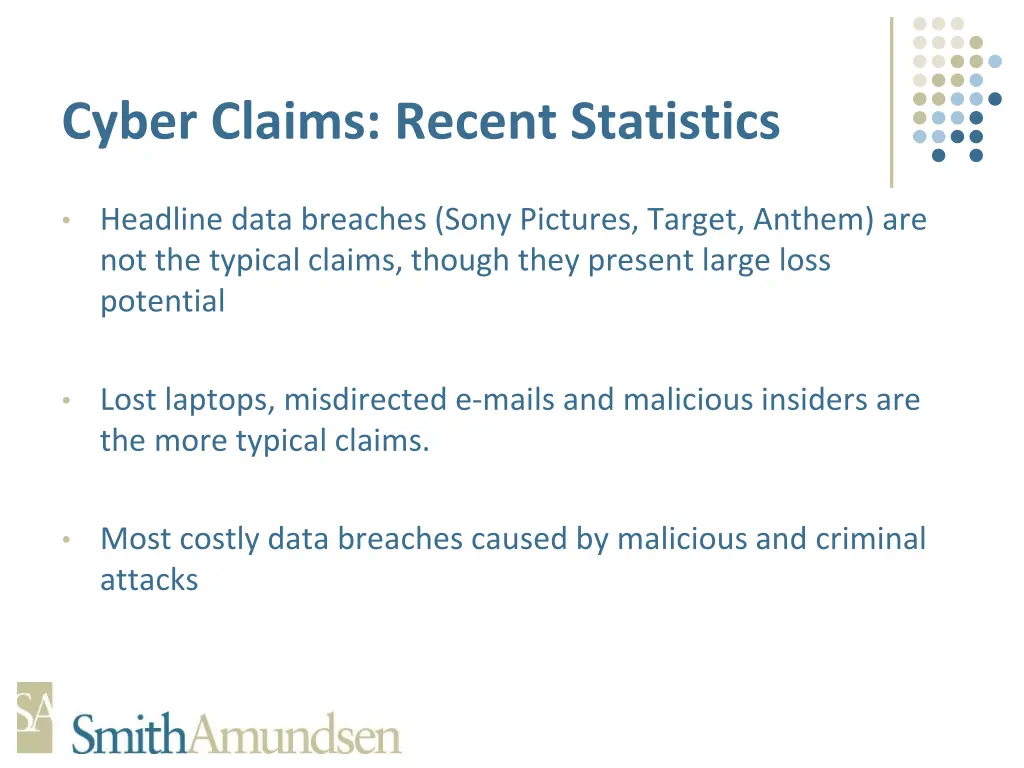
Cyber Claims: Recent Statistics Headline data breaches (Sony Pictures, Target, Anthem) are not the typical claims, though they present large loss potential Lost laptops, misdirected e-mails and malicious insiders are the more typical claims. Most costly data breaches caused by malicious and criminal attacks
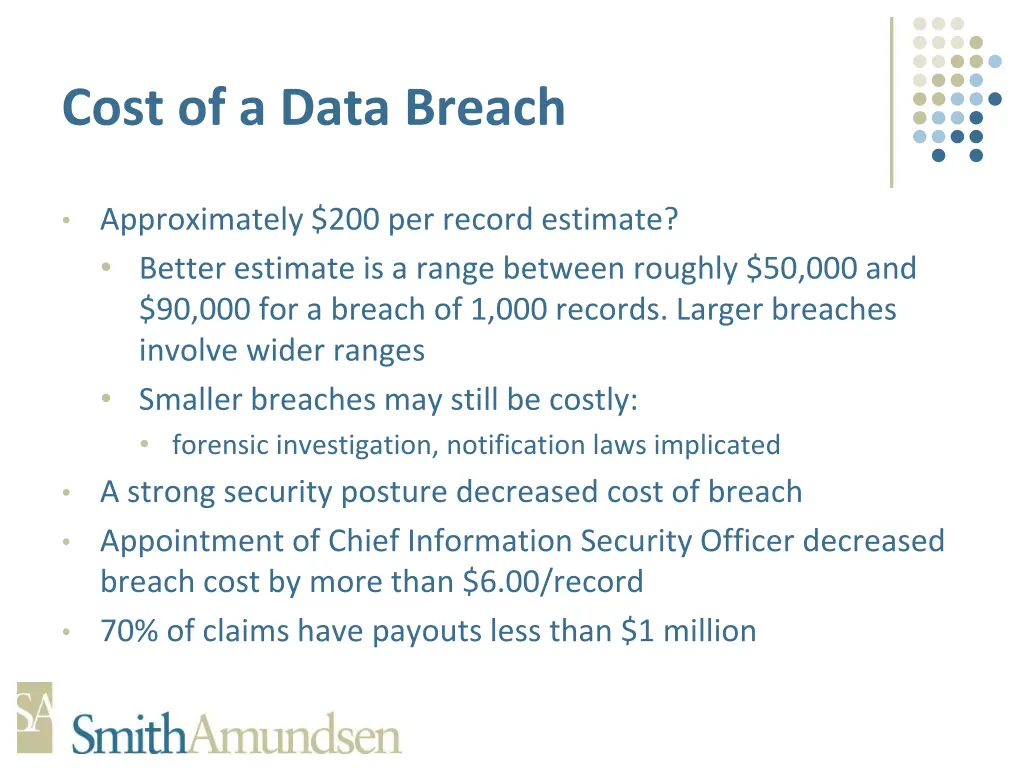
Cost of a Data Breach Approximately $200 per record estimate? Better estimate is a range between roughly $50,000 and $90,000 for a breach of 1,000 records. Larger breaches involve wider ranges Smaller breaches may still be costly: forensic investigation, notification laws implicated A strong security posture decreased cost of breach Appointment of Chief Information Security Officer decreased breach cost by more than $6.00/record 70% of claims have payouts less than $1 million
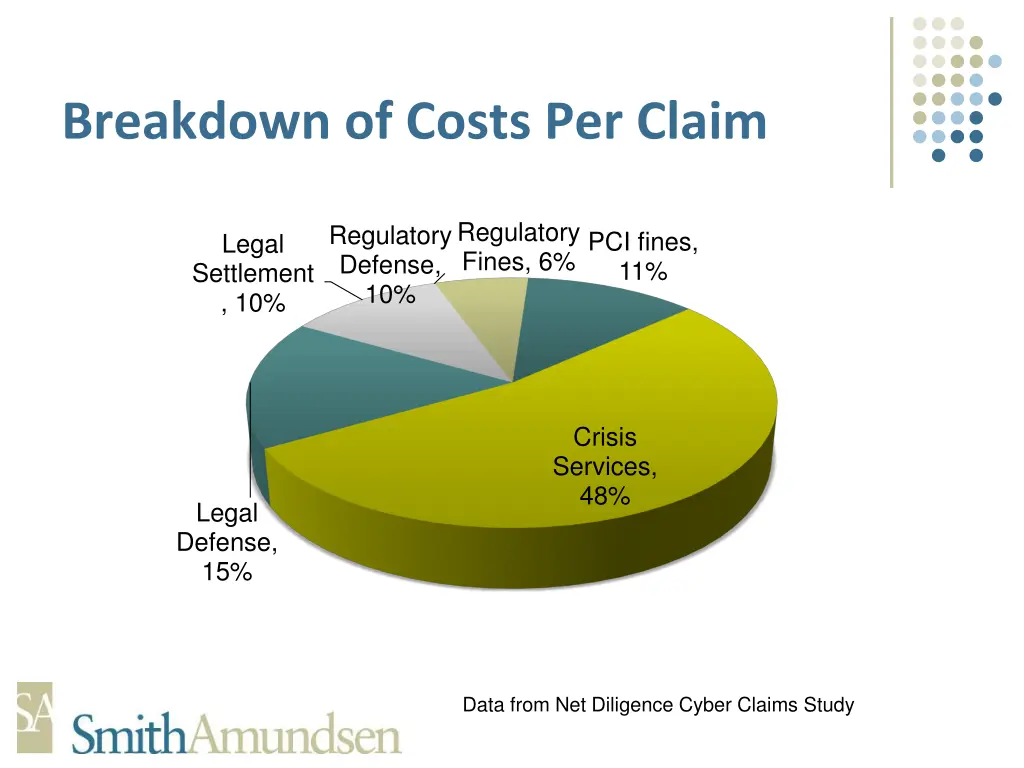
Breakdown of Costs Per Claim Regulatory Fines, 6% Regulatory Defense, 10% PCI fines, 11% Legal Settlement , 10% Crisis Services, 48% Legal Defense, 15% Data from Net Diligence Cyber Claims Study
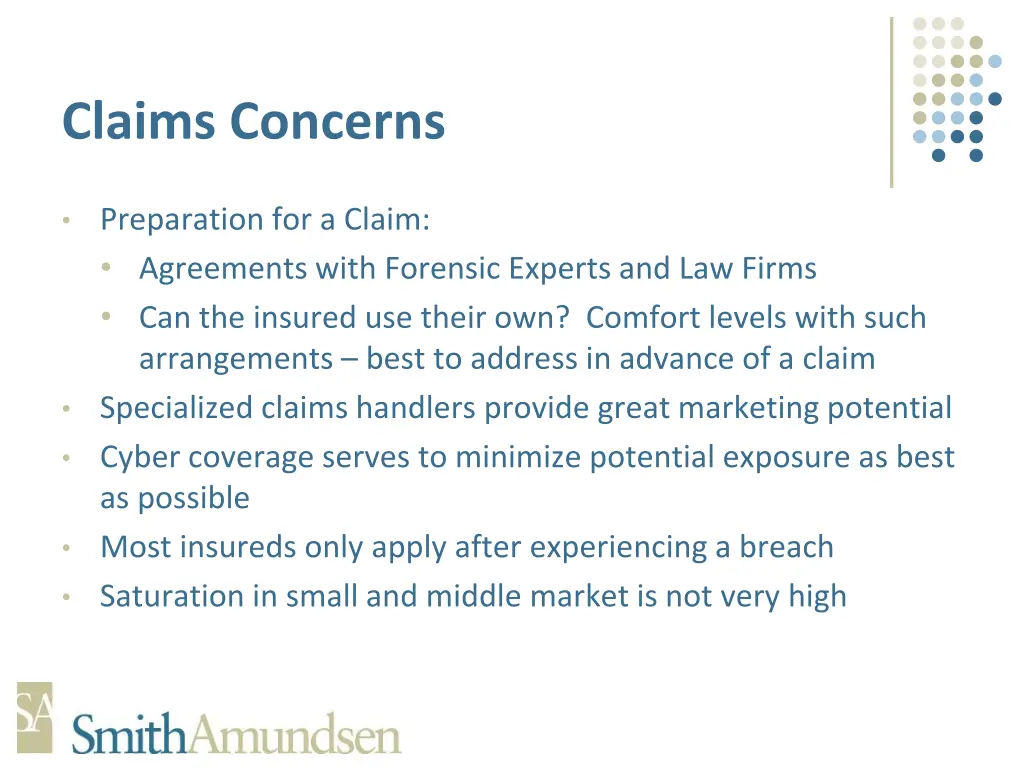
Claims Concerns Preparation for a Claim: Agreements with Forensic Experts and Law Firms Can the insured use their own? Comfort levels with such arrangements best to address in advance of a claim Specialized claims handlers provide great marketing potential Cyber coverage serves to minimize potential exposure as best as possible Most insureds only apply after experiencing a breach Saturation in small and middle market is not very high
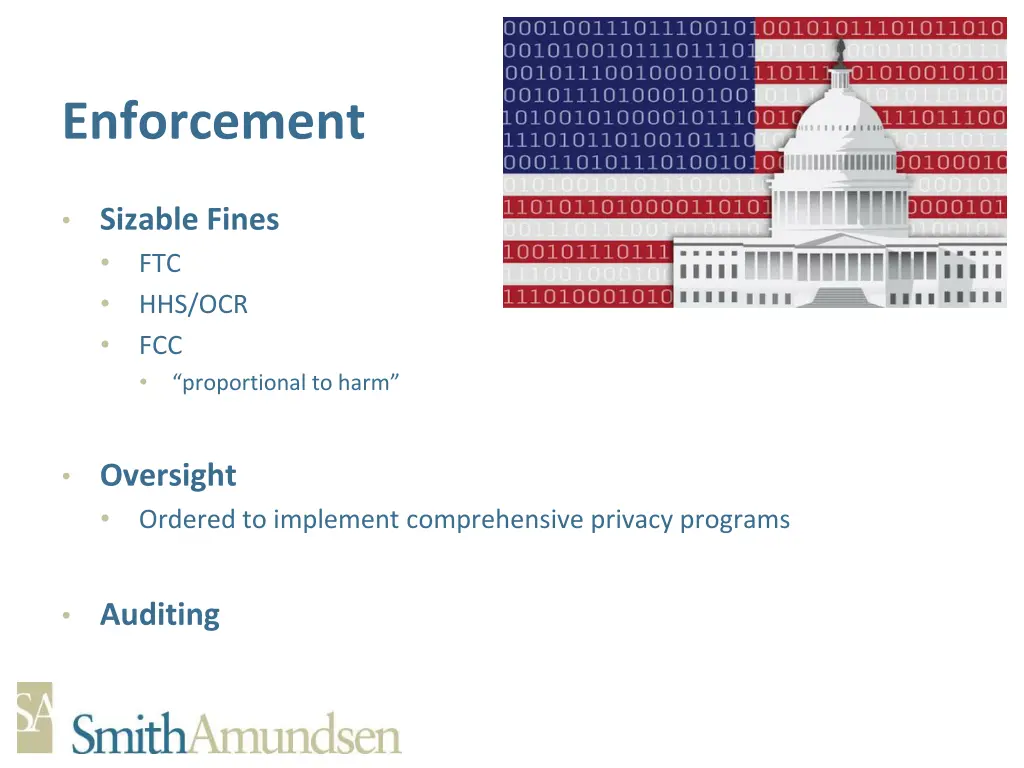
Enforcement Sizable Fines FTC HHS/OCR FCC proportional to harm Oversight Ordered to implement comprehensive privacy programs Auditing
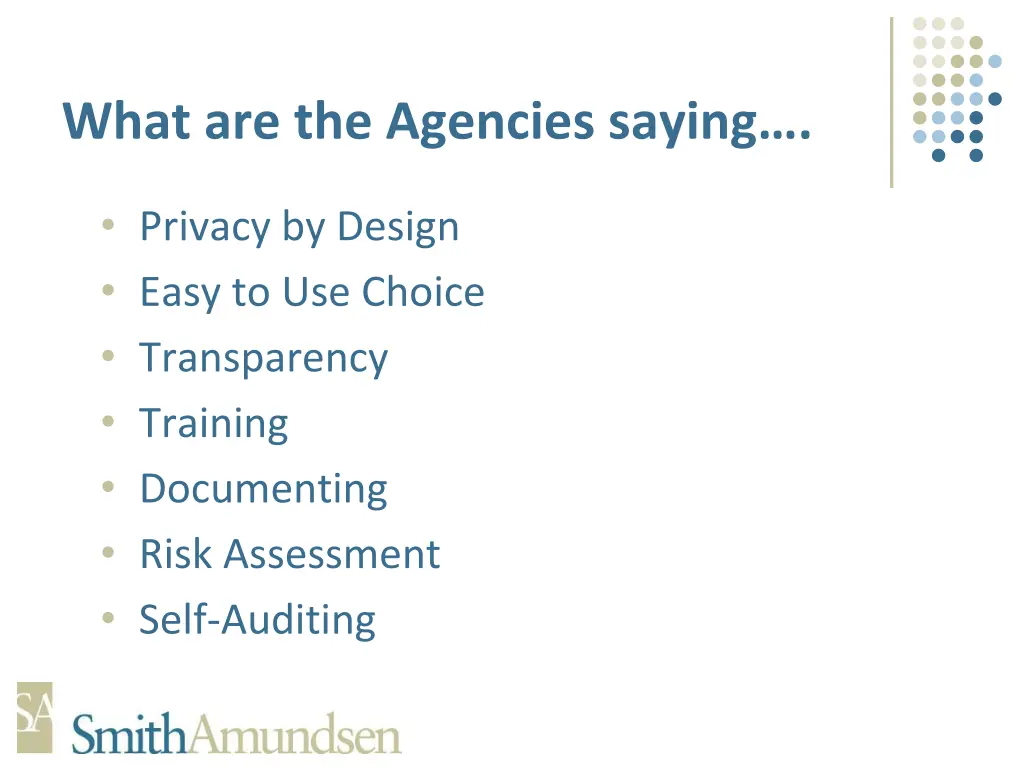
What are the Agencies saying. Privacy by Design Easy to Use Choice Transparency Training Documenting Risk Assessment Self-Auditing
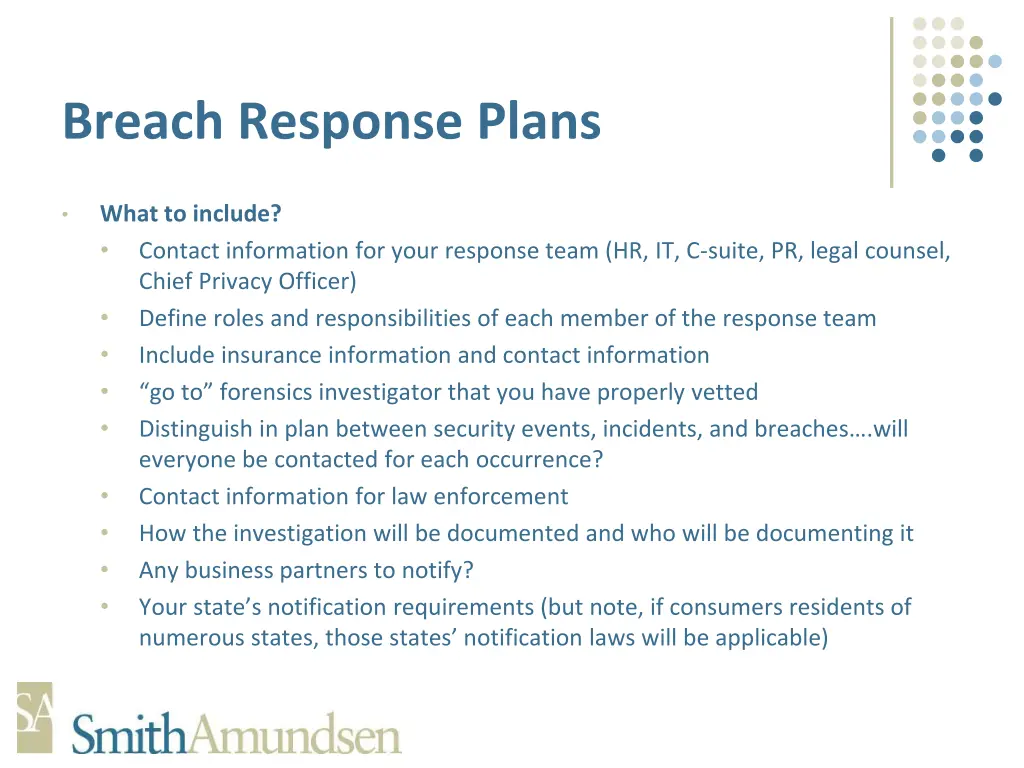
Breach Response Plans What to include? Contact information for your response team (HR, IT, C-suite, PR, legal counsel, Chief Privacy Officer) Define roles and responsibilities of each member of the response team Include insurance information and contact information go to forensics investigator that you have properly vetted Distinguish in plan between security events, incidents, and breaches .will everyone be contacted for each occurrence? Contact information for law enforcement How the investigation will be documented and who will be documenting it Any business partners to notify? Your state s notification requirements (but note, if consumers residents of numerous states, those states notification laws will be applicable)
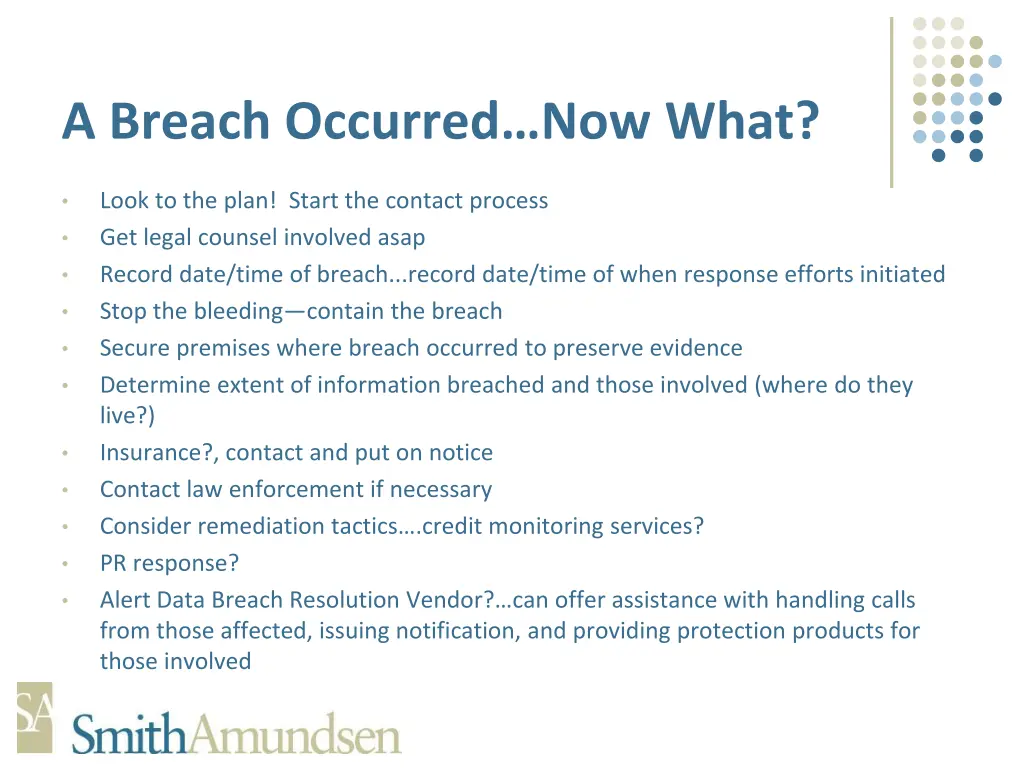
A Breach OccurredNow What? Look to the plan! Start the contact process Get legal counsel involved asap Record date/time of breach...record date/time of when response efforts initiated Stop the bleeding contain the breach Secure premises where breach occurred to preserve evidence Determine extent of information breached and those involved (where do they live?) Insurance?, contact and put on notice Contact law enforcement if necessary Consider remediation tactics .credit monitoring services? PR response? Alert Data Breach Resolution Vendor? can offer assistance with handling calls from those affected, issuing notification, and providing protection products for those involved
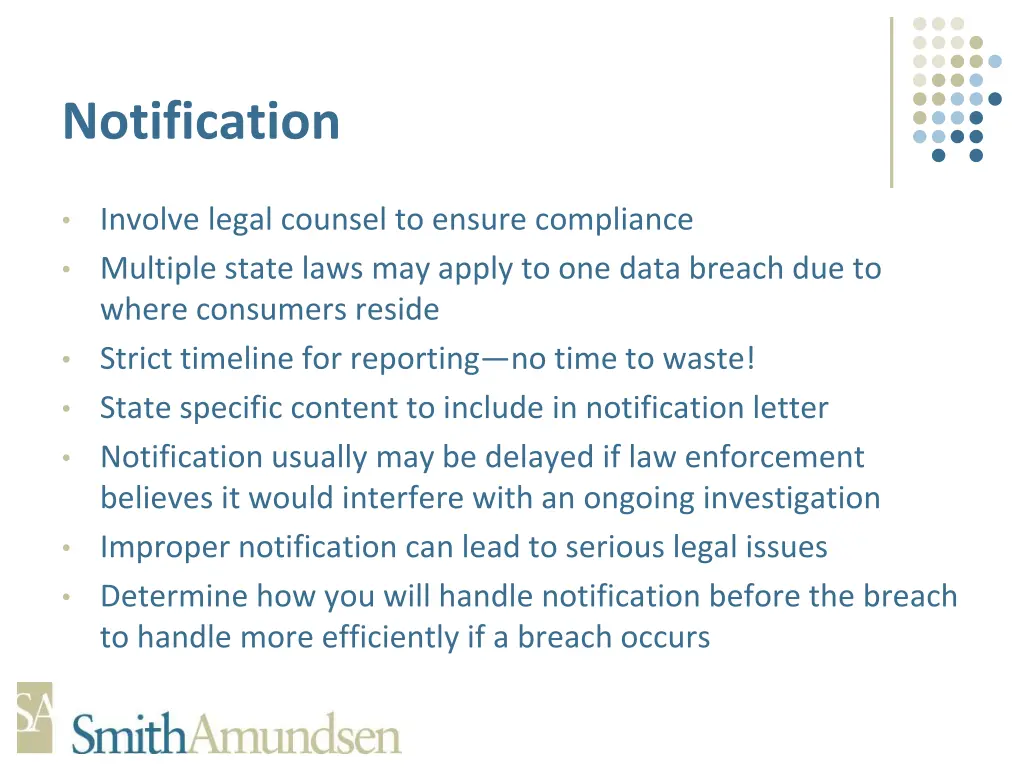
Notification Involve legal counsel to ensure compliance Multiple state laws may apply to one data breach due to where consumers reside Strict timeline for reporting no time to waste! State specific content to include in notification letter Notification usually may be delayed if law enforcement believes it would interfere with an ongoing investigation Improper notification can lead to serious legal issues Determine how you will handle notification before the breach to handle more efficiently if a breach occurs
Auditing Your Plan Have you identified all of your breach response vendors? forensics, outside counsel, etc. Does everyone know their roles? Meet with IT security to analyze risks any recent security events, etc. Review legal compliance requirements notification of consumers, law enforcement, AGs, etc.) Does your plan need updates? Certain employees no longer with you that were part of breach response team? Audit at least yearly (recommended to do more often)
Thank You! Tim Lessman Colin Gainer Partner Partner 312.894.3359 tlessman@salawus.com 312.894.3331 cgainer@salawus.com