Explore the complexities of Acute Respiratory Distress Syndrome (ARDS), a severe lung condition with significant morbidity and mortality worldwide. Uncover its causes, symptoms, and treatment options to understand and manage ARDS effectively. Discover the importance of early detection, patient support, and ongoing research for better outcomes in ARDS patients.
Please find below an Image/Link to download the presentation.
The content on the website is provided AS IS for your information and personal use only. It may not be sold, licensed, or shared on other websites without obtaining consent from the author. If you encounter any issues during the download, it is possible that the publisher has removed the file from their server.
You are allowed to download the files provided on this website for personal or commercial use, subject to the condition that they are used lawfully. All files are the property of their respective owners.
The content on the website is provided AS IS for your information and personal use only. It may not be sold, licensed, or shared on other websites without obtaining consent from the author.
E N D
Presentation Transcript
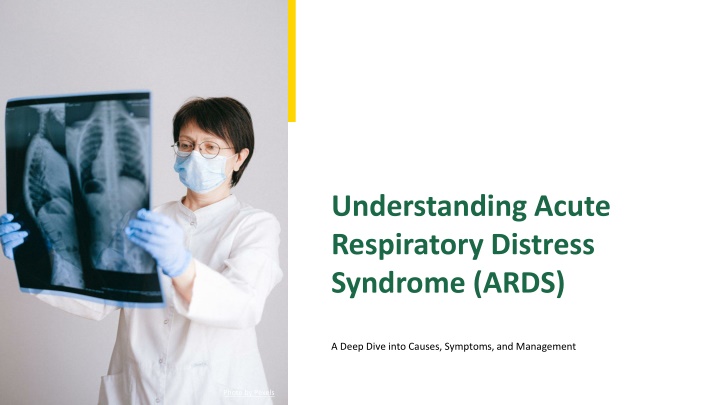
Understanding Acute Respiratory Distress Syndrome (ARDS) A Deep Dive into Causes, Symptoms, and Management Photo by Pexels
01 Introduction to ARDS Table of Contents 02 Symptoms and Diagnosis 03 Treatment and Management 04 Living with ARDS 05 Research and Future Directions
1 Introduction to ARDS What is Acute Respiratory Distress Syndrome? ARDS is a severe lung condition where fluid accumulates in the alveoli, leading to breathing difficulties. Common causes include pneumonia, sepsis, trauma, and inhalationof harmful substances. ARDS affects thousands worldwide, leading to significant morbidity and mortality. Understanding ARDS is crucial for early detection and effective management. Photo by Pexels
2 Symptoms and Diagnosis Recognizing ARDS Early Symptoms include severe shortness of breath, rapid breathing, and low blood oxygen levels. Chest X-rays, blood tests, and CT scans are used to diagnose ARDS. Distinguishing ARDS from other respiratory conditions is essential for propertreatment. Early diagnosis can improve outcomes and reduce complications. Photo by Pexels
3 Treatment and Management Approaches to Managing ARDS Ventilation support and medications are primary treatments for ARDS. Includes oxygen therapy, fluid management, and nutritional support. Physical therapy and rehabilitation are vital for recovery post- ARDS. Research is ongoing for new therapies, including stem cell treatment. Photo by Pexels
4 Living with ARDS Patient and Family Support Counseling and support groups help patients and families cope with ARDS. Patients may need to make lifestyle changes to manage their condition. Recovery varies; some may experience long-term effects, while others recover fully. Access to resources and support networks is crucial for ongoing care. Photo by Pexels
5 Research and Future Directions The Future of ARDS Treatment Ongoing studies aim to better understand ARDS and improve treatments. Technological advancements are enhancing ARDS management and outcomes. International collaborations are crucial for advancing ARDS research. Continued research offers hope for more effective treatments and better patientoutcomes. Photo by Pexels