Delivering Competencies in Advanced Practitioner Podiatry

The presentation discusses the successful implementation of Advanced Practitioner Podiatry services within NHS Lanarkshire, detailing significant milestones from 2010 to 2015. It highlights the impact of multi-chair clinics led by Extended Scope Practitioners (ESP), the outcomes in managing referrals conservatively, and the ongoing development of staff skills. Emphasis is placed on collaboration and bridging skill gaps among Musculoskeletal (MSK) staff, showcasing a model that improves patient care while reducing unnecessary referrals to acute orthopaedic services.

Download Presentation

Please find below an Image/Link to download the presentation.
The content on the website is provided AS IS for your information and personal use only. It may not be sold, licensed, or shared on other websites without obtaining consent from the author.If you encounter any issues during the download, it is possible that the publisher has removed the file from their server.
You are allowed to download the files provided on this website for personal or commercial use, subject to the condition that they are used lawfully. All files are the property of their respective owners.
The content on the website is provided AS IS for your information and personal use only. It may not be sold, licensed, or shared on other websites without obtaining consent from the author.
E N D
Presentation Transcript
Delivering Competencies Steven McMillan Jim Logan Advanced Practitioner Podiatrist ESP Service Manager
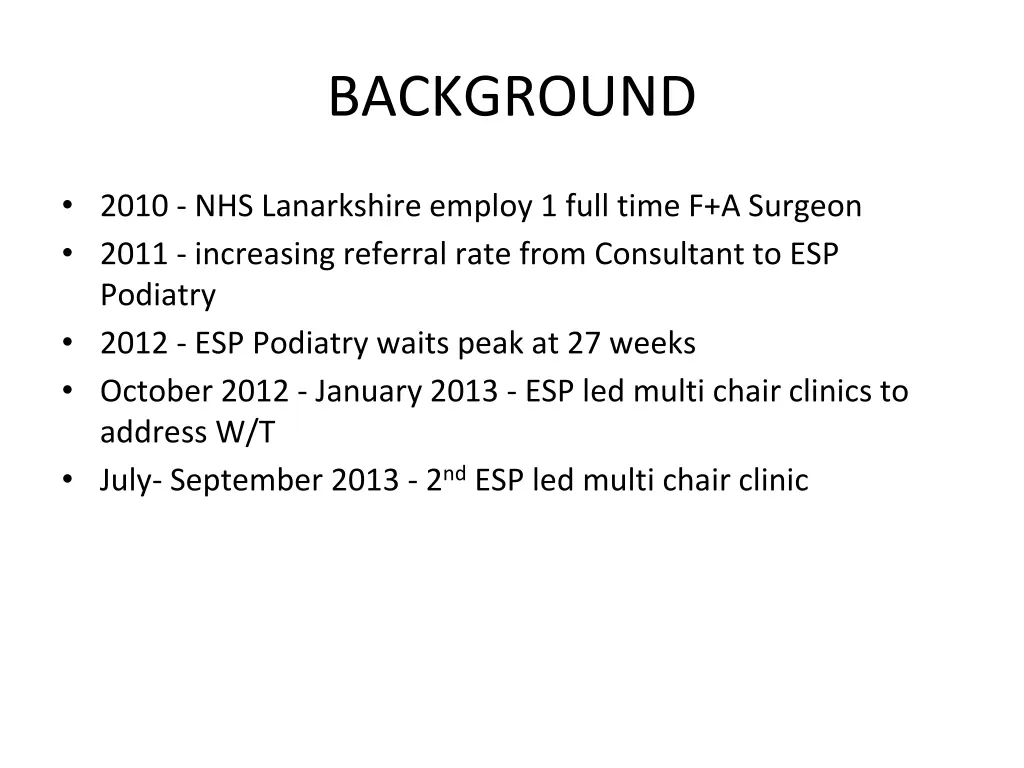
BACKGROUND 2010 - NHS Lanarkshire employ 1 full time F+A Surgeon 2011 - increasing referral rate from Consultant to ESP Podiatry 2012 - ESP Podiatry waits peak at 27 weeks October 2012 - January 2013 - ESP led multi chair clinics to address W/T July- September 2013 - 2ndESP led multi chair clinic
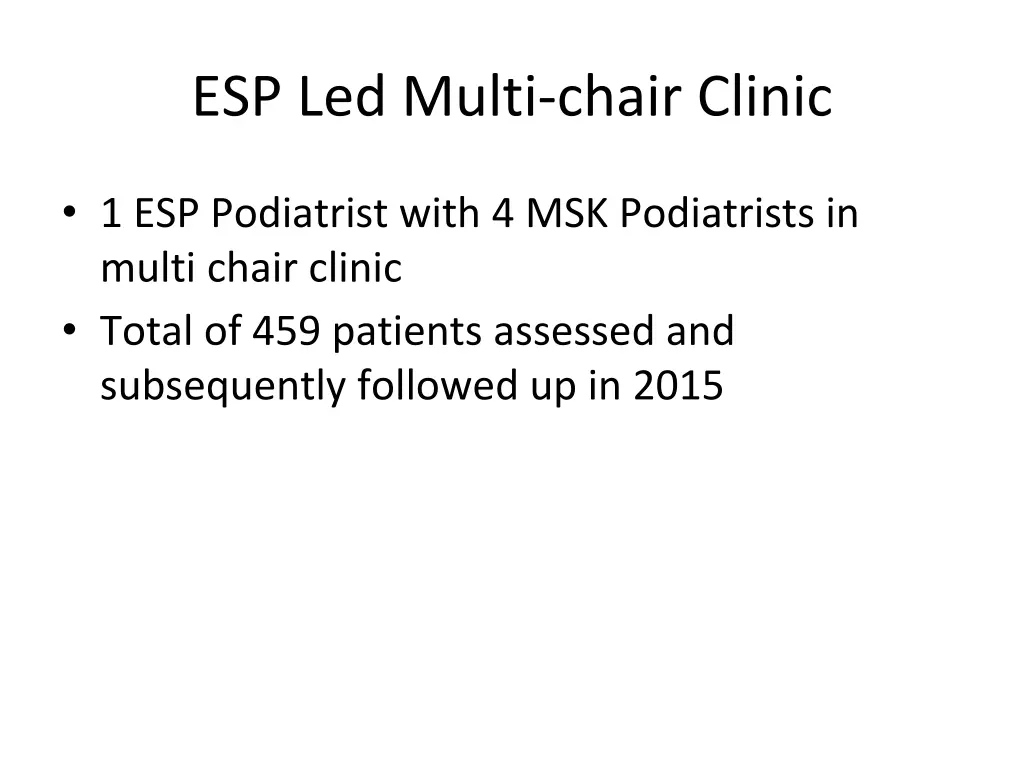
ESP Led Multi-chair Clinic 1 ESP Podiatrist with 4 MSK Podiatrists in multi chair clinic Total of 459 patients assessed and subsequently followed up in 2015
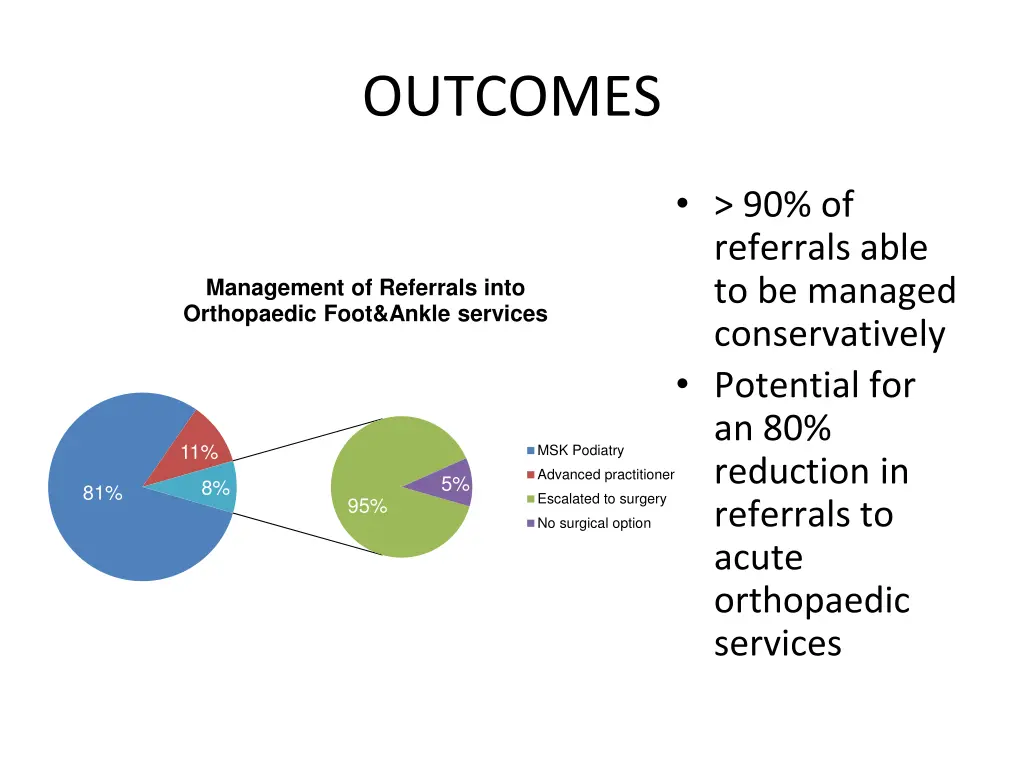
OUTCOMES > 90% of referrals able to be managed conservatively Potential for an 80% reduction in referrals to acute orthopaedic services Management of Referrals into Orthopaedic Foot&Ankle services 11% MSK Podiatry Advanced practitioner 5% 8% 81% Escalated to surgery 95% No surgical option
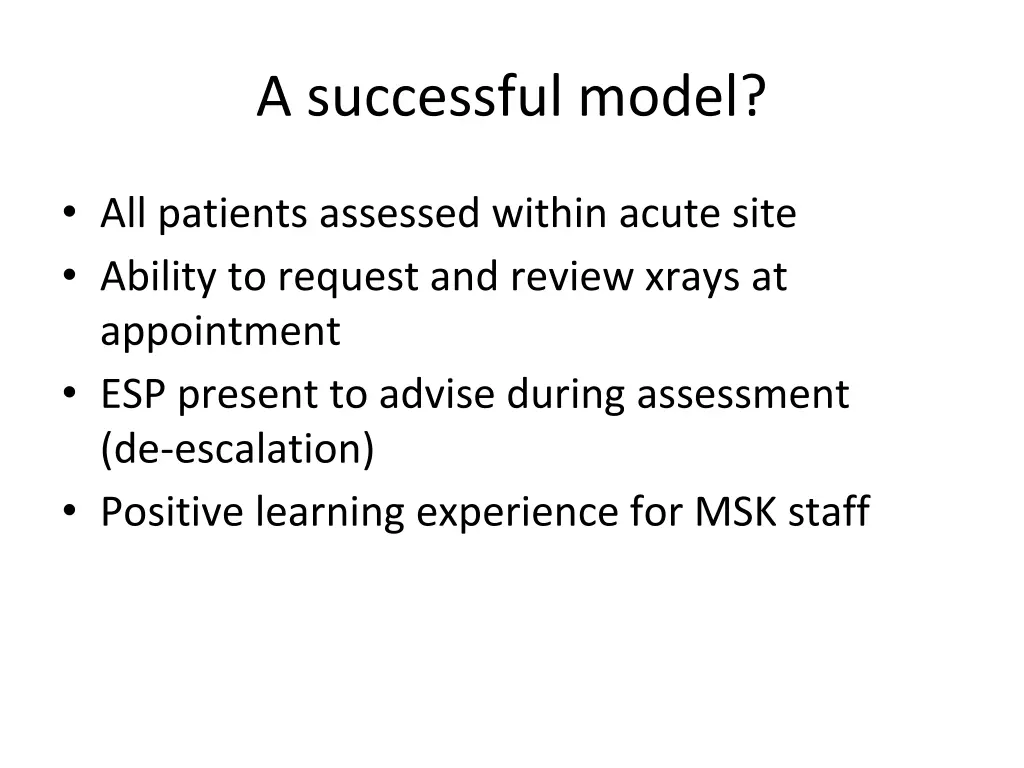
A successful model? All patients assessed within acute site Ability to request and review xrays at appointment ESP present to advise during assessment (de-escalation) Positive learning experience for MSK staff
Bridging the skill gap Understand current skill set of MSK staff Assessment Clinical reasoning Communication
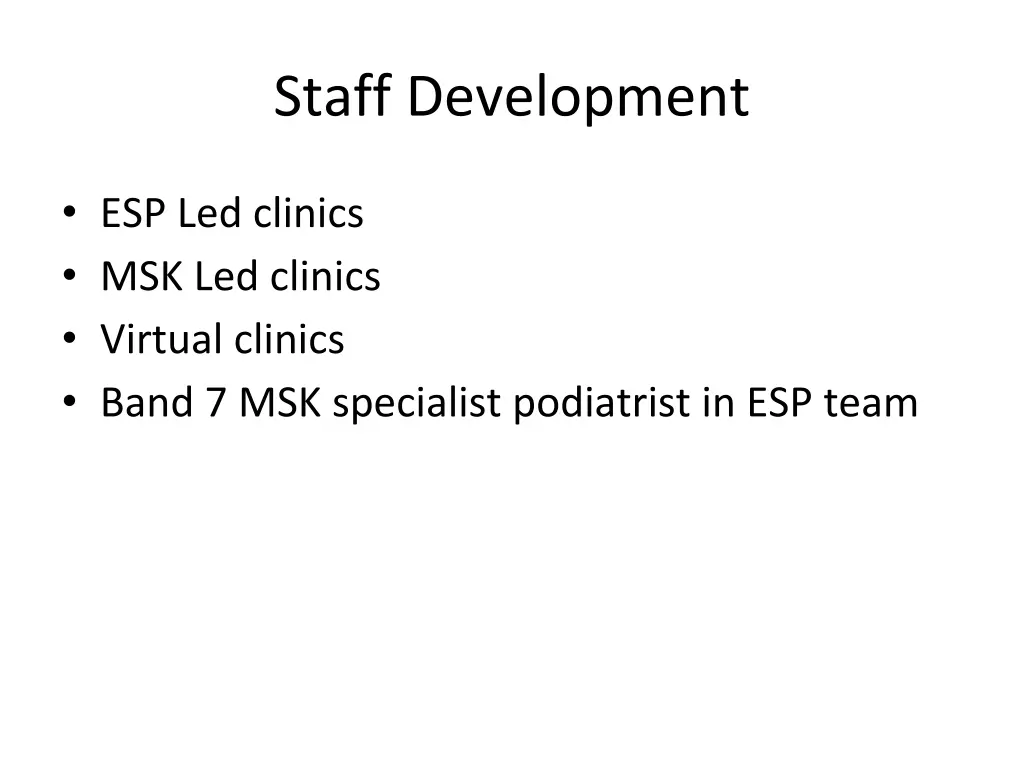
Staff Development ESP Led clinics MSK Led clinics Virtual clinics Band 7 MSK specialist podiatrist in ESP team
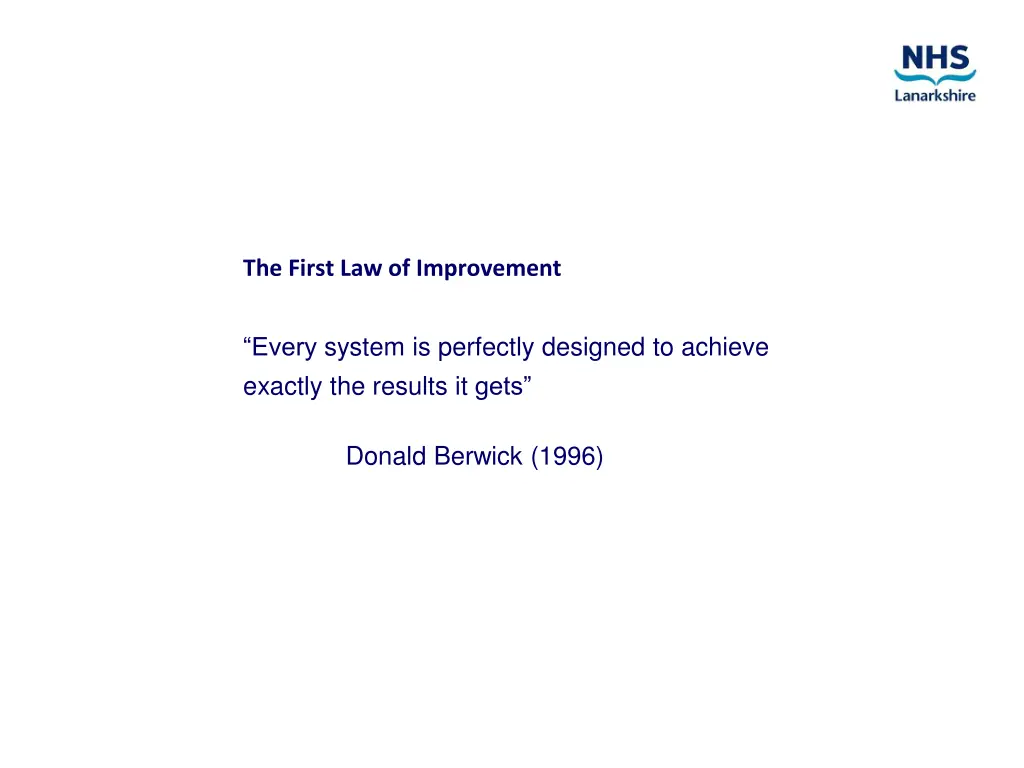
The First Law of Improvement Every system is perfectly designed to achieve exactly the results it gets Donald Berwick (1996)
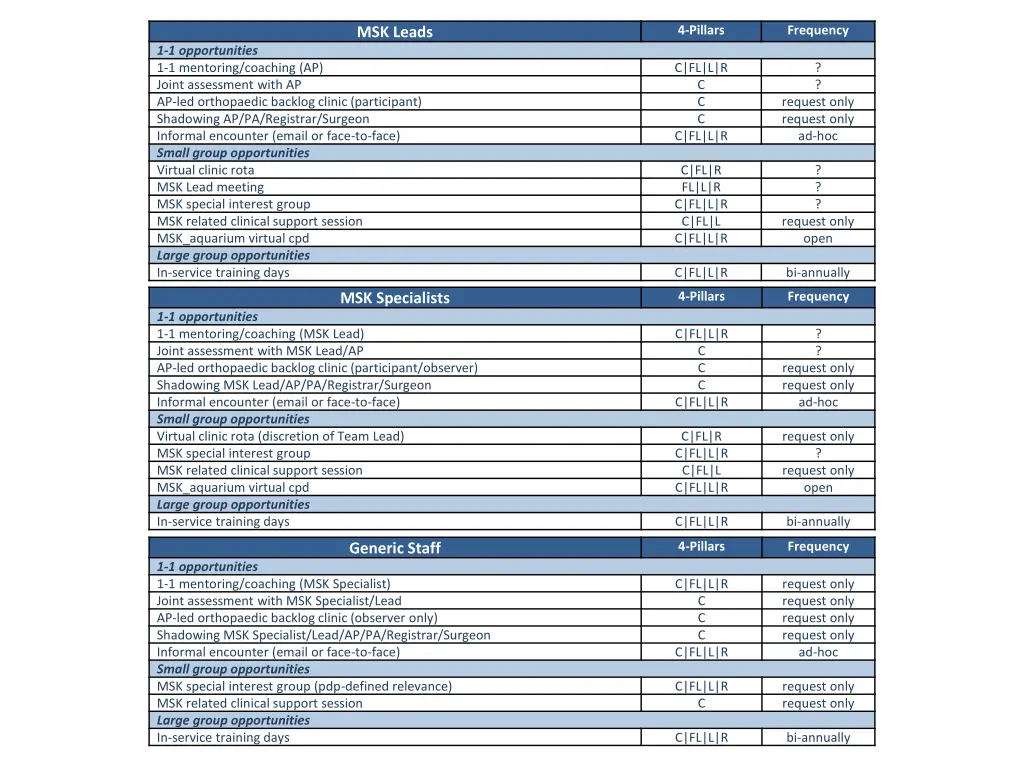
4-Pillars Frequency MSK Leads 1-1 opportunities 1-1 mentoring/coaching (AP) Joint assessment with AP AP-led orthopaedic backlog clinic (participant) Shadowing AP/PA/Registrar/Surgeon Informal encounter (email or face-to-face) Small group opportunities Virtual clinic rota MSK Lead meeting MSK special interest group MSK related clinical support session MSK_aquarium virtual cpd Large group opportunities In-service training days C|FL|L|R C C C C|FL|L|R ? ? request only request only ad-hoc C|FL|R FL|L|R C|FL|L|R C|FL|L C|FL|L|R ? ? ? request only open C|FL|L|R bi-annually 4-Pillars Frequency MSK Specialists 1-1 opportunities 1-1 mentoring/coaching (MSK Lead) Joint assessment with MSK Lead/AP AP-led orthopaedic backlog clinic (participant/observer) Shadowing MSK Lead/AP/PA/Registrar/Surgeon Informal encounter (email or face-to-face) Small group opportunities Virtual clinic rota (discretion of Team Lead) MSK special interest group MSK related clinical support session MSK_aquarium virtual cpd Large group opportunities In-service training days C|FL|L|R C C C C|FL|L|R ? ? request only request only ad-hoc C|FL|R C|FL|L|R C|FL|L C|FL|L|R request only ? request only open C|FL|L|R bi-annually 4-Pillars Frequency Generic Staff 1-1 opportunities 1-1 mentoring/coaching (MSK Specialist) Joint assessment with MSK Specialist/Lead AP-led orthopaedic backlog clinic (observer only) Shadowing MSK Specialist/Lead/AP/PA/Registrar/Surgeon Informal encounter (email or face-to-face) Small group opportunities MSK special interest group (pdp-defined relevance) MSK related clinical support session Large group opportunities In-service training days C|FL|L|R C C C C|FL|L|R request only request only request only request only ad-hoc C|FL|L|R C request only request only C|FL|L|R bi-annually
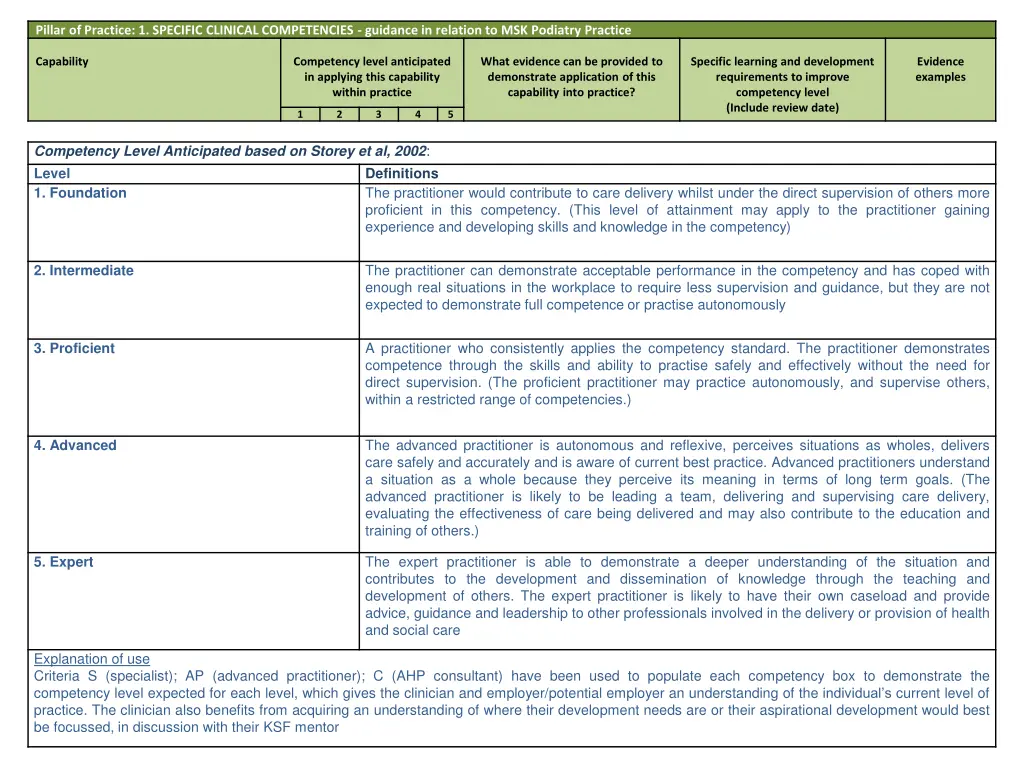
Pillar of Practice: 1. SPECIFIC CLINICAL COMPETENCIES - guidance in relation to MSK Podiatry Practice Capability Competency level anticipated in applying this capability within practice What evidence can be provided to demonstrate application of this capability into practice? Specific learning and development requirements to improve competency level (Include review date) Evidence examples 1 2 3 4 5 Competency Level Anticipated based on Storey et al, 2002: Level 1. Foundation Definitions The practitioner would contribute to care delivery whilst under the direct supervision of others more proficient in this competency. (This level of attainment may apply to the practitioner gaining experience and developing skills and knowledge in the competency) The practitioner can demonstrate acceptable performance in the competency and has coped with enough real situations in the workplace to require less supervision and guidance, but they are not expected to demonstrate full competence or practise autonomously 2. Intermediate A practitioner who consistently applies the competency standard. The practitioner demonstrates competence through the skills and ability to practise safely and effectively without the need for direct supervision. (The proficient practitioner may practice autonomously, and supervise others, within a restricted range of competencies.) 3. Proficient The advanced practitioner is autonomous and reflexive, perceives situations as wholes, delivers care safely and accurately and is aware of current best practice. Advanced practitioners understand a situation as a whole because they perceive its meaning in terms of long term goals. (The advanced practitioner is likely to be leading a team, delivering and supervising care delivery, evaluating the effectiveness of care being delivered and may also contribute to the education and training of others.) 4. Advanced The expert practitioner is able to demonstrate a deeper understanding of the situation and contributes to the development and dissemination of knowledge through the teaching and development of others. The expert practitioner is likely to have their own caseload and provide advice, guidance and leadership to other professionals involved in the delivery or provision of health and social care 5. Expert Explanation of use Criteria S (specialist); AP (advanced practitioner); C (AHP consultant) have been used to populate each competency box to demonstrate the competency level expected for each level, which gives the clinician and employer/potential employer an understanding of the individual s current level of practice. The clinician also benefits from acquiring an understanding of where their development needs are or their aspirational development would best be focussed, in discussion with their KSF mentor
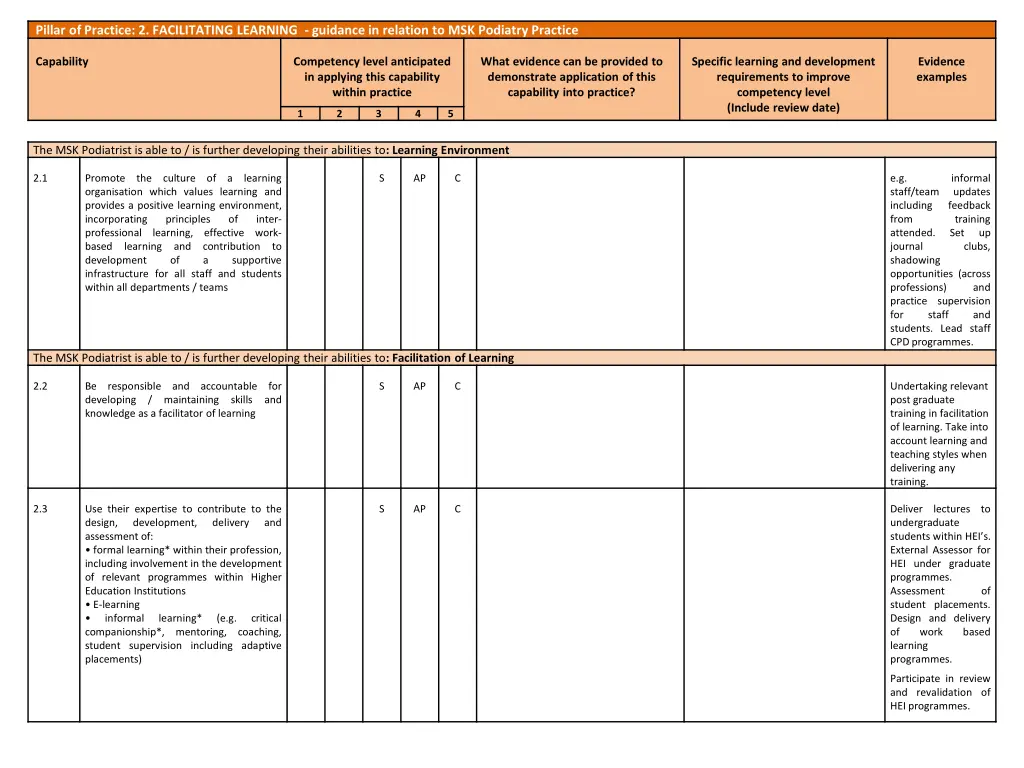
Pillar of Practice: 2. FACILITATING LEARNING - guidance in relation to MSK Podiatry Practice Capability Competency level anticipated in applying this capability within practice What evidence can be provided to demonstrate application of this capability into practice? Specific learning and development requirements to improve competency level (Include review date) Evidence examples 1 2 3 4 5 The MSK Podiatrist is able to / is further developing their abilities to: Learning Environment 2.1 Promote organisation which values learning and provides a positive learning environment, incorporating principles professional learning, based learning and development of infrastructure for all staff and students within all departments / teams the culture of a learning S AP C e.g. staff/team including from attended. journal shadowing opportunities (across professions) practice supervision for staff students. Lead staff CPDprogrammes. informal updates feedback training Set clubs, of inter- work- effective contribution a up to supportive and and The MSK Podiatrist is able to / is further developing their abilities to: Facilitation of Learning 2.2 Be developing knowledge as a facilitator of learning responsible and maintaining accountable for and S AP C Undertaking relevant post graduate training in facilitation of learning. Take into account learning and teaching styles when delivering any training. / skills 2.3 Use their expertise to contribute to the design, development, assessment of: formal learning* within their profession, including involvement in the development of relevant programmes within Higher Education Institutions E-learning informal learning* companionship*, mentoring, student supervision including adaptive placements) S AP C Deliver undergraduate students within HEI s. External Assessor for HEI under graduate programmes. Assessment student placements. Design and delivery of work learning programmes. lectures to delivery and of (e.g. critical coaching, based Participate in review and revalidation of HEIprogrammes.
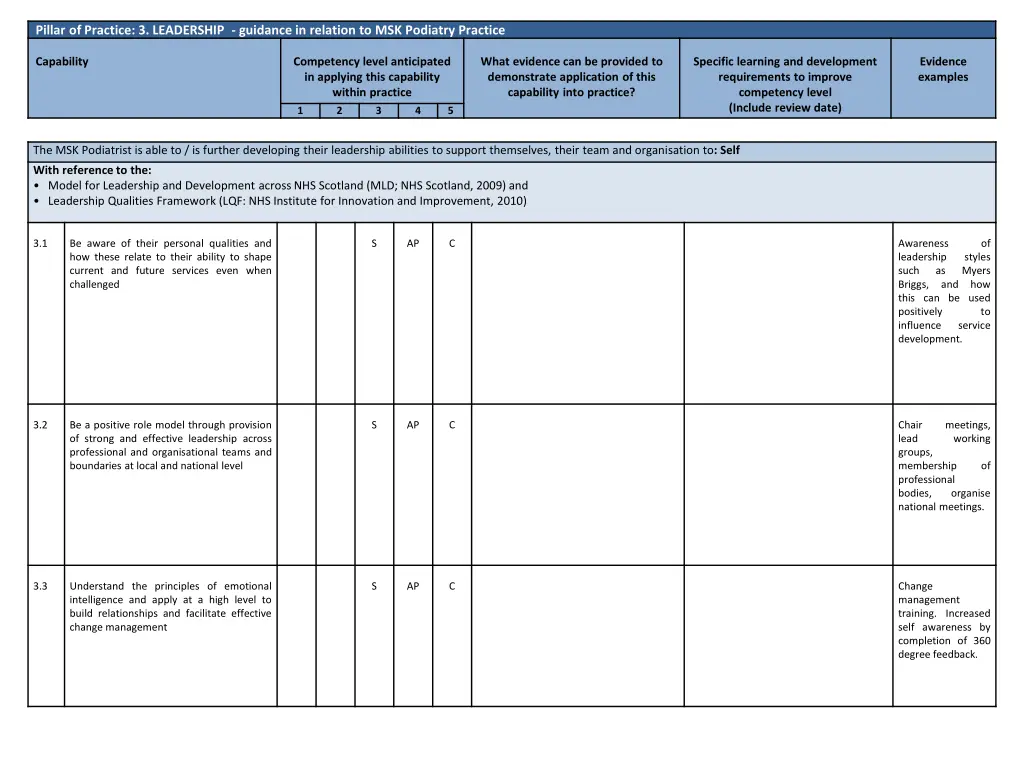
Pillar of Practice: 3. LEADERSHIP - guidance in relation to MSK Podiatry Practice Capability Competency level anticipated in applying this capability within practice What evidence can be provided to demonstrate application of this capability into practice? Specific learning and development requirements to improve competency level (Include review date) Evidence examples 1 2 3 4 5 The MSK Podiatrist is able to / is further developing their leadership abilities to support themselves, their team and organisation to: Self With reference to the: Model for Leadership and Development across NHS Scotland (MLD; NHS Scotland, 2009) and Leadership Qualities Framework (LQF: NHS Institute for Innovation and Improvement, 2010) 3.1 Be aware of their personal qualities and how these relate to their ability to shape current and future services even when challenged S AP C Awareness leadership such Briggs, this can be used positively influence development. of styles Myers how as and to service 3.2 Be a positive role model through provision of strong and effective leadership across professional and organisational teams and boundaries at local and national level S AP C Chair lead groups, membership professional bodies, national meetings. meetings, working of organise 3.3 Understand the principles of emotional intelligence and apply at a high level to build relationships and facilitate effective change management S AP C Change management training. Increased self awareness by completion of 360 degree feedback.
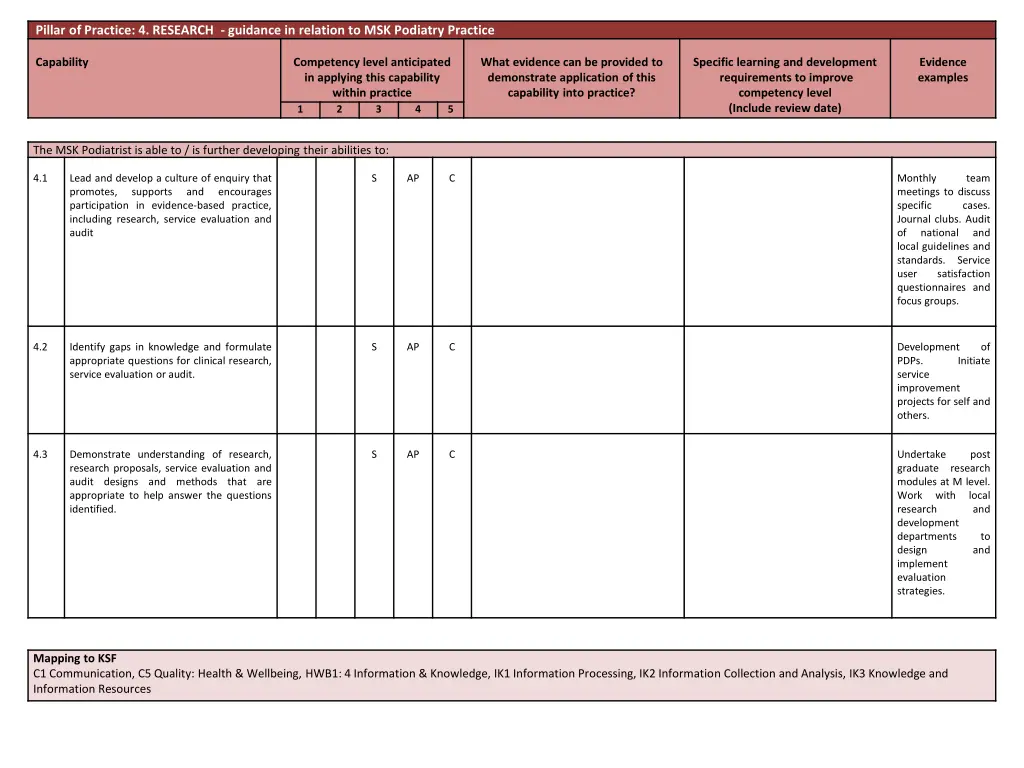
Pillar of Practice: 4. RESEARCH - guidance in relation to MSK Podiatry Practice Capability Competency level anticipated in applying this capability within practice 1 2 What evidence can be provided to demonstrate application of this capability into practice? Specific learning and development requirements to improve competency level (Include review date) Evidence examples 3 4 5 The MSK Podiatrist is able to / is further developing their abilities to: 4.1 Lead and develop a culture of enquiry that promotes, supports participation in evidence-based practice, including research, service evaluation and audit S AP C Monthly meetings to discuss specific Journal clubs. Audit of national local guidelines and standards. user satisfaction questionnaires and focus groups. team and encourages cases. and Service 4.2 Identify gaps in knowledge and formulate appropriate questions for clinical research, service evaluation or audit. S AP C Development PDPs. service improvement projects for self and others. of Initiate 4.3 Demonstrate understanding of research, research proposals, service evaluation and audit designs and methods that are appropriate to help answer the questions identified. S AP C Undertake graduate modules at M level. Work with research development departments design implement evaluation strategies. post research local and to and Mapping to KSF C1 Communication, C5 Quality: Health & Wellbeing, HWB1: 4 Information & Knowledge, IK1 Information Processing, IK2 Information Collection and Analysis, IK3 Knowledge and Information Resources
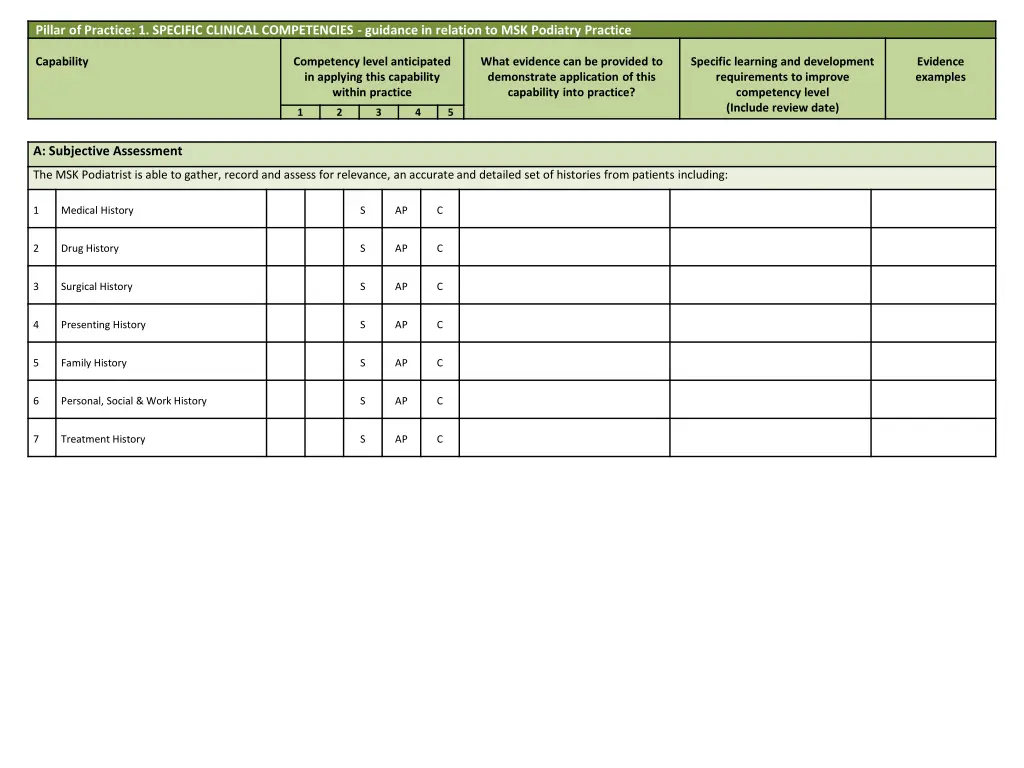
Pillar of Practice: 1. SPECIFIC CLINICAL COMPETENCIES - guidance in relation to MSK Podiatry Practice Capability Competency level anticipated in applying this capability within practice What evidence can be provided to demonstrate application of this capability into practice? Specific learning and development requirements to improve competency level (Include review date) Evidence examples 1 2 3 4 5 A: Subjective Assessment The MSK Podiatrist is able to gather, record and assess for relevance, an accurate and detailed set of histories from patients including: 1 Medical History S AP C 2 Drug History S AP C 3 Surgical History S AP C 4 Presenting History S AP C 5 Family History S AP C 6 Personal, Social & Work History S AP C 7 Treatment History S AP C
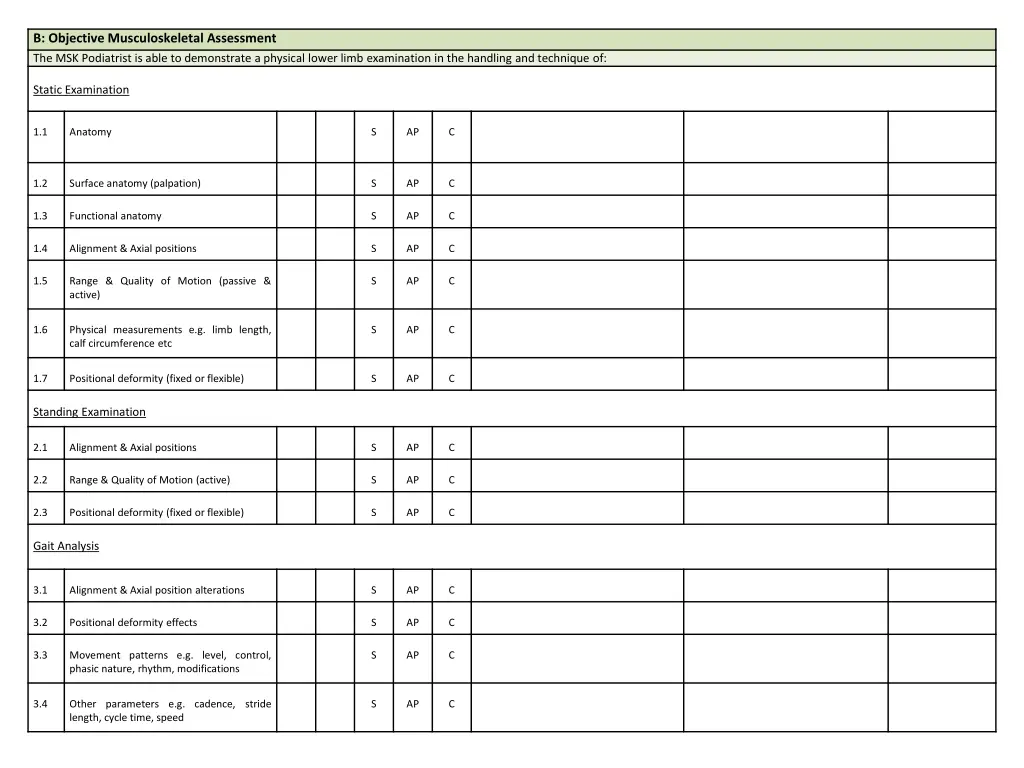
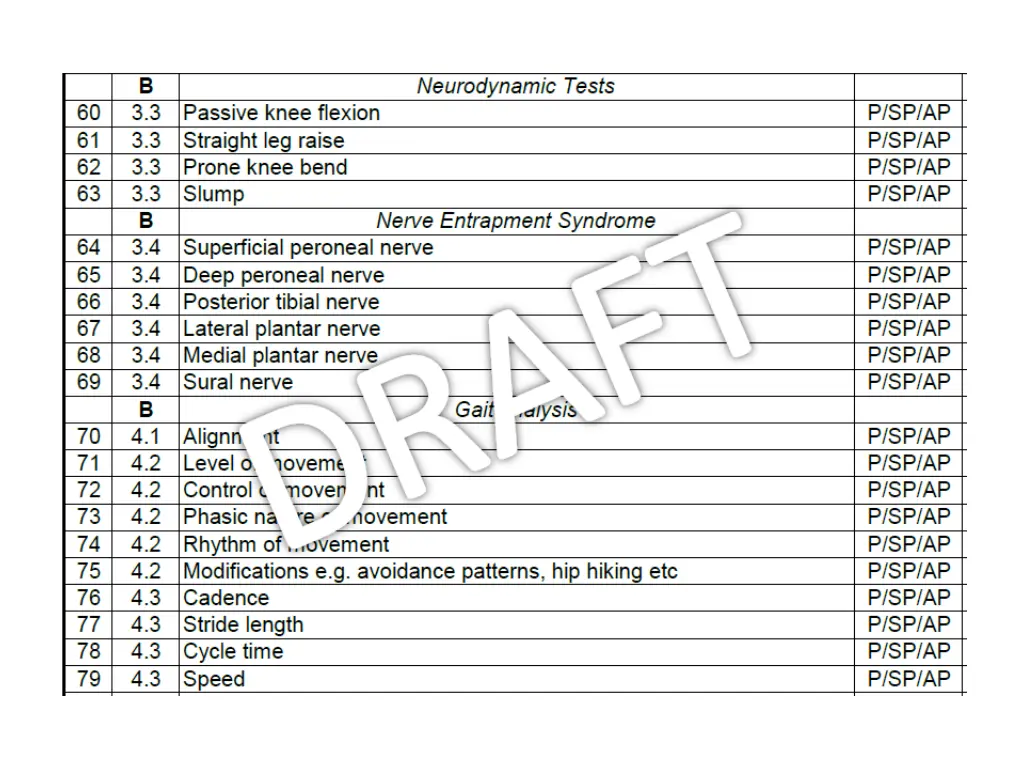
B: Objective Musculoskeletal Assessment The MSK Podiatrist is able to demonstrate a physical lower limb examination in the handling and technique of: Static Examination 1.1 Anatomy S AP C 1.2 Surface anatomy (palpation) S AP C 1.3 Functional anatomy S AP C 1.4 Alignment & Axial positions S AP C 1.5 Range & Quality of Motion (passive & active) S AP C 1.6 Physical measurements e.g. limb length, calf circumference etc S AP C 1.7 Positional deformity (fixed or flexible) S AP C Standing Examination 2.1 Alignment & Axial positions S AP C 2.2 Range & Quality of Motion (active) S AP C 2.3 Positional deformity (fixed or flexible) S AP C Gait Analysis 3.1 Alignment & Axial position alterations S AP C 3.2 Positional deformity effects S AP C 3.3 Movement patterns e.g. level, control, phasic nature, rhythm, modifications S AP C 3.4 Other parameters e.g. cadence, stride length, cycle time, speed S AP C
Testing 4.1 Functional (mechanical) tests S AP C 4.2 Impingement syndromes S AP C 4.3 Instability tests S AP C 4.4 Neurodynamic tests S AP C 4.5 Nerve entrapments S AP C 4.6 Power tests S AP C 4.7 Proprioception S; AP C 4.8 Sensory tests S, AP C Neoplasia 5.1 Ganglion S AP C 5.2 Lipoma S AP C 5.3 Fibroma S AP C 5.4 Others requiring investigation/escalation S AP C
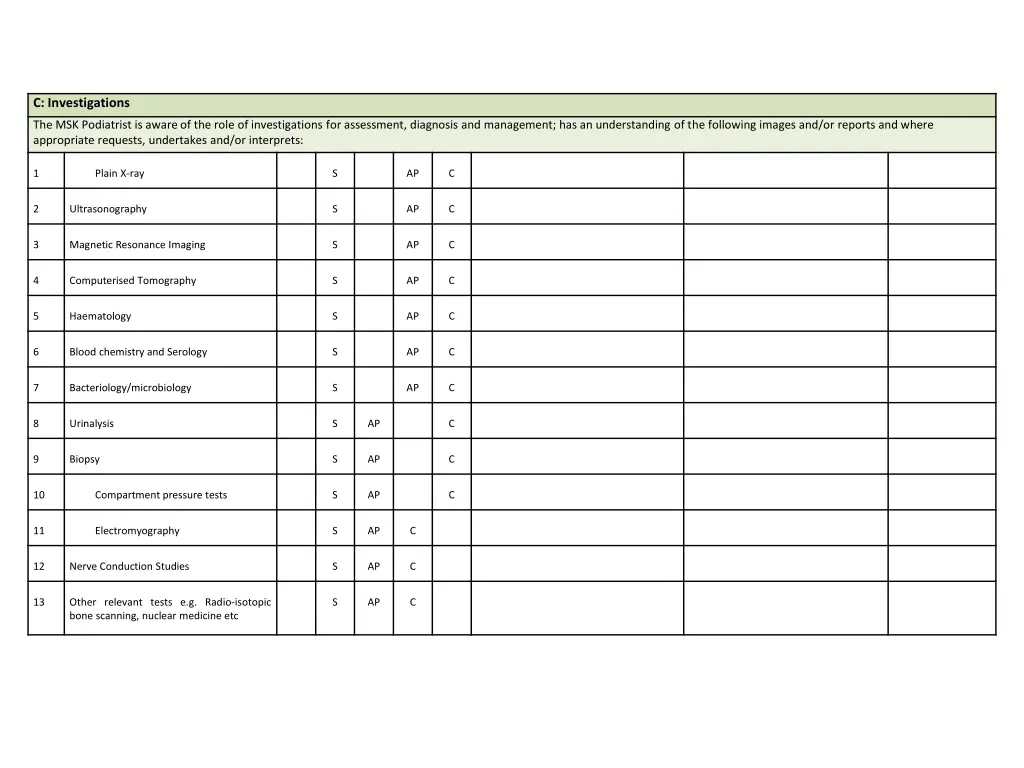
C: Investigations The MSK Podiatrist is aware of the role of investigations for assessment, diagnosis and management; has an understanding of the following images and/or reports and where appropriate requests, undertakes and/or interprets: 1 Plain X-ray S AP C 2 Ultrasonography S AP C 3 Magnetic Resonance Imaging S AP C 4 Computerised Tomography S AP C 5 Haematology S AP C 6 Blood chemistry and Serology S AP C 7 Bacteriology/microbiology S AP C 8 Urinalysis S AP C 9 Biopsy S AP C 10 Compartment pressure tests S AP C 11 Electromyography S AP C 12 Nerve Conduction Studies S AP C 13 Other relevant tests e.g. Radio-isotopic bone scanning, nuclear medicine etc S AP C
D: Categorisation The MSK Podiatrist can identify: 1 Indication for caution (red/yellow flags) S AP C 2 Dominant pain mechanism e.g. nociceptive, peripheral neurogenic, central neurogenic, affective S AP C 3 Classification of condition e.g. mal/adaptive, movement impaired, control impaired, hypo/hyper mobility, postural muscle dysfunction, motor control, neurological, biomechanical, psychosocial S AP C 4 Stage & Status +/- Grading e.g. acute, sub- acute, chronic, acute-on-chronic, resolving, worsening, status quo +/- grade of tendon dysfunction etc S AP C 5 Non/irritability, severity & degree of disability S AP C 6 Probable diagnosis (alongside possible differential diagnoses) S AP C
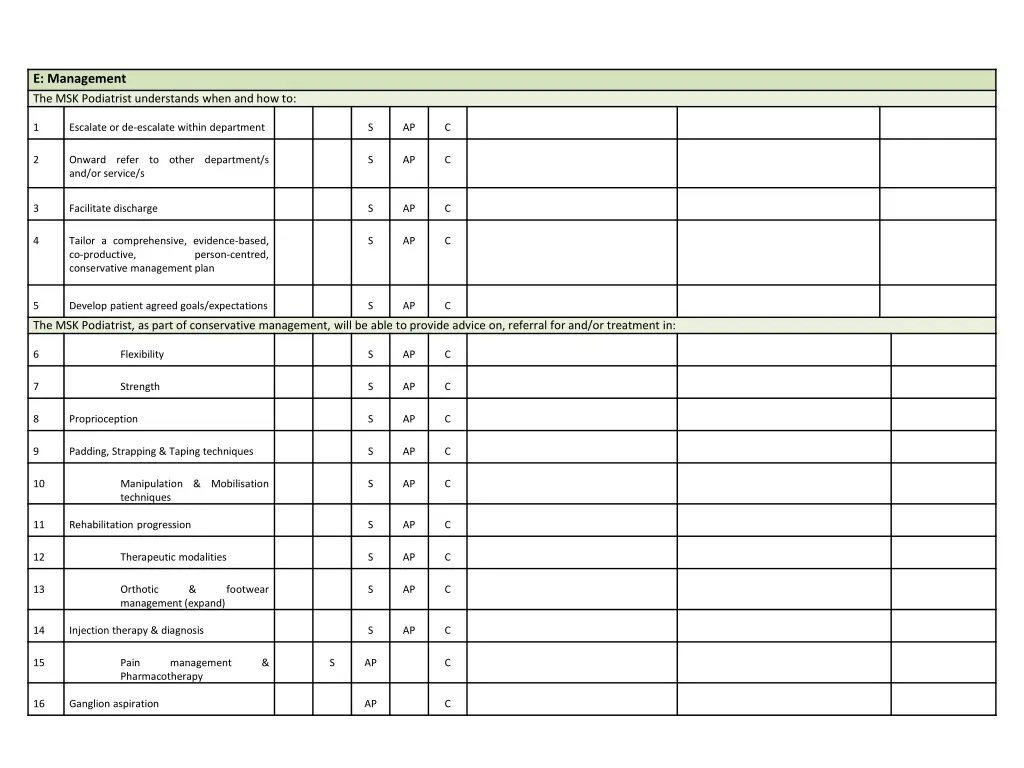
E: Management The MSK Podiatrist understands when and how to: 1 Escalate or de-escalate within department S AP C 2 Onward refer to other department/s and/or service/s S AP C 3 Facilitate discharge S AP C 4 Tailor a comprehensive, evidence-based, co-productive, conservative management plan S AP C person-centred, 5 Develop patient agreed goals/expectations S AP C The MSK Podiatrist, as part of conservative management, will be able to provide advice on, referral for and/or treatment in: 6 Flexibility S AP C 7 Strength S AP C 8 Proprioception S AP C 9 Padding, Strapping & Taping techniques S AP C 10 Manipulation & Mobilisation techniques S AP C 11 Rehabilitation progression S AP C 12 Therapeutic modalities S AP C 13 Orthotic management (expand) & footwear S AP C 14 Injection therapy & diagnosis S AP C 15 Pain Pharmacotherapy management & S AP C 16 Ganglion aspiration AP C
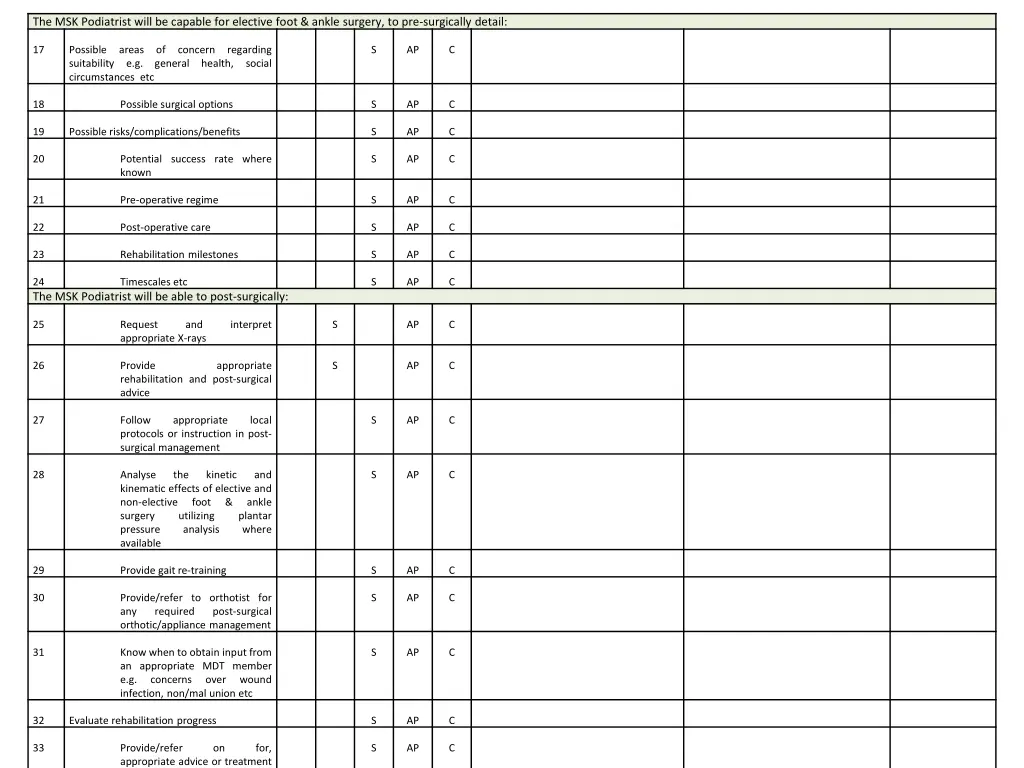
The MSK Podiatrist will be capable for elective foot & ankle surgery, to pre-surgically detail: 17 Possible suitability circumstances etc areas e.g. of general concern regarding social S AP C health, 18 Possible surgical options S AP C 19 Possible risks/complications/benefits S AP C 20 Potential success rate where known S AP C 21 Pre-operative regime S AP C 22 Post-operative care S AP C 23 Rehabilitation milestones S AP C 24 The MSK Podiatrist will be able to post-surgically: Timescales etc S AP C 25 Request appropriate X-rays and interpret S AP C 26 Provide rehabilitation and post-surgical advice appropriate S AP C 27 Follow protocols or instruction in post- surgical management appropriate local S AP C 28 Analyse kinematic effects of elective and non-elective foot surgery utilizing pressure analysis available the kinetic and S AP C & ankle plantar where 29 Provide gait re-training S AP C 30 Provide/refer to orthotist for any required orthotic/appliance management S AP C post-surgical 31 Know when to obtain input from an appropriate MDT member e.g. concerns infection, non/mal union etc S AP C over wound 32 Evaluate rehabilitation progress S AP C 33 Provide/refer appropriate advice or treatment for neurogenic on for, S AP C pain e.g.
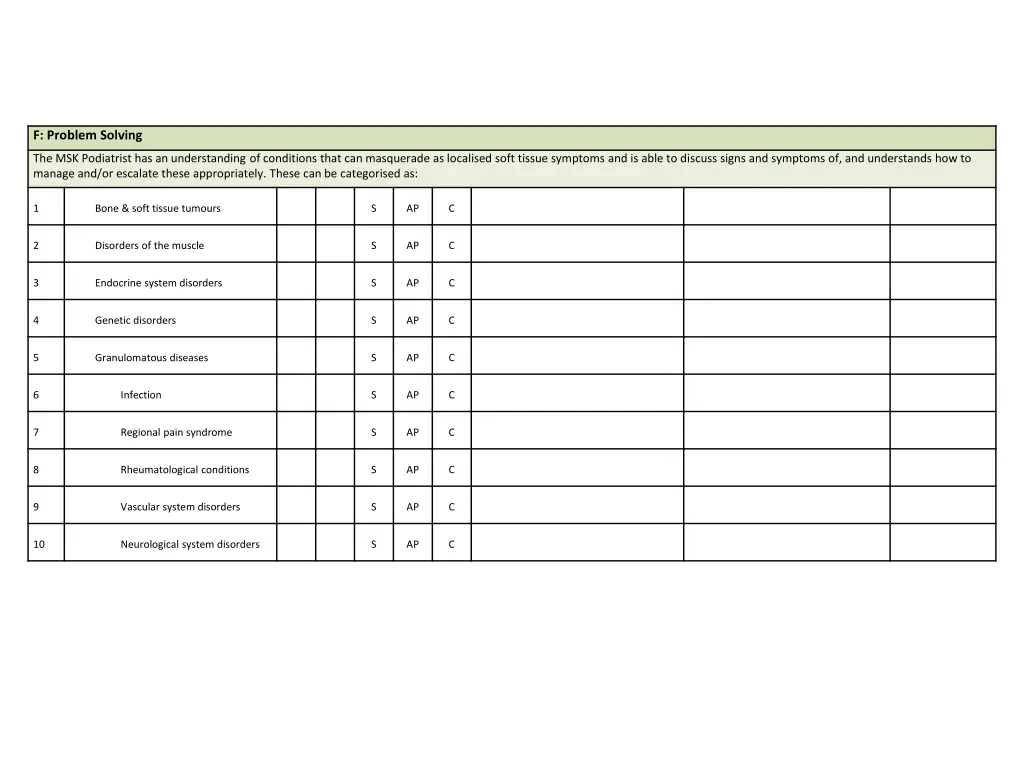
F: Problem Solving The MSK Podiatrist has an understanding of conditions that can masquerade as localised soft tissue symptoms and is able to discuss signs and symptoms of, and understands how to manage and/or escalate these appropriately. These can be categorised as: 1 Bone & soft tissue tumours S AP C 2 Disorders of the muscle S AP C 3 Endocrine system disorders S AP C 4 Genetic disorders S AP C 5 Granulomatous diseases S AP C 6 Infection S AP C 7 Regional pain syndrome S AP C 8 Rheumatological conditions S AP C 9 Vascular system disorders S AP C 10 Neurological system disorders S AP C
G: Clinical Reasoning The MSK Podiatrist has an organised biomedical and psychosocial knowledge which they can demonstrably use alongside relevant interpersonal, clinical and technical skills in: 1 Generation of hypotheses S AP C 2 Refinement of hypotheses S AP C 3 Diagnostic testing S AP C 4 Causal reasoning S AP C 5 Diagnostic verification S AP C 6 Therapeutic decision making S AP C H: Other The MSK podiatrist will be able to demonstrate competence at an appropriate level for the following tasks: 1 Vetting 2 MDT input?....