Design of REDD+-Compliant Benefit Distribution System for Vietnam
This project involved a team of experts hired through UN-REDD funds to design a benefit distribution system for REDD+ compliance in Vietnam. Key conclusions highlighted the potential for significant revenue generation. Outputs included executive summaries and policy reviews, with spin-off funding for further work in Cambodia and Laos.

Download Presentation

Please find below an Image/Link to download the presentation.
The content on the website is provided AS IS for your information and personal use only. It may not be sold, licensed, or shared on other websites without obtaining consent from the author.If you encounter any issues during the download, it is possible that the publisher has removed the file from their server.
You are allowed to download the files provided on this website for personal or commercial use, subject to the condition that they are used lawfully. All files are the property of their respective owners.
The content on the website is provided AS IS for your information and personal use only. It may not be sold, licensed, or shared on other websites without obtaining consent from the author.
E N D
Presentation Transcript
DESIGN OF REDD+-COMPLIANT BENEFIT DISTRIBUTION SYSTEM FOR VIET NAM Feb. 2, 2010
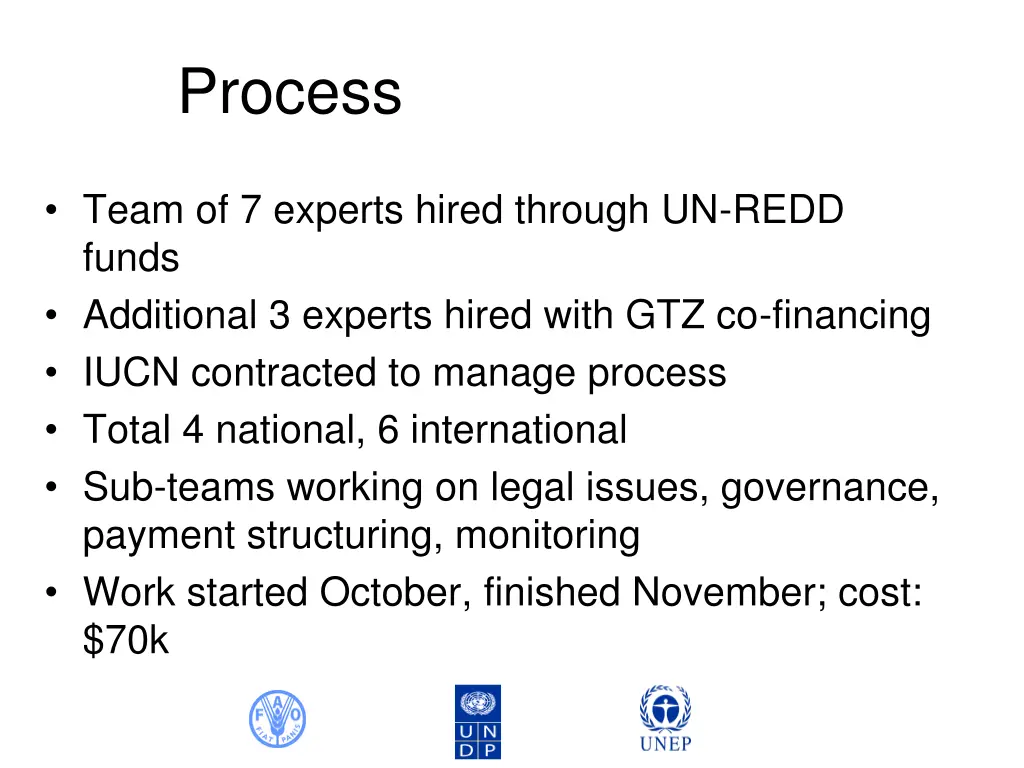
Process Team of 7 experts hired through UN-REDD funds Additional 3 experts hired with GTZ co-financing IUCN contracted to manage process Total 4 national, 6 international Sub-teams working on legal issues, governance, payment structuring, monitoring Work started October, finished November; cost: $70k
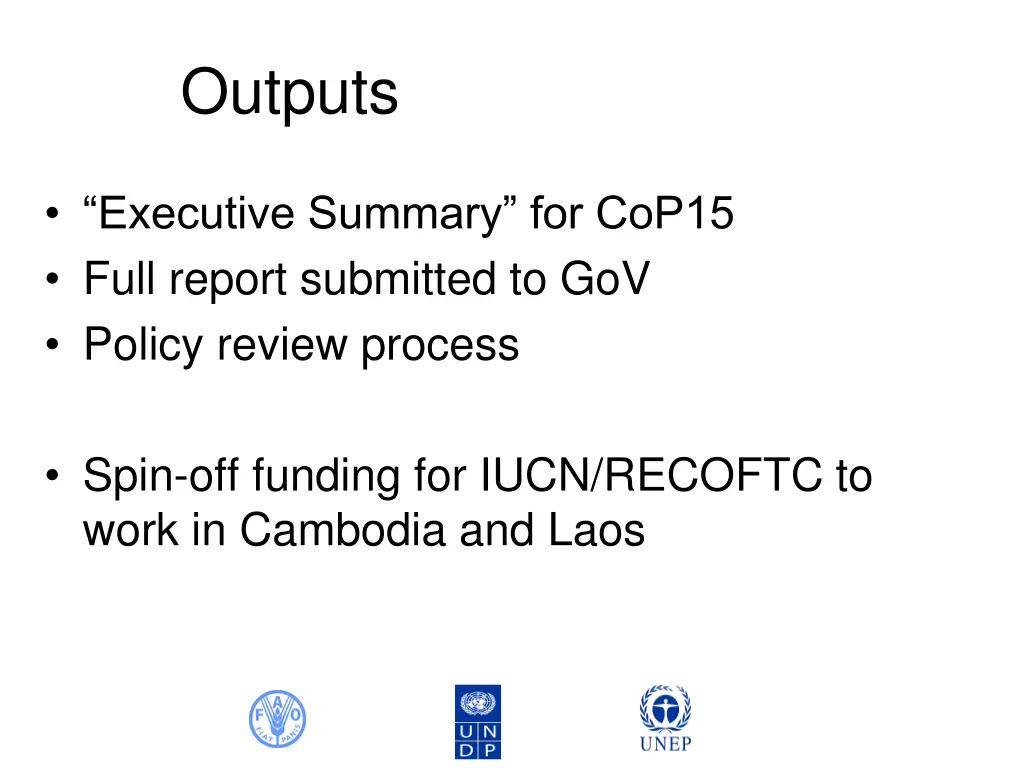
Outputs Executive Summary for CoP15 Full report submitted to GoV Policy review process Spin-off funding for IUCN/RECOFTC to work in Cambodia and Laos
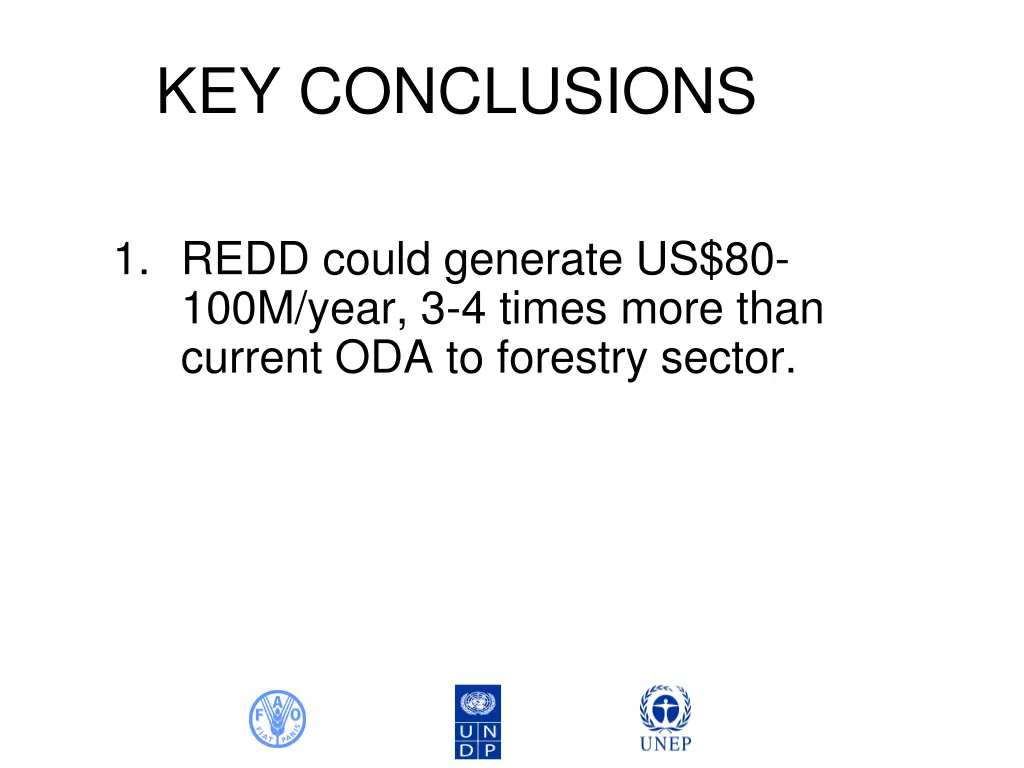
KEY CONCLUSIONS 1. REDD could generate US$80- 100M/year, 3-4 times more than current ODA to forestry sector.
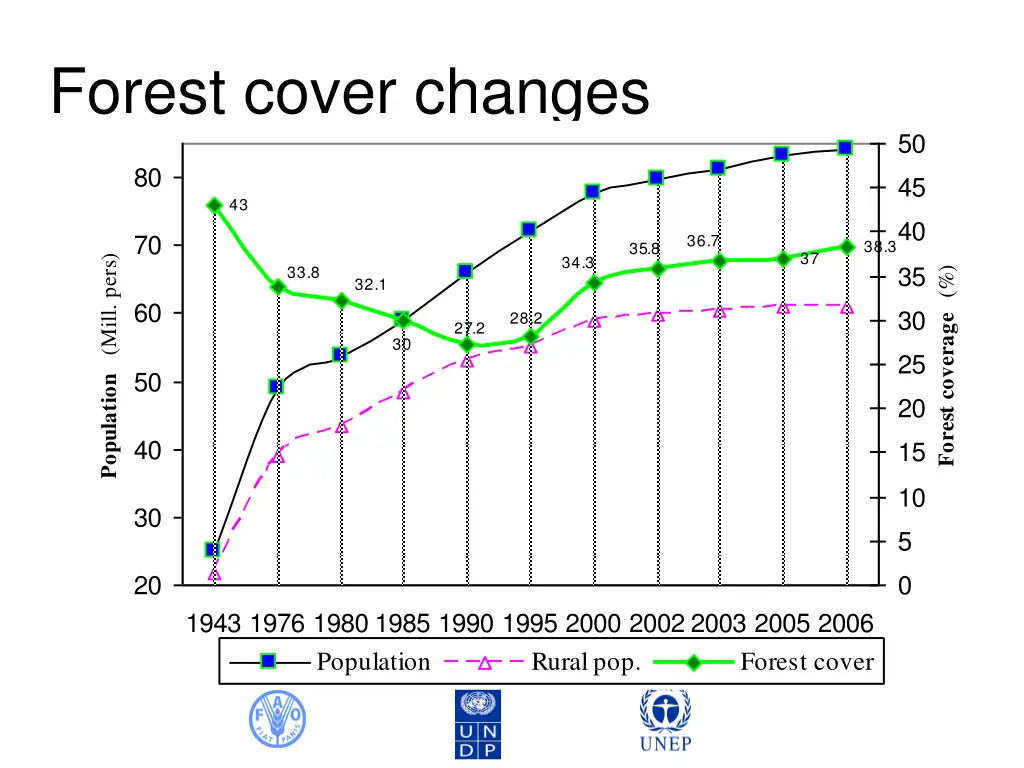
Forest cover changes 50 80 45 43 40 70 36.7 38.3 35.8 37 34.3 Population (Mill. pers) 35 33.8 Forest coverage (%) 32.1 60 30 28.2 27.2 30 25 50 20 40 15 10 30 5 20 0 1943 1976 1980 1985 1990 1995 2000 2002 2003 2005 2006 Population Rural pop. Forest cover
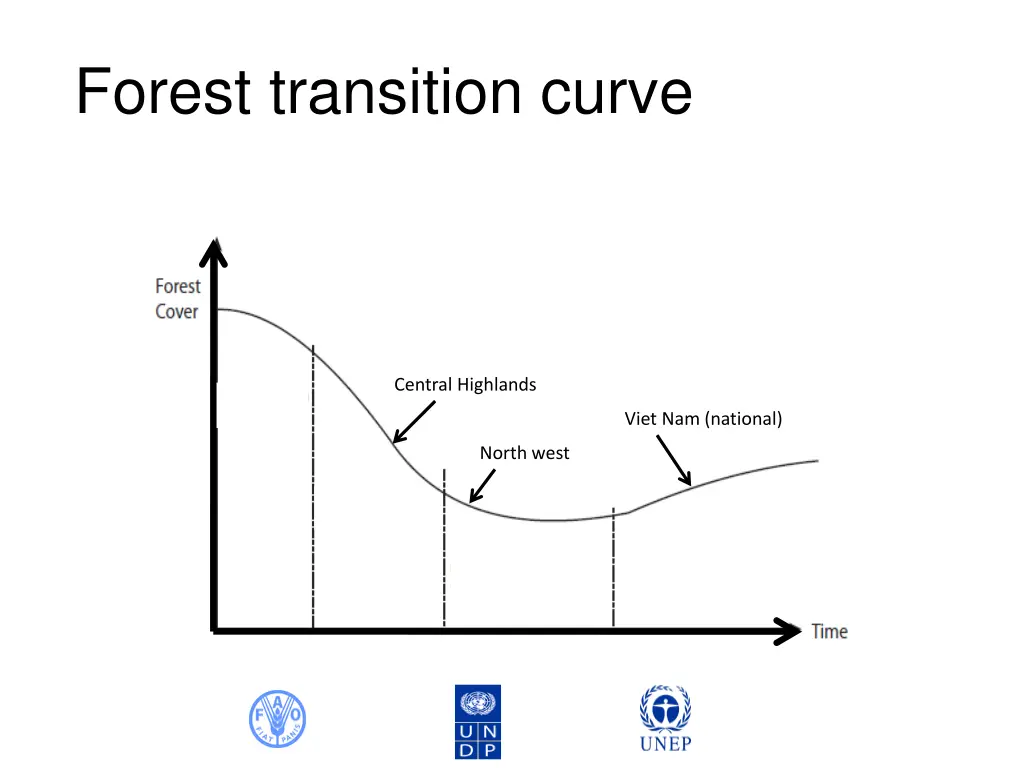
Forest transition curve Central Highlands Viet Nam (national) North west
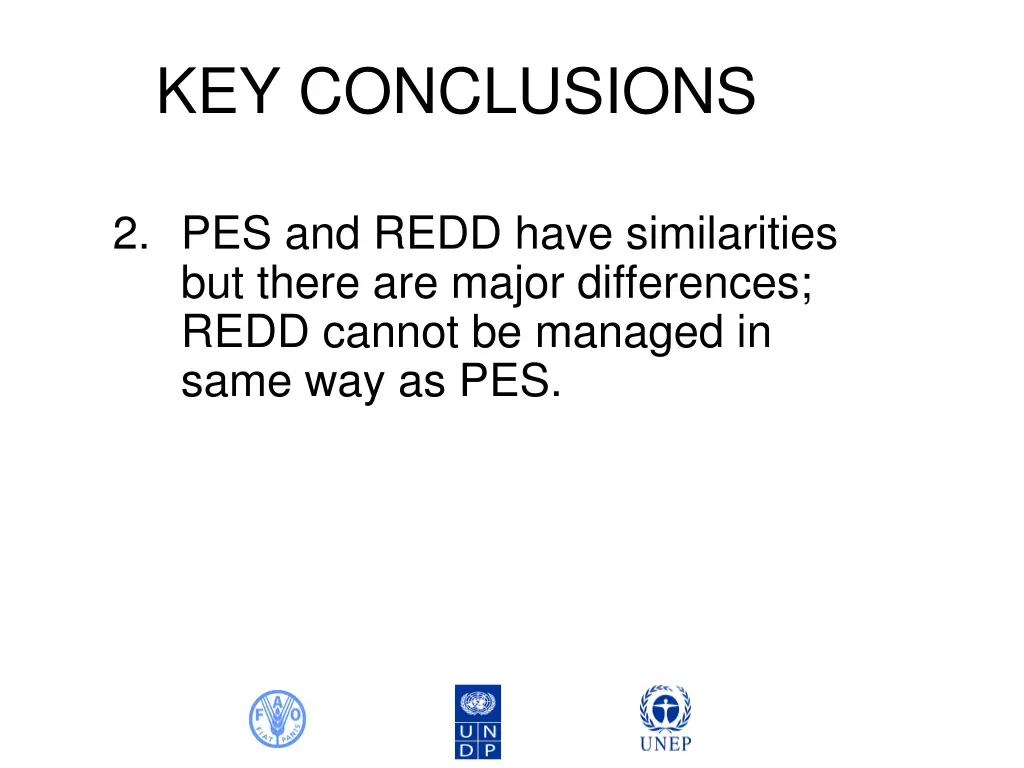
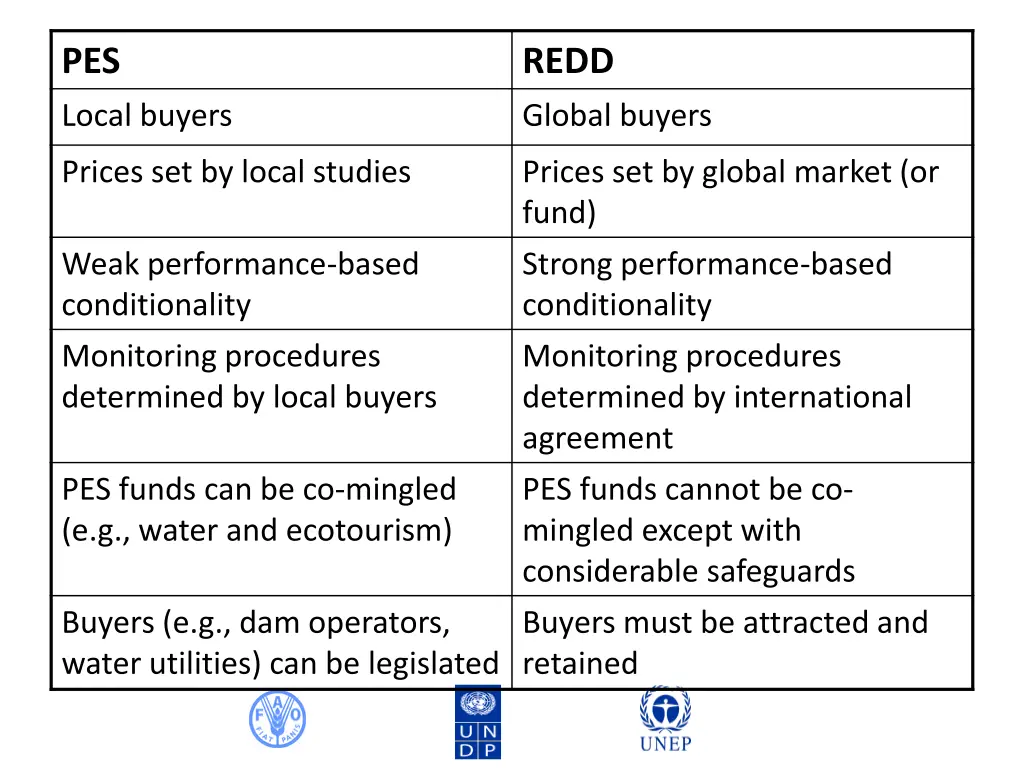
KEY CONCLUSIONS 2. PES and REDD have similarities but there are major differences; REDD cannot be managed in same way as PES.
PES REDD Local buyers Global buyers Prices set by local studies Prices set by global market (or fund) Weak performance-based conditionality Strong performance-based conditionality Monitoring procedures determined by local buyers Monitoring procedures determined by international agreement PES funds can be co-mingled (e.g., water and ecotourism) PES funds cannot be co- mingled except with considerable safeguards Buyers (e.g., dam operators, water utilities) can be legislated Buyers must be attracted and retained
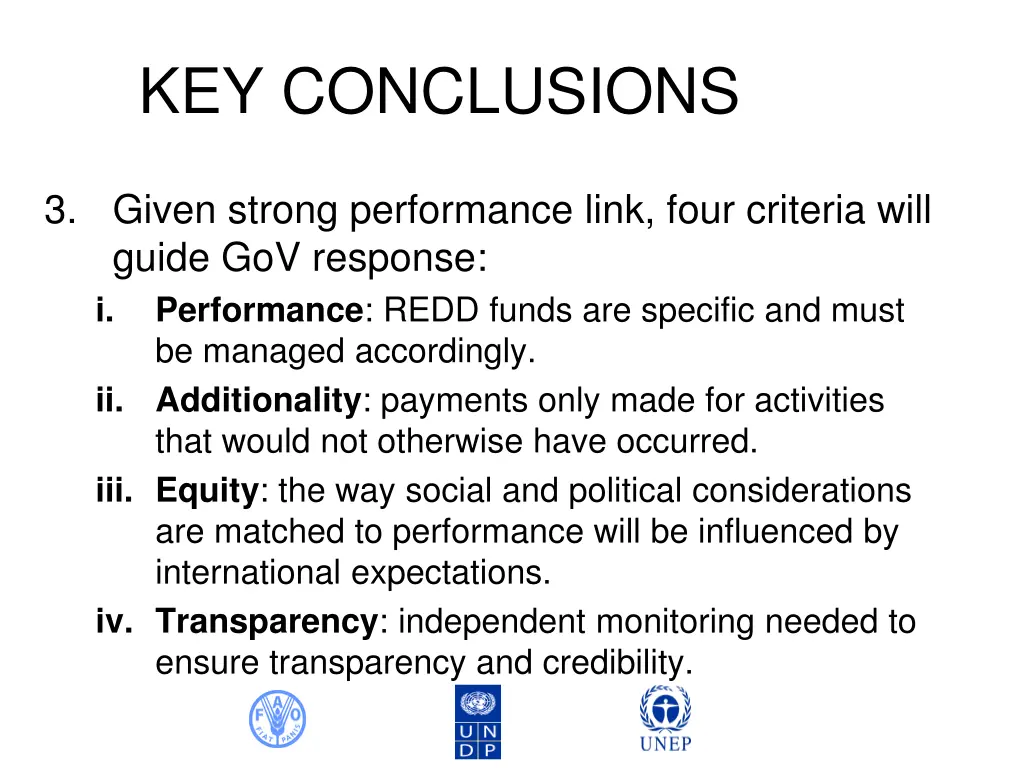
KEY CONCLUSIONS 3. Given strong performance link, four criteria will guide GoV response: i. Performance: REDD funds are specific and must be managed accordingly. ii. Additionality: payments only made for activities that would not otherwise have occurred. iii. Equity: the way social and political considerations are matched to performance will be influenced by international expectations. iv. Transparency: independent monitoring needed to ensure transparency and credibility.
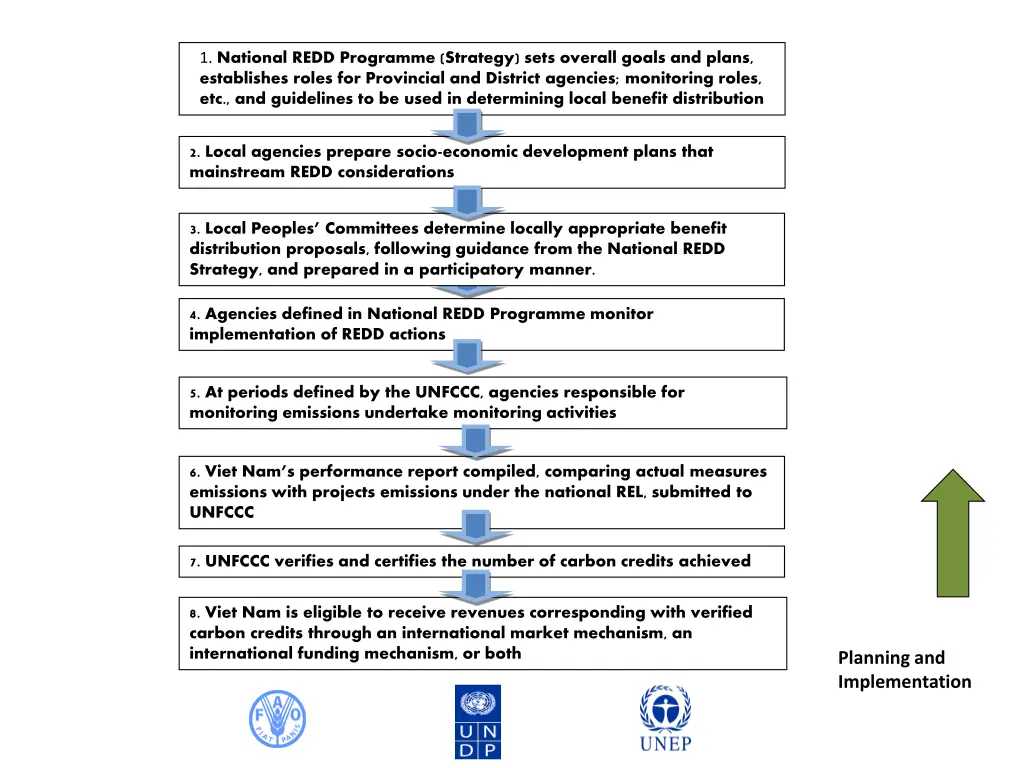
1. National REDD Programme (Strategy) sets overall goals and plans, establishes roles for Provincial and District agencies; monitoring roles, etc., and guidelines to be used in determining local benefit distribution 2. Local agencies prepare socio-economic development plans that mainstream REDD considerations 3. Local Peoples Committees determine locally appropriate benefit distribution proposals, following guidance from the National REDD Strategy, and prepared in a participatory manner. 4. Agencies defined in National REDD Programme monitor implementation of REDD actions 5. At periods defined by the UNFCCC, agencies responsible for monitoring emissions undertake monitoring activities 6. Viet Nam s performance report compiled, comparing actual measures emissions with projects emissions under the national REL, submitted to UNFCCC 7. UNFCCC verifies and certifies the number of carbon credits achieved 8. Viet Nam is eligible to receive revenues corresponding with verified carbon credits through an international market mechanism, an international funding mechanism, or both Planning and Implementation
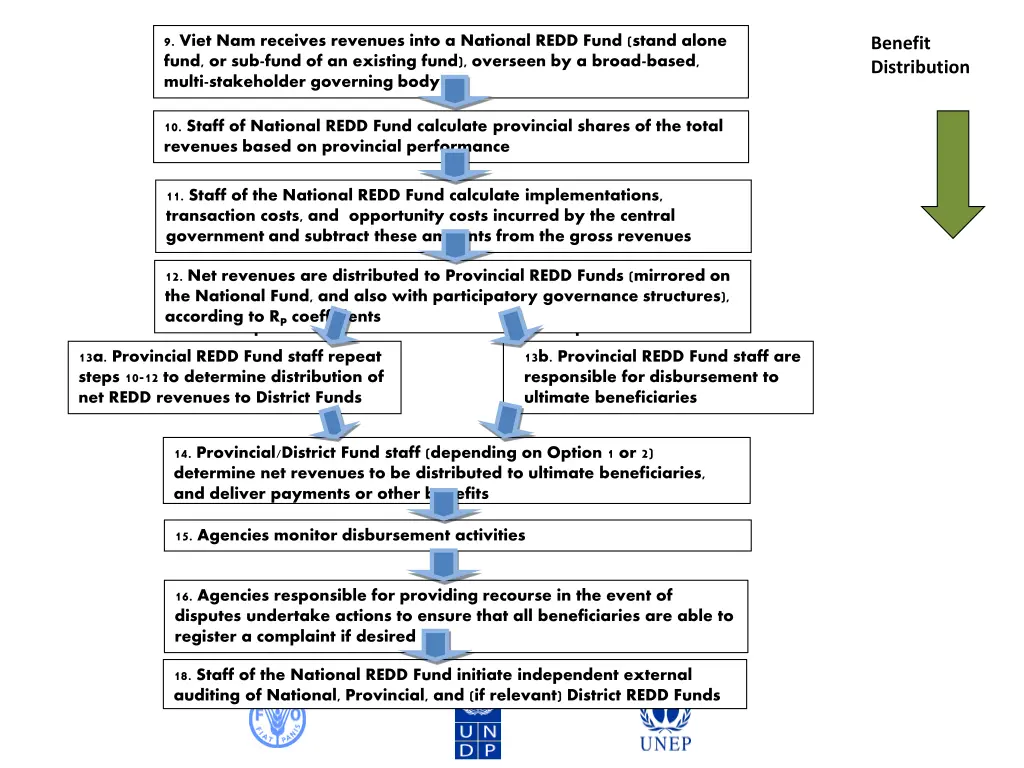
9. Viet Nam receives revenues into a National REDD Fund (stand alone fund, or sub-fund of an existing fund), overseen by a broad-based, multi-stakeholder governing body Benefit Distribution 10. Staff of National REDD Fund calculate provincial shares of the total revenues based on provincial performance 11. Staff of the National REDD Fund calculate implementations, transaction costs, and opportunity costs incurred by the central government and subtract these amounts from the gross revenues 12. Net revenues are distributed to Provincial REDD Funds (mirrored on the National Fund, and also with participatory governance structures), according to RP coefficients Option 1 Option 2 13a. Provincial REDD Fund staff repeat steps 10-12 to determine distribution of net REDD revenues to District Funds 13b. Provincial REDD Fund staff are responsible for disbursement to ultimate beneficiaries 14. Provincial/District Fund staff (depending on Option 1 or 2) determine net revenues to be distributed to ultimate beneficiaries, and deliver payments or other benefits 15. Agencies monitor disbursement activities 16. Agencies responsible for providing recourse in the event of disputes undertake actions to ensure that all beneficiaries are able to register a complaint if desired 18. Staff of the National REDD Fund initiate independent external auditing of National, Provincial, and (if relevant) District REDD Funds
17 POLICY DECISIONS Design and governance of Fund Eligibility of beneficiaries Multi-level management of revenues Payment structuring and timing Monitoring (4 types) Recourse mechanism
POLICY DECISION #1: LEGAL FRAMEWORK FOR REDD Recommendation: Pilot REDD in a number of provinces for 2-3 years Prepare REDD-specific decree covering rights, and revenue management, etc. and incorporating lessons from pilots
POLICY DECISION #2: REVENUE MANAGEMENT Recommendation: A) FPDF sub-fund, if legal basis can be modified to allow participatory governance B) If (A) is not possible, a new REDD Fund with participatory governance structures
POLICY DECISION #3: SUB-NATIONAL REVENUE MANAGEMENT Recommendation: In pilots, use only national and provincial levels for revenue disbursement (provinces responsible for disbursement to beneficiaries) Build capacity to eventually allow district level disbursement too (districts responsible for disbursement to beneficiaries)
POLICY DECISION #4: REDD MONITORING Recommendation: Four types of monitoring required: build on existing monitoring capacities Pilot national and provincial REDD monitoring bodies with governmental and civil society participation
POLICY DECISION #6: PAYMENT STRUCTURING Recommendation: Devolve decision making to local authorities, but with strong checks and balances Design R-coefficients to account for local circumstances during piloting
POLICY DECISION #7: FOREST OWNERS ELIGIBLE TO RECEIVE REDD+ BENEFITS Recommendation: Review advantages and eligibility of community beneficiaries Establish circumstances for PAMBs to be beneficiaries and legal issues affecting SFEs
POLICY DECISION #8: STRENGTHENED LAW ENFORCEMENT FOR PERFORMANCE-BASED DISTRIBUTION Recommendation: Assess experiences with community-based law enforcement and translate into national regulations Make strenghthened law enforcement, with a focus on compliance, a key component REDD+ pilots
POLICY DECISION #9: PARTICIPATORY MONITORING Recommendation: Commit to participatory monitoring; Identify participatory monitoring methods that have a history of effectiveness, and develop principles to be applied for participatory monitoring related to REDD+
POLICY DECISION #10: DESIGN OF A CREDIBLE RECOURSE MECHANISM Recommendation: Commit to establishing an effective recourse mechanism Following CoP15, undertake an analysis of the institutional structure for a participatory recourse mechanism