Diagnostic Imaging Techniques in Pregnancy
This content provides insights into various diagnostic imaging methods used during pregnancy, such as Ultrasonography, Magnetic Resonance Imaging (MRI), and Ionizing Radiation including X-rays. It discusses the safety considerations, advantages, and potential risks associated with each technique, offering valuable information for healthcare professionals and expecting mothers.

Download Presentation

Please find below an Image/Link to download the presentation.
The content on the website is provided AS IS for your information and personal use only. It may not be sold, licensed, or shared on other websites without obtaining consent from the author. If you encounter any issues during the download, it is possible that the publisher has removed the file from their server.
You are allowed to download the files provided on this website for personal or commercial use, subject to the condition that they are used lawfully. All files are the property of their respective owners.
The content on the website is provided AS IS for your information and personal use only. It may not be sold, licensed, or shared on other websites without obtaining consent from the author.
E N D
Presentation Transcript
SiridaPittyanont 04/03/2016
Diagnostic Imaging 1. 2. 3. 4. 5. Ultrasonography Magnetic Resonance Imaging Ionizing Radiation Including X-rays Computed Tomography Nuclear Medicine Imaging
1. Ultrasonography Use of sound waves no ionizing radiation No reports of documented adverse fetal effects for diagnostic ultrasonography procedures, including duplex Doppler imaging Theoretical increase in temperature elevation for fetus (as high as 2oC) Lowest B-mode imaging Higher Color Doppler and Spectral Doppler
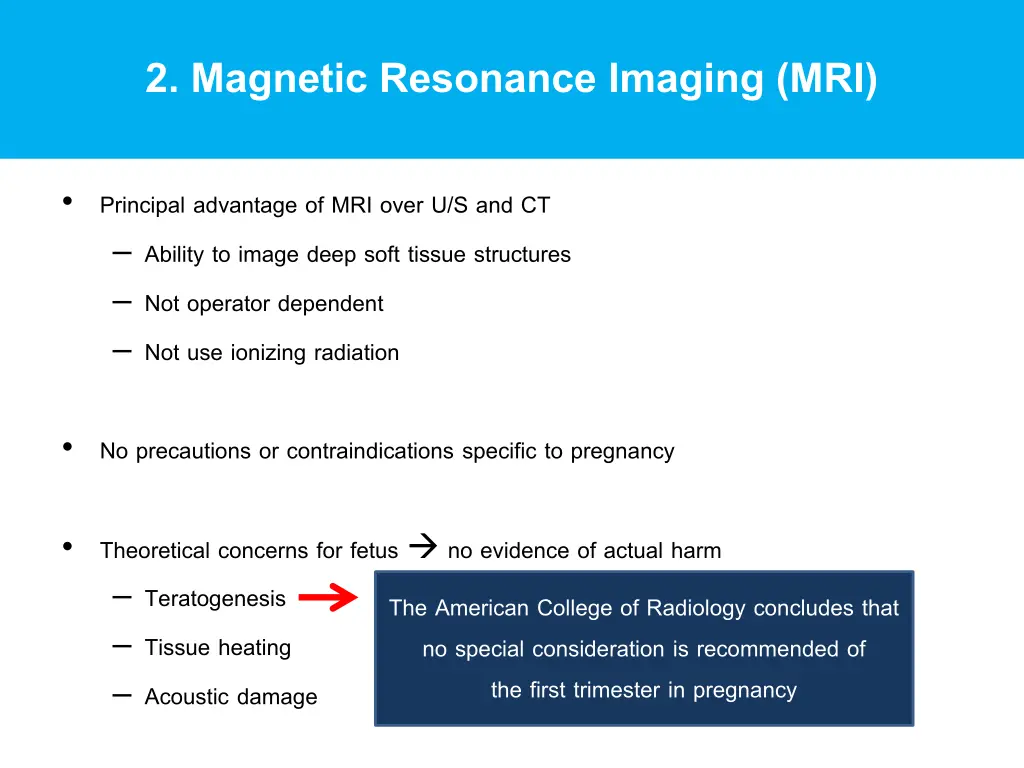
2. Magnetic Resonance Imaging (MRI) Principal advantage of MRI over U/S and CT Ability to image deep soft tissue structures Not operator dependent Not use ionizing radiation No precautions or contraindications specific to pregnancy Theoretical concerns for fetus no evidence of actual harm Teratogenesis Tissue heating Acoustic damage The American College of Radiology concludes that no special consideration is recommended of the first trimester in pregnancy
2. Magnetic Resonance Imaging (MRI) Two types of MRI contrast Gadolinium-based agents Useful in nervous system because of cross blood-brain barrier Can define tissue margins and invasion in placental implantation abnormalities Pregnancy controversy Only prospective study evaluating effect no adverse perinatal or neonatal outcomes among 26 pregnancy women in first trimester Lactation Excrete into breast milk < 0.04% within first 24 hours Infant will absorb <1% from GI tract Superparamagnetic iron oxide contrast No animal or human fetal studies to evaluate safety during pregnancy or lactation
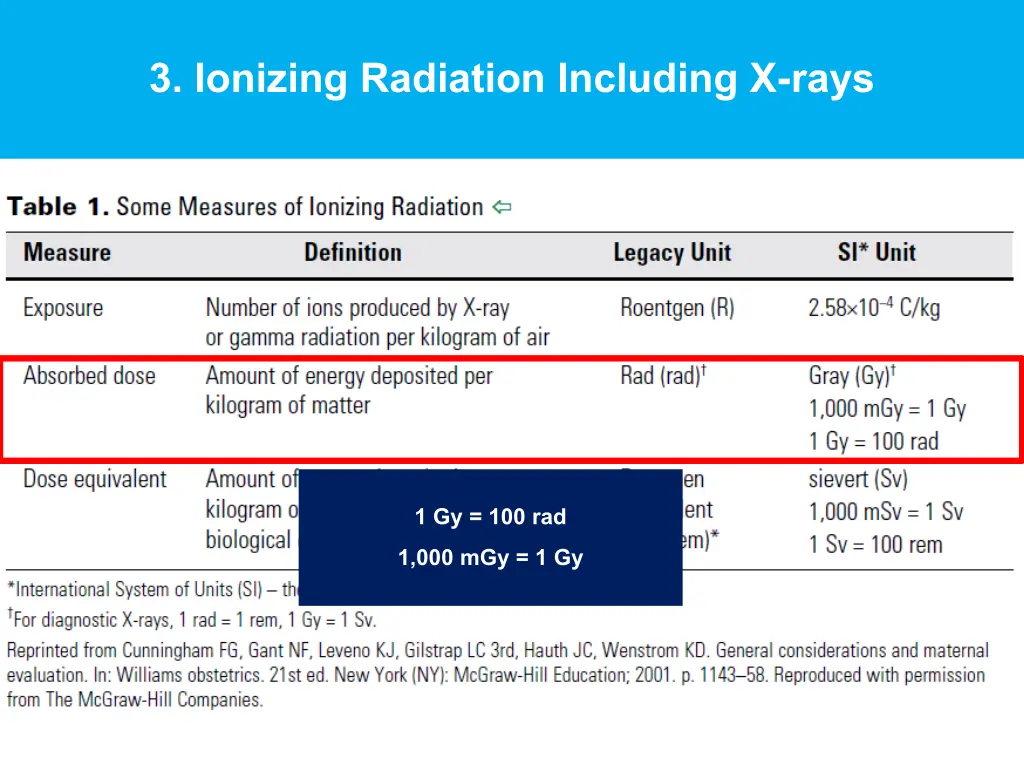
3. Ionizing Radiation Including X-rays 1 Gy = 100 rad 1,000 mGy = 1 Gy
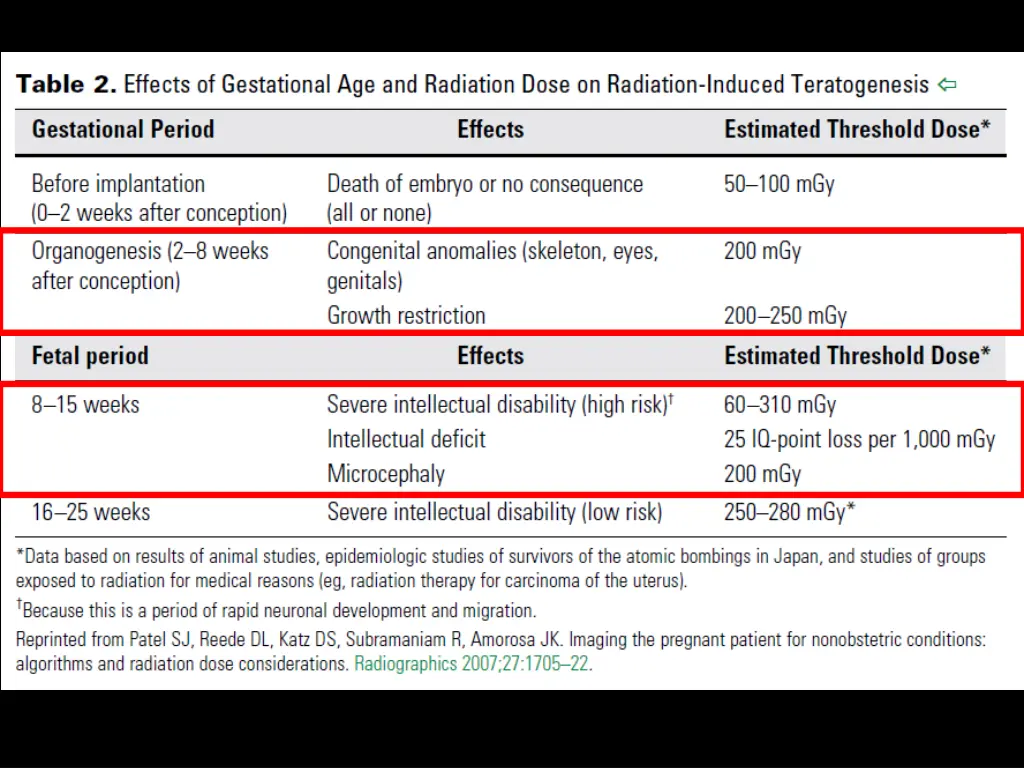
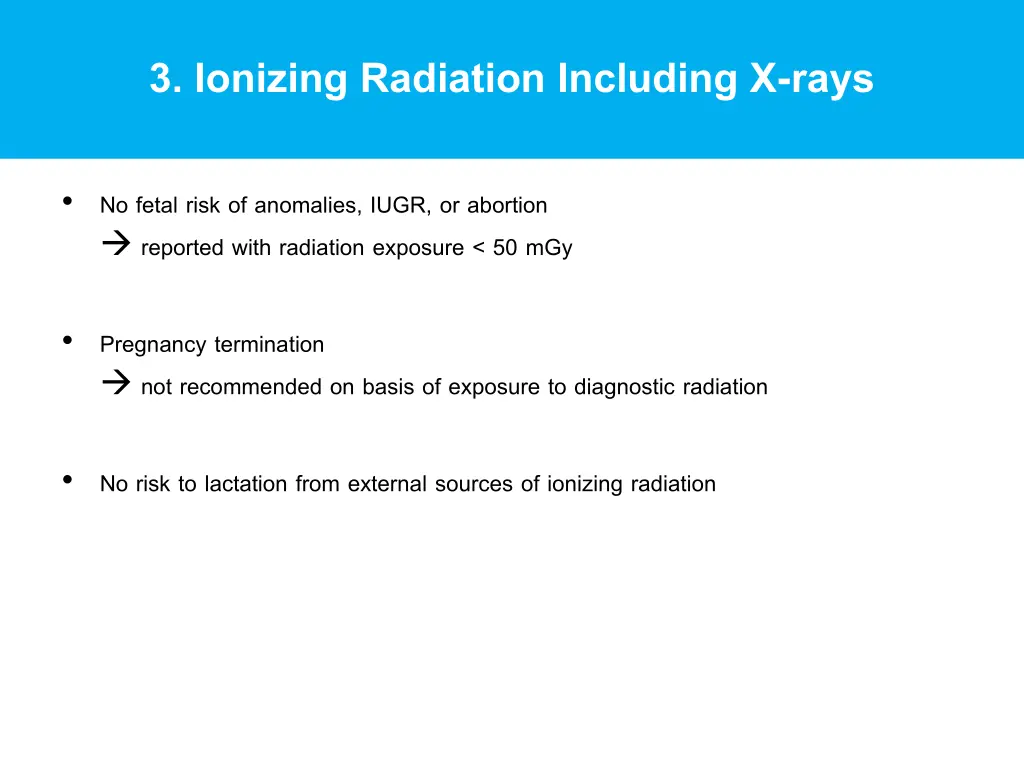
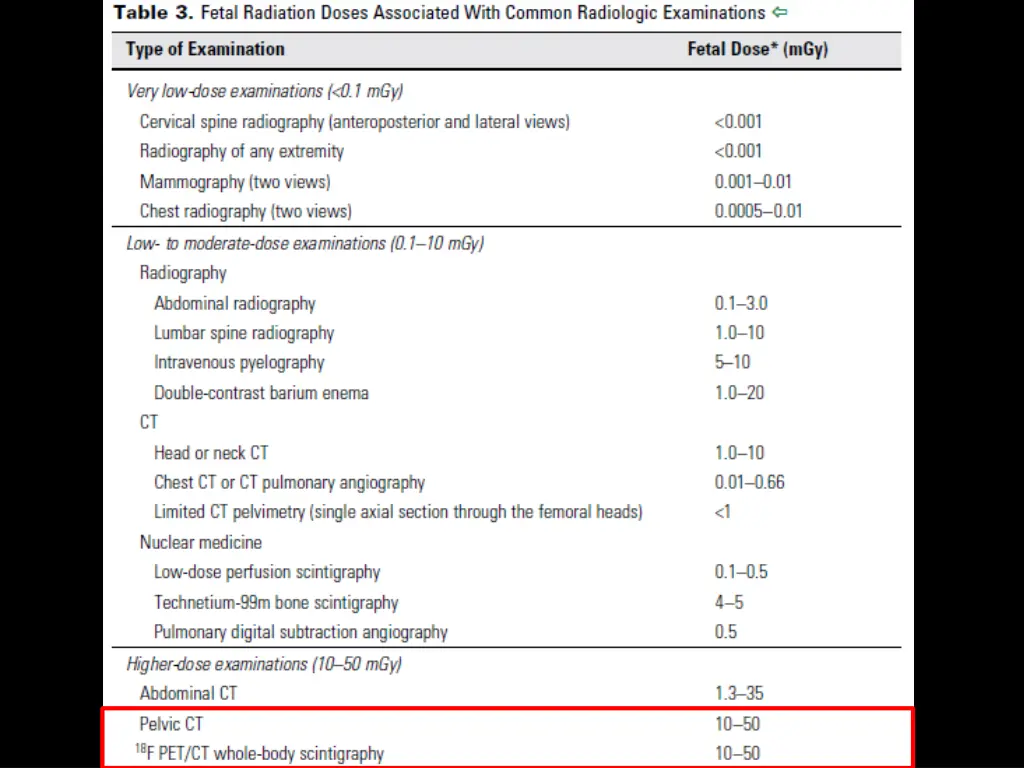
3. Ionizing Radiation Including X-rays No fetal risk of anomalies, IUGR, or abortion reported with radiation exposure < 50 mGy Pregnancy termination not recommended on basis of exposure to diagnostic radiation No risk to lactation from external sources of ionizing radiation
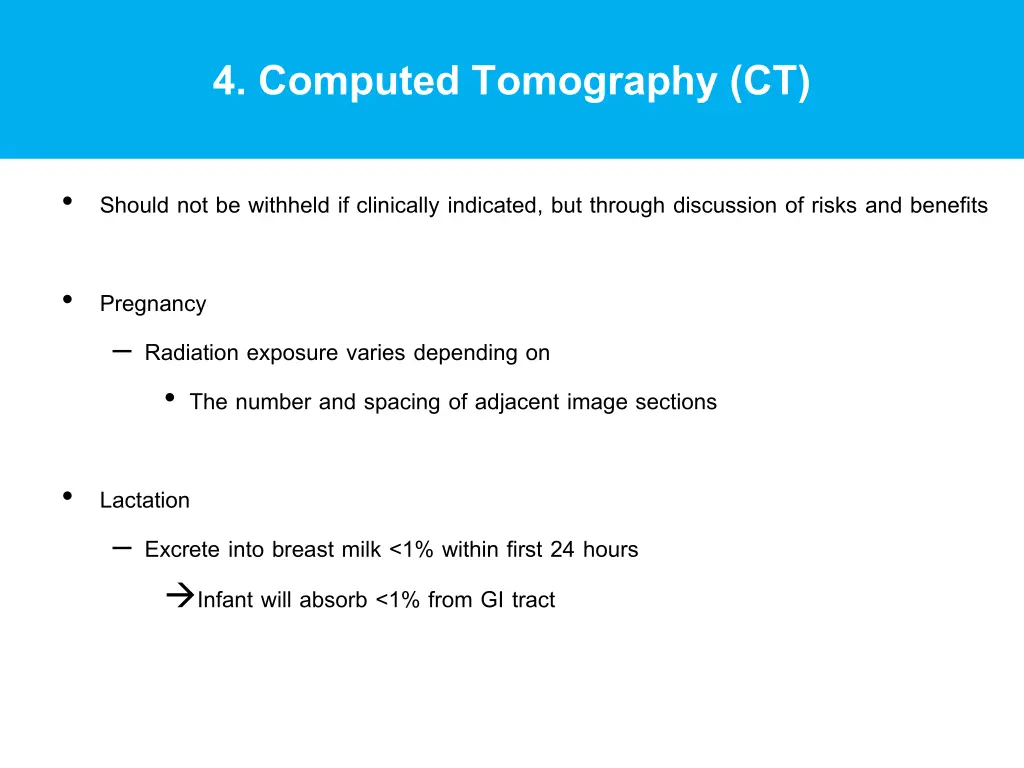
4. Computed Tomography (CT) Should not be withheld if clinically indicated, but through discussion of risks and benefits Pregnancy Radiation exposure varies depending on The number and spacing of adjacent image sections Lactation Excrete into breast milk <1% within first 24 hours Infant will absorb <1% from GI tract
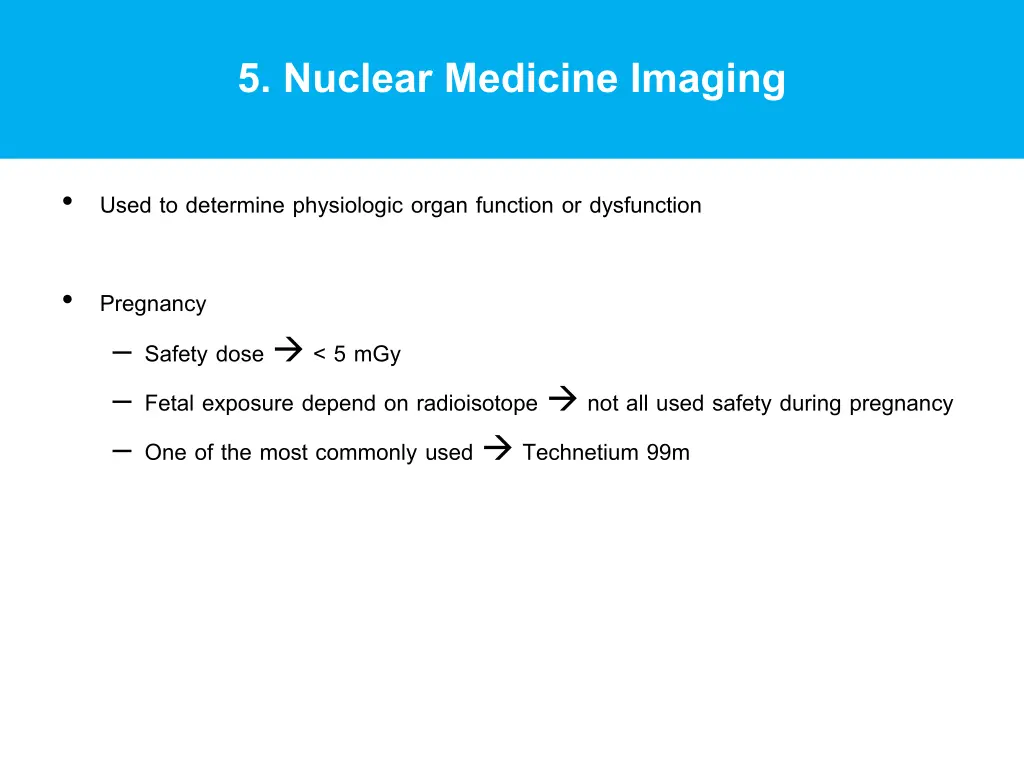
5. Nuclear Medicine Imaging Used to determine physiologic organ function or dysfunction Pregnancy Safety dose < 5 mGy Fetal exposure depend on radioisotope not all used safety during pregnancy One of the most commonly used Technetium 99m
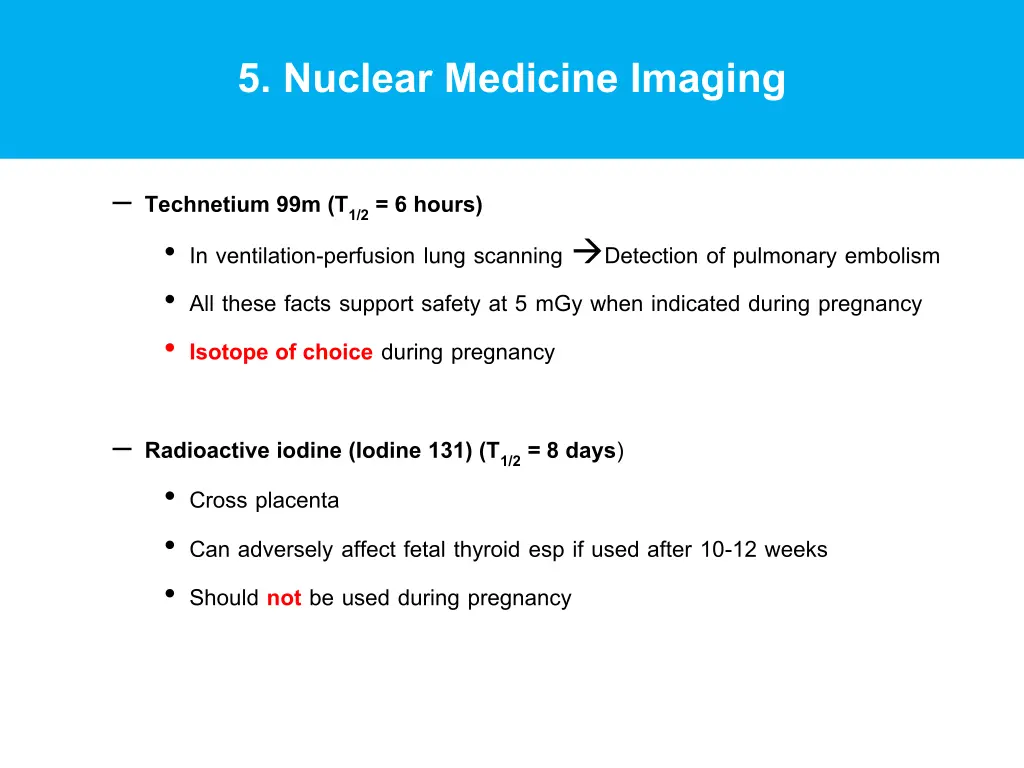
5. Nuclear Medicine Imaging Technetium 99m (T1/2 = 6 hours) In ventilation-perfusion lung scanning Detection of pulmonary embolism All these facts support safety at 5 mGy when indicated during pregnancy Isotope of choice during pregnancy Radioactive iodine (Iodine 131) (T1/2 = 8 days) Cross placenta Can adversely affect fetal thyroid esp if used after 10-12 weeks Should not be used during pregnancy
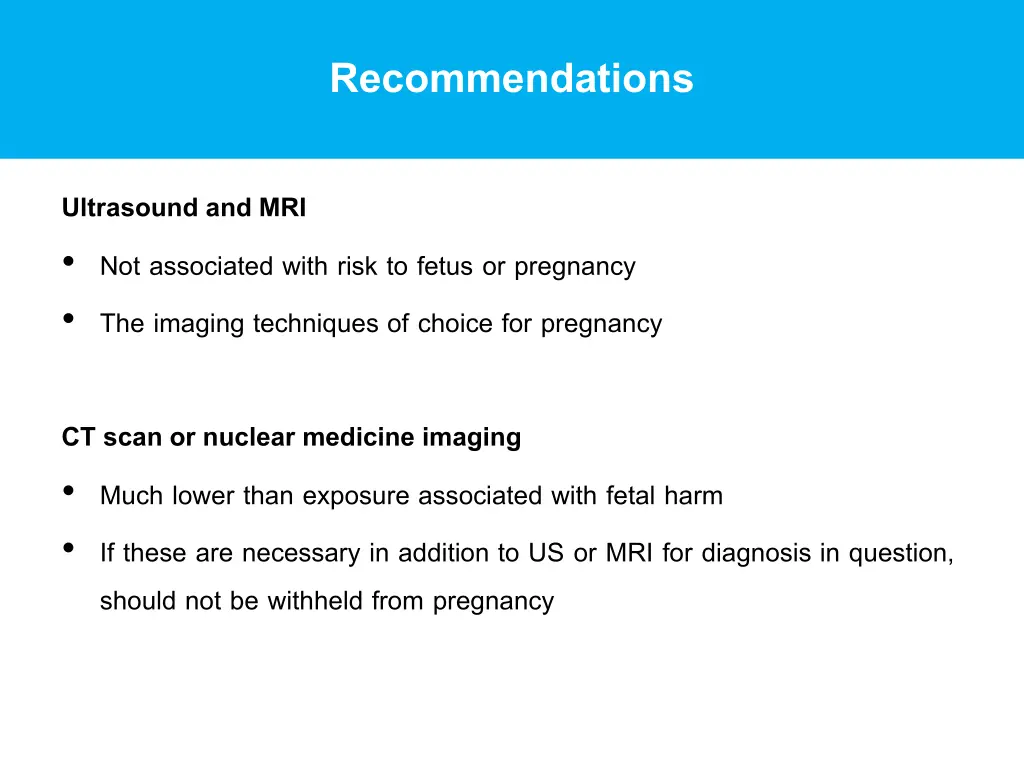
Recommendations Ultrasound and MRI Not associated with risk to fetus or pregnancy The imaging techniques of choice for pregnancy CT scan or nuclear medicine imaging Much lower than exposure associated with fetal harm If these are necessary in addition to US or MRI for diagnosis in question, should not be withheld from pregnancy
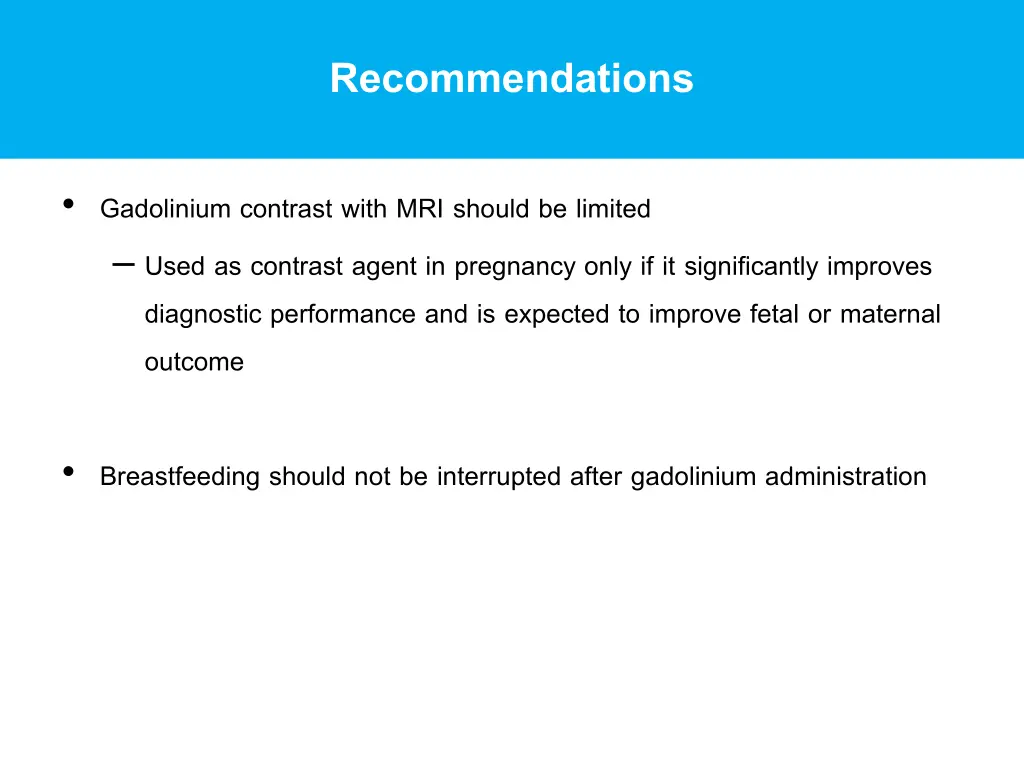
Recommendations Gadolinium contrast with MRI should be limited Used as contrast agent in pregnancy only if it significantly improves diagnostic performance and is expected to improve fetal or maternal outcome Breastfeeding should not be interrupted after gadolinium administration