Digital Image Analysis and Transformations Overview
"Explore the world of digital image analysis with insights into B-Spline curves, interpolation methods, unitary matrices, Fourier transforms, and more. Learn how image transforms are applied for filtering, compression, and feature extraction in digital image processing."

Download Presentation

Please find below an Image/Link to download the presentation.
The content on the website is provided AS IS for your information and personal use only. It may not be sold, licensed, or shared on other websites without obtaining consent from the author. If you encounter any issues during the download, it is possible that the publisher has removed the file from their server.
You are allowed to download the files provided on this website for personal or commercial use, subject to the condition that they are used lawfully. All files are the property of their respective owners.
The content on the website is provided AS IS for your information and personal use only. It may not be sold, licensed, or shared on other websites without obtaining consent from the author.
E N D
Presentation Transcript
CS654: Digital Image Analysis Lecture 11: Image Transforms
Recap of Lecture 10 B-Spline curve Constant, Linear, Quadratic, Cubic interpolation Nearest neighbour, Bi-Linear, Bi-Cubic interpolation
Outline of Lecture 11 Image transforms Unitary matrices 1-D and 2-D unitary transforms
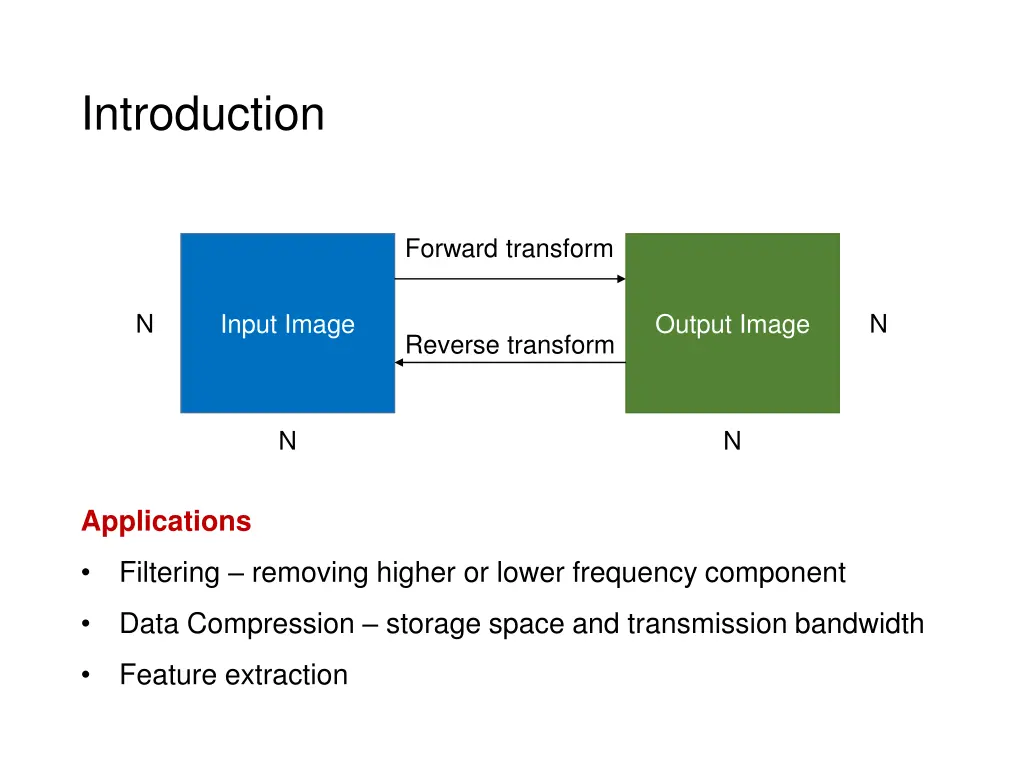
Introduction Forward transform N N Input Image Output Image Reverse transform N N Applications Filtering removing higher or lower frequency component Data Compression storage space and transmission bandwidth Feature extraction
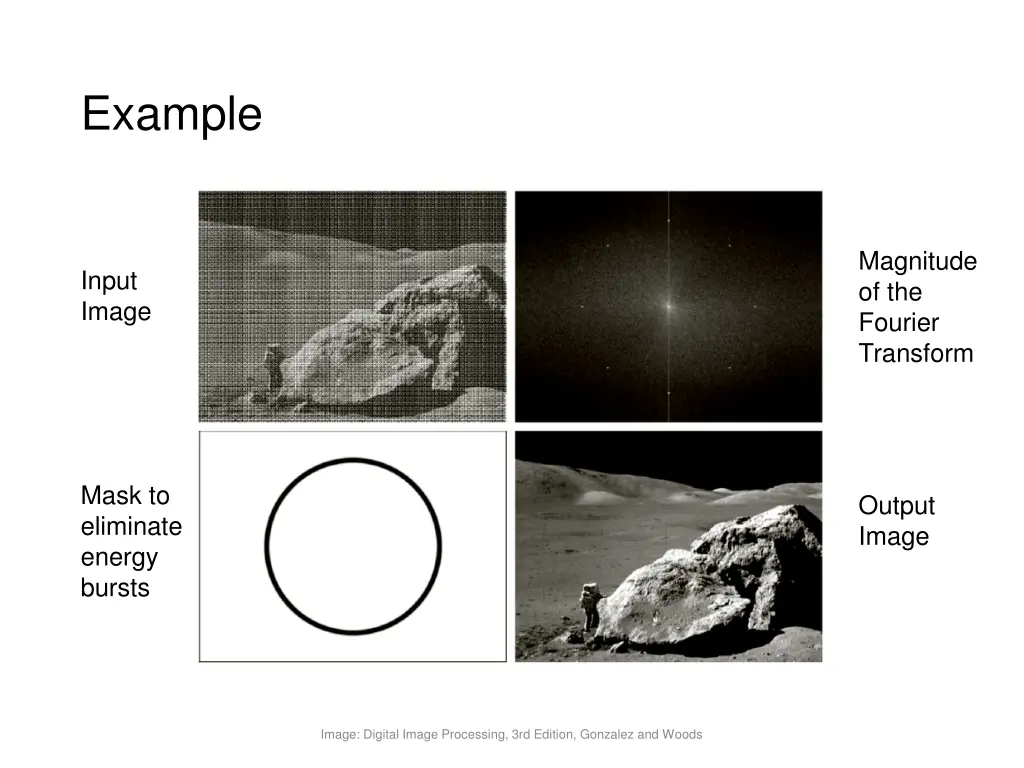
Example Magnitude of the Fourier Transform Input Image Mask to eliminate energy bursts Output Image Image: Digital Image Processing, 3rd Edition, Gonzalez and Woods
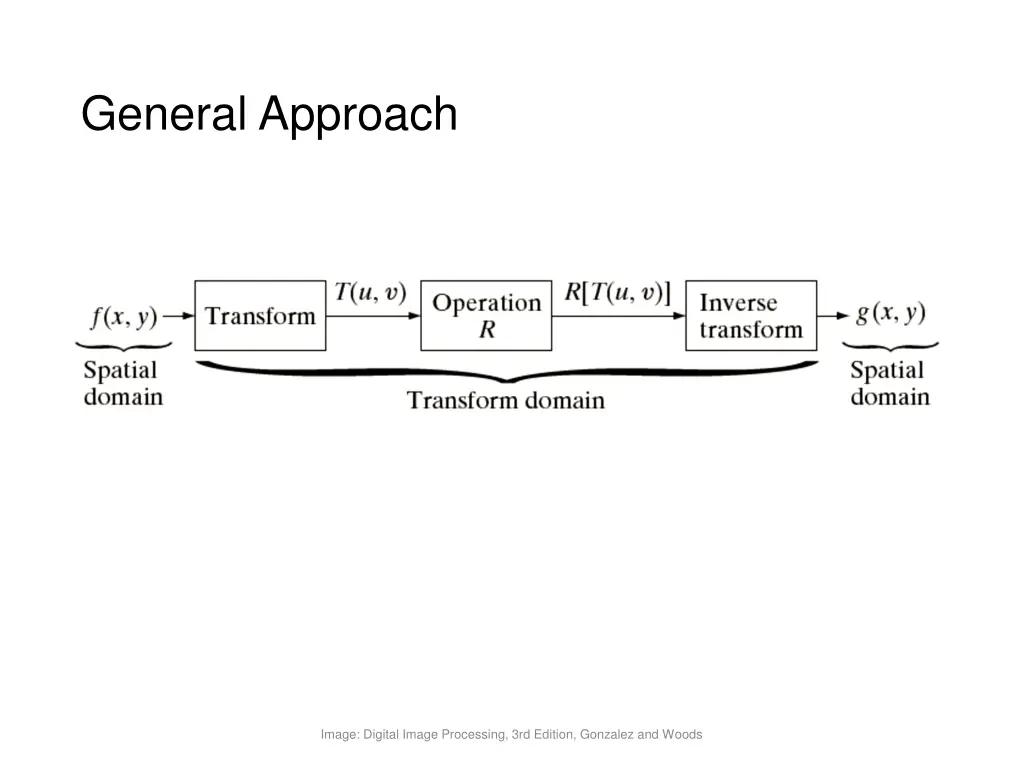
General Approach Image: Digital Image Processing, 3rd Edition, Gonzalez and Woods
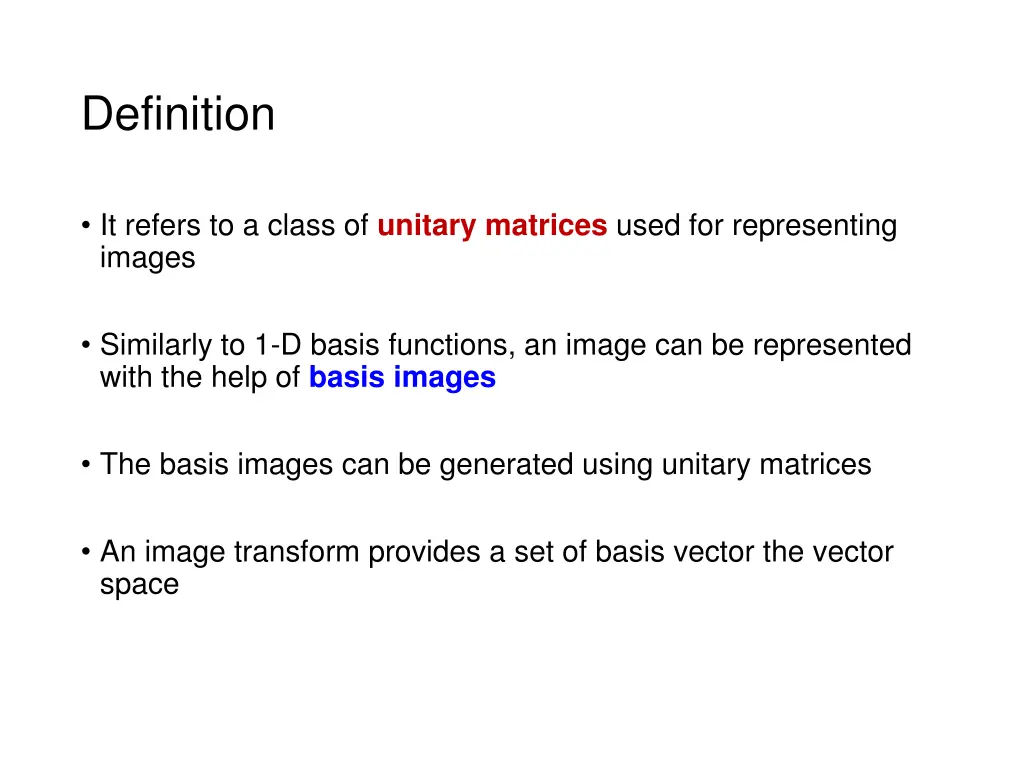
Definition It refers to a class of unitary matrices used for representing images Similarly to 1-D basis functions, an image can be represented with the help of basis images The basis images can be generated using unitary matrices An image transform provides a set of basis vector the vector space
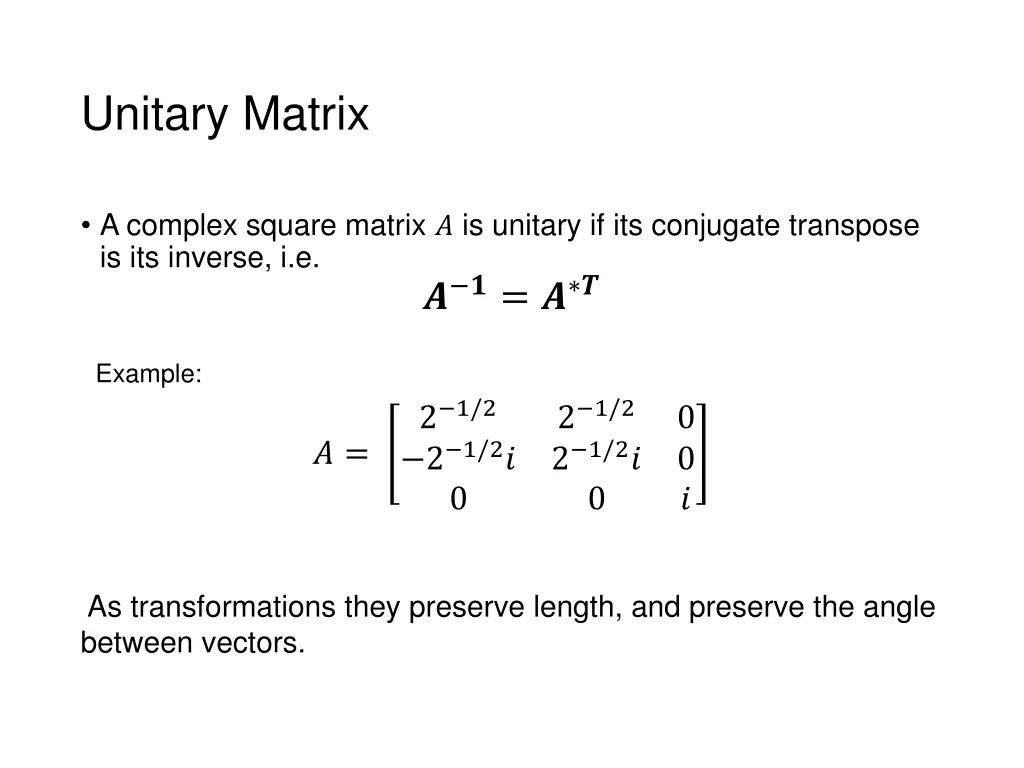
Unitary Matrix A complex square matrix ? is unitary if its conjugate transpose is its inverse, i.e. ? ?= ? ? Example: 2 1/2 2 1/2? 0 2 1/2 2 1/2? 0 0 0 ? ? = As transformations they preserve length, and preserve the angle between vectors.
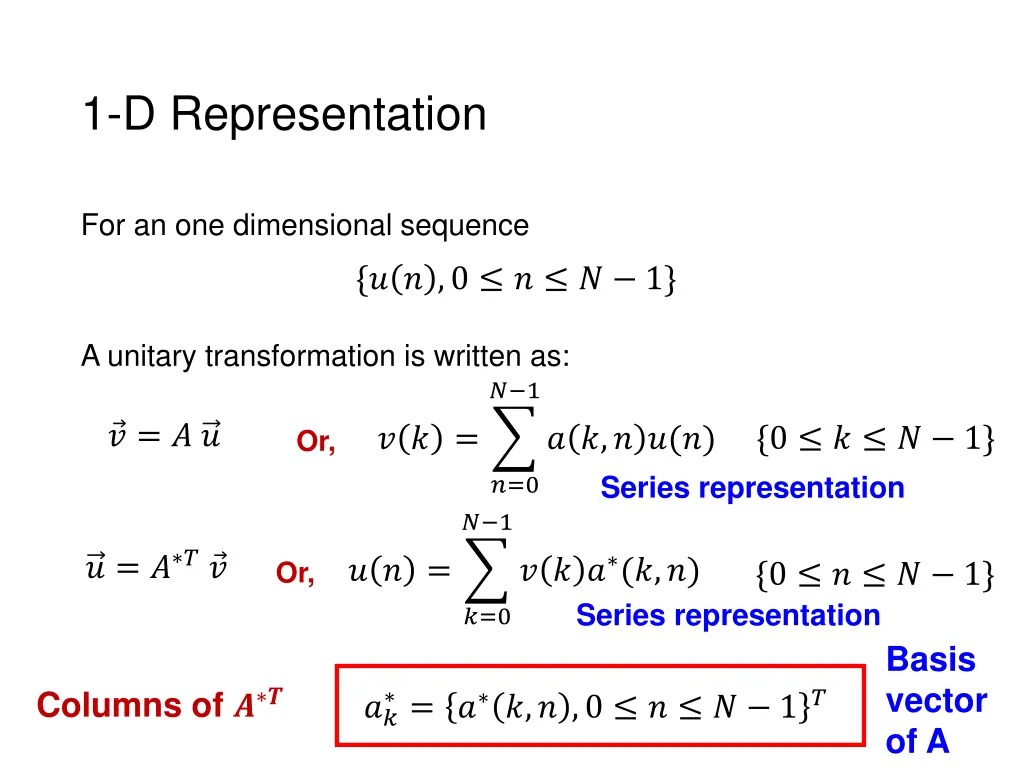
1-D Representation For an one dimensional sequence {? ? ,0 ? ? 1} A unitary transformation is written as: ? 1 ? = ? ? {0 ? ? 1} ? ? = ? ?,? ?(?) Series representation Or, ?=0 ? 1 ? = ? ? ? ? ? ? (?,?) Series representation ? ? = Or, {0 ? ? 1} ?=0 Basis vector of A Columns of ? ? = ? ?,? ,0 ? ? 1? ??
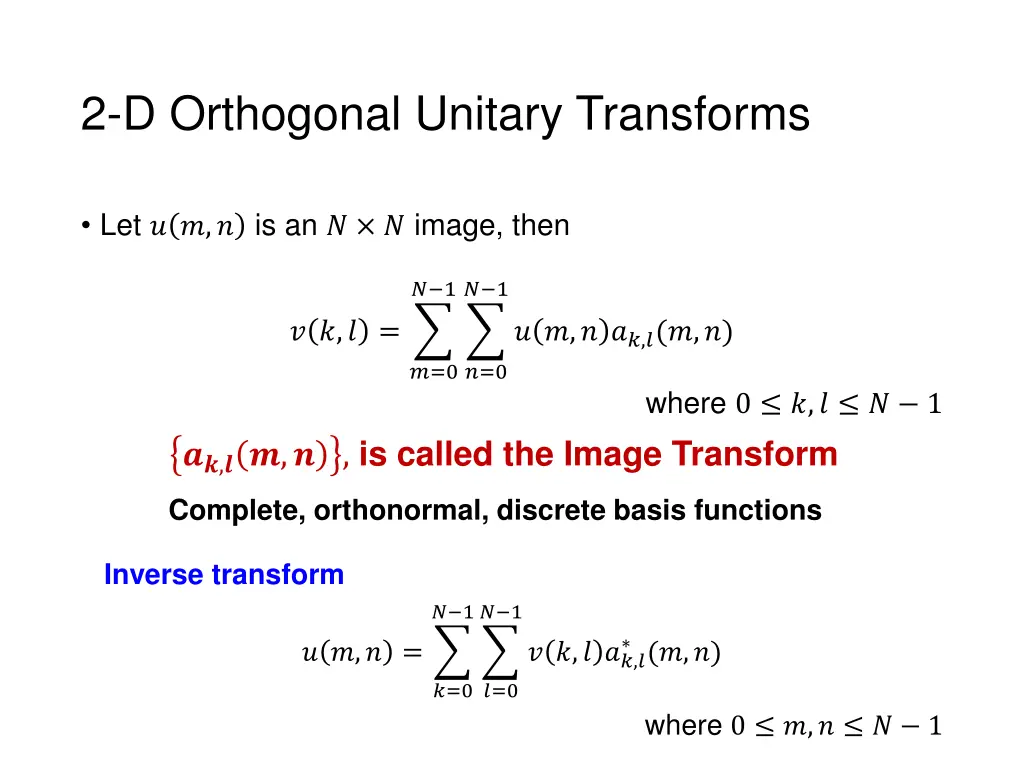
2-D Orthogonal Unitary Transforms Let ? ?,? is an ? ? image, then ? 1 ? 1 ? ?,? = ? ?,? ??,?(?,?) ?=0 ?=0 where 0 ?,? ? 1 ??,??,? , is called the Image Transform Complete, orthonormal, discrete basis functions Inverse transform ? 1 ? 1 (?,?) ? ?,? = ? ?,? ??,? ?=0 ?=0 where 0 ?,? ? 1
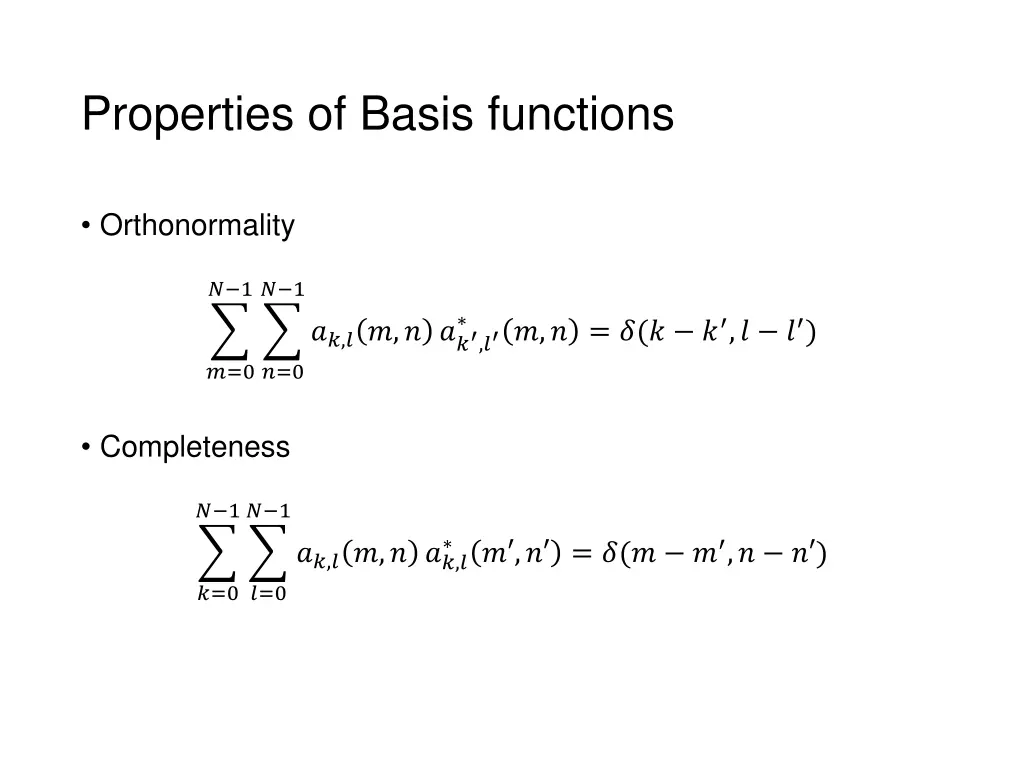
Properties of Basis functions Orthonormality ? 1 ? 1 ?,? = ?(? ? ,? ? ) ??,??,? ?? ,? ?=0 ?=0 Completeness ? 1 ? 1 ? ,? = ?(? ? ,? ? ) ??,??,? ??,? ?=0 ?=0
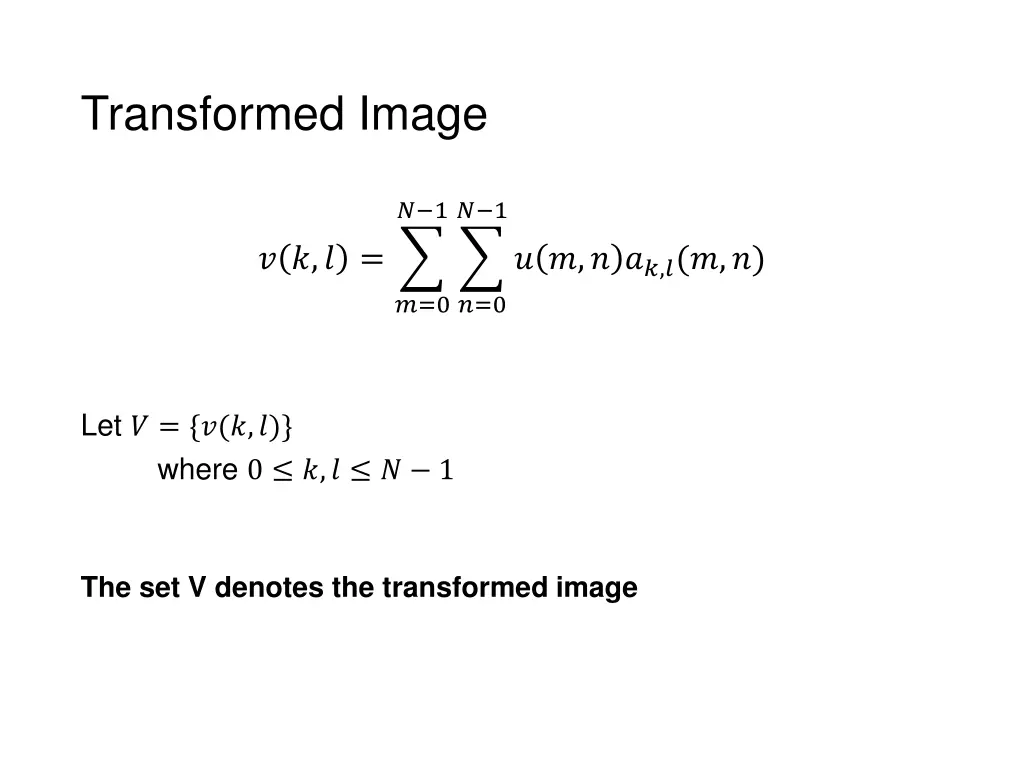
Transformed Image ? 1 ? 1 ? ?,? = ? ?,? ??,?(?,?) ?=0 ?=0 Let ? = {?(?,?)} where 0 ?,? ? 1 The set V denotes the transformed image
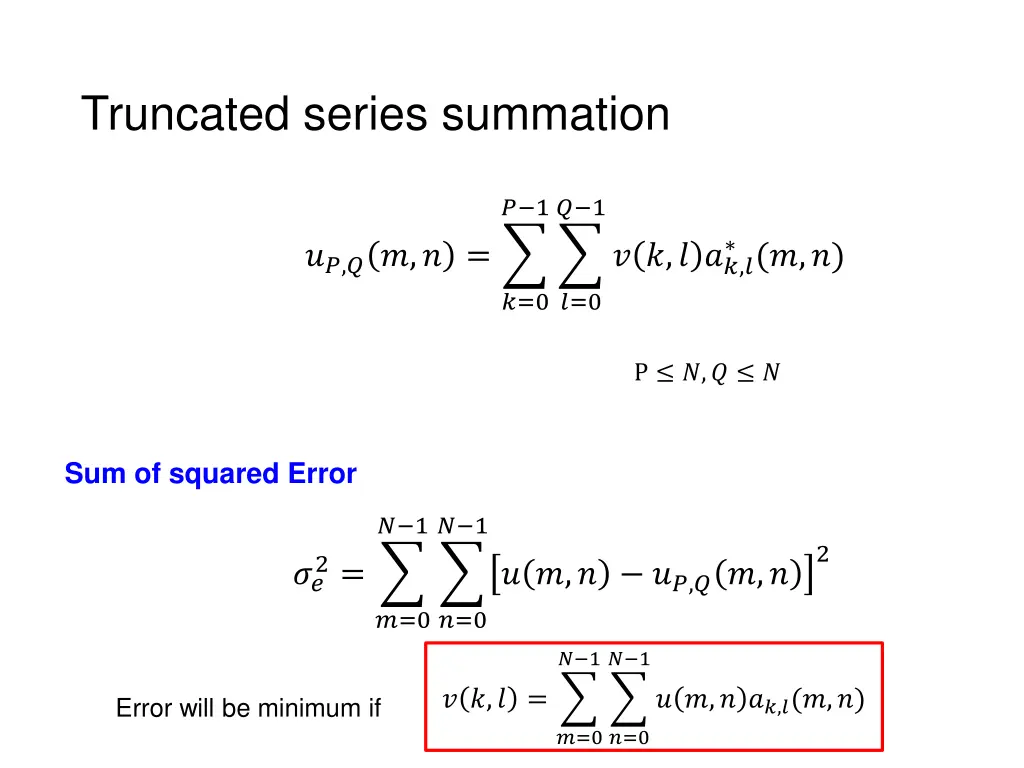
Truncated series summation ? 1 ? 1 (?,?) ??,??,? = ? ?,? ??,? ?=0 ?=0 P ?,? ? Sum of squared Error ? 1 ? 1 2 ??2= ? ?,? ??,??,? ?=0 ?=0 ? 1 ? 1 ? ?,? = ? ?,? ??,?(?,?) Error will be minimum if ?=0 ?=0
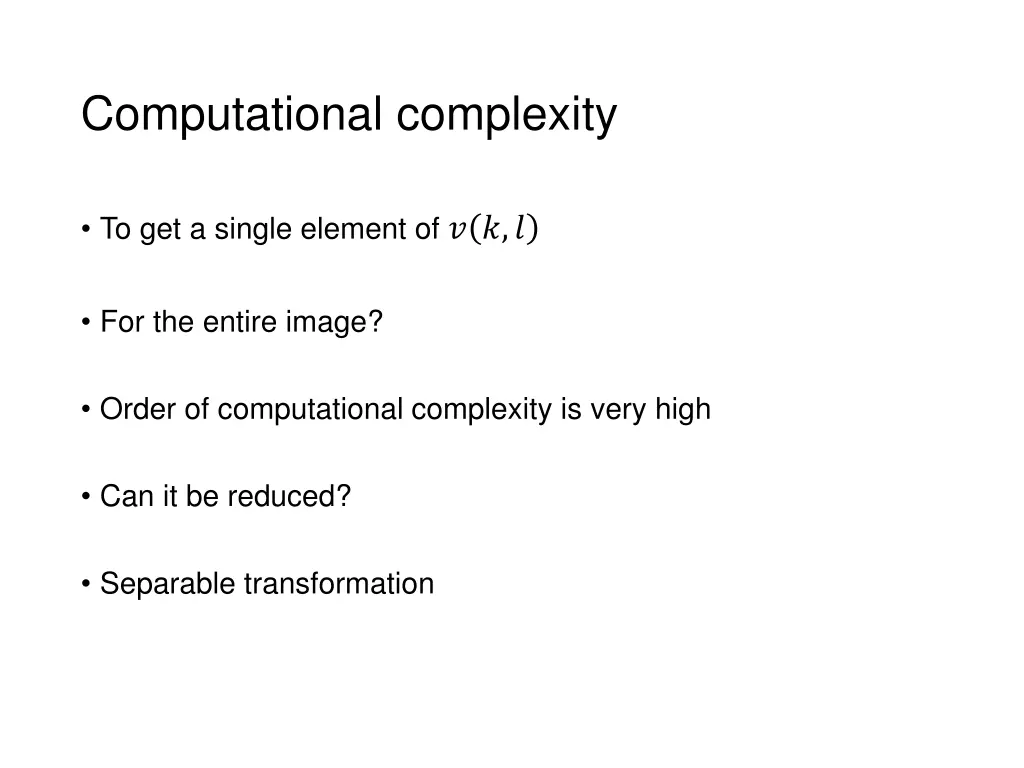
Computational complexity To get a single element of ? ?,? For the entire image? Order of computational complexity is very high Can it be reduced? Separable transformation
Thank you Next Lecture: Image transformations-II