Do Now:DNA Fingerprints and Evolution Concepts

Students will explore DNA fingerprints through various hair samples to determine genetic similarities using a structured worksheet. Additionally, topics such as macroevolution and microevolution will be addressed, highlighting the processes leading to species formation and the evidence used to understand evolutionary history.

Download Presentation

Please find below an Image/Link to download the presentation.
The content on the website is provided AS IS for your information and personal use only. It may not be sold, licensed, or shared on other websites without obtaining consent from the author.If you encounter any issues during the download, it is possible that the publisher has removed the file from their server.
You are allowed to download the files provided on this website for personal or commercial use, subject to the condition that they are used lawfully. All files are the property of their respective owners.
The content on the website is provided AS IS for your information and personal use only. It may not be sold, licensed, or shared on other websites without obtaining consent from the author.
E N D
Presentation Transcript
DO NOW Pick up worksheet packet. Get out notes .last three pages go with this unit. Get out a new EOC daily sheet. 1
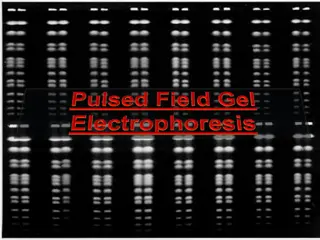
EOC BIOLOGY BIO13 Based on the DNA fingerprints, which hair sample came from the same organism as the blood sample. A.Hair Sample 1 B.Hair Sample 2 C.Hair Sample 3 D.Hair Sample 4 2
EOC BIOLOGY BIO13 C. Hair Sample 3. The pattern of dark and light bands in this hair sample exactly matched the pattern in the blood sample. Choices A, B, and D are incorrect because each of these hair samples has a different patterns of dark and light bands that does not match the pattern in the hair sample. 3
4 4
EVOLUTION We are going to look at the processes of evolution: MACROEVOLUTION large scale evolutionary change AND MICROEVOLUTION evolution that occurs within a population. 5 5
MACROEVOLUTION Macroevolution is evolution on a scale of separated gene pools. Is it large scales evolutionary change. Macroevolutionary studies focus on change that occurs at or above the level of species, in contrast with microevolution, which refers to smaller evolutionary changes (typically described as changes in allele frequencies) within a species or population. 6 6
MACROEVOLUTION Microevolution Macroevolution 7 7
MACROEVOLUTION Macroevolution encompasses the grandest trends and transformations in evolution, such as the origin of mammals and the radiation of flowering plants. Macroevolutionary patterns are generally what we see when we look at the large-scale history of life. It is not necessarily easy to "see" this history; there are no firsthand accounts to be read. Instead, we reconstruct the history of life using all available evidence: geology, fossils, and living organisms. 8 8
SPECIATION Formation of a new species (group of organisms that can reproduce fertile offspring) needs: 1. Available niche 2. Genetic Isolation 3. Time 9
MACROEVOLUTION SPECIATION - produces a NEW species gene flow between two population is interrupted genetic differences gradually accumulate between the two populations reproductive isolation evolves as a consequence of this divergence 10 10
MACROEVOLUTION A.Lots f splitting along the way B. Only one split C. Lots of splitting at the same time. 11 11
MACROEVOLUTION MECHANISMS leading to speciation: Geographic Isolation - Separated by bodies of water or mountains. Temporal Isolation - Reproduction takes place at different times of the year Behavioral Isolation - Populations are capable of interbreeding, but have different courtship rituals or other type of behavior. 12 12
MACROEVOLUTION Geographic Isolation example Some fruit fly larvae were washed up on an island, and speciation starts because populations were prevented from interbreeding by geographic isolation. Scientists think that geographic isolation is a common way for the process of speciation to begin: rivers change course, mountains rise, continents drift, organisms migrate, and what was once a continuous population is divided into two or more smaller populations. 13 13
MACROEVOLUTION Temporal Isolation example There is reproductive isolation due to differences in the mating season in the toad species Bufo americanus and Bufo fowleri. The members of these species can be successfully crossed in the laboratory. However, mating does not occur in the wild even though the geographical distribution of the two species overlaps. B. americanus mates in early summer and B. fowleri in late summer. 14 14
MACROEVOLUTION Behavioral Isolation example Bowerbirds construct elaborate bowers and decorate them with different colors in order to woo females. If two species in the beginning stages of differentiation evolve differences in this mating ritual, it might permanently isolate them and complete the process of speciation. 15 15