Explore the comparison between Lagrangian and Hamiltonian approaches in dynamics, covering natural mechanical systems, time-irreversible systems, cyclic variables, integrability, and theorems. Dive into examples like Sokolov's case of a rigid body in a liquid and understand the impact of gauge terms on equations. Discover the essence of Hamilton's equations in transforming potentials and more.
Please find below an Image/Link to download the presentation.
The content on the website is provided AS IS for your information and personal use only. It may not be sold, licensed, or shared on other websites without obtaining consent from the author. If you encounter any issues during the download, it is possible that the publisher has removed the file from their server.
You are allowed to download the files provided on this website for personal or commercial use, subject to the condition that they are used lawfully. All files are the property of their respective owners.
The content on the website is provided AS IS for your information and personal use only. It may not be sold, licensed, or shared on other websites without obtaining consent from the author.
E N D
Presentation Transcript
LAGRAGIAN VERSUS HAMILTONIAN APPROACHES IN CERTAIN PROBLEMS OF DYNAMICS YEHIAHamad Mansoura University Egypt hyehia@mans.edu.eg 1 7/3/2025
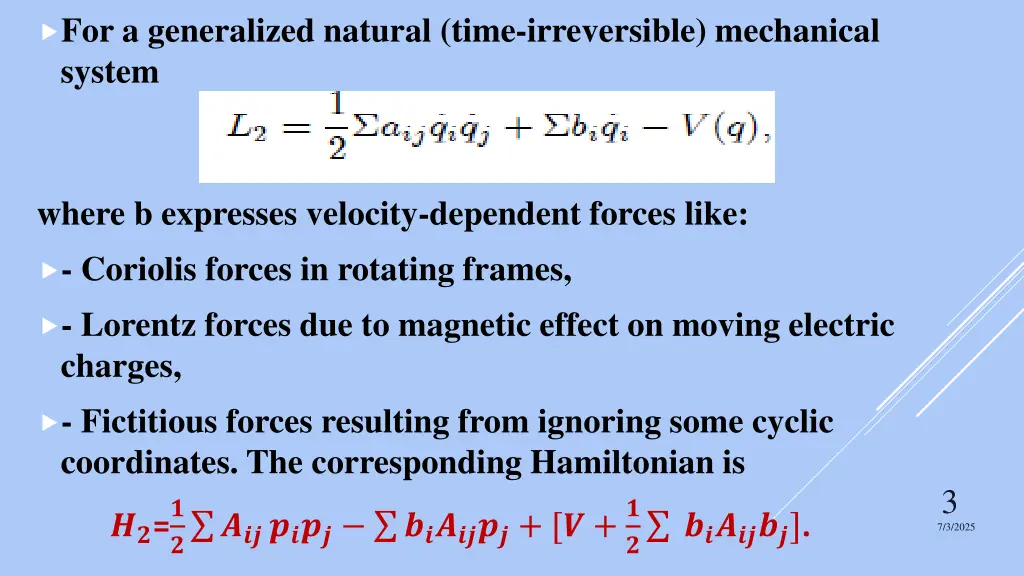
For a generalized natural (time-irreversible) mechanical system where b expresses velocity-dependent forces like: - Coriolis forces in rotating frames, - Lorentz forces due to magnetic effect on moving electric charges, - Fictitious forces resulting from ignoring some cyclic coordinates. The corresponding Hamiltonian is ??=? 7/3/2025 3 ? ??????? ???????+ [? +? ? ???????].
1) 1) When one adds a gauge term Lagrange s equations and their integrals do not change, while for the corresponding Hamiltonian ??=? ? ??????? (??+ ???)?????+ [? +? ? (??+ ???)???(??+ ???)]. Hamilton s equations and their integrals change and potential is disguised. 7/3/2025 4
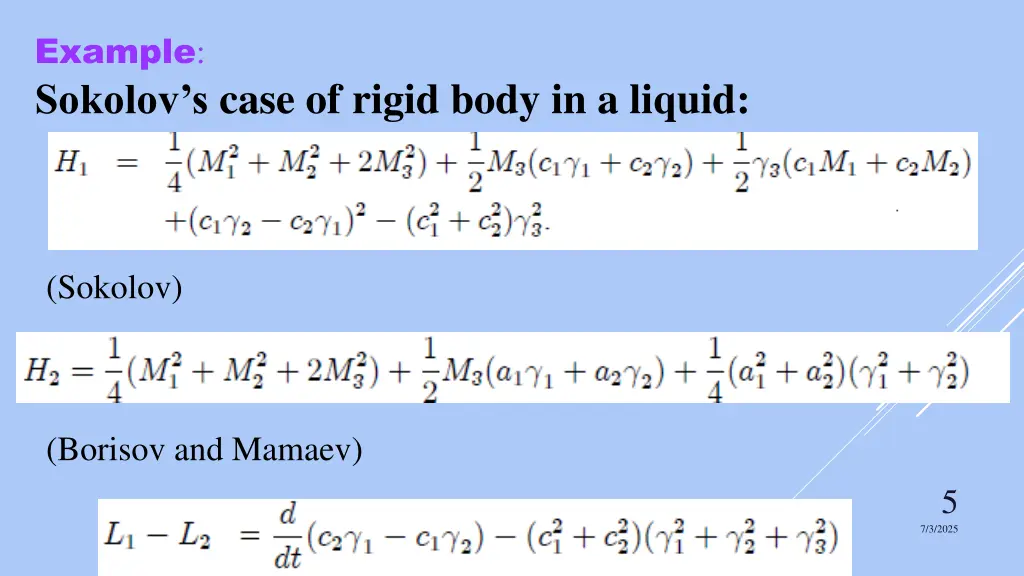
Example: Sokolov s case of rigid body in a liquid: (Sokolov) (Borisov and Mamaev) 7/3/20255
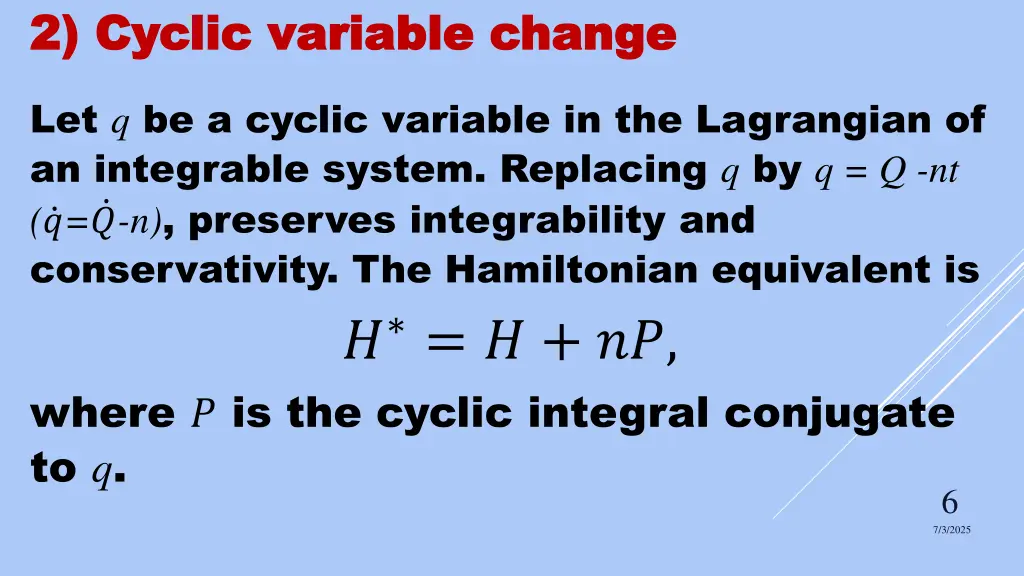
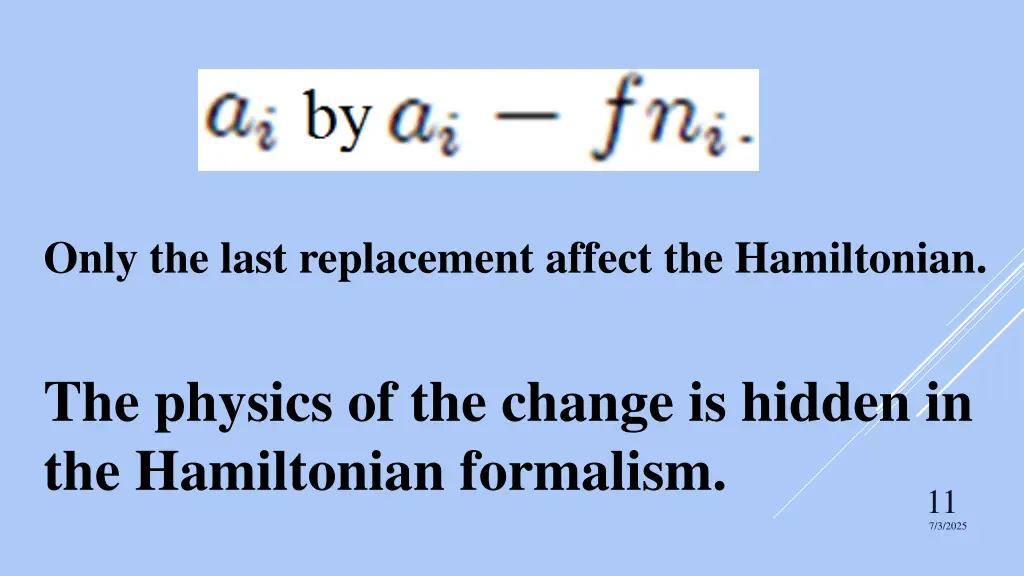
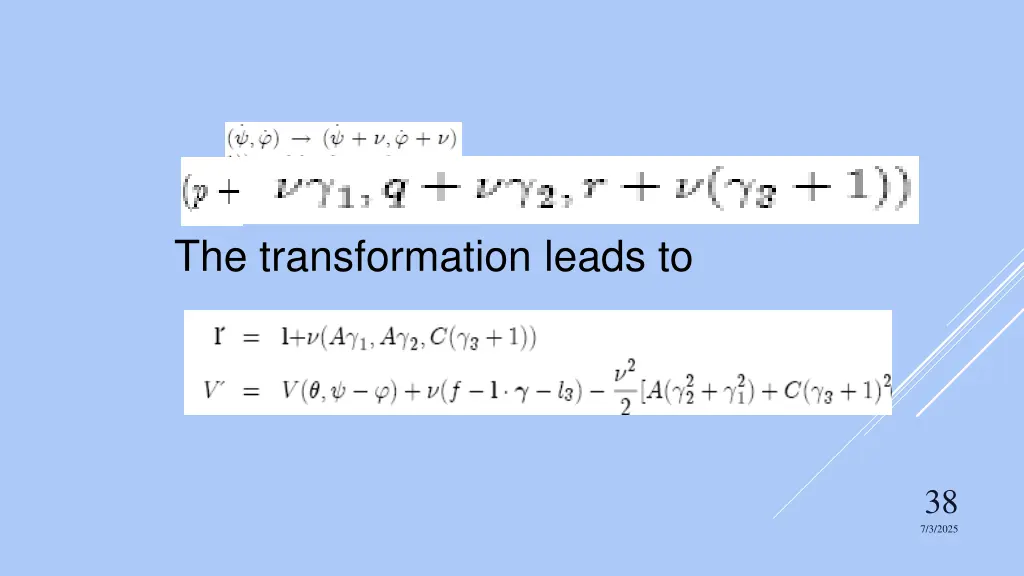
2) Cyclic variable change 2) Cyclic variable change Let q be a cyclic variable in the Lagrangian of an integrable system. Replacing q by q = Q -nt ( ?= ?-n), preserves integrability and conservativity. The Hamiltonian equivalent is ? = ? + ??, where ? is the cyclic integral conjugate to q. 6 7/3/2025
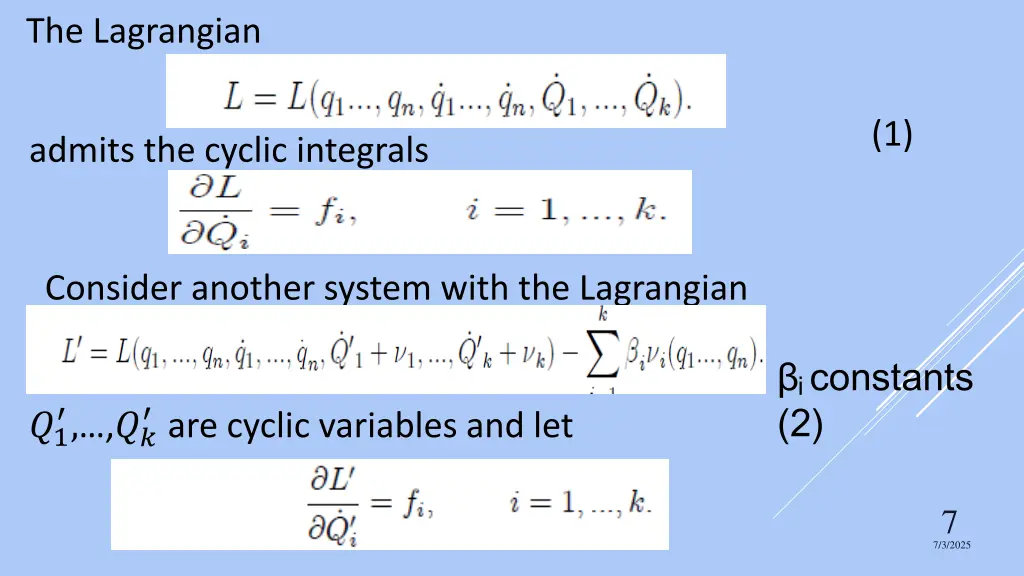
The Lagrangian (1) admits the cyclic integrals Consider another system with the Lagrangian constants (2) i are cyclic variables and let , ,?? ?1 7/3/2025 7
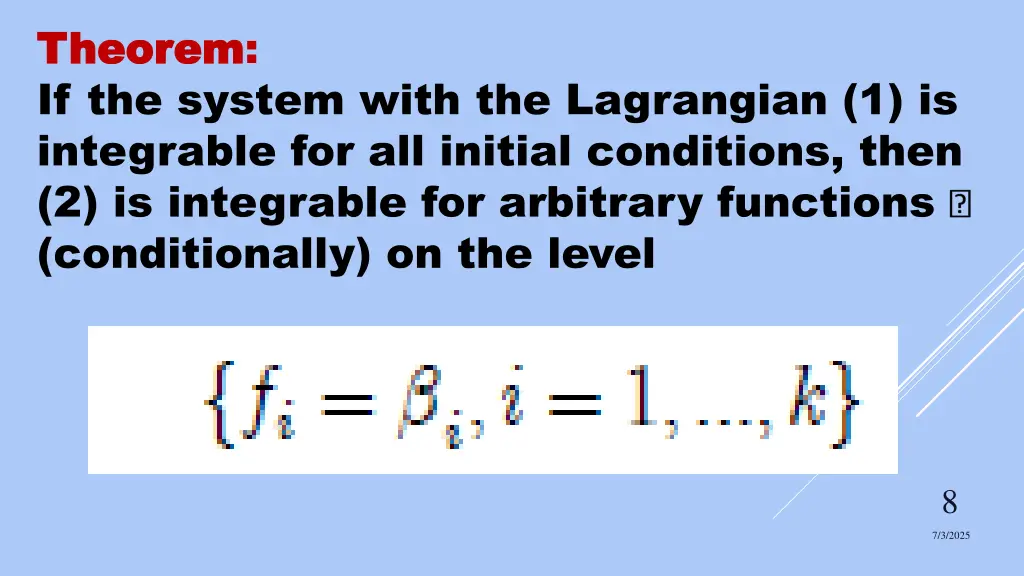
Theorem Theorem: If the system with the Lagrangian (1) is integrable for all initial conditions, then (2) is integrable for arbitrary functions (conditionally) on the level 8 7/3/2025
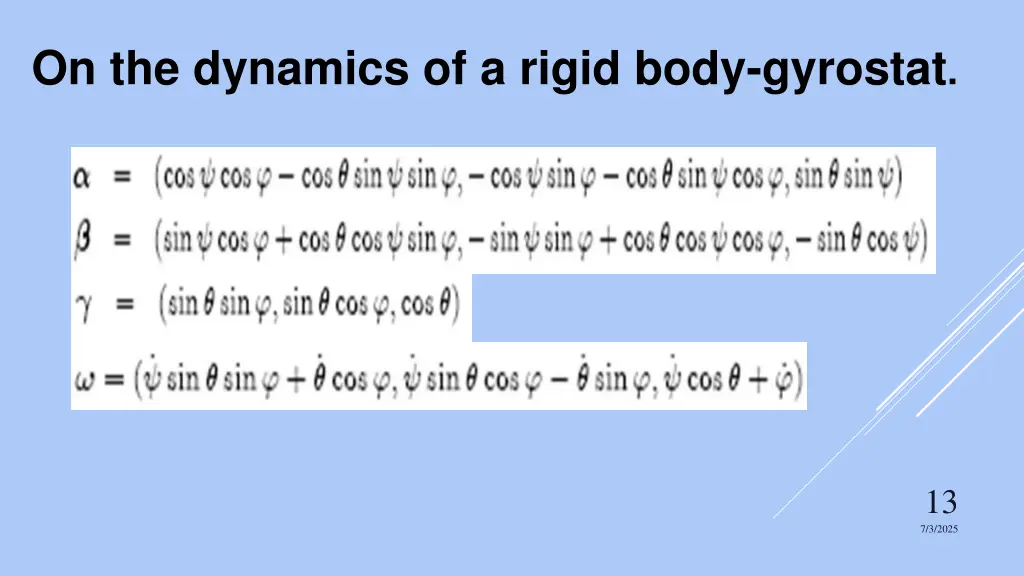
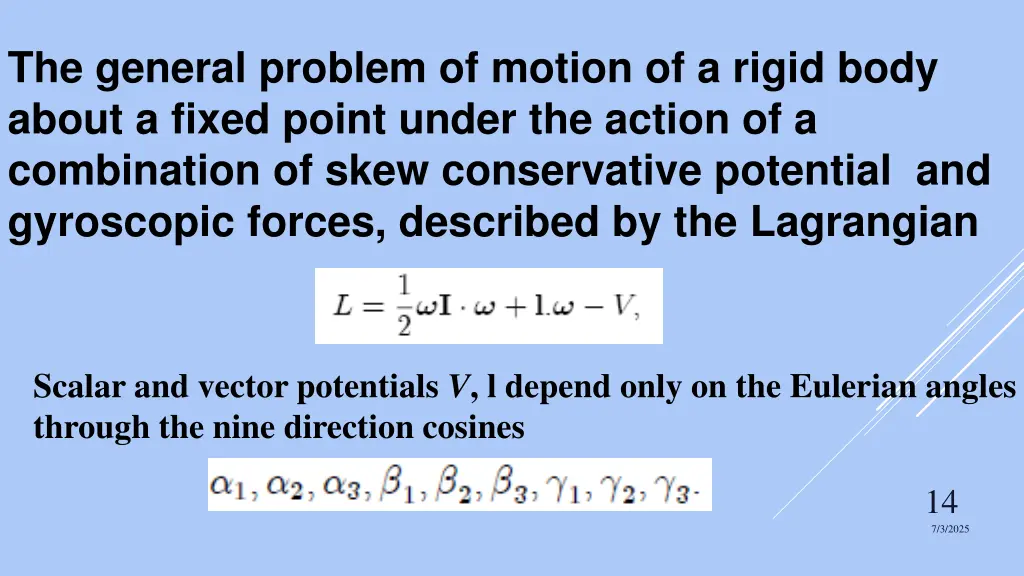
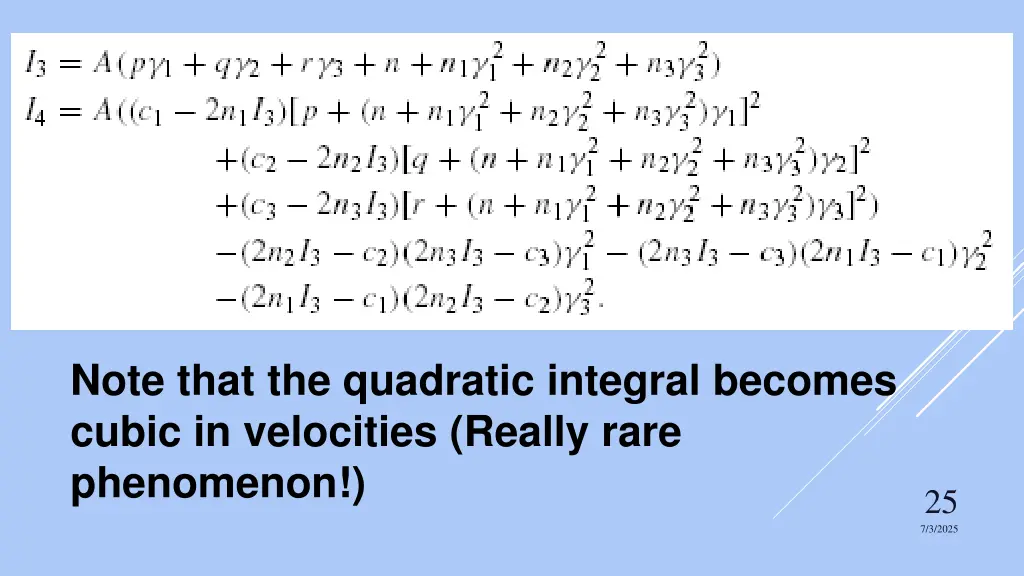
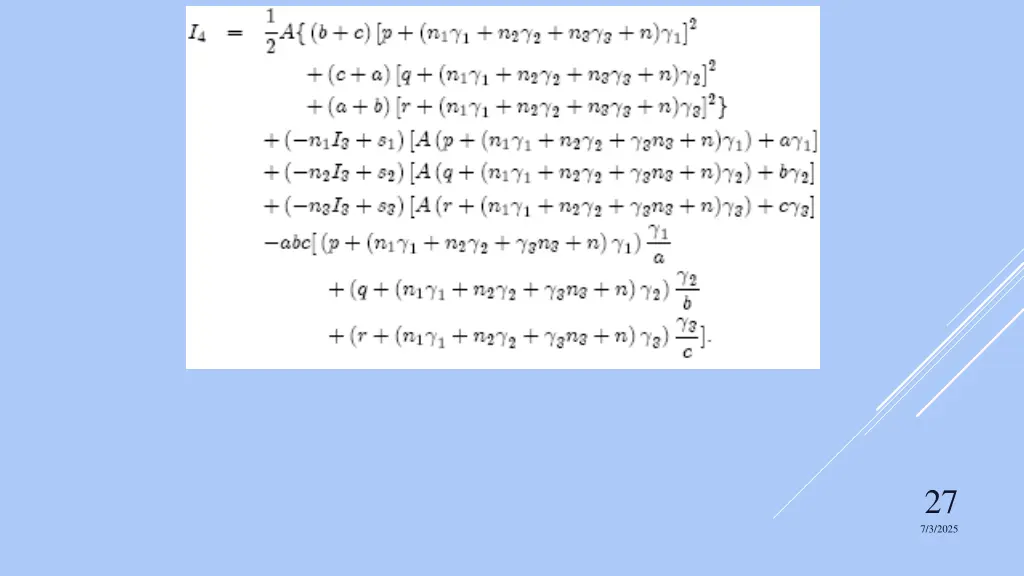
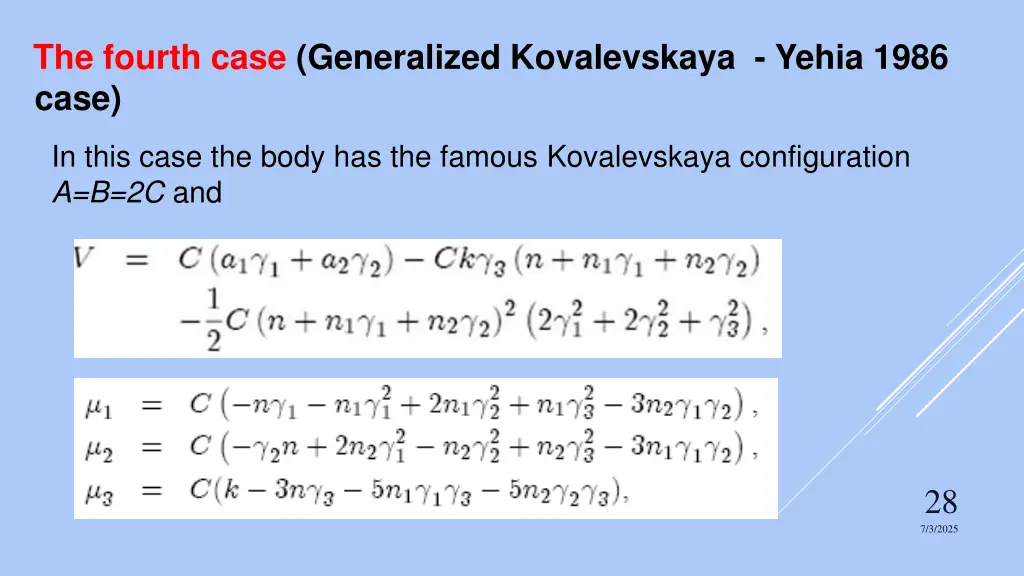
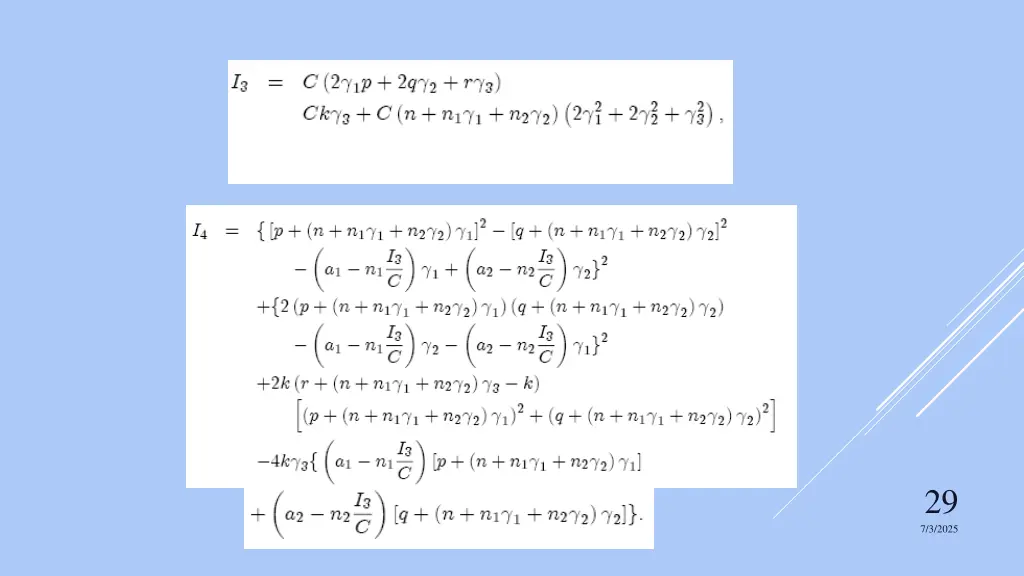
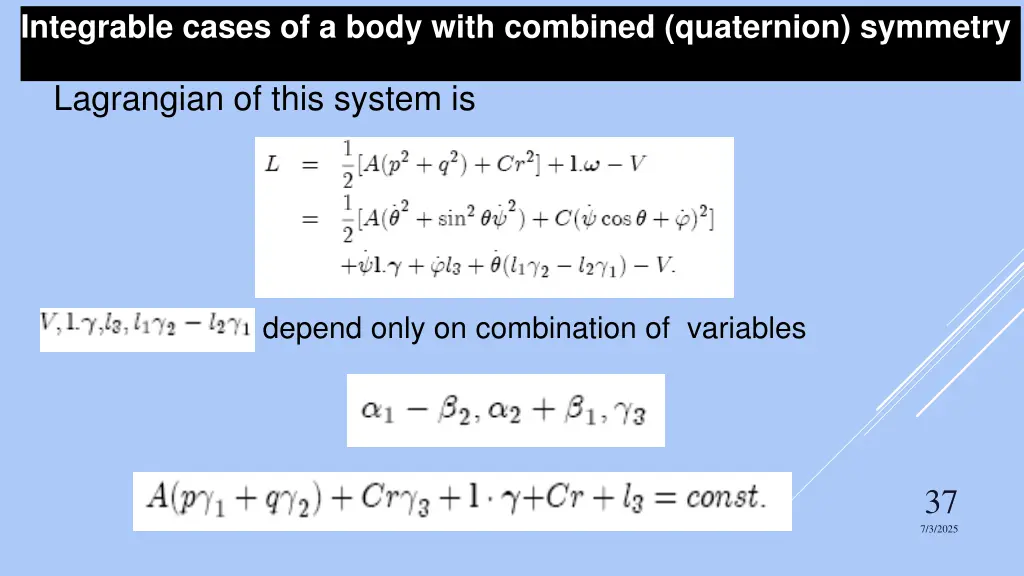
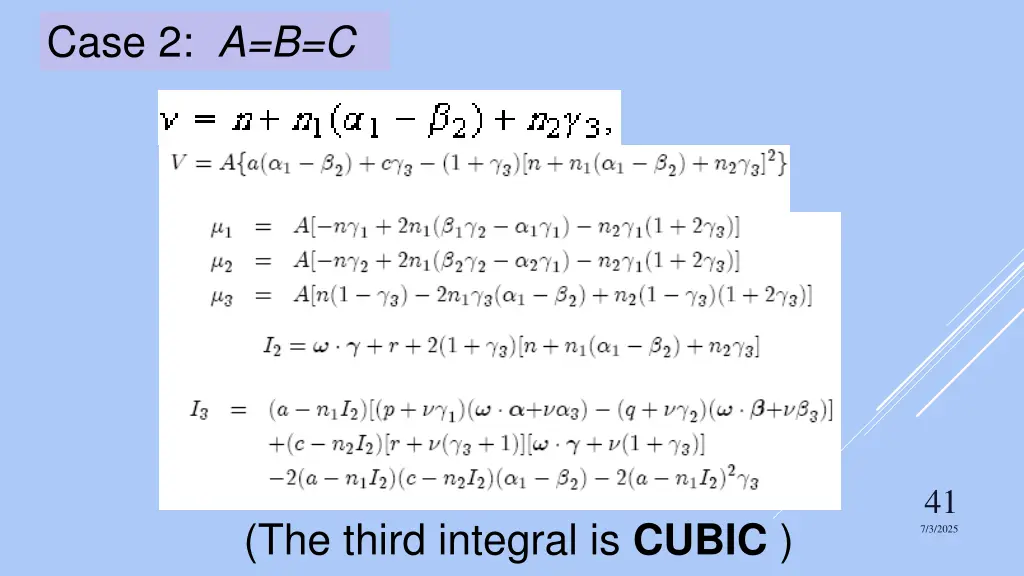
The general problem of motion of a rigid body about a fixed point under the action of a combination of skew conservative potential and gyroscopic forces, described by the Lagrangian Scalar and vector potentials V, l depend only on the Eulerian angles through the nine direction cosines 14 7/3/2025
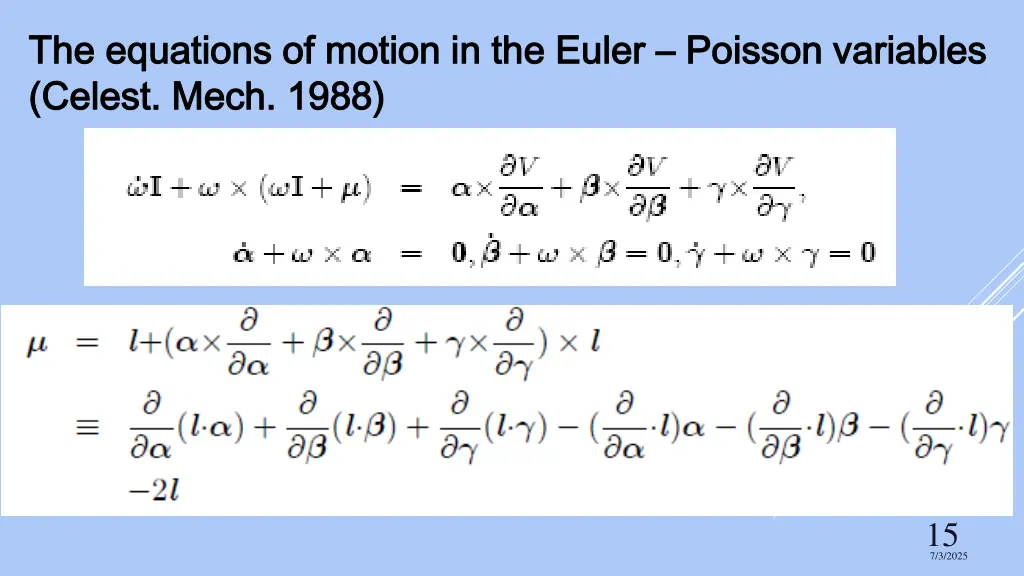
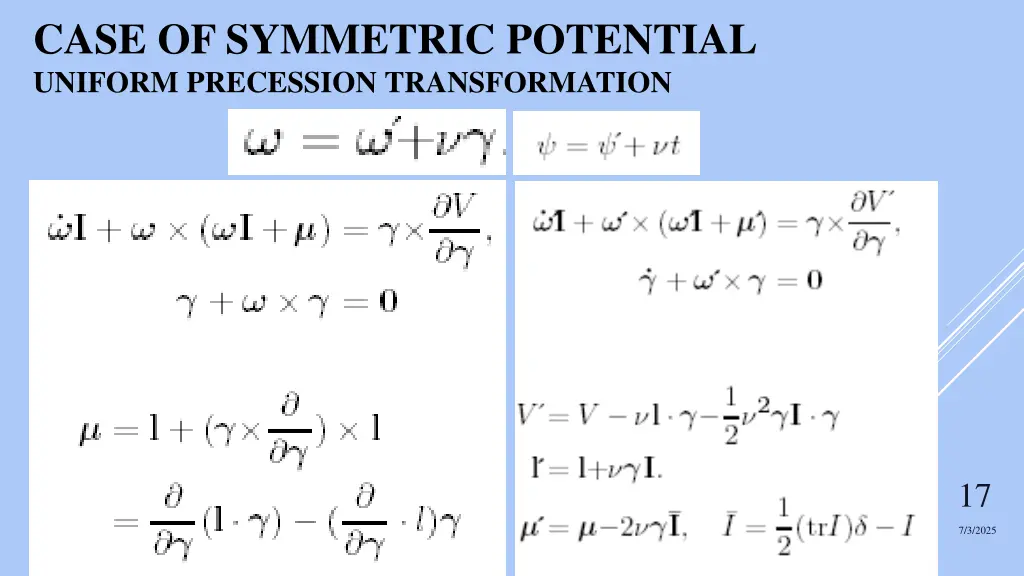
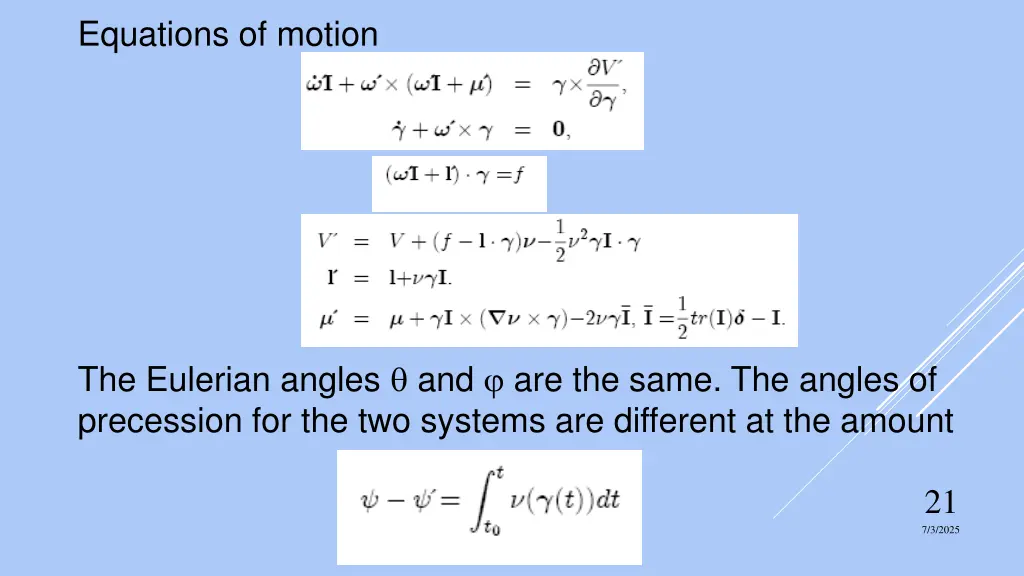
The equations of motion in the Euler The equations of motion in the Euler Poisson variables ( (Celest Celest. Mech. 1988) . Mech. 1988) Poisson variables 7/3/2025 15
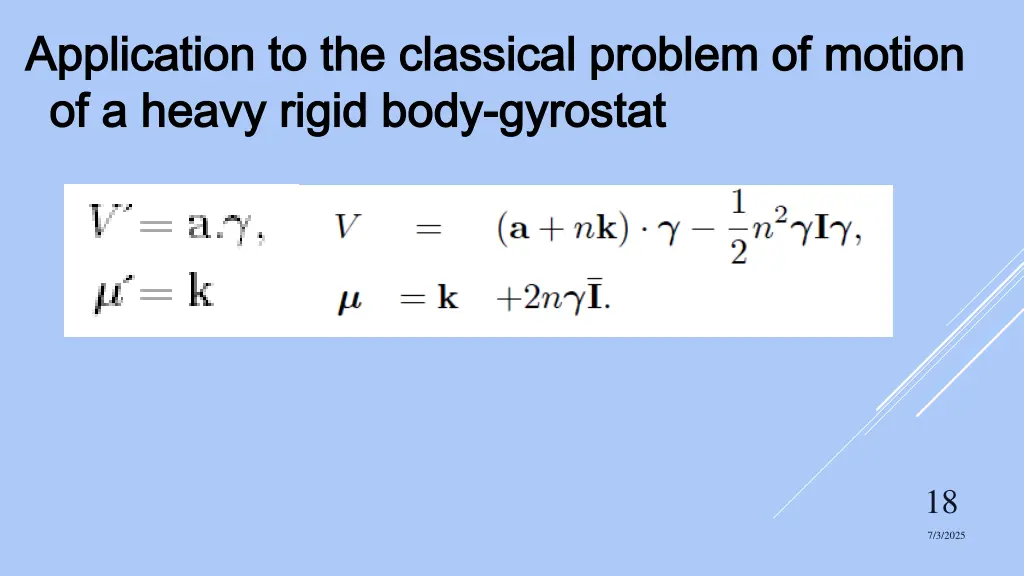
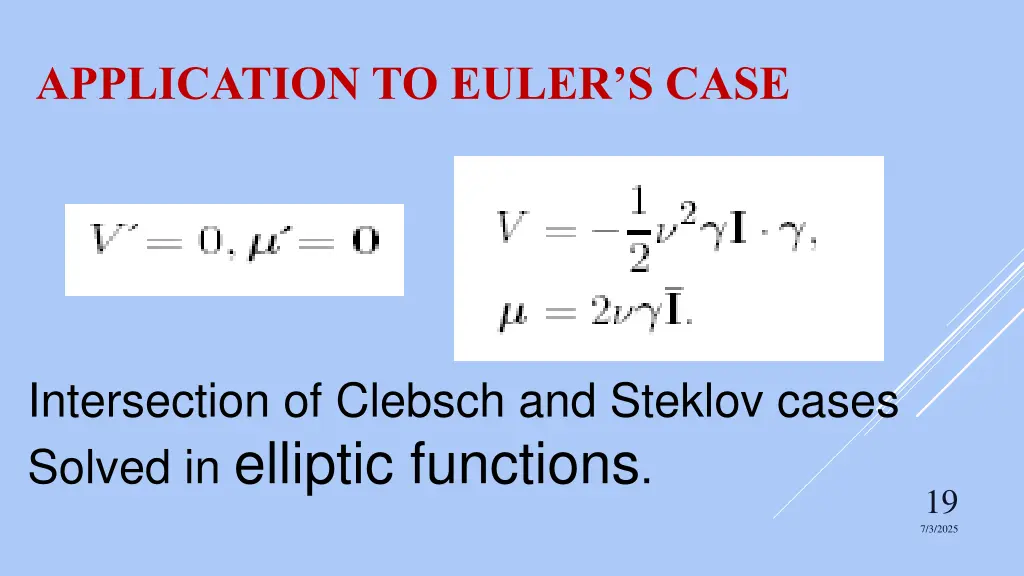
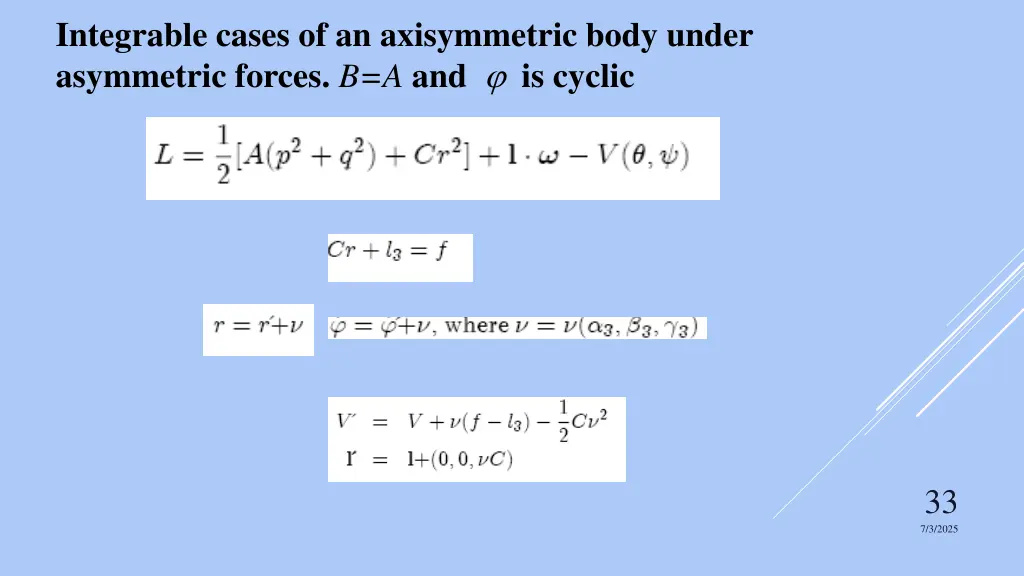
Cyclic coordinates in rigid body dynamics: 1- Axi-symmetric fields - precession angle cyclic. 2- Axi-symmetric body rotation angle cyclic. 3- Dynamically axi-symmetric body and quaternion symmetry ( cyclic). 16 7/3/2025
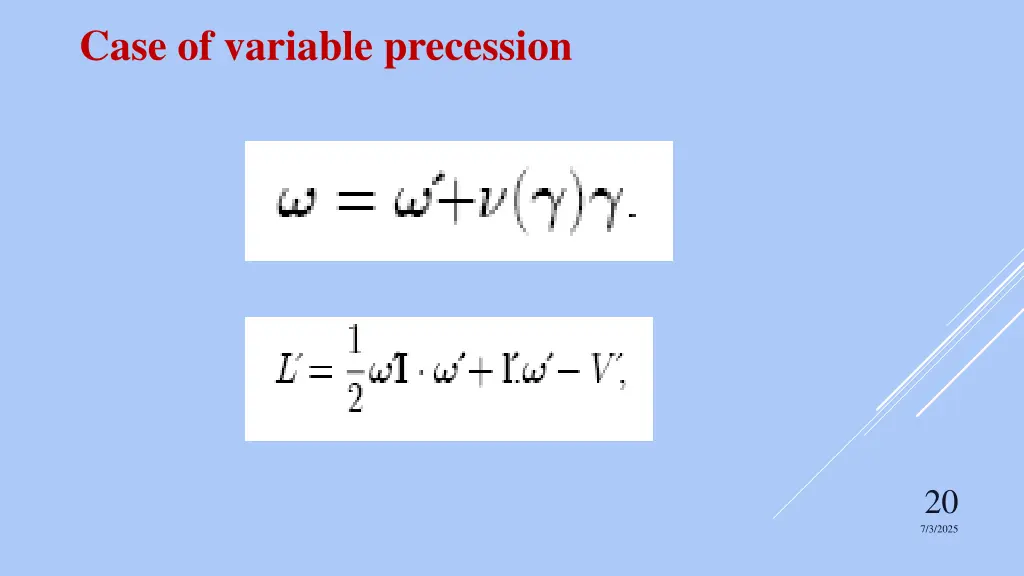
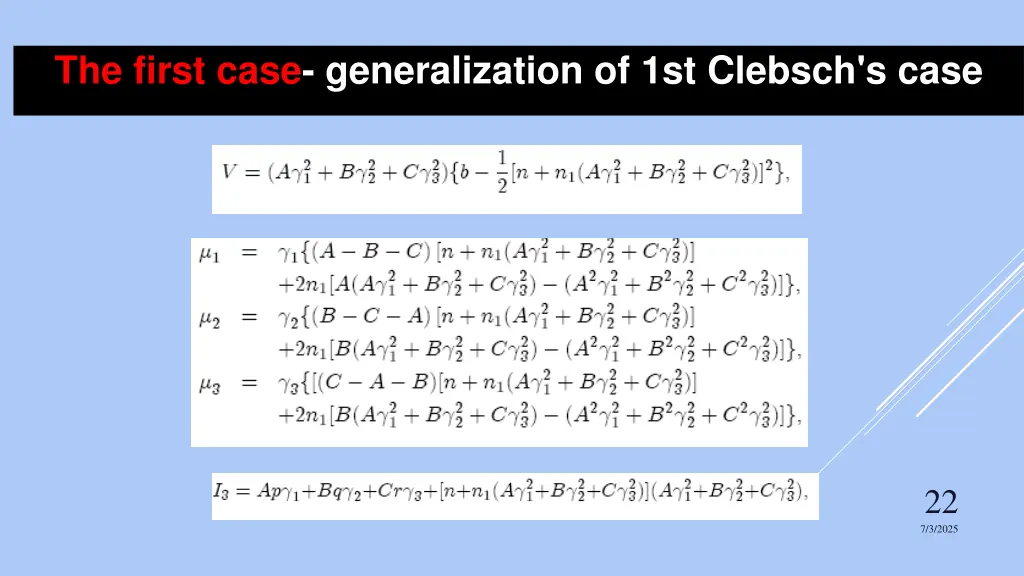
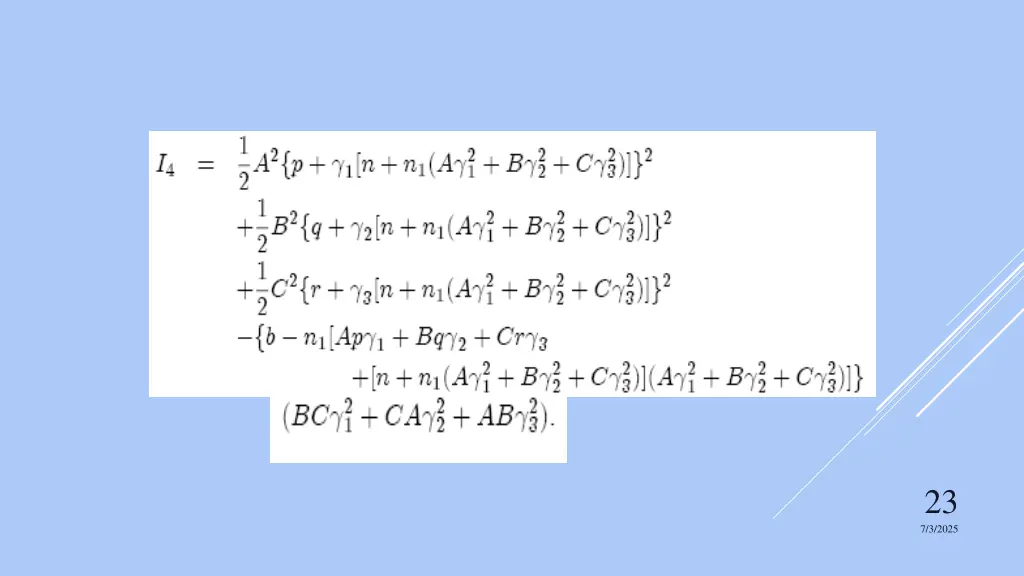
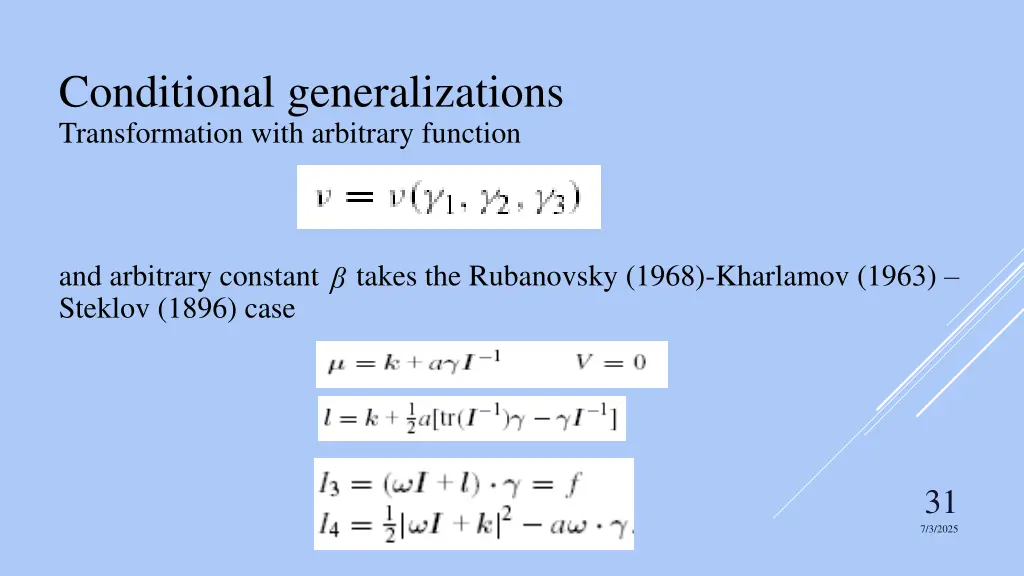
Conditional generalizations Transformation with arbitrary function and arbitrary constant takes the Rubanovsky (1968)-Kharlamov (1963) Steklov (1896) case 31 7/3/2025
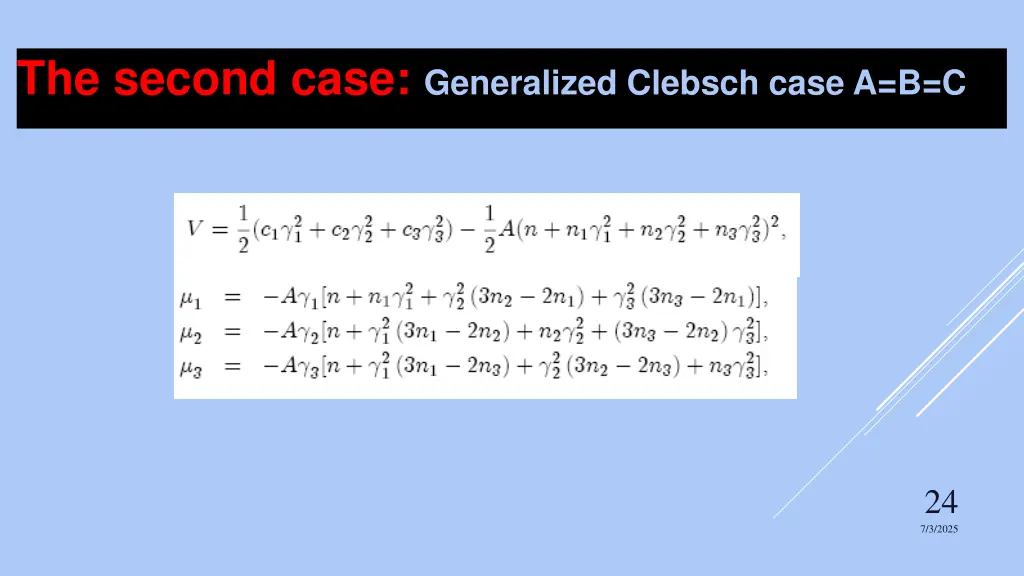
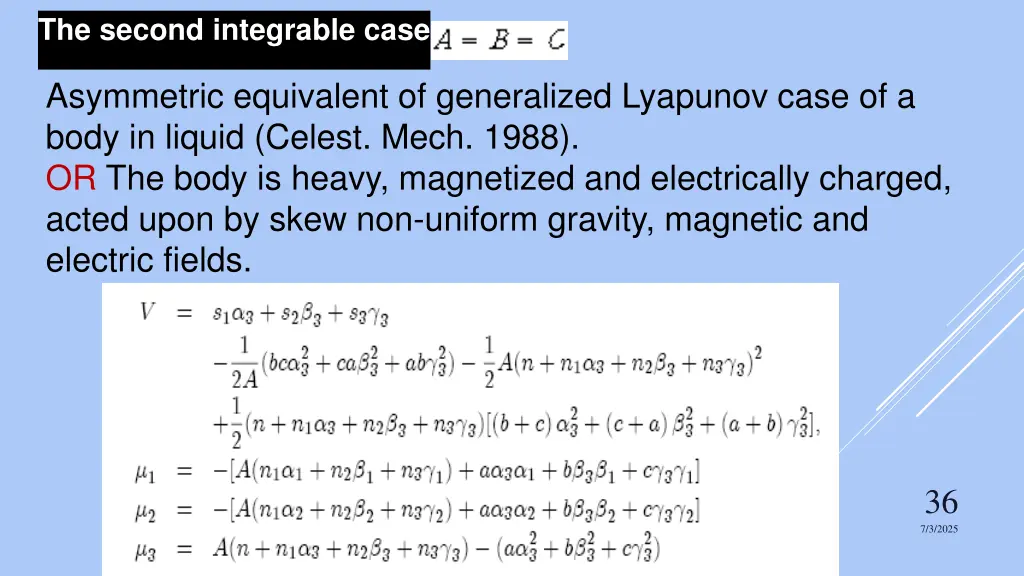
The second integrable case Asymmetric equivalent of generalized Lyapunov case of a body in liquid (Celest. Mech. 1988). OR The body is heavy, magnetized and electrically charged, acted upon by skew non-uniform gravity, magnetic and electric fields. 36 7/3/2025