Implement good documentation practices to ensure compliance with regulatory standards. Understand the importance of accurate records, correction procedures, and handling abnormal results during audits. Stay factual and concise to uphold integrity in documentation practices.
Please find below an Image/Link to download the presentation.
The content on the website is provided AS IS for your information and personal use only. It may not be sold, licensed, or shared on other websites without obtaining consent from the author. If you encounter any issues during the download, it is possible that the publisher has removed the file from their server.
You are allowed to download the files provided on this website for personal or commercial use, subject to the condition that they are used lawfully. All files are the property of their respective owners.
The content on the website is provided AS IS for your information and personal use only. It may not be sold, licensed, or shared on other websites without obtaining consent from the author.
Good Documentation Practices (GDPs) Background FDA is (and will be) writing more warning letters when deviations are found Warning letters can generate Class Action claims that can be very costly to companies Under FSMA, FDA has expanded authority and greater access to records/documents 1
Good Documentation Practices (GDPs) What your documents say can help you or hurt you Documents come in many forms: SOP, Policies, and Work Instructions Records, including pictures Formulas E-mails, text messages, social media Personal Portable Devices, i.e. iPad, Surface Pro, Mobile Phone etc. Meeting Minutes Differentiate between Documents and Records Consider establishing General Documentation Practices SOP Review and train periodically 2
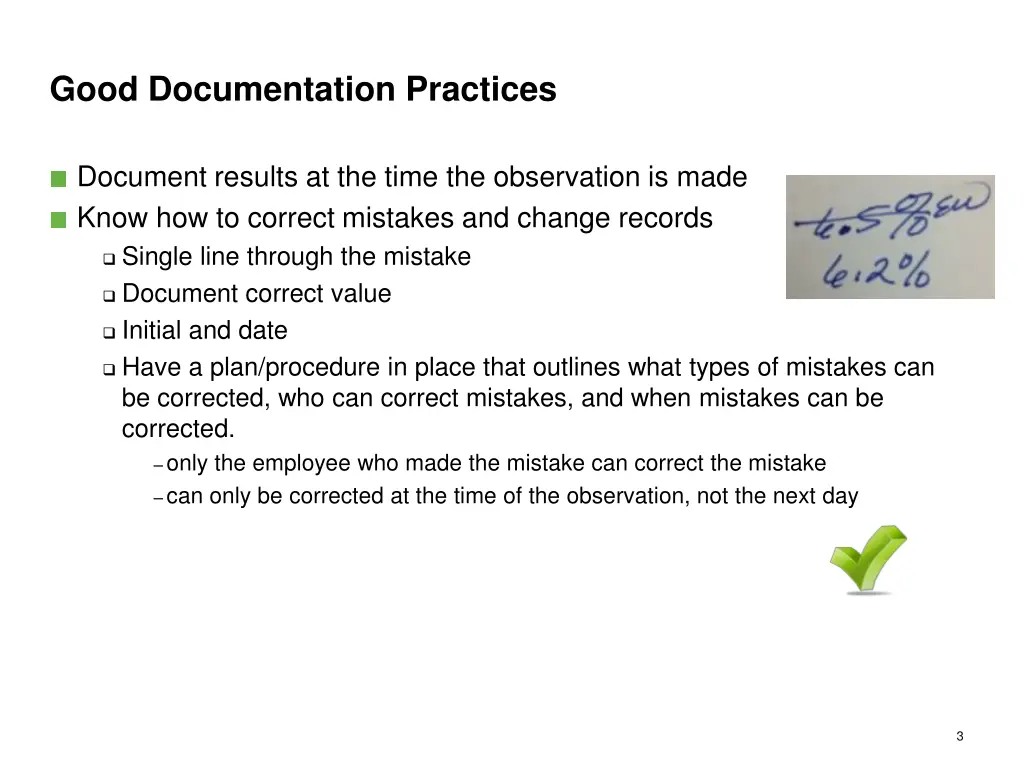
Good Documentation Practices Document results at the time the observation is made Know how to correct mistakes and change records Single line through the mistake Document correct value Initial and date Have a plan/procedure in place that outlines what types of mistakes can be corrected, who can correct mistakes, and when mistakes can be corrected. only the employee who made the mistake can correct the mistake can only be corrected at the time of the observation, not the next day 3
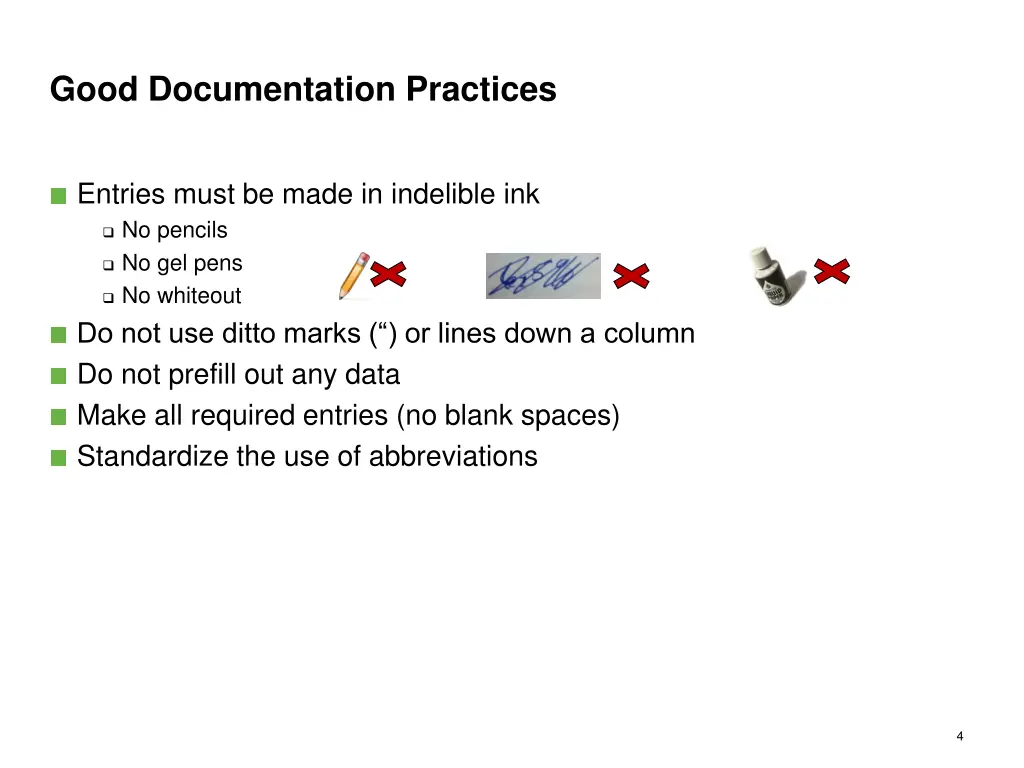
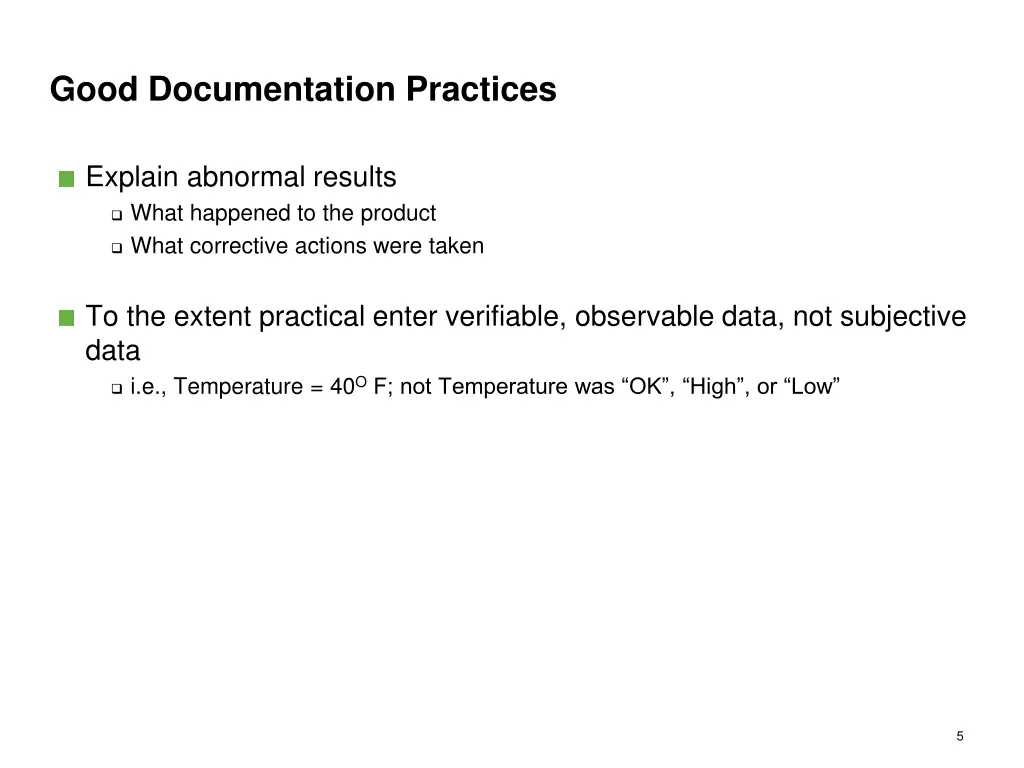
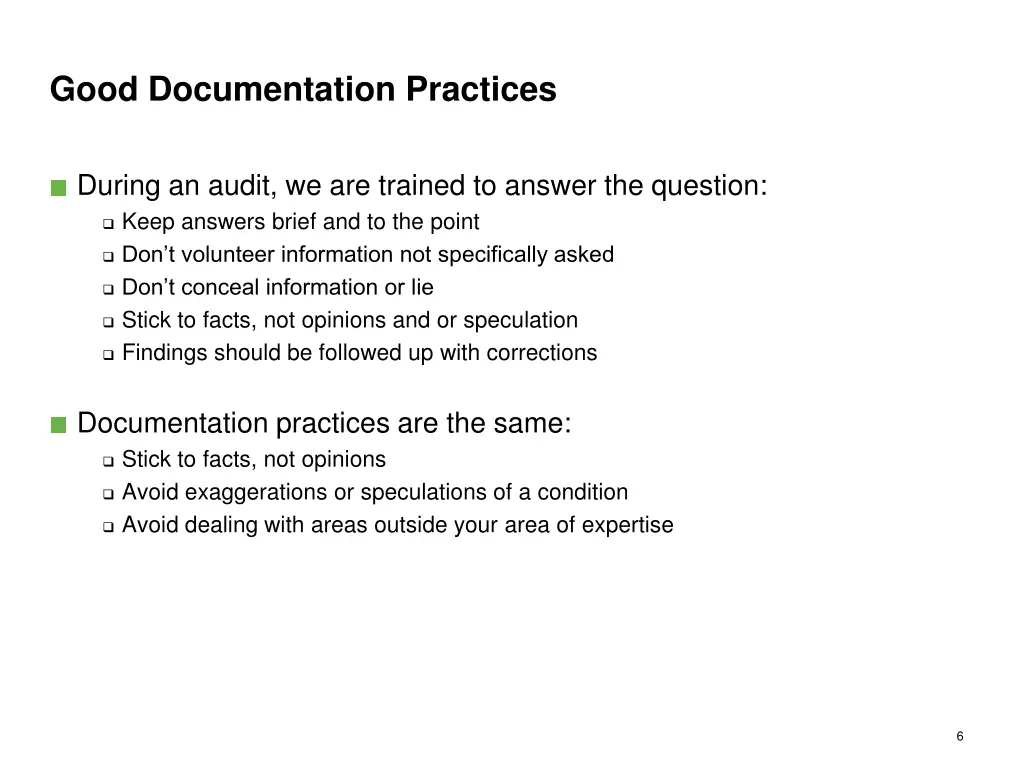
Good Documentation Practices Entries must be made in indelible ink No pencils No gel pens No whiteout Do not use ditto marks ( ) or lines down a column Do not prefill out any data Make all required entries (no blank spaces) Standardize the use of abbreviations 4
Good Documentation Practices Explain abnormal results What happened to the product What corrective actions were taken To the extent practical enter verifiable, observable data, not subjective data i.e., Temperature = 40OF; not Temperature was OK , High , or Low 5
Good Documentation Practices During an audit, we are trained to answer the question: Keep answers brief and to the point Don t volunteer information not specifically asked Don t conceal information or lie Stick to facts, not opinions and or speculation Findings should be followed up with corrections Documentation practices are the same: Stick to facts, not opinions Avoid exaggerations or speculations of a condition Avoid dealing with areas outside your area of expertise 6
Good Documentation Practices E-mails: Follow good email etiquette Base opinions provided on sound logic and facts Avoid sarcasm and humor Avoid commenting on areas outside your area of expertise Pictures: Follow your company s policy to determine when allowed Make sure picture captures issue being addressed and not extraneous background When possible, take pictures after correction has been made Have system in place to manage pictures 7
Ask yourself the following: Would you mind having an FDA Inspector read your record, document, or e-mail? Would you mind having your record, document, or e-mail read someday in a courtroom? Records should be able to tell the story of what happened, at some point in the future 9
GDPs Summary Have a plan/procedure in place for reviewing records Have a plan/procedure in place for filing and/or storing records and who can have access to those records Have a plan in place for record destruction after retention period has expired Determine how will data stored in spreadsheets and/or other electronic formats be managed Determine if records/data currently being gathered are necessary Have a plan/procedure in place to segregate quality and other non-regulatory records from those that are or will be required by regulatory authorities for food safety purposes 10
Remember Records are our way of showing FDA that we know what we are doing and are producing a safe product AND It is no sin for stuff to happen; but it is a sin to not document and correct AND Your Food Safety Plan will be an extension of federal law - what you say you are doing will be used to determine compliance 11
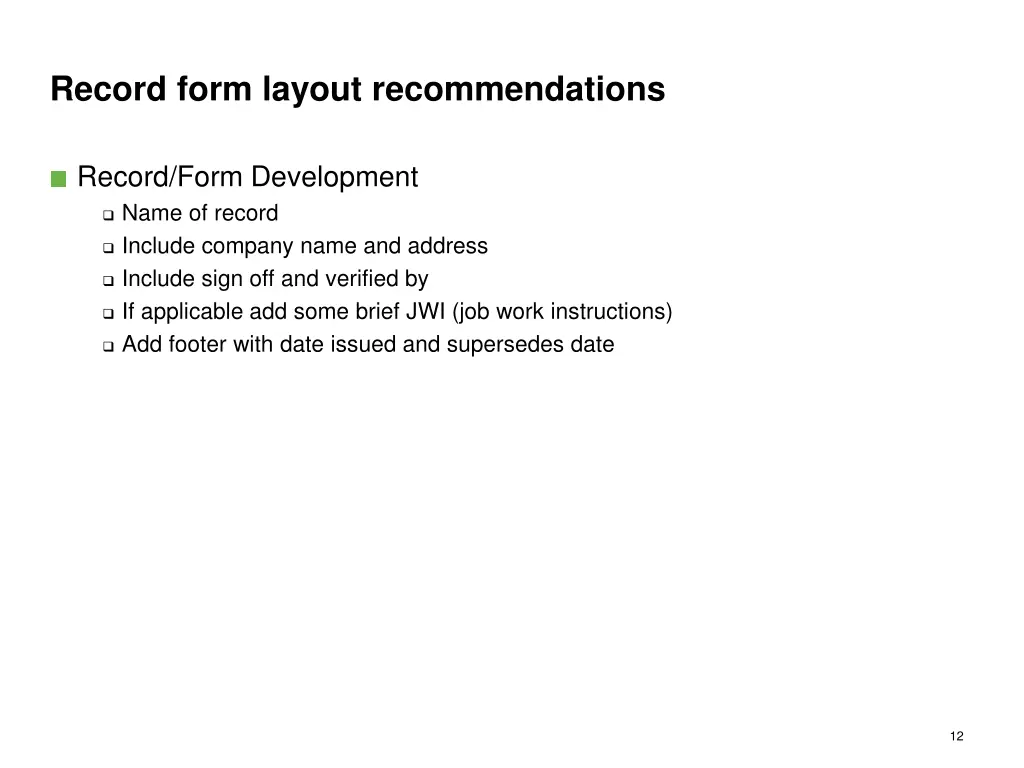
Record form layout recommendations Record/Form Development Name of record Include company name and address Include sign off and verified by If applicable add some brief JWI (job work instructions) Add footer with date issued and supersedes date 12