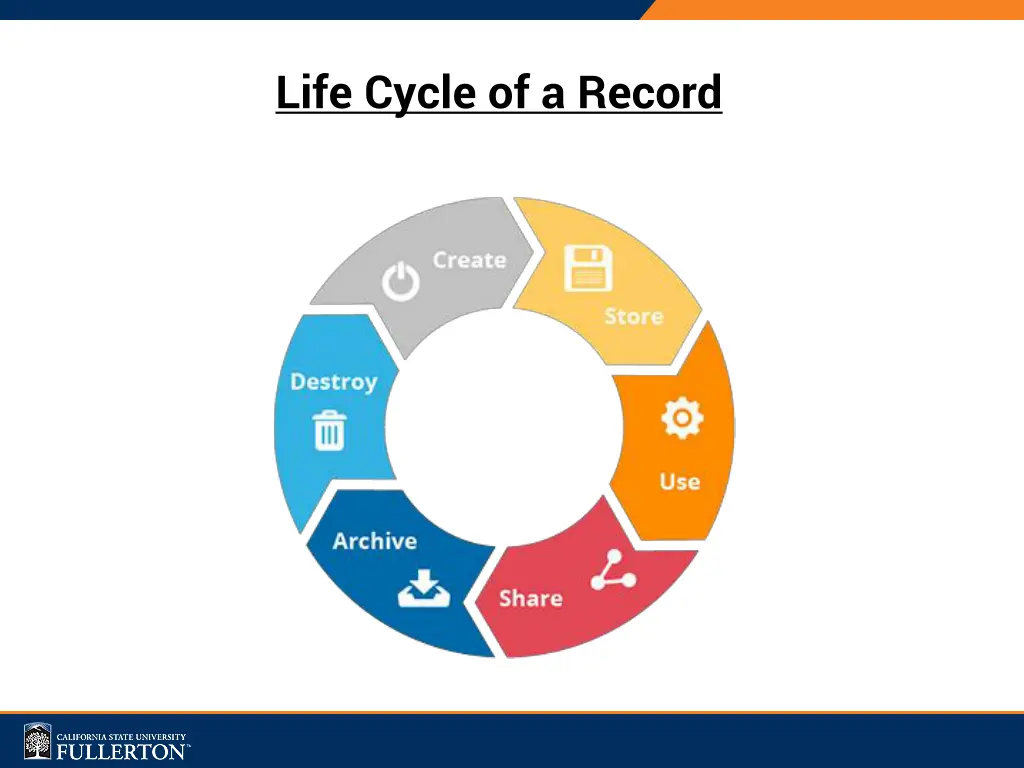
Learn about the importance of records retention, types of records, life cycle management, and compliance with legal requirements. Understand how to maintain, secure, and dispose of records efficiently to improve office efficiency and ensure regulatory compliance.
Please find below an Image/Link to download the presentation.
The content on the website is provided AS IS for your information and personal use only. It may not be sold, licensed, or shared on other websites without obtaining consent from the author. If you encounter any issues during the download, it is possible that the publisher has removed the file from their server.
You are allowed to download the files provided on this website for personal or commercial use, subject to the condition that they are used lawfully. All files are the property of their respective owners.
The content on the website is provided AS IS for your information and personal use only. It may not be sold, licensed, or shared on other websites without obtaining consent from the author.
E N D
Presentation Transcript
PRESENTATION TITLE DOCUMENTS, DOCUMENTS, AND MORE DOCUMENTS Records Retention and Requests for Information Anne Grogan 10/14/22
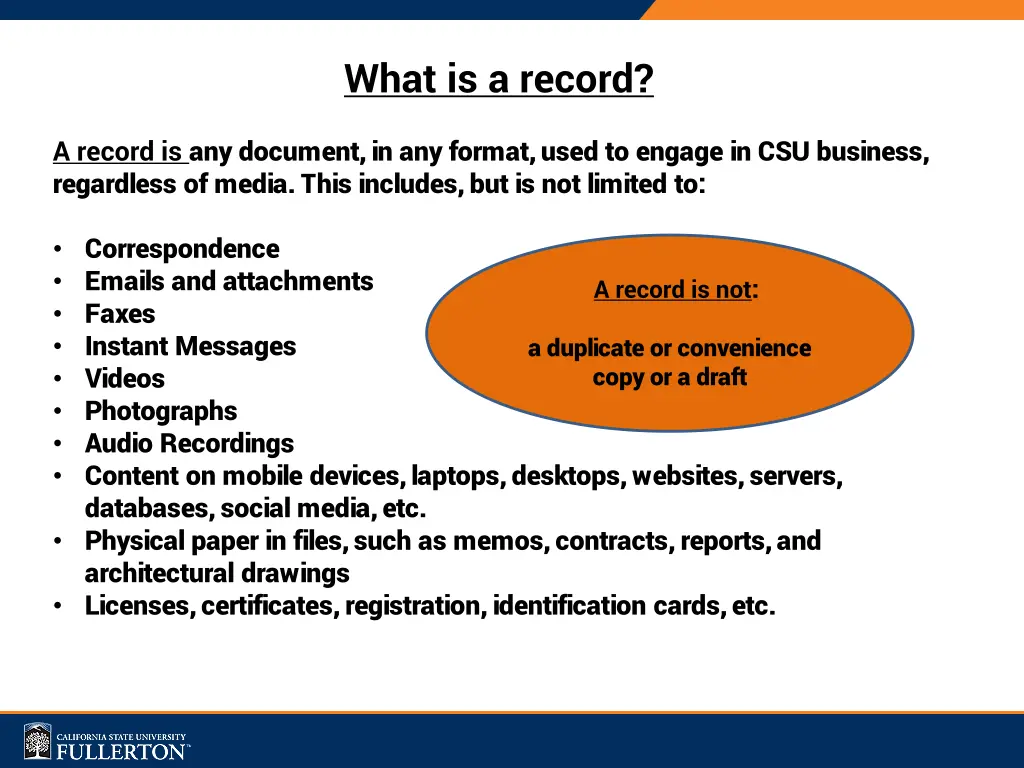
What is a record? A record is any document, in any format, used to engage in CSU business, regardless of media. This includes, but is not limited to: Correspondence Emails and attachments Faxes Instant Messages Videos Photographs Audio Recordings Content on mobile devices, laptops, desktops, websites, servers, databases, social media, etc. Physical paper in files, such as memos, contracts, reports, and architectural drawings Licenses, certificates, registration, identification cards, etc. A record is not: a duplicate or convenience copy or a draft
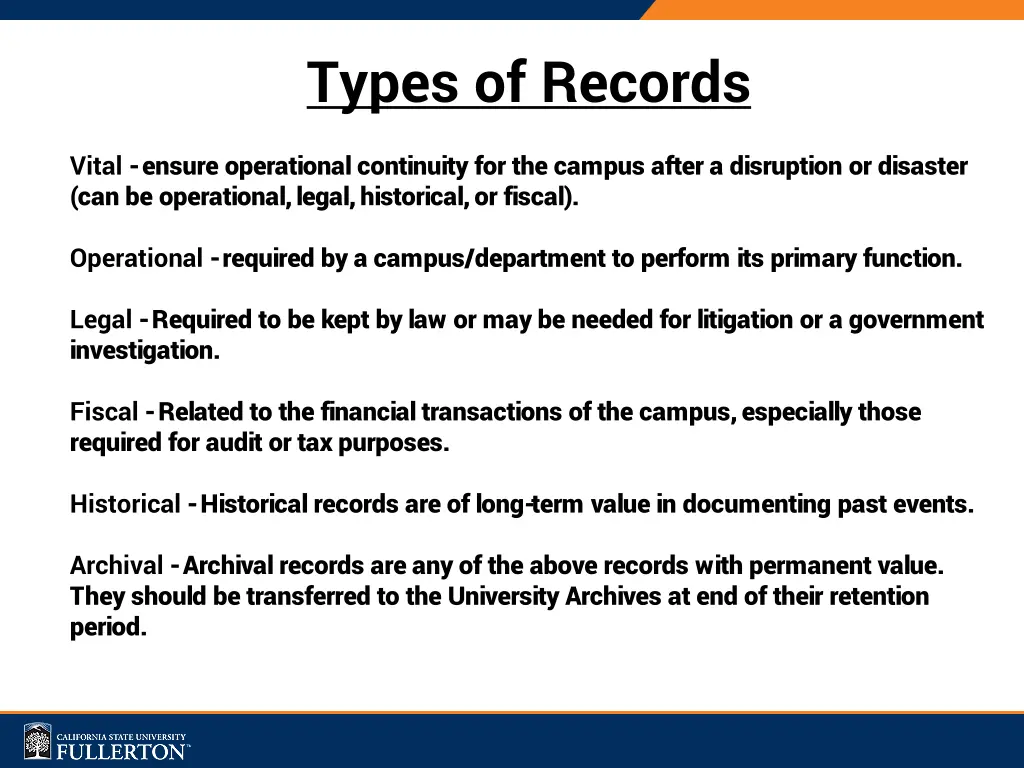
Types of Records Vital - ensure operational continuity for the campus after a disruption or disaster (can be operational, legal, historical, or fiscal). Operational - required by a campus/department to perform its primary function. Legal - Required to be kept by law or may be needed for litigation or a government investigation. Fiscal - Related to the financial transactions of the campus, especially those required for audit or tax purposes. Historical - Historical records are of long-term value in documenting past events. Archival - Archival records are any of the above records with permanent value. They should be transferred to the University Archives at end of their retention period.
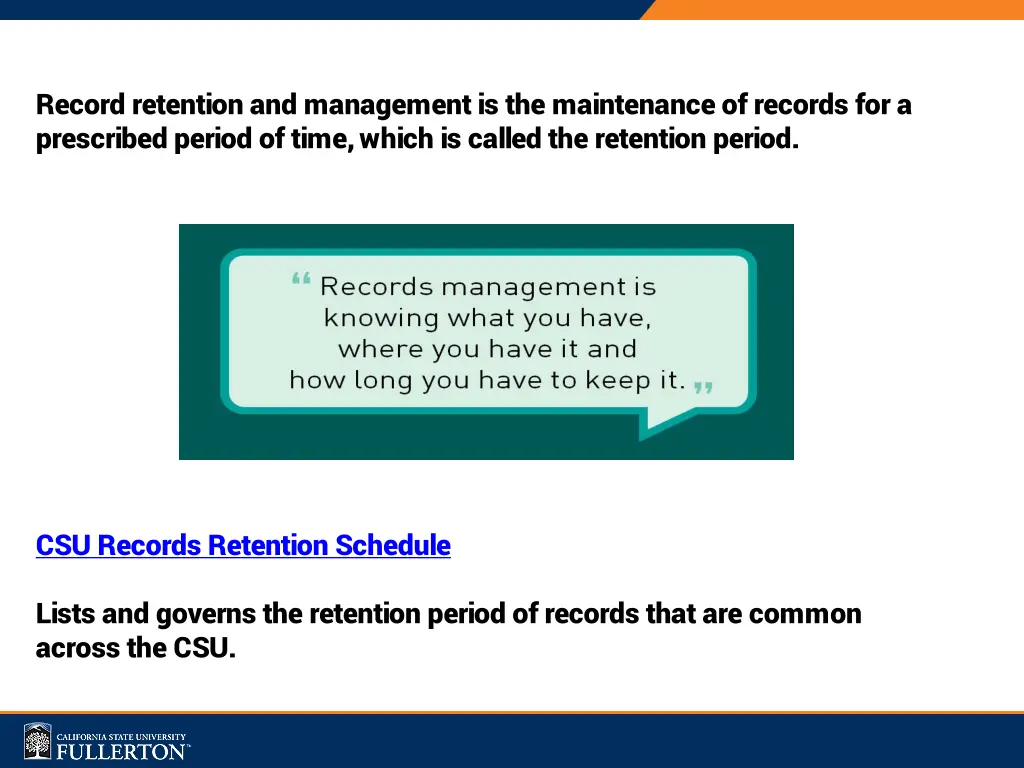
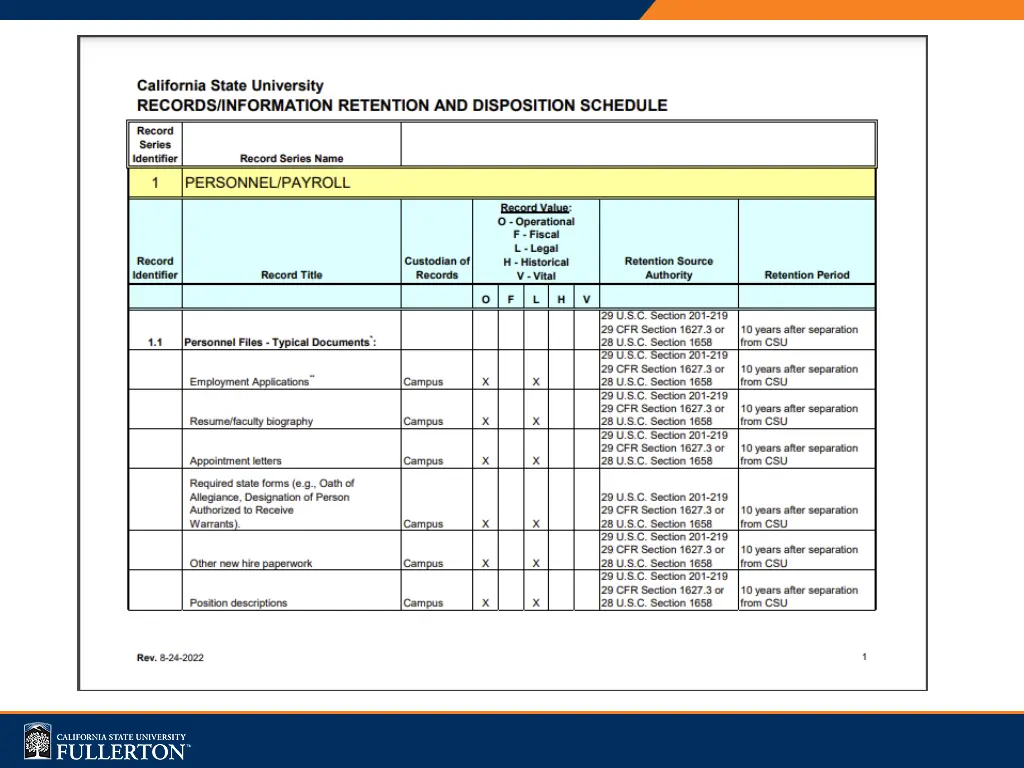
Record retention and management is the maintenance of records for a prescribed period of time, which is called the retention period. CSU Records Retention Schedule Lists and governs the retention period of records that are common across the CSU.
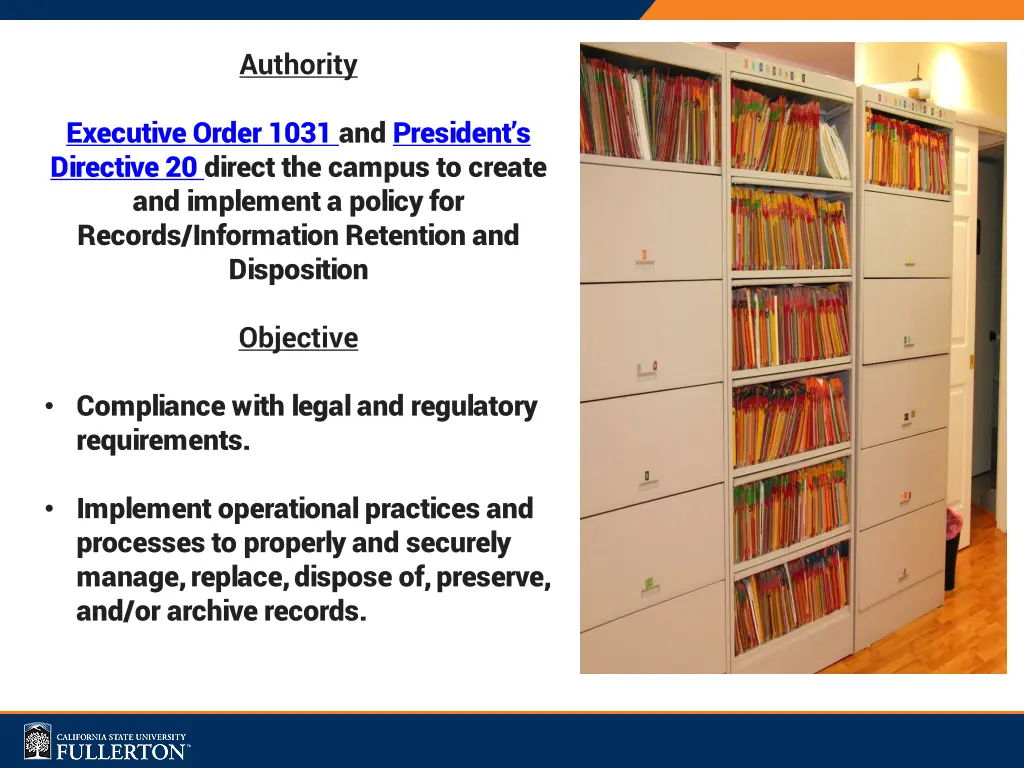
Authority Executive Order 1031 and President s Directive 20 direct the campus to create and implement a policy for Records/Information Retention and Disposition Objective Compliance with legal and regulatory requirements. Implement operational practices and processes to properly and securely manage, replace, dispose of, preserve, and/or archive records.
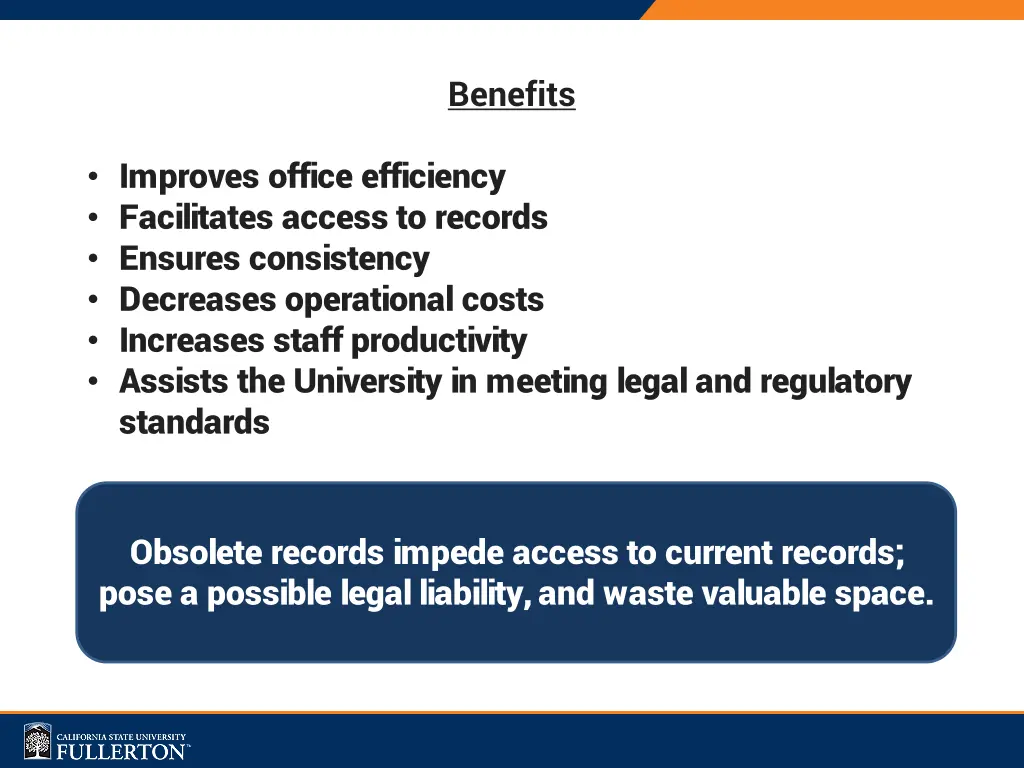
Benefits Improves office efficiency Facilitates access to records Ensures consistency Decreases operational costs Increases staff productivity Assists the University in meeting legal and regulatory standards Obsolete records impede access to current records; pose a possible legal liability, and waste valuable space.
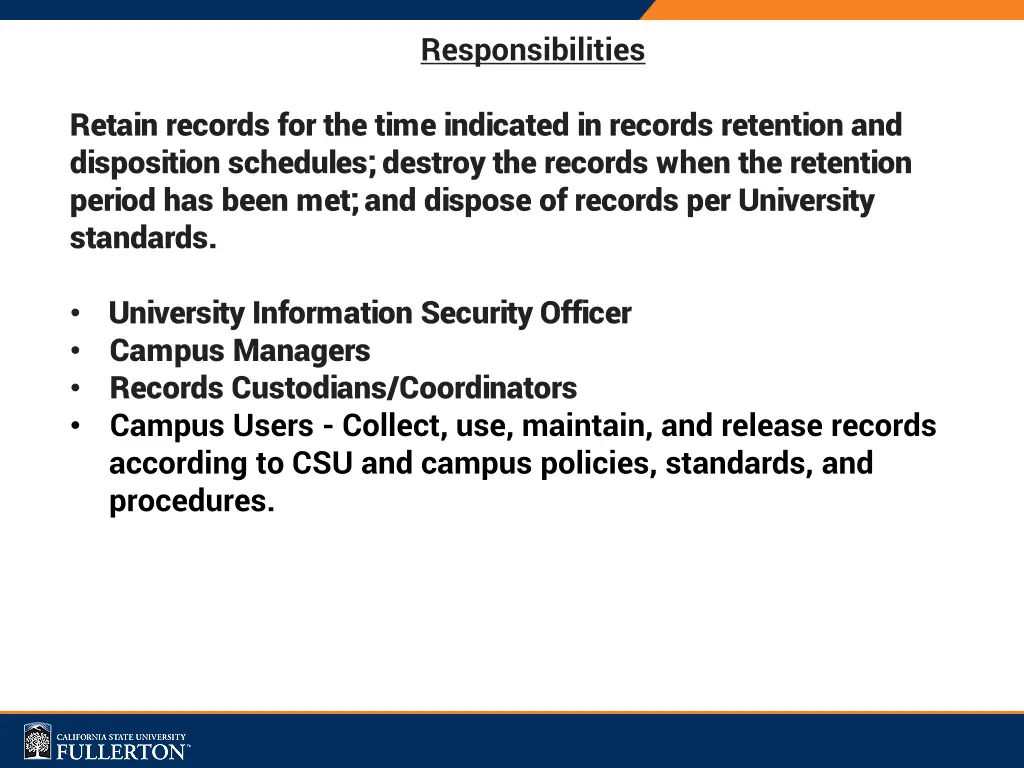
Responsibilities Retain records for the time indicated in records retention and disposition schedules; destroy the records when the retention period has been met; and dispose of records per University standards. University Information Security Officer Campus Managers Records Custodians/Coordinators Campus Users - Collect, use, maintain, and release records according to CSU and campus policies, standards, and procedures.
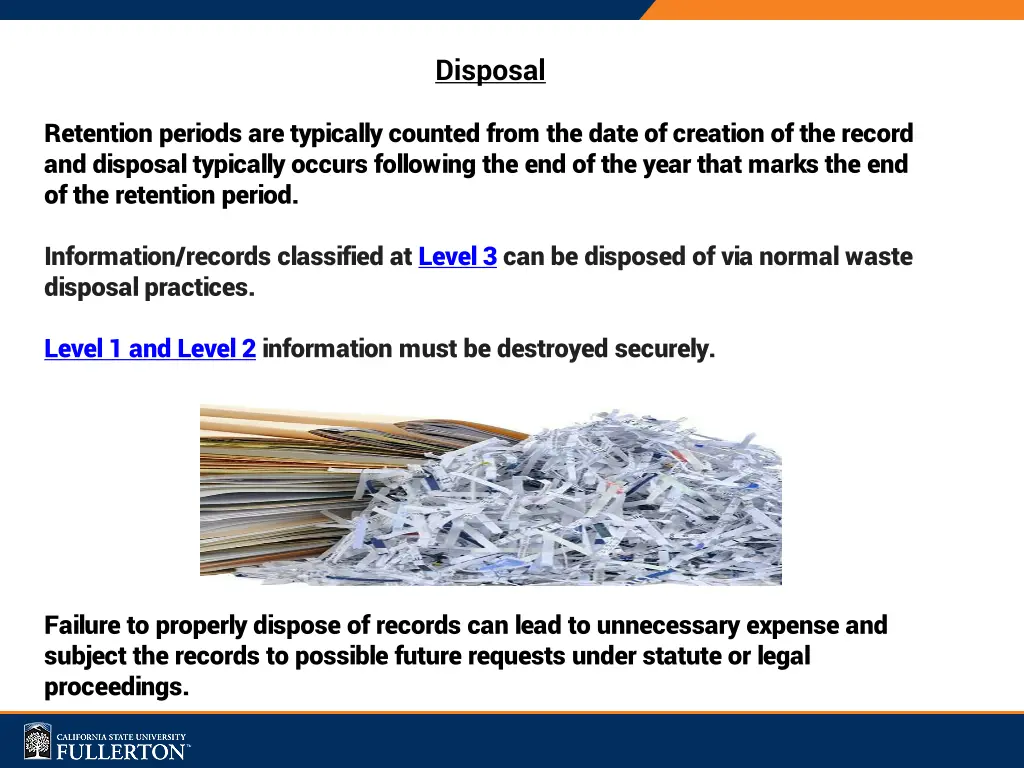
Disposal Retention periods are typically counted from the date of creation of the record and disposal typically occurs following the end of the year that marks the end of the retention period. Information/records classified at Level 3 can be disposed of via normal waste disposal practices. Level 1 and Level 2 information must be destroyed securely. Failure to properly dispose of records can lead to unnecessary expense and subject the records to possible future requests under statute or legal proceedings.
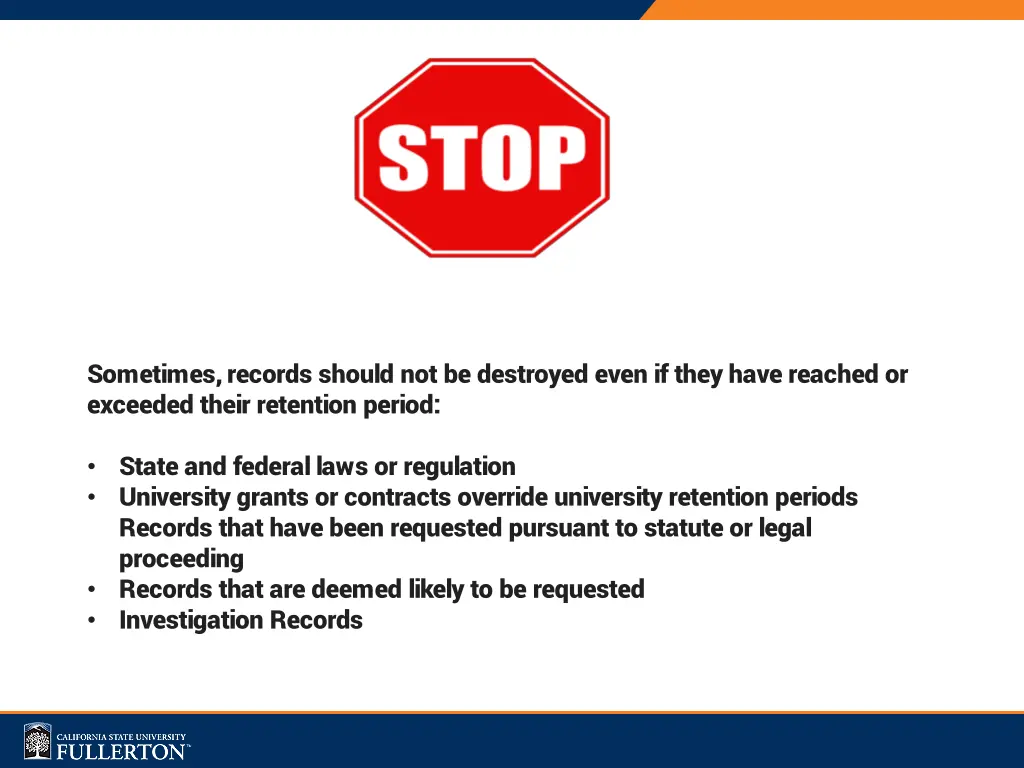
Sometimes, records should not be destroyed even if they have reached or exceeded their retention period: State and federal laws or regulation University grants or contracts override university retention periods Records that have been requested pursuant to statute or legal proceeding Records that are deemed likely to be requested Investigation Records
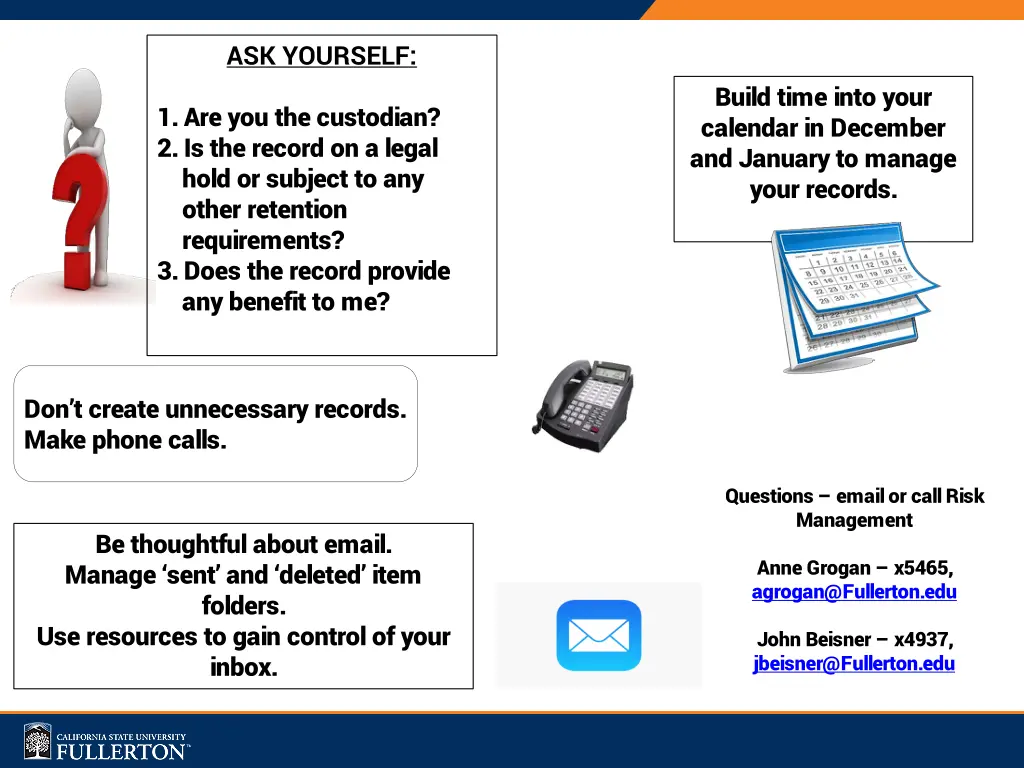
ASK YOURSELF: Build time into your calendar in December and January to manage your records. 1. Are you the custodian? 2. Is the record on a legal hold or subject to any other retention requirements? 3. Does the record provide any benefit to me? Don t create unnecessary records. Make phone calls. Questions email or call Risk Management Anne Grogan x5465, agrogan@Fullerton.edu Be thoughtful about email. Manage sent and deleted item folders. Use resources to gain control of your inbox. John Beisner x4937, jbeisner@Fullerton.edu
RESOURCES https://www.mindtools.com/pages/article/newHTE_85.htm https://www.investintech.com/resources/blog/archives/5525- document-management.html https://www.liveabout.com/computer-file-management-tips-2948083 LinkedIn Learning Outlook: Efficient Email Management How to Get (and Stay) On Top of Your Inbox