Effective Strategies for Analyzing and Interpreting Texts
Enhance your text analysis skills by understanding the structure of texts, types of sentences, and strategies to solve main problems encountered in interpreting complex content. Review the conclusions to reinforce your grasp of sentence types.

Download Presentation

Please find below an Image/Link to download the presentation.
The content on the website is provided AS IS for your information and personal use only. It may not be sold, licensed, or shared on other websites without obtaining consent from the author. If you encounter any issues during the download, it is possible that the publisher has removed the file from their server.
You are allowed to download the files provided on this website for personal or commercial use, subject to the condition that they are used lawfully. All files are the property of their respective owners.
The content on the website is provided AS IS for your information and personal use only. It may not be sold, licensed, or shared on other websites without obtaining consent from the author.
E N D
Presentation Transcript
Analyzing Texts Consecutive Interpreting Hala Ghanim
Analyzing Texts Before interpreting a speech, interpreters should analyze it in detail. This can be done by looking carefully at: - Structure of the text (Grammar), it is complex, compound or simple.
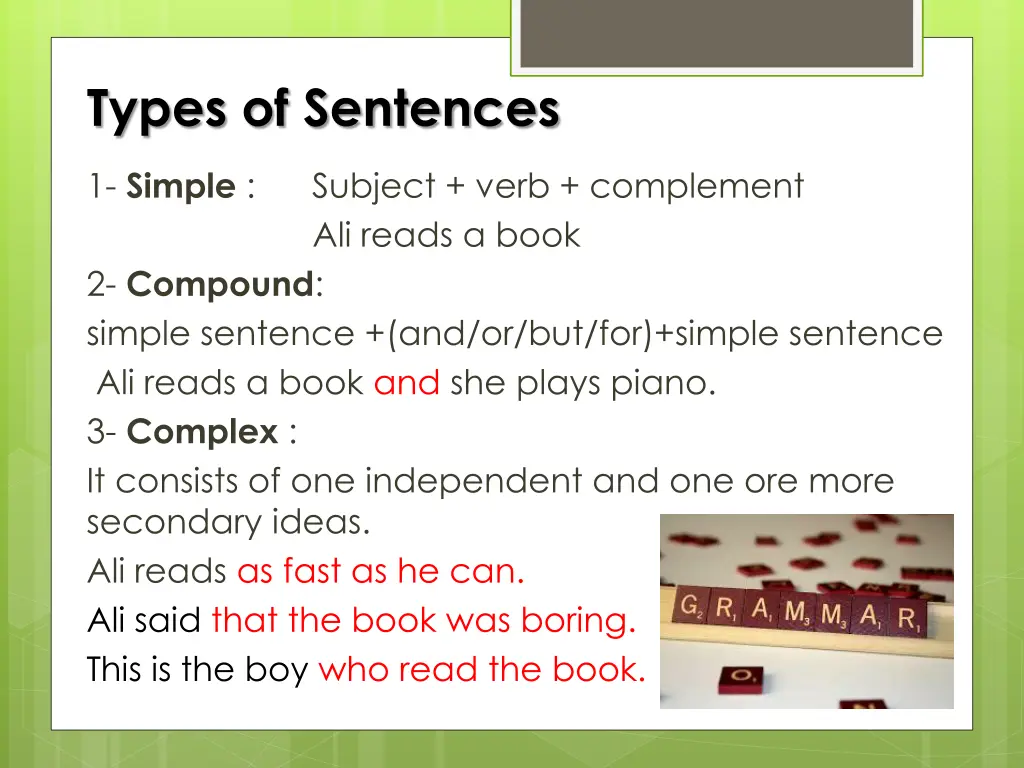
Types of Sentences 1- Simple : Subject + verb + complement Ali reads a book 2- Compound: simple sentence +(and/or/but/for)+simple sentence Ali reads a book and she plays piano. 3- Complex : It consists of one independent and one ore more secondary ideas. Ali reads as fast as he can. Ali said that the book was boring. This is the boy who read the book.
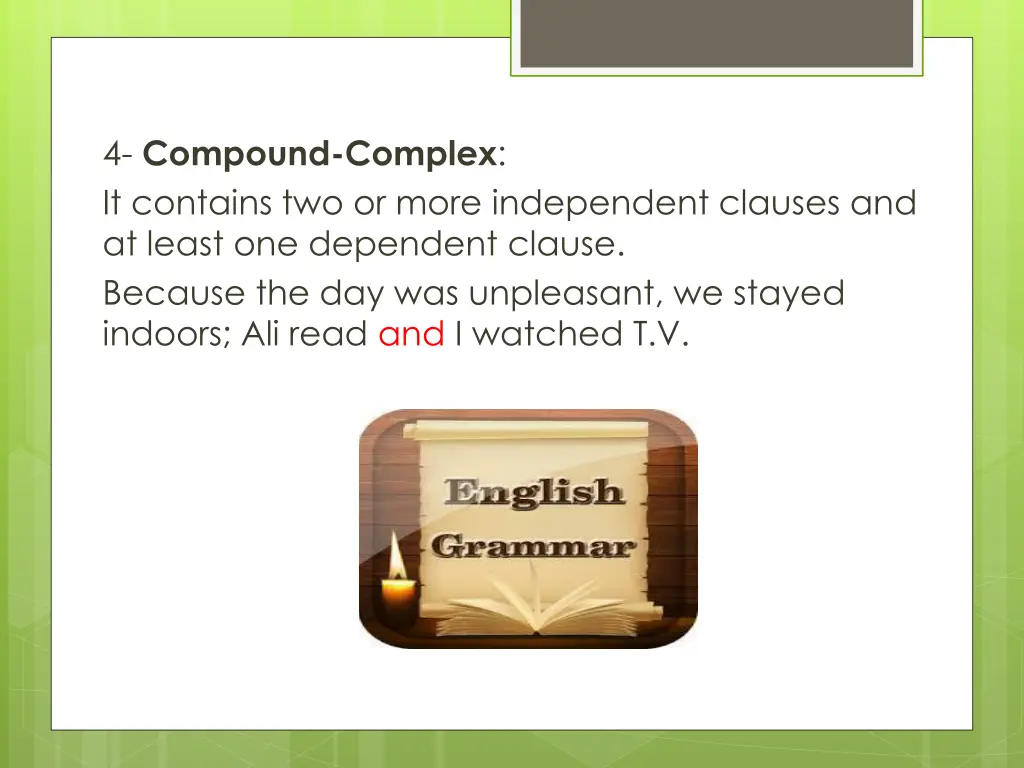
4- Compound-Complex: It contains two or more independent clauses and at least one dependent clause. Because the day was unpleasant, we stayed indoors; Ali read and I watched T.V.
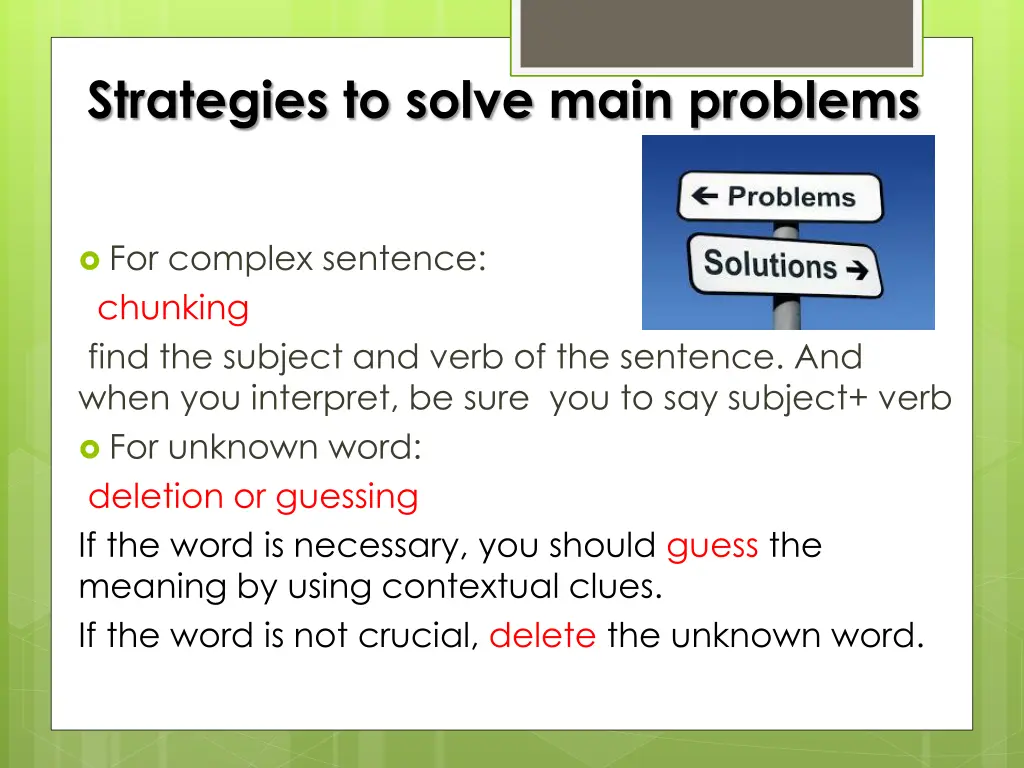
Strategies to solve main problems For complex sentence: chunking find the subject and verb of the sentence. And when you interpret, be sure you to say subject+ verb For unknown word: deletion or guessing If the word is necessary, you should guess the meaning by using contextual clues. If the word is not crucial, delete the unknown word.
conclusions Reviewing types of sentences