Effective Time Management Strategies for Nursing Professionals
Enhance your time management skills with this comprehensive guide tailored for nursing professionals. Learn how to identify stressors, avoid burnout, analyze time wasters, and implement efficient organizational techniques. Explore the value of time, effective planning methods, and the perception of time to maximize productivity and success in your nursing practice.

Download Presentation

Please find below an Image/Link to download the presentation.
The content on the website is provided AS IS for your information and personal use only. It may not be sold, licensed, or shared on other websites without obtaining consent from the author. If you encounter any issues during the download, it is possible that the publisher has removed the file from their server.
You are allowed to download the files provided on this website for personal or commercial use, subject to the condition that they are used lawfully. All files are the property of their respective owners.
The content on the website is provided AS IS for your information and personal use only. It may not be sold, licensed, or shared on other websites without obtaining consent from the author.
E N D
Presentation Transcript
Time management By; Mazlinda Musa
Learning Objectives: At the end of the session student should be able to: Utilize time management in personal life and professional practice. Identify stressors which lead to burnout in nursing. Examine time wasters in nursing. Identify barriers to time management. Describe personal perceptions of time. Discuss the rationale for good time management skills. HOMEWORK : Describe the Rhythm Model for Time Management
OBJECTIVES Differentiate and create short and long term goals. Discuss methods nurses can improve on time management and organizational skills. Analyze activities at work using time log. Incorporate time management techniques into clinical practice. Organize work to make more effective use of available time. Set limits on the demands made on one s time. Create personal calendar using a computerized calendar system for nursing.
Why do you need time management? To save time To reduce stress To function effectively To increase our work output To have more control over our job respinsibilities
The Value of Time Time cannot be saved, so it must be used wisely To accomplish a variety of tasks and goals, time management skills are needed
Time management A method of organizing and monitoring time so that patient care tasks can be scheduled and implemented
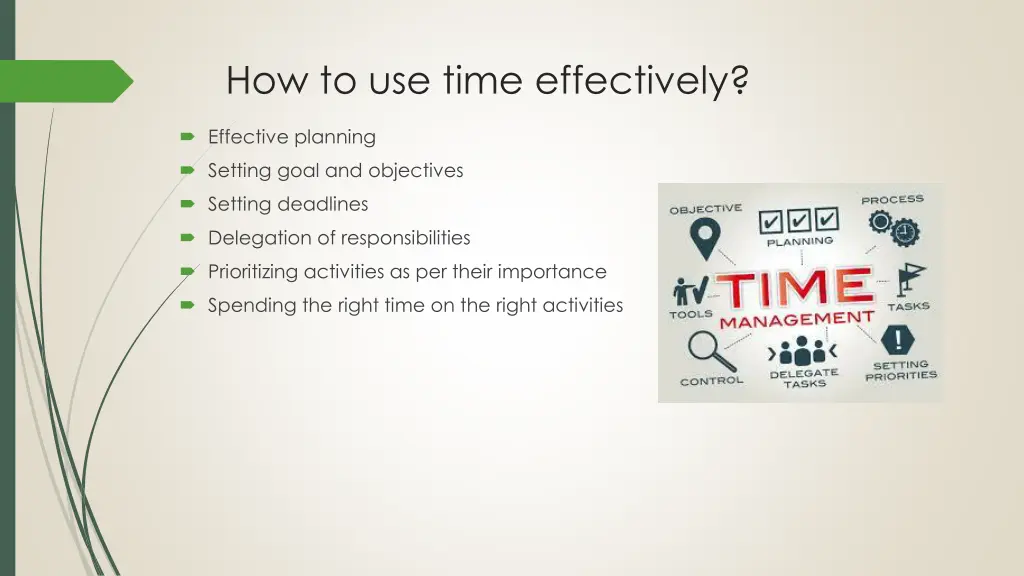
How to use time effectively? Effective planning Setting goal and objectives Setting deadlines Delegation of responsibilities Prioritizing activities as per their importance Spending the right time on the right activities
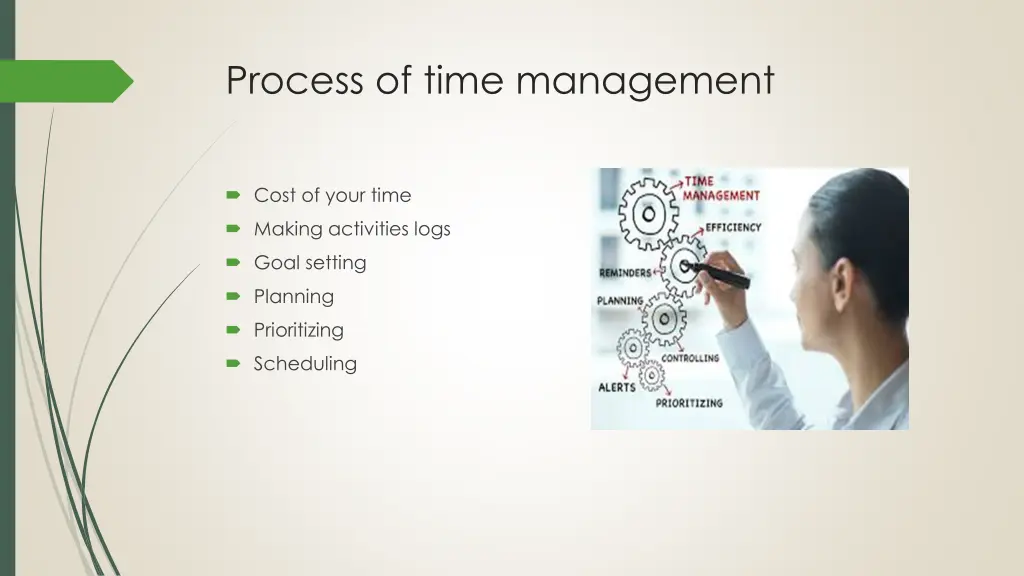
Process of time management Cost of your time Making activities logs Goal setting Planning Prioritizing Scheduling
Perception of Time Affects our use of time Affects our response to time Affects how we calculate time Culture and environment interact to influence our perception of time Time perception is a fundamental element of human awareness. Our consciousness, our ability to perceive the world around us and, ultimately, our very sense of self are shaped upon our perception of time in loop connecting memories of the past, present sensations and expectations about the future.
How Nurses Spend Their Time One study showed that nurses spend only 35% of time in patient care Documentation accounts for 20% of time Much time is spent on administrative duties
Setting Limits Learning to say No Many requests are negotiable You may not refuse to accept an assignment; however, you can discuss possible alternatives to the situation Eliminating unnecessary work You may refuse to work overtime
Streamlining Work Work smarter, not harder Keep a time log Reduce interruptions Categorize activities Find the fastest way Automate repetitive tasks
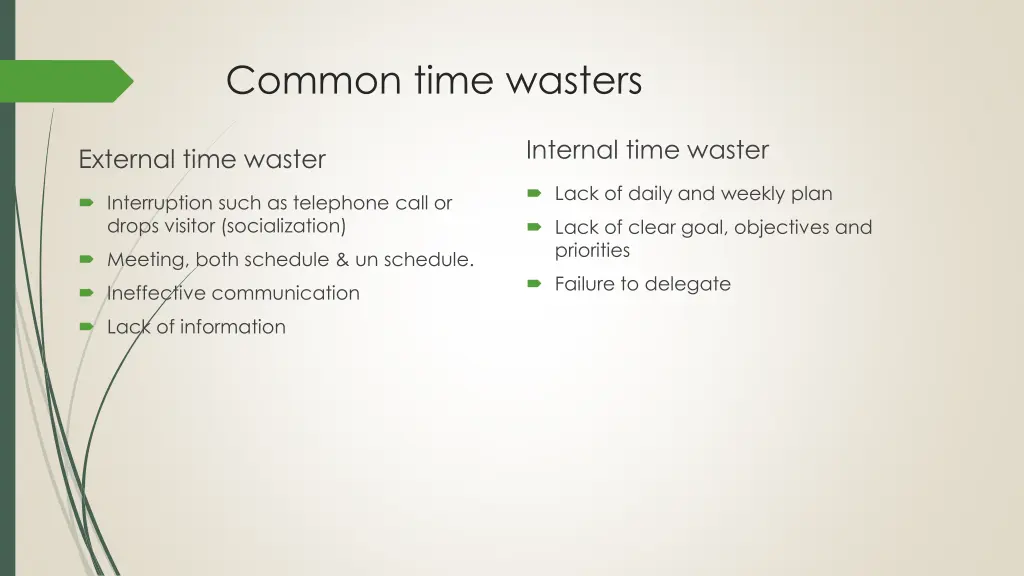
Common time wasters Internal time waster External time waster Lack of daily and weekly plan Interruption such as telephone call or drops visitor (socialization) Lack of clear goal, objectives and priorities Meeting, both schedule & un schedule. Failure to delegate Ineffective communication Lack of information
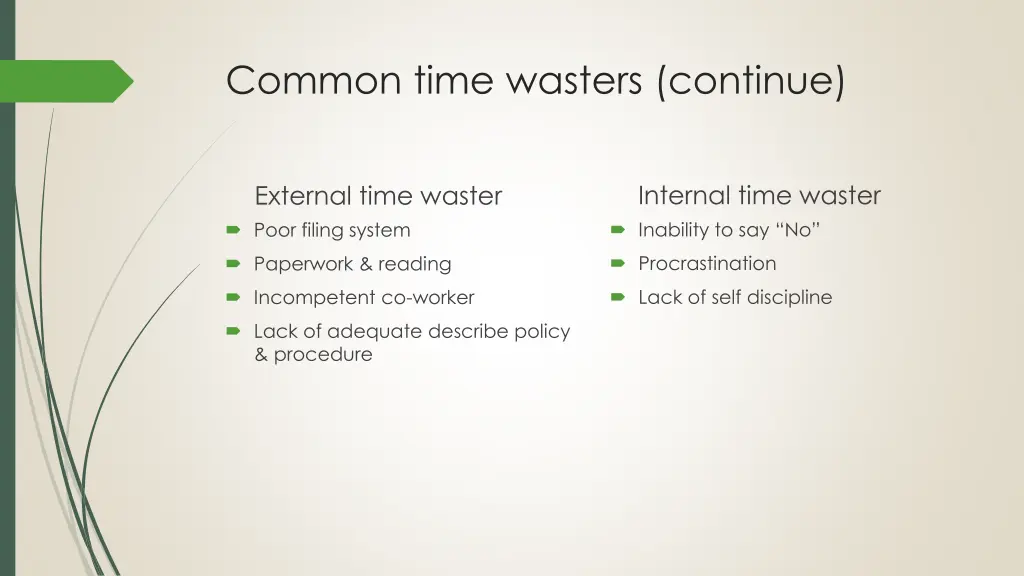
Common time wasters (continue) Internal time waster Inability to say No External time waster Poor filing system Procrastination Paperwork & reading Lack of self discipline Incompetent co-worker Lack of adequate describe policy & procedure
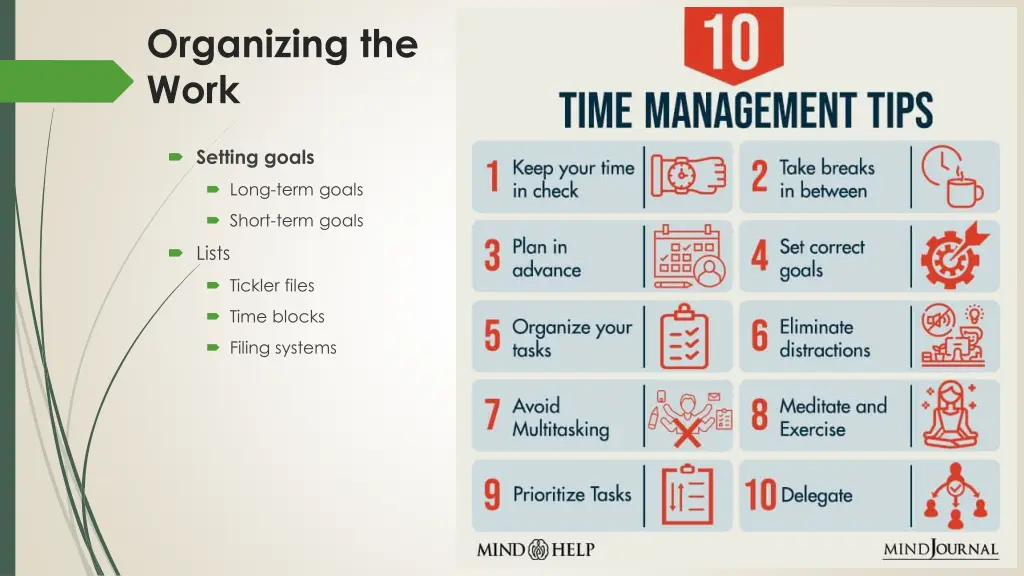
Organizing the Work Setting goals Long-term goals Short-term goals Lists Tickler files Time blocks Filing systems
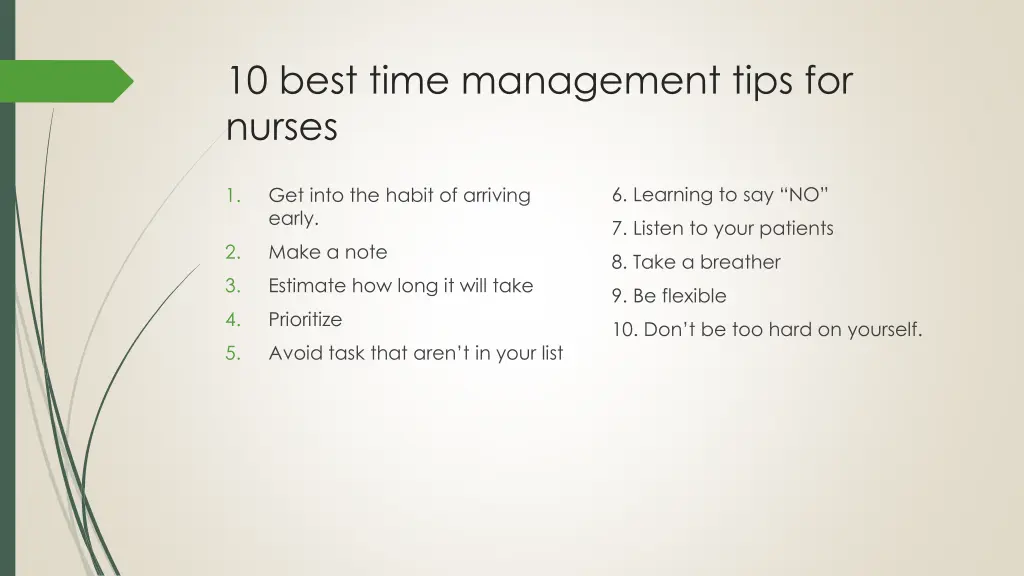
10 best time management tips for nurses 6. Learning to say NO 1. Get into the habit of arriving early. 7. Listen to your patients 2. Make a note 8. Take a breather 3. Estimate how long it will take 9. Be flexible 4. Prioritize 10. Don t be too hard on yourself. 5. Avoid task that aren t in your list
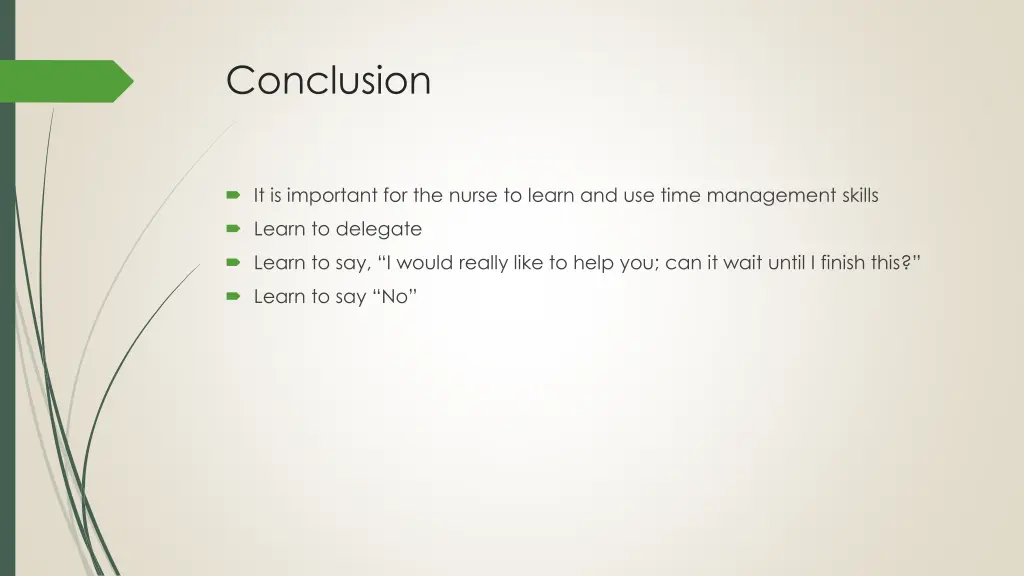
Conclusion It is important for the nurse to learn and use time management skills Learn to delegate Learn to say, I would really like to help you; can it wait until I finish this? Learn to say No
HOMEWORK : Describe the Rhythm Model for Time Management Please go to iTELUMS forum and Describe the Rhythm Model for Time Management! Not to forget to put your references ya!
Further reading H., Yadav et al., (2011). Nursing Management, 1sted., OXFORD P.,Kelly (2012) Nursing Leadership& Management.3rded., Delmar, Cengage. Cook, M. J. (1996) Time Management, Massachusetts: Adams Media Corp. Bird, M. (1986) The Time Effective Manager, London: Ebury Press. Scot, M. (1992) Time Management, Sydney: Rando House. Taylor, H. L. (1988) Time Management, Selangor: Pelanduk Publications.
Thank you Any questions?