Effective Training Facilitation Practices and Strategies
Explore key considerations and approaches for successful training facilitation, including learner-centered methodologies, group dynamics, learning styles, and training strategies. Enhance your skills to create engaging and effective learning experiences.

Download Presentation

Please find below an Image/Link to download the presentation.
The content on the website is provided AS IS for your information and personal use only. It may not be sold, licensed, or shared on other websites without obtaining consent from the author. If you encounter any issues during the download, it is possible that the publisher has removed the file from their server.
You are allowed to download the files provided on this website for personal or commercial use, subject to the condition that they are used lawfully. All files are the property of their respective owners.
The content on the website is provided AS IS for your information and personal use only. It may not be sold, licensed, or shared on other websites without obtaining consent from the author.
E N D
Presentation Transcript
Basics in Training Facilitation What do I need to know Vilanova, October 2015
Non-Formal Education Learner centered Flexible and adaptable Inclusive Planned and evaluated Voluntary
Educational Activities Training courses Seminars Planning workshops Study visits Conferences
General Considerations Community needs Personal motivation & organizational aims Training aims and objectives Resources Profile of participants (needs assessment)
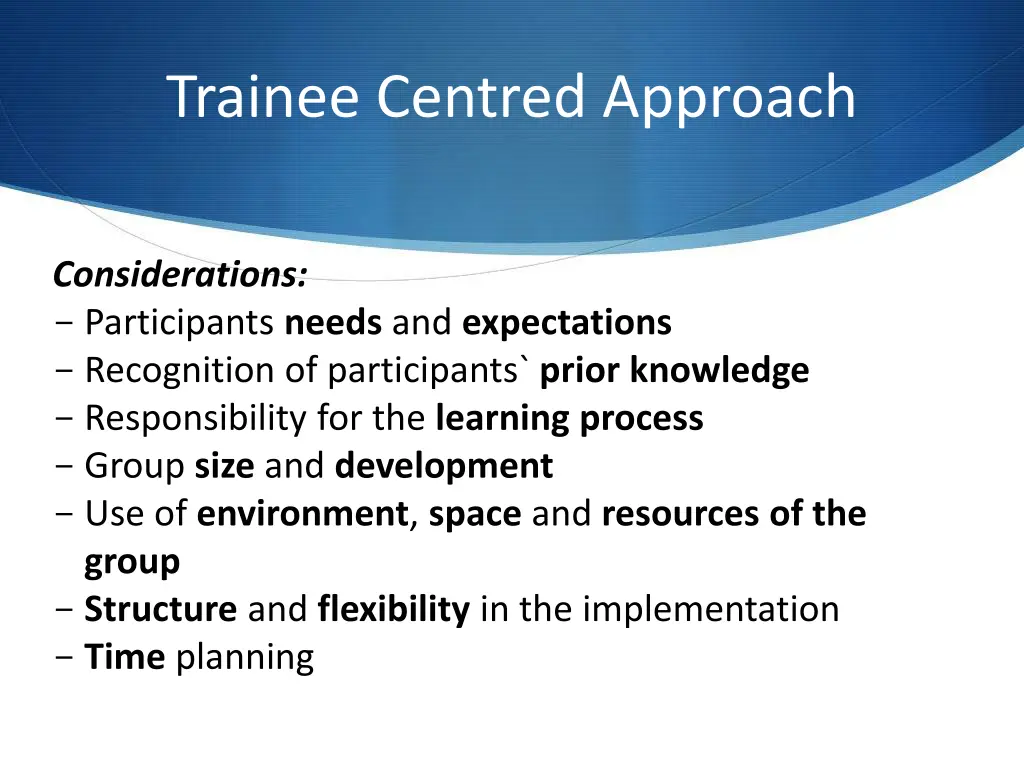
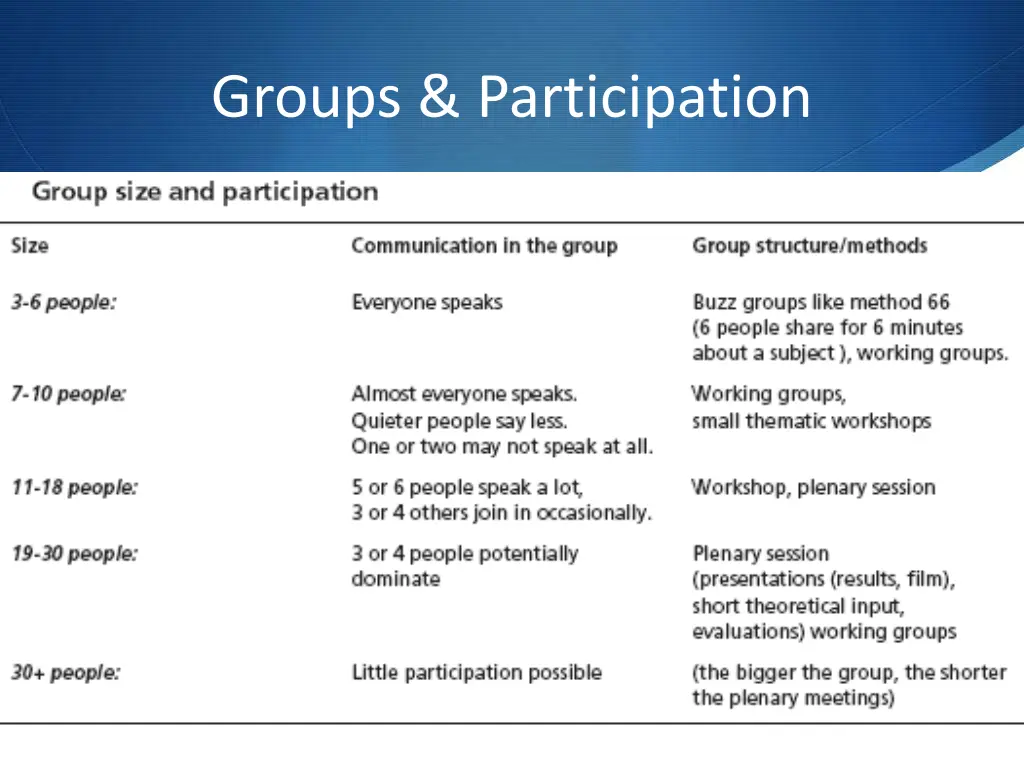
Trainee Centred Approach Considerations: - Participants needs and expectations - Recognition of participants` prior knowledge - Responsibility for the learning process - Group size and development - Use of environment, space and resources of the group - Structure and flexibility in the implementation - Time planning
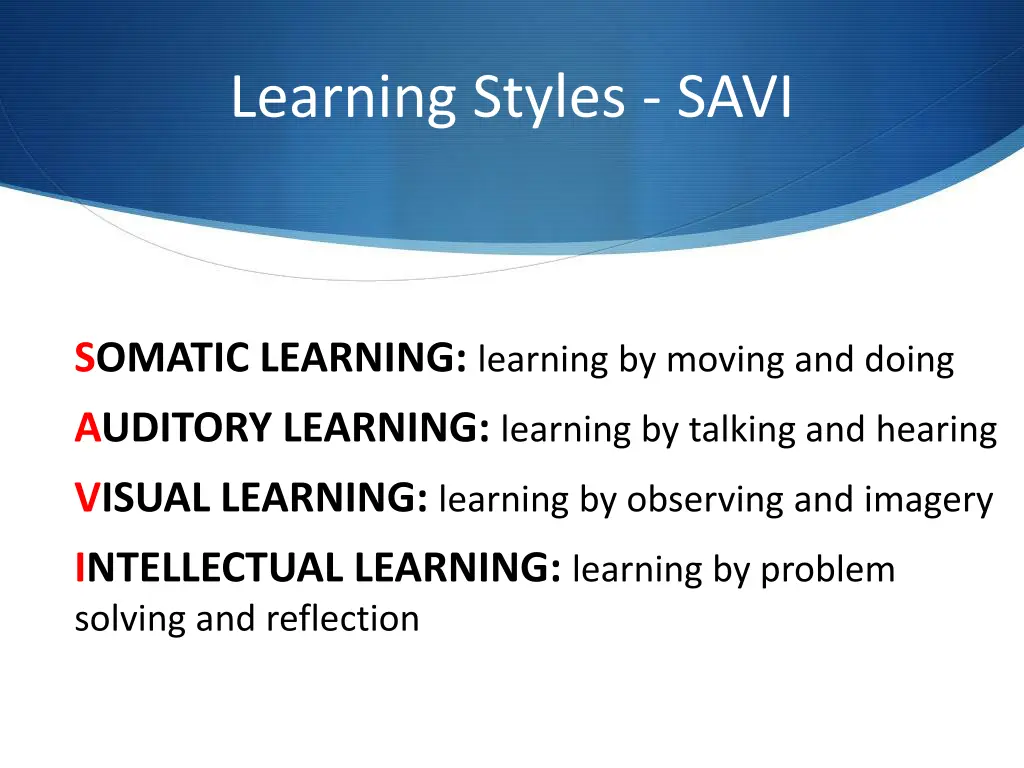
Learning Styles - SAVI SOMATIC LEARNING: learning by moving and doing AUDITORY LEARNING: learning by talking and hearing VISUAL LEARNING: learning by observing and imagery INTELLECTUAL LEARNING: learning by problem solving and reflection
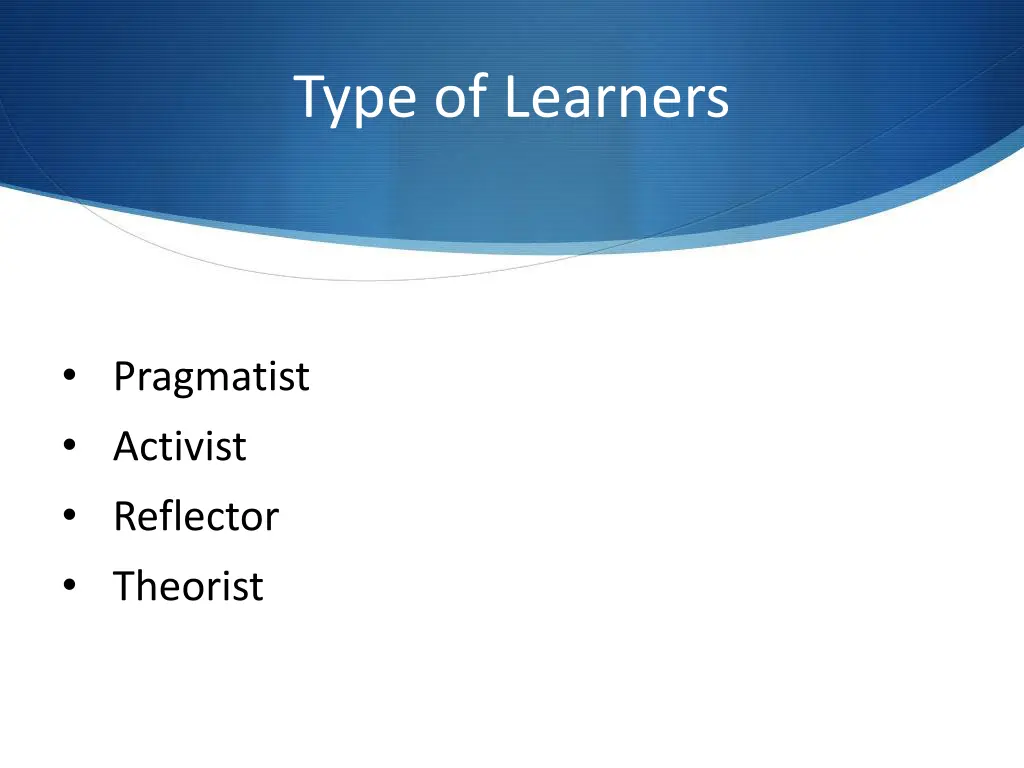
Type of Learners Pragmatist Activist Reflector Theorist
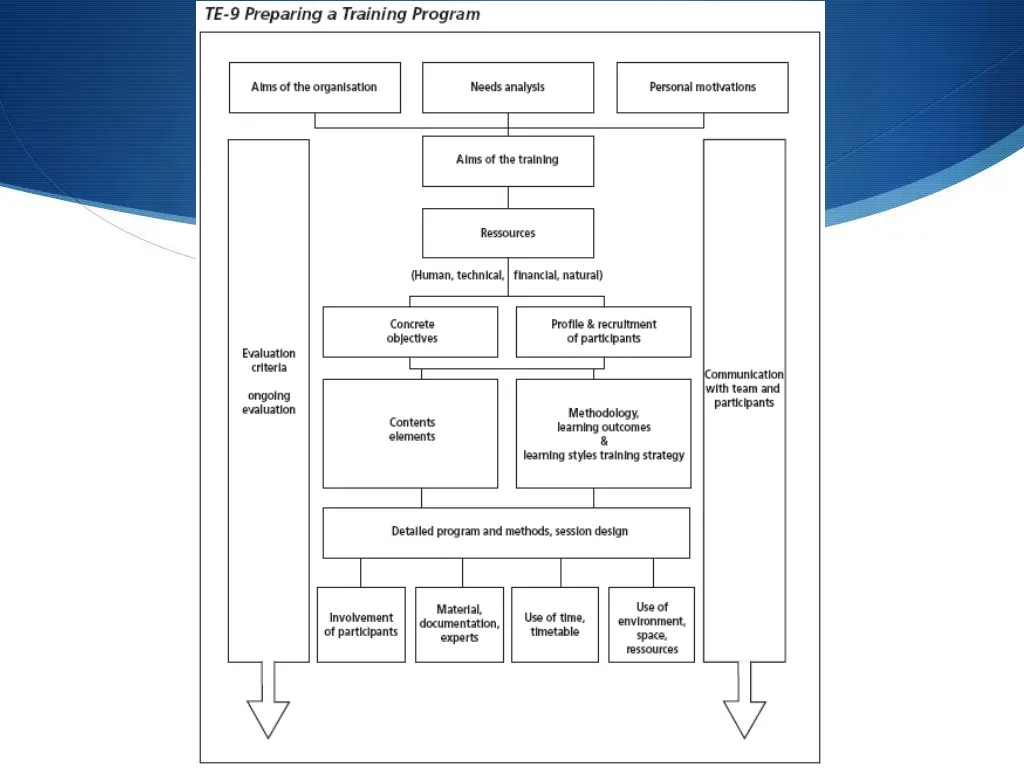
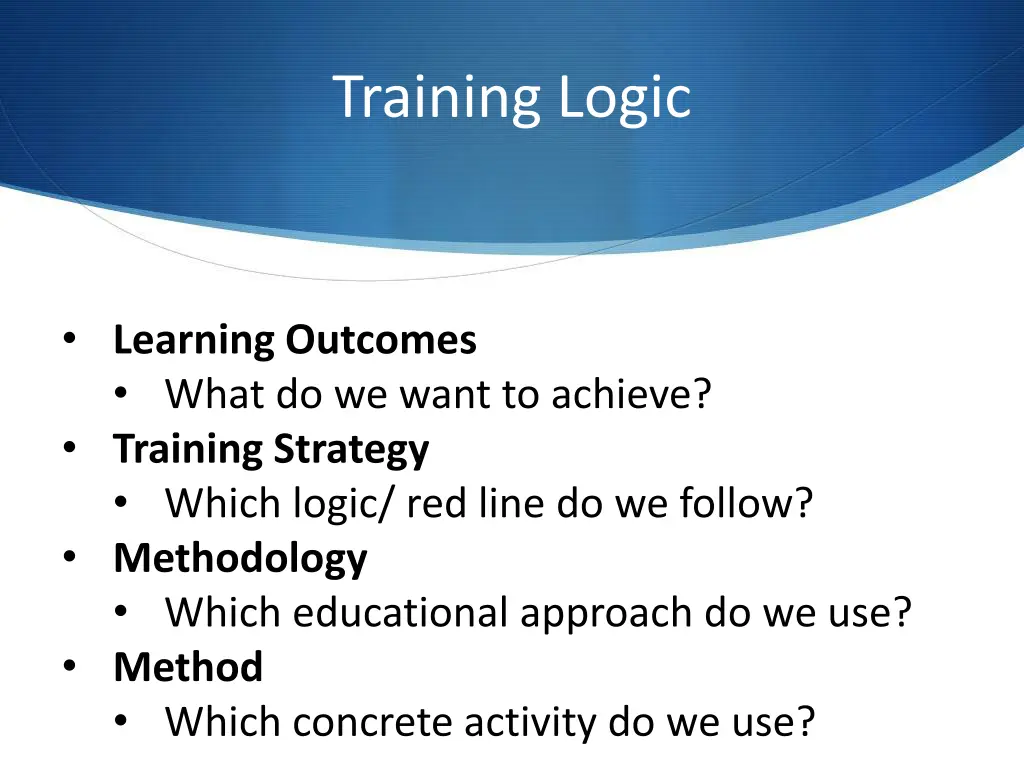
Training Logic Learning Outcomes What do we want to achieve? Training Strategy Which logic/ red line do we follow? Methodology Which educational approach do we use? Method Which concrete activity do we use?
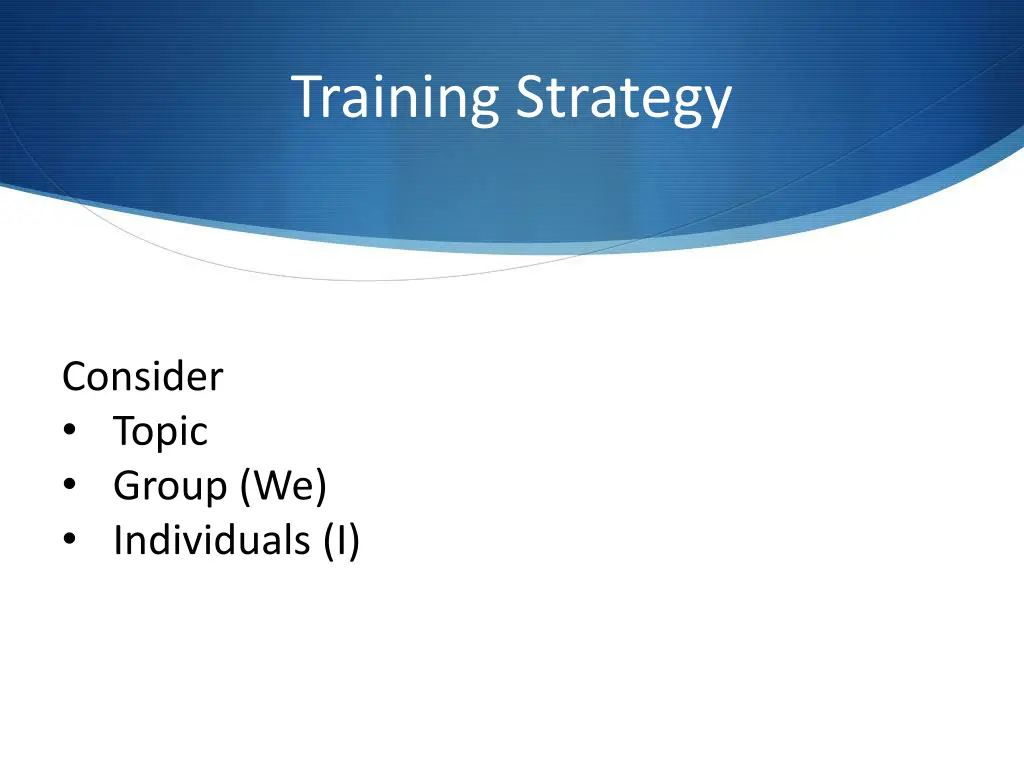
Training Strategy Consider Topic Group (We) Individuals (I)
Method Debate Exercise Simulation Discussion Buzz-groups Brainstorming Case study Forum Theatre Role play Energiser Name games
Method Selection Be confident and convinced about the method Have experienced the method fully Be able to anticipate the outcomes but also deal with unexpected ones Try not to use methods that might cause feelings in participants or the group which cannot be dealt with during the learning activity Accept that some people may not wish to participate in a particular exercise Have a carefully worked out strategy for debriefing and feedback, which can also be adapted to deal with unexpected outcomes
Session Structure 1. Opening >> Session Context 2. Energiser 3. Core Activity incl. debriefing Group work Exercise Simulation 4. Input 5. Closing >> Session Context
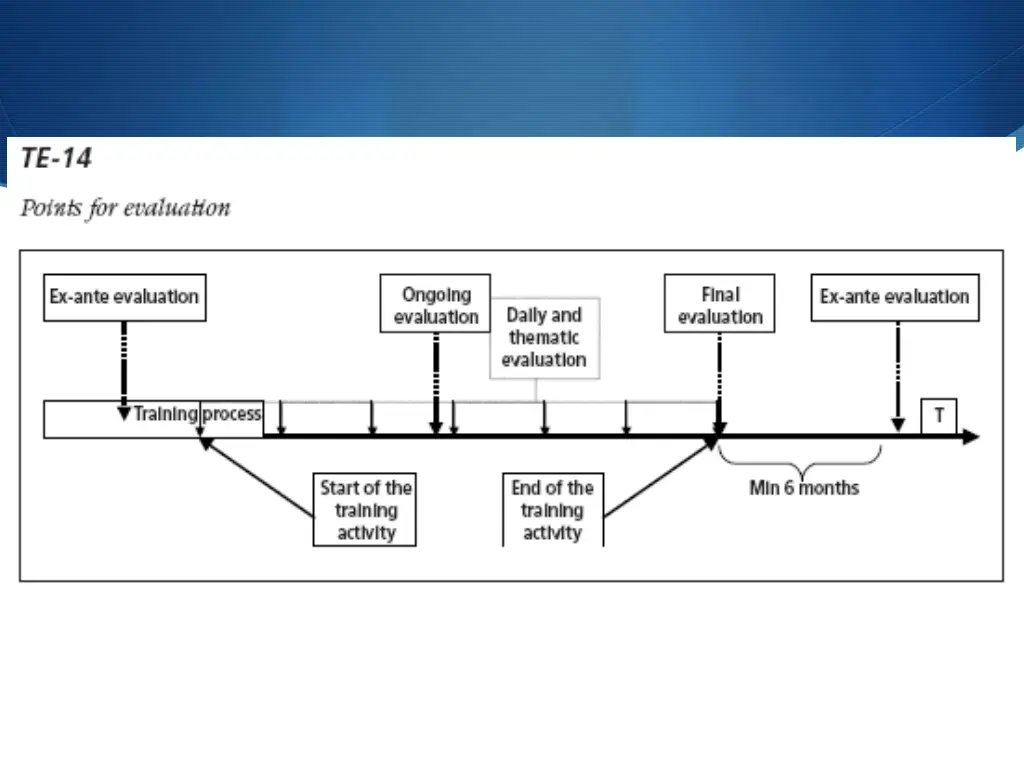
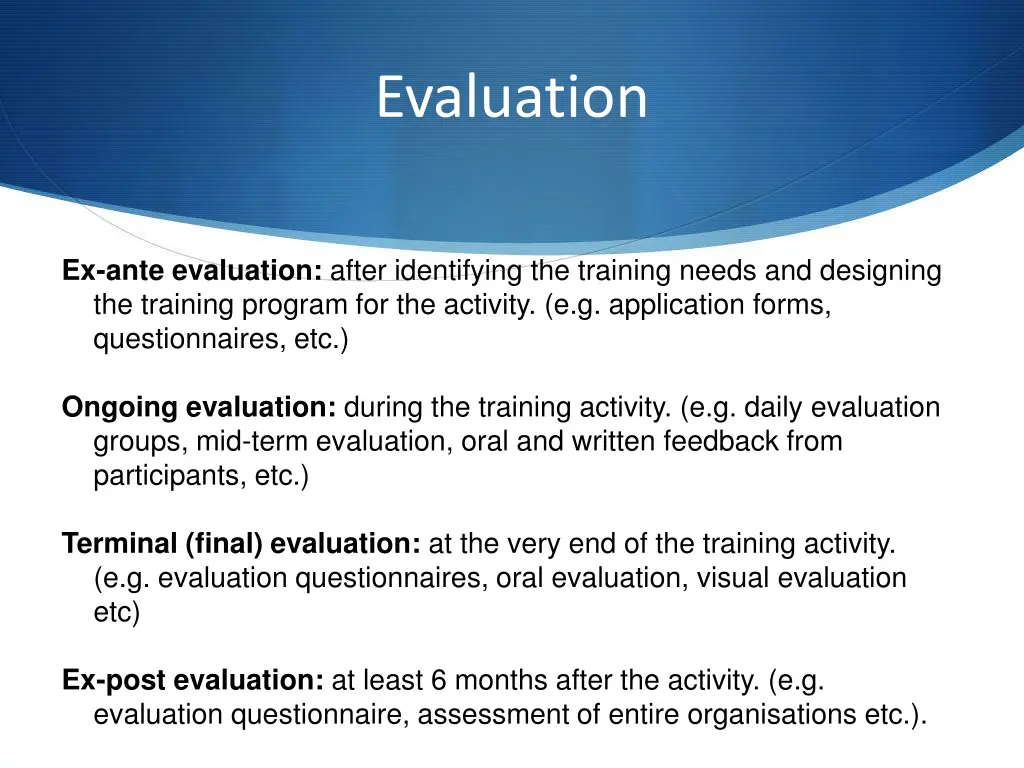
Evaluation Ex-ante evaluation: after identifying the training needs and designing the training program for the activity. (e.g. application forms, questionnaires, etc.) Ongoing evaluation: during the training activity. (e.g. daily evaluation groups, mid-term evaluation, oral and written feedback from participants, etc.) Terminal (final) evaluation: at the very end of the training activity. (e.g. evaluation questionnaires, oral evaluation, visual evaluation etc) Ex-post evaluation: at least 6 months after the activity. (e.g. evaluation questionnaire, assessment of entire organisations etc.).
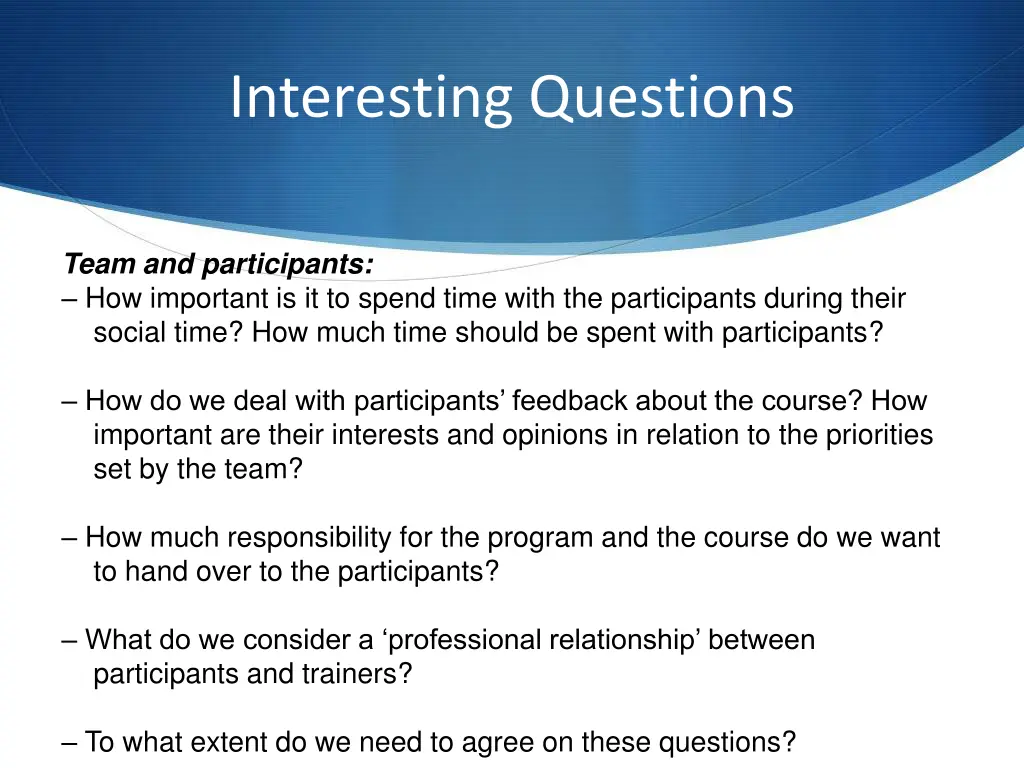
Interesting Questions Team and participants: How important is it to spend time with the participants during their social time? How much time should be spent with participants? How do we deal with participants feedback about the course? How important are their interests and opinions in relation to the priorities set by the team? How much responsibility for the program and the course do we want to hand over to the participants? What do we consider a professional relationship between participants and trainers? To what extent do we need to agree on these questions?