Learn about the importance of estimating sampling variance for complex survey data and microsimulation, along with the requirements and communication strategies involved. Get insights into statistical reliability, mode of data collection, and comparability of income variables for evidence-based policy-making and research.
Please find below an Image/Link to download the presentation.
The content on the website is provided AS IS for your information and personal use only. It may not be sold, licensed, or shared on other websites without obtaining consent from the author. If you encounter any issues during the download, it is possible that the publisher has removed the file from their server.
You are allowed to download the files provided on this website for personal or commercial use, subject to the condition that they are used lawfully. All files are the property of their respective owners.
The content on the website is provided AS IS for your information and personal use only. It may not be sold, licensed, or shared on other websites without obtaining consent from the author.
E N D
Presentation Transcript
Variance estimation for complex survey data and microsimulation Tim Goedem Lorena Zardo Trindade Herman Deleeck Centre for Social Policy 18 January 2018 EUROMOD Winter School, University of Antwerp
Conclusion Statistics & samples are a powerful tool - Need limited number of observations - Point estimate and estimate of precision However, without an estimate of its precision, a point estimate is pointless at least for evidence-based policy-making 2
Requirements Estimating the sampling variance requires: - Sound sample designs - Good documentation of the sample (design) - Access to high-quality microdata with sufficient information on weighting, imputation and sample design - Adequate and consistent sample design variables - Adequate software, estimation methods, skills and expertise 3
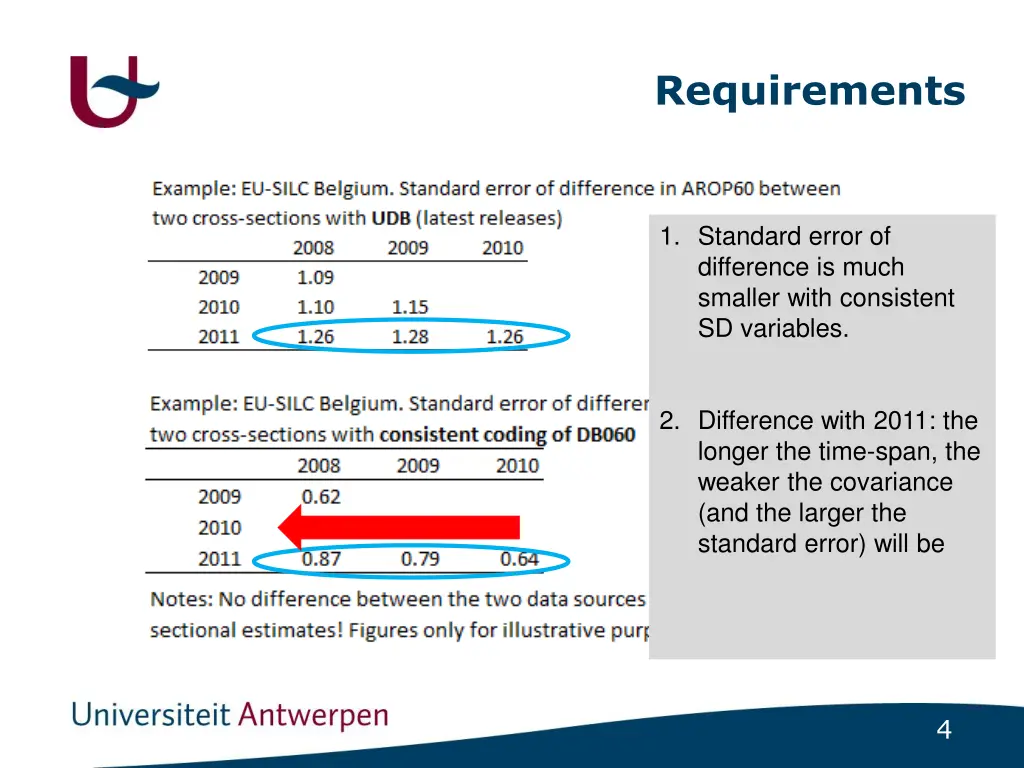
Requirements 1. Standard error of difference is much smaller with consistent SD variables. 2. Difference with 2011: the longer the time-span, the weaker the covariance (and the larger the standard error) will be 4
Communication To researchers To policy-makers and politicians To the wider public Improve awareness of both sampling and non- sampling errors 5
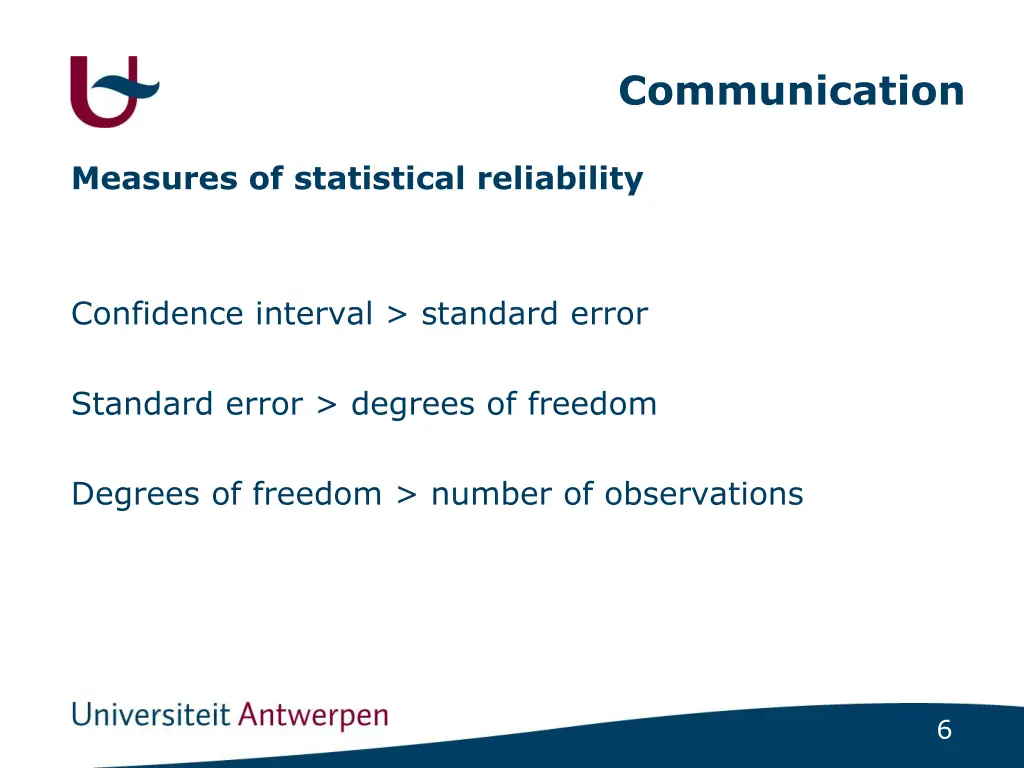
Communication Measures of statistical reliability Confidence interval > standard error Standard error > degrees of freedom Degrees of freedom > number of observations 6
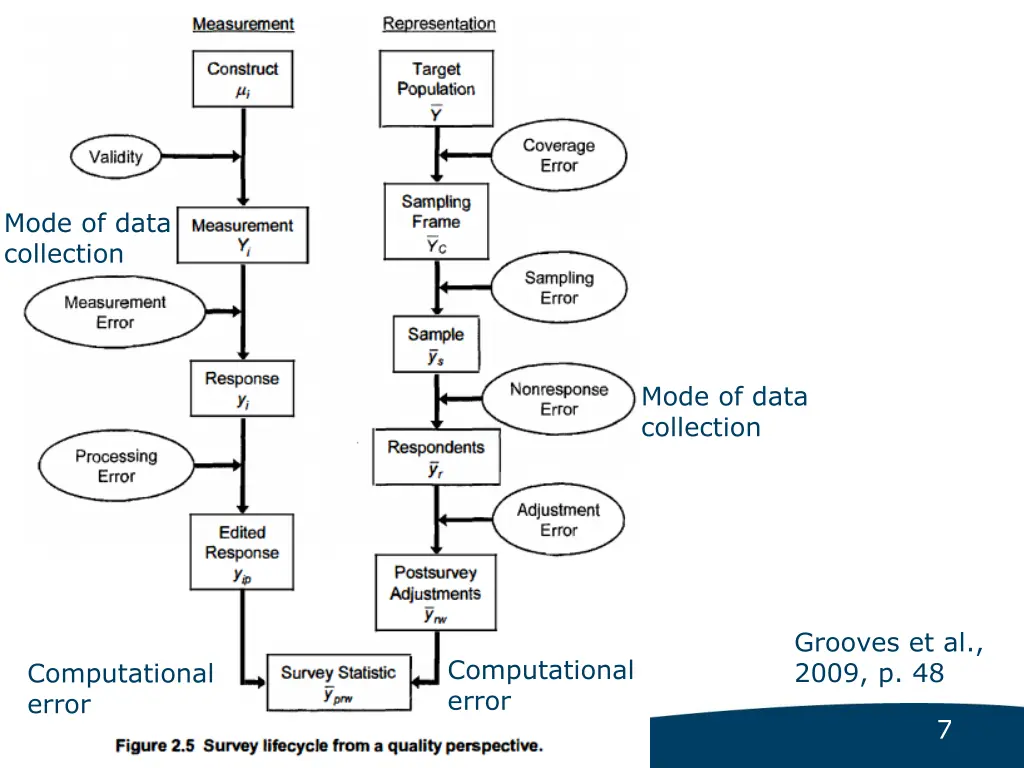
Mode of data collection Mode of data collection Grooves et al., 2009, p. 48 Computational error Computational error 7
Comparability of income variables MetaSILC 2015: An assessment of the content and cross-country comparability of the EU-SILC benefit variables EU-SILC 2015 (and smaller database for 2010) Funding: Net-SILC 3 8
MetaSILC Knowledge of content (aggregation) and comparability of income variables is key Description of target variables in Doc065 & Quality reports not sufficiently detailed for: - Identifying exact classification of all income components in all countries - Evaluating level of cross-country comparability ( correct classification) depends also on question) 9
Survey Online questionnaire among NSIs in 2 rounds Questions on all 34 income variables For each of the income components official name (national language) and the equivalent name in English the target variable code and name the source of the income information used (register data, questionnaire, imputation) information on gross-net collection changes between wave 2010 and wave 2015 changes planned for future waves additional questions on data processing of specific variables (HY030, PY050, PY021) 10
MetaSILC Excel database Detailed report Summary paper Available: end 2018 11
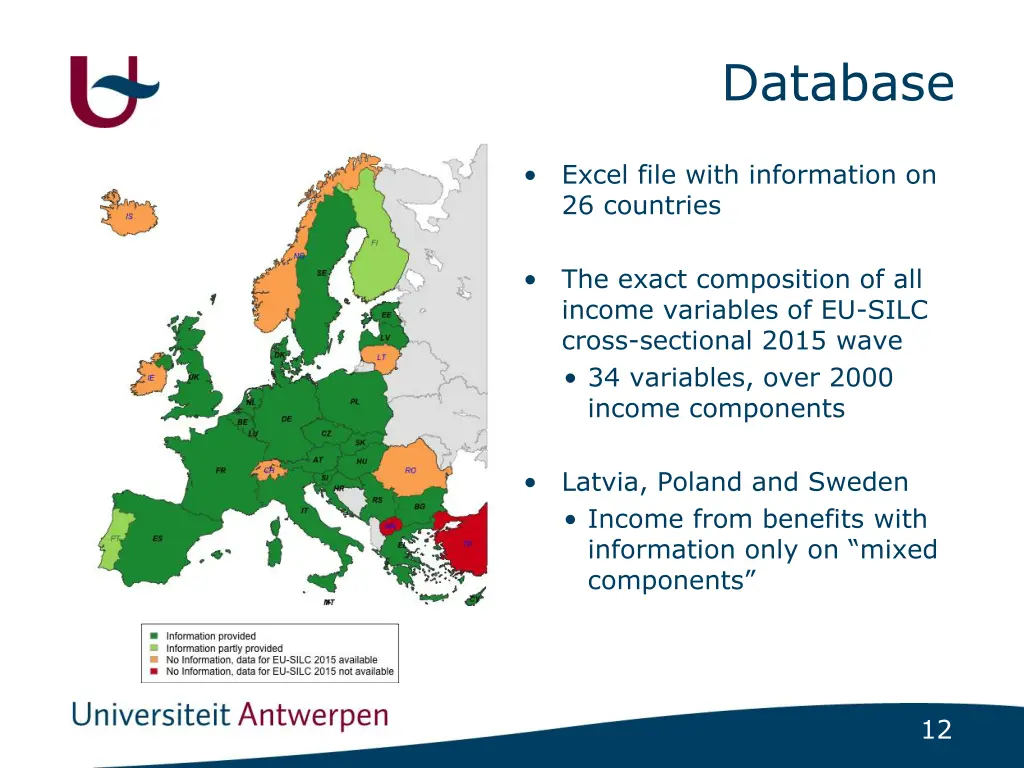
Database Excel file with information on 26 countries The exact composition of all income variables of EU-SILC cross-sectional 2015 wave 34 variables, over 2000 income components Latvia, Poland and Sweden Income from benefits with information only on mixed components 12
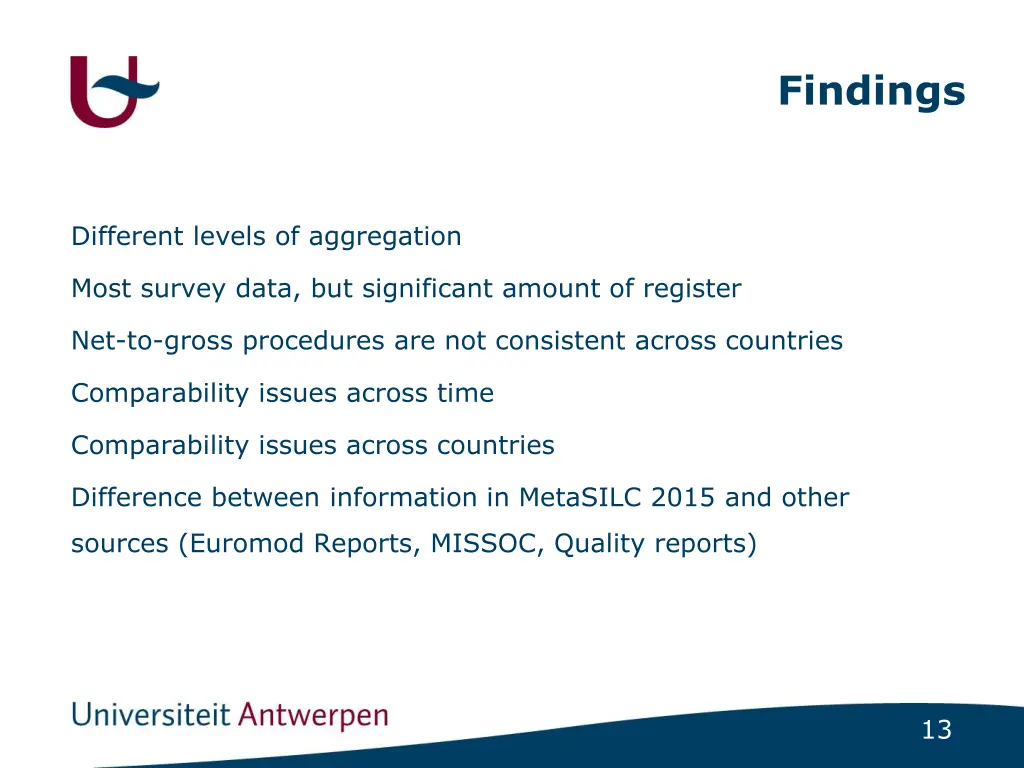
Findings Different levels of aggregation Most survey data, but significant amount of register Net-to-gross procedures are not consistent across countries Comparability issues across time Comparability issues across countries Difference between information in MetaSILC 2015 and other sources (Euromod Reports, MISSOC, Quality reports) 13
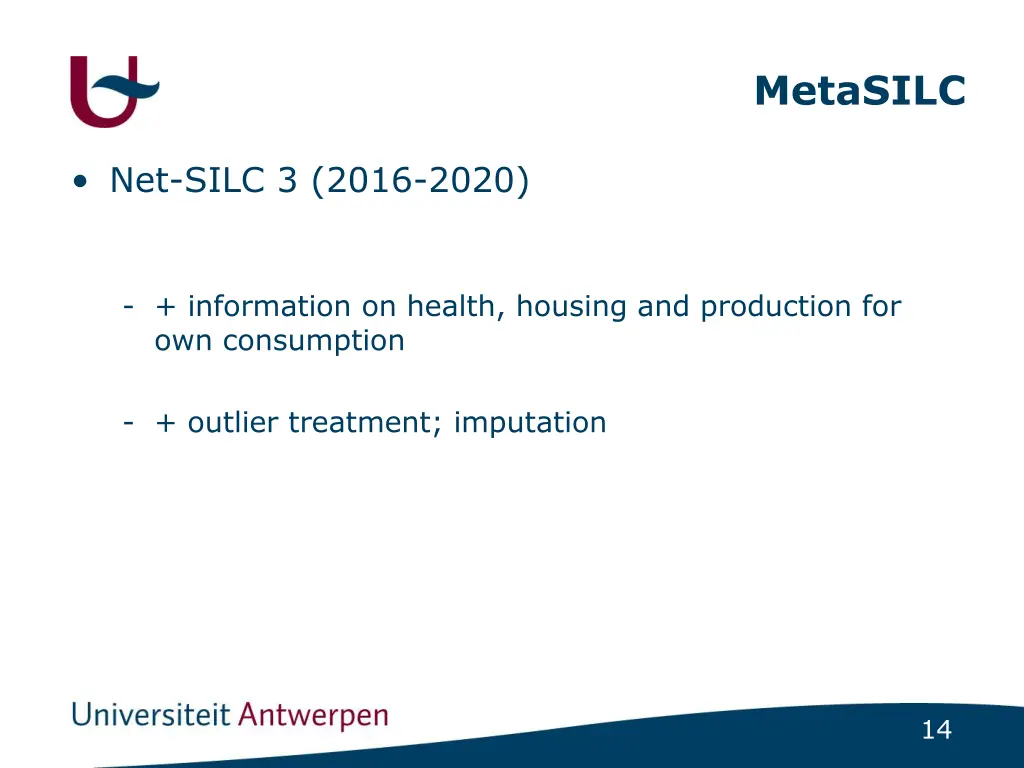
MetaSILC Net-SILC 3 (2016-2020) - + information on health, housing and production for own consumption - + outlier treatment; imputation 14
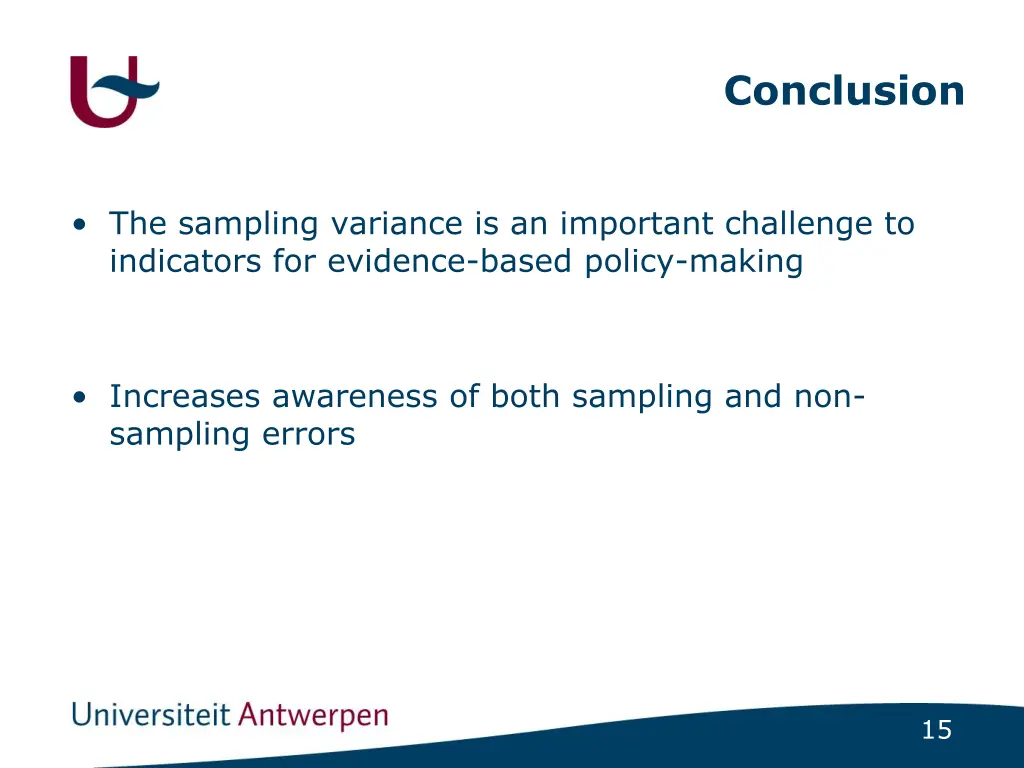
Conclusion The sampling variance is an important challenge to indicators for evidence-based policy-making Increases awareness of both sampling and non- sampling errors 15
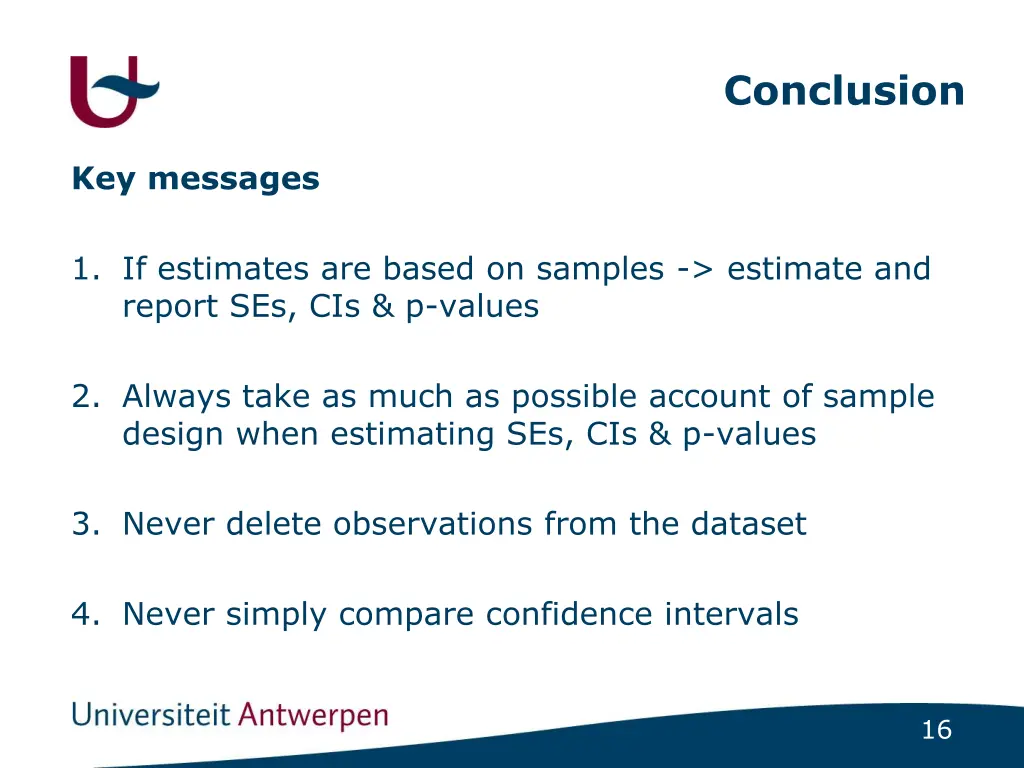
Conclusion Key messages 1. If estimates are based on samples -> estimate and report SEs, CIs & p-values 2. Always take as much as possible account of sample design when estimating SEs, CIs & p-values 3. Never delete observations from the dataset 4. Never simply compare confidence intervals 16
Literature Goedem , T. (2013) How much confidence can we have in EU-SILC? , Social indicators research, 110(1): 89-110, doi:10.1007/s11205-011-9918-2 Heeringa, S. G., West, B. T. and Berglund, P. A. (2010), Applied Survey Data Analysis, Boca Raton: Chapman & Hall/CRC, 467p. Wolter, K. M. (2007), Introduction to Variance Estimation, New York: Springer, 447p. https://timgoedeme.com/eu-silc-standard-errors/. 18
Resources Background materials Handouts Do-files & exercises https://timgoedeme.com/eu-silc-standard-errors/ (papers, do-files, csv-files) Heeringa, S. G., West, B. T., & Berglund, P. A. (2010). Applied Survey Data Analysis. Boca Raton: Chapman & Hall/CRC 19