Effective Vocabulary Acquisition Strategies for English Language Learners
Explore the importance of vocabulary acquisition in language learning, covering topics such as what words to teach, word burden, and the significance of teacher proficiency. Dive into strategies for vocabulary expansion and understanding word meaning to enhance English language skills.

Download Presentation

Please find below an Image/Link to download the presentation.
The content on the website is provided AS IS for your information and personal use only. It may not be sold, licensed, or shared on other websites without obtaining consent from the author. If you encounter any issues during the download, it is possible that the publisher has removed the file from their server.
You are allowed to download the files provided on this website for personal or commercial use, subject to the condition that they are used lawfully. All files are the property of their respective owners.
The content on the website is provided AS IS for your information and personal use only. It may not be sold, licensed, or shared on other websites without obtaining consent from the author.
E N D
Presentation Transcript
VOCABULARY ACQUISITION VOCABULARY ACQUISITION by Brachie Deutscher
TOPICS OF DISCUSSION Vocabulary: a key component What words should we teach Knowing a Word Learning processes Questions period 1. 2. 3. 4. 5.
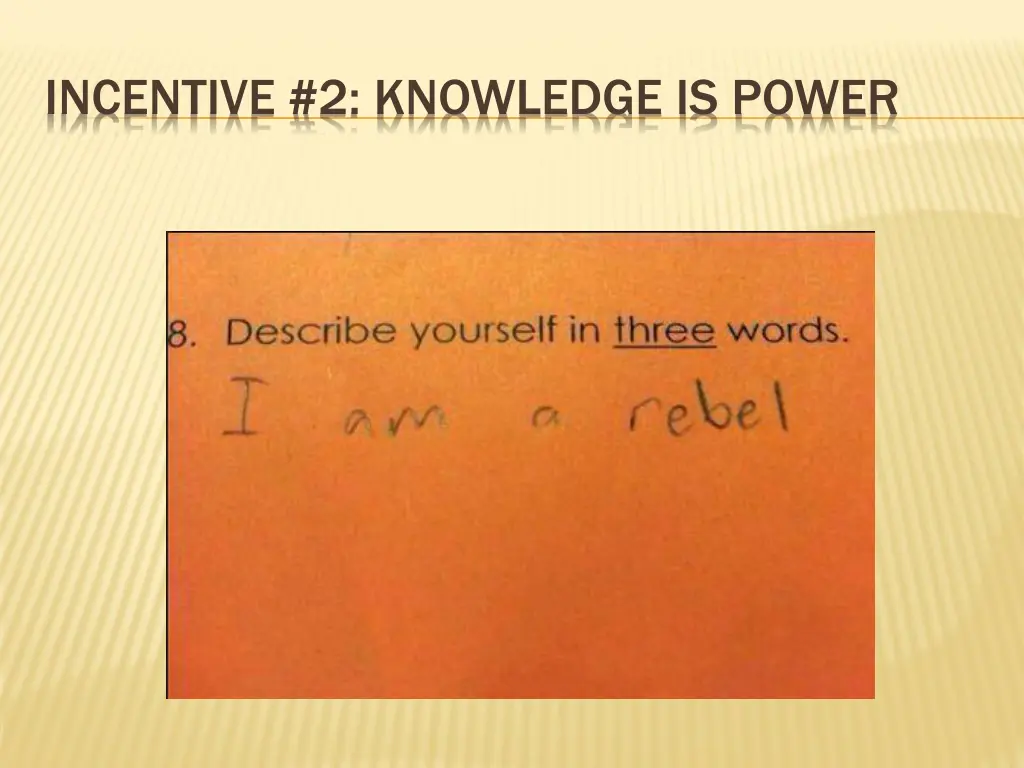
INCENTIVE #1: TEACHER PROFICIENCY OR: WHY WE, AS TEACHERS, SHOULD INVEST TIME AND EFFORT IN LEARNING.
VOCABULARY: A KEY COMPONENT Without vocabulary nothing can be conveyed (David Wilkins) "If you spend most of your time studying grammar, your English will not improve very much. You will see most improvement if you learn more words and expressions. You can say very little in grammar, but you can say almost anything with words!" (Dellar and Hocking, 2000). Reading comprehension is strongly related to vocabulary knowledge" (Laufer, 1997).
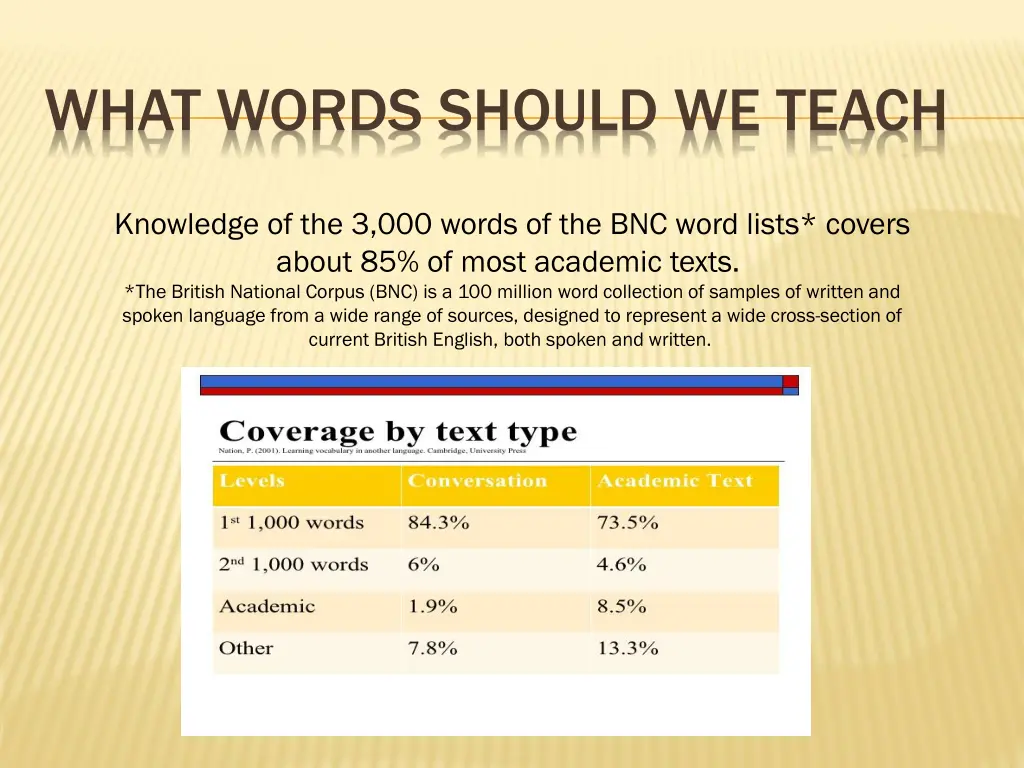
WHAT WORDS SHOULD WE TEACH Knowledge of the 3,000 words of the BNC word lists* covers about 85% of most academic texts. *The British National Corpus (BNC) is a 100 million word collection of samples of written and spoken language from a wide range of sources, designed to represent a wide cross-section of current British English, both spoken and written.
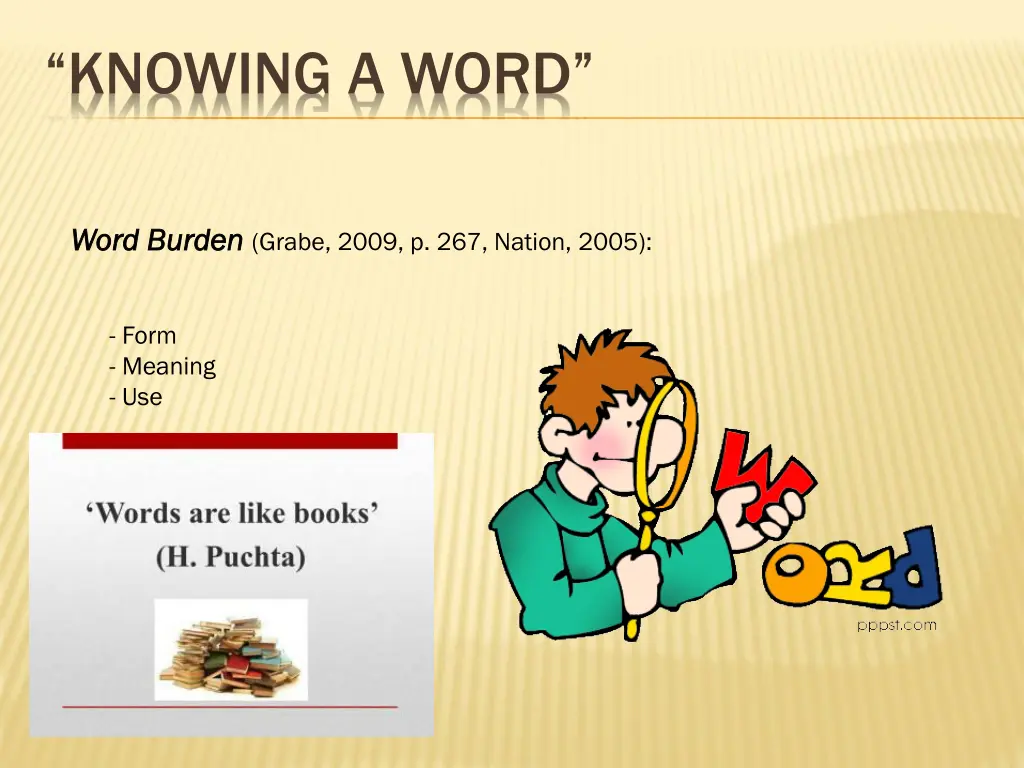
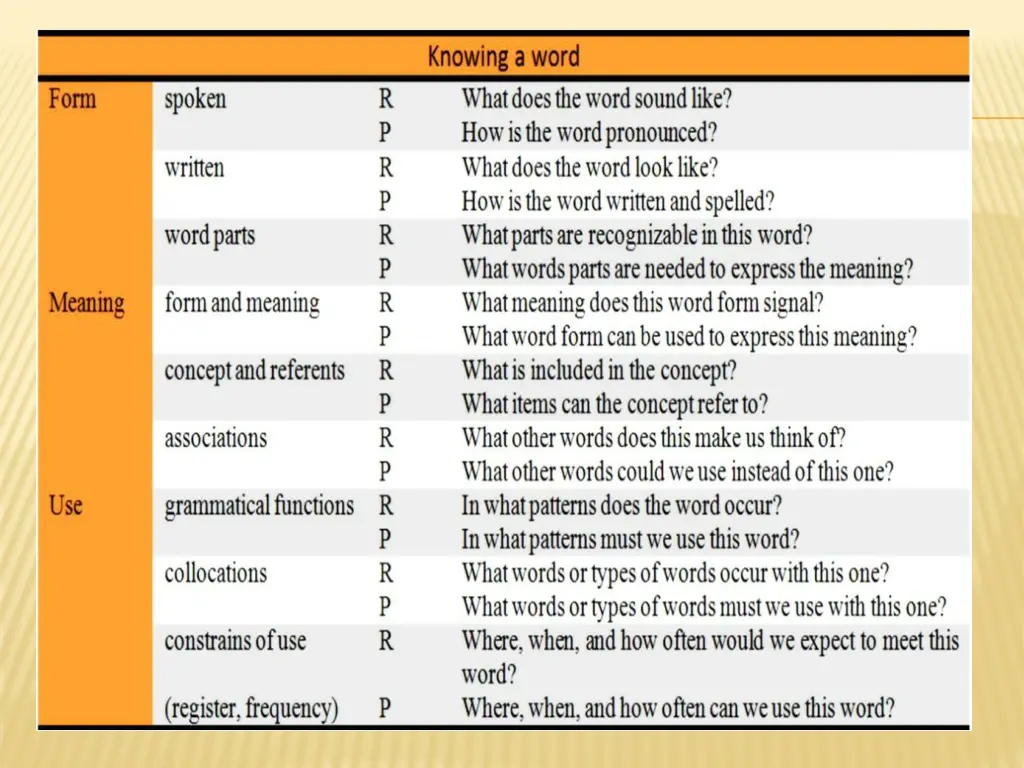
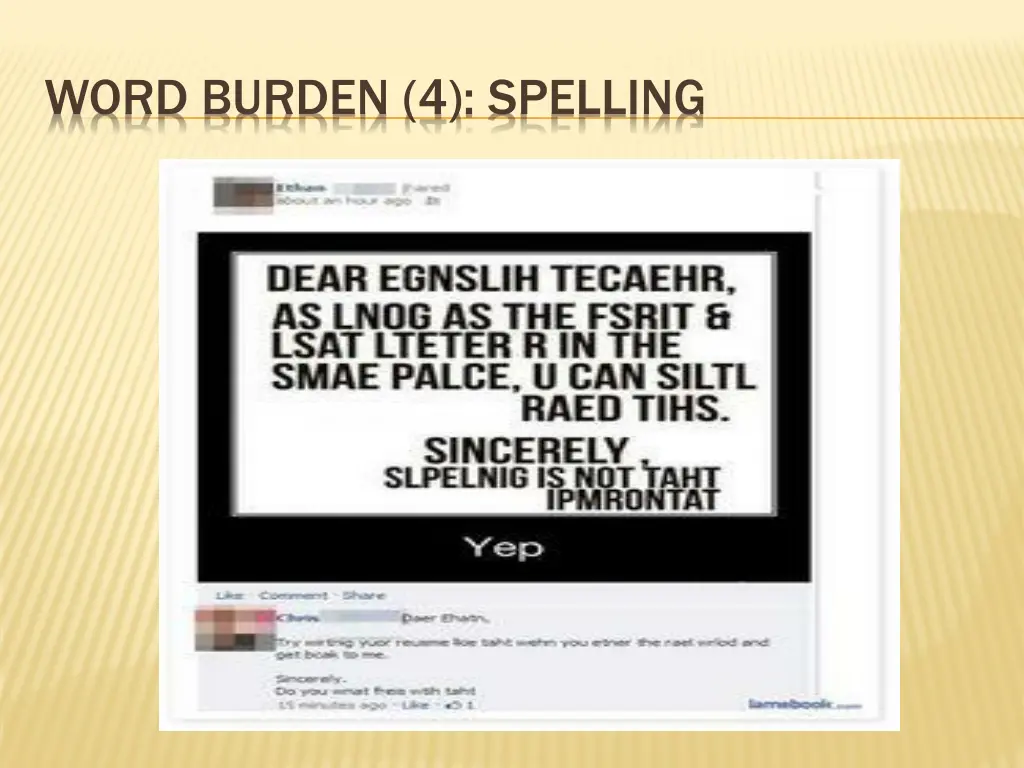
KNOWING A WORD Word Burden Word Burden (Grabe, 2009, p. 267, Nation, 2005): - Form - Meaning - Use
WHY WE SHOULD TALK ABOUT DICTIONARY USE I was born on a seat Count Expensive I put the cup on the subway The floor is brilliant
LEARNING PROCESSES: THEORY L1 Different learning styles (Multiple Intelligences) 14-20 exposures Various levels of word knowledge
LEARNING PROCESSES: - FROM THEORY TO PRACTICE Vocabulary notebooks Cumulative tests Effective dictations Dictionary use Best learning is done through teaching
PRACTICE TIME Spelling Definitions Used in sentence A collaborative story Vocabulary Vocabulary: a list or collection of words or of words and phrases usually alphabetically arranged and explained or defined
QUESTION PERIOD: ANY VOCABULARY QUESTIONS? Thank You for Listening Thank You for Listening! ! Brachie. Brachie.d@ d@gmail. gmail.com com