Learn about effective advocacy strategies for youth health, including understanding the importance of advocacy, developing essential skills, and implementing successful methods to advocate for young people's well-being.
Please find below an Image/Link to download the presentation.
The content on the website is provided AS IS for your information and personal use only. It may not be sold, licensed, or shared on other websites without obtaining consent from the author. If you encounter any issues during the download, it is possible that the publisher has removed the file from their server.
You are allowed to download the files provided on this website for personal or commercial use, subject to the condition that they are used lawfully. All files are the property of their respective owners.
The content on the website is provided AS IS for your information and personal use only. It may not be sold, licensed, or shared on other websites without obtaining consent from the author.
So far, we have covered Adolescent health and illness in individuals and in society Use of epidemiology Communication with young people 2
By the end of this session you will be able to plan and use successful strategies for youth health advocacy 3
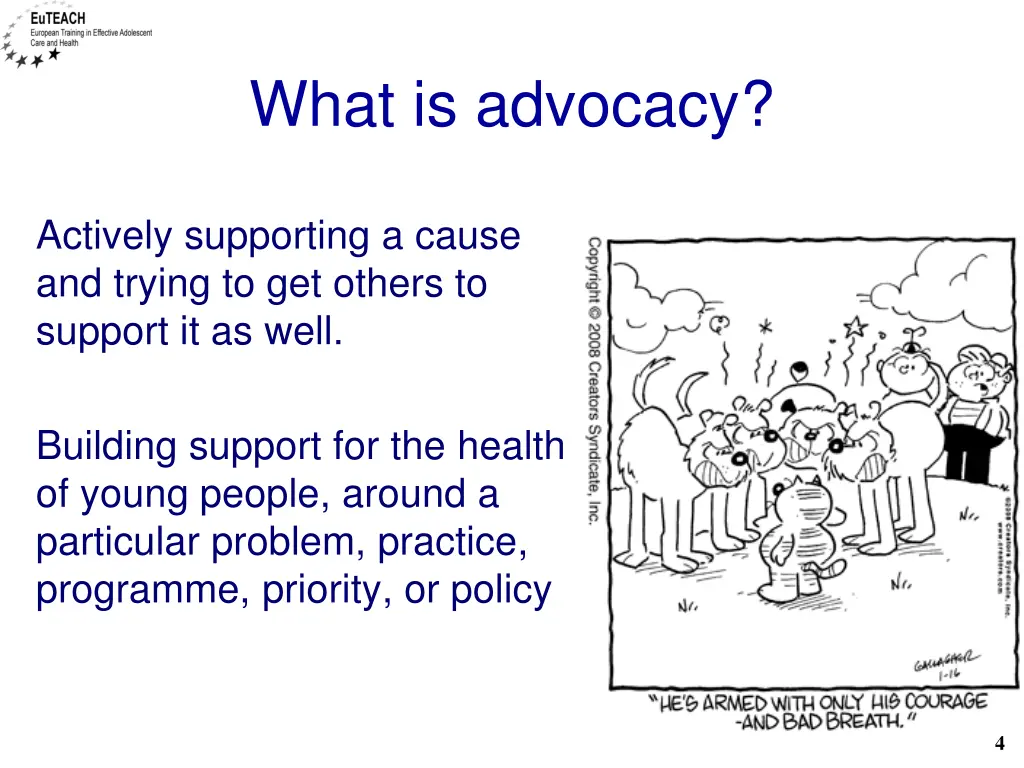
What is advocacy? Actively supporting a cause and trying to get others to support it as well. Building support for the health of young people, around a particular problem, practice, programme, priority, or policy 4
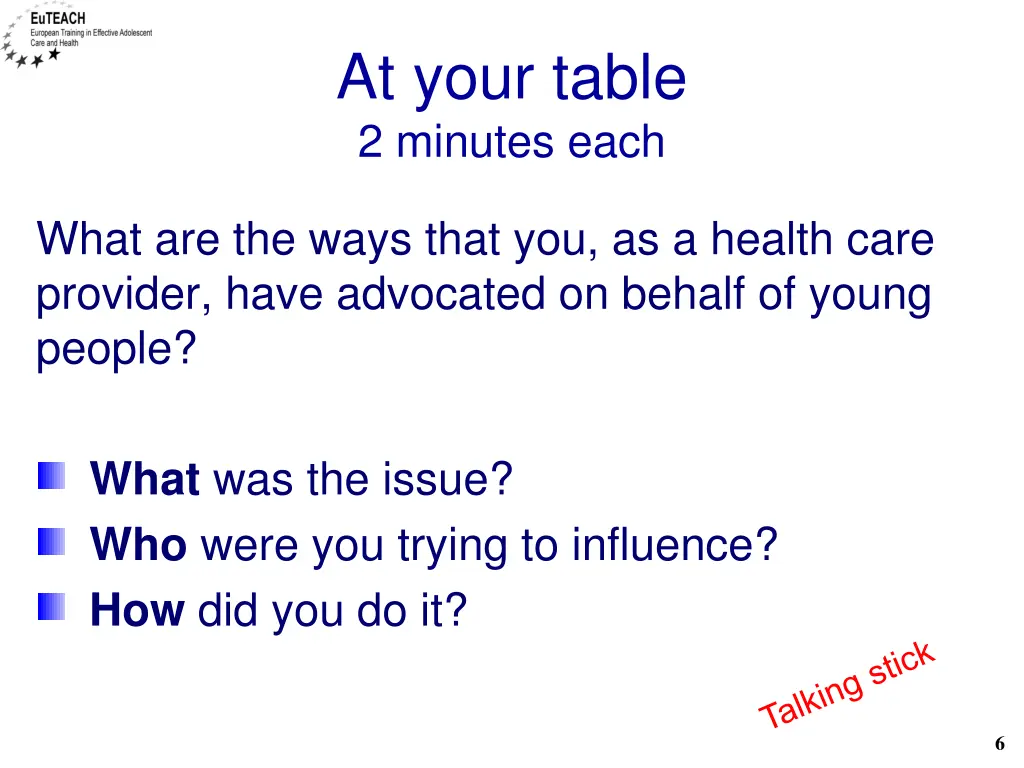
At your table 2 minutes each What are the ways that you, as a health care provider, have advocated on behalf of young people? What was the issue? Who were you trying to influence? How did you do it? 6
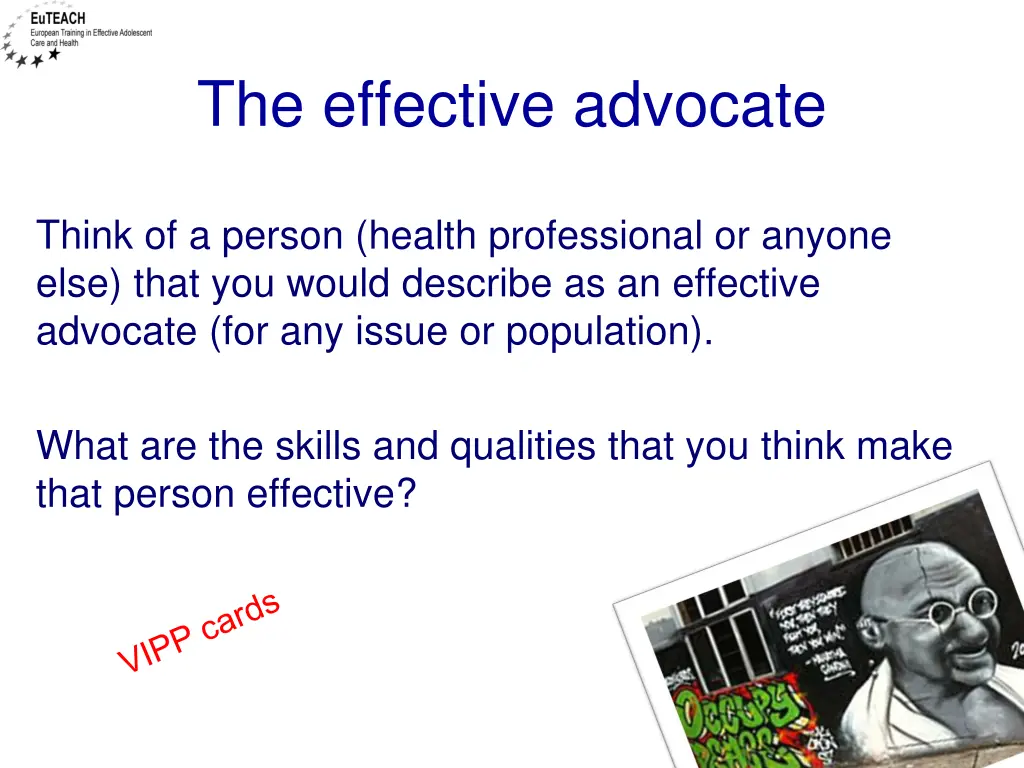
The effective advocate Think of a person (health professional or anyone else) that you would describe as an effective advocate (for any issue or population). What are the skills and qualities that you think make that person effective? 8
The effective advocate Knowledge Advocacy, media and political process Local services and settings Cause of childrens and adolescent health Understanding adolescent medicine Skills Presentation and communication Able to prioritise Attitudes Strong commitment Belief that change is possible 9
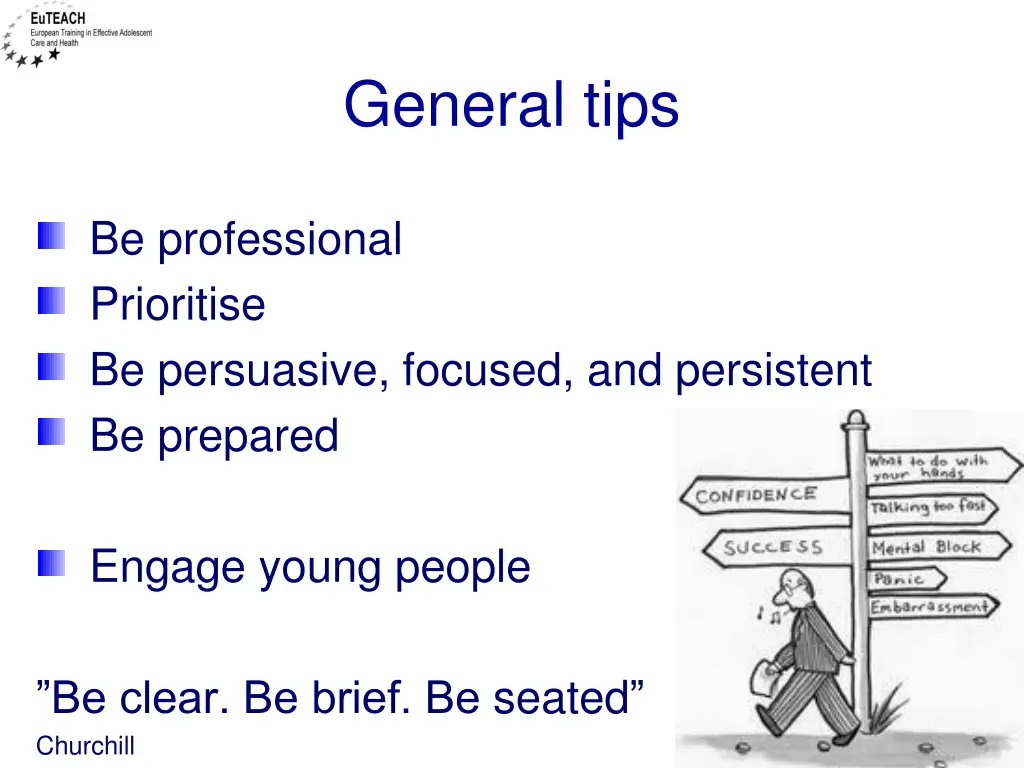
General tips Be professional Prioritise Be persuasive, focused, and persistent Be prepared Engage young people Be clear. Be brief. Be seated Churchill 10
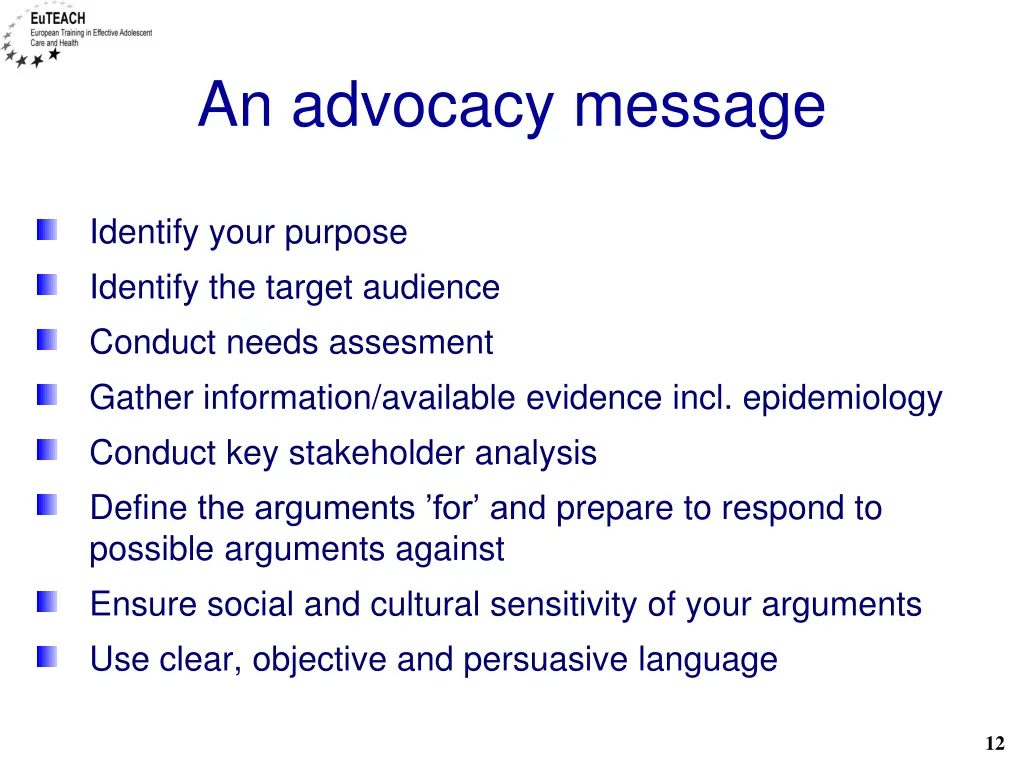
An advocacy message Identify your purpose Identify the target audience Conduct needs assesment Gather information/available evidence incl. epidemiology Conduct key stakeholder analysis Define the arguments for and prepare to respond to possible arguments against Ensure social and cultural sensitivity of your arguments Use clear, objective and persuasive language 12
You have just returned from the EuTeach Summerschool and want to set up an adolescent medicine training module. Some of your collegues strongly express their experience that young people are hard to reach and they are interested in new ideas and tools for the clinical setting. General budget cuts are imminent and your local management thinks that adolescent medicine is just icing on the cake . 14
You have just returned from the EuTeach Summerschool and want to set up an adolescent medicine training module. Some of your collegues strongly express their experience that young people are hard to reach and they are interested in new ideas and tools for the clinical setting. General budget cuts are imminent and your local management thinks that adolescent medicine is just icing on the cake . Questions: a. What information/evidence would you gather to make your argument for setting up the course (yellow) and where would you find it (green)? b. How would you identify existing needs assessment or conduct one (blue)? c. What may be the particular interests/sensitivities around these issues within your community (pink)? 15
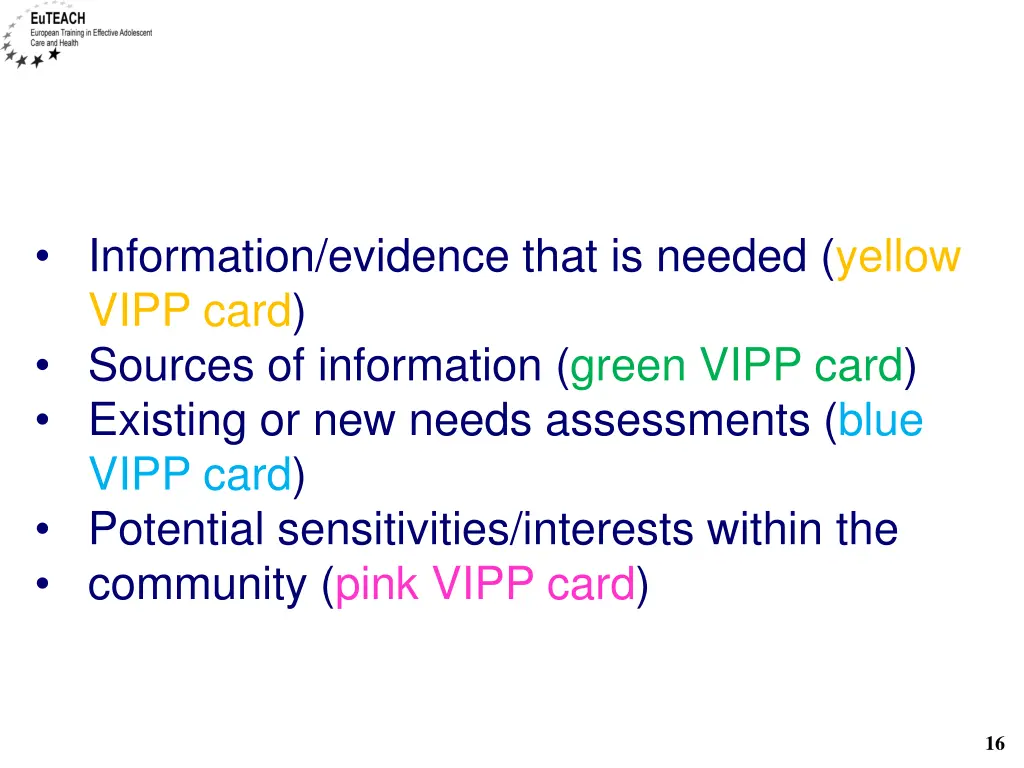
Information/evidence that is needed (yellow VIPP card) Sources of information (green VIPP card) Existing or new needs assessments (blue VIPP card) Potential sensitivities/interests within the community (pink VIPP card) 16
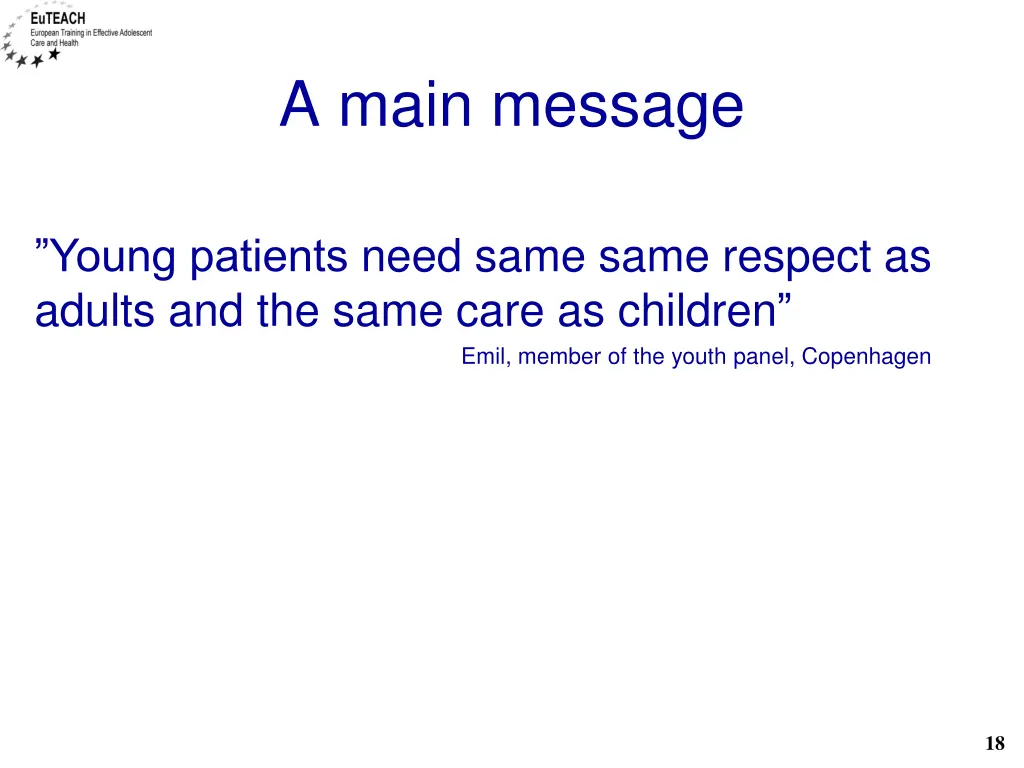
A main message Young patients need same same respect as adults and the same care as children Emil, member of the youth panel, Copenhagen 18
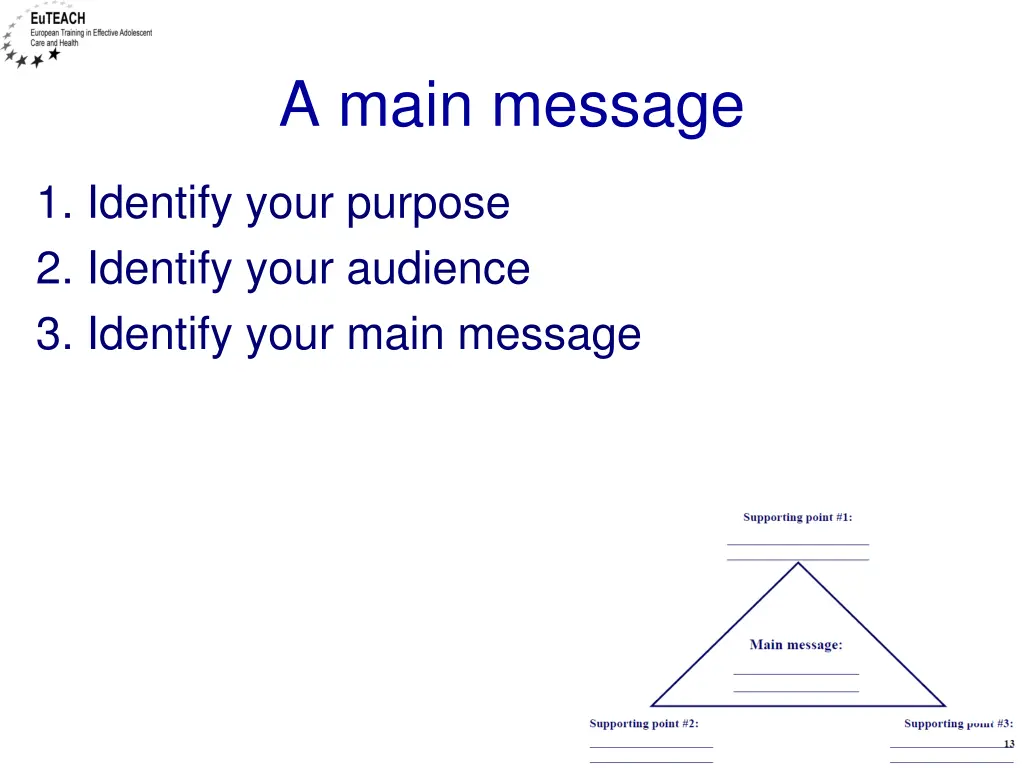
A main message 1. Identify your purpose 2. Identify your audience 3. Identify your main message
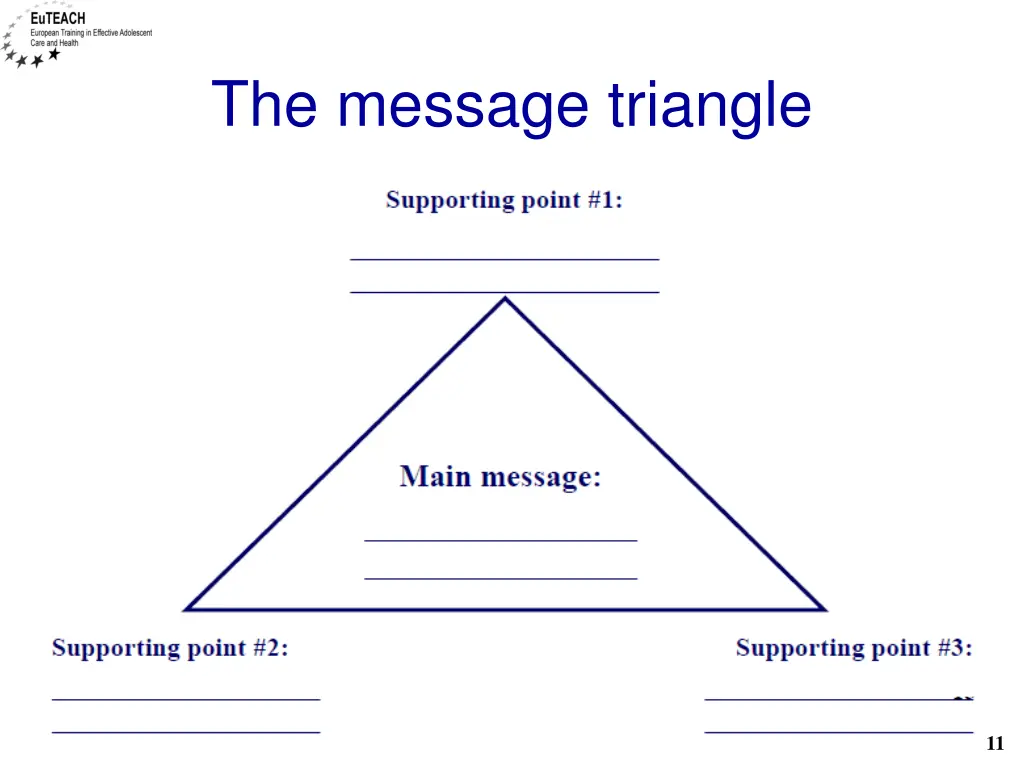
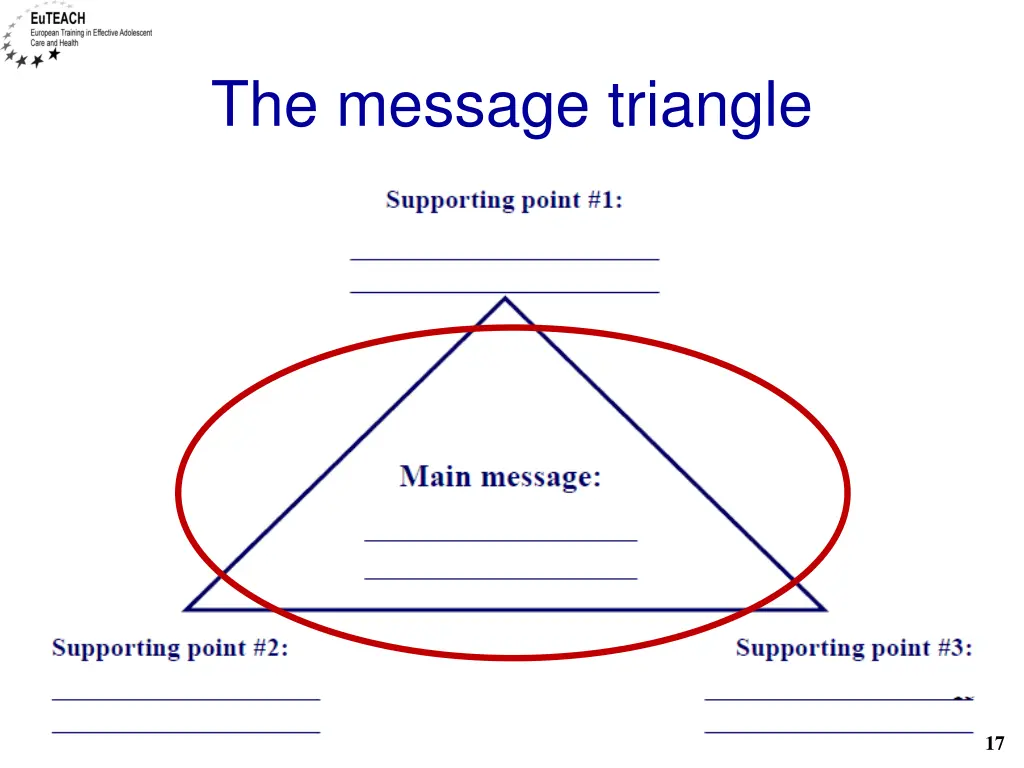
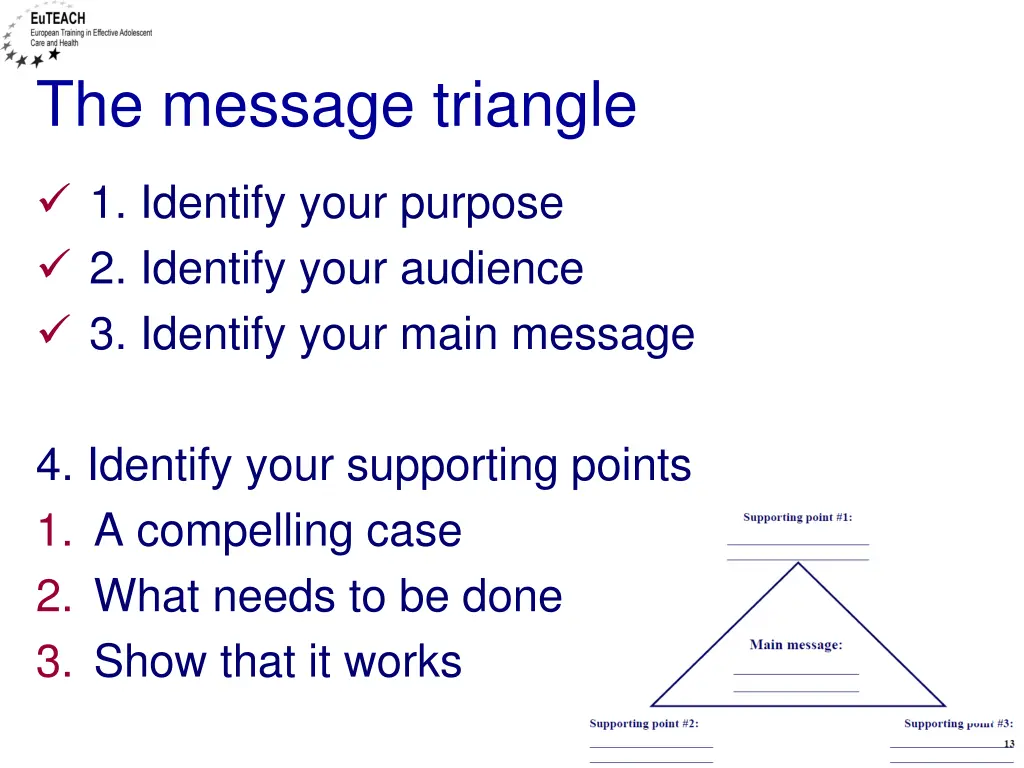
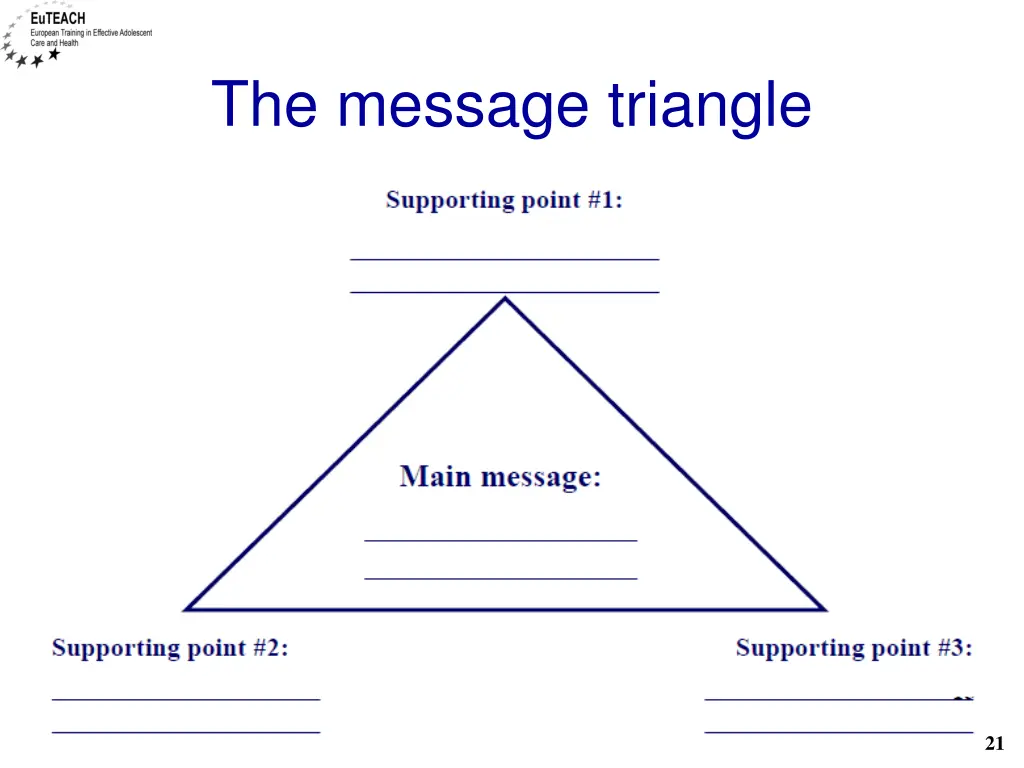
The message triangle 1. Identify your purpose 2. Identify your audience 3. Identify your main message 4. Identify your supporting points 1. A compelling case 2. What needs to be done 3. Show that it works
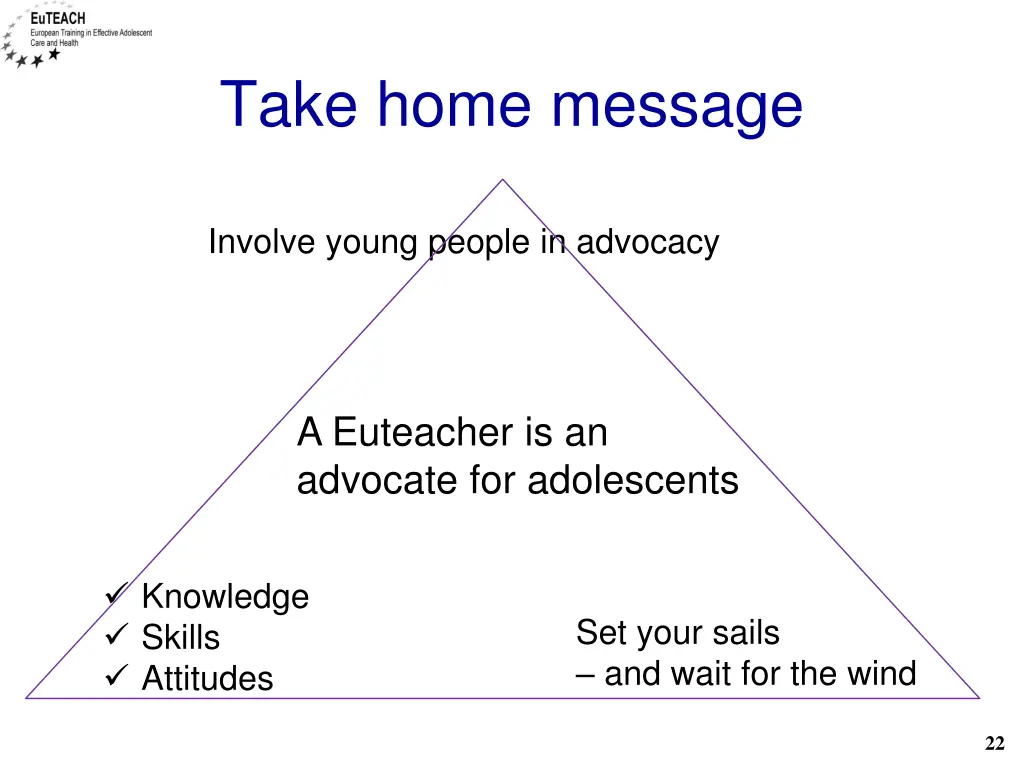
Take home message Involve young people in advocacy A Euteacher is an advocate for adolescents Knowledge Skills Attitudes Set your sails and wait for the wind 22
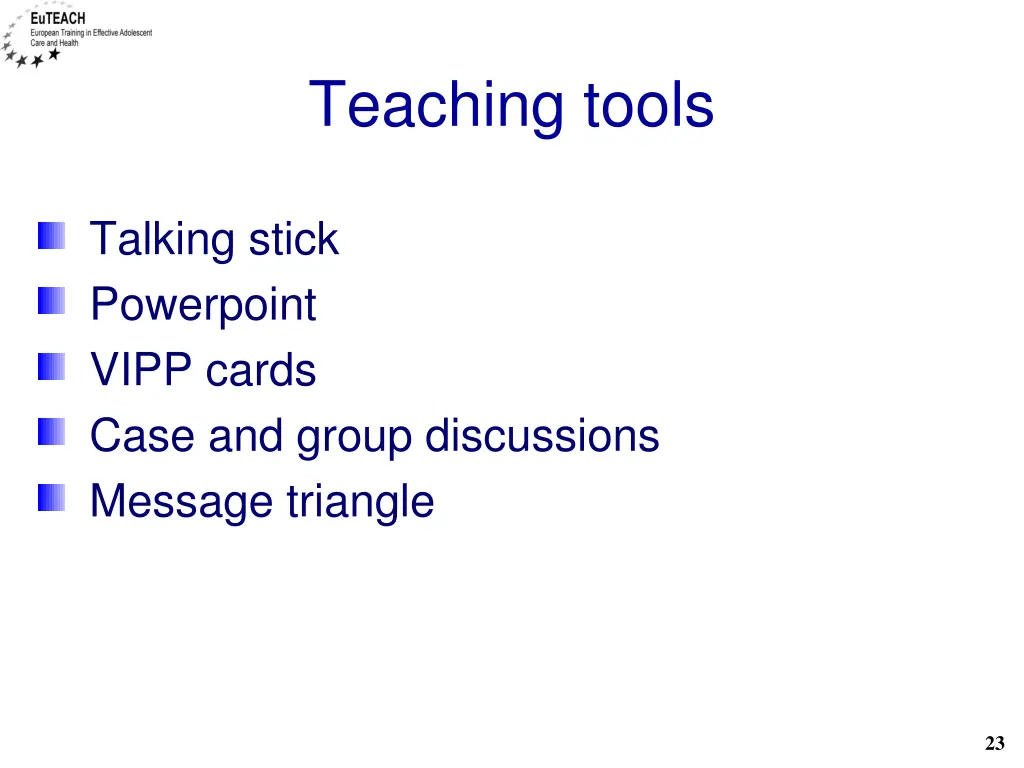
Teaching tools Talking stick Powerpoint VIPP cards Case and group discussions Message triangle 23